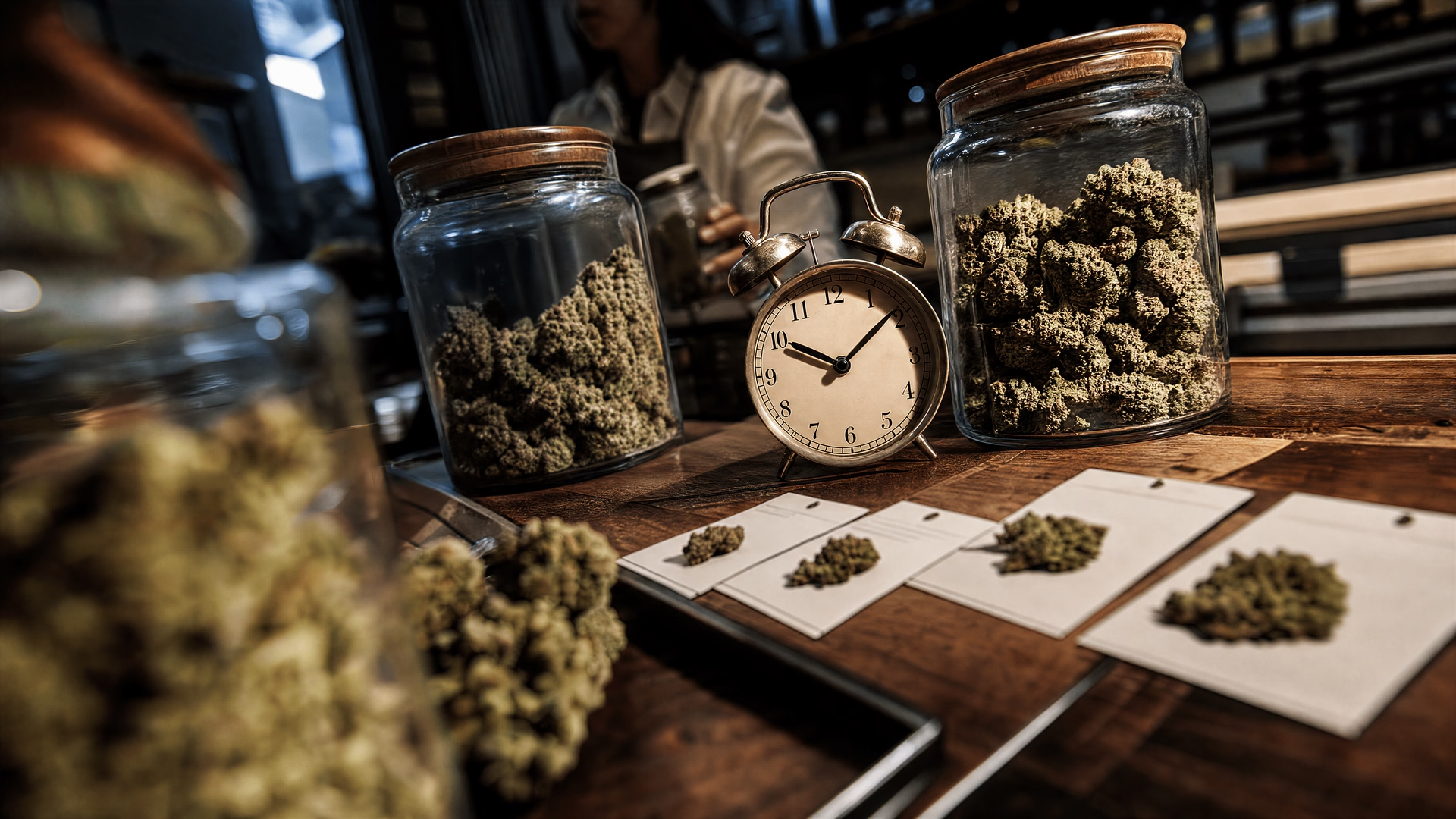
Cannabis social clubs in Berne
If you are searching for a
cannabis social club in
Berne,
Germany, you should know that none are currently registered here. The city, with around
— inhabitants, sits in
Lower Saxony — a region where cannabis grow clubs are legal but not yet locally established. Your nearest alternatives include cannabis social clubs in Schwanewede and other municipalities nearby, all offering regulated access to cannabis flower and hashish. All clubs operate under Germany's Cannabis Act (KCanG), effective since April 2024. While Berne lacks a local option today, the door remains open under the KCanG, and prospective founders can apply to establish a cannabis social club here. Membership starts at around €20–50 per month, with a minimum age requirement of 18. At least six months of official German residency is required — tourists and new arrivals cannot join.
Cultivation clubs are legally structured as non-profit associations under the Consumer Cannabis Act. They exist to provide adult members — minimum age 18 — with quality-tested cannabis flower and hashish grown collectively within regulated facilities. The growers' association model in Germany caps membership at 500 individuals per cannabis social club, ensuring manageable scale and personal service. Members may receive up to 25 grams per day and 50 grams per month, with all transactions recorded for regulatory compliance. Growing takes place within regulated premises, with on-site consumption is prohibited, including near entrances and a Clubs must maintain 200 meters distance from schools and playgrounds. Setback from schools strictly enforced. This approach puts health, safety, and community ahead of commercial gain, distinguishing cannabis social clubs from retail dispensaries. Membership fees, roughly €20–50 per month, sustain operations transparently with full financial accountability.
Alternatives Near Berne
For anyone in Berne looking to join a cannabis social club, the practical solution is to look at neighbouring cities where clubs are already operating and accepting new members.
Schwanewede currently has the nearest option and is well connected to Berne for regular visits. The wider Lower Saxony region also includes cannabis social clubs in Schwanewede, Lemwerder, Elsfleth, Hude (Oldb), Ritterhude, Brake (Unterweser), Delmenhorst, Ganderkesee,
Osterholz-Scharmbeck, and Ovelgönne, giving you several choices to find the best fit for your preferences. Each growers' association in Germany operates under the same national rules established by the KCanG — 25 grams daily limit, 50 grams monthly cap, minimum age 18, and a maximum of 500 members per club — so the experience is consistent regardless of which city you visit. Membership fees are typically around €20–50 per month, and most clubs offer a range of cannabis flower and hashish sourced entirely from their own regulated cultivation. Bringing a valid ID and proof of residency in Germany is all you need to get started with your first
registration.
Life & Community in Berne
Since the passage of the KCanG in 2024, Germany has cultivated a distinct cannabis culture rooted in regulation, transparency, and personal responsibility rather than commercial excess. The non-profit cannabis social club model exemplifies Germany commitment to community over commerce, with members sharing the costs and benefits of collective cultivation. In Lower Saxony, this approach has found broad support, with multiple municipalities now hosting active cultivation clubs that welcome members from surrounding areas. Berne has not yet joined this group, but the cultural groundwork is being laid as awareness grows among its — residents. Public perception has shifted considerably — weed is now discussed in terms of health, wellness, and the right of adults to make informed choices. The combination of cannabis social clubs and Eigenanbau rights gives Germany residents genuine choice and legal security in how they access cannabis.
Cannabis Clubs near Berne
Access to legal cannabis flower and hashish in Germany carries an obligation to consume responsibly, and ignorance of the rules is not a defence. The daily limit is 25 grams and the monthly cap is 50 grams — these are not guidelines but legally binding maximums enforced by every registered growers' association. Anyone below 18 is excluded from all participation, and distribution to minors is a serious criminal offence under the KCanG. Being responsible means knowing your products thoroughly — cannabis flower and hashish differ in strength, onset time, and duration, and even experienced users can be caught off guard by unfamiliar strains. Never consume cannabis before driving, cycling, or operating any machinery — impairment affects coordination and reaction time. If you experience adverse effects, seek medical attention immediately and be honest with healthcare providers about what you have consumed. Most cultivation clubs offer harm-reduction guidance and educational sessions that are valuable for all consumers, whether local members or visitors from nearby cities.
Legal Framework
The regulatory framework governing cannabis in Germany is among the most detailed and prescriptive anywhere in the world. Passed in 2024, it authorises the formation of cannabis social clubs under strict, well-defined conditions. Clubs are structured as non-profit registered association entities, limited to 500 members and subject to both municipal zoning rules and federal oversight. Access is restricted to adults 18 and older, with 25 grams and 50 grams limits on dispensing of cannabis flower and hashish. On-site consumption is prohibited, including near entrances, the Clubs must maintain 200 meters distance from schools and playgrounds. Buffer from educational institutions is mandatory, and all products must be laboratory-tested before distribution to members. Home cultivation of three plants per adult household member with up to seven seeds or five cuttings per month rounds out the legal options available to individual citizens. Enforcement is handled jointly by federal and regional authorities, ensuring consistent standards across all of Germany. Unlike the
Netherlands, Germany does not have coffeeshops. Instead, since April 2024, licensed growers' associations under the Cannabis Act (KCanG) allow adult members to access cannabis legally.
Cannabis Policy in Lower Saxony
Cannabis policy in Lower Saxony reflects the broader national framework while allowing for limited regional variation in implementation and enforcement. Under the KCanG, Lower Saxony authorities play a key role in licensing and overseeing cannabis social clubs within their jurisdiction, including facility inspections and compliance monitoring. Adoption rates differ across Wesermarsch, with some cities moving faster than others to welcome and process cannabis grow clubs applications. Berne, despite not yet hosting a cannabis social club, falls under the same regulatory umbrella and could license one in the future. Compliance monitoring in Lower Saxony is a joint effort between regional inspectors and federal regulators, with both conducting regular audits. Local municipalities can impose further zoning rules beyond the federal minimum, which partly explains why some cities like Berne lack cannabis social clubs. The multi-level governance model means that local context, community preferences, and infrastructure all matter in determining where cannabis social clubs operate.
Accessing a cultivation club when you live in Berne requires just a short trip and some straightforward paperwork, nothing more complicated than that. The nearest options are in Schwanewede and the broader Schwanewede, Lemwerder, Elsfleth, Hude (Oldb), Ritterhude, Brake (Unterweser), Delmenhorst, Ganderkesee, Osterholz-Scharmbeck, and Ovelgönne area, all operating under the KCanG with consistent rules and standards. Registration requirements are standardised across Germany by the KCanG: you need proof of being at least 18, an official Germany residence document, and the membership fee of roughly €20–50 per month. Once registered, you gain access to the club's full range of cannabis flower and hashish, dispensed within the 25 grams daily and 50 grams monthly limits with each transaction recorded. Clubs frequently provide informational resources, workshops, and printed guides about cannabis flower and hashish, safe dosing, and harm reduction strategies. Keep in mind that transporting cannabis is only legal within Germany and products must be carried in sealed, unmarked containers.