










A University of British Columbia study links frosty cannabis flowers to cannabinoids and terpenes, showing why trichomes matter for potency and aroma.

The crystalline coating on a cannabis flower is more than a visual marker. Research from Canada’s University of British Columbia, reported by Cannabis Now, finds that frostier flowers are more likely to contain the cannabinoids and terpenes responsible for the plant’s effects and aroma. The finding gives scientific weight to a long-standing observation among cannabis growers and consumers: dense trichome coverage can signal a chemically productive flower, although appearance alone does not provide a complete measure of potency.
The frost on a cannabis flower has a biological purpose
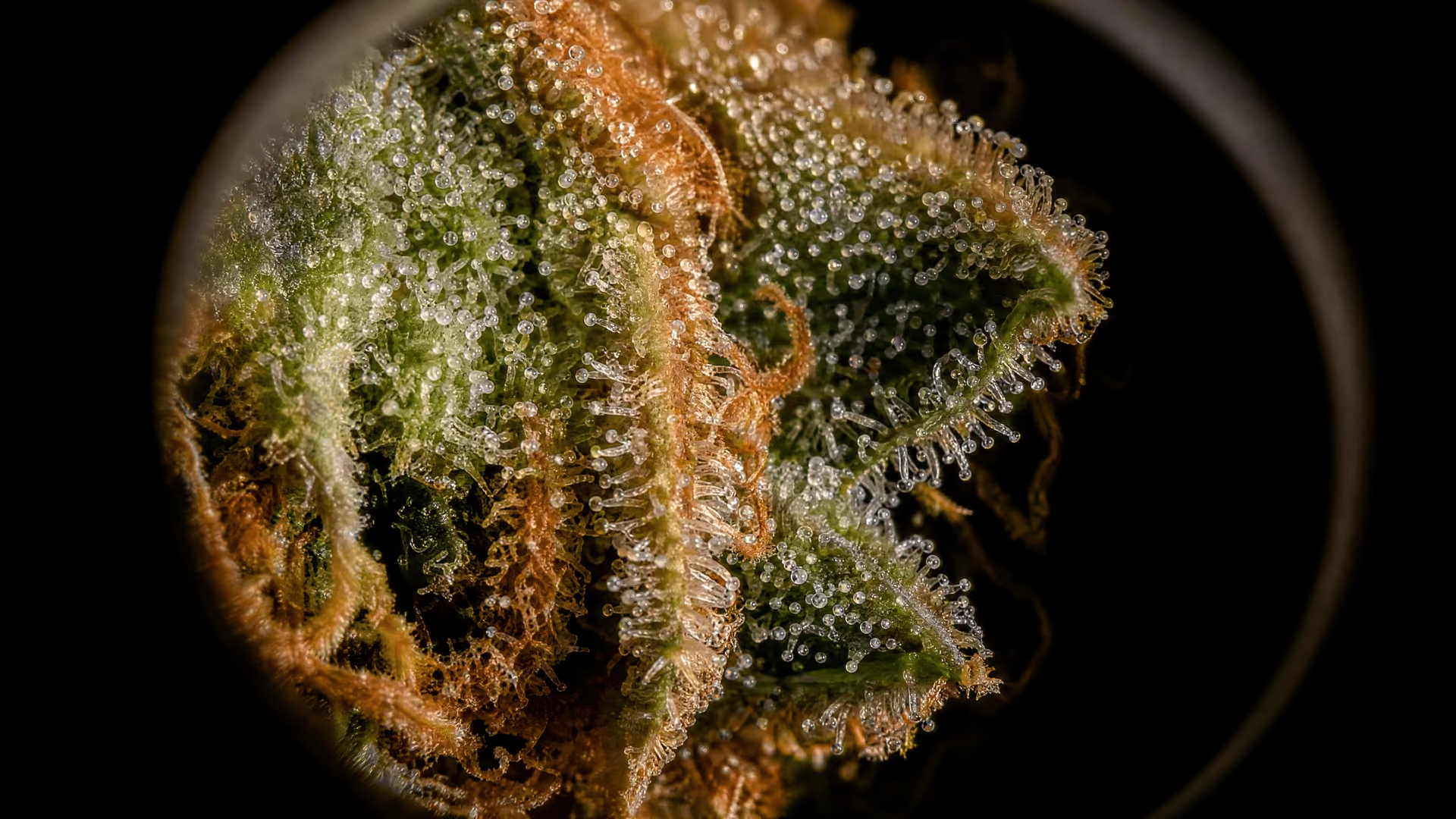
Trichomes are the tiny, crystal-like hairs found on the surface of cannabis flowers. The Cannabis Now report on trichome-driven potency describes them as small, mushroom-shaped structures that produce the chemicals behind the plant’s psychoactive and medical properties. The more abundant these structures are, the greater the likelihood that a flower contains substantial amounts of cannabinoids and aromatic terpenes.
That production is not an accident of cultivation. Trichomes function as part of the plant’s defence system, helping protect cannabis from ultraviolet radiation and animals. Their resinous chemistry also contributes to the pungent aroma associated with mature flowers. In biological terms, the frosty appearance reflects an active protective and chemical system rather than a purely cosmetic trait.
The study’s findings bring together three features that are often discussed separately: visible resin coverage, cannabinoid production and terpene formation. The connection is especially important because it explains why flowers with a heavier crystalline appearance have long attracted attention from cultivators.
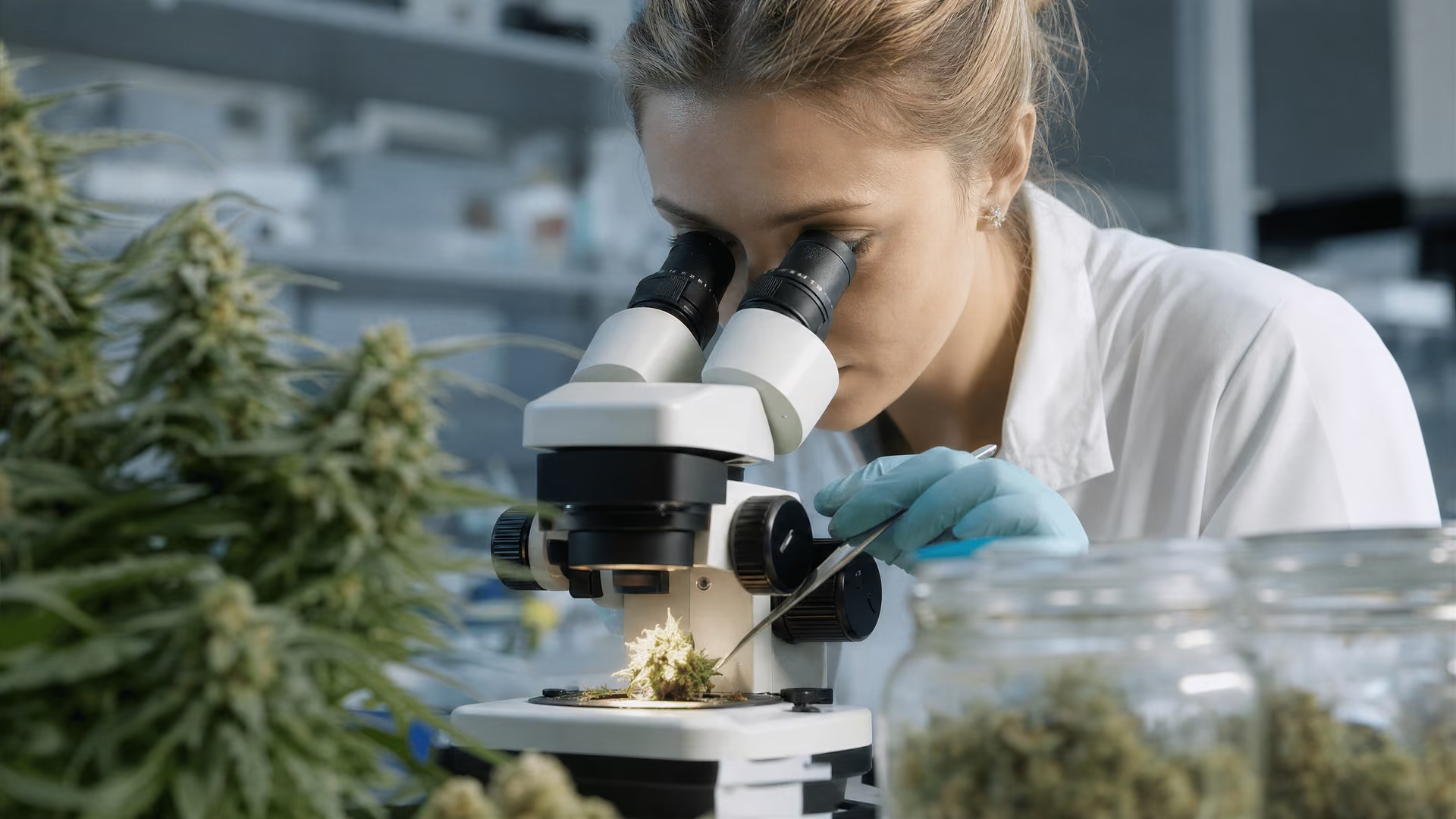
The research was carried out in a Canadian university botany setting using both chemical and microscopic examination:
Three trichome forms reveal different stages of development
For years, cannabis science has focused on three broad trichome categories: bulbous, sessile and stalked. The University of British Columbia researchers examined the internal structures of individual trichomes rather than treating the visible resin layer as a single material. Their comparison can be summarised as follows:
| Trichome form | Finding reported in the study | Source |
|---|---|---|
| Bulbous | One of the three trichome forms included in the study’s structural and chemical comparison. | Trichomes Are the Key to Most Potent Cannabis Flowers |
| Sessile | Sessile-like structures were identified as precursors in the development of stalked glandular trichomes. | Trichomes Are the Key to Most Potent Cannabis Flowers |
| Stalked glandular | Expanded cellular factories produce more cannabinoids and fragrant terpenes, while undergoing a marked developmental shift. | Trichomes Are the Key to Most Potent Cannabis Flowers |
The research also identified several observations that changed the picture of how these structures work:
- All three trichome forms showed different colours when examined under ultraviolet light.
- Stalked glandular trichomes had expanded cellular structures associated with cannabinoid and terpene production.
- Stalked glandular trichomes appeared to develop from sessile-like precursors.
- New microscopy tools made the developmental changes visible inside the plant’s resin-producing structures.
Stalked glandular trichomes act as chemical factories
The most significant distinction in the findings concerns stalked glandular trichomes. Unlike a simple surface coating, these structures contain expanded cellular factories capable of producing cannabinoids and fragrant terpenes. Their importance lies not only in their presence, but in how their internal organisation changes as the flower develops.
Sam Livingston, the study’s lead author and a Ph.D. candidate at the University of British Columbia’s botany department, said the researchers observed a substantial transformation during development. Stalked glandular trichomes began from sessile-like precursors and then underwent a shift that could be visualised with newer microscopy techniques.
Trichomes are the biochemical factories of the cannabis plant.
Teagen Quilichini, University of British Columbia Botany
That description helps explain why trichome density is relevant to flower potency. The structures are not merely holding material produced elsewhere in the plant; the study presents them as sites where important cannabis compounds are made and stored. A flower with more visible trichomes therefore has a biological basis for appearing more chemically substantial.
The finding does not mean that every visible trichome contributes equally, or that a quick visual inspection can replace detailed chemical information. It does show why the familiar distinction between a heavily frosted flower and a sparsely coated one can reflect meaningful differences in the plant’s underlying chemistry.
Ultraviolet testing could help identify harvest timing
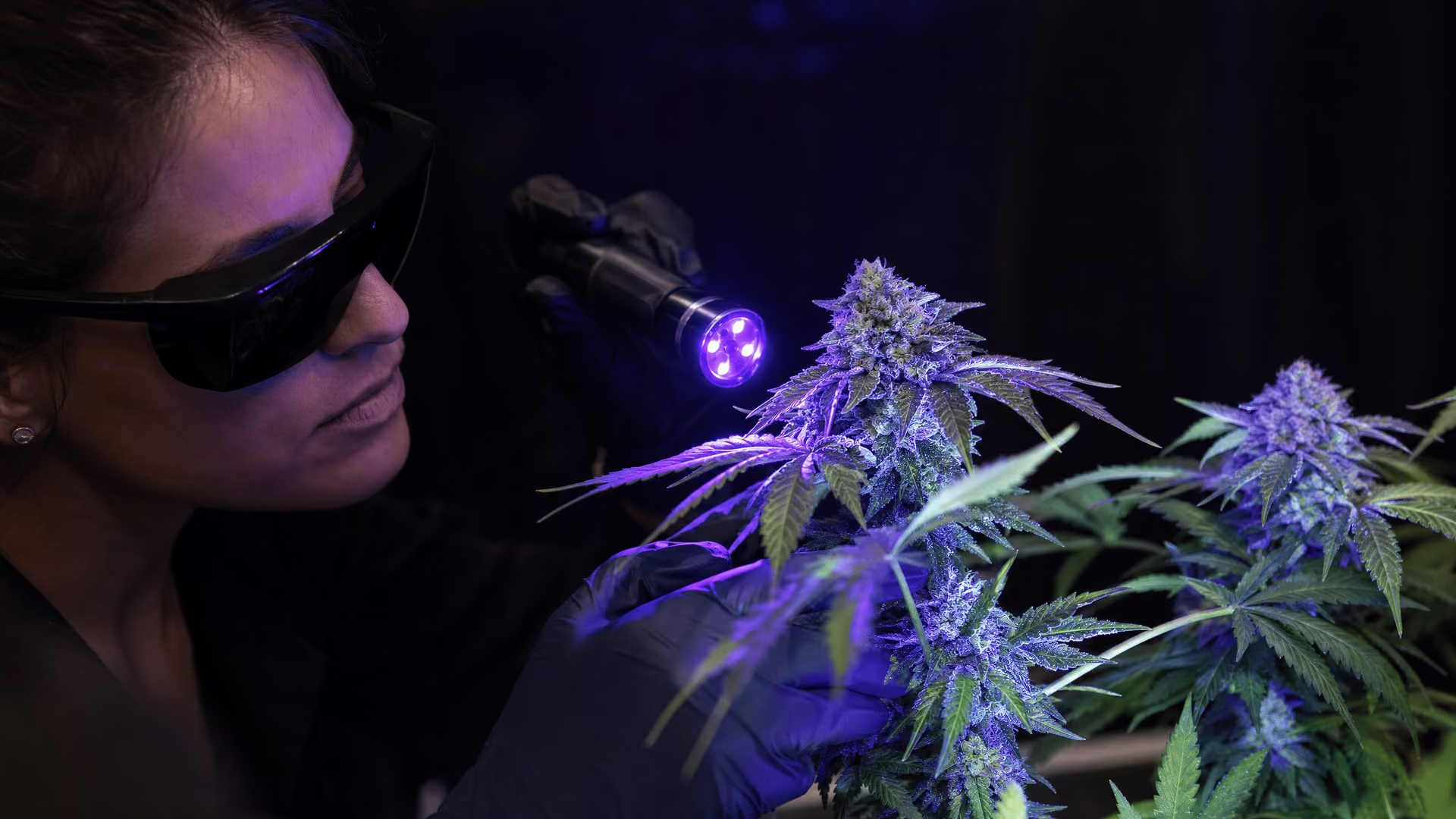
The different colours produced by trichomes under ultraviolet light may offer cultivators a way to follow their development. The researchers said the technique could be used during cultivation to monitor trichome maturity and help determine when a harvest should take place.
That proposed use is significant because maturity is a moving biological process. The study does not present ultraviolet observation as a universal replacement for other cultivation decisions. Instead, it points to a possible visual method for tracking changes that are difficult to see under ordinary light.
A grower examining a flower under ultraviolet light would be looking for developmental information inside the trichomes, not simply counting how much frost appears on the surface. The colour differences reported in the study could help distinguish stages in the structures’ development, provided the method is developed and validated for practical cultivation use:
Trichomes connect potency with aroma
Cannabinoids are only part of the story. The same stalked glandular trichomes that produce cannabinoids also make fragrant terpenes, which help determine the aroma of a flower. The study therefore links the visible resin layer to two of the most closely watched chemical characteristics of cannabis: cannabinoid content and scent.
The relationship continues after harvest. Separate research summarized in a report on how drying and storage can alter cannabis smell and potency indicates that post-harvest methods can change the compounds associated with aroma and potency. That does not weaken the importance of trichomes; it places them at the beginning of a longer chain of production and preservation.
In practical terms, a flower may begin with abundant resin-producing structures and still experience changes during drying, storage and handling. Trichomes contain much of the plant’s aromatic and cannabinoid material, but the condition of those compounds can be affected by what happens to the flower after it is cut.
This is why a frostier appearance should be read as a biological clue rather than a complete quality verdict. It indicates that the plant has invested heavily in the structures that make and store important compounds, while later processing helps determine how much of that chemistry remains intact.
Genetics could extend what scientists learn from trichomes
The University of British Columbia project also opened a path beyond microscopy. Researchers found a large collection of genes that support cannabinoid and terpene production. Further investigation could help scientists understand how those genes influence the productivity and chemical profile of cannabis plants.
The potential applications described in the research include developing more productive strains or plants with specific cannabinoid and terpene traits. Those possibilities remain dependent on additional investigation, but they show why trichomes matter to cannabis science beyond their value as a visible sign of maturity.
Teagen Quilichini, a postdoctoral fellow in botany at the University of British Columbia and one of the study authors, said legal restrictions had limited access to cannabis research even though the plant has high economic value. The team’s work is presented as a foundation for understanding how trichomes manufacture and store the compounds that make cannabis chemically distinctive.
For cultivators, the longer-term question is not simply how to produce flowers that look frosty. It is how genetics, development, harvest timing and post-harvest handling interact to preserve the chemistry created inside the trichomes.
What trichomes can—and cannot—tell us
A useful clue, not a complete verdict
The central finding is straightforward: frostier cannabis flowers are more likely to contain higher levels of cannabinoids and terpenes because trichomes are the structures that produce and store those compounds. The result supports a visual observation that has been part of cannabis culture for decades.
The qualification matters just as much. The research describes a higher likelihood, not an absolute rule. Trichome type, developmental stage, genetics and post-harvest treatment all shape the final chemical profile. A dense coating can indicate strong biological potential, but it cannot by itself explain every difference between flowers.
The study’s wider contribution is to make the visible surface of a cannabis flower scientifically legible. Under magnification and ultraviolet light, the frost becomes evidence of distinct cellular structures, developmental changes and chemical activity. That makes trichomes a useful starting point for understanding potency and aroma without reducing the plant to appearance alone.
The frosty surface of a cannabis flower is not a guarantee of a particular chemical profile, but it is far more meaningful than a simple visual flourish. Trichomes are where cannabinoids and terpenes are made and stored, and the University of British Columbia research offers a clearer account of how their form and development relate to flower potency, aroma and future cultivation science.
Sources
- Mango Cannabis Celebrates New Buffalo Store With Biggest Giveaway Yet (cannabisnow.com)
- Trichomes Are the Key to Most Potent Cannabis Flowers (cannabisnow.com)
- Newsbrief: Calif. state fair celebrates cannabiz progress (weedweek.com)
- Newsbrief: U.S. Senate Democrats file bill to legalize REC (weedweek.com)
- Hessen zieht Bilanz: 21 Cannabis-Clubs genehmigt – 15 bauen bereits Cannabis an (hanfjournal.de)
- Neue Bundesstudie: Cannabis-Teillegalisierung löst keinen allgemeinen Drogenschub bei Jugendlichen aus (hanfjournal.de)
- New CAA Study on Edible Cannabis and Collision Risk (420intel.com)
- They Relied On Marijuana Daily. Now Crisis Looms (420intel.com)
- How cannabis is dried can dramatically change its smell and potency (earth.com)
- Making scents of cannabis: How cannabis cultivar and preparation methods influence aroma (phys.org)