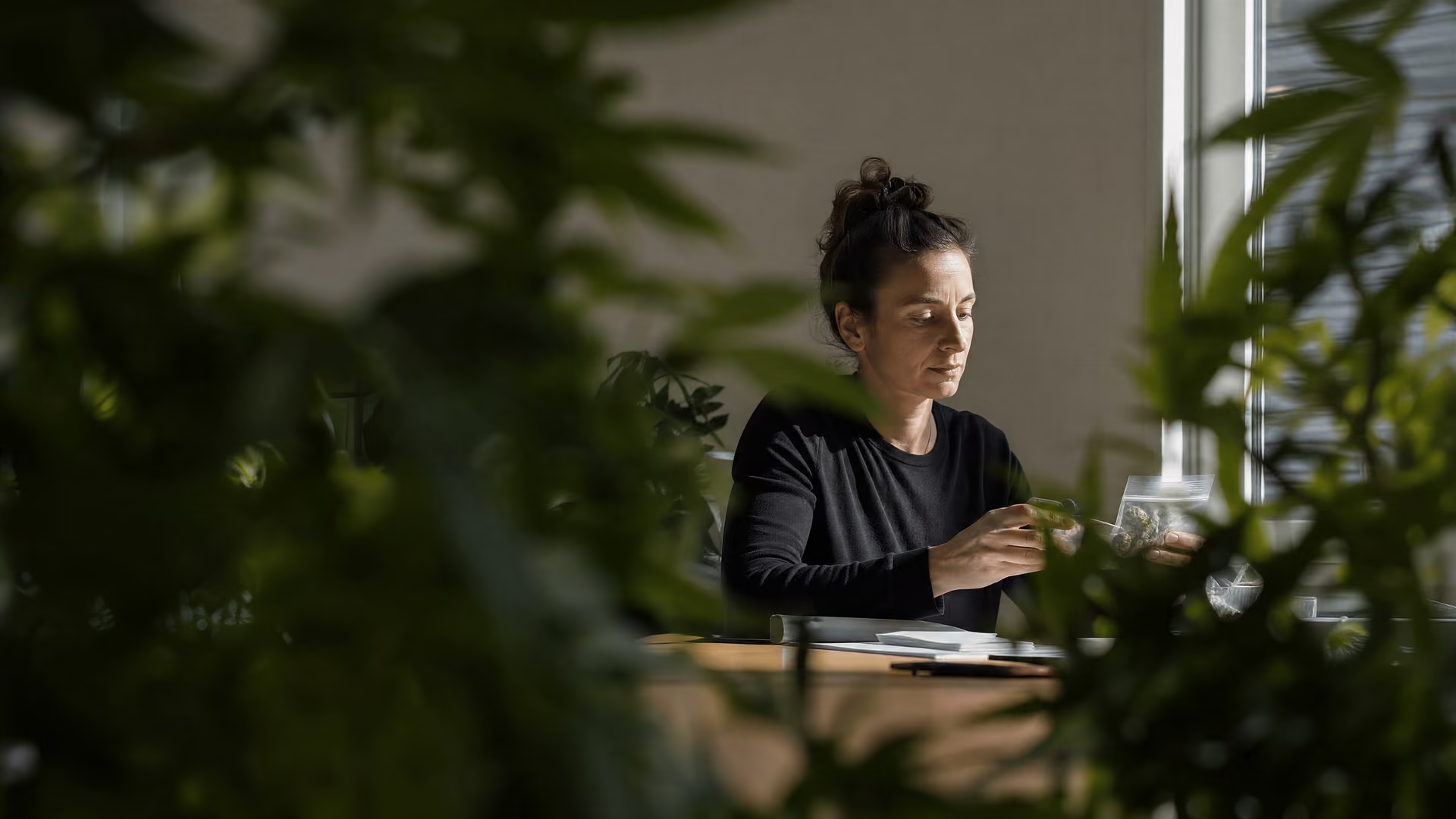
Cannabis social clubs in Rhein-Erft-Kreis
Cannabis social clubs in
Rhein-Erft-Kreis are licensed and open for membership. With
6 active cannabis social clubs, Rhein-Erft-Kreis has become a genuine hub for legal cannabis access. Whether you're a local looking to consume weed through a trusted membership or a tourist visiting Rhein-Erft-Kreis for the first time, the options are clearly defined. The product range typically includes cannabis flower and hashish, with quality standards that black-market sources cannot reliably provide. A valid ID and an active membership are non-negotiable at every reputable
cannabis social club. All clubs operate under Germany's Cannabis Act (KCanG), effective since April 2024. At least six months of official German residency is required — tourists and new arrivals cannot join.
How does a cannabis grow club (CSC) actually work? It's simpler than most people think: you join as a member and gain access to legal cannabis products. Unlike a dispensary or retail model, every cannabis social club operates as a non-profit. Membership fees cover rent, utilities, staff, and compliance — that's it. The range of products is respectable: cannabis flower and hashish. Daily purchases are capped at 25 grams per member. THC content is always disclosed, and many clubs carry both high-THC varieties and CBD-rich options for those who prefer a milder experience. On-site consumption? On-site consumption is prohibited, including near entrances.
Popular clubs in Rhein-Erft-Kreis include Cannabis Culture Club Brühl e.V, Urban Growers e. V, German Social Club, CSC GreenFlakez, and CSC Königsdorf — each with their own membership process and community.
Community Life in Rhein-Erft-Kreis
The cannabis culture in Rhein-Erft-Kreis deserves more credit than it gets. It's a culture built on knowledge, not rebellion. At most cultivation clubs, you'll find a lounge where members consume weed, share knowledge about cannabis products, and discuss everything from growing techniques to local politics. Product awareness is high. People know their THC tolerance, they ask about CBD content, and they can tell the difference between quality flower and rushed product. The community element is what sets this apart from a dispensary model. People come for the cannabis and stay for the connections. If you're visiting Rhein-Erft-Kreis and you're curious about cannabis culture, spending time in a cannabis social club lounge will change your perspective.
6 cannabis clubs in Rhein-Erft-Kreis
Rhein-Erft-Kreis cannabis social club Scene
How does the club scene in Rhein-Erft-Kreis actually look? The scene is 6 clubs strong, ranging from intimate spaces with a handful of members to larger operations with extensive product lists. The menu at a decent club includes multiple cannabis flower varieties — expect to see indica, sativa, and hybrid options labelled with THC and CBD percentages. Hash is almost always available alongside other cannabis products. Not every club is equal — staff knowledge, product testing, variety of options, and lounge comfort all differ. The best clubs operate like specialty cannabis shops with trained budtenders; the average ones are still leagues ahead of street dealers. Clubs with an on-site lounge attract a loyal crowd who come as much for the smoking atmosphere as for the cannabis itself. Costs are clear: individual product prices displayed openly. No games, no negotiation.
Cannabis social club Membership in Rhein-Erft-Kreis
Membership requirements for cultivation clubs in
Rhein-Erft-Kreis follow a standard framework, though details vary. Three things every club requires: proof of age (18+), valid government ID with photo, and a completed application. Membership costs typically run €20–50 per month, paid annually. This covers everything from rent and staffing to cannabis sourcing and quality testing. Some clubs also charge an one-time
registration fee. Others don't. Ask before committing. If you're visiting Rhein-Erft-Kreis as a tourist: At least six months of official German residency is required — tourists and new arrivals cannot join. This is not a dispensary model; walk-in purchases don't exist. Many clubs prefer cash payment, particularly for the initial registration. Bank transfers may be accepted for ongoing fees. Residency requirements exist in some markets. In Germany, you'll need to verify your address as part of the process.
Community — it's the word that keeps coming up when you talk to members of cultivation clubs in Rhein-Erft-Kreis. It's not a buzzword here — it's the lived experience. The cannabis club model creates a natural knowledge-sharing ecosystem. Members discuss varieties, compare THC and CBD preferences, swap growing tips, and educate each other on everything from rolling joints to responsible cannabis knowledge.\ Workshops are a regular feature: growing workshops for members who want to cultivate at home (3 plants per adult household member), cannabis cooking classes, cannabis education sessions, and harm-reduction education. People build real friendships here — over shared joints, growing experiments, and long conversations about life, cannabis, and everything in between. Whether you're a long-term resident or a visitor, the community in these clubs is genuine. You'll leave knowing more about cannabis than when you walked in.
How to Get Started in Rhein-Erft-Kreis
Getting started with cultivation clubs in Rhein-Erft-Kreis — a step-by-step walkthrough. First, understand what you're getting into: these aren't dispensaries. There are no walk-in purchases at most clubs. You need membership, and that means paperwork, ID verification, and a fee. For tourists and visitors: At least six months of official German residency is required — tourists and new arrivals cannot join. This is important — don't show up expecting Amsterdam-style walk-in access if the rules say otherwise. What to bring: valid photo ID (for tourists, a passport is non-negotiable), cash for the membership fee, and enough time to complete the process. What about on-site consumption? On-site consumption is prohibited, including near entrances. Product transparency is standard: you'll see variety names, THC percentages, CBD content, and prices before you buy. Daily limits are firm: 25 grams per visit. Plan purchases accordingly. Call or check online before visiting — some clubs are walk-in, others require a referral. Don't assume.
Harm reduction is part of what separates regulated cannabis social clubs from the black market. Every product comes labelled. Every staff member is trained. Every club has a policy on helping members who experience adverse effects. Potency awareness: THC levels at most clubs range from under 10% (gentle, CBD-rich varieties) to 25%+ (high-potency flower). Choose based on your experience level and the effect you want. Don't rush. Cannabis effects build. A responsible session means taking it slowly, especially with a new variety or a higher-THC product than you're used to. Driving after cannabis use is illegal in Germany — treat it the same way you'd treat driving after drinking. Polydrug use is not something the clubs here support. Cannabis plus alcohol is a well-documented recipe for an uncomfortable experience — most regulars learned that lesson once. New user? Say so. Club staff exist to help members have good experiences. A first-timer asking for guidance will always be steered toward something appropriate.
Legal Framework
The legal foundation for cultivation clubs in
Germany is the
Consumer Cannabis Act (KCanG). Personal cannabis use became legal on one April 2024. Club cultivation and distribution (CSCs) became operational from one July 2024. Every cannabis social club must be structured as registered association — non-profit, community-run, and fully licensed. Members do not purchase cannabis commercially — contributions cover the club's shared cultivation and operating costs. Members can access up to 25 grams of cannabis flower and hashish. Unlike the
Netherlands, Germany does not have
coffeeshops. Instead, since April 2024, licensed growers' associations under the Cannabis Act (KCanG) allow adult members to access cannabis legally. According to EUDA — the European Union Drugs Agency — cannabis is the most widely used controlled substance across Europe, with Germany recording some of the highest rates of adult cannabis use on the continent. Official documentation is published by Bundesgesundheitsministerium (Federal Ministry of Health).
Regional Cannabis Policy — Rhein-Erft-Kreis
Cannabis policy in Rhein-Erft-Kreis — the regional perspective matters more than you might think. KCanG is the foundation, but Rhein-Erft-Kreis's implementation is what you'll actually experience as a member. The gap between law-on-paper and law-in-practice is where state-level politics live. The numbers speak: 6 clubs in Rhein-Erft-Kreis, 29 nearby. For Rhein-Erft-Kreis, this represents steady growth in legal cannabis access. The products available — cannabis flower and hashish — are governed nationally, as are the daily limits (25 grams). But the smoking and lounge culture, the speed of membership processing, and the availability of ancillary services (growing workshops, cannabis education events, community events) vary by region. The enforcement style in Rhein-Erft-Kreis ranges from proactive to permissive. Distance rules, member caps, and product testing requirements are all areas where state-level discretion plays a role.
Rhein-Erft-Kreis and Surroundings
Rhein-Erft-Kreis's local area and its cultivation clubs — a geographic overview. The club distribution across Rhein-Erft-Kreis follows the city's natural rhythms: denser in central areas, more spread out in the suburbs. In Blerichen, Broich, Grottenherten, Kaster, Kirchherten, Kirchtroisdorf, Kirdorf, Kleintroisdorf, Königshoven, Lipp, you'll find different club styles: community-focused lounges where regulars consume together, boutique operations with carefully curated cannabis selections (flower, hash, and varieties), and no-frills clubs where you grab your weed and go. Transport is practical: bus, tram, metro, and bike networks connect the neighborhoods. Since you absolutely should not drive after consuming cannabis, plan your route using public transport. The broader area around Rhein-Erft-Kreis adds another dimension. 29 additional cultivation clubs operate in surrounding municipalities, giving members even more options. Whether you're a resident of Rhein-Erft-Kreis or a visitor exploring the local area, the cannabis club scene is interwoven with the city's everyday life.
Nearby exploration from Rhein-Erft-Kreis — here's what's beyond the city limits. The broader region around Rhein-Erft-Kreis — including Frechen, Brühl, Wesseling, Rhein-Erft-Kreis, Bergheim, Hürth, Pulheim, Erftstadt, and Elsdorf — has developed its own cannabis infrastructure, with 29 clubs operating across the area. What makes regional exploration worthwhile: each city's clubs curate their own menus. You'll find different cannabis flower varieties, different hash varieties, different THC ranges, and occasionally products not available at your home club. Visiting multiple clubs across the region is the most effective way to compare: product quality, variety of options, lounge comfort, staff knowledge, and community engagement all vary between locations. Getting there: trains and buses are your best bet. Carry ID and remember — driving after cannabis smoking is illegal. Whether you're a resident of Rhein-Erft-Kreis expanding your horizons or a tourist on a broader cannabis tour of Rhein-Erft-Kreis, the surrounding cities are worth the journey.