Cannabis social clubs in Markranstädt
Markranstädt in
Germany — home to approximately
13,053 people — currently has zero cannabis social clubs within its boundaries. The Consumer Cannabis Act provides the legal basis for cannabis grow clubs, yet no operator has launched in Markranstädt to date. Cities like Lützen, Pegau, Schkeuditz,
Bad Dürrenberg,
Markkleeberg, Schkopau, Zwenkau, Leipzig, Leuna, and Böhlen have already established cultivation clubs, and they welcome members from neighbouring municipalities without restriction. At least six months of official German residency is required — tourists and new arrivals cannot join. Cannabis regulation in Germany has been evolving steadily since 2024, and Markranstädt may see its first
cannabis social club in the future as demand grows. Membership fees across Germany typically start at around €20–50 per month, covering your share of cultivation and distribution costs for cannabis flower and hashish.
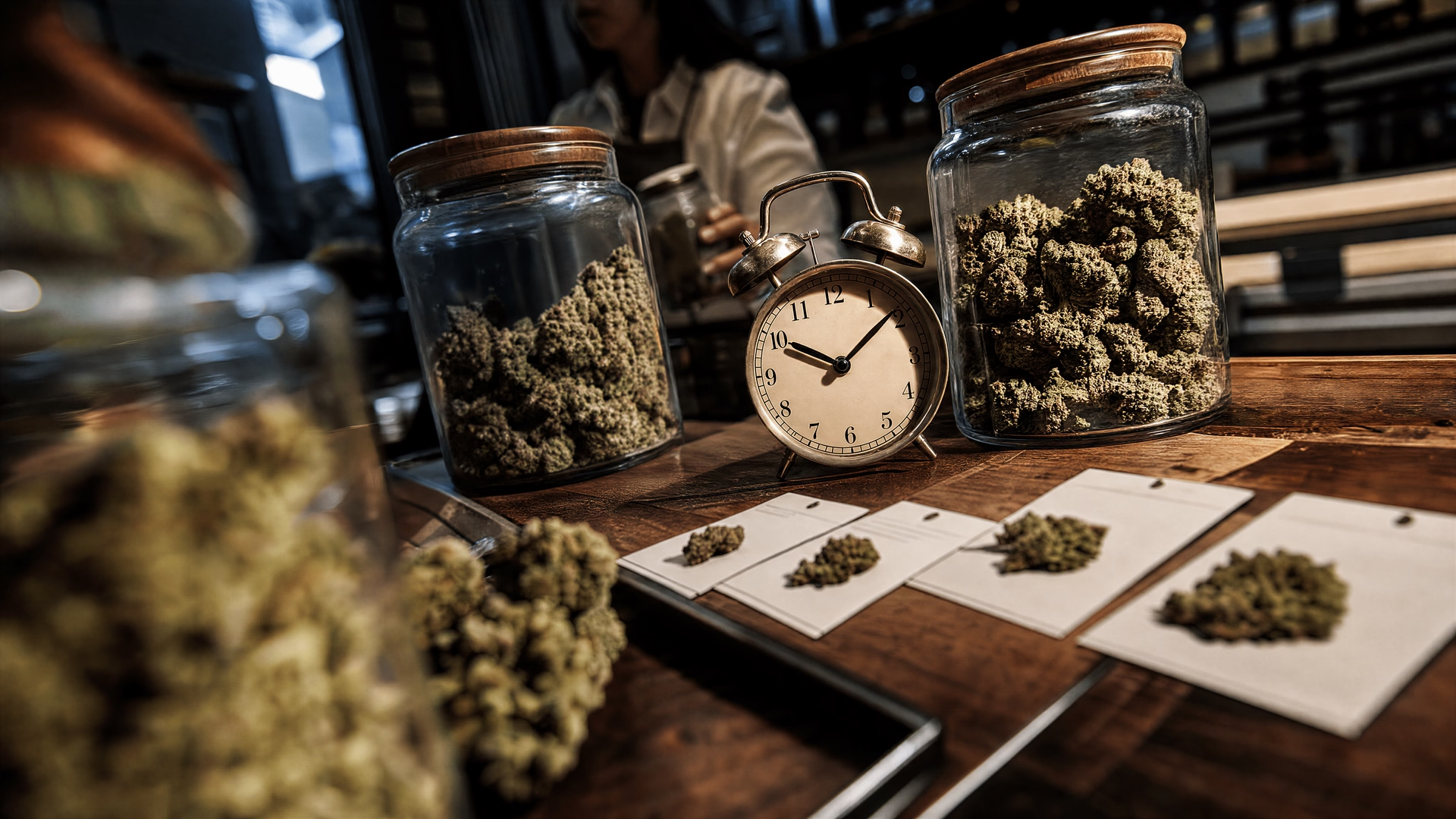
A cannabis social club in Germany is a member-owned registered association where adults aged 18+ can legally access cannabis flower and hashish. Members do not purchase cannabis commercially — contributions cover the club's shared cultivation and operating costs. These clubs operate within a strict legal framework — not commercial dispensaries. Members access up to 25 grams of cannabis flower and hashish, with all products tested and labelled for quality. While Markranstädt does not yet have an active club, nearby cities offer established cultivation clubs that welcome new members from surrounding areas.
Nearby cannabis social clubs
The absence of a cannabis social club in Markranstädt does not mean you are without options for legal cannabis access. Nearby cities offer well-established cultivation clubs that serve members from across Saxony and beyond. Lützen is your nearest starting point, with convenient connections from Markranstädt that make regular visits practical. Additional choices can be found in Lützen, Pegau, Schkeuditz, Bad Dürrenberg, Markkleeberg, Schkopau, Zwenkau, Leipzig, Leuna, and Böhlen, all operating under the same KCanG regulations and offering quality-tested products. Eligibility requirements are consistent across all cannabis social clubs: minimum age 18, Germany residency, and valid photo identification. We recommend calling ahead to confirm availability, required documents, and whether they are currently accepting new members. Membership costs approximately €20–50 per month, and your dispensing limits are 25 grams daily and 50 grams monthly.
Community Life in Markranstädt
Since the passage of the KCanG in 2024, Germany has cultivated a distinct cannabis culture built on regulation, transparency, and personal responsibility rather than commercial excess. The non-profit cannabis social club model exemplifies Germany commitment to community over commerce, with members sharing the costs and benefits of collective cultivation. In Saxony, this approach has gained traction, with multiple municipalities now hosting active cannabis grow clubs that welcome members from surrounding areas. While Markranstädt does not yet have a cannabis social club, the shifting cultural tide and growing public acceptance suggest it may not be far off. Public perception has shifted considerably — weed is now discussed in terms of health, wellness, and the right of adults to make informed choices. Together, club membership and the right to Eigenanbau three plants per adult household member provide comprehensive, legally protected access to cannabis.
Whether you plan to join a cannabis social club in Lützen or Eigenanbau three plants per adult household member at home in Markranstädt, understanding safe consumption practices is essential for your health and legal standing. Under the KCanG, you may not exceed 25 grams in a single day or 50 grams in any given month — these caps apply to every member equally. Public consumption of cannabis is illegal throughout Germany — you may only consume in private residences and designated areas. New users should start small and never combine cannabis flower and hashish with alcohol, as the interaction can produce unpredictable and intensified effects. The Clubs must maintain 200 meters distance from schools and playgrounds. Exclusion zone around educational institutions applies to both cannabis social clubs locations and individual consumption choices. When travelling with cannabis, use sealed containers and carry no more than 25 grams — exceeding this amount in transit is a prosecutable offence. For those cultivating at home, the limit is three plants per adult household member and seven seeds or five cuttings per month, with all plants kept out of public view.
Legal Framework
The legal basis for cultivation clubs in Germany is the
Consumer Cannabis Act, introduced in 2024. This landmark legislation permits adults aged 18 and older to join licensed cannabis grow clubs and to privately Eigenanbau up to three plants per adult household member for personal use. Under this framework, every growers' association must be a non-profit registered association with no more than 500 members, and financial transparency is mandatory. Distribution limits are firmly set at 25 grams per day and 50 grams per month per member, with all transactions documented. A mandatory Clubs must maintain 200 meters distance from schools and playgrounds. Setback from educational institutions applies to all club premises, and violations result in immediate license revocation. On-site consumption is prohibited, including near entrances at all licensed facilities. Marketing of cannabis products, brand promotion, and international transport remain illegal under all circumstances. The law also permits individuals to possess up to seven seeds or five cuttings per month for personal cultivation alongside their club membership. Unlike the
Netherlands, Germany does not have coffeeshops. Instead, since April 2024, licensed growers' associations under the Cannabis Act (KCanG) allow adult members to access cannabis legally.
Regional Cannabis Policy — Saxony
How Saxony implements cannabis policy depends on both the KCanG at the federal level and local administrative decisions at the municipal level. The Consumer Cannabis Act sets the floor — minimum age 18, 500 member cap per club, 25 grams daily distribution limit — while Saxony authorities can add further conditions based on local needs. In Leipzig, the pace of cannabis social club establishment has varied significantly, with urban areas typically adopting earlier and more enthusiastically than rural municipalities. The absence of a cannabis social club in Markranstädt is a practical matter — not a legal restriction — and the situation may change as awareness grows among the 13,053 residents. Regional health departments also play a crucial role, ensuring that cannabis flower and hashish distributed through cannabis social clubs meet rigorous safety, labelling, and quality standards. The trend across Saxony points toward broader geographic coverage of cannabis social clubs, with new applications expected in previously underserved areas.
Accessing a cultivation club when you live in Markranstädt requires just a short trip and some straightforward paperwork, nothing more complicated than that. The nearest options are in Lützen and the broader Lützen, Pegau, Schkeuditz, Bad Dürrenberg, Markkleeberg, Schkopau, Zwenkau, Leipzig, Leuna, and Böhlen area, all operating under the KCanG with consistent rules and standards.
Registration requirements are standardised across Germany by the KCanG: you need proof of being at least 18, an official Germany residence document, and the membership fee of roughly €20–50 per month. Once registered, you gain access to the club's full range of cannabis flower and hashish, dispensed within the 25 grams daily and 50 grams monthly limits with each transaction recorded. Clubs frequently provide informational resources, workshops, and printed guides about cannabis flower and hashish, safe dosing, and harm reduction strategies. Transport your products in sealed packaging and only within Germany borders — international transport is a serious criminal offence.