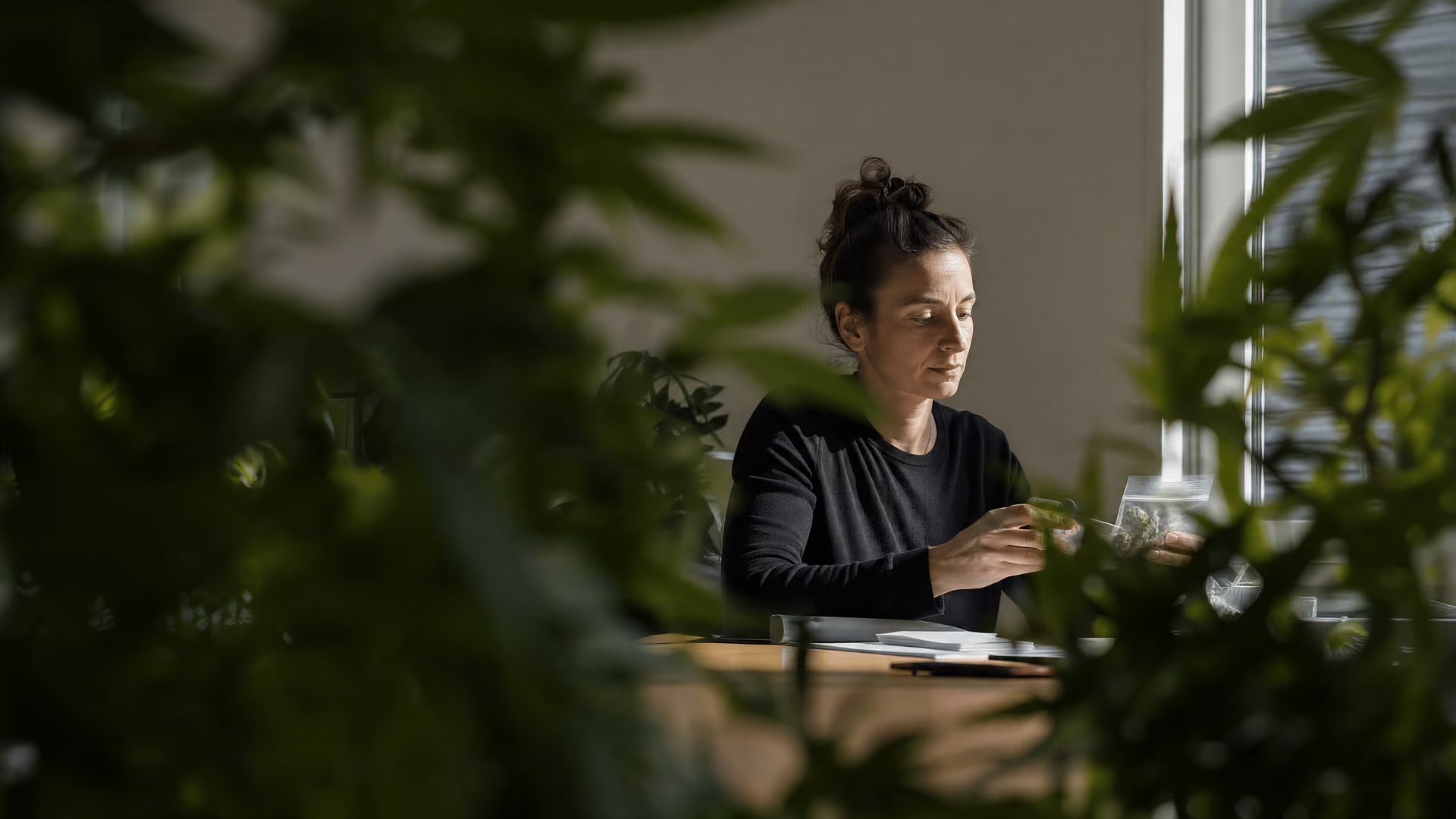
Cannabis social clubs in Kindelbrück
Kindelbrück, located in
Thüringen,
Germany, is a municipality of roughly
1,985 residents that does not currently have any registered cultivation clubs. The Consumer Cannabis Act allows cannabis social clubs across Germany, but Kindelbrück remains without one for the time being. Fortunately, nearby cities such as
Bilzingsleben, Kannawurf, Riethgen, Frömmstedt, Günstedt, Griefstedt, Büchel, Oberbösa, Etzleben, and
Herrnschwende already have operating cannabis social clubs that welcome new members from surrounding areas. Residents and visitors from Kindelbrück can explore these alternatives, many of which are only a short journey away and offer the full range of cannabis flower and hashish. The minimum age for membership is 18 years, and most clubs charge membership fees around €20–50 per month. All clubs operate under Germany's Cannabis Act (KCanG), effective since April 2024. At least six months of official German residency is required — tourists and new arrivals cannot join.
A
cannabis social club in
Germany is a member-owned registered association where adults aged 18+ can legally access cannabis flower and hashish. Members do not purchase cannabis commercially — contributions cover the club's shared cultivation and operating costs. These clubs operate within a strict legal framework — not commercial dispensaries. Members access up to 25 grams of cannabis flower and hashish, with all products tested and labelled for quality. While Kindelbrück does not yet have an active club, nearby cities offer licensed cultivation clubs that welcome new members from surrounding areas.
Cannabis social clubs Near Kindelbrück
For anyone in Kindelbrück looking to join a cannabis social club, the practical solution is to look at neighbouring cities where clubs are already operating and accepting new members.
Bilzingsleben currently has the nearest option and is well connected to Kindelbrück for regular visits. Across Thüringen, you will find additional cultivation clubs in Bilzingsleben, Kannawurf, Riethgen, Frömmstedt, Günstedt, Griefstedt, Büchel, Oberbösa, Etzleben, and Herrnschwende, each with their own selection of cannabis flower and hashish and community culture. Each growers' association in Germany operates under the same federal rules established by the KCanG — 25 grams daily limit, 50 grams monthly cap, minimum age 18, and a maximum of 500 members per club — so the experience is consistent regardless of which city you visit. Expect membership fees around €20–50 per month covering access to locally grown, lab-tested cannabis flower and hashish. Bringing a valid ID and proof of residency in Germany is all you need to get started with your first
registration.
Social Life in Kindelbrück
Since 2024, the KCanG has fundamentally reshaped how Germany approaches cannabis policy and public health. The cannabis social club model has become the centrepiece of Germany cannabis policy, prioritising collective cultivation over corporate distribution. In Thüringen, the cultural reception has been broadly positive, though adoption varies from city to city depending on local attitudes and administrative capacity. Kindelbrück, with its 1,985 residents, represents a community where demand may eventually lead to the establishment of a local cultivation club as awareness grows. Meanwhile, the broader cultural conversation around weed in Germany centres on health, personal freedom, and reducing black-market activity that persisted under prohibition. Both younger and older demographics value the clarity, safety, and legal protection that regulated cannabis social clubs provide over unregulated alternatives.
Responsible consumption of cannabis is a cornerstone of the legal framework in Germany, and understanding these obligations is important whether you are a club member or a private grower. Regardless of how you obtain your cannabis flower and hashish, responsible use is both a legal expectation and a personal commitment that protects you and your community. The KCanG sets clear boundaries: a maximum of 25 grams per day and 50 grams per month for club members. These limits exist to promote moderate use, prevent dependency, and support public health objectives. First-time users should begin with small amounts and wait to gauge the full effect before consuming more. It is illegal to consume cannabis in public spaces, near schools, or within Clubs must maintain 200 meters distance from schools and playgrounds. Of youth facilities in Germany. Driving under the influence is strictly prohibited and carries severe legal penalties including license suspension. Store all cannabis products securely, away from children and pets, in clearly labelled containers.
Legal Framework
The Consumer Cannabis Act, passed in 2024, provides the comprehensive legal foundation for all cannabis social clubs operating in Germany. The law covers three main pillars: cultivation clubs for collective cultivation and distribution, private Eigenanbau of three plants per adult household member for personal supply, and strict consumer protections designed to safeguard public health. Clubs operate as registered registered association entities, limited to 500 members with fully auditable accounts and mandatory compliance reporting. Members must be at least 18 years old and may receive cannabis flower and hashish up to 25 grams per day and 50 grams per month, with all dispensing electronically recorded. The law mandates the Clubs must maintain 200 meters distance from schools and playgrounds. Exclusion zone from schools, prohibits on-site consumption where applicable, and bans all forms of advertising or brand promotion. Non-compliant clubs face license withdrawal, financial penalties, and potential criminal charges for responsible individuals. Individuals may also hold up to seven seeds or five cuttings per month for personal growing purposes. Unlike the
Netherlands, Germany does not have coffeeshops. Instead, since April 2024, licensed growers' associations under the Cannabis Act (KCanG) allow adult members to access cannabis legally.
Cannabis Policy in Thüringen
The rollout of cannabis social clubs in Thüringen has been influenced by regional administration, local policy preferences, and the practical challenges of establishing new institutions. Across Sömmerda, the response has been uneven — some cities embraced cannabis social clubs early and fast-tracked licenses, while Kindelbrück remains without one. Thüringen manages the complete licensing pipeline: detailed applicant vetting, comprehensive premises inspection, and continuous regulatory oversight. While core rules like the Clubs must maintain 200 meters distance from schools and playgrounds. Setback and 500 limit are set at the federal level, Thüringen can layer additional requirements reflecting local needs. For Kindelbrück residents, this means that any future cannabis social club applications would need to satisfy both national standards and Thüringen-specific regulatory requirements. Trends across Thüringen point toward broader acceptance of cannabis social clubs as communities observe the positive track record of existing operations.
Accessing a cultivation club when you live in Kindelbrück requires just a short trip and some straightforward paperwork, nothing more complicated than that. Head to Bilzingsleben for the closest cannabis social club, or explore options in Bilzingsleben, Kannawurf, Riethgen, Frömmstedt, Günstedt, Griefstedt, Büchel, Oberbösa, Etzleben, and Herrnschwende — all clubs follow the same federal regulations. Registration requirements are standardised across Germany by the KCanG: you need proof of being at least 18, an official Germany residence document, and the membership fee of roughly €20–50 per month. Once registered, you gain access to the club's full range of cannabis flower and hashish, dispensed within the 25 grams daily and 50 grams monthly limits with each transaction recorded. Clubs frequently provide informational resources, workshops, and printed guides about cannabis flower and hashish, safe dosing, and harm reduction strategies. Transport your products in sealed packaging and only within Germany borders — international transport is a serious criminal offence.