













Why cannabis capsules are not just edibles in a different shape
Capsules look precise. They are labeled in milligrams, swallowed whole, and avoid smoke exposure. That tidy appearance misleads people. Oral cannabinoids often behave less predictably than inhaled cannabis because they are constrained by gastric emptying, bile release, intestinal absorption, liver metabolism, and whether food is in the system. A capsule may contain an exact amount of THC or CBD, yet the body may absorb only part of it, absorb it late, or transform it into something that feels stronger than expected.
Franjo Grotenhermen’s 2003 pharmacokinetic review made the central point years ago: oral THC has low, variable bioavailability, roughly 4% to 12%, largely because of stomach degradation and first-pass metabolism in the liver. Smoked cannabis, by contrast, was estimated at 10% to 35%. That gap matters. It means a person cannot sensibly translate their inhaled dose into a capsule dose by matching milligrams.
The common assumption that capsules are simple, tidy edibles
Popular guides flatten capsules into “edibles in pill form.” That is partly true in the narrow sense that both are swallowed and processed through the gut. It is false in the way that matters most: the route changes the drug experience itself.
Once swallowed, THC does not simply enter the bloodstream unchanged. It goes through first-pass hepatic metabolism, where CYP2C9 and CYP3A4 help convert delta-9-THC into 11-hydroxy-THC, an active metabolite long recognized in cannabinoid science, including work associated with Raphael Mechoulam’s era of early cannabinoid metabolism research. This helps explain the familiar oral pattern: nothing happens for a while, then the effects arrive later and may feel heavier, longer, and less easy to titrate than inhaled cannabis.
That delay is not minor. Health Canada states that swallowed cannabis can take 30 minutes to 2 hours to produce effects, with peak effects later still. Inhaled cannabis can be felt within seconds to minutes and often peaks within 15 to 30 minutes. Capsules are discreet, yes. More importantly, they are slow.
What capsules change: dosing precision, delayed onset, and a different risk profile
Capsules improve one kind of precision and worsen another. The contents may be more standardized than a homemade brownie or a smoked flower session, especially with well-formulated oil-filled softgels. But pharmacokinetic precision is another issue. Ryan Vandrey and others have shown that oral cannabinoid exposure varies with fed versus fasted state, and high-fat meals can materially increase absorption, especially with CBD. The same capsule taken before breakfast may not behave like the same capsule taken after a fatty dinner.
[1] Acute Pharmacological Effects of Oral Cannabis in Adults With and Without Cannabis Use Experience. Trenton R. Spindle, Ryan S. Vandrey, et al.. JAMA Network Open, 2020.
That timing mismatch drives one of the main risks: accidental redosing. Spindle et al., in a 2020 randomized trial in JAMA Network Open, found clear dose-dependent impairment and subjective effects from oral cannabis, with peaks occurring hours after administration. This is where capsules cause trouble. People mistake delayed onset for a weak dose, take more, and then meet both doses at once.
The article's core position: oral cannabinoids are pharmacologically distinct, not merely more discreet
This article takes a firm position: capsules are not just cleaner-looking edibles. They are a distinct delivery route with distinct liabilities. The same logic applies to CBD. WHO’s 2018 review found no evidence of abuse potential for pure CBD, but that says nothing about whether low-dose CBD capsules reflect clinical dosing. They usually do not. Epidiolex starts at 2.5 mg/kg twice daily and commonly rises to 10 mg/kg/day, far above the 10 to 25 mg capsule often presented as meaningful on its own.
Medical references show the same gap for THC. FDA labeling for dronabinol begins at 2.5 mg twice daily for AIDS-associated anorexia, with structured antiemetic dosing in chemotherapy. That is drug dosing, not folklore. Treat capsules accordingly.
Types of cannabis capsules and pills
Capsules look tidy. The category is not. A “cannabis pill” might be an FDA-approved synthetic THC medicine, a CBD isolate softgel, a full-spectrum hemp extract in olive oil, or a powder-filled capsule carrying cannabinoids adsorbed onto starch. Those products can share a dosage form while behaving very differently in the body.
That distinction matters because oral cannabinoids are already hard to predict. Grotenhermen’s 2003 pharmacokinetic review put oral THC bioavailability at roughly 4% to 12%, far below inhaled use and highly variable from person to person. So product type is not a cosmetic difference. It can change consistency, onset, and how much confidence a person should place in the label.
| Category | What it is | Examples from article | Key caution |
|---|---|---|---|
| Prescription oral cannabinoids | Regulated oral THC medicines | Dronabinol (Marinol) | Not interchangeable with consumer cannabis capsules |
| Non-prescription THC capsules | Cannabis extract in oil-filled softgels or capsules | Medical or adult-use dispensary products | First-pass metabolism can make effects feel heavier than inhaled THC |
| Hemp-derived THC products | Products marketed under hemp definitions or using related isomers | Hemp-derived delta-9-THC, delta-8-THC | Source label does not mean equivalent oversight or simpler pharmacology |
THC capsules: dronabinol, dispensary products, and hemp-derived gray zones
The cleanest definition of a THC capsule is a swallowed product that delivers delta-9-THC or a closely related THC isomer through the gastrointestinal tract. Within that definition, there are three very different legal and pharmacological buckets.
First are prescription oral cannabinoids. Dronabinol, sold as Marinol, is synthetic delta-9-THC in capsule form. It is not “weed in a pill.” It is a regulated drug with labeled indications and dosing. The FDA label lists 2.5 mg twice daily as a starting adult dose for AIDS-associated anorexia, while chemotherapy-induced nausea and vomiting dosing is often 5 mg/m² before chemotherapy and repeated afterward as needed. That is a medical reference point grounded in trials and prescribing practice.
Second are non-prescription THC capsules made under medical or adult-use cannabis laws. These usually contain cannabis extract dissolved in an oil, then packed into softgels or capsules. They may list THC alone or THC plus CBD and minor cannabinoids. The consumer market often treats these as straightforward edible equivalents. That is sloppy thinking. Swallowed THC undergoes first-pass liver metabolism, producing 11-hydroxy-THC, a strongly psychoactive metabolite discussed by Mechoulam and later pharmacokinetic literature. The result can feel delayed and then heavier than the same milligram number would suggest to someone used to inhalation.
Third are hemp-derived products living in legal gray zones. Some capsules are made with hemp-derived delta-9-THC under federal hemp definitions, while others contain delta-8-THC or chemically converted cannabinoids. These are not interchangeable with prescription dronabinol, and they should not borrow medical legitimacy from it. A label saying “hemp-derived” tells you something about claimed source material, not that the pharmacology is simpler or the regulatory oversight equivalent.
| Format | Typical composition | What the label does not prove |
|---|---|---|
| Isolate | Purified CBD with little or no intentionally retained THC or terpenes | Does not prove superior absorption or clinical effect |
| Broad-spectrum | CBD plus some other cannabis compounds with THC removed or reduced to trace levels | Profiles vary widely by product |
| Full-spectrum | Wider retained plant profile, often including small amounts of THC where permitted | Does not prove an entourage benefit or standardized chemistry |
CBD capsules: isolate, broad-spectrum, and full-spectrum formulations
CBD capsules are usually sold in three extract styles: isolate, broad-spectrum, and full-spectrum.
An isolate capsule contains purified cannabidiol with little or no intentionally retained THC, terpenes, or minor cannabinoids. This is the most stripped-down format. If a capsule says “25 mg CBD isolate,” the goal is usually ingredient simplicity and low THC exposure rather than botanical complexity.
Broad-spectrum CBD generally means CBD plus some other cannabis-plant compounds, but with THC removed or reduced to trace levels. The exact profile varies a lot. One broad-spectrum formula may carry cannabigerol and several terpenes; another may be little more than CBD with token leftovers from extraction.
Full-spectrum CBD usually means the extract retains a wider range of cannabinoids and other plant constituents, including small amounts of THC where law permits. That does not mean the chemistry is fixed across products. “Full-spectrum” is a loose market category, not a standardized pharmacopoeial term.
Entourage effect A proposed interaction in which multiple cannabis compounds together alter effects compared with a single isolated compound. In this article, the idea is treated as plausible but not well proven in human capsule trials.
Full-spectrum CBD capsules reliably outperform isolate capsules across conditions. Limited evidence
This is where consumer rhetoric often outruns evidence. Full-spectrum products are commonly linked to “entourage” claims, but plausible mechanism is not the same thing as proven clinical superiority. Human trial evidence showing that full-spectrum CBD capsules reliably outperform isolate capsules across conditions is still thin. By contrast, the pharmaceutical CBD evidence base comes from a very specific product: Epidiolex. Its FDA labeling recommends starting at 2.5 mg/kg twice daily, then increasing to 5 mg/kg twice daily after one week. Those doses are far above the 10 to 25 mg CBD capsule common in wellness markets. The gap is enormous.
| Feature | Softgels | Hard-shell capsules |
|---|---|---|
| Common fill | Liquid or semi-liquid oils | Powder, granules, beads, or thickened matrices |
| Best fit in article | Oil-based cannabinoids | Powdered extract, isolate blends, infused powders |
| Handling | Sealed shell reduces leakage and oxidation during normal handling | More flexible fill types but less ideal for simple liquid oils |
| Main limitation | Not automatically superior | May show more variability if fill is poorly engineered |
Softgels versus hard-shell capsules
Softgels are usually one-piece gelatin or plant-based capsules filled with liquid or semi-liquid cannabinoid preparations, most often oils. They are popular because oils are easier to portion uniformly than sticky resin, and the sealed shell reduces leakage and oxidation during normal handling. For manufacturers, that improves consistency. For users, it often means less mess and less variation capsule to capsule.
Hard-shell capsules are two-piece shells, typically filled with powder, granules, beads, or occasionally oil held in a thickened matrix. In cannabis products, they may contain powdered hemp extract, CBD isolate blended with excipients, or an infused powder made by adsorbing oil onto a carrier. They can also hold liquids, but that is less common unless the formulation is specifically engineered for it.
Softgels are not automatically superior. They are simply better suited to oil-based cannabinoids, which are themselves common because cannabinoids are lipophilic.
| Format | Typical carrier | Potential advantage | Main question |
|---|---|---|---|
| Oil-filled capsule | MCT oil, hemp seed oil, olive oil, or other lipid carriers | Practical cannabinoid dissolution and often better content uniformity | Food effects still change absorption |
| Powder-filled capsule | Powdered extract, isolate blends, or oil adsorbed onto a carrier | Cheaper formulation and easier ingredient combinations | Whether the cannabinoid is evenly distributed and truly dissolved before filling |
Oil-filled capsules versus powder-filled products
Oil-filled capsules usually contain cannabinoids dissolved in MCT oil, hemp seed oil, olive oil, or another lipid carrier. Since THC and CBD dissolve readily in fats, this format makes formulation practical and can improve content uniformity. Food effects still matter. Vandrey and others have shown that fed versus fasted state can materially alter cannabinoid exposure, especially with CBD, and high-fat meals may increase absorption.
Powder-filled products can be cheaper to formulate and easier to combine with other ingredients, but they raise more questions. Is the cannabinoid actually dissolved and adsorbed evenly onto a carrier, or is it a dry blend with greater risk of uneven distribution? Is the powder an isolate, a spray-dried emulsion, or ground plant material? Those details affect consistency more than the capsule shell does.
Full-spectrum, broad-spectrum, and isolate: what these labels usually mean and what they do not prove
These labels describe extract philosophy, not clinical outcome. Usually, isolate means one dominant cannabinoid, broad-spectrum means several compounds with little or no THC, and full-spectrum means a wider retained plant profile including trace THC. Usually.
They do not prove absorption quality, dose accuracy, terpene stability, or therapeutic advantage. They do not tell you whether the capsule was taken with food, which can change exposure. They do not settle drug interaction risk either; CBD is metabolized by CYP3A4 and CYP2C19 and can inhibit multiple CYP enzymes, while oral THC involves CYP2C9 and CYP3A4 pathways.
So the label is a starting point. Not a verdict.

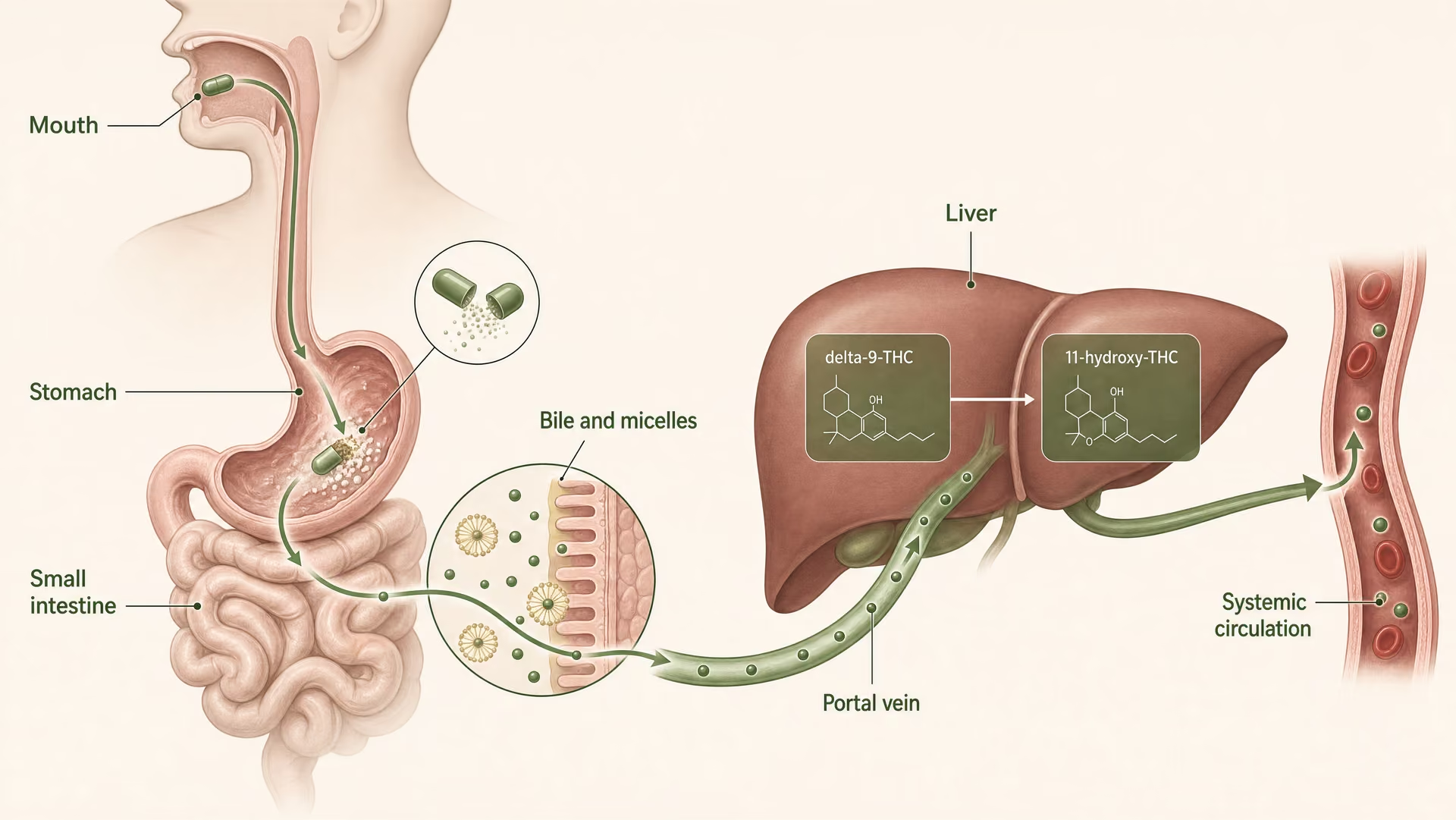
How cannabis capsules work in the digestive system
Oral capsule pathway, step by step
- 1 Capsule shell breaks down in gastric fluid.
- 2 Contents leave the stomach during gastric emptying.
- 3 Cannabinoids are presented to the small intestine for absorption.
- 4 Absorbed compounds travel by portal blood or, in some cases, lymphatic transport.
- 5 The liver metabolizes part of the dose before wide systemic circulation.
Cannabis capsules do not behave like inhaled cannabis, and they are not just “edibles in pill form” with tidier packaging. Swallowed cannabinoids move through a slow, lossy system: capsule shell breakdown, gastric emptying, intestinal absorption, transport through either the portal vein or lymphatic system, then liver metabolism before much of the dose ever reaches systemic circulation. That sequence is why oral effects are delayed, harder to predict, and often stronger per milligram than many people expect once they finally arrive.
Franjo Grotenhermen’s 2003 review in Clinical Pharmacokinetics remains a reference point here: oral THC bioavailability was estimated at only 4% to 12%. That is strikingly low. By contrast, smoked THC was estimated at roughly 10% to 35%, even with wide variation from inhalation technique and product differences. Oral capsules are less efficient, slower, and more dependent on digestion.
Health Canada’s public guidance reflects the practical result: swallowed cannabis may take 30 minutes to 2 hours to be felt, with peak effects often later still. That lag is not a minor detail. It is the defining feature of the route.
Disintegration in the stomach and release into the small intestine
A capsule first has to open. Softgels typically contain cannabinoids dissolved in oil, while hard-shell capsules may hold oil, powder, or a powder adsorbed onto a carrier. Either way, the shell must disintegrate in gastric fluid before the contents can move onward. Gelatin and plant-based shells usually break down in the stomach within minutes, but that does not mean cannabinoids are absorbed there to any meaningful extent.
The stomach is mostly a holding chamber for this route. Its acidic environment can contribute to degradation, and gastric emptying is highly variable. A person who has eaten a large meal, has slower motility, or takes medications that alter stomach emptying may experience a later onset even if the capsule dissolved quickly. This is one reason two identical THC capsules can feel completely different on different days.
The small intestine is where most absorption actually happens. Once the shell opens and the oil or powder is released, cannabinoids need to be presented to the intestinal lining in a form that can cross it. Formulation matters. Oil-filled softgels often produce more consistent release than dry powder because cannabinoids are already dissolved in a lipid vehicle rather than needing to disperse after the capsule opens. That said, “more consistent” does not mean predictable in the way an inhaled dose is predictable. Oral variability is still baked into the route.
Absorption of lipophilic cannabinoids and the role of dietary fat
THC and CBD are highly lipophilic molecules. They do not mix well with water, and the gut is a watery environment. That creates an immediate absorption problem. For a cannabinoid to cross the intestinal wall efficiently, it usually needs help from bile acids, dietary fats, and micelle formation. In plain terms, fat in the gut can improve the body’s ability to package and absorb these oily compounds.
This is why fed versus fasted state matters so much. Ryan Vandrey and colleagues, along with other oral cannabinoid pharmacokinetic studies, have shown that food can materially change exposure after swallowing cannabinoids. High-fat meals are especially important for CBD formulations, often increasing total absorption and peak concentrations. The same capsule taken on an empty stomach may barely register; taken with a fatty meal, it may hit harder and last longer.
After intestinal uptake, cannabinoids can follow two main transport paths. One is the portal venous system, which sends absorbed compounds straight to the liver. The other is lymphatic transport, which is more likely when cannabinoids are dissolved in long-chain triglyceride oils and incorporated into chylomicrons after a meal. Lymphatic transport can partly bypass immediate first-pass liver metabolism, at least initially, and may increase systemic exposure. But this is formulation-dependent and not guaranteed. Consumer discussions often treat MCT oil or “nano” claims as if they solve oral inconsistency. Usually they do not solve it; they may only shift it.
This poor water solubility is the mechanistic reason oral cannabinoids are hard to absorb consistently. The dose inside the capsule is not the same thing as the dose reaching circulation. Milligrams on the label describe what was swallowed, not what was delivered.
First-pass metabolism Drug metabolism that occurs after absorption from the gut but before broad systemic circulation, mainly during passage through the liver. For oral THC, this process produces 11-hydroxy-THC and changes the subjective effect profile.
First-pass liver metabolism and the formation of 11-hydroxy-THC
The liver is where oral THC becomes pharmacologically distinctive. After absorption through the gut and transport into the portal circulation, delta-9-THC undergoes substantial first-pass metabolism before much reaches the bloodstream unchanged. CYP2C9 is a major enzyme in this process, with CYP3A4 also contributing. One major product is 11-hydroxy-THC, a psychoactive metabolite that has long been recognized in cannabinoid science, dating back to early work associated with Raphael Mechoulam’s era of metabolism research.
This metabolite matters. A lot.
11-hydroxy-THC crosses into the brain efficiently and contributes materially to the subjective effects of oral THC. That helps explain the familiar pattern: delayed onset, then effects that feel stronger, heavier, or longer-lasting than expected from the same nominal milligram amount inhaled. It is not only that oral THC is slower. It is biochemically different after the liver has processed it.
That difference has been seen in controlled human research. In the randomized trial by Spindle et al. published in JAMA Network Open in 2020, oral THC in edible form produced dose-dependent drug effects and impairment with peaks occurring hours after administration rather than minutes. Capsules follow the same oral pharmacology even if the exact formulation differs from a brownie.
This is also where drug interaction risk starts to become impossible to ignore. Anything that inhibits or induces CYP2C9 or CYP3A4 can alter THC exposure and metabolite formation. That includes some antifungals, certain antibiotics, antiseizure drugs, and other commonly used medications. The capsule route is not automatically safer because it avoids smoke. Metabolically, it can be more complicated.
THC vs CBD after swallowing
- THC
- Meaningful first-pass conversion to 11-hydroxy-THC contributes to intoxication and prolonged impairment.
- CBD
- No equivalent psychoactive metabolite drives delayed intoxication; the route is shaped more by absorption and interaction risk.
- Shared issue
- Both compounds show slow onset, poor oral bioavailability, and strong dependence on food and formulation.
Why CBD and THC behave differently after swallowing
CBD and THC share poor oral bioavailability, slow onset, and high dependence on formulation and food. They part ways in what happens next.
THC’s oral profile is defined by active metabolite formation. The liver converts a meaningful fraction of delta-9-THC into 11-hydroxy-THC, which adds to intoxication and can prolong impairment. CBD does not have an equivalent psychoactive metabolite driving delayed intoxication. Its swallowed effects are therefore less about metabolic amplification and more about whether enough drug is absorbed to reach useful concentrations.
CBD is metabolized mainly by CYP3A4 and CYP2C19, and it can inhibit several CYP enzymes itself. That makes interaction risk especially important with clobazam, valproate, warfarin, sedatives, and other drugs with narrow therapeutic windows or CNS effects. The WHO Expert Committee on Drug Dependence concluded in 2018 that pure CBD showed no evidence of abuse potential in humans at the available evidence. That should not be confused with “interaction-free” or even “effective at any dose.” Those are separate questions.
The gap between clinical CBD dosing and capsule marketing is large. Epidiolex, the FDA-approved oral CBD product, starts at 2.5 mg/kg twice daily and commonly goes to 5 mg/kg twice daily. For a 70 kg adult, that is 350 mg per day at maintenance, with some patients titrated much higher. A 10 or 25 mg CBD capsule sits nowhere near that therapeutic scale. That does not mean low-dose CBD capsules do nothing in every case. It means people should stop pretending they resemble pharmaceutical oral CBD exposure.
Swallowed THC and CBD both pass through the same digestive bottlenecks. Only THC reliably gains a potent psychoactive partner from first-pass metabolism. That single fact explains much of what users experience: slow rise, variable intensity, and a mismatch between the label and the lived effect.
Onset, peak, duration, and why oral timing fools people
Capsules look tidy. Their effects are not.
The recurring mistake with oral cannabis is simple: someone takes a capsule, feels little at 30 to 45 minutes, assumes the dose was too weak, and takes more. That error is built into the pharmacokinetics. Swallowed cannabinoids move through the stomach and small intestine, are absorbed unevenly, then pass through the liver before reaching systemic circulation in meaningful amounts. Oral THC often produces a slower but longer psychoactive profile than inhaled THC, and that difference is large enough that people should stop using smoking or vaping as their timing template.
Franjo Grotenhermen’s 2003 review in Clinical Pharmacokinetics remains a good anchor here. Oral THC bioavailability was estimated at only 4% to 12%, compared with roughly 10% to 35% for smoked cannabis, depending on inhalation technique and product variables. Low exposure is only part of the story. Oral THC is also converted in the liver to 11-hydroxy-THC, an active metabolite with strong psychoactive effects. That is one reason capsules can seem weak at first, then arrive late and hit harder than expected.
Typical onset windows for capsules and pills
Health Canada states that when cannabis is swallowed, effects can take 30 minutes to 2 hours to be felt. That is the practical window most people should expect from capsules and pills, whether they are softgels filled with oil or hard-shell capsules containing infused material. For some people, onset slips later than that, especially after a large meal.
By contrast, Health Canada says inhaled cannabis can be felt within seconds to minutes and peaks within 15 to 30 minutes. That is not a minor distinction. It means a person used to inhalation can misread oral timing almost immediately. At 20 minutes, inhaled THC has usually declared itself. At 20 minutes, a capsule may still be sitting in the stomach.
Food matters a lot here. Ryan Vandrey and other oral cannabinoid researchers have repeatedly shown that fed versus fasted state changes cannabinoid exposure. High-fat meals can increase absorption, particularly with CBD but also with lipid-based cannabinoid formulations more broadly. So the same 10 mg THC capsule may feel delayed and modest on an empty stomach one day, then stronger and more prolonged when taken with a fatty dinner on another.
Peak effect timing compared with smoking and vaping
People often focus on onset and ignore peak. That is where oral cannabis causes trouble.
With smoking or vaping, the peak arrives early. Effects rise quickly, and most users know within minutes whether they overshot. Oral THC does the opposite. Health Canada’s public guidance notes that peak effects from swallowed cannabis occur later than inhaled cannabis and can last much longer. Controlled data support that warning. In the randomized trial by Spindle et al., published in JAMA Network Open in 2020, oral edible THC in healthy adults produced dose-dependent intoxication and impairment with peak effects occurring hours after administration, not minutes after dosing.
Capsules follow that same oral pattern. The exact clock time varies by formulation and individual physiology, but the broad rule is reliable: the peak is delayed, often by a lot. That delay is why redosing at 45 minutes is such a common mistake. The person is not correcting a weak first dose. They are often stacking a second dose on top of a first dose that has not peaked yet.
This is also where inhalation experience misleads experienced users. Someone who comfortably smokes or vapes THC may assume their oral tolerance maps neatly onto milligrams in a capsule. It does not. First-pass metabolism changes the experience, not just the timing.
Duration, residual impairment, and delayed redosing mistakes
Oral cannabis usually lasts longer than inhaled cannabis. That is the plain-language version, and it is accurate.
Health Canada warns that swallowed cannabis can produce effects lasting much longer than inhaled routes. Psychoactive effects may extend for many hours, and impairment can persist after the obvious “peak” feeling fades. The Spindle 2020 study found measurable impairment and subjective drug effects extending well beyond the first hour, which matches real-world reports from capsule users who feel functional too early, then find concentration, reaction time, or coordination still off later in the day.
The main behavioral error is delayed redosing. A person takes one capsule, waits 30 to 45 minutes, decides “nothing is happening,” takes another, then gets both peaks compressed into the same later window. This is not rare. It is the standard oral overconsumption pattern.
Medical oral THC products make this point indirectly. FDA labeling for dronabinol does not treat oral THC as something to improvise casually. Adult starting doses are structured and conservative, such as 2.5 mg twice daily for appetite stimulation. Clinical dosing is careful because oral THC is not fast, tidy, or especially predictable.
Why the same capsule can feel different on different days
The short answer is variability. The longer answer is gastric emptying, food composition, metabolism, formulation, tolerance, and body composition interacting at once.
Gastric emptying is a major factor. If the stomach empties slowly, the capsule reaches the small intestine later, and onset drifts. A heavy meal, especially a high-fat meal, can both delay transit and increase eventual cannabinoid absorption. That combination is confusing: later start, stronger finish.
Metabolism also differs person to person. THC is processed largely through CYP2C9 and CYP3A4, while CBD involves CYP3A4 and CYP2C19 and can inhibit several enzymes. Those pathways vary genetically and can be altered by other drugs. Some people generate more active metabolites or clear cannabinoids more slowly. Same capsule. Different day. Different result.
Tolerance matters too. Regular THC exposure can blunt subjective intensity, though it does not erase delayed impairment. Body composition can influence distribution because cannabinoids are lipophilic. So can sleep, stress, and recent cannabis use. Formulation matters as well: oil-filled softgels often produce more consistent absorption than loosely mixed powder capsules, but consistency is still relative, not guaranteed.
That is the real lesson of oral timing. Capsules are not “edibles in pill form” in any simple sense. They are a slow, variable oral delivery system shaped by digestive transit and liver metabolism. If people treated that as the starting point rather than an afterthought, far fewer would redose too early.
Bioavailability and dose variability
Capsules look precise because the label is precise. Pharmacokinetics are not.
A 10 mg THC capsule tells you how much delta-9-THC was put into the capsule. It does not tell you how much reaches systemic circulation unchanged, how much is converted in the liver to 11-hydroxy-THC, or how strongly the dose will hit on a given day. That gap between labeled dose and absorbed dose is where most of the confusion around oral cannabinoids starts.
Bioavailability The fraction of a swallowed dose that reaches the bloodstream in an active form. For oral cannabis, the label amount and the absorbed amount can differ substantially.
What bioavailability means in practical terms
Bioavailability is the fraction of a dose that actually reaches the bloodstream in an active form. For oral cannabis, that number matters more than branding, strain names, or “full-spectrum” claims.
Franjo Grotenhermen’s 2003 review in Clinical Pharmacokinetics remains a reference point here: oral THC bioavailability is generally reported at about 4% to 12%. That is a low range, and an unstable one. If a capsule contains 10 mg of THC, the amount that reaches circulation as unchanged THC may be only a small portion of that. Some of the dose is degraded, some is not absorbed, and a large share is altered by first-pass liver metabolism before it ever circulates widely.
This is why oral dosing cannot be read literally. Ten milligrams swallowed is not equivalent to 10 mg inhaled, and it is not even reliably equivalent to another 10 mg swallowed on a different day. By comparison, Grotenhermen summarized smoked cannabis bioavailability at roughly 10% to 35%, which helps explain why inhaled cannabis feels more immediate and often more titratable.
For CBD, the same principle applies even if the subjective effects are different. A 25 mg CBD capsule is a labeled content amount, not a guarantee that 25 mg reaches blood levels associated with clinical effects. This point is often ignored when consumer CBD doses are compared with prescription evidence. The FDA labeling for Epidiolex starts at 2.5 mg/kg twice daily and increases to 5 mg/kg twice daily. For a 70 kg adult, that is 350 mg to 700 mg per day, far above the capsule strengths commonly discussed in wellness markets.
Why oral THC has low and inconsistent bioavailability
Oral THC is inefficient for several reasons, and all of them matter.
First, cannabinoids are highly lipophilic. They do not dissolve well in water, which makes absorption through the gastrointestinal tract inherently messy. Second, the stomach and intestines are variable environments. Gastric emptying time changes with meal size, fat content, hormones, other drugs, and individual physiology. Third, once THC is absorbed from the gut, it passes through the portal vein to the liver before entering systemic circulation. That first-pass metabolism removes a significant fraction of the parent compound.
The liver does not just inactivate THC. It also converts part of it into 11-hydroxy-THC, mainly through CYP2C9 and CYP3A4 pathways. That metabolite is psychoactive and helps explain a common oral-cannabis pattern: nothing happens for a while, then the effects arrive late and feel heavier than expected. Raphael Mechoulam’s generation of cannabinoid research helped establish why 11-hydroxy-THC matters; later pharmacokinetic work made clear that swallowed THC produces much more of this metabolite than inhaled THC.
Timing adds another layer of variability. Health Canada notes that swallowed cannabis may take 30 minutes to 2 hours to produce effects, with peak effects occurring later still. Spindle et al. in JAMA Network Open (2020), using oral edible cannabis in healthy adults, showed the same broad story: dose-dependent impairment and subjective effects, but on a delayed, hours-long curve rather than a minutes-long one. That slow rise is exactly why people overshoot with capsules.
Formulation terms in plain English
- MCT oil
- A common carrier oil used to dissolve cannabinoids for capsule filling.
- SEDDS / SMEDDS
- Self-emulsifying systems designed to form fine droplets after swallowing so lipophilic cannabinoids are easier for the gut to absorb.
- Lymphatic transport
- A route that can partly bypass immediate liver first-pass metabolism when cannabinoids are incorporated into chylomicrons after a meal.
How formulation technology can change absorption
Formulation is not marketing fluff. It can change exposure.
A simple hard capsule filled with powder behaves differently from a softgel containing cannabinoids dissolved in oil. Since THC and CBD are fat-soluble, putting them into an oil vehicle can improve dispersion in the gut and sometimes reduce variability. MCT oil is common because it is relatively stable and easy to formulate. Sesame oil also has a long history in cannabinoid pharmaceuticals; dronabinol capsules were classically formulated in sesame oil for a reason.
Still, oil alone does not solve oral unpredictability. More advanced systems try to improve absorption by creating smaller droplets or self-emulsifying mixtures that disperse more efficiently in gastrointestinal fluid. Self-emulsifying drug delivery systems, often abbreviated SEDDS or SMEDDS, are designed so the oil phase forms a fine emulsion after swallowing. In plain language, they help lipophilic cannabinoids present themselves to the gut in a form that is easier to absorb.
Those technologies may raise exposure and sometimes shorten onset. They do not make oral delivery fully predictable. Any claim that a capsule “hits the same every time” should be treated skeptically unless backed by real human pharmacokinetic data.
Fed versus fasted state, carrier oils, and self-emulsifying systems
Food can change cannabinoid absorption dramatically. Ryan Vandrey and other oral cannabinoid researchers have shown that fed versus fasted conditions are not a minor detail. A high-fat meal can materially increase cannabinoid exposure, especially with CBD and oil-based products. The same capsule taken on an empty stomach may feel weak, then feel much stronger after a fatty meal on another day.
That is one reason dose diaries matter in clinical practice. Not because patients are careless, but because oral PK is unstable.
Carrier oils influence this too. MCT oil may support faster gastric processing in some contexts; sesame oil has established pharmaceutical use; long-chain triglyceride vehicles may interact differently with bile secretion and lymphatic transport. Then there are self-emulsifying systems, which are built specifically to reduce the dependence on whatever the gut happens to be doing that day.
None of this changes the core rule: the label states the swallowed dose, not the systemic dose. With capsules, formulation, meal timing, metabolism, and first-pass conversion all stand between the number on the bottle and the effect in the body.
Dosing strategies for beginners and experienced users
Dosing cannabis capsules is not a matter of reading the label and assuming the body will cooperate. Oral cannabinoids are slow, inconsistent, and heavily shaped by digestion and liver metabolism. Grotenhermen’s 2003 review in Clinical Pharmacokinetics put oral THC bioavailability at roughly 4% to 12%, far below and far less predictable than inhaled cannabis, which he estimated at 10% to 35%. That gap is why capsule dosing needs route-specific logic. A person who feels “fine” after several inhalations may still be overwhelmed by what looks like a modest oral dose taken on the wrong day, with the wrong meal, or from a formulation that absorbs better than expected.
This is educational information, not personal medical advice. If someone has cardiovascular disease, a history of panic, bipolar disorder, psychosis, seizure disorders, liver disease, or takes medicines that interact with CYP enzymes, clinician input matters before experimenting with oral cannabinoids.
Beginner THC dosing: why low means genuinely low
For THC capsules, “start low” should be interpreted literally, not symbolically. A beginner should think in the low single digits of milligrams, not in the range many casual guides imply. Medical references support that caution. The FDA labeling for dronabinol, a synthetic oral delta-9-THC capsule, lists 2.5 mg twice daily as a starting adult dose for appetite stimulation in AIDS-associated anorexia. That is a medicine with standardized content and known pharmacology, and even there the starting point is small.
The reason is pharmacokinetic, not moral. Swallowed THC moves through the stomach and small intestine, enters portal circulation, and then undergoes first-pass metabolism in the liver, where a portion is converted into 11-hydroxy-THC. That metabolite is strongly psychoactive. Raphael Mechoulam’s earlier cannabinoid work helped establish why oral THC can feel different from inhaled THC rather than merely slower. Delayed onset plus active metabolite formation is the classic recipe for overdoing it.
A practical beginner range for THC capsules is often 1 to 2.5 mg if the person is sensitive, older, anxious, or inexperienced; 2.5 to 5 mg is already enough for many new users. Going straight to 10 mg because that amount is common on labels is a bad idea for true beginners. Not universally disastrous, but bad dosing hygiene.
Timing matters as much as milligrams. Health Canada states that swallowed cannabis may take 30 minutes to 2 hours to be felt, with peak effects often occurring later and duration lasting much longer than inhaled use. Spindle et al., in a 2020 JAMA Network Open trial using oral THC edibles, found dose-dependent impairment and subjective effects that peaked hours after administration, not minutes after. Capsules follow the same route. If a beginner takes a THC capsule and decides after 45 minutes that “nothing is happening,” that is exactly the point at which many overdosing stories begin.
Food changes the picture. Ryan Vandrey and colleagues, along with other oral cannabinoid pharmacokinetic work, have shown that fed versus fasted conditions can materially change exposure. A capsule taken after a high-fat meal may hit harder, later, and longer than the same capsule taken on an empty stomach.
CBD capsule dosing: wellness products versus clinical evidence
CBD capsules are often discussed as if all doses sit on one continuum. They do not. There is a large gap between common consumer habits and doses used in clinical trials.
A 10 mg or 25 mg CBD capsule is typical in wellness-oriented products. That does not make it meaningless, but it is not comparable to the FDA-approved dosing of Epidiolex. The 2024 prescribing information recommends starting at 2.5 mg/kg twice daily, which equals 5 mg/kg/day, then increasing after one week to 10 mg/kg/day; some patients go to 20 mg/kg/day. For a 70 kg adult, that means an initial total daily dose of 350 mg, with maintenance around 700 mg/day, and potentially 1,400 mg/day in some cases. One 10 mg capsule is nowhere near that pharmacologic scale.
That comparison matters because many articles blur “studied CBD” with “consumer CBD.” They are often talking about different dose universes. WHO’s 2018 Expert Committee on Drug Dependence concluded that pure CBD showed no evidence of abuse potential in humans based on available evidence, which is useful from a safety standpoint. It is not proof that low-dose CBD capsules reliably produce clinically meaningful effects for anxiety, sleep, pain, or inflammation.
Product composition matters too. A softgel with CBD dissolved in oil may absorb differently from a powder-filled hard capsule. Full-spectrum products may contain minor cannabinoids that alter subjective effects or tolerability, but broad claims about an entourage effect outrun the human evidence. Food matters here as well, sometimes dramatically. High-fat meals can increase CBD exposure, which means the same nominal dose may not behave the same way from one day to the next.
CBD also has a real drug-interaction profile. It is metabolized via CYP3A4 and CYP2C19 and can inhibit multiple CYP enzymes. That is especially relevant for clobazam, some antiepileptics, anticoagulants, and sedatives. Low-dose consumer CBD is not automatically interaction-free.
Experienced users, tolerance, and when inhaled tolerance does not translate cleanly to oral dosing
Experienced cannabis users often make one predictable mistake: they assume tolerance built through smoking or vaping maps neatly onto capsules. It does not.
Inhaled cannabis reaches the bloodstream within seconds to minutes and peaks quickly; Health Canada notes peak inhaled effects within about 15 to 30 minutes. Oral THC arrives slowly, is absorbed unpredictably, and generates more 11-hydroxy-THC through first-pass metabolism. A person who routinely inhales cannabis may tolerate rapid THC delivery to the lungs but still be surprised by the shape of an oral dose. The peak is later, the plateau can be longer, and the intoxication may feel heavier than expected relative to the milligram number.
That does not mean experienced users should be dosed like beginners. Tolerance is real. But the oral route still deserves a reset. Someone comfortable with inhaled cannabis should often begin oral THC at a moderate test dose rather than jumping to a level that matches their inhaled session in spirit. If a person usually uses inhaled THC daily, that history may justify starting above the novice range, but not by much. “I smoke a lot” is weak evidence for swallowing 20 or 30 mg THC on a first oral trial.[2] Marijuana and Public Health. National Institute on Drug Abuse. National Institute on Drug Abuse, 2024.
Tolerance also works unevenly. Some users become less sensitive to euphoria yet remain vulnerable to tachycardia, anxiety, sedation, or next-day fog. Dependence risk should not be ignored just because capsules avoid smoke; NIDA estimates that about 30% of cannabis users may develop some degree of cannabis use disorder.
What to log after taking a capsule
- Product type and labeled cannabinoid content
- Time taken and whether it was with food
- Meal type, especially whether it was high-fat
- Onset time, peak time, and total duration
- Desired effects and unwanted effects
- Any alcohol or concurrent medication use
Practical redosing rules and record-keeping
For THC capsules, the safest redosing rule is boring: wait a long time. Not 30 minutes. Not “until you get impatient.” A minimum of 2 hours is more defensible, and for many people 3 hours is smarter, especially with a first trial, a new product, or a high-fat meal on board. If effects are building, do not redose into the ascent.
When redosing, keep the increment small. If the first dose was 2.5 mg THC, another 2.5 mg is reasonable; doubling or tripling because the onset felt weak is how delayed overconsumption happens. For CBD, redosing carries less intoxication risk, but the same record-keeping principle applies because responses can still vary with food, formulation, and other medicines.
A written log helps more than intuition. Record the product type, labeled cannabinoid content, time taken, whether it was with food, what kind of meal, onset time, peak time, duration, desired effects, unwanted effects, and any concurrent alcohol or medication use. After three or four entries, patterns often become obvious. Empty-stomach dosing may feel weaker but faster. Evening dosing may leave next-morning grogginess. One softgel may be more consistent than another hard-shell capsule even at the same label strength.
That kind of record is not obsessive. With oral cannabinoids, it is the difference between guessing and actually learning what the route does in your body.
| Route | Main advantage | Main drawback from article | Timing profile |
|---|---|---|---|
| Capsules | Discreet use and easier label-based dose accounting | Slow onset, first-pass metabolism, meal-dependent variability | 30 minutes to 2 hours to feel; peaks later |
| Smoking / vaping | Fast feedback and easier real-time titration | Respiratory exposure and technique-dependent delivery | Seconds to minutes onset; peak about 15 to 30 minutes |
| Tinctures | Can allow finer dose adjustments and sometimes faster onset if partly absorbed orally | Technique matters and much may still be swallowed | Mixed oral-mucosal timing |
| Homemade edibles | Accessible format without specialized capsule products | Uneven mixing, decarboxylation, and portioning errors | Oral timing with high variability |
Advantages and trade-offs compared with smoking, vaping, tinctures, and edibles
Capsules look simple because they package cannabinoids into a familiar dosage form. The body does not treat them simply. Compared with smoking, vaping, tinctures, and conventional edibles, capsules offer cleaner administration and easier dose accounting on the label, yet they still carry the defining liabilities of oral cannabinoid pharmacokinetics: slow onset, strong first-pass liver metabolism, and wide variability from person to person and meal to meal.
Discretion, convenience, and measured labeling
This is where capsules genuinely shine. They are odor-light, portable, easy to store, and easy to fit into a medication routine. A capsule marked 10 mg CBD or 2.5 mg THC is easier to track than a homemade brownie cut into uneven squares or a tincture squeezed from a dropper with imperfect technique. For people who need consistency in a calendar, symptom log, or clinician-supervised regimen, that matters.
Still, “measured” does not mean “predictable in effect.” A capsule can be standardized in manufacturing and remain variable in the body. Grotenhermen’s 2003 review in Clinical Pharmacokinetics put oral THC bioavailability at roughly 4% to 12%, low and inconsistent because of degradation in the stomach, intestinal absorption limits, and first-pass metabolism. That gap between labeled dose and delivered dose is the central trade-off. Capsules improve dosing accuracy on paper more than they improve biological precision.
The same caution applies to CBD. Consumer capsules often contain 10 to 25 mg, which sounds precise but may be modest relative to doses used in clinical practice. The FDA prescribing information for Epidiolex starts at 2.5 mg/kg twice daily and increases to 5 mg/kg twice daily after one week. For a 70 kg adult, that is 350 mg per day at maintenance, not 10 or 20 mg. Small CBD capsules may still be useful, but they should not be confused with the dosing scale used in epilepsy treatment.
Respiratory advantages over inhalation routes
Compared with smoking and vaping, capsules avoid inhaling heated aerosols and combustion byproducts. That is a real advantage, not a marketing slogan. If someone wants cannabinoids without exposing the airways to smoke, capsules are a cleaner route by definition.
They also remove a common source of dose inconsistency seen with inhalation: puff depth, breath-hold time, device temperature, and user technique. Smoking and vaping can deliver cannabinoids quickly, but they are behavior-dependent. Grotenhermen estimated smoked cannabis bioavailability at 10% to 35%, a broader and generally higher range than oral THC, yet one shaped heavily by how the person inhales. Fast does not always mean controlled.
The trade-off is immediacy. Health Canada states inhaled cannabis can be felt within seconds to minutes and typically peaks within 15 to 30 minutes. Swallowed cannabis usually takes 30 minutes to 2 hours to be felt, often peaking later and lasting longer. That timing difference is not trivial. It changes how people judge whether they have taken enough. With capsules, the common mistake is not underdosing but redosing before the first dose has fully declared itself.
Where tinctures may outperform capsules
Tinctures sit in the middle. If held under the tongue long enough, part of the dose may be absorbed through the oral mucosa before swallowing, which can reduce but not eliminate first-pass metabolism. In practice, many people still swallow much of the tincture, so the route is often mixed rather than purely sublingual. Even so, tinctures can produce a faster and sometimes more manageable onset than capsules.
That makes tinctures better for people who need flexible titration. A 1 mL tincture can be divided into smaller increments much more easily than a single capsule can be split. If symptom control requires fine adjustments across the day, tinctures often beat capsules on practicality alone.
Capsules, by contrast, are less dependent on user technique once swallowed. There is no need to count drops, hold liquid under the tongue, or tolerate taste. But they surrender speed and some real-time control. Oral THC also undergoes hepatic conversion to 11-hydroxy-THC, mainly through CYP2C9 and CYP3A4 pathways. That metabolite is strongly psychoactive and helps explain why swallowed THC can feel delayed and then hit harder than expected. Tinctures that are largely swallowed share some of that profile; tinctures absorbed buccally or sublingually may soften it.
Why capsules are often more predictable than homemade edibles but less immediate than inhalation
Compared with homemade edibles, capsules are usually the saner option. A properly formulated softgel or hard capsule can deliver a defined amount of cannabinoid with less batch-to-batch variation than a tray of brownies mixed unevenly in a home kitchen. Homemade edibles fail most often on mixing, decarboxylation, and portioning. Capsules avoid much of that.
But “more predictable than homemade” is not the same as “predictable full stop.” Oral cannabinoids remain highly sensitive to food effects. Vandrey and colleagues, along with later CBD pharmacokinetic work, showed that fed versus fasted conditions can materially change exposure. A high-fat meal may increase absorption enough that the same capsule feels weak one day and markedly stronger the next. That is a property of the route, not necessarily a manufacturing failure.
Capsules also stay behind inhalation on titration speed. Smoking or vaping lets a person pause after one or two inhalations and assess effects within minutes. That has risks of its own, especially with frequent use, but it is efficient feedback. Capsules provide poor feedback early on. Spindle et al. in a 2020 randomized trial published in JAMA Network Open found that oral THC products produced dose-dependent impairment and subjective effects with peaks occurring hours after administration, not minutes. That delayed peak is exactly why oral products generate so many dosing errors.
So the balanced view is straightforward. Capsules are more discreet than smoking, gentler on the lungs than inhalation, easier to standardize than homemade edibles, and more convenient than many tinctures. They are also slower, harder to titrate in real time, and still pharmacokinetically messy. Convenience improves the user experience. It does not repeal first-pass metabolism.
Medical and clinical use cases
Cannabis capsules sit in an awkward space between medicine and self-experiment. That distinction matters. A prescription oral cannabinoid with a defined dose, approved indication, and clinician monitoring is not the same thing as a general wellness capsule making broad claims about sleep, pain, or daily balance. The evidence base is uneven, and oral pharmacokinetics make interpretation harder: slow onset, highly variable absorption, and meaningful drug-interaction potential all affect real clinical use.
In most jurisdictions, cannabis itself is not broadly approved as a medical treatment for the full range of conditions often mentioned in marketing. Some oral cannabinoid products are approved for specific uses. Many other uses are off-label, investigational, or supported only by limited evidence. Clinical supervision matters, especially for children, older adults, people with psychiatric vulnerability, and anyone taking anticoagulants, sedatives, antiepileptics, or other drugs metabolized through CYP pathways.
| Product | Active compound | Approved uses named in article | Starting dose in article |
|---|---|---|---|
| Marinol | Dronabinol (synthetic delta-9-THC) | AIDS-associated anorexia; chemotherapy-induced nausea and vomiting | 2.5 mg twice daily for anorexia; 5 mg/m² before chemotherapy for antiemetic use |
| Epidiolex | Cannabidiol (CBD) | Lennox-Gastaut syndrome, Dravet syndrome, tuberous sclerosis complex | 2.5 mg/kg twice daily |
Prescription oral cannabinoids: dronabinol and Epidiolex
The clearest medical use cases come from approved pharmaceuticals, not from general consumer capsules.
Dronabinol is synthetic delta-9-THC sold as an oral capsule. In the United States, it is approved for chemotherapy-induced nausea and vomiting in patients who have not responded adequately to conventional antiemetics, and for anorexia associated with weight loss in patients with AIDS. FDA labeling for Marinol lists a starting dose of 2.5 mg twice daily for appetite stimulation in AIDS-associated anorexia. For antiemetic use, the starting regimen is 5 mg/m² given 1 to 3 hours before chemotherapy, then repeated every 2 to 4 hours after chemotherapy for a total of 4 to 6 doses per day when indicated.
Those numbers are useful because they anchor oral THC in real medicine rather than folklore. They also remind patients that swallowed THC is not fast rescue therapy. It is delayed, variable, and shaped by first-pass metabolism into 11-hydroxy-THC, an active metabolite associated with stronger and often longer-lasting central effects than many people expect from the raw milligram number alone.
Epidiolex is purified oral cannabidiol (CBD). It is FDA-approved for seizures associated with Lennox-Gastaut syndrome, Dravet syndrome, and tuberous sclerosis complex. Its dosing is distinctly pharmaceutical: the FDA prescribing information recommends starting at 2.5 mg/kg twice daily, then increasing after one week to 5 mg/kg twice daily, for 10 mg/kg/day total, with some patients titrated up to 20 mg/kg/day. That is a very different scale from the 10 mg or 25 mg CBD capsule often presented as a meaningful clinical dose in general wellness settings.
Where oral cannabinoids have the strongest evidence
The strongest evidence for oral cannabinoids is narrow, not broad.
CBD has strong evidence for seizure reduction in Lennox-Gastaut syndrome, Dravet syndrome, and tuberous sclerosis complex when used as the approved product described in the article. Strong evidence
For CBD, the most defensible use is seizure reduction in the specific epileptic syndromes named above. This is backed by randomized controlled trial data and formal regulatory approval. It is also the clearest example of why “CBD works for seizures” should not be flattened into “any CBD capsule helps neurological disease.” Dose, formulation, and patient selection are doing most of the work.
For oral THC, the strongest evidence is for refractory chemotherapy-related nausea and vomiting and appetite stimulation in AIDS-associated anorexia. These are not vague quality-of-life claims; they are defined indications with labeled dosing. Even here, adverse effects such as dizziness, dysphoria, somnolence, and cognitive impairment can limit tolerability.
Outside those approved areas, the evidence becomes much more mixed. Some cannabinoid preparations may help certain symptoms in some patients. That is not the same as saying oral capsules are established treatment.
Sleep, pain, spasticity, nausea, appetite, and seizure disorders
Sleep: People frequently report sedation from THC-containing capsules, and some report improved sleep initiation. That does not mean oral cannabinoids are well established as insomnia treatment. THC may shorten sleep latency in some users, but it can also worsen next-day impairment, trigger anxiety, and reduce sleep quality in others. CBD is often marketed for sleep, yet direct evidence for low-dose oral CBD capsules in routine insomnia is weak. Clinical dosing in seizure medicine should not be confused with over-the-counter-style sleep claims.
Pain: Pain is one of the most studied and most overstated cannabinoid categories. Some systematic reviews find modest benefit for certain chronic pain states, especially neuropathic pain, but effect sizes are generally small to moderate and adverse effects are common with THC-containing products. Oral dosing adds another layer of unpredictability because absorption is inconsistent. Grotenhermen’s 2003 review estimated oral THC bioavailability at only 4% to 12%, which helps explain why one patient may feel little at a given dose while another feels significantly impaired.
Spasticity: Evidence is stronger for cannabinoid-based treatment in multiple sclerosis-related spasticity than for many other symptom claims, but much of that literature involves nabiximols, an oromucosal spray, rather than swallowed capsules. That difference matters. Oro-mucosal delivery often behaves more predictably than a fully swallowed oral dose, which is vulnerable to delayed gastric emptying and first-pass liver metabolism.
Nausea and appetite: This is where oral THC has legitimate clinical footing. Dronabinol has a recognized role when standard treatments are insufficient. Still, delayed onset can be a drawback if a patient needs rapid symptom control.
Seizure disorders: This is the strongest area for CBD. Epidiolex is not just “CBD in liquid form”; it is a regulated product used at carefully titrated milligram-per-kilogram doses with liver monitoring and attention to interactions. CBD can raise levels of other drugs, including clobazam, through enzyme inhibition. That is one reason medical supervision is not optional in pediatric epilepsy care.
What the evidence does not support clearly
Oral cannabis capsules reliably treat general anxiety, routine insomnia, depression, inflammatory disease, dementia symptoms, or everyday stress. Limited evidence
The evidence does not clearly support broad claims that oral cannabis capsules reliably treat general anxiety, routine insomnia, depression, inflammatory disease, dementia symptoms, or everyday stress. Some early or condition-specific findings are promising. Many are not yet practice-changing.
It also does not support the idea that “full-spectrum” oral capsules are proven superior across medical outcomes. That remains a hypothesis in many contexts, not a settled clinical fact.
Nor should “CBD appears to have low abuse potential” be turned into “all CBD capsules are effective and harmless.” The WHO Expert Committee on Drug Dependence reported in 2018 that pure CBD showed no evidence of abuse or dependence problems in humans at the available evidence. That says little about whether a lightly dosed capsule will help pain, sleep, or anxiety, and nothing about labeling accuracy or drug interactions.
One final point: route matters. Oral products can take 30 minutes to 2 hours to be felt, according to Health Canada, and peak later still. That delay is a major reason people overestimate failure, redose early, and end up with stronger-than-intended effects. In medicine, that timing is managed. Outside medicine, it is often not.
Risks, adverse effects, and drug interactions
Capsules look tidy. Their pharmacology is not. Oral cannabinoids have a slower and less predictable time course than inhaled cannabis, and that mismatch is where many of the real problems begin. A swallowed dose may seem inactive for an hour, then intensify well after a person has decided it “isn’t working.” Risk communication around capsules often understates that point.
Adverse effects highlighted in the article
- Oral THC Sedation, dizziness, anxiety, tachycardia, dry mouth, impaired attention, slowed reaction time, poor coordination, and nausea or other GI symptoms.
- CBD Sleepiness, fatigue, diarrhea, reduced appetite, GI upset, and at higher clinical doses, possible liver enzyme elevations.
Common adverse effects of oral THC and CBD
Oral THC can cause the same core adverse effects seen with other THC routes, but the pacing is different and the duration is often longer. Common problems include sedation, dizziness, anxiety, tachycardia, dry mouth, impaired attention, slowed reaction time, and poor coordination. Nausea and other GI symptoms also occur, especially when the oil base, meal timing, or dose does not agree with the user. These are not edge cases. They are expected dose-related effects.
The delayed onset matters because oral THC is not just absorbed slowly; it is also metabolized in the liver to 11-hydroxy-THC, an active metabolite with substantial psychoactive potency. That helps explain why oral THC can feel heavier, more immersive, and more impairing than many people expect from the label milligrams alone. Grotenhermen’s 2003 review in Clinical Pharmacokinetics remains one of the standard references here: oral THC bioavailability was estimated at only 4% to 12%, with major variability from first-pass metabolism and degradation before systemic absorption. Low bioavailability does not mean low effect. It means unreliable effect.
CBD has a different adverse-effect profile, but it is not side-effect free. Common complaints include sleepiness, fatigue, diarrhea, reduced appetite, and GI upset. At higher clinical doses, liver enzyme elevations become a real issue, especially when CBD is combined with certain antiepileptics. The WHO Expert Committee on Drug Dependence concluded in 2018 that pure CBD showed no evidence of abuse potential in humans at the evidence available, which is reassuring on dependence. It is not a blank safety certificate. Sedation and interaction risk still matter, particularly in medically fragile patients and people taking multiple drugs.
One point popular articles often blur: the doses used in clinical CBD treatment are often far above capsule amounts commonly seen outside prescription medicine. The FDA prescribing information for Epidiolex lists a starting dose of 2.5 mg/kg twice daily, increasing after a week to 5 mg/kg twice daily. For a 70 kg adult, that is 350 mg/day initially and 700 mg/day at the usual maintenance target. A 10 mg or 25 mg CBD capsule does not map neatly onto that literature.
Overconsumption and prolonged psychoactive effects
Overconsumption is the signature oral-cannabis mistake. It happens because the timing invites it. Health Canada states that swallowed cannabis may take 30 minutes to 2 hours to be felt, with peak effects occurring later and total duration lasting much longer than inhalation. By contrast, inhaled effects begin within seconds to minutes and usually peak within 15 to 30 minutes. Those are different behavioral situations. With smoking or vaping, people can titrate in near real time. With capsules, they often cannot.
That delay leads to the classic error: redosing too soon. Then both doses rise together.
Spindle et al., in a 2020 randomized trial in JAMA Network Open, showed dose-dependent subjective effects and impairment from oral cannabis in healthy adults, with peaks occurring hours after dosing rather than minutes. The practical implication is blunt: if a capsule feels mild at 45 minutes, that says almost nothing about where it will be at 2 or 3 hours. The person may already be committed to a much stronger experience than intended.
When oral THC is overconsumed, the result is often not dangerous in the same way opioid overdose is dangerous, but it can still be severe and destabilizing. Marked anxiety, panic, confusion, tachycardia, vomiting, inability to concentrate, and profound sedation are all plausible. Impairment can last most of the day and residual effects may carry into the next morning. Driving, cycling, operating machinery, or making important decisions during that period is unsafe.
Food adds another layer of unpredictability. Vandrey and colleagues, along with other oral cannabinoid pharmacokinetic studies, found that fed versus fasted state can materially change cannabinoid exposure. High-fat meals in particular can increase absorption, especially for CBD formulations. The same capsule can therefore feel much weaker one day and much stronger the next, even before individual metabolism enters the picture.
Named interaction examples
- Warfarin
- Cannabis or CBD products may elevate INR and bleeding risk.
- Clobazam
- CBD can increase levels of N-desmethylclobazam through CYP2C19 inhibition, increasing sedation risk.
- Valproate
- CBD combined with valproate has been associated with elevated liver transaminases.
- CNS depressants
- Alcohol, benzodiazepines, opioids, sedating antihistamines, and similar drugs can compound sedation and psychomotor impairment.
CYP-mediated drug interactions
Drug interactions are not a technical footnote with capsules. They are a central safety issue because oral cannabinoids go through the gut and liver, where many interactions happen.
THC is metabolized largely through CYP2C9 and CYP3A4, and its first-pass conversion to 11-hydroxy-THC is part of what makes oral dosing distinct. CBD is metabolized mainly by CYP3A4 and CYP2C19 and can inhibit several CYP enzymes. That means cannabinoids can be affected by other drugs, and they can alter the levels of other drugs in return.
Warfarin is one of the clearest caution flags. Case reports have described elevated INR and bleeding risk when cannabis or CBD products were added to stable warfarin regimens. The mechanism is plausible, especially through CYP2C9 inhibition affecting warfarin metabolism. This is not a combination to treat casually.
Clobazam is another well-established example. Prescription CBD can increase levels of N-desmethylclobazam, the active metabolite of clobazam, through CYP2C19 inhibition. The clinical result may be excessive sedation and related toxicity. This interaction is recognized in Epidiolex prescribing information and is not speculative.
Valproate presents a different concern. CBD combined with valproate has been associated with elevated liver transaminases. The mechanism is still being worked out, but the signal is strong enough that liver function monitoring is routine in prescription-CBD practice.
CNS depressants deserve equal attention. Alcohol, benzodiazepines, sedating antihistamines, opioids, some antipsychotics, and sleep medications can all compound sedation, dizziness, and psychomotor impairment. With oral THC, that can turn a delayed dose into a long, disorienting stretch of impairment. With CBD, the effect may be less dramatic psychoactively but still relevant for falls, driving, and reduced alertness.
Beyond these named examples, the general rule is simple: if a drug is heavily dependent on CYP3A4, CYP2C19, or CYP2C9, or if it has a narrow therapeutic window, cannabinoid interactions deserve attention.
Dependence, cannabis use disorder, and populations needing extra caution
Capsules do not remove dependence risk. They may reduce respiratory exposure compared with smoking, but that is a different issue. NIDA estimates that about 30% of people who use marijuana may have some degree of cannabis use disorder. THC-containing capsules belong in that conversation. Repeated use can lead to tolerance, craving, withdrawal symptoms, and compulsive use despite harm.
CBD appears different on this point. The WHO review found no evidence suggesting abuse or dependence potential for pure CBD. Still, mixed THC/CBD products should not be described as if the CBD cancels THC-related dependence risk. It does not.
Some groups need a wider margin of caution. Adolescents are one. The developing brain is more vulnerable to repeated THC exposure, and early heavy use is associated with higher risk of adverse cognitive and psychiatric outcomes. Pregnancy is another. Major medical bodies advise avoiding cannabis during pregnancy because THC crosses the placenta, and safety has not been established. Breastfeeding raises similar concerns.
People with psychiatric vulnerability also need careful framing. A history of panic disorder, severe anxiety, psychosis, schizophrenia-spectrum illness, or bipolar disorder can raise the stakes. THC can acutely worsen anxiety and may aggravate psychotic symptoms in susceptible individuals. Oral dosing can be especially difficult here because once the capsule is swallowed, the time course cannot be easily reversed.
Driving deserves explicit mention. Feeling “less high” is not the same as being unimpaired. Oral THC can produce delayed but substantial deficits in attention, reaction time, and coordination hours after ingestion. If there is any intoxication, dizziness, sedation, or slowed thinking, driving should not happen. That is the safer standard.
DIY cannabis capsule making: what actually matters
Homemade cannabis capsules are not hard to make. They are hard to make accurately. That distinction matters more than most guides admit. A capsule that contains roughly the right cannabinoid dose every time requires three things: proper decarboxylation, a uniform oil infusion, and correct math. Miss any one of those and the finished batch can swing from weak to unexpectedly strong, capsule to capsule.
That variability is already built into oral cannabinoids. Grotenhermen’s 2003 pharmacokinetic review put oral THC bioavailability at 4% to 12%, far lower and less predictable than inhaled use. DIY errors stack on top of that baseline unpredictability. If the oil is unevenly mixed or the source material was only partly decarboxylated, you are adding manufacturing inconsistency before the capsule even reaches the stomach.
DIY capsule accuracy sequence
- Decarboxylate Convert THCA or CBDA to THC or CBD before relying on potency math.
- Infuse uniformly Dissolve cannabinoids evenly into the chosen carrier oil.
- Calculate concentration Estimate total milligrams in the final oil volume to get mg per mL.
- Fill consistently Keep the mixture remixed during filling so capsule-to-capsule strength does not drift.
- Label and store Track date, estimated strength, carrier oil, and storage conditions.
Decarboxylation before encapsulation
Raw cannabis flower does not contain mostly active THC and CBD. It contains THCA and CBDA, their acidic precursors. Heating removes a carboxyl group and converts them into the forms usually intended for oral use: THC and CBD. Without that step, capsules made from untreated flower will be much weaker than expected for psychoactive THC effects, and often weaker for CBD as well.
This is the first place DIY batches fail. People weigh plant material, infuse it into oil, fill capsules, and assume the math is done. It is not. The cannabinoid content listed on a lab result or package often distinguishes between acidic and decarboxylated forms for a reason. If the material has not been decarboxylated before encapsulation, your estimated potency can be badly inflated.
Temperature and time both matter. Too little heat leaves THCA or CBDA unconverted. Too much heat degrades cannabinoids and strips volatiles. There is no single household method that guarantees pharmaceutical precision, but the goal is consistent activation, not internet folklore about “golden brown” appearance. Grind size matters too: very coarse material heats unevenly; powder-fine material can scorch and complicate straining.
For oil capsules, decarboxylate first, then infuse into the carrier oil. Do not rely on the later infusion step to handle activation unless you are controlling temperature carefully and long enough to know what conversion you are getting.
| Input from article example | Value |
|---|---|
| Estimated THC in infusion | 600 mg |
| Final oil volume | 30 mL |
| Calculated concentration | 20 mg/mL |
| Capsule fill volume | 0.5 mL |
| Estimated THC per capsule | 10 mg |
Choosing a carrier oil and calculating mg per mL
Cannabinoids are lipophilic, so the carrier oil is not a cosmetic choice. It affects solubility, filling behavior, stability, and how the capsule may perform with food. MCT oil is popular because it stays liquid, pours easily, and tends to work well in small capsules. Olive oil is widely available but thicker and more prone to oxidation. Coconut oil can work, but it may solidify depending on room temperature, which makes filling harder and can worsen uniformity.
The important part is not which oil feels more “natural.” It is whether you can calculate and reproduce concentration.
Start with an estimated total cannabinoid amount in milligrams after decarboxylation and process loss. Then divide by the final infused oil volume.
Example: if you estimate that your infusion contains 600 mg THC in 30 mL oil, the concentration is 20 mg/mL. If each capsule holds 0.5 mL, each capsule should contain about 10 mg THC. That “should” only holds if the oil is mixed thoroughly and stays mixed during filling.
Be honest about loss. Some cannabinoid content stays in the plant matter, on filters, on syringes, and on capsule-filling tools. If you ignore those losses, your labeled estimate will drift high. For CBD especially, consumer capsule expectations are often detached from clinical dosing realities. Epidiolex prescribing starts at 2.5 mg/kg twice daily and rises to 5 mg/kg twice daily after one week. That does not mean homemade CBD capsules are useless, but it does mean a 10 or 25 mg estimate should not be mistaken for a drug-level dose simply because it is in capsule form.
Capsule sizes, filling tools, and homogeneity problems
Capsule size determines practical fill volume. Common hard capsule sizes include 000, 00, 0, 1, and 3, with larger numbers holding less. For oil, the real capacity is usually lower than dry-fill charts suggest, and leakage becomes the limiting factor before nominal volume does.
This is where many DIY batches develop hot spots. If the infused oil sits while you fill, cannabinoids can distribute unevenly, especially if there is suspended fine plant material, precipitated extract, or partially solidified oil. Early capsules may be weak; later ones stronger. Stirring once at the start is not enough. You need continuous or frequent remixing during filling.
Manual pipettes, oral syringes, and capsule trays all work, but none fixes a bad mixture. Softgels solve leakage and uniformity better in industrial settings, but they are not realistic for most home makers. Hard-shell capsules filled with oil can seep at the seam, soften, or loosen if overfilled or stored warm. Leaving headspace helps. Wiping exterior oil off the capsule before storage helps too.
Do not add random powders or thickening agents unless you understand how they affect dispersion. A cloudy suspension is not automatically homogeneous.
Storage stability, oxidation, and labeling your own batches
Oxygen, light, heat, and time all work against potency. THC can oxidize and degrade; oils can go rancid. Homemade capsules usually have less stability data than packaged formulations, so conservative storage makes sense: cool, dark, airtight, and away from repeated heat cycling.
Label every batch clearly. Date made. Estimated mg per capsule. Carrier oil used. Starting material and cannabinoid type. Any major ingredients that could matter for allergies or drug interactions. This is not obsessive. It is basic harm reduction.
If a batch causes stronger-than-expected effects, vague memory is not good enough. Oral onset can take 30 minutes to 2 hours according to Health Canada, and delayed redosing is a common mistake. A clear label lets you track what you actually made, compare batches, and notice degradation over time. DIY capsules live or die on process control. The capsule itself is the easy part.
How to evaluate a cannabis capsule product without relying on marketing
Cannabis capsule labels often lean on adjectives: “full-spectrum,” “advanced,” “fast-acting,” “calming,” “balanced.” None of those terms tells you what dose you are swallowing, how consistent it is from batch to batch, or whether the formulation is likely to behave predictably once it hits the gut and liver. For oral cannabinoids, those details matter more than branding language because oral absorption is inherently messy. Grotenhermen’s 2003 review put oral THC bioavailability at roughly 4% to 12%, which means a capsule is not a precision delivery system just because it looks pharmaceutical.
A practical evaluation framework is simple: check the actual cannabinoid dose, check the batch-specific lab data, check the inactive ingredients, then distrust any claim that goes beyond what the evidence can support.
Reading the label: cannabinoid content per capsule and per pack
Start with milligrams per capsule, not the total amount in the bottle. “300 mg cannabinoids” spread across 30 capsules means 10 mg each. That is the number that determines exposure per dose.
For THC capsules, this matters a lot because oral THC has delayed onset and is converted in the liver to 11-hydroxy-THC, an active metabolite associated with stronger and often longer-lasting psychoactive effects than inhaled THC. Health Canada notes that swallowed cannabis may take 30 minutes to 2 hours to be felt, with peak effects later still. A label that clearly states 2.5 mg, 5 mg, or 10 mg THC per capsule is much more informative than one that foregrounds “euphoria,” “rest,” or “body feel.”
For CBD capsules, dose inflation by implication is common. A 10 mg or 25 mg CBD capsule may be reasonable as a low-dose consumer product, but it should not be confused with clinical CBD dosing. Epidiolex prescribing information, updated by the FDA in 2024, starts at 2.5 mg/kg twice daily. That is a very different scale. The point is not that low-dose CBD is useless; it is that labels should be read without importing pharmaceutical expectations.
If minor cannabinoids or terpenes are listed, look for amounts, not just presence. “Contains CBG, CBC, and native terpenes” is nearly meaningless without quantities.
Third-party lab reports and what they should include
A credible capsule should have batch-specific testing, ideally from an independent laboratory. The report should match the product batch or lot number. If there is no batch link, the certificate is weak evidence.
The core data are cannabinoid potency and contaminant screening. Potency should show THC, THCA if relevant, CBD, CBDA if relevant, and any other highlighted cannabinoids. For THC products, check whether the reported total THC aligns with the label claim on a per-capsule basis, not just per gram of oil.
Contaminant testing should cover, at minimum, pesticides, heavy metals, residual solvents where extraction makes that relevant, microbial contamination, and sometimes mycotoxins. Capsules concentrate extracts. That makes contaminant screening more than a paperwork exercise.
Ingredients, carrier oils, allergens, and excipients
Formulation affects behavior. Softgels often suspend cannabinoids in oils such as MCT, olive oil, or hemp seed oil. Hard-shell capsules may contain powders or oil-filled inserts. Carrier oils can influence absorption, and food can change exposure; Vandrey and others have shown that fed versus fasted state can materially alter cannabinoid pharmacokinetics, especially with CBD.
Read the inactive ingredients list. Gelatin versus vegetarian shell matters for some people. So do soy, coconut, sesame, peanut, or other allergen risks depending on the carrier. Excipients such as glycerin, sorbitol, colorants, or preservatives may also matter if someone is sensitive to them or taking multiple medications. CBD is metabolized through CYP pathways including CYP3A4 and CYP2C19 and can inhibit drug metabolism, so a “clean” label does not mean interaction-free.
Product red flags
- Spectrum claims without batch-specific lab confirmation
- Precise promised outcomes such as guaranteed sleep or anxiety relief
- No batch or lot number linked to testing
- Missing contaminant screening for pesticides, heavy metals, residual solvents, or microbes
- Emphasis on adjectives rather than per-capsule cannabinoid amounts
Red flags: vague spectrum claims, unrealistic effect promises, and missing batch data
“Full-spectrum” is not proof of superiority. It usually means multiple cannabinoids and possibly terpenes are present, but specific entourage-effect claims usually run ahead of human evidence. Treat “broad-spectrum” and “whole-plant” the same way: as composition descriptions that need lab confirmation.
Be wary of products that promise precise outcomes such as guaranteed sleep, anxiety relief, focus, or pain control from a fixed capsule dose. Oral cannabinoids are too variable for that. Food intake, metabolism, formulation, and first-pass conversion all affect response.
Another red flag is missing batch data, especially when a label makes big claims about purity or consistency. If the product cannot show what is in this batch, adjectives are doing the work that evidence should do.
Legal status and jurisdiction-specific issues
Cannabis capsules sit in one of the messiest parts of drug law because the same pill-like format can belong to very different legal categories. A pharmaceutical CBD oral solution approved for epilepsy is not legally equivalent to a hemp CBD softgel sold as a supplement, and neither is the same thing as a THC capsule allowed only under medical or adult-use cannabis rules. Format does not decide legality. The governing framework does.
Prescription cannabinoid medicines versus non-prescription cannabis capsules
Approved cannabinoid medicines are regulated as medicines, not as generic consumer cannabis products. That distinction matters more than the label on the bottle. In the United States, Epidiolex is an FDA-approved purified CBD medicine with specific indications and weight-based dosing: 2.5 mg/kg twice daily to start, rising to 5 mg/kg twice daily after one week in many patients. Dronabinol capsules, sold as Marinol, are also approved, with labeled dosing such as 2.5 mg twice daily for AIDS-associated anorexia and 5 mg/m2 around chemotherapy for nausea and vomiting.
Those are prescription products with manufacturing controls, approved indications, and formal safety labeling. Consumer cannabis capsules generally do not meet that standard. Even where they are legal, they usually sit under separate cannabis or hemp rules, not medicine approval rules. That is why a low-dose CBD capsule marketed for general wellness should not be confused with clinically tested prescription CBD, and why THC capsules sold under cannabis law are not interchangeable with dronabinol simply because both are swallowed.
Hemp-derived CBD capsules and the regulatory gap
Hemp-derived CBD products often occupy a gray zone created by partial legalization without a clean product pathway. The WHO Expert Committee on Drug Dependence reported in 2018 that pure CBD showed no evidence of abuse potential or public-health problems of the kind seen with intoxicating drugs. That finding helped soften policy attitudes. It did not create uniform retail legality, medicine status, or quality standards.
This is the gap many readers miss. A jurisdiction may tolerate possession of hemp CBD, restrict medical claims, prohibit adding CBD to certain food categories, and still allow weak enforcement in practice. Another may permit cosmetics but not ingestible capsules. A third may allow CBD only if THC stays below a very low threshold. “Hemp-derived” is not a universal legal shield.
Germany, Spain, and broader European legal variation
Europe is fragmented. Germany’s 2024 Cannabis Act (KCanG) changed rules on possession and home cultivation, but it did not open an unrestricted ordinary retail market for THC capsules. Access categories remain separate: personal possession, cultivation, medical prescription, and association-based access are not the same legal permission.
Spain is also often misunderstood. Its cannabis social club environment exists in a legally delicate space shaped by regional practice and private-consumption principles, not by a simple nationwide retail framework for cannabis capsules. Club access, where it exists, is not the same as lawful general sale.
Across Europe, CBD rules vary as well. Some states are relatively permissive if THC content is minimal; others treat ingestible cannabinoid products far more strictly. Novel food rules, narcotics laws, medicines law, and local enforcement can all collide.
Why possession rules do not automatically authorize product sale or import
Possession is one legal question. Sale is another. Import is another again. Medical authorization is another. Laws often separate these on purpose. A country may decriminalize possession of small amounts while still banning commercial distribution. It may permit domestic medical use while prohibiting personal import by mail. It may allow access through pharmacies but not through clubs, or through clubs but not ordinary shops.
Do not assume that legal possession means legal manufacture, legal sharing, legal transport across borders, or legal importation. Those are distinct acts under law. Understand the regulations in your location before engaging in cannabis-related activity.
What a sensible capsule-use framework looks like
A sensible framework starts by dropping the idea that capsules are automatically predictable because they look pharmaceutical. They are tidy to carry, easy to take discreetly, and they avoid smoke exposure. All true. But swallowed cannabinoids still pass through a messy biological system: gastric emptying, intestinal absorption, liver metabolism, food effects, enzyme differences, and product formulation. The capsule shell is the least interesting part.
Who capsules tend to suit
Capsules make the most sense for people who value routine over immediacy. Someone who wants a measured oral dose at the same time each day may prefer a capsule to inhalation, especially when respiratory irritation, smell, or social visibility matter. They also fit people using cannabinoids in a more scheduled way rather than chasing rapid feedback. That includes some patients already familiar with oral medications and willing to wait for onset.
The strongest case is structure, not precision. A labeled 10 mg CBD capsule or 2.5 mg THC capsule is more standardized than a homemade edible piece of uneven size, and often easier to track in a symptom diary. For CBD in particular, capsules may appeal to people who want no intoxication and who accept that consumer doses are often modest. That matters because the gap between marketed CBD capsule strengths and clinical dosing is huge: Epidiolex starts at 2.5 mg/kg twice daily and commonly rises to 10 mg/kg/day, far above the 10 to 25 mg amounts many people assume are “therapeutic.”
Who should be cautious or avoid them
Capsules are a poor fit for impatient redosers. Health Canada’s estimate of 30 minutes to 2 hours for oral onset is not a minor inconvenience; it is the main setup for taking more before the first dose has peaked. Spindle et al. in JAMA Network Open (2020) showed oral THC effects and impairment peaking hours after dosing, not minutes. That delay changes behavior.
Caution is also warranted for anyone taking drugs affected by CYP enzymes. THC is metabolized largely through CYP2C9 and CYP3A4; CBD through CYP3A4 and CYP2C19, and CBD can inhibit several enzymes. That raises real interaction concerns with anticoagulants, antiepileptics, sedatives, and clobazam. People with liver disease, a history of severe anxiety or panic with THC, or prior episodes of overconsumption from edibles should not treat capsules as safer by default. They are safer for the lungs, not automatically safer overall.
The strongest practical takeaway: oral precision is partly real and partly illusion
Yes, capsules offer dose precision on paper. Dronabinol’s approved 2.5 mg capsule shows that oral THC can be dosed in a medically disciplined way. But the body does not read labels. Grotenhermen’s 2003 review put oral THC bioavailability at 4% to 12%, a range wide enough to ruin any fantasy of capsule-level exactness. Ryan Vandrey’s work on oral cannabinoid variability has reinforced the same point for years: fed versus fasted state, especially high-fat meals, can materially change exposure.
So the real framework is this: treat capsules as structured but biologically unstable. Route matters. Formulation matters. Food matters. Metabolism matters. Dose matters. Anyone who understands that will make better decisions than someone who assumes a pill-shaped cannabis product behaves like a pill-shaped pharmaceutical.
References
- [1] Acute Pharmacological Effects of Oral Cannabis in Adults With and Without Cannabis Use Experience. JAMA Network Open, 2020. https://jamanetwork.com/journals/jamanetworkopen/fullarticle/2772280
- [2] Marijuana and Public Health. National Institute on Drug Abuse, 2024. https://nida.nih.gov/publications/research-reports/marijuana/marijuana-addictive