











THC can raise heart rate and slow reactions, while CBD may aid recovery. Here’s what sport science and anti-doping rules actually say.

A German Hanf Magazin analysis says the cannabis-and-sport debate is usually framed too bluntly. The real split is not cannabis versus no cannabis, but THC versus CBD, plus the timing, dose and the athlete's goal: better performance, better recovery, or simply staying inside the rules.
THC during training: why the stopwatch often disagrees
The acute effects are easier to list than to debate: acute THC can raise heart rate, push blood pressure up in first-time users or at higher doses, and influence the heart's electrical conduction. The immediate effects are best understood as a short checklist:
- heart rate can rise soon after consumption
- blood pressure can increase, especially in first-time users or at higher doses
- reaction time slows
- fine motor control gets worse
- perceived effort rises even when measured output stays flat or dips slightly
That is why many athletes describe a looser, more pleasant session even when the numbers do not reward them. The article says perceived effort rises, reaction time slows, and fine motor control slips, while kilometre times or watt values stay flat or fall a little.
A training photo often captures that contradiction better than a paragraph can:
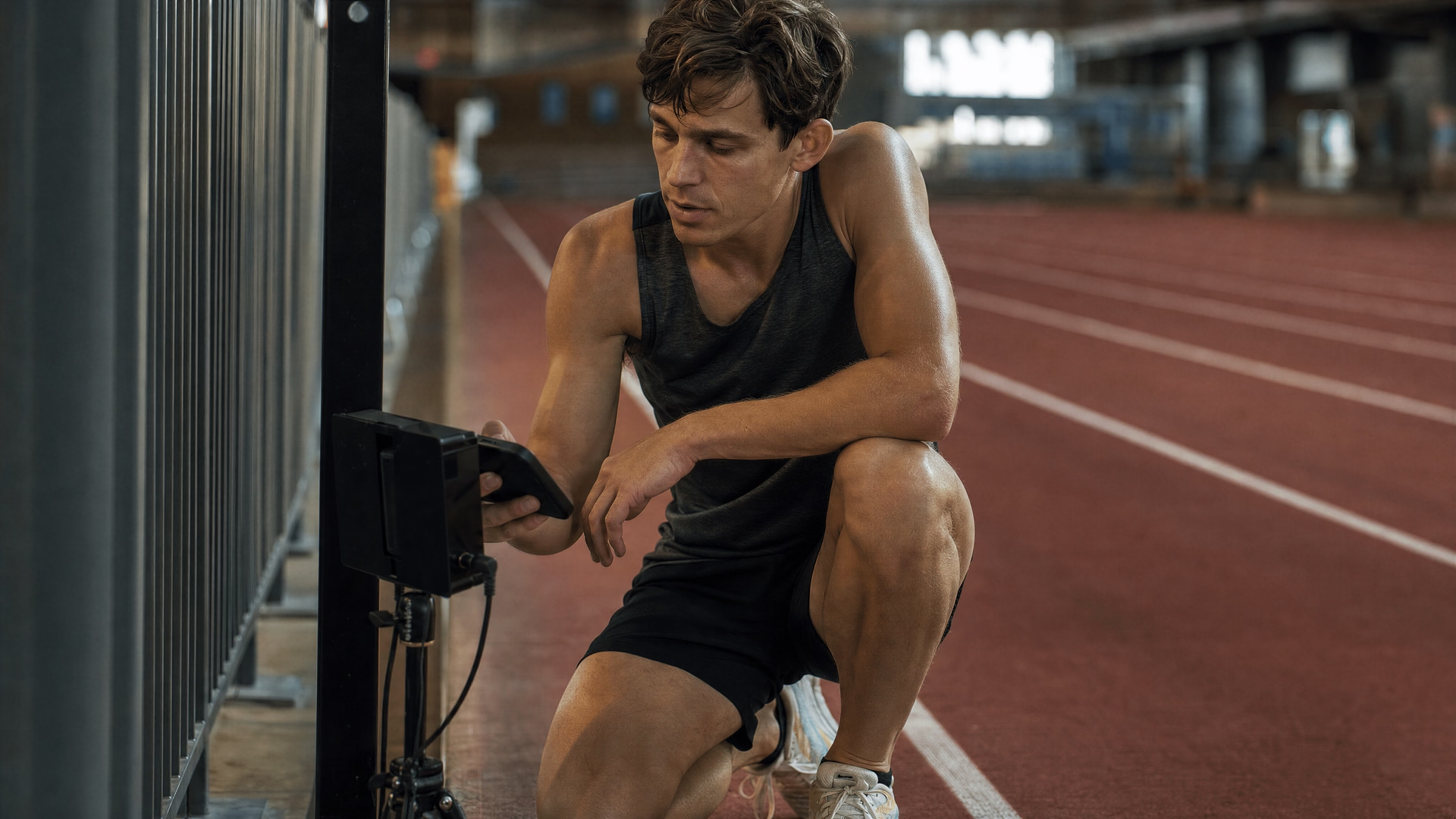
For healthy recreational exercisers in moderate doses, the article treats this as more neutral than dramatic. But for sports built on timing, precision or quick decisions, THC looks less like a helper than a drag.
The body's own cannabinoids explain the runner's high
The source pushes back on the old endorphin-only story. It says exercise raises the body's own cannabinoids, especially anandamide, across running, swimming and strength training, in both trained and untrained people.
Anandamide can cross the blood-brain barrier and act directly on mood, which is why the feeling attached to a hard session is more than folk wisdom. In mouse studies, voluntary wheel running reduces anxiety and pain, but blocking cannabinoid receptors erases that effect. The body is not just reacting to exercise; it is using its own cannabinoid network to shape the experience.
The three pathways line up like this:
| Pathway | What changes | What that means in sport | Source |
|---|---|---|---|
| THC | Heart rate can rise, blood pressure can climb, and reaction time and fine motor control worsen. | More likely to be a training drag than a performance aid. | Hanf Magazin analysis |
| Exercise-induced endocannabinoids | Anandamide rises with running, swimming and strength training, and can act on mood. | Explains the runner's high as a built-in response to workload. | Hanf Magazin analysis |
| CBD | Non-psychoactive, and does not noticeably affect reaction time. | The more plausible recovery candidate in the article's framing. | Hanf Magazin analysis |
The irony is hard to miss: the same system that makes exercise feel rewarding can be nudged in the wrong direction by external THC, even as the body is already producing its own cannabinoid signal during training.
CBD's recovery case is promising, but the evidence is still narrow
The strongest number set in the Hanf Magazin analysis comes from a 2025 meta-analysis: eight studies, more than 300 participants, and a daily CBD dose of about 150 mg were associated with lower inflammatory markers, less pain after intense training and better sleep.
The numbers at a glance
The same review also reported a 12% to 18% drop in inflammatory markers. That is encouraging, but it is not the same as proving a universal performance gain, and the source is careful to frame the result as interesting rather than final.
This is the kind of evidence that has to survive contact with real sport:
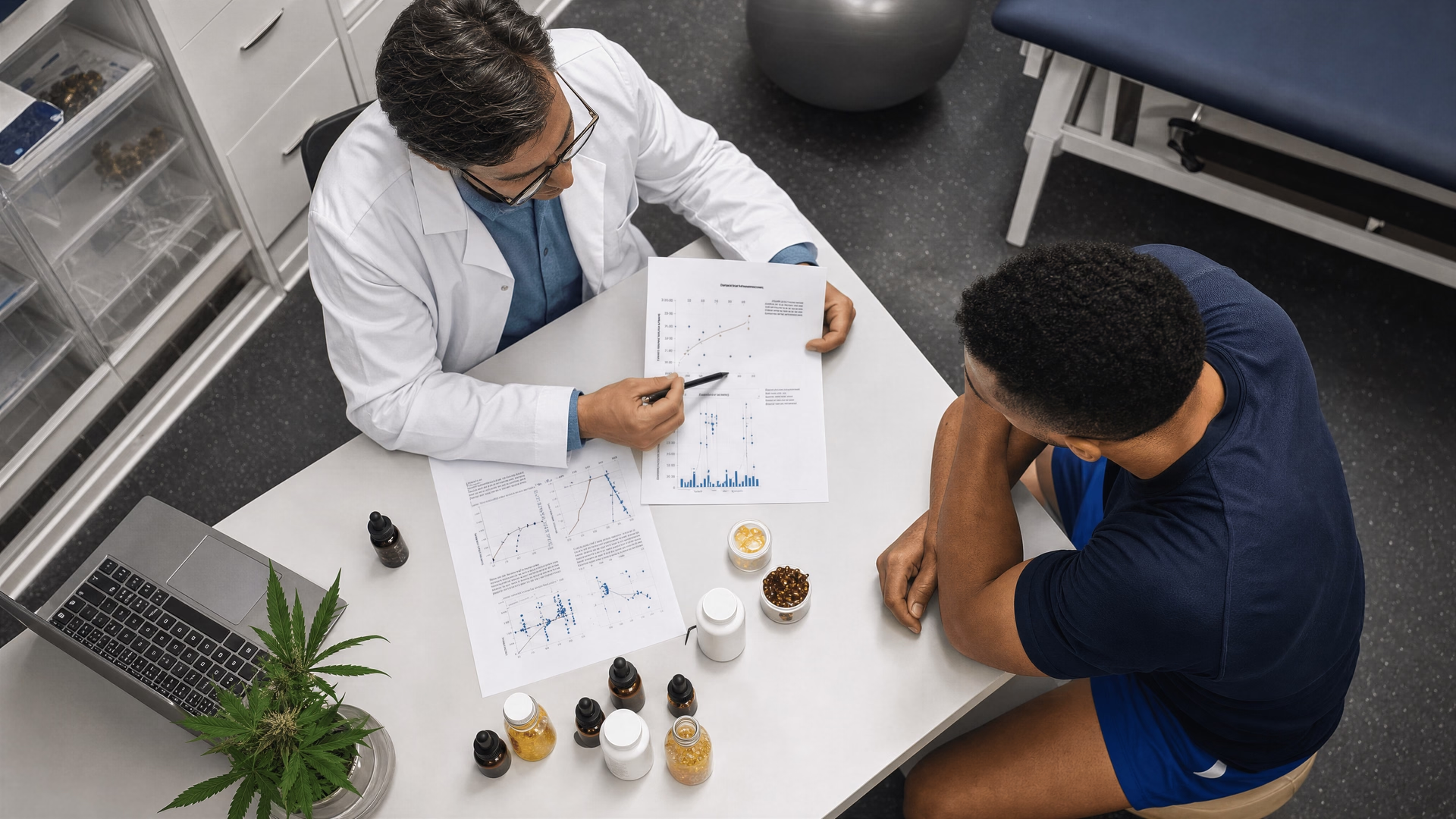
CBD also sits in a very different category from THC because it is not psychoactive and does not obviously slow reaction time. That makes it the more plausible candidate for post-training recovery, even if the evidence remains modest.
Competition rules separate the debate from the lab
The biology does not decide eligibility. The article notes that CBD has been off the World Anti-Doping Agency's banned list since 2018, which is one reason it is the more familiar cannabinoid in sport conversations.
From rulebook to reality
That is the practical dividing line for athletes: a compound can look interesting in recovery terms and still need to be judged against the demands of competition, coordination and compliance.
What athletes should actually take from the evidence
The recurring questions are the ones athletes need answered most clearly:
Common athlete questions
Does THC improve performance?
No. The article says THC can make exercise feel smoother, but measured output does not improve and can fall slightly. Reaction time and fine motor control also worsen.
Can CBD aid recovery?
Possibly. The source cites a 2025 meta-analysis of eight studies and more than 300 participants that found lower inflammatory markers, less pain and better sleep at around 150 mg per day.
Is CBD banned in sport?
Not under World Anti-Doping Agency rules. The article says CBD has been off the banned list since 2018.
Which workouts are most likely to suffer under THC?
Any sport or session that depends on timing, coordination, quick decisions or fine motor control is more likely to feel the downside.
The clean reading is not that cannabis helps or hurts sport in one universal way. THC can make a session feel easier while nudging the body in the wrong direction; the body's own cannabinoid system already helps create the runner's high; and CBD may have a real recovery role, but the evidence is still too modest to turn it into a blanket answer for athletes.
Sources
- Wie entsteht der Preis für ein Cannabis-Fertigarzneimittel? (krautinvest.de)
- European Cannabis Merger Mania: The Global Conversation Has Begun (krautinvest.de)
- Cannabis-Überdosis: Wie lange dauert ein Greenout und was hilft? (hanf-magazin.com)
- Cannabis und Sport: Leistungsbremse oder Regenerationshelfer? (hanf-magazin.com)
- Five Takeaways from the Global Medical Cannabis Market Review 2026 (prohibitionpartners.com)
- Cannabis Telemedicine: What Poland’s Market Crash and Recovery Tells Us About Regulatory Risk (prohibitionpartners.com)
- Trump Admin Asks Congress to Regulate Full-Spectrum Hemp Products or Delay Federal Crackdown (ganjapreneur.com)
- Washington State Launches Cannabis Info Campaign for World Cup Tourists (ganjapreneur.com)
- Five Technology Priorities That Drive Cannabis Business Results (mgmagazine.com)
- Opinion: Why Cannabis Brands Should Champion Original Art (mgmagazine.com)