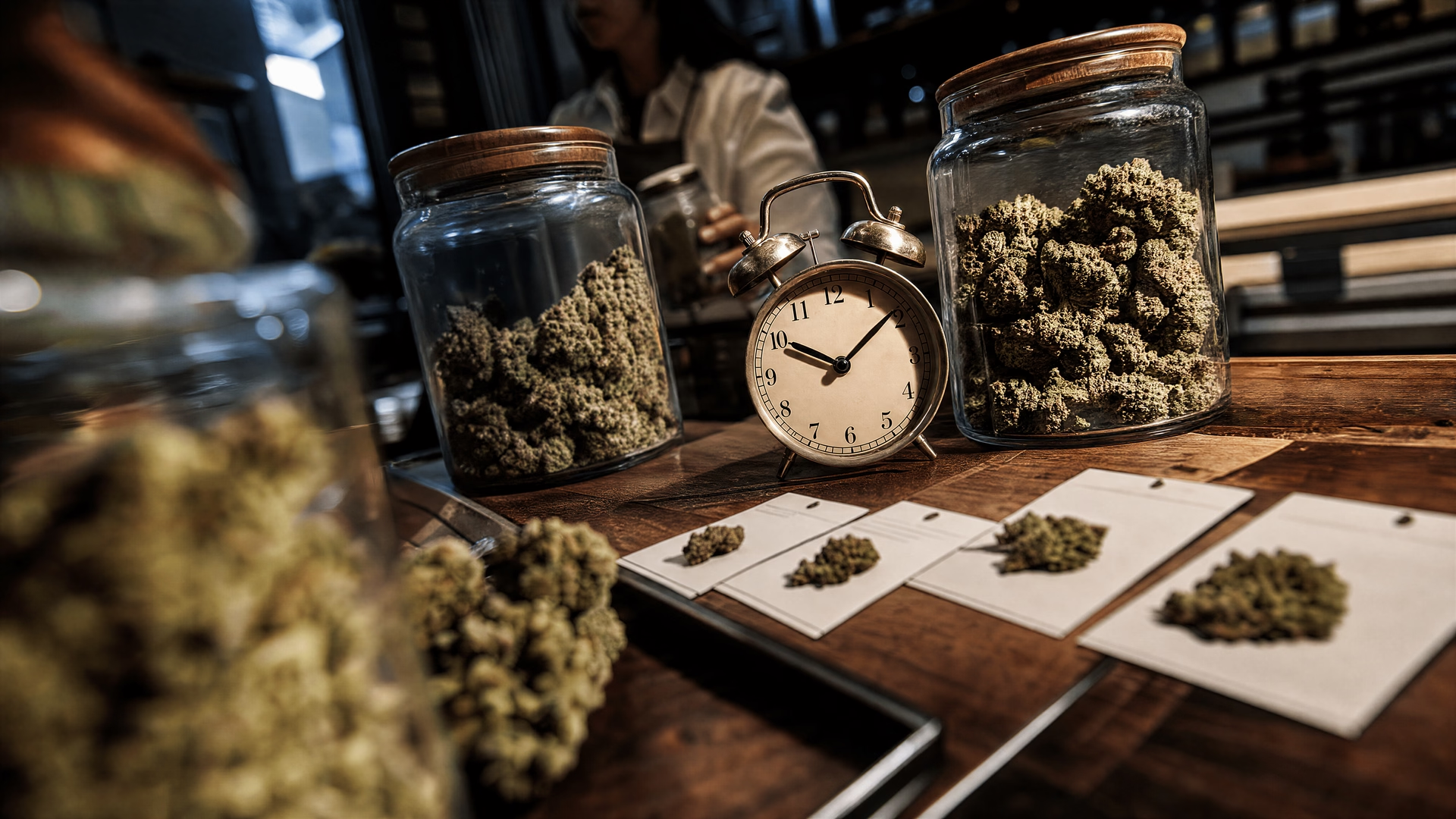











Germany’s 3.5 ng/ml THC limit meets a fast blood spike: what one joint can show, how long it lasts, and why serum matters.

In Germany, the question of how much THC ends up in the blood after one joint now has a direct legal edge, because the driving debate turns on a 3.5 ng/ml blood-serum limit. But Hanf Magazin's blood-THC explainer makes the central point plain: there is no single fixed number. A typical 0.3-gram joint with 10-15% THC can briefly push serum values into the 5-20 ng/ml range, yet the peak fades quickly and the reading changes depending on whether the lab is measuring active THC, the metabolite THC-COOH or the wrong sample matrix.
Why one joint does not produce one fixed blood number
The source's key point is that a blood result after smoking is a moving target, not a constant. THC reaches the bloodstream within minutes, but the amount that shows up in serum depends on the flower, the way the joint is smoked and how much the body actually takes up. That is why a roadside-style question about one joint never has one clean answer.
There is no single blood number for one joint; the peak depends on the material and the person.
Hanf Magazin
The spike is shaped by a small set of variables:
- THC content of the flower
- The size of the joint
- Inhalation technique and how deeply smoke is drawn
- Individual uptake and metabolism
- Body weight, body fat and consumption frequency
In the source's example, a typical joint of around 0.3 grams at 10-15% THC can lift blood-serum THC to roughly 5-20 ng/ml shortly after smoking. That range matters because it already sits above Germany's 3.5 ng/ml limit, even though the same person may look very different a few hours later. The number is best read as a snapshot, not as a fixed dose meter.
The first minutes after smoking: a brief spike and a fast fall
The first minutes matter most. THC enters the blood through the lungs within minutes, and the source says the highest value usually arrives 10-30 minutes after the last puff. After that, the curve falls quickly because THC is fat-soluble and moves out of the blood into tissue.
A controlled study cited in the source gives that curve a sharper shape. The joint was about one-third of a gram at 10% THC, and eight hours later 10 of 11 participants were already below the old 1 ng/ml threshold. That is not a universal guarantee, but it is a useful reminder of how steep the decline can be in occasional users:
Participants below the old 1 ng/ml threshold after eight hours
- below 1 ng/ml91%
- at or above 1 ng/ml9%
For a broader look at how different tests behave, see Cannabivo's Cannabis Drug Testing: Types, THC Detection Windows. The source also warns that exact hour-by-hour forecasts are not serious; calculators can only approximate because metabolism, body weight, consumption frequency and the THC content of the material all influence the fall.
Active THC and THC-COOH answer different questions
A lot of confusion starts because people say 'THC' when they really mean two different substances. Active THC is the psychoactive compound and the marker tied to recent effect. THC-COOH is the non-psychoactive breakdown product made in the liver, and it points to past use rather than current intoxication.
The source separates the main markers like this:
| Marker | What it tells you | Typical window or meaning | Source |
|---|---|---|---|
| Active THC (Delta-9-THC) | Recent smoking and acute effect | Peaks within minutes and often falls below the old 1 ng/ml threshold within hours in occasional users | Hanf Magazin's blood-THC explainer |
| THC-COOH | Past use, not intoxication | Urine usually 2-4 days after one-time use; weeks to months with frequent use, in extremes up to three months | Hanf Magazin's blood-THC explainer |
| Blood serum | The matrix usually quoted in Germany's limit | Reads higher than whole blood for the same sample | Hanf Magazin's blood-THC explainer |
| Whole blood | Lower reading from the same draw | Not directly interchangeable with serum without conversion | Hanf Magazin's blood-THC explainer |
That is why a positive urine test does not answer the same question as a blood test. A person can be free of active THC in blood and still carry a chemical trace of earlier use in urine. For readers who want the broader testing picture, the difference between blood, urine and other matrices is exactly what the Cannabivo drug-testing guide is built to explain.
Why serum and whole blood can diverge
Germany's legal conversation usually uses blood serum, not whole blood, and that distinction is not cosmetic. THC does not distribute evenly, so the serum figure from the same sample is higher than the whole-blood figure. For a driver, that can be the difference between a reading that looks manageable and one that crosses the line.
A forensic lab is where that difference becomes visible:
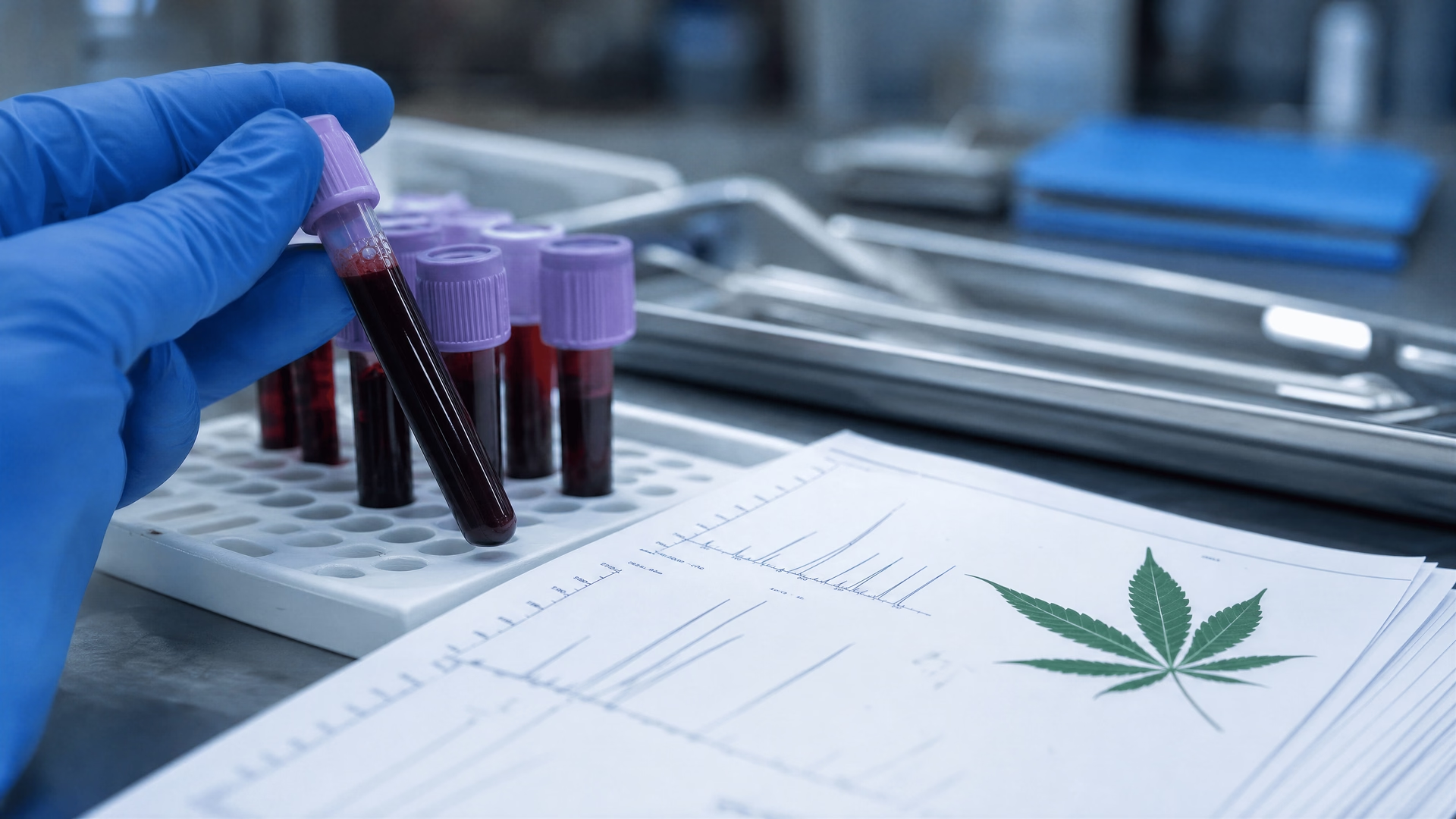
The source's warning is simple: a whole-blood number cannot be read as a direct stand-in for the serum threshold. The literature it cites gives a conversion factor between about 1.5 and 2.8, and many people simplify that to 2, but that shorthand is only a bridge. It does not remove the underlying difference between matrices, and it does not replace the lab's actual reported value.
What Germany's 3.5 ng/ml limit means in practice
Against that background, Germany's 3.5 ng/ml limit is less a magic cutoff than a legal reference point. For occasional users, the source says active THC often disappears from serum within 6-24 hours. For regular users, residual values above 1-3.5 ng/ml can still show up days later, even when there is no acute effect.
On the roadside, that becomes paperwork as much as pharmacology:
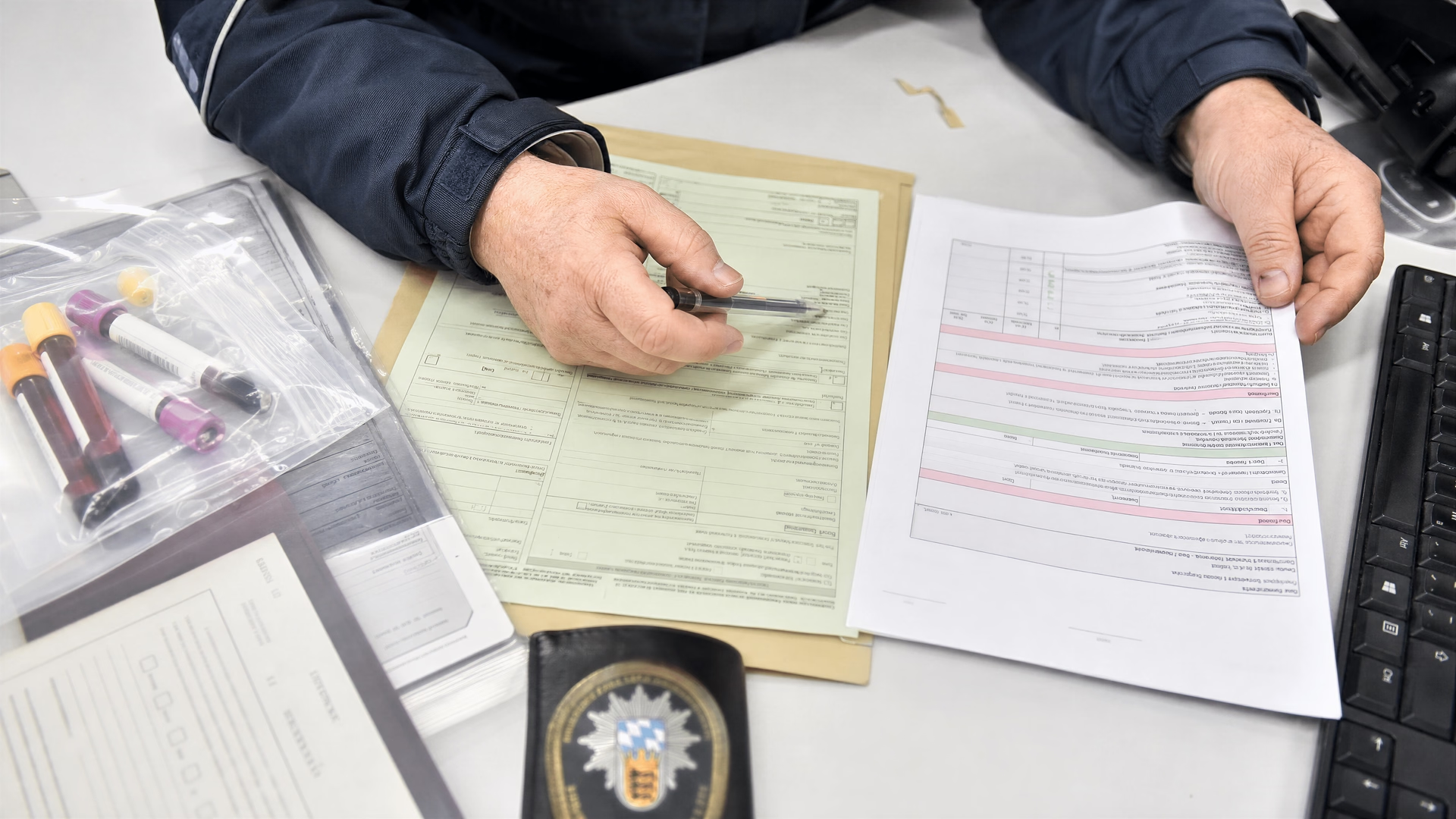
That wider policy debate sits alongside our earlier report on new cannabis use limits in Europe, which showed how regulators are thinking harder about impairment thresholds. The source's own bottom line is that no exact hour-by-hour prognosis is serious, because metabolism, body weight, consumption frequency and the THC content of the material all shape the result.
The questions readers ask most often are straightforward:
Common questions about THC in blood after one joint
How much THC can one joint put into blood serum?
The source's rough example is a 0.3-gram joint with 10-15% THC, which can briefly raise serum THC to about 5-20 ng/ml shortly after smoking.
When does the peak usually happen?
Usually 10-30 minutes after the last puff.
How long can active THC remain measurable?
Often 6-24 hours in occasional users; in regular users, residual values can last for days.
What does THC-COOH tell you?
It points to past use, not acute impairment; in urine it is usually seen 2-4 days after one-time use and much longer in heavy use.
Why is serum more important than whole blood?
Because serum reads higher than whole-blood values from the same sample, and the source cites a factor of about 1.5 to 2.8, often 2.
The answer to how much THC is in the blood after one joint is a moving curve, not a single number. In Germany, the legal question now depends on whether the sample is serum or whole blood, how soon it is taken and whether the reading still reflects active THC or only the longer chemical trace.
Sources
- #CannaBiz: Die News im Juni 2026 – #113 (krautinvest.de)
- Wie entsteht der Preis für ein Cannabis-Fertigarzneimittel? (krautinvest.de)
- Ein Joint, wie viel THC im Blut? Abbau, Nachweisbarkeit und Grenzwerte (hanf-magazin.com)
- Wie viele Blätter hat ein Hanfblatt? Die Botanik des Fächerblatts (hanf-magazin.com)
- Five Takeaways from the Global Medical Cannabis Market Review 2026 (prohibitionpartners.com)
- Cannabis Telemedicine: What Poland’s Market Crash and Recovery Tells Us About Regulatory Risk (prohibitionpartners.com)
- Ohio Man Indicted Over Alleged Cannabis Candy Fraud Scheme (ganjapreneur.com)
- New York Launches Program to Educate Doctors About Cannabis (ganjapreneur.com)
- Deep Roots Harvest Presents $1,500 Donation to Local Veterans Organization Ahead of July 4 (mgmagazine.com)
- Vireo Growth, Vive Penn JV to Acquire Pennsylvania Dispensary License (mgmagazine.com)