













Why cannabis smoking methods are not interchangeable
The counterintuitive part comes first: the biggest differences between smoking methods are not aesthetic. They are pharmacological and exposure-related. A joint, bong, pipe, blunt, or spliff changes how much THC reaches the lungs, how hot the smoke feels, how much material burns between puffs, whether nicotine is part of the dose, and how much smoke nearby people inhale. Those are measurable differences, not scene politics.
That matters because smoking is common at population scale. SAMHSA estimated 61.8 million people in the U.S. used marijuana in the past year in 2023, with 42.0 million reporting past-month use. The EUDA reported 22.8 million adults in the EU used cannabis in the last year in 2024. When a method changes dose delivery or toxic exposure, it is affecting millions.
Long-term cannabis smoking is associated with worse respiratory symptoms and more frequent chronic bronchitis episodes. Strong evidence
[1] The Health Effects of Cannabis and Cannabinoids: The Current State of Evidence and Recommendations for Research. National Academies of Sciences, Engineering, and Medicine. National Academies Press, 2017.This guide compares methods using a fixed set of practical variables: dose consistency, smoke temperature, THC delivery efficiency, tobacco exposure, portability, maintenance, and bystander smoke. One baseline point should stay firm throughout: no smoked method is risk-free, because all smoked methods involve combustion. Burning cannabis produces tar, carbon monoxide, volatile organic compounds, and polycyclic aromatic hydrocarbons whether the smoke passes through paper, glass, or water. The National Academies report in 2017 found substantial evidence linking long-term cannabis smoking with worse respiratory symptoms and more frequent chronic bronchitis episodes.
The common myth: a joint, bong, or pipe is just a matter of taste
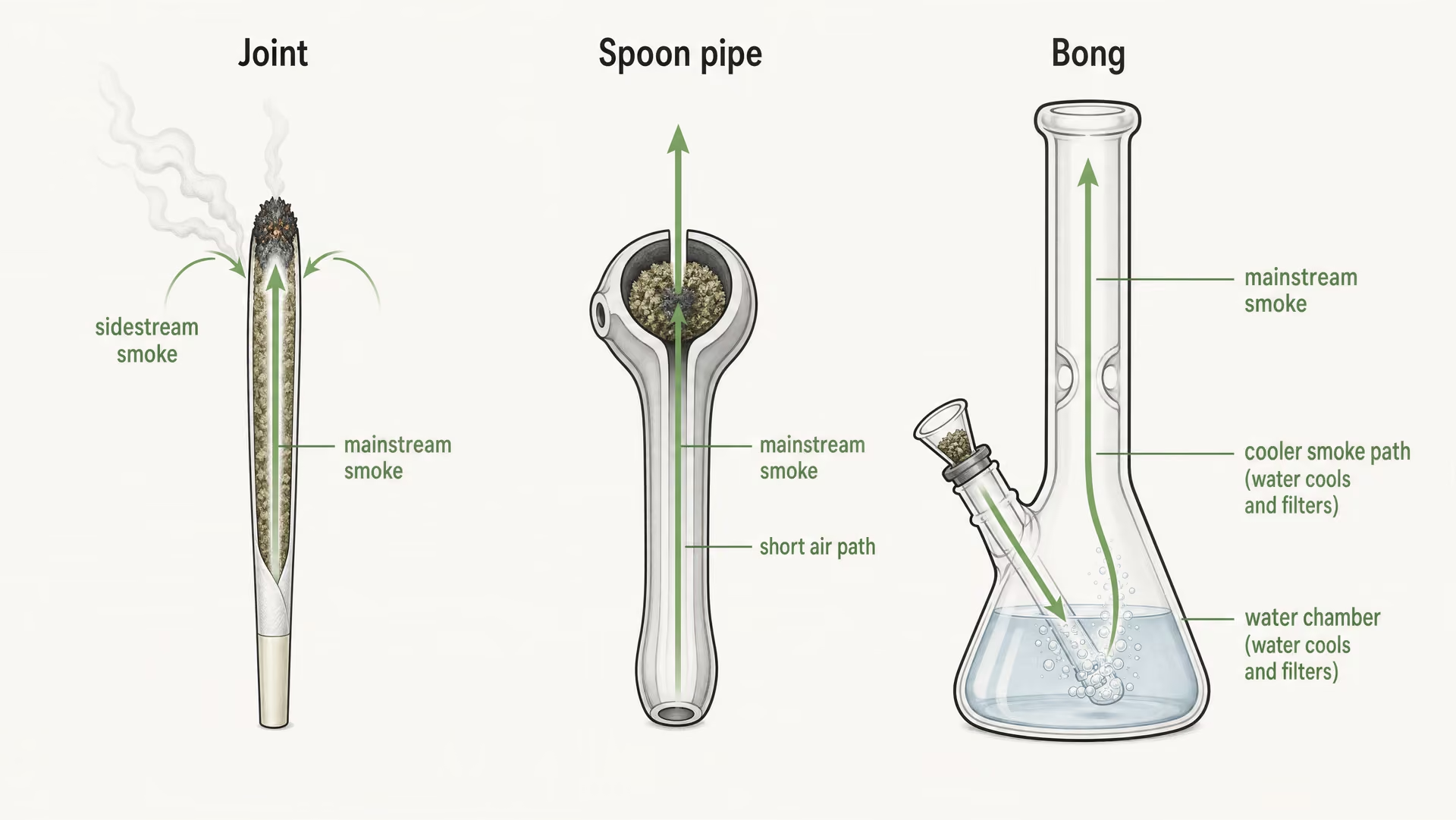
Popular guides often reduce method choice to harshness, flavor, convenience, or ritual. That framing misses the real mechanics. A joint keeps burning between puffs, so cannabinoids are lost into sidestream smoke and into the room. A spoon pipe does not keep burning unless it is being drawn, so transfer can be more efficient even if the smoke feels hotter. A bong cools smoke and changes draw resistance, which can encourage larger inhalations. A one-hitter limits bowl size and can improve portion control. A blunt adds tobacco-derived wrapper material, making it a nicotine co-exposure method rather than a thicker joint.
User behavior complicates this further. Research by Huestis, Heishman, and colleagues showed that smokers self-titrate by changing puff volume, puff duration, and inhalation depth. The device matters, but the device-user interaction matters more than folklore admits.

What actually changes: temperature, filtration, airflow, and sidestream loss
Water filtration makes smoked cannabis broadly safe or meaningfully detoxified. Limited evidence
Smoke temperature affects perceived harshness, yet cooler does not mean safe. Water in a bong or bubbler can cool smoke and remove some water-soluble constituents, but that is a narrow effect. It does not remove combustion products in any way that makes smoking benign. That is why the “water filters toxins” claim fails. Cooling may even permit bigger puffs, raising total particulate exposure.
Sidestream smoke Smoke released from the burning end of a joint, blunt, or similar product between puffs rather than being inhaled directly by the user.
Airflow changes burn behavior. Tight packing increases draw resistance and can make smoke denser and hotter. Loose packing burns faster and less evenly. Rolling paper, filter-tip design, and pack density all alter a joint’s burn rate. Cornering a bowl can limit unnecessary combustion of the full surface, while a joint continues smoldering whether anyone is inhaling or not. That sidestream loss is a major reason a joint can feel lighter while consuming more cannabis and exposing bystanders more heavily. CDC guidance on secondhand cannabis smoke is relevant here: it contains many of the same toxic and cancer-causing chemicals found in tobacco smoke, along with THC.
The two variables that matter most: combustion and tobacco co-use
Among smoked forms, the main harm divider is combustion itself. Abrams et al., writing in Clinical Pharmacology & Therapeutics in 2007, found vaporization delivered similar THC with lower expired carbon monoxide than smoking the same cannabis source. That comparison is useful because it isolates what burning adds. Once plant material is combusted, the method can shift the dose and the feel, but it does not erase smoke toxicology.
| Method | Tobacco involved | Combustion pattern | Common exposure difference | Editorial takeaway |
|---|---|---|---|---|
| Joint | No | Continuous burn between puffs | More sidestream loss and bystander smoke | Cannabis-only but inefficient |
| Spliff | Yes, mixed into fill | Continuous burn between puffs | Nicotine co-exposure plus smoke toxicants | Different risk category from a joint |
| Blunt | Yes, tobacco-derived wrap | Slow continuous burn | Nicotine carryover and tobacco-specific toxicants | Riskier than cannabis-only smoked forms |
| Pipe / one-hitter / chillum | No | Intermittent bowl burn | Less passive burn, hotter drier smoke | Better portion control, not lower-risk smoke |
| Bong / bubbler | No | Intermittent bowl burn through water | Cooler-feeling smoke, possible larger inhalations | Smoother does not mean safer |
The second major divider is tobacco co-use. This is where blunts and spliffs stop being minor style variants. They are mixed-exposure products. In much of Europe, the EUDA and related surveys have repeatedly shown that cannabis is often smoked with tobacco. In the U.S., blunt use has been closely tied to cigar and cigarillo repurposing, as documented in tobacco-cannabis co-use research including Delnevo’s work. Nicotine changes dependence risk, cardiovascular effects, and the subjective profile of use. Wayne Hall, Neal Benowitz, and others have long argued that public-health analysis gets weaker when cannabis and tobacco are treated as separate when users often combine them. That position is correct. If a method includes tobacco, it belongs in a different risk category.
A short history of how cannabis came to be smoked in these forms
Smoking cannabis in a joint, a clay chillum, or a glass bong can look like a matter of style. Historically, it is more often a matter of materials, trade, law, and tobacco contact. The form changed when paper became cheap, when cigars became common, when glassworking spread, and when local smoking norms made tobacco either standard or avoidable. That history matters because these forms do not just symbolize different cultures; they change combustion, smoke concentration, and whether nicotine comes along for the ride.

Pipes, chillums, and early smoking traditions in Asia, Africa, and the Americas
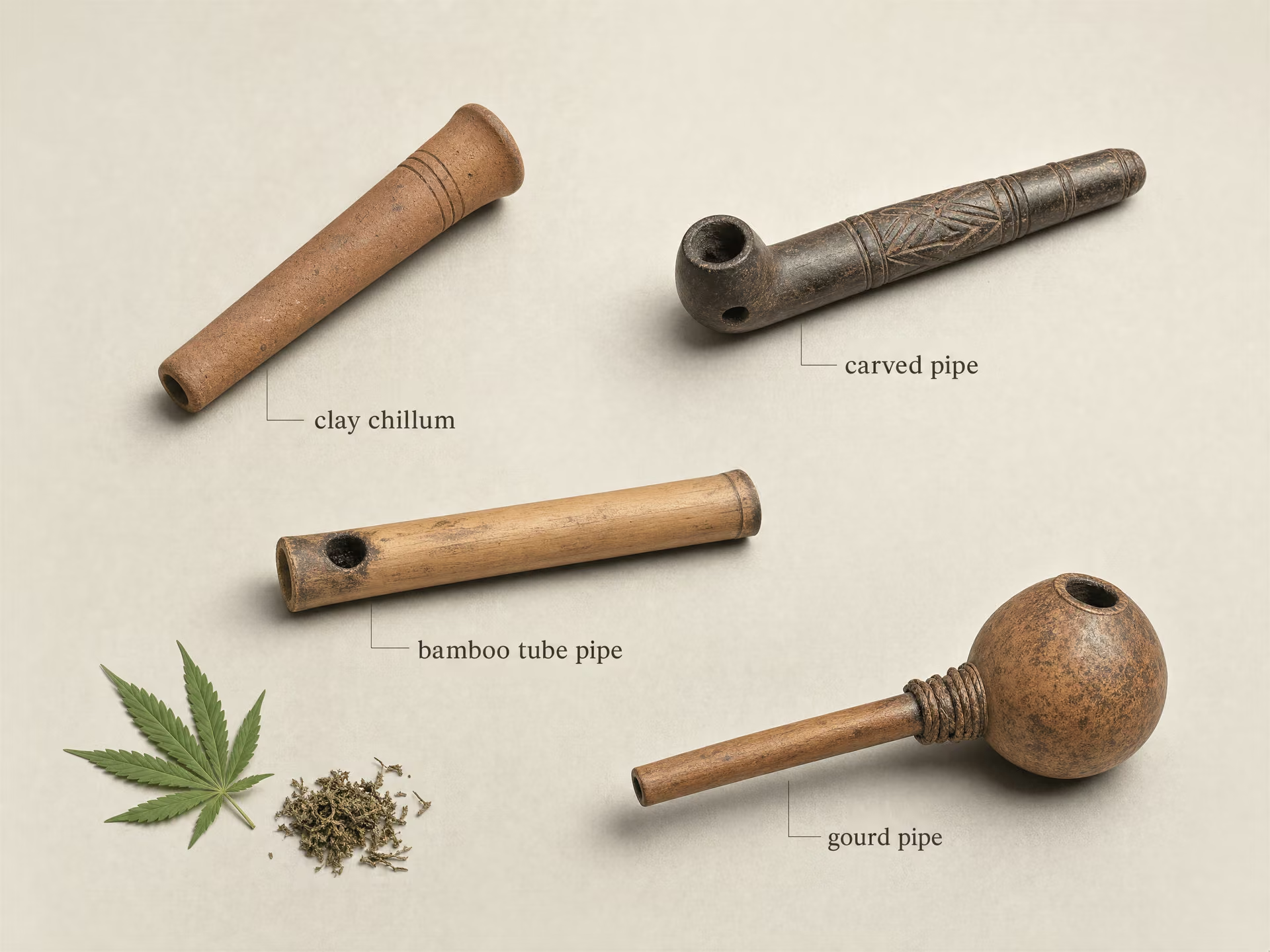
Pipe smoking is older than the modern cannabis cigarette by a wide margin. Across parts of Asia, Africa, and the Americas, people used locally available materials—clay, wood, bone, metal, bamboo, gourds, and stone—to burn plant material in small bowls and inhale directly. Those devices were not all designed specifically for cannabis, and that is one reason simple origin stories fail. A pipe form could move from tobacco to cannabis, or from mixed herbs to cannabis, depending on what was grown, traded, or prohibited.
The chillum is the clearest example of an older cannabis-linked form with a distinct regional history. In South Asia, especially India, clay chillums became associated with ritual, ascetic practice, and everyday smoking long before late-20th-century glass culture. A chillum’s straight-through design delivers hot, concentrated smoke fast. No water. Little filtration. That is very different from the later idea that a large glass piece somehow represents an ancient smoking lineage. It does not. Older water pipes existed in parts of the Middle East and Asia, but the modern borosilicate bong with a standardized bowl, downstem, carb, and ice notches is an industrial-era object, not a timeless one.
In Africa and the Americas, cannabis smoking often adapted to preexisting pipe traditions rather than creating entirely new ones. Local device design followed what people could make and hide. Simplicity mattered. So did portability. These older forms were practical first. They should not be romanticized as cleaner or safer: combustion still produces tar, carbon monoxide, volatile organic compounds, and polycyclic aromatic hydrocarbons. The National Academies reported in 2017 that long-term cannabis smoking is associated with worse respiratory symptoms and more frequent chronic bronchitis episodes, whatever the pipe shape.
The rise of the hand-rolled joint and spliff in the 20th century
The hand-rolled joint became globally recognizable in the 20th century because paper is cheap, disposable, and easy to conceal. It also fits prohibition-era use. A joint needs no pipe, leaves little durable evidence, and can be shared. That convenience helped it spread more than any mystical property of rolled cannabis.
The spliff followed a different path. In Europe and the Caribbean, cannabis was often mixed with tobacco because tobacco smoking was already normalized, cannabis potency and supply varied, and mixing stretched material. European monitoring agencies have repeatedly found that tobacco-mixed cannabis smoking remains common in much of western Europe. That makes the spliff more than a regional preference. It is a tobacco co-use method shaped by local nicotine habits. Wayne Hall, Neal Benowitz, and other public-health researchers have long argued that this distinction matters because nicotine changes dependence risk and cardiovascular exposure.
How the modern blunt and glass bong became late-20th-century forms
The blunt is newer and more specifically American. It emerged from U.S. cigar and cigarillo culture in the late 20th century, when users hollowed cigars or repurposed cigar wraps for cannabis. That wrapper is tobacco-derived material. So a blunt is not just a larger joint. It is cannabis plus tobacco toxicology, often with nicotine exposure even when users focus on the cannabis content. That is why researchers such as Delnevo and other tobacco-cannabis co-use scholars treat blunts as a separate category.
The modern glass bong also belongs to the late 20th century. Its rise tracks countercultural glassmaking, wider access to borosilicate glass, and a market for reusable smoking devices. Water cools smoke and can remove some water-soluble compounds, but cooling is not detoxification. The literature does not support the folk claim that water filtration makes smoking broadly safe. If anything, cooler smoke may encourage larger inhalations. So today’s categories reflect technology and local habits as much as the plant itself.
The chemistry of smoking cannabis
Smoking cannabis is a chemistry problem before it is a lifestyle choice. Tens of millions of people are exposed to that chemistry: SAMHSA estimated 61.8 million past-year users in the United States in 2023, while the EUDA reported 22.8 million last-year users aged 15 to 64 in the EU in 2024. Smoking remains the dominant route in both public-health surveillance and pharmacokinetic research, so the question is not whether smoke “feels harsh.” It is what burning plant material does to cannabinoids, airways, and dose delivery.
Combustion, pyrolysis, and why smoke is not the same as vapor
What happens when cannabis is smoked
- Decarboxylation Heating converts THCA into delta-9-THC before open-flame temperatures are required.
- Pyrolysis Thermal breakdown occurs in lower-oxygen zones at the burning tip or bowl.
- Combustion Oxidation at higher temperatures generates smoke and destroys part of the original material.
- Inhalation exposure The resulting aerosol carries cannabinoids along with tar, carbon monoxide, volatile organic compounds, and polycyclic aromatic hydrocarbons.
Raw cannabis flower contains most THC in its acidic precursor form, THCA. Heating causes decarboxylation: THCA loses a carboxyl group and becomes delta-9-THC, the form that readily crosses into blood and brain. That transformation begins below the temperatures of open flame. But smoking does not stop at decarboxylation. It pushes plant material into pyrolysis and combustion.
Pyrolysis Thermal breakdown of material caused by heat in a low-oxygen environment, producing decomposition products before or alongside full combustion.
Pyrolysis means thermal breakdown in low-oxygen zones of the burning tip or bowl. Combustion means oxidation at higher temperatures. In a lit joint, pipe, or blunt, these processes happen at once in different microenvironments. Some cannabinoids are activated and aerosolized. Others are destroyed. Cellulose, lignin, sugars, proteins, and terpenes also decompose, generating a complex smoke that contains particulate matter, carbon monoxide, tar, volatile organic compounds, and polycyclic aromatic hydrocarbons.[2] Vaporization as a Smokeless Cannabis Delivery System: A Pilot Study. Donald I. Abrams, Eric J. Vizoso, Ryan Shade, Heather Jay, Ben Kelly, Neal L. Benowitz. Clinical Pharmacology & Therapeutics, 2007.
That is why smoke is not the same thing as vapor. A vaporizer heats cannabinoids enough to release them into an inhalable aerosol with far less combustion chemistry. Abrams et al. in Clinical Pharmacology & Therapeutics (2007) showed this clearly: vaporization delivered similar THC exposure to smoking from the same cannabis source, but with lower expired carbon monoxide. That comparison matters because it isolates what combustion adds. The editorial position supported by the literature is straightforward: among inhaled methods, the major hazard divider is burning versus not burning.
Health agencies are not vague on this point. Health Canada notes rapid onset after inhalation, but it does not treat smoke as benign aerosol. The CDC states secondhand cannabis smoke contains many of the same toxic and cancer-causing chemicals found in tobacco smoke. The National Academies report from 2017 went further, finding substantial evidence that long-term cannabis smoking is associated with worse respiratory symptoms and more frequent chronic bronchitis episodes. Donald P. Tashkin’s pulmonary research also found repeated associations with cough, sputum, wheeze, and airway inflammation. Not every severe endpoint has equally strong evidence. Airway injury does.
THC delivery, inhalation bioavailability, and self-titration
Inhaled cannabis acts fast because the lung is an efficient exchange surface. Health Canada states psychotropic effects generally begin within seconds to minutes after inhalation, with peak plasma concentrations reached within minutes. Acute effects often peak roughly 15 to 30 minutes later and then decline over the next few hours, though impairment can outlast the subjective peak.
Self-titration User-driven adjustment of dose by changing puff size, puff duration, inhalation depth, timing, or whether to continue smoking.
Fast onset makes smoking easy to self-titrate. Users adjust puff volume, puff duration, interpuff interval, and whether they relight or stop. That is not speculation. Work by Marilyn Huestis, Robert Heishman, and colleagues on cannabis smoking topography showed that smokers change inhalation behavior in response to potency and desired effect. Stronger material does not simply produce proportionally stronger exposure, because people compensate.
Bioavailability is therefore highly variable. Health Canada gives a range of about 10% to 35% for inhaled THC. That spread reflects real differences in transfer efficiency and real losses. Some THC is lost in sidestream smoke from a joint that keeps burning between puffs. Some is lost to pyrolytic destruction at the burning tip. Some sticks to the device. Some never reaches the alveoli because it deposits earlier in the airways. Device design matters, but user behavior often matters more.
Technique changes chemistry. Dense packing restricts airflow and can raise local temperatures. A too-fast draw can intensify combustion. A slow, steady draw may reduce overheating, though it cannot remove combustion products. Cornering a bowl rather than igniting the entire surface can reduce unnecessary burning and sidestream loss. By contrast, joints are inherently inefficient because they continue to burn while idle. A joint can therefore deliver a lighter-feeling session while wasting more cannabinoids into the room.
One persistent myth deserves a direct correction: holding smoke in the lungs for a long time does not produce a large cannabinoid bonus. THC absorption is already rapid. Longer breath-holding mostly increases deposition of particulates and tar while increasing exposure to carbon monoxide and irritants. In practical terms, it is better understood as a way to burden the lungs, not a reliable way to raise THC delivery.
Why cooling the smoke can change feel without removing the main hazards
Cooling changes sensation. It does not convert smoke into clean air.
When smoke passes through water in a bong or bubbler, or through a longer pathway that lets it cool before inhalation, the aerosol reaching the mouth and throat is often less hot and feels less abrasive. Water can remove some water-soluble compounds and some larger particles, and it can humidify the stream. That can reduce perceived harshness. It may also make deeper inhalation easier.
That last point is where popular claims go wrong. Lower harshness is not the same as lower toxic exposure. The main combustion products still exist: carbon monoxide, tar, fine particulate matter, volatile organic compounds, and polycyclic aromatic hydrocarbons. Studies summarized in older MAPS/NORML and California NORML reviews found that waterpipes can alter the cannabinoid-to-tar ratio under some conditions, but the results varied heavily with setup and smoking behavior. There is no good basis for calling water filtration detoxification.
Cooling may even increase total exposure in some users because smoother smoke encourages larger puffs or repeated inhalations. A bong hit can feel softer in the throat while still delivering a substantial particulate load. A bubbler may split the difference between a dry pipe and a bong in feel, but it does not escape the chemistry of combustion.
So the measurable hierarchy is not mystical. Smoke temperature affects comfort. Filtration can modestly modify aerosol composition. Neither change removes the core hazards created when cannabis is burned. If tobacco is added, as in spliffs and many blunts, the risk profile changes again through nicotine exposure and tobacco toxicology. Wayne Hall and Neal Benowitz have both been influential in pushing this broader public-health framing: the important variables are combustion, inhalation pattern, and co-use with tobacco, not mythology about one smoking device being “clean.”
Joints
Hand-rolled cannabis cigarettes are still one of the most recognized ways to smoke, especially in North America where cannabis-only rolls are common and in parts of Europe where tobacco-mixed forms are also widespread. The joint matters because it is simple, portable, and familiar. It also has a measurable inefficiency built into its design: it keeps burning between puffs.
What defines a joint: paper, crutch, and cannabis-only combustion
A joint is cannabis rolled in paper, usually with a small paper tip or crutch at one end. That crutch is not a true filter in the tobacco-cigarette sense. Its main jobs are structural: keep the mouth end open, improve airflow, and stop loose plant material from reaching the lips. The defining feature is cannabis-only combustion. Once tobacco is added, the product is better classified as a spliff, and the toxicology changes because nicotine and tobacco smoke constituents enter the picture.
Paper choice affects burn behavior more than many users assume. Thin rice papers tend to burn slower and add less paper smoke; wood-pulp and hemp papers can burn differently depending on thickness, porosity, and any added gum line. A more porous paper draws more air through the sidewall and can speed combustion. That matters because combustion products, not just cannabinoids, are what the lungs receive. No paper turns smoke into a low-risk aerosol.
Joints also produce continuous sidestream smoke from the lit cone. That is smoke lost to the room rather than inhaled by the user. Compared with a pipe or bong bowl that only burns during active draws, a joint wastes more cannabinoids between puffs and exposes bystanders more consistently. The CDC notes secondhand cannabis smoke contains many of the same toxic and cancer-causing chemicals found in tobacco smoke, along with THC.
Technique variables that change burn rate and dose consistency
Joint performance depends on airflow, moisture, grind, and pack density. A loose roll increases airflow and can burn fast and hot. An overpacked roll raises draw resistance, encourages harder puffing, and often burns unevenly. Huestis, Heishman, and colleagues showed years ago that cannabis smokers self-titrate by changing puff volume, puff duration, and breath-hold. So the joint is only part of the dose equation; the smoker’s topography finishes the job.
Uneven burning, often called canoeing, usually comes from nonuniform packing, wet spots, poor grinding, or lighting one side more aggressively than the other. Once a joint canoes, part of the cannabis burns away without being inhaled. Frequent relighting adds another problem: repeated ignition spikes local temperature and can make the smoke feel harsher.
THC bioavailability from inhalation is variable, about 10% to 35% by Health Canada’s estimate, and joints often land on the less efficient side because of sidestream loss. They are easy to portion, though. A user can roll a small amount, take a few puffs, extinguish it, and return later, even if each relight slightly worsens smoke quality.
Pros, drawbacks, and who this method tends to suit
Why some users still choose joints
- No separate device to carry
- Easy sharing in social settings
- Familiar ritual and simple setup
- Straightforward portioning with a small roll
The advantages are obvious: no separate device, easy sharing, familiar ritual, and straightforward portioning. For people who want simple logistics, that matters.
The drawbacks are just as clear. Joints waste material while lit. Dose consistency is weaker than many assume. Sharing increases shared-mouth exposure in group settings, and indoor use raises secondhand smoke exposure for others. Health risk does not disappear because the format looks simple. The National Academies in 2017 found substantial evidence linking long-term cannabis smoking with worse respiratory symptoms and more frequent chronic bronchitis episodes, and Donald Tashkin’s pulmonary research has repeatedly tied regular smoked cannabis to cough, sputum, and wheeze.
Who tends to prefer joints? Usually people who value familiarity, social passing, and easy portion control over efficiency. That tradeoff is real. A joint can feel lighter than a bowl yet consume more flower doing the same work.
Spliffs
What a spliff is and why geography matters
A spliff is cannabis mixed with tobacco and rolled into a cigarette paper. That sounds close to a joint, but pharmacologically it is a different method because the smoke carries cannabinoids and nicotine at the same time. Treating spliffs as just a regional name for joints blurs the main issue.
Geography matters because this pattern is not evenly distributed. In much of Europe, especially western Europe, mixing tobacco into cannabis has long been common enough to feel ordinary. The EUDA reported in 2024 that 22.8 million adults aged 15 to 64 in the EU used cannabis in the last year, and European monitoring has repeatedly noted that smoked cannabis is often prepared with tobacco. The UK, France, Spain, and the Netherlands are regularly cited in that pattern. By contrast, U.S. use has historically leaned more toward cannabis-only joints, pipes, blunts, and, more recently, non-combustible products.
That difference shapes risk. A person who says they “smoke cannabis” in London or Paris may often mean tobacco co-use as well. In a U.S. survey, the same statement may not imply nicotine exposure at all. Public-health interpretation changes with that detail.
How tobacco changes burn behavior, nicotine exposure, and dependence risk
Tobacco changes the mechanics of the smoke before it changes the pharmacology. Mixed material usually burns faster and more evenly than cannabis alone because dry, shredded tobacco supports a steadier ember and easier airflow. That can mean more continuous combustion between puffs, more sidestream loss, and a hotter, sharper throat feel. Users often describe spliffs as smoother because tobacco smoke is familiar, not because it is less harmful.
The central health issue is the tobacco. Cannabis smoke already carries tar, carbon monoxide, volatile organic compounds, and polycyclic aromatic hydrocarbons. The National Academies in 2017 found substantial evidence linking long-term cannabis smoking with worse respiratory symptoms and more frequent chronic bronchitis episodes. Add tobacco, and the dependence profile becomes more serious and the cardiovascular risk rises. Neal Benowitz’s nicotine research has shown how quickly inhaled nicotine reaches the brain and reinforces repeated use. Once nicotine becomes paired with cannabis cues, the ritual itself can strengthen dependence.
This is why spliffs deserve separate treatment. They are not just harsher or milder. They are a co-use system with two dependence pathways. European public-health reviews, including EMCDDA work, have warned that tobacco-cannabis co-administration may make quitting either drug harder because the sensory cues become linked.
Why the experience can feel different even at similar cannabis doses
Even when the cannabis content is similar, spliffs can feel different for measurable reasons. Nicotine has acute stimulant-like effects: increased heart rate, greater alertness, and a short-lived shift in attention and reward signaling. THC and nicotine interact at the subjective level, often producing a faster, more “headed” onset, more throat hit, and, for some users, more dizziness or nausea.
Smoking behavior changes too. Heishman, Huestis, and colleagues showed that cannabis users self-titrate dose by altering puff volume, duration, and breath-hold. A spliff’s easier draw and faster burn can change that topography. People may take more frequent puffs, finish the roll faster, or inhale more smoke overall even if the milligrams of THC in the paper started out similar.
So the altered experience is not mystical or cultural myth. It is combustion behavior plus nicotine pharmacology. And from a health standpoint, nicotine co-exposure is the part that most clearly raises the stakes.
Blunts
Blunts are not simply oversized joints. They are a tobacco-cannabis co-use method, and that distinction matters more than style or ritual. The defining feature is the wrapper: cannabis is rolled in cigar paper, cigar leaf, or a tobacco-based reconstituted sheet originally made for cigars or cigarillos. Even when the original cigar filler is removed, the wrap still changes the chemistry of the smoke, the burn profile, and often the pharmacology of the session.
Wrapper chemistry: cigar leaf, reconstituted tobacco, and nicotine carryover
A blunt wrapper is usually made from tobacco. Sometimes that means whole cigar leaf. Often it means reconstituted tobacco, a processed sheet made from tobacco scraps, stems, dust, and additives formed into a uniform wrap. Either way, the wrapper is not inert. When burned, it contributes tobacco-specific toxicants and combustion products on top of those already produced by burning cannabis plant material.
Nicotine is the other major difference. Users sometimes assume that removing cigar filler removes the tobacco exposure. It does not. Studies on cigar products and co-use patterns, including work cited by Delnevo and colleagues, show that repurposed cigars and cigarillos remain a nicotine source because the wrapper itself contains tobacco-derived nicotine. The exact carryover varies by product and smoking behavior, but the public-health point is plain: a blunt can deliver nicotine even if no loose tobacco remains inside.
That shifts dependence risk. Cannabis and nicotine have separate reinforcement pathways, and pairing them can strengthen cue-driven use. Neal Benowitz’s nicotine pharmacology work is relevant here: even intermittent nicotine exposure can support dependence in susceptible users, especially when linked to repeated sensory cues such as smell, hand-feel, and inhalation pattern. A blunt therefore does more than add flavor. It can condition nicotine reinforcement into cannabis use.
Burn characteristics, flavor, and larger load sizes
Blunts usually burn slower than joints. The wrapper is thicker, denser, and less porous than rolling paper, so airflow is reduced and combustion tends to be more gradual. That slower burn changes the whole smoking topography. Sessions run longer. Puff spacing widens. The product often stays lit between users, which promotes social sharing but also increases sidestream smoke and environmental loss.
Load size is usually larger too. Because blunts hold more ground cannabis than a typical joint, the total amount combusted in one session is often higher even before accounting for longer burn time. That can make effects feel heavier or more sustained, though not always more efficient. As Heishman, Huestis, and colleagues showed in cannabis smoking studies, users self-titrate by changing puff volume, duration, and frequency. With blunts, slower combustion and longer sessions can encourage repeated dosing over time rather than a single sharply defined peak.
Flavor is a real variable, not marketing fluff. Tobacco leaf and reconstituted wraps add alkaloids, sugars, humectants, and flavor residues that alter smoke taste and aroma. They also produce a stronger lingering smell indoors and on clothing than many joints. That matters socially, but it also signals a denser, more persistent smoke environment.
Health implications that make blunts more than oversized joints
The baseline risk from smoking cannabis still applies. The National Academies in 2017 found substantial evidence linking long-term cannabis smoking with worse respiratory symptoms and more frequent chronic bronchitis episodes. Donald Tashkin’s pulmonary research likewise found airway irritation, cough, sputum production, and wheeze among regular smokers.
Blunts add tobacco to that baseline. That means nicotine exposure, added carbon monoxide, added particulate matter, and tobacco-specific toxicants. The CDC notes that secondhand cannabis smoke contains many of the same toxic and cancer-causing chemicals found in tobacco smoke; with blunts, that overlap is even less theoretical because tobacco is part of the product itself.
So the right comparison is not “blunt versus bigger joint.” It is cannabis alone versus cannabis plus tobacco. On that measure, blunts are plainly the riskier form.
Dry pipes, one-hitters, and chillums
Dry hand pipes sit in the same family for one reason: they burn cannabis and deliver smoke directly, without water between the ember and the lungs. That shared design gives them a common profile. Compared with joints, they waste less material to sidestream burn because the bowl is not continuously lit between puffs. Compared with bongs or bubblers, they send hotter, drier smoke with less cooling and almost no particle removal. The result is not mysterious. More heat, shorter air path, and denser smoke usually mean a sharper throat hit and a faster, more concentrated inhale.
That does not make these devices identical. Spoon pipes, one-hitters, and chillums differ in bowl geometry, airway length, and whether the user can meter airflow with a carb. Those design changes alter draw resistance, combustion speed, and dose consistency in ways people can feel immediately. They also affect behavior. Heishman, Huestis, and colleagues showed in smoking-topography work that cannabis users self-titrate by changing puff size, duration, and breath-hold. A smaller pipe does not mechanically fix dose; it constrains it.
The health baseline does not change with device style. Combustion still generates tar, carbon monoxide, volatile organic compounds, and polycyclic aromatic hydrocarbons. The National Academies in 2017 found substantial evidence linking long-term cannabis smoking with worse respiratory symptoms and more frequent chronic bronchitis episodes. Tashkin’s pulmonary research also tied regular cannabis smoking to cough, sputum, wheeze, and airway irritation. Dry pipes may reduce sidestream waste relative to a joint, but they do not make smoke benign.
Spoon pipes: bowl size, carb use, and direct smoke delivery
The standard spoon pipe is the most mechanically flexible of the dry hand devices. It usually has a side carb, a medium-length stem, and a bowl large enough to support anything from a single inhalation to several draws. That flexibility is the upside and the trap.
A shallow, moderately packed bowl lights evenly and keeps airflow open. Overpack it, and draw resistance rises. The user then pulls harder, which can intensify combustion at the surface, raise smoke temperature, and increase ash and resin movement into the stem. Corner-lighting only part of the bowl surface can limit unnecessary combustion and preserve cannabinoids for later puffs; torching the entire top at once tends to create denser smoke and more waste.
The carb is what makes spoon pipes distinct. With the carb covered, smoke accumulates in the pipe body during the draw. Releasing it rapidly clears that chamber into the lungs. This creates a two-stage inhale: first generation, then evacuation. In practice, that can produce a thicker, more concentrated bolus than a joint puff of similar duration. It also gives the user tighter control over smoke density. Poor carb timing, though, often means stale smoke lingering in the chamber, harsher delivery, and inconsistent dosing.
Because the bowl extinguishes between hits, spoon pipes usually produce less passive smoke than a joint. That matters for material efficiency and for bystanders. The CDC notes secondhand cannabis smoke contains many of the same toxic and cancer-causing chemicals found in tobacco smoke. A pipe does not eliminate environmental exposure, but it reduces the constant sidestream plume created by a burning paper cylinder.
One-hitters: dose control, discretion, and the cost of hotter smoke
One-hitters are essentially combustion limiters. Their defining feature is a tiny bowl, often sized for a single inhalation or a very short sequence of puffs. If the goal is portion control, few smoked devices do it better. A small chamber makes the unit dose more legible. It also cuts down on the “just because it is lit” overconsumption that happens with larger bowls or joints.
That structure has another consequence: less sidestream loss. Since only a small amount is ignited and finished quickly, there is little material smoldering away between puffs. For people trying to keep intake consistent from session to session, that can make one-hitters more predictable than hand-rolled forms, where paper, packing density, and continuous burn all vary.
The tradeoff is physics. One-hitters usually have very short airways and almost no chamber volume. Smoke reaches the mouth hot, dry, and concentrated. There is little time for cooling, and almost no dilution before inhalation. That is why they often feel harsher than their small size suggests. The device looks restrained; the aerosol is not.
They also foul quickly. Resin buildup narrows the airway fast because the passage is small to begin with. A partially clogged one-hitter increases draw resistance, which encourages stronger suction and can pull hotter smoke through the load. Cleaning is not cosmetic here. It is a performance issue.
Chillums: straight-through airflow and why they feel harsher
Chillums are the simplest of the group and often the harshest. Traditional forms have deep roots in South Asia, especially India, where clay chillums have long cultural and ritual associations. Modern glass versions keep the same underlying logic: a straight tube, bowl at one end, mouth at the other, with no carb and minimal internal complexity.
That straight-through airflow changes the smoking dynamics. There is no side vent to modulate chamber fill, no broad bowl cavity to spread combustion, and usually not much pipe body to cool smoke. Once the bowl is lit, the draw pulls smoke directly down the axis of the device. The inhale can feel immediate and forceful because there is very little buffering between ember and lungs.
Chillums also concentrate combustion over a relatively small surface area. That can create dense smoke quickly, especially if the load is packed tightly. Without a carb, airflow control depends almost entirely on packing density and the user’s draw rate. Pull too hard and the bowl can run hot, harsh, and uneven. Pack too loose and bits of ash may move toward the mouthpiece.
The reputation for harshness is deserved. It comes from short airway length, direct flow, and the absence of cooling or dilution, not from folklore. Still, some users prefer chillums precisely because they deliver a fast, finite dose with little passive burn. As with one-hitters and spoon pipes, the practical advantage is efficiency. The downside is the same one that dry pipes cannot escape: hotter, drier smoke, resin accumulation, and the respiratory burden that comes with inhaling products of combustion.
Bongs and bubblers
Water pipes have a reputation that outruns the evidence. Many people describe bong smoke as cooler, smoother, and easier on the throat than smoke from a joint or dry pipe, and that part is plausible. The mistake is turning that sensory difference into a toxicology claim. Passing cannabis smoke through water may change temperature, humidity, and the ratio of some smoke constituents, but it does not stop combustion from generating tar, carbon monoxide, volatile organic compounds, and polycyclic aromatic hydrocarbons. The National Academies’ 2017 review is the right anchor here: long-term cannabis smoking is associated with worse respiratory symptoms and more frequent chronic bronchitis episodes. Water does not erase that baseline.

How water pipes work: percolation, cooling, and drag
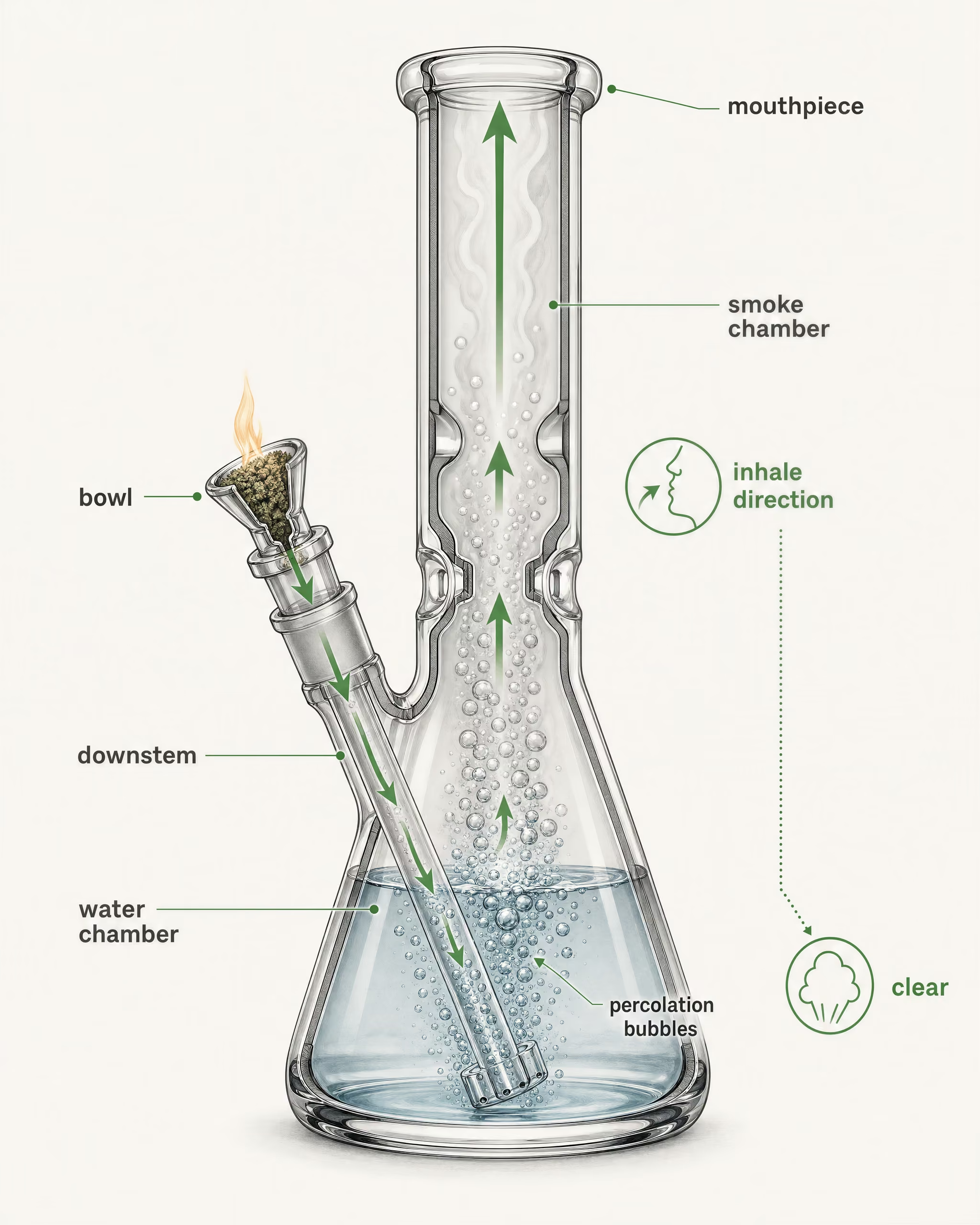
A bong is a smoke path built around a water chamber. The bowl holds the plant material. The downstem carries smoke from the bowl down into the water. As the user draws, smoke bubbles through the water and then collects in the upper chamber before inhalation. Bubblers use the same idea in a smaller, more pipe-like body, often with the bowl, stem, and chamber integrated into one piece.
Percolation is the central mechanic. A simple downstem with one opening makes a few large bubbles. A diffused downstem or added percolator breaks smoke into many smaller bubbles, increasing total surface area in contact with water. More surface area usually means more cooling and more humidification. It also means more drag. Drag is just draw resistance, but it matters because it changes puff topography: how hard someone inhales, how long they inhale, and how large a hit they take.
Those behavior shifts are not trivial. Heishman, Huestis, and colleagues showed years ago that cannabis smokers self-titrate by adjusting puff volume, puff duration, and inhalation patterns. Device design shapes those adjustments. A high-drag bong can prompt slower, longer pulls. A large chamber can encourage the user to fill it and then clear it in one breath. That can increase the total smoke volume delivered in a single inhalation even if the smoke feels less hot.
Chamber volume matters more than most guides admit. Large bongs can hold a visibly dense cloud of mainstream smoke, but that smoke is not getting fresher while it sits there. As smoke lingers in the chamber, some cannabinoids and terpenes condense onto the glass, while the remaining smoke becomes stale and harsh in a different way: less flavorful, still particulate-heavy. Bigger chambers can therefore encourage oversized hits without guaranteeing more efficient THC delivery.
Technique also changes combustion. If the bowl is overpacked, airflow drops and combustion becomes less even. If the flame is held too long over the whole bowl surface instead of only one edge, more material burns at once, raising smoke density and temperature. “Cornering” a bowl is not folklore; it reduces unnecessary combustion of the entire packed surface and can improve consistency from hit to hit.
What the evidence says about filtration versus perceived smoothness
The strongest evidence-based point is simple: smoother does not mean safer. Water cools smoke. Cooling reduces throat irritation for many users. That is perception. Toxicology is a different question.
Older laboratory work summarized by California NORML and MAPS-linked reviews found that water pipes can alter the cannabinoid-to-tar ratio, but results depended heavily on the exact setup, water volume, packing, and smoking style. Some water-soluble compounds are reduced. Some particulate is trapped. Yet cannabinoids are also lost in the process, including THC to a degree, and the reduction in harmful combustion products is nowhere near enough to treat water filtration as a meaningful safety conversion.
This is where user compensation enters. If the smoke feels smoother, people often inhale more deeply or take larger hits. That can cancel out any modest filtration benefit and sometimes overshoot it. More smoke in the lungs means more particulate deposition, more carbon monoxide exposure, and often a larger delivered dose. Health Canada’s pharmacology summary notes inhaled THC bioavailability varies widely, around 10% to 35%, and much of that variation comes from inhalation behavior rather than device mythology.
A useful comparator is Abrams et al. in Clinical Pharmacology & Therapeutics (2007). They found vaporization delivered similar THC with lower expired carbon monoxide than smoking from the same cannabis source. The point is not that bongs equal vaporizers; they do not. The point is that combustion itself adds a burden that changing the smoke path only partly modifies. Wayne Hall and Donald Tashkin have both argued, from different angles, against soft-pedaling smoked cannabis as benign. That caution applies directly here.
One more public-health distinction: bongs produce mainly mainstream smoke during active inhalation, unlike joints that continue burning between puffs and generate sidestream smoke. That can reduce passive environmental smoke relative to a joint left smoldering. It does not make indoor bong smoking harmless to others. The CDC states that secondhand cannabis smoke contains many of the same toxic and cancer-causing chemicals found in tobacco smoke, along with THC.
Bubblers as the compromise device between portability and water filtration
Bubblers sit between dry pipes and full-size bongs in both engineering and effect. They add a small water chamber to a hand-held form, so the smoke is usually cooler and slightly more humid than from a spoon pipe, but less conditioned than from a larger bong with a diffused downstem or multiple percs.
That middle position has tradeoffs. Bubblers are more portable than bongs and usually encourage smaller bowl sizes and smaller chamber fills, which can help keep dose size more contained. They are also faster to foul. Resin, ash, and dirty water collect in a compact space, and airflow degrades quickly if cleaning is neglected. Because the water chamber is small, stale smoke becomes an issue fast; letting smoke sit in a bubbler for even a short time tends to produce a flat, acrid hit.
Compared with a full-size bong, a bubbler usually delivers less smoke per pull, less chamber volume to clear, and less incentive to take a massive inhalation. That can be a real advantage for dose consistency. Compared with a dry pipe, it adds drag, cleaning burden, and spill risk. None of those are lifestyle details. They change how much smoke is inhaled, how hot it is, and how repeatable each hit becomes.
| Method | Dose control | Smoke feel | Sidestream waste | Tobacco exposure | Maintenance |
|---|---|---|---|---|---|
| Joint | Moderate to low | Moderate, can get harsher as it burns | High | No | Low |
| Spliff | Low to moderate | Sharpened by tobacco | High | Yes | Low |
| Blunt | Low to moderate | Heavy, lingering smoke | High | Yes | Low |
| Spoon pipe | Moderate | Hotter and denser | Lower than joint | No | Moderate |
| One-hitter | High | Very hot, short path | Low | No | Moderate |
| Chillum | Moderate | Hot and direct | Low | No | Low to moderate |
| Bong | Low to moderate | Cooler, smoother-feeling | Lower than joint | No | High |
| Bubbler | Moderate | Some cooling, less than bong | Lower than joint | No | High |
The bottom line is not glamorous. Water pipes may improve comfort. They do not make smoke clean. If harm is the question, the larger dividing line is still combustion itself, and within smoked methods, the main variables are dose size, inhalation behavior, and whether the device encourages oversized hits under the cover of smoothness.
How each smoking method changes the experience
The subjective feel of smoking cannabis is not just a matter of style. It is shaped by aerosol temperature, how much smoke is produced per puff, whether the material keeps burning between hits, and whether tobacco is part of the mixture. Those variables change dose delivery in ways users can feel immediately, even when they cannot name the mechanism. They also change risk. The National Academies report from 2017 is the right baseline here: long-term cannabis smoking is associated with worse respiratory symptoms and more frequent chronic bronchitis episodes, regardless of whether the smoke comes from a joint, pipe, or bong.
Onset, intensity, and hit size
Across smoked methods, onset is fast. Health Canada notes that peak plasma THC is reached within minutes after inhalation, with effects beginning within seconds to minutes. What changes from method to method is less the speed of onset than the size and pattern of each dose.
Bongs often feel stronger for a simple reason: they can support larger inhalation volumes. Water cooling reduces heat and throat irritation, so many people inhale more smoke in a single breath than they would from a dry pipe or joint. That does not mean the smoke is cleaner. It means the device can make high-volume inhalation easier. The result is a larger bolus of cannabinoids and combustion byproducts delivered quickly. Users often interpret that as higher potency when part of the effect is really puff topography. Huestis, Heishman, and colleagues showed years ago that cannabis users self-titrate by changing puff volume, duration, and breath-hold. The device shapes that behavior.
Pipes and chillums sit at the other end. They usually deliver hotter, denser smoke in shorter puffs. A chillum’s straight-through design can make the hit feel immediate and concentrated, but not because it has special pharmacology. The path is short, cooling is minimal, and smoke concentration per second can be high. Spoon pipes are similar, though the bowl size allows a bit more pacing.
Joints produce a different rhythm. Because the cigarette stays lit, the user tends to take repeated moderate puffs over several minutes rather than one or two large, discrete inhalations. That can make the session feel steadier and less abrupt, even when total flower use is higher. Some of the cannabinoids are simply lost to sidestream smoke while the joint burns between puffs, so the experience may feel gentler per puff but less efficient overall.
One-hitters are the clearest example of a method that changes experience by limiting portion size. Their small chamber encourages a single small inhalation from a known amount of material. That makes them useful for microdosing or for testing potency without committing to a full bowl or a continuously burning joint. The tradeoff is hotter smoke and less forgiveness if the material is packed too tightly.
Spliffs and blunts are pharmacologically distinct because tobacco changes the experience. Nicotine can add alertness, throat hit, and a different early head rush. That sensory shift is not subtle. Neal Benowitz’s body of work on nicotine makes the point plain: nicotine has its own cardiovascular and dependence profile. A blunt is not just a larger joint, and a spliff is not merely a regional preference. They are co-use methods.
Flavor, terpene loss, and why stale smoke tastes worse
Flavor changes dramatically by method because smoke is a moving chemical mixture, not a fixed expression of the flower. Hotter combustion destroys more volatile terpenes before they ever reach the mouth. Long smoke paths, dirty resin, and stale standing smoke all flatten aroma.
Joints often start flavorful and then degrade as the cherry overheats the material and sidestream smoke continuously escapes. By the second half, resin, paper combustion, and repeated reheating dominate more of the taste. Blunts add another layer: the wrapper contributes tobacco-derived flavors and nicotine harshness, which can mask cannabis aroma even when users interpret the heavier taste as richer.
Dry pipes can preserve flavor better than many expect when they are clean and cornered properly, because fresh smoke goes from bowl to mouth with little standing time. But they also run hot. Bubblers and bongs cool smoke, which may make terpene notes easier to perceive on inhalation, yet water and resin still alter the profile. Smooth is not the same as flavorful.
Stale smoke tastes worse because it is chemically worse. Once smoke sits in a chamber, joint cone, or room air, volatile compounds dissipate and oxidize while heavier particulates and condensates remain. The brighter terpenes fade first. What is left tastes flat, ashy, and bitter. The same problem shows up in dirty glass. Resin buildup traps old condensate and reheats it on the next use, adding acrid notes that many people mistake for the character of the cannabis itself.
Dose control, session pacing, and social dynamics
Method choice strongly affects how easy it is to control intake. One-hitters and small pipes encourage discrete, countable doses. A person can take one inhalation, wait a few minutes, and decide whether to continue. That is a real advantage for predictable pacing, especially given how variable inhaled THC bioavailability is; Health Canada places it around 10% to 35%, heavily dependent on inhalation behavior.
Joints work differently. They create a continuous session. Because the product remains lit, the social pressure is often to keep passing, keep puffing, and avoid wasting material to sidestream burn. That makes joints less precise for dose control even though each puff may feel modest. They also expose nearby people more continuously; the CDC notes that secondhand cannabis smoke contains many of the same toxic and cancer-causing chemicals found in tobacco smoke, plus THC.
Bongs and bubblers can compress a session into fewer, larger hits. That may look efficient, but it can also overshoot the intended dose, especially for less experienced users. Smoothness is part of the problem. People often confuse smoother smoke with lower risk, higher purity, or lighter respiratory burden. Evidence does not support that leap. Water filtration can cool smoke and remove some water-soluble compounds, but combustion products still dominate the exposure.
Spliffs and blunts add another social layer because nicotine changes reinforcement. In Europe, where tobacco mixing remains common, EMCDDA reporting has repeatedly shown that cannabis use is often tied to tobacco use patterns. That matters for session pacing and for habit formation. When cannabis ritual becomes linked to nicotine reward, stopping either one can become harder. Among smoking methods, that is one of the sharpest differences in experience and one of the least cosmetic.
Health considerations by method
Smoking method changes exposure. It does not cancel combustion. That distinction matters because smoking is not a niche behavior affecting a tiny subculture; SAMHSA estimated 61.8 million people aged 12 or older used marijuana in the past year in the United States in 2023, and 42.0 million used it in the past month. In Europe, the EUDA reported 22.8 million adults aged 15 to 64 used cannabis in the last year in 2024. Since smoking remains the dominant route for many users, differences between joints, blunts, pipes, bongs, bubblers, chillums, one-hitters, and spliffs have public-health weight.
The evidence-backed position is straightforward: among smoked methods, the biggest harm divider is not whether smoke passes through water. It is whether plant material is combusted at all, and whether tobacco is part of the mix. Device design still matters, though. It changes smoke temperature, sidestream loss, airflow resistance, puff topography, and how much tar and carbon monoxide accompany the cannabinoids.
Respiratory effects shared by all smoked cannabis methods
All smoked cannabis methods produce toxic products of combustion. Burn cannabis in a joint, spoon pipe, chillum, blunt, or bong bowl and you generate tar, carbon monoxide, volatile organic compounds, and polycyclic aromatic hydrocarbons. Water cooling can make smoke feel smoother. It does not make combustion clean.
The National Academies of Sciences, Engineering, and Medicine concluded in 2017 that there is substantial evidence of a statistical association between long-term cannabis smoking and worse respiratory symptoms and more frequent chronic bronchitis episodes. That is the baseline finding any method comparison has to start from. Donald P. Tashkin’s pulmonary research, cited for decades in this area, repeatedly found associations with airway inflammation, cough, sputum production, and wheeze among regular cannabis smokers. The literature has been less consistent on a clear cannabis-only COPD signal than it is for tobacco, but that narrower uncertainty should not be read as reassurance. Chronic irritation is still chronic irritation.
Method changes the pattern of that irritation. Joints and blunts burn continuously, so they produce smoke between puffs and often consume more material for a given subjective effect. Pipes and one-hitters are more intermittent. A user can light, inhale, and stop the burn. That tends to reduce sidestream loss, though it may also produce hotter, denser smoke because there is no water chamber and often a shorter smoke path. Chillums are a strong example: simple, direct, concentrated, and often harsh for exactly those reasons.
Bongs and bubblers sit in an awkward middle ground. Water can cool smoke and remove some water-soluble constituents, which may reduce throat bite. But comfort is not the same as risk reduction. Older laboratory work summarized in NORML/MAPS-adjacent reviews found variable changes in cannabinoid-to-tar ratios depending on setup, water volume, and smoking behavior. Some users respond to cooler smoke by inhaling more deeply or taking larger puffs. Heishman, Huestis, and colleagues showed long ago that cannabis users self-titrate by changing puff volume, duration, and breath-hold. The device matters, but the user-device interaction often matters more.
That is also why “harshness” is a poor proxy for safety. Hot smoke can irritate immediately, yet smooth smoke can enable larger exposure. Breath-holding is another myth-heavy area. THC absorption in the lungs is rapid; prolonged breath-holding adds more particulate deposition than meaningful extra cannabinoid uptake. Health Canada’s review notes inhaled THC bioavailability is highly variable, roughly 10% to 35%, with inhalation style driving much of that spread.
Blunts and spliffs deserve sharper language than they usually get. They are not just stylistic variants. Blunts introduce tobacco-derived wrapper material; spliffs add tobacco directly to the fill. Neal Benowitz’s work on nicotine toxicology, along with tobacco-cannabis co-use literature associated with researchers such as Delnevo, makes the public-health issue plain: nicotine changes dependence risk, cardiovascular load, and the reinforcement pattern of use. Smoking a spliff is not only smoking cannabis. It is co-administering cannabis and tobacco.
Secondhand smoke, indoor air, and device-specific exposure patterns
Secondhand exposure is where device design becomes very visible. Joints and blunts are sidestream-heavy. They keep burning in the ash between puffs, releasing smoke continuously into the room. That smoke contains THC as well as many of the same toxic and cancer-causing chemicals found in tobacco smoke; the CDC states some are present in higher amounts. In enclosed spaces, that means nearby people are exposed even when they never inhale directly.
Pipes, chillums, one-hitters, and many bongs produce less continuous sidestream because the bowl is usually lit only during active inhalation. That does not mean low indoor impact. Mainstream smoke is still exhaled into the room, and concentrated exhalation from a pipe or bong can sharply raise short-term particle levels in small spaces. The exposure pattern is intermittent rather than continuous. That is a real distinction, but not a free pass.
Joints also tend to be less efficient in cannabinoid transfer because they keep burning between puffs. Rolling paper, pack density, moisture level, and filter-tip design affect airflow and burn rate. A loosely packed joint with a fast burn wastes material rapidly into sidestream smoke. A pipe bowl that is cornered rather than fully torched can reduce unnecessary combustion of the whole surface. That can lower waste and bystander smoke. Again, lower waste is not the same as safe inhalation.
Water pipes are often described as cleaner for the room because some smoke is retained in the chamber. The real picture is smaller. Smoke held in a bong still reaches the lungs and is then exhaled. Cooling may reduce coughing in some users, and less visible irritation can create the impression of less pollution, but indoor air exposure is driven by total smoke generated and room ventilation, not by mythology about water acting like a full toxicant scrubber.
Tobacco mixing changes the stakes further. Spliffs and many blunts add nicotine and tobacco smoke constituents to the indoor air burden. In parts of Europe, where the EMCDDA has repeatedly noted tobacco mixing remains common, this is not a minor cultural footnote. It is a distinct exposure profile with implications for both users and bystanders.
Infection, hygiene, and maintenance issues in shared devices
Shared smoking devices add a different category of health concern: contamination. Mouthpiece sharing can transfer saliva and respiratory pathogens. That risk is obvious during outbreaks of respiratory illness, but it is not limited to those periods. Any communal smoking setup that passes from mouth to mouth can spread microbes.
Maintenance changes risk more than many casual guides admit. Resin accumulation narrows airflow, alters burn characteristics, and traps sticky organic residue that can hold moisture and debris. Dirty pipes do not just taste bad. They also encourage hotter, less predictable draws because blocked passages increase resistance and can lead users to inhale harder.
Water pieces need more attention, not less. Bong or bubbler water that sits for days can accumulate ash, plant particles, saliva droplets, and biofilm. “Old bong water” is not merely unpleasant; stagnant water is a microbial habitat. Neglected devices can also develop mold, especially if they are stored damp, left with plant debris inside, or kept in dark enclosed spaces. The mold issue is less studied in consumer glass than respiratory outcomes from smoking itself, but the practical advice is easy: standing dirty water and wet organic residue should not be treated as harmless.
Cleaning claims often outrun evidence. A spotless bong does not neutralize tar or carbon monoxide in fresh smoke. A dirty bong plainly adds hygiene problems. Both statements can be true at once. Comfort claims should stay in their lane. Smoother smoke after water filtration or after resin “seasoning” does not show lower toxic exposure.
For shared use, the simplest evidence-based precautions are also the least glamorous: fresh water each session for water pieces, regular removal of resin, full drying before storage, no visible mold, and avoiding mouthpiece sharing when anyone is sick. Those steps address hygiene and contamination. They do not change the larger respiratory fact established by Wayne Hall, Tashkin, the National Academies, CDC, and related public-health reviews: if the method burns cannabis, airway irritation and smoke toxicant exposure remain part of the package.
Technique, without mythology
Technique changes consistency more than people admit, but it does not cancel the basic toxicology of smoke. Burned cannabis still produces tar, carbon monoxide, volatile organic compounds, and polycyclic aromatic hydrocarbons. The National Academies in 2017 found substantial evidence linking long-term cannabis smoking with worse respiratory symptoms and more frequent chronic bronchitis episodes. So the practical question is not how to make combustion “safe.” It is how user behavior changes airflow, burn pattern, and inhaled smoke load.
Packing, airflow, and why too-tight bowls waste effort
A bowl that is packed too tightly resists airflow. That sounds minor, yet it changes nearly everything that follows. When air cannot move evenly through the plant material, the heated zone becomes localized, combustion gets patchy, and the user usually compensates by pulling harder. Harder draws can raise ember temperature, increase throat irritation, and still leave part of the bowl under-burned.
Looser, even packing tends to support steadier airflow across more of the surface area. The point is consistency, not stronger effects. A freely breathing bowl often burns more uniformly, requires less repeated ignition, and reduces the stop-start pattern that creates hot spots and wasted material. The same logic explains why resin buildup matters. Dirty pipes narrow air channels, add drag, and make each draw less predictable. Cleaning does not make smoke harmless; it makes airflow less erratic.
Moisture content matters too. Wet or poorly dried material burns unevenly because heat is spent evaporating water before plant matter combusts efficiently. The result is often hotter, harsher smoke and more relighting. This is a physics issue, not folklore.
Ignition style, cornering, and partial-bowl efficiency
How flame is applied affects how much plant matter combusts at once. Lighting the entire exposed surface of a bowl creates a broad cherry immediately. That can be useful for group sharing, but it also means more cannabis is burning between puffs and more smoke is lost to the air. With joints, that sidestream loss is continuous because the cigarette remains lit. Pipes and bongs avoid some of that waste because combustion mostly happens during active use.
“Cornering” a bowl means igniting only one section of the surface instead of the whole top. Mechanically, this limits the initial combustion zone, preserves unlit material, and can make successive draws more similar. It is less about potency than about repeatability. The same is true of partial bowls: smaller, evenly burned loads can be easier to judge than repeatedly relighting a large, unevenly charred pack.
Breath-holding, coughing, and other habits that do less than people think
The old claim that holding smoke in the lungs for a long time dramatically increases THC absorption is overstated. THC enters the bloodstream quickly. Health Canada notes peak plasma concentrations are reached within minutes after inhalation, and inhaled THC bioavailability varies widely, often around 10% to 35%, depending heavily on inhalation behavior. Research by Huestis, Heishman, and colleagues showed that people self-titrate by changing puff volume, duration, and timing. That does not mean longer breath-holds are efficient. It mostly means behavior changes dose.
Long breath-holding increases contact time for particulates and irritants more reliably than it produces a large jump in cannabinoid uptake. Coughing is similar: it can feel like proof that smoke “hit harder,” but it more often signals airway irritation. Cooler smoke may feel smoother, especially through water, yet reduced harshness can encourage bigger inhalations. That is one reason perceived smoothness is a poor guide to actual exposure.
Which method is best for what goal? The evidence-based answer
If the question is really about outcomes rather than identity, the answer is less romantic than most smoking guides suggest. Smoked methods differ in dose consistency, sidestream loss, smoke temperature, and nicotine co-exposure. They do not escape the core fact of combustion. The National Academies (2017) found substantial evidence linking long-term cannabis smoking with worse respiratory symptoms and more frequent chronic bronchitis episodes. That baseline applies whether smoke comes from a joint, pipe, bong, or blunt.
If the goal is dose control
Dry pipes, one-hitters, and small bowls usually win. Not because they are gentler, but because they make portion size visible and limit passive burn. A joint keeps smoldering between puffs, so THC is lost to sidestream smoke; that makes dose less efficient and exposes bystanders as well. Heishman, Huestis, and colleagues showed years ago that users self-titrate by changing puff volume, duration, and breath-hold, so the device is only part of the equation. Still, devices with small, discrete bowls make it easier to repeat the same starting amount and stop after one inhalation cycle.
Joints are worse for precision than many people assume. Pack density, paper, airflow, and uneven burn all shift delivery. Bongs can deliver large doses quickly, which is the opposite of fine control for many users. Bubblers sit in the middle: somewhat cooler than a dry pipe, but still more session-oriented than a one-hitter.
If the goal is minimizing tobacco exposure
Avoid blunts and spliffs. This is the clearest evidence-based call in the whole category.
Blunts are pharmacologically and toxicologically distinct from joints because the wrapper is usually tobacco-derived and can add nicotine exposure. Strong evidence
A blunt is not merely a larger joint. The wrap is usually tobacco-derived, which means nicotine exposure and tobacco toxicants are built into the method. That changes dependence risk and cardiovascular exposure. Delnevo and other tobacco-cannabis co-use researchers have documented how cigarillos and related products function as blunt wraps in U.S. use patterns. Spliffs do the same thing more directly by mixing cannabis with tobacco in the fill itself. In Europe, where this pattern remains common, EMCDDA reporting has treated tobacco mixing as a public-health issue, not just a style preference.
If the goal is to avoid nicotine, use cannabis-only smoked forms. No smoked method is harmless, but some are plainly worse because they add tobacco.
If the goal is reducing respiratory burden
Among smoked methods, water pipes and bubblers can cool smoke and may reduce perceived harshness. That is not the same as reducing harm in a large or reliable way. Water filtration can remove some water-soluble compounds, yet combustion still produces tar, carbon monoxide, volatile organic compounds, and polycyclic aromatic hydrocarbons. Cooling may even encourage deeper or larger inhalations, raising total smoke exposure.
So the evidence points in one direction: if the real aim is reducing respiratory exposure, move away from combustion entirely. Abrams et al. (2007) found vaporization delivered similar THC with lower expired carbon monoxide than smoking the same cannabis source. That does not make every non-combustible route risk-free, but it does show what burning adds.
Within smoking, pipes reduce sidestream waste relative to joints, and water pieces cool smoke more than dry ones. But the strongest insight is this: the smoothest method is not necessarily the least harmful one.
References
- [1] The Health Effects of Cannabis and Cannabinoids: The Current State of Evidence and Recommendations for Research. National Academies Press, 2017. https://doi.org/10.17226/24625
- [2] Vaporization as a Smokeless Cannabis Delivery System: A Pilot Study. Clinical Pharmacology & Therapeutics, 2007. https://doi.org/10.1038/sj.clpt.6100200