Cannabis Clubs near Port de Pollença
Port de Pollença and the cannabis social club scene
In Port de Pollença, a cannabis social club (CSC) is a private members’ association where adults gather around shared cannabis culture rather than a shop counter. The local scene is shaped by the town’s seafront rhythm, its tourism-heavy summer calendar, and the way people move between the paseo marítimo, the port, and the quieter streets inland.
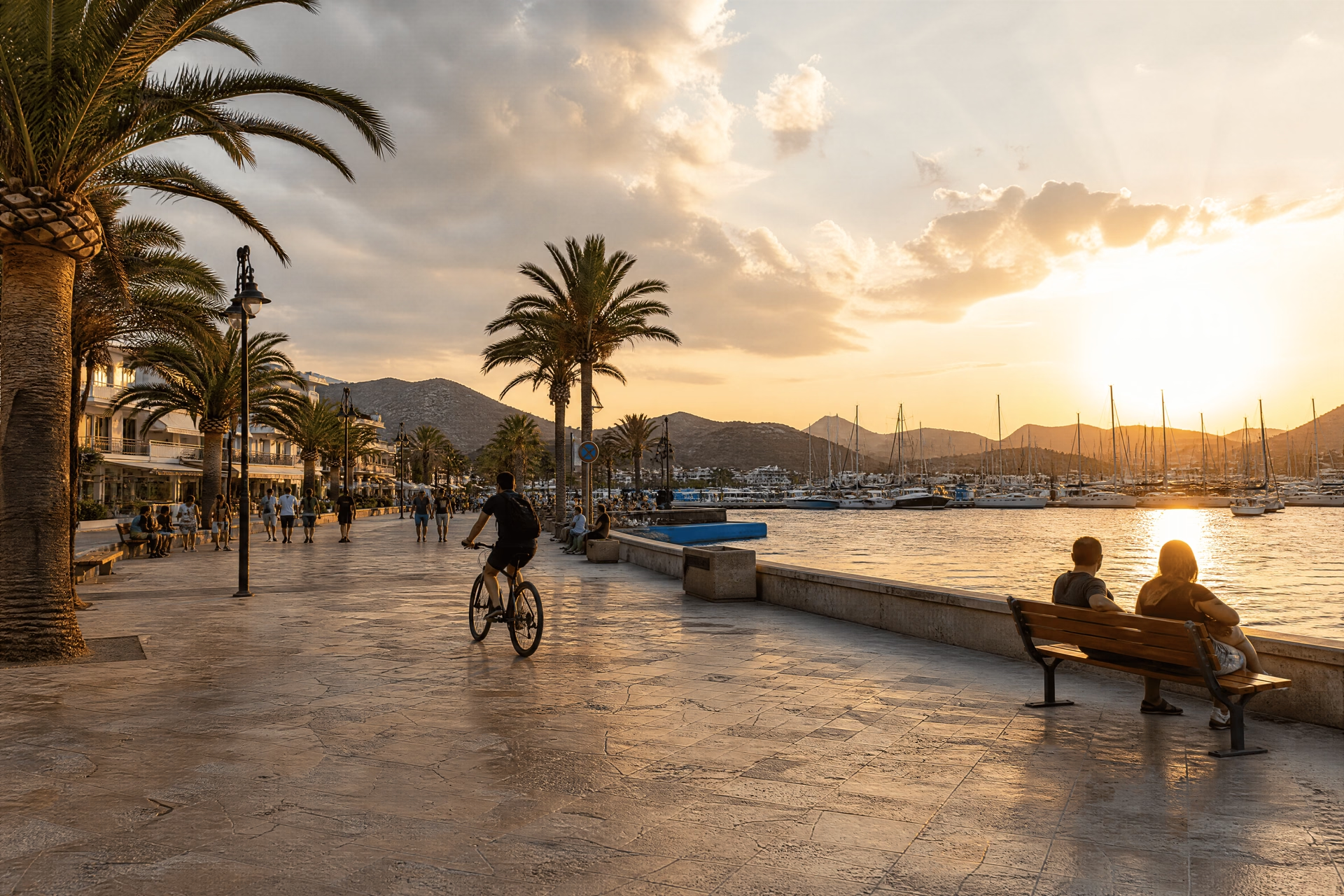
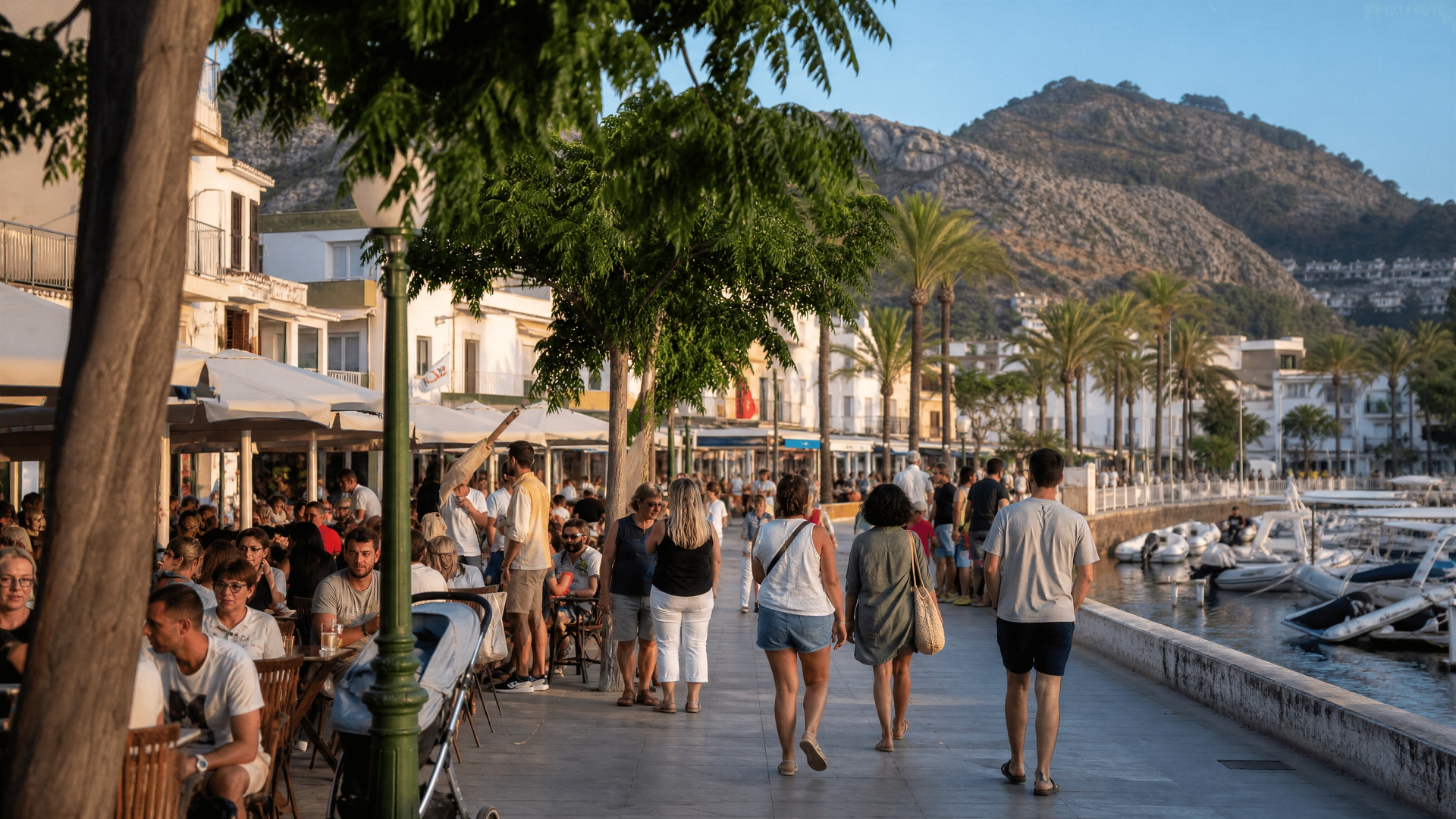
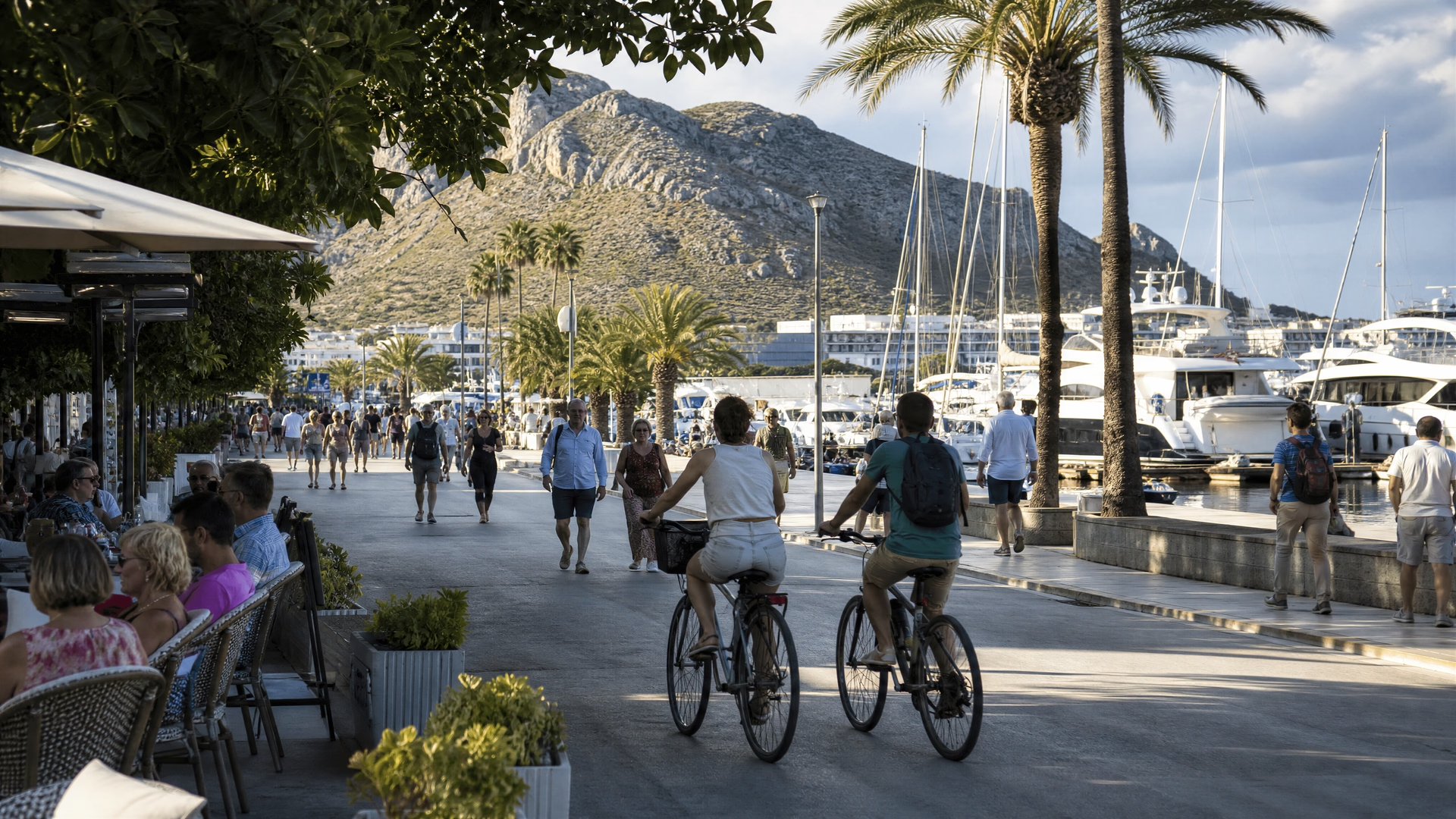
What makes Port de Pollença distinctive is its scale. The municipality of Pollença had 17,594 residents in 2024, and Port de Pollença itself concentrated around 43% of that population. That gives the waterfront area a busy, lived-in feel that is very different from a resort strip with no local core. The club conversation here sits inside that everyday setting: café terraces, family promenades, cyclists, sailors, and the long bay that opens the town to the sea.
As a category, a cannabis social club Port de Pollença is not a coffee shop and not a dispensary. It belongs to the private association model that people also describe in Spanish as club social de cannabis or asociación cannábica, and in that sense it is closer to a members’ room than a retail venue. For a broader background on the idea, see History of Cannabis: From Ritual to Legalization.
Port de Pollença also sits in a municipality that includes Pollença town, Cala de Sant Vicenç, and Formentor, so the scene around the bay is always read alongside the older inland center and the dramatic northern coastline. That mix matters because it shapes how people think about evenings out, quiet corners, and where a club might fit into the day.
As of 2026, this directory shows no listed clubs in Port de Pollença itself, so the page works as a local guide first and a listing page second. Readers usually need the neighborhood picture, the movement of the town, and the nearby options that sit beyond the waterfront.
For background on how associations are described in editorial travel writing, History of Cannabis: From Ritual to Legalization and the town’s own tourism materials are the clearest starting points for the civic setting.
How cannabis clubs work in Port de Pollença
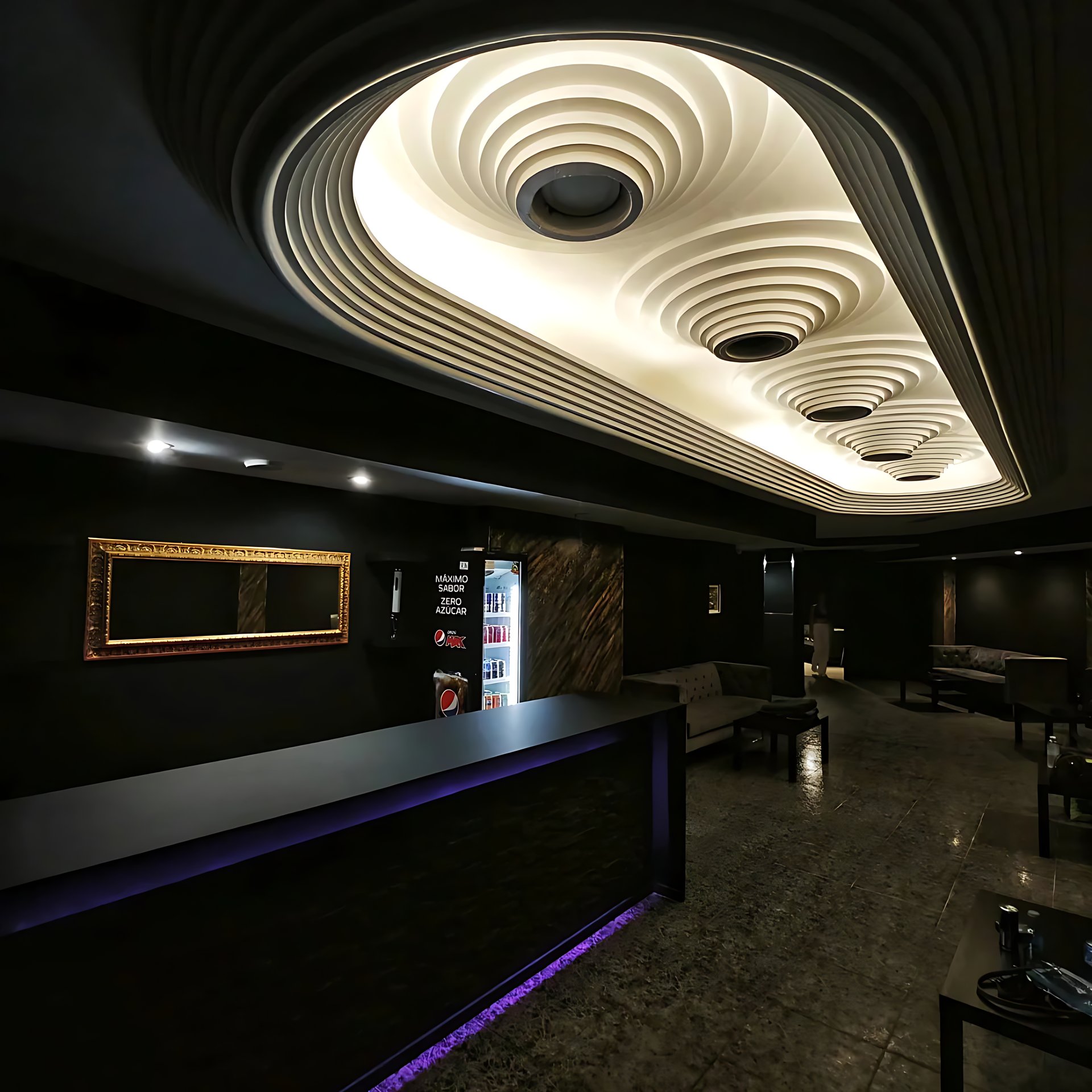
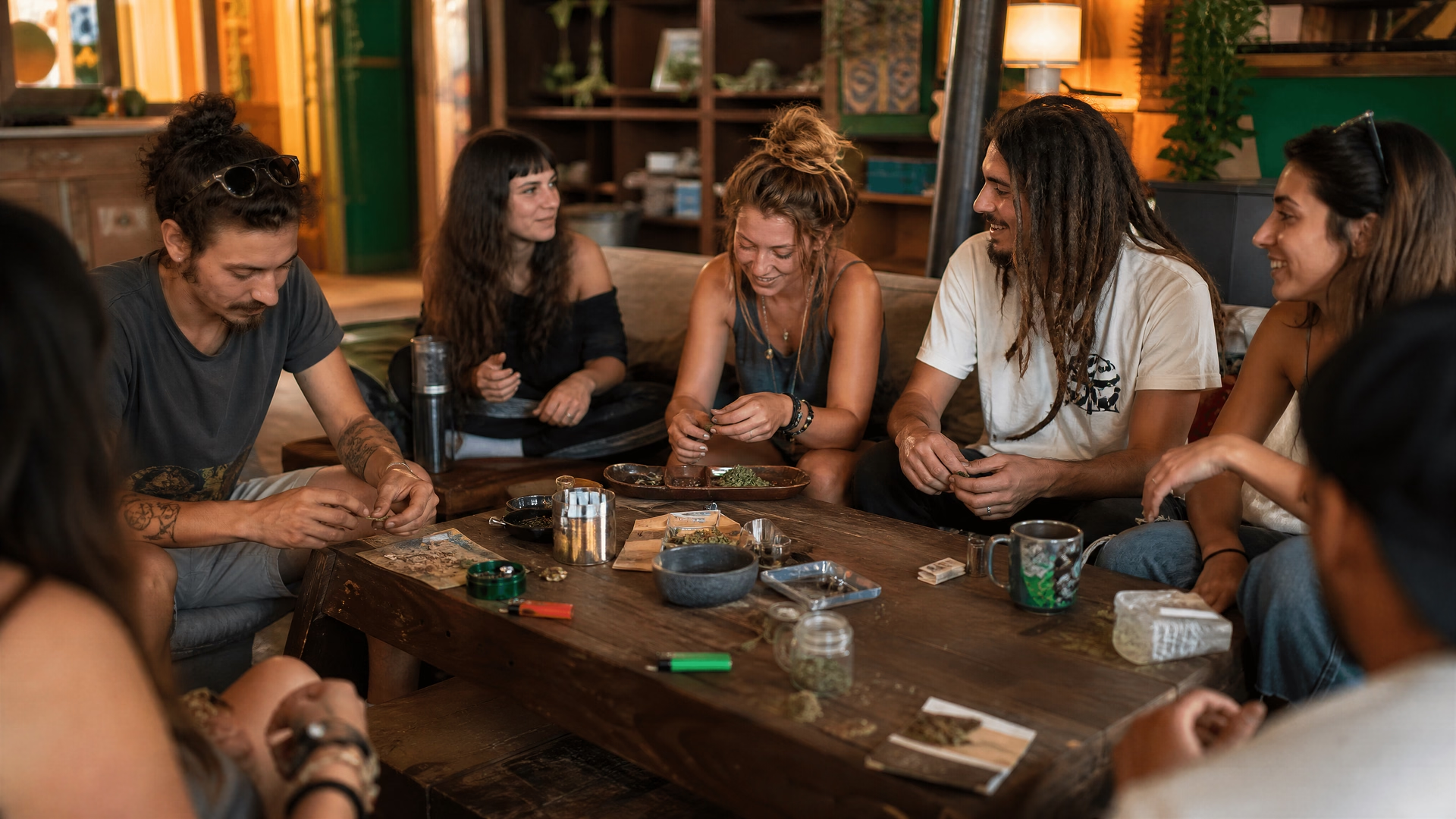
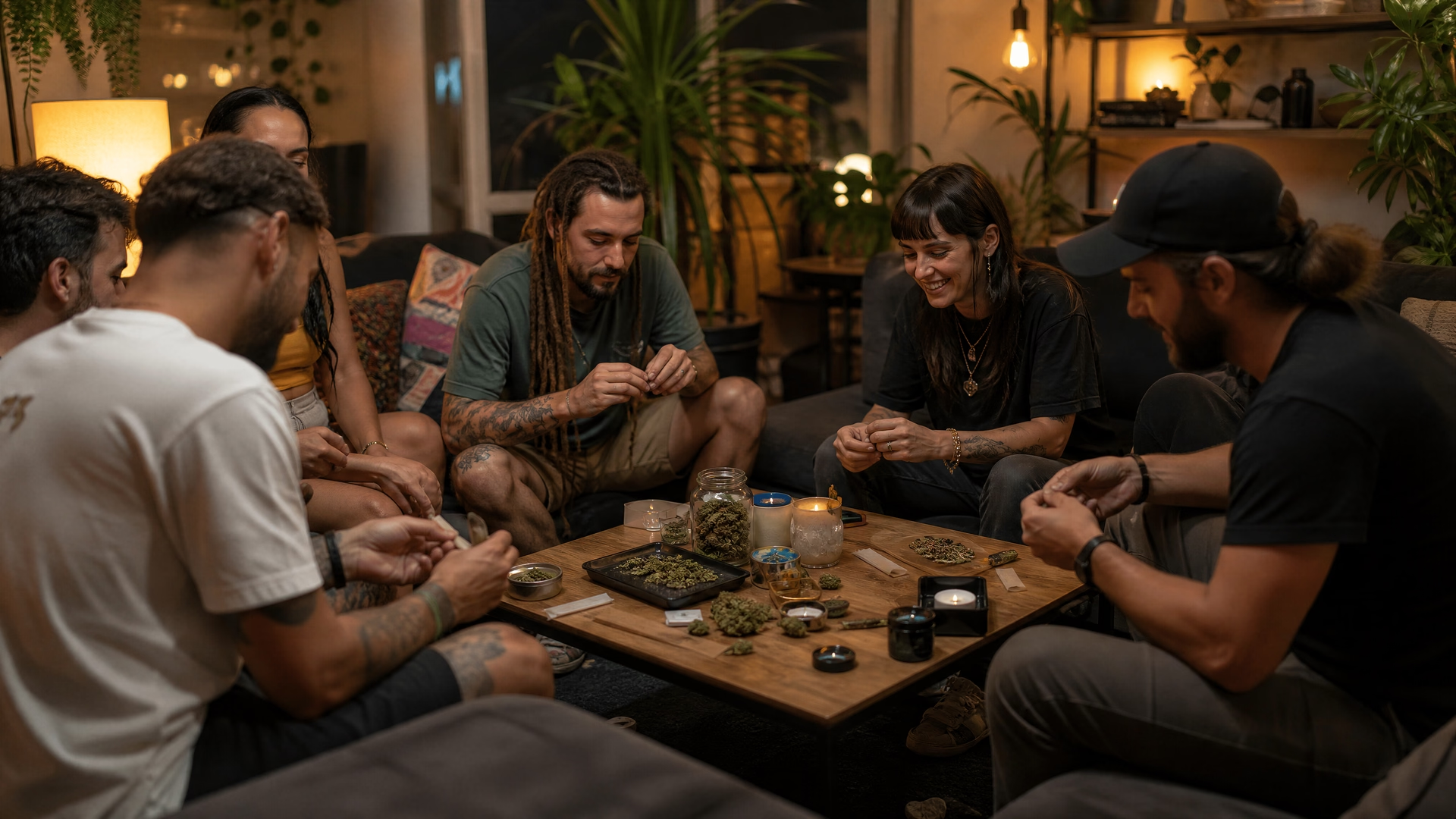
A CSC is usually experienced as a private social space with a reception desk, house rules, and a calm membership rhythm rather than a public storefront. People often speak about the room itself more than any product detail: sofas, low tables, conversation, music kept at an easy volume, and the slow social pace that defines the setting.
Joining generally begins with how to join through a sponsoring member, a written invitation, or an arranged introduction, then a short registration visit where ID is shown, a form is completed, and a membership card may be issued. These spaces are adults-only and 18+, and the tone is usually practical rather than theatrical: check in, read the house rules, settle the membership fee, and understand the club’s own routine.
The phrases people search for vary a lot — cannabis club Port de Pollença, private members club, members-only, or even cannabis social club near me — but the lived experience is usually the same broad one. It is a non-profit setting with collective cultivation shared among members, cash only contributions, and a shared-cost atmosphere rather than a retail sale.
In everyday speech, people may mention strains, flower, hash, concentrates, and edibles as part of the club conversation, but that is background texture, not a menu. The important thing for a first-time reader is that these spaces are about membership culture and responsible consumption, not casual walk-in browsing.
For a wider overview of terminology, History of Cannabis: From Ritual to Legalization is a useful neutral companion read, especially if you are comparing Spanish clubs with other European models such as the Dutch coffee shop or the German Anbauvereinigung.
In Spanish travel language, you may also hear club social de cannabis, club cannábico, hacerse socio, cuota de socio, and consumo responsable used in the same breath. The English page keeps those ideas in plain language so the local picture remains easy to follow.
Neighborhoods and where the local scene feels closest
Port de Pollença does not fragment into a dense club district the way a big city might, but its geography still matters. The waterfront strip known locally as el Moll is the town’s most recognizable social spine, with the promenade, beach frontage, marina activity, and the everyday flow of people moving between restaurants and the sea.
In the absence of listed clubs in the immediate town, the surrounding urban pattern becomes part of the story. The port area feels open and public, while the older Pollença town center inland gives the municipality a more historic core. Cala de Sant Vicenç and Formentor, meanwhile, pull the eye outward toward coves, headlands, and quieter seasonal edges.
This is where the directory is most useful: it shows the local context cleanly instead of pretending there is a large hidden scene on every block. The waterfront is the natural reference point for visitors and residents alike, but the actual club map has to be read across the wider northern Mallorca area.
To understand the wider island pattern, the directory’s surrounding-city block matters as much as the town itself. The nearby options are not presented as a promise or a shortcut; they simply reflect where listings exist in the broader network.
Because this page is updated for 2026, the neighborhood picture can change as listings evolve over time. The town remains the same recognisable place — bay, port, promenade, and inland market streets — but directory coverage is maintained separately from the city’s everyday life.
Nightlife, music, and the evening rhythm
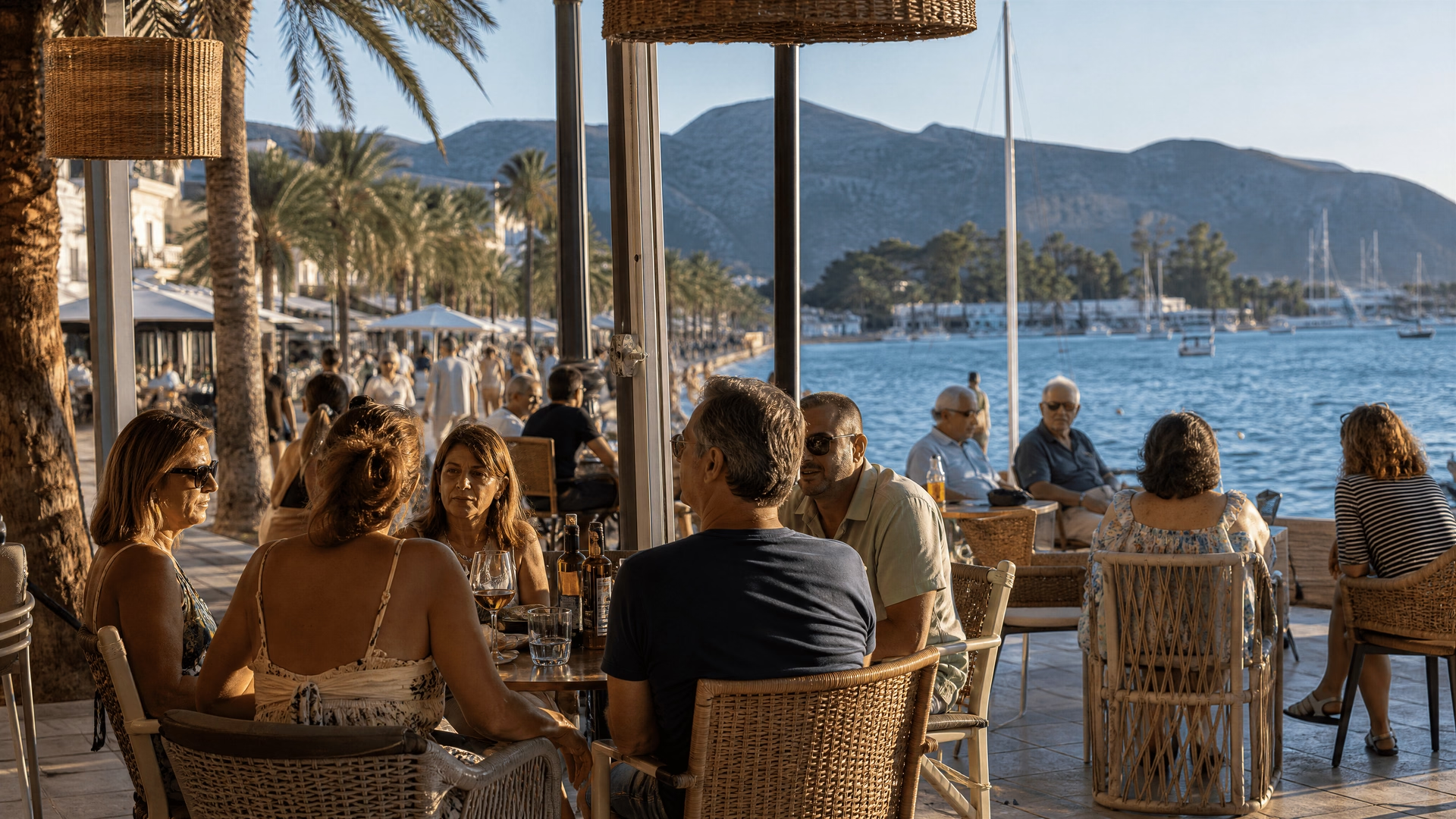
Port de Pollença’s nightlife is gentler than a club-heavy resort, which is part of its appeal. Evenings tend to start on the promenade, around the marina, and in the restaurants that line the bay, where the soundscape is conversation, glasses, live background music, and the tide more than it is late-night noise.
That matters for cannabis social club culture because the CSC here is best understood as a social extension of the town’s evening pace. The scene is not a commercial nightlife add-on; it is one more layer of a place where people already gather outside, linger after dinner, and move slowly through the warm air.
Port de Pollença also has a seasonal pulse. Summer brings long daylight and fuller terraces, while the quieter months shift attention toward locals, walkers, and people who know the promenade in a more relaxed key. In that context, a members-only room feels less like an attraction and more like a private social corner within the town’s wider evening ecology.
If you want a cultural comparison that stays neutral, History of Cannabis: From Ritual to Legalization helps explain why Spanish clubs often feel more communal than retail and less transactional than tourism marketing.
Musically and socially, the overlap is easy to see: low-key gatherings, a playlist in the background, and a conversation that can move from football to the sea, from local food to the day’s boat traffic. The club scene in Port de Pollença is small by directory count, but the social atmosphere around it is unmistakably local.
The point is not to romanticize cannabis; it is to describe how the town’s after-dinner life feels, and where a private association fits into that rhythm without overwhelming it.
Food, festivals, and the local culture crossover
Port de Pollença’s culture is built around the bay, the port, and the everyday Mallorcan habit of lingering over food. Seafood, tapas, rice dishes, and simple waterfront meals all sit naturally inside the town’s social life, especially when the promenade is busy and the evening takes its time.
That matters because cannabis club culture does not sit in a vacuum. In a place like Port de Pollença, people talk about dinner first, then music, then maybe the bay walk, and only then the private association scene. The crossover is cultural, not promotional: food, conversation, and evening sociability all belong to the same local texture.
The municipality’s identity also includes Pollença town inland, where festivals, local traditions, and a stronger old-center atmosphere give the area a second cultural register. Formentor and Cala de Sant Vicenç add their own coastal quiet, so the region always feels larger than the waterfront alone.
For a broader sense of cannabis culture as part of social life, Cannabis and Creativity: What THC Really Changes can be read as a general background piece, but the Port de Pollença story is really about place: the sound of the promenade, the smell of the sea, and the way locals and visitors share the same public spaces.
The local association model is often discussed with phrases like asociación cannábica and club social de cannabis, yet in this town those words have to be understood against a setting that is fundamentally maritime and family-oriented. That tension — quiet private rooms inside a very public waterfront town — is part of what makes the place distinctive.
Food, festivals, and evening walks shape the atmosphere more strongly here than any club listing ever could. That is why the directory emphasizes place as much as membership.
Practical context for moving around town
Getting around Port de Pollença is straightforward in the way a coastal town should be: you move by foot along the promenade, by bike for short distances, and by road if you are connecting to Pollença town, Formentor, or the wider north of Mallorca. The bay frontage makes the town easy to read, and that readability helps explain why people ask map-based search questions in the first place.
For club culture, practical context usually means courtesy more than anything else. Arrive on time, keep to the club’s house rules, and remember that reception is part of the member experience. The setting is usually quiet, social, and unhurried; it is not designed for browsing like a storefront.
Seasonality matters too. Summer brings the busiest promenade hours and the widest spread of people in public space, while the cooler months are calmer and more local. That seasonal shift can affect the town’s mood, which in turn affects how a private association feels when people use it as part of an evening out.
Port de Pollença’s port-and-bay geography also means that many visitors orient themselves by landmarks rather than street grids: the marina, the beach edge, the paseo, and the road out toward Formentor. It is a place where walking the frontage is part of understanding the town.
For neutral travel context, History of Cannabis: From Ritual to Legalization remains a background reference only. The practical takeaway here is simpler: local movement, seasonal rhythm, and respect for private space all matter more than any technical club detail.
If you are comparing neighborhoods, remember that Port de Pollença is only one part of the municipality. The bay is the obvious reference point, but the inland town and nearby coastal spots shape how people actually travel across the area.
What this directory shows in 2026
This directory is designed as a living local index, updated for 2026 as listings change over time. For Port de Pollença, the headline count is simple: 0 associations are listed in the wider directory scope, while the immediate town area currently shows no individual club cards.
That is not a failure of the page; it is a faithful reflection of the town’s current coverage. A good local guide should say when the directory is thin, and it should still give readers the real geography, the social mood, and the nearby context they need to understand the area.
When clubs do appear or shift in status, the directory updates alongside them. For now, the useful reading is in the combination of Port de Pollença’s waterfront identity, Pollença’s municipal structure, and the surrounding towns that make the wider north of Mallorca part of the same search journey.
For the background language of the scene, it helps to remember the distinction between cannabis social club, private association, and the Spanish terms people often use in conversation. The directory exists to organize that landscape, not to advertise it.
Readers sometimes compare a CSC to a coffee shop or a dispensary, but the local model is different in both feel and structure. The most useful way to read this page is as a guide to place first, then membership culture second, and listings only where they genuinely exist.
Nearby places and the wider map
Port de Pollença makes the most sense when read as part of a wider coastal and municipal map. The town links naturally to Pollença inland, to Cala de Sant Vicenç on the coast, and to Formentor at the northern edge, while the broader island network carries people toward other towns when they are comparing options.
The geography is part of the editorial story here because people do not experience the town as a list of isolated blocks. They move along the bay, up toward the old center, out toward the cliffs, and across the municipality depending on the season and the plan for the day.
If you are following the directory across Mallorca, the surrounding places matter as much as the waterfront. Port de Pollença is recognisable for its bay and promenade, but its club context lives inside a larger island pattern of connected towns and shared search behavior.
This is an informational directory of independent associations: it offers introductions only, and membership is always at each association’s discretion and never guaranteed.