180 cannabis clubs in Catalonia
The cannabis social club scene in Catalonia
Catalonia’s cannabis social club scene is best understood as a private association culture rather than a retail one, and that distinction shapes everything from the front desk to the social mood inside. A cannabis social club (CSC) is a members-only place built around shared routines, calm interiors, and a deliberately low-key atmosphere. In Catalonia, the conversation around these spaces has long mixed neighborhood identity, nightlife habits, and the everyday rhythm of city life, especially in the larger urban centers.
Readers often arrive with the same two comparisons in mind: a Catalonia cannabis social club is not a coffee shop and not a dispensary. It also feels different from the Amsterdam model, because the social life here is more discreet and association-based, with entry framed through membership rather than storefront browsing. For background reading on the wider story, the city’s place in History of Cannabis: From Ritual to Legalization helps explain why this model developed in the first place.
In practical cultural terms, the scene has always been about more than the word cannabis itself. Members talk about strains, flower, hash, concentrates, and edibles in the same conversational way people elsewhere might talk about wine lists or coffee origins, but the social emphasis lands on the room, the pacing, and the shared setting. That is why the atmosphere matters so much in Catalonia: a club is as much a neighborhood social space as it is a cannabis-specific one.
As of 2026, this directory lists 180 associations in Catalonia, with 136 verified listings in the wider dataset and 30 nearby-area listings across the surrounding geography. Those counts are useful because they show not just volume but how the scene is mapped and maintained over time.
For readers who want a conceptual overview of how cannabis culture, social identity, and city life meet, Cannabis and Creativity: What THC Really Changes offers a neutral background lens without turning the subject into a how-to. The point here is not consumption advice; it is understanding why clubs in Catalonia feel embedded in the city rather than detached from it.
How do cannabis clubs work in Catalonia?
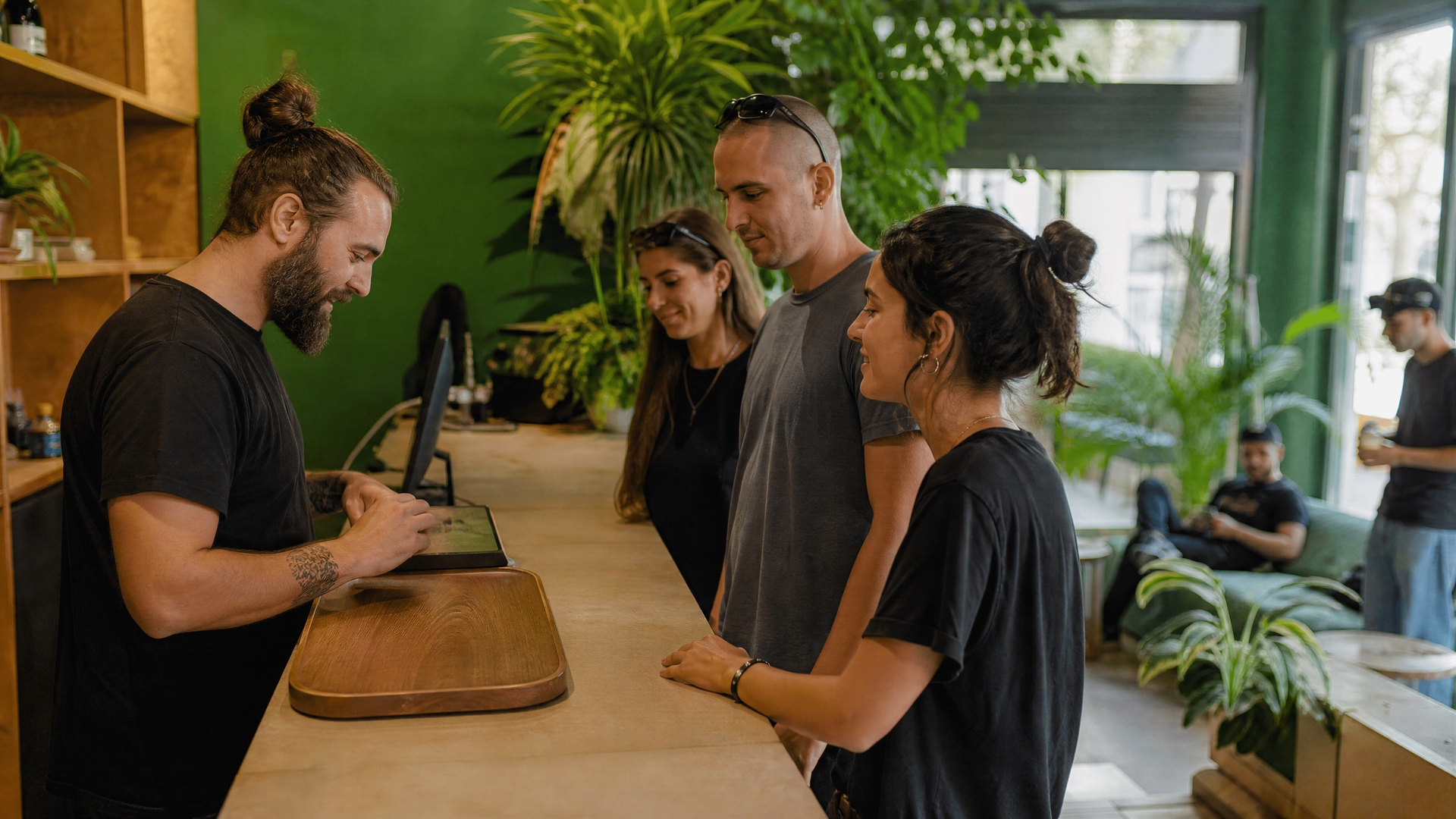
The basic experience is simple to describe and easy to misunderstand. People usually arrive by arrangement, check in at reception, and move into a private room where the club’s house rules are explained in plain language. The membership form, the invitation or referral custom, and the registration step all belong to the same social pattern: a private association with a door that is not meant for casual walk-ins.
Those customs are part of the scene’s identity. A member may be introduced by someone already inside, or may contact the association ahead of time and book an appointment to apply. The first visit often includes a membership card or temporary sign-in note, a brief orientation, and a reminder that responsible consumption is expected from the start. In everyday terms, it is an adults-only space (18+) where the social rhythm is guided by calm, not speed.
Cash only is still a common detail in the membership process, and the membership fee is usually framed as a shared contribution that keeps the association running. That contribution supports the room, the staff, and the collective cultivation model that underpins many clubs. The language people use here often includes non-profit, membership, house rules, reception, and how to join, because those are the real anchors of the experience.
For a broader neutral explanation of the association model, see Cannabis Legalization Overview: Global Legal Status. It is useful as background reading, but the lived scene in Catalonia is shaped more by local customs, neighborhood norms, and private-association etiquette than by any one user-facing script.
What membership usually feels like
Membership tends to feel less like joining a venue and more like entering a small social circle. A person fills out a form, shows ID, and learns the club’s rules for conduct, timing, and shared space. The tone is respectful and often familiar after a few visits, but it remains private and members-only. The result is a calmer atmosphere than many newcomers expect, with conversation carrying the same weight as the cannabis itself.
For readers interested in the language of club structure, the Spanish shorthand appears in the broader background as club social de cannabis, asociación cannábica, and club cannábico, while the membership culture is often described with cómo unirse and cuota de socio in local conversation. Those terms help explain the social identity of the scene without turning this page into a rulebook.
Neighborhoods and where the scene concentrates
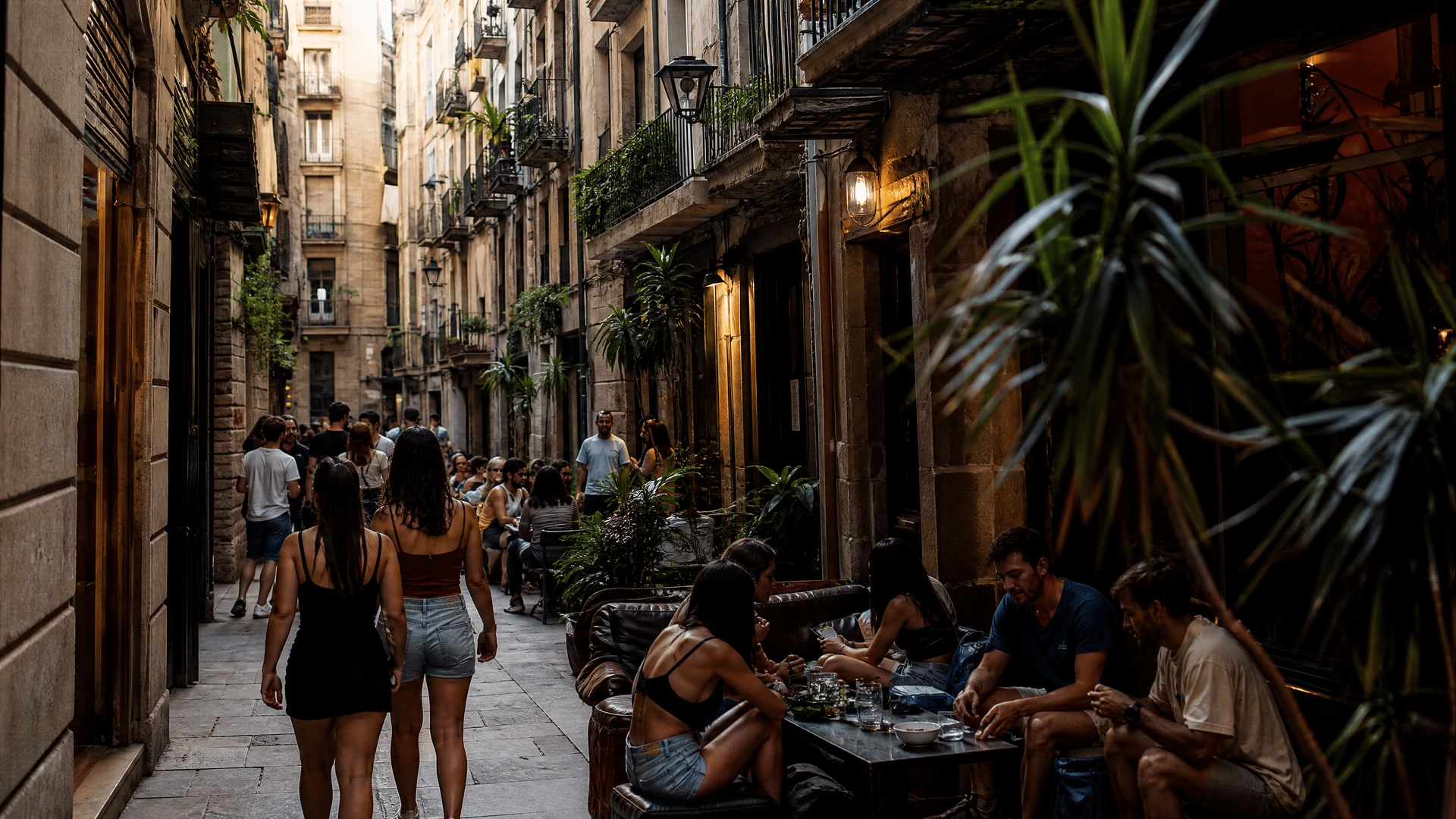
Catalonia’s cannabis club geography is best read through its neighborhoods rather than through any single city-center stereotype. Activity clusters in places where foot traffic, nightlife, and dense residential life already overlap, which is why central districts attract so much attention. City documents note 1,104 activities in El Raval and 856 in the Gòtic, while district reporting has also counted 33 licensed cannabis associations in Ciutat Vella and ten cannabis clubs in Poble-sec. Those figures describe concentration, not recommendation; they simply show where the scene has become especially visible.
Ciutat Vella has long been a focal point for inspections and public-order attention around cannabis-related venues, and that history has made the district part of the city’s broader conversation about neighborhood balance. For readers who want a wider urban frame, the local context around History of Cannabis: From Ritual to Legalization helps connect today’s association culture with the city’s longer social memory.
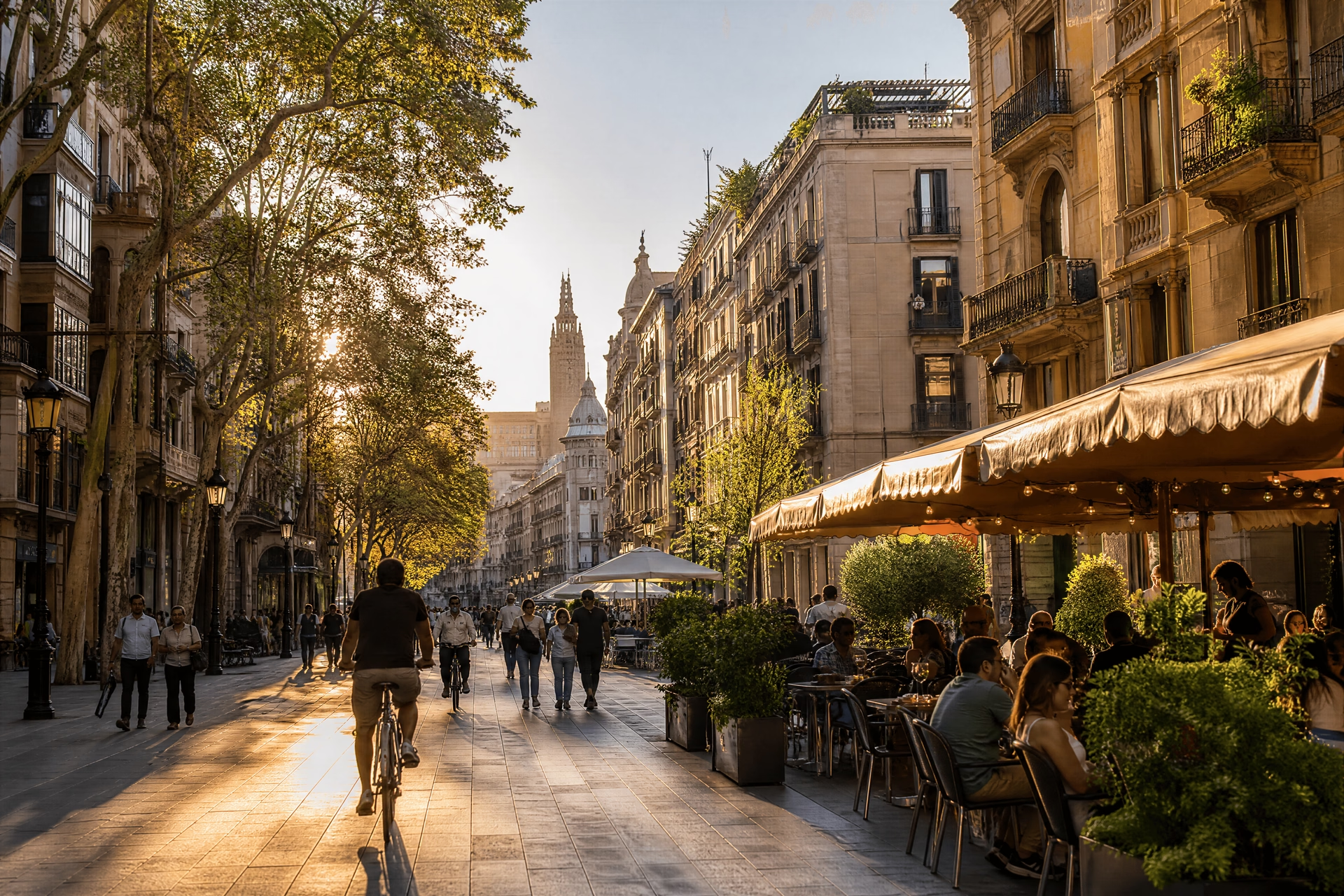
What matters most in neighborhood terms is atmosphere. El Raval feels layered and fast-moving, the Gòtic is compact and historic, and Poble-sec sits closer to an evening-going crowd that blends theaters, bars, and late dinners. That mix is why cannabis social club Catalonia searches so often become neighborhood searches too: people are trying to understand the city’s social map, not just a directory count.
Reading the city by district
The densest areas tend to be the ones with the most mixed-use energy, where daytime residents, late-night diners, and creative workers share the same streets. In Catalonia, the private club scene exists inside that fabric rather than outside it. It is one reason the directory is most useful when paired with district context, because a club’s location says as much about its tone as any headline description could.
Nightlife and social culture
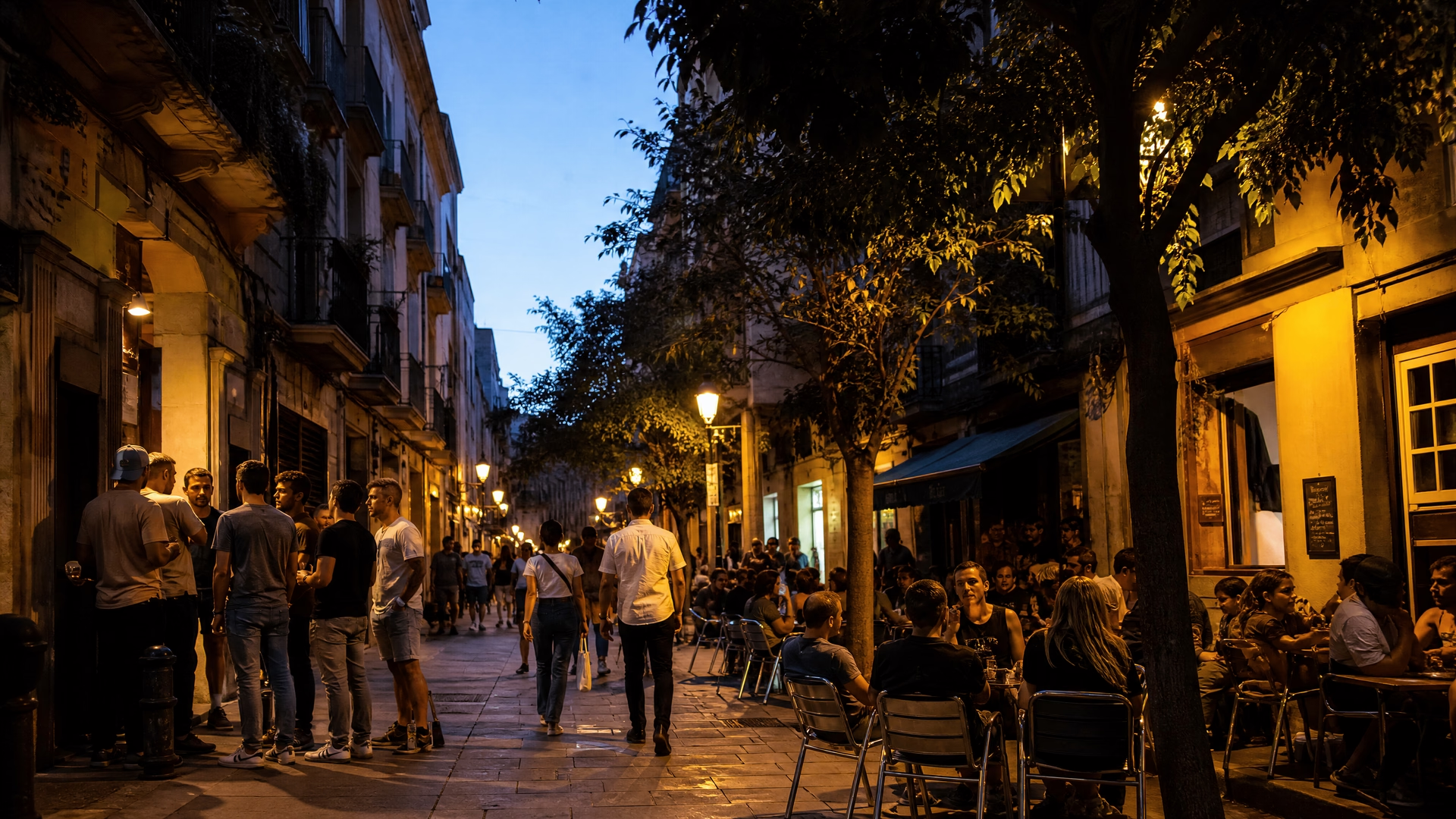
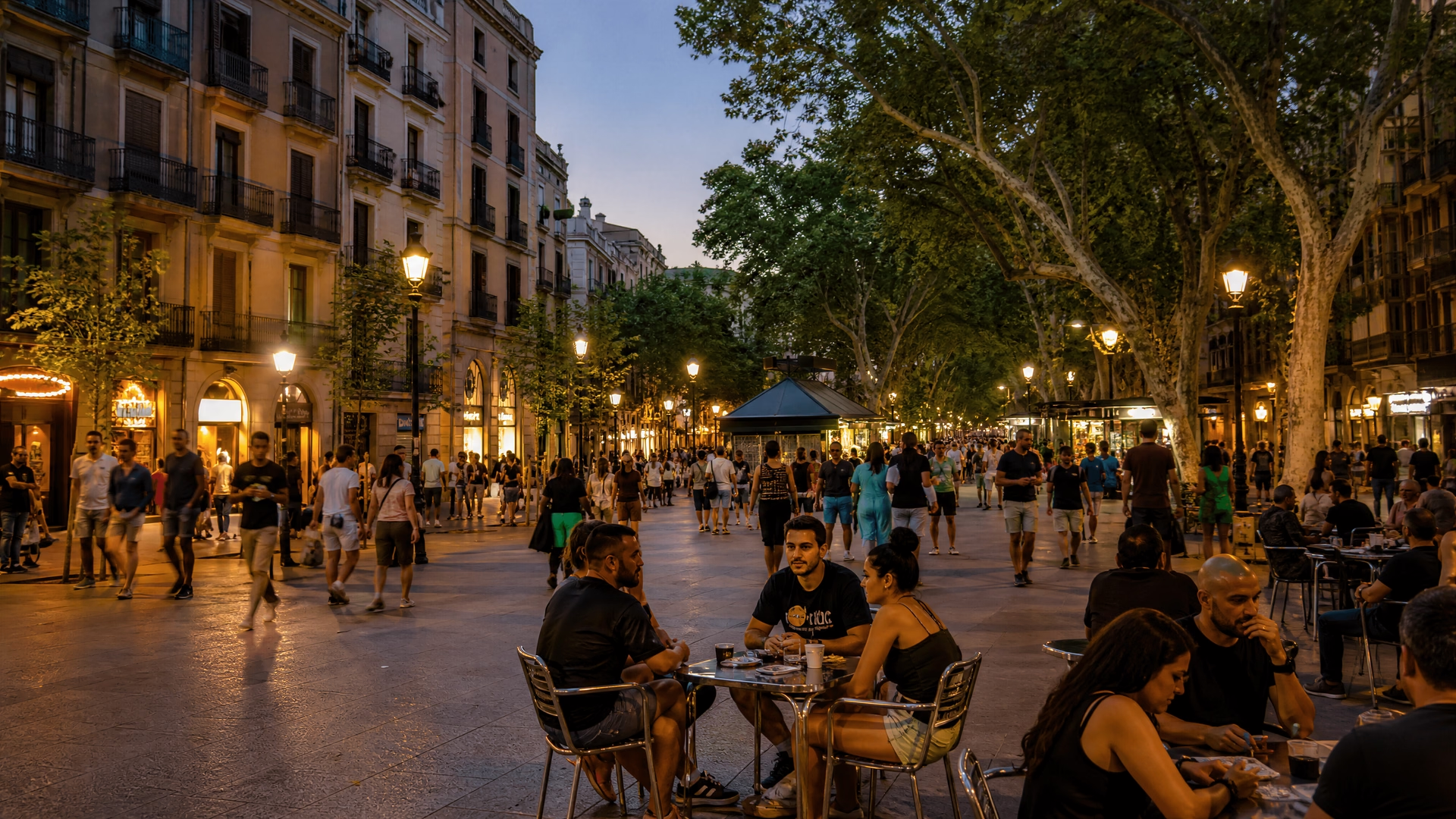
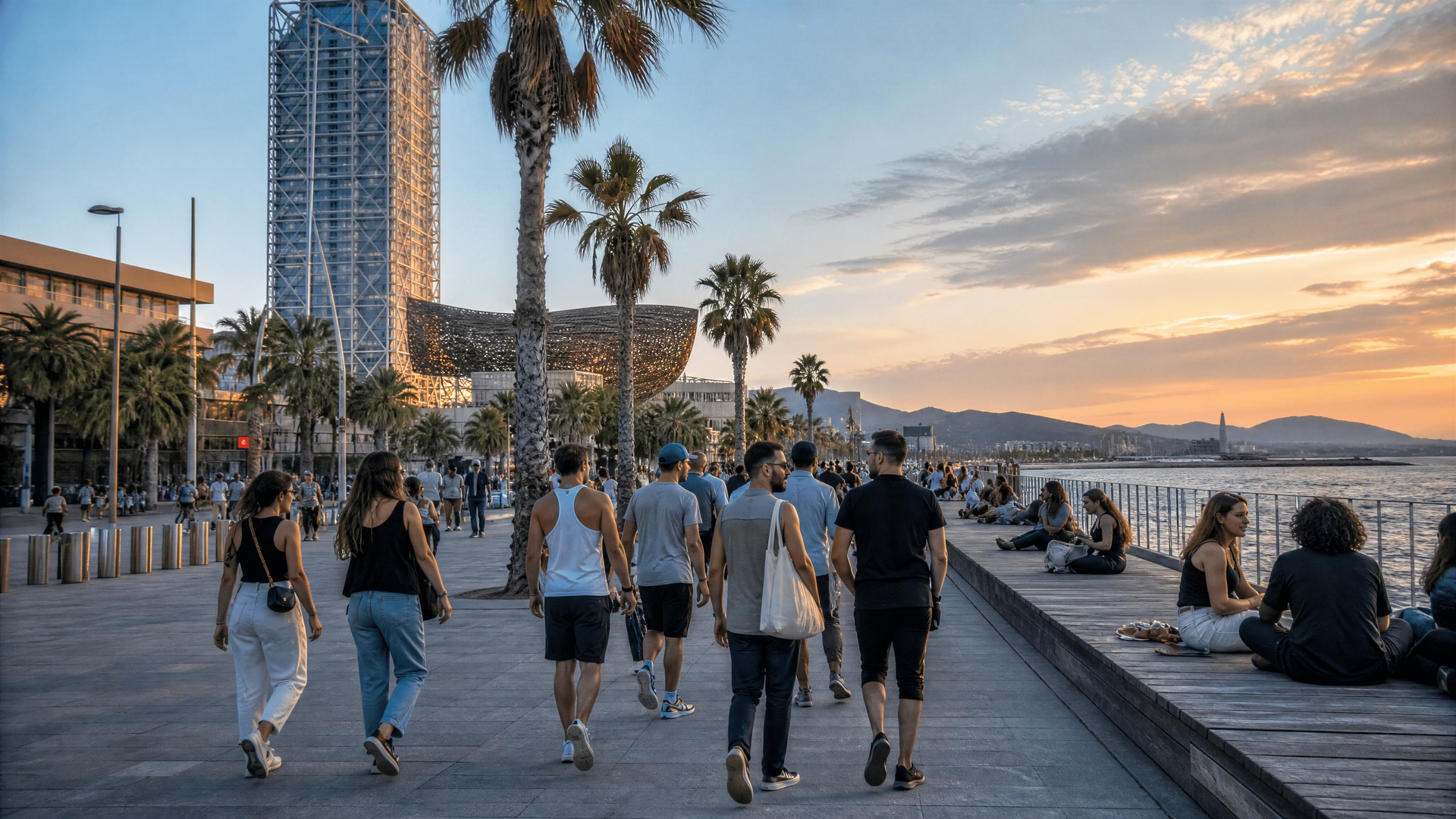
The cannabis scene in Catalonia sits beside the city’s evening culture rather than above it. A typical night out may move from dinner to a bar to a club lounge, or from a gallery opening to a quiet conversation with friends in a private members’ room. Music, design, and conversation matter here as much as the cannabis itself, and the social atmosphere often feels closer to an arts circle than to a retail environment.
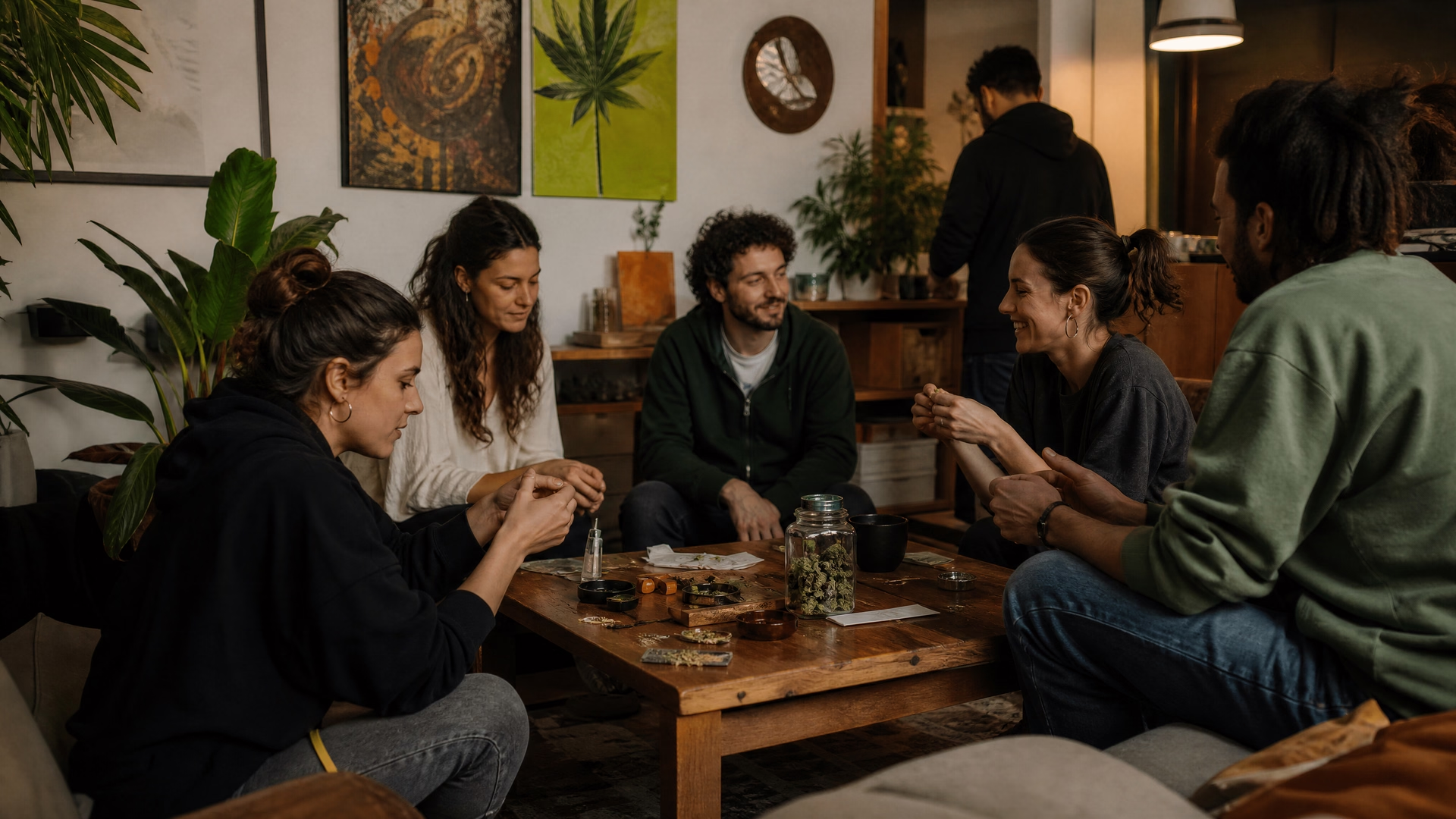
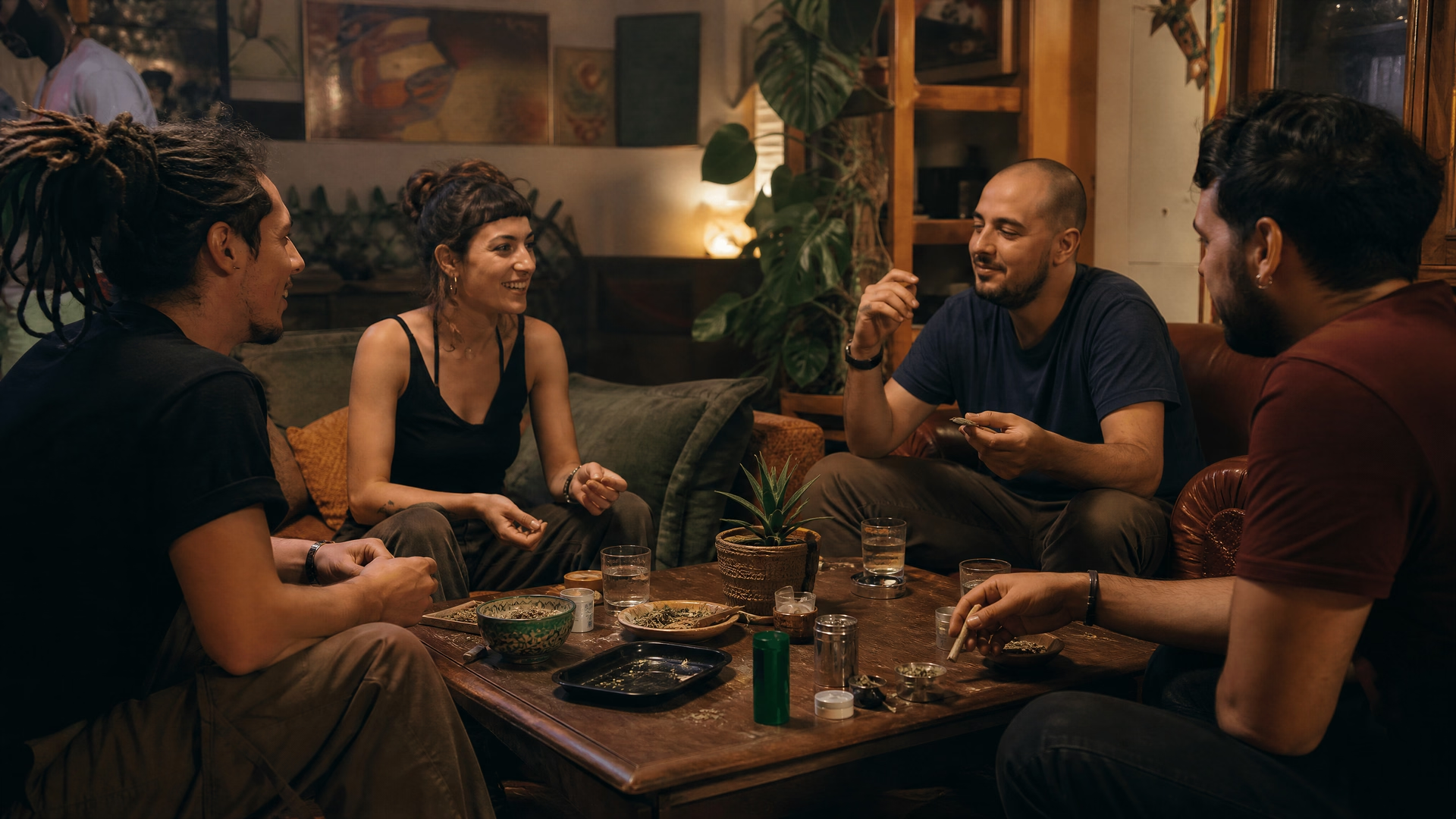
That matters because the club world in Catalonia is shaped by rhythm. People arrive later, stay longer, and talk more. Some rooms lean toward soft music and sofas; others feel more like a neighborhood living room with low tables, posters, and easy chatter. In either case, the emphasis is on a calm members-only setting rather than on spectacle. The scene also connects naturally to the city’s broader nightlife culture, where independent venues, after-dinner walks, and late conversation are part of the daily grain.
For cultural context, the social texture of these rooms pairs well with background reading such as Cannabis and Creativity: What THC Really Changes and Entourage Effect in Cannabis: What Evidence Shows. Those articles are not about access; they help explain why people talk about aroma, mood, and setting in the same breath as the city’s creative life.
The city after dark
In practice, the nightlife context matters because clubs are part of a larger evening ecosystem. Catalonia’s streets fill with diners, workers heading home, and groups moving between venues. A club is one stop in that flow, not a destination that cancels the city around it. That is also why the best descriptions of the scene are urban descriptions first and cannabis descriptions second.
Members may discuss flower, hash, concentrates, or edibles, but the club’s social tone is what gives those words meaning. The same room can feel relaxed on one night and quietly lively on another, depending on who is there and what the neighborhood is doing outside. That flexibility is a big part of Catalonia’s club culture.
Culture, food, and everyday lifestyle
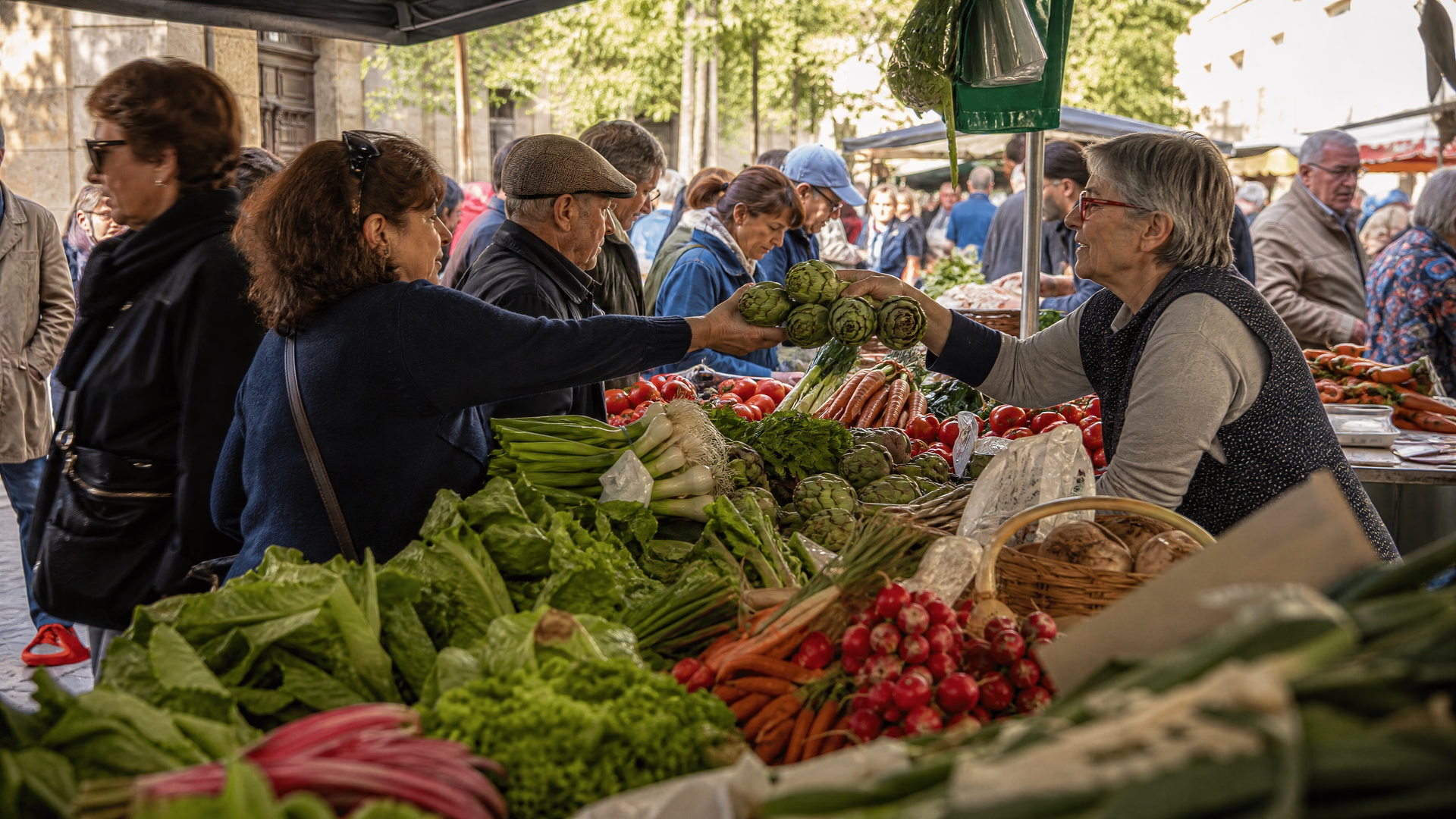
Catalonia’s wider cultural life gives the cannabis club scene much of its texture. Food markets, long lunches, music venues, neighborhood festivals, and creative workshops all feed into the city’s social habits, and private clubs inherit those habits rather than replacing them. The result is a scene that feels local in the strongest sense: people talk, share time, and move between cultural spaces with little ceremony.
Food culture matters here because the city already values slow conversation and shared tables. That same pace carries into clubs, where members might compare notes on strains one moment and neighborhood restaurants the next. For a neutral background lens on how cannabis sits inside broader lifestyle conversation, Cannabis and Creativity: What THC Really Changes and Endocannabinoid System (ECS): How Cannabis Works are useful reference points without becoming instructional.
Music and festivals also matter because they shape how people move through the city. A club in Catalonia often sits close to theaters, live-music bars, rehearsal spaces, or streets that stay active well into the night. That proximity gives the scene a civic quality: it is part of how people spend time together, not a separate subculture hidden from view. The word community is often used loosely, but in this setting it describes something observable—familiar faces, regular conversation, and a shared sense of place.
What the room feels like
Inside many clubs, the furniture and layout do a lot of the cultural work. Sofas, low tables, bookshelves, posters, and soft lighting all contribute to a room that encourages conversation. Members may discuss flower, hash, concentrates, and edibles as ordinary parts of the social mix, but the point remains the same: the setting is private, calm, and shaped by people who know the room well.
That is also why Catalonia’s club world reads well alongside the city’s art, design, and food scenes. They all reward lingering. They all depend on attention. And they all make more sense when you understand the neighborhood first.
Practical context for visitors and members
Getting oriented in Catalonia starts with simple practical habits: walk the neighborhood, notice how the streets connect, and remember that club life is built around appointments, reception, and membership routines rather than spontaneous entry. Public transport does most of the work in the city, so buses, metro lines, and walkable blocks matter more than any single address. In that sense, navigating a club scene is also navigating an urban one.
Seasonality matters too. Summer brings later evenings, fuller streets, and more time spent outdoors before people move inside. Spring and autumn often feel more balanced, with neighborhood life spread more evenly through the day. Winter is quieter but not empty; it simply shifts the social rhythm indoors. In all seasons, responsible consumption and house rules are part of the everyday texture of the scene, along with the calm that comes from people knowing the place well.
Readers sometimes ask how to join or what to expect on the first visit. The short version is that these spaces are private, member-run associations with their own routines, and new members usually need an introduction, an appointment, and ID at sign-up. The details vary from place to place, but the general pattern is consistent enough that newcomers quickly learn the shape of it. For broader background on the social meaning of cannabis in cities like this, History of Cannabis: From Ritual to Legalization remains a useful neutral reference.
Seasonal rhythm and everyday etiquette
Good etiquette is mostly common sense: be on time, be patient, respect the room, and treat the staff and members as neighbors rather than as gatekeepers. A private association works best when people understand that the space is shared and that its atmosphere depends on small habits. That practical kindness is part of why Catalonia’s club scene feels stable even as the city around it changes.
For anyone reading the city as a first-time visitor, it helps to think less about finding a product and more about understanding a social setting. The club is one piece of a larger urban day, and the city remains the main stage.
How to join a cannabis social club in Catalonia
How to join a cannabis social club in Catalonia usually comes down to a simple sequence: make contact, bring the right identification, complete the membership form, and follow the club’s house rules. Some associations prefer a sponsoring member or invitation, while others ask people to arrange an appointment before arrival. The process is intentionally personal because the club is meant to stay members-only and calm rather than open and transactional.
One useful way to think about it is as a small social commitment. You show ID, confirm the details on the form, pay the membership fee in cash only where that is the club’s practice, and receive a membership card or sign-in confirmation. People often use the phrase private association because it captures the atmosphere better than a commercial label ever could. The social side matters: members are there to share a room, not to browse a storefront.
The scene also has its own vocabulary. In Spanish conversation, people may refer to club social de cannabis, asociación cannábica, club cannábico, cómo unirse, and cuota de socio, while the English page usually keeps the meaning light and practical. A club can be described as non-profit without turning that into a policy lecture: it simply signals the shared-cost, association-based nature of the space. A responsible-consumption ethos sits underneath that model.
For readers comparing models, it is helpful to note that Catalonia’s private clubs are not a coffee shop and not a dispensary. The social character is different, the entry pattern is different, and the tone is usually slower and more member-driven. That is why the phrase how to join matters so much in search behavior: people are really trying to understand the social structure, not just a venue type.
Mentions of strains, flower, hash, concentrates, and edibles may appear in ordinary conversation inside clubs, but they are background texture, not a promise of what any association offers. The membership experience remains about access to a private community and the etiquette that comes with it.
The directory for Catalonia
This directory is updated for 2026 and is designed to show Catalonia’s cannabis club landscape in a way that is clear, current, and easy to compare across neighborhoods. It lists 180 associations in Catalonia, with the wider dataset showing 136 verified listings and 30 nearby-area entries. Because the scene changes over time, the point of the directory is not to freeze the city in one moment, but to track how the landscape evolves as listings are reviewed and refreshed.
As a city page, this also functions as a map of search intent. Some readers want a cannabis club near me view, others want to compare districts, and others simply want a sober overview of how the private-association scene fits into Catalonia’s urban life. The directory meets those needs by keeping the structure simple and the context broad, while leaving the individual club cards to the server-rendered listings below.
2/ 7
The directory at a glance in Catalonia
Headline directory counts beside a ridge of how members rate the clubs.
24 clubs are shown in this immediate area, while the full Catalonia directory count stays anchored to 180. That distinction matters because the site separates the overall city-level picture from neighborhood-level browsing. When available, club cards, table views, and compact lists help readers move between those layers without confusing the scale of each block.
For readers who want to understand the language that often surrounds the directory, the neutral background article Cannabis and Creativity: What THC Really Changes offers a culture-first frame, while History of Cannabis: From Ritual to Legalization explains why association models became such a recognizable part of the urban story in the first place.
The goal here is accuracy and freshness rather than hype. Listings are maintained over time, and the page is written to stay useful as the directory changes.
Wider geography and nearby places
Catalonia makes the most sense when you read it as part of a wider urban and coastal network. Districts, neighboring towns, and nearby cities all shape how people move, live, and look for social spaces. The club scene therefore sits inside a broader geography of commuting, evening plans, and neighborhood identity rather than in a single isolated point on the map.
7/ 7
Largest cannabis cities in Catalonia
The busiest cannabis cities here, sized by club count. Ring distance is how far each lies from the centre. Tap a city to explore it.
That wider frame is useful because many readers are not only comparing clubs; they are comparing districts, transport links, and the feel of different parts of the city region. A calm waterfront, a dense old quarter, or a mixed-use residential district can each imply a different social atmosphere for the private clubs within it. The geography is therefore part of the editorial story, not just a list structure.
This is an informational directory of independent associations: it offers introductions only, and membership is always at each association’s discretion and never guaranteed.