












CBGA in one sentence: the cannabinoid pathway's branch point
CBGA matters less as a consumer-facing cannabinoid than as the metabolic fork that decides whether a cannabis plant will accumulate THCA, CBDA, CBCA, or, more rarely, leave enough precursor behind to yield substantial CBG later.
Why calling CBGA the “mother cannabinoid” is both useful and misleading
The nickname is useful because it points to a real biosynthetic hierarchy: CBGA sits upstream of the major acidic cannabinoids. In glandular trichomes, the plant forms CBGA from olivetolic acid and geranyl diphosphate through a prenyltransferase step identified by Gagne et al. in 2012. From there, named oxidocyclase enzymes push it down different branches. Taura et al. showed in 1995 that THCA synthase converts CBGA to THCA; Taura et al. showed in 2004 that CBDA synthase converts CBGA to CBDA; CBCA synthase does the same for CBCA.
What the slogan gets wrong is the implied endpoint. CBGA is not “important mainly because it becomes CBG.” In living plants, its primary fate is usually enzymatic consumption into other cannabinoid acids before harvest. That is why THCA-dominant and CBDA-dominant chemotypes are common, while CBG-dominant Type IV plants are unusual and typically reflect reduced downstream synthase activity, as chemotype work by de Meijer and colleagues helped frame.
What fresh cannabis contains: acidic cannabinoids first, neutral cannabinoids later
Fresh cannabis does not mainly make THC, CBD, and CBG. It makes THCA, CBDA, CBCA, and CBGA. Neutral cannabinoids appear later through decarboxylation driven by heat, storage, and processing.
That distinction matters. Saying “CBGA turns into CBG” skips the key biological step: most CBGA first serves as substrate for THCA-, CBDA-, or CBCA-producing enzymes. Only unconverted CBGA can later decarboxylate to CBG.
CBGA is biochemically foundational in cannabis because it feeds the major acidic cannabinoid branches. Strong evidence
The central claim this article will defend
This article takes a clear position: CBGA is biochemically foundational but medically unproven. The pathway evidence is strong; the therapeutic hype is not. Cell and animal findings exist, including aldose reductase inhibition in Dondo et al. 2019 and SARS-CoV-2 entry blockade in vitro in van Breemen et al. 2022, but those results do not establish human benefit.
How the plant makes CBGA
CBGA does not appear out of nowhere, and it is not simply “raw CBG.” In the living plant, it is the branch-point molecule produced after two different metabolic streams meet: one builds the aromatic backbone, the other supplies a terpene-like side chain. Only after that union does the familiar cannabinoid pathway begin.
How CBGA is formed, step by step
- 1 The plant makes olivetolic acid as the aromatic core through a fatty acid/polyketide route.
- 2 The plant makes geranyl diphosphate (GPP) through the plastidial terpene pathway.
- 3 Both precursors meet in glandular trichomes, the secretory tissues specialized for cannabinoid production.
- 4 A prenyltransferase transfers the geranyl group from GPP onto olivetolic acid.
- 5 The product of that condensation is cannabigerolic acid, or CBGA.
Upstream precursors: olivetolic acid and geranyl diphosphate
The first precursor is olivetolic acid. This is the polyketide-derived aromatic core that gives cannabinoids part of their chemical identity. The second is geranyl diphosphate or GPP, an isoprenoid building block used widely across plant metabolism for terpenes and related compounds. If olivetolic acid is the platform, GPP is the five-carbon-unit-derived side chain donor that extends it into cannabinoid territory.
Those two precursors come from different biosynthetic systems. Olivetolic acid is assembled through a fatty acid/polyketide route, while GPP comes from the plastidial terpene pathway. That matters because CBGA synthesis is not one isolated reaction; it is a point of metabolic convergence. The plant has to generate both streams in the right cells, at the right time, and in sufficient quantity.
For non-specialists, a useful picture is this: before CBGA exists, the plant has already done a lot of work. It has made an aromatic acid scaffold, made an activated terpene donor, and positioned both in secretory tissues equipped to combine them. The combination step is the gateway. Without it, there is no meaningful flux into THCA, CBDA, or CBCA.
This is why calling CBGA the “mother cannabinoid” can mislead as much as it helps. The phrase points in the right direction but skips the chemistry. CBGA is not the first cannabinoid-related molecule in the pathway. It is the product of a specific condensation reaction between olivetolic acid and geranyl diphosphate. Once formed, it becomes the substrate for the oxidocyclase enzymes identified in later pathway work: THCA synthase in Taura et al. 1995, CBDA synthase in Taura et al. 2004, and CBCA-forming oxidocyclases described in the same broad biosynthetic framework.
Prenyltransferase An enzyme that attaches a prenyl-derived group such as geranyl to another molecule. In cannabinoid biosynthesis, this step joins GPP to olivetolic acid to form CBGA.

The prenyltransferase step in glandular trichomes
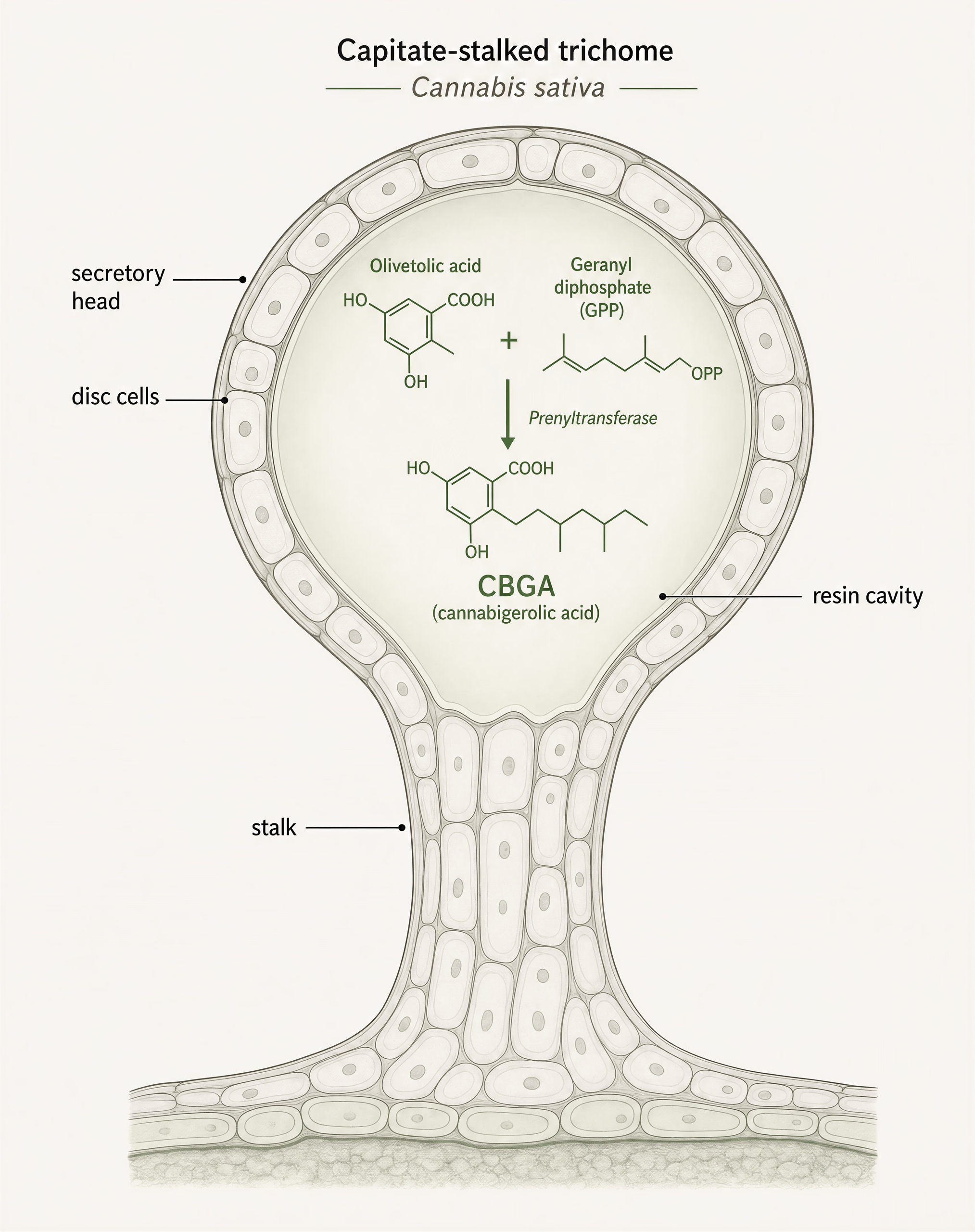
The step that makes CBGA legible biochemically is the prenyltransferase reaction. In 2012, Gagne et al. identified an aromatic prenyltransferase from Cannabis sativa glandular trichomes that participates directly in cannabinoid biosynthesis. In pathway shorthand, this enzyme is often referred to as geranylpyrophosphate:olivetolate geranyltransferase, or GOT, and in less formal discussions sometimes as a CBGA synthase-type step. Its job is simple to describe and harder to appreciate in context: it transfers the geranyl group from GPP onto olivetolic acid, yielding cannabigerolic acid.
That paper mattered because it tied the upstream chemistry to an actual enzyme in the actual tissue where cannabinoids are made. It moved the field past vague statements that cannabinoids “arise” in flowers. They arise through named reactions catalyzed by proteins with defined expression patterns.
And that prenyltransferase step is the bottleneck that explains later diversity. Once CBGA is present, different oxidocyclases can compete for it. THCA synthase converts it to THCA. CBDA synthase converts it to CBDA. Other oxidocyclases produce CBCA. If those downstream enzymes are highly active, little CBGA remains. If they are missing or weakly expressed, CBGA accumulates, and after heat or aging some of that CBGA can decarboxylate to CBG. That is why CBG-rich plants are unusual: they are often plants that fail to consume CBGA efficiently downstream, not plants that are exceptionally good at making “extra CBG.”
Why trichomes, not the whole plant equally, are the chemical factory
Cannabinoid biosynthesis is concentrated in glandular trichomes, especially the capitate-stalked trichomes on female inflorescences. These tiny epidermal structures are secretory organs, not passive hairs. They contain the machinery, substrates, and compartmentalization needed for high-level cannabinoid production.
Sirikantaramas et al. in 2004 showed expression of cannabinoid biosynthetic genes in glandular trichomes, strengthening the case that these structures are the operational center of the pathway. That finding matches basic plant anatomy. Leaves, stems, roots, and seeds are not chemically identical spaces. The whole plant carries the genome, but not every tissue expresses the same enzymes or accumulates the same metabolites.
Trichome biology matters because yield is not just genetics on paper. It is also tissue specialization. A plant with dense, mature, metabolically active glandular trichomes has more sites where olivetolic acid and GPP can be brought together and where CBGA can then be handed off to THCA synthase, CBDA synthase, or related enzymes. More factory floor, more product. Not uniformly, and not infinitely, but directionally yes.
This also explains why fresh cannabis is dominated by acidic cannabinoids rather than their neutral counterparts. Inside trichomes, the plant makes CBGA, THCA, CBDA, and CBCA as acids. Neutral cannabinoids such as CBG, THC, and CBD mostly arise later through decarboxylation driven by heat, processing, or time. So if you want to understand cannabinoid yield, start with trichomes and with CBGA formation there. Everything downstream depends on that step.
CBGA to THCA, CBDA, and CBCA: the oxidocyclase fork that defines chemotype
CBGA sits at the decision point of cannabinoid biosynthesis. In the living plant, it is not mainly “the thing that becomes CBG.” That popular shortcut gets the order backwards. First, CBGA is made in glandular trichomes from olivetolic acid and geranyl diphosphate by a prenyltransferase step identified in trichome tissue by Gagne, Jensen, and De Luca in 2012. Then, if the plant has active downstream oxidocyclase enzymes, CBGA is pulled into one of three major acidic cannabinoid branches: THCA, CBDA, or CBCA. Only the CBGA left behind can later decarboxylate into CBG through heat, storage, or processing.
That fork explains chemotype. Cannabinoid composition is not a vague personality trait of a cultivar. It is the biochemical result of which synthase genes are present, expressed, and inherited.
THCA synthase and the Taura 1995 breakthrough
The modern enzymatic picture starts with Y. Taura and colleagues. In a 1995 Journal of Biological Chemistry paper, they characterized THCA synthase and showed that it catalyzes the oxidative cyclization of CBGA to tetrahydrocannabinolic acid. That was a major shift from descriptive chemistry to named enzyme biology. Instead of saying cannabis “makes THC,” the field could say more precisely that fresh plant tissue accumulates THCA because an oxidocyclase converts CBGA into THCA in secretory structures.
That distinction matters because THC is usually not the native dominant cannabinoid in fresh flowers. THCA is. THC largely appears after decarboxylation. The same logic applies to CBGA. In planta, CBGA is a substrate competing for enzyme access, not a final target.
THCA synthase activity helps define what De Meijer and colleagues later framed as Type I chemotypes: plants that are THCA-dominant because the CBGA pool is efficiently directed into the THCA branch. Sirikantaramas et al. in 2004 added a genetic and tissue-expression layer by identifying cannabinoid oxidocyclase genes and linking their expression to glandular trichomes, where cannabinoids are biosynthesized and stored. This was not abstract genetics. It connected inherited sequence variation and expression patterns to the chemistry measured in resin.
The consequence is straightforward. If a plant strongly expresses a functional THCA synthase, CBGA does not linger for long. It is consumed.
CBDA synthase and why CBD-dominant plants are genetically distinct
CBDA synthase was characterized by Taura et al. in 2004 in FEBS Letters. That paper demonstrated that cannabidiolic-acid synthase converts CBGA into CBDA, giving the CBD branch the same enzymatic specificity already established for the THCA branch. Once that was shown, CBD-dominant plants could no longer be treated as simply “low-THC” versions of the same thing. They are often genetically distinct in the oxidocyclase machinery they carry and express.
This is where chemotype inheritance becomes much more useful than marketing labels. De Meijer’s work on cannabinoid phenotypes argued that cannabinoid ratios are genetically structured. In practical terms, Type I plants are THCA-dominant, Type III plants are CBDA-dominant, and this is tied to inheritance at synthase-linked loci rather than random environmental drift. Environment still matters for total yield and minor variation, but it does not erase the basic branch architecture.
That is why two plants grown under similar conditions can produce very different cannabinoid acid profiles. One is genetically equipped to push CBGA toward THCA. Another channels it toward CBDA. The fork is enzymatic before it becomes agricultural.
The oversimplified phrase “CBD strain” hides that mechanism. A CBD-dominant plant is usually one in which CBDA synthase function predominates relative to THCA synthase function. After decarboxylation, the lab report may emphasize CBD. In the living flower, the branch point was CBGA to CBDA.
CBCA synthase, the least discussed major branch
CBCA synthase gets less attention than THCA synthase and CBDA synthase, but it belongs in the same core pathway. It converts CBGA into cannabichromenic acid, the acidic precursor to CBC. Popular summaries often mention CBCA as an afterthought, yet it is one of the three major oxidocyclase outcomes from CBGA.
Why is it discussed less? Partly because many commercial and breeding priorities have centered on THC and CBD. Partly because CBC-rich chemotypes are less common in modern cultivation. But from a biosynthetic standpoint, CBCA is not a side curiosity. It is built by the same logic: CBGA enters a specific oxidocyclase reaction and exits as a distinct cannabinoid acid with different downstream chemistry and pharmacology.
This branch also reinforces a larger point. “Mother cannabinoid” language can be useful as a shortcut, but it becomes misleading if it obscures the fact that CBGA does not passively drift into a generic cannabinoid mixture. Enzymes sort it. The plant’s oxidocyclase repertoire determines which major acids accumulate in meaningful amounts.
Chemotype shorthand used in the article
- Type I
- THCA-dominant plants that efficiently direct CBGA into the THCA branch.
- Type III
- CBDA-dominant plants that channel CBGA toward the CBDA branch.
- Type IV
- CBG-dominant plants in which downstream conversion of CBGA is reduced, absent, or inefficient.
Why CBG-rich plants accumulate precursor instead of finishing the pathway
Type IV CBG-dominant plants are unusual precisely because most cannabis plants do finish the pathway. In a typical THCA- or CBDA-dominant plant, CBGA is an intermediate that gets consumed by downstream synthases. In a CBG-dominant plant, that downstream conversion is reduced, absent, or inefficient, so the precursor accumulates.
That is the cleanest way to understand why CBG-rich chemotypes exist. They are not plants that somehow “make extra CBG first.” They are often plants that fail to convert as much CBGA into THCA, CBDA, or CBCA. Once harvested and heated, the retained CBGA can decarboxylate to CBG. The high CBG readout is therefore often evidence of a blocked or weakened oxidocyclase branch upstream.
This is why direct comparison of acid and neutral forms matters on lab reports. Potency panels commonly calculate “total THC” or “total CBD” by accounting for decarboxylation from THCA or CBDA. The same interpretive logic applies to CBGA and CBG. A sample rich in CBGA is chemically different from one already rich in CBG, even if later heating can shift one toward the other.
The broader lesson is easy to miss: CBG-rich plants are metabolically informative mutants or selected chemotypes, not the default state of cannabis. They expose the bottleneck. If THCA synthase, CBDA synthase, and CBCA synthase are active, CBGA disappears into downstream acids. If those routes are limited, precursor remains available.
That has implications beyond breeding. It also tempers pharmacology claims. CBGA is biochemically central, but medical claims for CBGA itself remain far ahead of human evidence. In vitro papers exist. Dondo et al. in 2019 reported aldose reductase inhibition by cannabinoids including CBGA. van Breemen and colleagues in 2022 found CBGA and CBDA bound SARS‑CoV‑2 spike protein and blocked infection in a cell model. Those findings are real. They are also not clinical proof. The honest reading is that CBGA matters enormously to plant biochemistry and may have interesting pharmacology, but its therapeutic status in humans is still unsettled.
Decarboxylation A chemical reaction in which an acidic cannabinoid loses a carboxyl group as carbon dioxide (CO2), converting forms such as CBGA into their neutral counterparts such as CBG.
What decarboxylation actually does to CBGA
Decarboxylation is often explained as if CBGA exists mainly to become CBG. That is backwards. In the living plant, CBGA is usually a metabolic junction, not an endpoint. Taura et al. showed in 1995 that THCA synthase converts CBGA into THCA by oxidative cyclization, and Taura et al. showed in 2004 that CBDA synthase converts CBGA into CBDA. CBCA synthase does the same for CBCA. Gagne et al. in 2012 tied CBGA formation itself to glandular trichomes by identifying the prenyltransferase step upstream. So the main fate of CBGA in most chemotypes is enzymatic conversion to other cannabinoid acids before harvest, not post-harvest conversion to CBG.
| Feature | CBGA | CBG |
|---|---|---|
| Chemical state | Acidic cannabinoid | Neutral cannabinoid |
| Native presence in fresh cannabis | Produced in the plant as an acid | Usually appears later after decarboxylation |
| Role in pathway | Branch-point precursor feeding THCA, CBDA, and CBCA biosynthesis | Product formed when leftover CBGA decarboxylates |
| How it changes | Can lose CO2 through heat, storage, or processing | Represents the decarboxylated form |
| Interpretation on lab reports | Shows acidic profile and upstream metabolism | Shows material already decarboxylated or measured as neutral |

CBGA versus CBG: acid form and neutral form
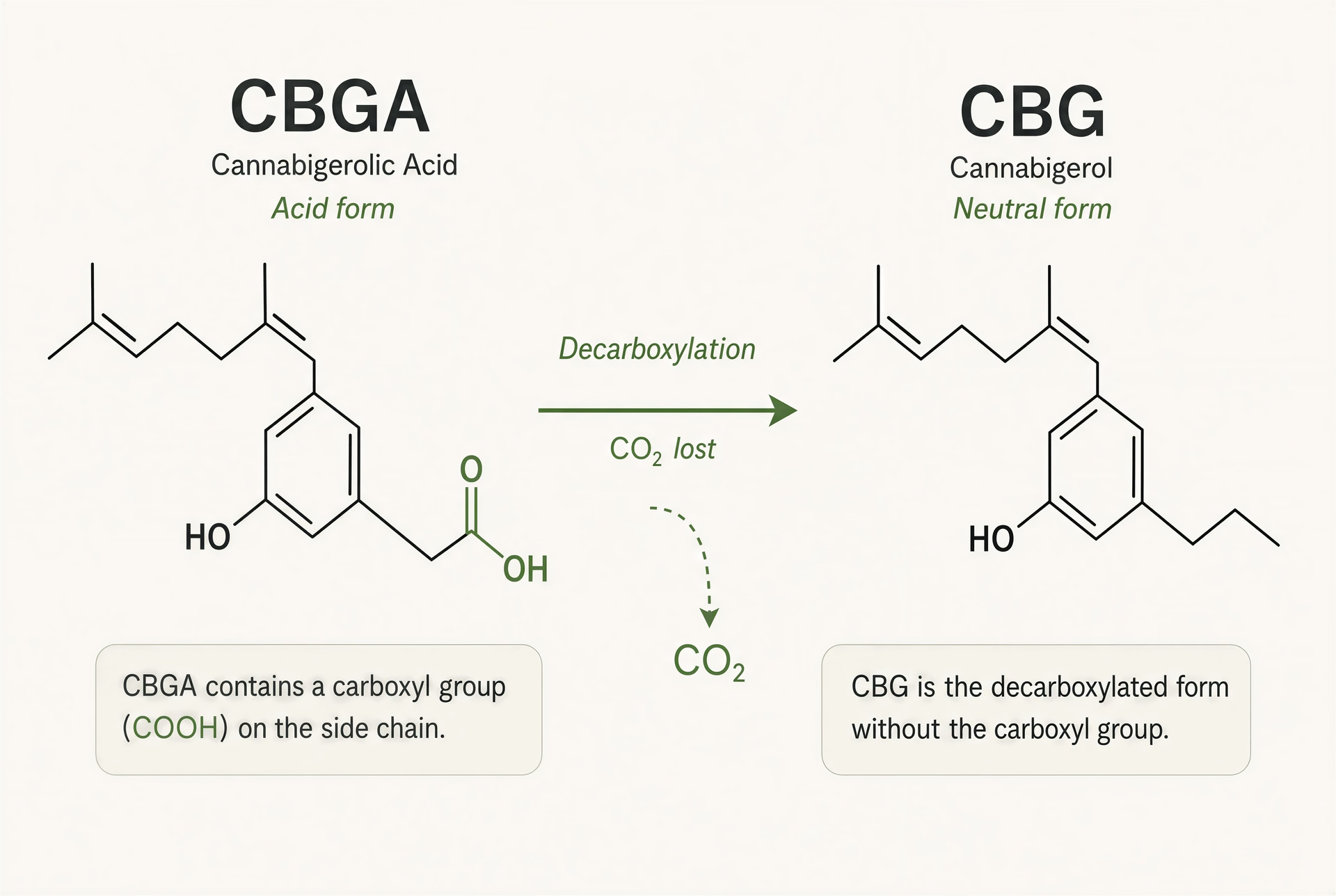
CBGA and CBG are related, but they are not interchangeable. CBGA is the acidic form; CBG is the neutral form created after CBGA loses a carboxyl group as carbon dioxide. Chemically, decarboxylation removes that extra COOH group. Practically, this usually happens with heat, but it can also happen slowly over time.
That matters because fresh cannabis chemistry is acid-heavy. Native plant material is dominated by cannabinoid acids, including THCA, CBDA, and when present, CBGA. CBG becomes prominent only if CBGA remains unconverted in the plant and then decarboxylates later. This is why CBG-rich plants are unusual. De Meijer’s chemotype work made the genetics point clear: Type IV plants are CBG-dominant because they convert less CBGA downstream, leaving more of it available to persist and later decarboxylate.
Heat, time, and storage conditions
Heat speeds decarboxylation. Higher temperatures generally push CBGA toward CBG faster, while lower temperatures slow the process. Time matters too. Even without deliberate heating, storage gradually shifts some acidic cannabinoids toward their neutral forms, especially if material is exposed to warmth, oxygen, or light.
But decarboxylation is not the whole stability story. Extended heat and poor storage can also degrade cannabinoids beyond the simple acid-to-neutral step. So “older” does not always mean “more CBG” in a clean, predictable way. It can also mean a messier profile.
| Reported value on label or COA | What it means | Why it can mislead |
|---|---|---|
| CBGA | Measured acidic precursor present in the sample | May be overlooked if attention goes only to total potential numbers |
| CBG | Measured neutral cannabinoid already present | Does not tell you how much acidic precursor existed before heating or aging |
| Total THC = THC + (THCA × 0.877) | Theoretical THC after decarboxylation | Collapses acid and neutral states into one headline figure |
| Total potential CBG | Theoretical neutral equivalent from acidic precursor | Can hide whether the sample was mostly CBGA, mostly CBG, or a mix |
Why potency labels can confuse acid and neutral cannabinoids
Lab reports often separate acidic and neutral cannabinoids, but labels may collapse them into “total potential” numbers. The classic example is total THC, calculated as delta-9-THC + (THCA × 0.877), where 0.877 adjusts for the mass lost as CO2 during decarboxylation. The same logic applies to acidic precursors generally.
That can obscure the real chemistry. A sample listed with notable “total CBG” may contain mostly native CBGA, mostly decarboxylated CBG, or a mix of both. Those are not identical states of the material. Reading a certificate of analysis carefully matters: CBGA tells you what is present in the plant’s acidic profile; CBG tells you what has already decarboxylated. When those are merged into one headline number, the difference disappears.
Pharmacology of CBGA: what has been shown, and where the evidence stops
CBGA has a real pharmacology literature. It is not empty hype. But it is also nowhere near the level of evidence needed for medical claims in humans. That distinction matters, especially because CBGA gets pulled into two misleading stories at once: first, that it is interesting mainly because it can become CBG; second, that a positive cell-study result means a therapy is close. Neither is right.
In the plant, CBGA is a biosynthetic substrate before it is a decarboxylation precursor. Taura et al. showed in 1995 that THCA synthase converts CBGA to THCA, and Taura et al. showed in 2004 that CBDA synthase converts CBGA to CBDA. Gagne et al. in 2012 tied CBGA formation to an aromatic prenyltransferase in glandular trichomes. Those papers are pathway biology, not pharmacology, but they explain why native cannabis chemistry is dominated by acidic cannabinoids and why direct CBGA exposure in humans is less straightforward than many summaries imply.
Receptor and enzyme interactions studied so far
Most direct CBGA pharmacology comes from in vitro receptor panels, enzyme assays, and a smaller set of animal experiments. That is a legitimate starting point. It is not clinical proof.
One of the more cited enzyme findings came from Dondo et al. in 2019, who reported that CBGA inhibited aldose reductase in vitro. Aldose reductase is relevant to pathways involved in diabetic complications, so the result gave CBGA a plausible metabolic research angle. Plausible is the right word here. Enzyme inhibition in a test system does not show that orally or inhaled CBGA reaches the target tissue at the right concentration, stays chemically intact, and changes disease outcomes.
CBGA has also appeared in receptor and transporter screening work alongside other phytocannabinoids. The broader pattern is that acidic cannabinoids often show measurable activity, but usually with a profile that differs from neutral cannabinoids such as CBD or CBG. That difference should be expected. The carboxylic acid group changes polarity, ionization, membrane crossing, and likely target engagement. So even when CBGA and CBG are structurally related, they should not be treated as interchangeable ligands.[1] Cannabinoids Block Cellular Entry of SARS-CoV-2 and the Emerging Variants. Richard B. van Breemen, David Muchiri, Kassi L. Bates. Journal of Natural Products, 2022.
The most publicized CBGA interaction paper was van Breemen and colleagues in 2022. Using affinity-selection mass spectrometry and cell assays, they reported that CBGA and CBDA bound the SARS-CoV-2 spike protein and blocked infection of human epithelial cells in vitro. The paper was real. The leap many headlines made was not. Binding to spike protein in a laboratory model is not a demonstration of prevention or treatment in humans, and no CBGA drug program emerged from that result.
Anti-inflammatory, metabolic, and other in vitro signals
CBGA has shown anti-inflammatory signals in screening systems, including work linked to cyclooxygenase-related pathways. That supports the claim that CBGA is pharmacologically active. It does not support saying that CBGA is an established anti-inflammatory treatment.
The same caution applies to metabolic and gastrointestinal signals. The aldose reductase work points to one possible metabolic mechanism. Separate preclinical literature on acidic cannabinoids has suggested anti-nausea effects in animal models, including work from Rock and colleagues on nausea-related behavior. Those studies are useful because they move beyond isolated enzymes and into whole-animal physiology. Even so, rodent efficacy is still several steps away from human therapeutics.
There is a pattern here: CBGA repeatedly produces “interesting” results under controlled experimental conditions. That is enough to justify more study. It is not enough to claim anti-cancer, anti-seizure, antiviral, or anti-inflammatory efficacy in patients. At present, there is no human clinical literature for CBGA comparable to what exists for CBD, and certainly nothing close to the approval standard represented by Epidiolex for specific seizure disorders.
Pharmacokinetic unknowns: absorption, stability, and bioavailability
This is where the evidence thins out fast. For CBGA, the major unresolved questions are not only what targets it hits, but whether enough intact compound can get into the body, persist there, and reach those targets.
Acidic cannabinoids are more polar than their neutral counterparts. That can affect passive membrane diffusion, tissue distribution, and oral absorption. They may also be less chemically stable during storage, extraction, heating, or sample handling. CBGA can decarboxylate to CBG over time or with heat, so an experiment or product labeled “CBGA” may partly reflect CBG exposure if conditions are not tightly controlled.
Analytical practice adds another layer of confusion. Laboratory reports often show both acidic cannabinoids and “total potential” neutral cannabinoids using formulas such as total THC = THC + 0.877 × THCA, with the 0.877 factor correcting for the mass lost as carbon dioxide during decarboxylation. The same logic applies when interpreting acidic precursors such as CBGA. If that distinction is ignored, native plant chemistry and post-heating chemistry get blurred together.
Why acidic cannabinoids are harder to study than neutral cannabinoids
CBGA is harder to study for chemical and practical reasons. Fresh cannabis is rich in cannabinoid acids, but those acids are less stable than the decarboxylated forms researchers often prefer for formulation and pharmacology. Heat, light, time, solvents, and repeated handling can all change what is actually being tested.
That instability complicates dose accuracy, replication, and comparison across studies. It also makes older literature harder to interpret, because acidic and neutral cannabinoids were not always measured separately with the precision now expected. Add the limited number of purified CBGA studies, and the result is a field with genuine signals but many weak links.
So the honest position is straightforward. CBGA is biochemically central, and it has enough receptor, enzyme, and preclinical activity to merit serious study. It is not a clinically mature cannabinoid. Claims beyond that are running ahead of the evidence.
Potential therapeutic applications under investigation
CBGA shows up in pharmacology papers often enough to invite excitement, but the quality of that evidence matters more than the count of studies. Most of the published work is still enzyme-based, cell-based, or in animals. That makes CBGA medically interesting, not medically established. The distinction is not semantic. It is the difference between “this molecule interacts with a target under controlled conditions” and “this compound helps patients at tolerable doses in real clinical settings.”
That gap is especially important with acidic cannabinoids. Fresh cannabis chemistry is dominated by cannabinoid acids, yet pharmacology and public discussion still skew toward the neutral forms created after heat-driven decarboxylation. CBGA is a clear example. It is biochemically central in the plant, but human therapeutic data lag far behind the mechanistic story.
Inflammation and COX-related pathways
Anti-inflammatory interest in CBGA comes partly from screening studies showing activity in cyclooxygenase-related systems. COX enzymes sit upstream of prostaglandin production, so a cannabinoid that alters this pathway can look promising on paper. CBGA has appeared in in vitro work as a compound with potential to affect inflammatory signaling, and that is enough to justify laboratory follow-up.
It is not enough to claim clinical anti-inflammatory efficacy.
The problem is that COX-related assays are a starting point, not an endpoint. Many compounds inhibit enzymes or alter inflammatory markers in isolated systems and then fail because they are too weak, too unstable, poorly absorbed, rapidly metabolized, or active only at concentrations that do not translate to humans. CBGA faces extra uncertainty because acidic cannabinoids are chemically less stable than their decarboxylated counterparts, which complicates formulation, storage, and dosing.
So the fair reading of the literature is restrained. CBGA has mechanistic plausibility as an anti-inflammatory candidate. It may interact with pathways relevant to inflammation, including COX-linked biology. But there is no human clinical literature showing that CBGA treats arthritis, inflammatory bowel disease, or any other inflammatory disorder. Claims that it is already an anti-inflammatory therapy get ahead of the evidence.
This is where public cannabinoid writing often goes wrong. A pathway hit becomes a treatment claim. It should not.
Metabolic research, including aldose reductase inhibition
One of the more specific CBGA leads comes from metabolic disease research. Dondo et al. in 2019 reported that several phytocannabinoids, including CBGA, inhibited aldose reductase in vitro. That enzyme matters because it is part of the polyol pathway, which has long been studied in the context of diabetic complications such as neuropathy, retinopathy, and cataract formation. If a compound inhibits aldose reductase under biologically relevant conditions, it can attract interest as a metabolic protective agent.
CBGA therefore has a plausible foothold in this area. Not because anyone has shown it improves diabetic outcomes in patients, but because there is a named enzyme, a defined assay, and a disease pathway with an established rationale.
Still, the evidence stops early. In vitro aldose reductase inhibition does not tell us whether CBGA reaches the right tissues, remains in its acidic form long enough to matter, or has acceptable pharmacokinetics. It does not tell us whether the observed effect is potent enough to compete with existing drug-development programs targeting the same pathway. It also does not tell us whether enzyme inhibition translates into meaningful reductions in complication risk.
That is the recurring pattern with CBGA. Interesting target engagement. Thin efficacy evidence.
For readers comparing this with approved cannabinoid medicines, the contrast is stark. The FDA has approved one cannabis-derived drug and several cannabis-related products, but none for CBGA and none for diabetic complications tied to aldose reductase. Preclinical findings can justify more work. They do not justify therapeutic certainty.
Nausea and other preclinical neurogastrointestinal findings
The anti-nausea literature on acidic cannabinoids is one of the more intriguing corners of CBGA research, though it remains preclinical. Linda Parker, Raphael Mechoulam, and Steven Rock’s groups have published animal work over the years suggesting that acidic cannabinoids can affect nausea-related behaviors, especially in rodent models used to study anticipatory nausea and emesis-like responses. CBDA has generally drawn more attention in that line of research, but CBGA has also appeared in related preclinical neurogastrointestinal discussions.
That matters because nausea is not a vague wellness endpoint. It is a defined physiological and behavioral domain with established animal models and known therapeutic relevance, especially for chemotherapy-related symptoms.
Even so, the limits are obvious. Rodent anti-nausea findings are not human efficacy trials. They can point to serotonergic or other signaling mechanisms worth studying, but they do not establish dose, safety, comparative efficacy, or real-world usefulness in patients with cancer, cyclic vomiting, postoperative nausea, or functional GI disorders.
There is another complication: acidic cannabinoids may behave differently depending on route of administration and handling, since heat and time can shift material toward decarboxylated compounds. That makes experimental interpretation harder than headlines suggest. If a preparation contains both CBGA and some resulting CBG, assigning the observed effect cleanly to one compound can be difficult without careful analytical control.
So the honest claim is limited but real: CBGA belongs to a preclinical research stream examining cannabinoid effects on nausea and gut-brain signaling. It does not yet belong to evidence-based clinical antiemetic practice.
CBGA may have therapeutic value in humans based on antiviral, anti-inflammatory, or metabolic preclinical findings. Preliminary evidence
The SARS-CoV-2 spike-binding story and why headlines overstated it
The best case study in CBGA hype is the SARS-CoV-2 paper from Richard van Breemen and colleagues, published in Journal of Natural Products in 2022. The study reported that CBGA and CBDA could bind the viral spike protein and block infection of human epithelial cells in vitro. That was a legitimate laboratory finding. It was also immediately stretched far beyond what the paper showed.
What the study did show: spike-protein binding, cell-entry interference, and antiviral activity in a controlled model system.
What it did not show: prevention of COVID-19 in humans, treatment of active infection in patients, superiority to vaccines or antivirals, or even that orally consumed cannabinoid products would achieve the relevant concentrations at the right tissues in the right chemical form.
Those missing steps are not technicalities. They are the entire translational problem.
Media coverage often collapsed “blocks infection in cells” into something close to “cannabis compounds can prevent COVID.” That leap ignored pharmacokinetics, formulation, dosing, metabolism, and the difference between purified acidic cannabinoids in a lab and mixed consumer products exposed to storage and heat. It also ignored the lack of clinical trial evidence. No approved CBGA-based antiviral therapy emerged from that paper, and none should have been expected on the basis of an in vitro screen.
The van Breemen study is still useful. It shows that CBGA can engage biologically relevant protein targets in a way worth investigating. It also shows how cannabinoid science gets distorted in public discussion: mechanistic findings are treated as if they were bedside medicine. With CBGA, that inflation has been common. The right stance is neither dismissal nor hype. CBGA is pharmacologically plausible across several areas, including inflammation, metabolic pathways, nausea, and viral entry models. It is also medically unproven.
Why most consumer claims about CBGA are premature
CBGA deserves respect, but not hype. It sits at the choke point of cannabinoid biosynthesis: Gagne et al. in 2012 tied its formation to an aromatic prenyltransferase in glandular trichomes, and the downstream logic was already clear from Taura’s enzyme papers showing THCA synthase (1995) and CBDA synthase (2004) convert CBGA into THCA and CBDA. That makes CBGA indispensable to the plant. It does not make CBGA a clinically proven medicine.
No established human clinical indication
That distinction gets lost constantly. Consumer claims often jump from “mother cannabinoid” to implied medical significance, as if pathway status were evidence of efficacy. It is not. At present, there is no established human clinical indication for CBGA. None comparable to the FDA-approved use of plant-derived CBD in specific seizure disorders, and nothing close to the level of evidence expected for a drug claim.
What exists instead is a patchwork of preclinical signals. Dondo et al. 2019 reported aldose reductase inhibition in vitro. Rock and colleagues have published animal work suggesting anti-nausea effects for acidic cannabinoids. Van Breemen et al. 2022 found CBGA and CBDA could bind SARS-CoV-2 spike protein and block infection in a cell model. That last paper attracted outsized headlines, but cell entry inhibition is not patient benefit. Not even close.
Dose, formulation, and stability problems
Even if CBGA has real pharmacology, basic translational questions remain unsettled. How much reaches circulation? In what form? How stable is it before use and during storage?
Acidic cannabinoids are less stable than their neutral counterparts because they can decarboxylate with heat, time, and processing. CBGA does not simply “become CBG” as its main biological destiny; in the living plant it is usually consumed first by oxidocyclase enzymes into THCA, CBDA, or CBCA. Only leftover CBGA can later decarboxylate to CBG. That matters for products, lab reports, and interpretation of “total potential” cannabinoid numbers.
The difference between pathway importance and therapeutic proof
This is the central correction. CBGA is metabolically upstream, not medically validated. De Meijer’s chemotype work helps explain why some plants are THCA-dominant, others CBDA-dominant, and rarer Type IV plants CBG-dominant: genetics controls how much CBGA gets converted downstream. That is a biosynthetic story, not a therapeutic verdict.
So the editorial position should be plain: CBGA is foundational to cannabis chemistry and still medically unproven. Cell assays generate hypotheses. Animal studies refine them. Human trials decide what survives. CBGA has not cleared that last step.
Analytical testing, breeding, and why CBGA matters to cultivators
For breeders, processors, and testing labs, CBGA is not a trivia answer. It is the upstream metabolite that tells you what a plant is capable of becoming, and what it has already become. That distinction matters because fresh cannabis chemistry is dominated by cannabinoid acids, not their neutral counterparts, and because most plants do not “save” much CBGA for later. They spend it.
Taura et al. showed the logic of that spending in enzyme terms, not slogans: THCA synthase converts CBGA to THCA (1995), and CBDA synthase converts CBGA to CBDA (2004). Sirikantaramas et al. tied these oxidocyclase genes to glandular trichomes in 2004. Gagne et al. then identified the trichome prenyltransferase step feeding CBGA formation in 2012. Put plainly, cultivators who track CBGA are tracking the bottleneck of the pathway.

How laboratories quantify acidic cannabinoids
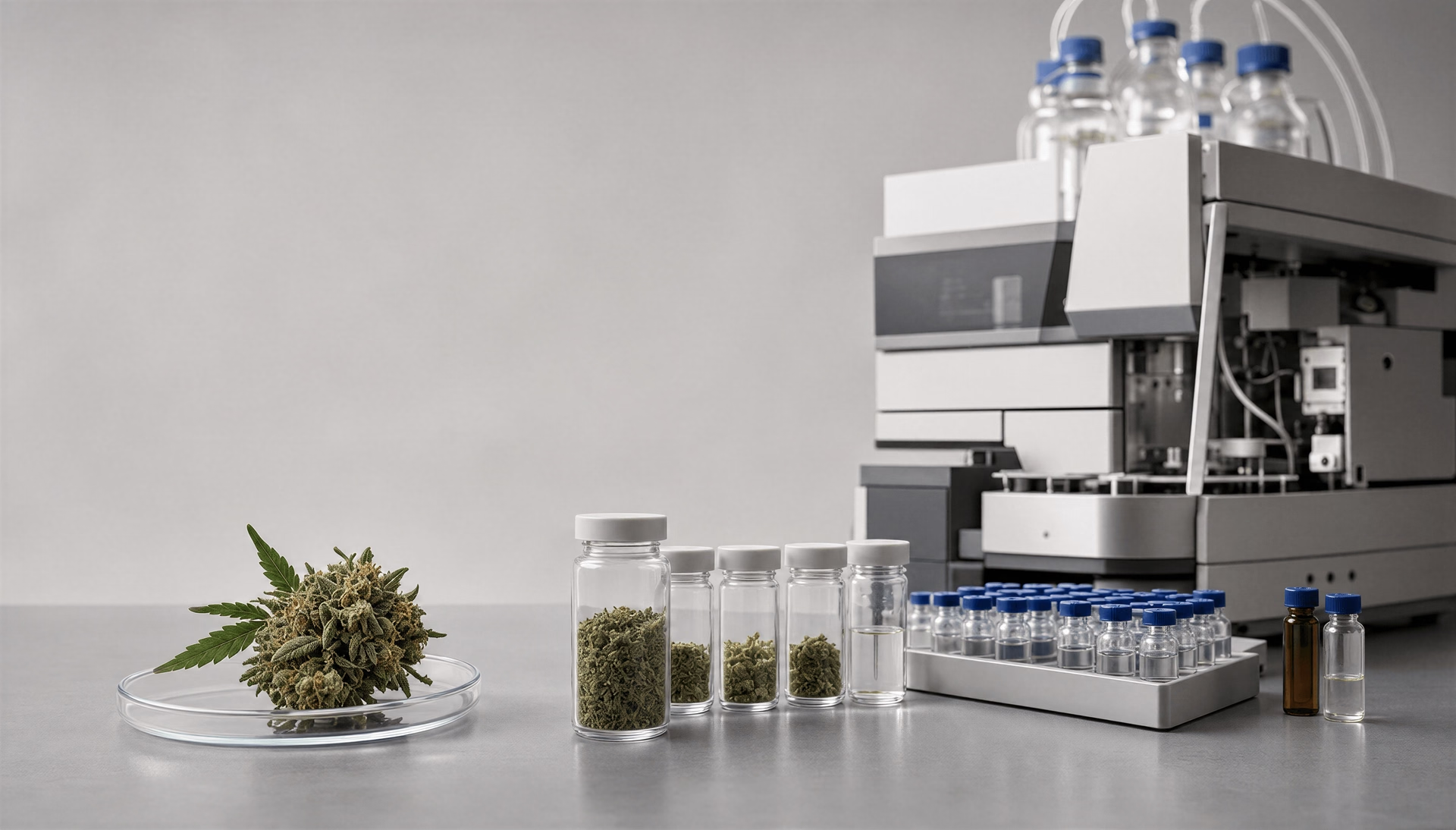
Modern cannabis labs usually measure acidic and neutral cannabinoids separately, most often by high-performance liquid chromatography, because HPLC can quantify CBGA, THCA, and CBDA without heating them during analysis. Gas chromatography can work too, but unless derivatization is used, the injector heat decarboxylates acids and blurs the native profile. For CBGA, that is a major analytical problem: you no longer know whether the sample contained CBGA in the plant or CBG after heat exposure.
Certificates of analysis often report both the detected acid and a “total potential” neutral value. The familiar formulas for THC and CBD reflect the loss of carbon dioxide during decarboxylation: total THC = THC + (THCA × 0.877), and the same logic applies to CBD and CBG from their acidic forms. Useful, yes. But that shorthand can hide the biological story. A sample rich in CBGA is not equivalent to one rich in CBG; one reflects upstream plant metabolism, the other reflects conversion.
Breeding for CBG-rich chemotypes by preserving CBGA upstream
This is why breeders care about CBGA even when end users rarely ask for it directly. A CBG-dominant plant is usually not “making extra CBG” in the living flower. It is often failing to convert as much CBGA downstream into THCA, CBDA, or CBCA. De Meijer’s chemotype framework made that inheritance pattern clear: Type I plants channel CBGA toward THCA, Type III toward CBDA, and Type IV remain CBG-dominant because downstream synthase activity is reduced or absent.
That makes CBG breeding an exercise in preserving CBGA upstream long enough for it to remain measurable and, later, decarboxylate to CBG. The rare trait is not CBGA production itself. The rare trait is leaving enough of it unconsumed.
Harvest timing, post-harvest handling, and cannabinoid conversion
Timing matters. So does storage. During flower development, active synthase expression can continue pulling CBGA into THCA or CBDA, so a later harvest may reduce measurable CBGA in some genetics even as total cannabinoids rise. After harvest, heat, light, oxygen, and time begin shifting the profile again. CBGA does not mainly exist to “turn into CBG.” In the living plant, its main job is serving as substrate for other acids. Only unconverted CBGA can later decarboxylate to CBG.
That point also disciplines therapeutic claims. Labs can measure CBGA accurately, and breeders can select for chemotypes that retain it, but neither fact proves medical value. The van Breemen group’s 2022 SARS-CoV-2 spike-binding paper was an in vitro finding, not a clinical result. The same caution applies to anti-inflammatory and enzyme-screening papers. CBGA is agriculturally and analytically important. Medically, it remains an early-stage compound with more mechanistic interest than human evidence.
Legal and regulatory context for CBGA
Why hemp law increased attention to minor and acidic cannabinoids
CBGA entered more regulatory conversations after hemp law separated low-delta-9-THC cannabis from marijuana in several jurisdictions. In the United States, the 2018 Farm Bill defined hemp as Cannabis sativa L. and its extracts, cannabinoids, and acids containing no more than 0.3% delta-9 THC on a dry-weight basis. That wording matters. It did not single out CBD alone; it explicitly swept in cannabinoid acids as a category, which is one reason laboratories, breeders, and regulators started paying closer attention to compounds such as CBGA.
Fresh cannabis chemistry also pushed CBGA into view. In living plant tissue, cannabinoids are produced mainly in acidic form, and CBGA sits upstream of THCA, CBDA, and CBCA in the biosynthetic pathway. Taura et al. showed in 1995 that THCA synthase converts CBGA to THCA, and in 2004 characterized CBDA synthase converting CBGA to CBDA. Gagne et al. in 2012 linked CBGA formation to a prenyltransferase in glandular trichomes. So the regulatory interest was not only market-driven; better testing exposed what the plant is actually making before heat changes it.
CBGA is not an approved medicine
Legal status and medical approval are separate questions. A hemp-derived ingredient may fall within a lawful cannabinoid category under one statute yet still lack approval as a drug. CBGA is in that second bucket. It is not an FDA-approved medicine, and there is no approved CBGA indication comparable even to the narrow seizure indications for Epidiolex, the plant-derived CBD drug.
This gap matters because preclinical headlines often outrun the evidence. van Breemen et al. reported in 2022 that CBGA and CBDA bound SARS-CoV-2 spike protein in vitro, but that was not a clinical trial and did not establish human efficacy.
| Regulatory question | Why CBGA products can vary by jurisdiction |
|---|---|
| Definition of hemp | Some systems focus on delta-9 THC on a dry-weight basis, while others use broader finished-product chemistry. |
| Treatment of acidic cannabinoids | Rules may explicitly include cannabinoid acids or treat them differently from neutral cannabinoids. |
| Labeling standard | Some jurisdictions emphasize delta-9 THC, others require total THC or broader cannabinoid disclosure. |
| Product category | Source, intended use, and finished formulation can place a product under different legal frameworks. |
Jurisdictional caution for cannabinoid products
Cannabinoid rules vary sharply by country, state, province, and product category. Definitions of hemp, treatment of acidic cannabinoids, labeling rules, and limits on delta-9 THC or “total THC” are not uniform. Some systems regulate by source, some by finished-product chemistry, and some by intended use. Any CBGA-containing product therefore sits inside a moving legal framework, not a single global rulebook.
What the science is likely to clarify next
Human pharmacokinetic studies
The next real step is not another headline about what CBGA did in a dish. It is basic human pharmacokinetics: absorption, peak plasma levels, half-life, metabolism, food effects, and the fraction that survives without decarboxylating to CBG or degrading before it ever reaches circulation. For CBGA, that information is still thin. That matters because promising in vitro findings, including van Breemen et al. 2022 on SARS-CoV-2 spike binding, say little unless human dosing can reach relevant concentrations safely. The field already learned this lesson with other cannabinoids. Preclinical activity is cheap; clinically meaningful exposure is not.
Human PK work should also separate native CBGA from “total potential” cannabinoid math borrowed from potency testing. Lab formulas that convert acidic cannabinoids into theoretical neutral equivalents are useful for plant analysis, but they do not answer what intact CBGA does in the body.
Formulation and stability work
CBGA’s chemistry is part of the problem. As an acidic cannabinoid, it is less stable than many neutral cannabinoids and more vulnerable to heat, time, and formulation conditions. So one of the most important near-term questions is almost pharmaceutical in character: can researchers make preparations that keep CBGA as CBGA long enough for reproducible dosing?
That means stress testing under storage, light, oxygen exposure, gastric conditions, and common excipients. It also means distinguishing true CBGA effects from artifacts caused by partial conversion during manufacturing or administration. Without that, even a well-run trial can become hard to interpret. A “CBGA study” that delivers a moving mixture of CBGA, CBG, and degradation products will muddy the signal from the start.
Whether any preclinical signal survives clinical testing
This is where the field gets serious. Anti-inflammatory screens, aldose reductase inhibition in Dondo et al. 2019, and animal anti-nausea findings are reasons to study CBGA, not reasons to claim medical benefit. The strongest forward-looking insight is simple: CBGA’s place in plant biochemistry is already settled by work from Taura, Sirikantaramas, Gagne, and others; its place in medicine is not. The decisive experiments ahead are dose-finding, stable formulation, and controlled human trials that may show some early signals disappear once CBGA is tested as a drug candidate rather than admired as a precursor.
References
- [1] Cannabinoids Block Cellular Entry of SARS-CoV-2 and the Emerging Variants. Journal of Natural Products, 2022. https://doi.org/10.1021/acs.jnatprod.1c00946