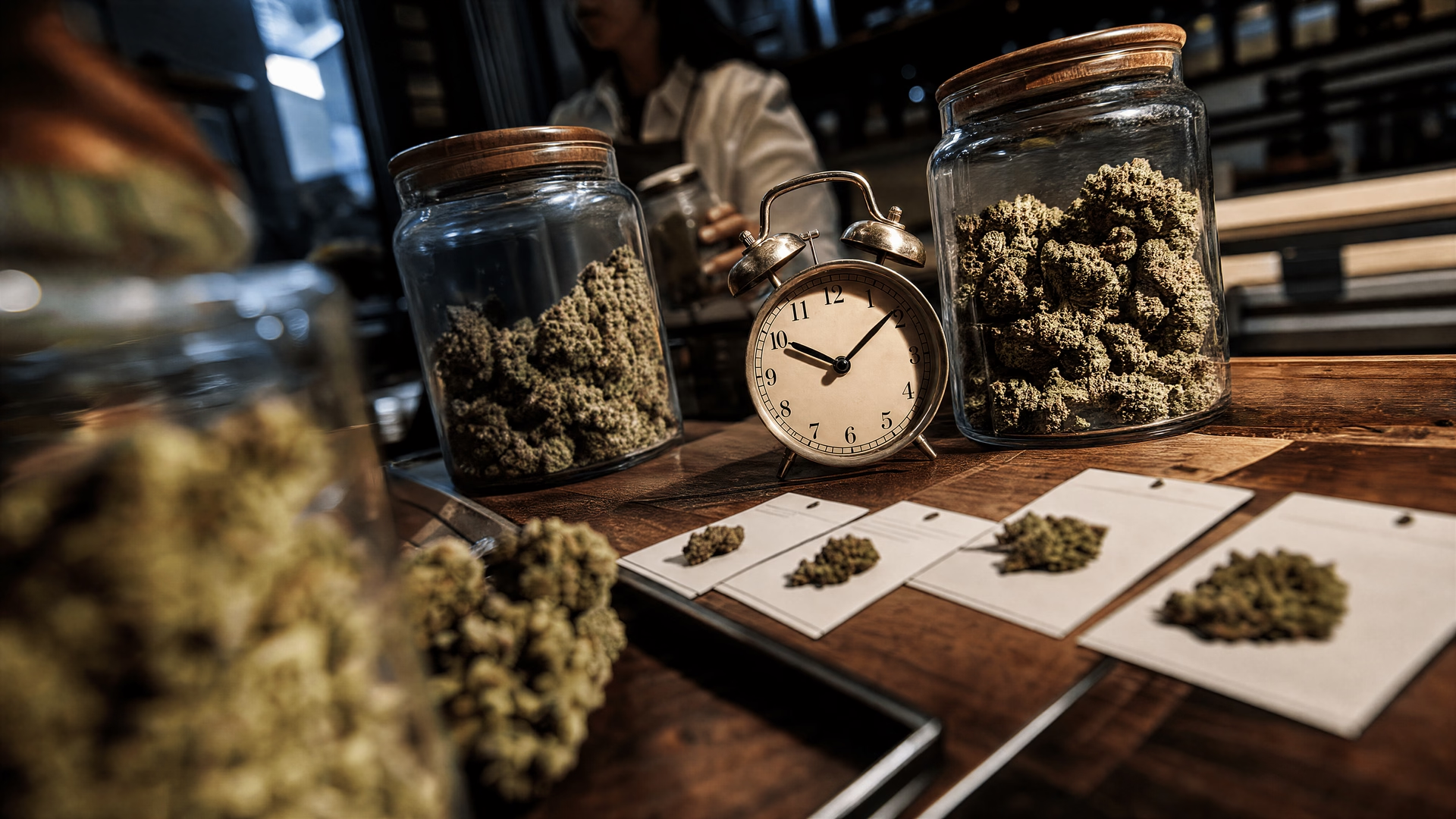














Delta-8-THC is not the 'natural legal THC' many labels imply
The standard pitch gets two things half-right and one thing badly wrong. Delta-8-THC is a real cannabinoid, and it is usually somewhat less potent than delta-9-THC. But the idea that this makes it a naturally abundant, straightforward, legally clean form of THC does not survive contact with the evidence. In practice, commercial delta-8 has largely been a loophole product: a semi-synthetic cannabinoid made by chemically converting hemp-derived CBD, then sold into a market that grew faster than quality control, toxicology, or law.
That framing matters because the real story is not just about subjective intensity. It is about receptor pharmacology, reaction chemistry, contaminant profiles, poison-center data, and fragmented legal status. “Milder” is not the same as non-intoxicating. It is not the same as standardized. And it is certainly not the same as low-risk.
Why delta-8 exists in cannabis only in trace amounts
Delta-8 occurs naturally in Cannabis sativa, but in tiny amounts. Chemistry and regulatory reviews consistently describe it as a minor cannabinoid present at trace levels, often below 0.1% of cannabinoid content in flower, and generally not in concentrations that make direct extraction commercially meaningful. FDA language is blunt on this point: delta-8-THC is found naturally in cannabis in very low concentrations, typically too low for commercial extraction.
That scarcity is not a trivial detail. It undercuts the common impression that delta-8 products are simply concentrated versions of something already abundant in the plant. They are not. Natural delta-8 appears to arise mainly through degradation or isomerization pathways related to delta-9-THC rather than through strong direct biosynthesis in the plant. In plain terms, the molecule exists in cannabis, but usually as a minor byproduct of cannabinoid chemistry, not as a major constituent of flower.
This is why the retail market did not build itself around extracting delta-8 from cannabis plants. There is too little of it. After the 2018 Agriculture Improvement Act defined hemp by delta-9-THC concentration alone — no more than 0.3% delta-9-THC on a dry-weight basis — producers instead turned to hemp-derived CBD as feedstock. Acid-catalyzed isomerization methods described in the chemistry literature can convert CBD into delta-8-THC, while also generating other cannabinoids and side products. So the molecule is natural; the commercial preparation usually is not natural in the ordinary sense people mean when they read the label.
That distinction is the backbone of this article. Delta-8 should be understood less as a naturally plentiful “lighter THC” and more as a real cannabinoid that became commercially important because a legal definition focused on delta-9 created room for CBD conversion.
The double-bond shift: C8 versus C9
Positional isomer A compound with the same molecular formula and basic scaffold as another compound, but with a key bond or group located at a different position. Here, delta-8 and delta-9 differ by the position of one double bond.
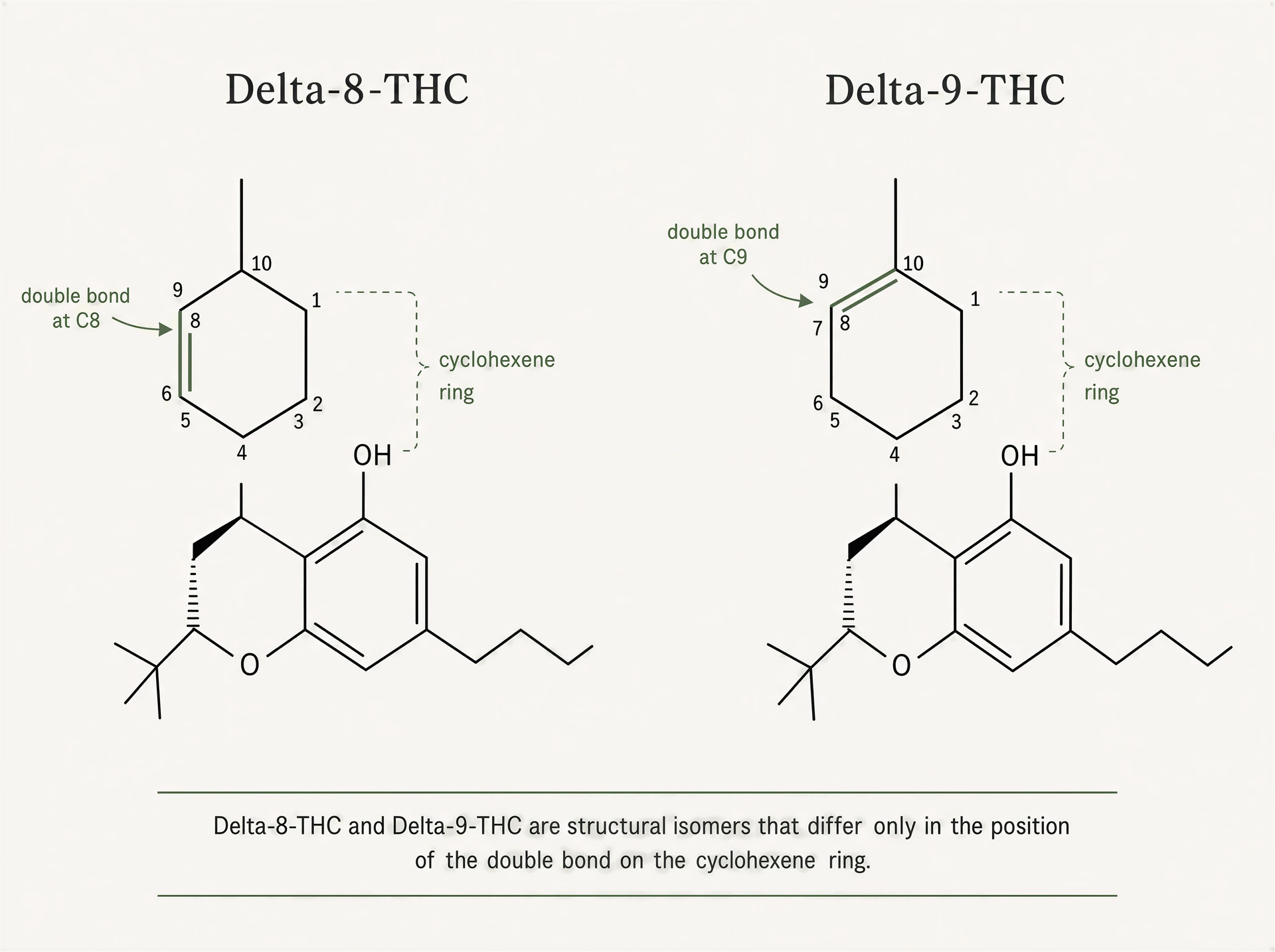
Chemically, delta-8-THC and delta-9-THC are positional isomers. The difference is small on paper and important in practice: the double bond sits at the 8-position in delta-8 and the 9-position in delta-9 on the cyclohexene ring. That shift changes receptor behavior.
Preclinical pharmacology and review literature generally find that delta-8 has lower affinity for CB1 receptors than delta-9, which fits the usual report that it is less psychotropic. The older cannabinoid chemistry tradition associated with Raphael Mechoulam and colleagues helped establish the basic importance of small structural changes in cannabinoid activity, and delta-8 is a textbook example. A one-bond positional change can reduce potency without making the compound pharmacologically simple.
This is where popular summaries often fail. They treat lower CB1 activity as if it settled the safety question. It does not. A weaker agonist can still intoxicate. Dose still matters. So do route of administration, formulation, co-occurring cannabinoids, and impurities left behind by synthesis. A poorly characterized delta-8 preparation may be more unpredictable than a better-characterized delta-9 product simply because the chemistry around it is less controlled.
The article's central claim: weaker does not mean simple or low-risk
Delta-8-THC has therapeutic potential, especially as an antiemetic, but the current clinical evidence base is thin. Limited evidence
[1] Delta-8-THC as an antiemetic for pediatric oncology patients. A Abrahamov, A Abrahamov, R Mechoulam. Life Sciences, 1995.There is some evidence for therapeutic potential, but it is thin. Abrahamov et al. published a small open-label study in Life Sciences in 1995 involving eight pediatric cancer patients aged 3 to 13. Delta-8-THC was administered 480 times during antineoplastic treatment, and the authors reported complete prevention of vomiting on all 480 occasions. That is a striking result. It is also not enough, by itself, to establish clinical confidence. The study was tiny and never followed by the kind of larger randomized trials that would settle the question.[2] The non-psychotropic cannabinoid cannabidiol inhibits experimentally induced intestinal inflammation. Y Avraham, M Grigoriadis, O Poutahidis, et al.. Journal of Pharmacology and Experimental Therapeutics, 2004.
Appetite stimulation is plausible too. Avraham et al. reported in 2004 that very low doses of delta-8 increased food intake in mice. Again, that is interesting pharmacology, not a mature clinical evidence base.
Manufacturing and labeling problems in commercial delta-8 products are supported by analytical reports, agency warnings, and poison-center surveillance rather than by theory alone. Strong evidence
The bigger immediate problem has been manufacturing quality. CBD-to-delta-8 conversion can produce mixtures containing delta-9-THC, delta-10-THC, exo-THC, olivetol-related compounds, residual solvents, catalyst residues, and processing agents if purification is poor. Analytical papers and market studies, including work discussed by Kruger and colleagues, have found inaccurate labels and variable cannabinoid content. The concern is not speculative.
Regulators eventually reacted because poisoning data accumulated. The FDA reported 22 adverse event cases between December 2020 and July 2021, with 14 involving hospital or emergency room treatment. During a similar period, poison centers received 661 exposure cases, 39% involving people younger than 18. A CDC MMWR analysis later identified 2,362 delta-8 exposure cases from January 2021 to February 2022; 70% required health-care facility evaluation, 8% led to critical care admission, and one pediatric death was reported.
So yes, delta-8 is weaker than delta-9. That is real. But the evidence points to a harder truth: weaker does not mean simple, predictable, or safely “natural.” It means a less potent THC isomer that entered the market through a hemp loophole and brought chemistry, contamination, and legal confusion with it.
Chemical structure and pharmacology: how delta-8 differs from delta-9
Delta-8-THC and delta-9-THC are close chemical relatives, but “close” does not mean interchangeable. The usual shorthand is that delta-8 is a lighter version of THC. That is incomplete at best. It is weaker at CB1, yes, yet still intoxicating, still able to impair, and still influenced heavily by dose, route of administration, formulation, and product quality. Those last factors matter even more because most retail delta-8 has not come from direct plant extraction. The molecule exists naturally in cannabis, but only in trace amounts, often described as under 0.1% in flower, generally too low for meaningful commercial extraction. In practice, most products sold as delta-8 have been made by isomerizing hemp-derived CBD into a mixture that must then be purified. That manufacturing fact does not change receptor pharmacology, but it does change how confidently one can talk about real-world effects.

Positional isomerism and why the C8/C9 distinction matters
Chemically, delta-8-THC and delta-9-THC are positional isomers. They have the same molecular formula and the same broad scaffold, but one double bond sits in a different place on the cyclohexene ring. In delta-9, the double bond is conventionally described at the ninth carbon position; in delta-8, it is at the eighth. That sounds minor. It is minor on paper. In receptor pharmacology, though, small shifts in bond placement can alter three-dimensional shape, conformational flexibility, and how the molecule fits into cannabinoid receptors.
This is the core point popular summaries often flatten into marketing language. Delta-8 is not a different class of cannabinoid from delta-9; it is a very closely related THC isomer with measurably different receptor behavior. The double-bond shift changes how strongly it interacts with CB1, the receptor most associated with intoxication, altered time perception, short-term memory disruption, and motor impairment. It also affects stability and downstream metabolism to some degree, though claims that delta-8 behaves in a wholly distinct way are not supported by the evidence.
Historically, cannabinoid chemistry work associated with Raphael Mechoulam and other early researchers established that small structural variations in THC analogues can have large pharmacological consequences. Delta-8 fits that pattern. It is not pharmacologically inert. It is not “CBD with a buzz.” It is THC, just not the same THC isomer that dominates most cannabis chemotypes and most of the human literature.
The natural-abundance issue matters here because it helps explain why the scientific record is thinner than the public attention around the compound. Delta-9 is abundant in many cannabis varieties and has decades of research behind it. Delta-8 occurs mostly as a trace constituent, often associated with degradation or isomerization pathways rather than substantial direct biosynthesis. That scarcity limited traditional pharmacology work and made the recent boom in delta-8 products a market event first, evidence base second.
CB1 and CB2 receptor activity
Like delta-9-THC, delta-8 acts primarily within the endocannabinoid system as a partial agonist at cannabinoid receptors, especially CB1 and CB2. CB1 receptors are concentrated in the central nervous system and are the main driver of THC intoxication. CB2 receptors are found more peripherally, particularly in immune tissues, though the separation is not absolute. Both delta-8 and delta-9 engage these receptors. The main difference is strength and efficiency, not the presence versus absence of activity.
Preclinical receptor studies and reviews have consistently described delta-8 as having lower affinity for CB1 than delta-9. Lower affinity means it binds less readily or less tightly under comparable conditions. Since CB1 activation is closely tied to the psychoactive effects people recognize as “high,” weaker CB1 engagement generally tracks with lower psychotropic potency. Delta-8 also interacts with CB2, but CB2 activity does not erase CB1-driven intoxication. This is why descriptions of delta-8 as somehow non-psychoactive are wrong.
There is a temptation to overstate what receptor binding data can tell us. Receptor affinity is not the whole story. Efficacy, metabolite activity, tissue distribution, dose, and route all shape the final effect profile. A product with less potent receptor pharmacology can still produce strong impairment if the dose is large enough. That is especially relevant in delta-8 because commercial products have often varied widely in labeled and actual content. Kruger and colleagues, who studied user-reported effects and broader market patterns, found that many consumers perceived delta-8 as less intense than delta-9, but self-report data cannot substitute for controlled pharmacodynamic studies.
The antiemetic and appetite findings sometimes cited in support of delta-8 also fit this receptor picture. Abrahamov et al. in 1995 reported complete prevention of vomiting in 480 of 480 chemotherapy administrations in eight pediatric cancer patients, a striking result, but from a very small open-label study. Avraham et al. in 2004 reported increased food intake in mice at low doses. Those findings are pharmacologically plausible for a THC isomer acting at cannabinoid receptors. They do not establish a mature clinical profile.
Lower binding affinity, lower potency, and what “milder” actually means
“Milder” is the word most often attached to delta-8. It is directionally fair, but badly abused. In evidence-based terms, milder means lower average psychoactive potency than delta-9 under comparable conditions, not safe, not non-intoxicating, and not easy to dose.
Compared with delta-9, delta-8 may produce less anxiety and less intense subjective intoxication for some users. Preliminary evidence
Animal and receptor studies have long suggested that delta-8 is less potent than delta-9. Human reports line up with that broad ranking. Users often describe less anxiety, less cognitive distortion, and less intense euphoria than with delta-9, which is one reason the compound spread so quickly after the 2018 Farm Bill created a loophole around hemp defined only by delta-9-THC concentration, capped at 0.3% dry weight. But lower potency is a relative statement. It does not tell you how much weaker a given product is, because products differ in concentration, purity, and byproducts. Nor does it protect against overconsumption.
That unpredictability is one reason the “lighter THC” framing has been misleading. If a gummy contains more delta-8 than the label claims, or if it also contains delta-9, delta-10, unidentified reaction products, or residual solvents from CBD isomerization, the lived effect can be harsher than the pharmacology of pure delta-8 would suggest. FDA and CDC warnings from 2021 onward were driven not by a sudden discovery that cannabinoid receptors behave differently than expected, but by poison center calls, pediatric exposures, hospitalizations, and products with inconsistent chemistry. Between December 2020 and July 2021, FDA received 22 adverse event reports tied to delta-8 products, 14 involving hospital or emergency treatment. During a similar period, poison centers received 661 exposure cases, 39% in people under 18. CDC later reported 2,362 exposure cases from January 2021 through February 2022; 70% required health-care facility evaluation and 8% involved critical care admission.
Those figures do not prove delta-8 is intrinsically more dangerous than delta-9. They do show that “milder” did not translate into a controlled, low-risk market.
Metabolism, onset, and route-dependent effects
One of the more persistent claims about delta-8 is that it has a slower onset. Sometimes that is true in practice. Often the reason is more mundane than the molecule itself.
If delta-8 is inhaled, onset should generally be rapid, as with inhaled delta-9, because cannabinoids enter the bloodstream through the lungs and reach the brain quickly. If it is eaten, onset is slower because the compound has to pass through the digestive tract and the liver before much of it reaches systemic circulation. That oral delay is not unique to delta-8. It is a basic feature of edible cannabinoids.
The liver matters because both delta-8 and delta-9 are metabolized into active hydroxylated compounds, including 11-hydroxy metabolites. For delta-9, 11-hydroxy-THC is well known as an important contributor to the stronger, sometimes more disorienting feel of edibles. Delta-8 appears to follow an analogous path, with 11-hydroxy-delta-8-type metabolites contributing to effect, though the human pharmacokinetic literature is sparse compared with delta-9. That scarcity is an important limit. There is no rich modern dataset mapping plasma concentrations, metabolite ratios, time-to-peak, and impairment across inhaled, oral, and sublingual delta-8 formulations in the way one would want for confident clinical interpretation.
So when people report that delta-8 “comes on slower,” the first questions should be: slower than what, in what dose, and in what format? Many delta-8 products were sold as gummies, tinctures, beverages, or other oral formats. Of course those often had delayed onset. Some formulations also contained thick oils, minor cannabinoids, terpenes, or poorly characterized reaction residues that could further change absorption. The route is doing much of the work there, not some magical pharmacological law that makes delta-8 uniquely slow.
That is the larger lesson from the delta-8 story. At the level of pure molecular pharmacology, it is a weaker THC positional isomer with lower CB1 affinity than delta-9 and correspondingly lower average psychotropic potency. In the real world, that clean comparison is blurred by semi-synthetic production, inconsistent purification, weak standardization, and very limited human PK data. Delta-8 is less potent than delta-9. It is not simple.
Where commercial delta-8 actually comes from: CBD isomerization
The central fact about commercial delta-8 is simple and often blurred on purpose: the molecule exists in nature, but the products sold as delta-8 are usually made by chemically converting hemp-derived CBD. That makes delta-8 a poor fit for the usual “natural hemp cannabinoid” story. Chemically, the statement is half-true. Industrially, it hides the important part.
After the 2018 Agriculture Improvement Act defined hemp as Cannabis sativa L. containing no more than 0.3% delta-9-THC on a dry-weight basis, large amounts of federally lawful hemp biomass were cultivated in the United States. The law focused on delta-9 concentration, not on what chemists could later make from hemp-derived cannabinoids in a reactor. That gap mattered. Once CBD isolate became abundant, producers had a cheap precursor that could be rearranged into intoxicating tetrahydrocannabinol isomers, including delta-8.
Why extraction from cannabis flower is commercially unrealistic
Delta-8 is not absent from cannabis, but it is usually present only in trace quantities. Regulatory and analytical sources repeatedly describe it as a minor cannabinoid, often below 0.1% of cannabinoid content in flower, and frequently formed through degradation or isomerization pathways rather than produced in substantial amounts by the plant itself. The FDA states plainly that delta-8-THC is found naturally in cannabis “in very low concentrations, typically too low for commercial extraction” (FDA, 2022).
That point is not trivial. It is the reason the entire delta-8 market took the form it did. If delta-8 were naturally abundant, manufacturers could have extracted it from flower in the same basic way CBD is isolated from hemp or delta-9-rich resin is processed from marijuana. They generally do not, because the economics are terrible. To isolate meaningful quantities from plant material, a processor would need enormous biomass inputs and extensive downstream purification to separate tiny amounts of delta-8 from much larger amounts of other cannabinoids, terpenes, waxes, pigments, and degradation products.
There is also a botanical problem. Delta-8 appears in part as a byproduct of delta-9 oxidation and isomerization over time. In other words, its presence in the plant often reflects chemical change after biosynthesis, not a major dedicated biosynthetic pathway. So when commercial labels imply that delta-8 products are simply concentrated from hemp in the way peppermint oil is distilled from mint, that is usually false. The supply chain does not begin with delta-8-rich flower. It begins with CBD-rich hemp grown under the Farm Bill framework.

Acid-catalyzed conversion from hemp-derived CBD
Commercial delta-8 production, step by step
- 1 Cultivate hemp that stays under the 0.3% delta-9-THC dry-weight definition.
- 2 Extract crude hemp oil and refine it into CBD distillate or CBD isolate.
- 3 Expose CBD to acidic conditions in solvent so it cyclizes and rearranges into THC isomers.
- 4 Neutralize, wash, and distill the reaction mixture.
- 5 Attempt further purification to reduce delta-9, other isomers, solvents, acids, and unknown side products.
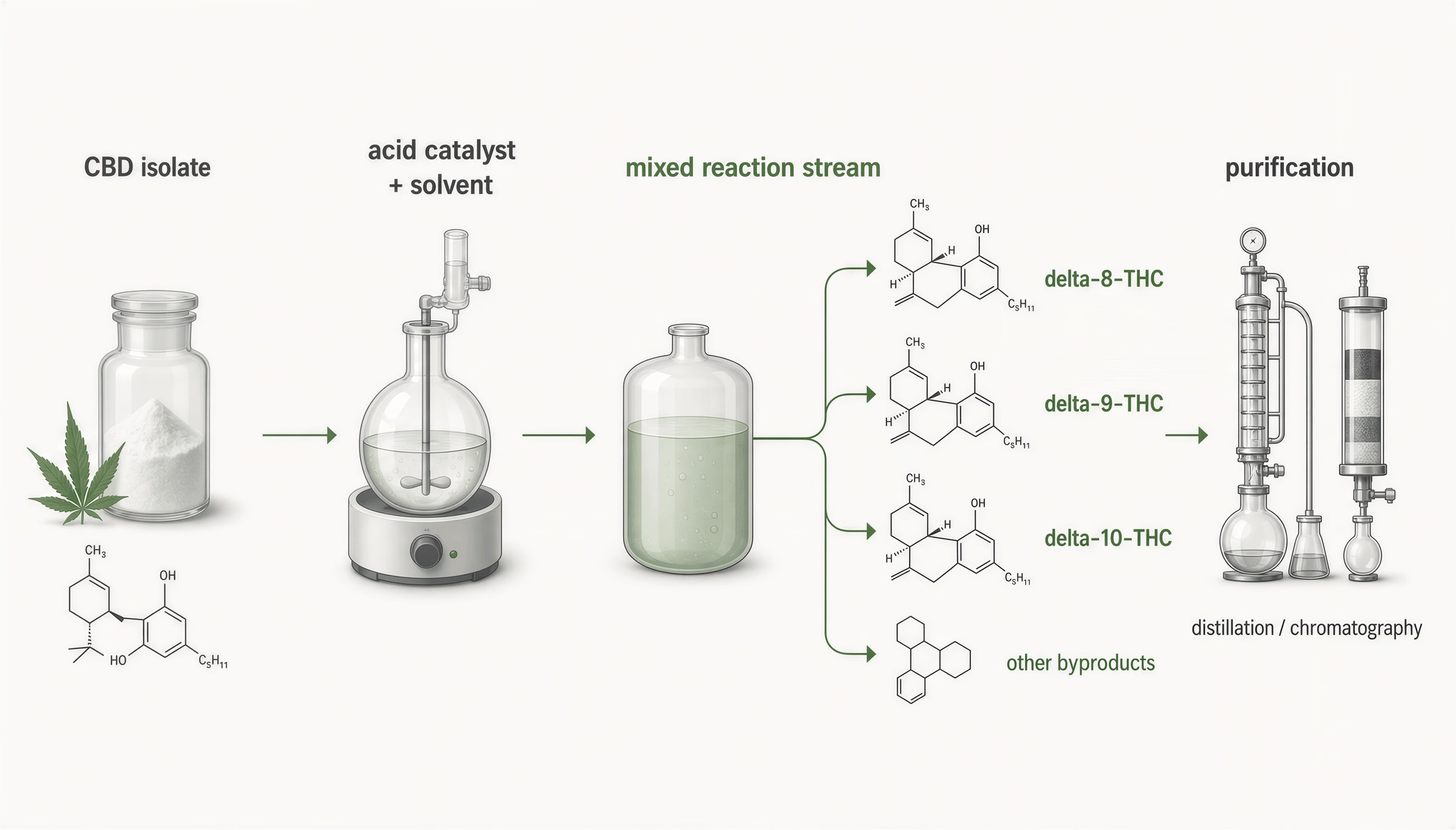
The manufacturing sequence is straightforward in concept, even if the chemistry can become messy in practice. First comes lawful hemp cultivation under the federal definition tied to delta-9-THC content. Next, processors extract crude hemp oil and refine it into high-purity CBD distillate or CBD isolate. That CBD then becomes the feedstock for isomerization.
CBD and THC share the same molecular formula, but their atoms are connected differently. Under acidic conditions, CBD can cyclize and rearrange into THC isomers. This is not a gentle botanical process. It is a laboratory conversion that typically uses an organic solvent and an acid catalyst. Published methods have used solvents such as heptane, toluene, or dichloromethane, with acids ranging from p-toluenesulfonic acid and hydrochloric acid to Lewis acids or other catalytic systems described in the chemistry literature. Reaction conditions matter a great deal: temperature, time, solvent polarity, acid strength, and workup all influence which cannabinoids are formed.
And a mixture is exactly what forms. Delta-8 is not produced in perfect isolation. Depending on conditions, the reaction can generate delta-8-THC, delta-9-THC, delta-10-THC, exo-THC, various degradants, and other compounds that may be hard to identify or quantify. That is why the phrase “converted from CBD” matters more than the softer phrase “derived from hemp.” The latter points backward to the agricultural source. The former describes the actual manufacturing event.
This semi-synthetic route is the commercial foundation of the post-2018 delta-8 market. It also explains why federal scheduling arguments became so tangled. The DEA’s 2020 Interim Final Rule indicated that synthetically derived tetrahydrocannabinols remain Schedule I, but whether CBD-isomerized delta-8 counts as “synthetically derived” has been disputed. The chemistry itself is less ambiguous than the law. Industrial delta-8 is generally made, not harvested.
Why “hemp-derived” is chemically true but narratively misleading
Calling delta-8 “hemp-derived” is chemically defensible in the narrowest sense. If the starting CBD came from federally lawful hemp, then the carbon atoms in the final delta-8 molecule did indeed originate in hemp. But that phrasing encourages the wrong mental picture. It suggests a direct botanical extract when the usual reality is chemical rearrangement.
That distinction matters because people often hear “derived from hemp” and infer three things: naturally abundant, minimally processed, and therefore lower risk. None of those inferences reliably follows. Delta-8 is naturally occurring, yes. Commercial delta-8 products are still usually semi-synthetic preparations produced through acid-catalyzed conversion. A naturally occurring molecule and a product made by chemical conversion are not the same category just because they share the same endpoint structure.
This is where delta-8 marketing has often been most misleading. The molecule’s existence in cannabis is used to launder the industrial story behind it. The result is a narrative in which delta-8 appears as a softer, more natural cousin of delta-9, when in practice it emerged from a loophole-era processing chain built on excess CBD and weak oversight. That does not mean delta-8 itself is fictitious or automatically more dangerous than delta-9. It means the “natural hemp cannabinoid” framing leaves out the part most relevant to quality and safety: how the material was made.
Purification, distillation, and where byproducts enter the picture
Once the conversion reaction is complete, the crude mixture has to be neutralized, washed, and purified. In a controlled setting, residual acid is quenched, solvents are removed, and the cannabinoid fraction is refined through distillation and sometimes chromatographic separation. This is the stage where competent chemistry can reduce impurities. It is also the stage where weak controls leave a chemical mess behind.
The difficulty is that isomerization does not produce only one target compound. It creates a reaction soup. If purification is inadequate, the final distillate may carry residual delta-9-THC, other THC isomers, unknown side products, residual solvents, catalyst residues, reaction decomposition products, or processing aids. Analytical chemists and toxicologists have repeatedly warned that some commercial delta-8 samples contain compounds that are poorly characterized. FDA and CDC warnings were driven not only by intoxication concerns but by the broader reality of an underregulated manufacturing stream.
Independent analysts including David Jikomes and several academic groups have argued that the greater risk may come less from delta-8 pharmacology alone than from inconsistent synthesis and cleanup. That is plausible. Delta-8 itself is weaker at CB1 than delta-9, but a bottle or cartridge labeled “delta-8” may contain far more than delta-8. Kruger and colleagues, along with later analytical papers in Journal of Cannabis Research and ACS-affiliated publications, found variable cannabinoid profiles and labeling problems in commercial products. Some samples also raised concern about bleaching clays, adsorbents, or other remediation steps used to improve appearance after a rough conversion.
So the real manufacturing story is not “hemp plant in, gentle extract out.” It is hemp cultivation, CBD isolation, acid-catalyzed isomerization in solvent, formation of a mixed cannabinoid reaction stream, then purification that may or may not be adequate. That is why “naturally derived” is the wrong emphasis. The evidence points to a loophole-driven semi-synthetic category whose chemistry is real, whose standardization is weak, and whose impurity profile has too often been treated as an afterthought.
Impurities and analytical problems: the quality-control issue is bigger than the molecule
The central safety problem with commercial delta-8 is not simply that delta-8-THC is intoxicating. It is that most retail delta-8 has been made through chemical conversion of CBD, and chemical conversion does not produce a single clean compound unless the process is tightly controlled, purified, and fully characterized. In practice, that often has not happened. FDA warnings from 2021 onward, poison-center data, and published analytical chemistry papers all point in the same direction: the risk profile of these products is shaped as much by what accompanies delta-8 as by delta-8 itself.
That distinction matters because delta-8 is naturally present in cannabis only in trace amounts, generally far too low for commercial extraction. The market that emerged after the 2018 Farm Bill was therefore built largely on isomerized hemp-derived CBD, not on direct plant extraction. Once acid-catalyzed conversion becomes the production route, impurity control stops being a minor technical issue and becomes the whole story.
Known and suspected reaction byproducts
CBD-to-THC conversion is chemically messy. Under acidic conditions, CBD cyclizes and rearranges into a mixture of products whose exact composition depends on solvent, catalyst, temperature, reaction time, and workup. Delta-8-THC may be the intended endpoint, but it is rarely the only one.
The most obvious byproduct is delta-9-THC. Because delta-8 and delta-9 are closely related isomers, many conversion schemes generate both. That has legal as well as toxicological relevance. A product marketed as “hemp” can end up containing enough delta-9-THC to matter pharmacologically, while still being presented as something softer or separate from ordinary THC.
Delta-10-THC is another recurring concern. It is much less studied than either delta-8 or delta-9 and commonly appears not as a naturally abundant plant constituent but as part of reaction mixtures or later isomerization products. When delta-10 is present, it often signals broader reaction complexity rather than precise manufacturing control.
Then there are the compounds that attract less public attention but worry analytical chemists more. Exo-THC and related structural isomers can form during acid-mediated rearrangement. So can degradants and minor cannabinoids not typically listed on standard reports. Some papers and technical commentaries have also flagged olivetol-derived compounds and other unidentified peaks consistent with decomposition or side-reaction chemistry. If the process is pushed hard, or purification is poor, the resulting distillate may contain a broad profile of unintended cannabinoids and non-cannabinoid organics.
HHC-related intermediates or precursors can become relevant when processors move beyond simple isomerization into multi-step chemistry. Hexahydrocannabinol itself is usually associated with hydrogenation rather than ordinary CBD-to-delta-8 conversion, but in real-world processing environments cannabinoid feedstocks are not always handled in neat single-purpose workflows. Shared intermediates, mixed inputs, or partially characterized reaction streams raise the chance that hydrogenation-related materials or precursor residues enter the final matrix. This is one reason categorical claims that a product contains “only delta-8” deserve skepticism unless the full analytical method is disclosed.
The broader point is simple. The chemistry does not naturally stop at one clean peak. It produces families of compounds, some known, some guessed from mechanism, and some still unidentified. When a product contains large amounts of converted delta-8, it is reasonable to ask what else came along for the ride.
| Contaminant class | Examples named in the article | Why it matters |
|---|---|---|
| Residual solvents | Heptane, toluene, hexane, ethanol, dichloromethane | Can remain in finished oil if evaporation and purging are incomplete |
| Acid or catalyst residues | p-TSA, hydrochloric acid, boron trifluoride etherate, aluminum chloride | Not intended for ingestion; poor quenching or washing can leave residues or ongoing degradation |
| Metals | Aluminum, boron-associated residues, zinc, other process-related metals | May enter through catalysts, equipment, or low-grade reagents |
| Bleaching and adsorbent media | Bleaching earths, clays, activated carbon, silica | Can hide degraded reaction mass and may leave particulate or process residues if cleanup is poor |
Residual solvents, acids, metals, and bleaching media
Even if byproducts were absent, conversion chemistry introduces another layer of possible contamination: processing residues.
Organic solvents are the first class. Heptane and toluene are commonly discussed in relation to cannabinoid conversion and purification, but they are not the only possibilities; hexane, ethanol, dichloromethane, and others may appear depending on the method. Residual solvent risk is straightforward. If evaporation and vacuum purging are inadequate, traces remain in the finished oil or edible ingredient. Some solvents are less concerning than others at low levels, but the issue is not theoretical. It is basic process chemistry.
Acid residues are next. Published methods for CBD isomerization often use Brønsted or Lewis acids. p-Toluenesulfonic acid, usually abbreviated p-TSA, appears frequently in discussions of cannabinoid conversion. Lewis acids such as boron trifluoride etherate, aluminum chloride, or related catalysts have also been described in chemical literature. These reagents are not intended for ingestion. If quenching, washing, neutralization, and purification are sloppy, residues can remain or can drive continued degradation after the reaction is supposedly complete.
Metals enter the picture through catalysts, reactor equipment, and low-grade reagents. Depending on the pathway, one might worry about aluminum, boron-associated residues, zinc, or other metals introduced during catalysis or processing. Heavy-metal screening is not universal, and when it exists it may cover only a standard set rather than the full range relevant to a specific synthesis route.
Bleaching earths, clays, activated carbon, silica, and other adsorbent media are also part of the problem. These materials are used to decolorize dark reaction mixtures, strip odors, or improve appearance before distillation. That can make a product look cleaner than it is. If filtration is incomplete, fine particulate matter or adsorbent residues may carry through. Even when solids are removed, aggressive bleaching can disguise how degraded or impure the starting reaction mass was.
This is where the “natural” framing collapses. A trace natural cannabinoid extracted from flower and a CBD reaction product cleaned up with acids, solvents, and bleaching media are not the same manufacturing category.

Why standard cannabinoid panels can miss unknowns
Certificate of analysis (COA) A lab report that lists measured properties of a batch, such as cannabinoid potency or solvent levels. A COA is only as useful as the methods, analytes, and batch matching behind it.
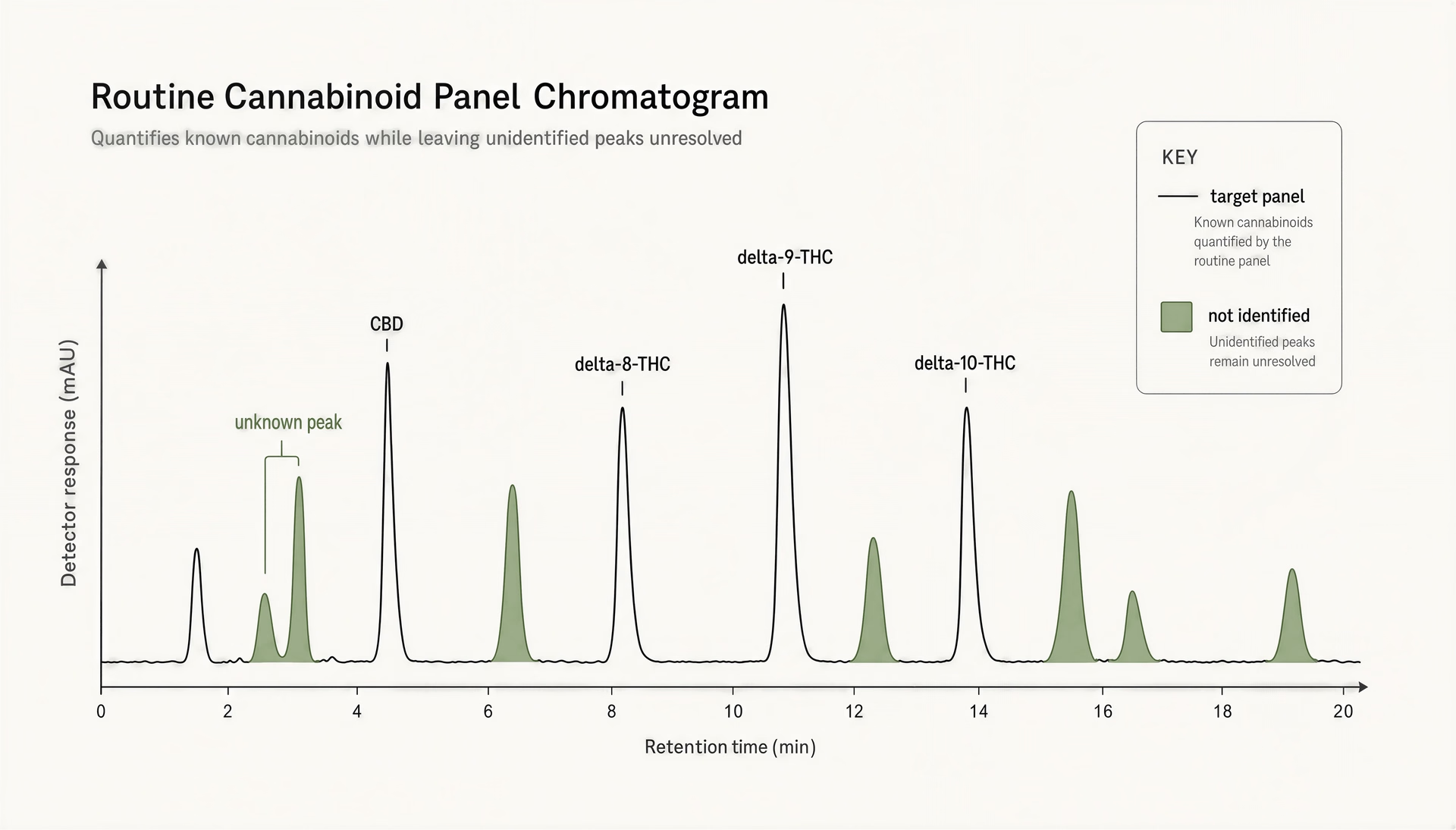
A certificate of analysis can look reassuring while still telling only part of the story. Many routine cannabis testing panels are targeted assays. They quantify known cannabinoids for which the lab has reference standards: delta-9-THC, CBD, CBG, CBN, perhaps delta-8 if requested. That is not the same as comprehensive impurity characterization.
Unknown peaks are the blind spot. In chromatographic analysis, a lab may see extra signals but be unable to identify them without validated methods, spectral libraries, and authentic standards. Some labs simply report the target analytes and leave the rest unaddressed. Others may fold unresolved material into broad categories or ignore low-abundance peaks that could still matter toxicologically if consumed repeatedly.
Delta-8 products create a special problem because many of the possible side products are rare isomers with similar retention behavior and closely related mass spectra. Poorly optimized HPLC or GC methods can misassign peaks or fail to separate them cleanly. Without orthogonal methods such as LC-MS/MS, high-resolution mass spectrometry, or NMR, an analyst may know that something is there but not what it is.
That limitation makes many COAs incomplete by design. They are often compliance documents, not full forensic maps of the sample. If a report lists potency, residual solvents, and a few contaminants but does not discuss unidentified chromatographic peaks, it should not be read as proof that unidentified compounds are absent. It usually means they were not the target of the assay.
What published lab analyses found in commercial products
Published analyses of commercial delta-8 products have repeatedly found inconsistency rather than standardization. Kruger and colleagues helped document the market’s rapid expansion and the mismatch between consumer-facing claims and the thin evidence base, while analytical studies in journals such as the Journal of Cannabis Research and ACS publications pushed further into composition problems.
Across studies, several patterns recur: labeled delta-8 content does not always match measured content; delta-9-THC is often present; delta-10-THC and other minor cannabinoids appear without clear disclosure; and chromatograms show additional peaks that remain unidentified. Independent chemists including David Jikomes have argued that these unknowns may be the larger toxicological concern, not because every unknown peak is dangerous, but because no one can credibly claim safety for compounds that have not been properly identified.
FDA statements have been cautious but pointed. The agency has warned that delta-8 products may be manufactured in ways that lead to contamination, and it has explicitly noted that naturally occurring concentrations are too low for commercial extraction, implying synthetic or semi-synthetic processing routes for most products. That is consistent with what labs have seen.
The strongest evidence-based reading is not that delta-8 is uniquely hazardous as a molecule. It is that the loophole-era delta-8 market normalized medicinal-looking products built from semi-synthetic cannabinoid mixtures without pharmaceutical-grade impurity control. Once that happened, the meaningful question stopped being “How strong is delta-8 compared with delta-9?” and became “What is actually in the bottle, cartridge, gummy, or distillate?” Too often, neither the label nor the COA answers that question.
What the human evidence actually shows: antiemetic and appetite research
The therapeutic case for delta-8-THC rests on a few real data points, not on a mature clinical literature. That distinction matters. There is one frequently cited human antiemetic study with an eye-catching result, some animal work suggesting appetite stimulation, and a lot of repetition online that makes the evidence base sound larger than it is. It is not large. It is intriguing, but thin.
Abrahamov et al. 1995 and the pediatric chemotherapy finding
The key human paper is Abrahamov et al., published in Life Sciences in 1995. The study involved eight children aged 3 to 13 years with hematologic cancers who were receiving antineoplastic treatment. Delta-8-THC was given orally before chemotherapy and then at intervals afterward. According to the paper, delta-8-THC was administered across 480 chemotherapy sessions, and “the antineoplastic treatment caused vomiting on none of these occasions” (Abrahamov et al. 1995).
That is a striking finding. Not “suggestive.” Striking. Complete prevention of vomiting across 480 administrations would be impressive for any antiemetic agent, especially in pediatric oncology, where chemotherapy-induced nausea and vomiting can be severe and difficult to control.
The authors also reported very limited adverse effects. They described negligible side effects, with slight irritability in two patients and some euphoria in one patient. This has helped fuel the idea that delta-8 might preserve the antiemetic properties associated with THC while producing less unwanted intoxication than delta-9-THC.
There is a pharmacological logic to that idea. Delta-8 is a positional isomer of delta-9 with lower CB1 receptor affinity and, in general, lower psychotropic potency. That does not make it non-intoxicating, but it does make the Abrahamov result biologically plausible rather than bizarre. Cannabinoids have long been studied for antiemetic effects, and the endocannabinoid system is involved in nausea and vomiting pathways.
Still, the paper needs to be described exactly for what it was: a small, open-label clinical trial. No placebo arm. No blinding. No randomized comparison with standard antiemetics. No replication in a larger pediatric sample. No modern formulation or manufacturing standards comparable to current drug development. Those limits do not erase the finding. They stop it from settling the question.
How strong is that antiemetic evidence, really?
If the Abrahamov study were one piece of a larger trial program, it would look like an early success story. Instead, it remains an isolated result that has never been followed by the kind of confirmatory research needed for routine clinical use.
That is the central problem. The result is almost too clean. Complete vomiting prevention in every reported administration invites attention, but it also raises the obvious scientific question: why was there no substantial follow-up? In evidence-based medicine, dramatic early findings are supposed to trigger replication. With delta-8, that did not happen in any meaningful way.
So how should the antiemetic evidence be rated? Better than “none,” weaker than “established.” There is a real human signal, and it is stronger than the purely anecdotal claims often attached to commercial delta-8 products. But one small open-label study in eight pediatric patients does not create a standard of care. It does not justify treating delta-8 as an approved antiemetic. It does not tell clinicians what dose range, formulation, safety profile, or drug interaction burden to expect in broader populations.
It also comes from a very specific setting: pediatric hematologic cancers under chemotherapy. That is not the same as showing efficacy for adults, for other chemotherapy regimens, or for nausea unrelated to cancer treatment. Extrapolation is easy. Evidence is harder.
The current approved antiemetic landscape also matters. Modern oncology supportive care includes 5-HT3 antagonists, NK1 antagonists, dexamethasone, olanzapine, and established cannabinoid medicines in some jurisdictions. Delta-8 has not gone through the comparative testing needed to show where it fits, if anywhere, among those options.
That is why “promising antiemetic” is defensible, while “proven medical antiemetic” is not. Patients with cancer-related nausea or poor appetite should not substitute internet claims for oncology care. Anyone considering cannabinoid use in that setting should discuss it with a treating clinician because sedation, drug interactions, product variability, and contamination risks are not theoretical with delta-8 preparations.
Appetite stimulation data from animal and limited human research
The appetite story is even more speculative than the antiemetic story, though it has decent biological plausibility. Cannabinoid signaling is tied to feeding behavior, reward, and energy balance, so an orexigenic effect would not be surprising.
The most often cited appetite paper is Avraham et al. 2004. In that mouse study, very low doses of delta-8-THC increased food intake. The effect was notable because it appeared at doses low enough to suggest a separation, at least in mice, between appetite stimulation and heavier behavioral disruption. That fed the idea that delta-8 might have a useful therapeutic window for conditions involving weight loss or reduced appetite.
Preclinical work comparing delta-8 and delta-9 has generally supported the broader point that delta-8 is pharmacologically active but somewhat less potent. In plain terms, it can still affect feeding and behavior, just not in exactly the same way or intensity as delta-9. That is consistent with its lower CB1 receptor affinity. It is not evidence that appetite effects in animals will translate cleanly to patients.
And that translation has barely been tested. Human appetite data for delta-8 are sparse. There is no large randomized body of clinical trials showing consistent benefit in cachexia, cancer-related anorexia, HIV-associated weight loss, or other conditions where appetite stimulation might matter medically. The human discussion often piggybacks on what is known about delta-9-THC and then quietly assumes delta-8 works similarly enough. Maybe. But “maybe” is not the same as a demonstrated therapeutic indication.
This is a recurring problem with delta-8 coverage. Preclinical findings get inflated into settled medical claims. A mouse feeding study becomes “delta-8 treats appetite loss.” That move is not justified by the evidence.
Why the therapeutic story remains promising but thin
There is a real reason delta-8 keeps attracting therapeutic interest. The molecule is active. It is not an invention of marketing departments. Human antiemetic data, while limited, are unusually positive for such a small study. Animal work suggests appetite stimulation at low doses. The broader cannabinoid literature makes these effects plausible.
But plausibility is not approval, and signal is not proof.
The gap between those two things is where delta-8 sits. It has enough evidence to justify scientific interest and nowhere near enough to support confident medical claims. No major regulator has approved delta-8-THC as a medicine for nausea, vomiting, or appetite loss. There is no standardized dosing framework in routine care. There is no well-developed safety database. There is no assurance that a given commercial delta-8 product even contains a clean, stable, accurately labeled preparation of the compound being studied.
That last point is not peripheral. It changes how the therapeutic literature should be read. Abrahamov et al. studied delta-8 as a defined agent in a clinical context. The current market has often involved semi-synthetic delta-8 made by chemically converting CBD, with documented concerns about byproducts, residual solvents, mislabeled cannabinoid content, and inconsistent purity. Even if delta-8 itself has useful antiemetic or orexigenic potential, that does not mean contemporary products are suitable substitutes for a pharmaceutical preparation.
So the fair reading is neither dismissal nor hype. Delta-8 has shown enough to merit serious research, especially in antiemesis and possibly appetite stimulation. It has not shown enough to justify the certainty often attached to it. The therapeutic story is promising because there are actual signals. It remains thin because those signals have not been replicated, expanded, and standardized in the way medicine requires.
Adverse events, poison center calls, and FDA warnings from 2021 to 2023
Federal concern about delta-8 did not begin with a formal finding that the molecule itself was uniquely toxic. It began because injury reports, child exposures, and an almost completely unstandardized product category were piling up faster than the evidence base. That distinction matters. A poison center call is not the same thing as a confirmed causality assessment, and an FDA adverse event report is not proof that delta-8 alone caused the outcome. But when the same pattern appears across voluntary reports, poison center surveillance, and clinical encounters, regulators do not need randomized trials to act.
The central problem was plain by 2021: delta-8 was being sold and consumed as if it were a settled, lower-risk version of THC, even though most products were not extracted from cannabis flower in any meaningful natural sense. Commercial material was generally produced by chemically converting hemp-derived CBD into delta-8-rich mixtures. That meant the safety question was never only about delta-8 pharmacology. It was also about what else was in the cartridge, gummy, tincture, or vape liquid.
The first federal safety alerts
The first major federal warning came in September 2021, when the FDA and CDC publicly flagged an increase in adverse events and exposures associated with delta-8-THC products. The FDA’s wording was careful but unmistakable: these products had not been evaluated or approved for safe use in any context, and some were being marketed in ways that put public health at risk, especially where children were concerned.
The numbers cited in that early period were already serious. From December 2020 through July 2021, the FDA received 22 adverse event reports linked to delta-8 products; 14 of those involved hospital or emergency room treatment (FDA, 2021). Adverse event reports are usually submitted voluntarily by consumers, clinicians, or manufacturers. They are useful as signal detection, not as a final judgment. Reports can be incomplete. Co-exposures are common. Dose and product identity may be uncertain. Still, 14 hospital or ER-treated cases in such a short window was enough to show that this was not a trivial paperwork issue.
At almost the same time, poison control surveillance showed a much broader problem than the FDA’s direct reporting system could capture. National poison control centers received 661 exposure cases involving delta-8-THC products between January 1 and July 31, 2021, according to the CDC health alert and the joint FDA-CDC messaging. Of those cases, 39% involved patients younger than 18 years old. FDA and CDC also highlighted that 41% of reported exposures were unintentional exposures among pediatric patients. That is a different data stream from FDA adverse event reporting. Poison center calls are real-time public health surveillance records, often made by parents, caregivers, clinicians, or patients seeking urgent guidance. They still do not establish causation with scientific certainty. They do, however, show who is being exposed, how often, and how severe the immediate concern appears to be.
The warning timeline continued into 2022 and 2023 with repeated FDA updates stressing the same themes: intoxication risk, pediatric exposure, misleading “hemp” labeling, and contamination or variable potency in manufactured products. What changed was not the direction of concern but the amount of supporting surveillance.
Poison center and hospital data
The strongest national dataset from this period came from the CDC’s 2022 Morbidity and Mortality Weekly Report, which analyzed delta-8 exposure cases reported to US poison centers from January 1, 2021, through February 28, 2022. It identified 2,362 exposure cases. That is the figure that moved delta-8 from a niche regulatory oddity into a mainstream public health issue.
Severity matters more than raw count, and the severity data were not reassuring. According to the CDC, 70% of those 2,362 cases required health care facility evaluation. Eight percent were admitted to a critical care unit. One pediatric death was reported. Surveillance data like these do not mean every case was caused solely by verified delta-8 with laboratory confirmation. Some involved multiple substances. Some depended on caller history or package information rather than toxicology confirmation. But even with those caveats, this was not a pattern consistent with a harmless loophole product.
Typical reported effects included vomiting, hallucinations, trouble standing, loss of consciousness, and confusion, according to the federal alerts and case summaries. Those clinical pictures fit THC intoxication. They also fit a market in which dose was highly inconsistent and product composition often uncertain. Delta-8 does have lower CB1 receptor affinity than delta-9-THC in preclinical work, but “weaker” is not the same as “safe,” and oral products can produce delayed, unexpectedly strong intoxication. Add inaccurate labeling and synthesis impurities, and prediction becomes difficult.
How the article distinguishes surveillance sources
- FDA adverse event reports
- Narrower reports submitted by consumers, clinicians, or manufacturers; useful for signal detection but often incomplete.
- Poison center exposure cases
- Frontline surveillance calls that show who was exposed, how often, and how severe the immediate concern appeared to be.
- Hospital evaluation or critical care
- A severity layer indicating that some exposures were serious enough to require in-person treatment or intensive monitoring.
The gap between the FDA’s 22 adverse event reports and the CDC’s 2,362 poison center exposure cases is not a contradiction. It shows how different surveillance systems work. FDA reports are narrower and more formal. Poison centers collect much larger volumes of frontline exposure data. Hospital records add a third layer, reflecting cases severe enough to require in-person care. Taken together, they describe a category that was reaching children, causing intoxication, and sending a nontrivial number of people into acute care settings.

Why children were disproportionately affected
Children were not overrepresented by accident. The product format and the retail presentation made that outcome predictable.
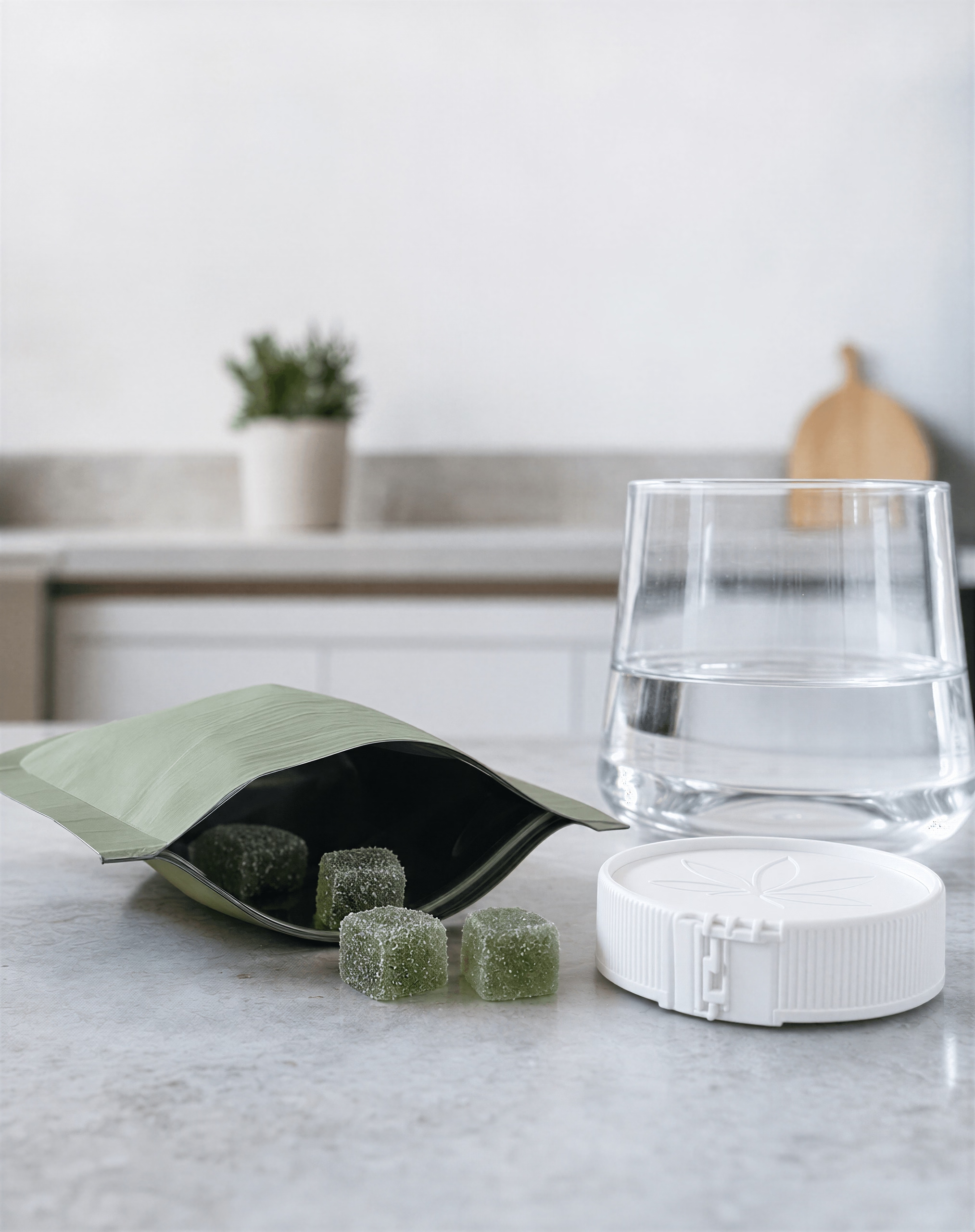
Many delta-8 products were sold as gummies, candies, chocolates, or sweet beverages. Those forms are easy for adults to underestimate and easy for children to mistake for ordinary snacks. Edibles are also pharmacokinetically tricky. Their onset is slower than inhaled products, which encourages repeat dosing in adults and creates a large window in which an unsupervised child can ingest more than one serving. If the label is wrong, or if the package contains more delta-8 than stated, the problem gets worse quickly.
Packaging mattered too. FDA and CDC warnings repeatedly pointed to online promotion, colorful presentation, flavoring, and labeling practices likely to appeal to minors. Some products were simply marked as “hemp,” a term many consumers associate with non-intoxicating CBD. That was misleading. Under the 2018 Farm Bill, hemp was defined by having no more than 0.3% delta-9-THC on a dry-weight basis, not by being non-intoxicating. A parent seeing “hemp gummies” might reasonably fail to recognize that the package contained a psychoactive tetrahydrocannabinol analogue.
Weak age controls amplified that confusion. In many jurisdictions during 2021 and part of 2022, delta-8 sat outside tightly regulated cannabis systems. There was often no consistent testing rule, no standardized packaging requirement, and no uniform child-resistant design. This is one reason the pediatric exposure numbers were so high. The products did not merely exist in the home; they often entered the home in forms and packages that obscured the risk.
What regulators were worried about: intoxication, labeling, and contamination
By 2023, the regulatory concern around delta-8 had settled into three linked themes.
First, intoxication. Delta-8 is psychoactive. Its lower potency relative to delta-9 does not make it functionally non-intoxicating. Federal agencies were seeing adverse effects consistent with real THC exposure, especially from edibles and concentrated products. The “milder THC” framing had encouraged casual use without corresponding dose discipline.
Second, labeling. FDA repeatedly stressed that delta-8 products had not been evaluated for safe use and were sometimes labeled simply as hemp products. That framing concealed the intoxicating nature of the cannabinoid and encouraged false assumptions about safety. Independent analytical work during this period also found inaccurate cannabinoid labeling and wide product-to-product variability. That matters clinically. If the stated milligram amount is wrong, neither the user nor the treating physician has a reliable idea of exposure.
Third, contamination and manufacturing inconsistency. This was the issue many early media accounts missed. Because delta-8 occurs naturally in cannabis only in very low concentrations, typically too low for commercial extraction, the market was mostly supplied through CBD isomerization. Chemists and regulators warned that these reactions can yield mixtures containing delta-9-THC, delta-10-THC, other unknown byproducts, residual solvents, catalyst residues, and processing aids if purification is poor. In that setting, an adverse event might reflect delta-8, excess dose, co-occurring cannabinoids, or contaminants. Regulators did not need to isolate each pathway before deciding the market was unstable.
That is the real significance of the 2021-2023 warnings. They were not a moral panic about a new cannabinoid. They were a response to a semi-synthetic intoxicant category sold under hemp branding, with weak oversight, child-attractive formats, and a mounting record of poison center calls, hospital evaluations, and label uncertainty. The science on delta-8 itself was thin. The evidence that the products were poorly controlled was not.
Why the US delta-8 market exploded after the 2018 Farm Bill
The delta-8 boom was not driven by a sudden botanical discovery. It was driven by statutory wording.
When Congress passed the Agriculture Improvement Act of 2018, it removed “hemp” from the federal definition of marijuana if the plant and its derivatives contained no more than 0.3% delta-9-THC on a dry-weight basis. That definition mattered because it was narrow. It focused on delta-9-THC specifically, not on total intoxicating cannabinoids, not on tetrahydrocannabinol analogues as a class, and not on what could be made from abundant hemp-derived CBD after extraction. The result was a legal opening large enough to support an entirely new intoxicating product category.
Delta-8 fit that opening almost perfectly. It is a real cannabinoid, but only a trace one in cannabis flower, generally described in the literature as present at levels too low for commercial extraction, often below 0.1% depending on the sample and method. So the retail delta-8 wave was not built on harvesting naturally rich delta-8 cultivars. It was built on chemistry. Hemp produced large surpluses of CBD after 2018, CBD could be converted through acid-catalyzed isomerization into delta-8-rich mixtures, and federal hemp law did not expressly shut that route down. That is why the market exploded so fast.
The legal definition of hemp and the delta-9 loophole
The core text of the Farm Bill defined hemp as Cannabis sativa L. and “any part of that plant” with “a delta-9 tetrahydrocannabinol concentration of not more than 0.3 percent on a dry weight basis.” The phrase that mattered was delta-9. Congress did not adopt a total-THC standard for all finished consumer products, and it did not address whether intoxicants made from lawful hemp constituents would still count as hemp derivatives if the final product was not delta-9 dominant.
That gap became the loophole.
A product could be marketed as hemp-derived so long as its delta-9-THC remained under the statutory threshold, even if it contained substantial amounts of another intoxicating cannabinoid. Delta-8 was weaker than delta-9 at CB1 and generally described as less potent, but it was still intoxicating. The law had effectively drawn a line around one molecule while leaving room for adjacent ones. For non-intoxicating CBD tinctures, that distinction was not especially dramatic. For converted cannabinoids, it changed the market.
This was never a sensible way to separate intoxicating from non-intoxicating products. It separated them by naming one analyte. Once chemists and manufacturers recognized that hemp-derived CBD could be turned into delta-8, the federal hemp definition became less a plant rule than a formula for regulatory arbitrage.
How retailers used the statutory gap
The commercial logic was straightforward. Hemp was federally lawful within the delta-9 threshold. CBD was plentiful and cheap after overproduction. Delta-8 existed in a gray zone. So companies started converting surplus CBD isolate into delta-8 distillate and presenting the result as a lawful hemp derivative.
That framing rested on a half-truth. Delta-8 is naturally occurring, yes. Commercial delta-8 products were usually not directly extracted from the plant in meaningful quantities, because the plant does not contain enough of it. They were semi-synthetic preparations made from hemp CBD through chemical conversion. Calling such products simply “natural hemp” blurred the manufacturing reality.
Retailers used the statutory gap in two ways at once. First, they treated hemp origin as the key legal fact: if the starting material was lawful hemp CBD, the finished intoxicant was described as hemp-derived. Second, they took advantage of the fact that many state systems had built strict rules around licensed marijuana channels while leaving hemp products outside those controls. That meant fewer age gates in some jurisdictions, fewer testing mandates, and easier placement in ordinary retail settings.
The speed of the shift is what made it notable. Delta-8 did not rise through the established state cannabis system, where product categories, testing rules, and track-and-trace controls already existed. It appeared alongside ordinary hemp products, often with packaging that looked familiar to CBD consumers, while delivering intoxication. That mismatch between legal category and pharmacological effect was the engine of the boom.
Market-size claims from this period should be handled carefully because many came from industry analysts rather than public sales registries. Brightfield Group estimated US delta-8 sales reached at least $10 million by 2020 and grew sharply through 2021, and JAMA coverage described delta-8 as the fastest-growing segment of the hemp market. Those figures are useful as industry indicators, not as hard census data.
DEA ambiguity over “synthetically derived” THC
Federal agencies did not resolve the issue cleanly. They deepened the uncertainty.
In its 2020 Interim Final Rule implementing the Farm Bill, the DEA stated that “synthetically derived tetrahydrocannabinols remain Schedule I controlled substances.” That sentence became the center of the delta-8 dispute. If delta-8 was made by converting CBD with acids and solvents, was it “synthetically derived”? Or was it still a lawful derivative of hemp because the starting cannabinoid came from a legal plant?
Both readings were advanced. Industry lawyers tended to argue that hemp-derived inputs kept the resulting cannabinoid within the Farm Bill’s protection so long as delta-9 stayed below 0.3%. Regulators and many chemists pointed to the actual process: CBD isomerization is not simple extraction. It is chemical transformation, often producing mixtures of delta-8, delta-9, delta-10, exo-THC and other reaction products before purification. On that view, the finished material looked much closer to a synthetic or semi-synthetic THC preparation than to a naturally expressed hemp constituent.
The ambiguity mattered because it delayed decisive enforcement while the market scaled. There was no stable federal consumer framework, no uniform manufacturing standard, and no settled agreement on scheduling. Meanwhile, FDA warnings accumulated. In September 2021, FDA and CDC warned of rising adverse events and poison center calls linked to delta-8 products. FDA reported 22 adverse event cases between December 2020 and July 2021, with 14 involving hospital or emergency room treatment. National poison centers received 661 exposure cases in a similar period, 39% involving patients under 18. CDC’s 2022 MMWR later identified 2,362 exposure cases from January 2021 to February 2022; 70% required health-care facility evaluation, 8% were admitted to critical care, and one pediatric death was reported. Those are not abstract “concerns.” They show what happens when an intoxicant category reaches consumers faster than standards do.
From convenience stores to national e-commerce in under three years
The route to ubiquity was unusually short. Because delta-8 traveled under the hemp banner rather than through licensed cannabis dispensary systems, it entered channels that state-regulated delta-9 products often could not. Convenience stores, smoke shops, gas stations, small wellness retailers, and then national e-commerce all became part of the distribution pattern in a very compressed time frame after 2018.
That spread depended on three conditions. One was supply: hemp CBD was abundant and relatively cheap. Another was product form: converted distillate could be put into gummies, vape cartridges, tinctures, and infused edibles with little difficulty. The third was legal messaging: if a package said hemp-derived and delta-9-compliant, many sellers treated it as falling outside marijuana rules unless their state said otherwise.
Under three years, that was enough to create a national category.
The larger point is that delta-8’s rise was not proof that lawmakers had intentionally created a new lawful intoxicant market. It showed the opposite. A narrow hemp definition, a CBD glut, and weak oversight created a loophole-driven market for semi-synthetic THC products before toxicology, labeling, and enforcement had caught up. That is the real story behind the explosion.
Legal status in practice: United States, European Union, United Kingdom, and Germany
Delta-8 law looks simpler in slogans than it does in statutes. The common retail framing after the 2018 US Farm Bill was that hemp was legalized, delta-8 could be made from hemp-derived CBD, and the result therefore sat outside ordinary THC controls. That reading was always too broad. The Farm Bill defined hemp by delta-9-THC concentration only: not more than 0.3% delta-9-THC on a dry-weight basis (Agriculture Improvement Act of 2018). It did not create a general safe harbor for intoxicating tetrahydrocannabinol isomers, and it said nothing about the chemistry now used to convert CBD into commercial delta-8.
That omission produced a loophole market, not a stable legal category. Because natural delta-8 occurs only in trace amounts in cannabis, often described in the literature as below 0.1% of cannabinoid content in flower, the market did not arise from ordinary plant extraction. It arose from isomerization. In practice, lawmakers and regulators have had to decide whether to treat delta-8 as hemp, as THC, as a synthetic or semi-synthetic intoxicant, or as some hybrid problem that fits badly in older laws. Different places answered differently, and many still do.
US state-by-state patchwork: bans, regulation, and gray zones
The United States is the clearest example of fragmented governance. Federal law opened the door, state law started closing or narrowing it, and agencies added another layer of uncertainty.
A fixed 50-state list ages badly, so categories matter more than counts. Since 2021, states have generally fallen into three groups.
First, some states have moved to explicit bans or to definitions broad enough to capture delta-8 as a controlled THC isomer regardless of hemp origin. These jurisdictions usually took the view that intoxicating tetrahydrocannabinols belong under controlled-substance law, and that converting CBD into delta-8 does not change that. The legal logic is straightforward: if the product is intoxicating and chemically close to delta-9-THC, hemp language should not function as an escape hatch.
Second, some states have not banned delta-8 outright but have folded it into existing cannabis regulatory systems. That means age restrictions, testing, licensing, potency rules, packaging controls, or channeling the substance into the same framework used for delta-9 products. This is the most coherent approach when a jurisdiction accepts the molecule’s psychoactivity but wants ordinary consumer protections. Given the contamination issues reported in analytical papers and the poisoning data cited by FDA and CDC, that stance is easier to defend than pretending delta-8 is just another hemp ingredient.
Third, some states have remained in a gray zone, either because statutes are silent, enforcement is inconsistent, or lawmakers have not updated hemp and cannabis definitions to address converted cannabinoids. Gray zones are not neutrality. They often mean weak oversight, uncertain testing rules, and confusion about whether a product is lawful until a regulator, prosecutor, or court says otherwise.
Federal law remains unsettled in practice. The DEA’s 2020 Interim Final Rule stated that “synthetically derived tetrahydrocannabinols remain schedule I controlled substances,” but it did not cleanly resolve how CBD-isomerized delta-8 should be classified. Industry lawyers argued that hemp-derived starting material mattered. Others argued that once CBD is chemically converted into delta-8, the result is no longer protected by hemp language and falls back into Schedule I territory. Litigation and agency interpretation have not produced a single durable answer across all contexts.
The public-health data help explain why states did not wait for perfect federal clarity. FDA reported that from December 2020 through July 2021 it received 22 adverse event reports associated with delta-8 products, 14 involving hospital or emergency-room treatment. During roughly the same period, poison centers received 661 exposure cases, with 39% involving people under 18, according to the FDA/CDC advisory. CDC later reported 2,362 delta-8 exposure cases to US poison centers from January 2021 to February 2022; 70% required health-care facility evaluation, 8% involved critical care admission, and one pediatric death was reported (CDC MMWR, 2022). Those figures do not prove delta-8 itself is uniquely dangerous compared with delta-9. They do show that an intoxicating, poorly standardized, semi-synthetic product was reaching consumers before the law had decided what it was.
EU Novel Food and controlled-drug frameworks
The European Union does not offer a broad lawful consumer path for delta-8 either, but the barriers work differently. Two separate systems matter: food law and drug control.
Novel Food An EU food-law category for foods or ingredients not consumed to a significant degree before 15 May 1997. Such products need authorization before they can be marketed as foods.
For ingestible cannabinoid products, the first obstacle is Novel Food law. Under EU rules, foods not consumed to a significant degree before 15 May 1997 need authorization before being placed on the market. The European Commission’s Novel Food Catalogue has treated cannabinoid extracts and purified cannabinoids as requiring authorization unless a particular product can fit within a recognized historical food use pathway. For intoxicating cannabinoid isomers such as delta-8, that route is especially difficult. There is no established, authorized EU-wide lane for ordinary delta-8 edibles or ingestible supplements.
That matters even before controlled-drug analysis begins. A delta-8 gummy, oil, or capsule can run into Novel Food barriers because it is an ingestible cannabinoid product without authorization. If it is also intoxicating, the legal problem becomes even larger.
The second obstacle is national narcotics law. Drug control in Europe is not fully harmonized for every cannabinoid isomer, and this is where many summaries get sloppy. There is no single EU statute saying “delta-8 is legal” or “delta-8 is illegal” across the bloc in all forms. Member states implement their own controlled-drug laws, often in line with broader international obligations on cannabis and tetrahydrocannabinols. In practice, intoxicating THC isomers are generally treated as controlled, or at minimum as highly suspect, under national frameworks.
The result is not harmonization but convergence. Different countries reach similar outcomes by slightly different routes. One state may classify delta-8 under generic THC wording. Another may treat it as a narcotic analogue or a prohibited psychoactive substance. Another may rely on medicines law, food law, and customs enforcement rather than a single explicit delta-8 rule. None of this creates a normal consumer market.
The EU position therefore looks restrictive without being neatly uniform. Novel Food rules block ingestible commercialization absent authorization. National drug laws usually capture intoxicating tetrahydrocannabinols anyway. So while legal theory may vary by member state, the practical answer is that delta-8 has no dependable ordinary consumer status across the Union.
UK Misuse of Drugs Act treatment of tetrahydrocannabinols
The United Kingdom is more direct. Delta-8-THC falls within the control structure of the Misuse of Drugs Act 1971 and associated regulations governing tetrahydrocannabinols and their derivatives. The key point is not whether delta-8 was named in a marketing cycle years later. The key point is that UK drug law already controls tetrahydrocannabinols broadly enough that delta-8 does not sit outside it just because it is a positional isomer rather than delta-9.
That makes the common “hemp-derived” argument weak in UK law. CBD can be lawful in tightly bounded product contexts, but converting CBD into an intoxicating tetrahydrocannabinol is not the same thing as selling non-intoxicating CBD. Once the resulting compound is delta-8-THC, the relevant legal lens is THC control, not a generic hemp narrative.
This is also where the “milder than delta-9” claim becomes legally irrelevant. Lower CB1 affinity does not make delta-8 non-intoxicating, and UK drug law does not create an exemption for weaker forms of THC. Whether a compound is somewhat less potent than delta-9 says little about whether it falls within statutory control of tetrahydrocannabinols.
Germany's KCanG and why delta-8 does not fit its lawful consumer model
Germany’s recent cannabis reform has generated confusion because observers sometimes assume any liberalization of cannabis must also open space for alternative THC isomers. KCanG does not do that.
The Cannabis Act is narrow. It is built around limited lawful possession, home cultivation, and non-commercial cultivation associations for cannabis within defined boundaries. It is not a general legalization of intoxicating cannabinoids, still less a legalization of converted hemp-derived THC isomers. Delta-8 retail does not emerge as a lawful category from KCanG.
That follows from the structure and purpose of the law. KCanG is centered on cannabis as such within a constrained personal-use model, not on laboratory-converted cannabinoid products manufactured through acid-catalyzed isomerization. Commercial delta-8 products fit poorly with that design because they are typically semi-synthetic formulations made from CBD, often with the very impurity and byproduct issues that have worried toxicologists and regulators.
Section 6 of KCanG is especially revealing. Its rule against harmful admixtures and additives in cannabis for personal consumption reflects a consumer-protection logic: the law does not simply permit any psychoactive preparation associated with cannabis. It tries to exclude contamination and manipulated product profiles that increase risk. That principle sits awkwardly, to put it mildly, with delta-8 formulations that may contain residual solvents, reaction byproducts, unintended THC isomers, bleaching residues, or unidentified compounds if purification is poor.
So the German position is not just that delta-8 falls outside a retail lane by technical omission. It is that the law’s internal logic points away from this product type. KCanG does not endorse an open market in converted tetrahydrocannabinols. Section 6 underscores why: the more a product depends on chemical conversion and difficult-to-characterize impurities, the less it resembles the tightly bounded consumer model Germany chose to tolerate.
| Feature | Delta-8-THC | Delta-9-THC | Delta-10-THC |
|---|---|---|---|
| Structural note | Double bond at C8 | Double bond at C9 | THC isomer discussed mainly as a conversion product |
| CB1-related potency | Lower than delta-9 | Reference point; stronger | Poorly characterized |
| Natural occurrence | Trace amounts, often below 0.1% in flower | Abundant in many cannabis chemovars | Not described as naturally abundant in the article |
| Typical commercial route | Usually made from CBD by isomerization | Direct plant production or standard cannabis extraction | Often appears through conversion chemistry or mixed isomer outputs |
| Human evidence quality | Thin; small human and animal literature | Much larger animal and human literature | Very little human literature |
| Main market concern | Impurities, label error, poisonings, legal ambiguity | Dose-dependent intoxication and standard THC risks | Even weaker evidence base plus conversion-mixture uncertainty |
Delta-8 versus delta-9 and delta-10: a comparison grounded in evidence, not menus
The three names sound like adjacent options on a product list. Pharmacology says otherwise. Delta-9-THC is the primary intoxicating cannabinoid long characterized in cannabis science. Delta-8-THC is a positional isomer of delta-9, with the double bond shifted from C9 to C8 on the cyclohexene ring. Delta-10-THC is another structural isomer, usually discussed far more than it has been studied. Those small differences in structure matter, but so does the much bigger difference in evidence quality: delta-9 has decades of animal, human, and clinical literature behind it; delta-8 has fragments; delta-10 barely has a human record at all.
Potency and psychoactivity
Delta-9 remains the reference point because it has the strongest and best documented CB1-mediated intoxicating activity of the three. Classic cannabinoid chemistry and receptor pharmacology, building on the work of Raphael Mechoulam and later binding studies, place delta-8 below delta-9 in CB1 affinity and psychotropic potency. That supports the common description of delta-8 as milder. It does not support the stronger claim that delta-8 is functionally gentle, predictable, or non-intoxicating. It is still a THC isomer acting at the same core signaling system.
That distinction matters in practice. A weaker ligand is not automatically a safer one when doses vary, edibles are delayed, formulations contain other cannabinoids, and the manufacturing stream may leave behind unknowns. User surveys such as Kruger et al. have reported that consumers often describe delta-8 as producing less anxiety and less intense intoxication than delta-9. Useful, but limited. Self-report data cannot settle dose equivalence, impairment, or toxicology.
Delta-10 is even murkier. It is usually presented as a separate psychoactive profile, often with neat shorthand claims about being “uplifting” versus delta-8 being “sedating.” The published evidence for those distinctions is thin to the point of near absence. There is no serious human literature establishing a reliable delta-10 effect profile comparable to what exists for delta-9, or even the modest literature around delta-8.
Natural occurrence and manufacturing pathways
Delta-9 is abundant enough in many cannabis chemovars to be directly produced by the plant in meaningful amounts. Delta-8 is not. Regulatory and chemistry sources consistently describe delta-8 as a trace cannabinoid in Cannabis sativa, often below 0.1% of cannabinoid content in flower, generally arising through degradation or isomerization pathways rather than substantial direct biosynthesis. The FDA states plainly that delta-8-THC is found naturally in cannabis in very low concentrations, typically too low for commercial extraction.
That point cuts through a lot of sloppy framing. Delta-8 exists naturally. Commercial delta-8 products are usually not natural extracts in any ordinary sense. After the 2018 Farm Bill defined hemp only by delta-9-THC concentration—no more than 0.3% on a dry-weight basis—hemp-derived CBD became the feedstock for acid-catalyzed isomerization into delta-8. In other words, the market was built less by plant abundance than by a legal drafting gap and accessible conversion chemistry.
Delta-10 sits even further from the “naturally abundant cannabinoid” story. It is generally encountered as a synthesis byproduct, a deliberate conversion target, or part of mixed isomer outputs from CBD or THC rearrangement chemistry. That makes delta-10, in commercial reality, even more tied to laboratory transformation than delta-8.
This is also where contamination risk enters. Acid-catalyzed conversion does not yield a single, pristine cannabinoid unless the process is carefully controlled and purified. Analytical chemists and regulators have flagged reaction mixtures containing delta-9-THC, delta-10-THC, exo-THC, unidentified olivetol-derived compounds, residual solvents, catalyst residues, and processing aids. Jikomes and others have argued, persuasively, that the hazard may lie as much in uncontrolled synthesis as in delta-8 pharmacology itself.
Evidence quality by compound
Delta-9 is the only one of the three with a genuinely mature evidence base. Its receptor activity, impairment profile, adverse effects, pharmacokinetics, and some therapeutic applications are all much better described. That does not mean every question is settled. It means delta-9 has a real scientific record.
Delta-8 has hints of therapeutic promise and a weak clinical foundation. The standout human study is Abrahamov et al. in Life Sciences (1995): eight pediatric cancer patients, ages 3 to 13, received delta-8-THC before chemotherapy, and the authors reported prevention of vomiting in 480 out of 480 administrations. That is striking. It is also an open-label study with eight patients. Important, yes. Decisive, no. Appetite stimulation has similar status: plausible, supported by preclinical work such as Avraham et al. (2004) in mice, but nowhere near established clinical practice.
Safety evidence around delta-8 is, ironically, more concrete than efficacy evidence. The FDA reported 22 adverse event reports from December 2020 through July 2021, 14 involving hospital or emergency room treatment. National poison centers received 661 exposure cases in that period, 39% in patients under 18. A CDC MMWR analysis later identified 2,362 exposure cases from January 2021 to February 2022; 70% required health-care facility evaluation, 8% were admitted to critical care, and one pediatric death was reported. Those figures do not prove delta-8 is uniquely toxic. They do show that the “lighter THC” label concealed a fast-moving public health problem.
Why delta-10 is even less settled than delta-8
Delta-10 should be treated with even more caution than delta-8 from an evidence standpoint. Not because it is proven worse, but because it is barely characterized. There is no comparable anchor study to Abrahamov et al. for antiemesis, no meaningful human therapeutic literature, and little reason to think commercial delta-10 products represent a stable, well-defined single-compound category. Many appear to be mixtures generated through conversion chemistry, with uncertain proportions and uncertain impurities.
Legally, all three also part ways. Delta-9 is the explicit benchmark in hemp law and the classic controlled THC under drug law. Delta-8 has occupied a disputed loophole space in the United States, with states moving between bans, cannabis-program regulation, and temporary inaction. In the UK, tetrahydrocannabinols including delta-8 fall under the Misuse of Drugs Act 1971. In Europe, Novel Food rules block lawful ingestible cannabinoid pathways without authorization, while psychoactive THC isomers remain controlled under national law. Germany’s KCanG does not create a consumer lane for converted delta-8 or delta-10 products, and §6’s hostility to admixtures underscores why impurity-prone isomer products fit badly with the law’s logic.
So the evidence-weighted comparison is straightforward. Delta-9 is well characterized and pharmacologically stronger. Delta-8 is weaker at CB1, under-studied, and tied to a semi-synthetic market with real contamination and poisoning concerns. Delta-10 is less settled still: mostly a chemistry story, not a human evidence story.
What a rigorous consumer-safety assessment would ask before trusting a delta-8 product
Delta-8 is often presented as if its safety profile can be inferred from a simple slogan: milder than delta-9, hemp-derived, laboratory tested. That framing is weak. Delta-8 is intoxicating, its natural abundance in cannabis is tiny, and most commercial material is produced by chemical conversion from CBD rather than extracted directly from flower. FDA has stated that delta-8 occurs naturally only in very low concentrations, generally too low for commercial extraction, which is why market products are usually made through isomerization chemistry rather than straightforward plant processing. That manufacturing reality changes the safety questions.
A serious assessment starts with one premise: the risk may come as much from what is alongside delta-8 as from delta-8 itself. Analytical chemists and toxicologists have repeatedly warned that CBD-to-delta-8 conversion can produce complex mixtures containing delta-8-THC, delta-9-THC, delta-10-THC, exo-THC, residual solvents, catalyst residues, and unidentified reaction byproducts. “Milder” does not mean predictable.
Why certificates of analysis are necessary but not sufficient
A certificate of analysis, or COA, is a starting document, not proof that a delta-8 preparation is well characterized. Many products present only a potency panel showing delta-8 content and perhaps trace delta-9. That is better than no data, but it leaves the central safety issue untouched. If the material was made through acid-catalyzed conversion of CBD, potency alone says little about whether the reaction was clean, whether purification removed residues, or whether unknown compounds remain.
The first question is whether the COA is product-specific and recent rather than a generic template. The second is whether the laboratory is independent and accredited for the methods it claims to use. The third is whether the document actually matches the formulation being discussed, including batch number, matrix, and date. Even then, a clean-looking COA can be incomplete.
This matters because delta-8 products have repeatedly shown variable cannabinoid composition and label inaccuracy. Kruger and colleagues, writing during the period when the hemp-derived delta-8 market expanded rapidly, described a sector with inconsistent product characterization and weak standardization. A document that lists “delta-8: 92%” without explaining what the other 8% contains is not a reassuring document. It is an admission of uncertainty.
A rigorous reading of a COA also asks what is absent. No residual solvent panel? No heavy metals? No mention of pesticides where plant-derived inputs were used? No disclosure of unknown peaks above a reporting threshold? Then the certificate functions more like marketing support than analytical transparency.
Checks a rigorous safety review would expect
- Isomer separation The method should clearly distinguish delta-8, delta-9, and delta-10 rather than blur nearby peaks together.
- Residual solvent testing Panels should cover conversion and cleanup solvents such as heptane, toluene, and hexane when relevant.
- Metals screening Catalysts, equipment, and adsorbents can introduce metal contamination.
- Acid and reaction-residue control The article treats quenching, washing, and neutralization as critical cleanup steps.
- Unknown peak disclosure Unidentified chromatographic peaks should be discussed rather than ignored.
- Matrix-specific testing Vapes, gummies, tinctures, and distillates do not all require the same quality-control panel.
Which analytical tests matter beyond cannabinoid potency
The most important requirement is proper cannabinoid isomer separation. Delta-8, delta-9, and delta-10 are structurally similar, and weak methods can blur them together or misstate relative amounts. High-performance liquid chromatography with validated separation is usually needed; some products appear to rely on methods that are not transparent enough to show whether nearby isomers were resolved. Given the legal significance of delta-9 content in the United States under the 0.3% dry-weight hemp definition from the 2018 Farm Bill, poor separation is not a technical footnote. It can change both toxicological interpretation and legal status.
Beyond potency, a full-panel assessment should include residual solvents used during conversion and cleanup, such as heptane, toluene, hexane, or other hydrocarbons if those were part of the process. It should include heavy metals because catalysts, equipment, and adsorbent media can introduce contamination. Acids and reaction residues matter as well. If an acid catalyst drove the CBD isomerization, the finished material should be assessed for remaining acidic impurities or signs of incomplete neutralization. Pesticide testing is relevant when the starting hemp extract could carry agricultural residues. It is not enough to say the final product is distilled.
Unknown peak disclosure is one of the most telling markers of laboratory seriousness. Conversion chemistry can generate minor cannabinoids and non-cannabinoid side products that are not on routine target lists. A chromatogram that shows several unexplained peaks but no discussion of them is not a trivial omission. It means the composition is only partly known. For a converted intoxicating product, that should be treated as a red flag.
Microbial testing may also matter for some formulations, especially ingestible products, though the larger delta-8 problem has usually centered on synthesis impurities rather than mold. Still, matrix-specific testing is part of real quality control. The relevant tests differ for distillate, gummies, vapes, or tinctures.
Labeling claims that should trigger skepticism
Some claims are misleading on their face. “Natural delta-8” is the clearest example. The molecule exists naturally in cannabis, but generally at trace levels, often reported below 0.1% in flower. That does not support the impression that most retail delta-8 was simply extracted from the plant. In practice, the market has largely been built on semi-synthetic conversion from hemp-derived CBD.
“Lab tested” is another weak phrase unless it is backed by a full panel and method transparency. So is “hemp-derived” when used to imply non-intoxicating or inherently lawful status. Delta-8 is intoxicating, and legality varies sharply by jurisdiction. Some U.S. states ban it outright, some regulate it within cannabis programs, and others have shifted positions over time. Outside the United States, the pathway is narrower still: the UK controls tetrahydrocannabinols under the Misuse of Drugs Act, EU ingestible cannabinoid products face Novel Food barriers, and Germany’s KCanG does not create an open lane for impurity-prone converted delta-8 products.
Labels that promise a “legal high,” a “pure 99%” distillate with no supporting impurity data, or effects framed as predictable because delta-8 is “lighter THC” should also be read skeptically. Lower CB1 affinity than delta-9 does not erase intoxication, dose variability, or contamination risk. The evidence supports a firmer conclusion than the usual marketing story: a delta-8 product deserves trust only if its chemistry is explained, not merely branded.
The honest bottom line on delta-8
Delta-8-THC is a real cannabinoid with real pharmacology. That matters, because two opposite myths still distort the subject: one says delta-8 is basically harmless “light THC,” the other treats it as if the molecule itself were a fraud. Neither is accurate. Delta-8 is better understood as a weaker CB1 agonist than delta-9-THC, usually less intoxicating at comparable doses, but still plainly psychoactive and still capable of causing adverse effects. The larger problem is not that delta-8 is imaginary. It is that the commercial system built around it moved far faster than toxicology, product testing, and legal definitions.
What the science supports
The underlying chemistry is not in dispute. Delta-8-THC is a positional isomer of delta-9-THC; the double bond sits at C8 rather than C9. That small shift changes receptor behavior enough to reduce CB1 affinity and, in most accounts, psychotropic potency. “Milder” is a fair shorthand. “Non-intoxicating” is not.
There are also some therapeutic signals worth taking seriously. The best-known human paper is Abrahamov et al. (1995), an open-label study in Life Sciences involving eight pediatric cancer patients aged 3 to 13. The authors reported that delta-8-THC was administered 480 times around antineoplastic treatment and vomiting did not occur on any of those occasions. That is an eye-catching result. It is also only one small, uncontrolled study. It suggests antiemetic potential; it does not settle the question.
Appetite stimulation is plausible for similar reasons. Cannabinoid signaling is already tied to feeding behavior, and Avraham et al. (2004) reported increased food intake in mice after very low doses of delta-8. That is enough to justify scientific interest. It is not enough to claim a proven human therapy.
Another point the science supports clearly: naturally occurring delta-8 in cannabis flower is scarce. Regulatory and analytical sources repeatedly describe it as a trace cannabinoid, often under 0.1% of cannabinoid content, usually arising through degradation or isomerization rather than substantial direct biosynthesis. The FDA has stated that delta-8 is found naturally in very low concentrations, generally too low for commercial extraction. So when products present delta-8 as if it were simply drawn from the plant in meaningful amounts, that framing is usually false in practical terms.
What remains unknown
The evidence base is thin where it should be thick. There is no serious modern clinical literature establishing dose ranges, impairment patterns, long-term risks, drug-drug interactions, or comparative safety across inhaled and oral forms. There is no standard formulation that defines what “delta-8” means in the consumer market, because many products are not chemically simple delta-8 preparations at all.
That gap exists for a reason. Nearly all commercial delta-8 in the United States has been made by chemically converting hemp-derived CBD, typically with acid-catalyzed isomerization methods that generate mixtures, not clean single-compound outputs. Purification quality then becomes the whole story. If purification is poor, the final material can contain delta-9-THC, delta-10-THC, exo-THC, residual solvents, catalyst residues, bleaching or adsorbent remnants, and unidentified reaction byproducts. Academic chemists and toxicologists have been blunt about this. The hazard may come less from delta-8 itself than from what tags along with it.
That is why “natural” is such a misleading label here. The molecule exists in nature. The modern product category is usually semi-synthetic.
Even the softer claims need restraint. Survey work such as Kruger et al. has described user reports of lower anxiety and less paranoia than delta-9, but self-reported experiences are not a substitute for controlled pharmacology. Dose, route, formulation, and contamination all confound the picture. A gummy made from a poorly characterized conversion mixture is not equivalent to a purified reference standard in a lab.
Why regulation focused on the market, not just the molecule
Regulators did not react this strongly because delta-8 has uniquely alarming receptor pharmacology. They reacted because a loophole market for intoxicating semi-synthetic cannabinoids exploded after the 2018 Farm Bill defined hemp by delta-9-THC concentration alone: no more than 0.3% delta-9-THC on a dry-weight basis. That left space for hemp-derived CBD to be converted into delta-8 without clear federal guardrails.
Then came the exposure data. From December 2020 through July 2021, the FDA received 22 adverse event reports linked to delta-8 products, 14 involving hospital or emergency room treatment. Over a similar period, poison control centers received 661 exposure cases, with 39% involving people younger than 18. A CDC MMWR analysis later identified 2,362 delta-8 exposure cases reported to U.S. poison centers from January 2021 through February 2022; 70% required health-care facility evaluation, 8% were admitted to critical care, and one pediatric death was reported. Those figures changed the policy debate. They are not abstract “concerns.” They are signals of a badly governed product category.
That is also why the legal map fractured so quickly. Some U.S. states banned delta-8 outright. Some routed it into existing cannabis rules. Others lagged behind. In Europe there is no broad consumer lane for intoxicating delta-8 products under Novel Food and national drug control frameworks; in the UK, tetrahydrocannabinol controls under the Misuse of Drugs Act catch it; in Germany, KCanG does not open a lawful path for converted delta-8 formulations. The molecule may be pharmacologically milder than delta-9. The market built around it was not milder in regulatory terms.
The strongest insight is this: delta-8 did not become a policy problem because science proved it extraordinary. It became a policy problem because semi-synthetic cannabinoid commerce outran oversight, and the public encountered the consequences before the rules, assays, and toxicology were ready.
References
- [1] Delta-8-THC as an antiemetic for pediatric oncology patients. Life Sciences, 1995. https://pubmed.ncbi.nlm.nih.gov/7776837/
- [2] The non-psychotropic cannabinoid cannabidiol inhibits experimentally induced intestinal inflammation. Journal of Pharmacology and Experimental Therapeutics, 2004. https://pubmed.ncbi.nlm.nih.gov/15044695/
- [3] 5 Things to Know about Delta-8 Tetrahydrocannabinol – Delta-8 THC. FDA Consumer Update, 2022. https://www.fda.gov/consumers/consumer-updates/5-things-know-about-delta-8-tetrahydrocannabinol-delta-8-thc
- [4] Notes from the Field: Delta-8 THC Exposures Reported to United States Poison Centers: January 1, 2021-February 28, 2022. MMWR Morbidity and Mortality Weekly Report, 2022. https://www.cdc.gov/mmwr/volumes/71/wr/mm7132a3.htm