













What HHC is — and what most coverage gets wrong
Commercial HHC is usually not a simple “natural hemp cannabinoid.” It is, in practice, a semi-synthetic intoxicating cannabinoid made by chemically converting other cannabinoids and then hydrogenating the result. That distinction matters because it changes almost every downstream question: what is actually in the material, how strongly it activates CB1 receptors, whether labels mean much, what impurities may be present, and how regulators are likely to treat it.
The name itself sounds tidy. Hexahydrocannabinol. One compound. One effect profile. One legal category. Real-world HHC is rarely that neat.[1] Marihuana. XI. Tetrahydrocannabinol and related compounds. Roger Adams, Madison Hunt, J. H. Clark. Journal of the American Chemical Society, 1940.
Historically, the chemistry is old. Roger Adams and colleagues reported hydrogenation of tetrahydrocannabinol to hexahydrocannabinol in 1940, establishing the basic route that still frames modern production. But the modern market did not emerge from farmers finding abundant HHC in cannabis flower. It emerged from post-Farm Bill cannabinoid conversion chemistry, where hemp-derived CBD became feedstock for a fast-moving class of intoxicating hemp products.
That is the frame to keep in mind for the rest of this article: HHC is better understood through chemistry, receptor pharmacology, legal ambiguity, and evidence gaps than through slogans.
Why HHC is not just “legal THC”
| Issue | Why the label is misleading |
|---|---|
| Chemistry | HHC is hydrogenated relative to THC and often sold as an epimeric mixture rather than one uniform compound. |
| Pharmacology | 9R-HHC and 9S-HHC do not have identical CB1 activity, so effect strength can vary by ratio. |
| Law | The 2018 Farm Bill did not clearly settle the status of all intoxicating semi-synthetic hemp cannabinoids. |
| Testing | Drug-test outcomes can be affected by cross-reactivity and by residual THC isomers in products. |
| Quality | Labels often do not disclose epimer ratio, residual reagents, side-products, or contaminating cannabinoids. |
Calling HHC “legal THC” is catchy and mostly wrong.
It is wrong first on chemistry. THC and HHC are closely related, but they are not interchangeable. Hydrogenation changes the molecule, and stereochemistry changes it again. That can alter receptor binding, potency, metabolic behavior, and maybe even adverse-effect profiles. A shorthand comparison may help consumers orient themselves, but it should not be mistaken for settled pharmacology.
It is also wrong on law. In the United States, the 2018 Farm Bill legalized hemp and derivatives with no more than 0.3% delta-9 THC by dry weight. It did not clearly bless every intoxicating cannabinoid that can be manufactured from hemp-derived CBD. Since then, federal and state authorities have split. Some have treated semi-synthetic hemp intoxicants as falling outside the spirit or letter of hemp legalization; others have moved more slowly. The result is not a clean green light. It is a patchwork.
Europe shows the same instability. The EUDA, formerly EMCDDA, tracked HHC as a new psychoactive substance after its rapid spread in 2022 and 2023. By September 2023, HHC had been identified in 70% of EU member states plus Norway. Reported seizures show how quickly it moved: 50 seizures totaling 170 kilograms and nearly 96 liters in 2022, followed by 53 more seizures totaling 103 kilograms and almost 1,000 liters in just the first eight months of 2023. That is not the pattern of a settled, low-interest cannabinoid. It is the pattern of a fast-expanding intoxicant entering a regulatory gray zone and then drawing scrutiny.
HHC is often described as “70–80% as strong as THC.” Limited evidence
The potency claim is shaky too. HHC is often described as “70–80% as strong as THC.” That number gets repeated far more often than it gets supported. There is no solid human dose-response literature establishing a universal conversion rule. Potency will depend on route, dose, formulation, tolerance, and, critically, the ratio of stereoisomers in the material.
Natural occurrence versus commercial reality
Yes, trace natural occurrence has been reported. No, that does not mean the HHC in circulation is meaningfully “naturally occurring” in the way many people assume.
This is where most coverage slides from technically true to practically misleading. If a compound exists in tiny amounts in cannabis, marketers and careless writers often imply that products bearing that compound’s name are simply extracted or lightly refined versions of a plant constituent. With HHC, that implication is usually false.
Typical commercial production sequence
- 1 Start with hemp-derived CBD as feedstock.
- 2 Use acid-catalyzed isomerization to generate THC-like intermediates and related products.
- 3 Hydrogenate the unsaturated intermediates to form HHC-type products.
- 4 Purify the mixture to remove solvents, acids, catalysts, and side-products.
- 5 Formulate the resulting material into vapes, edibles, or other retail products.
Commercial HHC is overwhelmingly made through multistep conversion, commonly starting with hemp-derived CBD. A typical route is CBD to THC isomers or related intermediates, then hydrogenation to HHC. Other routes exist, including hydrogenation of THC analogs described in patents and chemistry literature, but the larger point does not change: this is usually manufactured material, not a direct botanical extract in any ordinary sense.
That production pathway carries obvious quality-control consequences. Acid-catalyzed isomerization can generate by-products. Hydrogenation can introduce catalyst residues if purification is poor. Solvents, heavy metals, unintended cannabinoids, and reaction side-products are not hypothetical concerns; they are the predictable risk categories of this type of chemistry when process control is weak. FDA warnings aimed more directly at delta-8 THC than HHC still matter here because the manufacturing logic is the same.
Human safety data have not kept pace. There are no large randomized trials defining therapeutic ranges, long-term cognitive effects, cardiovascular risk, reproductive toxicity, or dependence liability for HHC. That does not prove exceptional danger. It does mean reassurance is not evidence.
Why the isomer mixture matters more than the label
The single biggest thing most HHC coverage misses is that “HHC” often does not function as one molecule in commerce. It functions as a mixture.
Specifically, commercial material commonly contains 9R-HHC and 9S-HHC epimers, sometimes in varying proportions, along with whatever residual by-products remain from synthesis and cleanup. Those epimers are not pharmacological clones. Work summarized in modern cannabinoid chemistry literature, including Nasrallah et al. in ACS Chemical Neuroscience (2023), indicates that 9R-HHC has stronger CB1 receptor activity than 9S-HHC. That matters because CB1 activation is central to intoxicating cannabinoid effects.
So two products both labeled “HHC” may not feel the same, not because users are imagining differences, but because the chemistry may actually be different. One sample richer in 9R-HHC may produce a stronger intoxicating effect than another with more 9S-HHC, even before you consider contamination with delta-8 THC, delta-9 THC, or other minor cannabinoids.
This is why label language can mislead. “Contains HHC” tells you far less than many consumers think. It does not automatically tell you the 9R/9S ratio, the presence of residual reagents, the identity of side-products, or whether the sample contains enough other cannabinoids to affect drug testing or legal classification. And there is no reliable consumer-facing basis for assuming HHC use is invisible to workplace testing. Cross-reactivity, mislabeled THC content, and broader confirmatory assays all make that a risky assumption.
The sober view is not prohibitionist and not reassuring. HHC is chemically interesting, clearly intoxicating, and often sold in forms that are less standardized than the label suggests. That is the starting point, not the footnote.
Chemical structure and stereochemistry
HHC, short for hexahydrocannabinol, is usually described as a hydrogenated form of THC. That is correct, but too simple to be very useful. In practice, “HHC” often refers not to one clean, single compound but to a family of closely related molecules produced through chemical conversion, with stereochemistry that matters for receptor binding, subjective effects, and consistency.
The chemistry has been known for a long time. In 1940, Roger Adams and co-workers reported hydrogenation of tetrahydrocannabinol, creating what we now call hexahydrocannabinol. That old paper established the basic route: take a THC-type structure, add hydrogen across a carbon-carbon double bond, and you change both the molecule’s shape and its behavior. Modern commercial production usually starts earlier in the chain, often with hemp-derived CBD, then converts CBD into THC-like intermediates under acidic conditions, and only after that hydrogenates the product mixture to HHC. So the marketed material is usually semi-synthetic, not a straightforward plant extract.
That distinction matters because structure drives pharmacology. Small changes in bond placement or three-dimensional orientation can shift how well a cannabinoid fits CB1 and CB2 receptors. HHC sits in exactly that zone where tiny structural differences have outsized effects.
| Compound | Key structural feature described in the article | Main comparison point |
|---|---|---|
| Delta-9 THC | Double bond in the cyclohexene portion of the molecule | Benchmark for human psychoactive cannabinoid pharmacology |
| Delta-8 THC | Same atoms as delta-9 THC but with the double bond shifted by one position | Close isomer with altered receptor behavior |
| HHC | Hydrogenation removes the double bond and saturates the ring | Structural cousin of THC with different stereochemistry and variable activity |
Hexahydrocannabinol in relation to delta-9 THC and delta-8 THC
HHC is closely related to both delta-9 THC and delta-8 THC. All three share the same core cannabinoid scaffold: a tricyclic ring system with a pentyl side chain and a phenolic hydroxyl group that are important for cannabinoid receptor activity. The difference is in unsaturation and stereochemistry.
Delta-9 THC has a double bond in the cyclohexene portion of the molecule. Delta-8 THC is an isomer of delta-9 THC, meaning it has the same atoms but a different arrangement; in this case, the double bond is shifted by one position. That shift sounds minor. It is minor on paper. It is not minor biologically, because receptor binding depends on exact shape, electron distribution, and conformational flexibility.
HHC goes one step further. Instead of moving the double bond, hydrogenation removes it. The double bond becomes a single bond, and the ring becomes more saturated. That is why the name starts with “hexahydro”: the parent THC framework has been hydrogenated, adding hydrogens and reducing unsaturation.
This makes HHC a structural cousin of delta-9 THC rather than a separate cannabinoid class. If you look at the molecules side by side, the resemblance is obvious. If you look at how they behave, the differences are obvious too. Delta-9 THC remains the benchmark because its human pharmacology is much better characterized. HHC is often compared to it in shorthand claims like “70 to 80 percent as strong,” but those claims flatten away the chemistry that actually determines potency. HHC is not one fixed thing in commerce, and potency cannot be separated from stereoisomer ratio, impurities, route of administration, and dose.
There is also a practical manufacturing point here. A product labeled HHC may have started from CBD, then passed through a delta-8 THC-rich or delta-9 THC-like intermediate mixture before hydrogenation. Depending on how complete those reactions were, the final material may include residual THC isomers or related by-products. So even before stereochemistry enters the picture, the label “HHC” can hide a chemically mixed preparation.
Hydrogenation, saturation, and what changes in the ring structure
Hydrogenation is the reaction that converts THC-type material into HHC. Chemically, it adds hydrogen across the carbon-carbon double bond in the cyclohexene ring. That bond is unsaturated in delta-9 THC and delta-8 THC. In HHC, it is saturated.
Why does that matter?
A double bond restricts geometry. It locks part of the molecule into a flatter, less freely rotating arrangement. When hydrogenation removes that double bond, the local geometry changes. The ring becomes more flexible, and the three-dimensional contour of the molecule shifts. It is still recognizably cannabinoid-shaped, but not in exactly the same way.
For receptor pharmacology, shape is everything. CB1 receptors do not read names; they read surface features, bond angles, steric bulk, and how the hydrophobic side chain and polar phenol are presented in space. Saturation can change how tightly a molecule nests into the receptor pocket and how efficiently it stabilizes the active receptor state.[2] Chemistry and Pharmacology of Delta-8-, Delta-9-, and Delta-10-Tetrahydrocannabinol, Hexahydrocannabinol, and Related Cannabinoids. Khaled Nasrallah, Mihail Kisel, Kevin M. Rice, Aron H. Lichtman. ACS Chemical Neuroscience, 2023.
That helps explain why HHC is psychoactive but not identical to delta-9 THC. The receptor sees a related ligand, not the same ligand. Nasrallah and colleagues, writing in ACS Chemical Neuroscience in 2023, examined semi-synthetic cannabinoids including HHC-related compounds and highlighted meaningful stereochemical differences in cannabinoid receptor activity. The lesson from that literature is simple: once you alter the double bond and create new stereochemical outcomes, you should expect differences in potency and effect profile.
Hydrogenation also changes chemical handling characteristics. Saturated compounds can be less prone to some forms of oxidation than their unsaturated counterparts, which is one reason hydrogenated cannabinoids have drawn interest. But that does not make commercial HHC simple or inherently cleaner. The route usually involves acid-catalyzed isomerization followed by catalytic hydrogenation, and each step can generate side-products if conditions are poorly controlled. Residual solvents, metal catalysts, and unintended reaction products are not abstract concerns. They are predictable risks of the chemistry.

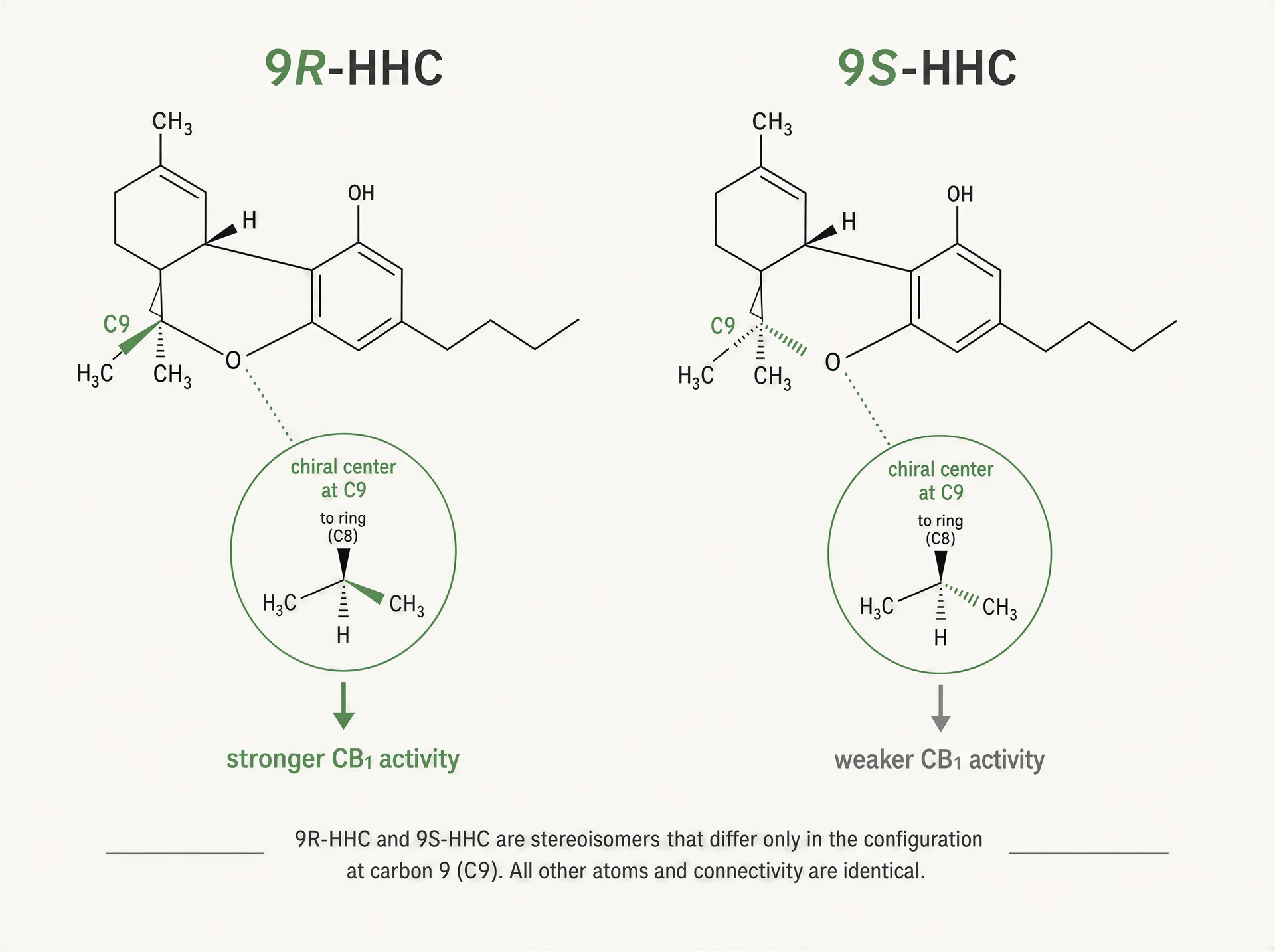
9R-HHC and 9S-HHC — the stereochemical split
Epimer One of two stereoisomers that differ in three-dimensional arrangement at a single stereocenter while keeping the same bond connectivity.
The most important stereochemical fact about HHC is that hydrogenation creates a new chiral center, producing two epimers commonly called 9R-HHC and 9S-HHC. Same molecular formula. Same bond connectivity. Different three-dimensional arrangement at one position.
A plain-language way to think about stereoisomers is this: the molecules are built from the same parts in the same order, but one part points in a different direction in space. Like a left hand and a right hand, they are related but not interchangeable. In chemistry, that “pointing” difference can change receptor fit dramatically.
For HHC, the 9R and 9S forms are not equivalent. Peer-reviewed cannabinoid chemistry literature has repeatedly indicated that 9R-HHC binds CB1 receptors more strongly than 9S-HHC. Nasrallah et al. reinforced that point in 2023 by showing stereochemistry is not a side issue for semi-synthetic cannabinoids; it is central to pharmacology. The stronger CB1 activity of 9R-HHC is the most plausible explanation for why one HHC sample may feel distinctly more THC-like than another, even when both are sold under the same name.
This is where many simplified descriptions fail. They treat HHC as if it were one standardized active ingredient. Commercially, it often is not. It is commonly an epimeric mixture, and the 9R:9S ratio can vary depending on starting material, catalyst, reaction conditions, and purification. One batch richer in 9R-HHC may be noticeably more potent than another batch richer in 9S-HHC. That does not require contamination or fraud. It follows directly from stereochemistry.
And contamination can still be part of the story. If a preparation also contains leftover delta-8 THC, delta-9 THC analogs, or unidentified hydrogenation by-products, the pharmacology gets murkier fast. Two materials labeled “HHC” can therefore differ on at least three levels: total cannabinoid purity, epimer ratio, and non-HHC impurities. Label sameness does not guarantee chemical sameness.
That is why stereochemistry is not academic trivia here. It explains inconsistency in real products. It also undercuts broad potency claims. Asking whether “HHC is weaker than THC” is less useful than asking: which HHC, with what 9R/9S ratio, at what purity, through what route of administration? Until those variables are specified, the comparison is partly guesswork.
So the hard truth is this: HHC is chemically interesting, but it is not a tidy molecule in the way many descriptions imply. It is usually a semi-synthetic, stereochemically split cannabinoid mixture whose behavior depends on details most labels do not adequately disclose.
How HHC is made in the real market
“HHC” sounds like a single cannabinoid. In commercial practice, it usually is not. What reaches the market is commonly a semi-synthetic mixture produced through multistep conversion, often starting with hemp-derived CBD, then moving through THC-like intermediates, then through hydrogenation. The result may contain different HHC stereoisomers, leftover reagents, and side-products from earlier steps if the chemistry is poorly controlled.
That matters because HHC safety is tied less to the three-letter label than to the route used to make it.
Historical route: hydrogenation of THC
The foundational chemistry is old. In 1940, Roger Adams and colleagues reported hydrogenation of tetrahydrocannabinol to form hexahydrocannabinol. The basic idea is straightforward organic chemistry: add hydrogen across unsaturated bonds in a THC-type structure, usually in the presence of a metal catalyst, and you convert a more unsaturated cannabinoid into a more saturated one.
That historical work is important for two reasons. First, it shows HHC is not some mysterious new compound invented by the modern hemp sector. Second, it makes clear that HHC belongs to a family of lab-transformed cannabinoids whose properties depend heavily on exact structure. Hydrogenation changes shape, not just formula. That changes receptor binding.
| Feature | 9R-HHC | 9S-HHC |
|---|---|---|
| Relationship | Epimer of HHC | Epimer of HHC |
| CB1 activity described in article | Stronger | Weaker |
| Expected contribution to intoxication | Larger at the same nominal dose | Smaller at the same nominal dose |
| Why it matters | May make a batch feel more THC-like | May make a batch feel less intense |
Modern pharmacology supports that point. Nasrallah et al. in ACS Chemical Neuroscience (2023) examined semi-synthetic cannabinoids, including HHC-related stereoisomers, and found meaningful differences in cannabinoid receptor activity depending on stereochemistry. The commercially relevant pair is usually described as 9R-HHC and 9S-HHC. They are not pharmacological clones. The 9R form appears to bind CB1 more strongly than the 9S form, which helps explain why one batch of “HHC” can feel materially different from another even when labels make them sound interchangeable.
So the classic THC-to-HHC route is chemically real, but it does not rescue the modern “natural cannabinoid” narrative. Trace natural occurrence has been reported. Commercial HHC is still, in almost all cases, manufactured through deliberate chemical conversion.

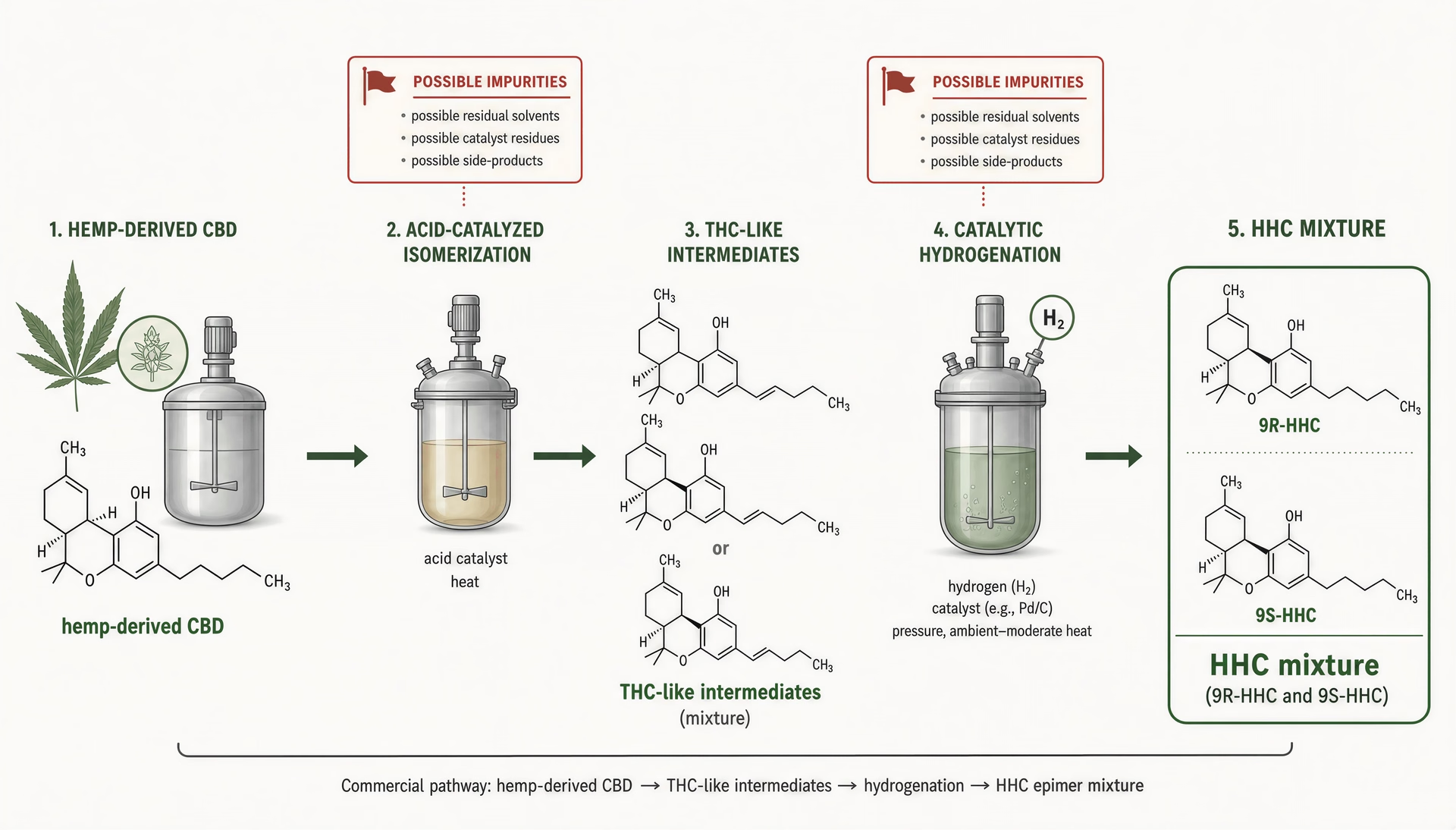
Modern hemp route: CBD conversion followed by hydrogenation
In the current market, the practical feedstock is usually hemp-derived CBD, not isolated delta-9 THC. The reason is obvious: CBD from legal hemp became abundant after the 2018 Farm Bill in the United States, and that abundance created a chemistry pipeline for intoxicating hemp derivatives.
The route generally looks like this:
CBD is first exposed to acidic conditions that rearrange it into cyclized cannabinoids. Depending on the acid, solvent, temperature, reaction time, and workup, this step can generate a shifting mixture of delta-8 THC, delta-9 THC, delta-10-type components, exocyclic isomers, other rearrangement products, and degraded material. The mixture is then subjected to catalytic hydrogenation to saturate the relevant double bond and form HHC-type products.
On paper, people describe this as CBD → THC → HHC. In a real reaction vessel, it is usually messier than that. CBD is not converted with perfect selectivity. The THC stage is often a soup, not a single purified intermediate. Hydrogenation then acts on whatever suitable unsaturated cannabinoids are present. The output is therefore not just “HHC,” but a stereochemical and chemical mixture whose exact composition depends on the process.
This is one reason potency claims around HHC are so slippery. A label may imply a simple relationship to THC, often reduced to a “70–80% as strong” talking point. That is not an evidence-based rule. Human dose-response data are thin, and the product itself may differ substantially batch to batch because the 9R/9S ratio and impurity profile differ.
The European monitoring data show how quickly this semi-synthetic category spread before standardization caught up. The EUDA reported that by September 2023, HHC had been identified in 70% of EU member states plus Norway. It also reported 50 seizures totaling 170 kg and almost 96 liters in 2022, followed by 53 more seizures totaling 103 kg and nearly 1,000 liters in just the first eight months of 2023. That is not a small artisanal chemistry niche. It is a fast-moving supply chain.
Catalysts, solvents, by-products, and purification challenges
The chemistry itself creates the main contamination risks.
The acid-catalyzed CBD conversion step may involve Brønsted or Lewis acids. Public patents, trade discussions, and forensic reports around hemp-derived intoxicants have referenced acids such as p-toluenesulfonic acid, hydrochloric acid, sulfuric acid, boron trifluoride and related systems. Solvents can include heptane, hexane, toluene, dichloromethane, ethanol, or others depending on the operator. None of these are inherently shocking in a chemistry setting. The issue is whether they are fully removed and whether the reaction was driven cleanly.
Then comes hydrogenation. That usually requires hydrogen gas and a catalyst, often a transition metal on a support. Palladium on carbon is a common hydrogenation catalyst in organic synthesis; platinum or nickel systems are also known in the broader literature. Again, the problem is not that catalysts exist. The problem is residual catalyst, over-reduction, incomplete reaction, and carryover from a dirty intermediate.
Each step can generate by-products. Acid can create unexpected isomers and decomposition products. Heat can worsen that. Hydrogenation can generate epimer mixtures and can also transform compounds other than the intended target if the starting material is already mixed. Add poor chromatography or inadequate distillation, and the final material may contain residual solvents, residual acids, metal traces from catalysts, and unidentified cannabinoids or cannabinoid-like degradants.
“Unidentified” is doing a lot of work here. Analytical labs can detect major cannabinoids if they know what standards to look for. They are far less confident when a sample contains obscure rearrangement products with limited reference data. A certificate that quantifies a few named cannabinoids does not prove the absence of unknowns. It may only prove the lab looked for a short list.
The FDA’s warnings on delta-8 THC are relevant here even though they were not focused on HHC specifically. In 2022, FDA said it had received 104 adverse-event reports involving delta-8 products from December 2020 through February 2022, while poison centers logged 2,362 exposure cases from January 2021 through February 2022, with 41% involving pediatric patients. Those figures do not establish HHC-specific toxicity. They do establish that intoxicating hemp cannabinoids made through conversion chemistry can move into widespread use faster than process control, labeling accuracy, and toxicology data.
Why manufacturing quality is the real safety variable
For HHC, manufacturing quality is not a side issue. It is the issue.
There are no large randomized clinical trials mapping long-term HHC safety, dependence risk, reproductive toxicity, cardiovascular effects, or neurocognitive outcomes. That already leaves a wide evidence gap. Once you add semi-synthetic manufacturing, the relevant exposure is no longer just HHC itself. It may include whatever else survived synthesis and purification.
That is why branding is a weak proxy for safety. A polished label cannot tell you whether the CBD feedstock was clean, whether the acid-catalyzed cyclization was controlled, whether the intermediate was purified before hydrogenation, whether the metal catalyst was removed, whether the distillation actually separated side-products, or whether the final analytical panel was broad enough to catch nonstandard compounds. Process chemistry determines purity. Marketing does not.
It also means two products both called “HHC” may differ in ways that matter: one could be mostly 9R/9S HHC with low residuals, while another contains measurable delta-8 THC, delta-9 THC, acidic residues, solvent carryover, catalyst traces, or reaction by-products that nobody has properly identified. Those differences can affect effect profile, adverse reactions, and drug-testing outcomes.
The hard truth is simple. HHC sold in the real market is usually a manufactured cannabinoid mixture made through conversion chemistry, not a neatly isolated natural compound. When people ask whether HHC is “safe,” the honest answer cannot be separated from how it was made, what else is in it, and whether anyone actually checked with methods capable of seeing the messier parts of the mixture.
Pharmacology at CB1 and CB2 receptors
HHC sits pharmacologically close to THC, not CBD. That distinction matters. CBD does not produce its effects mainly by turning on CB1 receptors in the way intoxicating cannabinoids do; HHC, by contrast, appears to act as a cannabinoid receptor agonist, with the available preclinical evidence pointing to CB1 as the main driver of psychoactive effects and CB2 as a likely contributor to peripheral and immunologic signaling. The catch is that the human data are thin. Much of what is claimed about HHC potency, duration, and receptor behavior is inferred from structural similarity, animal work, in vitro assays, and user reports rather than controlled clinical studies.
That makes stereochemistry impossible to ignore. Commercial “HHC” is usually not a single defined drug substance. It is commonly a mixture of epimers, especially 9R-HHC and 9S-HHC, produced during semi-synthetic conversion and hydrogenation. Those epimers do not behave identically at cannabinoid receptors. So any simple statement such as “HHC is weaker than delta-9 THC” or “HHC acts just like THC” is at best incomplete and at worst misleading.
Receptor binding and partial agonism
The core pharmacology starts with the endocannabinoid system’s two best-known receptors: CB1 and CB2. CB1 receptors are heavily expressed in the central nervous system, especially in brain regions involved in reward, memory, motor control, sensory processing, and time perception. CB2 receptors are found more prominently in immune cells and peripheral tissues, though they are not absent from the nervous system. THC’s intoxicating effects are mainly linked to CB1 receptor activation. HHC appears to follow that same broad rule.
Chemically, HHC is a hydrogenated analog of THC. Roger Adams and colleagues described hydrogenation of tetrahydrocannabinol back in 1940, laying the synthetic groundwork that later commercial HHC products would rely on. Hydrogenation saturates part of the ring system, changing shape and flexibility without erasing cannabinoid-like receptor activity. That altered shape still fits cannabinoid receptors well enough to produce meaningful pharmacological effects.
Partial agonist A compound that activates a receptor but does not produce the maximum possible receptor response even when enough of it is present.
Available receptor studies indicate that HHC behaves as an agonist at CB1 and CB2, often described as a partial agonist in conceptual terms similar to delta-9 THC. “Partial agonist” does not mean weak in a casual sense. It means the compound activates the receptor, but not necessarily to the same maximal extent as a full agonist would under the same conditions. Delta-9 THC itself is commonly treated as a partial agonist at CB1. HHC appears to belong in that same family of signaling behavior, though direct head-to-head human pharmacology remains sparse.
The problem is standardization. A purified receptor assay can test a defined stereoisomer. Real-world HHC samples often contain variable 9R/9S ratios and may also contain minor cannabinoids, reaction by-products, or residual delta-8/delta-9 THC depending on synthesis and cleanup quality. A receptor affinity number from one paper may therefore describe one purified form of HHC, while a commercial sample may behave differently.
HHC likely exerts intoxicating effects by activating CB1 receptors, with CB2 activity present but less central to the acute psychoactive profile. Limited evidence
Even so, the broad pharmacological picture is fairly consistent: HHC likely exerts intoxicating effects by activating CB1 receptors, with CB2 activity present but less central to the acute psychoactive profile. That is why reports of altered perception, sedation, appetite change, dry mouth, and impairment are plausible on mechanistic grounds. It is also why comparisons to delta-9 THC are reasonable at the level of receptor class, but shaky when they drift into exact potency ratios.
What preclinical studies suggest about 9R versus 9S activity
This is where the chemistry stops being academic. The 9R and 9S epimers of HHC are not interchangeable. Their three-dimensional arrangement changes how well they fit the CB1 receptor, and that changes effect intensity.
Peer-reviewed work summarized in cannabinoid chemistry and pharmacology literature has repeatedly indicated that 9R-HHC shows stronger cannabinoid receptor activity than 9S-HHC, especially at CB1. Nasrallah et al. in ACS Chemical Neuroscience (2023) is one of the most cited modern sources on semi-synthetic cannabinoids, including HHC-related compounds. Their work supports the broader point that stereochemical differences among these molecules translate into real pharmacological differences rather than trivial labeling details.
In practical terms, 9R-HHC is generally considered the more active epimer at CB1. 9S-HHC appears less potent, with weaker receptor interaction and therefore a smaller expected contribution to intoxication at the same nominal dose. If a preparation contains more 9R relative to 9S, users may perceive it as stronger. If the ratio swings the other way, the same “milligram amount” on a label may feel notably less intense. That is one reason a universal potency claim for HHC has never held up well.
The often-repeated claim that HHC is “70 to 80 percent as strong as THC” should be treated skeptically. It compresses too many variables into one number: receptor affinity, intrinsic efficacy, product composition, route of administration, metabolism, formulation, and epimer ratio. A distilled cartridge with a high proportion of 9R-HHC may not resemble an edible containing a broad semi-synthetic mixture. One may approach THC-like effects in some users; another may not. Without controlled dose-response trials, exact conversion charts are speculation dressed up as science.
There is also a second-order issue. Commercial HHC is often produced from hemp-derived CBD through multiple synthetic steps, commonly involving isomerization to THC-like intermediates followed by hydrogenation. Each step can alter the final impurity profile. That matters for pharmacology because some of the observed effects in nonclinical settings may come from the total mixture, not from HHC epimers alone. If a sample contains residual delta-8 THC, delta-9 THC, unknown hydrogenated side products, or acidic reaction remnants, receptor activity in practice may drift away from what purified 9R-HHC or 9S-HHC would predict.
So the stereochemistry point is not niche. It is central. The difference between 9R and 9S is one of the clearest reasons why HHC should be discussed as a class of related material in commerce, not as a single, neatly characterized active ingredient.
Downstream signaling, psychoactivity, and uncertainty
Like THC, HHC’s receptor activation is expected to trigger Gi/o-coupled signaling through CB1 and CB2. That usually means inhibition of adenylyl cyclase, reduced cyclic AMP signaling, modulation of ion channels, and suppression of neurotransmitter release in affected circuits. At CB1 receptors in the brain, those changes can alter glutamate, GABA, and dopamine-linked signaling patterns. The subjective results can include euphoria, sedation, slowed reaction time, impaired short-term memory, altered sensory processing, and anxiety in some users. None of that is surprising if HHC is acting as a CB1 agonist.
What is missing is the human evidence needed to map those mechanisms cleanly onto real dose ranges. There are no large randomized trials establishing how HHC compares with delta-9 THC on psychomotor impairment, heart rate, panic reactions, dependence liability, or next-day cognitive effects. There is no settled human PK/PD literature defining onset, peak, half-life, active metabolites, or receptor occupancy. That gap matters more than many summaries admit.
CB2 activity raises another set of possibilities, including immunomodulatory and anti-inflammatory signaling, because CB2 receptors are involved in immune-cell regulation. But here too, mechanistic plausibility is not proof of clinical value. A compound can bind CB2 in vitro and still lack demonstrated therapeutic usefulness in humans. For HHC, that evidence base is not established.
The uncertainty is amplified by manufacturing variability. The FDA’s warnings about intoxicating hemp-derived cannabinoids have focused more heavily on delta-8 THC, but the logic applies directly to HHC: multistep chemical conversion can leave residual solvents, catalysts, heavy metals, or unintended by-products if process controls are poor. Those contaminants may have pharmacology and toxicity of their own. So when someone asks about “HHC effects,” there are really two questions hiding inside one phrase: what does HHC itself do at CB1 and CB2, and what does the actual mixture being consumed contain?
The most defensible position is straightforward. HHC probably produces its intoxication mainly through CB1 receptor activation, with CB2 activity contributing to the broader cannabinoid pharmacology profile. It is reasonable to compare that mechanism to delta-9 THC at a conceptual level. It is not reasonable to claim clean equivalence in potency, safety, or impairment without stronger human data. Stereochemistry changes receptor binding. Mixture composition changes real-world effects. And the science has not caught up with the speed at which HHC entered the market.
Psychoactive effects and potency compared with THC
HHC is sold and discussed as if its effects are already mapped. They are not. What exists right now is a mix of chemistry data, receptor pharmacology, adverse-event logic borrowed from adjacent cannabinoids, and a large volume of user testimony from loosely regulated markets. That is not the same thing as controlled human evidence.
The basic pharmacology makes psychoactivity plausible. HHC is structurally related to THC, and modern cannabinoid chemistry papers report that at least one major HHC stereoisomer, 9R-HHC, shows meaningful activity at cannabinoid receptors. Nasrallah et al., writing in ACS Chemical Neuroscience in 2023, highlighted that semi-synthetic cannabinoids cannot be treated as single, uniform substances when stereochemistry changes receptor behavior. That matters here because commercial “HHC” is usually a blend, not a pure compound.
Reported subjective effects in user markets
In user reports, HHC is commonly described as producing euphoria, mood lift, altered sensory perception, dry mouth, red eyes, increased appetite, impaired short-term memory, slowed reaction time, and dose-dependent sedation. Some people also report tachycardia, dizziness, anxiety, or a heavy body sensation. None of those effects would be surprising for a cannabinoid acting at CB1 receptors. The problem is not plausibility. The problem is evidence quality.
There are no large randomized controlled trials defining the acute subjective profile of commercial HHC in humans. No standard dose-ranging studies. No clean crossover trials comparing inhaled HHC with inhaled delta-9 THC using verified material and blinded assessment. So the current picture comes mostly from informal reports, poison-center style signals in the broader intoxicating-hemp category, and what receptor pharmacology would lead us to expect.
That distinction matters because user-market reports are noisy. One person may be using a vape liquid rich in 9R-HHC, another a gummy with a different 9R/9S ratio, another a product containing measurable delta-8 THC, delta-9 THC, or reaction by-products not disclosed on the label. If the starting chemistry was CBD converted through acid-catalyzed isomerization and then hydrogenated, impurity profiles can differ sharply depending on process control and purification. Two products sold under the same name may not produce the same experience.
The 1940 Roger Adams paper established the basic hydrogenation route from THC-like structures to HHC, but that historic chemistry does not solve the present-day market problem. Modern retail material is often semi-synthetic, batch-variable, and incompletely characterized outside specialized labs. That means some reported “HHC effects” may actually reflect HHC plus other cannabinoids plus contaminants.
The safest reading of the available information is modest: HHC appears capable of producing THC-like intoxication in at least some forms, but the precise effect profile and risk range remain poorly defined in humans.
Why “80% as strong as THC” is not a scientific rule
The “HHC is 70 to 80 percent as strong as THC” claim is repeated constantly because it is simple, not because it is well established. There is no accepted human equivalence table that lets anyone convert 10 mg delta-9 THC into a reliable HHC counterpart across products and routes. The science is not there.
First, “THC” itself is not a single practical benchmark unless route, dose, and formulation are specified. Ten milligrams of inhaled delta-9 THC from a vaporizer, 10 mg swallowed in an oil-based edible, and 10 mg in a poorly formulated gummy do not produce the same onset, peak, or total effect. Any fixed comparison with HHC collapses as soon as route changes.
Second, commercial HHC is usually a stereoisomeric mixture. This is not a technical footnote. It goes directly to potency. Nasrallah et al. and related cannabinoid chemistry literature indicate that 9R-HHC has stronger CB1 receptor activity than 9S-HHC. A product richer in 9R-HHC may feel substantially stronger than one with more 9S-HHC even if both labels list the same total milligrams of “HHC.” That alone breaks the idea of a universal percentage relative to THC.
Third, product labels often fail to tell users the isomer ratio at all. Many do not clearly distinguish HHC from HHC-O, delta-8 THC, or mixed cannabinoid blends. Some products likely contain residual conversion artifacts. If the composition is uncertain, precise potency claims are marketing shorthand, not pharmacology.
Fourth, receptor binding is only part of the story. Human potency depends on absorption, distribution, metabolism, and how quickly active compounds reach the brain. A cannabinoid can look strong in a receptor assay and still behave differently in an edible matrix, especially if first-pass metabolism changes the active species or the timing of effects.
So is HHC weaker than delta-9 THC, roughly similar in some products, or sometimes unexpectedly strong? All three claims can be true in different contexts. The blanket “80%” figure is not a scientific rule. It is a simplification sitting on top of sparse human data and a badly standardized market.
| Variable | Why it changes the effect |
|---|---|
| Dose | Listed milligrams may not match true active content if the mixture is 9S-heavy, degraded, or impure. |
| Route of administration | Inhalation usually acts faster; oral products come on later and can tempt premature redosing. |
| Device or formulation | Vape temperature, fats, and emulsifiers can change delivery efficiency and absorption. |
| Tolerance | Regular THC users may experience weaker effects than less-tolerant users from the same nominal amount. |
| Composition | Residual delta-8 THC, delta-9 THC, or side-products can change both intensity and risk. |
Dose, route, tolerance, and product composition
These variables matter more than most potency slogans.
Dose is obvious but often discussed badly. With HHC, milligram numbers can mislead because the listed amount may not reflect actual active content if the product contains a low-activity 9S-heavy mixture, degraded material, or significant non-HHC cannabinoids. A nominally low dose from a 9R-rich inhaled product may feel stronger than a higher oral dose from a poorly absorbed edible.
Route of administration changes everything. Inhalation usually produces faster onset and easier moment-to-moment titration. That can make effects feel sharper, more immediate, and more controllable until they overshoot. Oral products come on later and can feel weaker at first, which encourages redosing. Then the delayed peak arrives. This is not unique to HHC, but with HHC it is compounded by weak standardization and sparse pharmacokinetic data.
The device or formulation also matters. A high-temperature vape setup may alter aerosol chemistry and delivery efficiency. An edible made with fats or emulsifiers may absorb differently from a dry candy matrix. Those are not minor details. They shape how much active material reaches systemic circulation and how fast.
Tolerance further scrambles comparisons. Regular delta-9 THC users may report that HHC feels muted, familiar, or “clearer.” Less tolerant users may experience the same product as strongly intoxicating, sedating, or anxiogenic. Cross-tolerance is biologically plausible because these cannabinoids act on overlapping receptor systems. But again, no high-quality human trial has mapped the degree of cross-tolerance between delta-9 THC and the mixed HHC products found in commerce.
Composition is the final and biggest variable. A clean, well-characterized 9R/9S mixture is one thing. A product containing HHC plus delta-8 THC, delta-9 THC, unidentified isomers, residual solvents, acids, metals, or hydrogenation catalysts is another. FDA warnings on intoxicating hemp products have focused more on delta-8 THC, but the manufacturing-risk logic applies directly to HHC: multi-step conversion chemistry can leave behind things that affect both safety and subjective effects.
That is why anecdotes should be read carefully. They are not useless. They often flag real patterns. But with HHC, they are reports about products of uncertain identity as much as they are reports about a defined cannabinoid. The evidence-supported position is restrained and fairly blunt: HHC can produce THC-like intoxication, but no single potency ratio captures it, and product chemistry often decides the experience more than the label does.
Absorption, metabolism, and duration
Almost everything said about HHC pharmacokinetics is, at present, an inference problem. The molecule is structurally close to THC, strongly lipophilic, and active at cannabinoid receptors, so some broad expectations are reasonable. But direct human ADME data — absorption, distribution, metabolism, and excretion — are thin to the point of being a real limitation. That matters because commercial “HHC” is usually not one clean compound. It is commonly a stereoisomeric mixture, often with 9R-HHC, 9S-HHC, and varying amounts of process-related impurities or residual cannabinoids. A pharmacokinetic profile for one purified isomer would not necessarily describe what people are actually exposed to.
| Route | Onset described in article | Peak / course described in article | Why it differs |
|---|---|---|---|
| Inhaled HHC | Within minutes | Peak effects often in the first 10 to 30 minutes, then taper over a few hours | Rapid lung absorption bypasses first-pass metabolism at the start |
| Oral HHC | Roughly 30 minutes to 2 hours, sometimes longer | Expected to last several hours with a longer tail | Slower absorption and greater first-pass liver metabolism |
Inhaled HHC versus oral HHC
By route of administration, HHC likely behaves much more like THC than unlike it. Inhaled HHC should reach the bloodstream quickly through the lungs, producing effects within minutes rather than hours. That expectation follows from basic cannabinoid pharmacology: lipophilic small molecules delivered by inhalation bypass first-pass liver metabolism at the start, so the rise in blood levels is faster and subjective onset is shorter. For most inhaled cannabinoids, peak effects tend to cluster in the first 10 to 30 minutes, then taper over a few hours, with residual impairment sometimes outlasting the obvious intoxication. HHC is likely in that range. The exact timing is not settled.
Oral HHC is a different story. Absorption after swallowing is expected to be slower, more erratic, and more influenced by food, formulation, and individual liver metabolism. Fatty meals often increase oral cannabinoid absorption. First-pass metabolism also becomes much more important, which can delay onset while extending the tail of effects. If HHC follows THC-like behavior, orally consumed HHC would be expected to come on over roughly 30 minutes to 2 hours, sometimes longer, then last several hours. That sounds familiar because it is. It is also still an extrapolation, not a well-established human dataset.
The stereochemistry issue complicates even these route-based expectations. Nasrallah et al. in ACS Chemical Neuroscience (2023) reported meaningful receptor-activity differences among semi-synthetic cannabinoid stereoisomers, and cannabinoid chemistry literature has repeatedly pointed out that 9R-HHC appears to bind CB1 more strongly than 9S-HHC. If two products contain different 9R/9S ratios, the user may interpret the difference as “faster,” “stronger,” or “longer-lasting,” even when part of the variation is simply different receptor potency rather than different absorption.
Likely metabolism and comparison with THC pathways
No strong human metabolism map for HHC has the status that 11-hydroxy-THC and THC-COOH have for delta-9-THC. Still, chemistry gives some clues. HHC keeps the cannabinoid scaffold while replacing one double bond with a saturated ring system, so hepatic oxidation by cytochrome P450 enzymes is a plausible starting assumption. For THC, CYP2C9, CYP2C19, and CYP3A4 are commonly implicated in conversion to active and inactive metabolites, including 11-hydroxy-THC and then 11-nor-9-carboxy-THC. HHC may travel through analogous oxidation pathways, generating hydroxylated and then carboxylated metabolites that are later conjugated and excreted in urine and feces.
“May” is doing real work there. Hydrogenation changes three-dimensional shape, and shape affects enzyme handling. Even modest structural changes can alter which CYP enzymes dominate, how much active metabolite forms, and how long compounds persist in fat-rich tissues. Because HHC sold outside research settings is usually a mixture rather than a single authenticated standard, metabolism may differ not only from THC but between HHC preparations themselves.
Distribution is easier to predict than metabolism. Like other cannabinoids, HHC should partition into highly perfused tissues first, then distribute into adipose tissue over time because of its lipophilicity. That pattern tends to produce a rapid early decline in blood concentrations followed by a slower terminal phase as drug and metabolites redistribute and clear. It also explains why effects can fade before the body is actually finished processing the compound.
Why detection and duration are still open questions
The honest answer is that the evidence base is behind the market. There are no large, well-controlled human studies defining HHC bioavailability, plasma half-life, active metabolites, urinary excretion window, or impairment duration by dose and route. Without those studies, claims that HHC lasts exactly as long as THC, or is reliably shorter, or avoids standard drug testing, are not serious claims.
Detection is especially murky for two reasons. First, immunoassay urine tests are not precise molecular identification tools; they detect classes of metabolites with varying cross-reactivity. A structurally related cannabinoid can sometimes trigger a THC-positive result if its metabolites resemble the assay target closely enough. Second, many commercial HHC products are not compositionally clean. If they contain delta-8-THC, delta-9-THC, other THC isomers, or reaction by-products, a positive cannabinoid test may reflect a mixed exposure rather than HHC alone.
Duration is also route- and matrix-dependent. Inhaled HHC will probably feel shorter than oral HHC in the acute phase, but that does not tell you how long metabolites remain detectable. Cannabinoids often separate “how long you feel it” from “how long the body can find evidence of it.” With HHC, that gap has not been mapped properly.
So the cautious position is the defensible one: expect THC-like variability, not clean predictability. Expect inhaled effects to arrive faster than oral effects. Expect liver metabolism to matter. And assume that both duration and detection remain unsettled because direct human pharmacokinetic studies are still missing. That uncertainty is not a minor footnote. It is one of the main facts about HHC.
Safety profile, toxicology, and adverse-effect uncertainty
The safest evidence-based view of HHC is stricter than the marketing around it. The core issue is not just that HHC can cause THC-like intoxication. It is that commercial HHC is usually a semi-synthetic mixture with uneven stereochemistry, variable by-products, and very limited human toxicology data. Those are separate problems, and they stack.
That distinction matters. A pure, well-characterized cannabinoid with known dose-response data poses one kind of risk. A poorly standardized preparation made through acid-catalyzed isomerization and hydrogenation poses another. HHC sits much closer to the second category in the real world.
What is known from cannabinoid pharmacology
HHC is a hydrogenated analog of THC. The classic chemistry goes back to Roger Adams and colleagues in 1940, who described hydrogenation of tetrahydrocannabinol to hexahydrocannabinol. That old paper established the route. It did not establish modern safety.
Pharmacologically, HHC behaves like a cannabinoid with meaningful CB1 activity, which is why THC-like adverse effects are plausible and expected. Those effects include impairment, dizziness, sedation, anxiety, tachycardia, dry mouth, and dose-related cognitive slowing. If a person is sensitive to THC, there is no good basis for assuming HHC will somehow bypass those liabilities.
The stereochemistry matters a lot. Commercial “HHC” is often a mixture of 9R-HHC and 9S-HHC rather than a single defined compound. Work summarized in modern cannabinoid chemistry literature, including Nasrallah et al. in ACS Chemical Neuroscience in 2023, indicates that these stereoisomers do not behave identically at cannabinoid receptors. 9R-HHC appears to have stronger CB1 receptor activity than 9S-HHC. That helps explain why two products both labeled as HHC may feel quite different, even before contamination or co-formulation is considered.
This is one reason broad claims such as “HHC is 70–80% as strong as THC” are not serious pharmacology. Potency is not a universal constant here. It shifts with route of administration, formulation, dose, individual tolerance, and the 9R/9S ratio. A vaporized formulation rich in the more active epimer may not resemble an edible with a different ratio and different impurities. There is no mature human dose-response literature supporting a fixed conversion rule.
The likely adverse-effect profile therefore starts with what is already familiar from CB1 agonism. Impaired reaction time. Poor coordination. Short-term memory disruption. Anxiety or panic in susceptible users. Increased heart rate. In some people, especially at higher doses, dysphoria or paranoia. That is the part we can infer with moderate confidence from structure, receptor pharmacology, and user reports across related cannabinoids.
But that is only half the safety story.
What is not known from human toxicology
The gaps are large. There are no large randomized controlled trials defining therapeutic windows for HHC. There is no strong long-term cohort literature on neurocognitive outcomes, cardiovascular risk, reproductive toxicity, hepatotoxicity, or carcinogenicity. There is no solid evidence base for chronic exposure in adolescents, older adults, pregnant people, or people with psychiatric illness.
That absence of evidence should not be mistaken for evidence of safety. HHC entered the market much faster than it entered toxicology.
The European Union Drugs Agency, formerly EMCDDA, tracked HHC’s rapid spread across Europe in 2022 and 2023 and treated it as a new psychoactive substance worth formal monitoring. By September 2023, it had been identified in 70% of EU member states plus Norway. Seizure data make the same point: 50 seizures totaling 170 kilograms and almost 96 liters were reported in 2022, followed by 53 more seizures totaling 103 kilograms and nearly 1,000 liters in the first eight months of 2023. Rapid market spread is not proof of unusual toxicity, but it is proof that population exposure can outpace scientific characterization.
Human toxicology is weakest where people most often want reassurance. Does HHC carry the same psychosis risk as high-potency THC? Unknown. Is it safer or riskier for the heart than delta-9 THC in people with arrhythmia or coronary disease? Unknown. Does repeated exposure produce the same tolerance pattern and withdrawal syndrome seen with cannabis? Plausible, but not well quantified. Does inhalation of HHC aerosols carry unique pulmonary risks related to thermal breakdown products or formulation additives? Not well studied.
[3] World Drug Report 2024. United Nations Office on Drugs and Crime. UNODC report, 2024.[4] Key Substance Use and Mental Health Indicators in the United States: Results from the 2022 National Survey on Drug Use and Health. Substance Abuse and Mental Health Services Administration. NSDUH report, 2023.
This uncertainty is not academic nitpicking. It changes the risk calculation. With conventional cannabis, at least there is a large epidemiologic base. UNODC estimated 228 million people used cannabis worldwide in 2022, and SAMHSA reported 61.9 million past-year marijuana users in the United States in 2022. That does not make cannabis harmless, but it means there is a deep observational record. HHC does not have that record.
Manufacturing contaminants and analytical blind spots
This is where HHC becomes harder to defend as a straightforward substitute for THC. The commercial material is generally made from hemp-derived CBD through multi-step chemical conversion, usually involving isomerization toward THC-like intermediates and then hydrogenation. Every one of those steps can introduce residues or side-products if the process is not tightly controlled.
Possible contaminants are not speculative in the abstract. They follow directly from the chemistry: residual solvents, acidic reagents, metal catalysts from hydrogenation, heavy metals, unintended isomers, partially reacted intermediates, and decomposition products formed during purification or heating. Even when the target molecule itself is not unusually toxic, the route to reach it may leave a messy analytical fingerprint.
Regulators have already warned about this general pattern in the intoxicating-hemp category. The FDA’s public warnings focused more heavily on delta-8 THC products than on HHC specifically, but the logic transfers directly because the same style of semi-synthetic conversion is often involved. From December 2020 through February 2022, FDA received 104 adverse-event reports linked to delta-8 THC products. Poison centers received 2,362 delta-8 exposure cases between January 2021 and February 2022, with 41% involving pediatric patients. Those figures do not prove HHC causes the same harms at the same rate. They do show what happens when chemically transformed cannabinoids spread faster than manufacturing oversight.
Another problem is that routine lab paperwork may not capture the real composition of an HHC preparation. Standard cannabinoid panels can miss unknown by-products if the method only looks for a small list of expected analytes. A certificate showing “HHC potency” is not the same thing as a full impurity profile. And because HHC often exists as a stereoisomeric mixture, even a report that quantifies total HHC may hide major pharmacological differences between samples.
So the process-related risk is distinct from cannabinoid intoxication itself. Even if one assumes HHC’s CB1-mediated effects are broadly THC-like, the semi-synthetic route adds uncertainty around what else is present. That is the more underappreciated hazard.
Dependence, withdrawal, cardiovascular and psychiatric concerns
Dependence risk should be framed carefully. There is no mature body of direct HHC dependence studies. Still, it would be reckless to imply no dependence liability simply because the literature is thin. Cannabinoids that significantly activate CB1 receptors tend to produce tolerance with repeated use, and tolerance is one path toward escalating intake.[6] Cannabis and Public Health. Centers for Disease Control and Prevention. CDC, 2024.
The CDC states that about 3 in 10 people who use cannabis may develop cannabis use disorder. That figure cannot be transferred mechanically to HHC. Cannabis is a chemically complex plant, patterns of use differ, and HHC products vary wildly. Yet the cannabis literature does provide a reasonable cautionary baseline: repeated exposure to psychoactive cannabinoids can lead to problematic use, withdrawal symptoms, and compulsive patterns in a subset of users.
Expected withdrawal-like features, if they occur with repeated HHC use, would likely resemble cannabis more than opioids or alcohol: irritability, sleep disturbance, reduced appetite, restlessness, anxiety, and craving. The exact frequency and severity are not known. Again, lack of direct estimates is a data gap, not a clean bill of health.
Cardiovascular concerns are also real, even if undercharacterized. THC can increase heart rate and may provoke palpitations, orthostatic symptoms, or chest discomfort, especially in inexperienced users, people using high doses, and people with underlying heart disease. Since HHC appears to engage similar cannabinoid pathways, comparable acute effects are plausible. What has not been established is whether certain HHC mixtures, impurities, or co-occurring cannabinoids alter that risk meaningfully.
Psychiatric risk deserves the same balanced treatment. A person with a history of panic attacks, severe anxiety, bipolar disorder, or psychosis should not assume HHC is gentler just because it carries a different label. THC-like intoxication can intensify anxiety and trigger paranoia in vulnerable individuals. Whether HHC is less likely, equally likely, or in some contexts more likely to do so has not been settled in controlled human studies. Product inconsistency makes the answer even harder to pin down.
The bottom line is blunt. HHC’s safety uncertainty comes from two layers at once: the known liabilities of an intoxicating CB1-active cannabinoid, and the extra uncertainty introduced by semi-synthetic production, mixed stereoisomers, incomplete impurity testing, and weak human toxicology. That is a stronger and more defensible reading of the evidence than either panic or reassurance.
Drug testing implications
HHC is often marketed online as if it sits in a blind spot of drug testing. That claim is not supported by the way real-world testing works. Workplace and forensic programs do not all use the same method, do not all look for the same analytes, and do not all stop at an initial screen. With HHC, the uncertainty runs in the wrong direction for the user: there is no dependable basis for saying it will not create a testing problem.
Part of the reason is chemical. Commercial “HHC” is usually a semi-synthetic mixture, not a single clean compound, and it may contain 9R-HHC, 9S-HHC, minor by-products, and in some cases residual delta-8-THC, delta-9-THC, or related intermediates from CBD isomerization and hydrogenation. Roger Adams’ 1940 work established the basic hydrogenation route from THC-type molecules to hexahydrocannabinol; modern analytical papers and agency alerts make clear that today’s market products are far messier than a textbook structure on a page. If a sample contains THC isomers, the drug-test question gets much simpler: THC contamination alone can be enough to trigger a cannabinoid result.
| Testing stage | How the article says it works | Why HHC is a problem |
|---|---|---|
| Initial urine immunoassay | Rapid antibody-based screen for THC-metabolite patterns above a cutoff | Structurally related compounds or metabolites may cross-react, and product contamination can also trigger signal |
| Confirmatory GC-MS or LC-MS/MS | Instrument-based analysis after a non-negative screen | May detect THC contamination, related analytes, or prompt broader review depending on the method |

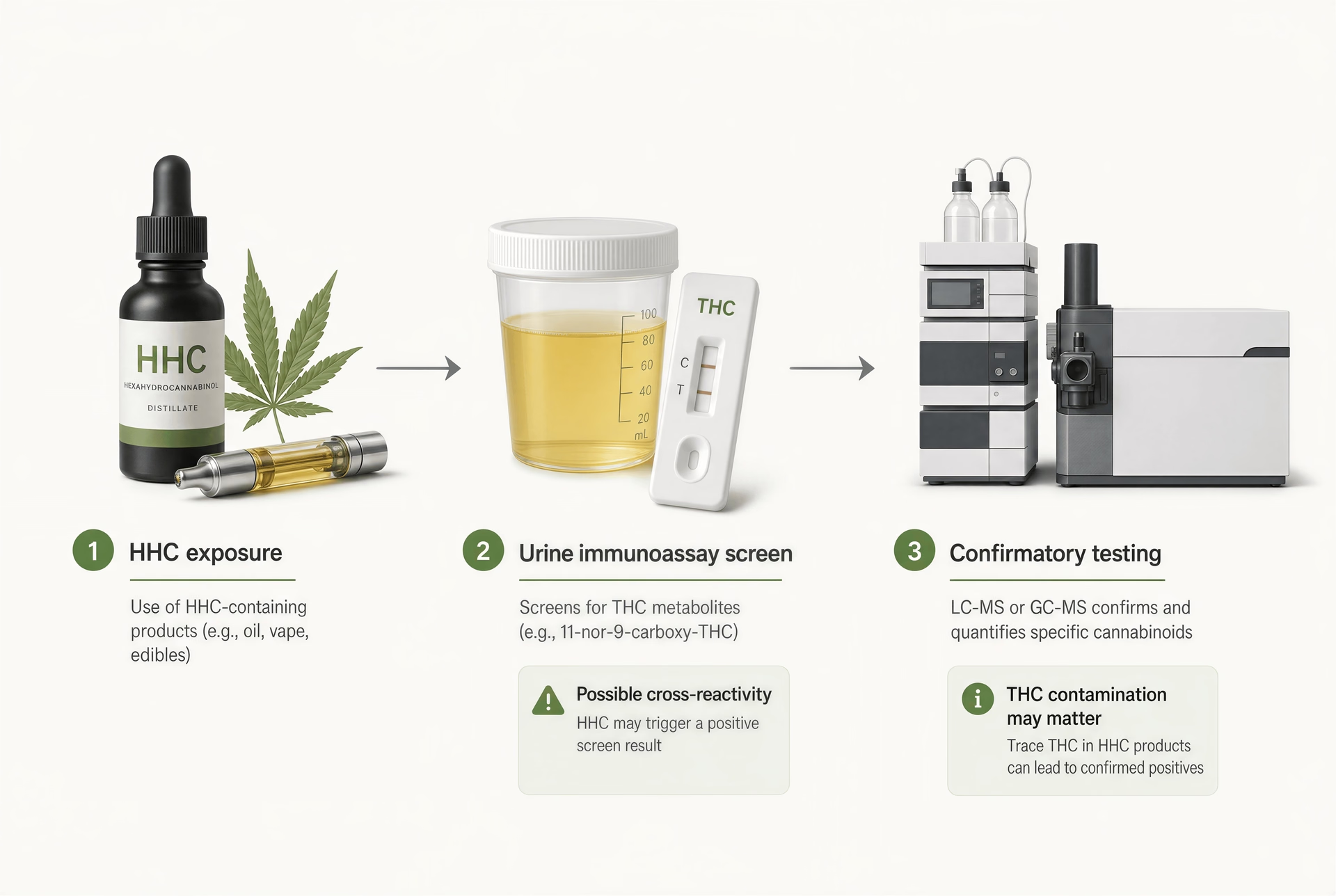
Urine immunoassays and cross-reactivity risk
Immunoassay A screening test that uses antibodies to detect a target drug or metabolite pattern rather than directly identifying a specific molecule by mass spectrometry.
Most workplace cannabis testing starts with a urine immunoassay screen. These tests are designed for speed and cost, not perfect molecular specificity. In practice, the assay uses antibodies intended to recognize THC metabolite patterns, especially 11-nor-9-carboxy-THC (THC-COOH), above a cutoff concentration. A negative screen usually ends the process. A non-negative screen moves to confirmation.
That first step matters because immunoassays can cross-react with structurally related compounds or their metabolites. HHC is structurally close to THC; it is not chemically identical, but close is sometimes enough to matter in antibody-based screening. The exact cross-reactivity profile depends on the manufacturer, assay design, matrix, and the metabolites present in the urine. That means one lab’s screen may react differently from another’s.
The practical risk is twofold. First, HHC or an HHC metabolite may produce enough immunoassay signal to flag the sample. Second, even if pure HHC itself did not cross-react strongly on a given assay, many commercial products are not pure. Because HHC is commonly made through CBD-to-THC-isomer conversion followed by hydrogenation, poor purification can leave delta-8-THC, delta-9-THC, or other THC-like compounds in the final mixture. Those are much less ambiguous from a testing standpoint.
This is why blanket claims like “HHC doesn’t show up on urine tests” are reckless. They treat all assays as interchangeable and all HHC products as chemically uniform. Neither assumption is true.
Confirmatory testing and metabolite complexity
A positive or non-negative screen is usually followed by confirmatory testing with GC-MS or LC-MS/MS. This is a different category of analysis. Instead of relying on antibody binding, the instrument separates compounds and identifies them by mass spectral behavior and retention characteristics. That sharply reduces false positives from ordinary cross-reactivity.
But confirmation does not make HHC simple. It makes the chemistry problem more explicit.
Standard workplace confirmation panels are often validated specifically for THC-COOH, not for the full universe of semi-synthetic cannabinoid metabolites. If a person used a contaminated HHC product that contained delta-8-THC or delta-9-THC, confirmatory testing may detect the corresponding THC metabolite and report a cannabinoid positive in the usual way. If the product contained only HHC-related compounds, the outcome may depend on whether the lab’s method includes HHC metabolites, whether those metabolites are well characterized, and whether reference standards are available.
That last point is important. HHC metabolism is less mapped than delta-9-THC metabolism in routine testing settings. Commercial HHC is also a stereoisomeric mixture, usually including 9R-HHC and 9S-HHC. Nasrallah et al. in ACS Chemical Neuroscience (2023) showed meaningful receptor-activity differences among semi-synthetic cannabinoid stereoisomers; pharmacology is not identical across the mixture, and metabolism may not be either. Forensic and workplace labs prefer stable, validated targets. HHC complicates that.
So “confirmation will clear HHC” is not a safe assumption. In some settings, confirmation may sort out an immunoassay cross-reaction. In others, it may identify THC contamination, detect a related analyte, or prompt further review if the laboratory uses broader cannabinoid panels.
Why “won’t show on a drug test” is unreliable advice
Consumer advice on HHC and testing is usually built on anecdotes, not validation studies. One person uses an HHC product, takes an unspecified test at an unspecified time, and reports no issue. That tells you almost nothing. Detection depends on the assay used, cutoff levels, dose, frequency, metabolism, body fat, timing, urine dilution, and product composition. With HHC, product composition is a major variable because labeling quality is often poor.
This is the central point: absence of good human testing data does not equal invisibility. It equals uncertainty.
Regulators have already shown why that uncertainty should be taken seriously. The EUDA documented rapid HHC spread across Europe in 2022–2023, and the FDA has repeatedly warned, in the related intoxicating-hemp category, that conversion-based cannabinoids can carry contamination and by-product risks if manufacturing controls are weak. That same logic applies directly to drug testing. If the starting chemistry runs through THC-like intermediates, and purification is inconsistent, the finished material cannot be assumed testing-neutral.
For anyone subject to workplace, probation, athletic, military, or forensic drug testing, the prudent answer is blunt: HHC may create a cannabinoid testing issue, and no responsible source can promise otherwise.
Legal status worldwide
HHC sits in one of the least stable corners of cannabinoid law. The problem is not just that different countries treat it differently. It is that regulators are trying to classify a semi-synthetic intoxicant that is often marketed under the cultural umbrella of “hemp,” even though the material in commerce is usually made by chemically converting hemp-derived CBD into THC-like intermediates and then hydrogenating them into HHC. That production route matters legally. A lot.
The short version is simple: HHC is legal in some places, restricted in others, and clearly prohibited in still others. The harder truth is that many labels, websites, and social posts lag behind enforcement, agency guidance, and emergency scheduling decisions. Anyone assessing legality has to check current local law, not packaging claims.
| Jurisdiction / level | Article’s legal framing |
|---|---|
| United States federal law | Farm Bill hemp definition created ambiguity, but DEA language on synthetically derived tetrahydrocannabinols cuts the other way. |
| U.S. state law | Patchwork: some states ban or fold intoxicating hemp cannabinoids into marijuana programs. |
| European Union | Early warning monitoring at EU level, with member-state controls doing much of the legal work. |
| United Kingdom | Possible treatment under the Psychoactive Substances Act and, depending on composition, the Misuse of Drugs Act. |
| Canada | Intoxicating cannabinoids generally sit inside the Cannabis Act framework rather than an open hemp-derivatives lane. |
| Australia | Restrictive environment under TGA and state poisons/drug laws. |
| Japan | Authorities tightened controls after incidents involving semi-synthetic cannabinoid products. |
United States — Farm Bill ambiguity, DEA language, and state bans
In the United States, HHC lives inside the same legal dispute that has driven the rise of delta-8 THC and other intoxicating hemp cannabinoids. The key federal statute is the Agriculture Improvement Act of 2018, usually called the 2018 Farm Bill. It removed “hemp” from the federal definition of marijuana in the Controlled Substances Act and defined hemp as cannabis, and derivatives of cannabis, containing no more than 0.3% delta-9 THC on a dry-weight basis.
That text created the hemp loophole argument. If a cannabinoid is sourced from lawful hemp, and the finished material stays below the delta-9 THC threshold, some industry lawyers argue it falls outside federal marijuana control. HHC has often been placed in that category, especially when producers say it begins with hemp-derived CBD.
That argument is incomplete. HHC sold in commerce is generally not extracted as-is from the plant in meaningful quantities. It is usually made through chemical conversion. The route often looks like CBD to THC isomers or related intermediates, followed by hydrogenation to HHC, a path rooted in the older chemistry first shown by Roger Adams and colleagues in 1940 for hydrogenating tetrahydrocannabinol-type compounds. Once the discussion shifts from “hemp derivative” to “chemically converted intoxicant,” the legal footing gets weaker.
The main federal counterargument relies on the Controlled Substances Act and DEA interpretations dealing with synthetically derived tetrahydrocannabinols. DEA has stated in rulemaking and correspondence around hemp-derived intoxicants that “synthetically derived tetrahydrocannabinols remain schedule I controlled substances.” The exact application to HHC has been debated because HHC is not delta-8 THC, and because the molecule is not literally named in the Farm Bill text. Still, the direction of the federal argument is obvious: if the intoxicating cannabinoid exists because of substantial chemical conversion rather than straightforward extraction, calling it “hemp” may not save it.
There is also the Federal Analog Act in the background, though its application is fact-specific and usually tied to criminal enforcement. Because HHC is structurally related to THC and can produce THC-like effects, some prosecutors could attempt analog-style reasoning in certain contexts. That does not mean HHC is automatically treated as an analog everywhere. It means legal certainty is poor.
Then there is the state level. This is where HHC becomes a patchwork. A number of states have moved against intoxicating hemp cannabinoids broadly, either by banning specific compounds, restricting all chemically modified hemp cannabinoids, folding them into marijuana programs, or imposing age, testing, and licensing rules that effectively remove the casual hemp market route. Depending on the state, HHC may be treated alongside delta-8 THC, delta-10 THC, THC-O products, and similar compounds.
States such as Colorado have taken a hard line on chemically modified or converted intoxicating cannabinoids in food and dietary supplement channels. New York has also restricted many intoxicating hemp derivatives. Other states have enacted broader hemp-intoxicant legislation or emergency rules. The result is that “federally legal” claims are often misleading even before one reaches the federal question, because state controlled substances laws, hemp statutes, and health department rules may independently prohibit or restrict HHC.
European Union — rapid spread, early warning monitoring, national controls
Europe saw HHC spread with unusual speed. The European Monitoring Centre for Drugs and Drug Addiction, now the European Union Drugs Agency, began tracking HHC through the EU Early Warning System as a new psychoactive substance. By September 2023, EUDA reported that HHC had been identified in 70% of EU member states as well as Norway. That is fast diffusion by any standard.
Seizure data show the same pattern. EUDA reported 50 seizures of HHC in 2022, totaling 170 kilograms and almost 96 litres. In just the first eight months of 2023, it recorded 53 more seizures totaling 103 kilograms and almost 1,000 litres. Those are not trace findings. They show an expanding market and a form that includes both solids and large-volume liquids, consistent with the vape and infused-product wave seen across the region.
The legal response in Europe has been fragmented but increasingly restrictive. At the EU level, HHC monitoring does not itself amount to a union-wide criminal ban. Instead, the early warning and risk assessment framework alerts member states and can support later control measures. National law still does much of the work.
Several countries moved quickly. Some brought HHC under narcotics laws. Others used psychoactive substances acts, consumer safety powers, or emergency public health measures. Germany’s Federal Institute for Drugs and Medical Devices, BfArM, has issued information relevant to novel psychoactive substances and controlled cannabinoids, and German law can treat certain intoxicating cannabinoids under the Narcotics Act or the New Psychoactive Substances Act depending on structure and scheduling status. The Czech Republic, which had a visible market for HHC products, shifted toward tighter controls after poisonings and mounting scrutiny; Czech monitoring authorities and ministries publicly addressed HHC before moving toward restrictions. Other member states, including countries in Scandinavia and Central Europe, have adopted their own scheduling actions or interpreted existing narcotics law to capture HHC.
This matters because “Europe” is not one legal zone for cannabinoids. Schengen travel does not erase national drug law. A product tolerated in one country can become a criminal issue across a nearby border.
United Kingdom, Canada, Australia, and Asia-Pacific
The United Kingdom has no neat, settled consumer-safe category for HHC. Depending on composition, presentation, and interpretation, HHC may fall under the Psychoactive Substances Act 2016, which targets psychoactive substances capable of producing a psychoactive effect unless an exemption applies. It may also trigger the Misuse of Drugs Act 1971 if a product contains controlled cannabinoids or is treated as sufficiently close to them under scheduling rules. UK enforcement has often focused on effect, supply context, and composition rather than marketing language.
Canada is stricter in practice than many online summaries suggest. Under the Cannabis Act, intoxicating cannabinoids generally sit inside the regulated cannabis framework, not an open hemp-derivatives lane. A chemically converted intoxicant such as HHC is not likely to enjoy a free-standing legal status outside that structure, and Health Canada has taken a restrictive posture toward novel intoxicating cannabinoids.
Australia also trends restrictive. The Therapeutic Goods Administration and state-level poisons and drug laws create a difficult environment for unscheduled psychoactive cannabinoids, especially those with no approved therapeutic pathway. Even where cannabinoid medicines exist, that does not create general legality for HHC products.
Japan deserves special attention because the country tightened controls after a wave of semi-synthetic cannabinoid incidents. Japanese authorities moved against several intoxicating hemp-derived or synthetic cannabinoid products following hospitalizations and public safety concerns, including products marketed with hexahydrocannabinol-related terminology. The Japanese approach has become much less tolerant of loophole cannabinoids than some earlier commentary implied.
Elsewhere in Asia-Pacific, legal status varies but the trend is not permissive. New Zealand’s Psychoactive Substances framework has never created an easy route for compounds like HHC. Singapore, South Korea, and many Southeast Asian jurisdictions maintain strict controlled drug laws that make experimentation with novel intoxicating cannabinoids a serious legal risk.
Why legal status can change faster than product packaging
HHC packaging often presents a frozen legal snapshot, and sometimes not even an accurate one. Laws move faster than labels for three reasons.
First, agencies can issue interpretive guidance without waiting for a full legislative rewrite. A ministry memo, customs notice, or controlled-substance interpretation can shift practical enforcement quickly.
Second, HHC is not a single clean commercial category. Products sold as HHC may contain 9R-HHC and 9S-HHC in varying ratios, residual THC isomers, unknown by-products from acid-catalyzed isomerization, or other cannabinoids not listed on the label. A product may be legal as described on the front panel and illegal as actually formulated.
Third, regulators have learned from delta-8 THC. Once a new intoxicating hemp cannabinoid spreads, many jurisdictions now respond faster than they did in 2020 or 2021. Europe’s early warning system, Japan’s rapid controls, and state-level U.S. hemp-intoxicant bans all reflect that learning curve.
The practical rule is unglamorous but sound: legality depends on current local law, the actual chemistry of the product, and how regulators classify chemically converted cannabinoids where you are. For HHC, that combination changes often, and it rarely changes in the permissive direction for long.
Laboratory testing, product labels, and market quality problems
The testing problem with HHC starts at the molecule level. Commercial “HHC” is usually not one clean compound isolated from the plant. It is a semi-synthetic output of conversion chemistry, often beginning with hemp-derived CBD, moving through THC-like intermediates, then hydrogenation, purification, and formulation. That means a label claiming only “HHC: 95%” tells you very little that matters.
For consumer relevance, analytical chemistry answers practical questions: How much active cannabinoid is really present? Which stereoisomers are present? What else came along for the ride from acids, solvents, catalysts, side reactions, or poor cleanup? Those are not academic details. Nasrallah et al. in ACS Chemical Neuroscience (2023) reported meaningful receptor-activity differences among semi-synthetic cannabinoid stereoisomers, including HHC-related compounds. If one batch is richer in 9R-HHC and another has more 9S-HHC, the effects may differ even when the headline number on the label looks the same.
COA checkpoints that matter for HHC
- Batch match The batch or lot number on the package should match the number on the certificate.
- Named cannabinoids The potency panel should quantify major cannabinoids individually, not only give one total HHC number.
- Epimer detail Best-case reporting distinguishes 9R-HHC from 9S-HHC or clearly states whether the method can do so.
- Residual solvents The COA should list which solvents were screened and the result for each.
- Metals Reports should quantify at least lead, arsenic, cadmium, and mercury.
- Pesticides Useful reports name the pesticides screened and their detection limits.
What a meaningful certificate of analysis should include
A real COA should identify the laboratory, sample name, batch or lot number, date received, date tested, method used, and a direct link between the report and the exact product. If the batch number on the package does not match the batch on the COA, the report is close to useless.
The potency panel should do more than list total HHC. It should quantify major cannabinoids individually: HHC, delta-8 THC, delta-9 THC, delta-10 THC, CBD, CBN, and any other cannabinoids plausibly present after conversion. Better still, it should specify whether the method can distinguish 9R-HHC from 9S-HHC. Many reports do not. That omission matters because stereochemistry affects pharmacology, not just naming.
Residual solvent testing is another minimum requirement. Conversion chemistry can involve solvents such as heptane, hexane, toluene, ethanol, methanol, or others depending on the process. If hydrogenation was used, the route may also involve catalyst handling and post-reaction cleanup. A COA should list which solvents were screened and the result for each, not merely say “pass.”
Heavy metal screening matters for two reasons. Hemp can accumulate metals from soil, and conversion chemistry can introduce more through catalysts, vessels, or contaminated reagents. The report should quantify at least lead, arsenic, cadmium, and mercury. For hydrogenated cannabinoids, catalyst-related contamination is a specific concern; a vague “metals passed” line does not show enough.
Pesticide screens also matter even if the final material is highly processed. The starting hemp extract may carry residues that survive into intermediates or concentrates. A useful COA names the pesticides screened, the detection limits, and whether compounds were not detected or present below action levels.
Microbial and mycotoxin results can be relevant for flower or gummies, though they are less central than chemistry contaminants in distilled intoxicating cannabinoids. Still, a serious report covers the product form actually being consumed.
Common labeling failures in hemp-derived intoxicants
The market has repeated the same problems seen with delta-8 THC, and HHC sits in the same risk lane. FDA warnings on intoxicating hemp products have focused more heavily on delta-8, but the manufacturing logic carries over directly: acid-catalyzed conversion and downstream cleanup can leave contaminants if process control is poor. That is not theory. It is what chemistry predicts.
One common failure is collapsing multiple cannabinoids into one marketing term. A label may say “HHC” while the material also contains delta-8 THC, residual delta-9 THC, unidentified hydrogenated cannabinoids, or oxidized by-products. Another is reporting potency in a way that hides consumer-relevant dose. “99% cannabinoids” sounds impressive but does not say how many milligrams are delivered per vape puff, gummy, or milliliter.
A third failure is treating trace legality thresholds as though they settle safety or identity. A product can test below 0.3% delta-9 THC by dry weight and still contain a poorly characterized intoxicating mixture. Legal framing and toxicology are not the same question.
There is also a basic accuracy problem. The EUDA tracked HHC spreading rapidly across Europe, identifying it in 70% of EU member states plus Norway by 2023. Rapid market expansion tends to outrun standardization. When a category moves that fast, label quality usually lags behind chemistry.

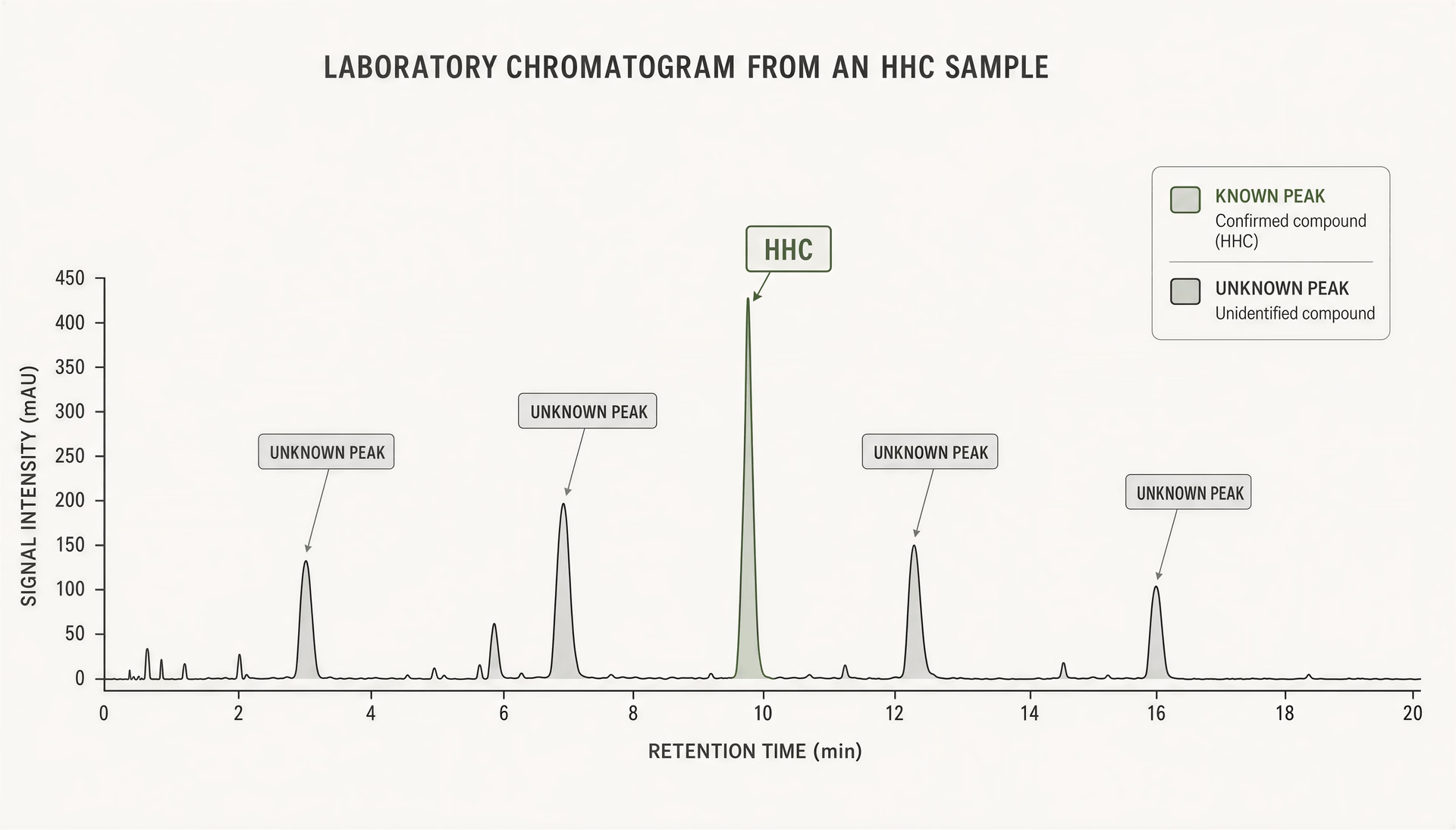
Why unidentified peaks on chromatograms matter
Chromatogram The readout from a chromatography method showing separated components as peaks over time; unnamed peaks indicate detected material that has not been identified.
On a chromatogram, every peak represents something the instrument detected. When a report shows large unnamed peaks, that means material is present but not identified. In a simple botanical extract, some low-level unknowns may be expected. In semi-synthetic HHC, they deserve much more suspicion.
Why? Because the production route itself creates opportunities for side products. CBD isomerization can generate multiple THC isomers and rearrangement products. Hydrogenation can produce epimers and other reduced compounds. Poor purification can leave remnants of starting materials, reaction intermediates, degradants, or catalyst-related residues. Calling all of that “minor impurities” is misleading if those impurities have not been pharmacologically characterized.
This is the key point: unknown peaks are not a paperwork defect. They are an exposure defect. If a by-product binds CB1, CB2, serotonin receptors, ion channels, or has toxic effects unrelated to cannabinoid receptors, the consumer experiences the chemistry, not the label story.
That is why a COA listing only HHC percentage is not enough. It may conceal the very compounds most worth questioning. With HHC, uncertainty is often concentrated in the unlabeled fraction. Short version: unidentified peaks mean unidentified drug effects are possible.
Consumer guidance without hype
HHC is often presented as if it were a neat, known quantity. It is not. What people call “HHC” is usually a semi-synthetic cannabinoid mixture made through chemical conversion and hydrogenation, not a simple botanical extract, and product-to-product effects can shift because the ratio of 9R-HHC to 9S-HHC is not always the same. Nasrallah et al. in ACS Chemical Neuroscience (2023) helped show why that matters: these stereoisomers do not behave identically at cannabinoid receptors. That alone should make a careful user skeptical of fixed claims like “it’s just weaker THC” or “it always feels the same.”
The practical takeaway is plain: uncertainty is part of the product category. That should shape how anyone thinks about risk.
Pre-use questions raised by the article
- Composition What cannabinoids are actually present, beyond a single total HHC figure?
- Contaminants Is there credible testing for residual solvents, heavy metals, acids, or catalysts?
- Epimer ratio Does the labeling distinguish 9R-HHC from 9S-HHC or acknowledge the mixture?
- Local law Is the legal status clear where the person lives, works, studies, or travels?
- Drug testing Could use create workplace, athletic, custody, or probation testing problems?
- Purpose Why use this cannabinoid given the thin human safety data?
Questions a careful consumer should ask before using HHC
Start with source and composition, not marketing language. “Natural,” “hemp-derived,” and “legal” do not answer the hard questions. A more useful checklist is:
What cannabinoids are actually present? If a report lists only “HHC” as one number, that is incomplete. Ideally, there would be cannabinoid analysis showing whether delta-8 THC, delta-9 THC, other THC isomers, or unidentified peaks are present. Since commercial HHC is commonly made through multistep conversion from CBD, by-products are a realistic concern, not a theoretical one.
Is there any credible testing for residual solvents, heavy metals, acids, or catalysts? The manufacturing pathway matters here. Acid-catalyzed isomerization and hydrogenation can leave residues if process control is sloppy. FDA warnings in the intoxicating-hemp category have focused heavily on delta-8 products, but the same chemistry logic applies to HHC.
Does the labeling distinguish between 9R-HHC and 9S-HHC, or at least acknowledge that HHC is not one pharmacologically uniform substance? Most labels do not. That omission matters because receptor activity differs by stereoisomer, and so can perceived potency.
Is the legal status clear where the person lives, works, studies, or travels? It often is not. The EUDA reported that by September 2023 HHC had been identified in 70% of EU member states plus Norway, and several jurisdictions moved quickly to control it. In the United States, state law can be far stricter than federal hemp rhetoric suggests.
Will use create problems with drug testing? The prudent answer is yes, it might. There is no dependable consumer-facing evidence that HHC is safely “test-proof.” Cross-reactivity, mislabeled products, and THC contamination all make that a bad gamble.
A final question is less chemical and more personal: why use this specific cannabinoid at all, given how thin the human safety data are? If the answer depends on assumptions like “it must be safer because it’s from hemp,” the premise is weak.
Groups the article flags for extra caution
- Psychiatric vulnerability People with psychosis, bipolar disorder, severe anxiety, panic attacks, or unstable mood.
- Cardiovascular disease People with arrhythmia, coronary disease, hypertension, or prior cardiac events.
- Pregnancy and breastfeeding Avoid use because developmental safety is not established.
- Adolescents Youth are in a higher-risk group because long-term developmental effects are not well characterized.
- Drug-tested individuals Workplace, athletic, military, probation, pain-management, or custody settings raise major risk.
- People mixing substances Alcohol, sedatives, and other psychoactive drugs can complicate effects and risk.
Who should be especially cautious
Some groups should treat HHC as a higher-risk substance, not an experiment in branding.
People with a personal or family history of psychosis, bipolar disorder, severe anxiety, panic attacks, or destabilized mood should be careful. Intoxicating cannabinoids can worsen paranoia, anxiety, dissociation, and perceptual disturbance in susceptible individuals. There is no body of clinical work showing HHC is exempt from that concern. If anything, the lack of characterization argues for more caution, not less.
People with cardiovascular disease should also be careful. Cannabinoids can affect heart rate, blood pressure, and subjective stress response. For someone with arrhythmia, coronary disease, poorly controlled hypertension, or prior cardiac events, “uncertain pharmacology” is not a reassuring setting.
Pregnancy and breastfeeding are simple cases: avoid it. There is no solid evidence base establishing developmental safety for HHC, and there is already enough concern around cannabinoid exposure during pregnancy that adding a poorly studied semi-synthetic cannabinoid makes little sense.
[7] Monitoring the Future Panel Study Annual Report. University of Michigan Institute for Social Research. Monitoring the Future, 2024.
Adolescents should be especially cautious. The adolescent brain is still developing, and youth uptake of novel hemp intoxicants is not hypothetical. Monitoring the Future reported in 2024 that 8.0% of 12th graders had used delta-8 THC in the past year. HHC entered that same fast-moving market. The absence of long-term developmental data is a warning sign, not a blank check.
Anyone subject to workplace, athletic, military, probation, pain-management, or custody-related drug testing should assume HHC could create serious consequences. Even if one product contained only HHC as labeled, testing systems and metabolite interpretation are not designed around consumer reassurance. And many products likely contain more than the label admits.
People taking sedatives, alcohol, or other psychoactive drugs should be cautious too. Interaction data are limited, but limited data do not mean zero risk.
How to think about dosing, setting, and delayed effects
Because there is no well-established human dose-response literature for commercial HHC mixtures, the safest mental model is not “match this to THC.” That shortcut is too confident. Potency can vary with route of administration, matrix, the 9R/9S ratio, co-occurring cannabinoids, and plain old manufacturing inconsistency.
For an inexperienced person, the sensible rule is to start low and wait longer than expected before considering more. That is not lifestyle advice; it is a response to uncertainty. Inhaled products may come on faster, while oral products can be delayed and then feel stronger than anticipated. Many bad cannabinoid experiences begin with redosing during the waiting period because the first dose “seemed weak.”
Setting matters because psychoactive effects are not purely chemical. Fatigue, stress, dehydration, alcohol co-use, unfamiliar environments, and social pressure can all make adverse effects more likely or more frightening. If someone chooses to use HHC despite the uncertainties, doing so when driving, supervising children, operating machinery, or making important decisions is a poor idea.
Individual response varies. Two people can use what appears to be the same nominal amount and have meaningfully different effects. With HHC, that variation is amplified by the fact that the underlying material may not be standardized in the first place.
If effects become unpleasant, taking more is rarely the fix. The safer response is to stop, reduce stimulation, avoid mixing with other substances, and seek medical help if there is chest pain, severe agitation, confusion, trouble breathing, or persistent vomiting. That is the sober way to think about HHC: not panic, not hype, just respect for a drug category that reached consumers before the science caught up.
What the evidence supports right now
Claims supported by chemistry
Some things about HHC are not speculative at all. The molecule is real, its basic synthetic route is old, and its status as a THC-like cannabinoid is chemically credible.
Roger Adams and colleagues described hydrogenation of tetrahydrocannabinol to hexahydrocannabinol in 1940. That matters because it anchors HHC in actual cannabinoid chemistry rather than internet folklore. The modern commercial version usually does not come from meaningful natural extraction. It is generally made through conversion of hemp-derived CBD into THC-like intermediates, followed by hydrogenation, or through related conversion routes described in patents and process chemistry. Calling commercial HHC “natural” is, at best, misleading.
Another point supported by chemistry: “HHC” on a label often does not mean one well-defined substance. In practice it is commonly a stereoisomeric mixture, especially 9R-HHC and 9S-HHC, and may also contain residual minor cannabinoids, reaction by-products, or incomplete conversion products if purification is weak. That is not a semantic quibble. Stereochemistry changes pharmacology.
Nasrallah et al. in ACS Chemical Neuroscience (2023) examined semi-synthetic cannabinoids and reported meaningful differences in cannabinoid receptor activity across related compounds and stereochemical forms. In line with broader cannabinoid chemistry literature, 9R-HHC appears to have stronger CB1 receptor activity than 9S-HHC. So the common retail shorthand that HHC has one fixed potency is wrong on its face. Two samples sold under the same name can differ because the isomer ratio differs. The chemistry alone predicts variable effects.
The receptor story is also plausible. HHC is structurally related to THC, and CB1 agonism is a reasonable mechanism for intoxication-like effects. That does not prove a precise human dose curve. It does support the narrower claim that HHC can act like a THC-type cannabinoid rather than an inert hemp derivative.
Claims supported only weakly by preclinical data
This is where many popular claims start to outrun the evidence.
HHC produces THC-like psychoactive effects in humans. Preliminary evidence
It is plausible that HHC produces THC-like psychoactive effects in humans. User reports, receptor binding work, and structural similarity all point in that direction. But the human evidence base is thin. There are no large randomized trials mapping onset, duration, impairment, anxiety risk, cardiovascular effects, dependence liability, or long-term neurocognitive outcomes across known doses and known 9R/9S compositions. That gap is not small. It is the central fact.
The often repeated claim that HHC is “70–80% as potent as delta-9 THC” is a good example of fake precision. No solid human dose-response literature supports a universal ratio. Potency depends on route, formulation, individual tolerance, co-occurring cannabinoids, and the stereoisomer mix. A vaporized product rich in 9R-HHC may not resemble an edible with a different composition at all.
Safety claims are also weak. There is no established therapeutic window, no strong reproductive toxicology dataset, and no long-term epidemiology. One can infer some risks from the broader intoxicating-cannabinoid category, but inference is not direct proof. FDA and poison center alerts around delta-8 THC show what happens when chemically converted cannabinoids move faster than process control: contaminants, mislabeling, and pediatric exposures. FDA reported 104 adverse event reports linked to delta-8 products from December 2020 through February 2022, and poison centers logged 2,362 exposure cases in a similar period, 41% involving children. Those numbers are not HHC-specific, but the manufacturing logic carries over because acid-catalyzed isomerization and hydrogenation can leave solvents, catalysts, heavy metals, or unknown by-products when done badly.
Drug testing sits in the same uncertain zone. There is no reliable public evidence that HHC is invisible to workplace testing. Given cross-reactivity, mislabeled products, and the possibility of THC contamination or overlapping metabolites, assuming no risk would be reckless.
Claims that are mostly marketing
Three claims deserve to be treated as marketing first, evidence second.
First: that HHC is “natural” in any meaningful consumer sense. Trace natural occurrence has been reported, but that is not what dominates the market. Commercial HHC is overwhelmingly semi-synthetic.
Second: that HHC is legally settled because it can be sourced from hemp. It is not. In the United States, the 2018 Farm Bill did not clearly bless all intoxicating semi-synthetic cannabinoids, and state-level restrictions continue to spread. In Europe, the EUDA documented HHC in 70% of EU member states plus Norway by September 2023, alongside fast-growing seizures: 50 seizures totaling 170 kg and nearly 96 liters in 2022, then 53 more totaling 103 kg and nearly 1,000 liters in the first eight months of 2023. Rapid spread was followed by rapid control measures. That is not a stable legal environment.
Third: that labels reliably describe what is in the product. The chemistry says otherwise unless proven by serious analytical testing. “HHC” can hide a moving target.
HHC is chemically real and its THC-like effects are pharmacologically believable, but the market still suffers from composition uncertainty, sparse human data, and unstable law. Limited evidence
The strongest evidence-based position is plain: HHC is not imaginary, and its THC-like effects are pharmacologically believable. But the market sells certainty where the science still shows composition problems, sparse human data, and unstable law. Chemically real does not mean well characterized. That distinction is the whole story.
References
- [1] Marihuana. XI. Tetrahydrocannabinol and related compounds. Journal of the American Chemical Society, 1940. https://doi.org/10.1021/ja01864a003
- [2] Chemistry and Pharmacology of Delta-8-, Delta-9-, and Delta-10-Tetrahydrocannabinol, Hexahydrocannabinol, and Related Cannabinoids. ACS Chemical Neuroscience, 2023. https://doi.org/10.1021/acschemneuro.3c00094
- [3] World Drug Report 2024. UNODC report, 2024. https://www.unodc.org/unodc/en/data-and-analysis/world-drug-report-2024.html
- [4] Key Substance Use and Mental Health Indicators in the United States: Results from the 2022 National Survey on Drug Use and Health. NSDUH report, 2023. https://www.samhsa.gov/data/report/2022-nsduh-annual-national-report
- [5] 5 Things to Know about Delta-8 Tetrahydrocannabinol – Delta-8 THC. FDA consumer update, 2022. https://www.fda.gov/consumers/consumer-updates/5-things-know-about-delta-8-tetrahydrocannabinol-delta-8-thc
- [6] Cannabis and Public Health. CDC, 2024. https://www.cdc.gov/cannabis/health-effects/cannabis-use-disorder.html
- [7] Monitoring the Future Panel Study Annual Report. Monitoring the Future, 2024. https://monitoringthefuture.org/