












THCA is the real starting point, not THC
The first correction is simple and important: fresh cannabis does not mainly make THC. In living flower, especially in intact glandular trichomes, the dominant cannabinoid is usually tetrahydrocannabinolic acid (THCA), the acidic precursor that later becomes delta-9-THC when heat or time removes carbon dioxide. That distinction sounds technical. It is not. It changes how cannabis behaves in the plant, in a pipe, in a lab instrument, and under US hemp law.
That matters because cannabis use is not a niche subject. UNODC estimated that 228 million people used cannabis in 2022, or 4.3% of the global population aged 15–64 (UNODC, 2024). The EU Drug Report 2024 put last-year use in Europe at 24 million adults, and SAMHSA reported 61.8 million past-year marijuana users in the United States in 2023. If public discussions start from the wrong molecule, they start from the wrong chemistry.
THCA biosynthesis, step by step
- 1 The plant forms CBGA as a shared precursor in glandular trichomes.
- 2 THCA synthase converts CBGA into THCA in drug-type cannabis.
- 3 THCA accumulates in fresh resin rather than preformed delta-9-THC.
- 4 Heat, aging, or analysis can later decarboxylate THCA into THC.
Why living cannabis accumulates THCA rather than THC
In biosynthetic terms, the plant is set up to make cannabinoid acids first. Inside glandular trichomes, cannabigerolic acid (CBGA) is converted into THCA by THCA synthase, an enzyme characterized in landmark work by Sirikantaramas and colleagues in the early 2000s. This is the normal pathway in drug-type cannabis. Not an oddity. Not a specialty product category. Normal plant biochemistry.[2] Tetrahydrocannabinolic acid synthase, the enzyme controlling marijuana psychoactivity, is secreted into the storage cavity of the glandular trichomes. A. Sirikantaramas, S. Taura, Y. Morimoto, Y. Shoyama. Journal of Biological Chemistry, 2005.
Raphael Mechoulam’s generation established the modern chemical map of cannabinoids, but later enzymology filled in a key point the public still often misses: the plant’s biosynthetic machinery favors acidic cannabinoids in vivo. THC is largely what appears after THCA is decarboxylated. That can happen during smoking, vaporization, baking, extraction, prolonged storage, or just slow aging. It is usually not what dominates in a freshly living trichome head.
That is also why raw cannabis is generally non-intoxicating in the ordinary THC sense. THCA does not produce the classic CB1-driven psychoactive effect associated with delta-9-THC. Fresh flower may be chemically loaded with potential THC, but “potential” is the key word. Until enough THCA loses its carboxyl group, the cannabinoid profile and the user experience are not the same.
This is where the phrase “THCA flower” becomes misleading. Chemically, most ordinary flower is THCA-rich before it is heated. The label sounds like a special form of cannabis, but in many cases it is just standard cannabis described through a legal and analytical lens. The botanical reality did not suddenly change. The statutory framing did.
| Property | THCA | THC |
|---|---|---|
| Functional group | Has carboxyl group (-COOH) | No carboxyl group |
| Molecular weight | 358.48 g/mol | 314.47 g/mol |
| CB1 intoxication profile | Does not meaningfully drive classic THC-like CB1 effect | Classic CB1-driven intoxicating effect |
| Typical state in flower | Dominant before heating | Rises after decarboxylation |
The carboxyl group that changes everything
The difference between THCA and THC is one small functional group with huge consequences. THCA has an extra carboxyl group (-COOH) attached to the molecule. THC does not. That single change raises THCA’s molecular weight to about 358.48 g/mol, compared with 314.47 g/mol for THC (PubChem). When THCA decarboxylates, it releases CO2, and the remaining molecule is THC. That mass loss is why labs and regulators use the familiar formula:
Total THC = THC + (THCA × 0.877)
The 0.877 factor comes straight from the molecular-weight ratio, 314.47 / 358.48.[3] Tetrahydrocannabinolic acid is a potent PPARγ agonist with neuroprotective activity. X. Nadal, F. del Río, P. Casano, et al.. British Journal of Pharmacology, 2017.
The carboxyl group does more than alter mass. It changes pharmacology. THCA does not meaningfully bind CB1 receptors the way THC does, which is the main reason raw cannabis is not strongly intoxicating. But calling THCA “inactive THC” is wrong. Nadal et al. (2017) reported that THCA-A is a potent PPARγ agonist, a receptor pathway tied to anti-inflammatory and neuroprotective effects in preclinical models. Other work points to activity at TRPM8 and effects on inflammatory pathways including COX-2, again through routes distinct from THC’s main mechanism.
THCA has distinct anti-inflammatory, neuroprotective, or antiemetic effects beyond THC-like intoxication. Limited evidence
That does not make THCA a proven medicine. It does mean the molecule has its own biology. Linda Parker, Matthew Rock, and colleagues also reported antiemetic effects in animal models, and there is disease-model context from Weydt et al. (2005) and later cannabinoid neuroprotection work that helped drive interest in non-intoxicating cannabinoids. Still, the evidence remains largely preclinical. Claims should stay there.
The common consumer misunderstanding: most flower is already THCA-rich before heating
[4] Study on cannabinoid decarboxylation and degradation during heating. T. Veress, M. Szanto, J. Leisztner. Journal of Chromatography, 1990.
A common retail-era misconception is that “THCA flower” is one thing and “regular weed” is another. In chemical terms, that is mostly false. Most cured flower that people think of as THC-rich is actually THCA-rich until it is heated. Smoking and vaporizing decarboxylate THCA almost instantly. Oven heating does the same more gradually. Wang et al. (2016) found near-complete decarboxylation at 145°C for 7 minutes under their conditions, though real-world conversion depends on moisture, particle size, vessel geometry, and whether the measurement tracks residual THCA or resulting THC. Push temperature too far and THC itself degrades, including toward CBN, as shown in earlier work such as Veress et al. (1990).
| Method | What happens to THCA during analysis | What the method is best for |
|---|---|---|
| Gas chromatography (GC) | Heat in the instrument decarboxylates THCA and effectively reads it as THC | Volatile analysis when acid/neutral separation is not the goal |
| High-performance liquid chromatography (HPLC) | Measures THCA and THC separately without forced conversion | Potency testing of raw samples and legal classification |
High-performance liquid chromatography (HPLC) A liquid-phase analytical method that separates compounds without the high injector heat used in gas chromatography, allowing THCA and THC to be quantified as distinct molecules.
Testing method changes the picture too. Gas chromatography (GC) heats the sample during analysis, so THCA decarboxylates inside the instrument and is effectively read as THC. High-performance liquid chromatography (HPLC) can measure THCA and THC separately without forcing that conversion. This is not a minor lab detail. It is the difference between knowing what is in the flower now and what it could become after heating.
- Federal threshold
- 0.3% delta-9 THC dry weight
- Statutory focus
- Delta-9 THC, not total THC
- Why loophole exists
- THCA can be high while pre-sale delta-9 stays low
- Analytical consequence
- HPLC can show high THCA separately from delta-9 THC
That analytical gap sits right under the US legal fight. The 2018 Farm Bill defined hemp by delta-9 THC concentration, not total THC, at no more than 0.3% delta-9 THC on a dry-weight basis. So a flower can test low in delta-9 THC while containing abundant THCA that will yield substantial THC when smoked. That is the so-called THCA loophole. The controversy is real, but the chemistry is ordinary. The plant was already making THCA all along.
How the plant makes THCA inside glandular trichomes
THCA is not a post-harvest novelty and not a legal-era relabeling trick. It is the form the plant actually makes. In living cannabis flowers, the dominant cannabinoid is typically the acidic precursor, not neutral THC. That point matters because many later arguments about intoxication, lab testing, and hemp law start from a basic botanical fact: inside the glandular trichome, cannabis biosynthesis is set up to produce cannabinoid acids first.
Raphael Mechoulam’s generation clarified the major cannabinoid structures decades ago, but the plant-side enzymology took longer to map in detail. By the early 2000s, work by Taura, Morimoto, and Sirikantaramas and colleagues had identified and characterized the enzymes that convert a common precursor into THCA, CBDA, and CBCA. That shifted the discussion from “what cannabinoids are present?” to “how does the trichome decide which acid to make?” The answer starts upstream, with CBGA.
Upstream pathway to CBGA
- 1 The polyketide pathway forms olivetolic acid.
- 2 The plastidial MEP pathway supplies geranyl pyrophosphate (GPP).
- 3 A prenyltransferase joins those inputs to form CBGA.
- 4 CBGA then serves as the branch-point precursor for THCA, CBDA, or CBCA.
From olivetolic acid and geranyl pyrophosphate to CBGA
Cannabinoid biosynthesis pulls from two different metabolic streams. One contributes the aromatic backbone; the other supplies the terpene-derived side chain. In simplified form, the polyketide pathway produces olivetolic acid, while the plastidial MEP pathway supplies geranyl pyrophosphate, often abbreviated GPP. Those two molecules are joined by a prenyltransferase to form cannabigerolic acid, CBGA.
Branch-point cannabinoid A precursor that can be directed into multiple downstream products; in cannabis, CBGA can be converted into THCA, CBDA, or CBCA depending on enzyme expression.
CBGA is the branch-point cannabinoid. That is the key intermediate from which the plant can make THCA, CBDA, or CBCA depending on which oxidocyclase enzyme is expressed and active. If a flower tests high in THCA, that does not mean it followed a separate “THCA pathway” from the start. It means a shared precursor pool was preferentially pushed toward THCA at the last major step.
The older literature sometimes described this sequence with slightly different enzyme names as the pathway was being sorted out, but the functional outline is stable. Hexanoyl-CoA enters the polyketide route, olivetolic acid is formed, GPP arrives from terpene metabolism, and a prenylation step creates CBGA. From there, synthase enzymes shape the final cannabinoid acid profile. This branch-point logic explains why cannabinoid ratios are interdependent. A plant cannot send the same CBGA molecule to become both THCA and CBDA. Flux toward one product reduces what is available for the others.
That competitive relationship is one reason “high-THCA flower” is not chemically exotic in the botanical sense. Most drug-type cannabis cultivars are simply plants whose CBGA pool is overwhelmingly directed into THCA biosynthesis before harvest.
THCA synthase and the oxidation of CBGA[5] Molecular characterization of tetrahydrocannabinolic acid synthase from Cannabis sativa L.. A. Sirikantaramas, Y. Morimoto, S. Shoyama, Y. Shoyama. Journal of Biological Chemistry, 2004.
The direct precursor-to-product step is catalyzed by THCA synthase, sometimes written THCAS. This enzyme converts CBGA into tetrahydrocannabinolic acid through an oxidative cyclization reaction. Sirikantaramas et al. cloned and characterized the THCA synthase gene from Cannabis sativa, a major advance because it tied chemotype to a specific biosynthetic protein rather than just a chemical endpoint (Sirikantaramas et al., Journal of Biological Chemistry, 2004).
“Oxidation” here is not a vague label. THCA synthase is a flavoprotein oxidase that acts on CBGA and helps reorganize the molecule into the tricyclic cannabinoid-acid structure recognized as THCA. The product already contains the carboxyl group that later distinguishes THCA from THC. The plant does not first make THC and then add the acid group. It makes THCA directly.
That detail corrects a common misunderstanding. THCA is not degraded THC, dormant THC, or THC waiting in storage. It is the intended biosynthetic endpoint of one branch of cannabinoid metabolism in the fresh flower. Only later, through decarboxylation, does THCA lose carbon dioxide and become delta-9-THC.
This also helps explain why fresh cannabis is largely non-intoxicating in the classic THC sense. The trichome is loaded with THCA, not preformed delta-9-THC. Because the extra carboxyl group changes shape, polarity, and receptor behavior, THCA does not produce the strong CB1-mediated intoxicating profile associated with decarboxylated THC. That is a chemistry result before it is a pharmacology result.

Where in the trichome this chemistry happens
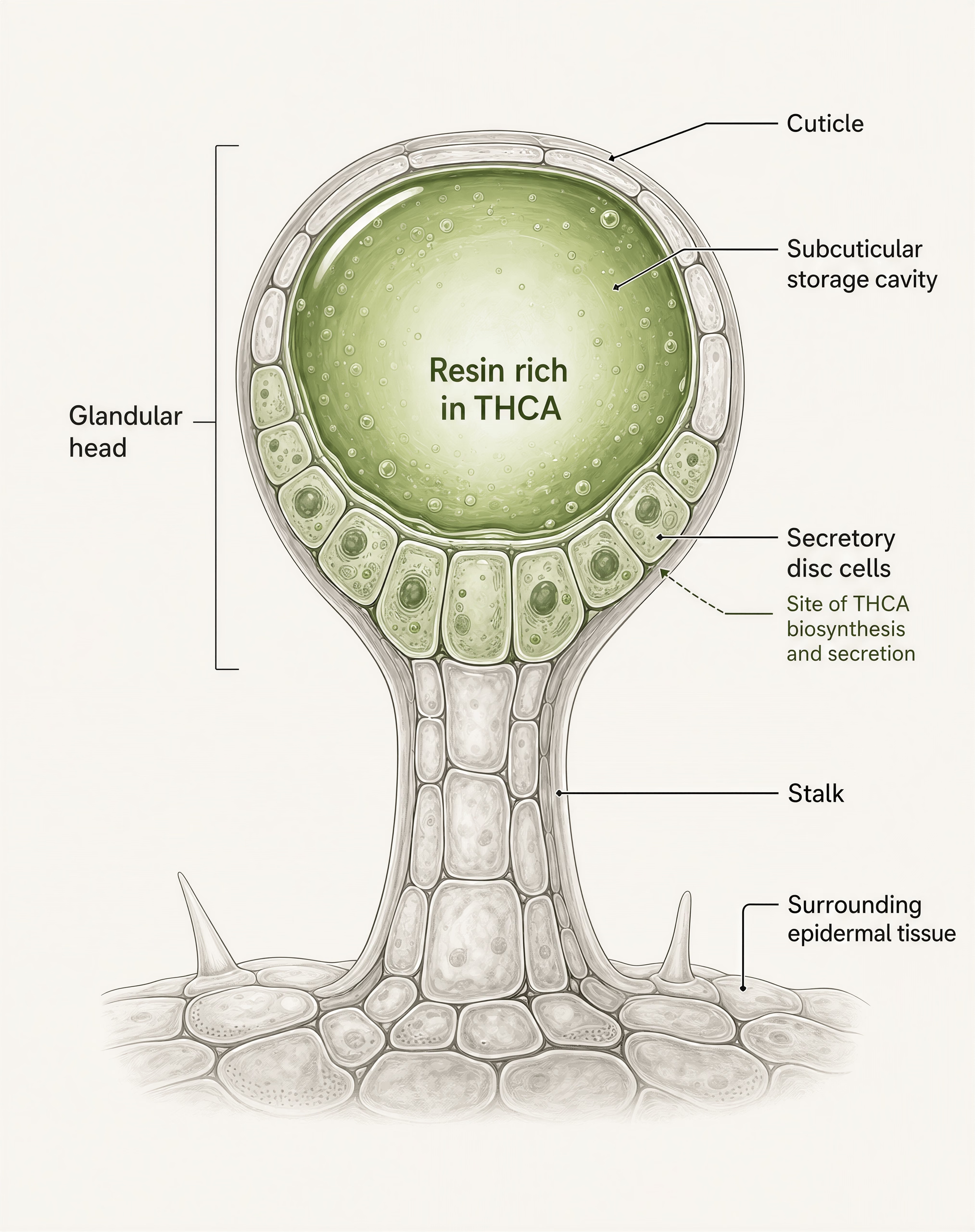
Capitate-stalked trichomes Large resin-producing glandular hairs on cannabis flowers, with a stalk and secretory head where cannabinoids and terpenes are made and stored.
The action is concentrated in glandular trichomes, especially capitate-stalked trichomes on female inflorescences. These are the resin glands that give mature flower its frosted appearance. They are not inert droplets of oil. They are specialized secretory organs with a stalk, a multicellular head, secretory disc cells, and a subcuticular storage cavity where resin accumulates.
Cannabinoid biosynthesis is linked to the secretory cells of the trichome head. These cells are metabolically active and packed with the machinery needed to make and export secondary metabolites. Current models place early biosynthetic steps in cellular compartments including plastids and the cytosol, with final oxidocyclase activity associated with the secretory environment and accumulation occurring in the storage cavity beneath the cuticle. Sirikantaramas and colleagues localized THCA synthase to the glandular trichome head, supporting the view that the resin gland is the true biochemical factory for THCA, not just a storage site.
The spatial arrangement matters. The plant segregates resin production into these glands partly because cannabinoids and terpenes are sticky, reactive, and biologically active compounds. Concentrating them in an extracellular or secretory compartment is cleaner than letting them diffuse through ordinary leaf tissue. It also helps explain why flowers and small sugar leaves are cannabinoid-rich while fan leaves are comparatively poor sources.
When people say the plant is “covered in THC crystals,” that is chemically sloppy. Those visible resin glands on fresh flower contain mostly cannabinoid acids, with THCA often dominating in drug-type material. Neutral THC rises later through heating, aging, or analytical methods that themselves cause decarboxylation.
| Chemotype tendency | Dominant effective synthase activity | Usual acid profile |
|---|---|---|
| THC-dominant | Functional THCA synthase with limited effective CBDA synthase | THCA-rich |
| CBD-dominant | Functional CBDA synthase with limited effective THCA synthase | CBDA-rich |
| Intermediate / mixed | Meaningful activity from both pathways | Mixed THCA and CBDA |
Why cultivar genetics shift THCA, CBDA, and CBCA ratios
Different cultivars show different cannabinoid-acid profiles because they express different versions, quantities, and combinations of the oxidocyclase genes that compete for CBGA. The classic distinction is between THC-dominant, CBD-dominant, and intermediate chemotypes. In broad terms, THC-dominant plants carry functional THCA synthase activity and limited effective CBDA synthase activity; CBD-dominant plants show the reverse; mixed chemotypes may express both.
This is not just about on-off gene presence. Copy number variation, sequence divergence, promoter activity, and enzyme functionality all matter. Some cultivars carry synthase-like genes that are truncated or poorly expressed. Others may have multiple related loci with unequal contributions. The result is a metabolic bias, not a single binary switch.
Environmental factors still influence total cannabinoid yield. Light intensity, nutrition, temperature, plant age, and stress can affect how much resin a plant produces. But the ratio question—why one cultivar tends toward THCA while another trends toward CBDA—is mainly genetic. The enzyme roster determines where the CBGA pool goes.
CBCA fits into the same framework. CBCA synthase converts CBGA into cannabichromenic acid, though in many commercial cultivars this pathway is less dominant than the THCA or CBDA routes. Even so, its existence reinforces the point that cannabinoid-acid dominance is a biosynthetic fact. The plant’s major cannabinoids emerge as acids because that is how the enzymes make them.
That is why the phrase “THCA flower” is botanically ordinary even when it is legally loaded. Most harvested cannabis flower, before combustion or deliberate heating, is THCA-rich by default. The later distinction between “THCA hemp” and “marijuana” comes from statute and testing method, not from a separate kind of trichome chemistry. Inside the gland head, the plant is doing what it has long done: assembling CBGA, expressing oxidocyclases, and filling the secretory cavity with cannabinoid acids.
THCA versus THC at the molecular level
THCA and THC are separated by one small-looking chemical feature with very large consequences. In living cannabis, the dominant cannabinoid in many flowers is not delta-9-THC itself but tetrahydrocannabinolic acid, or THCA, formed in glandular trichomes when THCA synthase converts cannabigerolic acid (CBGA) into THCA, as characterized by Sirikantaramas and colleagues in the early 2000s. That biosynthetic fact matters because the plant does not mainly make intoxicating THC in fresh tissue. It mainly makes the acidic precursor.
The result is simple but often misstated: fresh cannabis can be chemically rich in cannabinoid content while still being largely non-intoxicating, because the major molecule present before heating is THCA, not THC. Once heat or time removes a carboxyl group as carbon dioxide, THCA becomes THC. Then the pharmacology changes sharply.
| Metric | Value |
|---|---|
| THCA molecular weight | 358.48 g/mol |
| THC molecular weight | 314.47 g/mol |
| Mass lost during decarboxylation | About 44 g/mol as CO2 |
| Total THC factor | 0.877 = 314.47 / 358.48 |
The extra carboxylic acid group and molecular weight difference
The structural difference between THCA and THC is the presence of an extra carboxylic acid group on THCA. Chemically, that is a -COOH substituent. THC lacks it because decarboxylation has already occurred. This is not a cosmetic edit to the molecule. It changes mass, polarity, hydrogen-bonding behavior, three-dimensional conformation, and receptor fit.
The molecular weights show the shift clearly. THCA has a molar mass of about 358.48 g/mol, while delta-9-THC is about 314.47 g/mol (PubChem, 2024). The gap, roughly 44 g/mol, corresponds to carbon dioxide released during decarboxylation. That is why testing and regulatory formulas use the 0.877 conversion factor: 314.47 divided by 358.48 is approximately 0.877. In other words, one gram of THCA cannot produce one gram of THC, because some of the mass exits the molecule as CO2. Hence the standard equation used on Certificates of Analysis and in state guidance: Total THC = THC + (THCA × 0.877).
That extra -COOH group also makes THCA more acidic and more polar than THC. At physiological or near-physiological conditions, carboxylic acids can exist partly in ionized form, which further increases their interaction with water and decreases their ease of moving through lipid environments. THC, by contrast, is comparatively lipophilic and neutral. It crosses into fatty tissues readily. That difference sits at the center of why the two molecules do not behave the same way in the body.
It also explains a persistent confusion around “THCA flower.” Chemically, most harvested cannabis flower is THCA-rich before combustion anyway. The distinction is often not botanical. It is analytical and legal. A sample can test low in delta-9-THC before heating and still contain enough THCA to generate substantial THC after decarboxylation. Lab method matters here: gas chromatography heats the sample and converts THCA during analysis, while high-performance liquid chromatography can measure THCA and THC separately without forcing that reaction.
Why CB1 behavior differs
- Bulk and polarity The extra carboxyl group makes THCA bulkier and more polar than THC.
- Binding fit CB1 favors ligands with the lipophilic shape needed to fit its binding pocket.
- Functional consequence THCA shows weak or negligible CB1 activity compared with THC.
- Practical result Raw THCA-rich flower does not produce the classic THC intoxication profile.
Why THCA does not behave like THC at CB1 receptors
THC’s classic intoxicating effect depends largely on CB1 receptor activation in the central nervous system, a pharmacological framework built through decades of cannabinoid chemistry following the work of Raphael Mechoulam and others. THCA does not reproduce that profile because it does not bind CB1 receptors in the same way or with the same functional consequence.
The extra carboxylic acid group is the main reason. Receptors are shape-and-charge selective. CB1 favors ligands with the right lipophilic character and steric fit to settle into its binding pocket and stabilize the receptor in an active state. THCA is bulkier and more polar. That added carboxyl group changes how the molecule presents itself spatially and electronically. The result is weak or negligible CB1 activity compared with THC. So the statement that THCA is “just THC that has not been activated yet” is only partly true. It is a precursor, yes. It is not pharmacologically identical while the acid group is still attached.
That does not make THCA inert. It means its biology points elsewhere. Nadal et al. in 2017 reported that THCA-A is a potent PPARγ agonist in preclinical models, with anti-inflammatory and neuroprotective effects that did not depend on the canonical psychotropic pathway associated with THC and CB1 activation. Other preclinical work has suggested effects involving TRP channels and cyclooxygenase-related pathways. Linda Parker, Matthew Rock, and colleagues also reported antiemetic effects in animal models. Those findings are interesting and real, but they are not evidence that THCA causes THC-like intoxication. They support the opposite conclusion: THCA is pharmacologically active in a different way.
This distinction matters outside the lab. Cannabis is widely used globally, with UNODC estimating 228 million users in 2022, EUDA reporting 24 million recent users in Europe in 2024, and SAMHSA reporting 61.8 million past-year marijuana users in the United States for 2023. When a molecule this common changes behavior so dramatically after one thermal reaction, receptor-level accuracy stops being trivia.
Membrane permeability, polarity, and blood-brain barrier implications
The blood-brain barrier strongly favors small, lipophilic, non-ionized molecules. THC fits that profile far better than THCA. Because THCA carries the carboxylic acid group, it is more polar and less membrane-permeable, which limits passive diffusion across lipid bilayers and reduces entry into the brain. That reduced central nervous system access reinforces the receptor story: even if THCA had stronger intrinsic CB1 affinity than it appears to have, getting enough of it into the brain efficiently would still be harder than for THC.
This is the mechanistic core of why raw cannabis is largely non-intoxicating. Not because THCA is “inactive” in every sense, and not because fresh flower can never become intoxicating, but because the dominant cannabinoid in unheated plant material is a heavier, more polar acid that neither reaches nor activates CB1 in the same way as decarboxylated THC.[6] Decarboxylation study of acidic cannabinoids in cannabis. M. Wang, Y.-H. Wang, B. Avula, et al.. Journal of Chromatography A, 2016.
Heating changes everything. Smoking and vaporizing drive near-instant decarboxylation because the temperatures are high enough to remove CO2 rapidly. Controlled heating does the same more gradually; Wang et al. (2016) reported almost complete conversion of delta-9-THCA to delta-9-THC at 145°C for 7 minutes under their conditions, though decarb behavior varies with matrix, moisture, and geometry. Storage and aging can also shift the balance over time, especially with heat, oxygen, and light. So “raw” is a temporary chemical state, not a permanent category.
At the molecular level, then, the answer is blunt. THCA is not intoxicating in the usual THC sense because one extra carboxylic acid group changes the molecule’s mass, polarity, membrane permeability, and CB1 receptor compatibility. Remove that group, and you do not just have slightly altered THCA. You have THC.
Decarboxylation: the reaction that turns THCA into THC
Fresh cannabis flower is mostly a THCA system, not a THC system. That point matters chemically, pharmacologically, and legally. THCA is made in glandular trichomes from CBGA by THCA synthase, as shown in foundational biochemical work by Sirikantaramas and colleagues in the early 2000s. In living plant tissue, the acidic form dominates. Once heat enters the picture, the molecule changes. That change is decarboxylation, and it is the hinge between non-intoxicating raw flower and THC-rich smoke, vapor, or heated extract.
For a molecule with such large practical consequences, decarboxylation is often flattened into a bad rule of thumb: “apply heat and THCA becomes THC.” True, but incomplete. The real process is kinetic, not magical. Temperature matters. Time matters. Sample shape matters. Moisture matters. So does what you mean by success. If your goal is simply to destroy as much THCA as possible, one answer follows. If your goal is to maximize preserved THC while limiting byproducts, the answer changes.
That is why decarb should be treated as a curve, not a number.
Three terms used repeatedly in decarb discussions
- Decarboxylation
- Loss of a carboxyl group as carbon dioxide, converting THCA into THC.
- Residual THCA
- THCA still left after heating.
- Peak THC recovery
- The heating point where generated THC is highest before further degradation reduces yield.

The chemistry: THCA → THC + CO2
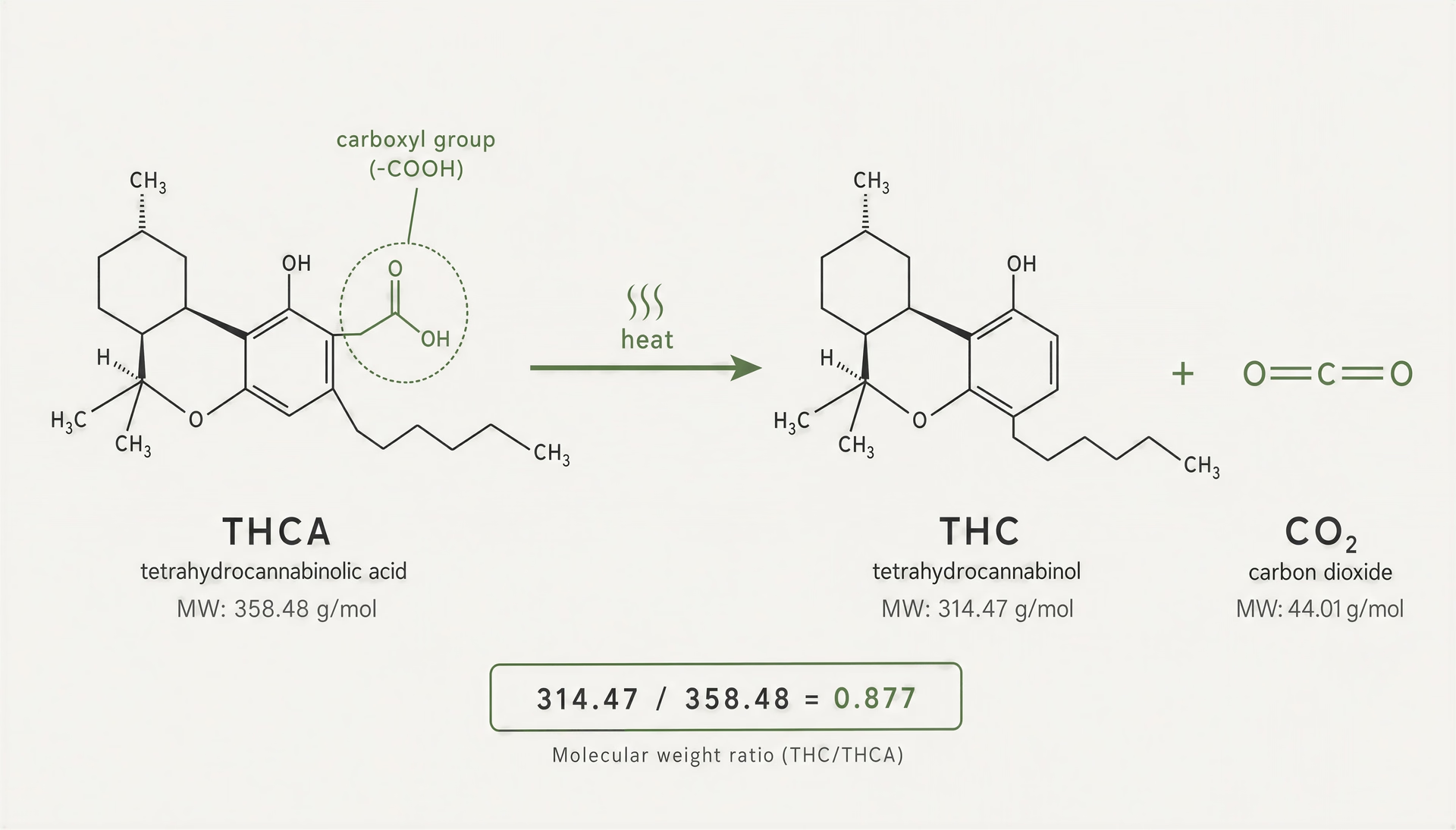
THCA and delta-9-THC are closely related molecules, but they are not the same compound wearing different labels. THCA carries an extra carboxylic acid group. Remove that group, and the molecule becomes THC. In practical shorthand:
THCA → THC + CO2
The “CO2” is not symbolic. It is literal carbon dioxide released as the carboxyl group is lost. Heat provides the energy needed to break that arrangement and drive the reaction forward. Once the carboxyl group leaves, the resulting neutral cannabinoid is delta-9-THC.
This mass loss is why labs and regulators use the 0.877 conversion factor in total THC calculations. THCA has a molecular mass of about 358.48 g/mol, while THC is about 314.47 g/mol; 314.47 divided by 358.48 is approximately 0.877. That gives the standard formula used on many Certificates of Analysis and in state guidance:
Total THC = THC + (THCA × 0.877)
This is not an arbitrary policy number. It is stoichiometry.
The chemistry also explains two common misunderstandings. First, THCA is not “already THC.” It is the precursor. Second, low measured delta-9 THC in raw flower does not mean low THC potential. A flower sample can be mostly THCA, test low for delta-9 THC before heating, and still yield substantial THC after decarboxylation. That distinction sits at the center of modern hemp-law disputes.
Heat can come from many places. Smoking and vaporizing supply it almost instantly, which is why inhaled cannabis rapidly converts acidic cannabinoids during use. Oven heating is slower and easier to study. Storage and aging can also decarboxylate THCA, though at a much slower rate and often alongside oxidation and other degradative changes. “Raw” flower is not chemically frozen in time after harvest.
Analytical method matters here too. Gas chromatography heats the sample during analysis, so THCA decarboxylates in the instrument and appears as THC unless the method is specifically designed to account for that artifact. HPLC avoids this problem because it does not require volatilizing the analyte at high injector temperatures. If the goal is to distinguish THCA from THC as they exist in the sample, HPLC is the right tool.
Why decarboxylation is both activation and a degradation risk
Decarboxylation activates THC in the everyday cannabis sense. It removes the carboxyl group that limits THCA’s classic CB1-mediated intoxication profile and generates neutral THC, the form associated with familiar psychoactive effects. But the same heat that creates THC can also destroy it.
That is the central tension.
The reaction does not stop being chemistry once THCA disappears. THC itself is heat-sensitive and oxidation-sensitive. Push temperature too high, hold it too long, or expose the material to unfavorable conditions, and some of the newly formed THC continues down other pathways, including conversion to cannabinol (CBN) and a range of lesser-discussed degradation products. Veress et al. described this basic pattern decades ago, and later studies such as Wang et al. (2016) and Moreno et al. (2020) reinforced it under more modern analytical conditions: higher temperatures accelerate THCA loss, but they also increase the risk that peak THC formation is followed by THC decline.
So decarb is not a race to the highest possible temperature. It is a balancing act. More heat does not equal better activation if it overshoots the point where THC production is maximized and preservation begins to fail.
| Temperature band | What the article says |
|---|---|
| Around 100°C | Decarboxylation occurs slowly and leaves more residual THCA unless heating is extended. |
| Around 120°C | A common compromise between faster conversion and lower degradation pressure. |
| Around 140–145°C | Conversion can become rapid under controlled conditions. |
| Around 160°C and above | THC loss and broader thermal damage become harder to ignore. |
This is where simplistic temperature charts can mislead. At around 100°C, THCA decarboxylates, but slowly. At 120°C, conversion speeds up. At 140°C, it becomes much faster. By 160°C, reaction rates are faster still, yet so is the danger of sacrificing product quality through THC loss and broader thermal damage. Wang et al. reported that 145°C for 7 minutes produced almost complete THCA conversion under their tested conditions, but that finding should not be promoted as a universal law. It is a result from a defined setup with a defined matrix, sample size, and measurement method.
The practical lesson is sharper than the popular version: the best decarb protocol is the one that gives the highest usable THC yield in your actual material, not the one that produces the fastest disappearance of THCA on paper.
That distinction also matters outside processing. A sample can partially decarboxylate during warm storage, shipping, or repeated environmental exposure, while also slowly degrading. This means aging flower may show less THCA and more THC than fresh flower at first, but eventually more oxidation products as time and conditions continue to work on the cannabinoid profile. Heat is activation. Heat is also wear.
Partial versus near-complete decarboxylation
Decarboxylation is often discussed as if there are only two outcomes: raw and fully activated. In reality, most real samples pass through a middle zone.
Partial decarboxylation means some fraction of THCA has converted to THC while a meaningful fraction remains acidic. Near-complete decarboxylation means residual THCA is low enough that additional heating produces only modest gains, and may start to cost more THC than it creates. Those are operational states, not mystical thresholds.
Why does this distinction matter? Because different products and use conditions land in different parts of the curve. Light heating may produce a mixed profile containing both THCA and THC. Longer or hotter heating can move the sample toward near-complete conversion. Smoking and many vaporization conditions often push decarboxylation so fast that the user experiences the material essentially as THC-dominant in the moment of inhalation, even if the starting flower was analytically THCA-rich.
Published kinetics illustrate the point. Lower temperatures such as 100°C can require extended dwell times to drive substantial THCA loss. Around 120°C, the process is faster but still not instantaneous. Around 140–145°C, conversion can become rapid under controlled thin-sample conditions. At 160°C, the window for high conversion may be short before degradation becomes more pronounced. None of these figures should be treated as plug-and-play household constants. They are trendlines.
The best way to think about partial versus near-complete decarb is to track three variables at once: residual THCA, generated THC, and degraded byproducts. If you only measure THCA disappearance, you may think a hotter treatment is superior. If you also measure THC recovery, you may find a lower-temperature, longer-time treatment preserves more of what you actually want. If you go one step further and quantify CBN or other markers, the tradeoff becomes obvious.
This is one reason COAs can confuse non-specialists. A low delta-9 THC result on an unheated sample says little about what the material becomes after use. In legal settings, that gap has been exploited. In scientific settings, it has to be measured honestly.
Why one decarb setting does not fit every sample
- Matrix Flower, extracts, and purified materials transfer heat differently.
- Moisture Water changes internal heating and can delay effective decarboxylation.
- Thickness Thin layers heat more evenly than dense buds or thick masses.
- Geometry and airflow Open trays and closed vessels differ in volatile loss, oxygen exposure, and microenvironment.
Why sample matrix, moisture, and thickness change the curve
There is no single decarb number because there is no single cannabis sample.
A loose, finely ground, dry flower layer behaves differently from a dense, moist, intact bud. A resinous extract spread thin on a surface behaves differently from plant matter packed into a thick mass. A closed vessel behaves differently from an open tray. Even when the nominal oven temperature is identical, the molecules are not experiencing identical conditions.
Sample matrix is the first reason. THCA in flower exists inside a plant-and-resin environment containing waxes, terpenes, residual water, cellular debris, and varying cannabinoid concentrations. THCA in a purified or semi-purified extract sits in a different physical context with different heat transfer behavior and different opportunities for side reactions. Studies that identify a useful decarb point for one matrix do not automatically transfer to another.
Moisture is the next variable. Water changes how quickly a sample heats internally. A wetter sample can spend part of the heating period shedding moisture before its interior reaches the same effective temperature as a drier sample. That can slow apparent decarboxylation. At the same time, moisture loss can alter local structure, exposing more surface area or changing the way resin flows. In plain terms, two samples placed in the same oven may not be following the same thermal timeline.
Thickness matters for similar reasons. Heat reaches the exterior first. Thin layers approach target temperature more uniformly and generally produce more predictable conversion. Thick masses develop gradients. The surface may be overexposed while the center remains under-converted. That is why a condition reported in the literature for a thin analytical preparation may fail when someone applies it to a larger, denser sample.
Geometry and airflow matter too. A broad shallow layer loses volatile compounds differently than a compact mound. Open systems may allow faster release of CO2 and water vapor, but they may also increase terpene loss and oxygen exposure. Closed systems can retain volatiles better, yet may heat differently and create their own pressure and humidity microenvironment.
This is exactly why Wang et al.’s 145°C-for-7-minutes finding is useful but not universal. It is evidence that near-complete conversion can happen quickly under one controlled set of conditions, not proof that all cannabis material should be treated that way. Editorially, the stronger takeaway is that decarboxylation is condition-specific. If the matrix changes, the curve changes.
That point extends to storage. Over time, harvested cannabis can decarboxylate slowly even without formal heating, especially when exposed to warmth, oxygen, and light. But storage-driven decarboxylation is rarely clean. It tends to travel with broader instability. So while time can convert some THCA into THC, it is a poor substitute for controlled heating if the goal is predictable chemistry.
Decarboxylation, then, is not just the reaction that turns THCA into THC. It is the reaction that turns a botanical sample into a moving target. In the trichome, THCA is the dominant acidic endpoint of biosynthesis. In the oven, it becomes a kinetic problem. In the lab, it becomes a method problem. In law, it becomes a definitional problem. The molecule is the same. The context decides what counts.
Temperature-time curves in practice
Decarboxylation looks simple on paper: THCA loses CO2 and becomes delta-9-THC. In practice, the curve is messy. Temperature matters, but so do moisture, grind size, sample thickness, airflow, vessel geometry, and whether the material is flower, hash, kief, extract, or a purified standard. Even the question “how much decarb happened?” has at least three answers depending on what is being measured: residual THCA, peak THC formed, or total cannabinoid loss after degradation. That is why one study can report nearly complete conversion at a certain setting while another finds meaningful THCA still left behind under what sounds like the same conditions.
The chemistry itself is straightforward. THCA has a molecular mass of about 358.48 g/mol; THC is about 314.47 g/mol, because the acidic precursor sheds CO2 during heating. That mass change is why regulatory and lab calculations use the familiar factor 0.877: Total THC = THC + (THCA × 0.877) (PubChem; state testing guidance such as Minnesota Department of Health, 2024). The hard part is choosing heat conditions that convert enough THCA without pushing newly formed THC into further breakdown products such as cannabinol, or CBN. Veress et al. (1990), Wang et al. (2016), and later analytical work all point to the same practical rule: more heat is faster, not cleaner.
Around 100°C: slower conversion with more residual THCA
At about 100°C, decarboxylation is clearly underway, but it is not especially fast. This range tends to preserve more of the original cannabinoid profile while leaving a noticeable amount of THCA unconverted unless heating is extended. That can be useful if the goal is partial decarboxylation rather than maximal THC yield. It is less useful if the target is a near-complete shift from acidic to neutral cannabinoids.
The reason is kinetics. THCA decarboxylation is temperature dependent and non-linear, so a modest increase in heat can cause a disproportionately large increase in reaction rate. At 100°C, the reaction proceeds, just slowly enough that dwell time starts to dominate the outcome. A short exposure may barely dent a dense, moist sample. A long exposure can move conversion much further, though often with uneven results if the material is not heated uniformly.
This is where matrix effects become impossible to ignore. A thin layer of finely ground flower in a ventilated vessel behaves differently from a compact nug, and both behave differently from an oil. Water content can delay internal heating. Plant tissue insulates. Oven calibration can drift by several degrees. A nominal 100°C may mean 92°C in one spot and 108°C in another. For that reason, “100°C for X minutes” should be read as a rough practice range, not a universal recipe.
The practical result is predictable: more residual THCA remains at 100°C than at 120°C or 140°C under otherwise similar conditions. If someone is trying to preserve some acidic cannabinoids, that may be the point. If they expect complete activation, it usually is not enough without a long hold.
Around 120°C: a common compromise in ovens and lab prep
Around 120°C is where decarboxylation becomes much more workable for routine preparation. This range is often treated as a compromise because it accelerates THCA conversion far more effectively than 100°C while still avoiding the sharper degradation pressure seen at higher temperatures. It is not magic. It is just a better middle ground.
That middle-ground status explains why settings in this neighborhood show up repeatedly in practical discussions of oven decarb and sample prep. Enough heat is available to reduce residual THCA substantially in a realistic period, yet the process is usually still forgiving enough that small differences in sample handling do not ruin the outcome. For flower and many infused matrices, 120°C often gives a useful balance between speed and preservation.
Still, “common compromise” should not be mistaken for “one-size-fits-all optimum.” Wang et al. (2016) showed that under their specific analytical conditions, near-complete THCA conversion occurred at 145°C for 7 minutes. That does not mean 120°C is wrong; it means lower temperatures require longer dwell times. It also means that the ideal endpoint depends on what is being optimized. If the goal is low residual THCA, one answer emerges. If the goal is peak THC before noticeable degradation, the answer may shift. If aroma retention matters, lower temperatures may be preferred despite slower kinetics.
This is also the zone where partial versus full decarboxylation becomes a practical choice instead of an abstract one. Stop early and some THCA remains. Hold longer and conversion moves further. Keep going too long and THC itself starts paying the price. There is no single cliff where THCA abruptly becomes THC. It is a curve.
Around 140°C: faster conversion with rising degradation risk
Around 140°C, decarboxylation gets fast enough that short heating periods can drive substantial conversion. This is close to the territory highlighted by Wang et al., whose 2016 Journal of Chromatography A paper found almost complete conversion of delta-9-THCA to delta-9-THC at 145°C for 7 minutes under the tested conditions. That finding is influential for a reason: it shows how sharply the curve can accelerate once temperature climbs.
But this is also where the tradeoff stops being theoretical. Higher heat creates THC faster, yes. It also raises the chance that the THC just formed will degrade if exposure is prolonged or the matrix promotes oxidation. Degradation does not need to be dramatic to matter analytically. A sample can show low residual THCA and still fail to deliver maximal THC because some of the product has already started moving onward to CBN and other byproducts.
At 140°C, uniformity becomes even more important. A thin sample may convert efficiently. A thicker or wetter sample may still be catching up in the middle while the outer layer is already overshooting. The phrase “rising degradation risk” does not mean 140°C is inherently bad. It means the margin for error narrows. Small differences in oven behavior, tray loading, and material form begin to matter more.
This is one reason published decarb values vary so much. Some papers use purified cannabinoid standards. Others use actual plant matrices. Some monitor cannabinoid loss with high-performance liquid chromatography, which preserves THCA as THCA during measurement; gas chromatography, by contrast, heats the sample and decarboxylates acidic cannabinoids during analysis, making direct THCA quantification impossible without derivatization or correction. Method changes outcome. So does the sample itself.
Around 160°C and above: why THC loss becomes harder to ignore
At 160°C and above, the process becomes less about whether THCA will decarboxylate and more about how much THC can survive the trip. Conversion is rapid. So is damage. This is the range where “more heat” starts looking increasingly inefficient if the target is retained THC rather than mere disappearance of THCA.
THC is not infinitely stable. Once formed, it can oxidize and rearrange under heat, especially with oxygen exposure and enough time. CBN is the degradation product most often named in popular discussions, though the real chemistry is broader than a simple THC-to-CBN pipeline. The point stands: cannabinoid loss becomes harder to ignore at 160°C and above. Even if residual THCA is minimal, the yield of usable THC may no longer be improving and may be dropping.
This distinction matters beyond kitchen practice. It also helps explain why a low-delta-9, high-THCA Certificate of Analysis can be so misleading in legal and consumer contexts. Before heating, the sample may satisfy a statutory delta-9 threshold. After heating, much of that THCA can become THC. The conversion is not perfectly one-to-one by weight because of CO2 loss, hence the 0.877 factor, but the intoxicating potential can still be substantial. The legal controversy around high-THCA flower exists because this chemistry is real, not speculative.
Smoking and vaporizing: near-instant decarboxylation under extreme heat
Smoking and vaporizing compress the whole decarb discussion into seconds. The temperatures involved are far above the gentle oven ranges discussed above, so THCA decarboxylates essentially immediately during inhalation use. That is why fresh flower, largely non-intoxicating in the trichome because THCA dominates, becomes intoxicating when smoked or vaporized: the heat strips off the carboxyl group on the spot.
The speed, though, comes with waste. Combustion does not merely decarboxylate cannabinoids. It destroys a portion of them. Flame temperatures are vastly higher than what is needed for THCA-to-THC conversion, and much of the material is pyrolyzed rather than cleanly activated. Some THC is inhaled. Some is sidestream smoke. Some is thermally degraded before it can be absorbed. Vaporization is generally gentler than combustion in this respect because it can heat cannabinoids enough to volatilize and decarboxylate them without exposing the material to direct flame, but even there the exact device temperature, airflow, and puff duration shape the outcome.
So the practical curve has two lessons. First, lower temperatures need more time and preserve more THCA; higher temperatures convert faster but increasingly threaten the THC you were trying to generate. Second, smoking and vaporizing sit outside the slow-curve logic of oven decarb because their heat is extreme enough to make decarboxylation nearly instantaneous, while also ensuring that part of the cannabinoid content is lost in the process. That is the real-world answer, and it matches the analytical literature far better than the usual myth that decarboxylation has one fixed temperature and one correct timer.
What happens during storage, aging, and handling
Harvest does not freeze cannabis chemistry in place. Once flower is cut, dried, trimmed, packaged, and stored, its cannabinoid profile starts drifting. That matters because THCA is not a permanent state. It is the acidic precursor made in glandular trichomes from CBGA by THCA synthase, as mapped by Sirikantaramas and colleagues, but after harvest the molecule sits in a plant matrix exposed to time, oxygen, light, and temperature. “Raw” is therefore a moving target, not a stable category.
This is not an obscure issue. Cannabis use is widespread: UNODC estimated 228 million users globally in 2022, EUDA reported 24 million last-year users in Europe in 2024, and SAMHSA reported 61.8 million past-year marijuana users in the United States in 2023. When a cannabinoid slowly changes identity during storage, that is a public health, testing, and legal question as much as a chemistry one.
Spontaneous decarboxylation over time
THCA becomes THC by losing carbon dioxide. The mass change is why lab formulas use the 0.877 factor in total THC calculations: THC + (THCA × 0.877). Under deliberate heating, this can happen fast. Wang et al. (2016) found that 145 °C for 7 minutes produced almost complete conversion under their conditions. During storage, the same reaction still happens, just slowly.
That slow change is spontaneous decarboxylation. It does not require an oven, only enough time and favorable conditions. Dried flower stored for months will usually contain less THCA than it did when fresh, even if it has never been smoked or baked. Analytical stability studies across cannabis and hemp matrices repeatedly show the same direction of travel: acidic cannabinoids decline over time, while neutral cannabinoids rise and then themselves begin to degrade.
This corrects a common mistake. Raw cannabis is non-intoxicating mainly because living flower is dominated by THCA, whose extra carboxyl group changes receptor behavior and prevents the classic strong CB1-driven effects associated with THC. But harvested material does not stay chemically equivalent to living flower forever. Age alone can make it less raw.
The pace is variable. Moisture, sample density, trichome integrity, and storage temperature all matter. So does the analytical method. Gas chromatography heats the sample and decarboxylates THCA during testing, which is why HPLC is needed if the goal is to measure THCA as THCA rather than as heat-generated THC.
Main storage variables that shift THCA over time
- Heat Accelerates decarboxylation of THCA into THC.
- Oxygen Pushes THC toward oxidation products.
- Light Speeds degradation, especially with UV exposure.
- Packaging Opaque, airtight, cool storage slows change but does not stop it.
The roles of heat, oxygen, light, and packaging
Heat is the main accelerator. Even moderate warmth pushes THCA toward THC faster than cool storage does. This is basic kinetics: decarboxylation is temperature dependent and non-linear, a point established in older work such as Veress et al. (1990) and reinforced by later studies including Wang et al. (2016) and Moreno et al. (2020). A flower kept in a hot car ages differently from one kept cool and dark. That difference can be substantial.
Oxygen matters too, though in a different way. Heat tends to drive THCA into THC; oxygen helps push THC onward into oxidation products. Light, especially UV-rich light, can accelerate degradation and generate secondary products more quickly. Handling also plays a role. Grinding increases surface area. Repeated opening of containers refreshes the oxygen supply. Clear jars invite photodegradation. None of this is catastrophic in a single afternoon, but over weeks and months it adds up.
Packaging can slow these changes, not stop them. Opaque containers are better than transparent ones. Airtight packaging limits oxygen exchange. Cooler storage generally preserves acidic cannabinoids longer than room-temperature storage. A sealed, dark, cool environment is closer to chemical damage control than to true preservation. Harvested cannabis remains unstable.
This instability helps explain why a certificate of analysis is always time-stamped information, not a permanent truth. A product tested in one condition may not have the same THCA:THC ratio after months on a shelf. That is one reason legal arguments around “THCA flower” are often shaky. The category is statutory and analytical, not botanical. Most modern flower is THCA-rich before heating anyway.
From THCA to THC to CBN: the broader degradation pathway
The simple story is THCA becomes THC. The fuller story is THCA becomes THC, and THC does not stay put either. With enough heat, oxygen, light, and time, THC oxidizes and degrades further, with cannabinol (CBN) as the best-known downstream marker of aged cannabis.
So the pathway is not a clean one-step conversion but a moving cascade. Early in storage, THCA falls and THC may rise. Later, THC itself can decline as CBN and other byproducts appear. This is why “more decarboxylation” is not automatically better. Push the chemistry too far and the system overshoots the desired neutral cannabinoid into degradation territory.
In practical terms, old flower can be less acidic, more THC-rich than it once was, and then eventually less THC-rich than expected because some of that THC has already degraded. That sequence also explains why smoking and vaporizing are different from aging. Combustion or vaporization decarboxylates THCA almost instantly, while storage performs the same transformation slowly and imperfectly, alongside oxidation.
The result is straightforward: harvested cannabis is chemically unstable. A supposedly raw product can become less raw as it sits, especially if heat, oxygen, light, and poor packaging are part of the picture.
THCA pharmacology beyond CB1 and CB2
THCA sits in an awkward place in cannabis writing. It is often described as “non-psychoactive,” which is broadly fair, then treated as if that means biologically inert. That second step is wrong. THCA is the acidic precursor made in the plant’s glandular trichomes from CBGA by THCA synthase, a pathway characterized in biochemical work by Sirikantaramas and colleagues in the early 2000s. In living flower, THCA dominates because the plant biosynthesizes the acid form, not delta-9-THC itself. The familiar intoxicating cannabinoid appears after decarboxylation removes CO2.
That chemistry matters because cannabis exposure is not rare or niche. UNODC estimated 228 million people used cannabis in 2022 worldwide, 4.3% of the global population aged 15–64 (UNODC, 2024). In Europe, EUDA put last-year cannabis use at 24 million adults, or 8.4% (EU Drug Report, 2024). In the United States, SAMHSA reported 61.8 million people aged 12 or older used marijuana in the past year in 2023. So when people misunderstand THCA, they are not misunderstanding a laboratory curiosity. They are misunderstanding a major public-health, testing, and legal category.
Why THCA is considered non-intoxicating
The reason THCA is not intoxicating in the classic THC sense is structural. THCA carries an extra carboxylic acid group that THC lacks. That difference changes the molecule’s shape, polarity, and receptor behavior enough that THCA does not efficiently activate CB1 receptors in the brain the way delta-9-THC does. CB1 signaling is the main driver of the euphoria, perceptual change, memory disruption, and motor effects associated with THC. Without strong CB1 agonism, the classic cannabis “high” does not materialize.
So fresh cannabis is largely non-intoxicating not because it contains no THC chemistry, but because its dominant cannabinoid is THCA. Heat changes that fast. Smoking and vaporizing decarboxylate THCA almost immediately. Oven heating does it more slowly and imperfectly, with outcomes shaped by temperature, time, moisture, matrix, and sample thickness. Wang et al. (2016) found that 145 °C for 7 minutes produced nearly complete THCA conversion under their conditions, though such numbers should never be treated as universal constants. Push heat too far and THC itself degrades.
A second correction is needed here: “raw” is not a permanent state. THCA slowly decarboxylates during storage and aging, especially with heat, oxygen, and light exposure. That is why analytical methods matter. Gas chromatography heats the sample and decarboxylates acidic cannabinoids during analysis, which means it can collapse THCA into apparent THC. High-performance liquid chromatography preserves the acid form and can report both separately. This is also why regulators and labs use the total-THC formula THC + (THCA × 0.877): THCA loses mass as CO2 when converted to THC, and 314.47/358.48 gives the familiar 0.877 conversion factor.
Calling THCA non-intoxicating is therefore reasonable. Calling it inactive is not.
| Claim area | What the article supports | Evidence status in the article |
|---|---|---|
| PPARγ agonism | THCA-A activated PPARγ in experimental systems | Preclinical only |
| Neuroprotection | Mechanistic and disease-model interest | Preclinical context |
| Anti-inflammatory effects | Linked to PPARγ and other pathways | Preclinical only |
| Human therapeutic proof | Established clinical benefit | Not shown |
PPARγ agonism and the Nadal et al. 2017 findings
PPARγ A nuclear receptor that regulates gene transcription involved in inflammation, metabolism, and cell survival; it is distinct from the classic cannabinoid receptors CB1 and CB2.
The strongest mechanistic evidence that THCA does something pharmacologically distinct comes from peroxisome proliferator-activated receptor gamma, or PPARγ. This nuclear receptor regulates gene transcription linked to inflammation, metabolism, and cell survival. It is not part of the canonical CB1/CB2 story, and that is exactly why it matters here.
In a 2017 paper in the British Journal of Pharmacology, Nadal et al. reported that THCA-A is a potent PPARγ agonist. The group showed receptor activation and linked it to anti-inflammatory and neuroprotective effects in experimental systems. That paper is the anchor citation for any serious claim that THCA is more than “THC before activation.” It suggests that THCA can produce biological effects without converting to THC and without borrowing THC’s psychotropic profile.
This does not mean the case is closed. PPARγ is a crowded signaling space, and receptor activation in vitro is not the same thing as a proven therapeutic effect in people. Still, Nadal et al. changed the conversation. Before that paper, THCA was too often framed as a chemically interesting but pharmacologically negligible precursor. After it, that framing became hard to defend.
The neuroprotection angle is especially tempting, though it needs discipline. Weydt et al. (2005) showed that cannabinoid-related interventions could alter disease phenotypes in Huntington disease models, helping build the broader rationale for studying non-intoxicating cannabinoids in neurodegeneration. But that is context, not proof that THCA treats Huntington disease, Parkinson disease, or anything else in humans. The data support mechanistic interest and preclinical follow-up. They do not support clinical promises.
TRPM8, COX-2, and receptor-independent anti-inflammatory pathways
PPARγ is not the whole story. THCA has also been linked to transient receptor potential channels and inflammatory enzyme pathways that sit outside the usual THC framework. Among these, TRPM8 and COX-related effects come up repeatedly in the preclinical literature.
TRP channels are sensory signaling proteins involved in temperature, pain, and inflammatory responses. THCA appears able to modulate some of these channels, including TRPM8, though the literature is heterogeneous and not every assay points in the same direction. The basic point holds: cannabinoid acids can engage ion-channel biology in ways that are not predicted by CB1 binding alone. That matters because it offers a plausible route for anti-inflammatory, analgesic, or sensory effects without intoxication.
COX biology is even trickier. THCA has been reported to affect cyclooxygenase-related pathways, including COX-2, a key enzyme in inflammatory prostaglandin synthesis. Some authors describe this as direct inhibition; others are more cautious and frame it as modulation of inflammatory signaling rather than classic NSAID-like COX blockade. The cautious framing is better. The evidence supports receptor-independent anti-inflammatory potential, but not a simple one-to-one analogy with ibuprofen or celecoxib.
This broader non-CB1 pharmacology lines up with other preclinical findings. Rock, Limebeer, Parker, and colleagues reported antiemetic effects of THCA in animal models of nausea and vomiting, in some cases at remarkably low doses relative to THC. That is intriguing, especially because nausea models have historically been one area where cannabinoids show strong signal. But again, preclinical antiemesis is not a clinical recommendation. Human trial evidence is still thin.
What is known, unknown, and often overstated
Some claims about THCA are on solid ground. It is the acidic precursor to THC. It does not produce THC’s classic intoxication profile because it does not strongly activate CB1. It is pharmacologically active in preclinical systems, with the best current mechanistic support centered on PPARγ, plus evidence implicating TRP channels and inflammatory pathways. Those are defensible statements.
Other claims get inflated fast. Anti-cancer language is a recurring problem. There are cell-culture and animal studies suggesting anti-proliferative effects for cannabinoids, including acidic forms, and the National Cancer Institute’s PDQ summary acknowledges the broader preclinical interest. But the translational gap is huge. There is no credible human evidence base supporting THCA as a cancer treatment. Saying “early-stage mechanism research exists” is fair. Saying “THCA fights cancer” is not.
The same applies to raw-cannabis juicing. The chemical rationale is straightforward: avoid heat, preserve THCA and other acidic cannabinoids. That part makes sense. The jump from that chemistry to broad wellness claims does not. Clinical trials on raw cannabis juice are sparse to nonexistent. Most health claims in that space are extrapolation layered on anecdote.
My clear position is this: THCA is not psychoactive in the classic THC sense, but it is pharmacologically real. The strongest evidence says it acts through non-cannabinoid-receptor pathways, especially PPARγ, with supporting leads involving TRP channels, COX-related inflammation, and antiemetic effects in animals. At the same time, the literature remains preclinical-heavy, method-sensitive, and vulnerable to overstatement. THCA deserves serious pharmacology, not mythology.
What preclinical studies actually suggest
Preclinical THCA research is interesting for a simple reason: it shows that THCA is not just “THC before heat.” The extra carboxyl group changes how the molecule behaves in receptor systems, which means it can show effects that do not depend on the classic CB1 pathway associated with decarboxylated THC. That said, nearly all of the strongest THCA findings still sit in cell culture, tissue systems, or animal models. Mechanistic promise is real. Clinical proof is not.
That distinction matters because cannabis claims often outrun the evidence. With THCA, the gap is especially wide. Fresh flower is dominated by THCA in the trichome because THCA synthase converts CBGA to THCA there, as shown in foundational biochemical work by Sirikantaramas and colleagues in the early 2000s. Once heat or time removes CO2, THCA becomes THC. So the same molecule can look non-intoxicating in a living plant, pharmacologically active in a dish, and THC-generating in a smoking or lab context. Preclinical data should be read with that chemistry in mind.
Neuroprotection and the Huntington disease context
The most cited mechanistic paper here is Nadal et al. 2017 in the British Journal of Pharmacology. That study reported that THCA-A acts as a potent PPARγ agonist, and tied that activity to neuroprotective and anti-inflammatory effects in experimental systems. This is one of the better reasons to reject the lazy idea that THCA is “inactive.” It may be weak at CB1 and CB2, but that does not make it biologically irrelevant. It pushes on a different set of targets.
PPARγ matters because it regulates transcription linked to inflammation, metabolism, oxidative stress, and cell survival. In neurodegenerative disease research, those pathways are not side issues. They are central. If a cannabinoid can influence them without producing the same CB1-driven intoxication profile as THC, researchers pay attention. That is exactly why THCA keeps showing up in discussion of disease models.
The Huntington disease angle often gets cited too aggressively, so it needs cleanup. Weydt et al. 2005 did not establish THCA as a treatment for Huntington disease in humans. What that work helped do was frame a broader cannabinoid-neuroprotection question in transgenic Huntington models: could cannabinoid-related interventions improve disease phenotypes, motor function, or survival signals in neurodegeneration? That background made later interest in non-intoxicating cannabinoids more logical. It did not validate THCA clinically.
So what can be said responsibly? THCA has preclinical neuroprotective plausibility, especially through receptor systems such as PPARγ rather than CB1. Nadal et al. gives that claim a real mechanistic anchor. The Huntington context, including Weydt’s work, helps explain why people looked there in the first place. But there is still no human evidence base strong enough to say THCA treats Huntington disease, Parkinson disease, Alzheimer disease, ALS, or any other neurodegenerative condition. That leap is not supported.
Antiemetic effects in animal models
The antiemetic literature is among the more intriguing parts of THCA research because it comes from a focused line of experiments rather than scattered speculation. Linda Parker, Matthew Rock, and colleagues have published repeatedly on cannabinoid effects in nausea and vomiting models, including work suggesting THCA can reduce nausea-related behaviors at very low doses in animals.
A lot of this work uses models that are well established in preclinical nausea research, such as conditioned gaping reactions in rats and vomiting models in species capable of emesis. Those models are not the same as a person with chemotherapy-induced nausea, but they are not meaningless either. They are standard tools for sorting pharmacological signals from noise.
What makes the THCA findings stand out is that, in some experiments, THCA appeared quite potent in suppressing nausea-related behavior, at times with claims of greater potency than THC in that narrow antiemetic setting. That does not mean THCA is broadly “stronger than THC.” It means that for one preclinical endpoint, under specific experimental conditions, the acidic precursor may have shown marked activity despite lacking THC’s usual CB1 profile.
This is where discipline matters. There is no established THCA antiemetic therapy in medicine. There are no large randomized trials showing that raw cannabis, THCA tinctures, or THCA-rich preparations prevent nausea in people receiving chemotherapy. The Parker and Rock data justify further study. They do not justify a clinical recommendation.
The most accurate takeaway is narrow but meaningful: animal work indicates that THCA may have anti-nausea and anti-vomiting effects through mechanisms that are not reducible to the standard “THC works because it hits CB1” story. That is scientifically interesting. It is not settled medicine.
Anti-inflammatory signals across preclinical systems
THCA’s anti-inflammatory profile is one of the most consistent themes in the preclinical literature, though consistency should not be confused with certainty. Different papers point to different targets. Nadal et al. 2017 again matters here because PPARγ activation offers a plausible route for anti-inflammatory action that is distinct from THC. Other reports have implicated TRP channel interactions, including TRPM8-related effects, and modulation of inflammatory enzymes such as COX-2.
That combination is important because it suggests THCA may influence inflammation through multiple pathways at once, but not in the vague, overhyped way cannabis content often frames such claims. The pathways are specific. They are measurable. They are also still mostly preclinical.
Across cell-based assays and animal models, researchers have reported reductions in inflammatory signaling, changes in cytokine patterns, and protective effects in tissue injury or neuroinflammation settings. Those findings fit the broader pharmacology: THCA does not need to strongly bind CB1 or CB2 to matter. Its receptor profile is different, and that difference may be an advantage in contexts where intoxication is unwanted.
Still, preclinical anti-inflammatory data are easy to overread. Many compounds lower inflammatory markers in rodents or cell systems and then fail in human disease. Dose translation is messy. Bioavailability can differ sharply by route. Stability is a problem too. THCA is not a fixed entity once extracted or heated; storage conditions can shift the chemistry over time. Even before you ask whether THCA works in people, you have to ask whether the administered material remained THCA.
That is one reason the raw-cannabis juicing trend got ahead of the science. The rationale is chemically plausible: avoid heating, preserve acidic cannabinoids, expose the body to THCA rather than THC. But plausibility is not evidence. Human trial data on raw cannabis juice are sparse to absent. Most wellness claims are extrapolated from preclinical pharmacology and personal reports, not controlled clinical studies.
So the honest position is this: anti-inflammatory signals are real enough to justify laboratory and translational research, and Nadal’s PPARγ work gives the field something firmer than folklore. But there is still no mature clinical record showing THCA is an established anti-inflammatory therapy in humans.
Anti-proliferative and cancer-related data: promise without proof
Cancer is where cannabis reporting usually goes off the rails. THCA has shown anti-proliferative or cytotoxic effects in some early experimental systems, including cell culture studies looking at tumor growth, apoptosis, and related pathways. That puts it in the same category as many other phytochemicals that look promising in vitro. The key phrase is “in vitro.”
Cell culture findings are useful for hypothesis generation. They can identify pathways worth tracking, flag compounds for animal testing, and help define structure-activity relationships. They do not show that a compound treats cancer in humans. A cancer cell in a dish is not a tumor in a body with immune surveillance, stromal signaling, drug metabolism, and organ toxicity constraints.
Some animal work with cannabinoids has looked encouraging in oncology contexts, but THCA-specific evidence remains early and thin. The translational gap is large. The US National Cancer Institute’s PDQ summaries on cannabis and cannabinoids have long reflected this broader problem: there may be preclinical antitumor signals for cannabinoids, yet that does not amount to proof of anticancer efficacy in people.
That is why cancer-cure language should be rejected outright. Not softened. Rejected. There is no credible human evidence showing THCA cures cancer, reliably shrinks tumors, or can substitute for established oncology care. Claims that imply otherwise are not supported by the literature.
A more defensible reading is narrower. THCA deserves attention as a mechanistically interesting cannabinoid with some early anti-proliferative signals in preclinical systems. Its non-CB1 pharmacology makes it distinct from THC, and that alone is enough to justify continued lab work. But “worth studying” and “works as a cancer treatment” are separated by a huge evidentiary gulf.
That gulf has not been crossed.
Raw cannabis juice and the wellness narrative
Raw cannabis juicing sits at the point where plant biochemistry, wellness culture, and weak clinical evidence collide. The pitch sounds simple: if heat converts THCA into intoxicating delta-9-THC, then keeping cannabis raw should preserve THCA and whatever benefits it may have without the classic THC effect. That logic is chemically sound. The problem is what people build on top of it. The farther claims move from “raw cannabis preserves acidic cannabinoids” toward “raw juice treats inflammation, neurodegeneration, nausea, or cancer,” the thinner the evidence gets.
Why people juice raw cannabis
The appeal starts with THCA itself. In living cannabis, the dominant cannabinoid in many flowers is not THC but tetrahydrocannabinolic acid, formed in glandular trichomes when THCA synthase converts cannabigerolic acid (CBGA) into THCA, as characterized by Sirikantaramas and colleagues in the early 2000s. THCA differs from THC by one carboxyl group. That extra group changes the molecule’s shape and receptor behavior enough that THCA does not produce the strong CB1-driven intoxication associated with decarboxylated THC.
That has led some people to treat raw cannabis as a kind of cannabinoid-rich green juice. The usual rationale is straightforward: consume the plant before heat removes that carboxyl group, preserve THCA and other acidic cannabinoids such as CBDA, and avoid the psychoactive profile of smoked, vaporized, or baked cannabis. Advocates often frame this as a way to access the “whole plant” in a non-intoxicating form.
There is at least a pharmacological reason for interest. THCA is not just “inactive THC.” Nadal et al. (2017) reported that THCA-A acts as a potent PPARγ agonist, a target linked to anti-inflammatory and neuroprotective signaling. Other preclinical work has pointed to receptor-independent actions involving TRP channels and COX-related pathways. That makes raw-cannabis juicing more than a folk practice with no biochemical basis. But it does not make it proven medicine.
How acidic cannabinoids are preserved by avoiding heat
The preparation logic behind juicing is entirely about decarboxylation. THCA becomes THC when it loses carbon dioxide. Smoking and vaporizing do this almost instantly. Oven heating does it more slowly and unevenly. Wang et al. (2016) found that under their test conditions, heating at 145 °C for 7 minutes produced almost complete conversion of THCA to THC, though decarb behavior depends heavily on sample thickness, moisture, vessel geometry, and plant matrix. Veress et al. (1990) and later studies showed the same broad rule: higher temperatures speed conversion, but too much heat also degrades THC into other products.
Raw juice is meant to avoid that entire process. Fresh leaves or flower are blended or pressed without cooking, usually with cold ingredients. The goal is preservation, not activation. If the plant stays cool, THCA remains THCA.
That said, “raw” is not a permanent chemical state. Harvested cannabis slowly changes during storage and aging, especially in the presence of light, oxygen, and heat. Acidic cannabinoids decline over time; neutral cannabinoids and oxidation products rise. So a raw preparation made from old, poorly stored flower is chemically different from one made from freshly harvested material. This is why analytical method matters as well. Gas chromatography heats the sample and decarboxylates cannabinoid acids during testing, while high-performance liquid chromatography can measure THCA separately. In legal and lab settings, total potential THC is commonly expressed as THC + (THCA × 0.877), reflecting the mass lost as CO2 when THCA converts to THC.
What evidence exists for benefits in humans
Here the story tightens fast. There is no strong human clinical literature showing that raw cannabis juice delivers clear therapeutic outcomes. Most of the support comes from mechanism-based inference, animal data, and testimonials.
Some of that preclinical work is real and interesting. Nadal et al. (2017) gives a credible mechanistic basis for anti-inflammatory and neuroprotective interest through PPARγ. Linda Parker, Matthew Rock, and colleagues reported antiemetic effects of THCA in animal models, including suppression of nausea- and vomiting-related behaviors at low doses. Neuroprotection claims also draw indirect support from broader cannabinoid disease-model work, including Weydt et al. (2005) in Huntington disease contexts, though that is background science, not a validation of raw juice in patients.
What is missing is the key step: controlled human trials. No serious clinical evidence shows that juicing raw cannabis improves chronic inflammatory disease, prevents neurodegeneration, or functions as an anticancer therapy. The gap is especially glaring given the scale of cannabis use globally. UNODC estimated 228 million users worldwide in 2022, EUDA reported 24 million European adults used cannabis in the last year, and SAMHSA estimated 61.8 million people aged 12 or older in the US used marijuana in 2023. If raw-cannabis juice had strong, reproducible effects in humans, the trial literature should be richer than it is. It isn’t.
Where the wellness claims outrun the data
This is where the clean chemical story gets inflated into something it cannot yet support. The usual exaggeration is to treat plausible mechanism as established treatment. THCA interacts with targets other than CB1. True. It shows anti-inflammatory, neuroprotective, and antiemetic signals in preclinical research. Also true. But none of that means raw cannabis juice has proven benefits for arthritis, autoimmune disease, epilepsy, dementia, or cancer in humans.
Cancer claims are the most problematic. Anti-proliferative findings in cell culture or animal work are not rare in cannabinoid research, but they do not amount to clinical oncology evidence. The National Cancer Institute’s PDQ summaries have long taken this cautious line for cannabis-derived compounds generally, and the same caution applies here.
Another correction matters. Raw cannabis is non-intoxicating mainly because it is THCA-dominant at that stage, not because it is permanently incapable of producing THC. Heat changes that. Time changes it too, more slowly. And “THCA flower” is not some exotic new botanical category; chemically, most cannabis flower is rich in THCA before combustion. The distinction that now matters so much in the US is often legal and analytical rather than botanical, because the 2018 Farm Bill defines hemp by delta-9 THC concentration, not total THC. That is a statutory loophole, not a new plant.
Raw cannabis juice has proven therapeutic benefits in humans because it preserves THCA. Preliminary evidence
So the sober reading is this: raw cannabis juicing has a plausible chemical rationale and a preclinical research base worth following. The wellness narrative attached to it is far ahead of the human evidence.
Why lab testing can make THCA disappear
THCA creates an odd lab problem: the molecule you want to measure can be changed by the act of measuring it. That is not a minor technical footnote. It affects Certificates of Analysis, legal classification, labeling, and the public argument over “THCA flower” in the United States.
Chemically, THCA is the acidic precursor made in the trichome from CBGA by THCA synthase, as mapped in the work of Sirikantaramas and colleagues in the early 2000s. The extra carboxyl group is what makes THCA different from delta-9-THC. Remove that group as carbon dioxide, and THCA becomes THC. Heat does that efficiently. Time does it slowly. A lab instrument can do it too.
That matters because cannabis is not a niche analytical target. UNODC estimated 228 million users globally in 2022, EUDA put European past-year use at 24 million adults in 2024, and SAMHSA reported 61.8 million past-year marijuana users in the US in 2023. When a testing method collapses THCA into THC, the consequences travel far beyond chemistry class.
Gas chromatography and heat-induced decarboxylation
Gas chromatography, or GC, works by heating a sample until its components vaporize and move through a column. That design is excellent for many compounds. It is a bad fit if your analyte falls apart when heated.
THCA does exactly that. In the hot injector, and sometimes during transfer through the system, THCA decarboxylates to delta-9-THC. The instrument is not “finding” pre-existing THC in the original sample so much as creating THC from THCA during analysis. If a lab runs raw flower by standard GC without a derivatization step specifically meant to stabilize acidic cannabinoids, THCA can appear to vanish.
This is why older cannabis data can look misleading. A GC result may report mostly THC even when the plant material before analysis was mostly THCA. The machine has, in effect, preheated the sample. Anyone reading that result without understanding the method could think the flower contained large amounts of native delta-9-THC all along.
The underlying chemistry is the same one discussed in decarboxylation studies. Veress et al. (1990) showed the conversion pathway analytically decades ago, and later work by Wang et al. (2016) demonstrated how rapidly THCA can convert under controlled heating conditions; in that study, 145 °C for 7 minutes produced almost complete conversion under the tested setup. Push heat hard enough, and conversion accelerates. Push it too far, and THC itself starts degrading toward CBN and other byproducts. So the phrase “measured THC” can hide two different realities: THC originally present in the sample, and THC generated by the method.
For legal and scientific purposes, those are not the same thing.

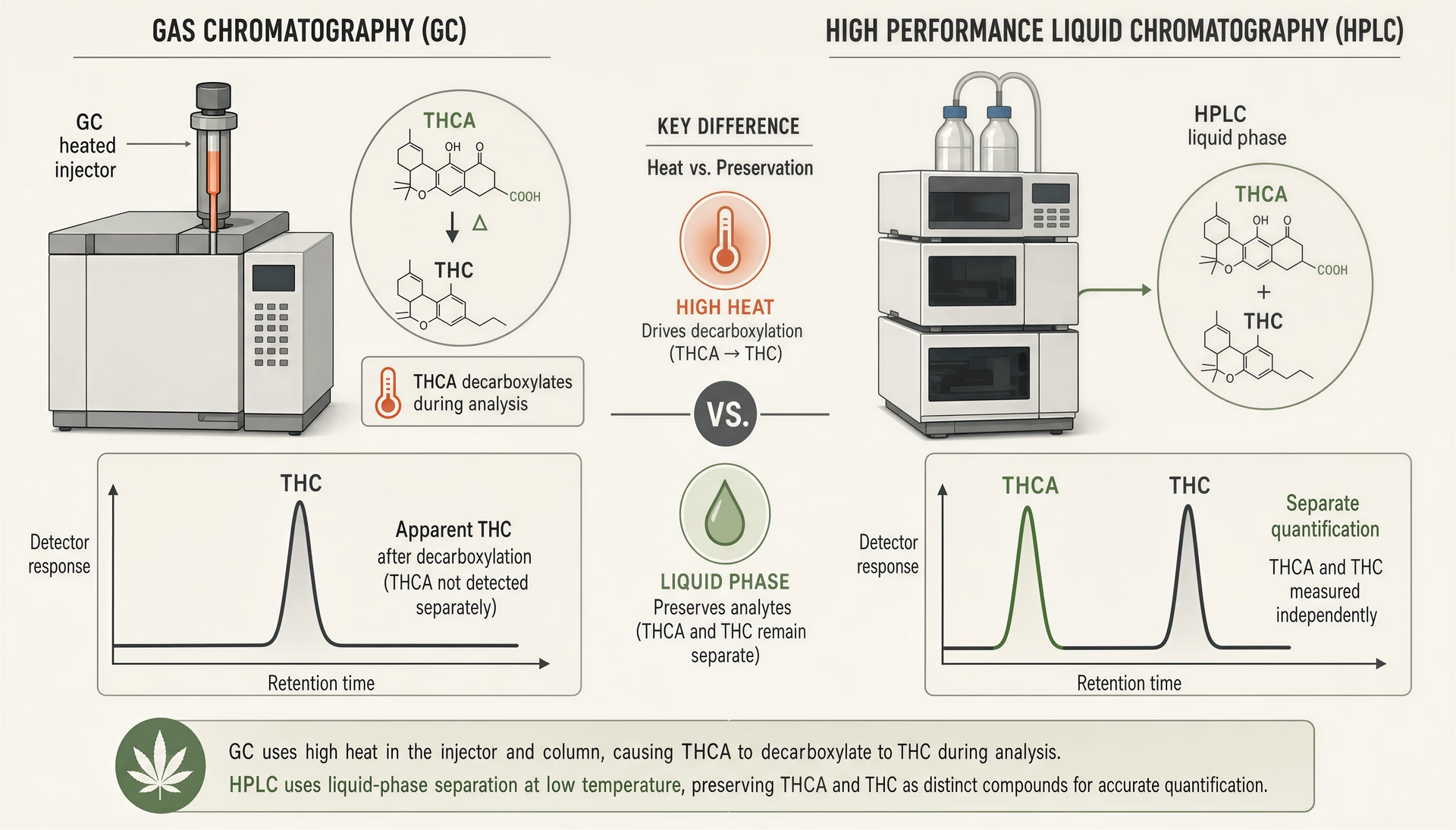
Why HPLC is the standard for separating THCA and THC
High-performance liquid chromatography, usually written HPLC, avoids the vaporization step. The sample is dissolved in solvent and carried through a column in the liquid phase, which means the method does not require the same destructive heat used in GC.
That single difference changes everything. HPLC can separate and quantify THCA and delta-9-THC as distinct peaks. The acid stays the acid. The neutral cannabinoid stays neutral. If the goal is to know what is actually in the harvested flower before smoking, vaporizing, baking, or aging, HPLC is the right tool.
This is why modern cannabis testing programs and method guidance generally rely on liquid chromatography for cannabinoid potency panels, especially where regulators care about acidic and neutral forms separately. HPLC preserves the distinction the plant itself makes. Fresh flower is largely THCA-rich, not THC-rich, and HPLC lets a lab show that directly.
The distinction is not academic. Under the 2018 Farm Bill, hemp was defined federally as cannabis with no more than 0.3% delta-9 THC on a dry-weight basis, not 0.3% total THC. That wording made test method choice politically explosive. If a product is analyzed by a method that reports only delta-9-THC present before heating, it may appear compliant. If the same material is assessed in a framework that accounts for post-decarboxylation yield, it can look very different. That is a large part of the THCA loophole fight in 2024: not a botanical mystery, but an analytical and statutory one.
| COA line item | Example value | How it is used |
|---|---|---|
| Delta-9 THC | 0.20% | Already-decarboxylated THC present in the sample |
| THCA | 25.00% | Potential THC source after heating |
| THCA-adjusted THC | 21.925% | 25.00 × 0.877 |
| Total THC | 22.125% | 0.20 + 21.925 |
How Certificates of Analysis calculate Total THC
A modern COA often lists at least two lines that people confuse: delta-9 THC and total THC.
Delta-9 THC is the amount of already-decarboxylated THC measured in the sample. THCA is listed separately if the lab used HPLC or another method that preserves acidic cannabinoids. Total THC is then calculated as:
Total THC = THC + (THCA × 0.877)
That formula is not arbitrary. It comes from molecular weight. THCA has a molecular mass of about 358.48 g/mol, while THC is about 314.47 g/mol, according to PubChem. Divide 314.47 by 358.48 and you get roughly 0.877. The missing mass is the carbon dioxide lost during decarboxylation.
Here is the plain-language version. One gram of THCA does not become one gram of THC after heating, because some of its mass leaves as CO2. So labs multiply THCA by 0.877 to estimate how much THC could exist after complete decarboxylation.
A simple example helps. Suppose a flower sample shows:
- Delta-9 THC: 0.20%
- THCA: 25.00%
The calculated total THC is:
0.20 + (25.00 × 0.877) = 0.20 + 21.925 = 22.125%
That sample is low in pre-existing delta-9 THC but high in THC potential. Smoking or vaping it will rapidly decarboxylate much of that THCA. A casual reader who notices only the 0.20% delta-9 number could wrongly assume the material is weak or non-intoxicating. It is neither.
- Source
- Molecular-weight ratio of THC to THCA
- Equation
- 314.47 / 358.48 ≈ 0.877
- Meaning
- THCA loses mass as CO2 when converted to THC
- Use case
- Converts THCA into estimated post-decarb THC potential
Why 0.877 matters in regulation, labeling, and consumer confusion
The number 0.877 looks tiny. It carries huge legal weight.
On a label or COA, it is the bridge between “what is in the jar now” and “what this can become when heated.” That is why states, testing programs, and courts keep circling back to it. If regulators care about intoxication potential rather than only the current delta-9 fraction, they need a decarboxylation-adjusted number. Minnesota’s public cannabis testing guidance, like many state references, uses the standard total THC formula for exactly this reason.
Consumer confusion starts when delta-9 THC and total THC are treated as interchangeable. They are not. A product can test below 0.3% delta-9 THC and still yield substantial THC after use because most of its cannabinoid content sits in THCA form. That is the core misunderstanding behind the “legal THC” argument. High-THCA flower is not some exotic new category. In everyday chemical terms, it resembles ordinary cannabis flower, because ordinary flower is usually THCA-dominant before combustion. The difference is legal wording and test presentation.
Instrument choice feeds directly into that confusion. GC can erase the distinction by turning THCA into THC during testing. HPLC preserves it. COAs then turn the preserved distinction into a formula. And the 0.877 factor translates chemistry into compliance language.
So when THCA seems to disappear in a lab report, the likely answer is not that the flower lacked it. The answer is that heat, whether from a lighter, an oven, or the instrument itself, changed the molecule first.
The THCA flower loophole in US law
The THCA flower fight is not really about a mysterious new cannabinoid. It is about statutory wording, lab method, and what happens when a molecule changes form under heat. Congress wrote the hemp definition around delta-9 THC concentration, not around the amount of THC a product can generate after decarboxylation. That drafting choice opened a lane for flower that is chemically ordinary cannabis in one sense and legally treated as hemp in another.
That distinction matters because most fresh cannabis flower is THCA-rich before combustion anyway. In the trichome, THCA synthase converts CBGA into THCA, as shown in the biochemical work of Sirikantaramas and colleagues in the early 2000s. THCA carries an extra carboxyl group compared with delta-9 THC, which changes receptor binding and helps explain why raw flower is not strongly intoxicating in the classic CB1-mediated way. But once heated, THCA loses CO2 and becomes delta-9 THC. Smoking and vaporizing do this fast. The legal problem follows the chemistry.
| Legal frame | What is measured | Effect on high-THCA flower |
|---|---|---|
| Delta-9-only reading | Pre-existing delta-9 THC only | Can appear compliant before sale if delta-9 is ≤ 0.3% |
| Total THC reading | Delta-9 THC plus THCA adjusted by 0.877 | Often captures intoxicating potential after heating |
| Post-decarboxylation focus | THC available after conversion | Narrows the loophole sharply |
What the 2018 Farm Bill actually says[7] Agriculture Improvement Act of 2018 (2018 Farm Bill), hemp definition. United States Congress. U.S. Code, 2018.
The 2018 Farm Bill defines hemp as Cannabis sativa L. and derivatives of that plant with “a delta-9 tetrahydrocannabinol concentration of not more than 0.3 percent on a dry weight basis.” That language appears in 7 U.S.C. §1639o. The key phrase is not hidden. It says delta-9 THC. It does not say total THC.
That omission is the whole loophole.
If Congress had written the definition around “total THC,” using the now-standard formula Total THC = THC + (THCA × 0.877), the THCA flower category would have been far narrower from the start. The 0.877 factor is not arbitrary; it reflects molecular mass loss when THCA decarboxylates into THC. THCA has a molecular weight of about 358.48 g/mol, while THC is about 314.47 g/mol, so 314.47/358.48 is approximately 0.877. State guidance and analytical chemistry references use that formula routinely.
Instead, the federal statutory text focused on delta-9 THC present in the plant as tested. That let producers point to pre-sale flower with very low measured delta-9 THC even when the same flower carried abundant THCA that would convert into intoxicating THC when smoked. The law did not create a new plant category. It created a measurement game.
USDA rules partly recognized this issue in hemp production by adopting “post-decarboxylation” or similarly reliable methods for regulatory testing under the domestic hemp program. But the broader commercial market did not disappear just because regulators saw the problem. The narrower statutory language remained in place, and businesses built around it.
How high-THCA flower can test compliant before sale
High-THCA flower passes as compliant because the sample can contain less than 0.3% delta-9 THC by dry weight at the moment of analysis while still containing large amounts of THCA. A certificate of analysis that highlights delta-9 alone can therefore make the flower appear federally lawful under the Farm Bill’s text.
Chemically, this is not exotic. It is normal cannabis chemistry. In harvested flower, THCA is the dominant cannabinoid acid in many chemovars, and delta-9 THC remains relatively low until heat, time, light, and oxidation begin shifting the profile. Raw is not a permanent condition; it is a stage. Decarboxylation during smoking is nearly instantaneous, and controlled heating studies show why. Veress et al. (1990) established the basic conversion pattern decades ago, and Wang et al. (2016) reported near-complete THCA conversion at 145°C for 7 minutes under their experimental conditions. Lower temperatures can still convert THCA, just more slowly. Push the heat too far and THC itself starts degrading.
That is why a low-delta-9 COA can be so misleading if read casually. It does not mean the flower cannot produce substantial THC when used in the ordinary way people use flower.
Testing method matters here. Gas chromatography heats the sample as part of the analysis, which decarboxylates THCA and can collapse the distinction between acid and neutral cannabinoids. High-performance liquid chromatography preserves THCA as THCA and measures it separately from THC. For this reason, HPLC is the right method when the question is whether a sample is rich in THCA while still low in delta-9 THC before sale. GC can answer a different question, but it cannot preserve the legal fiction on which the loophole depends.
So “THCA flower” is not botanically a separate thing from ordinary flower. It is ordinary flower entering a legal category because one number was elevated over another.
DEA interpretations and federal ambiguity[8] Implementation of the Agriculture Improvement Act of 2018. Drug Enforcement Administration. Federal Register, 2020.
DEA has never been comfortable with the loophole, and that discomfort has shown up in guidance, rulemaking language, and correspondence rather than in one clean, decisive national rule. The agency’s 2020 Interim Final Rule emphasized that material exceeding the 0.3% delta-9 THC limit remains controlled cannabis and that “synthetically derived” tetrahydrocannabinols remain Schedule I. That did not directly settle the THCA flower question, but it signaled an enforcement posture hostile to intoxicating hemp workarounds.
The harder issue is whether THCA-rich flower that meets the Farm Bill’s plain delta-9 threshold before use should be treated as lawful hemp, unlawful marijuana, or something in between once “total THC” potential is considered. DEA communications have often leaned toward the view that decarboxylation potential matters, especially if a product is plainly intended to deliver intoxicating THC after heating. Regulators object for an obvious reason: the market effect is similar to marijuana even if the pre-combustion analytical snapshot looks different.
But federal law remained muddy because agencies do not get to rewrite Congress’s words by letter alone. If the statute says delta-9 THC, that text constrains enforcement arguments. Courts tend to care about text. So do defense lawyers. This left a gap between what many regulators believed Congress meant and what Congress actually enacted.
That ambiguity was not trivial. Cannabis is not a niche issue. UNODC estimated 228 million users globally in 2022, the EUDA reported 24 million European adults used cannabis in the last year, and SAMHSA reported 61.8 million people aged 12 or older used marijuana in the United States in 2023. A legal rule built on a chemically unstable distinction was always going to produce conflict at scale.
Common state responses described in the article
- Total-THC definitions States rewrote rules to count THCA-adjusted THC rather than only delta-9 THC.
- Inhalable-hemp restrictions Some jurisdictions limited or banned smokable hemp flower.
- Licensing and enforcement Rules were tightened around intoxicating hemp products.
- Patchwork outcomes Similar flower could be lawful hemp, restricted hemp, or marijuana depending on the state.
State-level crackdowns and total-THC standards
States moved faster than Congress. Many did so by shifting from delta-9-only thinking to total-THC standards, explicit intoxicating-hemp restrictions, or product rules that reached smokable hemp flower directly. This was the predictable response.
From a regulator’s perspective, high-THCA flower looked like a paper-compliant route around marijuana law. If a product can be smoked and rapidly decarboxylates into intoxicating levels of delta-9 THC, then a delta-9-only pre-sale test appears formalistic rather than substantive. States therefore rewrote definitions, required total THC calculations, banned or restricted inhalable hemp products, or tightened licensing and enforcement.
This trend also reflected practical lab realities. Once states adopted the formula Total THC = THC + (THCA × 0.877), the loophole narrowed sharply. Flower that looked compliant under a delta-9-only reading often failed immediately under total-THC testing. The conflict was not over chemistry; the chemistry was settled. The conflict was over which chemistry the law should care about.
Some states tolerated the category for a time. Others treated it as plainly inconsistent with hemp policy. That patchwork created a strange map where materially similar flower could be lawful hemp in one jurisdiction, restricted intoxicating hemp in another, and treated as marijuana somewhere else. Fragmentation was the rule.
Where the controversy stood in 2024
By 2024, the controversy was still unresolved at the national level. Not unresolved because the chemistry was hard. Unresolved because the politics and statutory architecture pulled in different directions.
One side of the debate had the stronger textual argument: the Farm Bill says delta-9 THC, not total THC. Under that reading, flower with no more than 0.3% delta-9 THC by dry weight fits the federal hemp definition even if it contains abundant THCA. The other side had the stronger policy argument: this reading defeats the intended line between hemp and intoxicating cannabis because ordinary use converts THCA into THC almost immediately.
Both claims can be true at once. That is why 2024 stayed fragmented rather than settled.
Federal reform proposals and administrative pressure suggested that the loophole’s days might be numbered, but they had not erased it. DEA skepticism, USDA testing frameworks, and state crackdowns all pushed toward a total-THC or intoxicating-effect model. Yet absent clearer congressional action or definitive court rulings, the original drafting problem remained. A molecule made in the trichome as THCA, measured one way by HPLC, transformed by heat into THC, and classified by law according to one narrow pre-conversion metric had become a legal contradiction.
The sharpest way to say it is this: the THCA flower loophole existed because Congress defined hemp with the wrong number for the real-world product. Regulators knew it. States increasingly acted on it. But in 2024 the United States still had no single answer, only overlapping statutes, agency warnings, and a growing pile of contradictory enforcement choices.
What readers should conclude about THCA
THCA as plant chemistry
THCA is not a quirky side-compound. It is the plant’s main route to THC. In living cannabis, glandular trichomes convert CBGA into THCA through THCA synthase, a pathway mapped in biochemical work by Sirikantaramas and colleagues in the early 2000s. That matters because it explains a basic fact people often phrase badly: fresh cannabis is usually not strongly intoxicating not because it “has no THC potential,” but because its dominant cannabinoid is still the acidic precursor.
The difference is one carboxyl group. Chemically small, functionally huge. THCA’s extra CO2-bearing group changes shape, mass, and receptor behavior; THCA is about 358.48 g/mol, while THC is about 314.47 g/mol, which is why labs use the 0.877 conversion factor in total-THC calculations. Heat removes that group. Time can remove it too, more slowly. Smoking and vaporizing do it almost instantly. Oven decarboxylation does it on a temperature-time curve that is real but not universal: Wang et al. (2016) found near-complete conversion at 145°C for 7 minutes under their conditions, while Veress et al. (1990) and later studies showed that pushing heat too far starts sacrificing THC itself to degradation products.
So “raw cannabis is non-intoxicating” is only conditionally true. Harvested flower is already on a clock.
THCA as a pharmacology story
Calling THCA “inactive THC” is wrong. It is non-intoxicating in the classic THC sense because it does not meaningfully drive CB1-mediated psychoactivity, but that is not the same as pharmacological irrelevance. Nadal et al. (2017) showed THCA-A acts as a potent PPARγ agonist, giving the field a serious mechanistic reason to study anti-inflammatory and neuroprotective effects outside the usual THC frame. Preclinical work also points to activity involving TRP channels such as TRPM8 and effects on inflammatory pathways including COX-2.
That evidence is interesting, not settled. Linda Parker, Matthew Rock, and colleagues reported antiemetic effects in animal models, and the broader neuroprotection conversation draws context from disease-model work such as Weydt et al. (2005). Still, the leap from cell studies and rodents to confident human health claims is where THCA coverage often goes off the rails. The raw-cannabis juicing trend rests on a chemically sensible idea—preserve acidic cannabinoids by avoiding heat—but the wellness claims remain far ahead of clinical proof.
What readers should take away
- Plant chemistry Fresh cannabis usually accumulates THCA first, not mainly THC.
- Heating Decarboxylation converts THCA into THC and can also degrade THC if pushed too far.
- Testing HPLC preserves the THCA-versus-THC distinction; GC can erase it.
- Law The US loophole exists because federal text focused on delta-9 THC rather than total THC potential.
THCA as an analytical and legal fault line
THCA is also a testing problem and a law problem. Gas chromatography heats samples and decarboxylates THCA during analysis, so it tends to collapse the distinction into THC. HPLC can measure THCA as THCA. That methodological split is not academic; it changes what a certificate of analysis appears to say.
The legal fight in the United States turns on exactly that gap. The 2018 Farm Bill defined hemp by delta-9 THC concentration, not total THC, creating room for high-THCA flower that tests below 0.3% delta-9 THC before use but yields substantial THC after heating. DEA signals and state responses have pushed back, often by shifting toward total-THC logic, yet the statutory picture in 2024 remains fractured. With cannabis use this widespread—228 million globally in 2022 according to UNODC, 24 million European adults by EUDA estimates, and 61.8 million past-year users in the US per SAMHSA—THCA is not a niche chemistry puzzle. It is one molecule sitting at the intersection of botany, pharmacology, analytical method, and law. That is why it matters, and why the hype around it needs more restraint than the statutes currently do.
References
- [1] Results from the 2023 National Survey on Drug Use and Health: Detailed Tables. SAMHSA, 2024. https://www.samhsa.gov/data/report/2023-nsduh-detailed-tables
- [2] Tetrahydrocannabinolic acid synthase, the enzyme controlling marijuana psychoactivity, is secreted into the storage cavity of the glandular trichomes. Journal of Biological Chemistry, 2005. https://doi.org/10.1074/jbc.M500693200
- [3] Tetrahydrocannabinolic acid is a potent PPARγ agonist with neuroprotective activity. British Journal of Pharmacology, 2017. https://doi.org/10.1111/bph.13764
- [4] Study on cannabinoid decarboxylation and degradation during heating. Journal of Chromatography, 1990. https://pubmed.ncbi.nlm.nih.gov/2175313/
- [5] Molecular characterization of tetrahydrocannabinolic acid synthase from Cannabis sativa L.. Journal of Biological Chemistry, 2004. https://doi.org/10.1074/jbc.M311183200
- [6] Decarboxylation study of acidic cannabinoids in cannabis. Journal of Chromatography A, 2016. https://doi.org/10.1016/j.chroma.2016.07.021
- [7] Agriculture Improvement Act of 2018 (2018 Farm Bill), hemp definition. U.S. Code, 2018. https://www.law.cornell.edu/uscode/text/7/1639o
- [8] Implementation of the Agriculture Improvement Act of 2018. Federal Register, 2020. https://www.federalregister.gov/documents/2020/08/21/2020-17356/implementation-of-the-agriculture-improvement-act-of-2018