













THCV in one sentence: a rare cannabinoid with a dose-dependent identity problem
THCV matters not because it is fashionable, but because one small chemical edit changes cannabinoid behavior in ways that the usual headlines miss. Tetrahydrocannabivarin is a homolog of delta-9-THC with a 3-carbon propyl side chain where THC carries a 5-carbon pentyl chain. That sounds minor. It is not. As Pertwee and colleagues outlined in Trends in Pharmacological Sciences (2007) and British Journal of Pharmacology (2008), this structural shift changes how THCV engages CB1 and CB2 receptors: at low doses it can oppose or blunt CB1 signaling, while at higher doses it begins to show agonist-like cannabinoid activity. That dose-switching is the real story.
Why THCV is not just “THC lite”
THCV is not well described as simply 'THC lite' because its receptor behavior differs from THC in a dose-dependent way. Limited evidence
Calling THCV “THC lite” suggests a weaker, simpler version of THC. The evidence points elsewhere. CB1 receptors are densely expressed in the cortex, hippocampus, basal ganglia, cerebellum, and hypothalamus, which is why cannabinoids can affect memory, movement, reward, coordination, and feeding. THC is largely discussed as a CB1 agonist. THCV behaves less predictably. At lower doses, it may act as a CB1 antagonist or neutral antagonist, which helps explain why it has been linked to reduced appetite and why it can sometimes counter aspects of THC’s effects rather than merely mimicking them.
At higher doses, the picture changes again. THCV can produce psychoactive effects, usually described as shorter-lived and clearer than THC, with a more alert or stimulating profile. That reputation may be real for some people, but it is not yet backed by the same depth of controlled human data available for major cannabinoids. Product context matters too. Isolated THCV is one thing; THCV alongside THC, CBD, and terpenes is another.
This complexity runs through every part of the subject: chemistry, ECS pharmacology, metabolic research, neuroprotection, bone biology, rarity in flower, legal ambiguity, and the practical challenge of finding material that contains enough THCV to matter.
The marketing myth of “diet weed”
“Diet weed” is catchy. It is also a flattening of the data. The reason the label caught on is obvious: obesity rates are high worldwide, and any compound tied to appetite control attracts attention. But THCV is not important because of a meme, and it is not interchangeable with a weight-loss drug.
Mechanistically, the appetite idea is plausible. Hypothalamic CB1 signaling is involved in orexigenic drive, while mesolimbic circuits shape food reward. A low-dose CB1 antagonist could reduce appetite-related signaling. That resemblance to the old anti-obesity strategy behind rimonabant is scientifically relevant, though THCV should not be treated as rimonabant by another name.
[1] Efficacy and Safety of Cannabidiol and Tetrahydrocannabivarin on Glycemic and Lipid Parameters in Patients With Type 2 Diabetes: A Randomized, Double-Blind, Placebo-Controlled, Parallel Group Pilot Study. T. M. Jadoon, G. D. Tan, S. A. O'Sullivan. Diabetes Care, 2016.
The human evidence is still limited. Jadoon et al. in Diabetes Care (2016) randomized 62 subjects with type 2 diabetes to several treatment arms and found THCV significantly decreased fasting plasma glucose compared with placebo and improved beta-cell function measures. Earlier mouse work by Wargent et al. (2013) found improved glucose intolerance and insulin sensitivity. That is promising metabolic data. It is not proof that THCV reliably suppresses appetite in everyday use, much less that THCV products cause weight loss.
O’Sullivan et al. (Neuropsychopharmacology, 2015) further complicated the story: a single 10 mg dose changed resting-state connectivity in networks tied to reward and cognitive control. That is interesting. It does not validate marketing shorthand.
What the evidence already supports — and what it does not
THCV has distinct pharmacology from THC, including dose-dependent CB1 behavior and preclinical metabolic and neuroprotective signals. Limited evidence
What the literature already supports: THCV has distinct pharmacology from THC; it shows dose-dependent CB1 behavior; it has credible preclinical signals in metabolism, neuroprotection, inflammation, anticonvulsant models, and bone-related research. Garcia et al. (2011) and Celorrio et al. (2016) reported neuroprotective effects in Parkinsonian animal models. Bone work suggests possible osteogenic effects in vitro through cannabinoid-linked pathways. None of that should be overstated.
What the literature does not support: sweeping claims that THCV is an established appetite suppressant, a proven weight-loss aid, or a clinically validated treatment for diabetes, Parkinson’s disease, osteoporosis, or epilepsy. Human data remain thin, formulations vary, and dose clearly matters.
That gap between chemistry and marketing is widened by scarcity. THCV is rare in most flower, often below 1%, with higher levels mainly associated with African-origin germplasm such as Durban Poison, Malawi, Swazi, and some Nigerian lines. Legal status is fragmented. Lab reports may not separate THCV from THCV-A cleanly. Even the oft-repeated vaporization point of 220°C/428°F is better treated as a rough reference than a fixed law.
Molecular structure and why the propyl side chain matters
THCV looks deceptively similar to delta-9-THC on paper. Both are classical phytocannabinoids built on the same tricyclic core. Both fit, at least partly, into the same endocannabinoid receptors. Yet THCV behaves differently enough that reducing it to “THC but lighter” misses the chemistry that drives its effects.
The key structural difference is small in appearance and large in consequence: THCV carries a 3-carbon propyl side chain, while delta-9-THC carries a 5-carbon pentyl side chain. That two-carbon truncation changes how strongly the molecule partitions into lipid environments, how well it fits receptor binding pockets, and whether it tends to block or activate CB1 signaling at a given dose. Pertwee and colleagues emphasized this point in their pharmacology reviews, noting that THCV can act as a CB1 antagonist or neutral antagonist at low doses, then show agonist-like behavior at higher doses, with partial agonist activity at CB2 in vitro (Pertwee et al., 2007; Pertwee, 2008). That is not a trivial distinction. It is the reason THCV has a reputation for appetite suppression in some contexts and mild psychoactivity in others.
| Compound | Side chain | Molecular formula | Article context |
|---|---|---|---|
| THCV | 3-carbon propyl | C19H26O2 | Dose-dependent CB1 antagonist/agonist-like behavior |
| Delta-9-THC | 5-carbon pentyl | C21H30O2 | Reference psychoactive cannabinoid |
| THCP | 7-carbon heptyl | Not stated in article | Reported higher CB1 affinity than delta-9-THC |

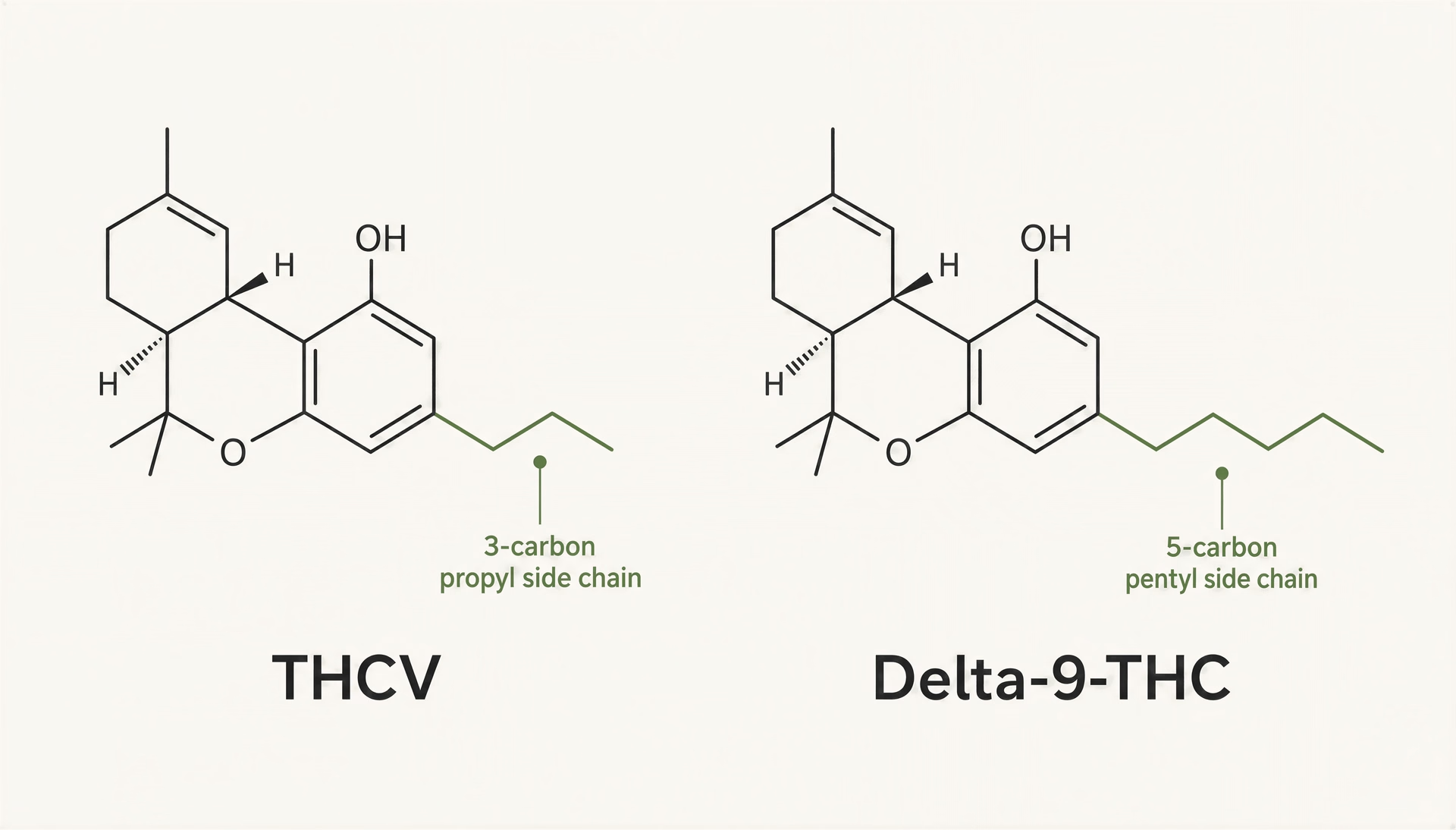
THCV vs delta-9-THC: 3-carbon propyl chain versus 5-carbon pentyl chain
Homolog A compound in the same structural series as another compound, differing by a repeating unit in one part of the molecule.
THCV is tetrahydrocannabivarin. The “varin” suffix signals the shortened side chain. Chemically, it is a homolog of delta-9-THC, meaning the two molecules belong to the same structural series but differ by a repeating unit in one part of the molecule. Delta-9-THC has the molecular formula C21H30O2. THCV is C19H26O2. The missing C2H4 unit reflects the shorter alkyl tail.
That tail matters because cannabinoid receptors are not simply on-off locks. Their binding pockets favor certain shapes and hydrophobic interactions. A pentyl chain gives delta-9-THC a stronger foothold at CB1 than a propyl chain does. THCV still binds, but not in the same way and not with the same functional consequences across doses.
Context helps. THCP, identified much later, sits at the opposite end of this side-chain story. It has a 7-carbon heptyl chain and was reported to show markedly higher CB1 affinity than delta-9-THC in early receptor work (Citti et al., 2019). So the rough structural trend is not mysterious: longer side chains generally increase CB1 affinity and potency, up to a point, while shorter ones can weaken agonism or alter efficacy. THCV is not “weaker THC” in a simple linear sense. It is a different signaling compound because the side chain shifts the receptor interaction itself.
This is why the phrase “diet weed” is chemically sloppy. THCV’s lower-dose behavior is partly explained by weaker and functionally distinct CB1 engagement, not by some generic stimulant property.
Varin family terms
- THCV
- Tetrahydrocannabivarin, the propyl homolog of delta-9-THC.
- CBDV
- Cannabidivarin, the propyl homolog of CBD.
- CBCV
- Cannabichromevarin, another propyl-side-chain cannabinoid.
- THCV-A
- Tetrahydrocannabivarinic acid, the acidic precursor that decarboxylates into THCV.
Varin cannabinoids as a chemical family
THCV belongs to the varin family of cannabinoids, all defined by that 3-carbon propyl side chain. The same naming rule appears elsewhere: CBDV is cannabidivarin, the propyl homolog of CBD; CBCV is cannabichromevarin; THCV-A is tetrahydrocannabivarinic acid, the acidic precursor of THCV.
These compounds are biosynthetically distinct from the more common pentyl cannabinoids. Instead of deriving from olivetolic acid-based pathways that yield pentyl analogs, varins arise from divarinolic acid precursors, which carry the shorter side chain from the start. So THCV is not a degraded THC molecule and not a post-harvest artifact. It is made by the plant through a different precursor route.
That biosynthetic distinction also helps explain its rarity. Most modern chemovars are bred around high THCA production, often with little attention to varin expression. By contrast, certain African sativa landraces and descendants—Durban Poison is the standard example, along with some Malawi, Swazi, and Nigerian lines—show greater enrichment of varin cannabinoids. Even then, consistency is often overstated. Many samples still test below 1% THCV by dry weight, and the often-cited 2-5% range in Durban-type material tends to appear only in selected genetics and under targeted breeding, not as a universal trait.
How side-chain length changes receptor affinity, efficacy, and psychoactivity
A two-carbon difference sounds minor until you look at receptor pharmacology. CB1 receptors are densely expressed in the cortex, hippocampus, basal ganglia, cerebellum, and hypothalamus. Delta-9-THC activates CB1 strongly enough to produce intoxication, appetite stimulation, altered time perception, and memory effects. THCV interacts with that same system, but its propyl chain changes both affinity and efficacy.
Lower lipophilicity is part of the story. A shorter alkyl chain generally reduces hydrophobic interaction with membrane environments and receptor pockets. That can mean weaker stabilization of the active receptor conformation. In practical terms, THCV is less able than delta-9-THC to behave as a straightforward CB1 agonist at low exposure. Pertwee (2008) described THCV as a CB1 antagonist or neutral antagonist at low doses and a CB1 agonist at higher doses, with partial agonism at CB2 in vitro. That dose-switching model fits the real-world confusion around THCV better than any slogan does.
It also fits appetite research. CB1 signaling in the hypothalamus and mesolimbic reward circuitry promotes feeding and food salience. A compound that dampens CB1 activity at low doses may reduce orexigenic signaling, which is why THCV drew interest after the rise and fall of the CB1 blocker rimonabant. But THCV is not rimonabant, and the comparison should stop at mechanism. Rimonabant was a potent synthetic CB1 antagonist associated with serious psychiatric adverse effects. THCV has not been shown to reproduce that profile, and current evidence is too thin to treat the compounds as equivalents.
Psychoactivity follows the same receptor logic. At sufficiently high doses, THCV can become psychoactive, usually described as shorter in duration and clearer in subjective tone than delta-9-THC. That reputation is plausible given its weaker CB1 agonism and mixed pharmacology, but controlled human evidence remains sparse. O’Sullivan et al. (2015) found that a single 10 mg dose of THCV altered resting-state functional connectivity, reducing connectivity in the default mode network while increasing it in cognitive control and dorsal visual stream networks. That does not prove an “energy” effect, though it does show that THCV is not pharmacologically inert in the human brain.
THCV-A, decarboxylation, and analytical reporting
Decarboxylation sequence
- 1 Raw plant material contains mostly THCV-A rather than neutral THCV.
- 2 Heat removes a carboxyl group from THCV-A.
- 3 Smoking or vaporization drives conversion into neutral THCV.
- 4 Reported 'total THCV' should explain the conversion formula used.
In raw plant material, THCV does not usually exist primarily as neutral THCV. Like THCA before THC, it is produced mainly as THCV-A, also written THCVA or tetrahydrocannabivarinic acid. Heating removes a carboxyl group through decarboxylation, converting THCV-A into THCV. Smoking, vaporization, and other heat exposure drive that reaction. Aging can contribute, but heat is the main trigger.
This distinction matters in lab reports. A certificate of analysis may list THCV and THCV-A separately, and that is the chemically honest way to report it. If only neutral THCV is shown, the report may understate the amount that could become available after heating. If the lab reports “total THCV,” it should ideally explain the conversion formula used to account for the mass lost during decarboxylation, just as labs do with THCA and THC.
For researchers, separating THCV from THCV-A is not bookkeeping trivia. The acidic and neutral forms can differ in stability, pharmacology, and route-dependent effects. For anyone interpreting flower chemistry, it prevents category errors. A sample with modest measured THCV but substantial THCV-A may deliver more varin-derived exposure after inhalation than the neutral number alone suggests.
Decarboxylation Heat-driven removal of a carboxyl group from an acidic cannabinoid, converting a precursor such as THCV-A into its neutral form, THCV.
The same caution applies to vaporization claims. THCV is often assigned an approximate boiling point near 220°C / 428°F in popular charts, but cannabinoid boiling-point figures are method-sensitive and frequently based on extrapolated or non-standard conditions. Treat 220°C as a rough working reference, not a fixed physical promise.
Put plainly, THCV’s propyl side chain is not a naming detail. It is the structural reason this cannabinoid departs from THC in receptor behavior, dose response, and reported effects. When people flatten THCV into a weight-loss meme, they erase the actual chemistry. The molecule is more interesting than that, and less predictable.
Endocannabinoid system interaction: where THCV binds and why low and high doses diverge
THCV’s reputation rises and falls on one fact: it does not behave like THC in a linear way. The propyl side chain that distinguishes tetrahydrocannabivarin from delta-9-THC’s pentyl chain changes receptor pharmacology enough that low-dose THCV can oppose CB1 signaling, while higher-dose THCV can begin to activate the same receptor system it was dampening at first. Pertwee and colleagues laid out this profile clearly in the late 2000s, describing THCV as a CB1 antagonist or neutral antagonist at low doses, with agonist properties emerging at higher doses, and partial agonism at CB2 in vitro (Pertwee et al., 2007; Pertwee, 2008). That dose-switching is the mechanistic center of the whole molecule. It is also why “THCV suppresses appetite” is not wrong so much as incomplete to the point of distortion.
Brain regions the article links to CB1 effects
- Hypothalamus Appetite regulation, energy balance, and orexigenic signaling.
- Mesolimbic circuits Food reward, salience, and motivation.
- Hippocampus Memory formation and food-related learning.
- Cortex Executive function, attention, and psychoactive effects.
- Basal ganglia and cerebellum Movement and coordination.

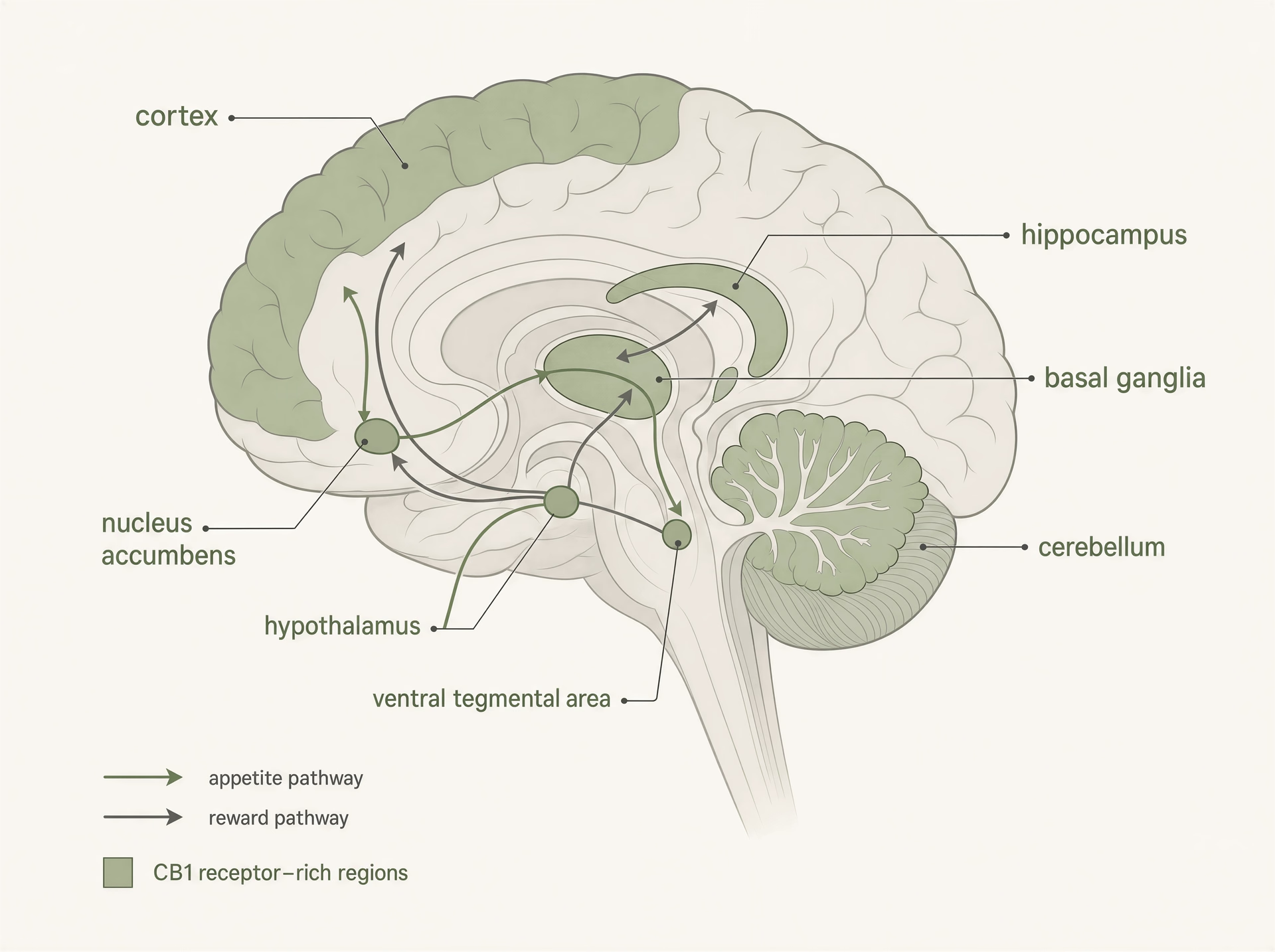
CB1 receptor distribution in the brain and appetite circuitry
CB1 receptors are among the most abundant G protein-coupled receptors in the central nervous system. They are densely expressed in the cortex, hippocampus, basal ganglia, cerebellum, and key hypothalamic nuclei, with functionally important expression in mesolimbic reward circuits as well. Those locations matter because CB1 signaling does not control a single output. It shapes feeding drive, reward valuation, memory encoding, motor behavior, sensory salience, and intoxication.
Start with the hypothalamus. This is where cannabinoid signaling intersects with appetite-regulating networks that integrate leptin, ghrelin, insulin, and nutrient status. Endocannabinoids such as anandamide and 2-AG can promote feeding through hypothalamic CB1 activity, especially under conditions of energy deficit. If THCV blocks or dampens CB1 here at low dose, the expected effect is reduced orexigenic signaling. That is the biological basis for the “diet weed” label. But appetite is not generated only in the hypothalamus.
Mesolimbic circuitry matters just as much. CB1 receptors in the ventral tegmental area, nucleus accumbens, and connected reward networks help regulate the hedonic value of food. Palatable food is not only about caloric need; it is about reinforcement. Blunting CB1 tone in these pathways can reduce the motivational pull of food cues, especially highly rewarding foods. That idea fits with human neuroimaging work by O’Sullivan et al. (2015), where a single 10 mg dose of THCV altered resting-state functional connectivity, reducing connectivity in the default mode network and increasing it in cognitive control and dorsal visual stream networks. That pattern does not read like a simple hunger switch. It suggests altered salience processing and executive regulation around reward-related stimuli.
The hippocampus adds another layer. CB1 signaling there affects memory formation and contextual learning, which helps explain why THC can alter short-term memory and why changes in CB1 tone can reshape food-related learning and cue reactivity. In the cortex, CB1 receptors contribute to executive function, attention, and subjective psychoactive effects. In the basal ganglia and cerebellum, they influence movement and coordination, which becomes relevant when THCV is discussed in Parkinsonian animal models such as Garcia et al. (2011) and Celorrio et al. (2016). One receptor family. Many circuits. Different outputs depending on dose, co-administered cannabinoids, and tissue context.
CB1 antagonism or neutral antagonism at low dose
Neutral antagonist A compound that blocks receptor signaling without pushing receptor activity below baseline, unlike an inverse agonist.
Low-dose THCV is most often described as a CB1 antagonist or neutral antagonist. That wording matters. An inverse agonist actively pushes receptor activity below baseline; a neutral antagonist blocks signaling without driving the receptor in the opposite direction. Rimonabant, the anti-obesity drug withdrawn because of psychiatric adverse effects, was a CB1 inverse agonist. THCV is not simply “natural rimonabant,” and equating the two is pharmacologically sloppy.
Pertwee (2008) and Pertwee et al. (2007) characterize THCV as antagonizing CB1-mediated effects at low concentrations in preclinical systems. In practical terms, that means THCV can interfere with endogenous cannabinoid signaling and can blunt at least some effects of THC under certain conditions. This is the likely mechanism behind reports that low amounts of THCV feel less foggy than THC and may attenuate some THC-driven hunger, short-term memory disruption, or sedation. “Likely” is the right word because human receptor occupancy data do not yet exist. We are inferring from binding and functional studies, not mapping the exact concentration-response curve in living human brain tissue.
This low-dose CB1 antagonism gives metabolic findings a plausible framework. In diet-induced obesity models, Wargent et al. (2013) found THCV improved glucose intolerance and insulin sensitivity. In a randomized, double-blind, placebo-controlled pilot trial in people with type 2 diabetes, Jadoon et al. (2016) reported that THCV significantly decreased fasting plasma glucose compared with placebo and improved beta-cell function measures. Those outcomes do not prove that CB1 antagonism alone explains the benefit, but they fit a broader literature linking excessive endocannabinoid tone to metabolic dysregulation.
The appetite story, though, still needs restraint. Lowering CB1 signaling can reduce food intake in some settings, yet hunger is not identical to body weight, and acute appetite effects are not identical to durable fat loss. The molecule may alter cue-driven eating, reward processing, or glucose handling without producing dramatic real-world weight change. That is why the popular nickname overshoots the evidence.
CB1 agonism at higher dose and the threshold problem
At higher doses, THCV stops looking like a straightforward blocker and begins to show agonist-like behavior at CB1. This is where public discourse usually collapses. People want a binary: does it block THC or act like THC? The answer is both, depending on concentration, formulation, route of administration, and what else is present.
Pertwee’s reviews remain the anchor here: THCV shows dose-dependent CB1 pharmacology, antagonistic at low dose and agonistic at higher dose. But there is a major unresolved issue. No one can give a clean human threshold and say, with confidence, “below X milligrams THCV antagonizes CB1 and above Y it activates it.” That threshold problem is not trivial. Oral bioavailability is variable. Inhaled dosing rises fast and falls fast. Co-administration with THC may shift the subjective picture even if receptor-level interactions are partly predictable.
This uncertainty explains why product claims are all over the map. A person inhaling a small amount of THCV-rich flower alongside THC may experience partial opposition to THC in one setting and a clearer but still psychoactive cannabinoid effect in another. A purified oral dose may behave differently again. Human evidence remains thin, but the idea that THCV is wholly non-intoxicating is not defensible. At sufficiently high doses, it is psychoactive, usually described as shorter in duration and clearer in head feel than delta-9-THC, though controlled comparisons are limited.
O’Sullivan et al. (2015) complicate the appetite-reduction narrative in another way. A single 10 mg THCV dose changed brain connectivity in networks relevant to cognitive control and visual processing rather than simply suppressing reward circuitry across the board. That supports a more precise interpretation: THCV may redistribute attention and reward processing rather than merely turning off hunger. Dose probably determines whether that translates into less interest in food, altered food cue salience, mild stimulation, or noticeable psychoactivity.
Partial agonism at CB2 and inflammatory signaling
THCV’s CB2 profile gets less attention, but it should not. In vitro, THCV behaves as a partial agonist at CB2 receptors (Pertwee, 2008). CB2 receptors are expressed mainly in immune cells and peripheral tissues, though they also appear in microglia and other cell populations relevant to neuroinflammation. Partial agonism means THCV may modulate inflammatory signaling without acting as a full-force switch.
That matters for two research areas often mentioned around THCV: neuroprotection and bone biology. In Parkinsonian models, Garcia et al. (2011) found THCV improved motor deficits and preserved dopaminergic neurons in a 6-hydroxydopamine lesion model. Celorrio et al. (2016) reported that THCV ameliorated motor inhibition and prevented nigral degeneration in an LPS-lesioned model, with anti-inflammatory actions implicated. These are animal data, not clinical proof, but CB2-linked immunomodulation is a plausible part of the mechanism.
Bone research is also relevant here. Cannabinoid effects on osteoblast and osteoclast activity often involve CB2-related pathways, and preclinical work has suggested THCV may promote bone nodule formation and collagen production in vitro. That does not make it a treatment for osteoporosis. It does show why CB2 pharmacology deserves more than a footnote.
THCV may act at noncanonical targets such as TRP channels and possibly serotonergic pathways, but the evidence is uneven and model-dependent. Preliminary evidence
Beyond CB1/CB2: TRP channels, 5-HT pathways, and open questions
Minor cannabinoids rarely stay inside the CB1/CB2 box, and THCV is no exception. Reviews by Morales, Hurst, Reggio, and others on minor cannabinoid pharmacology describe activity across noncanonical targets including TRP channels such as TRPV1, TRPA1, and TRPM8, with model-dependent findings. Evidence here is uneven. Some assays suggest activation at certain TRP channels and inhibition at others; concentration ranges vary; translating in vitro channel effects into human experience is hard.
Still, these targets may help explain why THCV does not feel pharmacologically neat. TRPV1 is involved in nociception, inflammation, and metabolic regulation. TRPA1 participates in inflammatory and sensory signaling. TRPM8 has been tied to cold sensation and broader cellular responses. If THCV modulates these channels at physiologically relevant concentrations, some effects attributed solely to “CB1 appetite suppression” may actually arise from a wider signaling web.
There are also signals around serotonergic pathways, including possible 5-HT1A-related effects in some models. The literature is not settled enough to assign a dominant 5-HT mechanism, but it is enough to warn against simplistic receptor maps. THCV may be one of those cannabinoids where the clinical phenotype emerges from modest effects across several targets rather than a dramatic effect at one.
That broader view also helps explain why entourage claims should be treated carefully. In a preparation containing THC, CBD, terpenes, and THCV, the final effect reflects competing and overlapping actions: THC activating CB1, THCV potentially blocking or partly activating CB1 depending on dose, CBD altering signaling through indirect and non-CB mechanisms, and terpenes possibly affecting perception or pharmacokinetics. There is no single THCV experience outside context.
So the mechanistic picture is this: low-dose THCV tends to restrain CB1 signaling, especially in appetite and reward circuits; higher-dose THCV can move toward CB1 agonism; CB2 partial agonism may contribute to anti-inflammatory, neuroprotective, and bone-related signals; and noncanonical targets remain important but underdefined. That is the real reason THCV resists slogans. Its pharmacology switches gears.
- Inhaled onset
- Within minutes
- Oral onset
- Roughly 30-120 minutes
- Human imaging dose discussed
- Single 10 mg dose
- Common reputation
- Shorter-lived and clearer than THC
- Data quality
- Human PK evidence remains limited
Pharmacokinetics and subjective effects: onset, duration, and the 'clear-headed' reputation
THCV has a reputation problem. Popular coverage treats it like a simple “energizing” cannabinoid, sometimes even a shortcut to appetite control, when the real picture is much messier: human pharmacokinetic data are thin, dose-response appears to switch with concentration, and the experience depends heavily on whether THCV is inhaled, swallowed, isolated, or paired with THC and other cannabis constituents.
What is reasonably safe to say? THCV is absorbed and distributed like a highly lipophilic cannabinoid, so route of administration matters a lot. Inhalation should produce rapid blood-level rise and fast subjective onset. Oral use should be slower, more variable, and shaped by first-pass metabolism. Beyond that, many practical claims still rest on inference from cannabinoid chemistry, small human studies, and accumulated user reports rather than mature PK datasets with dense sampling, receptor occupancy, and repeated dose-ranging.
The structural reason this matters is simple but important. THCV differs from delta-9-THC by having a 3-carbon propyl side chain rather than THC’s 5-carbon pentyl chain. That small change alters receptor behavior enough that THCV can act as a CB1 antagonist or neutral antagonist at lower doses and show agonist-like activity at higher doses, with partial agonist activity at CB2 in vitro, as summarized by Pertwee et al. (2007) and Pertwee (2008). So “how THCV feels” cannot be separated from dose.
| Route | Expected onset | Main PK feature | Article caveat |
|---|---|---|---|
| Inhaled | Within minutes | Bypasses first-pass metabolism | Effect depends on whether flower contains enough THCV |
| Oral | 30-120 minutes | First-pass metabolism and variable bioavailability | Exposure curves remain uncertain |
| Whole flower with THC | Varies with inhalation | Mixed cannabinoid delivery | THC, terpenes, and low THCV can dominate the experience |
Inhaled THCV: rapid onset, shorter-lived effects
When THCV is inhaled by vaporization or smoking in whole flower, onset is expected within minutes, broadly in line with other inhaled cannabinoids. Pulmonary absorption bypasses first-pass liver metabolism, so the initial rise in plasma concentration should be quicker than with oral use. That makes inhaled THCV the route most likely to produce a noticeable near-term effect, assuming the starting material contains enough THCV to matter.
That assumption is often the weak point. Most cannabis flower contains very little THCV, often under 1% by dry weight. Even cultivars associated with African-origin varin genetics, such as Durban Poison or certain Malawi and Swazi lines, are variable. Reports of 2-5% THCV exist, but they are not the norm across all material carrying those names. This is why many people expecting a dramatic THCV effect from flower never encounter one.
Subjectively, inhaled THCV is commonly described as shorter-lived than THC and less sedating. That matches its reputation for a brisker, more “clear-headed” psychoactive profile at sufficiently high doses. It is plausible. It is not settled. Controlled human comparisons with matched inhaled THC doses are still scarce. The common claim that THCV produces a cleaner and more stimulating intoxication than THC fits the receptor story, but hard PK/PD data are not yet strong enough to turn that into a fixed rule.
A practical note on vaporization: THCV is often assigned a boiling point around 220°C / 428°F, but cannabinoid boiling points are method-sensitive and often repeated from non-standard or extrapolated sources. Treat 220°C as a commonly cited approximation, not a hard physical threshold.
Oral THCV: slower onset, first-pass metabolism, and uncertain exposure curves
Oral THCV should behave more like other swallowed cannabinoids than like inhaled flower. Onset is likely in the rough 30-120 minute range depending on formulation, fed state, and individual metabolism. Peak effects may arrive later still. But with THCV, the confidence interval around those expectations is wide because published human pharmacokinetic work remains limited.
First-pass metabolism Metabolism in the gut and liver before a swallowed compound reaches systemic circulation, often lowering and increasing variability of bioavailability.
First-pass metabolism matters here. After oral ingestion, cannabinoids move through the gut and liver before reaching systemic circulation in meaningful amounts. That usually lowers and destabilizes bioavailability compared with inhalation. It also means that two people taking the same nominal oral dose may get very different exposures, especially if one takes it with fat and the other on an empty stomach.
This uncertainty helps explain the mismatch between label rhetoric and lived experience. A low oral dose may not produce obvious psychoactive effects at all, and if THCV is acting primarily as a CB1 antagonist or neutral antagonist at that exposure, it may feel less like “THC-lite” and more like a subtle modifier of appetite, reward, or co-administered THC effects. At higher oral doses, agonist-like effects may become more visible. The transition point is not well mapped in humans.
The best-known human THCV trial, Jadoon et al. (2016) in Diabetes Care, randomized 62 patients with type 2 diabetes across five treatment arms. The study was metabolic, not a classic psychopharmacology trial, but it still matters because it confirms that oral THCV can reach biologically active exposure in humans. THCV significantly decreased fasting plasma glucose compared with placebo and improved beta-cell function measures. Useful signal. Not a full PK map.
Reports of clearer and more stimulating effects than THC are plausible, but controlled human dose-ranging data are still sparse. Limited evidence
Why users report energy and mental clarity
The “clear-headed” reputation likely comes from pharmacology, not magic. CB1 receptors are densely expressed in the cortex, hippocampus, basal ganglia, cerebellum, and hypothalamus. THC’s familiar foggier profile is tied to broad CB1 agonism across memory, motor, reward, and appetite circuits. THCV, by contrast, appears to interact with CB1 in a dose-dependent way that can blunt or reshape that signaling at lower exposures.
That makes the reports of less cognitive clouding and more stimulation plausible. They are also supported indirectly by neuroimaging. O’Sullivan et al. (2015) found that a single 10 mg THCV dose altered resting-state functional connectivity, reducing connectivity in the default mode network while increasing it in cognitive control and dorsal visual stream networks. That does not prove “mental clarity” as a clinical endpoint, but it does fit the idea that THCV affects attention and reward-related processing differently from THC.
People also report more energy than sedation. Again, plausible, especially in lower-THC or THC-free contexts. But this should not be overstated. Human dose-ranging trials that carefully measure alertness, reaction time, anxiety, mood, and task performance are still needed.
How THCV changes the experience of THC-containing products
This is where product context becomes decisive. THCV isolate, broad-spectrum extract, and whole flower are not interchangeable experiences.
With isolate, the effect profile depends heavily on dose because there are fewer competing cannabinoids in the mix. Low-dose isolate may be subtle, sometimes barely perceptible except as a change in appetite, stimulation, or the shape of co-administered THC. Higher-dose isolate is more likely to reveal THCV’s own psychoactivity, often reported as shorter and sharper than THC.
Broad-spectrum extracts add more variables. CBD may soften anxiety or alter THC’s subjective edge in some users, though the human evidence here is mixed. Minor cannabinoids and terpenes can also shift perception, but claims of precise entourage outcomes often run ahead of the evidence.
Whole flower is messiest of all. In a THC-containing chemovar, THCV may counter some THC effects at one dose ratio and reinforce cannabinoid-like effects at another. This is why a high-THCV, high-THC flower does not necessarily feel like isolated THCV. The THC load, terpene profile, inhalation depth, and absolute THCV content all matter. In practice, many products advertised around THCV simply do not contain enough of it to dominate the experience.
The short version is unsatisfying but accurate: THCV probably can feel faster, shorter, clearer, and more stimulating than THC under some conditions. Those conditions have not yet been pinned down with the rigor this topic needs. Future work needs proper ADME studies, active metabolite identification, standardized formulations, and human dose-response trials that test THCV alone and in combination with THC. Until then, the “clear-headed” label is a plausible description for some users, not a settled pharmacological guarantee.
Why THCV became 'diet weed': appetite, weight, and the rimonabant shadow
The nickname came from a real pharmacology story, then got flattened into a slogan.
THCV drew attention because, unlike delta-9-THC, it can oppose CB1 signaling at low doses. That matters because CB1 receptors are densely expressed in brain regions that shape feeding behavior and food reward: the hypothalamus helps regulate hunger and energy balance, while CB1 signaling in mesolimbic circuits influences how rewarding food feels. CB1 receptors are also abundant in cortex, hippocampus, basal ganglia, and cerebellum, which helps explain why cannabinoid effects often blend appetite, motivation, memory, movement, and intoxication. THCV’s shorter 3-carbon propyl side chain, compared with THC’s 5-carbon pentyl chain, changes receptor behavior enough that the two molecules do not act like simple variants of the same drug. Pertwee and colleagues laid out this distinction clearly: THCV behaves as a CB1 antagonist or neutral antagonist at lower doses, while showing agonist-like activity at higher doses, with partial agonism at CB2 in vitro (Pertwee et al., 2007; Pertwee, 2008).
That low-dose CB1 antagonism is the root of the “diet weed” label. It also explains why rimonabant always appears in the background of serious THCV discussions.
Rimonabant, a synthetic CB1 antagonist, produced weight-loss and metabolic benefits but was withdrawn because of psychiatric adverse effects. Conceptually, the comparison is fair at the level of mechanism: both touch the same appetite-relevant receptor system. Clinically, though, treating them as equivalents would be wrong. THCV is a phytocannabinoid with dose-dependent switching behavior, weaker and more context-dependent pharmacology, and far less human evidence. The rimonabant shadow matters because it shows why CB1 blockade became attractive for obesity research and why any compound pitched as an appetite suppressant through that pathway deserves caution.
Appetite suppression as a CB1 story
Appetite is not just “stomach empty, eat now.” Endocannabinoid signaling helps regulate homeostatic hunger and hedonic eating. Anandamide and 2-AG, the body’s own cannabinoid ligands, activate CB1 receptors and tend to promote feeding under many conditions. This is one reason THC is famous for increasing appetite. Block or dampen CB1 signaling, and the opposite can happen: less hunger signaling, less food salience, less drive to keep eating.
THCV fits into that framework, but only partly and not at all doses. At lower exposure levels, THCV can blunt CB1-mediated orexigenic signaling. At higher doses, it begins to look more agonist-like, which means the clean “THCV kills appetite” line collapses fast once dose enters the picture. This is not semantic hair-splitting. It is the whole issue.
That dose-switching also helps explain why casual use of THCV-containing flower often fails to match the hype. Most cannabis flower contains very little THCV, often below 1% by dry weight, and many marketed chemovars do not reliably deliver the amounts used in isolate-based studies. Some African-origin landraces and descendants, such as Durban Poison, Malawi, Swazi, and certain Nigerian lines, can express materially higher varin content, but even there, consistency is far from guaranteed. So the receptor story is plausible. The real-world exposure story is much messier.
Preclinical evidence in obesity and feeding models
The animal data are the reason THCV remains scientifically interesting despite the hype.[2] The cannabinoid Δ9-tetrahydrocannabivarin (THCV) ameliorates insulin sensitivity in two mouse models of obesity. E. T. Wargent, M. Zaibi, J. Silvestri. Nutrition & Diabetes, 2013.
In rodent work, THCV has shown metabolic effects that go beyond simple meal suppression. Wargent et al. (2013) studied THCV in diet-induced obese mice and reported improved glucose intolerance and improved insulin sensitivity. In obese mouse models, THCV also appeared to restore aspects of insulin signaling. That shifts the discussion from “anti-snacking cannabinoid” to a broader metabolic hypothesis involving glucose handling and energy regulation.
Some preclinical studies have reported reduced food intake and less weight gain under certain conditions, which helped launch the skinny-cannabinoid narrative. But the literature does not support a cartoon version where THCV uniformly makes animals eat less and lose weight. Effects vary by dose, model, baseline metabolic state, and study design. In other words, it acts like a pharmacological compound, not a meme.[3] Obesity and overweight. World Health Organization. WHO Fact Sheet, 2024.
This distinction matters because obesity itself is a large and urgent public health issue. The World Health Organization reported in 2024 that adult obesity has more than doubled since 1990, while adolescent obesity has quadrupled. Against that backdrop, any cannabinoid that appears to affect feeding, weight, or glucose control will attract outsized attention. Some of that attention is legitimate. Some of it is wish-casting.
THCV’s preclinical profile also suggests that appetite may not even be the most important endpoint. Improved glucose tolerance and insulin sensitivity could matter even if body weight effects prove modest or inconsistent. That is exactly why the type 2 diabetes work, limited as it is, gets more respect from researchers than the “diet weed” nickname does.
THCV has a meaningful early human metabolic signal, but current evidence does not justify claims that it is a proven weight-loss agent. Limited evidence
What human studies actually found
Human evidence is still thin, but it is not empty.
The strongest clinical signal comes from Jadoon et al. in Diabetes Care (2016), a randomized, double-blind, placebo-controlled pilot trial in patients with type 2 diabetes not treated with insulin. Sixty-two subjects were randomized across five treatment arms. THCV significantly decreased fasting plasma glucose compared with placebo and improved pancreatic beta-cell function as measured by HOMA2. CBD alone did not show the same primary glycemic benefit. That is a meaningful result. It is also a small pilot study, not a final answer.
Notice what made that study interesting: glucose control, not dramatic weight loss.
Then there is the neuroimaging work from O’Sullivan et al. (2015) in Neuropsychopharmacology. In that study, a single 10 mg dose of THCV altered resting-state functional connectivity, reducing connectivity in the default mode network while increasing connectivity in cognitive control and dorsal visual stream networks. In related food-reward findings, THCV changed brain responses to food cues rather than simply shutting them down. That complicates the popular story. If THCV were merely a cannabinoid appetite-off switch, one might expect a simpler pattern. Instead, the imaging data suggest altered reward processing and attentional control, not just blunt suppression.
That is an important correction. Appetite is partly metabolic and partly motivational. Food choice, craving, salience, and reward anticipation all matter. O’Sullivan’s findings fit the idea that THCV may modify how the brain processes food-related stimuli, but they do not justify the claim that taking THCV will reliably make people eat less in ordinary life.
And for casual flower users, the gap grows wider. Most flower does not contain enough THCV to mirror a 10 mg purified dose, especially once combustion loss, inhalation variability, and competing cannabinoids are factored in. If the material is also rich in THC, low-dose CB1 antagonism could be obscured or partially offset by THC’s CB1 agonism. Product chemistry changes the outcome.
Why the nickname is catchy but scientifically sloppy
“Diet weed” spread because it compresses a complicated cannabinoid into two words people instantly understand. It also rides a familiar media arc: appetite, weight loss, weed, contradiction, headline.
The problem is that the phrase makes three mistakes at once.
First, it treats dose-dependent pharmacology as if it were fixed. THCV is not simply an appetite suppressant. Low doses may oppose CB1 signaling; higher doses can shift toward agonist-like effects. That alone should disqualify any one-line description.
Second, it implies stronger human evidence than actually exists. The Jadoon et al. trial gives a credible metabolic signal in type 2 diabetes, and O’Sullivan’s imaging work shows measurable central nervous system effects relevant to food reward and cognitive control. Those are real findings. They do not amount to proof that THCV is a reliable weight-loss agent in the general population.
Third, it ignores chemistry in the wild. THCV is rare. Many labeled products contain little of it. Many flower users are consuming trace amounts alongside far larger amounts of THC, CBD, terpenes, and acidic precursors such as THCV-A. The result from a purified oral dose in a study is not automatically the result from mixed chemovar use.
So the editorial position here should be plain: there is a legitimate scientific basis for metabolic interest in THCV, especially around CB1 modulation, glucose regulation, and food-reward processing. But “skinny cannabinoid” is a retail simplification that outran the evidence. It is least credible when applied to ordinary flower use, where THCV levels are often too low to reproduce the conditions under which published effects were observed.
The rimonabant shadow remains useful because it reminds us that appetite pharmacology through CB1 is real, powerful, and not trivial. THCV deserves study precisely because it is not just a copy of that story. It is a different molecule with a dose-sensitive profile that may prove metabolically relevant in some contexts. That is more interesting than the nickname. It is also less convenient for marketing.
- Human trial
- Randomized, double-blind, placebo-controlled pilot
- Participants
- 62 subjects
- Treatment duration
- 13 weeks
- THCV dose
- 5 mg twice daily
- Main signal
- Lower fasting plasma glucose vs placebo
- Also reported
- Improved beta-cell function and increased adiponectin
Type 2 diabetes research: one of the strongest human THCV signals
Among all the health claims attached to THCV, type 2 diabetes is one of the few areas where the conversation can point to both animal data and a controlled human trial. That does not make THCV a proven diabetes treatment. It does mean the metabolic story has more substance than the usual “diet weed” slogan.
The reason this research line matters is mechanistic as much as clinical. THCV is not just “THC lite.” It is a propyl cannabinoid with dose-dependent behavior at cannabinoid receptors, especially CB1. Pertwee and colleagues described THCV as a CB1 antagonist or neutral antagonist at low doses and a CB1 agonist at higher doses, with partial agonist activity at CB2 in vitro (Pertwee et al., 2007; Pertwee, 2008). That low-dose CB1-blocking profile gave researchers a plausible route into metabolism, because CB1 signaling is deeply involved in appetite, energy balance, and glucose handling. The hypothalamus is part of that story, but so are liver, adipose tissue, skeletal muscle, and pancreatic islets. The historical reference point here is rimonabant, the CB1 antagonist that improved metabolic markers and caused weight loss, but was withdrawn because of psychiatric adverse effects. THCV is not rimonabant, and the evidence base is much thinner, yet the comparison explains why metabolic researchers paid attention.
The Wargent et al. 2013 mouse data on glucose intolerance and insulin sensitivity
The preclinical anchor is Wargent et al. (2013), who examined THCV in mouse models relevant to obesity-associated metabolic dysfunction. This paper is often reduced to one line online, but the details matter. The researchers tested THCV in diet-induced obese mice and in genetically obese mice, asking whether it could improve glucose handling without simply causing dramatic weight loss. That distinction is important because a compound can look metabolically helpful in animals just by reducing food intake enough to drive weight change. Wargent’s work suggested something more direct.
The headline finding, widely cited from the paper, was that THCV “ameliorated glucose intolerance associated with obesity” and improved insulin sensitivity. In obese mice, THCV reduced glucose intolerance and appeared to restore aspects of insulin signaling. That is stronger than a vague “anti-obesity effect.” It points to glycemic regulation.
The pattern was also interesting because THCV did not behave like a blunt appetite hammer. In the Wargent study, the metabolic improvements were not paired with dramatic reductions in body weight under all conditions. That matters because it suggests the cannabinoid may influence glucose homeostasis through pathways beyond simple caloric restriction. Researchers have discussed effects on liver lipid metabolism, insulin signaling, and peripheral energy handling as possible contributors, though the animal data do not settle a single mechanism.
This is where THCV’s pharmacology helps make sense of the findings. Low-dose CB1 antagonism is a plausible explanation for improved metabolic parameters. CB1 receptors are expressed centrally and peripherally, and excessive endocannabinoid tone has long been linked with increased food intake, adiposity, and impaired metabolic control. Blocking or damping that signaling can improve insulin sensitivity in animal models. THCV’s effect profile in Wargent et al. fit that broader framework.
Still, animal work has limits. Mouse models of diet-induced obesity are useful, but they are not type 2 diabetes in humans. Doses do not translate neatly. Formulation matters. Receptor occupancy is rarely characterized in the same depth one would want for a human therapeutic program. So Wargent et al. 2013 was a strong rationale-building paper, not proof.
| Arm | Dose | Frequency | Notes from article |
|---|---|---|---|
| THCV alone | 5 mg | Twice daily | 10 mg per day total |
| CBD alone | 100 mg | Twice daily | Did not show the same primary glycemic benefit |
| 1:1 CBD/THCV combination | Not separately quantified in body | As assigned in trial | Combination did not simply improve THCV's signal |
| 20:1 CBD/THCV combination | Not separately quantified in body | As assigned in trial | Included among five treatment arms |
| Placebo | None | Matched schedule | Control arm |
Jadoon et al. 2016: trial design, dose, and endpoints
The human study that made THCV impossible to ignore in metabolic discussions was Jadoon et al. (2016), published in Diabetes Care. This was a randomized, double-blind, placebo-controlled, parallel-group pilot trial in patients with type 2 diabetes not treated with insulin. That design gives it more weight than anecdote, open-label observation, or consumer self-report.
A total of 62 subjects were randomized across five treatment arms. The arms were placebo, CBD alone, THCV alone, a 1:1 CBD/THCV combination, and a 20:1 CBD/THCV combination. The treatment period lasted 13 weeks. The THCV dose was 5 mg twice daily, so 10 mg per day total. CBD was given at 100 mg twice daily in the monotherapy arm. This multi-arm design is one reason the paper is more informative than generic summaries suggest. It did not just ask whether “cannabinoids” help diabetes. It asked whether specific cannabinoids, alone and in combination, move metabolic endpoints differently.
The primary endpoints included fasting plasma glucose and a range of metabolic and safety measures. Secondary analyses looked at pancreatic beta-cell function, adiponectin, appetite-related measures, body weight, lipids, and adverse events. Because the study was small, every endpoint needs to be interpreted with caution. Even so, it was rigorous enough to generate real signal.
The result that drove the paper’s reputation was straightforward: THCV significantly decreased fasting plasma glucose compared with placebo. The authors stated that “THCV significantly decreased fasting plasma glucose” and improved pancreatic beta-cell function. That is not a vague trend. It was a statistically significant between-group finding in a controlled trial.
By contrast, CBD alone did not show significant benefit on the main glycemic measures. That point often gets lost when cannabinoid discussions become brand-level or category-level hype. In this trial, THCV was the metabolically active signal, not CBD. Even more interesting, the combination arms did not simply amplify THCV’s effects. In some outcomes, combining cannabinoids appeared to blunt the cleaner THCV signal seen with THCV alone. That should make anyone cautious about assuming all cannabinoid mixtures work through an “entourage” logic that automatically improves efficacy.
Fasting plasma glucose, beta-cell function, and adiponectin findings
The most cited result from Jadoon et al. is the fasting plasma glucose change, and rightly so. Fasting glucose is clinically meaningful. It is not as definitive as long-term hard outcomes like progression to insulin therapy, reduction in diabetic complications, or cardiovascular event reduction, but it is far more important than subjective appetite scores.
THCV also improved HOMA2 beta-cell function. That matters because beta-cell dysfunction is central to type 2 diabetes progression. A signal here suggests THCV may have influenced pancreatic function or the broader glucose-insulin feedback loop rather than just producing a transient glucose shift. It does not prove beta-cell preservation in the long term, but it is a serious finding for a pilot study.
Another finding from the paper was an increase in adiponectin with THCV. Adiponectin is an adipokine associated with improved insulin sensitivity and better metabolic health. Higher adiponectin levels are generally considered favorable in the context of insulin resistance. So the trial produced a coherent cluster of metabolic changes: lower fasting plasma glucose, improved beta-cell function, and increased adiponectin. When multiple related endpoints move in the same direction, that strengthens the biological plausibility of the effect.
What the trial did not show is also telling. THCV did not produce dramatic weight loss. It did not clearly transform appetite outcomes in the way internet shorthand would lead you to expect. That is one reason the “skinny cannabinoid” label is misleading. The best human THCV signal is not “people lost a lot of weight.” It is that a small controlled study found improvements in glycemic control markers in people with type 2 diabetes.
That difference matters. It means THCV may be metabolically interesting without being a simple appetite suppressant in the everyday sense. It also fits the broader pharmacology: CB1-related effects can influence reward, food motivation, and glucose regulation in overlapping but not identical ways. O’Sullivan et al. (2015), in a neuroimaging study of a single 10 mg THCV dose, found reduced resting-state functional connectivity in the default mode network and increased connectivity in cognitive control and dorsal visual stream networks. That finding complicates the folk narrative. THCV may alter food-related processing and cognitive control without acting like a brute-force anorectic.
Jadoon et al. 2016 supports further metabolic research, but it does not prove THCV is an established diabetes therapy. Limited evidence
What the trial did not prove
This is where many THCV summaries fail. Jadoon et al. 2016 was a pilot trial. It was not large. It was not powered to answer every clinically relevant question. Sixty-two participants were randomized across five arms, which means each individual arm was small. Fewer participants completed each arm than were randomized. That sharply limits confidence.
The trial duration was only 13 weeks. That is enough to detect short-term biomarker changes. It is not enough to establish durable diabetes control, long-term safety, prevention of complications, or superiority to existing therapies. There were no hard clinical endpoints such as reduced retinopathy progression, nephropathy, cardiovascular events, hospitalization, or mortality. There was no evidence that THCV replaces metformin, GLP-1 drugs, SGLT2 inhibitors, or insulin-based strategies. No responsible reading of the paper supports that.
Replication is also missing. One positive pilot study is a signal. It is not settlement. Since Jadoon et al., there has not been a wave of large, multicenter, dose-ranging THCV trials that confirm the same fasting glucose and beta-cell findings at scale. That absence matters. In metabolic medicine, promising pilot results often fade when tested in larger and more heterogeneous populations.
There are also unresolved dose questions. THCV can switch pharmacological behavior depending on dose, with low-dose CB1 antagonism giving way toward agonist-like cannabinoid activity at higher exposures. The Jadoon trial used 5 mg twice daily. That does not mean lower doses, higher doses, inhaled use, mixed cannabinoid products, or different oral formulations will reproduce the same effects. Product context is not a footnote here. It is central.
So the fair judgment is this: type 2 diabetes research is one of the strongest human evidence areas for THCV, and Jadoon et al. 2016 found a real metabolic signal worth taking seriously. Wargent et al. 2013 gave that signal preclinical support through improved glucose intolerance and insulin sensitivity in obese mice. But the evidence remains early-stage. THCV is a research candidate with a compelling pilot dataset, not a validated diabetes therapy. That is less catchy than “diet weed.” It is also much closer to the truth.
THCV has credible preclinical bone-related signals, but there is no established clinical evidence that it treats osteoporosis. Preliminary evidence
Bone health and osteogenesis: interesting preclinical biology, not a clinical therapy
Bone-remodeling players named in the article
- Osteoblasts Cells that build bone.
- Osteoclasts Cells that break bone down.
- Mesenchymal stem cells Cells that can differentiate into osteoblast-lineage cells under the right signals.
Bone is not static tissue. It is constantly remodeled through a push-pull process involving osteoblasts, which build bone; osteoclasts, which break it down; and mesenchymal stem cells, which can differentiate into osteoblast-lineage cells under the right signaling conditions. That matters for THCV because the cannabinoid story in bone is not really about a single “bone booster” effect. It is about whether a compound shifts this remodeling balance, and in which model, at which dose, through which receptor.
Consumer-facing writeups often skip that distinction and jump straight to “THCV may help osteoporosis.” That is not where the evidence stands.
Cannabinoid receptors in bone remodeling
The endocannabinoid system is active in bone biology. CB1 and CB2 receptors, along with endogenous ligands and metabolic enzymes, have been detected in bone-related cells and tissues, though their roles are not identical. CB1 is better known for central nervous system signaling, especially in the cortex, hippocampus, basal ganglia, cerebellum, and hypothalamus. CB2 is more closely tied to peripheral and immune-related signaling, which is why bone researchers have paid particular attention to it.
CB2 is the receptor that keeps showing up in discussions of osteogenesis and bone turnover. Preclinical work has linked CB2 signaling to osteoblast activity, osteoclast regulation, and mesenchymal stem cell differentiation. That does not mean CB2 activation automatically translates into stronger bones in humans, but it gives a plausible biological route for cannabinoid effects on remodeling.
THCV complicates this picture in a way that many summaries flatten out. Pertwee et al. (2007) and Pertwee (2008) described THCV as a CB1 antagonist or neutral antagonist at lower doses, with agonist-like behavior emerging at higher doses, while showing partial agonist activity at CB2 in vitro. That receptor profile is one reason THCV keeps appearing in bone reviews: if CB2 activity matters in skeletal remodeling, a compound with partial CB2 agonism is at least worth testing.
Worth testing is not the same as clinically useful. That line matters.
THCV and osteoblast-related signaling
The specific bone-health interest in THCV comes from preclinical findings suggesting it may influence osteoblast-related processes. In cell systems, cannabinoid signaling has been linked to bone nodule formation, collagen production, and expression of osteogenesis-related pathways. Reviews of minor cannabinoids and bone metabolism have repeatedly cited THCV as one of the compounds that may promote osteogenic activity under laboratory conditions.
The proposed mechanism is not magical. Mesenchymal stem cells can become several different cell types, including osteoblasts. Signals that favor osteogenic differentiation may increase markers associated with bone formation, such as matrix deposition and mineralized nodule development. THCV has been discussed in this context because of its interaction with CB2 and possibly non-CB pathways involved in cellular differentiation and inflammatory tone.
That last point matters because inflammation and bone loss are linked. Chronic inflammatory signaling can tilt remodeling toward resorption. A cannabinoid with anti-inflammatory effects in preclinical models may indirectly affect bone turnover, even if it is not acting as a direct “bone anabolic” drug. THCV has shown anti-inflammatory actions in vitro and in animal research, and those effects may be part of why it remains interesting in skeletal biology.
Still, the word is interesting. Not established.
What in vitro and animal work suggests
What does the evidence actually suggest? In broad terms, preclinical literature indicates THCV may support osteogenesis-related activity in cell models, including stimulation of bone nodule formation and collagen production. These are the kinds of findings that generate scientific interest because they hint at bone-forming potential rather than simple symptom control.
Animal work on cannabinoids and bone has also supported the broader idea that the endocannabinoid system influences skeletal turnover and fracture repair. THCV enters that conversation because of its receptor profile and because later reviews discussing cannabinoid effects on bone metabolism have repeatedly flagged it as a candidate compound.
But there are two hard limits here.
First, in vitro findings are early-stage by definition. If a compound increases collagen expression or mineralization markers in cultured cells, that tells you something about mechanism. It does not tell you whether oral THCV, inhaled THCV, or any real-world formulation reaches bone tissue at meaningful concentrations in people.
Second, animal models are not osteoporosis treatment trials. Rodent bone metabolism differs from human bone metabolism, and positive signals in mice do not settle questions of fracture risk, bone mineral density, long-term safety, or dose-response in older adults. This article’s broader point about THCV applies here with full force: dose and context likely matter a lot. A compound that behaves one way at one receptor occupancy may behave differently at another.
Why osteoporosis headlines are premature
Headlines about THCV “helping bone growth” usually build from a real kernel of science and then sprint far past it. The kernel is that cannabinoid receptors, especially CB2, are involved in bone remodeling, and THCV has shown osteogenesis-related effects in preclinical work. The overreach is treating that as evidence for osteoporosis therapy.
There are no established clinical trials showing THCV prevents fractures, reverses osteoporosis, or improves bone mineral density in patients. No dosing standard exists for skeletal indications. No approved osteoporosis guideline includes THCV. No human dataset shows that common consumer exposure levels reproduce the cell-culture findings that get cited online.
That gap between mechanism and medicine is huge.
It is the same pattern seen elsewhere with THCV. The compound is pharmacologically real, biologically active, and worth studying. It is not a shortcut to clinical certainty. If anything, THCV is a case study in how a small structural change from delta-9-THC — the 3-carbon propyl side chain instead of THC’s 5-carbon pentyl chain — can produce genuinely different receptor behavior without automatically creating a ready-made therapy.
So the fair reading is restrained but not dismissive: THCV has credible preclinical bone biology behind it, especially around CB2-linked remodeling and osteoblast-related signaling. That makes it a research candidate. It does not make it an osteoporosis treatment.
Neuroprotection, Parkinson's disease, anticonvulsant, and anti-inflammatory research
The non-metabolic THCV literature is much smaller than the diabetes and appetite conversation, but it is scientifically more interesting than the “diet weed” label suggests. Parkinson’s disease models sit at the center of that story. They matter because THCV’s receptor behavior makes a simple one-line claim impossible: at low doses it can oppose CB1 signaling, while in other settings it shows partial agonist activity at CB2 and interacts with non-cannabinoid targets as well (Pertwee et al., 2007; Pertwee, 2008). That mixed pharmacology is exactly why neuroprotection and inflammation research cannot be reduced to appetite effects.
The strongest theme across this literature is not “THCV cures Parkinson’s.” It does not. The strongest theme is narrower: in rodent models that mimic parts of Parkinsonian neurodegeneration, THCV repeatedly showed signals of protecting dopaminergic systems and improving motor function. Those are preclinical findings. Promising, yes. Clinical proof, no.
THCV showed neuroprotective and motor benefits in Parkinsonian animal models, but this remains preclinical evidence. Preliminary evidence
Garcia et al. 2011 and dopaminergic neuron protection
Garcia and colleagues published one of the anchor THCV papers in British Journal of Pharmacology in 2011. Their focus was Parkinson’s disease models, particularly how THCV affected dopaminergic neuron loss and motor impairment. Dopaminergic neurons are the nerve cells that produce dopamine, a neurotransmitter heavily involved in movement. In Parkinson’s disease, many of these neurons die, especially in the substantia nigra, leading to slowed movement, rigidity, tremor, and gait problems.
6-OHDA model An animal model that uses the neurotoxin 6-hydroxydopamine to selectively damage dopamine-producing neurons and mimic part of Parkinsonian pathology.
The model used in that work involved 6-hydroxydopamine, usually shortened to 6-OHDA. In plain language, 6-OHDA is a neurotoxin researchers use to selectively damage dopamine-producing neurons in animals. It does not recreate the whole human disease. It creates a controlled Parkinson-like lesion so scientists can ask a sharper question: did the test compound limit motor deficits or preserve dopamine neurons after toxic injury?[4] Symptom-relieving and neuroprotective effects of the phytocannabinoid Δ9-THCV in animal models of Parkinson's disease. C. García, A. Palomo-Garo, M. García-Arencibia. British Journal of Pharmacology, 2011.
Garcia et al. (2011) reported that delta-9-THCV improved motor inhibition and preserved tyrosine hydroxylase-positive neurons in 6-OHDA-lesioned mice. Tyrosine hydroxylase is a standard marker for dopaminergic neurons, so preserving tyrosine hydroxylase-positive cells is meaningful evidence that the dopamine system was less damaged. That does not mean the neurons were fully normal, and it does not mean disease modification in humans has been shown. But for a preclinical Parkinsonian model, it is a real signal.
Mechanistically, this result fits THCV better than many casual summaries imply. Basal ganglia circuits are rich in cannabinoid signaling. CB1 receptors are heavily distributed in brain regions involved in movement control, including the basal ganglia, cortex, hippocampus, and cerebellum. In Parkinson’s disease, these networks become dysregulated. THCV’s low-dose CB1 antagonism may help normalize some abnormal signaling without simply acting as a THC-like intoxicant. At the same time, anti-inflammatory and antioxidant actions may also contribute. Garcia’s paper argued for both symptomatic and neuroprotective potential, which is a stronger claim than “it made mice move more.” The preservation of dopaminergic markers is why the paper remains cited.
A useful caution: the 6-OHDA model is acute and toxin-driven. Human Parkinson’s disease is slower, multifactorial, and shaped by alpha-synuclein aggregation, mitochondrial dysfunction, oxidative stress, inflammation, and aging. A compound can look encouraging in 6-OHDA and still fail in people. Many have.
Celorrio et al. 2016 and inflammatory lesion models
LPS lesion model A neuroinflammation model that uses lipopolysaccharide to trigger an immune response and inflammatory neuronal injury.
If Garcia et al. showed THCV in a toxin-lesion model, Celorrio et al. extended the case in 2016 by testing an inflammatory lesion model. Their paper, also in British Journal of Pharmacology, used lipopolysaccharide, or LPS. LPS is a bacterial cell-wall component that provokes a strong immune reaction. In brain research, scientists use it to trigger neuroinflammation. So while 6-OHDA mainly asks, “can THCV blunt toxin-driven dopaminergic injury?”, LPS asks, “can THCV reduce inflammation-linked neuronal damage?”
That distinction matters. Neuroinflammation is not just a side note in Parkinson’s disease. Activated microglia, cytokine signaling, oxidative stress, and inflammatory injury are all implicated in disease progression. The LPS lesion model is still artificial, but it maps onto a different part of Parkinsonian pathology than 6-OHDA does.
Celorrio et al. (2016) found that THCV ameliorated motor inhibition and prevented nigral degeneration in LPS-lesioned mice. “Nigral degeneration” refers to damage in the substantia nigra, the region whose dopaminergic neurons are progressively lost in Parkinson’s disease. So again, THCV did not merely produce a stimulant-like behavioral effect. The pathology readouts moved too.
This study also sharpened the anti-inflammatory argument. THCV’s partial agonist activity at CB2 is a plausible part of the mechanism because CB2 receptors are more closely tied than CB1 to immune modulation, especially in microglia and peripheral immune cells. CB2 activation is generally associated with dampening inflammatory signaling rather than producing THC-like central intoxication. That makes CB2 one of the more credible therapeutic hooks for THCV in inflammatory neurodegeneration. Not the only one, but one of the more credible ones.
Still, “plausible” is the right word. The exact mechanism has not been nailed down. THCV also shows activity at transient receptor potential channels in some systems, and cannabinoid effects often depend on dose, tissue, and disease state. That is why these papers should be read as mechanism-generating and hypothesis-supporting, not clinically decisive.
THCV is relevant in anticonvulsant research, but the evidence is much thinner and less developed than the evidence base for CBD. Preliminary evidence
Seizure and anticonvulsant evidence in minor-cannabinoid research
THCV is often grouped with other minor cannabinoids in seizure research, but the evidence here is much thinner than for CBD. That needs to be said plainly. CBD has randomized controlled trial data in severe epilepsies and approved-drug status in several jurisdictions. THCV does not.
What THCV does have is a patchwork of animal, cell, and review-level evidence suggesting anticonvulsant potential. Reviews of minor cannabinoids by Morales, Hurst, Reggio, and others have noted that THCV shows seizure-modulating properties in preclinical models, though far less consistently and far less extensively than CBD. The mechanisms are not settled. CB1 modulation can affect excitatory and inhibitory neurotransmission, but THCV’s dose-switching behavior complicates predictions. Depending on concentration and context, it may oppose or support cannabinoid receptor signaling in ways that do not map neatly onto a single anticonvulsant profile.
That is not just a technical caveat. It changes how the evidence should be interpreted. A compound with bidirectional receptor behavior is harder to translate into epilepsy treatment than one with a clearer pharmacological profile. There may be a dose window where anticonvulsant effects appear and another where they weaken or reverse. Without human dose-ranging studies, pharmacokinetics, and standardized formulations, the current literature cannot answer those questions.
So the fair judgment is restrained: THCV is scientifically relevant in anticonvulsant research, but clinically unproven. Any attempt to place it beside CBD as an evidence-backed epilepsy cannabinoid is not supported by the data.
Anti-inflammatory pathways and where CB2 may matter most
Anti-inflammatory effects are where THCV’s broader therapeutic logic probably makes the most sense. CB2 is central here. Unlike CB1, which is dense in the brain and associated with psychoactive cannabinoid effects, CB2 is more closely linked to immune signaling. It is found on immune cells and can also be induced in glial and other tissues during inflammatory states. THCV’s partial agonism at CB2 in vitro, described by Pertwee (2008), gives a coherent explanation for why anti-inflammatory effects keep appearing across different preclinical models.
In the brain, this likely matters most in microglia-driven inflammation. Activated microglia can release cytokines, nitric oxide, and reactive oxygen species that worsen neuronal injury. In peripheral tissues, CB2-related signaling may shape leukocyte migration, cytokine release, and inflammatory tone more broadly. THCV’s anti-inflammatory profile may therefore be more relevant in diseases where immune activation is part of the damage cascade than in disorders where receptor agonism alone would need to carry the therapeutic effect.
That said, CB2 is not the whole story. Minor cannabinoids often act as pharmacological “dirty compounds” in the non-pejorative sense: they hit more than one target. THCV has been linked in the literature to TRP-channel effects and other signaling systems depending on concentration and assay conditions. This may help explain why anti-inflammatory findings do not always line up perfectly with a simple CB2 narrative.
The evidence gradient is clear. Parkinson’s disease models: meaningful preclinical support, especially Garcia et al. (2011) and Celorrio et al. (2016). General anti-inflammatory action: plausible and repeated in preclinical work. Anticonvulsant use: early-stage and much less developed than CBD. Human neurology data for THCV remain sparse. That is the honest state of the field.
Natural sources and genetics: why African landraces matter
THCV does not show up randomly across the cannabis gene pool. The strongest recurring pattern in the published literature and in modern chemotype datasets is geographic and genetic: varin cannabinoids, including THCV and its acidic precursor THCVA, are disproportionately associated with African-origin sativa landraces and with descendants bred from that germplasm. That does not mean every African line is THCV-rich, or that every plant labeled “African sativa” will express meaningful amounts. It does mean the search for naturally higher-THCV cannabis starts there far more often than it starts in the broad pool of modern North American high-THC cultivars.
This pattern matters because THCV is not just “THC, but less common.” It is a homolog of delta-9-THC with a 3-carbon propyl side chain instead of THC’s 5-carbon pentyl chain, and that small structural shift changes both biosynthesis and pharmacology. Pertwee and colleagues summarized the downstream consequence years ago: THCV can behave as a CB1 antagonist or neutral antagonist at lower doses, then show agonist-like activity at higher doses, with partial agonist activity at CB2 in vitro (Pertwee et al., 2007; Pertwee, 2008). So if a cultivar produces enough THCV to matter, it may alter the overall effect profile in ways ordinary THC testing misses.
African sativa landraces and varin-rich chemotypes
Chemotaxonomy has long hinted that cannabis is not chemically uniform across regions of origin. Among the clearest minor-cannabinoid patterns is enrichment of propyl, or “varin,” cannabinoids in some African germplasm. In practical terms, that means certain African landraces and their descendants are more likely to produce detectable THCV than the average commercial flower sample.
The biosynthetic explanation is still being refined, but the broad outline is straightforward. Cannabis builds cannabinoids from precursor molecules, and varin cannabinoids arise when the plant uses a 3-carbon starter unit rather than the 5-carbon pathway more associated with THC and CBD. Whether that pathway is strongly expressed is genetically influenced. That is why THCV presence tracks lineages rather than marketing categories.
The term “landrace” should still be handled carefully. It is often used loosely for any old regional cultivar, even when seed stock has already mixed with imported material. In the stricter sense, landraces are locally adapted populations shaped over time by geography, climate, and farmer selection. African equatorial and southern African populations have been especially important in discussions of varin expression, but historical seed exchange was real, and many named lines now sold under familiar labels are not untouched heirlooms. The chemotaxonomic pattern is stronger than the folklore.
| Named lineage in article | How the article characterizes it | Reliability warning |
|---|---|---|
| Durban Poison / Durban-type | Standard example of higher-THCV African-origin material | Retail use of the name is not a chemical guarantee |
| Malawi | Associated with varin enrichment | Expression varies by breeder and phenotype |
| Swazi | Associated with African-origin THCV pattern | Not all samples test meaningfully high |
| Some Nigerian lines | Included among relevant African-origin sources | Name alone does not prove chemotype |

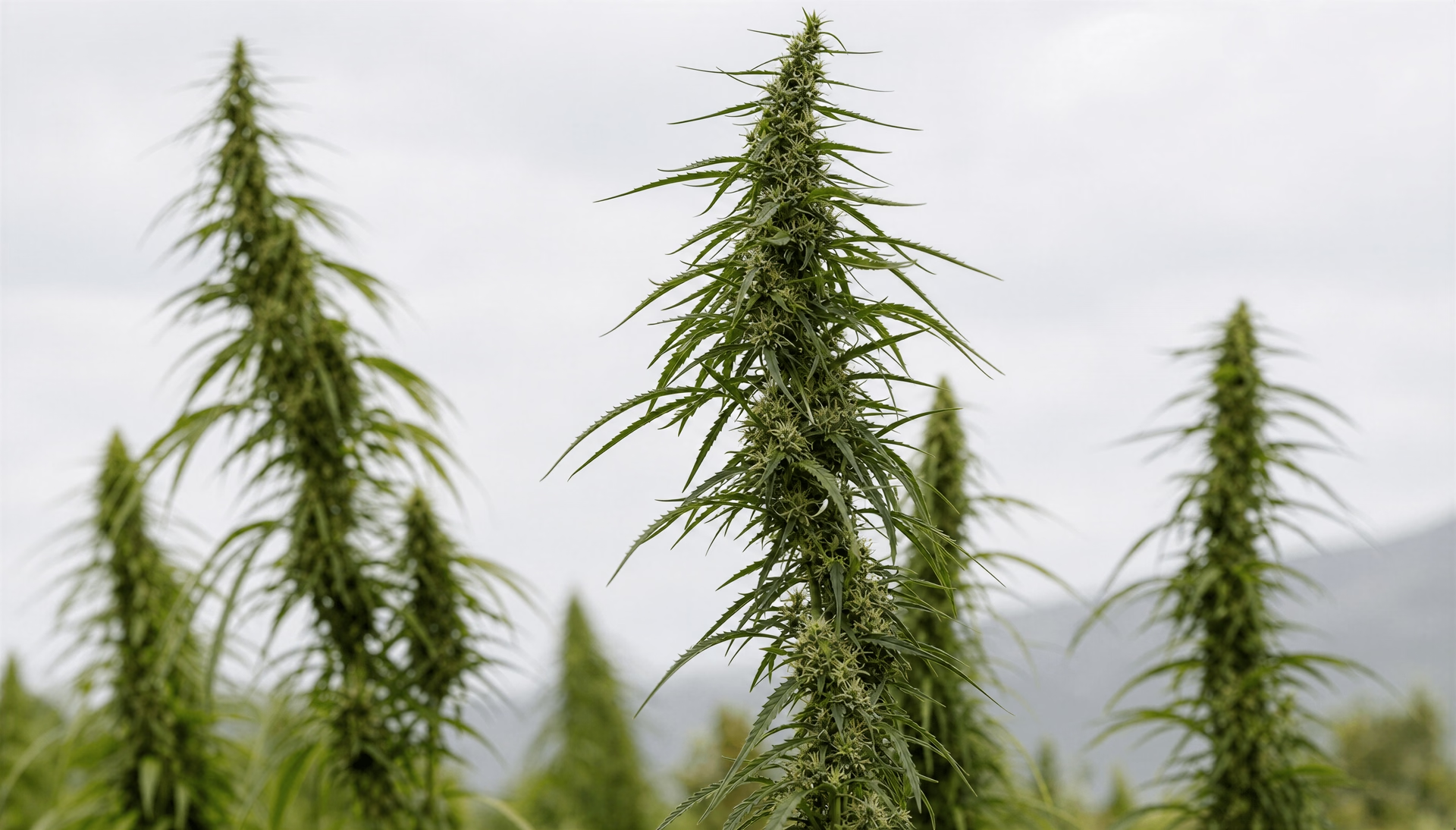
Durban Poison, Malawi, Nigerian, and related lines
Durban Poison is the name most often linked with THCV, and not without reason. Durban-type material from South African ancestry is repeatedly cited in breeder reports, laboratory data, and review articles as one of the better-known sources of elevated THCV relative to standard commercial flower. Malawi, Swazi, and some Nigerian lines are often discussed in the same breath. They belong to the same broad pattern: African-origin sativa germplasm is disproportionately represented when meaningful THCV concentrations are found.
Still, caution is warranted. “Durban Poison” in a retail database is not a botanical constant. It may refer to seed lines, clone lines, hybrids, backcrosses, or renamed descendants with only partial relationship to older Durban stock. The same is true for “Malawi” and “Nigerian.” These names can point toward a genetic history, but they are not proof of a fixed chemotype. One Durban-labeled sample may show detectable THCV; another may barely register it.
That distinction gets lost when strain folklore hardens into pseudo-fact. It is reasonable to say Durban-type lines are among the most plausible natural sources of higher THCV. It is not reasonable to treat every plant carrying that name as chemically interchangeable. The right question is not “Is Durban Poison high in THCV?” but “Which Durban-derived line, grown under what conditions, and confirmed by what lab method?”
How breeding narrowed THCV out of the commercial market
THCV’s rarity in the modern market is not an accident. It is a breeding outcome.
For decades, much of commercial cannabis selection focused on a few headline traits: high delta-9-THC potential, heavy resin production, shorter flowering time, dense inflorescences, indoor suitability, and later, in some sectors, very high CBD. That pressure narrowed chemical diversity. If a minor cannabinoid did not contribute directly to the primary sales metric, it was often bred downward simply by neglect.
African equatorial sativas frequently flower longer, stretch more, and fit poorly into production systems built around fast-turn, compact plants. Crossing them into modern high-THC lines often diluted the varin trait unless breeders intentionally selected to keep it. Over generations, many popular hybrids retained the name recognition or “uplifting” reputation of their sativa ancestry while losing much of the underlying minor-cannabinoid profile.
That is why most commercial flower contains little THCV. Not zero. Just too little to support the stronger claims often made around “diet weed” effects. This gap between the chemistry and the marketing is one of the central facts about THCV. Most people are not encountering the doses used in isolate or oral-formulation studies when they consume ordinary THC-dominant flower with trace THCV.
- Most commercial flower
- Often below 1% THCV by dry weight
- Selected African-derived or targeted-breeding lines
- Roughly 2% to 5% in some cases
- Key source of variation
- Genetics first, then environment and phenotype selection
- COA warning
- One batch result does not prove a stable chemotype
Typical percentage ranges and why lab data vary
Realistic expectations matter here. In most commercial cannabis flower, THCV is often below 1% by dry weight and frequently present only in trace amounts. Selected African-derived lines, targeted breeding projects, or specialized varin-forward cultivars can sometimes reach roughly 2% to 5%, especially when THCVA is included in the total varin picture before decarboxylation. Those figures are plausible. They are not universal, and they are rarely stable across every expression of a named strain.
Several factors drive the variability.
Genetics comes first. A line must have inherited the capacity for substantial varin production. But environment matters too: light intensity, temperature, harvest timing, plant stress, and post-harvest handling can all shift cannabinoid ratios. So can phenotype selection within seed-grown populations. Two plants from the same seed lot may not test the same.
Then there is the lab question. Certificates of analysis differ because methods differ. Some labs quantify neutral THCV only; others separate THCV and THCVA; others report “total THCV” using conversion factors. Limits of detection also matter. A sample reported as “0.00% THCV” may simply be below that lab’s reporting threshold. Small differences near trace levels can look dramatic on paper.
One COA is not a species-level truth. It is one measurement of one batch, from one lab, using one method, at one moment in that plant’s life cycle. That sounds obvious, yet it is ignored constantly in online THCV discussions. A single standout result does not prove that a cultivar is reliably varin-rich across grows, locations, and generations.
So the defensible position is this: THCV is genuinely enriched in certain African-origin genetic lineages, especially Durban-type and related material, but it remains uncommon in the broader commercial pool. Most flower has little of it. Some selected lines have materially more. The difference between those two realities is the difference between pharmacology and branding.
Why THCV is rare in commercial cannabis and difficult to standardize
THCV scarcity starts long before extraction or formulation. It begins in the plant’s genetics.
Most modern commercial cannabis was not bred for varin cannabinoids. Breeding pressure over the last two decades heavily favored high delta-9-THC, high CBD, or very specific terpene profiles, while THCV remained a side note. Chemotaxonomic work and breeder observations point in the same direction: meaningful THCV expression clusters in certain African-origin sativa populations and their descendants, not across the wider commercial gene pool. Durban Poison is the name that gets repeated most often, but Malawi, Swazi, and some Nigerian lines are also relevant. Even then, consistency is not guaranteed. A cultivar can carry the reputation of a “THCV strain” without producing high THCV in every environment, every phenotype, or every batch.
That is why claims like “this strain contains 5% THCV” should be treated as batch-specific, not as a fixed property of the name on the label. In most cannabis flower, THCV is present at trace levels, often under 1% by dry weight. Reports of 2-5% are real for selected Durban-type material, but they are not the market norm and often depend on targeted breeding and favorable expression. The supply problem is biological first, commercial second.
Agronomy and breeding constraints
Varin production depends on different precursor chemistry than the pentyl cannabinoids people know better. THCV is the propyl homolog of THC, with a 3-carbon side chain instead of THC’s 5-carbon chain. That small structural difference changes pharmacology, as Pertwee and colleagues outlined in 2007 and 2008, but it also reflects different biosynthetic inputs inside the plant. You do not get meaningful THCV just by growing ordinary THC-rich flower and hoping for a lucky lab result.
Breeders chasing THCV face several obstacles at once. One is simple rarity: the alleles associated with varin expression are not widespread in mainstream North American germplasm. Another is linkage drag. Landrace-derived material that carries higher THCV may also bring long flowering times, tall morphology, lower yield, and climate sensitivity that do not fit tightly controlled indoor or greenhouse systems. That matters. A plant that takes longer, yields less, and still only produces modest THCV is harder to keep in production.
Expression also shifts with phenotype selection and environment. Two plants sold under the same cultivar name can test very differently. That is not unique to THCV, but it is more punishing when the target compound is already near the assay’s lower range. A flower lot testing at 0.3% THCV and another at 0.8% may both be sold under the same genetic identity, yet they are pharmacologically and economically very different starting materials.
Extraction economics and isolate production
Low abundance drives cost. If a cannabinoid is present at 15% or 20% in flower, extraction can be relatively straightforward. If it is present at 0.2%, 0.5%, or even 1%, the processor must handle far more biomass to produce the same amount of purified material. That changes the economics immediately.
THCV is usually extracted from material already selected for elevated varin content, then concentrated and refined through distillation, chromatography, or other separation steps. Those downstream steps are expensive because THCV is not present in isolation. It sits in a crowded matrix of major cannabinoids, minor cannabinoids, waxes, pigments, and terpenes. Separating a small target from a much larger background is laborious. It also creates more opportunities for batch-to-batch variability, loss during purification, and labeling drift if formulation controls are weak.
This is why many finished products feature THCV in the name while containing only token amounts. The market incentive is obvious: THCV has a reputation. The supply reality is less flattering. A product can advertise THCV because it includes some measurable amount, but “some” may mean a quantity too low to match the effects people associate with isolate studies, dose-ranging hypotheses, or media shorthand like “diet weed.” That gap matters because THCV’s pharmacology is dose-dependent. Pertwee (2008) described THCV as acting as a CB1 antagonist or neutral antagonist at lower doses and showing agonist-like activity at higher doses, with partial CB2 agonism in vitro. If the dose is trivial, the consumer is not meaningfully testing the pharmacology at all.

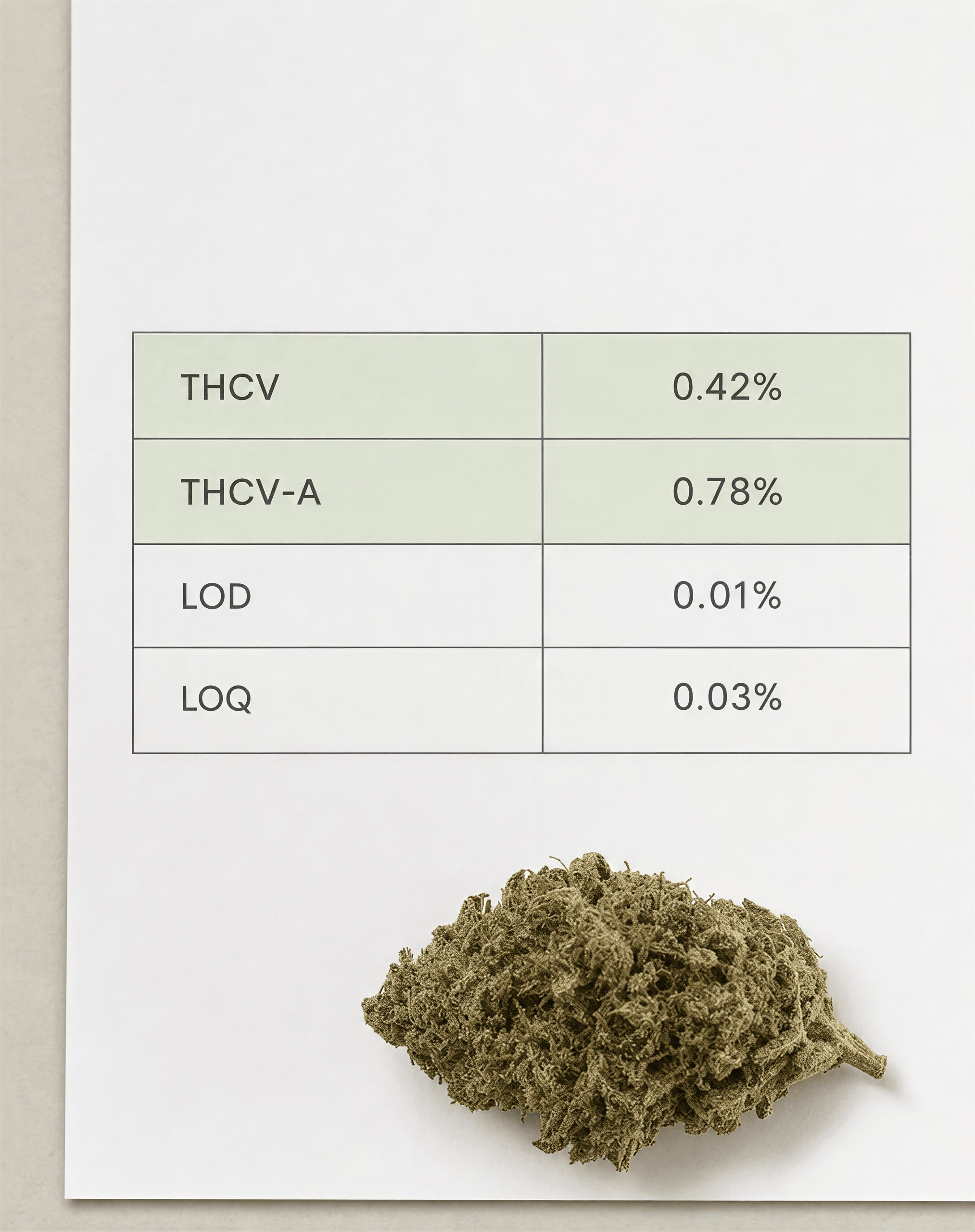
Certificate-of-analysis literacy: THCV, THCV-A, and reporting limits
A certificate of analysis is the only place where the chemistry stops being a story and becomes a number. Read it closely.
First, look for THCV and THCV-A reported separately. In raw flower, the acidic precursor often dominates, just as THCA usually dominates over delta-9-THC before heating. Some labs write THCV-A, others THCA-V or tetrahydrocannabivarinic acid. If only neutral THCV is listed on a flower COA, the report may be incomplete for practical interpretation.
COA lab terms
- LOD
- Limit of detection: the lab can tell a compound is present.
- LOQ
- Limit of quantification: the lab can measure it with acceptable reliability.
- ND
- Not detected above the method's detection limit; not the same as proven absence.
- Total THCV
- An estimate that combines neutral THCV with converted THCV-A after accounting for mass loss during decarboxylation.
Second, check the LOD and LOQ. - LOD is the limit of detection: the lab can tell something is present. - LOQ is the limit of quantification: the lab can measure it with acceptable reliability.
This distinction is not technical trivia. If THCV is listed as “ND,” that often means “not detected above the method’s detection limit,” not “absolutely absent.” If it is detected below LOQ, the lab may flag it but not provide a reliable numeric value. For rare cannabinoids, these thresholds are often the line between honest uncertainty and false precision.
How to estimate total potential THCV
- Formula Total THCV = THCV + (0.877 × THCV-A).
- Example values from the article If a sample shows 0.10% THCV and 0.90% THCV-A, start with the acidic fraction.
- Converted acidic fraction 0.877 × 0.90 = about 0.79%.
- Estimated total 0.10% + 0.79% = about 0.89% total potential THCV.
Third, calculate total potential THCV when appropriate. As with THC and CBD, acidic cannabinoids lose mass during decarboxylation. A common estimate is:
Total THCV = THCV + (0.877 × THCV-A)
If a flower sample shows 0.10% THCV and 0.90% THCV-A, the total potential THCV is about 0.89%, not 1.00%. That conversion factor matters when people overread raw COAs.
Fourth, watch for batch variation. One COA proves one batch. It does not prove the cultivar always expresses that profile.
The gap between marketing labels and measurable chemistry
THCV branding often runs ahead of measurable chemistry. That is the blunt truth.
A label can imply a THCV-forward experience while the COA shows trace amounts near the reporting threshold. Sometimes the product contains more THC, CBD, or even CBG than THCV by a wide margin, which means any felt effect may come from the broader formulation, not from THCV itself. That is especially important because THCV does not behave like a simple stronger-or-weaker version of THC. Its receptor activity changes with dose and context, and its interaction with other cannabinoids can alter the outcome. O’Sullivan et al. (2015) found that a single 10 mg dose of THCV changed resting-state connectivity in networks tied to reward and cognitive control, which is far more interesting than the usual appetite-suppression slogan, but it also underlines the need for defined dosing. Trace labeling does not get you there.
So the standardization problem is not one issue. It is four stacked together: rare genetics, unstable expression, expensive purification, and loose marketing language around very small numbers. Until breeding programs, analytical methods, and formulation standards improve, THCV will remain one of the most discussed cannabinoids that most products barely contain.
Entourage effect and combination pharmacology: THCV with THC, CBD, and terpenes
Entourage effect A hypothesis that multiple cannabis compounds together can change the overall effect profile compared with isolated compounds, without guaranteeing that combinations are always better.
“Entourage effect” is often used as a shortcut for “many cannabis compounds together must be better.” That is too loose to be useful for THCV. With this cannabinoid, combination effects are plausible, but they are not automatically beneficial, and they are certainly not uniform across doses. THCV is not just a weaker THC. Its 3-carbon propyl side chain changes receptor behavior enough that low-dose THCV can oppose CB1 signaling, while higher doses can shift toward agonist-like effects at CB1, with partial agonism at CB2 shown in vitro (Pertwee et al., 2007; Pertwee, 2008). That makes mixture claims highly context-dependent.
How THCV may blunt or reshape THC effects
The most defensible interaction claim is that low-dose THCV may counter or reshape some effects of THC. Mechanistically, that makes sense. THC is primarily a CB1 agonist, and CB1 receptors are densely expressed in cortex, hippocampus, basal ganglia, cerebellum, and hypothalamus. Those brain regions are tied to memory disruption, motor effects, reward, and appetite. If THCV acts as a CB1 antagonist or neutral antagonist at low doses, it could plausibly reduce some THC-driven signaling in those circuits.
That does not mean THCV simply “sobers up” THC. Mixed products are more complicated than that. The ratio matters. Dose matters. Route matters. A little THCV in a high-THC preparation may do very little. A meaningful THCV dose alongside a modest THC dose may produce a qualitatively different effect profile: less fogginess for some people, possibly less appetite stimulation, perhaps a shorter or cleaner subjective effect. But controlled human trials directly mapping THC:THCV ratios to experience are still scarce.
The human neuroimaging data point in an interesting direction. O’Sullivan et al. (2015) found that a single 10 mg THCV dose changed resting-state functional connectivity, reducing connectivity in the default mode network and increasing it in cognitive control and dorsal visual stream networks. That does not prove “mental clarity,” though it does fit the broader idea that THCV does not behave like standard THC intoxication. It also complicates simplistic diet-weed framing. Appetite and reward are not only hypothalamic; mesolimbic circuits matter too, and THCV may be altering salience and control networks rather than merely shutting hunger off.
The comparison to rimonabant comes up often because both involve CB1 antagonism and appetite-related signaling. The parallel is mechanistically fair at a high level. The equivalence is not. THCV is not rimonabant, and current evidence does not justify treating them as interchangeable.
CBD and THCV in metabolic and neuropsychiatric formulations
THCV and CBD are often grouped together in wellness-oriented language, yet the evidence for each is different, and their combination should not be treated as self-evidently superior. GW Pharmaceuticals explored both THCV alone and THCV/CBD combinations, especially in metabolic and neuropsychiatric contexts. That interest was not random. CBD has broad receptor activity beyond CB1 and CB2, including TRP channels and 5-HT-related pathways, while THCV has this unusual dose-switched cannabinoid pharmacology. In theory, combining them could reshape tolerability or target multiple pathways at once.
But the human metabolic data do not support lazy “CBD + THCV for blood sugar” claims. In the randomized, double-blind, placebo-controlled pilot trial by Jadoon et al. (2016), 62 patients with type 2 diabetes were randomized across five arms. THCV significantly decreased fasting plasma glucose compared with placebo and improved beta-cell function measures. CBD alone did not show significant benefit on the primary glycemic endpoints. The combination arm did not emerge as a simple winner that erased uncertainty. That is exactly why combination pharmacology needs discipline rather than slogan-level entourage talk.
Preclinical work by Wargent et al. (2013) also supports metabolic interest in THCV, showing improved glucose intolerance and insulin sensitivity in obese mice. Again, this supports studying THCV. It does not prove that adding CBD always strengthens the effect. In neuropsychiatric applications, the same caution applies. CBD may reduce anxiety in some settings; THCV may alter reward and cognitive-control network activity; both have anti-inflammatory and anticonvulsant signals in preclinical literature. None of that means every CBD/THCV formula has a coherent pharmacological rationale.
Terpene hypotheses versus actual evidence
Terpene discussion around THCV products tends to outrun the data. Limonene is said to make THCV “more energizing.” Pinene is said to sharpen the clear-headed effect. Myrcene is said to soften it. These stories are plausible in the weak sense that terpenes are bioactive and may influence subjective experience. The problem is the quality of evidence. For THCV specifically, controlled human data on terpene-driven effect modification are almost absent.
There is a difference between a hypothesis and a demonstrated interaction. Most terpene claims attached to THCV are extrapolated from broad cannabis lore, rodent work, isolated terpene pharmacology, or user reports. That is not useless, but it is not proof. If a high-THCV flower feels stimulating, the explanation could involve THC level, THCV level, minor cannabinoids, terpene profile, dose, setting, expectation, or all of them at once. Without controlled studies, assigning causality to a named terpene is mostly guesswork.
So the honest position is straightforward: terpene interactions with THCV are possible, even likely in some cases, but current claims are much stronger than the evidence.
What “full-spectrum THCV” probably means in practice
This phrase sounds precise but usually is not. In practice, “full-spectrum THCV” often means a preparation in which THCV is present alongside other cannabinoids and terpenes rather than isolated on its own. It rarely means that THCV dominates the chemistry. Since THCV is naturally rare in cannabis, often under 1% by dry weight outside selected African-origin genetics and specialized breeding lines, many so-called THCV-rich preparations may contain much more THC, CBD, or other cannabinoids than THCV itself.
That matters because the resulting effects may be driven mainly by the companion compounds. If THC is present in meaningful amounts, low-dose THCV may partially reshape the experience rather than define it. If CBD is prominent, the formulation may reflect CBD pharmacology with THCV as a minor contributor. And if the label does not separate THCV from THCA-V, the active neutral cannabinoid content may be unclear unless decarboxylation has occurred.
So “full-spectrum THCV” should be read less as a pharmacological category and more as a warning label for complexity. It probably means mixed cannabinoid exposure, uncertain ratios, and effects that cannot be predicted from THCV data alone. That is not a flaw. It is just reality, and it is why entourage language should be treated as a hypothesis generator, not an answer.
How to find THCV in the real world: strains, extracts, and vaporization
THCV is easy to talk about and hard to actually encounter in meaningful amounts. That mismatch matters. A flower jar can carry a “THCV-rich” reputation because of lineage or marketing shorthand, yet still contain only trace levels by weight. Since THCV is usually rare in modern chemovars—often under 1% of dry flower, with higher levels clustered in some African-origin lines such as Durban-type, Malawi, Swazi, and certain Nigerian descendants—real-world identification starts with lab data, not strain folklore.
The chemistry explains why this matters. THCV is the 3-carbon propyl homolog of delta-9-THC rather than the 5-carbon pentyl analog, and that smaller side chain changes receptor behavior in ways that are dose-dependent. Pertwee (2008) and Pertwee et al. (2007) describe THCV as a CB1 antagonist or neutral antagonist at lower doses, shifting toward CB1 agonist activity at higher doses, with partial CB2 agonism in vitro. So a product delivering 1 or 2 mg is not necessarily going to resemble one delivering 10 mg or more, and neither will necessarily resemble the effect of the same amount taken alongside a large THC dose.
| Format | THCV availability in article | Main limitation | Best use case |
|---|---|---|---|
| Flower | Often under 1% in most chemovars | Low abundance and batch variability | General whole-plant experience |
| Selected high-THCV flower | Sometimes roughly 2% to 5% in targeted lines | Still rare and not guaranteed by strain name | Users seeking naturally higher varin content |
| Extract / isolate | More likely to deliver measured amounts | Expensive purification and possible token labeling | Assessing THCV-specific dosing more directly |
Flower versus extract: which format is most likely to contain meaningful THCV
If the question is simple likelihood, extracts win. Not because flower cannot contain THCV, but because most flower contains too little to reproduce the doses used in mechanistic human studies or in isolate-heavy anecdotes. That is the practical truth many THCV writeups blur.
A flower testing at 0.5% THCV contains about 5 mg THCV per gram before losses. Even at 2%, which is already uncommon outside targeted breeding, one gram contains about 20 mg before combustion or vaporization inefficiency, incomplete extraction into aerosol, and the fact that many people do not consume a full gram in one sitting. By contrast, a lab-formulated extract can deliver a measured amount per inhalation or per oral dose, which makes it a better format for anyone trying to assess THCV specifically rather than a mixed effect driven mostly by THC, terpenes, and expectation.
That does not make extracts “truer” to THCV in every case. It just makes them more likely to reach a meaningful dose. Whole flower can still matter if it is genuinely varin-rich, but a high-THCV flower is rare enough that the label should be treated as a hypothesis until confirmed analytically. Also remember product context: low-dose THCV may counter some CB1-mediated THC effects, while higher-dose THCV can become psychoactive in its own right. A flower that is both THC-dominant and THCV-positive may feel nothing like isolated THCV.
How to identify high-THCV cultivars using lab data
Strain names are weak evidence. Certificates of analysis are stronger. The most useful reports will list both THCV and THCVA, sometimes written as THCVA or THCA-V depending on the lab. In raw flower, the acidic precursor usually matters because much of the varin cannabinoid content may be present as THCVA before heating.
Look for three things.
First, the absolute percentage. “Detected” is not enough. A result like 0.1% THCV is chemically real but practically minor for most people. Second, check whether the lab separates neutral THCV from THCVA. If it does not, interpretation gets murkier. Third, compare THCV to delta-9-THC rather than reading it in isolation. A flower with 0.7% THCV and 24% THC may still be experienced primarily as THC-rich flower.
Cultivars associated with elevated THCV often trace back to African sativa germplasm, especially Durban Poison and related lines, but inheritance is inconsistent. Two samples sold under the same cultivar name can test very differently depending on breeder selection, environment, harvest timing, and post-harvest handling. That is why “Durban” is not a guarantee. It is a lead.
For readers trying to separate evidence from hype, this rule holds up well: trust the cannabinoid panel, then the breeder history, and only then the strain name.
Vaporization temperature and the 220°C claim
THCV is often assigned a boiling point around 220°C / 428°F. That figure is widely repeated, and it is reasonable to present it as a rough reference point. It should not be treated as a fixed physical constant in real-world vaporization.
Why the caution? Cannabinoid volatilization depends on pressure, analytical method, the presence of other compounds, and whether the cannabinoid is in isolated form or embedded in plant matrix. Consumer vaporization does not happen under neat laboratory conditions. A packed flower chamber, an extract cartridge, and a controlled analytical instrument do not behave the same way.
So 220°C / 428°F is better framed as a commonly cited approximate target than a settled fact. In practice, THCV may begin contributing to aerosolization across a range, especially as the matrix heats unevenly and other compounds co-vaporize. Higher temperatures can increase delivery of less volatile constituents, but they also change flavor, harshness, and degradation risk. The exact threshold is less important than the broader point: if someone is trying to assess THCV from flower, very low vaporizer settings may underdeliver it.
Dosing considerations for inexperienced users
Start low. Then wait. THCV is not just “THC but lighter,” and the low-dose/high-dose switch is the whole story.
Inhaled THCV should have an onset within minutes, much like other inhaled cannabinoids, while oral products are likely to take roughly 30 to 120 minutes depending on formulation, stomach contents, and individual metabolism. Duration for inhaled use is often described as shorter than THC, but hard pharmacokinetic data remain thin. That gap in the literature is real and should not be papered over.
For inexperienced users, the biggest variable is not only dose but company. THCV taken alone may feel alerting, subtle, or almost imperceptible at low amounts. The same nominal amount taken with substantial delta-9-THC may feel quite different because CB1 interactions are dose-sensitive and context-sensitive. O’Sullivan et al. (2015) found that a single 10 mg THCV dose altered resting-state functional connectivity in brain networks linked to reward and cognitive control, which fits poorly with cartoon versions of THCV as simply an appetite switch.
So the sensible approach is conservative exposure, especially with extracts. Increase slowly across separate sessions rather than stacking doses rapidly. If the goal is to notice THCV itself, avoid reading too much into a THC-dominant product carrying only trace varins. Marketing often outruns chemistry here. Lab numbers usually bring the story back to earth.
THCV legality is unsettled and depends on jurisdiction, source, product type, and enforcement policy. Limited evidence
Legal status: an unsolved hemp, analog, and novel-food problem
THCV sits in one of the messiest corners of cannabinoid law because lawmakers usually regulate by source, product type, intoxication risk, or similarity to THC, while THCV does not fit neatly into any one box. Chemically, it is a THC homolog with a 3-carbon propyl side chain rather than delta-9-THC’s 5-carbon pentyl chain, a difference tied to distinct receptor behavior described by Pertwee (2007, 2008). Legally, though, that small structural change does not guarantee separate treatment. In some places THCV is treated as a hemp constituent unless it comes from high-THC cannabis. In others, the fact that it is psychoactive at higher doses, and structurally close to THC, creates real controlled-substance risk.
That means broad statements like “THCV is legal” or “THCV is illegal” are usually wrong. The better question is: legal where, from what source, in what product category, and under whose enforcement policy? This is a general legal overview, not legal advice.
United States: Farm Bill ambiguity and the Federal Analog Act question
In the United States, THCV occupies a gray area created by the 2018 Farm Bill and unresolved federal drug-law questions. The Farm Bill removed “hemp” from the federal definition of marijuana, so long as the plant and its derivatives contain no more than 0.3% delta-9-THC on a dry-weight basis. That opened the door for companies to frame hemp-derived cannabinoids as federally lawful if sourced from compliant hemp biomass.
On that logic, hemp-derived THCV is often presented as lawful at the federal level when it is extracted from hemp and the finished material stays within delta-9-THC limits. But that is only one layer of the analysis. The Farm Bill did not create blanket immunity for every psychoactive or semi-psychoactive cannabinoid that can be sourced from hemp. It also did not answer whether a compound closely related to THC could trigger other federal laws.
The unresolved issue is the Federal Analog Act. That statute can, under certain circumstances, treat an unscheduled substance as if it were a Schedule I controlled substance when it is “substantially similar” in chemical structure and effect to a Schedule I or II drug and intended for human consumption. THCV is not delta-9-THC; its propyl side chain matters pharmacologically and may reduce the force of any simplistic “same molecule, same law” argument. Pertwee’s work makes clear that THCV behaves differently from THC, acting as a CB1 antagonist or neutral antagonist at lower doses and shifting toward agonist activity at higher doses. Even so, the analog-law question has never been cleanly resolved for THCV in a definitive, generally applicable federal court ruling.
That uncertainty matters because THCV is psychoactive at sufficiently high doses, even if typically shorter-acting and less intoxicating than delta-9-THC. A regulator or prosecutor could focus less on receptor subtleties and more on structural similarity plus intended human consumption. Whether they would win is a different question. The point is that the risk exists.
State law adds another layer. Some states copy federal hemp definitions and leave room for hemp-derived THCV. Others regulate intoxicating hemp cannabinoids more aggressively, whether or not THCV is named specifically. In practice, US legality depends on source, state hemp rules, state controlled-substance law, and enforcement appetite.
European Union and member-state variation
The European Union does not provide a simple union-wide answer either. EU law shapes the environment, but member states still control much of the practical outcome through narcotics law, food law, consumer-safety enforcement, and local interpretation. That is why two THCV products with similar chemistry can face very different treatment across Europe.
The first issue is whether THCV is treated as part of a cannabis extract falling within drug-control rules in a given country. The second is whether ingestible THCV products trigger novel-food scrutiny. For foods and supplements, cannabinoids that lack a significant history of consumption before May 1997 can face the EU Novel Food regime. That does not automatically mean a cannabinoid is banned. It means a premarket authorization question may arise, especially for extracts, isolates, and added ingredients in oils, drinks, gummies, and capsules.
THCV is particularly exposed here because it is rare in natural plant material and often appears in concentrated or formulated products rather than in ordinary traditional food formats. Regulators may ask not just “is this cannabinoid controlled?” but also “is this an unauthorized novel food?” Those are separate problems. A product might avoid obvious narcotics classification and still face food-law action.
Member-state variation is the real story. Some countries are relatively tolerant toward low-THC hemp constituents in non-ingestible categories. Others treat cannabinoid extracts with more suspicion, especially when psychoactivity is possible or the product is marketed for oral use. So the EU position is fragmented by design, not by accident.
United Kingdom, Germany, Canada, and Australia
The United Kingdom remains legally risky territory for THCV despite the visibility of hemp-derived cannabinoid products. UK law focuses heavily on controlled cannabinoids and product claims, and the fact that THCV is not as famous as THC does not make it safe by default. Depending on source, preparation, and interpretation, THCV may be treated as a controlled cannabinoid or as part of a controlled cannabis extract. Ingestible formulations can also run into novel-food issues. The practical result: UK treatment is not settled enough to support sweeping legality claims.
Germany needs to be read in the context of its recent cannabis reform, but reform does not equal open status for every cannabinoid. Germany’s adult-use changes and medical-cannabis framework mainly address cannabis possession, cultivation, associations, and prescription pathways. They do not erase narcotics, medicines, or food-law questions for isolated minor cannabinoids. THCV may be less likely to draw attention when present as a minor constituent in lawful cannabis channels than when isolated into standalone ingestible products. The latter can still raise food, medicinal, or controlled-substance issues.
Canada is easier to describe. Under the Cannabis Act, phytocannabinoids such as THCV generally fall inside the cannabis regulatory framework rather than outside it as a special hemp loophole category. Hemp in Canada can be cultivated under separate rules, but cannabinoid extraction for consumer products is still tightly governed through cannabis law. That makes Canada more coherent than the US, though not looser.
Australia is also relatively structured, but access is channeled through therapeutic scheduling and medicine-oriented regulation. Cannabinoid products are commonly assessed through the Therapeutic Goods framework and state-level poisons controls rather than through a broad hemp-intoxicant marketplace model. In practical terms, THCV is more likely to be treated as a regulated therapeutic cannabinoid than as a freely circulating wellness ingredient.
| Variable | Why it matters for THCV |
|---|---|
| Source | Hemp-derived THCV may be treated differently from THCV extracted from high-THC cannabis. |
| Product category | Flower, vapes, tinctures, and gummies can face different drug, food, or medicines rules. |
| Local enforcement | Similar statutes can be enforced very differently across jurisdictions. |
Why legality depends on source, product category, and local enforcement
Three variables usually decide the real-world answer.
First, source. Hemp-derived THCV is often treated more favorably than THCV extracted from federally illegal cannabis in jurisdictions that distinguish hemp from marijuana. That distinction is powerful in the US and much less decisive in Canada.
Second, product category. A THCV-rich flower inside a lawful cannabis system, a vaporizer extract, a tincture, and a gummy do not necessarily face the same rules. Ingestible products are especially exposed because food and supplement law can apply even when drug law does not.
Third, enforcement. Two jurisdictions with similar statutes may enforce them very differently. Minor cannabinoids often spread faster than formal guidance, leaving businesses, consumers, and even regulators working from inference rather than settled doctrine.
That is why THCV’s legal status remains unsolved. The chemistry is real. The pharmacology is distinctive. The law is still catching up, and in many places it has not caught up at all.
Research gaps the article says still matter
- Human PK Dense blood-level mapping across inhaled, oral, and repeated dosing.
- Dose thresholds Better definition of where CB1 antagonism shifts toward agonist-like effects in humans.
- Receptor occupancy Direct evidence of CB1 engagement at clinically relevant doses.
- Metabolites Identification of active metabolites and their targets.
- Replication Larger metabolic and neurological trials to confirm pilot signals.
- Analytical standards Cleaner separation and reporting of THCV versus THCV-A across labs.
Future research: what a complete THCV evidence base still needs
THCV research is at the interesting stage where the mechanism looks real, some human signals exist, and the evidence base is still too thin to support the tidy claims attached to it. That gap matters. THCV is not just “THC lite” and not simply an appetite suppressant either. Its propyl side chain changes receptor behavior enough that low-dose and high-dose effects may diverge sharply, as outlined by Pertwee et al. (2007) and Pertwee (2008). A serious THCV literature now needs to answer the questions that marketing keeps skipping.
Dose-ranging human trials and pharmacokinetic mapping
The first priority is straightforward: proper human dose-ranging studies with blood-level measurements. Right now, the field has suggestive but incomplete human evidence. Jadoon et al. (2016) reported that THCV significantly reduced fasting plasma glucose in people with type 2 diabetes and improved beta-cell function markers, but the pilot trial randomized only 62 participants across five arms. That is enough to justify follow-up. It is not enough to settle dosing, durability, or subgroup response.
The same problem appears in neurocognitive work. O’Sullivan et al. (2015) found that a single 10 mg dose of THCV altered resting-state connectivity, decreasing connectivity in the default mode network and increasing it in cognitive control and dorsal visual stream networks. That result complicates the lazy “diet weed” framing. It also raises obvious PK questions: what plasma concentrations were reached, when did they peak, and how do those levels compare with inhaled THCV or mixed cannabinoid preparations?
We still do not know the human dose threshold where THCV shifts from mainly opposing CB1 signaling to producing more agonist-like cannabinoid effects. That threshold is central to appetite, psychoactivity, and adverse-event prediction. Studies need oral, inhaled, and oromucosal arms; fed versus fasted conditions; repeated dosing; and direct comparison with THC-containing formulations.
Receptor occupancy, metabolites, and formulation science
THCV’s mechanism is discussed far more often than it is measured. CB1 receptors are dense in the cortex, hippocampus, basal ganglia, cerebellum, and hypothalamus, which is why THCV could influence appetite, reward, motor control, and cognition through different circuits at different exposures. But there are still no widely cited human receptor occupancy studies showing how much CB1 engagement occurs at clinically relevant doses.
That gap extends to metabolites. We need to know which THCV metabolites are active, how long they persist, and whether they alter CB1, CB2, TRP channels, or 5-HT-related signaling. Formulation science matters here. An inhaled extract rich in THCV may behave very differently from an oral capsule containing THCV with THC, CBD, or specific lipids. The same nominal milligram dose may not mean the same pharmacology.
Long-term safety belongs in this bucket too. THCV is not rimonabant, and equating the two is sloppy, but low-dose CB1 antagonism still makes psychiatric monitoring mandatory in chronic studies.
Standardized endpoints for appetite, diabetes, pain, and neuroprotection
THCV studies often look impossible to compare because they are measuring different things in different ways. Appetite research needs standardized endpoints: caloric intake, hunger ratings, food-cue reactivity, body weight, and longer-term adherence, not just one-off self-report. Diabetes trials should consistently track fasting plasma glucose, oral glucose tolerance, HbA1c, insulin sensitivity, beta-cell function, and body composition.
The metabolic case is promising because mouse and human data point in the same direction. Wargent et al. (2013) found improved glucose intolerance and insulin sensitivity in obese mice. Jadoon et al. (2016) found a human fasting-glucose signal. What is missing is replication in larger metabolic disease cohorts.
For neuroprotection, animal data from Garcia et al. (2011) and Celorrio et al. (2016) justify better Parkinson’s studies, but not hype. Trials need imaging, motor scales, inflammatory biomarkers, and longer follow-up. Pain and anticonvulsant research need the same discipline.
Breeding and analytical advances for varin cannabinoids
THCV research is limited by chemistry before it is limited by imagination. Most cannabis chemovars contain little THCV, often under 1%, while African-origin germplasm such as Durban-type, Malawi, Swazi, and some Nigerian lines show greater varin expression. Even there, consistency is often overstated. Future breeding should focus on stable inheritance of THCV and related varins, not sporadic high-testing phenotypes.
Analytical methods need cleanup too. Labs should separate THCV from THCA-V and report validated uncertainty ranges. Standardized reference materials, inter-lab comparisons, and stability studies are overdue. Without that, clinical papers and product labels are often talking about different chemistries.
The real research gaps are now plain: human PK, receptor occupancy, antagonist-to-agonist dose thresholds, long-term safety, replication in metabolic disease, stronger neurodegeneration trials, and standardized product chemistry. THCV is scientifically interesting precisely because it resists the easy categories the market tries to force on it.
Consumer FAQs to answer directly in the finished article
THCV may suppress appetite in some contexts, but the human evidence is limited and the effect is not established as uniform or dose-independent. Limited evidence
Does THCV really suppress appetite?
Sometimes, but “THCV kills appetite” is an overstatement. The mechanistic reason is dose-dependent receptor behavior. At low doses, THCV appears to block or neutralize CB1 signaling rather than activate it, as described by Pertwee et al. (2007) and Pertwee (2008). That matters because CB1 receptors are dense in the hypothalamus, which helps regulate hunger, and in mesolimbic reward circuits, which shape food motivation.
That said, human evidence is still thin. A commonly cited neuroimaging study found that a single 10 mg dose of THCV altered resting-state connectivity in networks tied to reward and cognitive control rather than simply “turning off hunger” (O’Sullivan et al., 2015). So the appetite story is biologically plausible, but not settled. Evidence grade: mechanistically plausible, limited human confirmation.
Can THCV help with diabetes or weight loss?
For type 2 diabetes, there is an actual human signal. In a randomized, double-blind, placebo-controlled pilot trial, Jadoon et al. (2016) reported that THCV significantly reduced fasting plasma glucose compared with placebo and improved beta-cell function in patients with type 2 diabetes. The trial randomized 62 subjects across five arms, so this was meaningful early evidence, not final proof.
For weight loss, the evidence is weaker. In mice, Wargent et al. (2013) found THCV improved glucose intolerance and insulin sensitivity in diet-induced obesity models. That supports metabolic interest, but it does not prove reliable fat loss in humans. No one should present THCV as an established obesity treatment. Evidence grade: limited but promising for metabolic endpoints; insufficient for weight-loss claims.
Is THCV psychoactive?
Yes, at high enough doses. No, not in the same way as delta-9-THC. THCV has a 3-carbon propyl side chain, while THC has a 5-carbon pentyl chain; that small structural difference changes receptor activity and usually lowers intoxicating potency. Low-dose THCV may oppose some CB1-mediated THC effects. At higher doses, it can act more like a CB1 agonist and become psychoactive.
Reports often describe a shorter-lasting, clearer, more stimulating effect than THC, but controlled human data remain sparse. Product context matters. THCV taken alone may feel different from THCV consumed alongside THC, CBD, and terpenes.
Which strains have the most THCV?
THCV is rare in most cannabis. Many chemovars test below 1% THCV by dry weight. Higher levels are most strongly associated with African-origin sativa landraces and descendants, especially Durban Poison, Malawi, Swazi, and some Nigerian lines. Durban-type material is often cited in the 2% to 5% range, but that range is not reliably reproduced across all samples carrying the same name.
The only dependable way to know is a recent lab certificate showing THCV or THCA-V specifically. Strain names alone are weak evidence.
How is THCV different from THC and THCP?
THCV differs from THC mainly by side-chain length: THCV has 3 carbons, THC has 5, and THCP has 7. That chain length strongly affects cannabinoid receptor binding and potency. THCV’s shorter chain helps explain why it can block CB1 at low doses and only show THC-like agonism at higher doses. THCP, by contrast, binds CB1 far more strongly and is much more potent in receptor assays.
So THCV is not just “weaker THC.” Pharmacologically, it can behave differently in kind, not just degree.
Is THCV legal where I live?
It depends on country, source, and product category. In the United States, THCV is not expressly scheduled by name at the federal level, but legality often turns on whether it is derived from hemp and whether any analog-law argument is raised. That area is unsettled. In the EU and UK, rules can involve narcotics law, extract rules, and novel food enforcement. Canada and Australia regulate cannabinoids through their own cannabis and medicines frameworks.
The careful answer: check current local law and do not assume hemp origin makes THCV lawful everywhere.
References
- [1] Efficacy and Safety of Cannabidiol and Tetrahydrocannabivarin on Glycemic and Lipid Parameters in Patients With Type 2 Diabetes: A Randomized, Double-Blind, Placebo-Controlled, Parallel Group Pilot Study. Diabetes Care, 2016. 10.2337/dc15-0650
- [2] The cannabinoid Δ9-tetrahydrocannabivarin (THCV) ameliorates insulin sensitivity in two mouse models of obesity. Nutrition & Diabetes, 2013. 10.1038/nutd.2013.9
- [3] Obesity and overweight. WHO Fact Sheet, 2024. https://www.who.int/news-room/fact-sheets/detail/obesity-and-overweight
- [4] Symptom-relieving and neuroprotective effects of the phytocannabinoid Δ9-THCV in animal models of Parkinson's disease. British Journal of Pharmacology, 2011. 10.1111/j.1476-5381.2011.01278.x