












Why cannabis concentrates are harder to classify than most guides admit
Most concentrate guides sort products as if names on a menu map neatly onto chemistry. They do not. “Rosin,” “BHO,” “distillate,” and “THCA crystalline” refer to meaningfully different extraction pathways or refinement levels. “Wax,” “shatter,” “budder,” and “crumble” often do not. Those terms commonly describe physical form: how an extract set up after purging, agitation, temperature shifts, moisture exposure, or crystal formation. That distinction matters because people are often taught to compare concentrates by label and THC percentage when the more informative questions are about extraction, cannabinoid state, terpene retention, and contamination testing.
That is not a minor naming problem. Potency has risen sharply. Colorado market data analyzed in peer-reviewed work linked to Cinnamon Bidwell and colleagues found mean THC concentration in concentrates increased from 56.7% in 2014 to 68.4% in 2021, with very high-THC products becoming more common. In Bidwell’s 2021 randomized clinical trial in JAMA Network Open, concentrates averaged 70.7% labeled THC versus 16.1% for flower, and users showed higher blood THC immediately after use even though they partly adjusted intake downward. So classification is not just a semantic exercise. It affects dosing, expected onset, thermal behavior, and risk.
Why retail names and chemical categories do not line up
| Category | Examples from the article | What the label mainly tells you |
|---|---|---|
| Solventless mechanical | kief, dry sift, traditional hashes | Trichomes were separated physically |
| Solventless heat-pressure | rosin | Resin was squeezed out with heat and pressure |
| Solvent-based extract | BHO/PHO, CO2 extracts, ethanol oils | A solvent dissolved target compounds before recovery |
| Highly refined | THC distillate | Cannabinoid fraction was narrowed substantially |
| Isolate-like | THCA crystalline | A single cannabinoid fraction was pushed close to purity |
The cleanest first split is not “wax versus shatter.” It is solventless versus solvent-based, then refined versus less refined.
Solventless mechanical concentrates include kief, dry sift, and many traditional hashes. These are made by physically separating trichomes. Rosin is also solventless, but it is a different subclass because heat and pressure are used to squeeze resin from flower, hash, or sift. Solvent-based extracts include hydrocarbon products made with butane, propane, or blends; CO2 extracts; and ethanol-derived oils that may later be winterized, distilled, or otherwise refined. Then there are highly refined products such as THC distillate, and isolate-like products such as THCA crystalline, where the chemical profile has been narrowed dramatically.
Retail naming scrambles these categories. “Live resin” is usually a hydrocarbon extract made from fresh-frozen material. “Live rosin” is solventless and also starts with fresh-frozen input, usually through ice water hash before pressing. Both are “live,” yet they belong to different extraction families. The shared term describes the starting material condition, not the extraction chemistry.
The same problem shows up with CO2. It is often treated as a badge of purity. That is marketing shorthand, not chemistry. Supercritical or subcritical CO2 can reduce concern about hydrocarbon residues and allows fractionation, but many CO2 extracts come out waxy and need winterization or later refinement. They may also lose volatile terpenes during processing. A CO2 label alone tells you less than many guides imply.
The four classification questions that actually matter
Four questions that classify a concentrate better than texture names
- 1. Extraction method Mechanical separation, rosin pressing, hydrocarbon extraction, CO2 extraction, ethanol extraction, distillation, and crystallization lead to different impurity profiles and terpene outcomes.
- 2. Cannabinoid state Check whether the profile is mainly acidic cannabinoids such as THCA or decarboxylated cannabinoids such as THC.
- 3. Terpene retention Ask how much native terpene content remains and whether the product is chemically broad or narrow.
- 4. Lab data Use HPLC, terpene testing, residual solvent testing, metals, pesticide, microbial, and mycotoxin results to judge actual quality.
A more useful framework starts with four questions.
First: how was it extracted? Mechanical separation, heat-pressure rosin, hydrocarbon extraction, CO2 extraction, ethanol extraction, distillation, and crystallization each produce different impurity profiles, terpene outcomes, and formulation limits. Butane and propane are not interchangeable in practice. Butane tends to support terpene-rich, semi-solid extracts; propane’s lower boiling point changes solubility and purge behavior; blended systems are common because they alter texture and resin pickup.
Second: is the cannabinoid profile mostly acidic or decarboxylated? THCA is not the same thing as THC in use. A THCA-dominant concentrate dabbed off a hot surface converts rapidly and becomes strongly intoxicating. The same THCA in a raw tincture behaves very differently unless heated first. Many guides flatten this into one potency number. That is sloppy. HPLC cannabinoid results are more informative because they separate THCA from THC instead of baking the distinction away during testing.
Third: how much native terpene content remains? “Live” products often preserve more monoterpenes because fresh-frozen material avoids drying losses, but there is nothing mystical about that. It is a volatility issue. Distillate sits at the opposite end: often very high in THC, often above 85% to 90%, but chemically narrow unless terpenes are added back. THCA diamonds make the same point even more starkly. Very pure cannabinoid content can mean less aromatic complexity, not more.
| Target | Typical method named in the article | What it helps answer |
|---|---|---|
| Cannabinoids | HPLC | Separates THCA from THC and shows decarboxylation state |
| Terpenes | GC-MS or GC-FID | Profiles volatile compounds and total terpene content |
| Residual solvents | Headspace GC-MS | Checks butane, propane, ethanol and similar residues |
| Heavy metals | ICP-MS | Screens for lead, cadmium, arsenic, mercury and other metals |
| Pesticides / microbes / mycotoxins | Jurisdiction-specific panels | Checks contamination that may be concentrated from poor input material |
Fourth: what do the lab results show? This is where quality is actually established. Cannabinoids by HPLC. Terpenes by GC-MS or GC-FID. Residual solvents by headspace GC-MS. Heavy metals by ICP-MS. Pesticides, microbes, mycotoxins, and, where relevant, water activity. Concentrates can also concentrate contaminants if the source material was contaminated to begin with. Solventless does not escape that. Rosin avoids hydrocarbon residue risk, but it can still carry pesticides, metals, or microbial issues from poor input material.
Why texture is not the same thing as composition
Shatter, wax, budder, and crumble are often better understood as states of an extract than as distinct chemical species. A hydrocarbon extract can finish glassy and translucent when it cools into an amorphous, low-moisture sheet. Agitate it, alter purge conditions, leave more dissolved gases, or encourage microcrystal formation, and you may get budder or crumble instead. Same extraction family. Sometimes very similar chemistry. Different structure and handling behavior.
Texture names like shatter, wax, budder, and crumble do not reliably identify composition or cleanliness; method and testing are more informative. Strong evidence
Texture still matters, just not for the reason many guides claim. It affects ease of dosing, stability, and how the material behaves when heated. It does not automatically tell you whether the extract is terpene-rich, properly purged, pesticide-clean, or dominated by THCA rather than THC. Those answers come from method and testing, not from whether the jar holds a glassy slab or a whipped paste.
So the classification hierarchy should be reordered. Start with extraction method. Then decarboxylation state. Then terpene retention. Then lab data. Texture comes after that. Not before.
The chemistry concentrates are trying to preserve or isolate
The chemistry of a concentrate starts long before a jar says shatter, budder, or crumble. Those labels often describe texture, not a distinct family of molecules. What extraction is really doing is selecting from a crowded mixture in the trichome: cannabinoids in acidic and neutral forms, volatile terpenes, heavier lipids and waxes, pigments, flavonoids, and any contaminants present in the source material. Change the solvent, pressure, temperature, or amount of agitation, and you change what comes along for the ride.
A useful way to think about concentrates is simple: what did the process keep, what did it remove, and what did heat or oxygen change on the way?
Cannabinoids: THCA, THC, CBDA, CBD, and minor cannabinoids
Decarboxylation A chemical reaction in which an acidic cannabinoid loses a carboxyl group as carbon dioxide, converting compounds such as THCA to THC and CBDA to CBD.
Fresh cannabis does not naturally contain large amounts of THC or CBD in their neutral forms. It mainly contains THCA and CBDA, the acidic precursors. Heat removes a carboxyl group as carbon dioxide in a decarboxylation reaction, turning THCA into THC and CBDA into CBD. That is not a semantic detail. It changes how the product behaves.
THCA-dominant concentrates can test very high for total potential THC while being only weakly intoxicating until heated. Dab them, and the conversion happens rapidly. Put the same THCA in a cool tincture or raw preparation, and the pharmacology is different. Many labels flatten this distinction, which is why “potency” without decarboxylation state is incomplete information.
Extraction can preserve cannabinoids in their original acidic form or expose them to enough heat to shift them toward neutral cannabinoids. Rosin pressed at relatively modest temperatures may retain substantial THCA. Distillate, by contrast, is typically made through steps that favor decarboxylated, highly refined cannabinoids. THCA crystalline pushes selectivity even further by isolating a single cannabinoid fraction close to purity, but that purity comes with tradeoffs. A pile of THCA diamonds may say little about terpene retention, oxidation, or minor-cannabinoid content unless it is paired with a terpene-rich “sauce.”
Broader cannabinoid profiles may feel different from narrow THC distillates, but the article does not present a single causal mechanism proving which secondary compounds drive those differences. Limited evidence
Minor cannabinoids matter more than menu language suggests. CBG, CBC, CBN, and trace compounds can shift the profile even when present at low percentages. A broad-spectrum extract with modest amounts of several cannabinoids can feel materially different from a distillate that is mostly THC and little else. That does not mean the effect is mystical or impossible to analyze. It means narrow purification creates a narrower chemical input.
This matters in a market where THC levels keep climbing. Colorado data summarized in peer-reviewed work linked to Cinnamon Bidwell and colleagues found mean THC concentration in concentrates rose from 56.7% in 2014 to 68.4% in 2021, with products at or above 90% becoming more common. In Bidwell’s 2021 randomized clinical trial in JAMA Network Open, concentrates averaged 70.7% labeled THC versus 16.1% for flower. High THC is real. It is also not the whole story.
Terpenes and why volatility changes the final product
Terpenes are not decorative aroma notes pasted onto cannabinoids. They are small, often highly volatile molecules with distinct boiling behavior, oxidation pathways, and solvent affinities. That makes them easy to lose.
Drying and curing already alter terpene content before extraction begins, especially the light monoterpenes such as myrcene, limonene, and pinene. Fresh-frozen material used for live resin or live rosin is an attempt to interrupt that loss. “Live” does not create a magical class of effects; it usually means the extract keeps more of the volatile compounds that drying would have driven off or transformed.
Extraction conditions then decide how much of that terpene fraction survives. Hydrocarbon systems using butane or propane can preserve terpene-rich fractions well because these solvents dissolve nonpolar compounds efficiently at relatively low temperatures. Butane and propane do not behave identically. Propane’s lower boiling point and different solubility profile affect both what is extracted and how the product purges and textures afterward. CO2 can be tuned by pressure and temperature, but many CO2 extracts emerge waxier and less aromatically expressive before winterization and terpene reintroduction. The branding around CO2 often sounds cleaner than the chemistry looks.
Heat after extraction matters just as much. Low-temperature dabbing preserves more volatile terpenes and reduces thermal degradation. Very hot dabs do the opposite. They strip flavor, waste compounds that were expensive to preserve, and generate more irritant byproducts. A concentrate can begin terpene-rich and end up terpene-poor in actual use.
This is why a product with very high THC can still feel flat. If distillation or aggressive post-processing strips away native terpenes and minor constituents, the result may be potent in one dimension and chemically sparse in the others.
Lipids, waxes, flavonoids, and why purification changes experience
Not everything in an extract is desirable. Plant lipids and waxes can make an oil cloudy, thick, harsh, or unstable. Ethanol extraction, for example, can pull a broad range of compounds, including chlorophyll, waxes, and polar constituents unless temperature is tightly controlled. Winterization then removes some of those fats and waxes by dissolving the extract in ethanol and precipitating the heavier material at cold temperatures.
That cleanup can improve texture and vaporization. It also changes the overall composition. A winterized, distilled oil is usually cleaner in the narrow analytical sense of cannabinoid isolation, but less representative of the starting plant. Flavonoids and other secondary compounds may be reduced or lost. So can the heavier sesquiterpenes that help round out aroma and effect.
Mechanical separation has its own selectivity. Dry sift, hash, and rosin do not use hydrocarbons or CO2, but they still separate by particle size, melt behavior, heat, and pressure. Rosin avoids residual solvent risk from butane or propane, yet it can still carry pesticides, metals, or microbial byproducts from poor source material. Solventless does not mean chemistry-free. It means the separation method is different.
The practical point is blunt: purification is not automatically improvement. Sometimes removing waxes, lipids, and residual solvents makes an extract cleaner and easier to tolerate. Sometimes chasing maximum cannabinoid purity strips away enough secondary chemistry that the result becomes one-dimensional. That is the real divide between many concentrates, far more than whether the final texture snaps like shatter or whips like budder.
Traditional solventless concentrates: kief, dry sift, hash, and modern rosin
Solventless concentrates are older than most of the current vocabulary around extracts. Kief, sift, hash, and rosin belong on one timeline: first separate the resin glands from the plant, then clean them up, then compress or melt them, and in newer methods apply heat and pressure to squeeze out an oil. That lineage matters because these products are defined less by branding than by how completely they isolate trichome heads and how much contamination comes along for the ride.

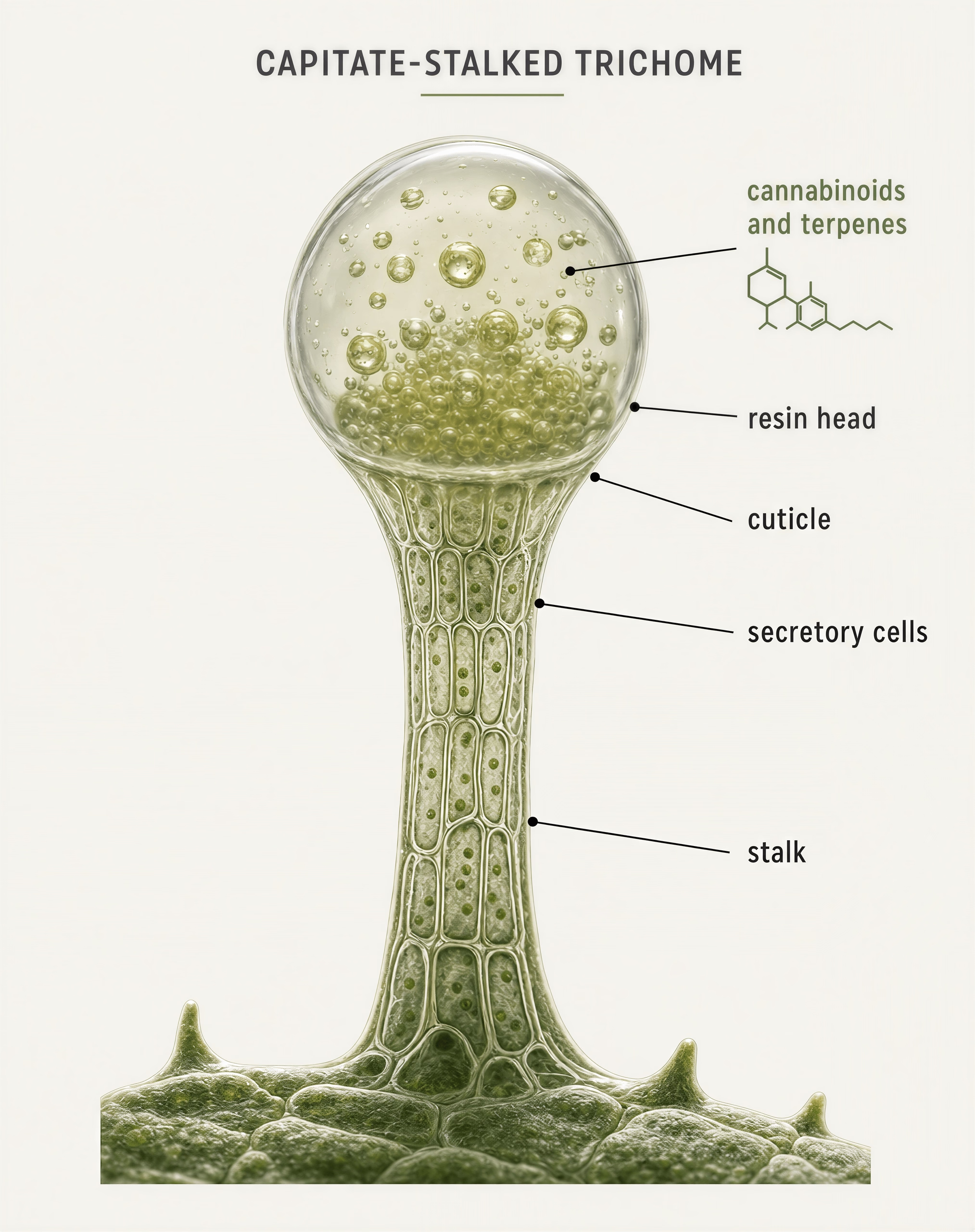
The basic target is the glandular trichome, especially the capitate-stalked trichomes that hold most of the plant’s cannabinoids and terpenes in a waxy resin head. A good solventless process tries to detach those heads intact. A bad one pulverizes leaf tissue and calls the result concentrate.
Kief and dry sift: mechanical trichome separation
Kief is the broadest term here. It usually means the loose, granular resin that falls away from cannabis flower during handling or passes through a screen. Sometimes that material is excellent. Often it is not. “Kief” does not guarantee purity; it only tells you the separation was mechanical.
Dry sift is the more exact term for intentional screen-based separation. Dried cannabis is agitated over one or more mesh screens so trichome heads fall through while larger fragments of leaf and stalk stay behind. The finer the separation, the more the process becomes a sorting exercise rather than simple collection.
| Micron size mentioned | Typical role in the article's description |
|---|---|
| 150 µm | Larger dry-sift screen that can let more material through |
| 120 µm | Mid-range sorting screen |
| 90 µm | Common finer fraction for trichome sorting |
| 73 µm | Another common resin-rich fraction |
| 45 µm | Smaller screen used for cleaner separation attempts |
Screen size changes the result. In practice, sift makers often work with micron ranges such as 150 µm, 120 µm, 90 µm, 73 µm, and 45 µm. Those numbers are not magic grades by themselves, because trichome size varies by cultivar and maturity, but they do shape what passes through. Larger screens allow more material through, including broken plant fragments. Smaller screens can help isolate intact heads, though they can also exclude some desirable resin if the operator chases cleanliness too aggressively.
Common contaminants in dry sift and hash fractions
- Leaf cuticle Tiny plant-surface fragments that reduce melt quality.
- Stalk fragments Broken trichome stalks and other fibrous plant debris.
- Pistil debris Non-resin floral material carried into the sift.
- Dust and environmental debris Fine unwanted particles present on the source material or introduced during handling.
This is why “full-melt” style dry sift is hard to make. It requires resin that is rich in trichome heads and low in contaminant load. The main contaminants are not mysterious: tiny pieces of leaf cuticle, stalk fragments, pistil debris, dust, and whatever else was present on the source material. Under magnification, clean sift looks head-heavy. Dirty sift looks greenish, smeary, and fibrous.
Technique matters as much as equipment. Cold temperatures help because brittle trichome heads detach more readily. Overworking the material hurts quality because each additional pass tends to increase plant contamination. First pulls are usually cleaner than later pulls. Static cleaning, where electrostatic charge helps separate lighter plant matter from heavier resin glands, can improve dry sift markedly when done well.
Input quality rules the process. Resin-poor flower cannot become elite sift through wishful thinking. Old, oxidized, or poorly handled material gives dull, less aromatic results because terpenes have already evaporated or degraded. Contaminants in the flower remain a problem too. Solventless does not mean contaminant-free; pesticides, heavy metals, microbes, and environmental debris can still be present if they were present in the source.
Hash: from hand-rubbed and pressed forms to ice-water hash
Hash begins where loose resin becomes a more unified mass. Traditional hand-rubbed hash, pressed kief hash, and modern ice-water hash all aim at the same thing: collect resin glands, then compact them so they handle, store, and consume differently from loose sift.
Hand-rubbed hash is one of the oldest forms. Fresh plants are handled manually, resin accumulates on the hands, and that resin is rolled into a dark, pliable product. It is labor-intensive and typically carries substantial non-trichome material because skin oils, plant sap, and fine debris all enter the mix. Yet it illustrates an important point: hash has never required solvents, only resin and pressure.
Pressed hash made from dry sift or kief is the better-known traditional route. The sift is compressed by hand, with mechanical pressure, or with mild heat. Pressure breaks some trichome heads and encourages the resin to bind together. Depending on temperature and age, the hash may stay crumbly, become putty-like, or darken as oxidation and polymerization progress. Texture here reflects processing and storage, not a distinct pharmacology.
Ice-water hash, often called bubble hash, is the modern extension of this tradition. Instead of dry screens, the material is stirred in ice water so trichome heads become brittle and detach. The slurry is then filtered through a series of mesh bags, often in descending micron sizes such as 220, 160, 120, 90, 73, 45, and 25 µm. Again, those grades are sorting tools, not fixed quality rankings. Many cultivars produce their strongest fractions in the 90 or 73 bag, but not all.
Ice-water extraction can produce cleaner resin than casual dry sifting because water helps move detached heads away from broken plant matter and the bag set separates fractions more precisely. But it is not foolproof. Aggressive mixing tears up leaf tissue. Poor drying after collection can leave too much moisture, and that invites microbial growth or degrades the hash. Freeze-drying changed the category because it removes water quickly and preserves more structure and aroma than slow air-drying, which can allow clumping, oxidation, and terpene loss.
Full melt A high-purity solventless hash grade that liquefies and bubbles cleanly when heated, indicating low contaminant load and high trichome-head purity.
The coveted “full melt” standard in bubble hash refers to how completely the resin liquefies and bubbles when heated, indicating low contamination and high trichome-head purity. Lower grades may still be useful, especially for pressing into rosin, but they contain enough residual waxes, cuticle, or plant matter that they char rather than melt cleanly.
Rosin: heat-and-pressure extraction from flower, sift, or hash
Rosin takes solventless concentration one step further. Instead of consuming the separated resin directly, heat and pressure squeeze out an oil. No butane, no propane, no ethanol. That absence of hydrocarbon solvent is a real advantage, because residual solvent testing is not part of the equation. But rosin still reflects the chemistry and cleanliness of its feedstock.
Flower rosin is pressed directly from cured buds. It is accessible and simple, but it has limitations. Because the starting material still contains substantial plant matter, pressing can push lipids, waxes, pigments, and fine particulates into the extract. The result may look appealing and test potent, yet it is usually less refined than rosin made from cleaner resin fractions. Flavor can be broad, sometimes loud, sometimes slightly “green.”
Hash rosin starts with sift or, more often, ice-water hash. This two-step route is usually superior because the trichome heads are isolated first, then pressed. Less plant matter enters the final oil. That often means cleaner melt, better texture stability, and a more polished terpene profile. If people talk about solventless at its highest expression, they usually mean hash rosin, not flower rosin.
| Variable | Higher / stronger setting tends to do | Lower / gentler setting tends to do |
|---|---|---|
| Temperature | Increase output, darken rosin, volatilize more terpenes | Preserve more volatiles but lower yield and slow flow |
| Bag micron size | Allow more flow with more particulate risk if too open | Reduce particulate carryover but can trap oil if too tight |
| Pressure | Push more material and potentially force unwanted solids through | Favor cleaner output when applied gradually and in control |
Press variables matter. Temperature changes yield and aroma retention. Higher temperatures increase output but volatilize more terpenes and can darken the rosin. Lower temperatures preserve more volatile compounds but reduce yield and slow flow. Bag size matters too; fine micron rosin bags can limit particulate contamination, though going too tight may trap oil and reduce returns. Pressure is often overstated. Too much force can push unwanted material through the filter and damage quality. Gentle, controlled pressure usually works better than brute force.
“Live rosin” adds one more step in the chain: the hash is made from fresh-frozen material rather than dried flower. The point is terpene preservation. Drying and curing can strip monoterpenes, so fresh-frozen input often gives a more vivid aroma profile. It is not a different chemical class. It is a different starting condition.
Where solventless products excel and where they do not
Solventless concentrates excel when resin quality is the main goal and the source material is excellent. They can preserve a broad, plant-derived profile without hydrocarbon residue concerns, and they make the process easier to explain: separate heads, maybe wash them, maybe press them, then keep oxygen, heat, and moisture under control.
They do not automatically win on purity, consistency, or safety. Solventless extraction will not remove pesticides already on the flower. It will not neutralize heavy metals taken up during cultivation. It will not fix moldy input. In fact, concentration can still concentrate certain unwanted compounds. That is why the same testing logic applies here as elsewhere: cannabinoid profile by HPLC, terpene data by GC methods, and screening for pesticides, metals, microbes, and mycotoxins.
There is also a yield penalty. Solventless methods, especially high-end hash rosin workflows, often recover less total cannabinoid content than aggressive solvent-based extraction. That lower efficiency is not inherently bad if the resin fraction is cleaner and more expressive, but it is a real tradeoff. Another limitation is variability. Two batches from the same cultivar can behave differently depending on harvest timing, trichome maturity, drying, freezing, and washing technique.
So the right way to think about kief, hash, and rosin is not as nostalgic alternatives to “stronger” extracts. They are a separate branch of concentrate making, one built around trichome separation rather than chemical dissolution. When they are clean, well-made, and properly tested, they can be exceptionally expressive. When they are made from poor input, they merely concentrate the same problems faster.
Hydrocarbon extraction: BHO, PHO, live resin, and the textures called wax, shatter, budder, and crumble
This is where concentrate language goes off the rails. People often talk as if BHO, live resin, shatter, wax, budder, and crumble are parallel product categories. They are not. Some terms describe the solvent system, some describe the starting material, and some describe the final physical texture. If that distinction is missed, the label tells you less than it seems.
Hydrocarbon extraction sits at the center of that confusion because it can produce very different outcomes from the same plant material. A closed-loop extractor can run butane, propane, or a blend through cannabis biomass, recover the solvent, and then change purge conditions, agitation, temperature, and terpene retention to end up with a glassy sheet, a wet sauce, a whipped paste, or a dry, friable mass. Same broad chemistry. Different process path.
That matters more than menu taxonomy. It also matters for safety. Concentrates are not just stronger flower. In a randomized clinical trial published in JAMA Network Open in 2021, Cinnamon Bidwell and colleagues reported average labeled THC concentrations of 70.7% for concentrates versus 16.1% for flower. Users did partially titrate by taking smaller amounts, but blood THC still rose higher in the concentrate group. A label that says “wax” or “shatter” tells you almost nothing about that pharmacology. The extraction method, cannabinoid profile, terpene profile, and residual solvent testing do.
Butane and propane extraction: why hydrocarbon systems preserve terpenes well
Hydrocarbon extraction became widespread for a simple reason: it is very good at pulling cannabinoids and terpenes from cannabis while operating at relatively low temperatures. Low temperature is the point. Many of the most aroma-active cannabis terpenes, especially monoterpenes such as myrcene, limonene, and pinene, are volatile and easily lost during aggressive drying, heating, or harsh post-processing. Hydrocarbon systems can dissolve these compounds efficiently without the thermal stress associated with some other methods.

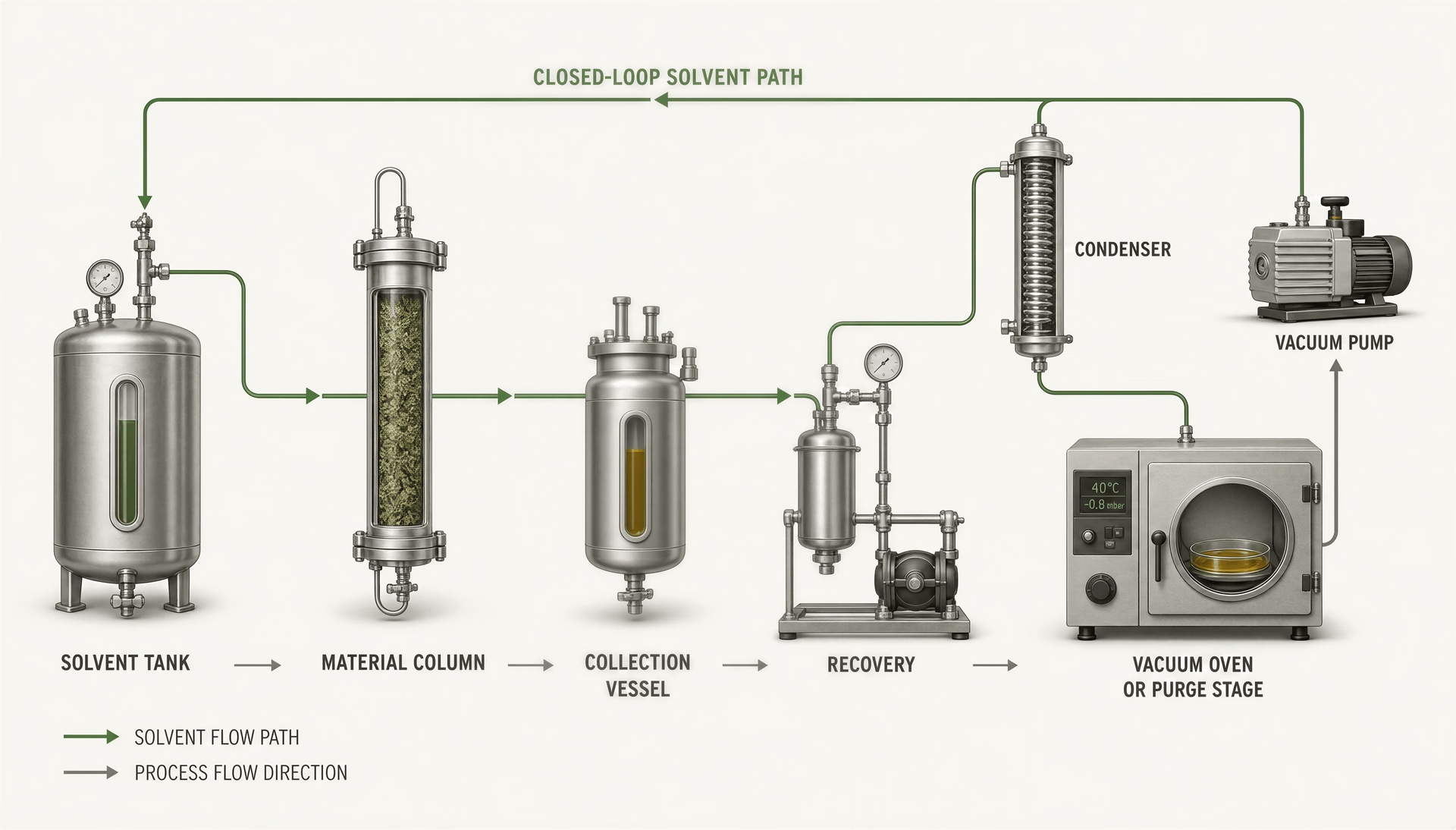
A properly engineered system is a closed-loop extractor, not an open blasting tube. In a closed-loop setup, liquid butane, propane, or a blend moves through the packed cannabis column, dissolves target compounds, and then travels into a collection chamber. Heat and pressure changes separate the solvent from the extracted oil. The recovered solvent is condensed and reused inside the sealed system rather than vented into the room. That is a safety issue first, since both butane and propane are highly flammable. It is also a process-control issue. Closed-loop systems allow repeatable pressure, temperature, and solvent recovery.
Once the solvent-rich extract is collected, it is not finished. It still contains dissolved hydrocarbon that must be removed to very low residual levels. That is where purge steps matter. Extractors often spread the concentrate into thin films or place it in vessels under controlled heat and reduced pressure. Vacuum ovens are common because lowering the pressure reduces the boiling point of residual solvents, allowing butane or propane to leave the extract at temperatures that are less destructive to terpenes. Done well, this improves solvent removal without cooking off the aroma fraction. Done badly, it either leaves too much solvent behind or strips the extract flat.
This is one reason hydrocarbon extracts often smell more like the source cultivar than heavily refined oils. Distillate may reach very high cannabinoid purity, but it usually loses much of the native terpene fraction unless terpenes are reintroduced later. Hydrocarbon extraction, especially when performed cold and purged carefully, can preserve a broader native profile from the start.
That does not mean hydrocarbons are automatically “cleaner.” They are only as clean as the input material and the post-processing. Extraction can concentrate contaminants too. If the biomass contains pesticides, heavy metals, or other residues, the extract may enrich them along with cannabinoids and terpenes. Residual solvent testing by headspace GC-MS, pesticide panels, and heavy metal testing by ICP-MS matter here far more than the romance of a label.
BHO versus PHO versus blended hydrocarbon systems
| System | Primary solvent | How the article characterizes it |
|---|---|---|
| BHO | Butane | Often associated with terpene-rich extracts and stable semi-solid or glass-like textures |
| PHO | Propane | Lower boiling point changes solubility and purge dynamics |
| Blended hydrocarbon | Butane + propane blend | Used to tune solvent power, throughput, texture, and nucleation behavior |
BHO means butane hash oil: cannabis extract made with butane as the primary solvent. PHO means propane hash oil: extract made with propane. Those are solvent labels, not effect categories.
Butane and propane behave differently in practice. N-butane has a higher boiling point than propane, and that affects extraction behavior, solvent recovery, and the texture an extractor can steer toward during post-processing. Butane is widely associated with terpene-rich extracts and with textures that can hold together as stable semi-solids or glass-like forms, depending on composition and purge conditions. Propane boils off more readily because of its lower boiling point, and it can shift both solubility and purge dynamics. In the lab, these are not trivial differences. They change which compounds are dissolved efficiently and how the extract behaves as solvent leaves the matrix.
That is why blended hydrocarbon systems are common. Instead of treating butane and propane as opposing camps, many extractors combine them to tune solvent power and texture outcomes. A blend can improve throughput, alter the ratio of cannabinoids to waxy lipids that come through under specific conditions, and support a target consistency after purging. It can also help with terpene retention and nucleation behavior later in post-processing.
So if someone asks whether BHO or PHO is “stronger,” the question is poorly framed. Potency depends more on the starting material and the degree of refinement than on the single word attached to the solvent. A butane extract can be THC-heavy or terpene-heavy. A propane extract can be wet and aromatic or relatively stripped. A blend can be tailored either way. Product names are shortcuts. Chemistry is doing the real work.
Live resin and the role of fresh-frozen starting material
“Live resin” is probably the most misunderstood phrase in this entire category. It does not mean a texture. It does not mean a specific solvent. It does not mean a guaranteed potency range. It means the extract was made from fresh-frozen cannabis rather than dried and cured cannabis.
That distinction matters because drying and curing change the volatile profile of the plant before extraction even begins. Monoterpenes are especially vulnerable to loss during harvest handling and post-harvest drying. Fresh-frozen material is taken shortly after harvest and kept frozen so that more of the plant’s original volatile compounds remain available during extraction. The goal is not magic. The goal is a profile that more closely resembles the living plant’s aroma chemistry.
When fresh-frozen input is extracted with hydrocarbons, the result is often sold as live resin. Because the terpene fraction tends to be higher, these extracts are frequently softer, wetter, or sauce-like than extracts from dried material. But that is common, not definitional. Live resin can appear in several textures depending on post-processing. A jar of terpene-rich sauce with THCA crystals in it can be live resin. A softer sugar can be live resin. Even a more stable semi-solid form can be live resin if the source was fresh-frozen.
This is also where labels can hide the decarboxylation state. Many live resin products are rich in THCA rather than delta-9 THC before heating. Dab them, and the THCA rapidly decarboxylates into intoxicating THC. Keep them unheated, and the pharmacology is different. That distinction is often more meaningful than whether the jar says sugar, sauce, or badder.
Why shatter, wax, budder, and crumble are usually texture outcomes
Shatter, wax, budder, and crumble are usually not separate chemical classes. They are texture outcomes created by formulation and process variables. This is the main correction most readers need.
Shatter is typically a more transparent, glass-like, brittle form. It tends to arise when the extract remains relatively homogeneous and amorphous, with limited nucleation and limited agitation during post-processing. Lower residual moisture, a controlled terpene fraction, and gentle handling all favor this stable sheet-like appearance. Disturb the matrix less, and it can set into a translucent slab that “shatters” when broken.
Wax is a broader, less precise term. It usually refers to an opaque, softer, more malleable concentrate in which the structure is no longer a smooth amorphous glass. Once tiny crystals begin to form and the matrix is agitated or aerated, light scatters differently and the extract looks opaque rather than clear. More trapped gas, more crystal formation, more disorder. The result looks like wax.
Budder, sometimes spelled badder, pushes that texture further. It is whipped, creamy, and spreadable because the extract has been intentionally agitated or because its composition strongly favors nucleation and a semi-aerated consistency. Higher terpene content can plasticize the extract, keeping it soft. Controlled whipping can seed crystallization and create the familiar butter-like body. The chemistry has not jumped into a new species. The physical state changed.
Crumble is drier and more friable. It breaks apart easily because the matrix has lost more volatile content or has been purged and structured in a way that leaves a porous, brittle solid. Lower terpene content often plays a role. So do longer purge times, warmer purge conditions, and more extensive solvent removal. As the extract dries and crystallizes, it can lose the cohesive body seen in budder and instead fracture into small pieces.
Nucleation The start of crystal formation, where small seed sites allow compounds such as THCA to organize into a crystalline phase instead of remaining uniformly glassy.
Nucleation is the key concept behind many of these forms. When cannabinoids such as THCA begin to organize into crystals, the extract separates into phases rather than staying uniformly glassy. Agitation accelerates that process by creating sites where crystals can start forming. Temperature matters too. So does the ratio of cannabinoids to terpenes. Terpenes can act almost like a solvent phase inside the extract, keeping parts of it fluid while crystals grow elsewhere. Change that ratio and you change the texture.
Purge conditions matter just as much. Under vacuum, residual hydrocarbons leave the matrix more readily. If the purge is gentle and preserves more terpenes, the extract may remain softer. If the purge is more aggressive, the product may become drier or more brittle. A tiny process difference can turn a potential shatter into a budder, or a budder into a crumble.
That is why retail taxonomy often misleads. A “wax” from one lab may be chemically close to a “budder” from another, and both may come from the same cultivar run through a similar hydrocarbon blend. The more useful questions are these: Was the input dried or fresh-frozen? Was the solvent butane, propane, or a blend? What is the cannabinoid profile by HPLC? What terpenes are present, and at what levels? What do residual solvent results show? Those answers describe the extract. Texture names mostly describe what happened afterward.
CO2 oil, distillate, and highly refined concentrates
CO2 oil sits in an odd place in concentrate culture. It is often presented as if it were a category of “clean” cannabis in itself, when in practice it is better understood as an extraction platform that can feed several very different end products. A raw CO2 extract may be dark, waxy, and terpene-depleted. A heavily refined one may end up looking and behaving much closer to distillate than to any whole-plant extract. That gap matters.
The same is true of distillate. It is not just “strong oil.” It is a narrow chemical fraction, usually dominated by one major cannabinoid after substantial post-processing. That makes it useful. It also makes it less representative of the starting flower.
Subcritical and supercritical CO2 extraction
Carbon dioxide becomes a tunable solvent when pressure and temperature are manipulated. Below its critical point, subcritical CO2 behaves more gently and tends to pull lighter volatile compounds with less aggressive solubility. Above the critical point, supercritical CO2 acts more like a dense fluid with enhanced penetrative power and broader solvency, allowing it to extract cannabinoids efficiently along with waxes, lipids, and other non-target compounds.
That tunability is the main technical appeal. Operators can shift pressure and temperature to favor certain fractions, sometimes running sequential passes to capture terpenes first and cannabinoids later. On paper, this sounds elegantly selective. In real production, the result is often less romantic. Supercritical CO2 is good at extracting cannabinoids, but it commonly brings along enough waxes and plant fats that the crude oil needs significant cleanup before it works well in cartridges or refined ingestible oils.
This is where CO2 sits between hydrocarbon and ethanol-style logic. Hydrocarbon extraction, especially butane-heavy systems, is often chosen when terpene retention and resin-like texture are priorities. Ethanol is efficient but famous for pulling chlorophyll, waxes, and polar plant compounds unless process conditions are tightly controlled. CO2 occupies a middle zone: less associated with flammability than butane or propane, often marketed as cleaner than hydrocarbons, yet still frequently dependent on downstream refinement that looks a lot like the cleanup steps used for other solvent-based extracts.
So “CO2 extracted” tells you less than many labels imply. It does not tell you whether the oil is terpene-rich, whether it has been winterized, whether it has been distilled, or whether the final flavor reflects the plant at all.
Winterization, filtration, and post-processing
Crude CO2 extract is often not the final product. It is a starting material.
Winterization is one of the most common next steps. The extract is dissolved in ethanol and chilled so waxes, lipids, and other higher-melting impurities precipitate out. Those solids are then removed by filtration. Dewaxing can improve clarity, flow, and vaporizer performance, and it reduces the heavy, residue-forming character that unrefined extracts can have. Without this step, a CO2 oil may be thick in all the wrong ways.
Filtration may also include finer cleanup stages aimed at color bodies, particulates, or unwanted compounds. Some processors use adsorbent media such as bentonite clay, silica, or activated carbon as part of broader remediation workflows. These methods can brighten oil and reduce off-notes. They can also strip desirable compounds if pushed too hard. Cleaner-looking oil is not automatically chemically superior.
Then there is decarboxylation. Raw cannabis contains THCA and CBDA, not mainly THC and CBD. Heating during post-processing converts acidic cannabinoids into their neutral forms, which changes both pharmacology and physical behavior. A cartridge oil usually needs a formulation that will flow and vaporize consistently, and decarboxylated cannabinoids fit that use case far better than a THCA-heavy extract that wants to crystallize or remain unstable.
This is why CO2 branding can be misleading. By the time a “CO2 oil” reaches its final form, it may have been extracted, winterized, filtered, decarboxylated, distilled, and blended with added terpenes. The original extraction solvent is only one chapter in the story. Sometimes it is not even the most important one.
Distillate: cannabinoid enrichment at the expense of whole-plant complexity
Distillate takes refinement several steps further. Instead of preserving a broad chemical snapshot of the plant, it aims to concentrate selected cannabinoids by boiling-point-driven separation under vacuum. The two common industrial approaches are short-path distillation and wiped-film distillation. Both lower pressure so cannabinoids can be separated at reduced temperatures, limiting some thermal degradation compared with atmospheric boiling. Wiped-film systems are especially useful at scale because they spread oil into a thin film, improving heat transfer and reducing the time compounds spend at elevated temperatures.
The goal is enrichment. Often that means THC distillate in the 85% to 95% range, though exact numbers vary by feedstock and process quality. Market data underline how common very high potency has become. Colorado data summarized in peer-reviewed work linked to Cinnamon Bidwell and colleagues showed mean THC concentration in concentrates rising from 56.7% in 2014 to 68.4% in 2021, with 90%-plus products becoming increasingly common. In Bidwell’s randomized clinical trial published in JAMA Network Open in 2021, concentrates averaged 70.7% labeled THC versus 16.1% for flower.
That kind of standardization has practical value. Distillate is consistent. It is easier to formulate into oils, capsules, tinctures, and edibles when the cannabinoid fraction is predictable from batch to batch. If a manufacturer needs repeatable THC input for an edible line, distillate is much easier to work with than a terpene-rich resin whose profile shifts with cultivar and harvest.
But chemical narrowing is the tradeoff. Distillation tends to remove or severely reduce many native terpenes, flavonoids, and minor constituents unless they are separately captured and added back later. The final material may be potent, pale, and analytically tidy while being much less representative of the original plant. “Cleaner” here really means more selectively purified, not inherently more effective or more desirable.
That distinction matters because users often mistake purity for superiority. It is not. A 92% THC distillate can be less expressive, less flavorful, and for some people less tolerable than a lower-THC extract with a broader terpene and minor-cannabinoid profile.
Why cartridge oils often rely on distillate plus added terpenes
Cartridge oils are a formulation problem as much as an extraction problem. The oil must remain fluid enough to wick, stable enough not to separate, potent enough to fit small hardware, and predictable enough to avoid crystallization or clogging. Distillate checks many of those boxes. It is dense in cannabinoids, relatively neutral in flavor after heavy refinement, and easy to standardize.
On its own, though, distillate can be flat. It often lacks the aromatic compounds that people associate with specific cultivars. That is why many cartridge formulations add terpenes back in. These may be cannabis-derived terpenes recovered from extraction runs, or botanical terpenes isolated from non-cannabis sources such as citrus, pine, or lavender. Chemically, limonene is limonene whether it came from cannabis or orange peel. Even so, terpene blends built from outside sources may reproduce a familiar aroma without truly recreating the original plant matrix.
This is one reason cartridge labels can overstate fidelity. A product can smell like a named cultivar while being, in essence, THC distillate plus a designed terpene blend. There is nothing inherently wrong with that. It is simply different from a full-spectrum extract.
The harder truth is that many people read “CO2 oil” or “distillate cartridge” as a quality ranking. It is not. These terms describe process and refinement level, not a guarantee of richer pharmacology, safer chemistry, or better sensory profile. What matters more is the full chain: source material quality, contaminant testing, post-processing choices, decarboxylation state, and whether the final oil preserves or reconstructs terpenes in a meaningful way.
THCA crystalline, diamonds, and sauce: purity versus complexity
THCA crystalline sits at one extreme of concentrate processing: not broad-spectrum, not especially terpene-rich, not a whole-plant expression in any meaningful chemical sense. It is a narrow product built around one molecule, tetrahydrocannabinolic acid. That makes it useful for illustrating a larger point. A very high cannabinoid percentage tells you something real about concentration, but far less than many labels imply about aroma, breadth of effect, or how the product will behave before and after heating.
How THCA crystalline forms
THCA crystalline forms when an extract rich in tetrahydrocannabinolic acid is pushed into conditions where THCA can separate from the surrounding mixture and assemble into solid crystals. This is basic solution chemistry, not a mysterious cannabis-only phenomenon. If the extract contains enough THCA, and the solvent environment, temperature, pressure, and time are right, THCA comes out of solution and organizes into a crystal lattice.
Hydrocarbon extracts are commonly used for this because butane, propane, or blends can dissolve cannabinoids and terpenes efficiently while allowing controlled post-processing. The extract is first produced, then partially purged or otherwise manipulated until the dissolved THCA becomes supersaturated. Once supersaturation is reached, crystal nucleation begins. Tiny seed crystals may appear first. Given time, those seeds grow into larger formations. This is where “diamonds” comes from: not a different cannabinoid, just visibly large THCA crystals.
The leftover liquid matters. A lot. After crystals form, they do not occupy the whole extract. They sit in a residual liquid phase often called the mother liquor. In chemistry, mother liquor simply means the solution remaining after crystals have formed. In cannabis extraction, that mother liquor often holds terpenes, minor cannabinoids, and other compounds that did not crystallize with the THCA.
Because THCA is the acidic precursor, it is also important to state what crystalline THCA is not. It is not the same as active delta-9-THC. THCA does not convert efficiently into intoxicating THC until heat removes a carboxyl group through decarboxylation. Dab it, vape it hard enough, or otherwise heat it sufficiently, and conversion happens rapidly. Leave it unheated, and the pharmacology is different.
Diamonds and sauce: separating crystals from terpene-rich fractions

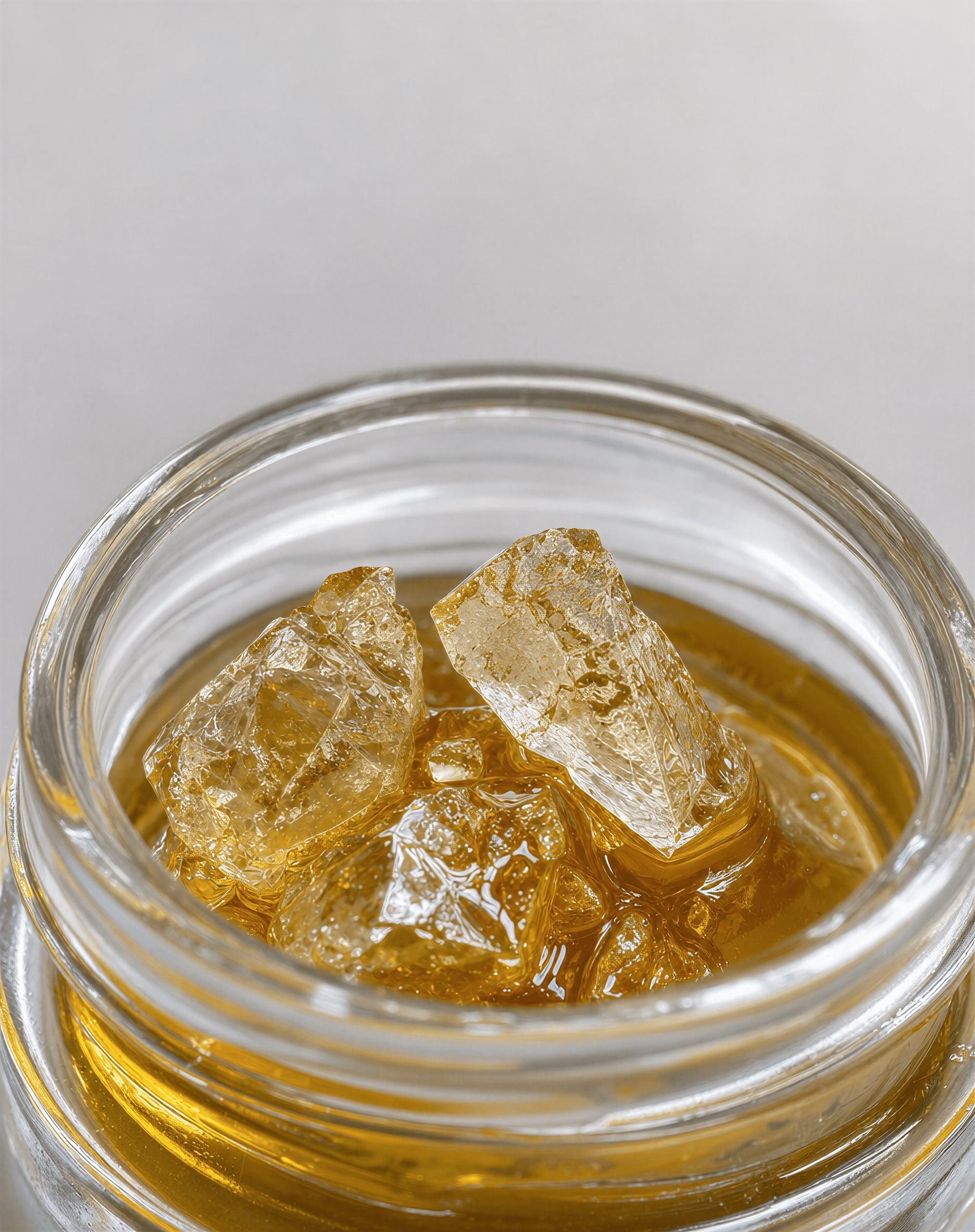
“Diamonds and sauce” describes a two-phase product. The diamonds are THCA crystals. The sauce is the terpene-rich liquid fraction, usually derived from the mother liquor that remains after crystallization. This pairing exists because crystalline purity and aromatic complexity tend to separate during processing rather than concentrate into the same fraction.
That division is revealing. The crystals can test extremely high in THCA, sometimes approaching isolate-like purity. The sauce, by contrast, usually carries much of the volatile chemistry people associate with aroma and character: monoterpenes, sesquiterpenes, and often minor cannabinoids. If a processor isolates the crystals and removes most of the liquid, the result may be visually impressive and analytically clean on a cannabinoid assay, yet chemically narrow. Recombine crystals with sauce, and the product becomes less pure by THCA percentage while often becoming richer in terpene content.
That tradeoff is not a flaw. It is the chemistry. A concentrate cannot be simultaneously maximized for single-molecule purity and for full-spectrum retention to the same degree.
This is one reason retail taxonomy often misleads people. “Diamonds” sounds like a category of effect. It is really a description of crystal morphology and purification. “Sauce” sounds informal, but chemically it points to the non-crystalline fraction left after THCA has separated out.
What high purity does and does not tell you
A very high THCA number tells you the product is dominated by one cannabinoid in its acidic form. That can matter for dosing and for how much THC may be generated after heating. It does not, by itself, tell you much about terpene retention, minor cannabinoids, residual solvents, contaminant burden, or experiential breadth.
This distinction matters because concentrates as a category are already potent. In a randomized clinical trial by Bidwell and colleagues published in JAMA Network Open in 2021, concentrate users consumed products averaging 70.7% labeled THC versus 16.1% for flower, and concentrates produced higher immediate blood THC concentrations even though users partially adjusted intake. Chasing purity past that point is not the same thing as gaining complexity.
High purity can be desirable when the goal is a predictable, cannabinoid-dominant product. It can also strip away much of what makes a concentrate feel chemically layered. A terpene-rich sauce may lower the headline cannabinoid percentage while increasing aroma and altering the subjective profile. Those are not marketing abstractions. They reflect actual compositional differences.
So THCA crystalline is a useful reality check. It shows why the highest number on the label is not the whole story, and sometimes not even the main story. Purity answers one question. Complexity answers another.
Potency is not one number: THC percentage, decarboxylation state, dose, and user experience
A concentrate label can say 90% THC and still tell you surprisingly little about what the experience will be like. That is not a loophole in chemistry. It is the chemistry.
“Potency” gets flattened into one big number, usually THC percentage, as if effect were a simple race to the highest figure. It is not. What matters in practice is how much active THC is actually delivered, how quickly it reaches blood, whether the product is mostly THCA or already decarboxylated THC, what other compounds remain after extraction and post-processing, and how the person using it responds at that dose on that day. A terpene-poor distillate at 90% THC, a THCA-dominant crystalline product, and a lower-THC live extract can all behave differently despite labels that look easy to rank.
Why 90% THC does not mean 90% effect
The first mistake is treating percentage as dose. A product that is 90% THC contains 900 mg THC per gram, but nobody consumes a full gram in one inhalation. Real-world intake depends on puff size, dab size, inhalation technique, device efficiency, sidestream loss, thermal degradation, and self-titration.
Bidwell and colleagues tested this directly in a randomized clinical trial published in JAMA Network Open in 2021. The cannabis concentrate used in the study averaged 70.7% labeled THC, while flower averaged 16.1%. Yet participants did not consume equal masses. They used about 0.09 g of concentrate versus 0.46 g of flower during ad libitum sessions. That is the body trying to compensate: when products are stronger, people often take less. This is one reason a fivefold difference in label percentage does not translate neatly into a fivefold subjective effect.
But compensation is only partial. In the same trial, concentrate users still reached higher blood THC immediately after use than flower users. Smaller mass, higher delivery. That matters because acute impairment tracks exposure more closely than package percentage. A person can underestimate a tiny dab or a short cartridge session because the consumed amount looks trivial. Pharmacologically, it may not be trivial at all.
The second mistake is assuming that all high-THC products feel equally intense. Distillate is a clean example. It can test above 85% to 90% THC after wiped-film or short-path distillation, but the process often strips many native terpenes and minor cannabinoids unless they are added back later. THCA crystals can be even purer, yet “diamonds” without terpene-rich sauce are often less chemically complex than a lower-THC live resin. High purity is real. It is not the same thing as maximal effect, and it is definitely not the same thing as maximal tolerability.
Then there is route and speed. Inhaled concentrates deliver cannabinoids rapidly. Blood THC rises fast, and fast onset tends to amplify both desired and unwanted effects. That can make a product feel stronger than its raw THC percentage would suggest.
THCA versus THC in labeling and real-world use
Many labels combine acidic and neutral cannabinoids, but those forms do not behave the same way. THCA is the non-intoxicating acidic precursor. THC is the neutral cannabinoid produced when THCA loses a carboxyl group through heat or time. If a concentrate is rich in THCA, it may have limited intoxicating effect until it is heated in a nail, atomizer, or oven.
This is why “total THC” math exists. Labs commonly estimate total THC with the formula:
Total THC = THC + (THCA × 0.877)
The 0.877 factor accounts for the mass lost as carbon dioxide during decarboxylation. A simple example: if a concentrate contains 80% THCA and 5% THC, the estimated total THC after full decarboxylation is 5 + (80 × 0.877) = 75.16%.
That estimate matters, but it is still an estimate. Full conversion is not guaranteed in every real use scenario. Dabbing a THCA-rich concentrate usually decarboxylates it very quickly because the temperature is high. Put that same THCA-rich material into a raw tincture or swallow it without adequate heating and the intoxicating effect changes dramatically. Labels often blur this distinction, which leads people to think a high-THCA number means the same thing as ready-to-act THC. It does not.
Analytically, this is one reason HPLC is the standard method for cannabinoid profiling in many regulated systems: it can quantify THCA and THC separately without forcing conversion during testing. Gas chromatography, unless specifically corrected for derivatization issues, can overstate neutral THC because the heat of analysis can decarboxylate acidic cannabinoids. That lab detail sounds technical, but it has direct consequences for how labels should be read.
Dose titration with concentrates versus flower
People do self-titrate. They usually inhale until they feel they have reached a target effect, then stop. With flower, that feedback loop is relatively forgiving because each inhalation tends to deliver a smaller cannabinoid payload. With concentrates, the same loop is compressed. One extra dab can be the difference between controlled symptom relief and an unpleasant hour.
The Bidwell trial shows the pattern clearly. Participants used far less concentrate by weight than flower, which means users do adapt behavior when potency rises. Still, concentrate use produced higher blood THC levels. This is why “I only took a tiny amount” is not a reliable safety check. Tiny in grams can be large in pharmacologic dose.
A rough comparison helps. A 0.01 g dab of a 75% THC concentrate contains about 7.5 mg THC before accounting for delivery losses. A few inhalations of flower may land in a similar range, but the concentrated dose arrives with fewer opportunities to stop and reassess. Device design matters too. High-efficiency e-rigs and cartridges can deliver repeat doses with very little friction, which can encourage overconsumption before peak effects are fully registered.[2] Cannabis Regulations. Government of Canada. Justice Laws Website, 2018.
This is one reason regulated edible markets often cap dose. Health Canada’s federal rules cap THC in most legal edible packages at 10 mg total. Inhaled concentrates have no equivalent built-in pause. The user creates the pause, or does not.
Tolerance, acute impairment, and adverse reactions
Tolerance changes the picture, but it does not erase risk. Frequent users may report less intoxication at a given blood THC concentration than occasional users. They may feel “fine” while showing measurable psychomotor impairment. That mismatch matters for driving, operating equipment, and any task that depends on reaction time and divided attention.
Acute adverse effects are not rare at high doses. Anxiety, panic, paranoia, tachycardia, dizziness, and dysphoria become more likely as THC exposure rises quickly. Inexperienced users are the most obvious risk group, though experienced users can also overshoot when using a new device, a high-terpene extract with rapid onset, or a product whose decarboxylation state was misunderstood.
Public health surveillance supports that concern. Poison-center reports in the legalization era have shown substantial increases in cannabis exposures, with edibles getting the most attention but high-potency oils and concentrates also part of the larger picture of overconsumption and unintentional exposure. Adolescents are not outside this trend either. In one 2020 survey, 33.2% reported lifetime cannabis use, and 24.9% of those lifetime users reported lifetime concentrate use. High-potency products are no longer a niche issue.
So the useful question is not “What THC percentage is strongest?” It is: how much active THC is present, in what chemical form, delivered how fast, with what surrounding compounds, to a person with what level of tolerance? That framework predicts real-world effect far better than the biggest number on the package.
Consumption methods and how they change the same concentrate
A concentrate is not one fixed experience. The same extract can behave very differently depending on whether it is inhaled, swallowed, or held under the tongue. That difference is driven by pharmacokinetics: how fast cannabinoids enter blood, what organs process them first, which metabolites are formed, and how much heat reshapes the chemistry before the dose even reaches the body.
This matters more than menu language. A terpene-rich live resin dab, a distillate cartridge, an infused edible, and a tincture made from the same cannabinoid source can produce different onset times, peak intensity curves, durations, and side-effect patterns. Decarboxylation state matters too. THCA is not THC. CBDA is not CBD. Heat can convert the acidic form into the neutral form, and route determines whether that conversion needs to happen before use.
Dabbing: temperature, inhalation intensity, and aerosol chemistry

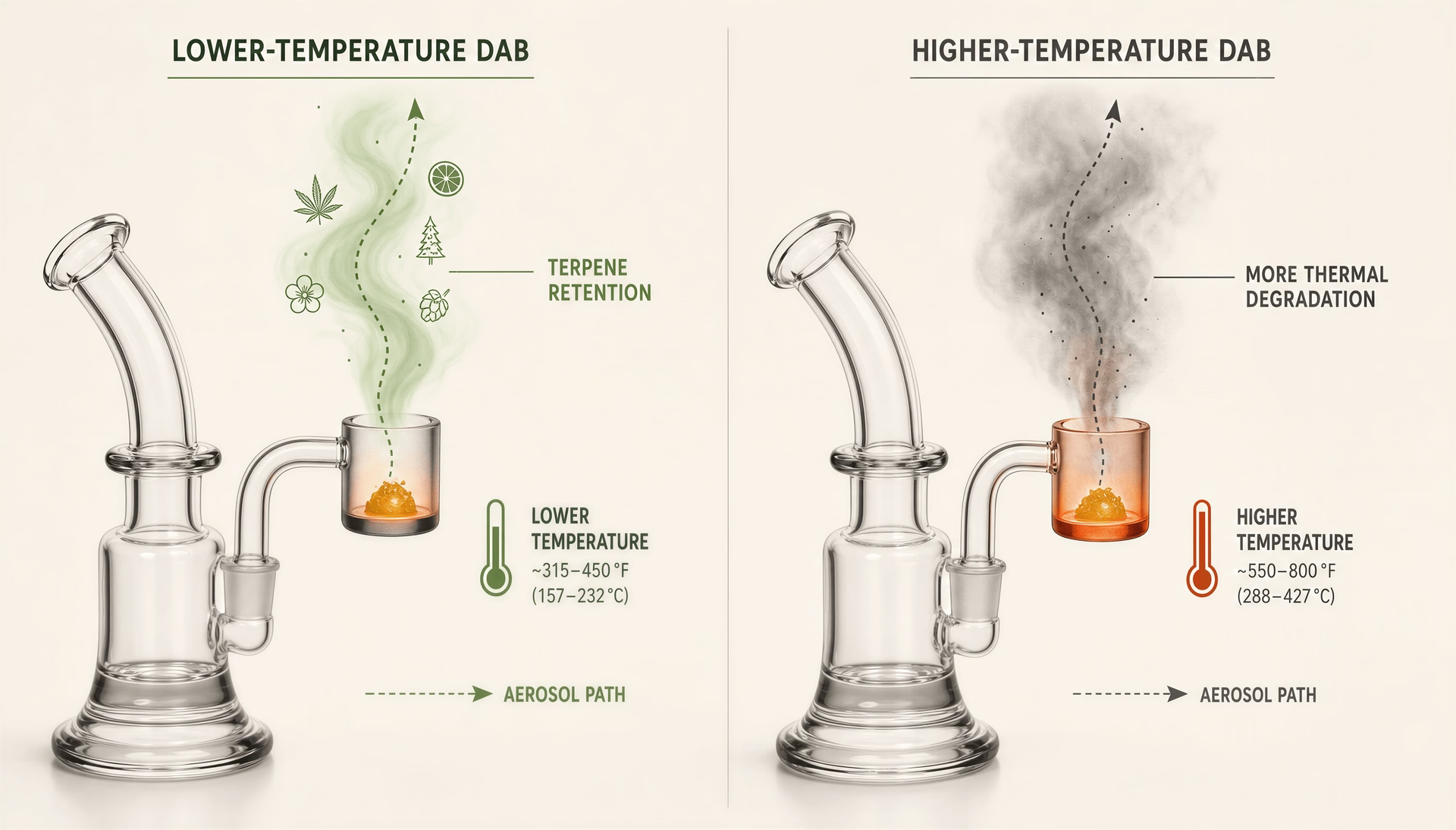
Dabbing heats a small amount of concentrate on a hot surface and creates an aerosol for inhalation. The route is fast because cannabinoids cross the lungs into the bloodstream within minutes. Peak subjective effects come quickly. That speed makes dose titration possible, but it also means overshooting is easy with high-potency material.
Temperature changes the chemistry in real time. Lower-temperature dabs generally preserve more monoterpenes and sesquiterpenes, which are volatile and easily lost or degraded. High heat drives off those compounds rapidly and increases formation of thermal degradation products. The practical implication is simple: hotter is not stronger in any useful pharmacological sense if it destroys aroma-active compounds and creates a harsher aerosol.
There is a second variable people often ignore: inhalation intensity. A deep, forceful inhalation from a very hot dab can increase throat and airway irritation even when the concentrate itself tested clean for residual solvents. That is because aerosol chemistry depends not only on what was in the extract, but what heat turns it into. Excessively hot dabbing has been linked in analytical work to more irritant byproducts from terpenes and other organics. Lower-temperature use tends to produce a more chemically faithful aerosol.
Decarboxylation during dabbing happens on the nail or atomizer. A THCA-dominant extract such as diamonds can become highly intoxicating once heated because THCA rapidly loses carbon dioxide and becomes THC. Without heating, THCA-rich material behaves very differently. That is why the same concentrate can be nearly inactive in a raw preparation yet potent when dabbed.
The human data support caution with potency. In Bidwell et al., published in JAMA Network Open in 2021, legal-market concentrates averaged 70.7% labeled THC versus 16.1% for flower. Concentrate users consumed less material by weight, but blood THC still rose higher immediately after use. Route and formulation did that, not branding.
Vape cartridges and portable concentrate devices
Cartridges and portable concentrate devices also rely on inhalation, but the aerosol is generated differently. The concentrate is heated by a coil or ceramic element, often at lower and more controlled temperatures than a torch-heated dab rig. That can reduce combustion-like byproducts, though “safer because it is a cartridge” is too broad to defend.
Most cartridges are filled with decarboxylated oil, often distillate. Distillate works well here because it is fluid, highly refined, and chemically consistent. The tradeoff is narrower composition. Native terpenes and minor cannabinoids are often stripped during distillation and then selectively added back. A live resin or rosin vape may retain more original volatiles, but device design still determines what actually reaches the user. Poor hardware can overheat oil, scorch terpenes, and generate unwanted degradation products.
Aerosol quality also depends on additives. The 2019 EVALI outbreak was strongly linked to vitamin E acetate in illicit inhalation products, a reminder that route-specific contaminants matter as much as cannabinoids do. Even without that extreme example, inhaled oils should be judged by residual solvent testing, additive disclosure, heavy metals, and hardware integrity. Metals can leach from poorly made components into the aerosol. That risk is specific to the device, not just the extract.
Portable devices usually deliver smaller puffs than a dab rig, which may help some users self-titrate. But repeated small puffs can add up quickly because onset remains rapid. There is no meaningful metabolic buffer. What reaches the lungs reaches the blood fast.
Edibles made from oils or distillates
Edibles change everything because the dose goes through the gut and then the liver before broad systemic circulation. That first-pass metabolism converts a portion of THC into 11-hydroxy-THC, a metabolite that crosses the blood-brain barrier efficiently and can feel stronger and longer-lasting than inhaled THC at an equivalent starting dose. This is the main reason oral products often feel different from inhaled products even when the label lists the same milligrams.
For THC edibles, decarboxylation is not optional. THCA must be converted to THC before or during formulation, otherwise the edible will not behave as expected. Distillate is commonly used because it is already decarboxylated and easy to dose into fats or emulsions. A raw THCA extract stirred into food is not functionally the same thing. The same logic applies to CBD and CBDA, though the pharmacology differs and intoxication is not the issue.
Onset is slower, usually measured in tens of minutes to a few hours rather than seconds to minutes. Duration is longer because gastrointestinal absorption and hepatic metabolism stretch the curve. That delay is a major reason overconsumption happens. Poison-center data in the legalization era repeatedly show rising edible exposures, including unintentional pediatric ingestion. Oral products are less irritating to the lungs, but they are not lower risk across the board. They shift the risk profile from inhalation chemistry to delayed onset, prolonged effects, and accidental ingestion.
The practical match is straightforward: decarboxylated oils and distillates are well suited to oral dosing because they are already in the neutral cannabinoid form and can be standardized. Terpene-rich live products are usually a poor fit if the goal is preserving the fresh aromatic profile, since digestion and food processing are not kind to fragile volatiles.
Tinctures and sublingual use
Tinctures sit between inhalation and edibles, but only if they are actually used sublingually and held in contact with oral mucosa long enough for absorption. Otherwise they behave more like oral products after being swallowed.
For sublingual THC or CBD tinctures, decarboxylation still matters. Neutral cannabinoids are the main target when the goal is predictable systemic effects. A THCA tincture is a different preparation with different expectations. If swallowed, neutral THC will still undergo first-pass metabolism and produce 11-hydroxy-THC. If absorbed sublingually, more of it may enter circulation directly before liver conversion, potentially shortening onset and reducing some of the variability seen with edibles.
This route is often treated as gentle and simple, but formulation matters. Carrier oil, ethanol content, cannabinoid concentration, and terpene load all affect tolerability and absorption. High-terpene tinctures can sting. Very oily preparations may not absorb under the tongue as efficiently as people assume. The route can be useful for smaller, more controlled dosing, yet it is not pharmacokinetically identical to inhalation.
Why the route of administration changes onset, duration, and risk
| Route | Onset pattern described | Key chemistry point | Main risk emphasis |
|---|---|---|---|
| Dabbing | Fast, within minutes | Heat rapidly decarboxylates THCA and forms an inhaled aerosol | Overdoing a high-potency dose and generating harsher thermal byproducts at high heat |
| Vape cartridge / portable device | Rapid inhalation onset | Usually uses decarboxylated oil such as distillate or a formulated live extract | Additives, device overheating, and hardware metal transfer |
| Edible | Slower, tens of minutes to a few hours | First-pass metabolism forms 11-hydroxy-THC; decarboxylation is required | Delayed onset and accidental overconsumption |
| Sublingual tincture | Between inhalation and oral if held under the tongue | Neutral cannabinoids are preferred for predictable systemic effects | Variable absorption and swallowing much of the dose |
If the goal is to match a concentrate to a route, start with four questions.
First, is the product already decarboxylated? Distillate and many cartridge oils usually are. THCA crystalline usually is not. That single fact determines whether a concentrate makes sense for dabbing, vaping, oral infusion, or a tincture.
Second, how much terpene preservation matters? Low-temperature dabbing and some live-resin or live-rosin vape setups preserve volatiles better than edibles do. Distillate is less representative of the starting plant but easier to standardize.
Third, what route-specific risks dominate? Inhalation raises questions about aerosol temperature, additives, residual solvents, and hardware metals. Oral products raise questions about delayed onset, 11-hydroxy-THC formation, and accidental overconsumption. Tinctures depend heavily on whether the dose is truly sublingual or mostly swallowed.
Fourth, what duration is actually wanted? Inhaled routes are fast and shorter. Oral routes are slower and longer. Sublingual use often lands in between, though real-world technique varies.
That framework is more useful than arguing over wax versus shatter. Those names often describe texture. Route determines pharmacology. Extraction chemistry and decarboxylation state decide whether the same concentrate will act like a rapid inhaled dose, a prolonged oral exposure, or something in between.
Safety: residual solvents, pesticides, heavy metals, adulterants, and home-extraction hazards
Concentrates intensify what was already present in the starting material. That includes cannabinoids and terpenes, but it can also include solvent residues, pesticide carryover, heavy metals, microbial toxins, oxidation products, and deliberately added thickeners. Public-health discussion often gets distracted by texture labels like shatter or budder. The real safety questions are more basic: What was extracted, with what, from what kind of biomass, and how was the final material tested?
A concentrate made from clean input and processed well can be far safer than one made from degraded trim and poor controls. The reverse is also true. “Solventless” does not mean contaminant-free. “CO2” does not mean automatically clean. And not every oil in a cartridge is simply cannabis extract.
Residual solvent testing and why closed-loop systems matter
Hydrocarbon extraction can produce excellent terpene retention, but it demands strict process control. Butane, propane, and blended hydrocarbons are highly effective at dissolving cannabinoids and terpenes. They are also flammable, and if purging is incomplete, some solvent can remain in the extract.
Residual solvent analysis is not guesswork. Accredited laboratories typically measure these compounds with headspace gas chromatography, often headspace GC-MS or GC-FID. The logic is straightforward: volatile solvents partition into the gas phase above the sample in a sealed vial, then the instrument separates and quantifies them. This is the right tool for butane, propane, pentane, hexane, ethanol, acetone, isopropanol, and similar compounds. A lab report that merely says “passed solvents” without listing analytes and limits is less informative than one that shows the actual panel.
Common action limits vary by jurisdiction, but butane and propane are usually allowed only at low residual levels, often in the low thousands of parts per million or below, with stricter thresholds for more toxic solvents such as benzene. Benzene deserves special attention because it is a known human carcinogen. It should not be present as a casual impurity, and reputable testing programs set very low limits for it. The same goes for solvents not expected in the process at all. Their presence can indicate poor process hygiene or contamination.
Closed-loop extraction systems matter because they are engineered to contain the solvent throughout the run. Solvent is recovered rather than vented into the room, pressure is controlled, and the extract is moved into purge stages in a predictable way. That reduces fire risk, improves consistency, and lowers the odds of residual solvent problems. Open systems do none of that well. In a legal manufacturing environment, closed-loop hydrocarbon extraction is standard for a reason: it is a basic safety control, not a luxury.
Even then, passing a residual solvent test does not settle every issue. If the extract was overheated to force off solvent, terpenes may have been stripped and cannabinoids may have oxidized. Safety and quality intersect here. Clean purging is not just about making a number on a certificate; it is about managing temperature, vacuum, time, and solvent recovery so the extract is both low in residue and chemically stable.
How extraction can concentrate pesticides and metals
Extraction is a concentrating step. If the biomass carries pesticides, heavy metals, or other contaminants, the finished concentrate may carry them at higher levels than the original flower. That is one of the central safety facts people miss when they assume concentrates are simply “stronger cannabis.”
Pesticides are a major concern because many were never evaluated for inhalation after thermal decomposition. A residue that looks minor on plant material can become much more relevant in a concentrated oil, especially one intended for dabbing or vaping. Some pesticides are lipophilic enough to follow cannabinoids into the extract. Others can survive processing more than consumers expect. This is why state testing frameworks often impose pesticide screening on both plant material and finished extracts.
Heavy metals enter the picture from two directions. First, cannabis can accumulate metals from soil and water, including lead, cadmium, arsenic, and mercury. Second, equipment can contribute contamination if components are low grade, corroded, or improperly matched to solvents and acids used in processing. Distillation hardware, storage vessels, and cartridge components all matter. Testing is typically done by ICP-MS, which can detect metals at very low concentrations. Without it, “clean” is an assumption.
Rosin is a good example of why process labels can mislead. Because it is made with heat and pressure rather than butane or ethanol, many people treat it as inherently safer. Safer from residual hydrocarbon solvent, yes. Safer from pesticides or heavy metals, not necessarily. If contaminated flower or hash goes into the press, contamination can still come out in the rosin. Mechanical separation does not erase what the plant absorbed.
This is why source material quality is non-negotiable. Concentrates magnify the consequences of bad biomass.
Microbial risk, mycotoxins, and degraded starting material
Microbial contamination is often discussed as a flower issue, but concentrates are not exempt. Bacteria and molds do not always survive extraction in the same form, yet the toxins some fungi produce can persist. Mycotoxins are the real concern here. They are not living organisms, so killing microbes does not automatically solve the problem.
Poorly stored cannabis can support mold growth, especially when moisture control failed before extraction. Fresh-frozen material used for live products avoids drying losses in terpenes, but it also requires strict cold-chain handling. If starting material degrades before processing, the extract may preserve that damage. Oxidized terpenes, darkened oil, off-odors, and harsh vapor are not just aesthetic problems.
Laboratories assess microbial contamination with culture-based methods, PCR-based assays, or both, depending on the jurisdiction. Mycotoxins such as aflatoxins and ochratoxin A require separate targeted testing. Water activity testing can also matter for some intermediate materials because it predicts whether microbes can grow during storage. None of this should be treated as box-checking. A concentrate made from old, mold-damaged, or improperly stored biomass may still look potent on a cannabinoid panel. Potency does not rescue unsafe feedstock.
Degraded material also changes the chemistry of the final product. Cannabinoids oxidize. Terpenes evaporate or transform. Chlorophyll, waxes, and breakdown products can complicate purification. Some processors can clean up appearance; they cannot reverse contamination history.
Vitamin E acetate, cutting agents, and cartridge-specific concerns
Cartridge safety depends on both the extract and any added diluents or cutting agents, not just the THC content. Strong evidence
[3] Vitamin E Acetate in Bronchoalveolar-Lavage Fluid Associated with EVALI. Benjamin C. Blount, Megan P. Karwowski, More Authors. The New England Journal of Medicine, 2020.The EVALI crisis made one point painfully clear: not every vape oil is cannabis extract. In 2019, U.S. public-health investigators, including the CDC, linked the outbreak strongly to vitamin E acetate in bronchoalveolar lavage fluid from affected patients. That compound had been used as a diluent in illicit THC cartridges. It is safe to ingest in some contexts. It is not safe to inhale as an aerosolized oil.
That distinction matters. Inhalation toxicology is not the same as oral toxicology. Thickening agents, cutting oils, synthetic cooling additives, and non-cannabis diluents can radically change the risk profile of a cartridge. A label that emphasizes THC percentage while hiding formulation details is missing the point.
Cartridges add hardware-specific issues too. Leaching from components is possible, especially with poor manufacturing quality or acidic terpene blends. Metal testing on the oil alone does not fully answer aerosol exposure questions, because heating can change what transfers into the inhaled vapor. Some jurisdictions have started paying more attention to emissions testing for this reason, though it is less standardized than oil testing.
Distillate is commonly used in cartridges because it is fluid, strong, and comparatively uniform. But distillate-based carts are not all the same. Some contain only cannabis cannabinoids and cannabis-derived or botanically derived terpenes. Others contain diluents or additives chosen mainly to change viscosity or sensory feel. That is where risk rises. If a formulation contains ingredients with weak inhalation safety data, caution is warranted.
The lesson from EVALI should be stated plainly: cartridge safety depends on both the extract and the additives. “THC oil” is not a sufficient description.
Why home hydrocarbon extraction is a fire and explosion hazard
Amateur open-blast hydrocarbon extraction is dangerous and should not be normalized. This is not moral panic. It is chemistry and physics.
Butane and propane are highly flammable gases at room temperature and can pool invisibly in enclosed spaces. When someone sprays solvent through cannabis into an improvised tube and allows vapor to escape into a kitchen, garage, basement, or shed, they create an explosive atmosphere. Water heaters, refrigerator relays, static discharge, light switches, and phone chargers can all serve as ignition sources. The resulting flash fires and explosions have caused severe burns, structural damage, and deaths.
The problem is not limited to obvious recklessness. People routinely underestimate how fast vapor accumulates, how far it travels, and how little energy is needed to ignite it. “I had a fan on” is not a safety protocol. Neither is “I was outside” if there are ignition sources nearby or the setup lacks grounding, pressure control, and solvent recovery.
Closed-loop systems used in licensed facilities are built to contain solvent, control pressure, and recover gas rather than vent it. They are used with classified electrical equipment, ventilation, gas detection, training, and fire-code oversight. That infrastructure exists because hydrocarbon extraction is industrial hazardous processing. Treating it like a DIY kitchen project is indefensible.
One more point gets missed: home extraction can also create contaminated product even when it does not catch fire. Non-lab-grade solvents, dirty tubes, plastic contact surfaces, uncontrolled temperatures, and incomplete purging all raise the odds of residual contaminants. So the hazard is twofold: acute injury during production and unsafe extract afterward.
If there is one place for a hard line, it is here. Open-blast hydrocarbon extraction has no place in responsible concentrate culture.
How lab testing works and how to read a concentrate certificate of analysis
A concentrate certificate of analysis, or COA, should do more than reassure you that a product “passed.” It should let you answer specific questions. What cannabinoids are actually present, and in what form? Were terpenes measured or guessed from a generic template? Was the sample checked for the contaminants concentrates are known to concentrate: solvents, pesticides, heavy metals, microbes, and mycotoxins? If a COA does not support that level of scrutiny, it is not doing much.
Cannabinoid potency testing: HPLC and total THC calculation
For concentrates, cannabinoid testing is usually done by high-performance liquid chromatography, or HPLC. That matters because many concentrates contain acidic cannabinoids such as THCA and CBDA, not just their neutral forms THC and CBD. HPLC can separate and quantify those compounds without heating the sample enough to convert them. That makes it the standard tool when the decarboxylation state actually matters.
Gas chromatography, by contrast, uses heat. During analysis, THCA can decarboxylate into THC. If a lab relies on GC without a derivatization step designed to stabilize acidic cannabinoids, the result may collapse THCA and THC into a single heated picture rather than the chemistry that was in the jar. For a dab-ready product that is heavily decarbed already, that distinction may matter less. For THCA diamonds, rosin, live resin, or other concentrates where acidic cannabinoids are a major part of the composition, it matters a lot.
- Formula
- Total THC = THC + (THCA × 0.877)
- Example THCA
- 80%
- Example THC
- 5%
- Estimated total THC after full decarboxylation
- 75.16%
The number many labels emphasize is “total THC.” That is a calculation, not a direct measurement. The standard formula is:
Total THC = THC + (THCA × 0.877)
That 0.877 factor corrects for the loss of mass when THCA loses a carboxyl group during decarboxylation. The same logic applies to CBD and CBDA. If a concentrate shows 5% THC and 80% THCA, total THC is about 75.2%, not 85%. That difference is why raw numbers need context.
A credible cannabinoid panel should list at least THC, THCA, CBD, CBDA, CBG, CBGA, CBN, and often CBC. If the report gives only one line reading “THC: 89%” with no breakdown, you are missing information that affects both pharmacology and how the product behaves when heated or eaten.
Terpene testing: what profiles can and cannot tell you
Terpene testing is usually done with gas chromatography paired with flame ionization detection or mass spectrometry: GC-FID or GC-MS. Labs report individual terpenes as percentages by weight or milligrams per gram. In concentrates, total terpene content can vary widely. Distillate may have very little unless terpenes were added back. Live resin or live rosin often tests much higher because fresh-frozen starting material preserves volatile compounds that drying can lose.
These numbers are useful, but only to a point. A terpene profile can tell you whether a concentrate is dominated by myrcene, limonene, beta-caryophyllene, linalool, or other compounds. It can hint at aroma and at how much volatile material survived extraction and post-processing. It cannot tell you, with precision, how a person will feel. The popular move of reading a terpene chart as if it were a deterministic effects menu goes beyond the evidence.
It also cannot prove “full-spectrum” in any serious analytical sense unless the lab measured a wide enough panel and the manufacturer did not reintroduce generic botanical terpenes. A profile that looks plausible may still be reconstructed. That is not always unsafe, but it is chemically different from native terpene retention.
Be skeptical of impossible or highly implausible numbers. A total terpene result in the 15% to 20% range can occur in terpene-rich fractions and sauces, but if a thick waxy concentrate claims 25% terpenes while also showing very high cannabinoid content, the math deserves a second look.
Residual solvents, pesticides, metals, microbes, and mycotoxins
This is where concentrate testing stops being marketing language and becomes public health. Extraction enriches target compounds. It can also enrich contaminants present in the starting material.
Residual solvent testing is especially relevant for hydrocarbon extracts and ethanol-derived oils. Labs commonly use headspace GC-MS or headspace GC-FID to measure solvents such as butane, propane, pentane, hexane, ethanol, acetone, or isopropanol. “Non-detect” is not the same as zero; it means the result is below the lab’s limit of detection or quantification.
Pesticides are commonly screened by LC-MS/MS and GC-MS/MS because the analyte list is long and chemically mixed. Heavy metals such as lead, arsenic, cadmium, and mercury are usually measured by ICP-MS. This is not optional chemistry. Cannabis can take up metals from soil, irrigation water, and equipment, and concentrates can carry them forward.
Microbial testing may include total yeast and mold, aerobic bacteria, bile-tolerant gram-negative bacteria, and pathogen-specific checks such as Salmonella or shiga toxin-producing E. coli, depending on jurisdiction. Mycotoxin panels often target aflatoxins and ochratoxin A. Solventless products are not exempt here. Rosin avoids hydrocarbon residues, but if the source material carried mold toxins or metals, pressing does not magically erase them.
Red flags on a COA
COA red flags to check first
- Missing traceability No batch or lot number means the report may not link to the product in hand.
- Unnamed analytes A simple 'pass' for pesticides, solvents, or metals is weaker than a report listing each analyte and limit.
- No sensitivity data Without LOD or LOQ, 'ND' gives little context.
- Date mismatch An old report attached to a newer batch suggests poor documentation.
- Internal contradictions Examples include total cannabinoids over 100% or terpene levels that do not fit the claimed texture and composition.
Start with identity. A credible COA should include the lab name, accreditation status if available, sample type, batch or lot number, sample collection date, report date, and a clear link between the tested sample and the product in hand. No batch number means no real traceability.
Next, look for the analyte list. If the report says “pesticides: pass” but does not name which pesticides were tested, that is thin evidence. The same applies to residual solvents and metals. A real lab report shows compounds, results, units, and action limits.
Then check sensitivity. A serious COA should provide LOD and ideally LOQ for major panels. Without them, “ND” tells you very little. Was butane absent, or merely below a high cutoff? Was lead truly minimal, or just under a coarse reporting threshold?
Watch the dates. An old COA attached to a newer batch is a common problem. So are reports that look recycled across multiple products with identical terpene percentages down to the second decimal place.
Finally, beware of internal contradictions: total cannabinoids over 100%, terpenes improbably high for the texture, no contamination panel at all, or a cannabinoid profile that does not fit the claimed product type. A COA should make the chemistry clearer. If it creates more questions than it answers, treat that as information.
How to choose the right cannabis concentrate without falling for marketing shorthand
“Wax,” “shatter,” “budder,” and “crumble” sound like categories. Often they are not. In practice, those labels usually describe texture and appearance after extraction and post-processing, not a fundamentally different pharmacology. Agitation, purge conditions, moisture, lipid content, crystal formation, and storage can all push one hydrocarbon extract toward a glassy slab, a soft batter, or a friable crumble. If you want to choose intelligently, start with chemistry, not menu poetry.
A more useful framework is simple: what extraction method was used, how much terpene content was preserved, what cannabinoid form is present, how you plan to use it, and whether the lab data support the claims. THC percentage comes after that. Sometimes well after.
Choosing by extraction method
Extraction method tells you more than texture ever will. It shapes contaminant risk, terpene retention, refinement level, and how much the final product still resembles the starting plant.
Solventless mechanical concentrates such as kief, dry sift, and hash are made by separating trichomes rather than dissolving them. Rosin goes one step further: heat and pressure squeeze resin from flower, hash, or sift. That makes solventless products attractive to people who want fewer process variables and no hydrocarbon residue question. But “solventless” does not mean “clean” by default. If the input material carries pesticides, heavy metals, or microbial contamination, extraction can still carry those problems forward. Rosin is a process description, not a purity guarantee.
Hydrocarbon extracts, usually made with butane, propane, or blends, can preserve a lot of aroma compounds when done well. That is one reason live resin became popular. Butane and propane are not interchangeable in outcome. Butane tends to support highly terpene-rich extracts and many familiar semi-solid textures, while propane’s lower boiling point changes solubility and purge behavior. A blend is often used because processors can tune texture and extraction behavior. The point for readers: BHO and PHO are extraction families, not automatic quality grades.
CO2 extracts sit in the middle of public perception and reality. They are often treated as inherently cleaner because they avoid hydrocarbon solvents. That branding leap is too broad. Supercritical or subcritical CO2 can be tuned, and it can fractionate compounds effectively, but many CO2 extracts start waxy and require winterization or later refinement. They are not automatically richer in terpenes or closer to the plant than a well-made hydrocarbon extract.
Distillate is different again. It is highly refined and chemically narrow, often above 85% to 90% THC, because wiped-film or short-path distillation strips away much of the native profile. That makes it useful when standardization matters more than plant character. It is less informative if your goal is flavor complexity.
THCA crystalline products push purity even further. They show what cannabinoid isolation can do, but they also prove that purity and complexity are not the same thing.
Choosing by terpene preservation and desired flavor profile
If aroma and flavor matter, “live” usually matters more than “wax” versus “budder.” “Live” means the extract came from fresh-frozen material rather than dried and cured flower. The main reason is terpene retention. Drying and curing can drive off volatile monoterpenes. Fresh-frozen input preserves more of them, so live resin and live rosin often smell more like the original plant.
That is a meaningful distinction. It is not magic.
Flavor-focused users usually fit into two groups. One wants solventless products and tends toward live rosin or high-quality hash rosin. The other is comfortable with hydrocarbon extraction and tends toward live resin because it often captures strong terpene expression efficiently. Between those two, the choice is less about abstract status and more about process preference.
Distillate sits at the opposite end. It may contain reintroduced terpenes, but that is not the same as preserving the native profile through extraction. For edibles or highly standardized vapor products, that may be fine. For a person chasing cultivar-specific aroma, it usually is not.
THCA crystals and diamonds make the same point even more sharply. Very high cannabinoid purity often means very little terpene content unless the crystals are suspended in a terpene-rich “sauce.” If someone says they want the strongest product and also the richest flavor, those goals often conflict.
Choosing by route of administration
How you plan to use the concentrate should narrow the field fast.
For dabbing, products with substantial terpene content usually make the most sense: live resin, live rosin, rosin, some budders or sauces, and certain hash preparations. Temperature matters here. Lower-temperature dabs preserve more volatile terpenes and reduce formation of harsh thermal byproducts. Extremely hot dabs waste flavor and increase irritant chemistry.
For vapor cartridges, distillate is common because it is stable, flowable, and easy to standardize. That does not make it superior overall; it makes it practical for that format. Some carts use live resin or rosin, but hardware compatibility and viscosity matter.
For edibles, standardized oils are generally easier to dose than aromatic dabbable concentrates. Distillate often fits because it is already decarboxylated or can be formulated predictably. Decarboxylation state matters a lot. THCA-dominant products are not strongly intoxicating until heated. Dab THCA crystals and they convert rapidly to THC. Put THCA into a non-heated preparation and the outcome is very different. Many people miss this and assume all “high-THC” concentrates behave the same way. They do not.
For tincture-like oral products, refined oils again tend to be more predictable than terpene-heavy concentrates. Predictability is a real virtue when dosing orally, where onset is slower and overconsumption is easier.
Choosing by experience level and tolerance
Beginners should not start with the highest-THC formats. That is not cautionary theater. It reflects what legal-market data have shown. Bidwell and colleagues reported in JAMA Network Open in 2021 that concentrates in their trial averaged 70.7% labeled THC, versus 16.1% for flower, and concentrate users reached higher blood THC concentrations after use even though they partly titrated by using smaller amounts. That means self-regulation helps, but it does not erase the potency gap.
Market data have moved in the same direction. Peer-reviewed summaries linked to Bidwell’s work found mean THC concentration in Colorado concentrates rose from 56.7% in 2014 to 68.4% in 2021, with products at 90% THC or higher becoming more common. High potency is no longer an edge case.
So match the product to tolerance, honestly. Newer users are generally better served by lower-intensity inhaled products, very small doses, or avoiding concentrates altogether until they understand their response to THC. People who already tolerate flower well may still find dabs surprisingly strong. THCA crystalline products are the wrong entry point for most users. They make sense only for someone who understands that purity means a narrow cannabinoid profile, limited terpene complexity, and a very high margin for overdoing it if heated aggressively.
Choosing by lab data rather than label hype
This is where selection actually gets serious. A jar name is marketing shorthand. A certificate of analysis is evidence.
Look for cannabinoid profiling by HPLC, since it distinguishes THCA from THC rather than collapsing them into one heated total. That matters for expected effects and route of administration. Look for terpene data, often generated by GC-MS or GC-FID, if flavor profile matters. Look for residual solvent testing by headspace GC-MS for hydrocarbon extracts. Look for heavy metals by ICP-MS, plus pesticide, microbial, and mycotoxin testing where required. Concentrates can enrich contaminants along with desired compounds, so these numbers are not decorative.
Legal requirements vary by jurisdiction. Health Canada, U.S. state systems, and European regulated frameworks do not all demand the same panels or set the same limits. Read the rules for your market if they exist. If they do not, caution should increase, not decrease.
A workable decision framework is this: first choose the extraction family, then the terpene goal, then the route of administration, then the potency range, then confirm it with lab data. Solventless-first users should look toward hash and rosin. Flavor-first users should look toward live resin or live rosin. Standardization-first users, especially for edibles, often fit distillate. THCA-first users should consider crystalline products only if they understand what that purity does and does not mean. Ignore texture until the end. It is often the least important fact on the label.
References
- [1] Association of Naturalistic Administration of Cannabis Flower and Concentrates With Intoxication and Impairment. JAMA Network Open, 2021. https://jamanetwork.com/journals/jamanetworkopen/fullarticle/2786548
- [2] Cannabis Regulations. Justice Laws Website, 2018. https://laws-lois.justice.gc.ca/eng/regulations/SOR-2018-144/
- [3] Vitamin E Acetate in Bronchoalveolar-Lavage Fluid Associated with EVALI. The New England Journal of Medicine, 2020. https://www.nejm.org/doi/full/10.1056/NEJMoa1916433