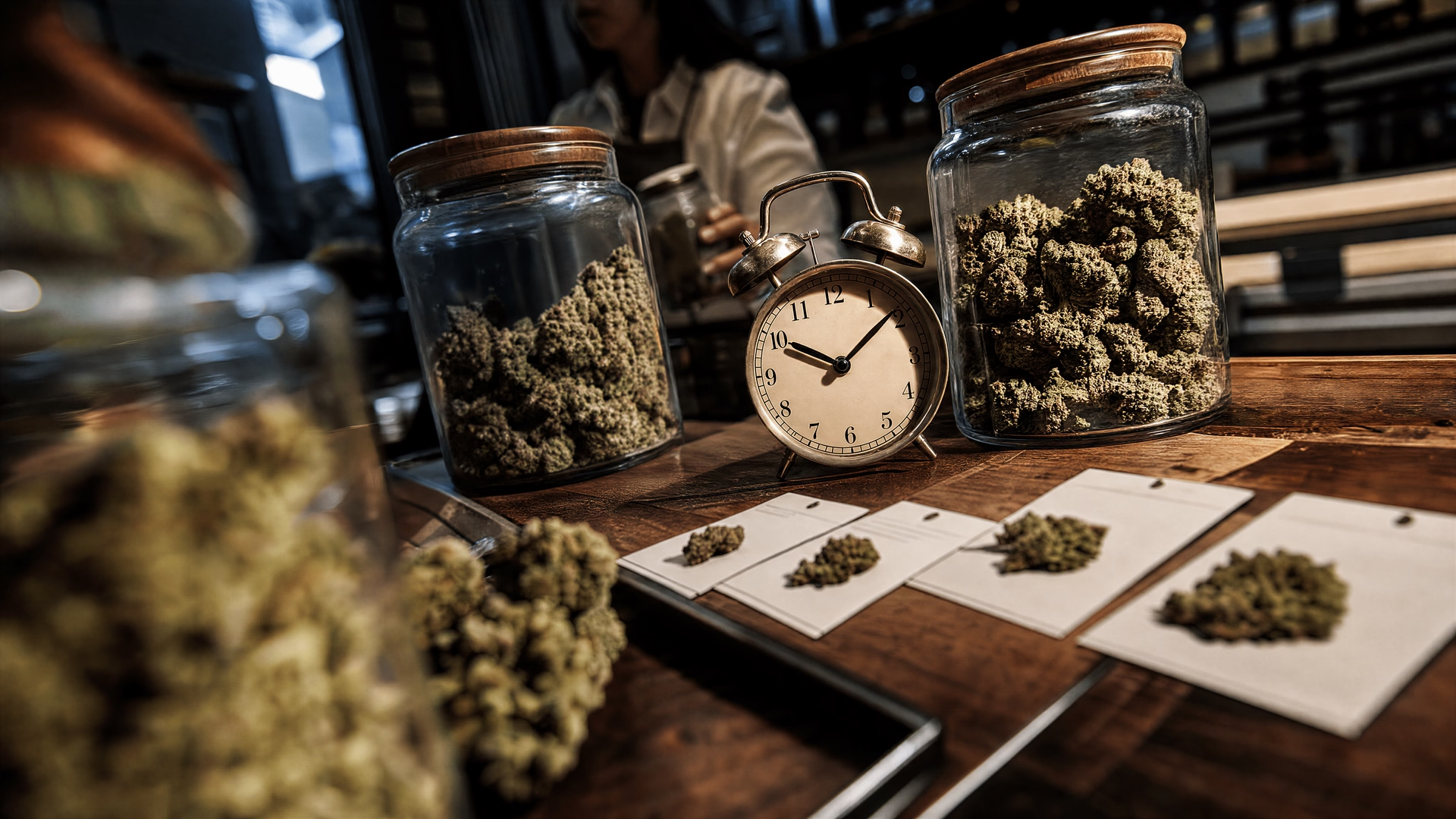













Drying and curing are not the same process
| Phase | Primary goal | What is happening | Typical environment | Main risk if mishandled |
|---|---|---|---|---|
| Drying | Remove bulk/free moisture | Outer and bulk water are removed until flower is physically stable | Cool, dark room at 60–70°F and 60–65% RH | Case hardening, terpene loss, hidden wet core |
| Curing | Equilibrate internal moisture and stabilize storage | Moisture redistributes from core to exterior in a sealed container | Sealed container near 58–62% ERH | Mold from jarring too wet, aroma loss from poor storage |
Many grow guides flatten post-harvest handling into one fuzzy instruction: dry and cure the flower. That shortcut causes avoidable errors, because drying and curing are different phases with different goals, risks, and endpoints. Drying is bulk moisture removal. Curing is controlled moisture equilibration plus storage. One prepares flower for stability; the other refines how it smells, burns, and holds up over time.
That distinction is not semantic. It changes when flowers should leave the drying room, when they are safe to jar, what relative humidity means inside a sealed container, and how seriously mold risk should be taken. Cannabis postharvest research is still thinner than comparable work in tobacco, hops, and medicinal herbs, but the pattern is consistent across those fields: fast water removal and slow conditioning are not the same operation, and they should not be managed as if they are.
What drying is actually doing
Drying removes free water from the harvested inflorescence until the outside of the flower is no longer wet, small stems begin to snap rather than fold, and the material is physically stable enough to leave the drying environment. This is a moisture-control step first. The point is not to “finish” the flower in one pass. The point is to get it out of the dangerous high-moisture zone without stripping aroma or locking water inside the center.
Case hardening A drying problem where the outside of the flower dries faster than the interior, creating a dry shell around a wetter center.
That last problem matters more than many hobby guides admit. If the room is too warm, too dry, or hit with too much airflow, the exterior can dry faster than the interior. This is case hardening. The flower feels ready because the outside becomes crisp, but internal moisture remains elevated, and once that flower is sealed in a jar the hidden water redistributes outward. Jar humidity spikes. Mold risk rises. People then blame the jar, when the real mistake happened in the drying room.
This is why slow drying under cool, dark, moderately humid conditions is the standard recommendation. It is not superstition. Terpenes are volatile organic compounds. Ethan Russo and later reviews in Molecules and Frontiers in Plant Science have repeatedly framed terpene preservation as a temperature, oxygen, and handling issue, not just a genetics issue. Many terpenes do not need to “boil off” to be lost; evaporation and oxidation can chip away at them steadily during warm, dry, turbulent drying. Light worsens this by driving degradation of both volatiles and cannabinoids. The National Academies’ 2017 review also placed cannabis chemistry in a postharvest context where storage conditions alter the profile materially over time.
What curing is actually doing
Curing starts after the bulk moisture has already been removed. At this stage, the flower is no longer supposed to be wet on the outside, but it is not chemically or physically settled. Internal moisture is still redistributing from the core toward the drier exterior. A sealed container slows further moisture loss and lets the whole flower move toward equilibrium. That is the physical side of curing.
Curing adds potency to cannabis flower. Limited evidence
The biochemical side is slower and less dramatic than online lore suggests. Curing does not magically create cannabinoids. Claims that curing “adds potency” are sloppy. THC does not rise because a jar sat on a shelf. What usually changes is perception: smoother smoke, less throat irritation, cleaner aroma expression, and a more even burn can make the experience feel stronger. Poor storage can do the opposite by degrading THC and volatile compounds. Light, heat, and oxygen push that decline, including oxidation pathways associated with cannabinoid aging.
Curing also gives time for grassy, raw plant notes to fade as enzymatic and oxidative changes continue. Chlorophyll does not simply vanish. Pigment breakdown and the reduction of harsh green volatiles are time-dependent processes shaped by moisture, temperature, and oxygen exposure. The result is often less “fresh-cut hay” character and a more defined terpene profile, but only if the flower entered cure at the right moisture level.
Why the distinction matters for quality control
If drying and curing are treated as synonyms, quality control turns into guesswork. Growers jar too early because the buds feel dry outside. Or they dry too long, then try to “fix” brittle flower with a humidity pack. Neither approach is sound.
The real safety metric is not relative humidity alone but water activity, usually written as aw. FDA food safety guidance states that no microbial proliferation occurs below aw 0.60, and cannabis quality programs commonly treat aw 0.65 as a practical upper guardrail against mold growth in dried flower. That is the scientific basis behind the common jar target in the high-50s to low-60s RH range. It is also why 58% and 62% packs exist. They are equilibrium tools, not rescue tools. If flower is jarred while still too wet internally, a pack cannot make that safe on its own.
Separating the phases also helps explain why one schedule does not fit every harvest. A dense flower in a humid room does not dry like a smaller flower in an arid room. Wet trimming speeds moisture loss by exposing more surface area. Dry trimming slows the dry because leaf material shields the flower. Those are drying decisions, not curing decisions, and confusing them leads to bad timing.
So the central claim of this article is simple and defensible: drying sets the physical conditions for stability, while curing refines smoke quality, aroma expression, and storage behavior. When those jobs are separated, growers make fewer preventable mistakes. When they are blurred together, harsh smoke, humidity swings, and mold become much more likely.
The science behind a slow dry
| Drying factor | Pushes drying slower | Pushes drying faster |
|---|---|---|
| Flower structure | Dense flowers | Small flowers |
| Hang style | Whole-plant hangs | Smaller branches |
| Leaf/trim style | Leaf-on drying | Heavy wet trimming |
| Room conditions | Lower airflow | Drier rooms |
A slow dry is not tradition for tradition’s sake. The common target of roughly 7–14 days at 60–70°F and 60–65% relative humidity became standard because it solves two competing problems at once: remove enough free water to limit microbial growth, but do it gently enough that aroma compounds and smoke quality are not wrecked on the way down.
That range is not magic. Dense flowers, whole-plant hangs, leaf-on drying, and lower airflow push drying longer. Small flowers, heavy wet trimming, and drier rooms shorten it. The point is controlled moisture loss, not hitting a sacred number of days. Drying is the bulk water-removal phase; curing comes later, when remaining internal moisture redistributes and slower biochemical changes continue in a tighter humidity window.
Terpene volatility and why heat is the enemy
Terpenes are volatile organic compounds, and volatility does not require boiling. That is where many growers get misled. A terpene does not need to reach its listed boiling point to leave the flower. Given enough time, moving air, oxygen, and warmth, it will evaporate and oxidize anyway.
This matters because cannabis aroma is carried by compounds such as myrcene, limonene, alpha-pinene, beta-caryophyllene, linalool, and terpinolene. Ethan Russo’s work on terpene pharmacology and the broader cannabis chemistry literature helped popularize this point, but postharvest plant science has shown the same thing across hops, herbs, and medicinal plants for years: warm, dry, bright, windy conditions strip volatiles.
Heat speeds that loss in two ways. First, it raises vapor pressure and encourages evaporation from trichome-rich surfaces. Second, it accelerates oxidation. Oxygen exposure can shift the terpene profile even when total terpene loss is not immediately obvious by smell. Light makes this worse. The National Academies’ 2017 review and later storage studies in journals such as Molecules and Frontiers in Plant Science repeatedly point in the same direction: cooler, darker storage and postharvest handling preserve cannabinoids and volatiles better than room-temperature, light-exposed conditions.
Airflow deserves its own warning. Gentle air exchange is helpful because stagnant humid air invites mold. Direct fan blast is not. Strong air movement over hanging flowers increases the vapor gradient at the surface and strips moisture and aroma from the outside too quickly. You want the room air refreshed, not the flowers wind-burned.
That is the scientific logic behind 60–70°F and 60–65% RH. Cool enough to slow terpene loss and oxidation. Humid enough to avoid flash-drying the exterior. Dry enough, with proper air exchange, to keep the microbial risk manageable during the first week or two. It is a compromise, and a good one.
Case hardening, trapped moisture, and uneven drying
When a flower dries too fast on the outside, the outer tissue can feel ready while the interior remains much wetter. This is often called case hardening. The phrase is borrowed from food and agricultural drying, and it fits cannabis well.
Think about what the plant structure is doing. Water near the surface leaves first. If room humidity is too low, temperature is too high, or airflow is too aggressive, that outer layer loses water faster than the interior can migrate outward. The result is a dry shell around a damp center. Growers then jar the flower because it passes the crude “outside feels dry” test, only to find the jar humidity spikes later. That was not curing magic. It was trapped moisture redistributing.
This is why relative humidity alone is a blunt tool. Water activity is the sharper one. FDA food safety guidance states that no microbial proliferation occurs below water activity 0.60, and cannabis quality programs often treat about 0.65 aw as a practical upper guardrail against most mold risk in dried flower. The familiar 58–62% jar targets come from this science. They approximate a safer equilibrium zone once bulk drying is already done.
A slow dry helps the whole flower approach that zone more evenly. Moisture can migrate from the stem and core toward the surface gradually instead of backing up behind a prematurely dried exterior. That gives a more accurate endpoint: the outside is dry, smaller stems begin to snap rather than fold, and the internal moisture load is no longer wildly higher than the shell.
The popular advice to dry for 10–14 days is often repeated without this mechanism. The schedule only makes sense if temperature, RH, bud size, trim style, and airflow support even moisture movement. In a room at 75°F with 45% RH and fans pointed at branches, seven days can be too fast. In a packed room with leaf-heavy branches and poor air exchange, 14 days can be too wet.
Why rushed drying produces harsh smoke
Harsh smoke is often blamed entirely on chlorophyll. That is too simple to be useful.
Yes, grassy character tends to fade as postharvest breakdown proceeds, and chlorophyll-related pigment changes are part of the broader maturation of flavor. But harshness after a rushed dry is just as much a combustion and moisture-distribution problem. Sometimes more.
Over-dried flower burns hot and fast. Wet-centered flower burns unevenly. Put those together and you get smoke that feels sharp, acrid, or scratchy even when cannabinoids are still present in decent amounts. The exterior ignites quickly because it is too dry, while the interior resists combustion because water remains trapped inside. That mismatch disrupts the burn, wastes aroma, and raises the temperature of the smoke stream.
Rushed drying also tends to preserve unwanted “green” volatiles. These include aldehydes and alcohols associated with freshly cut plant tissue, the same class of compounds that make under-cured flower smell grassy or hay-like. They do not simply vanish because a bud feels dry in four days. Time, controlled oxygen exposure, and moisture redistribution all matter.
This is one reason some people report that a better cure makes flower feel more potent. Often what improved was not raw THC content. It was the delivery. Smoother smoke allows deeper inhalation, more even combustion, and better terpene retention. Poor storage can still oxidize THC over time, so cure is not a free potency upgrade, but rushed drying absolutely can reduce perceived quality.
The evidence base here is still developing. Direct randomized cannabis trials comparing exact dry schedules are limited. Even so, the combined signal from cannabis analytics, food drying science, and commercial postharvest practice is strong: dry too fast, and you lock in problems that curing can only partly fix. Slow the process down, and the flower has a chance to dry evenly, hold onto more aroma, and smoke the way it should.
Ideal drying room conditions and how to control them
Temperature, relative humidity, darkness, and airflow
A good drying room is boring by design. Cool. Dim. Stable. Air moves through the room, not at the flowers.
Drying room control checklist
- Temperature Keep the room in the 60–70°F range.
- Relative humidity Aim for 60–65% RH during the drying phase.
- Light Keep the room dark except for brief inspection.
- Airflow Move air through the room, not directly at hanging flowers.
- Monitoring Use hygrometer-thermometer units in more than one spot if possible.
The practical target most growers use is 60–65% relative humidity and 60–70°F. Hang whole plants or large branches if room control is decent; if humidity tends to run high, smaller branches give you a little more margin. Either way, the goal is the same: remove free moisture from the harvested flower slowly enough that the outside does not dry far ahead of the inside.
That is why direct fan blast is a mistake. A fan pointed straight at flowers speeds evaporation from the surface, which can create case hardening: the outer tissue feels dry while the center still holds too much water. That false dryness is one reason rushed flower often smokes hot and harsh. The burn is uneven because the moisture is uneven.
Indirect airflow works better. Put circulation fans on the floor or aimed at walls so they keep the room mixed without whipping the branches. You want no dead, stagnant corners, but also no fluttering colas. An exhaust fan can help maintain temperature and humidity, though oversized extraction can overdry a small room fast.
Darkness matters more than many guides admit. Light, especially UV and strong visible light, accelerates degradation of cannabinoids and volatile compounds. Storage work on cannabis has repeatedly found better preservation under darker, cooler conditions than under room light and warmth. Ethan Russo’s writing on terpene pharmacology has also helped popularize the obvious but often ignored point: terpenes are volatile. They do not need to reach their boiling point to be lost. Heat, oxygen, moving air, and time all work against retention.
So keep the room dark. No sunny windows. No grow lights left on because the room is convenient. If you need to inspect, use brief, low-intensity light and leave.
Control tools can be simple. A hygrometer-thermometer combo in the drying space is the minimum. Better: two or three units placed at different heights, since humidity can stratify. If RH is too high, use a dehumidifier and increase gentle air exchange. If RH is too low, a clean humidifier can slow the dry enough to avoid brittle outsides. If temperature climbs, fix that first if you can. Warm, dry air strips aroma faster than slightly cool, slightly humid air.
Why 60–65% RH and 60–70°F are targets, not magic numbers
These numbers are useful because they usually produce a dry that lands in the right zone for a later cure. They are not laws of nature.
Popular articles often repeat “dry for 10 to 14 days” as if time alone tells you anything. It does not. Ten days at 62% RH and 64°F is not the same as ten days at 48% RH and 74°F. The first may be controlled and even. The second can turn the shell of the flower dry while the core stays wetter than it looks.
The scientific logic behind the range is moisture movement and volatile preservation. Lower humidity speeds water loss from the exterior. Higher temperature does the same, while also increasing terpene loss and oxidation pressure. A somewhat humid, cool room slows the process enough for internal moisture to migrate outward instead of getting trapped behind a dry shell.
This is also where water activity matters more than folklore. Relative humidity tells you about the room air. Water activity tells you how available water is inside the flower for microbial growth. FDA food safety guidance states that no microbial proliferation occurs below aw 0.60, and cannabis quality programs often use aw 0.65 as a practical upper guardrail for dried flower. That is the real backbone behind the common jar targets in the high 50s to low 60s RH. Not superstition. Moisture equilibrium.
So why not dry at 55% RH from the start if final storage may land near there? Because drying and curing are different phases. During drying, the plant still needs time for internal water redistribution and for some postharvest biochemical change to continue without locking the outside too quickly. During curing, the bulk free moisture is already gone and the flower is being held in a narrower equilibrium band.
That is why 60–65% RH and 60–70°F are target zones, not magic values. If your room sits at 59% and 61°F, that can still work well. If it stays at 66% and 62°F, it may also work if airflow is sound and flowers are not packed too tightly. But drift too far in either direction and the risk changes fast: too dry and you lose aroma while increasing harshness; too humid and mold ecology starts to matter.
How bud size, cultivar structure, and trim style change the timeline
Drying time depends on the flower in front of you, not a calendar.
Dense, chunky inflorescences dry slower than airy, open ones because water has a longer path out of the center and less exposed surface area per gram. A tight indica-leaning structure can still feel cool and damp in the core when the outside seems ready. A spear-shaped, airy cultivar may finish several days sooner in the same room.
Bud size matters for the same reason. Large terminal colas hold moisture longer than small side flowers. This is why whole-plant hanging slows drying: more stem, more leaf mass, and less cut surface exposed. That can help preserve aroma in a dry climate, but it raises the penalty for poor environmental control in a humid one.
Trim style shifts the timeline too. Wet trimming removes sugar leaves right after harvest, exposes more surface area, and usually shortens the dry. That can be useful when room humidity is high and mold pressure is real. The downside is speed. In a dry room, wet-trimmed flowers can overshoot quickly. Dry trimming leaves more leaf material on during hanging, which shields the flower and slows moisture loss. Many growers prefer it for shape and aroma retention, but only if the room is controlled well enough to avoid damp pockets.
Do not rely on one folk test alone, especially the “small stems must snap” rule. Stem snapping can be misleading because small stems can crisp before thicker flowers have equalized. Better signs are combined signs: the outside of the bud no longer feels wet; small stems may crack rather than fold; the flower feels dry on the surface but still has slight resilience when gently squeezed; trimmed samples placed in a sealed jar do not drive humidity sharply upward within hours. If a jarred sample jumps into the high 60s or above, the interior is still too wet for cure.
The end of drying is a zone, not a single moment. Treat it that way and the cure starts on much safer ground.
Wet trimming versus dry trimming
Trimming is not just about appearance. It changes how the flower loses water during the drying phase, which then changes terpene retention, mold pressure, labor timing, and how much margin for error you have in the room. That is why wet trim and dry trim should be treated as environmental tools, not as identity badges.
| Method | How it changes drying | Best fit | Main downside |
|---|---|---|---|
| Wet trimming | Removes leaf mass and exposes more surface area, so drying is faster | Humid rooms or harvests with higher mold pressure | Greater risk of overdrying, case hardening, and terpene loss |
| Dry trimming | Leaves more leaf material on during hanging, so drying is slower | Arid rooms where flowers crisp too fast | Higher mold risk in humid rooms and more tedious later trimming |
| Hybrid approach | Remove large fan leaves first and finish trim later | Rooms that need a middle path | Requires more judgment and timing |
What wet trimming changes during the drying phase
Wet trimming means removing most sugar leaves soon after harvest, while the plant is still fully hydrated. The immediate effect is simple: more exposed surface area, less leaf mass holding moisture against the flower, and faster drying. In a room that already wants to stay wet, that speed can be a real advantage.
That matters because mold risk is driven by available water, not by folklore. FDA guidance on water activity notes that no microbial proliferation occurs below aw 0.60, and cannabis handling guidance often uses aw 0.65 as a practical upper guardrail for dried flower. Wet trimming can help a dense inflorescence move through the danger zone faster, especially when ambient humidity is high and the room struggles to stay near the usual 60 to 65 percent RH target.
There is a cost. Faster drying is not automatically better drying. If the room is warm, dry, or blasted with airflow, wet-trimmed flowers can lose external moisture too quickly. That raises the risk of case hardening: the outside feels dry while the core still holds excess moisture. It also increases terpene loss. Ethan Russo and later cannabis storage reviews have repeatedly pointed to terpene volatility and oxidation as postharvest weak points, especially under heat, air movement, and time. Wet trimming exposes more resin-bearing tissue to exactly those forces.
Labor also shifts. Wet trimming is usually easier on the hands and tools because leaves are turgid and stand away from the flower. The finished look is often cleaner right away. For growers processing large harvests without a climate-controlled dry room, that convenience can be worth a lot. Still, ease of trimming should not be confused with gentleness of drying. Wet trim is the faster, less buffered route.
What dry trimming protects and what it risks
Dry trimming leaves more leaf material on the branch during drying and removes it after the flower has lost most of its free moisture. That leaf shell acts like a brake. Drying slows down. The flower is physically shielded from direct airflow and from some handling damage. In practice, this often preserves shape, reduces brittle trichome loss during the first days after harvest, and can hold aroma better in arid conditions.
This is where many growers notice a sensory difference. Slow drying tends to reduce the harsh, grassy edge associated with rushed postharvest handling. That is not because chlorophyll magically vanishes overnight. It is because moisture leaves more evenly, internal water has more time to redistribute, and time-dependent biochemical changes are less violently interrupted. Direct randomized cannabis trials are still limited, but the broader postharvest logic is sound and consistent with plant drying science.
Dry trim is not a free upgrade. In a humid room, those retained leaves can hold moisture where you least want it: inside dense flowers and shaded folds with weak air exchange. If your environment is unstable, dry trimming can turn a manageable dry into a mold event. Botrytis does not care that the flower is “protected.” It cares that water activity stayed high for too long.
There is also a labor tradeoff. Dry-trimmed leaves curl inward as they dehydrate, so trimming later is slower and more tedious. The flower may look less manicured unless extra time is spent finishing it. Some people accept that because they want the slower dry. Others do not.
Choosing the right method for your environment
The honest answer is that neither method wins on every harvest. Room conditions decide more than ideology does.
If your drying space runs humid and you struggle to keep flowers from hanging wet for too long, wet trimming is often the safer move. It reduces the moisture load and speeds the path toward a stable drying range. If your space is arid and flowers tend to become crispy in a few days, dry trimming usually gives better protection against overdrying and terpene blowoff.
Bud density matters too. Large, compact colas in a humid basement are poor candidates for an untouched dry trim. Small flowers in a desert-like room often benefit from the extra leaf cover. So do harvests where you cannot keep temperature and airflow gentle.
A practical middle ground often works better than either extreme: remove only the largest fan leaves at harvest, leave most sugar leaves on during drying, then finish trim after the stems start to snap. That hybrid approach reduces moisture bulk without fully exposing the flower.
Use the method that corrects your room’s weaknesses. That is the real decision.
What happens chemically during cure
Moisture redistribution inside the flower
What curing changes, step by step
- Sealing The outside of the flower stops drying faster than the center.
- Redistribution Moisture migrates from the wetter core toward drier outer tissues.
- Equilibration The flower and the jar headspace move toward a shared equilibrium humidity.
- Combustion improvement A more even internal moisture profile helps the flower burn steadier and feel less harsh.
Drying and curing are not the same event stretched over different days. Drying removes bulk surface and free moisture. Cure begins after that point, when the flower may feel dry outside but still contains a wetter interior. Once buds are jarred, moisture starts moving again. It migrates from the core of the inflorescence toward the drier outer tissues until the whole flower approaches equilibrium.
That internal redistribution is why a bud can seem ready on day 10, then feel softer and slightly more humid a day after being sealed. The jar did not “create” moisture. The center was always wetter. Sealing simply stopped the outer layers from continuing to dry faster than the inner ones. This is the internal equilibration phase, and it is one of the main reasons curing changes smoke quality even when the flower already passed the hanging-dry stage.
The practical problem during drying is case hardening. If airflow, heat, or low room humidity dries the outside too quickly, the bracts and sugar-leaf edges become deceptively crisp while the stem core and denser floral tissues stay damp. That mismatch matters more than appearance. Uneven moisture means uneven burn, harsher smoke, and a higher chance that local water activity is still high enough to support mold growth even when the exterior feels done.
Water activity explains this better than the old squeeze test. Relative humidity tells you about the room or jar atmosphere. Water activity tells you how much water is actually available in the product for microbes and chemical reactions. FDA food safety guidance notes that microbial proliferation does not occur below aw 0.60, and cannabis quality programs commonly treat about 0.65 aw as a practical upper guardrail for dried flower. That is the scientific basis behind jar targets in the high 50s to low 60s RH rather than folklore about “burping until it smells right.”
During cure, moisture redistribution also changes combustion. Flower with a bone-dry shell and a damp center tends to burn hot, unevenly, and irritably. Once internal moisture equalizes, the burn becomes steadier. That alone can make the same cannabinoid content feel more effective because less of the experience is being masked by throat bite and repeated relighting.
Chlorophyll breakdown, grassy volatiles, and enzyme activity
“Chlorophyll breakdown” gets cited as if it explains the whole cure. It does not. Chlorophyll is part of the story, but harshness and aroma are shaped by a wider set of plant compounds and postharvest reactions.
Freshly cut cannabis carries green, cut-grass notes because plant tissue disruption generates volatile aldehydes, alcohols, and related compounds. In other crops, the lipoxygenase pathway is well known for producing these fresh-green odorants after damage. Cannabis behaves similarly in broad postharvest terms, even if exact head-to-head cure studies are still limited. Those sharp grassy notes do not vanish in one dramatic event. They decline over time as moisture falls, enzymes keep working for a while, and volatile compounds dissipate or transform.
Chlorophyll itself can degrade into other pigments and breakdown products, especially under changing moisture and temperature conditions. But the common claim that cure “removes chlorophyll” is too simplistic. If buds are dried too fast, some degradative processes are cut short while unwanted green volatiles remain trapped alongside uneven internal moisture. If they stay too wet, the same slow chemistry can tip toward spoilage and mold risk. Cure is a narrow window, not a magic switch.
Residual enzyme activity likely contributes to this transition, though evidence in cannabis is still pieced together from broader postharvest plant science and limited cannabis-specific work. Researchers such as Mahmoud ElSohly and colleagues have long emphasized that postharvest handling changes cannabis chemistry materially. Reviews in Molecules and Frontiers in Plant Science also point to ongoing transformations in stored inflorescences rather than a static chemical profile after harvest day. Some of those changes improve sensory quality. Some are destructive. Control decides which dominates.
This is why darkness, moderate temperature, and humidity control matter during cure. You want enough retained moisture for slow equilibration and limited biochemical change, but not enough available water for microbial growth. You also want to avoid driving off volatiles or accelerating oxidation. The old “just jar it and wait” advice skips the part where the jar environment has to stay inside a narrow zone.
Terpene retention, oxidation, and perceived potency
Terpenes do not need to reach their formal boiling points to be lost. They evaporate gradually at ordinary temperatures, and oxygen and light can oxidize them over time. Ethan Russo has written about terpene pharmacology and volatility in ways that help frame the issue: these compounds are chemically active, aroma-defining, and not especially tolerant of sloppy postharvest handling. A rushed dry sacrifices them. A bad cure keeps sacrificing them.
That has direct consequences for perceived potency. Cure does not magically increase THC. Claims that jars somehow “make flower stronger” are misleading. What cure can do is preserve chemistry better than a hot, fast dry and make the flower easier to inhale. Smoother smoke often feels stronger because the user can inhale more comfortably, the burn is more even, and terpene character is still present rather than stripped away. Perceived strength rises, but not because cannabinoids appeared out of nowhere.
Poorly controlled cure pushes the chemistry the other direction. Oxygen exposure, warmth, and light all promote degradation. THC can oxidize toward CBN and other breakdown products during storage, while monoterpenes such as myrcene and limonene are especially prone to loss. Studies on cannabis storage consistently show more terpene loss at room temperature than under colder, darker conditions. The National Academies report from 2017 also underscored how chemically complex cannabis is, with more than 100 cannabinoids and hundreds of terpenes and related secondary metabolites subject to change after harvest.
So the defensible position is this: curing can improve perceived potency and sensory quality, mainly by moisture equilibration, retention of volatile chemistry relative to rushed drying, and reduction of harsh smoke. But cure is not automatically beneficial forever. Excessively long storage, frequent opening, too much oxygen, or humid conditions can degrade exactly the compounds growers are trying to protect. Good cure is controlled aging. Bad cure is slow damage.
Curing workflow: jars, burping, and humidity targets
Curing starts after drying has already done its job. The outside of the flower should feel dry, small stems should begin to snap rather than fold, and the buds should no longer feel cool and damp on the surface. At that point, curing is not about “finishing the dry.” It is about moisture equilibration inside a sealed environment, while slower biochemical changes continue and mold risk stays controlled.
Why glass jars became the standard
Glass Mason jars became the default for a reason: they are inert, airtight, easy to clean, and transparent enough to inspect flower without opening the container. Unlike some plastics, glass does not readily absorb or release aroma compounds. That matters when the material in the jar contains volatile terpenes that can be lost or altered by oxygen exposure, heat, and repeated handling.
The workflow is simple but easy to mess up. Fill jars loosely, not packed tight. Buds need a little airspace so moisture can redistribute from the core outward. If you compress the contents, you create wet pockets and uneven equilibration. A jar that looks “efficiently filled” is often overfilled. Aim for roughly 70 to 80 percent full, with enough room to gently shake or rotate the jar and separate clustered buds.
Glass is not the only acceptable option. Any airtight, food-safe, inert container can work if it seals reliably and does not carry odor. But Mason jars remain common because they are predictable. They let growers build a repeatable cure instead of guessing from bag feel or room smell.
There is one downside: clear glass admits light. That is a storage problem, not a jar problem. Keep jars in darkness. Light accelerates degradation of cannabinoids and terpenes, and cannabis storage studies consistently show better volatile retention in dark, cool conditions than at room temperature under light exposure.
A practical burping schedule for the first month
Burping means opening the container to exchange humid internal air with drier external air and to check whether the cure is behaving normally. It is not a ritual. It is moisture management.
Practical burping schedule
- Week 1 Open jars 1–2 times per day for 5–15 minutes.
- Week 2 Reduce to once daily or once every other day if RH is landing near target and no off-odors appear.
- Week 3 Burp every 2–3 days if humidity is stable.
- Week 4 Burp about once weekly if the cure has stabilized.
For the first week, open jars 1 to 2 times per day for about 5 to 15 minutes. If the flower was dried well and jarred at the right point, the jar’s internal RH will usually climb during the first 24 hours as moisture moves from the center of the buds to the surface. That rise is expected. What matters is where it stabilizes.
If jar RH jumps above about 65 percent and stays there, the flower likely went into jars too wet. Spread it back out for more drying time. Do not rely on repeated burping to fix that mistake. Burping removes some moisture, but it is not a rescue plan for unsafe material. Mold ecology is governed more by water activity than folklore, and cannabis quality programs commonly treat about 0.65 aw as the upper practical guardrail for dried flower stability. That roughly corresponds to equilibrium RH in the mid-60s, though the exact relationship shifts with temperature and product matrix.
In week two, many growers can reduce to once daily or once every other day if the jars are consistently landing near target humidity and no ammonia, sour, or musty odor appears. Week three usually means burping every 2 to 3 days. By week four, if the humidity is stable and the aroma has moved away from fresh-cut grass toward the cultivar’s actual terpene profile, once weekly is often enough.
A small digital hygrometer in each jar makes this much less subjective. Without one, people tend to confuse soft flower with wet flower and overcorrect. Some softness is normal at 58 to 62 percent RH. Wet centers, sharp green odor, and RH that keeps rebounding too high are not.
One exact burping schedule is scientifically established as best for all cannabis cures. Preliminary evidence
Direct head-to-head cannabis trials on exact burping schedules are limited. Most schedules are informed by commercial SOPs, postharvest plant science, and water activity principles rather than one decisive study. Even so, the pattern is sound: frequent checks early, then less intervention as equilibrium is reached.
Why many growers target 62% RH and when 58% makes more sense
The famous 62 percent target is really an equilibrium target. In a sealed jar, moisture moves until the flower and the air in the headspace reach equilibrium relative humidity, or ERH. That ERH is a practical proxy for water activity. A reading near 62 percent suggests the flower is moist enough to continue a slow cure without being so wet that mold risk rises sharply.
That is why 62 percent became the common curing number. It sits in the zone where the flower usually stays pliable, aromatic, and less harsh than over-dried material. Enzymatic and oxidative changes associated with curing can continue, and combustion tends to be more even than with crispy, low-humidity flower. This does not mean curing “creates potency.” More often, it preserves quality and improves perceived strength because the smoke is smoother and the terpene profile is less stripped.
Fifty-eight percent makes more sense when the cure is largely complete and the goal shifts toward longer-term stability. Lower ERH means a little less risk from microbial activity and a little less internal moisture available for trouble if temperature control is imperfect. Many growers prefer 58 percent for extended storage because it trades a bit of suppleness for a wider margin of safety. That tradeoff is sensible.
Humidity packs fit into this picture as maintenance tools, not miracle tools. Two-way packs set a target environment, commonly 58 or 62 percent, by releasing or absorbing moisture inside a sealed container. They help hold equilibrium once the flower is already in range. They do not make overly wet flower safe. If buds are jarred too early, a pack cannot override the fact that internal water activity may still be high enough for mold growth. First dry properly. Then cure. Then use packs to hold the environment where you want it.
Water activity, mold risk, and the limits of intuition
Drying advice often leans on feel: the outside should seem dry, small stems should “snap,” and the jar should smell clean rather than grassy. Those cues are not useless. They are just blunt instruments. If the goal is stable storage without mold while preserving aroma and burn quality, water activity is the tighter metric.
This is where food science helps. Cannabis flower is a plant material with variable density, internal moisture pockets, exposed trichomes, and a living microbial risk profile after harvest. Guesswork can get you close. It cannot tell you, with much confidence, whether the center of a dense inflorescence is still wet enough for trouble.
Relative humidity versus water activity
Water activity (aw) A measure of how much water in the flower is available for microbes and chemical reactions, rather than just how much total moisture is present.
Relative humidity, or RH, describes the moisture content of the air. Water activity, written as aw, describes how much water in the product is actually available for microbial growth and chemical reactions. That distinction matters because two flowers can sit in the same room at the same RH while carrying different internal moisture distributions.
Equilibrium relative humidity (ERH) The relative humidity inside a sealed container after the flower and the air have equilibrated; it is used as a practical proxy for water activity.
The bridge between the two is equilibrium relative humidity, often shortened to ERH. When flower is sealed in a container and allowed to equilibrate, the air inside the container reaches a relative humidity that reflects the moisture status of the product. In simple terms, aw is ERH divided by 100. So a jar that stabilizes near 62% RH is roughly at 0.62 aw. That is the scientific basis for the familiar 58% and 62% curing targets used by many growers and by two-way humidity packs.
This also explains why room RH during drying and jar RH during curing are related but not identical. A plant drying in open air is still shedding bulk water. A flower resting in a sealed jar is redistributing internal moisture and approaching equilibrium. Same material, different phase.
Popular curing lore tends to treat the “snap test” as proof of readiness. It is not. Stems can snap while the flower core remains wetter than the surface, especially after a fast dry or aggressive airflow. The jar may smell rich and still be unsafe. It may smell grassy and still be within a manageable moisture range. Aroma, feel, and snap are useful screening tools, not defensible storage metrics.
Why 0.65 aw is a practical mold threshold
The FDA states that no microbial proliferation occurs below aw 0.60 in foods. Cannabis guidance often sets the practical guardrail slightly higher, around 0.65 aw, because dried flower is not a sterile powder and real-world handling is messy. It is touched, trimmed, jarred, reopened, and stored in imperfect environments. A hard line at 0.60 is scientifically tidy, but 0.65 has become the more workable upper ceiling in cannabis quality control.
That ceiling is not arbitrary. Most molds need sufficiently available water to germinate and grow. As aw rises, the risk climbs. Once dried flower spends time above about 0.65 aw, especially in a sealed jar at room temperature, the odds shift in the wrong direction. Dense buds are the bigger problem because the center can hold moisture long after the exterior feels ready.
Growers aiming for jar conditions in the high-50s to low-60s RH are really targeting a safer aw window. Around 0.55 to 0.65 aw is a sensible storage band for dried flower: low enough to suppress most mold risk, high enough to avoid turning the product brittle and harsh. Push much lower and the smoke often gets sharper, terpenes dissipate faster, and the flower can burn too hot. Push higher and shelf stability drops.
One caveat: this area still relies on a mix of cannabis data, food microbiology, and commercial SOPs rather than one definitive randomized cannabis trial. The threshold is practical and evidence-based, but not mystical law.
How to measure risk with hygrometers and aw meters
At home, the realistic tool is a small digital hygrometer placed inside a sealed jar or tote. It does not measure aw directly, but after equilibrium it gives you ERH, which is a workable proxy. If the jar settles around 58% to 62% RH, you are generally in the intended curing zone. If it climbs to 65% or more and stays there, the flower likely needs more drying time before sealed storage. Cheap hygrometers vary, so calibration matters. Even a salt-test check is better than blind trust.
In commercial QA, the stronger tool is a water activity meter. These instruments measure the vapor pressure relationship of the sample and report aw directly. That is more defensible than “the buds felt dry on day ten.” It also supports batch-to-batch consistency, release decisions, and microbial risk management in a way intuition cannot.
Humidity packs fit into this system, but they are not magic. They buffer a sealed environment toward a target ERH, usually 58% or 62%. They cannot safely rescue flower that was jarred too wet, and they cannot reverse mold that already started. Their job is maintenance and moderation, not error erasure.
The practical hierarchy is simple. Feel and stem snap for rough timing. Jar hygrometers for home decisions. Water activity meters for serious QA. If storage safety matters, aw is the metric with the strongest scientific footing.
Humidity packs and the science of two-way humidity control
How two-way humidity control works
Humidity packs are not mystical cure boosters. They are small equilibrium-control devices designed to buffer moisture swings inside a sealed container.
The basic science comes from saturated salt solution behavior. A given salt dissolved in water creates a stable equilibrium relative humidity, or ERH, in the air around it at a given temperature. That principle is widely used in calibration and packaging science. Two-way packs adapt that idea with a salt-and-water system held in a permeable membrane. If the air in the jar gets too dry, water vapor moves out of the pack. If the air gets too humid, the pack absorbs vapor back in. That is the “two-way” part.
For cannabis, the common targets are 58% and 62% RH. Those numbers are not random. They roughly map to the moisture zone where dried flower often lands near a safer water activity range for storage, with many practitioners treating about 0.65 aw as the upper edge before mold risk becomes less forgiving. FDA food safety guidance states microbial proliferation does not occur below aw 0.60; cannabis handling protocols often use a slightly higher practical ceiling because flower is not a uniform food matrix and real-world measurement varies.
A pack therefore acts like a shock absorber. Open the jar briefly, room air rushes in, the flowers exchange moisture, and the pack helps pull conditions back toward its set point. It does not stop oxygen exposure, terpene evaporation, or poor temperature control. It only moderates moisture.
What humidity packs can fix and what they cannot
What they can fix is drift. Flower that is a little too dry on the surface but otherwise well dried may regain some pliability. Flower that is near target but sees daily RH swings becomes more stable. That stabilization can improve burn consistency and reduce the brittle feel of over-dried material.
What they cannot fix is unsafe moisture. If flower went into the jar with a wet core, a pack does not make it safe. It cannot reverse mold already established inside dense inflorescences, and it cannot compensate for drying that was rushed so badly that the outside feels done while the inside still carries excess free water. That is the classic case-hardening problem.
The aroma debate is real, but it gets flattened into bad arguments. Some growers say packs mute smell. Others say that is nonsense. The more honest view is that stabilization and volatile expression can trade against each other. A sealed, humidity-buffered jar may reduce the dramatic burst of aroma you get from drier flower because volatile compounds partition differently when moisture is held in a narrower range. That does not mean terpenes are being “eaten” by the pack. It means headspace chemistry changes.
When to add packs during cure versus storage
Early cure is where judgment matters. If the flower is still actively sweating moisture from the center outward, relying on a pack too soon can hide the warning signs that the jar is too wet. During the first days of cure, direct RH checks or water activity readings tell you more than a packet does. Burping and monitoring come first.
Once the flower is already close to target, a 62% pack makes sense as a stabilizer during the later cure stage and for medium-term storage. For long storage, many people shift toward 58% if they want a slightly drier equilibrium and less risk from temperature swings. Either way, the pack should support correct moisture status, not define it. Dry first. Cure second. Stabilize last.
Long-term storage after the cure is complete
Once the cure is done, storage becomes a different problem. You are no longer trying to slowly redistribute internal moisture or let grassy notes fade. Now the main enemies are degradation pathways: oxidation, light exposure, heat, and physical damage. If the flower is already stable in the jar range that usually corresponds to roughly 58–62% equilibrium humidity and under about 0.65 water activity, the goal shifts from moisture correction to preserving what is left.
Light, oxygen, and temperature control
Light is destructive, not neutral. UV and visible light accelerate cannabinoid and terpene breakdown, and THC does not sit still forever under bad storage. Reviews and postharvest summaries cited by the National Academies in 2017, along with later analytical work in Molecules and related journals, point in the same direction: darkness slows loss. Clear jars on a shelf look tidy, but they are poor long-term storage unless they stay inside a dark cabinet.
Oxygen is the second problem. Even properly cured flower continues to oxidize over time, especially in containers with lots of headspace. That means the storage rule is simple: use a container that fits the amount of flower rather than leaving a half-empty jar full of air. Repeated opening makes this worse. Every time the container is opened, oxygen enters, humidity can drift, and volatile terpenes escape. If you plan to access the flower often, split it into several smaller containers and leave the main batch undisturbed.
Temperature matters as much as many growers admit. Cool storage slows chemical change. Warm rooms speed terpene loss and oxidation. You do not need extreme cold for ordinary storage, but you do want stable, cool conditions. Avoid attics, cars, electronics cabinets, or any place with daily heat swings. Those repeated cycles age flower faster than a steady, cool cupboard.
| Storage option | Main advantage | Main drawback | Best use |
|---|---|---|---|
| Glass jar | Inert and easy to inspect | Clear glass admits light unless stored in darkness | Medium-term storage with low headspace |
| Stainless steel container | Opaque, inert, and durable | Less visually inspectable | Larger amounts meant to stay closed |
| Vacuum sealing | Reduces oxygen exposure | Can compress flower and damage trichomes | Extended unopened storage when done gently |
| Cold storage | Slows chemical change | Condensation and brittle trichome risk | Special cases with airtight packaging and careful warm-up |
Glass, stainless steel, vacuum sealing, and cold storage
Glass jars remain the default for a reason. They are inert, easy to clean, and easy to inspect. For medium-term storage, amber glass or clear glass kept in darkness works well, especially if the jar is filled enough to reduce headspace. A 62% humidity pack can help maintain equilibrium, but it is not a rescue device for flower that is too wet or too dry.
Stainless steel containers solve the light problem better than glass and are physically tougher. Good stainless storage is inert, opaque, and often seals more consistently than cheap jars. For larger amounts meant to stay closed, stainless is often a smarter choice than a row of frequently handled mason jars.
Vacuum sealing is more complicated. It reduces oxygen exposure, which is good, but it can compress and damage trichomes if the flower is packed too tightly. For short to medium storage, rigid containers usually preserve structure better. Vacuum sealing makes more sense when flower must remain unopened for an extended period, and even then it should be done gently.
Cold storage can preserve volatiles, but it adds risk. Refrigeration and freezing both raise condensation concerns if containers are opened before they fully warm to room temperature. Water condensing onto cured flower can push surface water activity upward and create mold risk. Freezing also makes trichomes brittle. Rough handling of frozen flower can knock resin heads off mechanically. If using a fridge or freezer, the flower needs airtight packaging, minimal disturbance, and patience during warm-up.
How long cured flower actually keeps
Properly cured flower stored in darkness, with low oxygen exposure and cool temperatures, can remain usable for many months and often around a year with acceptable quality. That does not mean unchanged. Aroma usually declines first. Bright monoterpenes fade early. Texture can drift. The effect profile may feel flatter as volatile compounds are lost and cannabinoids slowly transform.
After a year, quality becomes much more dependent on storage discipline than on the original cure alone. A well-cured batch opened daily in a warm, bright room may degrade faster than a merely decent batch left sealed in cool darkness. That is the real point: curing sets the starting line, but storage determines how much of that quality survives.
Common drying and curing mistakes
Bad post-harvest advice often sounds certain because it is simple. “Dry for ten days.” “Jar when the small stems snap.” “Cure for two weeks.” Those rules can be useful starting points, but they are not mechanisms. Drying and curing go wrong when growers follow folklore instead of watching moisture movement, water activity, temperature, and sensory change. The same flower can be underdried at the core, overdried on the outside, and already losing aroma. That is why troubleshooting has to start with what the plant material is doing, not with a calendar.
Drying too fast
Fast drying is usually framed as a convenience problem. It is really a quality problem. When flower dries in hot, very dry, or overventilated conditions, the exterior loses moisture before the interior can equilibrate. Postharvest science calls this case hardening. The outside feels ready. The inside is not. That false finish leads to two common outcomes: jarring too early because the exterior seems dry, or continuing to dry until the center finally catches up and the whole flower ends up too dry.
The sensory damage is predictable. Terpenes are volatile compounds, and they do not need to reach their boiling points to be lost. Ethan Russo and later cannabis storage papers in journals such as Molecules and Frontiers in Plant Science have emphasized how heat, airflow, oxygen, and light accelerate volatile loss. A rushed dry strips aroma first, then leaves a flatter smell that people often misread as “clean.” It is not clean. It is depleted.
Harsh smoke follows for more than one reason. Grassy aldehydes and alcohols have had less time to dissipate or transform, internal moisture is uneven, and over-dry flower burns hotter and faster. That harsher combustion matters. People often blame chlorophyll alone, but the smoke problem is broader than one pigment.
Jarring too wet
This is the mistake with the highest downside. If drying removes bulk free water, curing only works once the flower is already past that point. Putting damp flower into a sealed jar traps moisture, raises headspace humidity, and can push water activity into the mold-friendly zone. Relative humidity in a jar is a proxy. Water activity is the more useful metric because microbes respond to available water, not to folklore.
FDA food safety guidance states that no microbial proliferation occurs below aw 0.60. In cannabis handling, a practical guardrail is keeping dried flower below about aw 0.65 for stable storage against most molds. That is the science behind the familiar 58% to 62% jar target and behind two-way packs set to 62% RH. Those packs are equilibrium tools, not rescue devices. If flower goes into the jar too wet, the pack cannot magically make it safe.
Warning signs are easy to miss at first: a jar humidity reading that climbs after sealing, a cool damp feel in the center of dense buds, muted aroma that shifts toward hay or basement, or condensation on the glass. At that point, the answer is not more patience in the jar. It is to remove the flower and continue drying under controlled conditions.
Overhandling, overdrying, and chasing arbitrary timelines
Trichomes are fragile resin glands, not armor plating. Excessive touching, frequent dumping from jar to tray, rough trimming, and constant inspection knock them off. That means less resin where it matters and more stuck to gloves, containers, and tools. Overhandling also warms the flower, which does terpenes no favors.
Overdrying is the other quiet quality killer. Flower can be microbiologically safer while still being sensorially worse. Once jar RH settles well below the high 50s, aroma release weakens, texture turns brittle, and smoke gets thin and hot. Rehydration can soften texture, but it does not fully restore volatile compounds already lost.
The fix is to stop worshipping arbitrary endpoints. “Exactly two weeks” is not a scientific cure length. Some lots stabilize quickly; dense flowers dried in a cool room may need longer before the cure is actually productive. The right endpoint depends on moisture stability, a stable jar RH or aw, a real shift away from green notes, and the intended storage window. Evidence from cannabis-specific head-to-head cure trials is still limited, so certainty should be limited too. Watch the flower. Measure when possible. Let mechanism outrank ritual.