














Why cannabis watering is really root-zone management
Cannabis irrigation is not a calendar problem. It is a root-zone control problem.
Every watering event changes four things at once: moisture content, oxygen availability, salt concentration, and pH. If those drift out of range, roots stop functioning well long before the plant looks obviously thirsty or burned. That is why simple advice like “water every two or three days” fails so often. The same plant may need very different irrigation timing depending on whether it is in peat-based soil, buffered coco, or a recirculating hydro system.
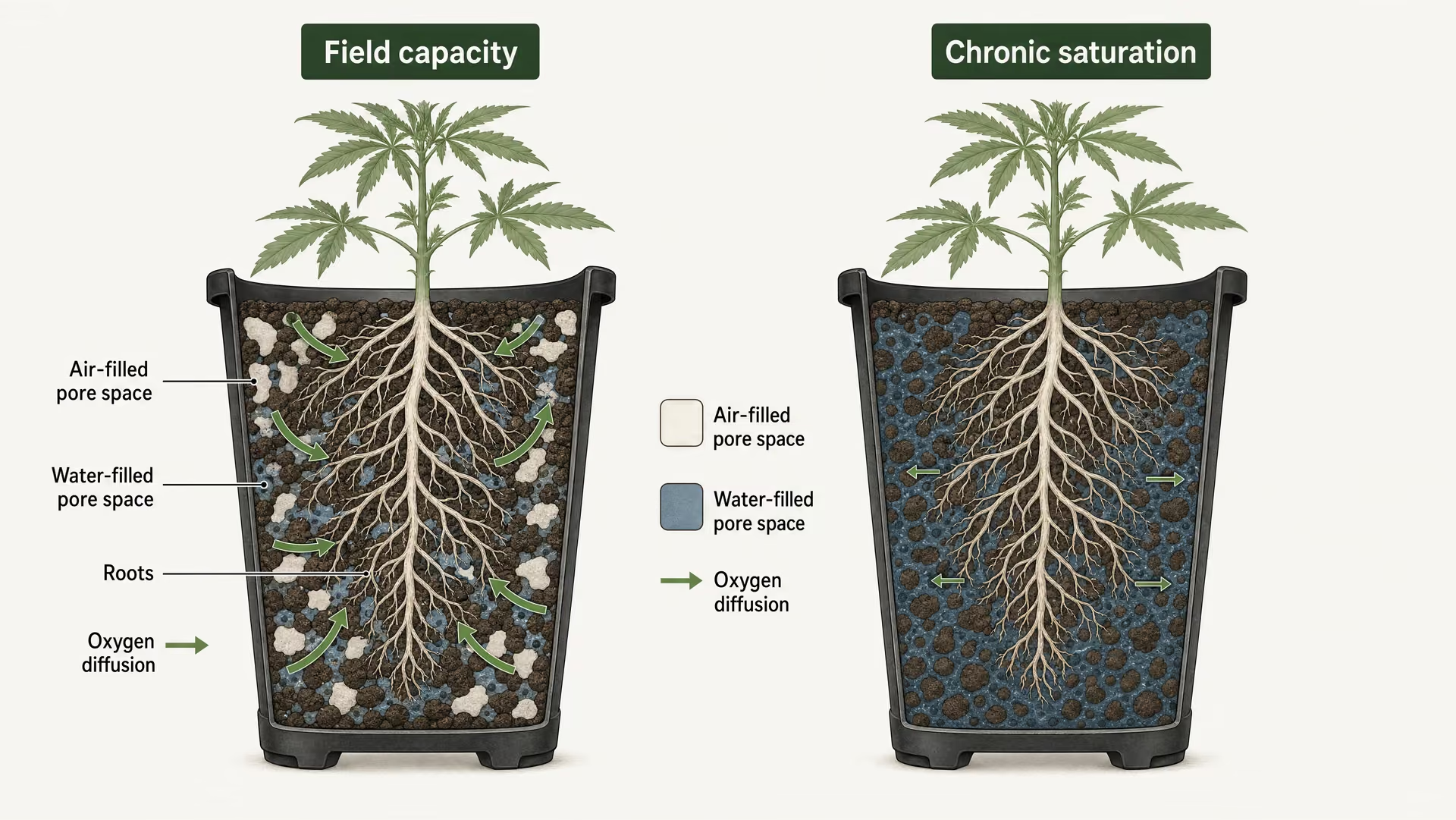
Field capacity The amount of water a medium holds after excess water has drained under gravity. The medium is fully wetted but should still contain air space.
Dry-back The period after irrigation when the medium loses water through plant uptake and evaporation, allowing air-filled pore space to return.
Field capacity is the starting point. In plain terms, that is the amount of water a medium holds after excess water has drained away under gravity. At field capacity, the medium is wet but not supposed to be a swamp. Dry-back is what happens next: the plant uses water, some evaporates, and the medium gradually shifts from wetter to drier, reopening pore space for air. Transpiration drives much of this. When leaves exchange water vapor with the air, they pull more water up from the roots. High light, larger leaf area, warmer temperatures, and higher vapor pressure deficit all increase that pull. Low light and cool, humid air slow it down.
That is the frame that matters. Not “how much water can I pour in,” but “what root-zone conditions am I creating between irrigations?”

Water, oxygen, and why roots fail in saturated media
Chronic saturation reduces root-zone oxygen and impairs normal root uptake. Strong evidence
Roots need water, but they also need oxygen for respiration. Saturated media restrict gas exchange so sharply that roots can no longer take up water and nutrients normally. The University of Arizona Cooperative Extension has explained this mechanism clearly in container crops: oxygen diffusion drops dramatically in water-filled pore spaces compared with air-filled ones. The Royal Horticultural Society gives the practical version of the same warning—waterlogging damages roots because aeration collapses.
This is why overwatering is often misdescribed. The problem is usually not one heavy irrigation by itself. If the medium drains well, a full watering can be healthy. The real problem is chronic saturation: watering again before enough air has returned, using an oversized pot that stays wet for too long, relying on a dense substrate with poor air-filled porosity, or growing under low-transpiration conditions where the plant simply cannot dry the container fast enough.
When roots sit in hypoxic media, symptoms can mimic deficiency or drought. Leaves droop. Growth stalls. Lower leaves yellow. The grower sees wilt and adds more water, which makes the oxygen shortage worse. That feedback loop is common.
Pathogens take advantage too. Saturated root zones and poorly sanitized recirculating systems favor oomycetes such as Pythium. The issue is not mystical bad luck. It is biology plus physics: weakly oxygenated roots are easier to infect.
pH and salinity belong in the same discussion. Water quality is not cosmetic. UMass Amherst Extension notes that irrigation water pH is generally satisfactory from 5.0 to 7.0 for greenhouse crops, but alkalinity is often the more important long-term variable; 60 to 100 ppm CaCO3 is a common target range. High bicarbonate water can slowly push substrate pH upward even if the incoming water looks acceptable on a handheld pH meter. Cornell Controlled Environment Agriculture guidance places hydroponic nutrient solutions commonly around pH 5.5 to 6.5 because nutrient availability shifts fast outside that band.
Why 'how often should I water?' is the wrong first question
| System | Dry-back approach | Typical pH target | Runoff approach | Main risk if mismanaged |
|---|---|---|---|---|
| Soil / peat-heavy mixes | Meaningful wet-dry cycle | 6.2 to 6.8 | Usually light runoff or none in living soil | Chronic saturation and low root oxygen |
| Buffered coco | Smaller, more frequent fertigations | 5.8 to 6.3 | Intentional runoff often useful in salt-fed coco | EC creep and Ca/Mg issues if allowed to dry too hard |
| Hydro / inert substrates | Timing steers water content and EC | 5.5 to 6.5 | Runoff or leaching used as a control tool | Low dissolved oxygen, fast pH drift, unstable EC |
The first question is not frequency. It is: what medium am I irrigating, and what dry-back pattern does it need?
Soil and peat-heavy mixes usually perform well with meaningful wet-dry cycles because they hold a perched water zone and can stay air-limited if watered too often. Buffered coco is different. It behaves more like a soilless hydroponic substrate than mineral soil. High-frequency fertigation with smaller events often works better there, especially once the pot is fully rooted, because coco can maintain a favorable air-water balance while also benefiting from regular nutrient refresh and salt control. In recirculating hydro, “watering” is barely the right word at all. The real job is oxygenation, solution temperature, EC, and reservoir chemistry management.
Runoff is another area where generic rules cause trouble. In salt-fed coco or rockwool, some leaching fraction helps prevent EC buildup in the root zone. In living soil, routine heavy runoff can wash soluble nutrients downward and keep the container too wet. So “10 to 20 percent runoff every time” is not universal advice. It depends on system chemistry.
Cannabis-specific irrigation guidance often relies on evidence borrowed from greenhouse vegetables, ornamentals, and substrate science rather than a large cannabis-only research base. Limited evidence
There is also less cannabis-specific irrigation research than many guides imply. Much of the sound guidance comes from greenhouse vegetables, ornamentals, and substrate science. That is not a weakness. It is a better evidence base than strain folklore.
How container size, plant size, and climate change irrigation demand
A small plant in a large pot is the classic setup for chronic overwatering. Root mass is tiny relative to wet media volume, so the container dries slowly and the lower profile may stay saturated for days. Brian Jackson’s substrate work at NC State has helped clarify why container physical properties matter so much: water-holding capacity, total porosity, and air space change root-zone behavior even when two mixes look similar from the top.
Plant size matters just as much. A mature plant with dense roots and a full canopy can empty a pot quickly through transpiration. A seedling cannot. Climate then multiplies or suppresses demand. High light, warmer leaf temperatures, active airflow, and appropriate vapor pressure deficit increase water use. Cool, humid rooms slash it. The same irrigation schedule can be too dry in one room and dangerously wet in another.
This is why rigid day-count schedules are weak guidance. Irrigation demand is produced by the interaction of container volume, substrate physics, root density, canopy size, and environment. Get those aligned and watering becomes predictable. Ignore them and every symptom starts to look random.
How to decide watering frequency without relying on a fixed schedule
A fixed watering calendar sounds tidy. It is also one of the fastest ways to mismanage the root zone.
Cannabis does not “need water every three days” in any universal sense. What it needs is a repeatable balance between water content and oxygen in the medium. That balance shifts with plant stage, pot size, substrate type, root density, temperature, humidity, light intensity, and fertigation style. A small seedling in a 5-gallon pot of peat mix may need only a small wetted zone for days; a flowering plant under high PPFD in coco may need multiple irrigations in one light period. Same species. Very different physics.
The practical rule is simple: irrigate when the medium has dried enough to restore air space and trigger healthy uptake, but not so far that roots stall, EC spikes, or the plant wilts. That is a decision framework, not a calendar.
Stage-specific demand: seedlings, vegetative growth, and flowering
Seedlings are easy to overwater because their root systems are tiny relative to the container. In a large pot, most of the substrate sits unused, holding water that the plant cannot remove quickly. Oxygen diffusion through saturated media drops hard, which is why chronic overwatering often looks like deficiency or slow growth rather than dramatic collapse. The University of Arizona Cooperative Extension and the Royal Horticultural Society both make the same underlying point for container crops: waterlogged media lose aeration, and roots suffer.
For seedlings in soil or peat-heavy mixes, avoid soaking the entire container repeatedly. Water a small ring around the seedling, then expand the wetted zone as roots spread. If the pot still feels heavy 24 hours later, you likely watered too broadly or too soon. In coco, the approach is different. Buffered coir behaves more like a hydroponic substrate than field soil, so smaller, more frequent fertigations are often appropriate once roots are established. But a just-sprouted seedling in a large coco pot can still sit in an overly wet column if you saturate the whole thing.
Vegetative plants increase water use fast because leaf area and root mass are both expanding. This is the stage where frequency starts to diverge by system. In mineral soil and many peat-based mixes, meaningful dry-back between irrigations usually improves root-zone aeration. In buffered coco, long dry-backs can be counterproductive because salts concentrate as water is removed. Frequent fertigations with some runoff often keep EC steadier.
Flowering changes the math again. Under high light and a healthy VPD, uptake can jump dramatically, especially from mid flower onward when canopy size is large and transpiration is strong. A plant that drank every three days in early veg may need daily irrigation, or multiple shots per day in coco or rockwool, once PPFD and biomass rise. That is not the plant becoming “thirstier” in a vague sense. It is more stomatal demand, more root density, more leaf area, and faster substrate depletion.
Reading the container: lift tests, substrate feel, and moisture sensors
The fastest low-tech tool is still the lift test. Pick up the pot right after a full irrigation and memorize that weight. Lift it again later. Heavy means a lot of water remains; distinctly lighter means dry-back is underway. This works surprisingly well once you have handled the same container and substrate for a week or two.
Use your fingers too, but use them honestly. The top inch can be dry while the lower half is still saturated, especially in tall pots. That is why surface appearance alone is weak evidence. Probe deeper if possible, or compare finger feel with pot weight.
For soil and peat-heavy mixes, a good threshold for many growers is to wait until the container feels substantially lighter and the upper few centimeters are dry before watering again, while avoiding full wilt. For coco, especially with salt-based feed, do not chase the same dry-back you would want in soil. If coco feels only slightly lighter and EC has been climbing in runoff, irrigation is often due sooner, not later.
Moisture sensors can help if you understand what they measure. Cheap single-probe meters are often unreliable. Better capacitance-based sensors or tensiometers can show trends that the eye misses. The value is not a magical universal number; it is learning your system’s pattern. If your sensor shows that lower media layers remain wet for two days after each event, your frequency is probably too high for that container and plant size.
Environmental drivers: VPD, temperature, RH, airflow, and light intensity
Watering frequency is partly a climate response. Higher vapor pressure deficit, usually created by warmer temperatures and lower relative humidity, increases transpiration. So does higher light intensity. Increase PPFD from moderate veg lighting to strong flowering levels and plants can drink far more, even if pot size and substrate stay the same.
Airflow matters too. Moving air strips the humid boundary layer from leaves and can raise transpiration. Not all airflow is beneficial; harsh direct fans can exaggerate water loss and make the canopy look thirsty even when the root zone is wet.
A practical read: if daytime temperature rises, RH drops, and light intensity increases, expect faster dry-back. If temperatures fall, RH climbs, and the room is dimmer, expect slower dry-back. After weather shifts or HVAC changes, old watering habits become stale fast.
How pot geometry and root density change dry-back speed
Container shape changes drying speed because water distribution and evaporation are not uniform. Shallow, wide pots usually dry faster than tall, narrow pots of similar volume because they expose more surface area and hold less of the root zone in a deep, slow-drying column. Tall pots often stay wet at the bottom long after the top looks ready for water.
This is one reason seedlings in oversized deep containers struggle. The upper zone may seem dry enough, but the lower profile remains saturated and poorly aerated. Watering again resets the problem.
Root density changes everything. A sparsely rooted pot dries slowly because little water is being extracted. A root-bound pot can dry with surprising speed, sometimes unevenly, because dense roots are pulling water from nearly the entire volume. As roots fill the container, frequency rises even if climate stays stable.
What to check before every irrigation
- Plant stage Seedlings use little water; flowering plants under strong light can need much more frequent irrigation.
- Container weight A heavy pot usually means substantial moisture remains deeper in the profile.
- Medium behavior Soil and peat usually want stronger dry-back than buffered coco.
- Environment Higher temperature, lower RH, stronger light, and more airflow usually speed dry-back.
- Pot geometry and root density Tall pots stay wet deeper; dense roots increase water extraction and shorten the interval.
So decide watering by combining four observations: plant stage, container weight, medium behavior, and environment. Then adjust for pot shape and root mass. That approach is less tidy than “every two days.” It is also far more accurate.
Watering techniques that actually work
“How often should I water?” is the wrong first question. The better one is: what kind of root-zone conditions is this irrigation event creating? Every watering changes water content, oxygen availability, EC, and pH. That is why a method that works in buffered coco can be a bad habit in peat-heavy soil, and why the same plant can need very different irrigation on a cool low-VPD day than under strong light and high transpiration.
There is not much peer-reviewed cannabis-specific irrigation research, so the sound approach is to borrow from controlled-environment horticulture. The mechanism is well established. Saturated media holds less oxygen, and oxygen diffusion drops sharply as pore spaces fill with water, as the University of Arizona Cooperative Extension explains. The Royal Horticultural Society makes the same practical point for container crops: waterlogging damages roots because aeration collapses. So the goal is not “more water” or “less water.” It is complete, even irrigation followed by an appropriate dry-back for the substrate.

Hand watering: slow saturation, edge-to-center patterns, and even wetting
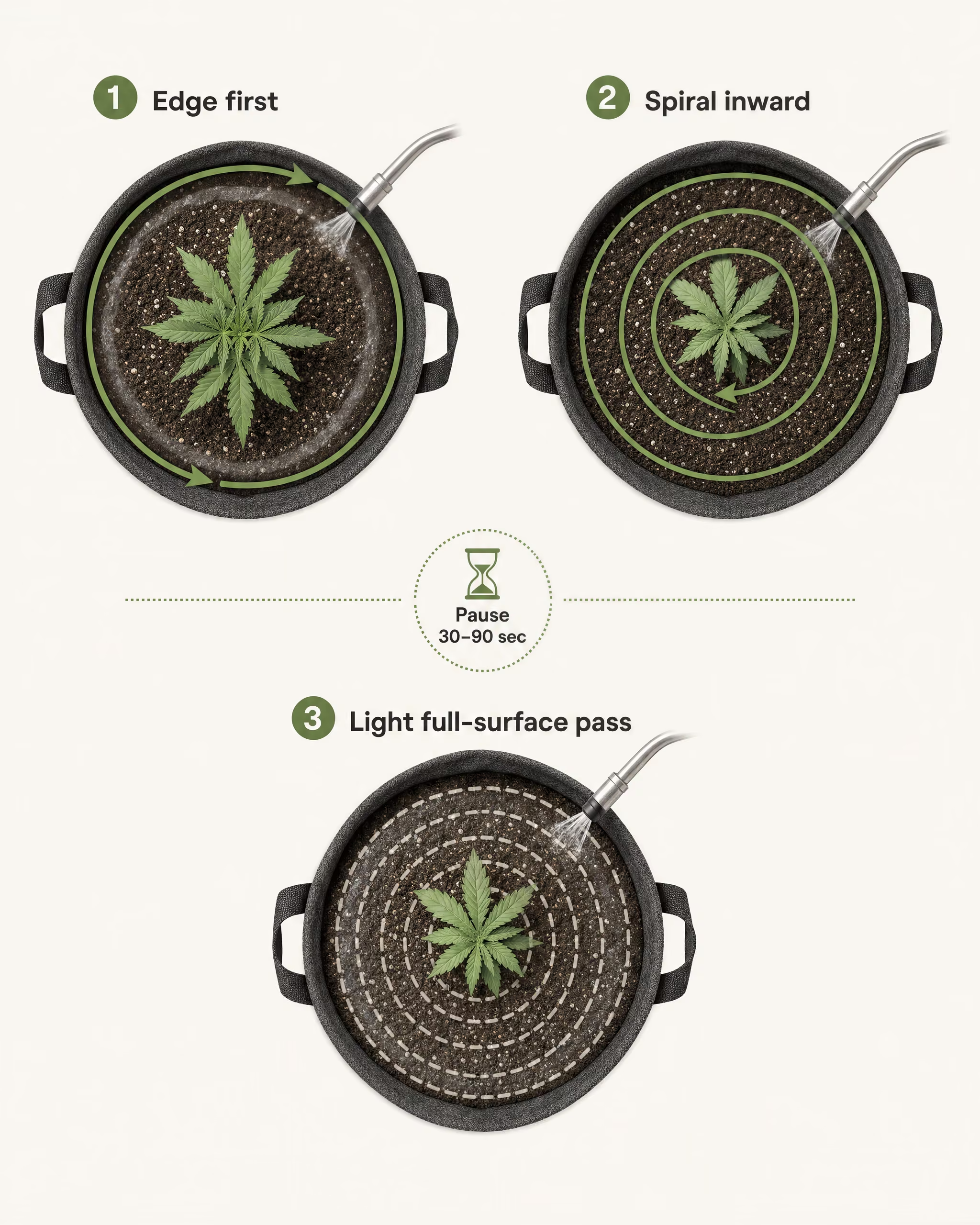
Hand watering still works very well when it is done with intent. Most problems come from speed. If water is dumped quickly onto one spot, it channels down preferential paths and exits the pot before the whole profile is wet. The top may look soaked while dry pockets remain deeper in the root ball. That is especially common in peat mixes that have gone hydrophobic and in containers where roots have pulled away from the wall.
How to hand-water evenly
- Start at the edge Begin near the outer wall where media often dries first.
- Move inward Use a spiral or ring pattern rather than dumping water in one spot.
- Pause halfway Wait about 30 to 90 seconds so the first pass can soak in.
- Finish with a second pass Rewet the profile evenly and reduce channeling.
- Allow the right dry-back Follow a full-profile irrigation with substrate-appropriate dry-back rather than repeated shallow top-offs.
A proper hand-watering event is slow enough to let capillary movement do its job. Start near the outer edge of the container, then move inward in a spiral or ring pattern, then finish with a lighter pass across the full surface. Edge-first watering matters because media often dries first near the pot wall. If that dry band is ignored, water slips down the center and leaves a poorly wetted perimeter with stranded roots.
Pause halfway through. Thirty to ninety seconds is often enough. Then apply the second half. That short rest helps break surface tension and improves uniform wetting. It also reduces channeling.
This is what “water thoroughly” should mean: not frequent shallow sips, but a full-profile irrigation event that rewets the active root zone evenly. Shallow top-offs train roots upward, leave lower media chemistry unstable, and make the plant look thirsty again far too soon. In soil or peat-based mixes, that full event should usually be followed by meaningful dry-back so air-filled porosity recovers. Brian Jackson’s substrate work at NC State has been influential here: container media performance is about physical properties, not folk wisdom.
Pulse irrigation and why multiple short events can outperform one long soak
One long soak is not automatically superior. In many systems, two or three short irrigation pulses outperform a single heavy event because they improve uniformity without leaving the medium perched at saturation for as long.
This matters most in coco and other soilless substrates. Buffered coir behaves more like a hydroponic substrate than field soil. It can be irrigated more frequently, sometimes several times per light cycle once plants are established, because the objective is steady root-zone water content and controlled EC rather than a pronounced wet-dry swing. Coir also has cation exchange behavior that complicates calcium and magnesium management, which is one reason runoff and regular fertigation are so often paired with it.
Why pulse irrigation can work better
- Pre-wetting
- The first short shot hydrates dry zones so later shots can spread more evenly.
- Uniform penetration
- A following pulse moves through a medium that is already receptive, reducing channeling.
- Tighter EC control
- Smaller repeatable events can keep root-zone salinity steadier than rare heavy drenches.
Pulse irrigation helps in three ways. First, the initial pulse pre-wets dry media. Second, the following pulse penetrates more uniformly. Third, smaller events can hold EC in a tighter band than rare heavy drenches. This is the logic behind drip fertigation programs in greenhouse production, where FAO guidance puts well-managed drip application efficiency around 90%.
The caveat is simple: pulse irrigation is not a license for chronic saturation. If the container never gets enough dry-back for its substrate type, oxygen becomes the limiting factor and drooping begins to mimic deficiency. That is overwatering in the way it usually happens: too frequent for the pot, plant, and environment.
Runoff strategy: when to chase leaching and when to avoid it
The “always water to 10 to 20% runoff” rule is too blunt. Sometimes it is smart. Sometimes it is wasteful. Sometimes it actively works against the root environment you are trying to build.
In salt-fed coco and rockwool, intentional runoff has a real job. It lowers the risk of salt accumulation, helps stabilize substrate EC, and gives you a way to compare feed EC and runoff EC. If runoff EC keeps climbing above input, salts are concentrating in the media and the fertigation plan needs adjustment. In these systems, some leaching fraction is often useful, not optional.
In biologically active soil, routine heavy runoff is much harder to defend. It can wash soluble nutrients below the most active rhizosphere, keep the lower profile too wet, and interrupt the wet-dry rhythm that soil growers usually want. If the mix is built around microbial cycling rather than constant mineral feed, chasing runoff every time often solves the wrong problem.
Runoff also interacts with source water. UMass Amherst notes irrigation water pH of 5.0 to 7.0 is generally acceptable for greenhouse crops, but alkalinity is the sleeper issue; 60 to 100 ppm CaCO3 is a common target range, and excessive alkalinity gradually pushes substrate pH upward. In hydroponics, Cornell CEA places nutrient solution pH commonly around 5.5 to 6.5. Those are not cosmetic numbers. They determine what the roots can actually take up.

Top watering versus bottom watering in cannabis containers
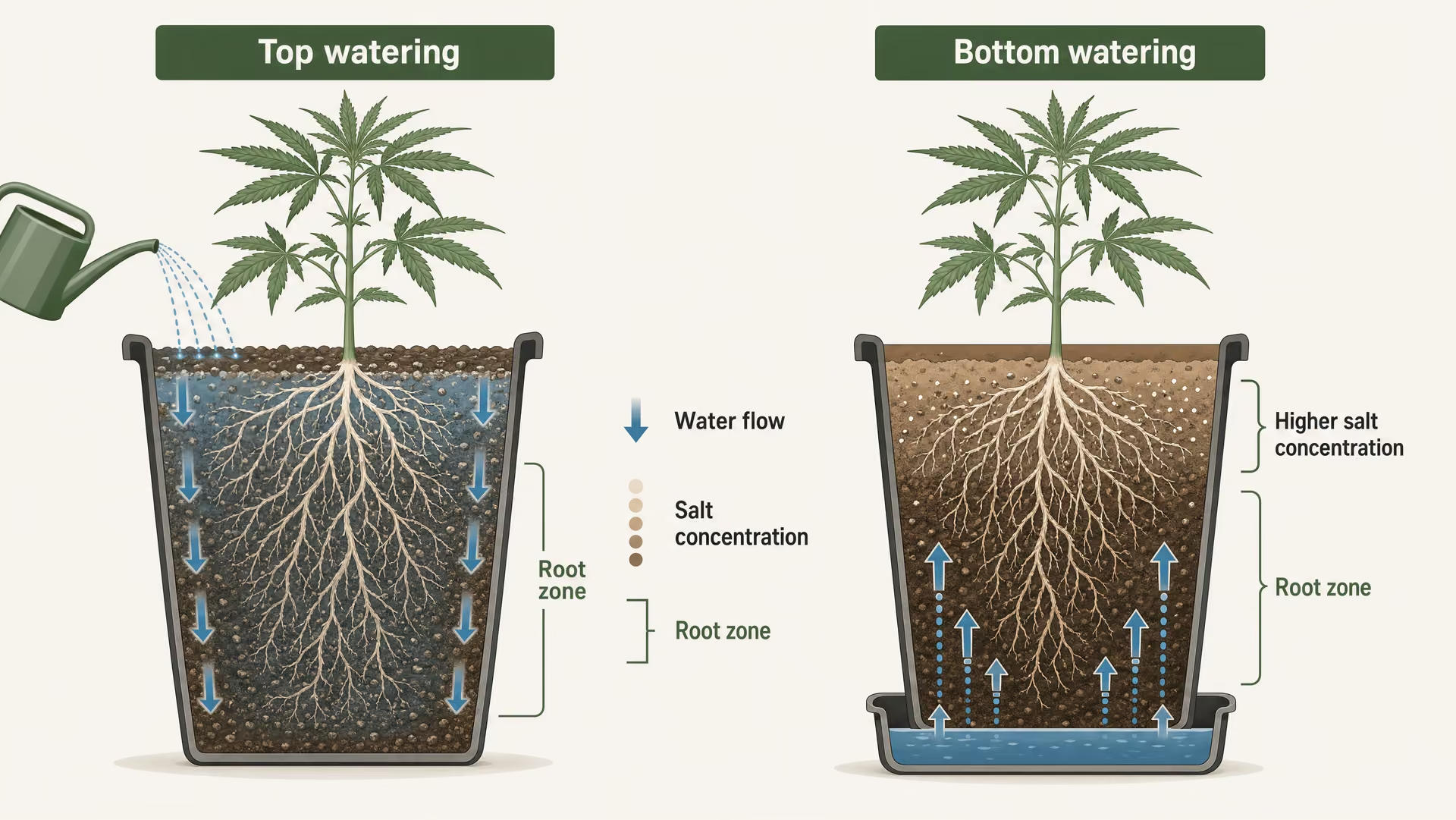
Top watering should be the default in most cannabis containers because it wets the profile from above, refreshes the upper root zone, and lets you manage leaching intentionally when needed. It also helps prevent the layered chemistry that develops when only the bottom stays wet.
Bottom watering has niche uses. It can rescue badly dried media, reduce fungus gnat attraction by keeping the surface drier, and work for small plants in seedling stages. But it has limits. In salt-fed systems, bottom watering can worsen salt stratification because dissolved ions tend to accumulate higher in the pot as water moves upward and evaporates. The root zone ends up chemically uneven. That is the opposite of control.
For that reason, bottom watering is usually a temporary tactic, not a main irrigation philosophy. If you do use it, occasional top watering is still needed to reset the profile and prevent neglected dry bands near the surface. Even wetting beats ritual. Always.
pH, alkalinity, EC, and water quality
Water chemistry shapes the root zone far more than many grow guides admit. Not just the number on a pH pen. The water’s buffering load, dissolved salts, calcium-to-sodium balance, and disinfectants all influence how the medium behaves from one irrigation to the next. That matters because nutrient problems are often chemistry problems first, watering problems second, and genetics problems a distant third.
There is also a persistent hobby mistake here: treating soil, coco, and hydro as if they respond to the same water in the same way. They do not. A peat-heavy potting soil can absorb a lot of abuse that would destabilize a hydro reservoir in hours. Coco, because of its cation exchange behavior, sits somewhere in between but leans much closer to hydro than to field soil.
Why pH matters less than many guides claim—and alkalinity matters more
Alkalinity A measure of how strongly water resists acidification, usually because of bicarbonates and carbonates. It is a major driver of long-term substrate pH drift.
pH is an instantaneous measurement of acidity or basicity. Alkalinity is the water’s capacity to neutralize acid, driven mainly by bicarbonates and carbonates. Confusing those two creates bad diagnosis.
UMass Amherst Extension states that irrigation water pH between 5.0 and 7.0 is generally satisfactory for greenhouse crops, while alkalinity around 60 to 100 ppm CaCO3 is a workable target for most crops. That pairing is the point. A water source can test at pH 7.8 yet behave acceptably if alkalinity is modest. Another source can read only mildly high in pH but carry enough bicarbonate to keep pushing substrate pH upward week after week.
That long-term drift is what growers actually fight. High-alkalinity water consumes the acidity in the root zone, so the medium trends upward over time. As substrate pH rises, iron, manganese, zinc, and sometimes phosphorus become less available. “Lockout” is not mystical. Those nutrients are still present, but their chemical form or solubility changes enough that roots struggle to absorb them efficiently.
Paul Fisher and William Argo have written for years about this greenhouse problem because it appears constantly in container production: chlorosis blamed on feeding strength when the real issue is substrate pH creep from alkaline water. Cannabis follows the same chemistry even if the peer-reviewed crop-specific literature is thinner.
This is why aggressive pH-down use without a water test can miss the target. Acid can correct the feed solution pH in the tank, but if bicarbonates remain high, the medium may still drift upward after repeated irrigations. The reverse is also true. Very low-alkalinity water, especially reverse osmosis water, can allow substrate pH to fall too easily if the fertilizer program is strongly acidic.
Recommended pH ranges for soil, coco, and hydroponics
The target pH depends on the medium because nutrient buffering and root-zone chemistry differ by system.
For mineral soil and peat-based potting mixes, a practical irrigation or root-zone target is usually about 6.2 to 6.8. Slightly below or above that can still work, but this range supports decent availability across the main macro- and micronutrients. Soil and peat have more buffering capacity than hydroponic solution, so they tolerate drift better.
For buffered coco, a common target is about 5.8 to 6.3. Lower than typical soil, higher than the bottom end of hydro. That reflects coco’s soilless behavior and its tendency to be managed with frequent fertigation. If coco is poorly buffered, calcium and magnesium problems can show up even when feed numbers look acceptable, because the coir’s exchange sites can hold onto those cations.
For hydroponics, Cornell Controlled Environment Agriculture places the common working range around 5.5 to 6.5. Many growers run narrower than that, but the broad point stands: hydro needs tighter pH control because there is less medium buffering the chemistry.
The lazy advice that “all cannabis likes 6.5” is wrong. In hydro, that can already be too high for iron uptake. In soil, 5.5 can be too low for stable phosphorus and calcium availability over time.
| Source-water issue | Why it matters | Typical response |
|---|---|---|
| Hardness | Often brings calcium and magnesium, but may travel with bicarbonates | Check alkalinity before assuming hard water is bad |
| Bicarbonates / high alkalinity | Push substrate pH upward over time | Use acidification or RO when needed |
| Sodium | Adds salinity without useful nutrition and can compete with K and Ca | Consider RO for high-sodium water |
| Chlorine | May dissipate if water sits, but not always predictably | Carbon filtration can help |
| Chloramine | More stable and does not gas off readily | Carbon filtration or RO is more reliable |
Source water problems: hardness, bicarbonates, sodium, chlorine, chloramine
Start with a real water report if possible. Guessing from taste or visible scale is weak practice.
Hard water is not automatically bad. Hardness mainly reflects calcium and magnesium. Those can be useful nutrients. The problem is that hardness often travels with bicarbonates, and bicarbonates raise alkalinity. So the issue is often not hardness alone, but hard, alkaline water that keeps pushing the substrate pH upward.
Bicarbonates are the main driver of chronic pH rise in container media. If alkalinity is high, acid injection or acidified nutrient solutions may be needed just to keep the root zone from drifting out of range.
Sodium is different. It contributes to salinity without feeding the plant meaningfully, competes with potassium and calcium, and can damage structure in true soils. High sodium source water is one of the strongest arguments for reverse osmosis.
Chlorine and chloramine matter for different reasons. Free chlorine often dissipates if water sits exposed, though not always fast enough to rely on casually. Chloramine is more stable and does not gas off readily. In salt-fed coco or hydro, modest municipal disinfection levels are usually less damaging than internet lore suggests, but living soil growers are right to care more because microbial communities are part of the system. Carbon filtration helps with chlorine and chloramine; reverse osmosis addresses a wider set of dissolved-ion issues.
RO water is useful when source water is very hard, high in sodium, high in bicarbonates, or simply inconsistent across seasons. But RO is not a free upgrade. It strips out calcium and magnesium too. If you switch to RO and keep the same feeding recipe, deficiency symptoms can appear because the background Ca and Mg that tap water used to supply are gone.
Using runoff EC and slurry tests to diagnose salt buildup
Electrical conductivity, or EC, is a direct watering diagnostic because salts concentrate or dilute according to irrigation frequency, dry-back, and leaching.
In coco and hydro, rising root-zone EC often means the medium is drying too hard between irrigations or not getting enough leaching fraction. Water leaves; salts remain. The plant then sits in a stronger solution than intended, which can suppress water uptake and mimic deficiency. Leaves may claw, burn at the tips, or droop even though the grower thinks feeding is “normal.”
Runoff EC helps spot this trend. If input EC is 1.8 mS/cm and runoff keeps climbing well above that, salts are accumulating. In coco and rockwool, that usually calls for more frequent fertigations, a modest runoff target, or a reset irrigation with lower EC solution. It does not automatically mean the plant needs plain water for days.
In soil, runoff readings are less clean because flow channels and uneven wetting distort the sample. A slurry test is often better: mix a representative root-zone sample with distilled water in a standard ratio, let it equilibrate, then measure pH and EC. If slurry EC is high and pH has drifted, you have evidence of a root-zone chemistry issue rather than just a visual guess from the leaves.
That distinction matters. Watering is not just adding liquid. It is active control of oxygen, salts, and chemistry in the root zone.
Soil, coco, and hydro are different irrigation systems—not just different media
Treating soil, coco, and hydro as if they differ only by texture is how growers end up chasing droopy leaves, salt buildup, and root disease with the wrong fix. The medium does not just hold the plant upright. It sets the irrigation logic: how long water remains available, how fast oxygen returns after an irrigation event, how nutrients are retained or leached, and what pH range keeps elements soluble. That is why “water every two days” is weak advice. Frequency has to follow substrate physics, container size, root mass, plant demand, and climate.
There is still limited peer-reviewed cannabis-specific irrigation work compared with greenhouse vegetables and ornamentals, so the soundest guidance comes from controlled-environment horticulture. Researchers such as Brian Jackson at NC State, along with greenhouse nutrition specialists Paul Fisher and William Argo, have spent years documenting how container substrates behave. The lesson carries over cleanly: irrigation is root-zone management, not calendar management.
Soil and peat-based mixes: wet-dry cycles, microbial activity, and avoiding chronic saturation
Mineral soil and peat-heavy potting mixes usually perform better with a real dry-back between irrigations. Not bone dry. Not dust. A meaningful reduction in water content that lets air-filled porosity recover.
This matters because oxygen diffusion in saturated substrates drops sharply. The University of Arizona Cooperative Extension has explained that roots need both water and oxygen, and saturated media can deprive them of the latter even while the pot feels “well watered.” That is the mechanics behind the classic mistake: a small plant sitting in a large pot of wet mix, watered again before the lower root zone has re-aerated. The result is not excess water in one sitting so much as chronic hypoxia from excessive frequency.
Peat mixes are especially prone to this when paired with oversized containers. The upper inch may look dry and mislead the grower, while the lower half of the pot remains heavy and oxygen-poor for days. Royal Horticultural Society container guidance makes the same point in broader horticulture terms: waterlogging reduces aeration and damages roots. In cannabis, that often shows up as droop, pale growth, stalled uptake, and symptoms that resemble deficiency.
Soil-style systems also have biological considerations that make nonstop runoff a bad default. In living or microbially active mixes, repeated heavy leaching can wash soluble nutrients out of the rhizosphere and keep the profile wetter than the biology wants. A wet-dry rhythm supports gas exchange and helps roots explore the container. The exact interval will vary wildly with plant size and environment. Early veg in a cool room may need long gaps. Late flower in a warm, dry room may not.
pH logic differs here too. Soil and peat systems typically tolerate a somewhat higher root-zone pH than hydroponic solutions. Water quality still matters. UMass Amherst Extension lists irrigation water pH of 5.0 to 7.0 as generally satisfactory for greenhouse crops and recommends alkalinity around 60 to 100 ppm CaCO3 for most crops. That alkalinity figure is often more important than the raw water pH number printed on a meter, because bicarbonates can steadily push substrate pH upward over time.
Coco coir: high-frequency fertigation, buffering, and managing calcium-magnesium dynamics
Coco is where many growers go wrong by watering like it is soil. It is not.
Buffered coco behaves much more like a hydroponic substrate than a peat potting mix. It holds plenty of water, but it also maintains good air space when properly structured. That means frequent, smaller fertigations often outperform long dry-backs. Letting coco swing too dry can concentrate salts, create EC spikes around the roots, and destabilize nutrient uptake.
Coir has another trait that changes irrigation strategy: cation exchange. Poorly buffered coco can bind calcium and magnesium, while releasing potassium and sodium. That is why “coco deficiency” is often not a mysterious plant issue at all. It is a substrate chemistry issue made worse by weak fertigation practice. Commercial coir producers and substrate references have long described this need for buffering, and anyone running coco with salt nutrients should take it seriously.
In practical terms, coco usually wants nutrient solution almost every irrigation, not alternating feed and plain water the way some soil growers do. Frequent fertigations with modest runoff help keep the root-zone EC stable and prevent localized salt accumulation. Here, the common advice about runoff has some merit. A leaching fraction can be useful in salt-fed coco. The blanket rule that 10 to 20 percent runoff is always required does not hold across all systems, but in coco it is often a sensible tool.
This is also why drip irrigation suits coco so well. FAO irrigation guidance notes that drip systems can reach application efficiencies around 90 percent under good management. For cannabis, the value is not just water savings. Precision matters. Small, repeatable irrigations let the grower hold the root zone within a narrower band of water content and EC than hand watering usually can.
Coco pH targets usually sit closer to hydro than soil. Cornell Controlled Environment Agriculture guidance puts hydroponic nutrient solutions commonly around pH 5.5 to 6.5, and that range aligns more closely with coco fertigation than a classic soil approach. If source water has high alkalinity, as UMass warns, pH drift in the root zone can become a recurring problem even when the feed tank looks acceptable.
Rockwool and inert hydro substrates: steering water content and EC with irrigation timing
Rockwool, clay pebbles, and other inert substrates are not nutrient reserves. They are root-zone control tools. Because they contribute little buffering capacity and little cation exchange compared with soil or coco, the irrigation program does most of the work.
That changes the goal. In rockwool, growers are not waiting for a pot to “need water” in the casual sense. They are steering slab or block water content, oxygenation, and EC through irrigation timing, shot size, and dry-back. Too few events, and EC rises as plants pull water faster than nutrients. Too many or too early, and the root zone stays too wet, oxygen drops, and generative steering becomes harder.
This is a scheduling game. First irrigation timing influences how much overnight dry-back the root zone gets. Last irrigation timing influences how wet the slab remains into the dark period. The substrate itself is inert, so the fertigation strategy creates the environment.
Runoff management is also different here. In rockwool, intentional leaching is often part of normal control because salts can accumulate quickly in a confined, highly managed root zone. That makes runoff a measured decision, not a moral rule. Enough to control EC. Not so much that the system stays flooded.
Flood-and-drain can work in inert media, but sanitation has to be tighter than many hobby guides suggest. Greenhouse pathology references consistently warn that recirculated water can spread Pythium and related root pathogens if it is not disinfected.
Deep water culture and recirculating hydro: reservoir oxygenation and solution stability
In deep water culture, current culture, and recirculating hydro, “watering” is almost the wrong word. The roots are already in the solution or exposed to it repeatedly. The real variables are dissolved oxygen, temperature, recirculation, nutrient concentration, pH drift, and hygiene.
If oxygenation is weak, plants can look overwatered even though the system is technically hydroponic. That is because root hypoxia is the injury, not lack of moisture. Air stones, waterfalls, venturi injection, and turbulent return lines are all attempts to solve the same problem: keeping enough oxygen in solution for active roots. Warm reservoirs make that harder because dissolved oxygen falls as temperature rises.
Solution stability matters just as much. Cornell CEA’s common hydro pH range of 5.5 to 6.5 exists for a reason: nutrient availability shifts quickly outside it. Water source chemistry matters too. UMass points out that excessive alkalinity gradually drives pH upward, and EPA secondary standards for chloride at 250 mg/L and total dissolved solids at 500 mg/L are useful warning flags for source-water quality, even if they are not crop-specific toxicity limits.
Recirculating systems save labor and can be highly efficient, but the penalty for poor hygiene is steep. Shared solution means shared risk. Pythium does not need an invitation. Dirty reservoirs, biofilm, dead roots, and warm nutrient solution can turn a healthy system unstable fast.
So the medium choice really is an irrigation choice. Soil asks for managed dry-backs and restraint with runoff. Coco asks for frequent fertigation and stable calcium-magnesium management. Rockwool asks for precise steering of water content and EC. Deep water culture asks for oxygen, temperature control, and clean solution chemistry. Same plant, different physics.
Irrigation systems for cannabis cultivation
The irrigation system matters because it sets the root-zone rhythm. Not just how water arrives, but how often the medium returns to an oxygen-rich state, how evenly EC distributes, how much runoff is produced, and how quickly small mistakes become crop-wide problems. That is why “water every two days” is weak advice. A peat mix in a 10-gallon fabric pot, buffered coco in a 1-gallon pot, and a recirculating tray of rockwool cubes are not variations of one watering problem. They are different physical systems.
Extension and greenhouse research give a better framework than generic grow-calendar rules. Brian Jackson’s substrate work at NC State, along with greenhouse guidance from UMass and Cornell CEA, all point back to the same principle: water content, air-filled porosity, pH, and salinity shift after every irrigation event. Choose a system that matches the medium first, then automate only as far as you can monitor.
Hand watering: control, labor, and inconsistency
Hand watering remains common because it gives direct feedback. You can feel pot weight, see how fast the surface accepts solution, smell stale media, and spot early dry pockets or hydrophobic zones. For mixed gardens, newly transplanted plants, or living soil beds that should not be pushed to daily runoff, that hands-on feedback is valuable.
It is also slow. And as plant count rises, hand watering becomes less consistent than most growers admit. One pot gets full saturation, the next gets a partial pass, the back corner gets skipped for six extra hours, and runoff percentages vary wildly. In soil or peat-heavy mixes, that inconsistency often shows up as alternating waterlogging and excessive dry-back. The Royal Horticultural Society notes that waterlogged containers lose aeration and roots suffer. The University of Arizona Cooperative Extension explains why: oxygen diffusion drops sharply in saturated media. That mechanism matters more than the raw volume poured in.
Hand watering works well when the goal is a meaningful wet-dry cycle. It is less well suited to high-frequency coco fertigation, where several small irrigation events may be preferable to one heavy drench. In coco, cation exchange behavior complicates matters further; if the coir was not buffered correctly, calcium and magnesium management gets harder, and irregular hand watering can let EC drift upward between events.
The usual design failure here is human variation. Different staff water at different speeds. Some stop at first runoff, some do not reach full saturation, some rewater a pot that is still heavy because the leaves droop from hypoxia and look thirsty. Hand watering is not primitive. It can be excellent. But at scale it often produces hidden irrigation variability rather than plant-by-plant precision.
Drip irrigation: emitters, pressure compensation, and automation
Drip is the most adaptable system for container cannabis, especially in coco and other inert or semi-inert media. It separates irrigation timing from human stamina and can deliver small, repeatable shots throughout the day. That is exactly what many coco programs need. In salt-fed systems, intentional runoff helps manage EC accumulation, and drip makes that easier to standardize.
FAO guidance puts drip application efficiency around 90% under good design and management. That matters beyond water savings. Less overspray means less foliage wetting and lower disease pressure. More important, drip lets you shape substrate moisture content with precision instead of trying to rescue it after the fact.
The catch is design quality. Cheap emitters clog. Long lateral lines lose pressure. Non-pressure-compensating emitters can flood plants near the pump while starving those at the end of the run. If one side of the room gets 20% more solution, that side does not just grow faster; it can show lower root-zone EC, different dry-back, and a different pH trend. UMass guidance is useful here because water quality is not cosmetic. Irrigation water pH of 5.0 to 7.0 may be broadly acceptable, but alkalinity around 60 to 100 ppm CaCO3 is what helps avoid chronic upward substrate pH drift. High bicarbonates and hard water accelerate emitter scaling and destabilize fertigation.
For hydro-style feeding, Cornell CEA’s common root-zone target of pH 5.5 to 6.5 is the more relevant benchmark. Soil is different. Treating all media with one pH rule is a mistake.
Practical fixes are simple: filtration before the manifold, flush valves at line ends, matched tubing lengths where possible, pressure regulators, and periodic catch-can tests to confirm equal output.
Flood-and-drain systems: speed, uniformity, and disease risk
Flood-and-drain can irrigate a room fast and, when benching is level, give excellent short-term uniformity. Pots or blocks draw solution upward by capillary action, so top surfaces stay drier than with overhead watering. In clone rooms, rockwool, and some small-container setups, that speed is attractive.
Medium choice matters. Flood tables pair better with substrates that wick predictably. Large bark-heavy or highly variable hand-filled pots do not respond as evenly. Dead zones are common too: trays that are not level, drain fittings that leave a shallow reservoir in one corner, or root debris that slows return flow. Those stagnant pockets become sanitation problems.
That is the larger weakness of flood-and-drain. Recirculated water can move Pythium and similar root pathogens through the whole system if sanitation slips. Greenhouse pathology guidance has warned about this for years, and the mechanism is straightforward. Shared solution plus saturated root zones plus organic debris is a bad combination. Flood-and-drain is not inherently unsafe, but it demands disciplined reservoir cleaning, line and tray disinfection, and attention to solution temperature and oxygenation.
Simple automation: timers, moisture sensors, and fail-safe design
Automation should reduce variability, not hide it. Basic timers can be enough for drip, but timer drift is real, especially with cheap units and seasonal light-cycle changes. A missed irrigation in small coco pots can become a major dry-back within hours; an extra nighttime event in peat can leave roots hypoxic until morning.
Moisture sensors improve control if they are placed correctly and calibrated to the substrate, not treated as universal truth. One sensor in the wettest pot tells you little about the driest edge of the table. Good fail-safe design is boring and necessary: high-water shutoffs, check valves where backflow is possible, overflow drains, battery backup for controllers, and a plan for power outages. If the pump fails, who notices? If power returns after an outage, does the system restart safely or dump a full cycle at once?
The right system is the one that matches the medium’s physics and the grower’s ability to monitor it. Hand watering gives observation. Drip gives repeatability. Flood-and-drain gives speed. None of them fixes bad scheduling on its own.
Overwatering vs underwatering: how to tell the difference
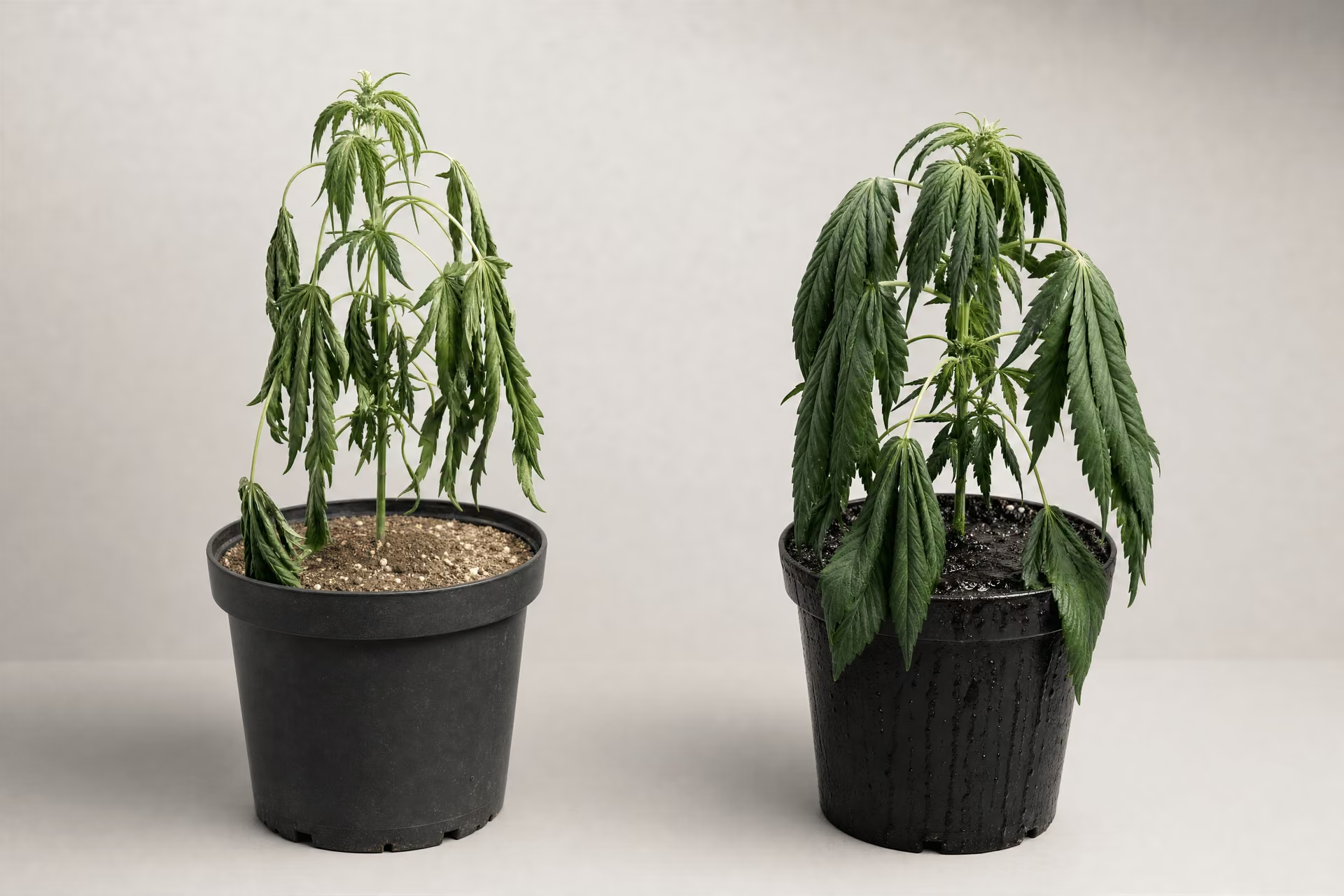
The hard part is that overwatering and underwatering often look alarmingly similar at first glance. A thirsty plant droops because cells lose turgor pressure. An overwatered plant droops because saturated media starves roots of oxygen, and oxygen-starved roots stop moving water well enough to support the canopy. Same visual endpoint, different mechanism.
That is why “water every two days” is weak advice. Frequency has to match substrate physics, root mass, pot size, plant stage, and environment. A small plant in a big peat pot can stay wet far too long. A large plant in buffered coco under high vapor pressure deficit may need frequent fertigations and still not be overwatered. The diagnostic question is not how many days passed. It is what happened in the root zone.
Shared symptoms that confuse growers
Both watering errors can cause droop, slow growth, chlorosis, and dull-looking leaves. Even lower leaf yellowing is not a reliable tie-breaker. When roots are too dry, uptake slows because there is not enough water in contact with the root surface. When roots are too wet, uptake slows because oxygen diffusion collapses in saturated media. The University of Arizona Cooperative Extension has long emphasized this basic principle: roots need both water and oxygen, and saturated substrates sharply reduce oxygen movement.
That leads to a common misread. A grower sees pale new growth or interveinal yellowing, assumes magnesium or calcium deficiency, adds more feed, and makes the root problem worse. The leaves were describing failed uptake, not necessarily low fertilizer concentration.
Slow growth is equally misleading. Underwatered plants conserve resources. Overwatered plants lose root function and often run colder in the medium, which slows metabolism and can open the door to pathogens such as Pythium in persistently wet systems. Royal Horticultural Society container guidance makes the general point plainly: waterlogging reduces aeration and damages roots. Cannabis is not exempt from that physics.

Leaf posture, substrate condition, and pot weight as differentiators
| Clue | Underwatering | Overwatering |
|---|---|---|
| Leaf feel | Limp, thin, soft | Heavy, drooping, sometimes swollen-looking |
| Pot weight | Markedly light | Still heavy |
| Media condition | Dry at and below the surface | Moist several centimeters down |
| Response to more water | Often recovers quickly if roots are healthy | Usually does not perk up quickly; may worsen |
| Likely root issue | Too little water contact | Too little oxygen around roots |
Start with three checks together, not one alone: leaf posture, media moisture, and pot weight.
Underwatered leaves usually look limp and thin. Petioles and blades both lose firmness. The whole plant can appear soft. The substrate surface is dry, the pot feels markedly lighter than after irrigation, and recovery after watering is often fast, sometimes within hours if roots are still healthy.
Overwatered leaves often look heavy rather than papery. They may droop while still feeling somewhat swollen. In severe cases the leaf tips hook downward into a “claw,” though excess nitrogen can cause a similar look. The substrate is still moist several centimeters down, the container feels heavy, and the plant does not perk up quickly after another irrigation. In fact, watering again usually deepens the problem.
Pot weight is one of the most reliable field tools because it cuts through guesswork. Lift the container right after a full irrigation, then again as it approaches the next event. Learn the range. In soil or peat-heavy mixes, meaningful dry-back usually helps restore air-filled porosity. In coco, that logic changes. Buffered coco is a soilless hydroponic substrate, not potting soil in disguise. Frequent small fertigations can work well there because coco maintains a different balance of water and air, especially when EC is managed with runoff.
Root inspection, smell, and media temperature
If the top growth is ambiguous, inspect below the surface. Healthy roots are generally white to cream colored and smell earthy or neutral. Damaged roots from chronic saturation turn tan to brown, feel slimy or fragile, and may smell sour, swampy, or anaerobic. That smell matters. It often tells you the medium stayed wet long enough for microbial conditions to shift in the wrong direction.
Media temperature helps too. Oversaturated pots often feel cool for too long because waterlogged media changes heat capacity and evaporation patterns. Cool, wet roots are slow roots. Dry media can also run hot near container edges, especially under intense light or low humidity, which compounds dehydration stress.
Rate of recovery is a strong clue. A dry plant with intact roots commonly rebounds quickly after irrigation. A waterlogged plant rarely does. Its roots are impaired, so adding more solution does not solve the transport problem.
How nutrient deficiency symptoms can be caused by watering mistakes
Many “deficiencies” begin as irrigation mistakes. Calcium and magnesium are frequent examples. In coco, this can be even more confusing because coir has cation exchange behavior that can tie up Ca and Mg if it was not buffered properly. Yet even in correctly buffered media, damaged roots cannot regulate uptake well. The visual result can mimic a feed problem when the real issue is poor irrigation timing, chronic saturation, or excessive dry-back.
Nitrogen symptoms can be faked the same way. Overwatered roots lose efficiency, older leaves yellow, and growth stalls. A grower adds nitrogen. The medium gets saltier, root stress rises, and the plant declines further. pH can compound this. Cornell Controlled Environment Agriculture notes hydroponic root-zone pH is commonly managed around 5.5 to 6.5, while UMass Amherst points out that irrigation water pH and alkalinity both shape substrate chemistry over time. High alkalinity water can push pH upward, making nutrient lockout look like underfeeding.
A better framework is simple: first assess moisture status and root health, then review EC and pH, and only then change nutrition. If the pot is heavy, the medium is wet, roots smell bad, and symptoms are spreading, treat it as a root-zone oxygen problem until proven otherwise. If the pot is light, the medium is dry, leaves are limp, and the plant perks up rapidly after irrigation, it was thirsty. The leaves tell part of the story. The container tells the truth.
Troubleshooting common watering problems
Watering problems rarely come from one bad irrigation event. They usually build from a mismatch between plant demand, substrate physics, and scheduling. That is why “water every three days” fails so often. A small plant in a large peat pot can stay oxygen-starved for days after a single irrigation, while a rooted plant in buffered coco under high VPD may need multiple fertigations in one light cycle. Diagnosis starts in the root zone, not at the leaf tips.
Persistent drooping despite wet media
Leaves that hang limp while the pot still feels heavy are often read as thirst. Often the opposite is true. Chronic saturation reduces oxygen diffusion around the roots; the University of Arizona Cooperative Extension has long pointed out that roots need both water and oxygen, and saturated media sharply limits gas exchange. Once that happens, uptake slows, transpiration falls out of balance, and the canopy droops even though water is present.
This is classic “overwatering,” but not in the way many guides describe it. The issue is usually frequency, oversized containers, or a substrate with too much water-holding capacity and too little air-filled porosity. Brian Jackson’s work at NC State on container substrate physical properties helps explain why: media can drain gravitational water yet still hold a perched water table at the base of the container. In short pots or compacted mixes, that saturated layer can occupy a large share of the root zone.
Action steps are simple but not always comfortable. Stop adding water until the substrate actually dries to an appropriate level for that system. Improve air movement and keep root-zone temperatures reasonable. Check whether drainage holes are blocked, saucers are holding runoff, or the mix has compacted. If the plant is in a huge pot relative to its root mass, transplanting down is rarely practical, so the fix is patience and less frequent irrigation. In soil and peat-heavy mixes, meaningful dry-back is usually helpful. In coco, the same droop can mean something else if EC is high or the coir is poorly buffered, so do not assume every limp plant needs a hard dry-back.
Runoff EC rising and tip burn appearing
When runoff EC climbs above feed EC and leaf tips begin to burn, salts are accumulating faster than they are being removed. That is common in coco and rockwool under salt-based feeding with too little runoff, too few irrigations, or very strong solution strength. It can also happen in soil if fertilizer is stacked on top of inconsistent watering and poor drainage.
This is where runoff needs context. The “always get 10 to 20 percent runoff” rule is not universal. In coco and rockwool, intentional leaching fractions often help keep root-zone EC from climbing between irrigations. In living soil, repeated heavy runoff can wash soluble nutrients through the container and leave the medium wet for too long. Same word, different logic.
If runoff EC is drifting upward, first compare three numbers: input EC, runoff EC, and substrate moisture pattern. If the pot is drying too hard between irrigations, salts concentrate as water leaves. If feed is too strong, the problem is obvious. If the medium is staying too wet while EC still rises, you may have uneven flow paths where water channels through some areas and leaves others salty.
Corrective action depends on system type. In coco, a controlled reset with lower-EC nutrient solution and enough runoff to bring root-zone EC back in line often works. Keep pH in the hydroponic zone Cornell CEA commonly cites, around 5.5 to 6.5, and remember that coco’s cation exchange can tie up calcium and magnesium if buffering was poor. In soil, do not reflexively flood the pot. First reduce feed concentration, improve dry-back, and verify irrigation water quality. UMass Amherst notes that irrigation water pH of 5.0 to 7.0 is generally workable for greenhouse crops, but alkalinity matters just as much; 60 to 100 ppm CaCO3 is a common target range. High alkalinity can steadily push substrate pH upward and create deficiency symptoms that look like feeding errors.
Hydrophobic media and uneven wetting
A dry pot is not always evenly dry. Peat-heavy mixes can turn hydrophobic after severe dry-down, causing irrigation water to race down the container wall or through cracks while the core stays dry. The top may look wet. The root ball may not be.
Signs include a light pot that seems to “take” water but dries suspiciously fast, patchy leaf wilt, runoff appearing almost immediately, and root zones with alternating soggy and powder-dry zones. This also happens in compacted media, especially if repeated top-watering has created channels.
The fix is rewetting, not just watering harder. Apply water slowly in stages so the substrate can absorb it. Bottom watering can help rehydrate a stubborn root ball in small containers, though it should not become a constant habit in systems already struggling with saturation. Wetting agents can help in ornamental production, but if used, choose products appropriate for edible or medicinal crops and follow label restrictions carefully.
If the medium repeatedly goes hydrophobic, the larger issue is scheduling or structure. Soil and peat mixes usually should not be allowed to become bone dry. Coco is less prone to true hydrophobic collapse and usually performs better with more frequent, smaller fertigations.
Root rot, algae, fungus gnats, and other moisture-linked failures
Wet surfaces invite biology you do not want. Constantly wet top layers favor algae and fungus gnats. Saturated, low-oxygen root zones favor oomycetes such as Pythium. In flood-and-drain or recirculating systems, sanitation failures can spread root pathogens quickly through shared solution; greenhouse pathology guidance has warned about that for years.
The symptoms overlap. Roots that should be white or cream become tan, then brown, soft, or slimy. The container smells sour. Growth stalls. Leaves pale, curl, or droop despite moisture. Fungus gnats often appear before major root decline because larvae thrive in moist organic media and feed on decaying matter and fine roots.
Do not treat every brown root as infectious disease. Nutrient staining in coco can darken roots. The difference is texture and vigor. Healthy roots stay firm. Diseased roots slough.
The first intervention is environmental, not chemical. Let the surface dry more between irrigations if the crop and substrate allow it. Increase horizontal airflow. Remove standing runoff. Cover exposed media in systems where algae is a chronic problem. Sticky cards help monitor gnat adults, but larvae control depends on drying the surface and improving hygiene. In hydro and recirculating setups, reservoir temperature, dissolved oxygen, and sanitation matter as much as feed strength. Watering is chemistry plus microbiology plus oxygen management.
Flushing, resetting the medium, and when repotting is the better fix
Flushing is a tool, not a ritual. It helps when the medium is loaded with soluble salts and the root system is still functional enough to recover. It is a poor choice when the real problem is chronic saturation, compaction, or root disease. In those cases, pushing gallons more water through the pot can deepen hypoxia and finish off damaged roots.
A flush makes sense when input EC is reasonable, runoff EC is much higher, leaf tips are burning, and the medium drains properly. Use enough low-EC solution to lower root-zone salinity in a controlled way, then resume feeding at an appropriate strength. In coco and rockwool, that often means a genuine reset followed by frequent fertigations with runoff.
Repotting is the better fix when structure has failed. Think compacted peat, collapsed soil, swampy lower layers from a perched water table, roots circling in an exhausted mass, or a sour-smelling medium that never dries evenly. Move into a container and mix with better air-filled porosity and drainage. Richard Gruda and other controlled-environment researchers have shown repeatedly that root-zone oxygen is not a side issue; it governs whether roots can function at all.
If you remember one rule, make it this: treat symptoms as root-zone clues. Wet droop points to oxygen debt. Rising runoff EC points to salt concentration or poor leaching strategy. Fast runoff with a still-light pot points to hydrophobic pockets. Gnats and slime point to persistently wet surfaces and weak hygiene. Fix the medium and the schedule. The leaves usually follow.
A practical irrigation framework by growing style
Irrigation plans should match the substrate, not a calendar. A 3-gallon fabric pot of buffered coco under high VPD may need multiple fertigations in a day; a 10-gallon peat-heavy soil pot with a small plant may need none for several days. Those are not contradictions. They are different physical systems. Readers should follow local laws and regulations before engaging in cannabis cultivation.
Small hobby soil grow
In soil or peat-based potting mixes, the target is a real wet-dry cycle without prolonged drought and without chronic saturation. Brian Jackson’s substrate work at NC State helps explain why: container media differ in water-holding capacity and air space, so the same volume of water can produce very different root-zone conditions. The Royal Horticultural Society and University of Arizona Extension both support the mechanism here—waterlogged media lose aeration fast, and roots then show deficiency-like symptoms because oxygen diffusion collapses.
A workable framework:
- Monitor:** pot weight, top 1 to 2 inches of moisture, leaf posture, and growth rate.
- Measure:** irrigation water pH and, if using bottled nutrients, feed EC occasionally. UMass Amherst notes irrigation water pH of 5.0 to 7.0 is generally acceptable for greenhouse crops, but alkalinity matters too; 60 to 100 ppm CaCO3 is a useful benchmark.
- Irrigate when:** the pot feels meaningfully lighter, the upper zone is dry, and the plant is still perky rather than limp.
- Aim for runoff?** Usually only light runoff, or none, in living soil. Heavy routine runoff often does more harm than good by washing soluble nutrition from the rhizosphere and keeping the lower profile too wet.
- Watch for:** droop with wet media, fungus gnats, slow growth, and a pot that stays heavy for too long. Those are overwatering signs more often than thirst signs.
Decision tree: if the pot is light and leaves recover after irrigation, continue. If the pot is heavy and leaves droop, do not add water; improve dry-back, air movement, or container size match.
Coco in fabric pots with mineral nutrients
Coco should not be treated like soil. Buffered coir has cation exchange behavior that can tie up calcium and magnesium if poorly prepared, and it performs more like a hydroponic substrate under fertigation. Here, frequent smaller irrigations often beat long dry-backs. That is the opposite of common soil advice.
Framework for coco:
- Monitor:** daily pot weight trend, runoff EC, runoff pH, and dry-back speed.
- Measure:** feed EC every mix, pH every feed, runoff EC at least periodically.
- Irrigate when:** the plant has used a modest share of available water, not when the pot is bone dry. In active flowering, that may mean one to several fertigations per day depending on plant size and climate.
- Aim for runoff?** Yes, intentionally in salt-fed coco. A leaching fraction helps prevent EC creep in the root zone.
- Watch for:** rising runoff EC, calcium/magnesium deficiency patterns, and fast tip burn after feed strength increases.
Decision tree: if runoff EC is higher than input and keeps rising, increase irrigation frequency and restore runoff. If runoff EC is stable but plants are pale, review feed strength and pH before watering more.
Recirculating hydroponic setup
In recirculating hydro, “watering” is really reservoir management plus root oxygenation. Cornell CEA guidance places hydroponic nutrient solution pH around 5.5 to 6.5, and that range matters because nutrient availability shifts quickly outside it. Saturation itself is not the enemy in deep water culture or flood systems; low dissolved oxygen and dirty recirculation are.
Framework:
- Monitor:** reservoir pH, EC, temperature, water level, and root appearance.
- Measure:** pH and EC daily, more often in fast-growing rooms.
- Irrigate when:** according to system design, not pot feel. Flood-and-drain timing should be based on media type, root mass, and dry-back between floods.
- Aim for runoff?** Not applicable in the same way as coco. The concern is stable chemistry and oxygen, not leach fraction.
- Watch for:** tan slime, root browning, sour smells, and sudden wilt in wet systems. In recirculating setups, those can point to Pythium risk, especially without sanitation.
Decision tree: if pH swings hard and EC falls, plants are feeding; adjust solution, do not simply top up blindly. If roots look stressed and water is warm, address oxygenation and sanitation first.
Greenhouse or larger indoor room with automation[2] AQUASTAT Core Database. Food and Agriculture Organization of the United Nations. FAO AQUASTAT, 2024.
Automation is not permission to stop observing. It is a way to apply repeatable irrigation events. FAO guidance puts well-managed drip irrigation around 90% application efficiency, which is one reason commercial horticulture favors it. Precision matters. Agriculture already accounts for 72% of global freshwater withdrawals, according to FAO AQUASTAT 2024.
Framework:
- Monitor:** substrate moisture sensors or load cells, zone-by-zone dry-back, drain volume, and irrigation uniformity.
- Measure:** source water pH, alkalinity, EC, and periodic emitter output.
- Irrigate when:** sensor data and plant demand agree. Triggering solely by clock time is weak practice.
- Aim for runoff?** In coco or rockwool, yes, enough to control salts. In organic beds, no routine heavy leaching.
- Watch for:** one zone staying wetter than others, emitter clogging, runoff EC drift, and disease hotspots where recirculated water is not disinfected.
Decision tree: if sensors show slow dry-back, shorten events or reduce frequency. If EC rises across a zone, increase leaching fraction or pulse count. If only one bench struggles, suspect distribution uniformity before blaming genetics.
References
- [1] Secondary Drinking Water Standards: Guidance for Nuisance Chemicals. EPA, 2024. https://www.epa.gov/sdwa/secondary-drinking-water-standards-guidance-nuisance-chemicals
- [2] AQUASTAT Core Database. FAO AQUASTAT, 2024. https://www.fao.org/aquastat/en/