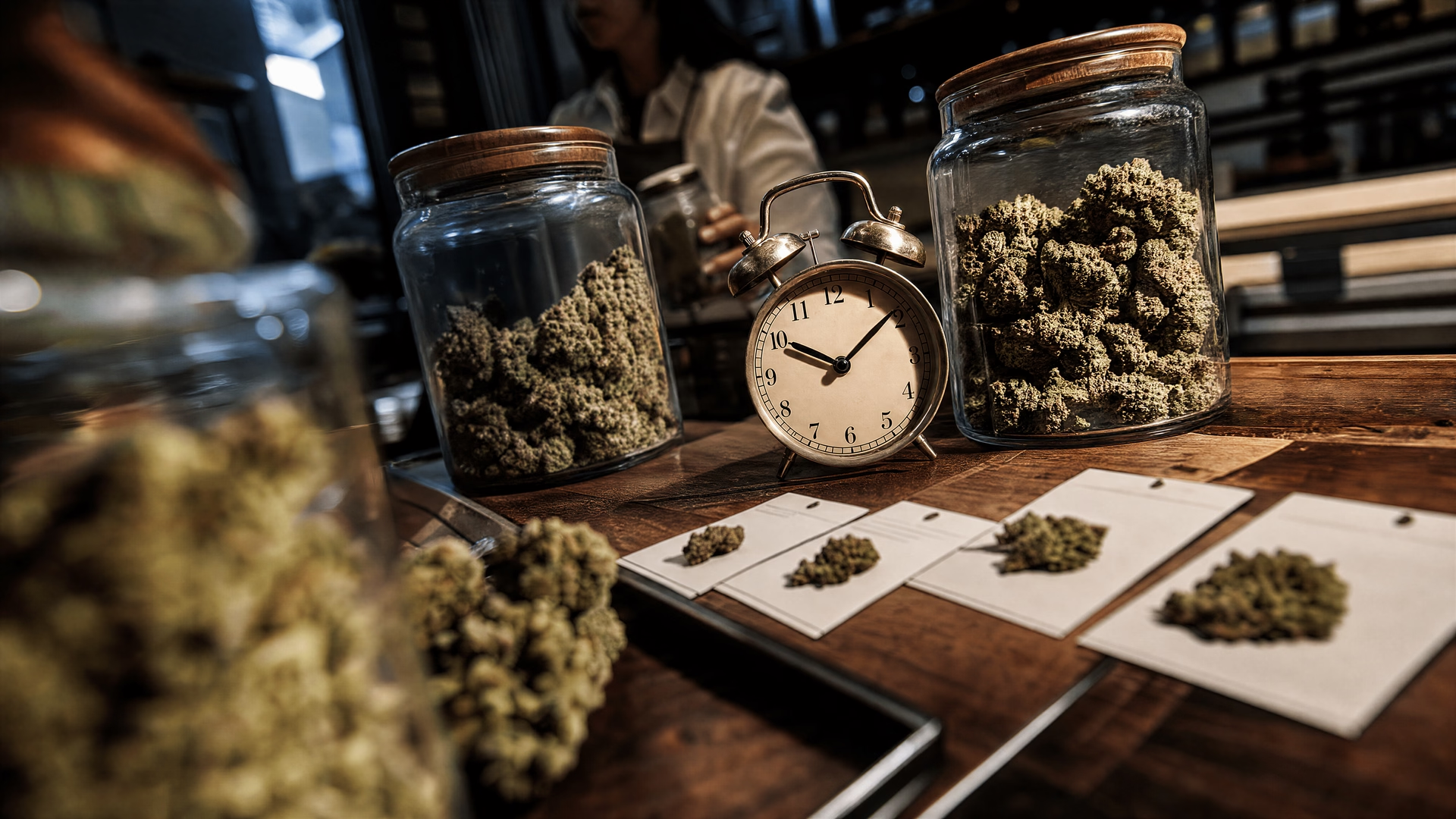














Why the munchies are real — and why the standard explanation is too simple
THC-driven hunger stimulation is real. That point is stronger than a lot of casual writing admits. But the usual explanation — “THC flips on CB1 receptors in the hypothalamus, so you get hungry” — is too thin to explain what actually happens. Appetite under cannabis is not one switch, one brain region, or one behavior. It is a bundle of homeostatic hunger, hedonic motivation, food reward, smell, sensory salience, and learned responses to cues. This matters because cannabis is widely used: UNODC estimated 228 million users worldwide in 2022, EMCDDA put last-year EU use at 22.8 million adults, and SAMHSA estimated 61.8 million past-year users in the US in 2023. A population-scale effect deserves better than a meme.
The pop-culture stereotype versus the pharmacology
The stereotype is simple: use cannabis, raid the kitchen. The pharmacology is not. THC is a partial agonist at CB1 receptors, and CB1 signaling does help drive feeding. Yet the appetite phenotype linked to THC extends beyond a single hypothalamic hunger center. Work from Piomelli, Marsicano, and others has tied endocannabinoid signaling to energy balance, reward processing, and sensory modulation. In 2015, Farrimond and colleagues showed in Nature that THC can act on hypothalamic pro-opiomelanocortin neurons in a paradoxical way, shifting output toward β-endorphin signaling that promotes feeding rather than satiety. That finding alone should have buried the cartoon version of the munchies.
The sensory side matters too. Koch et al. in Nature Neuroscience in 2011 showed cannabinoid signaling can enhance olfactory processing in mice and increase food intake. That fits ordinary experience: food may not just seem more rewarding; it may literally smell more vivid and compelling. Human laboratory studies by Foltin, Haney, and colleagues, dating back to 1988 and extended in later inpatient work, found increased caloric intake after cannabis exposure, especially from snacks and sweet foods. The signal in humans is smaller and messier than the stereotype suggests, but it points in the same direction.
Appetite is not one thing: hunger, reward, smell, and meal size
What the article means by appetite
- Homeostatic hunger Energy-need signaling linked to hypothalamic and peripheral metabolic cues.
- Hedonic motivation Wanting food because it feels rewarding, not because the body is energy-deprived.
- Food reward Taste, texture, sweetness, and expected pleasure gain value.
- Sensory salience Smell and other food cues become more vivid or attention-grabbing.
- Learned cue response Contexts such as the fridge, delivery apps, or movie snacks can trigger eating.
“Appetite” is often used as if it means gastric emptiness. It does not. Homeostatic hunger is one piece: hypothalamic and peripheral signals related to energy need, including interactions with ghrelin and other metabolic hormones. Then there is hedonic motivation — wanting food because it feels rewarding. Then food reward itself, where taste, texture, and expected pleasure matter. Add sensory salience, especially smell. Add learned cue response: the fridge, the delivery app, the movie-night snack routine. Under THC, all of those can move at once.
That is why meal behavior under cannabis does not always look like ordinary fasting hunger. A person may not eat because they are energy-deprived. They may eat because sweet foods feel more salient, odor cues hit harder, and reward circuits assign more value to immediate intake. Meal size can rise. Snacking can rise. Preference for palatable food can rise. These are related phenomena, not identical ones.
Where consumer cannabis writing usually gets the story wrong
Claims that specific cannabis terpenes reliably increase or suppress appetite in humans are weakly supported. Limited evidence
[4] Efficacy and safety of cannabidiol and tetrahydrocannabivarin on glycemic and lipid parameters in patients with type 2 diabetes. K. A. Jadoon, M. L. Ratcliffe, S. Barrett, et al.. Diabetes Care, 2016.The first mistake is reductionism. “Hypothalamus equals munchies” is incomplete. The second is overextension. Evidence for THC is decent; evidence for everything orbiting THC is not. CBD is a clear example. It is not an appetite stimulant in the same way THC is, and purified CBD trials behind Epidiolex repeatedly listed decreased appetite as a common adverse event. THCV is not “diet weed” in any settled clinical sense; Jadoon et al. in Diabetes Care in 2016 did not establish a reliable appetite-suppressing effect in humans. CBN is surrounded by appetite and sedation claims, but human evidence is thin. Terpene talk is weaker still. Humulene-suppresses-appetite and myrcene-or-limonene-boosts-hunger claims are mostly extrapolation, not controlled cannabis feeding data.
| Setting | Intervention | Comparator | Outcome cited in article | Result |
|---|---|---|---|---|
| HIV/AIDS wasting | Dronabinol | Placebo | Appetite increased | 38% vs 8% |
| Cancer cachexia | Dronabinol | Megestrol acetate | Appetite improvement | 49% vs 75% |
| Cancer cachexia | Dronabinol | Megestrol acetate | At least 10% baseline weight gain | 3% vs 11% |
The third mistake is clinical exaggeration. Cannabinoids have been studied for appetite stimulation in wasting syndromes, but not all indications are equal. In HIV/AIDS, Beal et al. in 1995 found appetite increased in 38% of dronabinol-treated patients versus 8% on placebo. In cancer cachexia, the story is less flattering: Jatoi et al. in Journal of Clinical Oncology in 2002 found megestrol acetate outperformed dronabinol for both appetite improvement and meaningful weight gain. So yes, the munchies are biologically real. The folklore built around them is often not.
The neurobiology of cannabis and appetite
THC-driven hunger is not a joke mechanism or a vague “body high” effect. It is one of the better supported acute effects of cannabis, and the biology is wider than the stock phrase “CB1 activation in the hypothalamus” suggests. Feeding behavior sits at the intersection of homeostasis, reward, sensory salience, memory, and hormonal state. THC touches all of them.
That matters because exposure is not marginal. UNODC estimated 228 million cannabis users worldwide in 2022, EMCDDA reported 22.8 million past-year users in the EU, and SAMHSA estimated 61.8 million past-year users in the United States in 2023. When a drug shifts appetite, food valuation, and cue reactivity at that scale, it becomes a public health question as much as a cultural trope.
Endocannabinoid signaling and energy balance
The endocannabinoid system helps tune energy intake to internal state. Its main endogenous ligands, anandamide and 2-arachidonoylglycerol, or 2-AG, are synthesized on demand rather than stored in vesicles like classical neurotransmitters. They usually act retrogradely: a postsynaptic neuron releases an endocannabinoid, which travels backward across the synapse and dampens presynaptic transmitter release through CB1 receptors. Daniele Piomelli and others helped establish this as a broad homeostatic signaling system, not a niche drug target.
CB1 receptors are densely expressed across the brain, especially in cortex, basal ganglia, hippocampus, amygdala, hypothalamus, and reward-related circuitry. They are also present in peripheral tissues relevant to metabolism, including the gastrointestinal tract, adipose tissue, liver, and vagal pathways, though central CB1 signaling is the clearest driver of the classic munchies phenotype. THC is a partial agonist at CB1. That matters because it can bias existing circuits rather than simply switch hunger on like a light.
Endocannabinoid tone changes with nutritional state. Fasting and energy deficit can raise hypothalamic endocannabinoid signaling, while leptin tends to suppress it. Ghrelin, the stomach-derived hormone that rises before meals, also intersects with cannabinoid signaling. These systems are not redundant; they reinforce one another. A hungry organism does not rely on one pathway. It stacks them.
THC has the strongest mechanistic and human evidence for appetite stimulation among cannabinoids discussed in the article. Strong evidence
This is why broad statements like “all cannabinoids increase appetite” fail immediately. THC often does. CBD does not do so in the same way and, in purified prescription use, decreased appetite is a common adverse event. The Epidiolex label lists decreased appetite among common reactions in pivotal trials. THCV is even less cooperative with internet lore. At low doses it may behave as a CB1 antagonist or neutral antagonist, and the human study by Jadoon et al. in Diabetes Care in 2016 did not support simple claims that THCV reliably suppresses appetite in real-world use. CBN remains mostly an animal-literature story for appetite. THC is the cannabinoid with the strongest mechanistic and human evidence here.

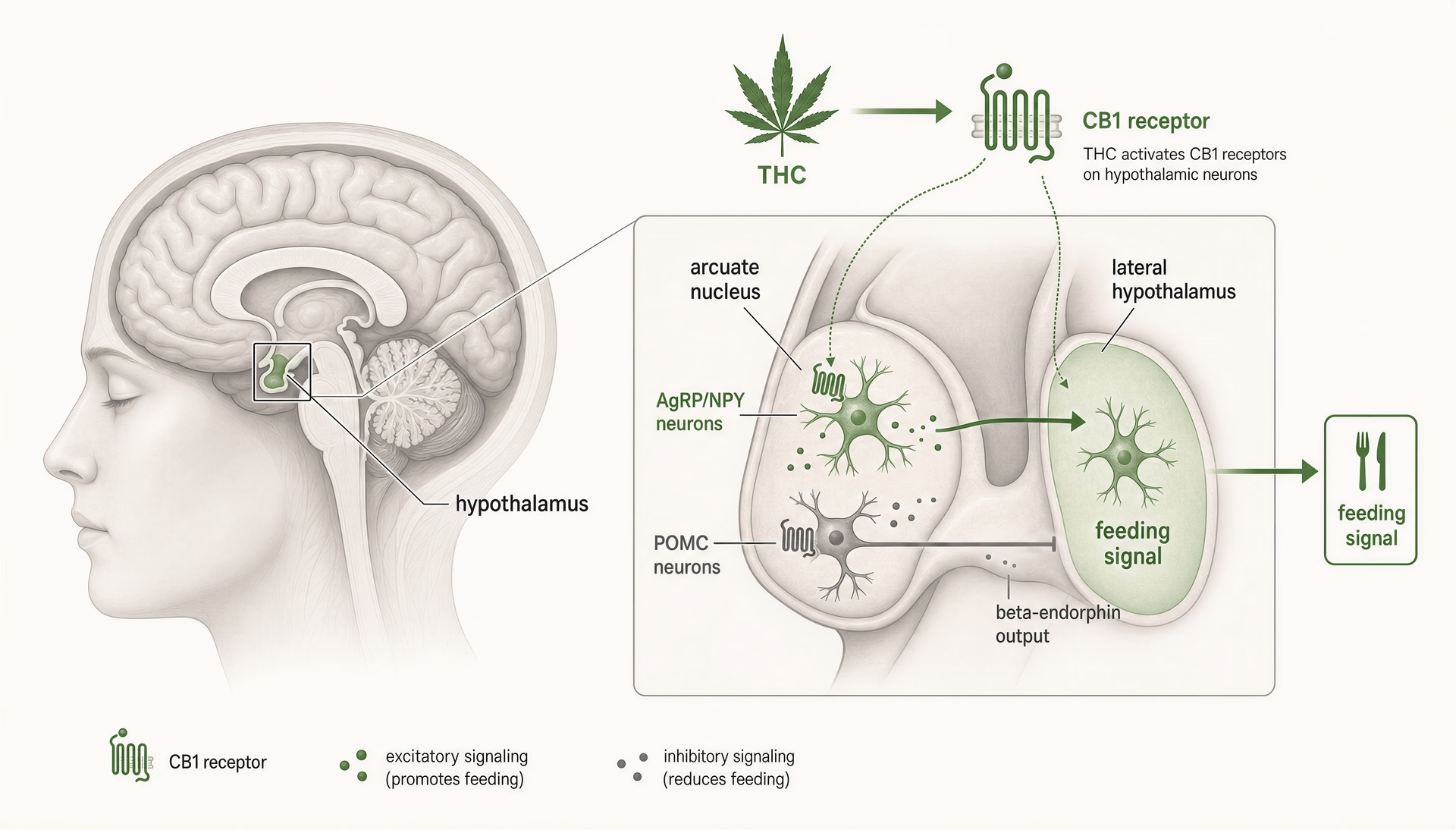
CB1 receptor activation in the hypothalamus
POMC neurons Pro-opiomelanocortin neurons are hypothalamic cells usually associated with satiety signaling, but under cannabinoid exposure they can shift output toward beta-endorphin signaling that promotes feeding.
The hypothalamus integrates hormonal and nutrient signals into feeding behavior, and cannabinoid effects there are real. The arcuate nucleus is central because it contains two opposing populations: AgRP/NPY neurons that promote feeding and POMC neurons classically linked to satiety. The lateral hypothalamus then helps convert those internal-state computations into motivated food seeking.
THC and endogenous cannabinoids can increase feeding by acting within these circuits, but the elegant part is that they do not just push one “eat more” neuron. They reshape signaling in a state-dependent way. CB1 receptors on presynaptic terminals alter excitatory and inhibitory input onto hypothalamic neurons, changing how strongly hunger or satiety signals are expressed.
The most important corrective to older cartoons came from Koch, Horvath, and colleagues in a 2015 Nature paper often discussed through the work of Farrimond and related preclinical groups. They showed that cannabinoids can activate POMC neurons and still increase food intake. That sounds backward because POMC neurons are supposed to suppress feeding through melanocortin output. Under cannabinoid exposure, however, these neurons shifted toward beta-endorphin release, which promoted eating rather than satiety. Same neuron class, different output. That finding explains a long-standing paradox and shows why one-line summaries of the hypothalamus are inadequate.
The lateral hypothalamus also matters because it links homeostatic need to motivated behavior. Orexin and melanin-concentrating hormone systems in this region interact with reward and arousal networks, helping explain why food after THC can feel unusually compelling rather than merely biologically necessary. Human lab studies by Foltin, Haney, and colleagues align with this: cannabis increased caloric intake, especially snack foods and sweet items, under controlled inpatient conditions. People were not just correcting a calorie deficit. They were choosing more palatable foods.
Reward circuitry beyond the hypothalamus
If the hypothalamus answers “does the body need food,” mesolimbic circuitry answers “how much is this food worth right now.” THC affects both.
CB1 receptors are abundant in the nucleus accumbens, ventral tegmental area, amygdala, hippocampus, and prefrontal regions that assign salience, expectancy, and learned value to rewards. Giovanni Marsicano and others mapped how cannabinoid signaling shapes these circuits. The result is not a simple dopamine flood model. CB1 receptors sit on glutamatergic and GABAergic terminals and alter how dopamine neurons respond to food cues, novelty, and context.
That helps explain a familiar but often poorly described phenomenon: after THC, food can seem more interesting before the first bite. The valuation changes. Anticipation increases. Cue-triggered wanting gets stronger. This is hedonic feeding, not just homeostatic feeding.
The nucleus accumbens is especially relevant because it integrates dopaminergic prediction signals with opioid and endocannabinoid modulation of pleasure and incentive salience. In practice, that means THC can increase the motivational pull of energy-dense, palatable foods even when metabolic need is modest. This is one reason the appetite effect should not be reduced to “an empty stomach.” It is often a brain-level reweighting of reward.
That distinction also matters clinically. In HIV/AIDS wasting, where anorexia, nausea, low intake, and low reward value of food can coexist, a drug that restores appetite and food interest may help some patients. Beal et al. in 1995 found appetite increased in 38% of dronabinol-treated patients versus 8% on placebo. In cancer cachexia, though, appetite is only one part of a deeper inflammatory and metabolic syndrome. Jatoi et al. in Journal of Clinical Oncology in 2002 found megestrol acetate outperformed dronabinol on both appetite improvement and meaningful weight gain. So the neurobiology supports appetite stimulation. It does not justify inflated claims about reversing cachexia.

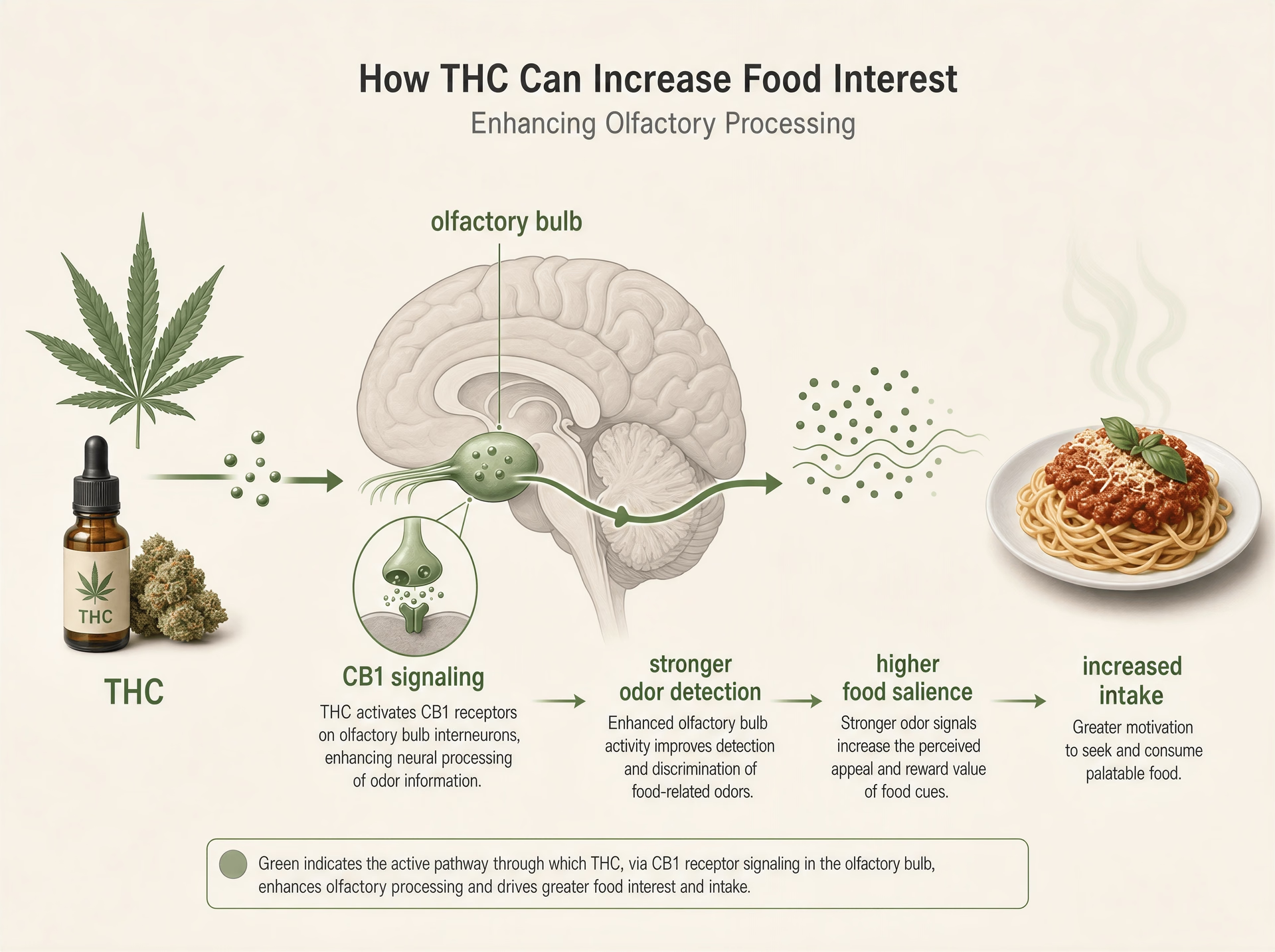
Why smell and taste become more salient after THC
A major reason food becomes more appealing after THC is sensory, not just endocrine. This point is often missed.
Koch et al. in Nature Neuroscience in 2011 showed that cannabinoid signaling can enhance odor detection and olfactory-driven feeding in mice. CB1 receptor activation increased activity in the olfactory bulb and improved sensitivity to food odors, which in turn increased food intake. Block the olfactory effect, and the hyperphagia weakened. That is a mechanistic clue with real explanatory power.
Food is never only calories. It is odor plumes, flavor anticipation, memory, texture prediction, and learned reward. If THC sharpens the salience of smell, then ordinary foods can suddenly seem worth pursuing. The sensory world gets biased toward eating.
Taste may also become more rewarding through interactions between cannabinoid, opioid, and dopamine systems in forebrain and brainstem circuits. Human evidence is thinner than the animal olfaction literature, but it fits subjective reports and laboratory feeding data: sweet, salty, and highly palatable foods often gain value after cannabis. The point is not that THC literally changes the stomach first. It changes how the brain samples the food environment.
That is the real neurobiological picture. THC-driven appetite is credible because it recruits overlapping systems at once: endocannabinoid energy sensing, hypothalamic integration, mesolimbic reward, and enhanced sensory processing. Once claims move beyond that core mechanism into strain folklore, terpene appetite hacks, or blanket promises for serious wasting disorders, the evidence thins fast.
How THC actually drives hunger
The “munchies” are not just a joke or a one-line explanation about the hypothalamus. THC has a fairly well mapped appetite mechanism, and it spans homeostatic feeding circuits, reward valuation, smell, and peripheral metabolism. That is why the effect is real, reproducible, and still easy to oversimplify.
Partial agonism at CB1 and downstream signaling
THC is a partial agonist at the cannabinoid type 1 receptor, CB1. That matters. It does not simply flip appetite on at full force in every tissue. It binds CB1 with enough efficacy to shift signaling in neurons that regulate feeding, but the size and direction of the effect depend on receptor density, endogenous cannabinoid tone, dose, and prior exposure.
CB1 is a Gi/o-coupled G protein-coupled receptor. When THC activates it, the receptor generally inhibits adenylyl cyclase, lowers cAMP, alters ion channel activity, and suppresses neurotransmitter release at many synapses. In feeding circuits, this changes the balance of excitatory and inhibitory signaling in ways that favor food seeking and food consumption. The hypothalamus is part of that story, but not the whole story.
In the arcuate nucleus and lateral hypothalamus, CB1 signaling interacts with neurons involved in energy sensing and meal initiation. One of the more interesting findings came from Farrimond and colleagues in Nature in 2015: THC activated pro-opiomelanocortin, or POMC, neurons, a cell population usually linked with satiety, yet under cannabinoid exposure these neurons promoted feeding through beta-endorphin release. That helped explain a long-standing paradox. THC does not merely stimulate “hunger neurons.” It can reprogram the output of cells that normally signal the opposite.
Reward circuits matter too. CB1 receptors are widely expressed in corticolimbic pathways that shape how rewarding food feels, especially palatable food rich in sugar or fat. Human laboratory work by Foltin, Haney, and colleagues found that cannabis increased caloric intake and often shifted intake toward snack foods and sweets under controlled inpatient conditions. That fits the common lived experience, but the mechanism is not mystical. THC can increase the incentive value of food.
Smell also gets folded into the appetite effect. Koch et al. showed in Nature Neuroscience in 2011 that endocannabinoid signaling in olfactory circuits can enhance odor detection and drive food intake in mice. In plain terms, food may smell stronger and more attractive after THC. Appetite is not only about stomach signals. It is also about sensory salience.
Interactions with ghrelin, leptin, and metabolic hormones
THC-driven hunger sits in a hormonal environment. Ghrelin, often called an orexigenic hormone, rises before meals and promotes food seeking. Leptin generally signals stored energy sufficiency and suppresses intake. Insulin, peptide YY, GLP-1, and other peripheral signals also feed back to the brain. CB1 signaling intersects with this endocrine traffic rather than replacing it.
Preclinical work suggests THC and endocannabinoid signaling can amplify ghrelin-linked feeding responses, especially through hypothalamic and vagal pathways. There is also evidence that leptin and the endocannabinoid system regulate one another. Low leptin states tend to be associated with higher hypothalamic endocannabinoid tone, while leptin can reduce endocannabinoid levels. That creates a biologically plausible route by which CB1 activation pushes the system toward eating when energy availability is low or perceived as low.
The relationship is not linear in every person. Obesity, insulin resistance, sex differences, sleep status, and prior cannabis exposure can all change the hormonal backdrop. Some studies in chronic users find altered fasting ghrelin or insulin patterns; others do not show a clean signal. So the strong claim is this: THC clearly interfaces with metabolic hormones, but the acute appetite effect is easier to demonstrate than any single uniform endocrine signature in humans.
Peripheral CB1 receptors may contribute as well. Endocannabinoid signaling in the gut, liver, and adipose tissue influences gastric motility, lipogenesis, glucose handling, and nutrient partitioning. Those effects help explain why appetite changes are not purely psychological. Still, the biggest acute “I want to eat now” effect appears to come from central CB1-mediated changes in motivation, sensory processing, and hypothalamic output.
Dose, route of administration, and timing effects
Why inhaled and oral THC feel different
- Inhaled THC Reaches the brain quickly, so appetite effects can begin within minutes.
- Early peak Hunger and food interest are often strongest over the next hour or two after inhalation.
- Oral absorption Edibles are slower and less predictable because THC passes through the gut and liver first.
- Active metabolite First-pass metabolism produces 11-hydroxy-THC, which can prolong or reshape the appetite effect.
- Late redosing risk Because oral effects are delayed, people may misread the timeline and take more before the full effect arrives.
Route changes the timeline. Inhaled THC reaches the brain quickly, so appetite effects often track the rapid psychoactive rise: onset within minutes, strongest over the next hour or two, then tapering. Oral THC is slower and less predictable because it passes through the gut and liver first. That first-pass metabolism produces 11-hydroxy-THC, an active metabolite that crosses into the brain efficiently and can prolong or reshape the experience.
That is why an edible may not trigger hunger on the same clock as inhaled cannabis. The delay can be substantial, and the later peak may be stronger or more sustained. People often describe inhaled THC as producing an earlier burst of food interest, while oral THC can create a delayed but lingering appetite effect. Pharmacokinetically, that makes sense.
Dose matters, and the response can be biphasic. Low to moderate THC doses often increase appetite. Higher doses can do the opposite in some people by producing anxiety, dizziness, dysphoria, or sedation that suppresses the desire to eat. Interindividual variability is huge. Genetics, sex, body fat, baseline appetite, tolerance, meal timing, and whether food cues are present all shape the outcome. This is one reason blanket claims about specific products “always” causing hunger are weak.
Tolerance: why the munchies can fade in frequent users
Frequent exposure changes CB1 signaling. Repeated THC use leads to receptor desensitization and downregulation, especially in brain regions rich in CB1. The receptor is still there, but it responds less. That is the basic reason the munchies often fade in regular users even when cannabis exposure continues.
Tolerance does not develop evenly across all effects, and it may reverse with abstinence. Imaging and molecular studies suggest CB1 availability can recover after sustained non-use, which matches the common report that appetite stimulation becomes more noticeable again after a break. Chronic users may still eat more in some settings, but the acute hyperphagic punch is often blunted.
This matters clinically and behaviorally. In selected wasting syndromes, THC can stimulate appetite, as seen in the classic AIDS trial by Beal et al. in 1995, where appetite increased in 38% of dronabinol-treated patients versus 8% on placebo. But tolerance and endpoint selection matter. In cancer cachexia, benefits are less impressive than folklore suggests; Jatoi et al. in 2002 found megestrol outperformed dronabinol for appetite and weight gain. So yes, THC can drive hunger. It just does so through identifiable CB1 biology, with timing, dose, and tolerance setting the limits.
Other cannabinoids and appetite: THC is not the whole story
THC dominates the appetite conversation for a reason: the evidence base is much stronger for THC than for any other cannabinoid. But that does not mean every cannabinoid acts like THC, or even pushes eating in the same direction. That assumption is wrong often enough to distort both consumer expectations and clinical discussions.
CBD: why it does not behave like THC
CBD is the clearest example of why “all cannabinoids cause the munchies” fails. It does not act as a CB1 partial agonist the way THC does, so it does not reproduce the classic THC appetite phenotype driven by hypothalamic signaling, reward salience, and sensory enhancement. CBD’s pharmacology is broader and less direct at CB1, with effects that can modulate endocannabinoid tone and alter the impact of THC rather than mimic it.
In human clinical settings, purified CBD is often linked with reduced appetite, not increased hunger. That is not a fringe finding. The FDA label for Epidiolex, the purified CBD product studied in Lennox-Gastaut and Dravet syndromes, lists decreased appetite among common adverse reactions, occurring in at least 10% of patients in pivotal trials. Weight loss has also been reported in those datasets. Those are not appetite-stimulation signals.
This does not prove CBD is an anti-obesity drug. It does show that purified CBD is not an appetite stimulant in the THC sense. The distinction matters because mixed cannabis products can contain both THC and CBD, and users often attribute the full experience to “cannabis” in general. In reality, CBD may blunt, reshape, or otherwise modify THC-linked effects in some contexts. It is better understood as a possible modulator than as a hunger trigger.
That difference also tracks with clinical observation. THC-based medicines such as dronabinol have been studied for appetite stimulation in HIV/AIDS wasting, with classic results like Beal et al. 1995 showing increased appetite in 38% of treated patients versus 8% on placebo. CBD does not have a parallel record.
THCV: the appetite-suppression claim under scrutiny
THCV has attracted outsized attention because it can behave differently from THC at CB1 receptors. At low doses, THCV is generally described as a CB1 antagonist or neutral antagonist; at higher doses, its behavior may shift, which already makes simple public claims suspect. If THC tends to activate CB1 and promote feeding, then a compound that blocks or dampens CB1 signaling could, in theory, reduce appetite. That is the biological logic behind the “diet weed” narrative.
The problem is that the human evidence does not justify that slogan.
Preclinical studies, including work by Wargent and colleagues, suggested possible metabolic effects and generated interest in THCV for glucose regulation and weight-related outcomes. But animal data are not enough. In the often-cited randomized study by Jadoon et al. in Diabetes Care (2016), THCV was investigated in patients with type 2 diabetes. The study found some metabolic signals, but not the clean appetite suppression or body-weight reduction story implied by marketing. Human findings have been mixed, small, and far from definitive.
There is also a mechanistic caution here. Appetite is not just one switch. THC-related eating involves hedonic circuits, olfactory enhancement, hypothalamic pathways, and peripheral signals. A compound with partial or dose-dependent CB1 antagonism may affect one node without producing a clear, durable reduction in real-world food intake. That helps explain why catchy THCV claims outran the data so quickly.
THCV is not established as a reliable appetite-reducing cannabinoid in humans. Preliminary evidence
So the sober reading is this: THCV is pharmacologically interesting, and appetite suppression remains plausible enough to study. It is not established as a reliable appetite-reducing cannabinoid in humans.
CBN: preclinical signals, thin human evidence
CBN is another case where internet reputation has outpaced the literature. It is widely talked about as sedating and sometimes as appetite-enhancing, but the support for those claims is thin, especially in humans.
Some preclinical work has pointed toward increased feeding. Farrimond and colleagues, in rodent studies examining cannabinoid effects on food intake, reported signals consistent with orexigenic effects for CBN, particularly when compared with CBD. That is interesting. It is not the same as proof in patients or even healthy adult volunteers.
Human clinical evidence for CBN and appetite is sparse to near-absent. There are no strong randomized human trials showing that CBN meaningfully improves appetite, increases caloric intake, or helps with cachexia or wasting syndromes. Given how often CBN is discussed in wellness circles, that gap is striking.
For now, CBN should be treated as a low-certainty area: some animal data, weak translational support, and no firm basis for clinical confidence.
Minor cannabinoids and the limits of current data
Beyond CBD, THCV, and CBN, the appetite literature becomes patchy fast. CBC, CBG, delta-8-THC, and other minor cannabinoids are often assigned clear metabolic or hunger-related personalities in public-facing content. Usually the evidence is indirect, preclinical, or confounded by co-administration with THC.
That matters because appetite is one of the easiest areas for folklore to fill empty space. A person uses a multi-cannabinoid product, feels hungry or not hungry, then assigns causality to a single acronym. Without controlled human studies, those inferences are weak. The same caution applies to terpene claims such as humulene as appetite-suppressing or myrcene as appetite-supportive; those stories rely far more on extrapolation than on cannabis-specific feeding trials.
| Compound or class | Direction of appetite effect in article | Support level described | Key caveat |
|---|---|---|---|
| THC | Often increases appetite | Strongest mechanistic and human evidence | Dose, route, and tolerance change the effect |
| CBD | Often not appetite-stimulating; decreased appetite seen in purified trials | Moderate clinical signal for reduced appetite in purified CBD use | Should not be treated as THC-like |
| THCV | Possible appetite suppression is plausible but unproven | Mixed and limited human evidence | "Diet weed" claims outrun the data |
| CBN | Appetite-enhancing claims remain uncertain | Mostly preclinical, thin human evidence | No firm clinical basis |
| Terpenes | Unclear and not reliable | Weak for controlled human cannabis feeding outcomes | Marketing often exceeds evidence |
The bottom line is narrower than the culture suggests. THC has the strongest evidence for appetite stimulation, with biologically plausible CB1-linked mechanisms and some clinical utility in selected wasting syndromes, even if cancer cachexia results are mixed and often overstated. CBD does not behave like THC and is often associated with decreased appetite in purified form. THCV may oppose CB1 signaling at low doses, but the “diet weed” label is ahead of the evidence. CBN has preclinical hints and little more.
The uncertainty signal should be explicit: once you move beyond THC, the appetite evidence becomes much thinner. This remains a THC-dominant field.
Do terpenes influence appetite, or is that mostly marketing?
Short answer: mostly marketing, with a small amount of biologic plausibility. The appetite effect people reliably notice from cannabis is still best explained by THC, not by terpene labels. THC has direct evidence behind it, from animal work on hypothalamic and reward circuits to controlled human laboratory feeding studies by Foltin, Haney, and colleagues, where cannabis increased caloric intake and sweet snack consumption. Terpenes sit on much shakier ground.
The terpene-appetite claims consumers hear most often
The common script is familiar. Humulene is said to “suppress appetite.” Myrcene and limonene are said to “support appetite” or make food seem more appealing. Beta-caryophyllene is sometimes framed as indirectly helpful for appetite through inflammation control, especially in people whose low intake is tied to pain or gut irritation.
Those claims are not impossible. They are just far less proven than the internet suggests. A terpene can have pharmacology without producing a predictable appetite outcome when inhaled or ingested as part of a cannabis product. Dose matters. Route matters. The amount that reaches circulation matters. Most of all, THC often overwhelms the conversation because its CB1-mediated feeding effects are much stronger and much better documented.
That distinction gets lost when strain descriptions pretend terpene profiles function like precise appetite switches. They do not.
Humulene, limonene, myrcene, and caryophyllene
Humulene is the most cited “anti-munchies” terpene. The problem is that the evidence usually points back to preclinical or non-cannabis literature, not controlled human cannabis trials. There is not a solid body of human data showing that humulene-rich cannabis reliably reduces food intake or blunts THC-driven hunger.
Limonene and myrcene get the opposite treatment. Limonene is often linked to mood elevation and digestive comfort; myrcene to sedation and bodily relaxation. From that, marketers often jump to “better appetite.” That is a hypothesis, not a clinical finding. A relaxed person may eat more. Someone who smells citrus may find food more appealing. Neither point proves that limonene- or myrcene-dominant cannabis raises appetite in a reproducible way.
Beta-caryophyllene is the most mechanistically interesting of the group because it interacts with CB2 rather than CB1. That makes inflammation pathways a plausible route by which it could support eating in some settings. But plausible is doing a lot of work here. CB2-related anti-inflammatory effects are not the same thing as a demonstrated orexigenic effect in humans.
What has not been shown in controlled human cannabis trials
What has not been shown is the part consumers need to hear clearly: common cannabis terpene profiles have not been proven to reliably increase or suppress appetite in humans under controlled conditions. There are no widely accepted clinical data showing that a humulene-rich product predictably curbs hunger, or that limonene-, myrcene-, or caryophyllene-heavy profiles function as dependable appetite tools.
That absence matters because true appetite therapeutics have to clear a higher bar. THC at least has one. In HIV/AIDS wasting, Beal et al. in 1995 found appetite increased in 38% of patients on dronabinol versus 8% on placebo. Even then, the evidence is indication-specific and weaker in cancer cachexia, where Jatoi et al. in 2002 found megestrol outperformed dronabinol for appetite and weight gain. Terpenes are nowhere near that level of evidence.
So yes, terpene hypotheses are reasonable in some cases. No, the current data do not justify treating terpene charts as clinically grounded appetite maps.
Clinical uses for appetite stimulation
The clinical question is narrower than the stereotype. A drug can make someone feel hungrier without meaningfully increasing calories, body weight, lean mass, strength, or survival. In wasting syndromes, that distinction matters a lot. “Appetite stimulation” is a symptom endpoint. Cachexia and wasting are body-composition and function problems.
THC has a real biologic basis for increasing hunger. That part is not folklore. CB1 activation affects hypothalamic feeding signals, reward salience, smell, and food palatability, with mechanistic work from groups including Koch and Farrimond helping explain why eating can increase under cannabinoid exposure. Human laboratory studies by Foltin, Haney, and colleagues also showed increased caloric intake, especially snack foods and sweets, under controlled conditions. But once the discussion moves from “people may want to eat more” to “patients regain meaningful weight and function,” the evidence becomes much less generous.
HIV/AIDS wasting syndrome
Historically, HIV/AIDS is the clearest medical setting where THC-based treatment for appetite had a plausible and partially supported role. Before current antiretroviral therapy changed the natural history of HIV, involuntary weight loss and wasting were common, distressing, and prognostically serious. Patients did not just need more hunger. They needed enough intake to slow weight loss, maintain strength, and preserve quality of life.
The classic trial here is Beal et al., published in 1995 in the Journal of Pain and Symptom Management. In that placebo-controlled study, dronabinol improved appetite in 38% of treated patients versus 8% on placebo. Mood also improved. Those results are why dronabinol still appears in discussions of HIV-associated anorexia. The signal was clinically meaningful at the symptom level: some patients felt more like eating, and some felt better overall.
Still, the Beal trial did not settle everything. Appetite improvement is not the same as reversing wasting. Weight effects across the HIV literature were more variable than many summaries imply, and studies were often small. A Cochrane review on cannabinoids for HIV/AIDS, commonly cited in its 2013 update of earlier reviews, judged that dronabinol could increase appetite but found limited evidence for consistent weight gain or other major clinical outcomes because of heterogeneity and sample-size limits.
That is the right way to frame the evidence. Dronabinol may help selected patients with anorexia related to HIV/AIDS. The support is real but modest. It is stronger for subjective appetite than for hard nutritional endpoints. Evidence for increases in lean body mass is especially thin. Even when body weight rises, that does not automatically mean muscle mass, physical function, or metabolic recovery improved.
Older studies and clinical experience also included smoked cannabis, which some patients reported as helpful for appetite and nausea. But translating those reports into clean evidence is difficult because route of administration, dose, prior exposure, psychoactive effects, and coexisting symptoms all vary. For an educational review, the cautious statement is the accurate one: THC-based approaches can improve appetite in some patients with HIV/AIDS wasting, yet the literature does not support overselling them as a reliable way to restore body composition.
Cancer cachexia and why the evidence is mixed
Cachexia Cachexia is a multifactorial wasting syndrome marked by inflammation, altered metabolism, and loss of weight and muscle; improving appetite alone does not necessarily reverse it.
Cancer cachexia is harder. Much harder. It is not simply “low appetite.” It is a multifactorial syndrome involving systemic inflammation, altered metabolism, muscle wasting, fatigue, and reduced treatment tolerance. That biology helps explain why a drug that increases the desire to eat may still fail to produce major weight or lean-mass benefits.
The key trial here is Jatoi et al., published in Journal of Clinical Oncology in 2002. In 139 patients with cancer-related anorexia-cachexia syndrome, megestrol acetate outperformed dronabinol on headline outcomes. Appetite improvement occurred in 75% of patients on megestrol versus 49% on dronabinol. At least 10% baseline weight gain occurred in 11% versus 3%. Those numbers sharply limit any claim that cannabinoids are the leading pharmacologic option for cancer cachexia.
This trial matters because it pushed back against inflated expectations. THC can stimulate appetite. That does not mean it can overcome the inflammatory and catabolic drivers of cachexia as effectively as clinicians once hoped. Later reviews and evidence syntheses have generally landed in the same place. Cannabinoids may improve appetite in some cancer patients, and some patients report better food enjoyment or less distress around eating, but superiority on major weight endpoints is not established. Quality-of-life results are also inconsistent.
That does not make the treatment useless. It means the target should be defined properly. A patient with advanced cancer who says, “Food tastes better and I can manage a few meals now,” may have experienced a real benefit even if the scale barely changes. Yet clinicians should not confuse that symptom relief with reversal of cachexia. Lean body mass, function, and trajectory of disease-related wasting often remain largely unchanged.
The evidence is mixed for another reason: trials differ in cancer type, stage, baseline inflammation, concurrent chemotherapy, nausea burden, and comparator drugs. Appetite is also subjective. Weight is easier to count, but even weight is crude if fluid shifts or edema are present. Lean body mass, the endpoint many people actually care about, is measured less often and improved less convincingly.
Approved cannabinoid medicines and off-label reality
The regulatory picture is narrower than public discussion suggests. In the United States, dronabinol is a synthetic form of delta-9-THC and has long been approved for anorexia associated with weight loss in patients with AIDS, as well as for chemotherapy-induced nausea and vomiting in selected cases. Nabilone, a synthetic cannabinoid with THC-like effects, is approved for chemotherapy-related nausea and vomiting, not as a general appetite drug.
That matters because approval for one symptom context does not automatically transfer to another. Using dronabinol in a patient with advanced cancer primarily to try to improve appetite may occur in practice, but that is part of the off-label reality of medicine, not proof that the evidence is equally strong across indications. The same caution applies outside the US, where product availability and formal indications differ.
CBD should not be folded into this conversation as if all cannabinoids do the same thing. They do not. Purified CBD has been associated with decreased appetite in regulatory trials such as those supporting Epidiolex. THCV has been studied for metabolic effects and does not support simplistic “diet weed” claims. CBN is often talked about as appetite-promoting, but human evidence is thin. For clinical appetite stimulation, the evidence base is overwhelmingly about THC or THC-like medicines.
Where cannabinoids may fit in palliative care
Palliative care is where a more realistic role emerges. Not as a cure for cachexia. Not as a proven way to rebuild muscle. As a possible symptom-directed option in selected patients, especially when anorexia sits alongside nausea, food aversion, low mood, or distress around eating.
Here the endpoint may be comfort rather than kilograms. If a patient eats a little more, enjoys food again, feels less nauseated, and has an easier time with social meals, that can matter even if measurable weight gain is limited. Palliative care often values exactly those outcomes. The tradeoff is that psychoactive adverse effects, dizziness, sedation, anxiety, and cognitive impairment may be poorly tolerated in frail patients.
So the balanced position is straightforward. THC-based medicines have a legitimate, evidence-based place in appetite stimulation for some patients, strongest historically in HIV/AIDS wasting and weaker in cancer cachexia. They may improve appetite and sometimes food intake. They are not clearly reliable treatments for major weight gain, lean body mass restoration, or reversal of cachexia. Any discussion that blurs those endpoints is overstating what the data show.
Risks, chronic overconsumption, and the obesity question
THC-driven hunger is real. That does not mean cannabis straightforwardly causes obesity, and it does not mean the risks are trivial. Both mistakes show up constantly in consumer writing. With cannabis use now counted in the hundreds of millions globally — 228 million users in 2022 by UNODC, 61.8 million past-year users in the United States in 2023 by SAMHSA, and 22.8 million adults in the EU by EMCDDA reporting — even a modest effect on eating behavior matters at population scale.
Acute overeating versus long-term body-weight outcomes
Short-term intake is the easier part of the story. Controlled laboratory studies by Foltin, Haney, and colleagues repeatedly found that cannabis increases caloric intake, especially snack foods, sweets, and other highly palatable items. That fits the biology. THC is a partial CB1 agonist, and appetite effects are not confined to a simple “hypothalamus switch.” Work by Koch et al. in Nature Neuroscience (2011) linked CB1 signaling to enhanced olfactory processing and greater food intake in mice. Farrimond et al. and related preclinical studies added another piece: cannabinoid effects can recruit hypothalamic circuits in a way that amplifies feeding rather than satiety. Reward salience rises. Smell gets sharper. Food becomes harder to ignore.
That can translate into binge-like eating in some users, especially when ultra-processed foods are easy to access. Poor dietary quality is a real concern even when body weight does not immediately rise. Someone can remain weight-stable while shifting toward more late-night snacking, larger portions, and more sugar-dense foods. Those changes still matter for cardiometabolic health.
Long-term weight outcomes are less clean. Many observational studies have reported lower average BMI or lower obesity prevalence among cannabis users than non-users. That finding gets recycled online as if cannabis protects against obesity. The evidence does not justify that claim. Lower average BMI in a cross-sectional dataset is not proof of a beneficial metabolic effect, just as short-term overeating is not proof of inevitable weight gain.
Why epidemiology on cannabis and obesity looks contradictory
Why cannabis-obesity epidemiology can look inconsistent
- Age confounding Cannabis-using groups in surveys are often younger and therefore may have lower average BMI for reasons unrelated to cannabis.
- Nicotine co-use Tobacco use can suppress appetite and distort weight comparisons between users and non-users.
- Exposure misclassification Self-reported cannabis use rarely captures dose, THC content, route, or product composition well.
- Tolerance and adaptation Chronic exposure may not produce the same feeding response seen in acute laboratory studies.
- Reverse causation People with obesity or metabolic disease may change cannabis use patterns, making cause-and-effect harder to infer.
The contradiction is mostly a study-design problem. Cross-sectional epidemiology is vulnerable to confounding, and cannabis users often differ from non-users in ways that affect body weight.
Age structure is a big one. Cannabis users in many surveys skew younger, and younger adults tend to have lower BMI than older adults. Nicotine co-use is another likely source of distortion; tobacco use suppresses appetite and is more common in some cannabis-using groups. Use pattern matters too. Someone using high-THC products daily may not resemble an occasional social user, but many datasets lump them together.
Reverse causation is plausible. People with obesity, metabolic disease, or health-conscious behavior changes may reduce or avoid cannabis use, while leaner groups may be overrepresented among current users. There is also the possibility of metabolic adaptation. Chronic cannabinoid exposure may not produce the same feeding response as acute exposure, and tolerance to some subjective and behavioral effects can emerge. Daniele Piomelli, Giovanni Marsicano, and others working on endocannabinoid signaling and energy balance have long argued that feeding, reward, and metabolism are linked but not reducible to a single pathway.
Then there is measurement. Self-reported cannabis exposure is imprecise. Product composition varies. Dose is rarely known. Route matters. THC is not CBD, and CBD should not be folded into the “munchies” narrative at all; decreased appetite is a common adverse event in purified CBD trials, including Epidiolex studies. THCV is another example of hype outrunning evidence. Human data, including Jadoon et al. in Diabetes Care (2016), do not support simplistic claims that THCV is a reliable appetite suppressant or “diet” cannabinoid.
Cannabis use disorder, cue-driven eating, and vulnerable groups
The strongest warning signal is not a neat obesity curve. It is compulsive use plus maladaptive eating. SAMHSA estimated that 19.8 million Americans aged 12 or older had marijuana use disorder in 2023, and NIDA states that about 3 in 10 people who use cannabis develop cannabis use disorder, with higher risk in earlier and heavier users. In that setting, appetite effects can become part of a larger reinforcement loop: cannabis cues trigger craving, craving triggers use, and use heightens reward-driven eating.
That pattern may be especially risky for adolescents, whose reward systems and executive control are still developing, and for people with binge-eating symptoms or eating disorders. Cannabis is not established treatment for anorexia nervosa, binge-eating disorder, or obesity. In vulnerable groups, it may worsen loss of control around food rather than help.
So the balanced read is this: acute THC exposure can increase food intake and favor palatable foods, but long-term obesity risk is not settled by the existing observational literature. Real harms still exist — poor diet quality, binge-like eating, dependence, and extra concern in younger users and those with disordered eating. The appetite effect is biologically solid. The obesity story is not.
What current research is trying to answer
The next phase of appetite research is less about proving that THC can make people hungry and more about defining when that effect is medically useful, when it is too weak to matter, and how to separate feeding support from intoxication, sedation, and overuse risk. That matters at scale. UNODC estimated 228 million cannabis users worldwide in 2022, EMCDDA put last-year use in the EU at 22.8 million adults, and SAMHSA estimated 61.8 million Americans used marijuana in 2023. Appetite effects are not a niche side story.
Precision medicine: who responds to cannabinoid appetite stimulation
The central clinical question is not “does THC stimulate appetite?” It does, often enough to be biologically and therapeutically credible. The real question is which patients actually benefit.
Historical data already hint that response depends on disease context. In AIDS wasting, Beal et al. 1995 found appetite increased in 38% of dronabinol-treated patients versus 8% on placebo. In cancer cachexia, the picture is less impressive. Jatoi et al. 2002 reported appetite improvement in 49% with dronabinol, but megestrol acetate reached 75%, with better weight gain as well. That is a direct warning against loose claims that THC is a general answer for all wasting states.
Current research is trying to identify predictors of response: baseline inflammation, nausea burden, taste alteration, depression, concurrent opioid use, prior cannabis exposure, and frailty phenotype. Researchers also want to know what THC:CBD ratio gives enough hunger stimulation without producing unacceptable dizziness, anxiety, cognitive impairment, or dysphoria. CBD is not a simple helper here; purified CBD trials have repeatedly listed decreased appetite as a common adverse event. So the popular idea that “more cannabinoids” will automatically support eating is not supported.
A precision approach also has to account for misuse liability. NIDA states that about 3 in 10 people who use cannabis develop cannabis use disorder, and SAMHSA estimated 19.8 million Americans met criteria for marijuana use disorder in 2023. For some patients, especially those with chronic cue-driven overeating or heavy prior use, appetite stimulation may come with a cost.
Mechanistic research on hypothalamic and sensory pathways
Mechanism work has moved well beyond the cartoon version of the munchies. THC is a partial agonist at CB1 receptors, but the frontier is mapping which CB1-linked circuits produce beneficial feeding and which produce intoxication or metabolic harm.
Farrimond and colleagues showed in 2015 that THC can act on hypothalamic pro-opiomelanocortin neurons in a paradoxical way, shifting output toward beta-endorphin signaling that promotes feeding rather than satiety. Koch et al. 2011 showed that cannabinoid signaling also amplifies olfactory processing in mice, helping explain why food smells stronger and becomes more salient after THC exposure. Human laboratory studies by Foltin, Haney, and colleagues support the behavioral side of that model: cannabis reliably increases snack intake, especially sweet foods, under controlled conditions.
Researchers are now testing whether appetite can be uncoupled from intoxication. That includes dose-finding with low-dose THC, combinations with CBD, and interest in non-THC cannabinoids such as THCV, though human data do not support simple “diet cannabinoid” claims. Terpene folklore remains well behind the evidence.
Trials needed in cachexia, geriatric nutrition, and metabolic disease
The field needs better randomized trials, not more strain mythology. Cachexia studies should use validated endpoints: actual caloric intake, lean body mass, physical function, symptom burden, and caregiver-rated eating, not just a single appetite score. Older adults are another major gap. Cannabinoids might help some people with anorexia of aging, taste loss, or multimorbidity, but sedation, falls, orthostasis, and cognitive effects are obvious concerns.
Metabolic disease raises the hardest question. Can appetite support be targeted to undernourished patients without worsening obesity, insulin resistance, or compulsive eating in others? That answer is still missing. The research frontier is clear: identify responders, define safe THC-dominant formulations, and prove clinically meaningful nutritional benefit rather than assuming the munchies are medicine.
References
- [1] World Drug Report 2024. UNODC, 2024. https://www.unodc.org/unodc/en/data-and-analysis/wdr2024.html
- [2] European Drug Report 2024: Trends and Developments. EUDA, 2024. https://www.euda.europa.eu/publications/european-drug-report/2024_en
- [3] 2023 National Survey on Drug Use and Health: Detailed Tables. SAMHSA, 2024. https://www.samhsa.gov/data/report/2023-nsduh-detailed-tables
- [4] Efficacy and safety of cannabidiol and tetrahydrocannabivarin on glycemic and lipid parameters in patients with type 2 diabetes. Diabetes Care, 2016. https://doi.org/10.2337/dc15-0650
- [5] Dronabinol as a treatment for anorexia associated with weight loss in patients with AIDS. Journal of Pain and Symptom Management, 1995. https://pubmed.ncbi.nlm.nih.gov/7730690/
- [6] A comparison of megestrol acetate and dronabinol versus megestrol acetate alone for the treatment of cancer-associated anorexia. Journal of Clinical Oncology, 2002. https://doi.org/10.1200/JCO.2002.08.059