













Why cannabis and depression is such a difficult question
Cannabis and depression is hard to answer because two different questions get blurred together almost immediately. The first is, “Can cannabis make a distressed person feel better right now?” The second is, “Does cannabis treat depressive illness over time?” Those are not the same question, and the evidence does not point to the same answer.
The short-term part is easy to understand. Some people use cannabis and feel relief within minutes or hours: less agitation, less emotional pain, easier sleep, less rumination, sometimes even a temporary return of pleasure or interest. That immediate shift makes the antidepressant claim feel believable. It is also biologically plausible. Ken Mackie’s work and later reviews by Lu and Mackie describe CB1 receptors as densely expressed in mood-related brain regions including the prefrontal cortex, hippocampus, amygdala, basal ganglia, and cingulate circuits. Those are not trivial locations. They are central to stress response, reward, fear learning, and emotional regulation.
But depression is not just a bad night or a bad week. Major depressive disorder is defined by syndromes that persist, recur, and alter functioning over weeks to months. Depressive symptoms can exist without meeting full MDD criteria. Bipolar depression is a different clinical problem again, because the same person may also be vulnerable to mania or hypomania. Then there is anhedonia, the loss of pleasure, which matters because cannabis can briefly increase reward signaling while potentially worsening motivation or reward sensitivity with repeated heavy use. Comorbid anxiety complicates things further, since some users feel calmer while others become more anxious or panicky.
That is the core position of this article: acute relief is real for some people, durable antidepressant efficacy is unproven, and long-term risk is not evenly distributed. It clusters around frequent use, high-THC exposure, adolescent initiation, cannabis use disorder, and bipolar vulnerability.
Why people with depression often turn to cannabis before they turn to treatment
This pattern is not hard to explain. Depression is common, treatment access is uneven, and standard care can be slow. The World Health Organization estimates that 280 million people globally live with depression. In the United States, the NIMH estimated 21.0 million adults had at least one major depressive episode in 2021, or 8.3% of all adults. At the same time, cannabis use is widespread: SAMHSA reported 61.8 million Americans aged 12 or older used marijuana in the past year in 2023.
If someone feels numb, wired, ashamed, unable to sleep, and stuck on a waitlist, a substance that can change mood tonight has obvious appeal. No referral needed. No intake process. No weeks waiting for an SSRI to show whether it will help. That matters in real life.
The neurobiology also makes self-medication feel rational. Endocannabinoid signaling is involved in stress adaptation and emotional learning. Preclinical research summarized by Mayo et al. and by Beat Lutz, Cecilia Hill, and colleagues has repeatedly linked chronic stress states to reduced anandamide signaling in corticolimbic regions. FAAH, the enzyme that breaks down anandamide, becomes relevant here because inhibiting FAAH often produces antidepressant-like effects in rodent models. That sounds promising. It is also exactly where people can overread the science. A rodent stress model is not proof that human depression is an anandamide deficiency syndrome, and it is not proof that inhaled high-THC cannabis fixes it.
Still, the appeal is easy to see. Cannabis can mute distress fast. For some people it reduces insomnia, quiets mental overactivity, and softens emotional pain. Others are trying to escape side effects from antidepressants, stigma around psychiatric treatment, cost barriers, or bad prior experiences with care. Some are not trying to “treat depression” in any formal sense. They are trying to get through the evening.
That does not make the strategy harmless. It makes it understandable.
The central mistake in public discussion: symptom relief is not the same as antidepressant effect
This is where public discussion usually goes wrong. A person says cannabis helped them eat, sleep, laugh, stop crying, or stop spiraling. All of that can be true. None of it proves an antidepressant effect in the clinical sense.
| Question | What it asks | What would count as support |
|---|---|---|
| Symptom relief | Did the person feel better right after use? | Short-term reductions in distress, insomnia, agitation, or rumination |
| Antidepressant effect | Did depressive illness improve over time? | Lower symptom burden, better function, fewer relapses, controlled trial evidence |
| Population prognosis | What happens with repeated use in real-world groups? | Longitudinal follow-up showing better rather than worse trajectories |
Cannabis has established antidepressant efficacy for major depressive disorder. Limited evidence
An antidepressant claim should mean improvement in the course of depressive illness: lower symptom burden over time, better functioning, fewer relapses, and ideally some evidence from controlled trials. Cannabis does not have that evidence for major depressive disorder. Not for smoked flower, not for high-THC products, and not for CBD-dominant products either.
THC is the main reason this distinction matters. Acute CB1 activation can transiently elevate mood and reduce negative affect in some users. It can also destabilize mood, increase anxiety, blunt motivation, impair reward processing, and contribute to cannabis use disorder. The population signal is not “cannabis causes depression in everyone.” It is closer to this: short-term relief is common enough to drive use, but ongoing use does not look antidepressant at the population level, and in vulnerable groups it may worsen trajectory.[3] Cannabis use and prospective long-term association with anxiety, depression, and sleep quality in a population-based study. Mammen G., et al.. Epidemiology and Psychiatric Sciences, 2018.
Two studies help anchor that point. In Mammen et al. (2018), reductions in cannabis use were associated with improvements in anxiety, depression, and sleep quality. If cannabis were functioning as a dependable antidepressant in the real world, that is not the pattern you would expect. Feingold, Rehm, Lev-Ran, and colleagues found that among adults who already had major depressive disorder at baseline, cannabis use was associated with increased depressive symptoms at follow-up. That does not prove cannabis causes every case to worsen. It does show that “it helps my mood” and “it improves my depression over time” are very different claims.
The same problem appears in CBD discussions, just in a cleaner-looking package. CBD has interesting mechanisms: 5-HT1A-related effects, indirect influence on endocannabinoid tone, and in animal work by Campos and others, prevention of stress-related reductions in hippocampal neurogenesis. But the leap from those preclinical findings to “CBD treats depression” is much larger than many articles admit. Randomized controlled trials of CBD for major depressive disorder are almost absent. That is not a minor gap. It is the gap.
What kind of evidence would actually answer the question
What a convincing depression trial would need
- Diagnose precisely Separate major depressive disorder from bipolar depression and analyze comorbid anxiety rather than lumping it together.
- Standardize the intervention Use fixed THC and CBD doses, known ratios, standardized routes, and meaningful treatment duration.
- Measure the right outcomes Track validated depression scales, anhedonia, sleep, functioning, suicidality, withdrawal, and whether benefits persist after stopping.
To answer whether cannabis treats depression, we would need studies designed around depressive illness rather than around immediate mood change. That means randomized controlled trials with clearly diagnosed populations: major depressive disorder separated from bipolar depression, with depressive symptoms and comorbid anxiety analyzed rather than lumped together.
The intervention would also have to be specific. “Cannabis” is too vague. Researchers would need fixed THC and CBD doses, known ratios, standardized routes of administration, and meaningful duration. A trial that shows a person feels calmer for three hours does not answer whether they are less depressed after twelve weeks. Outcomes should include validated depression scales, anhedonia measures, sleep, functioning, suicidality, withdrawal effects, and whether benefits persist after stopping.
That kind of evidence is scarce for several reasons. Regulation has long made cannabis research cumbersome. Products are heterogeneous. Psychoactive effects make blinding difficult. Depressed patients are not all the same, and exposing them to high-THC products for long periods raises ethical concerns if there is real risk of worsening anxiety, psychosis, mania, or dependence. Bipolar disorder is an especially serious problem here. The National Academies report noted near-daily cannabis use may be linked to greater bipolar symptoms than nonuse, so bipolar depression cannot simply be folded into general depression claims.[4] Association of Cannabis Use in Adolescence and Risk of Depression, Anxiety, and Suicidality in Young Adulthood. Gabriella Gobbi, et al.. JAMA Psychiatry, 2019.
Longitudinal cohort data are therefore doing much of the practical work for now. Those studies do not prove causality as cleanly as trials would, but they are highly informative about direction of risk. Gabriella Gobbi’s 2019 meta-analysis found adolescent cannabis use was associated with higher odds of later depression, suicidal ideation, and suicide attempt. Deborah Hasin’s epidemiology work showed cannabis use and cannabis use disorder rising in the United States, which matters because cannabis use disorder can itself produce sleep disruption, withdrawal dysphoria, and anhedonia that overlap with depression.
So the answer is difficult because the immediate experience can be honestly positive while the longer arc is uncertain or adverse. That tension is real. It should not be flattened into cheerleading or panic.
The endocannabinoid system and mood regulation
Endocannabinoid system A signaling system made up of endogenous cannabinoids, their receptors, and related enzymes that helps regulate stress responses, reward, memory, and emotional learning.
Depression sits at the intersection of stress, reward, memory, and threat processing, so it is not hard to see why the endocannabinoid system keeps coming up in this conversation. The brain’s own cannabinoid signaling network is active in exactly those circuits. That matters. It explains why cannabis can feel psychologically relevant to depressed mood. It does not, by itself, show that cannabis is an antidepressant.
Ken Mackie’s 2005 review remains a standard reference here: CB1 receptors are among the most abundant G-protein-coupled receptors in the brain, with especially high expression in cortex, hippocampus, amygdala, and basal ganglia. Lu and Mackie’s 2021 review updated the same broad picture and linked endocannabinoid signaling to affect regulation across corticolimbic networks. Those facts are the foundation for mechanistic plausibility. They are not clinical proof.

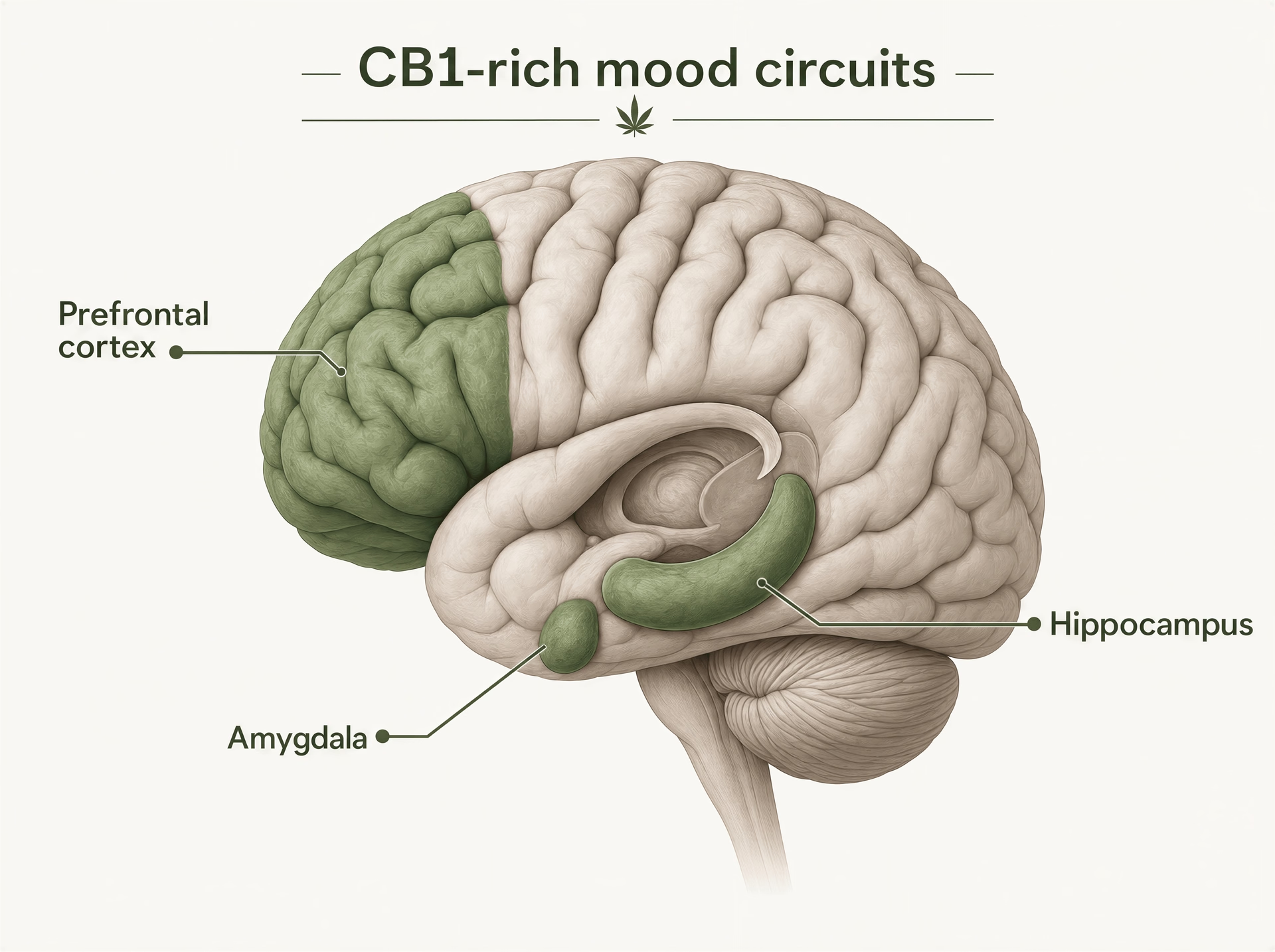
CB1 receptor density in the prefrontal cortex, hippocampus, and amygdala
Why these CB1-rich regions matter in depression
- Prefrontal cortex Supports cognitive control, planning, and regulation of automatic negative responses.
- Hippocampus Links stress, memory, context, and emotional learning.
- Amygdala Assigns salience, detects threat, and shapes fear-related emotional responses.
CB1 receptors are not sprinkled randomly across the brain. They are concentrated in regions that line up uncannily well with the symptom domains of depression.
The prefrontal cortex is one of them. This region supports cognitive control, decision-making, emotional regulation, attention shifting, and the ability to inhibit automatic negative responses. In depressive illness, those functions often degrade. Rumination hardens. Mental flexibility drops. Planning feels effortful. CB1 signaling in prefrontal circuits can influence how strongly top-down control is exerted over limbic responses, including stress and fear. When people say cannabis “takes the edge off,” part of what they are describing may be a temporary shift in this frontolimbic balance.
The hippocampus is another major CB1-rich region. It is central to memory formation, contextual processing, and the ability to distinguish past threat from present safety. Depression is not just sadness; it often includes biased recall, overgeneralized negative memory, and a stuck sense that painful emotional states will continue indefinitely. The hippocampus also appears repeatedly in stress research because chronic stress can impair plasticity there. Endocannabinoid signaling, especially through anandamide and 2-AG, affects synaptic plasticity in hippocampal circuits. That makes the system relevant to emotional memory and stress adaptation.
Then there is the amygdala. This structure assigns salience, detects threat, and helps encode fear-laden emotional meaning. In depression, especially when anxiety is mixed in, the amygdala can become part of a hypersensitive alarm network. CB1 signaling in and around the amygdala influences fear learning, fear extinction, and reactivity to aversive cues. If acute cannabis exposure reduces the intensity of those signals for some users, the appeal is obvious.
These three regions do not operate independently. Prefrontal cortex, hippocampus, and amygdala form a tightly connected circuit for emotional appraisal and regulation. Lu and Mackie described the endocannabinoid system as a modulator of this circuit rather than a simple on-off switch. That distinction matters. CB1 activation can dampen neurotransmitter release at many synapses, often serving as a feedback brake. Under normal conditions, this can help constrain excessive stress signaling. Under altered conditions, including chronic heavy exposure to external cannabinoids, the same system can become dysregulated.
This is where popular writing often slips into overstatement. High CB1 receptor density in mood circuits means cannabis has a route into those circuits. It does not mean inhaled or ingested cannabinoids will restore them to health. Distribution supports plausibility. It does not establish efficacy for major depressive disorder.
How endocannabinoid signaling shapes stress reactivity, reward, and emotional memory
The endocannabinoid system is best understood as a fine-tuning network. Neurons produce endocannabinoids such as anandamide and 2-arachidonoylglycerol on demand, often in response to activity or stress. These molecules travel backward across the synapse and bind presynaptic CB1 receptors, reducing release of neurotransmitters like glutamate or GABA depending on the circuit involved. That feedback function lets the system modulate intensity rather than simply driving emotion in one direction.
In stress biology, that braking role is especially important. Beat Lutz, Cecilia Hill, and others have argued for years that endocannabinoid signaling acts as a buffer against excessive stress responses. Animal work repeatedly shows that chronic stress can reduce anandamide signaling in corticolimbic regions, while manipulations that raise endocannabinoid tone often blunt stress-related behavioral changes. Mayo et al. in 2020 reviewed this literature and highlighted reduced anandamide and 2-AG signaling, stress-induced disruption of ECS function, and antidepressant-like effects of FAAH inhibition in rodent models.
FAAH Fatty acid amide hydrolase, the main enzyme that degrades anandamide and shortens its signaling.
Raising endocannabinoid tone through FAAH-related mechanisms is already proven to treat human depression. Preliminary evidence
FAAH is the enzyme that breaks down anandamide. In many preclinical studies, inhibiting FAAH raises anandamide levels and produces antidepressant-like or anxiolytic-like effects. That is one reason people sometimes talk about “anandamide deficiency” in depression models. The phrase is catchy, but it can mislead. Human depression is not simply a low-anandamide disorder waiting for cannabis to fix it. The preclinical signal is real; the clinical translation is incomplete.
Endocannabinoid signaling also intersects with reward processing. Acute CB1 activation can alter dopaminergic activity in reward circuits, which helps explain why THC can briefly produce relief, interest, pleasure, or emotional lightening in some users. For someone experiencing anhedonia, that effect can feel diagnostic: “if this lifts me, maybe I needed it.” But reward systems are highly sensitive to dose, frequency, and context. Repeated exposure does not necessarily preserve the early benefit. In some users it does the opposite, flattening motivation, worsening amotivation, and making ordinary rewards feel less available without the drug.
Emotional memory is another key link. The ECS participates in fear extinction and the updating of learned emotional associations. That has obvious relevance to depression with trauma features, persistent shame, or anxiety. The amygdala and hippocampus are central here, and both are rich in CB1 receptors. If endocannabinoid signaling helps the brain reclassify certain cues as safe rather than threatening, then a compound that engages this system can feel emotionally corrective in the short term. Again, that is a mechanism for symptom relief in the moment, not proof of long-term disease improvement.
CBD enters this discussion more cautiously than many public claims suggest. Preclinical studies by Campos and colleagues in 2013, and later by Linge et al. in 2016, found antidepressant-like effects in rodents under chronic stress conditions, including effects linked to hippocampal neurogenesis and 5-HT1A signaling. José Alexandre Crippa and Francisco Guimarães have also contributed heavily to the literature on CBD’s anxiolytic and serotonergic mechanisms. The biology is interesting. The human trial base for CBD as a treatment for major depressive disorder is still sparse enough that strong claims are not justified.
Why this biology makes cannabis feel like a plausible antidepressant even when clinical proof is weak
This is the self-medication trap in its most persuasive form. The mechanism looks real because parts of it are real.
Depressed people often feel overwhelmed by stress, emotionally blunted, trapped in negative memory loops, or unable to experience reward. The endocannabinoid system participates in all of those functions. CB1 receptors are abundant in exactly the regions involved. THC can acutely reduce distress in some users. CBD has preclinical effects that sound antidepressant-adjacent. Animal models suggest low endocannabinoid tone under chronic stress. Put all of that together, and the idea that cannabis could treat depression sounds scientifically grounded.
But there is a gap between a plausible mechanism and a validated treatment. It is a wide gap.
Human evidence has not shown cannabis to be an established antidepressant for major depressive disorder. If anything, the stronger longitudinal signals point in the other direction for frequent use, adolescent exposure, bipolar vulnerability, and cannabis use disorder. Mammen et al. in 2018 found that reductions in cannabis use were associated with improvements in anxiety, depression, and sleep quality. That finding is hard to square with the claim that ongoing cannabis use is generally antidepressant. Feingold, Rehm, Lev-Ran, and colleagues reported that among people with major depressive disorder at baseline, cannabis use was associated with greater depressive symptoms at follow-up. That suggests cannabis may worsen course in already vulnerable individuals even if it does not act as a universal cause of depression in the general population.
The same distinction helps reconcile why so many users sincerely report benefit. Acute relief is believable. Long-term mood trajectory is a different outcome. A person can feel calmer, less empty, or more interested for two hours and still have a worse depressive course over two years. That is not a contradiction. It is the central paradox.
The biology also helps explain why heavy use can backfire. Repeated THC exposure does not simply “support the ECS.” It can change receptor signaling, alter reward processing, impair memory, disrupt sleep architecture, and contribute to dependence. Once cannabis use disorder enters the picture, withdrawal symptoms such as irritability, insomnia, anxiety, low mood, and anhedonia can mimic depression or deepen it. In the United States, SAMHSA estimated that 19.8 million people aged 12 or older had past-year marijuana use disorder in 2023. That is not a fringe issue.
So the right takeaway from ECS biology is restrained but important. The endocannabinoid system is deeply involved in mood regulation. CB1-rich corticolimbic circuits make cannabis effects on emotion entirely believable. Preclinical work on anandamide, FAAH, stress adaptation, and CBD-linked plasticity gives this story real scientific traction. None of that establishes cannabis, especially high-THC cannabis, as an evidence-based antidepressant. Mechanistic plausibility explains why the idea persists. Clinical data decide whether the idea holds up. At present, they do not support a simple antidepressant narrative.
Anandamide, FAAH, and the low-endocannabinoid hypothesis of depression
Low-endocannabinoid hypothesis The idea that some depression-related states may involve reduced endocannabinoid signaling, especially lower anandamide activity in stress and reward circuits.
The low-endocannabinoid hypothesis of depression starts from a simple idea: some depressive states may involve underactive endocannabinoid signaling, especially reduced anandamide activity in brain circuits that regulate stress, reward, and emotional learning. That idea did not appear out of nowhere. It comes from a real neurobiological map. CB1 receptors are heavily expressed in the prefrontal cortex, hippocampus, amygdala, cingulate regions, and basal ganglia, areas tied to mood regulation and stress response. Ken Mackie’s 2005 review described CB1 receptors as among the most abundant G protein-coupled receptors in the brain, and later work by Lu and Mackie in 2021 kept the focus on those same corticolimbic networks.
That anatomical backdrop makes the hypothesis plausible. Plausible is not the same as proven. The distinction matters, because depression affects an estimated 280 million people globally, and the temptation to turn a plausible mechanism into a treatment claim is strong. The evidence for FAAH and anandamide is strongest in preclinical stress models. It is much weaker when you move into actual psychiatric practice.

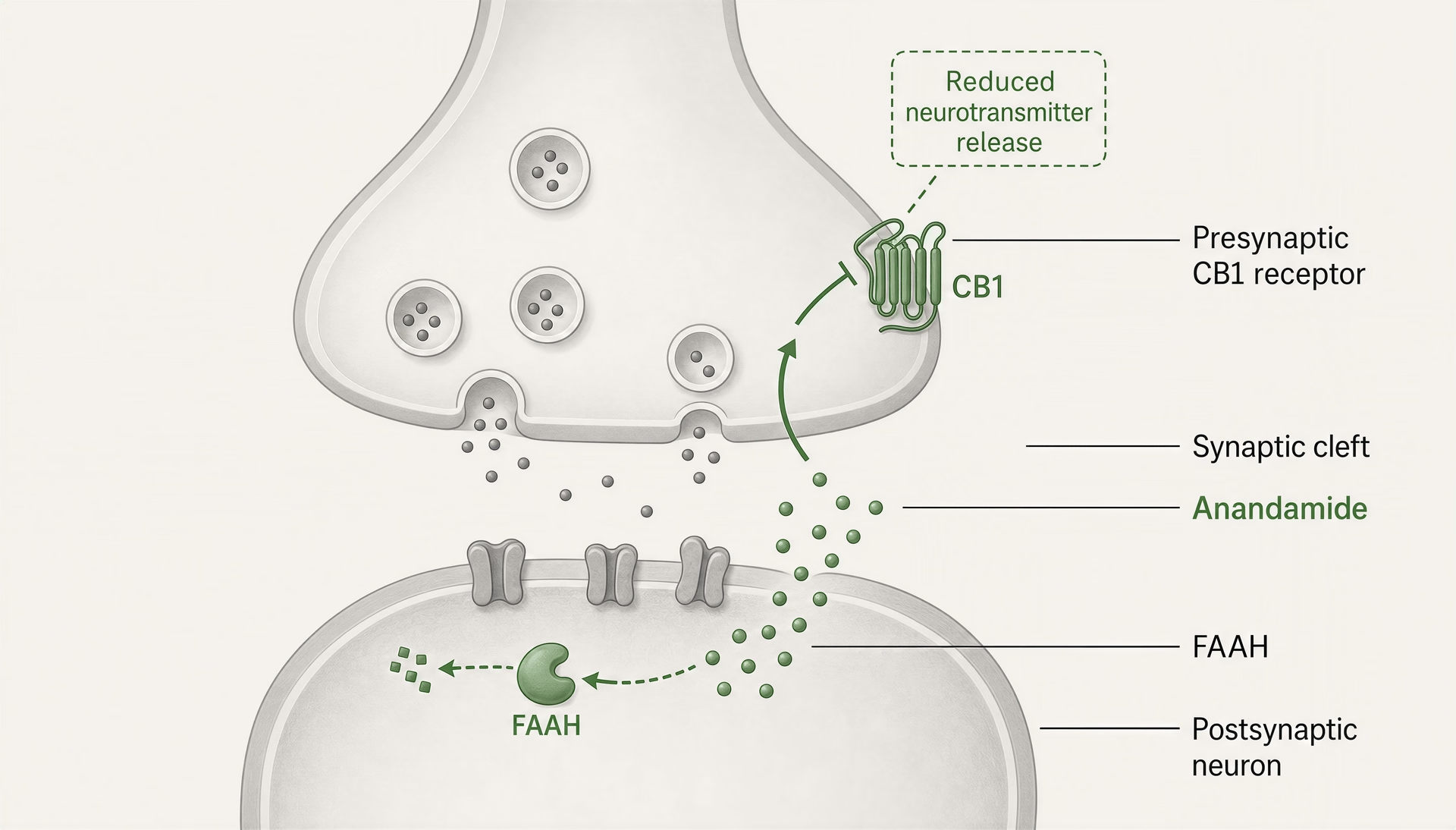
What FAAH does and why anandamide matters
Key terms in the FAAH-anandamide model
- Anandamide
- An endogenous cannabinoid produced on demand that can activate CB1 receptors.
- FAAH
- The main enzyme that breaks down anandamide.
- Endocannabinoid tone
- The overall level and functional effect of endogenous cannabinoid signaling in a system.
FAAH, or fatty acid amide hydrolase, is the main enzyme that breaks down anandamide. Anandamide is one of the body’s major endocannabinoids, often described as an endogenous ligand for CB1 receptors. Unlike THC, which floods the system from outside, anandamide is produced on demand in local circuits and then rapidly degraded. FAAH is the clean-up crew. When FAAH activity is high, anandamide signaling is usually shorter-lived. When FAAH is blocked, anandamide levels rise.
That matters because anandamide is not just a “feel good” chemical. It helps regulate stress adaptation, fear extinction, reward processing, and emotional salience. In the right place and at the right time, stronger anandamide signaling can dampen stress reactivity and support behavioral flexibility. In corticolimbic circuits, that can look relevant to depression. The prefrontal cortex helps regulate top-down control of emotion. The amygdala flags threat and negative salience. The hippocampus is central to memory, context, and stress sensitivity. Endocannabinoid signaling threads through all of them.
The appeal of the FAAH story is that it offers a more targeted route than simply activating CB1 receptors with THC. Direct CB1 agonism can be messy. Acute THC may lift mood in some people for a short period, but it can also trigger anxiety, dysphoria, or cognitive impairment, and repeated exposure can shift reward processing in the wrong direction. FAAH inhibition is different in theory. It does not force the receptor on everywhere at once. It tends to amplify endogenous signaling where anandamide is already being produced. That is one reason researchers have long seen FAAH as a more interesting antidepressant target than high-THC cannabis.
Reviews by Hill and colleagues, and later summaries such as Mayo et al. in 2020, point to a repeated preclinical pattern: chronic stress can lower anandamide signaling in mood-related brain regions, and manipulations that restore that signaling can reverse stress-linked behaviors in animals. This has led to the shorthand claim that depression may involve “low endocannabinoid tone.” There is some truth in that phrase. There is also a risk of oversimplifying a heterogeneous disorder into one biochemical deficit. Depression is not scurvy. There is no single missing molecule that explains most cases.
What animal stress and depression models actually show[5] The Endocannabinoid System and Depression: A Review of Preclinical and Clinical Studies. Mayo L. M., et al.. Cannabis and Cannabinoid Research, 2020.
Animal data are where the low-endocannabinoid hypothesis looks most persuasive. In rodent models, chronic stress often reduces anandamide levels or disrupts endocannabinoid signaling in the hippocampus, prefrontal cortex, and amygdala. Those changes are not random. They show up in circuits already implicated in stress-induced behavioral changes that researchers label “depression-like” or “anxiety-like.” The phrase matters because these are models, not direct replicas of human major depressive disorder.
Still, the pattern is striking. Chronic unpredictable stress, social defeat stress, and other paradigms can blunt endocannabinoid tone. Reduced anandamide signaling is often accompanied by changes in stress hormone regulation, decreased reward sensitivity, and altered emotional behavior. Beat Lutz, Cecilia Hill, and others have helped frame the endocannabinoid system as a stress-buffering system: when it functions well, it limits overactivation of stress pathways; when it is impaired, the organism becomes less able to recover from repeated adversity.
This is where FAAH enters the antidepressant discussion. If chronic stress lowers anandamide, then blocking the enzyme that degrades anandamide should restore signaling. In many rodent studies, that is exactly what happens. FAAH inhibitors increase brain anandamide levels and often produce antidepressant-like effects in standard behavioral assays such as the forced swim test, novelty-suppressed feeding, or chronic stress paradigms. Mayo et al. 2020 reviewed this literature and concluded that FAAH inhibition repeatedly shows mood-related benefit in preclinical models.
There are at least three reasons those findings attracted attention. First, the effects often emerge under stress conditions rather than in unstressed animals, which fits the idea that endocannabinoids are recruited when the system is under load. Second, FAAH inhibition can affect both emotional behavior and stress physiology. Third, the mechanism is biologically cleaner than broad cannabis exposure. You are not introducing a plant mixture with variable THC:CBD ratios and psychoactive effects. You are altering one degradative enzyme in an endogenous signaling system.
Some preclinical work also suggests interaction with other antidepressant pathways. Endocannabinoid signaling cross-talks with serotonergic systems, glutamate, GABA, and neuroplasticity-related mechanisms. That does not mean FAAH inhibition is equivalent to an SSRI, but it helps explain why rodent antidepressant-like effects are not implausible. Researchers studying CBD, including Campos, Crippa, and Guimarães, have also pointed to indirect endocannabinoid effects alongside 5-HT1A signaling and hippocampal neurogenesis in chronic stress models. The broader lesson is that mood regulation is network biology, not a one-receptor story.
But the animal literature has limits that are easy to ignore when the results line up neatly. Rodent “depression” tests measure selected behavioral outputs, not subjective sadness, guilt, hopelessness, or suicidal ideation. Positive findings can show that the endocannabinoid system helps govern stress-related behavior. They cannot prove that human depression is fundamentally an anandamide-deficiency syndrome. That leap is too large.
Where the hypothesis breaks down in human clinical practice
| Evidence layer | What the article says | Main limit |
|---|---|---|
| Rodent stress models | Often show reduced anandamide signaling and antidepressant-like effects of FAAH inhibition | Animal behavior is not the same as human MDD |
| Human biomarkers | Some studies suggest altered circulating endocannabinoids | Peripheral levels are noisy and not direct synaptic readouts |
| Clinical practice | No guideline recommends treating depression as anandamide deficiency | Direct treatment evidence has not crossed the clinical threshold |
The breakdown happens at translation. Human depression is not one disease. Major depressive disorder can include melancholic features, atypical features, agitation, cognitive slowing, trauma-linked symptoms, bipolar admixture, substance-related worsening, and inflammatory or medical contributors. A single mechanistic model will capture some patients better than others. Anandamide may be relevant in part of the picture without serving as a universal biomarker or treatment target.
Human biomarker findings are inconsistent. Some studies suggest altered circulating endocannabinoid levels in depressed patients, but results vary by sample, illness phase, medication status, comorbid anxiety, trauma exposure, obesity, sleep disturbance, and whether investigators measure serum, plasma, cerebrospinal fluid, or indirect genetic markers. Peripheral measures are also a problem in principle. Blood anandamide is not a direct readout of synaptic signaling in the amygdala or prefrontal cortex. The signal can be noisy, state-dependent, and hard to interpret.
Clinical treatment evidence is thinner than many public-facing articles imply. No approved antidepressant works by proven correction of anandamide deficiency. No psychiatric guideline recommends testing patients for anandamide deficiency before treating depression. No established depression protocol says that low endocannabinoid tone has been identified and should be reversed with cannabis, CBD, or a FAAH inhibitor. That absence is not because researchers missed an obvious answer. It is because the evidence has not crossed the threshold.
Endogenous Produced within the body rather than taken from an outside source such as a drug or plant product.
Direct trials are rare for good reasons. Standardized FAAH-based antidepressant development has been difficult. Cannabis itself is a poor tool for testing the low-endocannabinoid hypothesis because THC does not mimic endogenous anandamide in a stable way. It can transiently reduce distress, which helps explain self-medication, but repeated use does not behave like precise restoration of a deficient system. Population data point the other direction for many users. Mammen et al. 2018 found that reducing cannabis use was associated with improvements in anxiety, depression, and sleep quality. Feingold, Rehm, Lev-Ran, and colleagues reported that among people with major depressive disorder at baseline, cannabis use predicted worse depressive symptoms at follow-up. That is hard to square with the claim that ongoing cannabis exposure reliably corrects a depression-relevant endocannabinoid deficit.
The same caution applies to CBD. It has real mechanistic interest. It may influence endocannabinoid tone indirectly and interacts with 5-HT1A-related signaling in several models. Yet randomized controlled trials of CBD for major depressive disorder are almost absent. Mechanism is not treatment proof.
So where does that leave the hypothesis? Useful, but limited. It helps explain why stress biology and mood are linked to the endocannabinoid system. It helps explain why FAAH inhibition often looks antidepressant-like in rodents. It may eventually help identify a subset of patients with stress-linked endocannabinoid dysregulation. What it does not justify is the claim that depression, as clinicians actually see it, is mainly a disorder of anandamide deficiency or that cannabis has been shown to fix that problem. The evidence does not support that step.
THC and mood: why short-term uplift can coexist with worse long-term outcomes
The central mistake in public discussions of THC and depression is treating “felt better after using” as if it proves an antidepressant effect. It does not. A drug can reduce distress for an hour and still worsen the overall course of depressive symptoms across months or years. That distinction matters because depression is common, cannabis use is common, and many people understandably try to regulate mood with whatever gives quick relief.
The biology makes this self-medication story believable. Ken Mackie’s work and later reviews by Lu and Mackie describe CB1 receptors as heavily expressed in the prefrontal cortex, hippocampus, amygdala, cingulate circuitry, and basal ganglia: the same networks involved in reward, stress appraisal, emotional memory, and motivation. Preclinical work reviewed by Mayo et al. and others also suggests that chronic stress can reduce endocannabinoid signaling, including anandamide tone, in corticolimbic regions. That is enough to make THC look, at first glance, like a plausible mood corrector.
But plausible is not the same as therapeutic. The human evidence does not support high-THC cannabis as an established antidepressant treatment for major depressive disorder. What it supports is a biphasic pattern: some users get short-term relief at lower or modest doses, while higher doses, frequent use, and dependence-related cycles push many toward more anxiety, emotional instability, sleep disturbance, and low mood over time.
Acute CB1 activation, reward signaling, and temporary relief of dysphoria
THC can improve mood in the moment for a simple neurobiological reason: it activates CB1 receptors in circuits that regulate reward, salience, stress responsiveness, and emotional learning. In some users, that means a temporary drop in dysphoria, psychic tension, irritability, or emotional numbness. The person feels lighter, less preoccupied, less trapped in repetitive negative thought. For someone with depression, that can feel like proof that cannabis is treating the illness.
Often, it is treating the state, not the disorder.
Acute THC exposure can shift reward signaling and dampen the felt intensity of negative affect. That is one reason depression is among the most common reasons people give for using cannabis therapeutically. The person is not imagining the immediate effect. Short-term mood elevation is biologically credible. A low or modest dose may reduce distress, increase sociability, blunt stress reactivity, and make previously unrewarding activities feel more tolerable. In a disorder defined partly by anhedonia, that can be powerfully reinforcing.
This is where the endocannabinoid system can mislead both patients and casual commentators. Reviews by Beat Lutz, Cecilia Hill, and others have emphasized that endocannabinoid signaling helps regulate stress adaptation and fear extinction. If chronic stress lowers endogenous cannabinoid tone, adding an exogenous CB1 agonist such as THC can seem like restoring a deficit. That is a tempting story. It is also incomplete. Human depression is not simply “low anandamide,” and smoking or ingesting THC does not reproduce the finely timed, region-specific signaling of endogenous cannabinoids.
The clinical consequence is that acute benefit is real for some people but unstable. It depends on dose, setting, prior exposure, underlying anxiety, genetic vulnerability, age, and whether the user is drifting from occasional relief into repeated, escalating use. A person may say, accurately, “Cannabis helps when I feel awful.” Yet the same person may also find that baseline mood gets flatter, motivation weaker, and distress between sessions more intense.[6] Cannabis use and the course and outcome of major depressive disorder: A population based longitudinal study. Feingold D., Rehm J., Lev-Ran S.. Psychiatry Research, 2017.
Longitudinal data fit that pattern better than the claim that cannabis acts as an antidepressant. Feingold, Rehm, Lev-Ran, and colleagues reported that among adults who already had major depressive disorder at baseline, cannabis use predicted greater depressive symptoms at follow-up. That is not the same as saying cannabis causes all depression. It is more specific, and more clinically useful: in people already vulnerable, ongoing use may worsen symptom trajectory.
Dose, potency, tolerance, and the shift from relief to destabilization
The biphasic nature of THC matters. Small or modest doses can be calming or mood-lifting in some users. Higher doses are much more likely to trigger anxiety, paranoia, dysphoria, racing thoughts, emotional lability, and cognitive disorganization. The same drug can soothe at one dose and destabilize at another.
That dose problem has become more serious as products have grown more THC-dominant. Older assumptions based on lower-potency cannabis do not map neatly onto current exposure patterns. A user may intend a mild uplift and end up with a much stronger CB1-mediated effect than expected, especially with concentrates, repeated inhalations, or edible products whose onset is delayed and easy to misjudge. Once the dose crosses a personal threshold, the emotional profile can flip. Calm turns into agitation. Relief turns into self-surveillance and discomfort.
This is not merely an intoxication issue. Repeated high-THC exposure can reshape the pattern of response over time. Tolerance develops. The user who once got a noticeable lift from a small amount begins to need more for the same effect. That process is clinically relevant because tolerance changes the function of use. Instead of moving from neutral mood to better mood, people often start using to move from bad to less bad, or from withdrawal-irritable to briefly normal. The subjective story becomes “I need this to feel okay.”
As tolerance rises, the downside becomes easier to miss. Each use episode may still feel helpful, but baseline reward processing can worsen. Some users report less initiative, less pleasure from ordinary activities, and more dependence on cannabis for relaxation or emotional regulation. In a person with depression, that can deepen amotivation and reduce engagement with treatments that actually improve long-term outcomes, such as psychotherapy, exercise, structured sleep, or antidepressant medication when indicated.
Population studies point in the same direction. Mammen et al. in 2018 found that reductions in cannabis use were associated with improvements in anxiety, depression, and sleep quality. That finding cuts against the idea that regular use is generally antidepressant. If cannabis were reliably improving depressive illness, reducing it should make mood worse on average. The opposite was observed.
Heavy use also raises the probability of cannabis use disorder, which matters far beyond labels. According to the 2023 NSDUH, 61.8 million Americans aged 12 or older used marijuana in the past year, and 19.8 million met criteria for marijuana use disorder. Deborah Hasin and colleagues showed earlier that both cannabis use and cannabis use disorder rose substantially in the US between 2001-2002 and 2012-2013. Depression and CUD frequently travel together. That comorbidity does not prove simple one-way causation, but it does identify a group in whom cannabis is no longer just an occasional coping tool. It is part of the problem.
The risk gradient is not uniform. Heavy adolescent use deserves more concern than adult experimentation. Gabriella Gobbi’s 2019 meta-analysis of 11 longitudinal studies found that adolescent cannabis use was associated with increased odds of later depression (OR 1.37), suicidal ideation (OR 1.50), and suicide attempt (OR 3.46). That does not mean every teen user becomes depressed. It does mean the “it helps my mood” argument is especially weak when applied to the developing brain.
Withdrawal, sleep disruption, and rebound low mood
Withdrawal dysphoria Low mood, irritability, restlessness, and related symptoms that appear after reducing or stopping regular cannabis use and can resemble a depressive relapse.
One of the clearest ways cannabis can worsen depressive course is through the after-effect of repeated use. The person experiences relief during intoxication, then pays for it later with irritability, restlessness, poorer sleep, vivid dreams, reduced appetite, anxiety, and low mood when not using. Those symptoms are often misread as the original depression simply returning. Sometimes they are. Sometimes they are withdrawal layered on top of depression. Clinically, the distinction matters.
Cannabis withdrawal is real, common in frequent users, and often underrecognized because it is usually less dramatic than alcohol or opioid withdrawal. Yet for mood disorders, it can be highly consequential. Sleep is a major part of that. Many people start using THC because it shortens sleep onset and quiets nighttime rumination. At first this feels helpful. Over time, nightly use can make sleep dependent on intoxication. When use stops or drops, insomnia and dream rebound can hit hard. A person who is already prone to depression now has fragmented sleep, daytime fatigue, and less emotional resilience. Mood sinks fast.
That cycle can create a false lesson: “I need THC because my depression becomes unbearable without it.” Sometimes what is becoming unbearable is the combination of withdrawal and sleep disruption caused by regular use. The user responds by resuming cannabis, gets immediate relief, and the pattern repeats. What looks like effective treatment may actually be withdrawal suppression.
This is one reason Mammen et al.’s finding is so important. When people reduced cannabis use, anxiety, depression, and sleep improved rather than deteriorated. If withdrawal were the full story, one would expect at least persistent worsening with reduction. Instead, the data suggest that once the dependence cycle loosens, many people feel better overall.
The same logic helps explain why heavy use can make depression seem more treatment-resistant. Withdrawal-related dysphoria can mimic a depressive episode. Chronic sleep disturbance can intensify anhedonia and concentration problems. Frequent intoxication can interfere with therapy participation, medication adherence, and consistent daily routines. In people with bipolar disorder, the stakes are even higher; the National Academies reported that near-daily cannabis use may be linked to greater bipolar symptom burden, which is one reason bipolar depression cannot be treated as interchangeable with unipolar depression in cannabis discussions.
THC can improve mood in the short term for some users. Limited evidence
The bottom line is not that THC never improves mood. It often does, briefly. The stronger claim is different: short-term uplift is entirely compatible with worse long-term outcomes. Acute CB1 activation can relieve dysphoria, while high doses, escalating potency, tolerance, and withdrawal can pull mood in the opposite direction over time. That is the self-medication paradox in plain terms. It feels like help now. It can still make the illness harder to escape later.
CBD, serotonin signaling, and the antidepressant claims that outran the evidence
CBD is where many depression discussions go off the rails. The molecule has real pharmacology. It also has a public reputation far ahead of the human evidence. Those are not the same thing.
Part of the confusion comes from plausibility. Mood regulation does involve the endocannabinoid system, and CB1 receptors are heavily expressed in the prefrontal cortex, hippocampus, amygdala, and related circuits, as Ken Mackie described in 2005 and as Lu and Mackie revisited in 2021. Stress models also suggest impaired endocannabinoid tone, including lower anandamide signaling and FAAH-related changes, can contribute to depressive-like states in animals. That makes it easy to tell an overly neat story: cannabis affects the endocannabinoid system, depression involves stress circuitry, therefore CBD must be antidepressant. That leap is much too fast.
The serious case for CBD is narrower. It rests mostly on serotonergic signaling at 5-HT1A-related pathways, stress-modulating effects in animal models, and findings that chronic CBD can preserve hippocampal neurogenesis under certain experimental conditions. Those findings matter. They do not establish CBD as a proven antidepressant for major depressive disorder.
5-HT1A receptor mechanisms and what “serotonergic” really means here
| Feature | CBD | SSRI |
|---|---|---|
| Primary framing in the article | 5-HT1A-related effects | Serotonin reuptake blockade |
| Evidence emphasis | Mechanistic and preclinical interest | Established antidepressant trial tradition |
| Depression claim supported here | Not established for MDD | Standard clinical antidepressant class |
When articles say CBD is “serotonergic,” they often leave readers with the impression that it works like an SSRI. It does not. SSRIs primarily block serotonin reuptake through the serotonin transporter. CBD has been studied instead for effects that appear to involve the 5-HT1A receptor, a serotonin receptor subtype implicated in anxiety, stress responsivity, and mood regulation.
Francisco Silveira Guimarães, José Alexandre Crippa, and colleagues are central here. Across preclinical and some human experimental studies, they helped build the case that CBD can produce anxiolytic effects that are at least partly mediated by 5-HT1A signaling. In practical terms, that means CBD may enhance or facilitate signaling through this receptor system in ways that reduce acute stress responses. It does not mean CBD simply “raises serotonin” in the broad consumer-health sense.
That distinction matters because 5-HT1A biology is complicated. These receptors exist both presynaptically, where they can regulate serotonin neuron firing, and postsynaptically, where they influence downstream signaling in mood-related circuits. A drug can interact with that system in several ways: direct agonism, partial agonism, allosteric modulation, or indirect facilitation through network effects. CBD’s exact relationship to 5-HT1A remains debated across models, but the recurring theme is that at least some of its behavioral effects are blocked or reduced when 5-HT1A signaling is pharmacologically interrupted. That is a meaningful mechanistic clue. It is not proof of antidepressant efficacy in patients with MDD.
Crippa and Guimarães are often cited for anxiety-focused work rather than depression trials, and that itself tells you something about the evidence base. CBD’s clearest human experimental signal has been around anxiety under specific conditions, such as simulated public speaking paradigms, not established antidepressant treatment in diagnosed major depression. Even if a compound reduces anxious distress in the moment, that does not show it improves the full syndrome of MDD: low mood, anhedonia, cognitive symptoms, sleep disruption, psychomotor changes, relapse risk, and functional impairment over time.
There is another common source of exaggeration. Because depression and anxiety overlap, and because many patients with depression feel temporarily calmer after something anxiolytic, the anxiolytic effect gets mislabeled as an antidepressant effect. Those are related domains, not interchangeable ones. A compound that dampens acute stress reactivity may help some symptoms without treating the disorder’s long-term course.
CBD and hippocampal neurogenesis in preclinical studies
The neurogenesis story is one reason CBD acquired an antidepressant halo. The hippocampus is deeply involved in stress regulation, memory, and mood disorders. Chronic stress can suppress hippocampal neurogenesis in animal models, and some antidepressant interventions appear to restore it. So when CBD showed similar signals in rodents, the interpretation seemed obvious. Maybe too obvious.
Alline Campos and colleagues published one of the key papers here. In 2013, Campos et al. in the International Journal of Neuropsychopharmacology reported that chronic CBD prevented stress-induced decreases in hippocampal neurogenesis and produced antidepressant-like effects in animals exposed to chronic unpredictable stress. That is an important study, not a trivial one. It suggested that CBD was doing more than merely sedating animals or blunting immediate distress. It appeared to alter stress-linked brain plasticity in a direction that could be relevant to mood.
Linge et al. in 2016 added another piece, reporting fast antidepressant-like effects of cannabidiol in rodent models, with mechanisms that appeared to involve synaptic and molecular changes associated with resilience. Read alongside the Campos work, these data gave CBD a credible preclinical profile: effects on stress circuitry, involvement of serotonergic pathways, and possible support for hippocampal plasticity.
But preclinical depression research has a built-in translation problem. “Antidepressant-like” in rodents usually means changes in behavioral tests such as forced swim, novelty-suppressed feeding, sucrose preference, or stress paradigms. Those models are useful for screening mechanisms. They are not the same as proving a treatment reverses major depressive disorder in humans. Human depression is not reducible to one pathway, one brain region, or one behavioral output.
There is also a tendency to overread neurogenesis. Yes, hippocampal plasticity is relevant. No, increased neurogenesis in a stressed rodent does not by itself establish a clinically meaningful antidepressant effect in people. Neuroscience headlines often flatten this into a seductive formula: more neurogenesis equals better mood. The actual biology is messier. Human depression is heterogeneous, and neurogenesis is one candidate mechanism among many, not a standalone answer.
CBD’s indirect effects on the endocannabinoid system may also be part of the picture. Some work suggests CBD can influence anandamide tone, likely not through the same direct CB1 activation seen with THC but through indirect mechanisms. That keeps the story biologically plausible. Plausible is the operative word. Plausibility is where evidence starts, not where it ends.
Why preclinical promise has not yet become a clinical antidepressant evidence base
Here is the bright line: there is no strong randomized trial literature showing CBD is an established antidepressant treatment for major depressive disorder. That absence should shape how the topic is discussed.
CBD is an established antidepressant treatment for major depressive disorder. Limited evidence
For MDD, robust randomized controlled trials of CBD are nearly absent. Not scarce in the sense of “a few mixed but informative studies.” Scarce in the sense that the field does not yet have the kind of evidence base required to call CBD an antidepressant in any standard clinical sense. There are no large, replicated trials showing remission rates, response rates, relapse prevention, or superiority over placebo in diagnosed MDD populations. There are also no head-to-head comparisons showing CBD performs like established antidepressants.
Why the gap? Partly because cannabinoid research is hard to standardize. Doses vary. Formulations vary. Bioavailability differs by route. Product composition can be inconsistent outside pharmaceutical-grade settings. Blinding is easier with CBD than THC, but expectancy effects are still a problem. Trial infrastructure in depression is built around fixed-dose pharmaceutical agents, not loosely standardized cannabinoid products.
Dose uncertainty is a major issue. In many human experimental studies involving anxiety, the doses of CBD are often hundreds of milligrams, sometimes 300 mg to 600 mg orally in acute protocols. That is nowhere near what many people actually take in over-the-counter products. The mismatch matters. If a mechanistic or anxiolytic signal shows up at several hundred milligrams under controlled conditions, it cannot be casually generalized to low-dose commercial use. A person taking a much smaller amount may be exposed to a pharmacologically weak intervention while believing they are using an evidence-based antidepressant. That is not a minor misunderstanding.
The broader depression literature on cannabis should also make clinicians wary of easy extrapolation. Mammen et al. in 2018 found that reductions in cannabis use were associated with improvements in anxiety, depression, and sleep quality. Feingold, Rehm, Lev-Ran, and colleagues reported that among people who already had major depressive disorder, cannabis use was associated with increased depressive symptoms at follow-up. Those studies are not CBD trials, and they should not be misused as if they directly tested purified cannabidiol. Still, they are a reminder that cannabinoid-related self-medication can feel helpful while tracking with worse mood over time, especially when the real-world exposure includes THC, frequent use, or cannabis use disorder.
So where does that leave CBD? With cautious interest, not endorsement. The molecule deserves study. Campos, Guimarães, Crippa, and others established real mechanistic reasons to investigate it. Yet the evidence that matters for patients with MDD remains missing: replicated randomized trials, defined dosing, clear target populations, safety data over meaningful durations, and outcomes that go beyond “felt calmer today.”
That is why antidepressant claims outran the evidence. The lab story was interesting. The human proof never caught up.
What population studies show about cannabis use and depression over time
Population studies matter here because depression is common, cannabis use is common, and personal experience is persuasive but unreliable. The World Health Organization estimates that 280 million people worldwide live with depression. In the US, the National Institute of Mental Health estimated 21.0 million adults had at least one major depressive episode in 2021. At the same time, cannabis exposure is widespread: SAMHSA reported 61.8 million Americans aged 12 or older used marijuana in the past year in 2023, and 19.8 million met criteria for marijuana use disorder. When two common phenomena overlap this much, anecdotes multiply fast. So do false conclusions.
This is where longitudinal epidemiology earns its keep. The central question is not whether some people feel better right after using cannabis. Many do. Acute relief of dysphoria, boredom, agitation, or insomnia is biologically plausible and clinically familiar. The harder question is whether cannabis use predicts a better or worse depressive course over months and years. The strongest population evidence does not support cannabis as an antidepressant treatment. It points instead to a risk gradient: people with heavier use, adolescent initiation, cannabis use disorder, or baseline mood vulnerability tend to do worse.
Mammen 2018: symptom improvement when cannabis use falls
One of the most important studies in this area is Mammen et al. 2018. Its relevance is simple and uncomfortable for the claim that ongoing cannabis use is broadly therapeutic for depression: when people reduced their cannabis use over time, their anxiety, depression, and sleep symptoms improved.
That finding deserves careful handling. It does not prove that cannabis caused every symptom in the first place. It does not prove that stopping cannabis is a standalone treatment for major depressive disorder. But it does cut directly against a popular narrative that continued use is generally helping depressed people maintain emotional stability.
Why is this study so informative? Because it tracks change over time rather than asking people once whether cannabis “helps.” If someone says cannabis improves their mood, they may be describing the first hour after use. Mammen’s result asks a different question: what happens to symptom burden when use goes down? If reducing use were expected to remove an effective antidepressant, you would expect mood to worsen on average. That is not what the study found.
This is the self-medication paradox in data form. Cannabis can produce immediate relief while still being linked to poorer medium-term or long-term outcomes. Those two facts are not contradictory. They often coexist in psychiatry. Alcohol can briefly reduce social anxiety while worsening anxiety disorders over time. Sedatives can knock down distress today while producing dependence, withdrawal, and rebound symptoms later. Cannabis appears to fit that same broad pattern for a subset of users.
Mammen et al. also matters because it does not rely on a simplistic “users versus non-users” contrast. People change their use. Their symptoms change. Following those trajectories is much closer to real life. For clinicians, this is more actionable than a one-time prevalence survey. If a depressed patient says cannabis is helping, Mammen’s findings suggest asking a sharper question: what happened to your mood, anxiety, and sleep during periods when you cut back? The answer can be more revealing than the immediate post-use effect.
There are still limits. Observational studies cannot erase all confounding. People who reduce cannabis may also improve other parts of life at the same time: less alcohol, better sleep hygiene, more treatment engagement, improved routines, a new job, a new relationship, fewer stressors. Any of these could contribute to mood improvement. Even so, the direction of the association is telling. It is not neutral. It leans away from the idea of cannabis as a population-level antidepressant.
Feingold and Weiser: worsening symptom trajectories in people already depressed
| Question | What the article says |
|---|---|
| Does cannabis predict new-onset MDD in the general population? | Not as clearly or consistently as often assumed |
| Among people who already have MDD, does cannabis predict a worse course? | Longitudinal evidence is more concerning here |
| Why it matters | Prognosis in already depressed patients is the more clinically useful question |
The Feingold, Rehm, Lev-Ran, and Weiser literature sequence sharpened the picture in a way that many broad summaries miss. The key distinction is between two separate questions:
1. Does cannabis predict new-onset major depression in the general population? 2. Among people who already have major depressive disorder, does cannabis predict a worse course?
Those are not the same question, and the answers are not identical.
The Feingold group found that baseline cannabis use was associated with increased depressive symptoms at follow-up among adults who already had major depressive disorder at baseline. That is a strong clinically relevant result. It suggests cannabis may be less important as a universal cause of depression than as a course-worsening factor in people who are already vulnerable.
This distinction helps reconcile why the literature can look inconsistent from a distance. The National Academies report in 2017 concluded cannabis use did not appear to increase the likelihood of developing depression in the general population overall. That statement is often quoted in isolation, as if it settles the matter in favor of safety. It does not. A substance can fail to show a clean signal for incident depression in broad adult populations and still worsen symptom persistence, severity, relapse risk, motivation, sleep, or treatment adherence in people who are already depressed.
That is where Feingold and Weiser matter. Their work points to prognosis, not just onset. For a patient with established MDD, prognosis is the real question. Will this pattern of use improve remission rates, reduce symptom burden, and support function? Or will it deepen anhedonia, blunt motivation, interfere with sleep architecture, and increase the odds of dependence and withdrawal? The longitudinal evidence leans toward the latter in a meaningful subset of depressed users.
This is also where cannabis use disorder becomes hard to separate from depression itself. Hasin et al. showed that past-year cannabis use in the US rose from 4.1% in 2001-2002 to 9.5% in 2012-2013, while cannabis use disorder rose from 1.5% to 2.9%. Depressed populations are overrepresented in CUD samples, and people with CUD often present with sleep disruption, irritability, low motivation, and anhedonia during heavy use or withdrawal. Those symptoms overlap heavily with depressive syndromes. So even if cannabis is not the original cause of a person’s depression, it can still thicken the clinical picture and make recovery less likely.
Feingold and colleagues do not prove that cannabis alone caused later worsening. Residual confounding remains possible. People with more severe depression may be more likely to use cannabis persistently. They may also have more trauma exposure, more other substance use, less access to treatment, or more social instability. Yet the baseline-MDD finding remains important because it speaks to a real-world clinical population: not healthy adults in the abstract, but people already carrying a depressive illness.
That is the group most likely to ask whether cannabis is functioning as an antidepressant. The answer from these longitudinal data is not encouraging.
Why longitudinal studies matter more than cross-sectional self-report
Cross-sectional studies are easy to quote and easy to misread. Ask people who use cannabis whether it helps depression, and many will say yes. That response may be honest. It is still weak evidence. A one-time self-report cannot distinguish symptom relief from disease modification. It cannot tell whether improvement lasts. It cannot separate people who use occasionally from those using daily, nor low-THC exposure from high-THC products, nor adults from adolescents, nor stable users from people escalating into dependence.
Longitudinal studies do better because they establish sequence. First cannabis use is measured, then later depressive outcomes are measured. That does not solve causality, but it narrows the interpretive chaos.
The biggest problem in this literature is reverse causality. Depressed people may start or increase cannabis use because they already feel bad. If you measure both at the same time, cannabis can look associated with depression simply because depressed people are self-medicating. That is a real issue, not a trivial objection. It explains why sloppy readings of observational data can exaggerate harm.
But reverse causality cuts both ways. If depressed people preferentially use cannabis because it feels helpful, then cross-sectional surveys will also exaggerate benefit. They select for the immediate reinforcing effect. People remember that cannabis reduced tension tonight. They do not always connect it to lower motivation, rebound irritability, poorer sleep continuity, or a flatter reward system over the next weeks. Longitudinal work is better suited to capture those delayed costs.
Residual confounding still persists even in prospective cohorts. No observational design can perfectly measure family history, trauma burden, socioeconomic strain, personality traits, antidepressant adherence, nicotine use, alcohol use, and baseline illness severity all at once. That is why these studies do and do not prove specific things. They do not prove cannabis is a direct chemical cause of every depressive trajectory. They do show that, in the population, sustained use is not behaving like an effective antidepressant signal.
This is exactly why Mammen et al. and Feingold/Weiser deserve outsized attention. They ask harder questions than “does cannabis help you?” Mammen asks what happens when use declines. Feingold and colleagues ask what happens over time in people already diagnosed with depression. Both designs move beyond the most misleading frame in this area: the snapshot testimonial.
A final point: the absence of many direct randomized trials comparing cannabis or CBD against standard antidepressants is not evidence of hidden efficacy. It mostly reflects regulatory barriers, product heterogeneity, blinding problems, and ethical concerns about exposing depressed patients to prolonged high-THC treatment when there is already reason to worry about worsening outcomes in some groups. So population studies carry more weight than they often do in other treatment debates.
Taken together, the epidemiology does not support a simple yes-or-no slogan. It supports a more precise claim. Cannabis may provide short-term relief for some users, but over time the strongest human evidence points toward symptom worsening or poorer course in people already depressed, especially when use is frequent or disordered. That is a very different message from “cannabis treats depression,” and it is much closer to what the data actually show.
The self-medication paradox
The most accurate way to understand cannabis and depression is not “it works” versus “it harms.” It is that cannabis can feel helpful fast while failing to treat the disorder that made someone reach for it in the first place. Sometimes it even pushes the long-term course in the wrong direction.
That distinction matters because depression is common, cannabis use is common, and the overlap is not small. The World Health Organization estimates roughly 280 million people worldwide live with depression. In the US, NIMH estimated 21.0 million adults had at least one major depressive episode in 2021. At the same time, SAMHSA reported 61.8 million Americans aged 12 or older used marijuana in 2023, and 19.8 million met criteria for marijuana use disorder. With numbers like that, self-treatment is not a side issue. It is a major public health pattern.
Self-medication paradox A pattern in which cannabis gives rapid short-term relief, reinforces repeated use, yet may leave the underlying depressive course unchanged or worse over time.
The self-medication model fits what many users report: “I feel worse, I use cannabis, I feel better for a while.” That lived experience is real. The mistake is turning that immediate shift in feeling into a claim that cannabis functions as a validated antidepressant. The evidence does not support that leap.
Why self-medication is psychologically believable
It is believable because the biology gives it just enough plausibility. CB1 receptors are densely expressed in circuits that shape mood, stress reactivity, reward, fear learning, and emotional memory. Ken Mackie’s 2005 review described CB1 receptors as among the most abundant GPCRs in the brain, with high expression in cortex, hippocampus, amygdala, and basal ganglia. Lu and Mackie’s 2021 review again placed the endocannabinoid system squarely inside the neural architecture of affect regulation. If you alter signaling in those regions, people may feel different quickly. Of course they do.
Preclinical work adds another layer. Chronic stress models often show reduced endocannabinoid tone, including lower anandamide signaling in corticolimbic regions. Reviews by Hill and others, including Mayo et al. (2020), describe how FAAH inhibition can raise anandamide and produce antidepressant-like effects in rodents. That sounds compelling, but it is not a clinical proof that human major depressive disorder is simply an endocannabinoid deficiency state waiting to be corrected by cannabis. Animal stress models are not depressed patients sitting in clinic with recurrent episodes, trauma histories, insomnia, bipolar misdiagnosis, substance use, and social impairment.
THC can also make self-medication feel rational because acute CB1 activation may reduce negative affect for some people in the moment. A person who feels agitated, empty, ashamed, or unable to sleep may notice a rapid subjective shift after use. The short-term outcome is what teaches behavior. Brains learn from immediacy, not from six-month symptom trajectories.
That is why user testimony often sounds convincing. The person is not inventing the relief. They are mistaking a state change for treatment.
This is where the gap between symptom relief and disease modification becomes decisive. A sedating drug can reduce distress tonight and still worsen depression over months. A euphoric effect can interrupt dysphoria without restoring motivation, cognitive flexibility, or reward responsiveness. Emotional pain can shrink transiently while the underlying illness remains untouched. With repeated exposure, tolerance develops, baseline mood may flatten, and the original problem is joined by another one: dependence on the very thing being used as an emotional regulator.
CBD complicates the picture but does not rescue the antidepressant claim. There are credible preclinical reasons people think CBD might help mood. José Alexandre Crippa, Francisco Guimarães, Alline Campos, and others have published animal work tying CBD to 5-HT1A-related effects and stress-buffering mechanisms, including hippocampal neurogenesis under chronic stress. Campos et al. (2013) found chronic CBD prevented stress-induced reductions in hippocampal neurogenesis in animals. Linge et al. (2016) reported fast antidepressant-like effects in rodents. Yet randomized controlled trials of CBD as a treatment for major depressive disorder are still strikingly scarce. The mechanistic story is interesting. The clinical evidence is still thin.

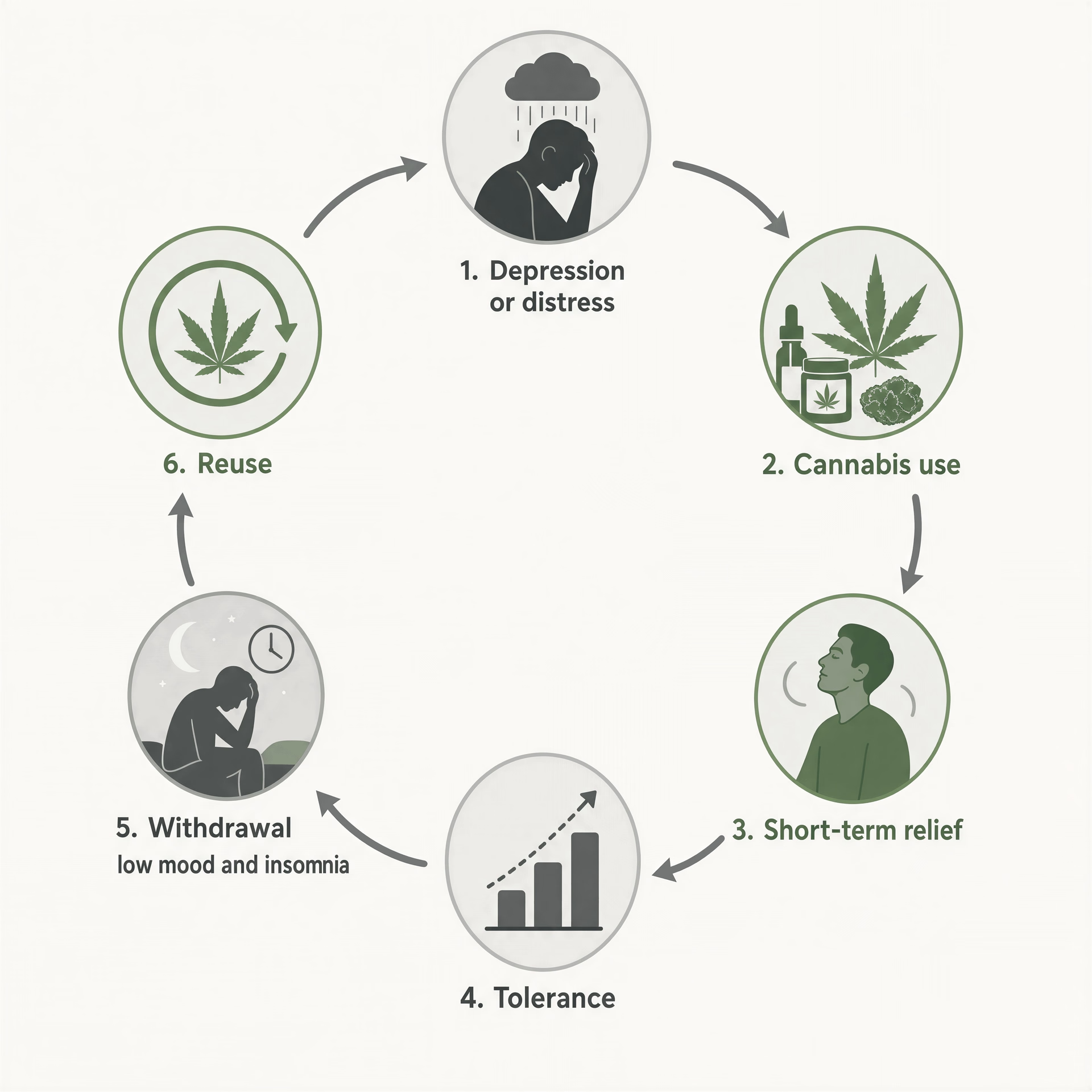
How reinforcement loops trap users into treating cannabis withdrawal with more cannabis
How the reinforcement loop develops
- Initial relief Cannabis is used to reduce sadness, anxiety, restlessness, or insomnia.
- Baseline shift Those same symptoms begin to appear during non-use as the brain adapts to regular exposure.
- Negative reinforcement The person uses again to stop feeling bad, which strengthens the cycle.
The self-medication paradox becomes stronger once repeated use starts reshaping the baseline. At first, cannabis may be used to dampen sadness, irritability, anxiety, restlessness, or insomnia. Then the pattern changes. Those same symptoms begin appearing during non-use because the brain has adapted to regular exposure. Now the person is no longer only treating depression. They are treating withdrawal, rebound distress, and sleep disruption caused in part by the cycle itself.
This is the trap.
Cannabis withdrawal is not trivial in frequent users. Irritability, anxiety, low mood, sleep disturbance, vivid dreams, reduced appetite, restlessness, and craving can emerge after stopping or cutting back. In someone with depression, those symptoms are easy to misread. “My depression is coming back” may actually mean “my brain is reacting to cessation after repeated THC exposure.” The subjective experience still feels miserable, so the person uses again. Relief follows. That relief reinforces the belief that cannabis is necessary medicine.
Behaviorally, this is classic negative reinforcement. The drug is not only sought for pleasure. It is sought to stop feeling bad.
Sleep is a central part of the loop. Many depressed patients use cannabis because it seems to help them fall asleep. In the short term it often does. But chronic use can disrupt sleep architecture, and withdrawal commonly produces insomnia and vivid dreaming. The user then reaches for cannabis to fix the sleep problem that prior cannabis use helped create. Poor sleep worsens mood, concentration, reward sensitivity, and emotional regulation the next day. Depression deepens. Cannabis then appears even more necessary. A cycle that began as relief becomes maintenance.
Motivation and emotional range can also narrow over time. Not every user develops “amotivational syndrome” in a simplistic sense, but repeated heavy exposure can blunt reward processing and make ordinary effort feel less compelling. When depressed patients become less engaged with work, exercise, social contact, or treatment, they lose some of the very inputs that improve depressive illness. Cannabis may make evenings more bearable while quietly eroding the scaffolding of recovery.
The longitudinal data point in this direction. Mammen et al. (2018) found that reductions in cannabis use were associated with improvements in anxiety, depression, and sleep quality. That is difficult to square with the claim that continued use is functioning as an antidepressant at the population level. Feingold, Rehm, Lev-Ran, and colleagues reported that among adults who already had major depressive disorder at baseline, cannabis use predicted increased depressive symptoms at follow-up. Importantly, this literature does not support a simplistic claim that cannabis causes depression in every user. It supports something more clinically useful: cannabis can worsen the course in vulnerable people, especially when use is frequent.
That is why the self-medication model explains user experience better than the antidepressant model. It captures immediate relief, escalating repetition, withdrawal relief masquerading as treatment, and a long-term trajectory that may deteriorate rather than improve.
Who is most likely to misread short-term relief as long-term treatment
People are most likely to misread cannabis this way when they have recurrent distress, rapid access to a fast-acting effect, and no clear marker separating temporary soothing from real recovery.
Those with chronic insomnia are high on the list. If a person cannot sleep, and cannabis reliably knocks down sleep onset latency, they may conclude it is treating the depression itself. Often it is treating one symptom while setting up the next night’s rebound. Once sleep becomes dependent on use, the belief hardens.
People with anxiety mixed into depression are also vulnerable to this misreading. Cannabis can reduce tension in the moment for some users, especially at lower doses or with certain THC:CBD profiles. But dose-response is unstable. The same person may later experience more anxiety, panic, or emotional volatility. Because the first few experiences were relieving, they keep chasing that version of the drug.
Frequent high-THC users are at particular risk because potency magnifies both reinforcement and instability. Tolerance rises, the emotional “lift” gets shorter, and more use is needed to reach the same effect. At that point, use can become less about feeling good than about avoiding a worse baseline.
Adolescents are an especially important group. Their interpretation of relief is less likely to include long-range risk appraisal, and the epidemiology is more concerning. Gobbi et al. (2019), in a meta-analysis of 11 longitudinal studies involving 23,317 participants, found adolescent cannabis use was associated with higher odds of depression in young adulthood (OR 1.37), suicidal ideation (OR 1.50), and suicide attempt (OR 3.46). That does not mean every adolescent user develops depression. It does mean claims that cannabis is a safe emotional regulator for teenagers are not defensible.
People with existing major depressive disorder also deserve separate emphasis. Feingold and Weiser’s line of work suggests cannabis may be less a universal trigger of new depression than a factor that worsens symptom trajectory among those already depressed. Clinically, that is the group most likely to mistake “it gets me through the night” for “it is treating my illness.”
And then there is bipolar disorder. Here the risk signal is sharper. The National Academies reported near-daily cannabis use may be linked to greater bipolar symptoms than nonuse. In bipolar-spectrum patients, feeling calmer or more lifted after cannabis can be especially misleading because mood instability itself distorts self-assessment. This is one population where self-medication can turn dangerous fast.
The bottom line is straightforward: cannabis can relieve negative affect quickly enough to teach repeated use, but that short-term reinforcement is not proof of antidepressant efficacy. In many depressed users, especially heavy users, adolescents, those with cannabis use disorder, and those with bipolar vulnerability, it is a convincing illusion rather than a durable treatment.
Cannabis use disorder and major depressive disorder
How often CUD and depression co-occur
- US adults with major depressive episode (2021)
- 21.0 million
- US past-year marijuana users (2023)
- 61.8 million
- US marijuana use disorder (2023)
- 19.8 million
Cannabis use disorder, or CUD, matters in depression care because the overlap is not rare and it is not clinically trivial. Depression is already common on its own: the World Health Organization estimates roughly 280 million people globally live with depression, and the National Institute of Mental Health estimates that 21.0 million U.S. adults had at least one major depressive episode in 2021, about 8.3% of adults. At the same time, cannabis exposure is widespread. SAMHSA’s 2023 NSDUH reported that 61.8 million Americans aged 12 or older used marijuana in the past year, and 19.8 million met criteria for marijuana use disorder.
| Measure | 2001-2002 | 2012-2013 |
|---|---|---|
| Past-year cannabis use | 4.1% | 9.5% |
| DSM-IV cannabis use disorder | 1.5% | 2.9% |
Those numbers create a large overlap by sheer scale alone. Epidemiologic studies show more than that, though: people with mood disorders are overrepresented among those with problematic cannabis use, and people with CUD have elevated rates of depressive disorders compared with the general population. Deborah Hasin and colleagues showed in JAMA Psychiatry in 2015 that U.S. past-year cannabis use rose from 4.1% in 2001-2002 to 9.5% in 2012-2013, while DSM-IV cannabis use disorder rose from 1.5% to 2.9%. As use expanded, the number of people carrying both a mood disorder and problematic cannabis use likely rose with it.
This comorbidity does not automatically prove that cannabis causes major depressive disorder. The relationship runs in several directions at once. Some people use cannabis after depression begins, often because it seems to reduce dysphoria, insomnia, tension, or emotional blunting in the short term. Others develop worsening motivation, sleep disruption, and withdrawal-related low mood after frequent use escalates. Some likely share underlying vulnerabilities: early adversity, genetic loading for addiction or mood disorders, anxiety sensitivity, impulsivity, trauma exposure, and social stressors. Lev-Ran, Feingold, and colleagues have repeatedly argued that cannabis may not function as a universal cause of depression, but it can worsen illness course in people who are already vulnerable.
That distinction shows up clearly in longitudinal work. In adults with major depressive disorder at baseline, Feingold, Rehm, Lev-Ran and colleagues found that cannabis use predicted greater depressive symptoms at follow-up. In contrast, cannabis use did not cleanly emerge as a universal predictor of new-onset major depression among people without baseline depression. That is a different claim from “cannabis causes depression in everyone,” and it is a more defensible one.
Age also matters. The strongest signal for depression risk sits in adolescence. Gabriella Gobbi and colleagues’ 2019 meta-analysis in JAMA Psychiatry, pooling 11 longitudinal studies with 23,317 participants, found that adolescent cannabis use was associated with increased odds of developing depression in young adulthood, with an odds ratio of 1.37. It was also associated with suicidal ideation and suicide attempt. For a clinician treating a depressed teenager or young adult, that evidence should carry real weight. Heavy use at 16 is not the same exposure as occasional use at 40.
Why CUD can mimic, worsen, or complicate depressive illness
The practical problem is that CUD can look like depression, deepen an existing depressive disorder, or make it hard to know what is being treated. DSM-5 cannabis use disorder is diagnosed when a person shows a maladaptive pattern of cannabis use leading to clinically significant impairment or distress, with symptoms such as using more than intended, unsuccessful efforts to cut down, craving, spending a great deal of time obtaining or using cannabis, continued use despite social or psychological problems, tolerance, and withdrawal.
Withdrawal is especially important in depressed patients because it can create a misleading clinical picture. Cannabis withdrawal commonly includes irritability, anxiety, restlessness, sleep difficulty, vivid dreams, reduced appetite, low mood, and physical discomfort. In heavy users, stopping cannabis can briefly produce exactly the symptoms that many people associate with a depressive relapse: poor sleep, anhedonia, agitation, fatigue, and bleak mood. If nobody asks about recent reduction or abstinence, withdrawal can be misread as worsening major depression. The reverse mistake also happens. Persistent low energy, diminished motivation, and social withdrawal during heavy daily use may be written off as “just the depression,” when chronic intoxication or post-intoxication effects are playing a large part.
This is where the self-medication paradox becomes clinically relevant. Acute THC exposure can feel relieving. That is biologically plausible. CB1 receptors are densely expressed in mood and stress circuitry, as Ken Mackie described, including the prefrontal cortex, hippocampus, amygdala, basal ganglia, and cingulate regions. Endocannabinoid signaling shapes stress reactivity, fear learning, reward processing, and emotional salience. So yes, some patients feel better for a few hours. But symptom relief in the moment is not the same thing as improvement in the disorder over months.
Repeated heavy THC exposure can destabilize that system. The reward response flattens. Motivation can drop. Anxiety may increase in susceptible users. Sleep becomes dependent on ongoing use, then worsens when use falls. In someone with depression, all of this can stack on top of the underlying illness. The result is often a messier syndrome: more anhedonia, less routine, poorer concentration, more avoidance, and a less reliable read on whether psychotherapy or antidepressants are helping.
The human evidence points in that direction. Mammen and colleagues reported in 2018 that reductions in cannabis use were associated with improvements in anxiety, depression, and sleep quality. That finding matters because it tests a common real-world belief. If ongoing cannabis use were generally acting like an antidepressant, you would not expect mood to improve when people cut back. Yet many do improve. That does not prove every depressed patient should become fully abstinent, but it does mean clinicians should not assume continued heavy use is mood-protective.
Comorbidity also changes how treatment response is interpreted. If a patient is using high-THC cannabis near daily, then starts an SSRI and reports alternating better and worse days, the signal is muddy. Is the antidepressant working? Is the person cycling through intoxication, rebound anxiety, and withdrawal? Is sleep being fragmented by cannabis or improved by it? Are appetite and energy changes medication related or cannabis related? Ongoing heavy use lowers diagnostic clarity and lowers treatment interpretability.
In bipolar-spectrum illness the concern is sharper. The National Academies reported that near-daily cannabis use may be linked to greater bipolar symptoms than nonuse. If a patient with depressive symptoms also has periods of decreased need for sleep, racing thoughts, impulsive spending, or episodic euphoria, heavy cannabis use can push the picture toward higher risk rather than relief.
What clinicians should screen for when both are present
What clinicians should screen for
- Use pattern Frequency, dose, THC potency, CBD content, route, time of day, and age at onset.
- CUD features Craving, tolerance, withdrawal, failed cut-down attempts, and continued use despite harm.
- Diagnostic risks Bipolar disorder, psychosis risk, panic, trauma, and other substance use.
- Safety Suicidality, timing of mood changes with intoxication or withdrawal, and effects of abstinence.
When depression and cannabis problems coexist, a basic “do you use cannabis?” question is not enough. The useful assessment is structured and specific.
First, clinicians should quantify use: frequency, typical dose, THC potency if known, CBD content if known, route of administration, time of day, and age at onset. Near-daily high-THC use tells a different story from occasional low-dose use. Adolescent onset should raise concern immediately because of the stronger longitudinal link with later depression and suicidality shown by Gobbi and colleagues.
Second, they should assess DSM-5 CUD criteria directly. Has the patient tried to cut down and failed? Is there craving? Tolerance? Withdrawal? Are they spending large amounts of time using or recovering? Are they continuing despite worsening mood, panic, relationship strain, work problems, or memory issues? Patients often minimize “weed dependence” because they reserve the word addiction for other drugs. The diagnosis can still be present.
Third, the interview should map symptom timing. Did depressive symptoms begin before regular cannabis use, after escalation, or during a period of repeated withdrawal? Does mood improve after two to four weeks of reduction? Does insomnia spike every time the patient tries to stop? Do suicidal thoughts intensify during withdrawal, intoxication, or independently of both? These temporal patterns often clarify more than broad labels do.
Fourth, clinicians should screen for bipolar disorder, psychosis risk, panic, trauma, and other substance use. Cannabis in a patient with hidden bipolarity is a different risk profile than cannabis in someone with uncomplicated mild depression. Alcohol, stimulants, sedatives, and nicotine also matter because they can amplify mood instability and obscure the role of cannabis.
Fifth, suicidality should be assessed carefully and repeatedly. Depression plus substance use is a known danger combination. In adolescents and young adults, the association between cannabis exposure and suicidal outcomes is strong enough that it cannot be treated as background noise.
Management changes when both conditions are present. One key point is simple: reduction or abstinence is not just a moral recommendation or a side issue. It can be diagnostic and therapeutic. A monitored period of reduced use may improve mood, sleep, and anxiety on its own, as Mammen’s study suggests, while also revealing what symptoms persist when cannabis-related effects recede. That gives the clinician a cleaner target for antidepressants or psychotherapy.
The other key point is honesty about uncertainty. There is little evidence that cannabis, especially high-THC cannabis, functions as an established antidepressant treatment for major depressive disorder. There is better evidence that heavy use and CUD can complicate depression treatment, worsen symptom burden in some patients, and make medication response harder to judge. In practice, that means screening for CUD should be standard in depressed patients who use cannabis regularly, and screening for depression should be standard in patients presenting with CUD. The overlap is common enough, and the stakes are high enough, that anything less misses the real clinical picture.
Adolescents and young adults: where the risk signal is strongest
Adolescent exposure carries a stronger risk signal than the adult literature overall. Strong evidence
If the adult literature on cannabis and depression often looks mixed, the adolescent literature is where the warning lights get brighter. That does not mean every teenager who uses cannabis will become depressed. It does mean that the “it helps me regulate my mood” story becomes much harder to defend once age of exposure enters the picture.
This age group matters for two reasons at once. First, depression often first appears in adolescence or early adulthood, so cannabis exposure can overlap with a period when mood disorders are already emerging. Second, the adolescent brain is still undergoing major changes in prefrontal control, reward processing, stress responsivity, and emotional learning. Cannabis exposure during that window is not simply the same exposure shifted earlier on a calendar.
Gobbi 2019 and the case for taking adolescent exposure seriously
The most cited synthesis here is Gobbi et al. 2019 in JAMA Psychiatry. It was a systematic review and meta-analysis of 11 longitudinal studies including 23,317 individuals. The headline finding was not subtle: adolescent cannabis consumption was associated with higher odds of developing depression in young adulthood, with an odds ratio of 1.37 and a 95% confidence interval of 1.16 to 1.62.
Odds ratio A measure of association comparing the odds of an outcome in an exposed group with the odds in an unexposed group. An OR above 1 means higher odds in the exposed group.
That number needs translation. An odds ratio of 1.37 does not mean a 37% chance of depression. It means the odds were 37% higher in exposed adolescents than in non-exposed peers across the pooled studies. In epidemiology, that is not a tiny signal, especially for a common exposure and a common outcome. Gobbi and colleagues also reported increased odds of suicidal ideation, OR 1.50, and a much larger association with suicide attempt, OR 3.46, though the confidence interval there was wider, reflecting more uncertainty.
Those are not the kinds of findings that support casual reassurance. They are exactly the kind of findings that should make clinicians, parents, and policymakers more careful with “cannabis is a natural mood aid” messaging aimed at young people.
The strengths of Gobbi 2019 matter. These were longitudinal studies, not just cross-sectional snapshots. That means cannabis exposure was measured before the later outcome, which is stronger than asking depressed young adults whether they used cannabis in the past. The review also focused on adolescence, not broad mixed-age samples where developmental effects can get diluted by older adults whose brains and social contexts differ sharply.
Still, the study should not be overread. A pooled association is not proof that cannabis directly caused every later depressive episode. Some of the included studies varied in how they defined use, how often participants used, and how thoroughly they adjusted for confounders such as family adversity, other substance use, childhood symptoms, and baseline mental health. But after all those caveats, the central point remains: adolescent exposure tracks with later depression-related outcomes in a direction that is concerning, consistent, and clinically relevant.
The effect sizes also fit with the broader pattern seen elsewhere in the depression literature. In adults, the strongest evidence often points not to cannabis as a universal cause of depression, but to worse trajectories among vulnerable users, especially with frequent use, cannabis use disorder, or pre-existing mood symptoms. In adolescents, the vulnerability signal appears earlier and more clearly.
Neurodevelopment, reward circuitry, and earlier onset vulnerability
Why might adolescence be different? Start with the endocannabinoid system itself. CB1 receptors are densely expressed in the prefrontal cortex, hippocampus, amygdala, basal ganglia, and cingulate circuitry, as Ken Mackie and later Lu and Mackie described. Those are not peripheral brain regions. They are central to stress regulation, reward learning, salience, fear extinction, impulse control, and emotional memory.
During adolescence, those circuits are still maturing. Prefrontal regions involved in planning, inhibition, and long-range regulation do not fully stabilize until the mid-20s. Reward circuitry is highly active. Emotional reactivity can be stronger than top-down control. Layer THC exposure onto that developmental state and the result may be more disruptive than the same exposure in a fully mature adult brain.
That is the biological plausibility piece. It does not prove harm on its own, but it explains why age of onset is not a minor variable.
There is also a behavioral pattern that amplifies risk. Adolescents who start earlier are more likely to progress to frequent use, use for more years, and develop cannabis use disorder. The public health context has changed too. Potency has risen in many markets over time, especially for THC-dominant products. Earlier initiation plus higher-THC exposure plus repeated use is a different risk package than occasional lower-potency adult experimentation in older cohorts.
This helps explain why “adolescent cannabis use” cannot be treated as just a younger version of adult use. Exposure begins while mood regulation systems are still being shaped. It often occurs before stable coping strategies, sleep routines, or treatment engagement are established. And it can become part of a feedback loop: low mood leads to use, use affects motivation and sleep, withdrawal worsens irritability and dysphoria, then use escalates again.
The self-medication paradox is especially sharp here. Acute intoxication can feel relieving. THC can transiently reduce negative affect or boredom and increase reward salience. For a young person with anxiety, loneliness, blunted mood, or emotional volatility, that relief can feel like evidence of treatment. But symptom relief in the moment is not the same thing as better long-term mood regulation. Mammen et al. 2018 found that reductions in cannabis use were associated with improvements in anxiety, depression, and sleep quality. That finding does not come from an adolescent-only sample, but it cuts against the idea that ongoing use is helping mood over time.
The developmental issue also intersects with earlier onset of depression itself. When depression begins young, it often predicts a more recurrent course. If cannabis exposure is entering the picture during those first episodes or even before them, it may not need to “cause” depression from scratch to matter. It may lower resilience, complicate recovery, worsen symptoms, or increase the chance that transient distress becomes a more persistent disorder.
What “association” does and does not mean for causality
This is where precision matters most. The evidence does show an association between adolescent cannabis use and later depression-related outcomes. It does not show that cannabis is the sole cause, or that every observed effect is independent of other risks.
Confounding is real. Adolescents who use cannabis differ, on average, from those who do not. They may have higher baseline impulsivity, trauma exposure, family conflict, socioeconomic stress, conduct problems, sleep disruption, nicotine or alcohol use, or early mood symptoms. Some of those factors can raise both the likelihood of cannabis use and the likelihood of later depression. Even good longitudinal studies cannot eliminate every source of residual confounding.
Reverse causation is also part of the picture. Some adolescents use cannabis because they already feel depressed, anxious, detached, or dysregulated. That can make cannabis look like a cause when it is partly a marker of pre-existing distress. But reverse causation does not erase the concern. If a vulnerable adolescent uses cannabis to manage early symptoms and the long-term trajectory worsens, cannabis still matters clinically even if it was not the original spark.
So what can be said with confidence? Three things.
First, the current evidence does not support reassuring adolescents that cannabis is a safe or evidence-based mood regulator. That claim goes beyond the data. There are no convincing randomized clinical trial data showing that cannabis treats major depressive disorder in adolescents, and the longitudinal literature points the other way.
Second, the risk is not uniform. Frequency, age at initiation, likely THC exposure, co-occurring substance use, family psychiatric history, and the presence of bipolar vulnerability or emerging psychosis all change the picture. Heavy use is more concerning than occasional use. Earlier use is more concerning than later use. High-THC exposure is more concerning than low-intensity exposure. Youth with mood instability are not a low-risk subgroup.
Third, association is enough to justify caution when the exposure is common and the outcome is serious. SAMHSA reported that 61.8 million Americans aged 12 or older used marijuana in the past year in 2023, and 19.8 million had marijuana use disorder. Against that backdrop, even a moderate increase in odds matters at the population level.
The sober reading is not that cannabis inevitably causes depression in young people. It is that adolescence is the period where the evidence for harm is strongest, the developmental rationale is most credible, and casual reassurance is least defensible. For clinicians, that means asking about age at first use, frequency, withdrawal, sleep, suicidality, and mood changes with abstinence. For families, it means taking “it helps me feel better” seriously without mistaking it for proof of safety.
Bipolar disorder is a different risk category
Why bipolar depression cannot be discussed as ordinary depression
Bipolar depression is not just major depression with occasional “ups.” It sits inside an illness defined by mood polarity, episode switching, circadian instability, and a real risk that something which briefly softens depressive symptoms can destabilize the whole course of illness. That matters when discussing cannabis.
A person with bipolar disorder may use cannabis during a depressive phase for reasons that sound understandable: emotional flattening, insomnia, agitation, anxiety, boredom, psychic pain. Acute THC effects can make those symptoms feel more bearable for a few hours. That short-term relief is biologically plausible. CB1 receptors are densely distributed in mood-relevant circuits such as the prefrontal cortex, hippocampus, amygdala, and basal ganglia, as Ken Mackie described in 2005 and Lu and Mackie reviewed again in 2021. Endocannabinoid signaling does affect stress reactivity, reward processing, fear learning, and emotional tone.
But bipolar disorder changes the meaning of that mechanism. In unipolar depression, the main question is whether a substance improves depressive symptoms or worsens them over time. In bipolar disorder, there is an extra and often more urgent question: does it destabilize mood polarity itself? If the answer is yes, then a person can feel less depressed on Friday and be more irritable, activated, impulsive, or mixed by Monday.
That is why bipolar depression should not be folded into ordinary depression discussions. The problem is not only “does cannabis help sadness?” The problem is whether it can intensify the very instability that defines the illness. Clinically, mixed states are especially important here. Many patients do not flip into euphoric, obvious mania. They become dysphoric, restless, angry, sleepless, impulsive, and emotionally overdriven. Those states are easy to miss and easy to misread as anxiety, stress, or worsening depression. They are also dangerous.
This is one reason public discussions that frame cannabis as a general mood aid become misleading in bipolar disorder. The immediate experience can seem antidepressant while the broader effect is destabilizing. That is the self-medication paradox in a more hazardous form.
Cannabis, mania, rapid cycling, and treatment instability
Near-daily cannabis use may be linked to greater bipolar symptom burden than nonuse. Limited evidence
The evidence base for bipolar disorder is not perfect, but it is concerning enough that a more cautionary stance is justified. The National Academies report in 2017 concluded that near-daily cannabis use may be linked to greater symptoms of bipolar disorder than nonuse. That wording is careful, but the direction is not reassuring.
Across cohort and clinical literature, cannabis use in bipolar disorder has been associated with greater manic symptom burden, poorer functioning, and a harder-to-stabilize course. Not every study shows the same effect size, and causality is difficult to prove because people often increase use when they are already becoming symptomatic. Still, the pattern is hard to dismiss. Bipolar patients who use cannabis do not look clinically steadier than those who do not. If anything, they often look less stable.
Mania is the clearest concern, but it is not the only one. Cannabis may also worsen irritability, agitation, impulsivity, and sleep disruption. In bipolar disorder, those are not side issues. Sleep loss is one of the most common pathways into hypomania or mania. A person may use cannabis expecting sedation, yet the real-world effect can be inconsistent: transient relaxation in the moment, then fragmented sleep, rebound wakefulness, or altered routines that destabilize the next day. For someone vulnerable to mood cycling, that matters.
Rapid cycling deserves mention too. Some cohorts have linked cannabis use with more frequent mood episodes or a more chaotic course, though this literature is not as clean as the association with manic symptoms. Even when rapid cycling is not formally demonstrated, treatment instability shows up in more practical ways: skipped medications, reduced adherence, more emergency presentations, more conflict around sleep and substance use, and poorer insight during early mood shifts.
There is also a diagnostic trap. During bipolar depression, cannabis can temporarily relieve dysphoria, but if use then intensifies activation or mixed symptoms, the person may interpret that as “my depression is getting worse,” leading to more use rather than less. The cycle can feed on itself. What looks like treatment of depression becomes repeated destabilization of bipolar illness.
High-THC exposure is especially concerning. THC has the strongest psychoactive effects, the least predictable dose-response, and the clearest potential to increase anxiety, suspiciousness, racing thoughts, and dysregulated reward signaling in vulnerable users. Claims that CBD balances this out are often far ahead of the evidence. Preclinical work from groups including Campos, Crippa, and Guimarães suggests CBD can influence 5-HT1A signaling and stress-related neurobiology, but randomized trials showing that CBD stabilizes bipolar depression, prevents mania, or offsets THC-related mood destabilization are largely absent.
That gap matters. Bipolar disorder is not a place to infer safety from rodent antidepressant-like effects or broad claims about the endocannabinoid system.
What the evidence supports for clinical caution
The evidence does not support cannabis as an established treatment for bipolar depression. It supports caution, and for some patients, strong caution.
| Clinical context | Main concern with cannabis |
|---|---|
| Unipolar depression | Short-term relief may coexist with worse long-term depressive course |
| Bipolar depression | Mood polarity destabilization, mixed states, mania, and treatment instability |
| Adolescent mood symptoms | Higher concern due to developmental vulnerability and later risk associations |
A careful clinical stance starts with separation: evidence and recommendations for unipolar depression should not be imported into bipolar disorder as if the conditions carry the same risk. They do not. In generic depression discussions, the strongest human signal is often that cannabis may provide short-term relief yet worsen long-term outcomes in heavier users or in those with cannabis use disorder. Mammen et al. (2018) found that reductions in cannabis use were associated with improvements in anxiety, depression, and sleep quality. Feingold, Rehm, and Lev-Ran’s work found that among adults with major depressive disorder at baseline, cannabis use predicted greater depressive symptoms at follow-up. Those findings already weaken the idea of cannabis as a dependable antidepressant.
In bipolar disorder, the threshold for concern is lower because the downside is broader than persistent low mood. The downside includes mania, mixed states, treatment nonadherence, and functional collapse during episodes. That is why the National Academies finding on near-daily use and greater bipolar symptom burden should carry weight in practice.
Clinical caution means asking specific questions, not giving vague warnings. How often is the person using? Daily and near-daily use is more concerning than intermittent use. What is the product profile? High-THC products are harder to defend than low-THC or non-intoxicating cannabinoid preparations, though even CBD cannot be assumed effective for bipolar depression. Did cannabis use begin in adolescence? That raises baseline concern because adolescent exposure is linked to worse later mood outcomes in general populations; Gobbi et al. (2019) found adolescent cannabis use was associated with later depression, suicidal ideation, and suicide attempt. Is there a history of mania after using cannabis, reducing sleep, or escalating dose? Has the person developed cannabis use disorder, with craving, failed cut-down attempts, tolerance, withdrawal, or continued use despite harm?
Those questions often reveal that cannabis is not neutral background behavior. It is an active variable in mood stability.
For patients with bipolar disorder who insist that cannabis helps, the most accurate response is not moralizing. It is clinical realism: yes, it may reduce distress in the short term, especially during depressive phases, but in bipolar disorder short-term relief can come at the cost of episode destabilization. If a pattern of irritability, insomnia, activation, paranoia, mixed symptoms, or medication nonadherence tracks with use, that is not an idiosyncratic quirk. It is exactly the sort of risk signal the literature would lead us to expect.
So this group deserves its own category. Not because every person with bipolar disorder will worsen with cannabis, but because the balance of evidence tilts more clearly toward harm than it does in ordinary depression discussions. For bipolar disorder, especially with frequent use or high-THC exposure, caution is not alarmism. It is the evidence-based position.
Why direct antidepressant comparison trials are almost non-existent
The question sounds simple: if cannabis or CBD really treats depression, why are there not clear randomized trials comparing them against sertraline, escitalopram, venlafaxine, ketamine, or structured psychotherapy?
That missing literature is not an accident. It reflects a pileup of scientific, regulatory, ethical, and financial problems that make these studies much harder to run than standard antidepressant trials. The result is an evidence gap that can look suspicious or conspiratorial from the outside. In reality, it is mostly structural.
The mechanistic story is strong enough to tempt overconfidence. CB1 receptors are densely expressed in mood-related circuits such as the prefrontal cortex, hippocampus, amygdala, cingulate, and basal ganglia. Ken Mackie’s 2005 review and Lu and Mackie’s 2021 review both place the endocannabinoid system squarely inside stress regulation, reward processing, fear extinction, and emotional learning. Preclinical work on FAAH inhibition and anandamide signaling adds to that plausibility. Mayo et al. (2020) summarized how chronic stress can reduce endocannabinoid tone and how raising anandamide in rodent models can produce antidepressant-like effects.
But plausibility is not proof. A plausible mechanism can coexist with a poor or mixed clinical treatment effect. That is exactly why head-to-head trials matter. And exactly why it matters that they are so scarce.
Regulatory barriers and product standardization problems
Conventional antidepressant trials are built around a simple template: a fixed molecule, a fixed dose range, stable manufacturing, and a regulatory pathway that assumes the drug can be reproduced identically across sites. Cannabis does not fit that template well.
Start with the intervention itself. “Cannabis” is not one drug. It can mean high-THC flower, balanced THC:CBD products, purified CBD, vaporized extract, oral oil, capsule, edible, or combinations of cannabinoids plus terpenes. Each route changes onset, peak intensity, duration, and blood levels. A 10 mg oral THC dose does not behave like inhaled THC. A CBD isolate does not behave like a full-spectrum extract. Trialists trying to compare “cannabis” with an SSRI are not matching one defined psychiatric treatment against another; they are often choosing one version out of many possible cannabinoid exposures.
That heterogeneity creates a core scientific problem. If a study is positive, what exactly worked? THC? CBD? A specific ratio? Rapid inhalation effects? Sedation that improved sleep and made mood scores look better? Reduced anxiety in the short term? Without strict standardization, even a well-run trial can be hard to interpret.
Legal restrictions have also slowed this field for years. Psychiatric drug trials already require close monitoring, high documentation standards, and careful adverse-event reporting. Cannabinoid trials add extra layers: product sourcing rules, storage controls, controlled-substance handling, site licensing, variable state and national laws, and ethics committees understandably wary of exposing depressed patients to psychoactive compounds with misuse potential. That does not make such trials impossible. It does make them slower, more expensive, and less attractive than studying an approved pharmaceutical agent.
Funding is another barrier that rarely gets enough attention. Large depression trials cost real money, especially when they run for months and include placebo control, active comparator arms, clinician ratings, suicidality monitoring, urine toxicology, and relapse follow-up. Drug companies fund these studies when they own a patentable product and stand to recover the cost. Botanical products with variable compositions fit that model poorly. Purified CBD is more trial-friendly than whole-plant cannabis, but even there, randomized controlled trials for major depressive disorder remain sparse. That absence is telling. CBD’s mechanisms are interesting, including 5-HT1A-related effects discussed by Crippa, Guimarães, Campos, and colleagues, yet serious antidepressant efficacy trials are still hard to find.
So when readers ask, “Where are the cannabis versus SSRI trials?” one honest answer is this: there is no single cannabis product that naturally slots into the standard antidepressant trial machine.
Blinding failure, psychoactive expectancy, and trial design bias
Even if regulation and product supply were solved, trial design would still be messy because psychoactive drugs are notoriously hard to blind.
A participant who receives sertraline usually cannot tell on day one whether they got the active drug or placebo. A participant who inhales THC often can. That matters. Once blinding fails, expectancy floods in. People who believe cannabis helps them may report rapid improvement because they feel intoxication, relaxation, novelty, or simple relief at receiving what they hoped for. That can inflate short-term outcome ratings, especially on subjective scales such as anxiety, sleep, tension, and dysphoria.
This is a major reason acute cannabis studies cannot be read as clean antidepressant evidence. Short-term mood elevation is biologically credible. Acute CB1 activation can reduce negative affect in some users and may transiently increase reward signaling. But that immediate shift is not the same thing as sustained improvement in major depressive disorder. A treatment can make someone feel better tonight and still worsen their long-term course.
Blinding problems affect CBD trials too, though in a different way. CBD is not intoxicating in the way THC is, which helps, but once investigators use mixed cannabinoid products, expectancy becomes difficult to separate from pharmacology. Participants may also have strong prior beliefs shaped by personal experience, social narratives, or previous self-medication. Those beliefs can bias reporting in either direction. Some expect relief. Others expect anxiety or paranoia.
Comparator choice makes things harder. SSRIs and SNRIs have delayed onset and often produce side effects before benefits. THC can change subjective state within minutes if inhaled. Ketamine can produce rapid effects but has its own blinding problems because dissociation can reveal assignment. Psychotherapy cannot be placebo-blinded at all. So a head-to-head trial between cannabis and standard depression treatments is not just comparing efficacy. It is comparing radically different time courses, experiences, and expectation profiles.
That is one reason observational studies remain so important here. They are not perfect, but they can reveal long-term trajectories that short psychoactive trials miss. Mammen et al. (2018) found that reductions in cannabis use were associated with improvements in anxiety, depression, and sleep quality. Feingold, Rehm, Lev-Ran, and colleagues found that among people with major depressive disorder at baseline, cannabis use was associated with increased depressive symptoms at follow-up. Those are not head-to-head antidepressant trials. They do, however, point away from the claim that ongoing cannabis exposure acts like a reliable antidepressant in real-world depressed populations.
Ethical problems in long-duration trials with high-THC exposure
The final obstacle is ethics, and it is probably the biggest one for high-THC products.
To establish that a treatment works for major depressive disorder, investigators usually need more than a brief lab study. They need enough duration to assess symptom change, remission, relapse prevention, functional outcome, adherence, adverse events, and harms. For cannabis, that would mean exposing depressed participants to repeated cannabinoid use over weeks or months. Once THC is involved, the risk profile becomes hard to ignore.
Some patients get acute relief. Some get anxiety, panic, derealization, paranoia, amotivation, sleep disruption, or escalating use. Some develop cannabis use disorder. SAMHSA estimated that 19.8 million Americans aged 12 and older met criteria for marijuana use disorder in 2023. That background prevalence changes the ethical calculus. Researchers are not testing an inert herbal supplement. They are working with a psychoactive drug class linked, in a subset of users, to dependence and withdrawal symptoms that can overlap with depression: irritability, insomnia, low mood, restlessness, and anhedonia.
Bipolar disorder raises the stakes further. The National Academies reported that near-daily cannabis use may be linked to greater symptoms of bipolar disorder. In practice, any depression trial involving cannabis has to worry about hidden bipolar spectrum illness, antidepressant-emergent mood switching, and THC-triggered mania or mixed states. Psychosis vulnerability is another major exclusion issue. A large clean sample of depressed patients without bipolar risk, psychosis risk, substance use disorder, adolescent exposure concerns, or suicidality can be surprisingly difficult to assemble.
Then there is age. The most policy-relevant longitudinal signal in this literature is not “cannabis treats depression.” It is the adolescent risk signal. Gobbi et al. (2019), analyzing 11 longitudinal studies with 23,317 participants, found adolescent cannabis use was associated with later depression, suicidal ideation, and suicide attempt. That does not directly answer the treatment question in adults, but it makes ethics boards wary of normalizing long-duration cannabis exposure in mood-disordered populations, especially younger ones.
This is why the evidence gap should not be mistaken for hidden proof. The lack of direct comparison trials does not mean cannabis has been shown to work as well as SSRIs or psychotherapy and then ignored. It means the field has struggled to produce interpretable, ethical, fundable trials of a variable psychoactive exposure in a disorder where worsening the long-term course is a real possibility. That is less mysterious than it seems. It is also why the current evidence supports caution: interesting mechanisms, some reports of acute symptom relief, very limited direct antidepressant trial data, and a stronger signal for harm with heavy use, adolescence, cannabis use disorder, and bipolar vulnerability than for cannabis as an established treatment for major depressive disorder.
What the existing clinical evidence actually supports
Depression is one of the most common reasons people say they use cannabis medicinally. That makes the evidence question important, not academic. Depression affected an estimated 280 million people worldwide, and in the United States alone, 21.0 million adults had at least one major depressive episode in 2021. At the same time, cannabis exposure is widespread: SAMHSA reported 61.8 million Americans aged 12 or older used marijuana in the past year in 2023, and 19.8 million met criteria for marijuana use disorder. When a substance is this common and a disorder is this common, wishful thinking and overstatement become easy.
The biologic story is plausible enough to confuse people. Ken Mackie’s work and later reviews by Lu and Mackie show CB1 receptors are densely distributed in the prefrontal cortex, hippocampus, amygdala, basal ganglia, and cingulate circuitry, all regions tied to mood, reward, stress, and emotional learning. Preclinical work also suggests that chronic stress can reduce endocannabinoid signaling, including anandamide tone, and that FAAH inhibition can produce antidepressant-like effects in rodents. CBD has its own mechanistic case, including effects on 5-HT1A signaling and stress-related hippocampal neurogenesis in animal models, as shown by Campos and colleagues and by Linge et al.
But mechanism is not treatment evidence. That distinction has to stay front and center. The current human literature supports a much narrower position than many public claims suggest.
Symptom clusters that may improve in the short term
The most supportable clinical claim is not that cannabis treats major depressive disorder. It is that some people experience temporary relief of specific symptom clusters that often travel with depression. Those clusters include tension, insomnia, agitation, pain-related distress, and moments of emotional overload.
That makes sense pharmacologically. Acute THC exposure can reduce negative affect in some users, increase reward salience briefly, and create a sense of relief or detachment from distress. CBD may reduce anxiety in some contexts, and researchers such as José Alexandre Crippa and Francisco Guimarães have helped map plausible serotonergic and anxiolytic mechanisms. In real life, a patient with depression and chronic pain may feel less miserable after cannabis because pain intensity or pain-related rumination eases. Another may fall asleep faster. Another may feel less keyed up or less emotionally flooded for a few hours.
Those effects matter. They are not imaginary, and dismissing them outright is poor clinical practice. If a person says cannabis helps them stop spiraling at night or makes pain more bearable, that report is credible as a short-term symptom account.
The problem is what often happens next: short-term relief gets mistaken for antidepressant action. They are not the same thing. A reduction in distress during a bad evening does not show improvement in the underlying course of major depressive disorder. It may reflect sedation, distraction, altered appraisal, analgesia, or transient euphoria. Those can be meaningful to the user while still failing to improve the illness over weeks and months.
The evidence that indirect benefits can occur is stronger than the evidence for direct antidepressant effects. If a person’s depression is worsened by chronic pain, nausea, or poor sleep, and cannabis helps one of those problems, mood may lift secondarily. That is plausible. It still does not justify calling cannabis an antidepressant any more than a sleeping pill becomes an antidepressant because exhausted people feel better after rest.
There is also a strong state-versus-trait issue here. Cannabis may alter how someone feels in the moment. The harder clinical question is whether it improves remission rates, prevents relapse, restores motivation, improves functioning, reduces suicidality, or outperforms standard depression treatment. That is where the support thins out fast.
Outcomes that remain unproven or unsupported
The unsupported claim is clear: cannabis is not an evidence-based antidepressant for major depressive disorder.
That statement is stronger than “the jury is still out.” It reflects the actual state of the literature. Randomized controlled trials testing cannabis, THC-dominant products, or CBD as treatments for diagnosed major depressive disorder are strikingly sparse. For CBD in particular, preclinical findings are often inflated in public discussion. Campos et al. and Linge et al. found antidepressant-like effects in stressed rodents, including effects linked to hippocampal plasticity. That is interesting science. It is not a substitute for human depression trials. At present, randomized evidence for CBD as a treatment for MDD is almost absent.
For THC-rich cannabis, the picture is less promising. The strongest consistent human finding is not sustained antidepressant benefit but a self-medication paradox: some people feel better acutely while doing worse over time, especially with frequent use, high-THC exposure, adolescent initiation, or cannabis use disorder. Mammen et al. (2018) is especially important because it points in the opposite direction from an antidepressant narrative. In that longitudinal cohort, reductions in cannabis use were associated with improvements in anxiety, depression, and sleep quality. If ongoing use were broadly treating depressive illness, you would expect the reverse.
The Feingold, Rehm, and Lev-Ran line of work adds another layer. Among adults who already had major depressive disorder at baseline, cannabis use was associated with increased depressive symptoms at follow-up. Yet cannabis use did not as clearly predict new MDD in people without baseline depression. That distinction matters. It suggests cannabis may not be a universal cause of depression across the whole population, but it can worsen the course in people who are already vulnerable.
There are also groups where caution should be stronger, not softer. Gabriella Gobbi’s 2019 meta-analysis of 11 longitudinal studies involving 23,317 participants found adolescent cannabis use was associated with increased odds of later depression (OR 1.37), suicidal ideation (OR 1.50), and suicide attempt (OR 3.46). Those are not trivial signals. In bipolar disorder, the National Academies concluded near-daily cannabis use may be linked to greater symptom severity. In practice, cannabis and bipolar disorder are a bad mix often enough that this should be treated as a separate risk category, not folded into generic “mood support” claims.
Comorbidity with cannabis use disorder also limits any antidepressant framing. Hasin et al. showed rising cannabis use and rising cannabis use disorder in the United States, and mood disorders are overrepresented among people with CUD. Withdrawal can bring irritability, insomnia, low mood, and anhedonia. Dependence can distort sleep, motivation, and reward processing. Once that cycle starts, what looks like “my depression needs cannabis” may partly be “cannabis withdrawal is deepening my depression between episodes of use.”
A balanced interpretation for patients, clinicians, and policymakers
The fairest interpretation is neither prohibitionist nor promotional. It is this: cannabis may provide short-term relief for some depression-adjacent symptoms, but current evidence does not support calling it an established treatment for major depressive disorder, and in some groups the long-term balance shifts toward harm.
For patients, that means separating immediate experience from long-term trajectory. “It helps me tonight” can be true. “It treats my depression” may still be false. Adults who already use cannabis should ask concrete questions: How often am I using it? Has the dose or potency climbed? Do I feel lower between uses? Has motivation worsened? Is sleep genuinely better, or am I just sedated? Do I need cannabis to feel normal? Those questions get closer to clinical reality than blanket claims.
For clinicians, the job is assessment, not reflexive dismissal. Ask about frequency, THC:CBD profile if known, route, age of onset, withdrawal symptoms, cannabis use disorder criteria, suicidality, bipolar history, and whether mood worsens during abstinence or escalation. Some patients may be getting indirect relief through pain reduction or sleep effects. That should be acknowledged. But it should also be paired with honest limits: there is no solid basis for presenting cannabis, especially high-THC cannabis, as a proven antidepressant.
For policymakers, product ubiquity does not erase psychiatric risk. Adolescents, people with bipolar disorder, those with psychosis risk, and those with cannabis use disorder deserve specific protective messaging. Public communication should not flatten all use into catastrophe, but it also should not imply that biologic plausibility equals clinical proof.
The bottom line is tighter than both advocates and alarmists usually allow. Existing evidence supports temporary relief of certain symptom clusters in some users. It does not support cannabis as an evidence-based antidepressant for major depressive disorder. And where use becomes heavy, early, compulsive, or linked to bipolar vulnerability, the literature points less toward treatment and more toward a worse course.
Clinical guidance for adults with depression who use cannabis
Depression is common, cannabis use is common, and the overlap is common enough that clinicians need a practical approach rather than slogans. The central point is simple: current evidence does not support cannabis, especially high-THC cannabis, as an established antidepressant treatment for major depressive disorder. Some adults report short-term relief of dysphoria, agitation, insomnia, or emotional blunting after using it. That experience is real. It is also not the same thing as improvement in the underlying depressive illness.
This section is educational, not personal medical advice. Individual decisions should be made with a licensed clinician who can assess diagnosis, safety, substance use, and treatment history.
Assessment: frequency, potency, age of onset, route, and withdrawal
A useful cannabis assessment in depression has to be more detailed than “Do you use?” Frequency matters. Potency matters. Age of onset matters. So does what happens when use is reduced.
Core assessment questions for adults with depression who use cannabis
- Pattern How many days per week, how many times per day, and whether use occurs mainly at night or throughout the day.
- Potency Whether the person uses high-THC flower, concentrates, vapes, edibles, CBD-dominant products, or mixed cannabinoid products.
- History Age at first regular use and any periods of abstinence.
- Withdrawal Whether irritability, insomnia, low mood, or restlessness appear when use is reduced.
Start with pattern and dose. Ask how many days per week the person uses cannabis, how many times per day, whether use is concentrated in the evening or spread throughout the day, and whether there are periods of abstinence. Occasional use is not clinically equivalent to daily or near-daily use. A patient using a low-dose edible once or twice a month is in a different risk category from someone vaping high-THC concentrate multiple times per day.
Potency should be treated as a core mental health variable, not an afterthought. High-THC flower, concentrates, and vape products can deliver much larger THC exposure than many patients recognize. Some will say they use cannabis “for anxiety” or “to take the edge off,” but the actual pattern is frequent high-potency THC exposure with escalating tolerance. That pattern deserves clinical attention because the literature points much more strongly toward risk with heavy use than with occasional use.
Age of onset belongs in the interview even when the patient is now an adult. Gabriella Gobbi and colleagues reported in their 2019 meta-analysis that adolescent cannabis use was associated with increased odds of later depression, suicidal ideation, and suicide attempt. If an adult with depression began heavy cannabis use in early adolescence, that history does not prove causation in the individual case, but it does raise concern about a more vulnerable trajectory.
Route of administration also matters. Inhaled cannabis has a rapid onset and tends to reinforce cue-driven, repeated dosing. Edibles have delayed onset and can lead to accidental overconsumption. Vaping may make high-frequency use easier because it is discreet and fast. Concentrates often mean very high THC exposure. Ask specifically: smoked flower, vaped flower, THC oil, concentrate, edible, tincture, mixed cannabinoid products, or CBD-dominant products. Patients often use the word “cannabis” for very different exposures.
Withdrawal is easy to miss because it overlaps with depression. When regular users cut back, they may develop irritability, anxiety, insomnia, decreased appetite, restlessness, low mood, and anhedonia. If a patient reports “my depression gets much worse when I stop,” that may reflect cannabis withdrawal, relapse of baseline depression, or both. The distinction matters. Withdrawal-related low mood typically emerges within days of reduction and improves over one to two weeks, though sleep and irritability can linger. A clinician should ask whether the patient has ever stayed off cannabis long enough to see what happens after the first difficult week or two.
This is also the point to screen for cannabis use disorder. Loss of control, tolerance, craving, failed efforts to cut down, neglect of roles, continued use despite harm, and withdrawal all shift the case away from “adjunctive coping strategy” and toward a comorbid addictive disorder that can intensify depression. That matters because SAMHSA estimated that 19.8 million Americans aged 12 or older met criteria for marijuana use disorder in 2023. Depression and CUD overlap often enough that every depressed patient with regular use should be assessed for it.
Safety screening cannot be optional. Ask directly about suicidal thoughts, intent, planning, self-harm history, access to lethal means, and whether cannabis affects these states. Some patients become less agitated when using. Others become more hopeless, more impulsive, or more dysphoric during rebound periods. Ask about bipolar history, past hypomania or mania, psychosis, family history of bipolar disorder or schizophrenia-spectrum illness, panic reactions, and paranoia with cannabis. Near-daily use has been linked by the National Academies review to greater bipolar symptom burden, and bipolar risk changes management fast.
When reduction or abstinence should be part of the treatment plan
Reduction is not a punishment. It is often a diagnostic and therapeutic intervention.
The clearest cases are adults with depression who use cannabis daily or near-daily, rely on high-THC products, meet criteria for CUD, or report that mood is increasingly unstable between doses. In those situations, continued use can cloud diagnosis, worsen sleep architecture, reinforce avoidance, and produce a cycle of transient relief followed by rebound irritability or low mood. If a patient wants to know whether cannabis is helping or hurting, a structured reduction trial may answer the question better than speculation.
This recommendation is supported by longitudinal data. Mammen et al. in 2018 found that reductions in cannabis use were associated with improvements in anxiety, depression, and sleep quality. That does not mean every depressed patient will improve after cutting back. It does mean the population-level direction of effect argues against assuming that ongoing use is antidepressant. Feingold, Rehm, Lev-Ran, and colleagues also reported that among adults with major depressive disorder at baseline, cannabis use was associated with increased depressive symptoms at follow-up. The practical reading is straightforward: in people already depressed, cannabis may worsen course even if it briefly softens distress in the moment.
Higher-risk groups for reduction or abstinence discussions
- Bipolar spectrum Anyone with bipolar disorder or a credible history of hypomania.
- Psychosis risk People with paranoia, cannabis-induced psychotic symptoms, or strong family risk.
- Suicidality People whose intoxication or withdrawal may amplify impulsivity or hopelessness.
- Adolescent-onset heavy use Adults with early heavy use and persistent depressive symptoms.
- Established CUD People meeting criteria for cannabis use disorder.
Abstinence or firm reduction should be strongly considered in several higher-risk groups. One is anyone with bipolar disorder or a credible history of hypomania. Another is anyone with psychosis risk, cannabis-induced paranoia, or a strong family history of psychotic disorders. A third is anyone with recurrent suicidal crises, especially if intoxication or withdrawal seems to amplify impulsivity. A fourth is anyone with adolescent onset heavy use and persistent depressive symptoms. A fifth is anyone with established CUD.
A reduction trial should be planned, not improvised. Set a timeframe, usually at least two to four weeks if clinically safe, because the first several days may reflect withdrawal rather than steady-state mood. Track mood, sleep, anxiety, irritability, appetite, and suicidal thinking. If depressive symptoms improve after the withdrawal window passes, that is clinically informative. If they worsen substantially despite support, that also matters and may signal severe underlying depression, another comorbidity, or a need to adjust other treatment.
Not every patient needs the same goal on day one. For some, complete abstinence is the safest recommendation. For others, a stepwise reduction is more realistic: reducing frequency, avoiding waking use, stopping concentrates, lowering THC exposure, separating cannabis from bedtime if sleep is fragmenting, or shifting away from daily use while other treatments are started. The key is to align the plan with actual risk.
How to talk about cannabis without moralizing or endorsing it
Patients usually know when a conversation has become ideological. That shuts down useful disclosure. The better stance is direct, nonjudgmental, and evidence-based.
A clinician can say: many people with depression use cannabis because it changes how they feel in the short term. That makes biological sense. CB1 receptors are heavily distributed in mood-related circuits, as Ken Mackie described, and endocannabinoid signaling affects stress, reward, and emotional learning. But plausible mechanism is not the same as proof of antidepressant benefit. Human trials showing cannabis treats major depressive disorder are largely absent, and the stronger longitudinal evidence points toward worse outcomes with heavier use, particularly in vulnerable groups.
That framing validates the patient’s experience without endorsing the behavior as treatment. It also avoids the false binary of “cannabis is harmless” versus “cannabis caused everything.” The more useful question is usually: what is cannabis doing for you right now, what is it costing you over time, and what happens when use changes?
Language matters. Avoid sarcasm, lectures, and exaggerated warnings. Avoid calling the patient self-destructive because they use cannabis. At the same time, avoid giving the impression that CBD or THC products are evidence-based antidepressants. The data do not support that. CBD has interesting preclinical signals involving 5-HT1A pathways and stress-related hippocampal effects, with work by researchers such as Crippa, Guimarães, and Campos often cited, but randomized controlled trials for major depressive disorder are still close to absent. Patients deserve that level of honesty.
One practical script is: “I’m not here to judge you or to tell you your experience is fake. I am concerned about patterns that can worsen depression over time, especially daily high-THC use, dependence, bipolar vulnerability, psychosis risk, and the low mood that can show up during withdrawal. Let’s track what actually happens to your symptoms if we reduce use in a structured way.”
That approach does three things at once. It preserves rapport. It keeps the focus on outcomes rather than identity. And it creates a testable plan.
For adults with depression who use cannabis, the guiding framework is this: distinguish occasional use from daily high-THC use; screen every time for suicidality, bipolar history, psychosis risk, and CUD; ask whether depressive symptoms improve, worsen, or briefly destabilize during reduction; and use extra caution in vulnerable groups. The evidence does not justify presenting cannabis as an antidepressant. It does justify careful assessment, plain language, and, when the pattern is risky, a serious discussion about reduction or abstinence.
Special situations: pain, insomnia, anxiety, and treatment-resistant depression
When indirect symptom relief is mistaken for antidepressant efficacy
This is where many real-world reports become hard to interpret. A person with depression may also have chronic pain, panic symptoms, trauma-related hyperarousal, or severe insomnia. If cannabis or CBD reduces one of those burdens, mood may improve quickly and honestly. That experience is real. It still does not prove that the depressive disorder itself has been treated.
The distinction matters because depression is not just “feeling bad.” Major depressive disorder includes persistent low mood, anhedonia, cognitive slowing, guilt, hopelessness, appetite and sleep disturbance, psychomotor change, and impaired function. A drug can blunt distress in the short term without changing the underlying course of the illness. Sedation can feel like relief. Emotional dampening can feel like calm. Distraction can feel like recovery. Those are not the same endpoint.
Mechanistically, the confusion is understandable. Ken Mackie’s work and later reviews by Lu and Mackie describe CB1 receptors as highly expressed in the cortex, hippocampus, amygdala, basal ganglia, and cingulate circuits, exactly the networks involved in stress response, fear learning, reward, and emotional salience. Preclinical work summarized by Mayo et al. also suggests that chronic stress can reduce anandamide signaling and that FAAH inhibition can produce antidepressant-like effects in animals. That gives the whole topic biological plausibility. It does not give clinical proof that smoked or ingested cannabis treats major depressive disorder in humans.
CBD gets wrapped into the same leap. There are serious mechanistic reasons for interest: José Alexandre Crippa, Francisco Guimarães, Alline Campos, and others have studied CBD’s effects on anxiety-related circuitry, 5-HT1A signaling, and stress models. Campos et al. in 2013 found chronic CBD prevented stress-related reductions in hippocampal neurogenesis in animals. Linge et al. in 2016 reported rapid antidepressant-like effects in rodents. Those findings are interesting. They are also preclinical. Randomized controlled trials of CBD as a treatment for major depressive disorder are still close to absent.
So when a patient says, “CBD helped my depression,” the next question should be, “What exactly improved?” Was it sleep onset? Nightmares? Panic? Muscular tension? Pain flares? The answer can reveal whether the benefit is indirect but meaningful, or whether there is actual evidence of antidepressant action. Usually it is the former.
That is not hair-splitting. In medicine, symptom pathway matters. If a person with depression improves because back pain falls from an 8 to a 3, that is good care if the pain reduction is real and safe. But it should be described as analgesia improving overall well-being, not as proof that cannabis is an antidepressant.
How comorbid pain and insomnia complicate interpretation
Pain and insomnia are especially potent confounders because both can generate depressive symptoms on their own and make existing depression much worse. Someone sleeping four broken hours a night will often report low mood, irritability, poor concentration, and emotional fragility. Someone living with persistent neuropathic or inflammatory pain may develop anhedonia, social withdrawal, and hopelessness even without primary mood disorder biology driving the whole picture.
In that setting, any intervention that improves sleep continuity or reduces pain can produce a noticeable lift in mood. Clinically, that can be very important. Better sleep can lower next-day anxiety, improve frustration tolerance, and reduce suicidal thinking in some patients. Pain relief can restore mobility, social contact, and a sense of agency. The mistake is to overread this as direct antidepressant efficacy.
Cannabis is particularly vulnerable to this misunderstanding because acute effects can hit several symptom clusters at once. THC may reduce distress in the moment, increase relaxation, and alter the perception of pain. CBD may lessen anxiety in some contexts, though the evidence is far stronger for anxiety-related mechanisms than for depression treatment. A patient then says, “My mood is better.” Fair enough. But if the improvement disappears when pain returns, or depends on nightly sedation, or is followed by next-day apathy and heavier use, that is not the same as remission of depression.
There is also a reverse problem. Heavy or frequent use can worsen the very symptoms people are trying to manage. Tolerance may push people toward escalating doses. Withdrawal can bring irritability, sleep disruption, restlessness, and low mood. Cannabis use disorder can mimic a depressive relapse or stack on top of one. Hasin et al. showed rising cannabis use and cannabis use disorder in the US, and SAMHSA estimated that 19.8 million Americans aged 12 or older had marijuana use disorder in 2023. That comorbidity is not a side issue. It directly complicates mood assessment.
The longitudinal data point in an uncomfortable direction for the “ongoing use is helping my depression” story. Mammen et al. in 2018 found that reductions in cannabis use were associated with improvements in anxiety, depression, and sleep quality. Feingold, Rehm, Lev-Ran, and colleagues reported that among adults who already had major depressive disorder at baseline, cannabis use was associated with increased depressive symptoms at follow-up. That does not mean every patient using cannabis for pain or insomnia will worsen. It does mean clinicians should be cautious about assuming that a short-term sleep or pain benefit predicts better mood trajectory over months.
PTSD symptoms and severe anxiety fit the same pattern. If hyperarousal, intrusive memories, or panic become less intense, mood may improve secondarily. Again, that may be clinically meaningful. It still should not be mislabeled as established antidepressant treatment.
Why treatment-resistant depression does not lower the evidence threshold
Treatment-resistant depression creates understandable urgency. When multiple antidepressants, psychotherapy, augmentation, ECT, TMS, or ketamine have failed or only partly worked, patients and clinicians start looking at edge cases. That is often the point where cannabis claims gain emotional force. “Nothing else helped” can make a biologically plausible but weakly supported option sound stronger than it is.
That is precisely when standards should stay high.
There are practical reasons direct antidepressant trials of cannabis are scarce: regulatory barriers, product heterogeneity, dose inconsistency, blinding problems when THC is psychoactive, concern about worsening anxiety or psychosis, and ethical difficulty in exposing depressed patients to prolonged high-THC treatment if heavy use may worsen outcomes. None of those obstacles convert thin evidence into positive evidence. They just explain the gap.
Treatment resistance also increases the cost of being wrong. Patients with severe depression often have higher suicidality, more functional impairment, and more desperation. A treatment that gives transient relief while increasing amotivation, dependence risk, withdrawal insomnia, or bipolar destabilization can leave the person worse off. This is especially important because bipolar depression is often mistaken for unipolar depression, and the National Academies concluded that near-daily cannabis use may be linked to greater bipolar symptoms. In that subgroup, the risk signal is stronger and more immediate.
The right clinical stance is disciplined rather than dismissive. If a patient with treatment-resistant depression is already using cannabis or CBD, assess what symptom is actually changing, whether use is intermittent or daily, THC exposure, age at initiation, withdrawal symptoms, and whether mood worsens with escalation. Screen for cannabis use disorder. Ask about periods of decreased need for sleep, agitation, racing thoughts, and other bipolar features. Separate “I feel better tonight” from “my depressive illness is improving over time.”
For some patients, targeted symptom relief may still have value. If a person’s pain, insomnia, or anxiety decreases, life may become more bearable. That can matter a lot. But the evidence still does not support cannabis, especially high-THC cannabis, as an established antidepressant for major depressive disorder. Treatment-resistant depression is not an excuse to blur that line. It is the reason to keep it clear.
The strongest conclusion the evidence allows
What is reasonably established
The cleanest reading of the literature is not that cannabis is an antidepressant. It is that cannabis can feel antidepressant in the short term for some people while failing to show convincing evidence of treating major depressive disorder over time.
Why does the idea persist? Because the biology is plausible enough to be persuasive. Ken Mackie’s work and later reviews by Lu and Mackie describe CB1 receptors as densely distributed across the very circuits that shape mood and stress response: prefrontal cortex, hippocampus, amygdala, basal ganglia, and cingulate networks. Preclinical work from Hill and others has also shown that chronic stress can reduce endocannabinoid tone, especially anandamide signaling, and that FAAH inhibition can produce antidepressant-like effects in rodents. CBD adds another layer of plausibility through 5-HT1A-related signaling and stress-linked hippocampal effects seen in animal models such as Campos et al. (2013) and Linge et al. (2016).
That mechanistic picture matters. It explains why self-medication does not sound irrational. Acute CB1 activation can transiently soften distress, improve reward sensitivity, reduce emotional intensity, or help sleep. A person may smoke or ingest cannabis and genuinely feel less dysphoric that night. But acute symptom relief is not the same thing as improving the illness course of depression.
On that harder question, the evidence is much less friendly. Direct randomized controlled trials testing cannabis as a treatment for major depressive disorder are strikingly sparse. For CBD specifically, the gap is even more glaring than many public discussions admit: interesting animal data exist, but high-quality clinical trials in diagnosed depression are almost absent. For THC-dominant cannabis, the problem is not only lack of proof. There is also signal for harm in certain patterns of use and certain populations.
The best-supported human pattern is a risk gradient. Heavy use is more concerning than occasional use. Adolescent exposure is more concerning than adult initiation. Cannabis use disorder is more concerning than casual use. Bipolar disorder is more concerning than unipolar depression. Those distinctions matter more than any blanket claim that cannabis either helps or harms everyone.
Several studies anchor that position. Mammen et al. (2018) found that reductions in cannabis use were associated with improvements in anxiety, depression, and sleep quality. That is hard to square with the idea that continued use is broadly antidepressant. Feingold, Rehm, Lev-Ran, and colleagues reported that among people who already had major depressive disorder, baseline cannabis use predicted worse depressive symptoms later. Gabriella Gobbi’s 2019 meta-analysis found adolescent cannabis use was associated with later depression (OR 1.37), suicidal ideation (OR 1.50), and suicide attempt (OR 3.46). And the National Academies concluded that near-daily use may be linked to greater bipolar symptoms.
That is enough to state something plainly: cannabis is not an established treatment for depression, and for some groups the balance tilts toward worsening, not relief.
What remains uncertain
Uncertainty does not mean “maybe it works and we just have not admitted it yet.” It means the existing evidence cannot support strong therapeutic claims.
The biggest unknown is whether any specific cannabinoid formulation, at a defined dose, in a defined subgroup of depressed patients, could produce a clinically meaningful antidepressant effect without offsetting harms. That question has barely been tested in the way medicine usually tests treatments. Regulatory barriers, psychoactive unblinding, variable THC:CBD ratios, product heterogeneity, and ethical concerns around prolonged exposure all make these trials difficult. So does the fact that standard antidepressant trial infrastructure was built for fixed-dose pharmaceuticals, not complex botanical mixtures.
Another uncertainty is heterogeneity. “Cannabis” is not one intervention. High-THC flower, oral THC, balanced THC:CBD products, purified CBD, and intermittent versus daily use are not interchangeable. A person with insomnia, agitation, and no history of mania is not the same as an adolescent with heavy use, emerging anhedonia, and withdrawal symptoms. Some users may experience transient relief without obvious deterioration. Others slide into a cycle of dependence, poor sleep, blunted motivation, withdrawal dysphoria, and worsening mood. The literature strongly suggests these subgroups exist, but it does not yet map them with enough precision to justify broad treatment recommendations.
Even the endocannabinoid story has limits. Reduced anandamide signaling in stress models is interesting, but human depression is not simply “anandamide deficiency.” FAAH inhibition looking useful in rodents does not prove smoked or ingested cannabis will reproduce a therapeutic effect in clinical depression. Likewise, CBD’s 5-HT1A and neurogenesis-related signals are not substitutes for randomized trials in people with major depressive disorder.
So the uncertainty cuts both ways. It prevents overstatement from skeptics and from advocates. The field is not settled enough to claim a hidden antidepressant waiting to be recognized. It is also not settled enough to say every adult with depression will worsen. What it does support is differentiated risk.
What a rigorous patient-facing conclusion should say
A patient-facing conclusion should be direct, not theatrical.
If you have depression, cannabis is not an established antidepressant treatment. Some people feel better right away after using it. That short-term relief is believable and biologically explainable. It is one reason the self-medication loop is so common. But the longer-term picture is less reassuring, especially with frequent use, high-THC exposure, adolescent onset, cannabis use disorder, or bipolar vulnerability.
That means clinicians should stop asking the vague question, “Does cannabis help your mood?” Almost everyone who keeps using it has some immediate answer to that. The better questions are sharper: How often do you use it? What potency? When did you start? Do you feel worse when you try to stop? Has your sleep become dependent on it? Do low-mood days increase after escalation? Is there a history of mania, hypomania, psychosis, or suicidal thinking?
For heavy users with depression, the evidence-aligned move is often careful reduction, not escalation. Mammen et al. points in that direction directly. If mood, sleep, and anxiety improve as use comes down, that is clinically meaningful information. It may reveal that cannabis was acting less like a treatment and more like a maintaining factor.
- Acute effect
- Some users feel better quickly
- Established antidepressant status
- Not supported for major depressive disorder
- Higher-risk groups
- Frequent users, adolescents, CUD, bipolar vulnerability
- Clinical implication
- Assess pattern, risk, and response to reduction rather than assuming benefit
The sharpest conclusion is this: cannabis remains plausible enough to invite self-medication, but not proven enough to justify calling it an antidepressant, and in the people at highest risk it often behaves more like an accelerant than a remedy.
References
- [1] Major Depression. NIMH, 2021. https://www.nimh.nih.gov/health/statistics/major-depression
- [2] 2023 National Survey on Drug Use and Health (NSDUH) Releases. SAMHSA, 2024. https://www.samhsa.gov/data/report/2023-nsduh-annual-national-report
- [3] Cannabis use and prospective long-term association with anxiety, depression, and sleep quality in a population-based study. Epidemiology and Psychiatric Sciences, 2018. https://doi.org/10.1017/S2045796018000246
- [4] Association of Cannabis Use in Adolescence and Risk of Depression, Anxiety, and Suicidality in Young Adulthood. JAMA Psychiatry, 2019. https://doi.org/10.1001/jamapsychiatry.2018.4500
- [5] The Endocannabinoid System and Depression: A Review of Preclinical and Clinical Studies. Cannabis and Cannabinoid Research, 2020. https://doi.org/10.1089/can.2019.0052
- [6] Cannabis use and the course and outcome of major depressive disorder: A population based longitudinal study. Psychiatry Research, 2017. https://doi.org/10.1016/j.psychres.2017.07.010
- [7] Prevalence of Marijuana Use Disorders in the United States Between 2001-2002 and 2012-2013. JAMA Psychiatry, 2015. https://doi.org/10.1001/jamapsychiatry.2015.1858