












Why cannabis and epilepsy cannot be discussed as if all cannabis products were the same
The first correction matters more than any slogan: the strongest epilepsy evidence does not belong to “cannabis” as a broad category. It belongs to a specific medicine, purified plant-derived cannabidiol oral solution, sold as Epidiolex in the US and Epidyolex in Europe. That is a very different claim from saying cannabis products generally control seizures.
That distinction matters because epilepsy is common, serious, and often difficult to treat. The World Health Organization estimates that around 50 million people worldwide live with epilepsy. Many do well with standard antiseizure medicines; WHO says up to 70% could become seizure-free with appropriate treatment. The rest are the reason cannabinoid research became clinically urgent. Under the International League Against Epilepsy definition, drug-resistant epilepsy means failure of two appropriately chosen and tolerated antiseizure medication regimens to achieve sustained seizure freedom. The pivotal cannabidiol trials were not conducted in average epilepsy populations. They enrolled patients with severe, highly refractory syndromes, often children, with heavy seizure burdens despite multiple drugs.
That is why severe pediatric syndromes drove the field. Dravet syndrome and Lennox-Gastaut syndrome are not ordinary seizure disorders. They are developmental epileptic encephalopathies with recurrent seizures, repeated hospitalizations, injury risk, and major effects on cognition and family life. Tuberous sclerosis complex adds another severe, genetically defined epilepsy population. If a compound shows benefit here, that is meaningful. It still does not mean every cannabinoid product is interchangeable.
| Category | What the article says | Clinical implication |
|---|---|---|
| Prescription cannabidiol | Standardized 100 mg/mL oral solution tested in randomized trials at defined doses | Evidence-based for specific severe syndromes under monitored use |
| Artisanal or retail CBD | Labeling can be inaccurate; cannabinoid content can vary; contamination is a recurring problem | Trial results cannot be assumed to transfer |
| THC-rich cannabis | Not evidence-equivalent to Epidiolex/Epidyolex; human epilepsy data are limited and mixed | Not a supported substitute for prescription CBD |
The central distinction: prescription cannabidiol versus artisanal CBD versus THC-rich cannabis
Prescription cannabidiol is standardized. It contains a known concentration, 100 mg/mL, and it was tested at named doses in randomized trials: 10 mg/kg/day, 20 mg/kg/day, 25 mg/kg/day, and 50 mg/kg/day depending on syndrome and study. Its safety profile is also known well enough to require liver-function monitoring and dose planning around other antiseizure drugs.
Artisanal or retail CBD is a different category entirely. Outside prescription pathways, product labeling can be inaccurate, cannabinoid content can vary from batch to batch, and contamination is a recurring problem. For a family managing treatment-resistant epilepsy, that is not a minor quality issue. It changes dose exposure, interaction risk, and any chance of reproducing trial results.
THC-containing cannabis products are not evidence-equivalent substitutes for prescription cannabidiol in treatment-resistant epilepsy. Limited evidence
Then there is THC-rich cannabis. It is not evidence-equivalent to Epidiolex/Epidyolex, and it should not be presented as such. CBD has low affinity for CB1 and CB2 receptors relative to THC and does not seem to reduce seizures through classic intoxicating cannabinoid receptor agonism. Proposed CBD mechanisms include effects on GPR55, TRPV1 and TRPA1 channels, adenosine signaling, ion channels, and inflammatory pathways. The mechanism story is incomplete. The clinical one is clearer. Purified CBD helped in defined syndromes under trial conditions. THC-containing products have a much weaker and messier evidence base, with mixed preclinical findings and limited human data dominated by case reports, small series, and mixed-cannabinoid products.
Purified prescription cannabidiol is supported as adjunctive therapy for Dravet syndrome, Lennox-Gastaut syndrome, and tuberous sclerosis complex. Strong evidence
The practical position should be direct: a THC-containing cannabis oil is not a substitute backed by the same level of evidence as prescription cannabidiol for drug-resistant epilepsy.
Why epilepsy is one of the few cannabis-related topics with randomized trial evidence
Epilepsy stands out because a cannabis-derived medicine actually crossed the modern evidence threshold. Orrin Devinsky, Elizabeth Thiele, Ingrid Scheffer, and colleagues did the work that many other cannabinoid claims still lack: placebo-controlled trials in defined patient groups.[1] Trial of Cannabidiol for Drug-Resistant Seizures in the Dravet Syndrome. Orrin Devinsky, J. Helen Cross, Linda Laux, et al.. The New England Journal of Medicine, 2017.
In Dravet syndrome, Devinsky et al. published a landmark trial in the New England Journal of Medicine in 2017. A total of 120 children and young adults were randomized to cannabidiol 20 mg/kg/day or placebo for 14 weeks. Median monthly convulsive seizures fell from 12.4 to 5.9 with cannabidiol, versus 14.9 to 14.1 with placebo. The adjusted median difference in reduction was 22.8 percentage points. Three patients in the cannabidiol group, 5%, became seizure-free during treatment; none in the placebo group did.[2] Cannabidiol in patients with seizures associated with Lennox-Gastaut syndrome (GWPCARE4): a randomised, double-blind, placebo-controlled phase 3 trial. Elizabeth A. Thiele, Orrin Devinsky, Anup D. Patel, et al.. The Lancet, 2018.[3] Effect of Cannabidiol on Drop Seizures in the Lennox-Gastaut Syndrome. Orrin Devinsky, Elizabeth A. Thiele, Anup D. Patel, et al.. The New England Journal of Medicine, 2018.
Lennox-Gastaut syndrome was then tested in two pivotal studies. In The Lancet in 2018, Thiele et al. reported a median reduction in drop seizures of 43.9% with cannabidiol 20 mg/kg/day versus 21.8% with placebo. In a separate 2018 NEJM trial, Devinsky et al. randomized 225 patients to 10 mg/kg/day, 20 mg/kg/day, or placebo. Median drop-seizure reduction was 37.2% with 10 mg/kg/day, 41.9% with 20 mg/kg/day, and 17.2% with placebo. That result is important because it cuts against simplistic thinking. Higher dose did not produce dramatically greater benefit, while adverse effects increased.[4] Cannabidiol in patients with seizures associated with tuberous sclerosis complex (GWPCARE6): a randomised, double-blind, placebo-controlled phase 3 trial. Elizabeth A. Thiele, Paolo Curatolo, Petrus J. de Vries, et al.. Journal of Neurology, Neurosurgery & Psychiatry, 2021.
The tuberous sclerosis complex data told a similar story. In work later reported by Thiele and colleagues in 2021, seizure frequency fell by 48.6% with 25 mg/kg/day and 47.5% with 50 mg/kg/day, compared with 26.5% for placebo. Again, pushing the dose upward did not clearly buy much extra seizure control.
Regulators acted on those data, not on cannabis in the abstract. The FDA approved Epidiolex in 2018 for Dravet syndrome and Lennox-Gastaut syndrome, then expanded the label in 2020 to tuberous sclerosis complex. European authorization for Epidyolex followed for the same severe syndromes. Those approvals were for a named medicine with a defined formulation.
What popular coverage gets wrong about seizure control and cannabinoid medicine
Popular coverage often collapses three different ideas into one: that cannabis has antiseizure potential, that CBD is the active component of interest, and that any CBD or cannabis product should therefore help epilepsy. The first two have some support. The third does not.
It also tends to skip the hard part: interactions. CBD is not a benign add-on you can discuss without pharmacology. It inhibits CYP2C19, can raise levels of clobazam’s active metabolite N-desmethylclobazam, and can contribute to sedation. Liver enzyme elevations are notably more frequent with valproate. Effects have also been reported with stiripentol, topiramate, rufinamide, zonisamide, eslicarbazepine, and brivaracetam. The prescribing information recommends baseline and follow-up transaminase and bilirubin monitoring for a reason.
Another common mistake is to overread patient stories. Open-label and expanded-access programs suggest some patients maintain meaningful seizure reductions over time, and caregivers often report gains in alertness, sleep, behavior, and post-seizure recovery. Those experiences matter. They are not the same as blinded efficacy evidence, and they can be confounded by medication changes, especially clobazam co-treatment.
So the clean version is this: epilepsy is one of the rare cannabinoid topics where there is real randomized evidence, but that evidence is syndrome-specific, product-specific, and dose-specific. It supports purified prescription cannabidiol as adjunctive therapy for Dravet syndrome, Lennox-Gastaut syndrome, and tuberous sclerosis complex. It does not license a broad claim that cannabis products generally control seizures, and it does not make THC-rich preparations evidence-based substitutes for Epidiolex or Epidyolex.
Epilepsy, seizure biology, and where cannabinoids might intervene
Drug-resistant epilepsy Failure of two appropriately chosen and tolerated antiseizure medication regimens to achieve sustained seizure freedom.
Epilepsy is not one disease. It is a family of disorders in which the brain becomes capable of generating recurrent, unprovoked seizures. Around 50 million people worldwide live with epilepsy, according to the World Health Organization, and while up to 70% could become seizure-free with appropriate antiseizure treatment, a large minority do not. The International League Against Epilepsy defines drug-resistant epilepsy as failure of two tolerated, appropriately chosen medication regimens to achieve sustained seizure freedom. That definition matters here because the cannabidiol trials that changed practice were not run in mild or newly diagnosed epilepsy. They were run in some of the hardest cases in pediatric neurology.

What a seizure is: excitation, inhibition, and network instability
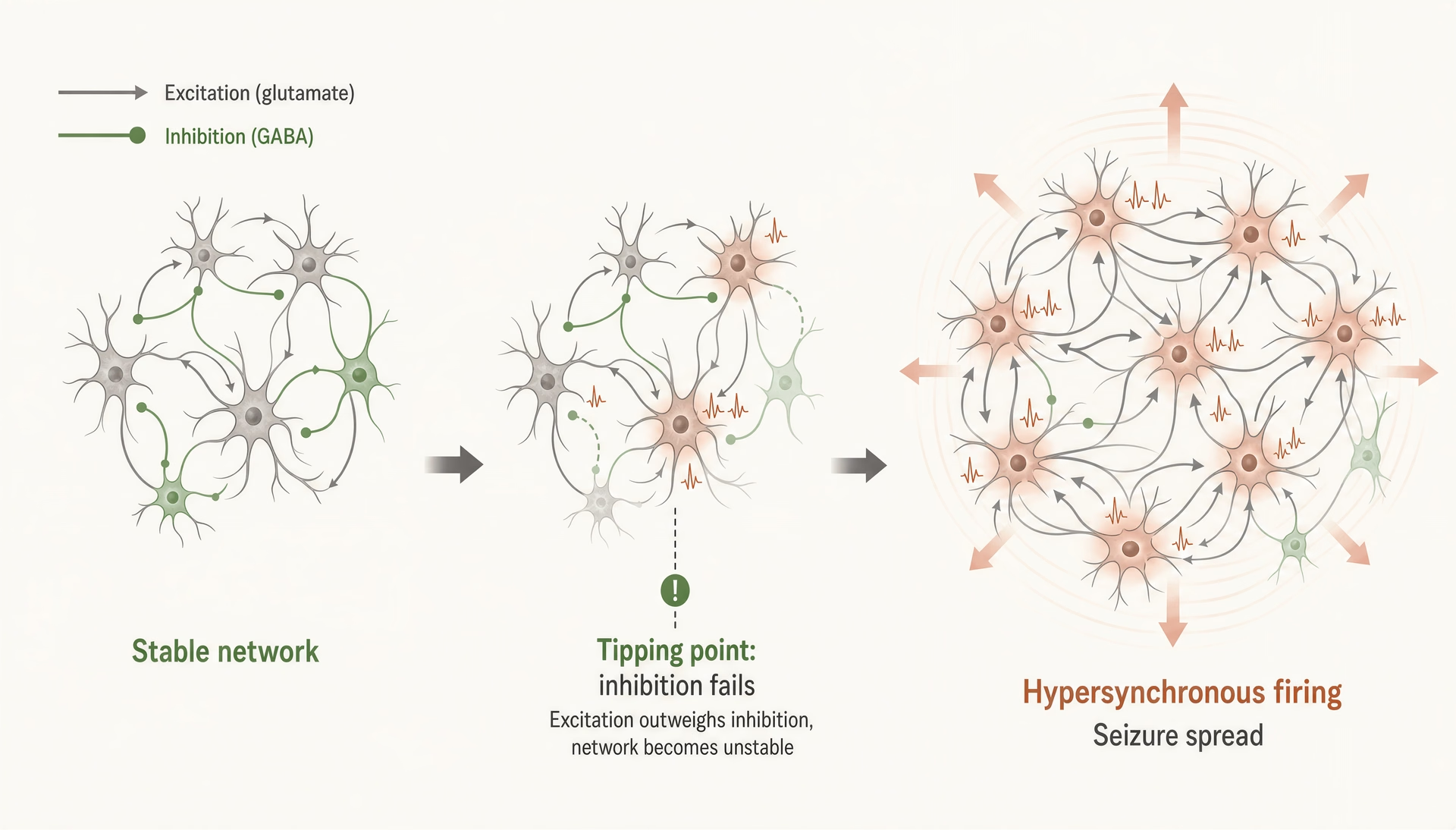
A seizure is a transient episode of abnormal, excessive, and hypersynchronous neuronal activity. In plain terms, too many neurons start firing together, in the wrong pattern, for too long, and the surrounding network cannot contain it.
The brain normally balances excitation and inhibition with exquisite precision. Glutamate-driven signaling pushes neurons toward firing. GABAergic signaling restrains them. Ion channels regulate membrane voltage, synaptic release, and recovery after firing. Glial cells buffer potassium and neurotransmitters. Local circuits and long-range connections shape whether abnormal activity fizzles out or recruits a larger network. Seizures emerge when that balance fails.
That failure can happen in several ways. Some epilepsies are channelopathies, where mutations in sodium, potassium, or calcium channel genes alter intrinsic excitability. Others involve impaired inhibitory interneurons, abnormal synaptic development, cortical malformations, metabolic defects, neuroinflammation, or structural lesions. The final common pathway is network instability. A single hyperexcitable neuron is rarely enough. A seizure needs a permissive circuit.
This is why antiseizure therapy is so varied. Sodium-channel blockers, GABA enhancers, SV2A ligands, AMPA antagonists, potassium-channel openers, carbonic anhydrase inhibitors, diet therapy, surgery, and neurostimulation all target different parts of the same system. Cannabidiol, when it works, appears to fit into that broader logic. It does not act like a universal anti-seizure switch. It seems to nudge several excitability pathways at once, which may help in severe epilepsies where no single mechanism explains the whole syndrome.
Why Dravet syndrome and Lennox-Gastaut are biologically and clinically distinct
Dravet syndrome and Lennox-Gastaut syndrome are often grouped together because both are severe developmental epileptic encephalopathies and both were included in pivotal cannabidiol trials. But biologically and clinically they are not interchangeable.
Dravet syndrome usually begins in infancy, often with prolonged febrile or temperature-sensitive seizures, and in many patients is linked to pathogenic variants in SCN1A. That gene encodes the Nav1.1 sodium channel, heavily expressed in inhibitory interneurons. The dominant model is not simply “too much sodium current.” In many cases, dysfunctional Nav1.1 particularly weakens inhibitory interneuron firing, so the brain loses braking power. The result is disinhibition across networks, recurrent convulsive seizures, status epilepticus risk, developmental slowing, gait and behavioral problems, and marked medication sensitivity. Some sodium-channel blockers can worsen seizures in classic Dravet, which makes mechanistic precision more than an academic concern.
Lennox-Gastaut syndrome, by contrast, is a syndrome defined more by phenotype than a single gene. It usually presents in early childhood with multiple seizure types, especially tonic seizures, atonic or “drop” seizures, atypical absence seizures, cognitive impairment, and a characteristic slow spike-wave EEG pattern. Its causes are heterogeneous: structural brain injury, malformations, genetic disorders, infections, metabolic disease, and in some cases evolution from infantile spasms. Lennox-Gastaut is a network epilepsy in the broadest sense. Diffuse cortical and subcortical dysfunction often seems to matter more than one recurring molecular lesion.
That distinction helps explain why evidence must be syndrome-specific. A treatment can work in both syndromes yet for different reasons, and success in one does not automatically generalize to focal epilepsy, juvenile myoclonic epilepsy, or unselected adult seizure disorders.
The endocannabinoid system in epilepsy
The endocannabinoid system is a neuromodulatory network, not a simple on-off receptor pair. Its main endogenous ligands are anandamide and 2-arachidonoylglycerol. The best-known receptors are CB1 and CB2, though many cannabinoid-related effects spill beyond them. CB1 receptors are densely expressed in the central nervous system, especially at presynaptic terminals, where they reduce neurotransmitter release. CB2 receptors are more associated with immune signaling, though not absent from the brain.
Retrograde messengers Signals released by a postsynaptic neuron that travel backward across the synapse to change presynaptic neurotransmitter release.
In normal physiology, endocannabinoids often act as retrograde messengers. A postsynaptic neuron becomes active, synthesizes endocannabinoids on demand, and sends them backward across the synapse to presynaptic CB1 receptors, dampening further release. This can suppress glutamate release, suppress GABA release, or both, depending on the synapse. That duality is one reason cannabinoid pharmacology in epilepsy is complicated. Reducing excitatory transmission could be anticonvulsant. Reducing inhibitory transmission could do the opposite.
Epileptic tissue appears to show alterations in endocannabinoid tone and receptor expression, but these changes are inconsistent across models and syndromes. Some may be compensatory. Some may be maladaptive. There is no clean story in which “more CB1 signaling equals fewer seizures.” If anything, the biology warns against oversimplification.

CBD mechanisms beyond CB1: GPR55, TRP channels, adenosine, ion channels, inflammation
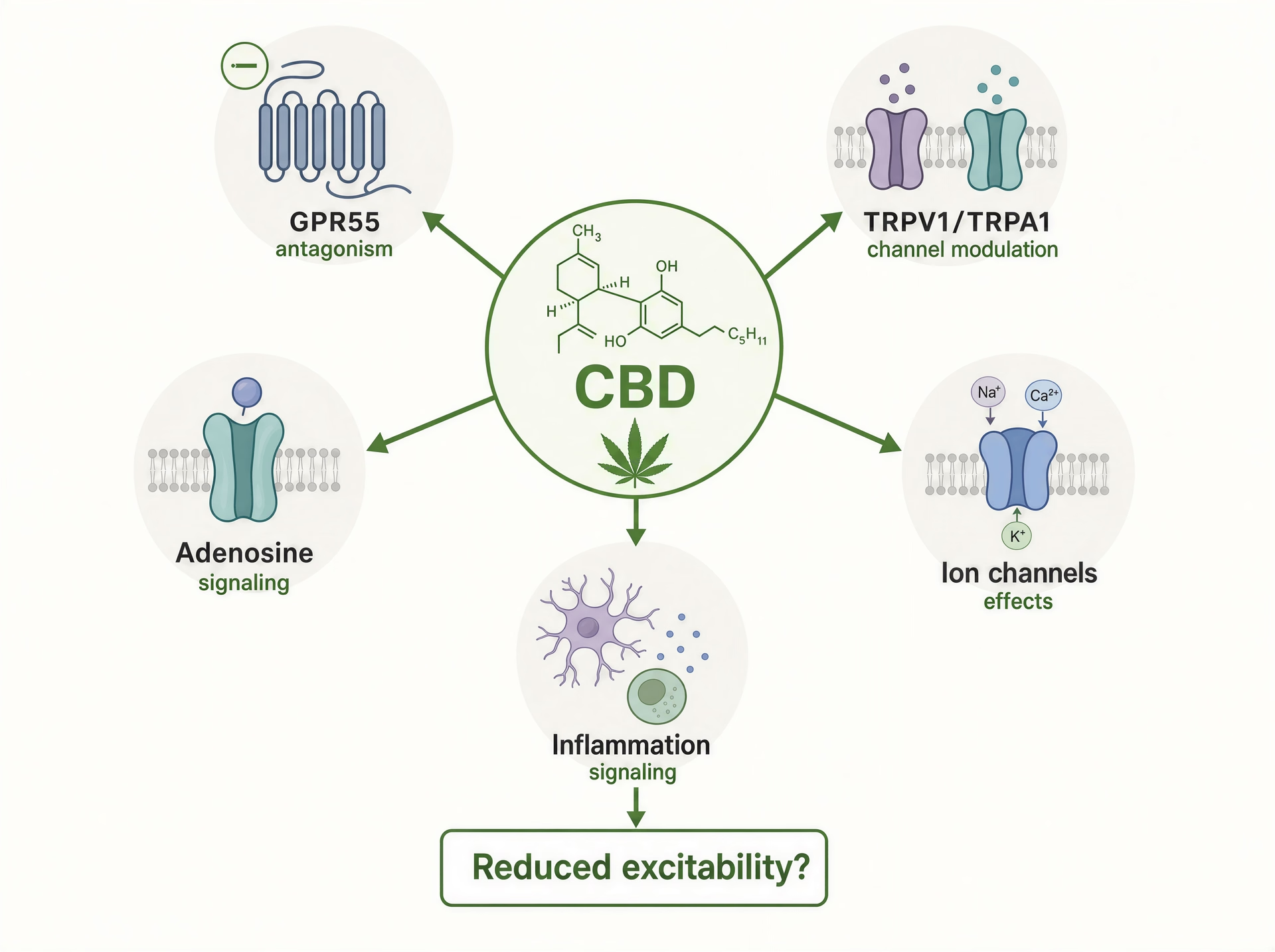
CBD’s antiseizure effect does not appear to depend mainly on direct CB1 agonism. That is the key pharmacologic point. CBD has low affinity for CB1 and CB2 compared with THC and does not produce the classic intoxicating CB1-driven effects associated with THC-rich cannabis.
Proposed CBD antiseizure mechanisms named in the article
- GPR55 antagonism
- May reduce calcium-dependent excitability and neurotransmitter release in some contexts.
- TRPV1 and TRPA1 effects
- CBD can interact with TRP channels involved in calcium flux and neuronal responsiveness.
- Adenosine signaling
- CBD may increase extracellular adenosine signaling, fitting a broader anticonvulsant framework.
- Ion-channel effects
- Reported effects on sodium channels, potassium channels, and calcium handling may alter firing thresholds.
- Anti-inflammatory actions
- Could matter where neuroinflammation lowers seizure threshold or sustains epileptogenesis.
So what might it be doing?
One leading candidate is GPR55 antagonism. GPR55 has been proposed as a pro-excitatory receptor in some contexts, with effects on intracellular calcium signaling and neurotransmitter release. By opposing GPR55 activity, CBD may reduce calcium-dependent excitability. This mechanism is attractive, though not settled.
CBD also interacts with TRP channels, especially TRPV1 and TRPA1. These channels regulate calcium flux and neuronal responsiveness. CBD can activate and then desensitize some TRP pathways, which may dampen hyperexcitability over time. Again, plausible, not definitive.
Adenosine signaling is another serious candidate. Adenosine is one of the brain’s endogenous anticonvulsant systems; it generally restrains firing and can terminate seizures. CBD may increase extracellular adenosine signaling by interfering with uptake mechanisms, though the exact human relevance remains debated. Even so, this is mechanistically appealing because it fits with a broader anticonvulsant framework independent of CB1 intoxication.
Then there are ion-channel effects. CBD has been reported to influence voltage-gated sodium channels, potassium channels, and calcium handling. These actions may matter in disorders where neuronal firing thresholds are already unstable. The effect is unlikely to be identical across all epilepsies, and it may depend on concentration ranges not reached by every formulation.
Anti-inflammatory actions may contribute too. Neuroinflammation can lower seizure threshold, alter blood-brain barrier function, and sustain epileptogenesis. CBD has shown anti-inflammatory and immunomodulatory effects in preclinical work. Whether that is central to seizure reduction in humans is less clear, but in chronic epileptic networks it could be part of the package.
The honest answer is that CBD probably does not have one single antiseizure mechanism. It looks more like a pharmacologic “many small pushes” drug than a one-receptor drug. Clinically, that uncertainty has not prevented efficacy in Dravet syndrome, Lennox-Gastaut syndrome, and tuberous sclerosis complex. Mechanistic ambiguity is frustrating for scientists, but it does not erase randomized trial results.
THC pharmacology and the problem of mixed anticonvulsant and proconvulsant signals
THC is different. It is a much stronger direct agonist at CB1 receptors, and that matters because CB1 sits on both excitatory and inhibitory terminals. Push that system in one network state and you may suppress glutamate release. Push it in another and you may suppress GABA release. One effect can help seizure control; the other can undermine it.
That is why THC has generated mixed anticonvulsant and proconvulsant findings in preclinical models. Dose matters. Seizure model matters. Developmental stage matters. Background circuitry matters. The same receptor system can stabilize one network and destabilize another.
Clinically, this makes THC a poor stand-in for purified CBD. The evidence base for THC-containing products in epilepsy is far weaker and much messier, dominated by case reports, small series, mixed-cannabinoid preparations, and uncontrolled observations. You usually cannot tell whether any apparent benefit came from CBD, THC, spontaneous fluctuation, expectation effects, or changes in other antiseizure drugs.
There is also a practical point. In severe epilepsies, especially in children, clinicians want predictable pharmacology. CBD offers that more readily than THC because its seizure effects do not appear to rely on intoxicating CB1 agonism. THC does not have that advantage. It brings psychoactive burden, cognitive concerns, and less reliable seizure biology.
So the clinical position should be firm: THC-containing cannabis products are not evidence-equivalent substitutes for prescription cannabidiol in treatment-resistant epilepsy. The rest of the article depends on that distinction.
The landmark Epidiolex trials that changed epilepsy treatment
Epilepsy is one of the few areas where a cannabis-derived medicine has actually passed modern clinical testing. That statement needs guardrails. The evidence is for purified, standardized cannabidiol oral solution, sold as Epidiolex in the US and Epidyolex in Europe, used as add-on treatment in severe drug-resistant epilepsies. It is not proof that “CBD works for seizures” in general. It is not proof that THC-containing cannabis products are interchangeable. And it is not proof that retail CBD oils can stand in for a prescription product with known concentration, manufacturing standards, and safety monitoring.
That distinction mattered because the patients in the pivotal trials were not typical epilepsy patients. The International League Against Epilepsy defines drug-resistant epilepsy as failure of two appropriate and tolerated antiseizure medication regimens to achieve sustained seizure freedom. The Epidiolex studies enrolled people well past that threshold: children and young adults with syndromes known for relentless seizures despite polytherapy. Those are exactly the cases where a placebo-controlled adjunctive trial can show whether a new drug adds real value.
Dravet syndrome: the 2017 Devinsky NEJM trial
The study that changed the field was published by Orrin Devinsky and colleagues in the New England Journal of Medicine in 2017. It was a randomized, double-blind, placebo-controlled trial in 120 children and young adults with Dravet syndrome, one of the most severe developmental and epileptic encephalopathies. Participants were assigned to cannabidiol 20 mg/kg/day or placebo for 14 weeks, on top of their existing antiseizure regimens.
The primary outcome was convulsive seizure frequency. The numbers were not subtle. In the cannabidiol group, median monthly convulsive seizures fell from 12.4 to 5.9. In the placebo group, they fell from 14.9 to 14.1. The adjusted median difference in reduction was 22.8 percentage points in favor of cannabidiol. That is the result that pushed purified CBD from anecdote into evidence.
Seizure freedom remained rare, which is exactly what one should expect in a heavily refractory Dravet population. Three patients in the cannabidiol arm, about 5%, became seizure-free during the treatment period, versus none in the placebo arm. That is meaningful for those families, but it is not a cure signal. The more honest reading is this: CBD reduced convulsive seizure burden in a syndrome where complete control is notoriously hard to achieve.
Adverse events were common. They occurred in the great majority of patients receiving cannabidiol, with somnolence, diarrhea, decreased appetite, fatigue, pyrexia, and vomiting among the leading complaints. Elevated liver aminotransferases also appeared, especially in those taking valproate. Sedation was often amplified when clobazam was part of the background regimen, a finding that later fit neatly with pharmacokinetic data showing CBD inhibits CYP2C19 and raises levels of clobazam’s active metabolite, N-desmethylclobazam.
This trial had limits. The treatment period was short. The sample was small by cardiology standards, though respectable for a rare pediatric epilepsy syndrome. Patients stayed on existing drugs, so the trial tested adjunctive efficacy, not CBD monotherapy. And because clobazam use was common, later debate focused on whether part of the observed benefit came from interaction-driven clobazam boosting rather than a pure CBD effect. That question has never erased the signal, but it does affect how clinicians interpret sedation and responder rates.
Even with those caveats, the trial was practice-changing. It showed that a cannabinoid-derived medicine could outperform placebo in a rigorous epilepsy trial with clinically relevant seizure endpoints. That was new.
Lennox-Gastaut syndrome: the 2018 Thiele Lancet trial
Lennox-Gastaut syndrome, like Dravet syndrome, is usually refractory and neurologically devastating. Elizabeth Thiele and colleagues published one of the first major Lennox-Gastaut cannabidiol trials in The Lancet in 2018. This randomized, double-blind, placebo-controlled study enrolled 171 patients who received cannabidiol 20 mg/kg/day or placebo for 14 weeks, again as add-on therapy.
The key endpoint was reduction in drop seizures. These are the seizures that make Lennox-Gastaut especially dangerous because they cause falls, injuries, and sudden loss of postural control. Median monthly drop-seizure frequency fell by 43.9% in the cannabidiol group and by 21.8% in the placebo group. Placebo response in epilepsy trials is never zero, especially in syndromes with variable seizure counts, but the gap here remained clinically and statistically persuasive.
Responder analyses also helped. A larger proportion of patients on cannabidiol achieved at least a 50% reduction in drop seizures compared with placebo. Total seizure burden also improved. Caregiver and clinician global impression scores tended to favor active treatment, though those softer outcomes are harder to interpret cleanly than counted seizures.
The adverse-effect profile looked familiar. Somnolence, decreased appetite, diarrhea, upper respiratory symptoms, pyrexia, and vomiting were frequent. Liver enzyme elevations appeared again, particularly with valproate. Some patients discontinued treatment because side effects outweighed benefit. That matters because Lennox-Gastaut patients are often already taking several antiseizure drugs, and every added medicine raises the load of sedation, feeding difficulty, and monitoring.
The trial’s importance was not just that it was positive. It also showed that the CBD signal was not confined to one syndrome. Dravet and Lennox-Gastaut are biologically distinct. Seeing benefit in both made it much harder to dismiss the Dravet result as statistical luck or syndrome-specific coincidence.
Lennox-Gastaut dose comparison: the 2018 Devinsky NEJM trial
Later in 2018, Devinsky and colleagues published a second major Lennox-Gastaut study in the New England Journal of Medicine. This one was especially useful for clinicians because it compared two doses of cannabidiol against placebo: 10 mg/kg/day, 20 mg/kg/day, or placebo in 225 patients.
The median percentage reduction in drop-seizure frequency was 37.2% with 10 mg/kg/day, 41.9% with 20 mg/kg/day, and 17.2% with placebo. On first pass, the 20 mg/kg/day dose looks slightly better than 10 mg/kg/day. The real message is more restrained. Both doses beat placebo. The higher dose did not produce a dramatic leap in efficacy, but it did bring more adverse effects.
That point shaped real prescribing. It pushed clinicians away from the lazy assumption that more CBD is always better. For many patients, 10 mg/kg/day offered meaningful seizure reduction with a somewhat easier tolerability profile. For others, escalation to 20 mg/kg/day was justified. The trial did not hand medicine a single ideal dose. It showed a tradeoff curve.
Side effects again included somnolence, decreased appetite, diarrhea, and fatigue. Serious adverse events and treatment discontinuations were more frequent in the higher-dose group. The clobazam interaction continued to loom large, because sedation could be due to both direct CBD effects and accumulation of clobazam metabolite. In practice, neurologists often respond by adjusting the background regimen rather than assuming CBD itself must be abandoned.
This study also sharpened the regulatory path. The FDA approved Epidiolex in 2018 for seizures associated with Lennox-Gastaut syndrome and Dravet syndrome in patients aged 2 years and older. That approval was tied to named syndromes, named trials, and a defined oral solution. Not to cannabis in the abstract.
Tuberous sclerosis complex: what later trials added
The next major expansion was tuberous sclerosis complex, a genetic disorder associated with focal and generalized seizures, cortical tubers, developmental problems, and high rates of treatment resistance. In this setting, the cannabidiol evidence arrived slightly later but added an important practical lesson.
In the phase 3 trial reported by Thiele and colleagues and later published in 2021, patients were assigned to cannabidiol 25 mg/kg/day, cannabidiol 50 mg/kg/day, or placebo. Median percentage reduction in seizure frequency was 48.6% with 25 mg/kg/day, 47.5% with 50 mg/kg/day, and 26.5% with placebo over the treatment period.
The near-overlap between 25 and 50 mg/kg/day mattered. It suggested that pushing the dose upward beyond 25 mg/kg/day did not buy much extra seizure control for most patients, while side effects tended to rise with dose. That is a pattern seen elsewhere in cannabidiol treatment: efficacy plateaus earlier than many people expect, but tolerability keeps getting worse.
These data supported the FDA’s later label expansion in 2020 to include seizures associated with tuberous sclerosis complex, and they reinforced a broader point. Purified CBD had now shown placebo-controlled benefit in three severe, named epileptic syndromes. That is a real evidence base. It is also a bounded one.
What the trial design means for real-world interpretation
The Epidiolex trials deserve respect, but not overstatement. They were randomized controlled trials, the right design for deciding whether a drug works. At the same time, they tested add-on cannabidiol in highly refractory patients over relatively short periods. That means several things.
First, these trials do not show that cannabidiol works for every epilepsy type. They do not establish efficacy in common focal epilepsies, routine adult generalized epilepsies, or people newly diagnosed with seizures. Outside Dravet syndrome, Lennox-Gastaut syndrome, and tuberous sclerosis complex, the evidence thins out fast.
Second, the benefit was meaningful but incomplete. Median seizure reductions in the 35% to 50% range can be life-changing in severe epilepsy. They are not the same as seizure freedom. Families need that distinction stated plainly.
Third, the drug interaction story is central, not incidental. CBD is often layered onto clobazam, valproate, stiripentol, topiramate, rufinamide, zonisamide, brivaracetam, or other antiseizure medicines. Sedation and liver enzyme elevations are not random background noise. They are predictable clinical issues that shape who can stay on treatment and at what dose. The prescribing information recommends baseline and follow-up transaminase and bilirubin monitoring for a reason.
Fourth, trial CBD is not retail CBD. The studied product was a pharmaceutical oral solution with known concentration, batch consistency, and formal safety oversight. Non-prescription CBD products often have inaccurate labeling, variable cannabinoid content, and potential contamination. In epilepsy care, that is not a minor quality issue. It is a safety problem.
Finally, these trials do not rescue THC as an evidence-equivalent option. The cannabidiol data are strong because the compound, dose, population, and endpoints were defined. THC-containing products have a far weaker and messier literature, with mixed anticonvulsant and proconvulsant signals and few comparable syndrome-specific randomized trials. For seizure care, purified CBD and THC-rich cannabis are not interchangeable categories.
That is the real legacy of the Epidiolex program. It did not validate cannabis broadly. It established that a specific purified cannabinoid medicine can reduce seizures in specific treatment-resistant epilepsies, with measurable benefits, measurable harms, and clear limits.
What the clinical evidence really supports and where it stops
Epilepsy is one of the few areas where a cannabis-derived medicine has actually met modern trial standards. That statement needs a hard qualifier: the evidence belongs to purified, prescription cannabidiol oral solution, not to cannabis broadly and not to retail CBD oils of uncertain composition. The distinction matters because the pivotal studies enrolled patients with severe, treatment-resistant epilepsies, defined by the ILAE as failure of two appropriate antiseizure medication regimens to achieve sustained seizure freedom. Those are not average epilepsy populations.
The practical reading of the literature is straightforward. Add-on purified CBD has good evidence in a small number of named syndromes. Outside those syndromes, confidence drops fast.
| Syndrome | Study | Dose(s) | Key seizure outcome |
|---|---|---|---|
| Dravet syndrome | Devinsky et al., NEJM 2017 | 20 mg/kg/day vs placebo | Median monthly convulsive seizures fell from 12.4 to 5.9 vs 14.9 to 14.1; adjusted median difference 22.8 percentage points |
| Lennox-Gastaut syndrome | Thiele et al., Lancet 2018 | 20 mg/kg/day vs placebo | Median drop seizures fell by 43.9% vs 21.8% |
| Lennox-Gastaut syndrome | Devinsky et al., NEJM 2018 | 10 mg/kg/day, 20 mg/kg/day, placebo | Median drop-seizure reduction 37.2%, 41.9%, and 17.2% |
| Tuberous sclerosis complex | Thiele et al., 2021 | 25 mg/kg/day, 50 mg/kg/day, placebo | Median seizure reduction 48.6%, 47.5%, and 26.5% |
Strongest evidence: Dravet, Lennox-Gastaut, and tuberous sclerosis complex
The clearest support is for Dravet syndrome, Lennox-Gastaut syndrome, and tuberous sclerosis complex. These are the conditions that led to regulatory approval of Epidiolex in the US and Epidyolex in Europe. They are also exactly the populations studied in the major randomized controlled trials.
In Dravet syndrome, the landmark trial was Devinsky et al. in The New England Journal of Medicine in 2017. It randomized 120 children and young adults to cannabidiol 20 mg/kg/day or placebo for 14 weeks. The result was not subtle. Median monthly convulsive seizures fell from 12.4 to 5.9 with cannabidiol, versus 14.9 to 14.1 with placebo. The adjusted median difference in reduction was 22.8 percentage points in favor of cannabidiol. Three patients in the CBD arm became seizure-free during treatment; none did in placebo. That does not mean CBD “cures” Dravet. It means it can produce a clinically meaningful reduction in convulsive seizures in a highly refractory syndrome.
Lennox-Gastaut syndrome has similarly strong evidence. In Thiele et al., Lancet 2018, 171 patients received CBD 20 mg/kg/day or placebo. Median monthly drop seizures fell by 43.9% with cannabidiol and 21.8% with placebo. In the separate Devinsky et al. NEJM 2018 trial, 225 patients were randomized to 10 mg/kg/day, 20 mg/kg/day, or placebo. Median drop-seizure reduction was 37.2% with 10 mg/kg/day, 41.9% with 20 mg/kg/day, and 17.2% with placebo. That dose comparison is clinically useful: higher dosing did not produce a dramatic jump in efficacy, but adverse effects increased.
For tuberous sclerosis complex, the signal is also convincing. Thiele and colleagues reported that median seizure reduction was 48.6% with cannabidiol 25 mg/kg/day and 47.5% with 50 mg/kg/day, versus 26.5% with placebo. Again, more is not always better. The near-identical efficacy at 25 and 50 mg/kg/day supports the common clinical approach of avoiding dose escalation unless there is a clear reason.
These are the uses the data support. Not “epilepsy in general.” Not “cannabis helps seizures.” Purified adjunctive CBD in these severe syndromic epilepsies.
What meta-analyses and systematic reviews say
Systematic reviews have moved in the same direction as the pivotal trials, but they have not erased the boundaries of the evidence. Earlier reviews and American Academy of Neurology position statements were skeptical of “medical marijuana” for epilepsy because the literature mixed purified CBD, artisanal extracts, and THC-containing products, often without controlled designs. That skepticism was justified.
As randomized trial data accumulated, reviews became more supportive for syndrome-specific use. Across published systematic reviews through 2023 and 2024, the consistent finding is that add-on purified cannabidiol reduces seizure frequency in Dravet syndrome, Lennox-Gastaut syndrome, and tuberous sclerosis complex, with a tradeoff of dose-related adverse effects such as somnolence, diarrhea, reduced appetite, and liver enzyme elevation.[5] Cannabidiol efficacy and clobazam status: a systematic review and meta-analysis of randomized controlled trials in Dravet syndrome and Lennox-Gastaut syndrome. S. Lattanzi, F. Brigo, C. Trinka, et al.. CNS Drugs, 2022.
Individual-patient and pooled analyses have reinforced that point rather than expanding it. A 2022 individual-patient-data meta-analysis by Lattanzi and colleagues, focused on Dravet and Lennox-Gastaut, found significantly higher odds of clinically meaningful seizure reduction with cannabidiol than with placebo. That matters because IPD meta-analysis can test consistency across patients, doses, and trial strata more carefully than simple pooling of summary results. The main message held up: CBD works as adjunctive therapy in these named syndromes.
But meta-analysis cannot manufacture evidence where primary trials are absent. If the included studies are mostly pediatric, highly refractory, and syndrome-specific, then the pooled conclusion remains pediatric, highly refractory, and syndrome-specific. Reviews do not justify a leap to “therefore CBD works for all epilepsy types.”
What remains uncertain in focal epilepsy, generalized epilepsy outside syndromic cases, and adults
This is where many popular summaries overreach.
For focal epilepsy, evidence is still limited and far less persuasive. There have been fewer randomized studies, sample sizes have been smaller, and results have been less consistent than in Dravet or Lennox-Gastaut. Some adult patients with focal seizures may report benefit, but the field does not yet have the same level of replicated placebo-controlled evidence.
The same caution applies to generalized epilepsies outside the classic syndromic cases. “Generalized epilepsy” is not a single disease. It includes biologically distinct syndromes, age groups, and seizure types. Success in Dravet syndrome does not automatically predict success in juvenile myoclonic epilepsy, generalized tonic-clonic seizures of other causes, or mixed developmental epileptic encephalopathies that were not actually studied.
Adults are another gap. Adults were not entirely absent from the pivotal programs, but the literature is weighted toward children and young people with severe developmental epilepsies. That limits generalizability. Adult pharmacology, comorbidity, and drug-interaction patterns can differ. So can treatment goals. In pediatric syndromic epilepsy, a 30% to 40% seizure reduction may be transformative. In a working adult with focal epilepsy, the threshold for acceptable benefit versus sedation or gastrointestinal side effects may be different.
THC-containing products should not be treated as evidence-equivalent substitutes. The human literature for THC in epilepsy is mixed, sparse, and badly confounded by mixed-cannabinoid preparations and uncontrolled designs. Preclinical work shows both anticonvulsant and proconvulsant effects depending on dose and model. Clinically, that is not a stable enough foundation to recommend THC as if it were interchangeable with prescription cannabidiol.
Why observational reports and parent testimonials can mislead
Open-label studies and family reports are valuable for generating hypotheses and for capturing outcomes formal trials often miss, such as sleep, alertness, recovery time, or behavior. They are not reliable proof of antiseizure efficacy on their own.
The first problem is placebo and expectation effects. In epilepsy trials, subjective outcomes are especially vulnerable to hope-driven reporting. Families seeking a new treatment after years of failed therapies are not neutral observers. That is human, not dishonest.
The second problem is regression to the mean. Seizures fluctuate. Patients are often enrolled or started on a new therapy when seizure burden is unusually bad. Some improvement will happen naturally even if the treatment does nothing.
Then there is survivorship bias. Expanded-access and open-label extension studies often look encouraging because the people who do badly tend to stop treatment early, while responders remain in follow-up. Over time, the remaining cohort becomes enriched for people who benefited or tolerated the drug well. Long-term seizure reductions can therefore look stronger than they really are for an all-comers population.
Drug interactions add another layer of confusion. CBD raises levels of N-desmethylclobazam through CYP2C19 inhibition, which can increase sedation and may also contribute to seizure improvement in some patients. If a child improves after starting CBD while already taking clobazam, how much of that effect came from cannabidiol itself and how much came from altered clobazam exposure? In practice, both may matter. In interpretation, it complicates clean attribution.
That is why the strongest claims should stay narrow. Purified prescription CBD is supported as adjunctive therapy for Dravet syndrome, Lennox-Gastaut syndrome, and tuberous sclerosis complex. Beyond that, the evidence becomes patchier, and retail cannabis or CBD products are not a scientifically sound stand-in for the medicine tested in the trials.
Patient experience: what families report, what clinicians measure, and why both matter
Families living with severe epilepsy do not experience treatment as a spreadsheet. They experience it as ambulance calls, interrupted school, falls, fear of nighttime seizures, postictal confusion, medication sedation, and the constant question of whether a child is more present today than last month. That is why caregiver reports around cannabidiol can sound richer than trial tables. They often describe not only fewer seizures, but a child who is more awake, recovers faster, sleeps better, or engages more. Those reports matter. They are also not the same thing as proof that CBD itself caused every improvement.
The clinical trials that established purified cannabidiol oral solution were designed around seizure outcomes because seizure counts are the hardest endpoint in epilepsy to ignore. In Dravet syndrome, Devinsky et al. in NEJM 2017 found median monthly convulsive seizures dropped from 12.4 to 5.9 with cannabidiol, versus 14.9 to 14.1 with placebo. In Lennox-Gastaut syndrome, Thiele et al. in Lancet 2018 and Devinsky et al. in NEJM 2018 showed meaningful reductions in drop seizures. Those are real effects in highly treatment-resistant populations. Still, a family may tell you the most important change was not the raw count. It was that their child was no longer wiped out for hours after each event.
Seizure counts versus quality-of-life outcomes
Seizure frequency is necessary, but it is not sufficient. Two patients can each have a 30% seizure reduction and live very different lives. One may still have violent drop attacks with injuries. Another may have shorter, less disruptive events and a big gain in daily function. Trials usually prioritize countable seizure types because they are more reliable across sites and less vulnerable to subjective interpretation. That makes scientific sense. It also leaves gaps.
Caregivers often track outcomes clinicians care about but cannot easily standardize: school participation, language, appetite, irritability, sleep continuity, and whether mornings are lost to medication fog. In severe childhood epilepsies, these changes can be as meaningful as a percentage reduction on a seizure diary. A child who is more interactive and has fewer prolonged recoveries may be doing better even if not seizure-free.
The danger lies at both extremes. If you focus only on seizure counts, you can miss meaningful benefit. If you treat every reported quality-of-life gain as direct evidence of antiseizure efficacy, you can overread the treatment. Open-label extension studies and expanded-access programs led by Devinsky and colleagues have described sustained benefit in some patients, but those designs are vulnerable to expectation effects, regression to the mean, and survivor bias. Families who see no benefit often stop early and disappear from long-term datasets. The ones who remain are more likely to be responders.
Behavior, alertness, sleep, and recovery time after seizures
These are the outcomes families bring up first, especially in children with Dravet syndrome or Lennox-Gastaut syndrome. Some describe better sleep architecture, less daytime irritability, more eye contact, improved appetite regulation, or a shorter postictal period after seizures. Clinicians should not wave that away. Severe epilepsy is not just seizure events; it is what happens between them and after them.
But these domains are messy to measure. Better sleep can reflect fewer nocturnal seizures. It can also reflect sedation. Improved behavior may reflect less seizure burden, better rest, a reduction in another antiseizure medication, developmental maturation, or simply a good month. “More alert” is particularly tricky, because cannabidiol can cause somnolence in some patients while families in other cases report improved wakefulness once seizures come under better control. Both can be true in different people.
That is why careful follow-up matters. Good epilepsy care asks structured questions: Are seizures shorter? Is rescue medication needed less often? How long until baseline after an event? Is school attendance better? Has daytime sleepiness improved or worsened? Has sleep changed after a clobazam dose adjustment? That is more useful than either dismissing family observations or accepting them without context.
The clobazam confound: when improvement may partly reflect a drug interaction
This is one of the most important practical points in cannabidiol treatment. CBD inhibits CYP2C19, which can raise levels of N-desmethylclobazam, the active metabolite of clobazam. The result may be stronger antiseizure effect in some patients, but also more sedation. So when a child on both drugs improves, the improvement may not be due to CBD acting alone. Part of the benefit may come from functionally boosting clobazam exposure.
That does not make the improvement fake. It makes it pharmacologically complicated.
This interaction mattered in the Epidiolex story, especially because clobazam is common in the same syndromes where CBD was studied. Some caregiver-reported gains in calmness, sleep, or seizure control may partly reflect this combination effect. Some reports of “CBD made my child sleepy” may really mean “CBD raised the effective clobazam burden.” Clinicians who understand this can respond intelligently: review the medication list, check for excess sedation, and consider whether clobazam dose adjustment changes the picture.
How to read anecdotal success stories without dismissing them
Anecdotes are not useless. They are early signals, lived records of what trials may fail to capture, and sometimes the first clue that an outcome worth measuring has been missed. Families noticed changes in alertness and recovery long before those issues were cleanly incorporated into research conversations.
Still, anecdotes cannot settle efficacy. They rarely control for natural seizure fluctuation, concurrent medication changes, placebo effects, or selective memory. Epilepsy is variable. A dramatic improvement after starting CBD may be real, partly real, or coincidental. The right response is neither cynicism nor credulity.
Read anecdotal reports by asking a few hard questions. Was the product purified prescription cannabidiol or an unverified retail preparation? What epilepsy syndrome was involved? What other drugs changed at the same time, especially clobazam or valproate? Was there a seizure diary before and after treatment? Were the reported gains about seizure count, recovery time, behavior, or all three?
That approach respects lived experience while keeping standards intact. In epilepsy, families often see things that matter before the literature measures them well. Clinicians measure what can be compared across patients. Good care needs both.
Practical guide to dosing and administration of cannabidiol in epilepsy care
Cannabidiol dosing in epilepsy is not guesswork, and it is not interchangeable with the casual “take some CBD” advice common online. The evidence-based product here is purified cannabidiol oral solution, 100 mg/mL, used as add-on therapy in specific severe epilepsies. The practical task is to convert a label written for prescribers into something patients and caregivers can actually follow day after day, because seizure care depends on repeatable exposure, not vague estimates.
How the article describes CBD titration
- Start 2.5 mg/kg twice daily, equal to 5 mg/kg/day.
- After 1 week Increase to 5 mg/kg twice daily, equal to 10 mg/kg/day.
- If needed for Dravet or Lennox-Gastaut Increase to 10 mg/kg twice daily, equal to 20 mg/kg/day, if seizure reduction is incomplete and tolerability is acceptable.
- Tuberous sclerosis complex maintenance 12.5 mg/kg twice daily, equal to 25 mg/kg/day.
Approved dosing schedules for Dravet, Lennox-Gastaut, and tuberous sclerosis complex
For the FDA-approved oral solution, the starting dose is 2.5 mg/kg twice daily, which equals 5 mg/kg/day. After one week, the dose increases to 5 mg/kg twice daily, or 10 mg/kg/day. That is the standard maintenance dose for Dravet syndrome and Lennox-Gastaut syndrome. If seizure reduction is incomplete and tolerability is acceptable, the dose can be pushed higher to 10 mg/kg twice daily, or 20 mg/kg/day.
That schedule reflects the trial data. In Dravet syndrome, Devinsky and colleagues in NEJM 2017 used 20 mg/kg/day and showed a clear reduction in convulsive seizures, but adverse effects were common. In Lennox-Gastaut syndrome, the picture was more interesting. Thiele et al. in Lancet 2018 used 20 mg/kg/day, while Devinsky et al. in NEJM 2018 compared 10 mg/kg/day with 20 mg/kg/day. Both active doses beat placebo, and the gap between 10 and 20 mg/kg/day was not dramatic. That matters clinically. It means “more” is not automatically “better,” especially if a patient becomes sleepy, stops eating well, or develops liver enzyme elevations.
Tuberous sclerosis complex uses a different target. The labeled maintenance dose is 12.5 mg/kg twice daily, for a total of 25 mg/kg/day. Trial data explain why. In the tuberous sclerosis study led by Thiele and reported in 2021, 25 mg/kg/day and 50 mg/kg/day had very similar seizure outcomes, while the higher dose carried more treatment burden. So the practical lesson is straightforward: there is usually little logic in forcing the dose upward once 25 mg/kg/day has been reached and tolerated unless a specialist has a specific reason.
Timing also matters. Twice-daily dosing works best when the doses are spaced consistently, such as morning and evening around the same times every day. Skipping around by several hours, doubling up after a missed dose, or alternating food intake patterns can make side effects and response harder to interpret.

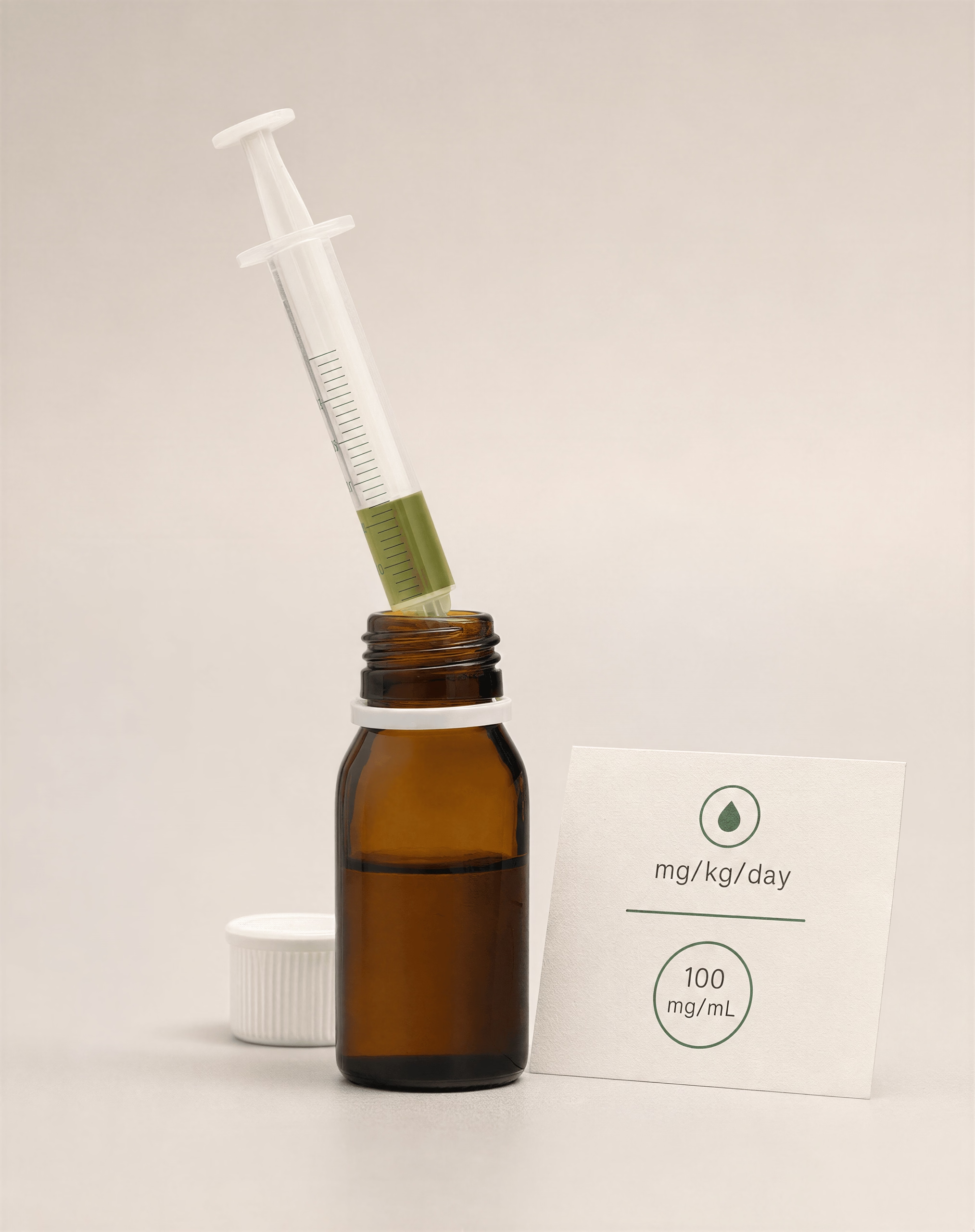
Why mg per kg matters more than the number on a gummy label
Epilepsy dosing is weight-based because the trial evidence and the approved prescribing information are weight-based. A fixed “25 mg CBD gummy” tells you almost nothing useful without knowing the patient’s body weight, the actual content of the product, and whether the formulation is even comparable to the prescription oral solution.
- 20 kg child: starting total daily dose
- 100 mg/day = 50 mg twice daily
- 20 kg child: starting volume at 100 mg/mL
- 0.5 mL twice daily
- 20 kg child: 10 mg/kg/day volume
- 1 mL twice daily
- 20 kg child: 20 mg/kg/day volume
- 2 mL twice daily
- 70 kg patient at 10 mg/kg/day
- 700 mg/day = 3.5 mL twice daily
- 70 kg patient at 20 mg/kg/day
- 1,400 mg/day = 14 mL/day
Take a 20 kg child with Dravet syndrome. The starting dose of 5 mg/kg/day equals 100 mg/day total, split into 50 mg twice daily. Because the prescription solution is 100 mg/mL, each dose is 0.5 mL. After the first week, the usual maintenance dose of 10 mg/kg/day equals 200 mg/day total, or 1 mL twice daily. If the clinician escalates to 20 mg/kg/day, that becomes 400 mg/day, or 2 mL twice daily.
Now take a 70 kg adolescent or adult with Lennox-Gastaut syndrome. At 10 mg/kg/day, the total daily dose is 700 mg, which equals 7 mL/day, usually 3.5 mL twice daily. At 20 mg/kg/day, it becomes 1,400 mg/day, or 14 mL/day. Those are medicine-level doses, far beyond what people usually imagine when they hear “CBD.”
This is why retail labeling misleads people. A gummy count, dropper estimate, or bottle total is not a dosing plan. The relevant question is always: how many milligrams per kilogram per day is the patient receiving, and is that amount delivered reliably?
Food effects, formulation consistency, and adherence
Cannabidiol exposure changes with food, especially high-fat meals. That does not mean patients must always take it with a fatty breakfast. It means they should take it the same way every time. With food every time is acceptable. Without food every time is acceptable. Switching back and forth is not ideal, because it changes absorption and muddies the clinical picture. If seizure control worsens or side effects appear, the team needs to know whether the dose changed, the diet changed, or both.
Formulation consistency matters just as much. The approved oral solution has a fixed concentration of 100 mg/mL. That gives prescribers and caregivers a stable conversion from milligrams to milliliters. Consistency sounds boring. In epilepsy care, boring is good.
Adherence often becomes the hidden reason a promising treatment appears to “stop working.” Twice-daily schedules can be hard for families already juggling multiple antiseizure drugs, rescue medicines, school, tube feeds, sleep disruption, and frequent appointments. Practical tools help: written dose charts, oral syringes marked to the exact volume, phone reminders, and a seizure diary that records not only seizure counts but missed doses, appetite, diarrhea, sedation, and changes in meal timing.
What clinicians monitor when titrating CBD
Clinicians are not just watching seizure counts. They are balancing efficacy, tolerability, and interactions with the rest of the antiseizure regimen.
Liver function monitoring is a core part of titration. Baseline transaminases and bilirubin are typically checked before treatment, then repeated after dose increases and during early follow-up. This is not a theoretical warning. Elevated liver enzymes were seen in the trials, especially when cannabidiol was combined with valproate.
Sedation is another major issue, particularly with clobazam. CBD inhibits CYP2C19, which can raise levels of N-desmethylclobazam, clobazam’s active metabolite. The result can look like “CBD side effects” when it is really a drug interaction amplifying drowsiness, fatigue, drooling, poor attention, or gait instability. Sometimes the right fix is not to stop CBD but to lower clobazam.
Clinicians also watch appetite, weight, diarrhea, vomiting, sleep quality, irritability, and school or daytime functioning. In children, weight loss can quietly alter mg/kg exposure over time. A child who loses weight while staying on the same fixed milliliter dose is, in effect, getting a higher dose per kilogram than before.
Then there is the seizure diary itself. The aim is not simply fewer events in general. The team wants seizure-type specific data: convulsive seizures in Dravet, drop seizures in Lennox-Gastaut, total count or focal count where relevant, rescue medication use, emergency visits, and postictal recovery time. Without that detail, dose adjustments become blind.
Why over-the-counter CBD products are a poor substitute in epilepsy
Over-the-counter CBD products are a weak substitute for prescription cannabidiol in epilepsy for three reasons: dose uncertainty, content uncertainty, and clinical uncertainty.
Dose uncertainty comes first. The pivotal trials used 10, 20, 25, or 50 mg/kg/day in standardized formulations. Most retail products are not designed to deliver those doses accurately, especially for children.
Content uncertainty is the bigger problem. Repeated product surveys have found mislabeled CBD amounts, detectable THC when none was expected, and contamination with solvents, pesticides, or heavy metals. In epilepsy care, that is unacceptable. A patient with drug-resistant seizures needs the same compound, at the same concentration, every day. “Close enough” is not close enough.
Clinical uncertainty follows from the first two. If a patient improves on an artisanal product, was it the CBD, a placebo effect, a spontaneous fluctuation in seizures, a change in clobazam exposure, or an unnoticed THC effect? If the patient worsens, was the dose too low, the product inconsistent, or the THC content proconvulsant? You cannot answer those questions cleanly when the product itself is unstable.
That is the practical dividing line. The evidence supports purified prescription cannabidiol for specific refractory epilepsy syndromes. It does not support swapping in a gummy, tincture, or mixed cannabinoid product and expecting the same seizure outcomes. For epilepsy, consistency is treatment.
Drug interactions with antiseizure medications: the part patients most need explained
For many families, the hardest part of prescription cannabidiol is not the dosing schedule. It is figuring out what changed because CBD helped, what changed because another antiseizure medication got pushed higher by a metabolic interaction, and what changed because the child is simply exhausted after seizures. This is where epilepsy care becomes very different from the vague idea that “CBD is natural, so it must be simple.” It is not simple. In epilepsy, cannabidiol is a real drug with real enzyme effects, and those effects show up in clinic.
The practical point is direct: when purified cannabidiol is added to an existing antiseizure regimen, some adverse effects come from cannabidiol itself, but many come from cannabidiol changing blood levels of the other drugs already on board. The interaction profile is one reason trial investigators and prescribing guidance put so much emphasis on follow-up, labs, and medication review.
| Interaction | What changes | Likely clinical result |
|---|---|---|
| CBD + clobazam | CBD inhibits CYP2C19, slowing clearance of N-desmethylclobazam | Somnolence, sedation, slower responses, gait instability, droopy eyelids |
| CBD + valproate | Higher risk of transaminase elevation | AST/ALT rise, possible fatigue, nausea, poor appetite, need for lab follow-up |
| CBD + stiripentol/topiramate/zonisamide/rufinamide/eslicarbazepine/brivaracetam | Reported increases in serum levels or clinically relevant effects | More dizziness, sleepiness, appetite loss, cognitive dulling, behavioral change, or nausea |

Clobazam and CYP2C19: why sedation is so common
The single most important interaction to understand is clobazam.
N-desmethylclobazam The active metabolite of clobazam; its clearance is partly mediated by CYP2C19, so levels can rise when CBD inhibits that enzyme.
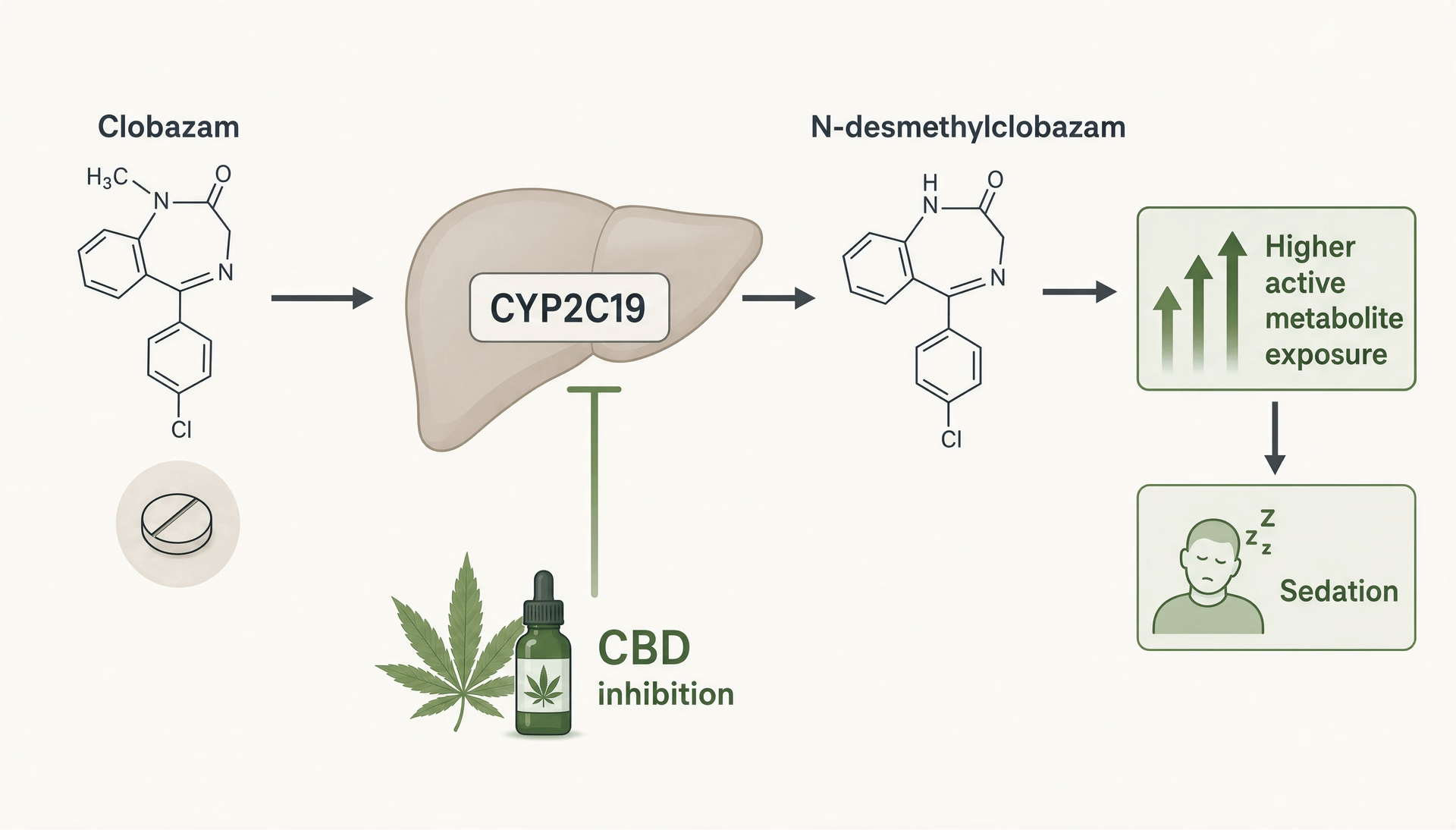
Clobazam is metabolized in the liver to an active metabolite called N-desmethylclobazam. That metabolite is then cleared in part by the enzyme CYP2C19. Cannabidiol inhibits CYP2C19. Put plainly, CBD can slow the breakdown of N-desmethylclobazam, so the active metabolite accumulates. The patient may not have “too much CBD” in the everyday sense. They may have too much active clobazam effect.
That is why somnolence and sedation were so common in the cannabidiol trials, especially in patients also taking clobazam. This was not a minor footnote discovered after approval. It was visible in the development program and is reflected in prescribing information. Parents often describe it as “zoning out,” more naps, slower responses, unsteady gait, droopy eyelids, or a child who seems less interactive than before. Adults may report fatigue, slowed thinking, or feeling drugged.
The mechanism matters because it changes management. If sedation appears after CBD is started or increased, the answer is not always to abandon CBD. Sometimes the better move is to reduce clobazam, especially if seizure control improved but alertness worsened. This is one of the clearest examples in epilepsy where a side effect can be a drug-combination effect rather than proof that the new medicine is intolerable on its own.
The interaction can also confuse families because clobazam may have been “stable” for months or years before CBD was added. Stability before the change does not protect against the interaction. Once CBD inhibits CYP2C19, N-desmethylclobazam can rise quickly enough to matter clinically.
Sedation is not benign just because it is common. If a child becomes floppy, hard to wake, much less responsive, or starts falling more often, clinicians need to think immediately about clobazam interaction, not just seizure fluctuation.
Valproate and liver enzyme elevations
The other interaction clinicians watch closely is with valproate, though it behaves differently.
With valproate, the main issue is not a classic rise in valproate blood levels. The bigger concern is liver enzyme elevation when valproate and cannabidiol are used together. In the CBD trials and post-approval guidance, transaminase elevations were notably more frequent in patients taking both. AST and ALT can rise, sometimes several times above the upper limit of normal. This is a real hepatocellular injury signal, not a lab curiosity.
Why does this happen? The exact mechanism is still not fully settled. It does not appear to be explained simply by one clean pharmacokinetic pathway in the same way the clobazam interaction is explained by CYP2C19 inhibition. But clinically, the association is strong enough that valproate plus CBD should trigger more vigilance from the start.
Most patients with elevated AST or ALT do not feel dramatic liver symptoms at first. That is what makes routine bloodwork important. Some may have nausea, vomiting, abdominal discomfort, fatigue, poor appetite, or malaise, but many are detected only because labs were checked at the right time. If bilirubin also rises, or if jaundice appears, that is more concerning and needs urgent clinical review.
In practice, when transaminases climb after CBD is added, clinicians often review the timing, repeat labs, and consider reducing or stopping CBD, valproate, or both depending on severity, seizure risk, and the rest of the regimen. The right move is individualized. The wrong move is ignoring it because the patient “looks okay.”
Other AED interactions: stiripentol, topiramate, rufinamide, zonisamide, eslicarbazepine, brivaracetam
Beyond clobazam and valproate, cannabidiol has a wider interaction map than many people expect.
In expanded-access data and pharmacology analyses, increases in serum levels or clinically relevant effects have been reported with stiripentol, topiramate, rufinamide, zonisamide, eslicarbazepine, and brivaracetam. These interactions are not all identical in mechanism or clinical weight, but they matter because patients in the approved CBD syndromes often take several antiseizure drugs at once.
Stiripentol is already a metabolically complicated drug, often used with clobazam and valproate in Dravet syndrome. Adding CBD to that mix can intensify adverse effects such as sedation, poor appetite, or behavioral slowing. Topiramate and zonisamide raise a different concern: both can contribute to decreased appetite, weight loss, cognitive dulling, and fatigue, which overlap with CBD’s own adverse-effect profile. When those symptoms worsen after CBD is added, interaction should be on the differential even if no single blood level gives a full answer.
Rufinamide and eslicarbazepine may also show concentration increases. The practical result can be more dizziness, sleepiness, gait problems, diplopia, or nausea. Brivaracetam has drawn attention because elevated levels can produce sedation, irritability, or behavioral change. Again, what families often describe as “CBD side effects” may actually be CBD amplifying exposure to another antiseizure drug.
This is why medication lists need to be reviewed line by line before starting cannabidiol. Not just the names. The doses, recent changes, prior adverse effects, rescue medications, and whether sedation or appetite issues already existed.
Lab monitoring: AST, ALT, bilirubin, and clinical follow-up
The prescribing guidance for purified cannabidiol recommends liver-function testing before treatment and after treatment begins. In practice, that means AST, ALT, and total bilirubin at baseline, then repeated during dose titration and at intervals afterward, with extra attention when valproate is on board or when symptoms suggest liver injury.
Those tests are not random.
AST and ALT are transaminases that rise when hepatocytes are stressed or injured. Bilirubin helps identify whether liver dysfunction is becoming clinically more serious. A mild isolated bump in AST or ALT is not the same as a pattern that includes bilirubin elevation. The latter raises the stakes.
Clinical follow-up matters just as much as the lab sheet. Visits after CBD initiation should ask about sleepiness, appetite, diarrhea, vomiting, weight change, balance, attention, behavior, and whether the patient’s “baseline” has shifted. If the drug is taken with food inconsistently, levels may also vary more than expected, since cannabidiol exposure is affected by meals, especially high-fat meals. Consistency helps interpret both efficacy and toxicity.
How to distinguish adverse effects from seizure-related symptoms
This is where careful timing helps more than intuition.
Postictal sleepiness usually follows a clear seizure and improves over hours. Drug-related sedation is more persistent, often tracks with dose increases, and may show up even on seizure-free days. Ataxia from medication tends to be continuous or reproducible; gait problems from seizures are usually episodic. Poor appetite from drug effect unfolds over days to weeks. Sudden refusal to eat right after a seizure is a different pattern.
What to log during CBD treatment
- Seizure count
- Dose changes
- Daily alertness
- New gastrointestinal or balance symptoms
Caregivers should track four things together: seizure count, dose changes, daily alertness, and any new GI or balance symptoms. A simple log often reveals the answer. If sedation began three days after increasing CBD in a child already taking clobazam, the likely cause is not mysterious. If fatigue worsens alongside rising ALT and AST in a patient on valproate, liver toxicity has to be considered before assuming the epilepsy itself is worsening.
The broader lesson is simple but often missed: in epilepsy, purified CBD is not an isolated add-on. It enters a crowded pharmacologic system. The patients who benefit most are often the same patients most exposed to interaction risk. That is why monitoring is not optional polish around treatment. It is part of the treatment.
Risks, adverse effects, and where THC complicates the picture
Cannabidiol has real clinical value in a small set of severe epilepsies. It also has real risks. Those two statements belong together. The mistake is not talking about side effects; the mistake is pretending all “CBD” carries the same risk-benefit profile, or that THC-rich cannabis can be swapped in as if the evidence were equivalent. It cannot.
The safety data people usually quote come from purified plant-derived cannabidiol oral solution studied in highly treatment-resistant patients with Dravet syndrome, Lennox-Gastaut syndrome, and tuberous sclerosis complex. That matters because these patients were already taking multiple antiseizure drugs, often at high doses, and drug interactions were common. It also matters because the same safety assumptions should not be imported into unregulated oils, gummies, vape products, or mixed cannabinoid preparations.
Common adverse reactions seen in cannabidiol trials
The adverse effects reported in the pivotal trials were common, usually manageable, and sometimes dose-limiting. Across the Devinsky and Thiele studies, the recurring pattern was somnolence, diarrhea, decreased appetite, fatigue, vomiting, pyrexia, and weight loss. In the 2017 New England Journal of Medicine Dravet trial by Devinsky and colleagues, these events were frequent enough that nobody reading the paper could mistake cannabidiol for a side-effect-free add-on.
Somnolence deserves special attention because it was not just a background complaint. In practice, sedation often reflects interaction rather than cannabidiol alone. CBD inhibits CYP2C19 and can raise concentrations of N-desmethylclobazam, the active metabolite of clobazam. That is one reason some families report both seizure improvement and a child who seems much sleepier, duller, or slower after starting treatment. Sometimes the problem is “CBD side effects.” Sometimes it is amplified benzodiazepine exposure. Often it is both.
Dose also matters. In Lennox-Gastaut syndrome, Devinsky et al. in 2018 found median drop-seizure reduction of 37.2% with 10 mg/kg/day and 41.9% with 20 mg/kg/day, versus 17.2% with placebo. That small efficacy gap between 10 and 20 mg/kg/day did not erase the fact that adverse effects increased as dose rose. The tuberous sclerosis trial reported by Thiele and colleagues in 2021 made the same practical point from another angle: 25 mg/kg/day and 50 mg/kg/day produced very similar seizure reductions, 48.6% and 47.5%, suggesting that pushing the dose upward may add burden faster than benefit.
So the right frame is not “CBD is safe” or “CBD is dangerous.” It is this: prescription cannabidiol has a known adverse-effect profile, and tolerability is part of treatment selection, titration, and monitoring.
Liver toxicity signal and who is at higher risk
The liver signal with prescription CBD is clinically important. It is not a theoretical warning added for legal caution.
Elevations in alanine aminotransferase and aspartate aminotransferase were seen in the epilepsy trials, and the risk was clearly higher in certain combinations, especially with valproate. That pattern has been consistent enough that the prescribing information recommends baseline and follow-up monitoring of transaminases and bilirubin. When articles skip that point, they leave out one of the main practical issues in real-world use.
Who is at higher risk? First, patients taking valproate. The combination of cannabidiol and valproate is the clearest signal for transaminase elevations. Second, patients on higher CBD doses. Third, patients with pre-existing liver impairment or other hepatotoxic exposures. Clobazam is more strongly tied to sedation than to liver injury, but patients on complex polytherapy deserve extra attention because adverse effects can overlap and obscure one another.
This does not mean liver injury is inevitable, or even common enough to block use when the syndrome-specific evidence is strong. It means CBD should be managed like a real antiseizure medicine. Baseline labs, repeat labs after dose changes, and attention to symptoms such as vomiting, fatigue, anorexia, or jaundice are part of competent care. In epilepsy, where treatment often already involves polypharmacy, dismissing lab monitoring as a minor hassle is bad medicine.
Psychiatric and cognitive considerations
Cannabidiol is not intoxicating in the way THC is, but that does not end the psychiatric and cognitive discussion. Prescription CBD still carries the class warning applied to antiseizure drugs regarding suicidal ideation and behavior. The absolute risk is low, yet the warning exists for a reason: mood and behavior changes in epilepsy care are common, clinically relevant, and easy to misattribute.
Cognition is trickier. Some caregivers report better alertness, sleep, behavior, and recovery after seizures during open-label treatment. Those reports matter. They also sit beside a confounder-heavy reality. If CBD increases clobazam metabolite levels, a patient may become more sedated even while seizures improve. If clinicians then lower clobazam, alertness may improve and the family may credit CBD alone. That does not make the experience false. It means causation is messy.
There is also a population issue. The pivotal studies were not broad adult epilepsy trials. They were enriched for severe developmental and epileptic encephalopathies. Extrapolating long-term cognitive effects from those cohorts to every person with focal epilepsy or generalized epilepsy is not justified.

THC-rich products, intoxication, and seizure uncertainty
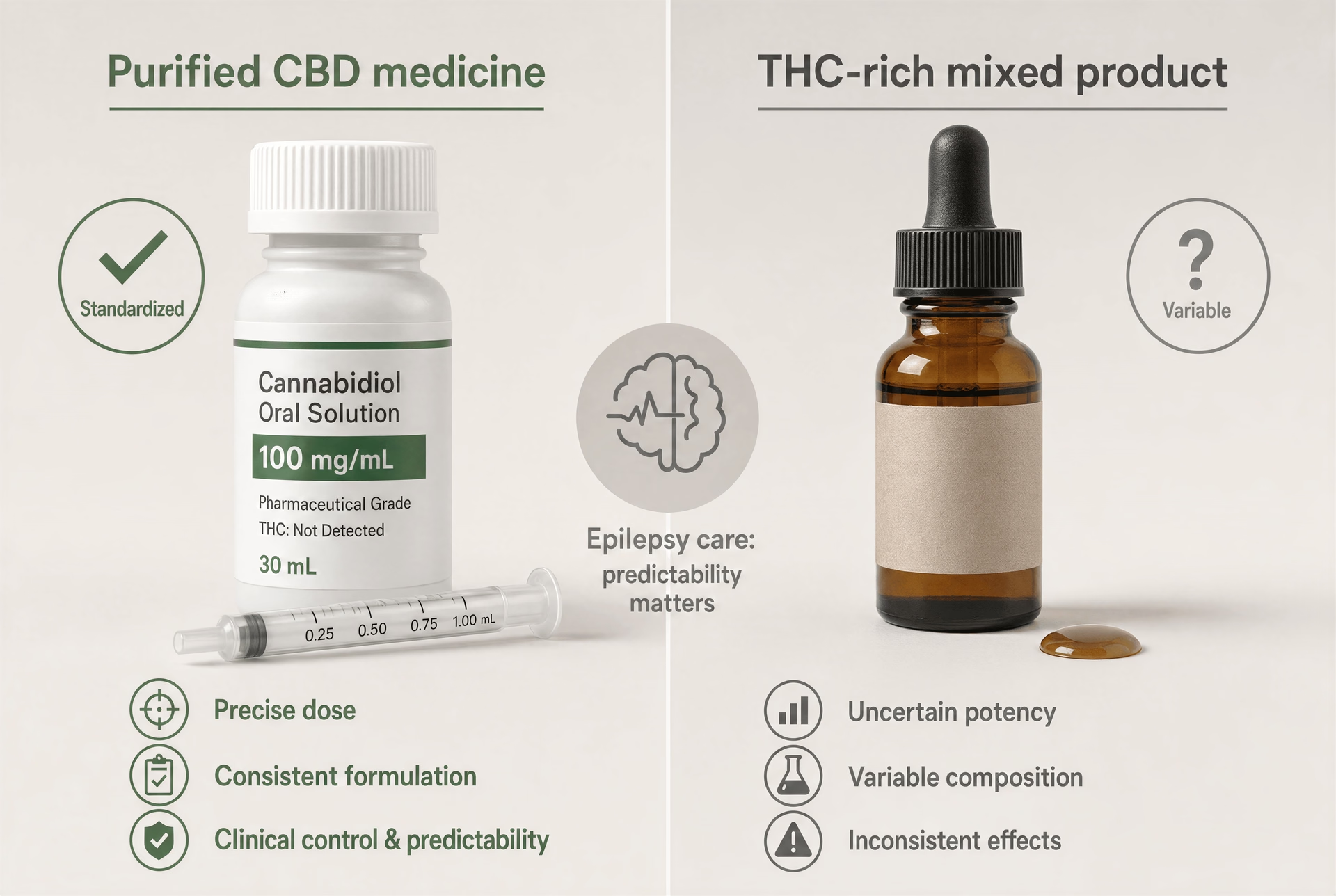
This is where many public discussions go off track. THC is not evidence-equivalent to purified cannabidiol for seizure treatment.
Mechanistically, that should not be surprising. CBD has low affinity for CB1 and CB2 compared with THC and does not appear to work through classic cannabinoid intoxication pathways. THC acts very differently in the brain, and the seizure literature around it is mixed. Preclinical studies have shown anticonvulsant effects in some models and proconvulsant effects in others, depending on dose, timing, receptor context, and seizure model. Human evidence is weaker still: small series, case reports, mixed cannabinoid products, and observational data that cannot cleanly separate THC from CBD or from concurrent medication changes.
The practical result is uncertainty layered on top of intoxication risk. THC-rich products can impair attention, memory, reaction time, judgment, and coordination. In a person with epilepsy, that can complicate school performance, driving eligibility, adherence, fall risk, and postictal recovery. In children and adolescents, psychiatric effects are an added concern. Anxiety, dysphoria, agitation, and in vulnerable individuals psychotic symptoms are not side issues.
That is why the editorial line here should be firm: THC-containing cannabis products are not proven substitutes for Epidiolex or Epidyolex in treatment-resistant epilepsy. They may add unpredictability where epilepsy care needs consistency.
Product quality failures: label inaccuracy, contaminants, and dosing instability
Outside the prescription setting, quality control is not housekeeping. It is central to seizure care.
Repeated surveys of retail CBD products have found mislabeled cannabinoid content, including products with far less CBD than claimed, far more than claimed, or detectable THC despite labels implying otherwise. For epilepsy, each of those failures matters. If the CBD content is lower than expected, seizure control may be lost. If it is higher, adverse effects may suddenly appear. If THC is present unexpectedly, the patient may experience intoxication, anxiety, cognitive impairment, or a worsened seizure pattern.
Contaminants make the picture worse. Depending on the source and manufacturing controls, non-prescription products may carry pesticides, heavy metals, residual solvents, microbial contamination, or variable excipients. Even when contamination is absent, dose instability alone is enough to make substitution unsafe. A child whose seizure burden changes with relatively small shifts in antiseizure drug exposure does not need a bottle that varies from batch to batch.
Prescription cannabidiol is not “safe” because it comes from cannabis. It is safer in a defined sense because concentration, excipients, dosing, and post-marketing oversight are standardized. That distinction is not bureaucratic hair-splitting. It is the difference between a medicine tested in named trials and a product category that often cannot guarantee what is in the bottle.
For epilepsy, where breakthrough seizures can mean injury, hospitalization, status epilepticus, or loss of hard-won stability, product quality is part of safety—not an afterthought.
Legal and regulatory status of CBD-based epilepsy medicines
Epilepsy is one of the rare areas where a cannabis-derived product has moved through modern drug regulation on the strength of randomized trial data. That matters legally. The relevant medicine is not “cannabis” in the broad cultural sense, and it is not the same thing as a retail CBD oil sold under loose supplement-style rules. The approvals that matter here are for purified cannabidiol oral solution made to pharmaceutical standards: Epidiolex in the United States and Epidyolex in Europe and the UK.
United States: FDA approval, label expansions, and scheduling changes
The US Food and Drug Administration approved Epidiolex in 2018 for seizures associated with Lennox-Gastaut syndrome and Dravet syndrome in patients aged 2 years and older. That approval rested on named placebo-controlled trials, including Devinsky et al., NEJM 2017 for Dravet syndrome and Thiele et al., Lancet 2018 plus Devinsky et al., NEJM 2018 for Lennox-Gastaut syndrome. In 2020, the label expanded to include seizures associated with tuberous sclerosis complex, reflecting later trial data.
That is a standard drug-approval pathway, not a symbolic nod to medical cannabis. The FDA approved a defined formulation, concentration, manufacturing process, indication, dosing schedule, and safety-monitoring framework. The current prescribing information states that Epidiolex is indicated for Lennox-Gastaut syndrome, Dravet syndrome, and tuberous sclerosis complex, with age cutoffs specified on label. It also sets dosing, warns about liver toxicity risk, and requires attention to drug interactions, especially with clobazam and valproate.
Scheduling changed after approval. Epidiolex initially entered the market under federal controlled-substance scheduling, then the Drug Enforcement Administration placed it in Schedule V. In 2020, after legal and regulatory review, Epidiolex was removed from the federal Controlled Substances Act schedules. That descheduling applied to the approved drug product, not to all CBD products and not to cannabis generally. Families often miss that distinction.
State law still matters. A federally approved prescription medicine can be lawful nationwide under federal drug approval rules, while state cannabis laws continue to vary widely for dispensary products, hemp-derived CBD, and THC-containing preparations. Those are separate legal tracks.
European Union and United Kingdom: Epidyolex authorization and prescribing frameworks
In Europe, the key product is Epidyolex. The European Commission granted marketing authorization in 2019 for Epidyolex for Dravet syndrome and Lennox-Gastaut syndrome, used with clobazam. The authorization was later expanded to include tuberous sclerosis complex. As in the US, this was approval of a specific cannabidiol medicine for named epilepsy syndromes, based on trial evidence in highly treatment-resistant populations.
The UK retained Epidyolex within its medicines framework after Brexit. In practice, access is shaped not just by product authorization but by national and regional prescribing rules, specialist oversight, and funding decisions. A medicine can be authorized yet still face narrow reimbursement criteria, prior approval steps, or concentration in tertiary epilepsy services. That is common in rare and severe epilepsies.
Across EU member states, authorization does not guarantee identical access. One country may reimburse Epidyolex through a national health system for a child with Dravet syndrome who meets specialist criteria; another may require case-by-case approval or impose stricter treatment sequencing. That gap between authorization and actual access is not a technicality. It determines whether a family can receive the medicine through ordinary clinical care.
Why medicine approval is not the same as general cannabis legality
This is where public discussion often goes off course. Approval of Epidiolex or Epidyolex does not mean cannabis is generally legal for epilepsy treatment. It means regulators accepted evidence for one standardized cannabidiol formulation in specific seizure disorders.
It also does not mean THC-containing cannabis products are evidence-equivalent substitutes. They are not. The pivotal trials did not test dispensary flower, mixed cannabinoid extracts, or high-THC oils. They tested purified cannabidiol oral solution with measured dosing and monitored safety.
| Category | Meaning in the article | Example |
|---|---|---|
| Medicine approval | A regulator authorizes a specific product for named indications | Epidiolex/Epidyolex for specific epilepsy syndromes |
| Controlled-substance status | A product may or may not sit within controlled-drug schedules | Epidiolex was later removed from federal CSA schedules in 2020 |
| General cannabis law | A jurisdiction may permit or restrict non-prescription cannabis separately | Dispensary cannabis or hemp-derived CBD rules varying by state or country |
Three legal categories need to be kept separate:
1. Medicine approval: a regulator authorizes a specific product for named indications. 2. Controlled-substance status: a product may or may not fall under narcotics or controlled-drug schedules. 3. General cannabis law: a jurisdiction may permit, restrict, or criminalize non-prescription cannabis regardless of whether a CBD epilepsy medicine is approved.
Retail CBD sits in yet another category, often with weaker manufacturing oversight and variable enforcement. That is one reason substitution is risky in epilepsy care.
Jurisdictional caution for families seeking access
Families dealing with drug-resistant epilepsy are often pushed into legal gray zones by urgency. That is understandable, but it can create real problems. Crossing borders with CBD products, importing oils purchased elsewhere, or switching from a prescription product to an unregulated one may trigger customs issues, prescribing problems, insurance refusal, or simple continuity-of-care failures.
Even within one country, rules can differ by state, province, or health system. Prescription eligibility, specialist sign-off, reimbursement, school medication policies, and travel documentation can all vary. For that reason, the safest approach is to ask the treating neurologist or epilepsy center about the exact status of the medicine in the relevant jurisdiction, including whether monitoring labs and follow-up are built into access.
This is a legal overview, not legal advice. Laws and reimbursement rules change, and they differ by country, state, and health service. The practical bottom line is straightforward: for epilepsy, legal access with the strongest evidentiary backing runs through approved prescription cannabidiol medicines, not cannabis in the abstract and not the general retail CBD market.
How clinicians and patients should think about THC in epilepsy
THC sits in an awkward place in epilepsy care: biologically interesting, heavily discussed, and not backed by the kind of human evidence that changed practice for purified cannabidiol. That distinction is not academic. In clinic, it affects prescribing, counseling, monitoring, and how families judge whether a treatment is helping or simply changing behavior, sleep, or sedation. At home, it matters because people often hear “cannabis helps seizures” and assume any cannabinoid-rich product belongs in the same category as Epidiolex. It does not.
The clearest evidence in treatment-resistant epilepsy belongs to purified plant-derived cannabidiol oral solution tested in named randomized trials in Dravet syndrome, Lennox-Gastaut syndrome, and tuberous sclerosis complex. THC-containing products have not crossed that same evidentiary threshold. Editorially, the right stance is plain: THC is not an evidence-equivalent substitute for prescription CBD in seizure care.
Preclinical anticonvulsant signals and why they did not become strong clinical evidence
THC did show anticonvulsant effects in some animal models. That is why it remained part of the conversation for decades. But preclinical epilepsy research on THC has always been mixed, not one-directional. Depending on species, seizure model, dose, timing, and receptor context, THC has looked anticonvulsant in some settings and proconvulsant in others. A signal like that may justify more research. It does not justify clinical confidence.
The translation problem is compounded by mechanism. CBD appears to work through pathways beyond classic cannabinoid receptor agonism, with proposed effects involving GPR55, TRPV channels, adenosine signaling, and ion-channel modulation. THC, by contrast, is much more tied to CB1 receptor effects in the brain, which can alter cognition, perception, arousal, and motor function in ways that complicate epilepsy assessment. The human literature never overcame these issues. Instead of large, clean randomized trials of THC for defined epilepsy syndromes, clinicians got case reports, small observational series, and mixed cannabinoid products that make attribution nearly impossible. If a preparation contains CBD, THC, other cannabinoids, and terpenes, and a patient improves, what exactly worked? Usually, no one can say.
That is why the THC evidence stayed weak while CBD advanced to regulatory approval.
The risk of assuming full-spectrum equals better
The idea that full-spectrum cannabinoid products work better than purified CBD for epilepsy remains a hypothesis, not trial-proven evidence. Preliminary evidence
“Full-spectrum” often carries an aura of superiority that the epilepsy data do not support. The idea usually rests on the entourage hypothesis: multiple cannabis compounds might work better together than an isolated cannabinoid. That remains an interesting pharmacologic concept, but in epilepsy it has outpaced proof.
The approved CBD trials did not test a vague full-spectrum philosophy. They tested a standardized medicine at defined doses in highly refractory populations meeting the modern definition of drug-resistant epilepsy after failure of two appropriate antiseizure regimens. Devinsky et al. in 2017 showed clear benefit in Dravet syndrome. Thiele et al. and Devinsky et al. in 2018 did the same in Lennox-Gastaut syndrome. Thiele et al. in 2021 extended this to tuberous sclerosis complex. Those studies established efficacy for purified CBD, not for THC-rich or mixed artisanal products.
Assuming full-spectrum must be better creates two errors at once. First, it treats mechanistic speculation as if it were trial evidence. Second, it hides product variability. Outside prescription medicine, labels can be inaccurate, cannabinoid ratios can shift, and contaminants are a recurring concern. For epilepsy, where dose consistency and drug interactions matter, that is not a minor quality issue. It is a safety issue.
When THC may worsen tolerability or obscure assessment of benefit
THC can muddy the clinical picture fast. Sedation, dizziness, anxiety, impaired attention, behavioral change, appetite effects, and sleep alteration may be experienced as benefits by some patients and harms by others. In epilepsy, either way, they can distort judgment. A child who seems calmer or sleepier may look improved while seizure burden is unchanged. A patient who feels subjectively better may still be having electroclinical events. Families may interpret intoxication, reduced activity, or deeper sleep as seizure control. That is a real-world problem, not a theoretical one.
THC can also worsen tolerability when layered onto antiseizure regimens that already carry cognitive and sedating burdens. Many patients with severe epilepsies take clobazam, valproate, stiripentol, topiramate, rufinamide, brivaracetam, or related drugs. Even with CBD alone, interaction management matters: CBD can raise N-desmethylclobazam through CYP2C19 inhibition and increase sedation; liver enzymes rise more often when CBD is paired with valproate. Add THC to that picture and it becomes harder to know whether reduced alertness, behavioral change, falls, poor school function, or appetite disruption reflect seizure treatment, drug interaction, or cannabinoid adverse effects.
That confusion can delay better care.
What current guidelines and expert reviews imply in practice
Neurology guidance and systematic reviews have been fairly consistent on the point that matters here. Evidence supports purified CBD as adjunctive therapy in specific severe epilepsies. Evidence for cannabis products more broadly, especially THC-containing products, remains insufficient or low certainty. More recent reviews are more favorable to CBD than older position statements were, but that shift happened because of the Epidiolex/Epidyolex trial program, not because THC data suddenly matured.
In practice, that means clinicians should not present THC as parallel to prescription CBD for seizure control. They should ask directly about THC exposure, mixed cannabinoid oils, and “full-spectrum” preparations when reviewing seizure diaries and side effects. Patients and caregivers should treat any apparent benefit from THC-containing products cautiously unless seizure counts, event types, rescue-medication use, and function are being tracked carefully. If someone is considering cannabinoid treatment for drug-resistant epilepsy, the evidence-based path is standardized cannabidiol under epilepsy supervision, with attention to dose, liver monitoring, and antiseizure drug interactions.
THC remains a research question. CBD is a treatment in defined syndromes. Mixing those categories helps no one.
The next research questions that actually matter
Cannabidiol is past the “does anything signal efficacy at all?” stage in epilepsy. That question has been answered, but only for a narrow set of severe, treatment-resistant syndromes and only with a standardized medicine. The harder work now is not proving that CBD belongs somewhere in epilepsy care. It is figuring out where it belongs, for whom, at what dose, in which formulation, and with what long-term tradeoffs.
Can biomarkers predict who responds to cannabidiol
The central frustration in the Epidiolex story is obvious: some patients have striking seizure reductions, some have modest benefit, and some barely respond while still accumulating sedation, diarrhea, appetite loss, or liver enzyme abnormalities. Right now, clinicians still rely too much on trial-and-error.
A serious biomarker program would start with syndrome, genotype, and pharmacology rather than vague “precision medicine” branding. Dravet syndrome is already genetically enriched around SCN1A, but even within Dravet the response to CBD is not uniform. The same is true in Lennox-Gastaut syndrome, which is a syndrome framework rather than a single disease. That makes it a good place to ask whether responder status tracks with underlying cause, EEG pattern, seizure type mix, inflammatory markers, or co-medication profile.
Drug interactions may be one of the first usable predictors. CBD inhibits CYP2C19 and can substantially raise N-desmethylclobazam, the active metabolite of clobazam. Some apparent responders may in part be clobazam potentiators rather than pure CBD responders. That is not a trivial distinction. If the benefit depends heavily on a specific interaction, then trials and clinical practice should say so plainly. Future studies should stratify by clobazam exposure from the start, measure metabolite levels prospectively, and test whether pharmacokinetic signatures predict efficacy or toxicity.
Blood-based biomarkers, quantitative EEG, seizure-cycling metrics from wearables, and genotype-first subgroup analyses all merit study. The field does not need a magical single marker. It needs a usable panel that helps predict: likely responder, likely nonresponder, likely sedation, likely hepatotoxicity risk with valproate.
Which epilepsy types outside the approved syndromes merit serious trials
The approved indications are Dravet syndrome, Lennox-Gastaut syndrome, and tuberous sclerosis complex. That is real progress, but it leaves a large epilepsy population outside the evidence base. Given that the pivotal studies enrolled highly refractory patients by ILAE standards, one mistake would be to generalize those results to “epilepsy” as a whole. Another mistake would be to stop asking broader questions.
The next syndromes that merit proper randomized trials are not hard to name. CDKL5 deficiency disorder, SYNGAP1-related epilepsy, Dup15q syndrome, and other developmental and epileptic encephalopathies are obvious candidates because they share severe treatment resistance, high seizure burden, and often limited options. Focal epilepsies also deserve attention, especially adults with drug-resistant focal seizures. This is where the evidence gap is most clinically felt and most often papered over by weak observational reports.
Infantile spasms are more complicated because the standard of care is time-sensitive and established. Any CBD study there would need to protect against delaying effective first-line therapy. Neonatal and acute symptomatic seizures are even less ready for cannabinoid enthusiasm.
The standard for launching these trials should be simple: biological plausibility, major unmet need, and enough preliminary signal to justify placebo-controlled work. “Common use in the community” is not enough.
Long-term cognition, development, and quality-of-life outcomes
Fourteen-week seizure trials were enough for approval. They are not enough to answer the questions families ask after year two or year five. Does early CBD exposure alter attention, language, adaptive behavior, school participation, sleep architecture, or psychiatric symptoms? Does better seizure control translate into better development, or do sedation and polypharmacy sometimes offset that gain?
Open-label extension studies suggest that some patients maintain seizure benefit. Useful, but limited. They are vulnerable to survivor bias, regression to the mean, and medication changes over time. If clobazam doses are adjusted, valproate is stopped, or another antiseizure drug is added, quality-of-life improvements cannot automatically be assigned to CBD.
The next wave of studies should include prespecified developmental and cognitive endpoints, age-appropriate neuropsychological testing, caregiver burden measures, and school or functional participation outcomes. These are not soft extras. In pediatric epileptic encephalopathies, they are often the outcomes that matter most.
Lower-cost formulations, synthetic CBD, and comparative effectiveness
One research question has been ducked for too long: does purified plant-derived cannabidiol oral solution have clinically equivalent alternatives? This matters because prescription access is uneven across health systems, and nonstandard retail products are not a safe substitute.
Synthetic CBD is the most scientifically plausible comparator. If the molecule is identical, the big questions become impurity profile, pharmacokinetics, food effect, stability, and batch consistency. Equivalence cannot be assumed from chemistry alone; it has to be shown in bioavailability and clinical studies. The same applies to different oral formulations. A capsule, tablet, or alternative solution may look interchangeable on paper yet produce different peak levels, tolerability, or interaction patterns.
Comparative effectiveness research should also ask whether 10 mg/kg/day is enough for more patients than current escalation habits suggest. The Lennox-Gastaut data from Devinsky et al. in 2018 and the tuberous sclerosis data from Thiele et al. in 2021 both argue against the lazy idea that pushing dose upward always buys proportionate benefit.
What a better cannabinoid epilepsy trial would look like
A better trial would stop treating “cannabinoids” as a single category. THC-containing products should not be lumped with purified CBD, and mixed extracts should not ride on Epidiolex data. If a product contains THC, it needs its own efficacy and safety case.
The design itself should improve. Longer blinded phases would help, but so would smarter stratification: clobazam yes or no, valproate yes or no, genotype, seizure subtype, and baseline seizure density. Serum CBD and metabolite levels should be measured. So should clobazam and N-desmethylclobazam. Liver monitoring must be built in, not bolted on.
Endpoints should move beyond median seizure reduction alone. Count 50% responder rates, seizure-free intervals, rescue-medication use, postictal recovery time, sleep, cognition, and caregiver-reported function. Add active-comparator arms when ethically possible. Include adults, not just pediatric cohorts. And publish negative studies quickly.
That is where the field becomes more honest and more useful: not by asking whether cannabis helps epilepsy in the abstract, but by testing specific cannabinoids, in specific epilepsies, with measurements that reflect how people actually live.
References
- [1] Trial of Cannabidiol for Drug-Resistant Seizures in the Dravet Syndrome. The New England Journal of Medicine, 2017. https://www.nejm.org/doi/full/10.1056/NEJMoa1611618
- [2] Cannabidiol in patients with seizures associated with Lennox-Gastaut syndrome (GWPCARE4): a randomised, double-blind, placebo-controlled phase 3 trial. The Lancet, 2018. https://doi.org/10.1016/S0140-6736(18)30136-3
- [3] Effect of Cannabidiol on Drop Seizures in the Lennox-Gastaut Syndrome. The New England Journal of Medicine, 2018. https://www.nejm.org/doi/full/10.1056/NEJMoa1714631
- [4] Cannabidiol in patients with seizures associated with tuberous sclerosis complex (GWPCARE6): a randomised, double-blind, placebo-controlled phase 3 trial. Journal of Neurology, Neurosurgery & Psychiatry, 2021. https://jnnp.bmj.com/content/92/4/421
- [5] Cannabidiol efficacy and clobazam status: a systematic review and meta-analysis of randomized controlled trials in Dravet syndrome and Lennox-Gastaut syndrome. CNS Drugs, 2022. https://link.springer.com/article/10.1007/s40263-022-00904-z