














Fibromyalgia and cannabis: why this question is harder than most articles admit
The hard part is not asking whether cannabis “works” for fibromyalgia. The hard part is asking: works for what, in whom, with which cannabinoid, at what dose, and at what cognitive or sedating cost? Most coverage skips that entire layer. Fibromyalgia is treated as pain plus bad sleep, and cannabis is reduced to THC for relief and CBD for calm. That framing is too simple to be useful.
Fibromyalgia is a chronic pain syndrome, but not one with a single lesion, blood test, or imaging marker to target. The American College of Rheumatology framework puts widespread pain alongside fatigue, waking unrefreshed, and cognitive symptoms. Anxiety and depression are also common parts of the lived experience, whether as comorbidities or amplifiers of symptom burden. The CDC estimates about 4 million U.S. adults have fibromyalgia, roughly 2% of adults. A 2023 meta-analysis by Kim et al. put global prevalence at 1.78%, though estimates varied widely across studies.
That symptom spread matters because cannabinoid evidence is not evenly distributed. The case is stronger for pain and sleep than for fatigue or fibro fog. It is stronger for THC-containing products than for CBD alone. And it is mostly about symptom relief in some patients, not disease modification.
Fibromyalgia is not just pain
Fibromyalgia is often discussed as if it were a single-output pain condition. It is not. Patients may have diffuse musculoskeletal pain, but also unrefreshing sleep, sensory amplification, exhaustion that is out of proportion to activity, slowed thinking, poor word retrieval, anxiety, depressed mood, and medication sensitivity. A treatment that improves one domain can worsen another. That is exactly why cannabinoids are tricky here.
Fibromyalgia is caused by a clinical endocannabinoid deficiency. Preliminary evidence
The biological appeal is real. Fibromyalgia is often linked to central sensitization, altered pain inhibition, sleep disruption, and affective amplification. The endocannabinoid system touches many of those circuits. CB1 receptors are prominent in the cortex, hippocampus, amygdala, basal ganglia, periaqueductal gray, and spinal pain pathways; CB2 signaling is more tied to immune and glial activity. Ethan Russo’s 2008 “clinical endocannabinoid deficiency” hypothesis is often cited in this context. It is interesting, but still a hypothesis, not settled causation for fibromyalgia.
Pharmacology also cuts both ways. THC is a partial agonist at CB1 and CB2 receptors, so analgesic and sleep effects are plausible. So are dose-related dizziness, tachycardia, anxiety, sedation, and impaired attention. In a condition already defined partly by fatigue and cognitive dysfunction, that tradeoff is not minor. CBD is often presented as the safer, simpler answer, but the fibromyalgia-specific clinical evidence for CBD monotherapy is thin. It has low direct affinity for CB1 and CB2 and likely acts through indirect endocannabinoid effects plus targets such as 5-HT1A and TRPV1. That gives it a plausible rationale for anxiety or pain modulation, not proof.
Even sleep is not straightforward. Ware et al. in 2010 randomized 31 fibromyalgia patients in a crossover trial of bedtime nabilone versus amitriptyline. Nabilone improved insomnia scores more than amitriptyline, but adverse effects were more common. Better sleep from a THC-like drug may be useful. Better sleep with next-day grogginess and worse concentration may not feel like a win to every patient.
Why patient demand for cannabinoids remains high
The demand makes sense once you look at the treatment landscape. Fibromyalgia therapies often produce partial relief at best. Duloxetine, milnacipran, pregabalin, gabapentin, amitriptyline, cyclobenzaprine, exercise therapy, sleep work, and psychological interventions can all help, but many patients remain symptomatic, medication-intolerant, or both. That creates a large gap between standard care and daily function. People look elsewhere.
Cannabinoids fit that gap because they map onto multiple symptom clusters at once, at least in theory. Pain. Sleep. Anxiety. Sometimes appetite. Sometimes mood. That broad promise matters in a condition with overlapping complaints.[1] Safety and Efficacy of Medical Cannabis in Fibromyalgia. Y. Sagy, A. Bar-Lev Schleider, M. Abu-Shakra, V. Novack. Journal of Clinical Medicine, 2019.
Patient-reported data reinforce the interest, though they do not settle efficacy. Sagy et al. followed 367 patients in an Israeli medical cannabis program in 2019 and reported that after six months, 81.1% achieved a treatment response; median pain intensity fell from 9.0 to 5.0. Dizziness occurred in 7.9% and dry mouth in 6.7%. Habib and Artul in 2018 described 26 fibromyalgia patients using medical cannabis; all reported significant pain improvement, and half stopped other fibromyalgia medications. These findings are striking. They are also uncontrolled, highly vulnerable to expectancy effects, selection bias, and dropout bias.
Randomized evidence is more restrained. Skrabek et al. in 2008 randomized 40 fibromyalgia patients to nabilone 1 mg twice daily or placebo for four weeks and found significant improvements in pain scores and Fibromyalgia Impact Questionnaire scores, with frequent dizziness, nausea, dry mouth, and drowsiness. van de Donk et al. in 2019 studied inhaled pharmaceutical cannabis in 20 patients and found that more patients receiving the THC+CBD chemovar reached at least 30% pain reduction than placebo, yet no active treatment beat placebo on mean spontaneous pain scores across the whole sample. That is a perfect example of why clean headlines fail here.
What popular cannabis articles usually get wrong
First, they overgeneralize from “chronic pain” to fibromyalgia. The National Academies in 2017 found substantial evidence that cannabis is effective for chronic pain in adults, but that conclusion leaned heavily on neuropathic pain and cannabinoid data that were not fibromyalgia-specific. Jason Busse’s 2021 BMJ/MAGIC guideline was more measured: non-inhaled cannabis or cannabinoids produced small to very small improvements in pain, function, and sleep, with transient dizziness and cognitive adverse effects common. That is useful evidence. It is not a blank check.
| Compound | Main pharmacology described in article | Best-supported fibromyalgia target | Key concern |
|---|---|---|---|
| THC | Partial agonist at CB1 and CB2 | Pain and sleep | Dizziness, anxiety, sedation, impaired attention |
| CBD | Low direct affinity for CB1/CB2; indirect effects plus 5-HT1A and TRPV1 targets | Possible anxiety or pain modulation | Interaction risk; fibromyalgia proof is thin |
| CBN | Minor cannabinoid with sparse human data | Sleep claims are mostly marketing-led | Very limited clinical evidence |
Second, they flatten compounds that behave differently. THC has the most direct human evidence for fibromyalgia-related pain and sleep, mostly through nabilone trials and mixed THC/CBD products. CBD is often spoken about as if fibromyalgia evidence were already established. It is not. CBN is marketed heavily for sleep, but rigorous human data are sparse, and fibromyalgia-specific evidence is nearly absent.
Third, they ignore route, dose, and interactions. A conservative chronic-pain consensus published by Bhaskar et al. in 2021 suggested starting CBD at 5 mg twice daily and titrating before considering THC add-on, often beginning at 1 to 2.5 mg/day in more cautious protocols. That kind of low-dose approach exists for a reason. Fibromyalgia patients commonly take duloxetine, amitriptyline, pregabalin, gabapentin, sedatives, or muscle relaxants. THC and CBD can add sedation; CBD can inhibit CYP2C19 and CYP3A4. Inhaled products act fast but wear off fast and can be rough choices for people with anxiety sensitivity. Oral oils and capsules last longer but absorb unpredictably.
The honest position is this: cannabinoids may help selected fibromyalgia patients, especially for pain and sleep, but the evidence is mixed, symptom-specific, and far less settled than popular articles suggest.
How the endocannabinoid system intersects with fibromyalgia biology
- Main receptors
- CB1 and CB2
- Key endogenous ligands
- Anandamide and 2-AG
- Anandamide breakdown
- FAAH
- 2-AG breakdown
- MAGL
- Signaling pattern
- Often retrograde, on-demand suppression of neurotransmitter release
Fibromyalgia affects about 4 million U.S. adults, roughly 2% of the adult population by CDC estimates, and its biology still resists any one-cause story. That matters here. The condition is defined less by tissue damage on a scan than by a symptom pattern: widespread pain, poor sleep, fatigue, cognitive dysfunction, and often anxiety or depression. The endocannabinoid system, or ECS, is interesting in fibromyalgia not because it offers a tidy answer, but because it touches nearly every domain that fibromyalgia disturbs: pain amplification, sleep-wake regulation, emotional salience, stress adaptation, and neuroimmune signaling.
Retrograde signaling A synaptic signaling pattern in which endocannabinoids are produced in the postsynaptic neuron and travel backward to reduce transmitter release from the presynaptic side.
Core ECS components named in the article
- CB1
- Main cannabinoid receptor in the central nervous system, tied to pain processing, salience, memory, and psychoactive effects.
- CB2
- Receptor more associated with immune and glial signaling than with strong central intoxication effects.
- Anandamide
- An endogenous cannabinoid ligand degraded mainly by FAAH.
- 2-AG
- An endogenous cannabinoid ligand usually present at higher brain concentrations and active at CB1 and CB2.
- FAAH
- Fatty acid amide hydrolase, the main enzyme that degrades anandamide.
- MAGL
- Monoacylglycerol lipase, the main enzyme that degrades 2-AG.

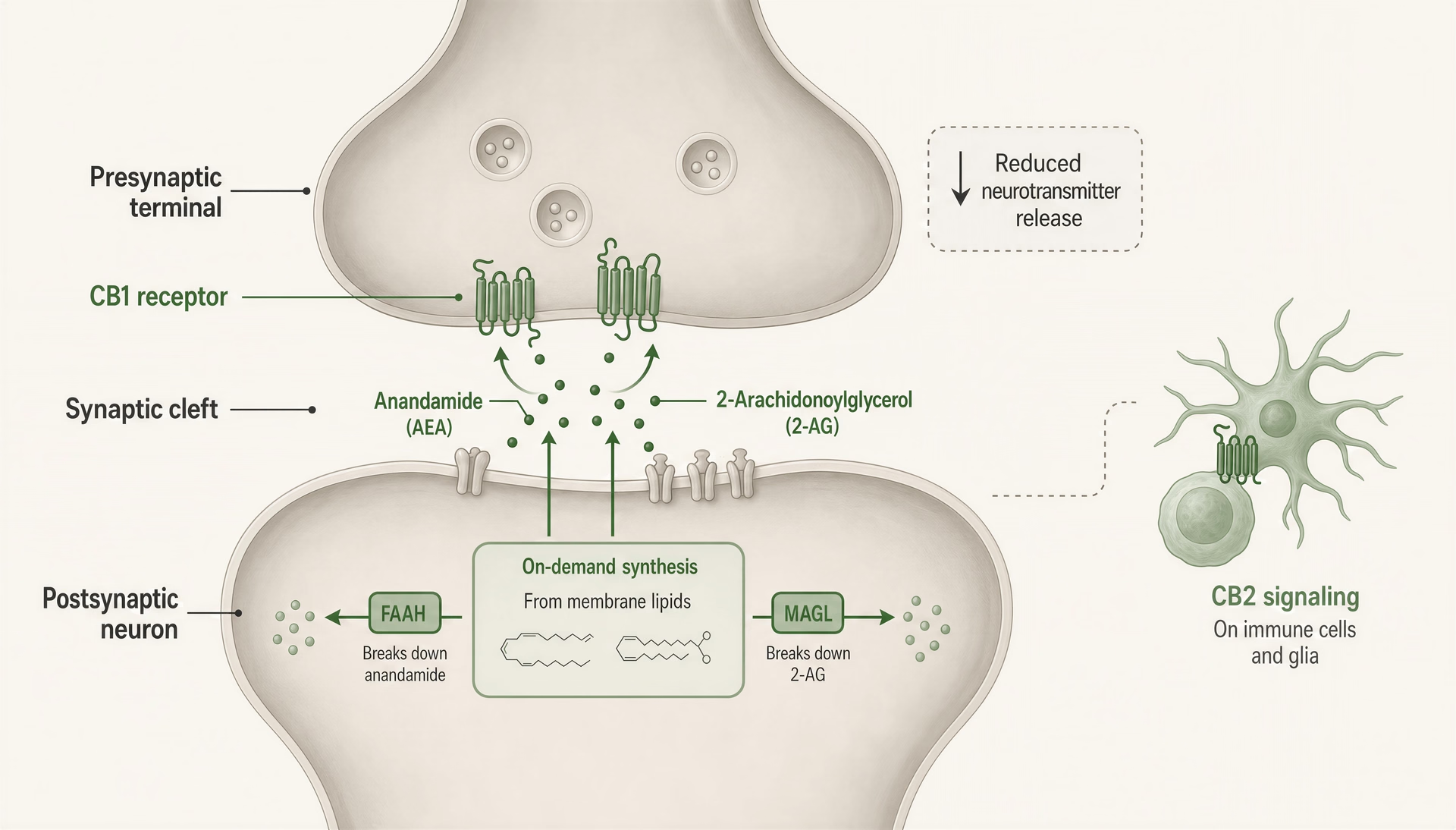
The basic architecture is simple. The ECS includes cannabinoid receptors, mainly CB1 and CB2; endogenous ligands, mainly anandamide and 2-arachidonoylglycerol (2-AG); and the enzymes that make and break those ligands down. Anandamide is degraded primarily by FAAH, fatty acid amide hydrolase. 2-AG is degraded mainly by MAGL, monoacylglycerol lipase. The signaling logic is less simple. Endocannabinoids are often produced “on demand” in postsynaptic neurons and then travel backward across the synapse to suppress further neurotransmitter release from the presynaptic side. That retrograde braking function is why the ECS is repeatedly described as a homeostatic buffer. When circuits become overactive, endocannabinoid tone can dampen them.
Fibromyalgia is, in large part, a disorder of overactive processing. That does not prove an ECS defect. It does make ECS involvement biologically coherent.
CB1, CB2, and pain-processing networks
CB1 receptors are the main cannabinoid receptors in the central nervous system. They are densely expressed in cortical regions, the amygdala, hippocampus, basal ganglia, cerebellum, periaqueductal gray, and pathways connected to the dorsal horn of the spinal cord. Those are not random locations. They are part of the machinery that assigns meaning to pain, filters sensory input, shapes memory and fear learning, and regulates descending pain control. In plain terms, CB1 sits in many of the places where pain becomes suffering.
When CB1 is activated, presynaptic release of excitatory transmitters such as glutamate often falls. Release of inhibitory transmitters such as GABA can also change, depending on the circuit. The net effect is circuit-specific, but one recurring theme is dampening of excessive neuronal firing. That matters in fibromyalgia, where pain is widely thought to reflect altered central processing rather than ongoing peripheral injury alone.
CB2 receptors are different. They are expressed far less densely in the healthy brain and far more in immune cells and, under some conditions, glial cells. Microglia and astrocytes are increasingly relevant in chronic pain models because they can amplify pain signaling through cytokines, chemokines, and inflammatory mediators. CB2 signaling has therefore drawn interest as a way to quiet neuroimmune amplification without the cognitive adverse effects associated with strong CB1 stimulation. That is one reason researchers still care about compounds with indirect ECS effects, not just THC.
Endocannabinoids themselves are short-lived but active in these same systems. Anandamide has partial agonist activity at CB1 and can also engage non-cannabinoid targets. 2-AG is generally present at higher concentrations in the brain and is an efficacious agonist at both CB1 and CB2. FAAH and MAGL tightly regulate how long these signals last. If endocannabinoid signaling is too weak, pain gating may be less effective. If it is increased in the wrong place or wrong dose pharmacologically, sedation, dizziness, impaired attention, or anxiety can follow. That tradeoff is especially relevant in fibromyalgia, where “fibro fog” and fatigue are already part of the syndrome.
Central sensitization, descending inhibition, and stress signaling
Central sensitization A state in which the nervous system becomes more responsive to sensory input, so normal sensations can become painful and painful sensations can become amplified.
The dominant mechanistic model of fibromyalgia is central sensitization: the nervous system becomes more responsive to sensory input, so normal sensations can become painful and painful sensations can become amplified. Hyperalgesia and allodynia follow. This is not the whole story, but it is a major one. The ECS intersects with that model at several points.
First, it influences spinal and supraspinal nociceptive transmission. CB1-rich circuits in the dorsal horn and brainstem can reduce pain signal propagation. Second, it affects descending inhibitory pathways, especially through regions such as the periaqueductal gray and rostral ventromedial medulla. These pathways normally act as top-down brakes on incoming pain. In fibromyalgia, descending inhibition appears blunted in at least some patients. If endocannabinoid signaling helps support these inhibitory circuits, impaired ECS tone could theoretically contribute to pain amplification.
Then there is stress biology. Fibromyalgia is strongly linked to altered autonomic and stress responses, including disturbed sleep, elevated arousal, and a tendency for stress to worsen symptoms. The ECS interacts with the hypothalamic-pituitary-adrenal axis and with limbic structures such as the amygdala and hippocampus. Anandamide and 2-AG are involved in fear extinction, stress recovery, and emotional regulation. That does not make fibromyalgia a psychiatric disorder. It does help explain why pain, insomnia, anxiety, and cognitive overload cluster together so often.
Sleep is a good example of this overlap. Poor sleep raises pain sensitivity; pain then further disrupts sleep. The ECS is involved in sleep-wake regulation, though not in a clean one-receptor, one-effect way. THC-containing medicines have shown some signal for sleep benefit in fibromyalgia, but sedation is not the same as restorative sleep, and next-day grogginess can worsen fatigue and concentration. This is one reason claims that cannabinoids “fix sleep” are too blunt. They may help some patients sleep longer or fall asleep faster, while still impairing clarity the next morning.
The clinical endocannabinoid deficiency hypothesis
The most cited attempt to unify these observations is Ethan Russo’s 2008 clinical endocannabinoid deficiency hypothesis. Russo proposed that certain syndromes marked by pain amplification and sensory dysregulation, including fibromyalgia, migraine, and irritable bowel syndrome, might involve deficient endocannabinoid tone. It is an elegant idea. The symptom overlap is real, and the ECS does regulate pain, gut function, mood, and stress responsiveness.
Still, the hypothesis remains just that: a hypothesis.
The problem is evidence quality. Measuring endocannabinoids in living humans is difficult, and peripheral levels in blood do not necessarily reflect what is happening in specific brain circuits. Even if lower anandamide or altered FAAH activity were found in some patients, that would not prove causation. Chronic pain itself can change ECS signaling. Sleep deprivation can change it. Stress can change it. Medications can change it. A downstream adaptation can look like a primary deficiency if you catch the system late.
So the fair position is neither dismissal nor endorsement. ECS involvement in fibromyalgia is plausible, and the deficiency model is biologically coherent. But direct proof that fibromyalgia is caused by cannabinoid deficiency is not established. The field does not have a validated fibromyalgia biomarker based on anandamide, 2-AG, FAAH, MAGL, CB1, or CB2. Anyone claiming otherwise is outrunning the data.
What has actually been shown in humans
Human evidence supports symptom modulation more than disease explanation. That distinction matters.[2] Nabilone for the treatment of pain in fibromyalgia. R. Q. Skrabek, A. Galimova, A. Ethans, N. Perry. The Journal of Pain, 2008.
In fibromyalgia-specific randomized trials, the clearest positive signal comes from THC-like drugs rather than CBD alone. Skrabek et al. in 2008 randomized 40 patients with fibromyalgia to nabilone 1 mg twice daily or placebo for four weeks. Nabilone significantly improved pain visual analog scale scores and Fibromyalgia Impact Questionnaire scores. It also caused frequent adverse effects, including dizziness, nausea, dry mouth, and drowsiness. That is a real signal, but it is not a large, definitive trial.[3] The effects of nabilone on sleep in fibromyalgia: results of a randomized controlled trial. M. A. Ware, S. Fitzcharles, J. Joseph, Y. Shir. Anesthesia & Analgesia, 2010.
Ware et al. in 2010 randomized 31 patients in a crossover comparison of bedtime nabilone, 0.5 to 1 mg, versus amitriptyline 10 to 20 mg for sleep. Nabilone improved the Insomnia Severity Index more than amitriptyline, yet adverse effects were again more common with nabilone. That supports the idea that cannabinoid signaling can affect a fibromyalgia symptom domain beyond pain. It also shows the cost side of the ledger.[4] An experimental randomized study on the analgesic effects of pharmaceutical-grade cannabis in chronic pain patients with fibromyalgia. T. van de Donk, M. A. Niesters, E. Kowal, A. Olofsen, A. Dahan, M. van Velzen. Pain, 2019.
The 2019 van de Donk crossover trial is the right corrective to simplistic claims. In 20 patients given pharmaceutical cannabis varieties, the THC+CBD chemovar produced a higher proportion of participants with at least 30% pain reduction than placebo, but no active treatment beat placebo on mean spontaneous pain scores across the whole sample. So yes, some patients responded. No, the average effect was not overwhelming.
Observational data look more dramatic, but they are much weaker evidence. Sagy et al. in 2019 followed 367 fibromyalgia patients in an Israeli medical cannabis program for six months. They reported that 81.1% achieved treatment response, with median pain dropping from 9.0 to 5.0. Dizziness occurred in 7.9% and dry mouth in 6.7%. Those numbers are often quoted, but without a control group they cannot separate pharmacologic benefit from expectancy, selection, regression to the mean, or changes in other therapies.
More broadly, Jason Busse and colleagues’ 2021 BMJ rapid guideline found that non-inhaled medical cannabis or cannabinoids for chronic pain produce small to very small improvements in pain, physical function, and sleep. That finding fits fibromyalgia better than the sweeping claims often made online. There may be benefit, usually modest, and often offset by transient cognitive and sedating adverse effects.
Human trials show some evidence for symptom relief in fibromyalgia, strongest for pain and sleep and stronger for THC-containing products than for CBD alone. Limited evidence
The bottom line is narrower than advocacy language suggests. ECS biology maps well onto fibromyalgia mechanisms. Human trials show some evidence for symptom relief, strongest for pain and sleep, and stronger for THC-containing products than for CBD alone. What has not been shown is that fibromyalgia is a proven endocannabinoid deficiency disorder, or that cannabinoid treatment reverses the underlying condition. It is a plausible mechanistic fit with incomplete clinical confirmation. That is where the science stands.
THC, CBD, and CBN: same plant family, very different evidence profiles
Lumping THC, CBD, and CBN together hides the part that matters most in fibromyalgia: they do not act the same way, and they do not carry the same level of evidence. That distinction matters because fibromyalgia itself is not one symptom. It is a cluster of widespread pain, sleep disruption, fatigue, cognitive complaints, and often anxiety or depressed mood. A cannabinoid that helps one domain may worsen another. THC can reduce pain and help some patients sleep, yet it can also worsen dizziness, attention, reaction time, and short-term memory. CBD has a cleaner intoxication profile and plausible anxiolytic relevance, but fibromyalgia-specific proof is thin. CBN is the weakest of the three on human evidence, despite the confidence of many sleep claims.
The broadest pain guidance supports caution, not hype. Busse and colleagues’ 2021 BMJ rapid guideline found that non-inhaled medical cannabis or cannabinoids produce only small to very small improvements in chronic pain, physical function, and sleep, with dizziness and cognitive adverse effects showing up often. That is the right frame for fibromyalgia too: possible symptom relief in some patients, not a settled disease treatment.
THC as a partial CB1 agonist and why it may help pain and sleep
THC has the most direct mechanistic link to fibromyalgia symptom relief. Pharmacologically, it is a partial agonist at CB1 and CB2 receptors, with CB1 doing most of the visible work on pain perception, affective distress, and sleepiness. CB1 receptors are heavily expressed in brain regions involved in pain processing and salience, including cortex, amygdala, hippocampus, basal ganglia, periaqueductal gray, and spinal pain pathways. In a disorder often framed around central sensitization and disturbed pain modulation, that matters.
This is why THC-containing medicines repeatedly look more promising than CBD alone in fibromyalgia studies. The strongest randomized evidence does not come from smoked flower or loose consumer categories like “indica,” but from nabilone, a synthetic THC analogue. In Skrabek et al. 2008, 40 fibromyalgia patients were randomized to nabilone 1 mg twice daily or placebo for four weeks. Nabilone significantly improved pain visual analog scores and Fibromyalgia Impact Questionnaire scores. That is not definitive proof, but it is real signal. The cost was tolerability: dizziness, drowsiness, nausea, and dry mouth were common.
Sleep shows a similar pattern. Ware et al. 2010 randomized 31 patients in a crossover trial comparing bedtime nabilone 0.5 to 1 mg with amitriptyline 10 to 20 mg for insomnia in fibromyalgia. Nabilone improved the Insomnia Severity Index more than amitriptyline, but adverse effects were again more frequent. That tradeoff is very fibromyalgia-specific. A patient who is desperate for sleep may accept some next-day grogginess; a patient already struggling with fibro fog, orthostatic symptoms, or falls may not.
The inhaled crossover trial by van de Donk et al. 2019 shows why simplistic claims fail. In 20 fibromyalgia patients using pharmaceutical-grade cannabis varieties, no active treatment beat placebo on mean spontaneous pain scores across the full sample. Yet more patients receiving the THC+CBD chemovar Bediol achieved at least 30% pain reduction than placebo: 90% versus 55%. That suggests responders exist, but average group effects can look underwhelming. It also suggests THC likely carries much of the analgesic signal, especially when paired with other cannabinoids.
THC’s downside is not secondary. It is central to treatment decisions. Dose-related intoxication, impaired attention, slower reaction time, anxiety, tachycardia, dizziness, and short-term memory problems are all relevant in fibromyalgia, where fatigue and cognitive symptoms are already common. If a patient says, “My pain is lower but my brain is worse,” that is not treatment success.
CBD's indirect pharmacology and the gap between theory and fibromyalgia trials
CBD has become the cannabinoid most people assume is gentle, anti-inflammatory, and broadly helpful. The first part is partly true. The second and third are much less proven in fibromyalgia.
Unlike THC, CBD has low direct affinity for CB1 and CB2 receptors. Its pharmacology is broader and less direct: it appears to modulate endocannabinoid tone indirectly and interacts with targets such as 5-HT1A, TRPV1, and others involved in anxiety, pain signaling, and inflammation. On paper, that gives CBD a plausible role in a condition where pain amplification, poor sleep, and anxious distress often feed each other.
But plausible is not the same as demonstrated. Fibromyalgia-specific clinical evidence for CBD monotherapy is weak. Most published fibromyalgia studies showing benefit involve THC-containing products, synthetic THC analogues like nabilone, or mixed cannabis preparations. The National Academies’ 2017 conclusion that cannabis is effective for chronic pain in adults is often cited as though it validates CBD for fibromyalgia. It does not. That conclusion was not fibromyalgia-specific and drew heavily from neuropathic pain and cannabinoid medicine studies, many involving THC-containing treatments.
So where does CBD fit? Most plausibly in patients whose symptom picture includes anxiety sensitivity, poor stress tolerance, or a need to limit THC burden. It may also be useful as a starting point in cautious titration. Bhaskar et al. 2021 proposed a chronic pain consensus protocol beginning with CBD 5 mg twice daily, increasing gradually before considering THC add-on if needed. That approach makes sense clinically because CBD is less likely than THC to produce intoxication. It does not mean CBD alone has proven fibromyalgia efficacy.
Interaction risk is also more important with CBD than many patients realize. CBD can inhibit CYP2C19 and CYP3A4, which matters in a population commonly taking duloxetine, amitriptyline, pregabalin, gabapentin, cyclobenzaprine, sedative-hypnotics, anticonvulsants, and sometimes anticoagulants. “Non-intoxicating” is not the same as pharmacologically trivial.
CBN and the sleep claim problem
CBN has a branding advantage and an evidence problem. It is widely presented as a sleep cannabinoid, but human data are sparse and far weaker than the claims suggest. That gap is especially important in fibromyalgia, where sleep disruption is severe and patients are often willing to try almost anything that promises deeper rest.
The problem is simple: there is little rigorous clinical research showing that isolated CBN meaningfully improves insomnia, much less fibromyalgia-related sleep disturbance. It is a minor cannabinoid with limited human evidence, not an established hypnotic. Many products that are said to work because of CBN also contain THC, CBD, terpenes, melatonin, or sedating antihistamines. In those cases, attributing the effect to CBN is guesswork.
That does not mean CBN does nothing. It means the current state of evidence does not justify confidence. For fibromyalgia, where sleep quality affects pain sensitivity the next day, weak evidence is not a small issue. It is the whole issue.
| Formulation pattern | Potential upside | Main downside | Best fit described in article |
|---|---|---|---|
| THC-dominant | Higher chance of pain reduction or faster sleep onset | Intoxication, anxiety, dry mouth, tachycardia, cognitive adverse effects | Selected patients with pain plus insomnia |
| CBD-dominant | Usually easier to tolerate, less intoxicating | May be too weak for severe pain if THC is absent | Patients with anxiety sensitivity or high concern about fog |
| Balanced THC:CBD | May capture responder effects missed by isolate assumptions | Still carries THC-related impairment risk | Cases where symptom priorities require compromise |
Why ratio matters more than marketing labels
Patients do not experience cannabinoids as isolated receptor diagrams. They experience formulations. Ratio often matters more than labels like “sativa,” “indica,” or broad assumptions about one cannabinoid being for day and another for night.
A THC-dominant product may have the strongest chance of reducing pain or helping sleep onset, but also the highest risk of intoxication, anxiety, dry mouth, tachycardia, and cognitive adverse effects. A CBD-dominant product may be easier to tolerate yet too weak for severe pain if THC is absent. A balanced product may behave differently again. The van de Donk 2019 study is a useful example: the THC+CBD chemovar produced a responder signal that was not captured by average pain scores alone. Mixed products can differ from isolates.
This is also why observational studies need restraint. In Sagy et al. 2019, 367 fibromyalgia patients in an Israeli medical cannabis program were followed for six months. Treatment response was reported in 81.1%, and median pain intensity fell from 9.0 to 5.0. That sounds dramatic. But it was uncontrolled, and expectancy, selection, and dose variability all complicate interpretation. We cannot assume a given CBD:THC ratio caused the result. We can say many patients reported benefit under real-world conditions.
For practice, ratio should be matched to symptom priorities and vulnerability. Pain plus insomnia may justify carefully introduced low-dose THC, often at night. Prominent anxiety, medication sensitivity, or fibro fog may push toward CBD-predominant regimens first. If THC is added, low doses matter. Small changes can mean the difference between pain relief and a day lost to sedation or cognitive dulling.
| Symptom domain | Evidence direction | Most supported cannabinoid pattern | Main caution |
|---|---|---|---|
| Chronic widespread pain | Possible benefit in some patients | THC-containing products | Average effect is modest and side effects are common |
| Sleep disturbance | Best fibromyalgia-specific signal | THC-like agents such as nabilone | Sedation can become next-day grogginess |
| Fatigue | Weak support | No strong winner | Sedation can worsen daytime function |
| Fibro fog | Little direct benefit shown | None clearly established | THC can worsen attention and memory |
| Anxiety/depression | Mixed and indirect | CBD-predominant may be easier to justify | THC may increase anxiety at higher doses |
Symptom by symptom: where cannabinoids may help, and where the evidence is thin
Fibromyalgia should not be treated as one outcome with one fix. The syndrome is defined by a cluster: widespread pain, waking unrefreshed, fatigue, cognitive trouble, and mood symptoms. The American College of Rheumatology built that logic into its diagnostic framework. That matters because cannabinoids do not affect each domain equally. The signal is stronger for pain and sleep than for fibro fog or daytime energy, and stronger for THC-containing products than for CBD alone.
Mechanistically, that split makes sense. CB1 receptors sit in pain-processing and affective circuits such as cortex, amygdala, hippocampus, periaqueductal gray, and spinal pain pathways. CB2 signaling is more tied to immune and glial activity. In a condition often explained through central sensitization, impaired descending inhibition, sleep disruption, and affective amplification, cannabinoids are plausible symptom modulators. But “plausible” is not the same as “proved,” and the old endocannabinoid deficiency hypothesis remains a hypothesis, not an established cause of fibromyalgia.
Chronic widespread pain
Pain is where the cannabinoid literature is most mature, though still not clean. The broad chronic-pain evidence is stronger than the fibromyalgia-specific evidence. In the 2021 BMJ/MAGIC rapid guideline, Jason Busse and colleagues concluded that non-inhaled medical cannabis or cannabinoids produced small to very small improvements in self-reported pain, physical functioning, and sleep quality in chronic pain populations. That is a modest effect, not a dramatic one, and dizziness plus cognitive adverse events were common enough to matter.
Fibromyalgia-specific trials point in the same direction, but with the usual problem: they are small. Skrabek et al. in 2008 randomized 40 patients with fibromyalgia to nabilone 1 mg twice daily or placebo for four weeks. Nabilone, a synthetic THC analog, reduced pain visual analog scale scores and improved Fibromyalgia Impact Questionnaire scores compared with placebo. That is real signal. It is also paired with real adverse effects: dizziness, nausea, dry mouth, and drowsiness were frequent.
The inhaled cannabis trial by van de Donk et al. in 2019 is the corrective to simplistic claims. In 20 fibromyalgia patients, pharmaceutical cannabis varieties were tested in a crossover design. The THC+CBD chemovar did lead more participants to achieve at least 30% pain reduction than placebo: 90% versus 55%, a striking responder analysis. Yet no treatment beat placebo on mean spontaneous pain scores across the whole sample. That is not a contradiction; it shows how sensitive results are to endpoint choice, sample size, and patient heterogeneity. Some patients improved a lot. The group average did not move enough to settle the question.
Observational data look more impressive, but they are much less secure. Sagy et al. followed 367 patients in an Israeli medical cannabis program for six months and reported an 81.1% treatment response with median pain dropping from 9.0 to 5.0. Habib and Artul in 2018 reported pain improvement in all 26 patients in a small prospective cohort. Those numbers are often quoted as if they settle the matter. They do not. Uncontrolled cohorts are vulnerable to expectancy effects, selection bias, dose self-optimization, and dropout of people who do poorly.
So what can be said plainly? Cannabinoids, especially THC-containing products, can reduce fibromyalgia pain in some patients. That statement is supported. What is not supported is the idea that cannabinoids reliably produce large average pain reductions across the whole fibromyalgia population.
Sleep disturbance and non-restorative sleep
Sleep may be the symptom domain with the clearest fibromyalgia-specific cannabinoid evidence. That is not because the studies are huge. They are not. It is because the signal is fairly consistent and biologically plausible.
Ware et al. in 2010 randomized 31 patients in a crossover trial comparing bedtime nabilone 0.5 to 1 mg with amitriptyline 10 to 20 mg for sleep in fibromyalgia. Nabilone improved Insomnia Severity Index scores more than amitriptyline. That is notable because amitriptyline is a standard comparator in this space, not a weak placebo stand-in. The tradeoff was tolerability: adverse effects were more common with nabilone.
This aligns with what THC usually does in practice. At low doses, especially taken at night, it can shorten sleep latency and increase subjective sleepiness. For patients whose nights are fractured by pain and hyperarousal, that can matter more than a modest shift in pain ratings. Sleep continuity is often the hinge symptom in fibromyalgia; when nights improve, patients may report better pain coping the next day even if raw pain intensity changes only a little.
But there are limits. Sedation is not the same as restorative sleep architecture. A patient may fall asleep faster and still wake groggy. Oral THC can also last into the morning, especially at higher doses or in slow metabolizers. That is where the symptom-domain approach matters again: a nighttime gain can become a daytime penalty.
CBD is less convincing here. Many patients assume CBD is the sleep cannabinoid because it is perceived as calming, yet direct fibromyalgia evidence for CBD monotherapy improving sleep is weak. CBN deserves even more caution. It is often framed as a sleep cannabinoid, but rigorous human data are sparse. For fibromyalgia-related insomnia, the trial evidence points to THC-like agents, not to CBD or CBN as stand-alone answers.
Fatigue and daytime functioning
Fatigue is where the cannabinoid story gets uncomfortable. Fibromyalgia fatigue is not just tiredness. It is often described as flu-like heaviness, reduced stamina, and a mismatch between effort and recovery. Cannabinoids do not have strong evidence here, and some of their known effects can make this domain worse.
The same THC-related sedation that helps sleep can impair morning alertness, reaction time, balance, and motivation. In the BMJ guideline, gains in physical functioning were small. That fits clinical reality. If someone sleeps better because of a sedating cannabinoid, daytime function may improve indirectly. If the dose is too high, the opposite happens: less insomnia, more grogginess.
This is why product choice and timing matter more for fatigue than many articles admit. A patient with severe nocturnal pain and little daytime driving demand may tolerate bedtime THC. A patient already struggling with orthostatic symptoms, sedative polypharmacy, or heavy morning fatigue may do poorly even at doses that help sleep. Dizziness and somnolence are not minor side effects in fibromyalgia; they can amplify fall risk and inactivity.
CBD has theoretical appeal because it is less intoxicating and may be less sedating at lower doses, but there is no strong fibromyalgia-specific evidence that CBD lifts fatigue. Claims that it reliably increases daytime energy are ahead of the data. In practice, the more defensible position is this: cannabinoids may help fatigue only indirectly, by reducing pain or improving sleep, and they can just as easily worsen daytime performance if sedation carries over.
Fibro fog and cognitive dysfunction
Fibro fog is one of the hardest domains to treat and one of the easiest to worsen with THC. Patients describe slowed processing, distractibility, word-finding trouble, and reduced working memory. Those complaints overlap uncomfortably with known cannabinoid adverse effects.
THC, as a CB1 partial agonist, can impair attention, short-term memory, and psychomotor performance in a dose-dependent way. That makes it a poor fit for patients whose main complaint is cognitive dysfunction rather than pain or insomnia. The van de Donk trial did not establish a cognitive benefit. More broadly, chronic pain trials summarized in the BMJ guideline found transient cognitive adverse events often enough that they cannot be brushed aside.
This is the symptom domain where expectations should be restrained. Better sleep may help fibro fog in some patients. Less pain may free up cognitive bandwidth. Those are indirect pathways, and they are plausible. Direct pro-cognitive effects from THC are not. If anything, THC is more likely to worsen fog at doses high enough to be analgesic or sedating.
CBD is more interesting theoretically because it lacks the same intoxicating profile and has interactions beyond CB1 and CB2, including 5-HT1A and TRPV1. Even so, fibromyalgia-specific proof that CBD improves cognition is lacking. Patients with major fibro fog who are considering cannabinoids need a warning, not a promise: if treatment is tried at all, it should start with very low doses, preferably at night, with careful tracking of next-day focus, memory, and work function.
Anxiety, depression, and affective amplification
Mood symptoms in fibromyalgia are not just coexisting diagnoses. Anxiety and depression can amplify pain salience, worsen sleep, and lower coping reserve. The ECS is closely tied to emotional regulation, which is why cannabinoids can help some patients and destabilize others.
Low-dose THC may reduce anxiety in some individuals, particularly when pain itself is driving distress. Higher doses can do the reverse, increasing anxiety, panic, tachycardia, and suspiciousness. This bidirectional effect is one of the most clinically important facts in cannabinoid medicine. It is also why psychiatric history matters. A patient with past panic attacks, trauma-related hyperarousal, bipolar disorder, or psychosis risk deserves far more caution with THC than a patient whose anxiety is secondary to nocturnal pain.
CBD diverges from THC here. It has little direct affinity for CB1/CB2 and seems to modulate signaling indirectly while also interacting with serotonin-related pathways such as 5-HT1A. That has led to reasonable anxiolytic hypotheses and some evidence outside fibromyalgia. But fibromyalgia-specific clinical proof remains thin. Saying “CBD helps anxiety in fibromyalgia” goes beyond the data. A more accurate statement is that CBD is less likely than THC to trigger anxiety or intoxication and may be a safer starting point for patients with mood sensitivity.
Depression is even murkier. Neither THC nor CBD has solid evidence as an antidepressant treatment in fibromyalgia. If a patient reports mood improvement on a cannabinoid, it is often hard to separate direct emotional effects from better sleep and less pain. That does not make the improvement unreal. It does make the mechanism uncertain.
Drug interactions and comorbidity are central here. Fibromyalgia patients commonly take duloxetine, amitriptyline, pregabalin, gabapentin, cyclobenzaprine, hypnotics, or anxiolytics. CBD inhibits CYP2C19 and CYP3A4, which can alter levels of other medications. THC and CBD can also add to CNS depression. In a patient with anxiety, depression, and polypharmacy, cannabinoid use is not a simple add-on.
The practical takeaway is symptom-specific and conservative. If pain and insomnia dominate, low-dose nighttime THC may be reasonable in selected patients. If anxiety sensitivity dominates, CBD-predominant approaches are easier to justify, though evidence remains indirect. The 2021 Delphi consensus for chronic pain proposed starting CBD at 5 mg twice daily and titrating slowly before considering THC add-on at 1 to 2.5 mg per day. That kind of slow approach fits fibromyalgia well. Fast titration is where many daytime problems begin.
What clinical trials and observational studies actually found
This is the part of the literature that matters most: not theory, not receptor diagrams, not broad claims about “medical cannabis,” but actual fibromyalgia studies. Read closely, the pattern is consistent. There are benefit signals, especially for pain and sleep in some patients, but the evidence is still thin, heterogeneous, and tilted toward THC-containing products rather than CBD alone. It is also much stronger for symptom relief than for any claim that cannabinoids change the course of fibromyalgia itself.
Randomized trials of nabilone
The first fibromyalgia-specific randomized signal came from Skrabek et al. 2008 in The Journal of Pain. This was a 4-week randomized, double-blind, placebo-controlled trial of 40 patients using nabilone, a synthetic THC analogue. The dose was 1 mg at bedtime for one week, then 1 mg twice daily if tolerated. Compared with placebo, nabilone produced statistically significant improvements in pain visual analog scale scores and Fibromyalgia Impact Questionnaire scores.
That is a real signal, not noise. But it came with a price. Adverse effects were common: dizziness, nausea, dry mouth, and drowsiness showed up often enough to matter clinically. In fibromyalgia, where patients may already be dealing with fatigue, unrefreshing sleep, orthostatic symptoms, and cognitive slowing, those side effects are not trivial. A drug can lower pain and still leave a patient worse off overall if it increases daytime sedation or mental fog.
Two years later, Ware et al. 2010 published a randomized crossover trial in Anesthesia & Analgesia that asked a narrower and very practical question: what about sleep? Thirty-one patients with fibromyalgia were randomized to nabilone 0.5 to 1 mg at bedtime or amitriptyline 10 to 20 mg at bedtime, then crossed over. Nabilone improved the Insomnia Severity Index more than amitriptyline, which is notable because low-dose amitriptyline is a familiar off-label sleep and pain medication in fibromyalgia care.
Yet again, tolerability was the tradeoff. Adverse events were more frequent with nabilone. And the trial did not show a broad victory across every symptom domain. It supported a narrower claim: in some patients, a THC-like cannabinoid may help sleep initiation or sleep quality more than a standard nighttime comparator. That is useful. It is not the same as saying cannabinoids broadly treat fibromyalgia.
These nabilone trials also illustrate a recurring theme in the field. Small studies can detect short-term changes in pain or insomnia if the enrolled patients are symptomatic enough and the outcome measure is sensitive. They are much less able to answer harder questions: Does benefit persist beyond a month? Does tolerance develop? What happens to fatigue, function, and fibro fog over time? Which patients stop because of side effects? The nabilone data hint at efficacy. They do not settle effectiveness.
The inhaled cannabis crossover study
The most cited inhaled-cannabis experiment in fibromyalgia is van de Donk et al. 2019 in Pain. This study is useful because it is careful, controlled, and much less flattering to simplistic narratives than many summaries suggest.
| Study | Design | Participants | Interventions | Main positive finding | Main limitation highlighted |
|---|---|---|---|---|---|
| Skrabek et al. 2008 | Randomized, double-blind, placebo-controlled, 4 weeks | 40 | Nabilone vs placebo | Pain VAS and FIQ improved | Frequent dizziness, nausea, dry mouth, drowsiness |
| Ware et al. 2010 | Randomized crossover | 31 | Bedtime nabilone vs amitriptyline | Insomnia Severity Index improved more with nabilone | More adverse effects with nabilone |
| van de Donk et al. 2019 | Placebo-controlled crossover | 20 | Inhaled high-THC, high-CBD, THC+CBD, placebo | THC+CBD responder rate ≥30% pain reduction exceeded placebo | No active treatment beat placebo on mean spontaneous pain |
The trial enrolled 20 patients with fibromyalgia in a placebo-controlled crossover design using pharmaceutical-grade cannabis varieties with different cannabinoid profiles. These included high-THC, high-CBD, THC+CBD, and placebo conditions delivered by inhalation. That design matters. It let the investigators compare not just “cannabis versus no cannabis,” but distinct chemovars with different cannabinoid content.
The headline result was mixed. On the primary type of outcome many readers expect — mean spontaneous pain scores across the whole sample — none of the active treatments significantly outperformed placebo. That is the part often omitted in enthusiastic retellings.
But another result did favor a cannabinoid-containing preparation. More subjects receiving Bediol, the THC+CBD chemovar, achieved at least a 30% reduction in spontaneous pain than those receiving placebo: 90% versus 55%, with P = 0.01. That suggests a responder subgroup effect even when average pain scores across all participants did not separate cleanly from placebo.
There are several reasons this trial is more complicated than it first appears. First, inhaled cannabis has a fast onset, so it may be better at capturing immediate analgesic effects than sustained symptom control. Second, fibromyalgia pain is variable, centrally amplified, and highly placebo-responsive. Third, the study was tiny. In a sample of 20, a few high responders or nonresponders can shift the result dramatically. Fourth, acute psychoactive effects can unblind participants, which may inflate expectancy responses.
The CBD findings were also sobering. A CBD-dominant preparation did not produce a clear analgesic signal in this trial. That does not prove CBD is useless in fibromyalgia, but it does cut against the common shorthand that CBD alone is well supported for fibro pain. It is not. The strongest trial signals remain tied to THC-containing formulations, and even those are modest and inconsistent.
Large observational cohorts and patient registries
If randomized trials are cautious, observational studies are often strikingly positive. The flagship example is Sagy et al. 2019 in the Journal of Clinical Medicine, an Israeli prospective cohort of 367 patients with fibromyalgia enrolled in a medical cannabis program and followed for 6 months.
The numbers look impressive. 81.1% achieved treatment response by the authors’ definition. Median pain intensity fell from 9.0 to 5.0. Reported adverse effects were present but not overwhelming: dizziness in 7.9%, dry mouth in 6.7%, and gastrointestinal symptoms in 5.4%. For a condition with limited treatment satisfaction, those findings understandably draw attention.
They also need context. This was not a randomized controlled trial. There was no control group, no placebo arm, and no blinding. Patients entering a cannabis program may be more motivated, more hopeful, and more likely to perceive benefit. Those who do poorly may discontinue and disappear from follow-up, leaving a healthier or more satisfied group at later time points. Treatment itself was not tightly standardized either; cannabinoid composition, dose, and route can vary widely in registry settings.
That does not make the cohort meaningless. Quite the opposite. Observational studies tell us something randomized trials often cannot: how treatments perform in the messiness of real life. They capture patients with comorbid anxiety, sleep disturbance, polypharmacy, and treatment histories that would exclude them from many trials. They can also reveal patterns in medication substitution, persistence, and patient-prioritized outcomes.
Why observational cannabis studies often look better than randomized trials
- Expectancy effects are stronger when patients know they are receiving cannabis.
- Selection bias favors people willing to try and continue treatment.
- Flexible dosing and product switching can raise satisfaction while weakening causal inference.
- Adverse-event reporting is often less rigorous than in trials.
- Outcome definitions may be broad, composite, or unblinded patient-reported measures.
Still, they almost always look better than RCTs. There are predictable reasons:
- Expectancy effects** are stronger when patients know they are receiving cannabis.
- Selection bias** favors those willing to try and continue treatment.
- Flexible dosing and product switching** can improve patient satisfaction in practice but make causal inference difficult.
- Adverse-event reporting** is often less rigorous than in trials, especially for cognitive effects, falls, driving impairment, or subtle daytime sedation.
- Outcome definitions** may be broad, composite, or patient-reported without blinded assessment.
A smaller example is Habib and Artul 2018, which reported outcomes in 26 fibromyalgia patients using medical cannabis. The findings were dramatic: all reported significant pain improvement, and 50% stopped other fibromyalgia medications. But with such a tiny, uncontrolled sample, this is hypothesis-generating evidence, not proof. It shows what can happen in some clinics. It does not tell us how much of the change was pharmacologic, how much was expectancy, and how many similar patients would not benefit or would stop because of side effects.
Patient surveys often echo the same pattern. High rates of self-reported improvement in pain, sleep, mood, and medication reduction are common. Those reports deserve attention because fibromyalgia is symptom-defined and patient experience matters. But surveys are especially vulnerable to recall bias, responder bias, and survivorship bias. The people who answer are often the ones still using the treatment.
Systematic reviews, guidelines, and why conclusions differ
Once you move from individual studies to reviews and guidelines, the disagreement can seem confusing. It is less mysterious when you look at what each group is actually reviewing.
The National Academies report in 2017 concluded there is substantial evidence that cannabis is effective for chronic pain in adults. That statement is often quoted as if it directly settles fibromyalgia. It does not. The report was not fibromyalgia-specific and leaned heavily on broader chronic pain literature, especially neuropathic pain and trials of cannabinoid medicines such as nabilone and nabiximols. Chronic pain is not one disease category, and fibromyalgia does not behave exactly like peripheral neuropathy or cancer pain.[5] Medical cannabis or cannabinoids for chronic pain: a clinical practice guideline. J. W. Busse, L. Vankrunkelsven, R. Zeng, et al.. BMJ, 2021.
The BMJ/MAGIC rapid guideline by Busse et al. 2021 took a more restrained position. For non-inhaled medical cannabis or cannabinoids in chronic pain, it found small to very small improvements in self-reported pain, physical functioning, and sleep quality, with common transient harms such as dizziness and cognitive disturbance. That assessment fits the fibromyalgia literature quite well. Signals exist. The average effect is not large. Side effects are common enough to limit use.
Fibromyalgia-focused reviews usually end up even more cautious because the dataset is small. The studies differ in almost every way that complicates pooling: nabilone versus herbal cannabis, oral versus inhaled, short trials versus longer follow-up, pain endpoints versus sleep endpoints, and variable diagnostic criteria across years. Many reviews also downgrade confidence because of small sample sizes, risk of bias, and imprecision.
This is why observational studies often appear to tell a brighter story than meta-analyses of trials. Registries measure what happens in self-selected patients under flexible treatment conditions; RCTs estimate a more controlled average effect, often over a short period and with stricter endpoint definitions. A patient registry may ask, “Do you feel better after six months?” A randomized trial may ask, “Did your mean spontaneous pain score change significantly versus placebo over a tightly defined interval?” Those are related questions, but not the same question.
Route of administration also changes the picture. Inhaled cannabis has rapid onset and may help patients titrate to effect, but the benefit can be brief and psychoactive effects are easier to notice. Oral cannabinoids last longer but have slower, less predictable absorption and may produce more delayed sedation. Reviews that combine these routes are bundling interventions that do not behave alike.
The bottom line is straightforward. The evidence does support a possible adjunctive role for cannabinoids in fibromyalgia, especially for pain and sleep, and the strongest clinical signals involve THC-containing products, including nabilone. The evidence does not support claiming cannabis is an established, disease-modifying treatment for fibromyalgia. It also does not support strong claims for CBD alone, and there is essentially no meaningful fibromyalgia trial base for CBN.
What the field needs next is obvious: large, well-controlled, long-duration trials that test defined cannabinoid ratios, compare routes of administration, track cognition and daytime function, and separate pain relief from sedation. Until then, the fairest reading is neither dismissal nor hype. Some patients benefit. Some do not. The average evidence signal is real, but modest, and the quality of proof remains lower than many headlines imply.
Patient-reported outcomes: why surveys matter, and why they can mislead
Fibromyalgia is exactly the kind of condition that generates strong patient testimony and messy evidence. It affects about 4 million U.S. adults, according to the CDC, and diagnosis centers on symptom clusters — widespread pain, unrefreshing sleep, fatigue, and cognitive problems — rather than a single scan finding or blood test. That matters. When an illness is defined by what patients feel, patient-reported outcomes are not secondary; they are part of the disease itself.
At the same time, self-reported benefit can outrun what randomized trials show. Cannabis is a good example. Surveys often describe marked relief. Controlled studies usually show smaller gains, and not across every symptom domain. Both signals are real. They answer different questions.
Why fibromyalgia care often drives patients toward self-experimentation
Fibromyalgia care is often unsatisfying. Standard drugs such as duloxetine, pregabalin, milnacipran, amitriptyline, cyclobenzaprine, and gabapentin may help some people, but many patients still have pain, fragmented sleep, fatigue, and “fibro fog” despite treatment. Side effects stack up fast: sedation, weight change, dizziness, constipation, sexual dysfunction, and cognitive dulling are common reasons people stop or reduce medication.
That treatment gap pushes people toward self-experimentation. Not because cannabis has been proven to fix fibromyalgia. It has not. Rather, cannabinoids map onto symptoms patients want addressed now: pain, sleep initiation, nighttime awakenings, anxiety, and sometimes medication burden. THC has plausible analgesic and sleep effects through CB1 signaling in pain-processing and affective circuits, while CBD has weaker direct evidence in fibromyalgia but is often perceived as calming or easier to tolerate. CBN is frequently discussed for sleep, though the human evidence is thin.
There is also a mismatch between clinic outcomes and patient priorities. A trial may focus on average pain score over four weeks. A patient may care more about falling asleep, getting through a workday, or needing fewer rescue medications. For a disorder shaped by fluctuating symptoms, people often judge treatment by whether it makes life more manageable, not whether it produces a dramatic change on one scale. That is why registry and survey data remain important even when they cannot establish causation.
What surveys and registries consistently report
Across observational studies, the pattern is fairly consistent: patients who choose cannabis often report improvement in pain and sleep first, with more mixed reports for fatigue, mood, and cognition. They also commonly report reducing other medications.
The Israeli cohort published by Sagy et al. in 2019 is one of the largest fibromyalgia-specific datasets. In 367 patients enrolled in a medical cannabis program, 81.1% met the study’s definition of treatment response after six months, and median pain intensity fell from 9.0 to 5.0. Dizziness was reported by 7.9%, dry mouth by 6.7%, and gastrointestinal symptoms by 5.4%. Those numbers are striking, and they help explain why cannabis remains attractive to patients even when formal guideline support is cautious.
A much smaller prospective report by Habib and Artul in 2018 found that among 26 fibromyalgia patients using medical cannabis, all reported significant pain improvement and half stopped taking other fibromyalgia medications. That medication-reduction signal appears again and again in patient reports. It should not be dismissed. For people dealing with polypharmacy, fewer sedating or poorly tolerated drugs can feel like a major win.
Surveys also fit the broader chronic pain literature. The 2017 National Academies report concluded there is substantial evidence that cannabis is effective for chronic pain in adults, though that conclusion was not specific to fibromyalgia and drew heavily from neuropathic pain and cannabinoid studies. The 2021 BMJ/MAGIC guideline led by Jason Busse took a stricter evidence-based approach and found small to very small improvements in pain, physical function, and sleep for chronic pain with non-inhaled cannabinoids. That narrower estimate often looks underwhelming next to patient testimonials, but it is not a contradiction. One describes average effect in controlled evidence; the other captures what motivated users say happened in real life.
Selection bias, expectancy effects, and survivorship bias
This is where survey data can mislead.
First, selection bias. People who enter cannabis registries or answer cannabis surveys are rarely a random sample of all fibromyalgia patients. They are often the ones interested enough to try it, motivated enough to keep using it, or convinced enough to discuss it. Patients who had no benefit, had anxiety, felt cognitively worse, or stopped after dizziness may be underrepresented from the start.
Second, expectancy effects. Fibromyalgia symptoms are highly subjective and fluctuate over time. If someone expects cannabis to help pain or sleep, that expectation alone can shift symptom ratings, especially in uncontrolled settings. This does not mean the relief is fake. It means the measured effect may combine pharmacology, hope, context, and symptom variability. Pain medicine has always had this problem, not just cannabis research.
Third, survivorship bias. The people still using cannabis at three or six months are usually the ones who tolerated it or felt enough benefit to continue. Those who quit early because of sedation, tachycardia, anxiety, cost, impaired concentration, or simple lack of effect often disappear from later analyses. That can make long-term observational results look stronger than they really are.
Randomized fibromyalgia trials show why caution is needed. Skrabek et al. 2008 found nabilone improved pain and Fibromyalgia Impact Questionnaire scores over placebo, but adverse effects were frequent. Ware et al. 2010 found nabilone improved insomnia more than amitriptyline in a small crossover trial, again with more side effects. Then van de Donk et al. 2019 complicated the story further: more patients on the THC+CBD chemovar achieved at least 30% pain reduction than placebo, yet no cannabis treatment beat placebo on mean spontaneous pain across the whole sample. That is the key tension. Some patients clearly respond. Average trial effects stay modest.
So when many fibromyalgia patients say cannabis helps, they are not necessarily wrong. But surveys tend to magnify responders, especially for pain, sleep, and medication reduction, while controlled trials are better at showing how much benefit the average patient should realistically expect.
Dosing guidance: cautious titration beats aggressive escalation
Fibromyalgia is exactly the wrong condition for a “more is more” cannabis strategy. Pain matters, yes, but so do fatigue, unrefreshing sleep, dizziness, sensory sensitivity, anxiety, and fibro fog. A dose that slightly reduces pain while worsening concentration or next-day sedation may be a net loss. That is why cautious titration usually makes more sense than pushing upward fast.
The evidence supports restraint. Jason Busse and colleagues’ 2021 BMJ rapid guideline for chronic pain found non-inhaled cannabis or cannabinoids produced small to very small gains in pain, physical functioning, and sleep, while dizziness and cognitive adverse effects were common. Fibromyalgia trials point in the same direction: some patients improve, but adverse effects are not rare, and the gains are often symptom-specific rather than global.
General principles for fibromyalgia patients
The first principle is symptom targeting. Do not dose “for fibromyalgia” as if it were one thing. Dose for the problem you are trying to change: evening pain spikes, sleep initiation, middle-of-the-night waking, daytime anxiety, or persistent all-day pain. The same cannabinoid profile may help one domain and worsen another.
The second principle is route matching. Oral oils and capsules have slower onset, often 1 to 3 hours, but tend to last longer. That makes them more useful for baseline pain control or overnight coverage. Inhaled routes act within minutes and are easier to titrate one puff at a time, but they wear off faster and can feel abrupt, which is not ideal for every patient with anxiety sensitivity or autonomic symptoms. Sublingual tinctures sit somewhere in between, though real-world absorption is still variable.
Third: change one variable at a time. If you raise CBD, add THC, switch from oral to inhaled, and move the dose from morning to bedtime all in the same week, you will have no idea what actually helped.
Fourth: go slower than you think you need to if you already have marked fatigue, orthostatic symptoms, medication sensitivity, or cognitive dysfunction. THC can impair attention and short-term memory before it meaningfully improves pain. In fibromyalgia, that tradeoff is common enough that it should be anticipated rather than treated as a surprise.
Drug interactions matter here. CBD can inhibit CYP2C19 and CYP3A4. THC and CBD can also add to sedation from pregabalin, gabapentin, amitriptyline, cyclobenzaprine, benzodiazepines, sedative-hypnotics, and alcohol. Patients taking duloxetine, tricyclics, anticonvulsants, or anticoagulants need extra caution.
CBD-predominant starting strategies
CBD gets discussed as though it has direct fibromyalgia proof behind it. It does not. The stronger fibromyalgia-specific trial data are for THC-containing agents such as nabilone, not CBD alone. Still, CBD-predominant starting plans are reasonable because they are usually better tolerated and less likely to intensify fog, anxiety, tachycardia, or intoxication.
A practical starting point comes from Bhaskar et al.’s 2021 modified Delphi consensus for chronic pain: CBD 5 mg twice daily, then increase by 10 mg every 2 to 3 days up to 40 mg/day before considering THC in a routine pathway. That is not a rule, and many fibromyalgia patients should move more slowly than that, but it is a useful ceiling for an initial CBD-first trial.
For a very sensitive patient, even lower starts can make sense: 5 mg once nightly for several days, then 5 mg twice daily, then gradual upward moves. The goal is not to “feel” CBD immediately. The goal is to see whether pain reactivity, baseline tension, or sleep continuity improve without worsening fatigue.
Timing should match symptoms. If the problem is all-day pain amplification, split dosing morning and evening is more rational than taking the full amount at night. If the main issue is bedtime arousal or nocturnal waking, a larger evening share may fit better. If morning grogginess is already severe, avoid assuming bedtime CBD is harmless; some patients do report next-day heaviness.
What should count as a failed CBD-predominant trial? Not “I didn’t notice anything after one dose.” A fair test usually means holding a stable dose long enough to observe patterns, then making measured increases. But it also means knowing when to stop. If CBD only adds sedation, GI upset, or drug-interaction problems without measurable functional gain, pushing upward is hard to justify.
Adding low-dose THC for pain or sleep
This is where the evidence becomes more directly relevant. Skrabek et al. in 2008 randomized 40 fibromyalgia patients to nabilone 1 mg twice daily or placebo for 4 weeks and found improved pain visual analog scores and Fibromyalgia Impact Questionnaire scores, but dizziness, nausea, dry mouth, and drowsiness were frequent. Ware et al. in 2010 compared bedtime nabilone 0.5 to 1 mg with amitriptyline 10 to 20 mg in 31 patients and found better insomnia scores with nabilone, again with more adverse effects. That pattern matters: THC-like agents may help pain and sleep, yet tolerability often limits dosing.
For fibromyalgia, low-dose THC is usually the smarter move. Think in the range of 1 to 2.5 mg, often at night first, rather than jumping to higher doses. Bedtime dosing is often the least disruptive entry point because any drowsiness is less problematic there, and some patients mainly need help with pain-related sleep disruption.
If nighttime THC helps sleep but causes next-morning fog, the answer is not automatically more THC. It may be less THC, an earlier evening dose, or abandoning THC altogether. More THC is not automatically better for pain, and in fibromyalgia the cognitive cost can erase a modest analgesic gain.
Daytime THC deserves extra caution. Fibro fog, driving demands, fall risk, and work performance all matter. van de Donk et al. in 2019 showed why simplistic claims fail: in their crossover trial of pharmaceutical-grade inhaled cannabis in 20 fibromyalgia patients, the THC+CBD variety produced at least 30% pain reduction in more participants than placebo, yet no treatment beat placebo on average spontaneous pain across the whole sample. Some responders exist. Universal responders do not.
When CBN enters the discussion
CBN usually enters the conversation through sleep. The problem is that the marketing around CBN has outpaced the human evidence by a wide margin. There is not solid clinical evidence that CBN is a proven sleep treatment for fibromyalgia, or even a well-established general insomnia treatment.
That does not mean it is useless. It means claims should stay modest. If a patient is already tolerating a cannabinoid regimen and wants to test whether a CBN-containing nighttime product changes sleep onset or middle-of-the-night waking, that is a self-experiment, not an evidence-based standard. Keep the dose stable, change only one thing, and track outcomes.
If sedation is the goal, low-dose THC has more clinical grounding than CBN in fibromyalgia. CBN should not be treated as a shortcut around THC adverse effects, because mixed products still may contain enough THC to impair cognition or balance.
How to track benefit without fooling yourself
Fibromyalgia symptoms swing. Bad weeks happen. Good weeks happen. Expectancy effects are powerful, especially in uncontrolled settings. That is one reason the large observational study by Sagy et al. in 2019, where 81.1% of 367 patients met treatment response at 6 months and median pain fell from 9 to 5, is encouraging but not decisive. Without a control group, hope, selection, regression to the mean, and concurrent treatment changes can all inflate apparent benefit.
The antidote is structured self-monitoring.
Simple self-monitoring plan during titration
- Baseline week Record 7 days of symptoms before starting any cannabinoid.
- Track the main targets Use daily 0 to 10 ratings for pain intensity, pain interference, sleep onset, awakenings, waking refreshed, daytime fatigue, and cognition.
- Track side effects separately Log dizziness, dry mouth, anxiety, palpitations, and grogginess so benefit is not confused with impairment.
- Reassess slowly Review trends every 1 to 2 weeks rather than reacting to every day-to-day swing.
- Judge the tradeoff Keep only the lowest dose that improves the target symptom without worsening function elsewhere.
Before starting, record 7 days of baseline data. Then keep the same measures during titration. Use simple 0 to 10 scales and a short daily log: - pain intensity - pain interference with activity - sleep onset latency or time to fall asleep - number of awakenings - waking refreshed or not - daytime fatigue - cognition: focus, word-finding, memory slips - side effects: dizziness, dry mouth, anxiety, palpitations, grogginess
A treatment is easier to judge when the target is explicit. “Less pain” is vague. “Average evening pain down by 2 points and fewer than two awakenings per night” is testable.
Reassess every 1 to 2 weeks, not every hour. With oral products especially, chasing day-to-day fluctuations leads to overdosing. If the scorecard shows better sleep but worse cognition, that is not failure or success in the abstract; it is a tradeoff that needs a decision. In fibromyalgia, preserving function often matters more than shaving one point off a pain scale.
The best dosing strategy is rarely the highest tolerated dose. It is the lowest dose that produces a meaningful gain in the symptom you actually care about, without making the rest of fibromyalgia harder to live with.
Consumption methods and pharmacokinetics: the route changes the experience

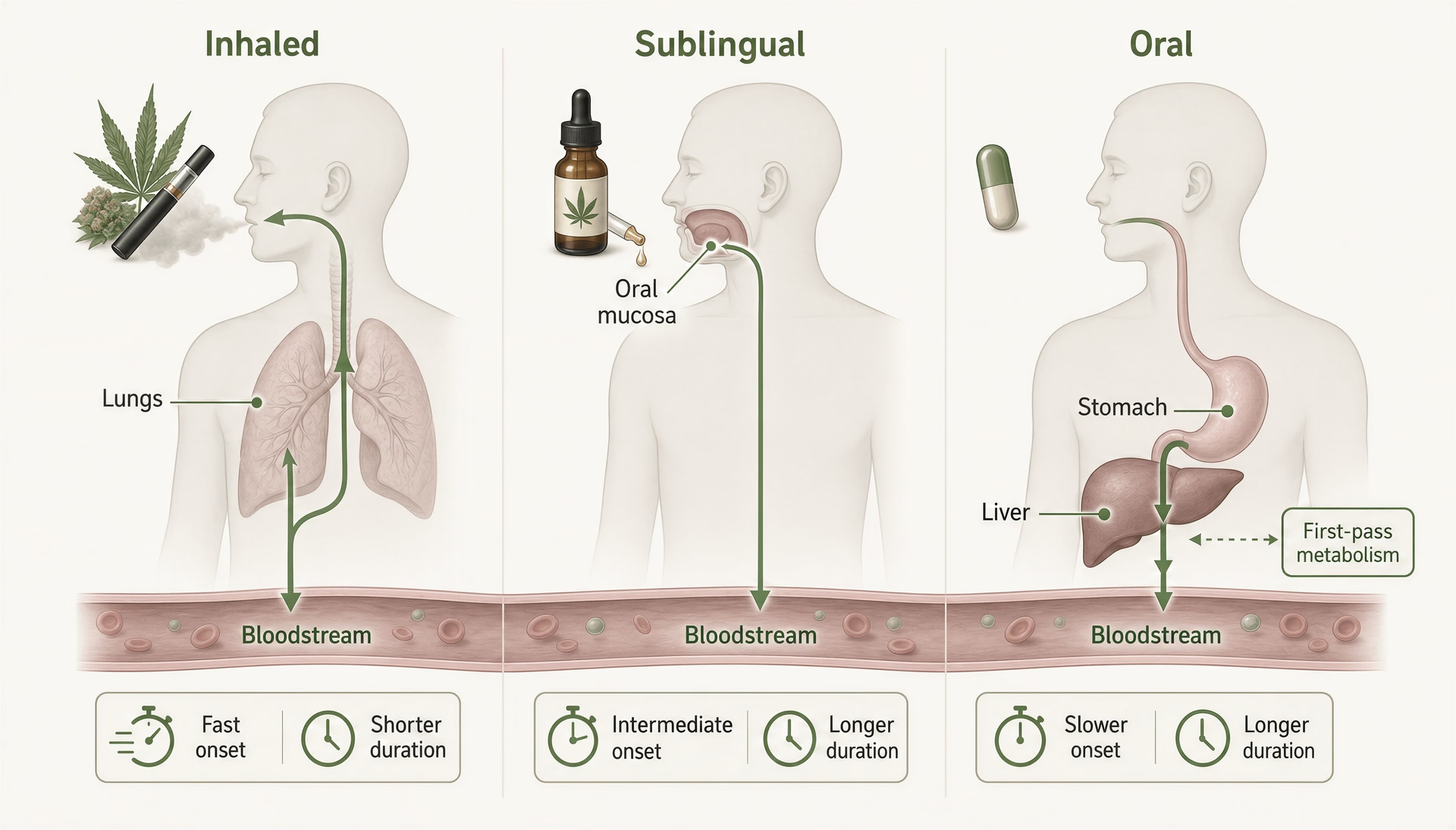
The same cannabinoids can feel very different depending on how they enter the body. That matters in fibromyalgia, where symptoms shift across the day and where many patients have variable autonomic tone, medication sensitivity, dizziness, palpitations, GI irregularity, and sleep that is fragile rather than simply short. Route is not a minor detail. It changes onset, duration, predictability, and side-effect pattern.
| Route | Onset described in article | Typical duration described in article | Best use case in article | Main drawback |
|---|---|---|---|---|
| Oral oils/capsules | About 30 to 120 minutes | 6 to 8 hours, sometimes longer | Nighttime pain or sleep support | Delayed onset and unpredictable absorption |
| Sublingual tinctures | Often around 15 to 45 minutes | Commonly 4 to 6 hours | More control without pulmonary exposure | Mixed mucosal and swallowed absorption |
| Inhaled flower/vaporized extracts | Within minutes | Often 2 to 4 hours | Rapid rescue for pain flares | Abrupt psychoactive effects and respiratory concerns |
A practical way to think about it: inhaled forms are faster and easier to titrate for pain flares, oral forms last longer and fit nighttime use better, and sublingual forms often sit in the middle. None is universally superior. The right route depends on whether the target is sudden pain escalation, sleep maintenance, or daytime symptom control without worsening fibro fog.
Oral oils and capsules
Oral oils and capsules usually have the slowest onset and the longest duration. Effects often begin in about 30 to 120 minutes, sometimes later if taken with a large meal or in someone with delayed gastric emptying. Duration can extend 6 to 8 hours, sometimes longer. That long arc is why oral products are commonly used for nighttime pain or sleep support rather than for rescue.

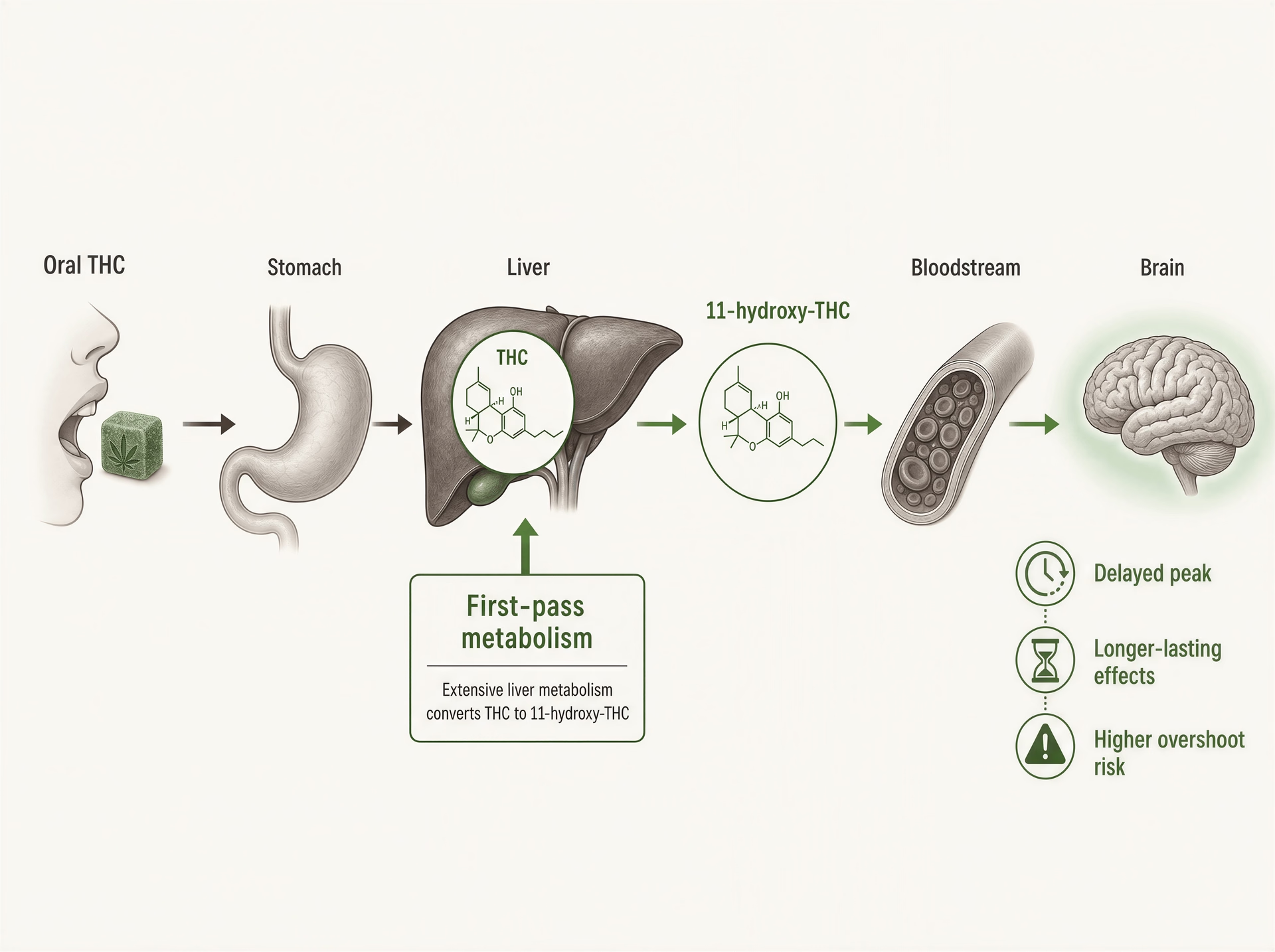
The tradeoff is first-pass metabolism. After swallowing, THC and CBD pass through the gut and then the liver before reaching systemic circulation. For THC, this matters a lot because the liver converts part of it into 11-hydroxy-THC, often written 11-OH-THC. That metabolite is psychoactive and can feel stronger, more sedating, and more cognitively disruptive than inhaled THC in some patients. The delayed onset tricks people into taking more before the first dose has peaked. Then the second wave arrives. Sometimes hard.
For fibromyalgia, oral THC can help patients whose main problem is evening pain escalation or sleep continuity. The sleep signal here is stronger than the daytime cognition signal. Ware et al. in 2010 found nabilone, a synthetic THC analogue, improved insomnia more than amitriptyline in a 31-patient crossover trial, though adverse effects were more common. Skrabek et al. in 2008 also found nabilone improved pain and Fibromyalgia Impact Questionnaire scores over 4 weeks, again with frequent dizziness, drowsiness, dry mouth, and nausea. Those trials were small, but they fit the clinical pattern: oral THC-like cannabinoids may help some patients, especially at night, but side effects are not subtle.
CBD taken orally behaves differently. It does not convert into 11-OH-THC and is not intoxicating in the same way, but oral absorption is still variable. Food can increase exposure. Drug interactions matter too, especially because CBD inhibits CYP2C19 and CYP3A4. In a population often taking duloxetine, amitriptyline, pregabalin, gabapentin, cyclobenzaprine, or sedative-hypnotics, that is not an academic point.
Sublingual tinctures
Sublingual tinctures are often described as a middle route, and that is mostly fair. When held under the tongue for 30 to 60 seconds, some cannabinoid is absorbed directly through oral mucosa and reaches circulation without full first-pass metabolism. Some portion is still swallowed, so the experience can be mixed: a faster early phase plus a later oral tail.
Onset is usually faster than capsules, often around 15 to 45 minutes, though not as fast as inhalation. Duration tends to land between inhaled and fully oral use, commonly 4 to 6 hours. For fibromyalgia patients who need more control than an edible offers but want to avoid pulmonary exposure, this route is often the most forgiving.
This is also where conservative titration works best. The 2021 modified Delphi consensus by Bhaskar et al. for chronic pain proposed starting CBD at 5 mg twice daily and titrating upward before adding THC in low doses if needed. In fibromyalgia, that type of measured approach makes sense. A low-dose CBD-predominant tincture during the day may be reasonable for patients whose pain is tied to anxiety amplification or sensory overload, but claims for CBD alone in fibromyalgia should stay modest. The clinical evidence is much thinner than for THC-containing products.
If THC is added sublingually, the goal is usually precision. A patient who gets dizzy with oral THC may still tolerate a very small sublingual dose because the onset is earlier and redosing can be more cautious. Even then, unpredictability is common in people with orthostatic symptoms, GI variability, panic sensitivity, or marked fibro fog.
Inhaled flower or vaporized extracts
Inhaled cannabis has the fastest onset, usually within minutes, and peaks quickly. That makes it the clearest option for sudden symptom spikes: pain flares, evening pain that ramps fast, or a breakthrough spasm-like episode where waiting 90 minutes for an oral product is unrealistic. Duration is shorter, often 2 to 4 hours, which is useful for titration but less useful for staying asleep through the night.
This fast feedback loop is the main advantage. Patients can take one inhalation, wait, and judge the effect before taking more. That is much harder with oral products. For symptom rescue, inhalation is often the easiest route to dose rationally.
But speed cuts both ways. A THC-dominant inhaled product can also trigger anxiety, tachycardia, dizziness, and short-term cognitive impairment within minutes. In fibromyalgia patients with autonomic lability, that can feel dramatic. Someone prone to palpitations or panic may find inhaled THC unpleasant even at doses that help pain. Pulmonary exposure is another drawback, especially with smoked flower. Vaporized extracts avoid combustion but not all respiratory concern.
The fibromyalgia-specific randomized evidence here is mixed, not cleanly positive. In van de Donk et al. 2019, 20 patients received pharmaceutical-grade cannabis varieties in a crossover design. More subjects receiving the THC+CBD chemovar Bediol achieved at least 30% pain reduction than placebo, yet no active treatment beat placebo on mean spontaneous pain scores across the whole sample. That result is more honest than many summaries. Some patients clearly respond. The average signal is less dramatic.
Why edibles can overshoot in sensitive patients
Edibles are really an oral route with a particularly high overshoot risk. The reasons are pharmacokinetic and behavioral at the same time.
First, onset is delayed. People expect relief sooner than the product can deliver it. Second, absorption is variable. A high-fat meal can increase exposure, while GI dysmotility can delay it. Third, THC is converted in the liver to 11-OH-THC, which can feel more sedating, disorienting, and longer-lasting than expected. Sensitive patients may not feel much at 45 minutes, take more, and then face several hours of dizziness, anxiety, or heavy sedation.
Fibromyalgia patients may be more vulnerable to this than the average chronic pain patient. Many already have baseline fatigue, lightheadedness, medication sensitivity, IBS-like symptoms, sleep disruption, and cognitive complaints. Add an oral THC peak that arrives late and lasts deep into the next morning, and the result can be mistaken for a disease flare rather than a dosing problem.
Daytime versus nighttime use
Route selection should match the symptom window.
For rapid rescue during pain flares, inhaled forms are the most logical because onset is immediate and titration is easier. For sustained overnight effects, oral oils or capsules fit better because duration is longer. For daytime use, especially in patients sensitive to anxiety, palpitations, or cognitive slowing, low-dose sublingual CBD-predominant products are often the least disruptive starting point, though benefit may be modest and interactions still matter.
Nighttime is where low-dose THC often makes the most pharmacologic sense. Daytime is where it causes the most trouble. If a patient already struggles with fibro fog, orthostatic symptoms, or work-related concentration demands, a route that peaks fast and hard may be a bad fit even if it helps pain. Matching route to symptom target is the difference between a tolerable adjunct and an avoidable setback.
Risks, contraindications, and drug interactions
Cannabis is not a low-risk shortcut around fibromyalgia treatment. That matters because fibromyalgia already stacks fatigue, poor sleep, pain amplification, dizziness, bowel sensitivity, anxiety, and cognitive complaints in the same person. A side effect that looks “mild” on a general drug label can be much less mild when it lands on top of fibro fog, unrefreshing sleep, orthostatic symptoms, and five other medications.
The clinical literature supports that caution. Jason Busse and colleagues’ 2021 BMJ rapid guideline on non-inhaled medical cannabis for chronic pain found only small to very small gains in pain, physical function, and sleep, with dizziness and cognitive adverse effects showing up often enough to shape real-world tolerability. Fibromyalgia-specific trials tell the same story. In Skrabek et al. 2008, nabilone improved pain and Fibromyalgia Impact Questionnaire scores over 4 weeks, but dizziness, nausea, dry mouth, and drowsiness were common. In Ware et al. 2010, nabilone beat amitriptyline for insomnia severity in a 31-patient crossover trial, yet adverse effects were more frequent with nabilone. So the tradeoff is not hypothetical. Symptom relief can happen, but so can functional worsening.
Common adverse effects in fibromyalgia-relevant terms
The standard adverse-effect list for THC-containing products includes dizziness, somnolence, dry mouth, impaired concentration, nausea, tachycardia, and anxiety. In fibromyalgia, each one has a specific consequence.
Dizziness is not just dizziness. It can mean standing up after a poor night’s sleep and feeling one step closer to falling. Some people with fibromyalgia report orthostatic intolerance or medication-related lightheadedness already. Add THC, and morning instability may become the limiting factor long before pain relief becomes meaningful. In the large observational cohort by Sagy et al. 2019, dizziness was the most commonly reported adverse effect at 7.9%.
Cognitive slowing is another big one. THC can impair attention, short-term memory, reaction time, and processing speed in a dose-related way. That overlaps almost perfectly with “fibro fog.” Patients sometimes describe this as a bad trade: pain is a little quieter, but word-finding, multitasking, or staying on track gets worse. The evidence for cannabinoids helping fibro fog is weak; the evidence that THC can worsen cognitive performance, at least acutely, is much stronger.
Dry mouth sounds minor until it lands in a patient already taking amitriptyline, cyclobenzaprine, duloxetine, antihistamines, or other xerogenic drugs. Sagy et al. reported dry mouth in 6.7%. For some people this is just annoying. For others it worsens swallowing discomfort, dental problems, altered taste, and poor fluid intake, which can feed back into headaches and constipation.
Gastrointestinal effects also matter more than they first appear. Nausea can occur, especially early in treatment or with higher-THC products. Oral oils and capsules may also aggravate reflux or produce unpredictable GI discomfort. Constipation or diarrhea may already be present from fibromyalgia itself, irritable bowel overlap, magnesium, antidepressants, or gabapentinoids. Cannabis does not enter a clean system.
CBD is often treated as the “gentle” option, but that oversimplifies things. It is less intoxicating than THC, yes. Still, CBD can cause sleepiness, diarrhea, appetite change, and drug interactions through CYP inhibition. The direct evidence for CBD alone in fibromyalgia is thin, so there is not a strong basis for assuming meaningful benefit at doses that still carry interaction risk.
CBN deserves an even more skeptical framing. It is commonly discussed for sleep, but rigorous human evidence is sparse. If a patient experiences next-day grogginess from a product containing CBN plus THC, the practical issue is the impairment, not the marketing story around the minor cannabinoid.
Psychiatric contraindications and cognitive vulnerability
THC can destabilize vulnerable patients. That risk is unevenly distributed, but it is real.
People with a personal or family history of psychotic disorders are the clearest group for caution or avoidance, especially with THC-dominant products. Cannabis can precipitate paranoia, perceptual disturbance, or frank psychotic symptoms in susceptible individuals. Fibromyalgia itself does not cause psychosis, but many patients live with anxiety, depression, trauma exposure, panic sensitivity, and hypervigilance. In that context, an intoxicating dose can feel less like pain relief and more like loss of control.
Anxiety is especially tricky. Low doses of THC may feel calming to some users, while higher doses can do the opposite and trigger racing thoughts, palpitations, derealization, or panic. Trauma-exposed patients may be more sensitive to altered bodily sensation and impaired control. A night-time cannabis trial that is meant to improve sleep can turn into a fearful, dysphoric experience if dosing is too aggressive.
Depression is not a strict contraindication, but it should prompt careful monitoring. Some patients report mood relief when sleep and pain improve. Others become more amotivated, more sedated, or more emotionally blunted. There is no good evidence that cannabis treats fibromyalgia-related depression as a primary mood intervention.
Cognitive vulnerability deserves equal weight. Fibromyalgia diagnosis criteria from the American College of Rheumatology include cognitive symptoms for a reason. If someone already struggles to follow conversations, manage work tasks, or remember appointments, THC may push them past a functional threshold. This is one reason the research is stronger for pain and sleep than for fatigue or fibro fog. For the latter domains, risk may exceed benefit.
Sedation, falls, driving, and functional impairment
Sedation can be useful at bedtime. It can also wreck the next day.
Night-time THC or nabilone may help some patients fall asleep, as Ware et al. 2010 suggests, but a sleep aid that leaves residual morning sedation is a poor fit for someone who already wakes unrefreshed. Add pregabalin, gabapentin, amitriptyline, cyclobenzaprine, trazodone, or a hypnotic, and the burden compounds. This is one of the clearest real-world safety problems with cannabinoid use in fibromyalgia.
Falls are not discussed enough. Dizziness, slowed reaction time, postural instability, and sedation all raise risk, particularly in older adults and in people with baseline balance problems or deconditioning. A patient may not feel “intoxicated” in a dramatic sense and still be less steady on stairs, in the shower, or during a nighttime trip to the bathroom.
Driving is the legal and practical flashpoint. THC impairs reaction time, divided attention, lane control, and judgment. The effect is strongest in the first hours after inhalation, but oral products can impair for much longer because onset is delayed and duration is prolonged. Patients should be warned plainly: if a product contains THC and causes any impairment, driving is unsafe and may be illegal. “I use it medically” is not a defense to impaired driving laws.
Functional impairment extends beyond cars. Work performance, caregiving, school demands, and household management can all be affected. Fibromyalgia often leaves people with a narrow energy envelope. A therapy that trades one symptom for broad functional drag may not be a net win.
| Co-medication group | Interaction type described | What to watch for |
|---|---|---|
| Duloxetine | Main concern is additive adverse effects more than a major kinetic interaction | Dizziness, nausea, dry mouth, somnolence, concentration problems |
| Amitriptyline | Pharmacodynamic overlap plus anticholinergic burden | Dry mouth, constipation, orthostasis, morning hangover, blurred thinking |
| Pregabalin or gabapentin | Mostly additive CNS depression rather than CYP interaction | Dizziness, gait instability, slowed thinking, somnolence |
| Cyclobenzaprine, trazodone, benzodiazepines, Z-drugs, sedating antihistamines, opioids, alcohol | Additive sedation and impairment | Falls, unsafe driving, heavy morning grogginess |
| CBD with CYP2C19/CYP3A4 substrates | Metabolic inhibition by CBD | Higher exposure to some antiseizure drugs, antidepressants, antipsychotics, calcium-channel blockers, and anticoagulants |
Drug interactions with duloxetine, amitriptyline, pregabalin, gabapentin, and others
Fibromyalgia treatment is a polypharmacy problem. Cannabis enters that picture, not outside it.
Duloxetine is metabolized mainly by CYP1A2 and CYP2D6, while CBD inhibits CYP2C19 and CYP3A4 more clearly than those pathways. A major kinetic interaction is not guaranteed, but additive adverse effects are common enough to matter: dizziness, nausea, dry mouth, and somnolence. Both duloxetine and cannabis can also affect heart rate, blood pressure tolerance, and concentration. Start cautiously.
Amitriptyline is a more obvious concern. It is sedating, anticholinergic, and cognitively dulling on its own. Combined with THC, the patient may get more dry mouth, constipation, blurred thinking, orthostasis, and morning hangover. Ware et al. 2010 is useful here: even against low-dose amitriptyline, nabilone produced more adverse effects despite helping sleep.
Pregabalin and gabapentin have little CYP metabolism, so the issue is mostly pharmacodynamic rather than metabolic. That still matters a lot. Add THC to pregabalin or gabapentin and you can see much more dizziness, somnolence, gait instability, and slowed thinking. This is one of the most common problematic combinations in practice because those drugs are already used for pain and sleep.
Cyclobenzaprine, trazodone, benzodiazepines, Z-drugs, sedating antihistamines, opioids, and alcohol all amplify sedation and impairment. If a patient is taking several of these, THC may be the extra load that tips them into unsafe driving, falls, or unworkable morning grogginess.
CBD has a distinct interaction profile. It can inhibit CYP2C19 and CYP3A4 and may raise concentrations of drugs using those pathways. That is relevant beyond fibromyalgia staples: certain antiseizure medications, some antidepressants, some antipsychotics, calcium-channel blockers, direct oral anticoagulants, and warfarin-class anticoagulants all deserve review. If liver-metabolized drugs with narrow therapeutic windows are in the regimen, cannabis should not be treated casually.
Dependence, tolerance, and withdrawal
Cannabis dependence risk is lower than with opioids for many patients, but it is not trivial. Long-term frequent use, especially of higher-THC products, can lead to tolerance, escalating dose, compulsive use, and cannabis use disorder. Fibromyalgia patients are not exempt from that because the use is symptom-driven. In fact, chronic insomnia, pain flares, anxiety, and distress can reinforce repetitive use.
Tolerance often shows up first in sleep. A dose that initially helps at night becomes less effective, then the person increases it, then morning grogginess worsens without proportional symptom gain. That is a warning sign, not a reason to keep chasing effect.
Withdrawal can include irritability, insomnia, anxiety, restlessness, reduced appetite, and low mood after stopping regular THC use. For someone with fibromyalgia, that can look like the condition itself getting worse, which makes cessation harder to interpret. Clear medication histories help.
The safest stance is realistic: cannabinoids may help selected patients, especially for pain and sleep, but they are not benign. In fibromyalgia, where fatigue, fog, mood symptoms, and polypharmacy are already doing damage, adverse effects are often more clinically important than they appear on paper.
Who might be a reasonable candidate, and who probably is not
Fibromyalgia affects about 4 million U.S. adults, roughly 2% of the adult population according to the CDC, but it is not one uniform problem. Some patients are dominated by pain and broken sleep. Others are limited more by fatigue, fibro fog, anxiety, depression, orthostatic symptoms, or medication side effects. That distinction matters because cannabinoid evidence is uneven across symptom domains. The case for trying cannabinoids is strongest when the target is pain with insomnia, and much weaker when the main complaint is cognition, daytime fatigue, or unstable mood.
Patients with refractory pain and severe sleep disruption
A reasonable candidate is an adult with persistent fibromyalgia symptoms despite standard care: exercise-based therapy, sleep-focused treatment, and trials of medications such as duloxetine, amitriptyline, pregabalin, or gabapentin. This is not a first-line move. It is an adjunct option when conventional treatment has not provided enough relief or has caused unacceptable adverse effects.
The clearest signal in fibromyalgia trials is not “cannabis treats fibromyalgia.” It is narrower than that. THC-containing products may help some patients with pain and sleep. Skrabek et al. in 2008 randomized 40 patients to nabilone 1 mg twice daily or placebo for four weeks and found significant improvement in pain scores and Fibromyalgia Impact Questionnaire scores, but dizziness, nausea, dry mouth, and drowsiness were common. Ware et al. in 2010 compared bedtime nabilone with amitriptyline in 31 patients and found better improvement in insomnia severity with nabilone, again with more adverse effects.
That pattern matches the broader chronic pain literature. Busse et al. in the 2021 BMJ rapid guideline found small to very small gains in pain, physical function, and sleep for non-inhaled cannabinoids, alongside frequent transient dizziness and cognitive adverse events. So the reasonable candidate is not simply “someone with fibromyalgia.” It is the patient whose worst combination is nighttime pain, repeated awakenings, and unrefreshing sleep, especially when daytime cognition is still acceptable and the person can tolerate some sedation risk.
By contrast, if the main problem is fibro fog or disabling fatigue, cannabinoids are less attractive. THC can worsen attention, short-term memory, reaction time, and next-day grogginess. CBD alone is often presented as the gentler answer, but fibromyalgia-specific proof for CBD monotherapy is thin. CBN should be treated even more cautiously; sleep claims far outpace human evidence.
Patients with prominent anxiety sensitivity or psychosis risk
This is where patient selection gets stricter. THC can reduce pain for some people, but it can also trigger anxiety, tachycardia, derealization, and paranoia, particularly in those who are highly anxiety-sensitive or inexperienced with psychoactive effects. In van de Donk et al. 2019, inhaled pharmaceutical cannabis produced a more complicated result than popular summaries suggest: more patients receiving the THC+CBD chemovar reached at least 30% pain reduction than placebo, yet no treatment beat placebo on mean spontaneous pain scores across the whole sample. Individual responders exist. So do individual nonresponders and patients who feel worse.
That makes cannabis a poor fit for patients with a personal history of psychosis, bipolar disorder with manic episodes, strong family history of schizophrenia-spectrum illness, or recurrent panic reactions to THC. It is also less appealing when mood symptoms are unstable and not yet treated. Fibromyalgia commonly overlaps with anxiety and depression, but that does not mean cannabinoids are the right entry point. If the nervous system is already highly threat-reactive, fast-onset inhaled THC may amplify the problem rather than calm it.
A CBD-predominant oral approach may be considered more cautiously in some patients with mild anxiety, but expectations should stay modest. The evidence for anxiety relief does not automatically translate into meaningful fibromyalgia benefit, and CBD brings interaction issues of its own, including CYP2C19 and CYP3A4 inhibition.
Pregnancy, breastfeeding, adolescents, and older adults
Pregnancy and breastfeeding are poor settings for cannabinoid therapy in fibromyalgia. Safety data are not good enough to justify exposure for a chronic symptom disorder when alternatives exist. The same caution extends to adolescents. Fibromyalgia can occur in younger patients, but developing brains are more vulnerable to cannabis-related cognitive and psychiatric harms, especially with THC.
Older adults need a separate risk screen. Some may benefit from low-dose nighttime regimens if pain and insomnia are severe, but the bar should be higher because dizziness, orthostatic symptoms, sedation, and impaired balance can translate into falls. This is particularly relevant in fibromyalgia patients already taking amitriptyline, pregabalin, gabapentin, cyclobenzaprine, hypnotics, or other central nervous system depressants. Polypharmacy is the rule, not the exception.
Shared decision-making and realistic treatment goals
The most sensible framework is shared decision-making with narrow, measurable goals. Not “treat fibromyalgia,” but “cut sleep-onset time by 30 minutes,” “reduce nighttime awakenings,” or “lower evening pain from 8/10 to 5/10.” If those gains do not appear at tolerable doses, the trial has failed and should be stopped.[6] Consensus recommendations on dosing and administration of medical cannabis to treat chronic pain: results of a modified Delphi process. A. Bhaskar, S. Bell, T. Boivin, et al.. Journal of Cannabis Research, 2021.
This conversation should also be honest about route and dose. Oral or sublingual products usually fit fibromyalgia better than inhaled forms because they last longer and are less likely to produce abrupt psychoactive peaks. Consensus guidance from Bhaskar et al. 2021 for chronic pain suggested starting CBD at 5 mg twice daily and titrating slowly, with low-dose THC added only if needed, often beginning around 1 to 2.5 mg per day. In fibromyalgia, that conservative strategy makes sense.
The bottom line is selective, not enthusiastic. Adults with refractory pain plus severe sleep disruption may be reasonable candidates for a cautious adjunct trial. Patients whose main burden is cognitive dysfunction, unstable mood, psychosis vulnerability, or major fall risk probably are not.
What remains unknown in 2026
The evidence gap is no longer a vague complaint that “more research is needed.” By 2026, the problem is more specific: fibromyalgia cannabis studies are still too small, too short, too heterogeneous, and too blunt in what they measure. We have signals. Skrabek et al. in 2008 found nabilone improved pain and Fibromyalgia Impact Questionnaire scores over 4 weeks. Ware et al. in 2010 found nabilone beat amitriptyline on insomnia severity in a 31-patient crossover trial. van de Donk et al. in 2019 showed that a THC+CBD inhaled chemovar helped more patients hit a 30% pain reduction threshold than placebo, yet no active treatment beat placebo on mean spontaneous pain across the whole sample. That tension matters. It suggests responder subgroups may exist, while average effects remain modest.
The missing trials
What is still absent are large, placebo-controlled, adequately blinded fibromyalgia trials that last long enough to matter clinically. Four weeks can detect a signal. It cannot tell us whether benefit persists, whether tolerance develops, whether sleep gains translate into less fatigue, or whether daytime cognition worsens after months of use. Observational cohorts such as Sagy et al. 2019 are useful for hypothesis generation, but not for settling efficacy. An 81.1% response rate and pain dropping from 9 to 5 in an uncontrolled registry are exactly the kind of findings that demand a better trial, not celebration.
The next generation of studies should stop treating fibromyalgia as a single pain endpoint. Better trials need separate primary or co-primary outcomes for pain, sleep continuity, fatigue, and cognition. “Fibro fog” has been sidelined for too long, even though THC can impair attention and working memory in ways that matter for this population. Sleep measurement also needs to improve. Insomnia Severity Index is helpful, but it does not capture awakenings, sleep architecture, next-day alertness, or whether sedation is being mistaken for restorative sleep.
Blinding remains a serious methodological problem. Psychoactive effects can reveal THC assignment quickly, inflating expectancy. That is one reason placebo-controlled designs need active placebos or smarter masking strategies.
Which cannabinoid ratios deserve testing
The field still does not know which cannabinoid profile fits which symptom cluster. The common shorthand — THC for pain and sleep, CBD for anxiety — is too crude. It is also not well proven in fibromyalgia. The strongest direct trial data still lean toward THC-containing products, including nabilone and THC+CBD formulations, not CBD alone. CBD monotherapy may help some patients, especially those trying to avoid intoxication or cognitive adverse effects, but fibromyalgia-specific proof is thin.
What deserves testing now is a true head-to-head program: THC-dominant versus balanced THC:CBD versus CBD-predominant regimens, using matched routes and careful dose escalation. Oral nighttime protocols should be compared with daytime divided dosing. Minor cannabinoids should be handled honestly. CBN, in particular, remains a sleep hypothesis with weak human evidence, not an established fibromyalgia treatment.
Biomarkers, phenotypes, and personalized response
The biggest unanswered question may be who responds. Fibromyalgia likely includes several overlapping phenotypes: pain-dominant, insomnia-dominant, affective-distress dominant, and cognitive-fatigue dominant presentations. Trials rarely stratify this way. They should.
Biomarkers are also missing. No validated endocannabinoid signature identifies likely responders. Russo’s endocannabinoid deficiency hypothesis remains interesting, but not proven as a causal model in fibromyalgia. The real advance would be linking baseline features — sleep disturbance, pain sensitivity, anxiety burden, autonomic symptoms, inflammatory markers, quantitative sensory testing, perhaps endocannabinoid profiles — to differential response and adverse effects. The strongest unresolved questions are not whether another patient can report benefit. They are whether THC-heavy regimens help only the insomnia-pain subgroup, whether CBD-predominant treatment can aid anxiety without worsening fatigue, whether balanced products outperform either alone, and whether any of this can be predicted before treatment starts. Better trial design, not another anecdote, is the next step.
References
- [1] Safety and Efficacy of Medical Cannabis in Fibromyalgia. Journal of Clinical Medicine, 2019. https://doi.org/10.3390/jcm8030807
- [2] Nabilone for the treatment of pain in fibromyalgia. The Journal of Pain, 2008. https://doi.org/10.1016/j.jpain.2007.09.002
- [3] The effects of nabilone on sleep in fibromyalgia: results of a randomized controlled trial. Anesthesia & Analgesia, 2010. https://doi.org/10.1213/ANE.0b013e3181c76f70
- [4] An experimental randomized study on the analgesic effects of pharmaceutical-grade cannabis in chronic pain patients with fibromyalgia. Pain, 2019. https://doi.org/10.1097/j.pain.0000000000001464
- [5] Medical cannabis or cannabinoids for chronic pain: a clinical practice guideline. BMJ, 2021. https://doi.org/10.1136/bmj.n2040
- [6] Consensus recommendations on dosing and administration of medical cannabis to treat chronic pain: results of a modified Delphi process. Journal of Cannabis Research, 2021. https://doi.org/10.1186/s42238-021-00073-1