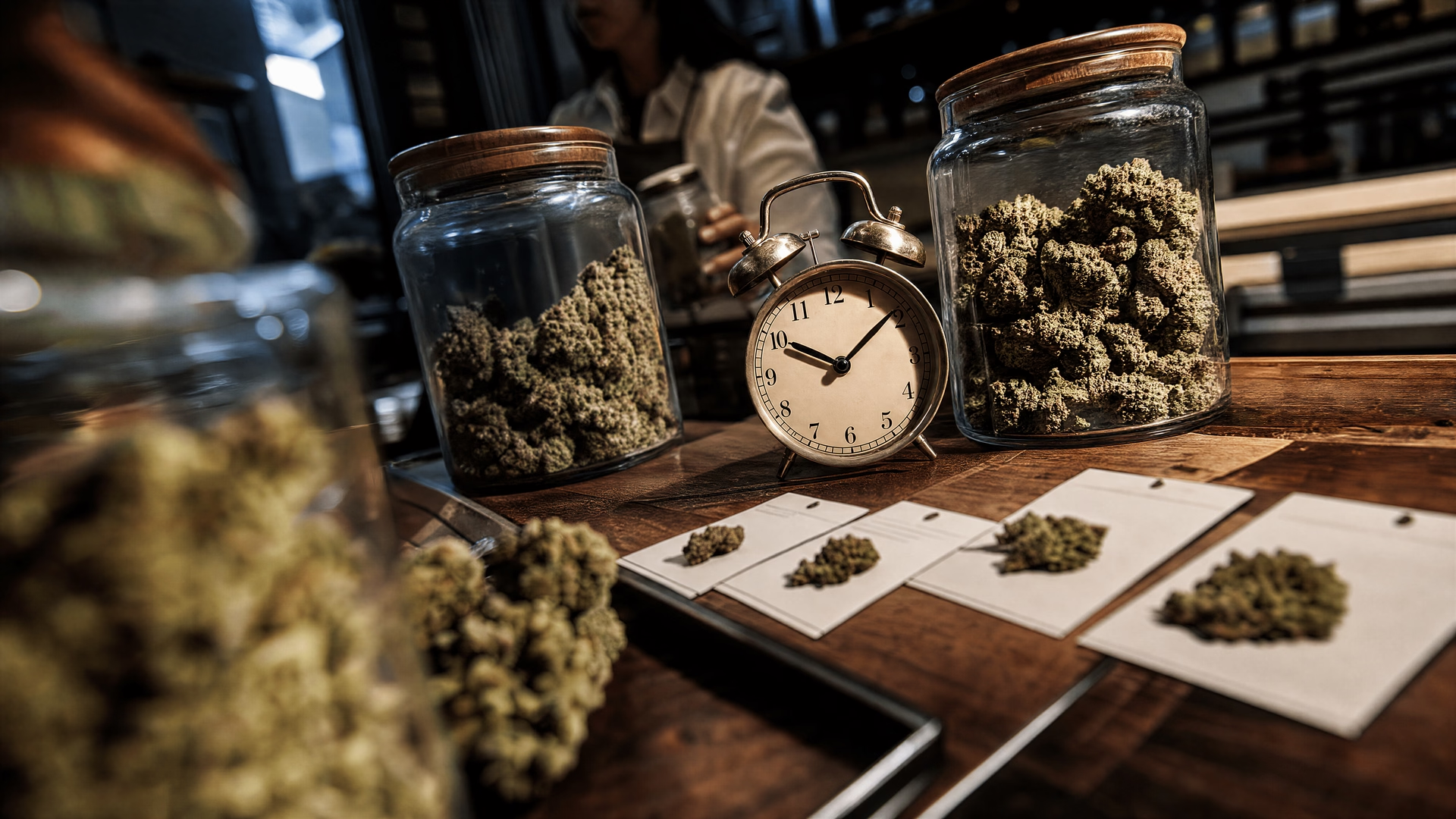














Why the cannabis-psychosis question is harder than public debate makes it sound
Public discussion usually gets this wrong in both directions. One side says cannabis causes schizophrenia, full stop. The other says the whole link is moral panic, weak correlation, or doctors relabeling stigma as science. Neither position fits the evidence very well.
What the data support is less dramatic and more useful: cannabis is not a guaranteed path to schizophrenia, psychosis is not the same thing as schizophrenia, and risk is not evenly distributed across all users. At the same time, the association is no longer easy to dismiss as noise. Across cohort studies, case-control studies, national registers, and meta-analyses, the pattern is fairly consistent. Risk rises most clearly with earlier use, more frequent use, and higher-THC exposure. That matters.
The framing has to start with absolute risk as well as relative risk. Psychotic disorders are uncommon, so even a doubled or tripled relative risk does not mean most users will develop psychosis. They will not. Yet when exposure is widespread, small absolute increases can still matter at the population level. In 2023, SAMHSA estimated that 61.8 million people aged 12 or older used marijuana in the past year in the United States. UNODC estimated 228 million global users in 2022. Rare outcomes stop being trivial when the exposed population is that large.
What people usually mean when they say “cannabis causes psychosis”
Often they mean several different things at once, and that imprecision creates half the confusion.
Psychosis A syndrome marked by impaired reality testing, often involving hallucinations, delusions, paranoia, or disorganized thinking. It is not the same thing as schizophrenia.
In clinical language, psychosis is a syndrome. It involves symptoms such as hallucinations, delusions, paranoia, and disorganized thinking. It is not a synonym for schizophrenia. Schizophrenia is one chronic psychotic disorder among several. A person can have a brief psychotic episode, a substance-induced psychotic disorder, bipolar disorder with psychotic features, or a schizophrenia-spectrum illness. Public debate often flattens all of this into one frightening word.
Acute THC exposure can produce transient psychotic-like symptoms in healthy volunteers. Strong evidence
That flattening matters because the evidence is stronger for some claims than for others. It is well established that THC can acutely produce psychotic-like symptoms in some people, especially at higher doses. Experimental administration studies have shown transient paranoia, perceptual distortion, and suspiciousness even in healthy volunteers. That is not controversial. It is also well supported that cannabis-induced psychotic disorder exists as a real diagnostic category: psychotic symptoms emerge in temporal relation to cannabis exposure and exceed ordinary intoxication effects.[1] One-third of adults with substance-induced psychosis convert to schizophrenia or bipolar disorder: a Danish nationwide register-based study. Nicolas B. Starzer, Anna-Louise Nordentoft, Merete Nordentoft. American Journal of Psychiatry, 2018.
The harder question is what happens next. Some episodes resolve. Some do not. Some seem to reveal an existing vulnerability rather than create a wholly new disorder from nothing. Starzer et al. in American Journal of Psychiatry (2018), using Danish registry data, found that 32.2% of people with substance-induced psychosis later converted to schizophrenia or bipolar disorder; for cannabis-induced psychosis, the conversion rate was 47.4%. That does not mean cannabis-induced psychosis is “just schizophrenia in disguise” every time. It does mean clinicians should not shrug it off as a harmless bad trip.
| Claim | What the article says | Evidence signal |
|---|---|---|
| THC can trigger short-term psychotic symptoms during intoxication | Transient paranoia, perceptual distortion, and suspiciousness can occur, especially at higher doses | Strong |
| Cannabis can cause a diagnosable cannabis-induced psychotic disorder | CIPD is a recognized diagnosis when symptoms exceed ordinary intoxication effects | Strong |
| Cannabis can contribute to later schizophrenia-spectrum illness in some people | Risk is probabilistic and shaped by potency, age, frequency, and vulnerability | Real but uneven |
THC can acutely produce psychotic-like symptoms, and cannabis-induced psychotic disorder is a real clinical diagnosis. Strong evidence
When people say cannabis causes psychosis, they may also mean one of three distinct claims: that cannabis can trigger short-term psychotic symptoms during intoxication; that it can cause a diagnosable cannabis-induced psychotic disorder; or that it can contribute to later schizophrenia-spectrum illness in some people. The evidence for the first claim is strong. The second is also strong. The third is real but probabilistic, uneven, and mediated by potency, age, frequency, and vulnerability.
This is why simple slogans fail. “Cannabis causes schizophrenia” is too blunt. “It’s only correlation” is now too weak.
Why this topic attracts both alarmism and minimization
Psychosis is frightening, so alarmism is easy. One severe case can dominate public memory far more than ten careful epidemiology papers. Psychiatry also carries a long history of drug-war messaging, overstatement, and one-size-fits-all warnings. That history made many people reasonably skeptical. Then some reacted by minimizing everything.
The science sits awkwardly between those instincts. Randomized long-term trials assigning adolescents to daily high-THC cannabis are impossible, so the evidence base is observational. That gives skeptics a talking point: correlation is not causation. True enough. Trauma, tobacco, urbanicity, other drug use, childhood adversity, and shared genetic liability all complicate the picture. Reverse causation matters too. Some people with prodromal psychosis may use cannabis to cope with anxiety, dysphoria, social withdrawal, or early unusual experiences. The self-medication hypothesis is plausible and almost certainly explains part of the association.[2] Cannabis use in adolescence and risk for adult psychosis: longitudinal prospective study. Louise Arseneault, Terrie E. Moffitt, Avshalom Caspi, Richie Poulton, Robin Murray. BMJ, 2002.
But “part” is not “all.” Longitudinal studies that measure symptoms before later cannabis exposure still tend to find elevated risk. Arseneault et al. in the BMJ (2002), using the Dunedin birth cohort, found that cannabis use by age 15 was associated with schizophreniform disorder at age 26 even after adjustment for psychotic symptoms present at age 11 and other confounders. The adjusted odds ratio was about 4.5, though with a wide confidence interval. That paper became foundational for a reason: it strengthened temporality. Exposure came before later disorder.[3] The contribution of cannabis use to variation in the incidence of psychotic disorder across Europe (EU-GEI): a multicentre case-control study. Marta Di Forti, Hannah Quattrone, Tom Freeman, et al.. The Lancet Psychiatry, 2019.[4] Meta-analysis of the association between the level of cannabis use and risk of psychosis. Alessio Marconi, Marta Di Forti, Hannah Lewis, Robin M. Murray, Tom R. Freeman. Schizophrenia Bulletin, 2016.
The dose-response signal also cuts against pure minimization. Marconi et al. in Schizophrenia Bulletin (2016) reported that the heaviest users had about a 3.9-fold increased risk of psychosis compared with non-users. Marta Di Forti and colleagues pushed this further by measuring not just whether people used cannabis, but how often and how potent it was. In the 2019 EU-GEI study in The Lancet Psychiatry, daily cannabis use was associated with increased odds of psychotic disorder of 3.2, while daily use of high-potency cannabis, defined as more than 10% THC, was associated with odds of 4.8. That is not a trivial pattern.
CBD may reduce some acute THC psychotomimetic effects, but the evidence is not decisive and does not erase risk from frequent high-THC use. Limited evidence
The modern product landscape matters here. Public arguments still talk about “cannabis” as if it were chemically uniform. It is not. A lower-THC product and a THC-dominant concentrate are not interchangeable exposures. Nor are THC-rich, CBD-poor products pharmacologically equivalent to preparations containing substantial CBD. Morgan and Curran’s work from 2008 and after suggested CBD may blunt some of THC’s acute psychotomimetic effects, but that should not be turned into a free pass. The evidence is suggestive, not decisive, and many products marketed as containing CBD do not resemble the THC:CBD ratios used in research.
Another reason debate gets distorted is that relative-risk headlines can sound larger than they are. An odds ratio of 3.2 for daily use sounds huge. In one sense it is. In another sense, most daily users still do not develop psychotic disorders. Both statements are true. Public health communication often chooses only one of them, depending on whether the speaker wants to scare people or reassure them.
The article’s central claim: population-level risk is real, individual risk is uneven
This is the position most consistent with current evidence.
At the population level, cannabis appears to make a real contribution to psychosis burden, especially where frequent use of high-potency products is common. Di Forti et al. (2019) estimated that 30% of first-episode psychosis cases across all study sites might be attributable to daily cannabis use, rising to 50% in Amsterdam and 30% in London. That is attributable-fraction modeling, not proof that those cases were monocausally caused by cannabis. The wording matters. Still, it is strong evidence that cannabis exposure patterns can shift incidence at a city level.[5] Association between cannabis use disorder and schizophrenia stronger in young males than in females. Carsten Hjorthøj, Jesper W. Larsen, Mikkel Arendt, Merete Nordentoft. The Lancet Psychiatry, 2021.
Hjorthøj et al. in The Lancet Psychiatry (2021) found a similar population signal in Danish registry data. The proportion of schizophrenia cases associated with cannabis use disorder rose from about 2% in 1972–1976 to 8% in 2010–2016 overall, and among men aged 21–30 the estimate reached as high as 30%. Again, “associated with” is the careful phrase. Even so, this is hard to wave away as mere stigma.
| Risk modifier | Lower-risk pattern in the article | Higher-risk pattern in the article |
|---|---|---|
| Age of first use | Started in adulthood | Started in mid-adolescence |
| Frequency | Occasional or sporadic use | Daily use |
| Potency | Lower-THC product | High-potency THC-dominant product |
| Vulnerability | No known personal or family psychosis risk | Family history, trauma, developmental vulnerability, or prior psychotic-like reaction |
Individual risk, though, is uneven. A 28-year-old who uses occasionally, started in adulthood, and avoids high-THC products is not in the same risk category as a 15-year-old using daily THC-dominant concentrates with a family history of psychotic disorder. Age of first use matters because adolescence is a period of active brain development, and the Dunedin findings from Arseneault’s team remain one of the clearest warnings on early exposure. Frequency matters because sporadic exposure and daily exposure do not carry the same epidemiological signal. Potency matters because THC concentration changes the biological dose. Vulnerability matters because some people appear far more sensitive than others, whether due to family history, developmental factors, trauma, or genetic variation.
The genetics story should be handled carefully. COMT Val158Met and AKT1 polymorphisms have both been studied, with Caspi et al. (2005) making COMT famous and Di Forti’s group reporting more consistent AKT1-related findings. But candidate-gene psychiatry has a bad replication record. The honest position is not that there is a simple gene test for cannabis psychosis risk. There is not. The honest position is that inherited vulnerability probably modifies risk, without being reducible to one clean marker.
So the hard truth is this: the average person is not doomed, the vulnerable minority is not imaginary, and population-level effects can be meaningful even when most individuals never develop psychosis. That is less satisfying than a slogan. It is also closer to the science.
What psychosis actually is in clinical psychiatry
Public arguments about cannabis often go wrong before the evidence is even discussed, because the word psychosis gets used carelessly. In clinical psychiatry, psychosis does not mean “had a bad reaction,” “felt anxious,” “got too high,” or “acted oddly.” It refers to a syndrome marked by impaired reality testing: the person is having difficulty distinguishing what is internally generated from what is actually happening in the external world.
That definition matters. If a headline says cannabis “causes psychosis” but the underlying case was acute panic, transient paranoia during intoxication, or confusion that resolved within hours, the public is being asked to reason from the wrong category. The evidence base on cannabis and psychosis is complicated enough without lumping every unpleasant intoxication effect into a psychiatric diagnosis.
Hallucinations, delusions, disorganization, and loss of reality testing
Core symptom domains
- Hallucinations Perceptions without an external stimulus, such as hearing voices or seeing figures that are not there.
- Delusions Fixed false beliefs that persist despite clear evidence to the contrary.
- Disorganization Speech, thought, or behavior that becomes tangential, incoherent, chaotic, or markedly inappropriate.
- Loss of reality testing Difficulty recognizing that the experience may arise from illness, intoxication, or another brain-based disturbance.
The classic symptoms of psychosis are hallucinations, delusions, and disorganized thought or behavior. Hallucinations are perceptions without an external stimulus: hearing voices when nobody is speaking, seeing figures that are not there, feeling touched when no one is present. Delusions are fixed false beliefs that persist despite clear evidence to the contrary: believing strangers are monitoring you, that the television is sending coded messages, or that you have a special mission or identity not grounded in reality. Disorganization can show up as speech that becomes tangential or incoherent, thoughts that lose their logical structure, or behavior that is markedly chaotic or inappropriate to the situation.
Reality testing The ability to distinguish internal experiences, beliefs, or perceptions from events in the external world.
What ties these symptoms together is loss of reality testing. The person may not recognize that the experience is generated by illness, intoxication, sleep deprivation, or another brain-based disturbance. That is different from ordinary anxiety, suspiciousness, or feeling unsettled after taking too much THC. A person can say “I felt paranoid after using cannabis” and mean they were very anxious and self-conscious. Clinically, paranoia becomes psychotic when it crosses into delusional conviction: not “I felt everyone was judging me,” but “I know my neighbors installed devices to track me.”
There is also a middle ground that gets missed in public debate: psychotic-like experiences. These can include fleeting perceptual distortions, mild ideas of reference, or transient suspiciousness that never consolidate into a sustained psychotic disorder. THC can produce these experiences experimentally, especially at higher doses. That does not make every such episode schizophrenia, or even a psychiatric disorder. It does show biological plausibility for a cannabis–psychosis link, because the substance can acutely push perception and belief in a psychosis-like direction.
Duration and severity matter. So does context. Brief symptoms during intoxication are not the same as a psychotic episode lasting days or weeks. A frightening evening after a high-THC edible is not identical to cannabis-induced psychotic disorder, and neither is automatically the same thing as schizophrenia-spectrum illness.
Psychosis as a syndrome, not a single disease
Psychosis is a syndrome, not a single disease entity. That is one of the most important distinctions in psychiatry, and one of the most ignored in media coverage. A syndrome is a cluster of symptoms that can arise from different underlying causes. Schizophrenia is one cause of psychosis. It is not the only one.
Cannabis-induced psychotic disorder (CIPD) A substance-induced psychotic disorder in which hallucinations, delusions, or marked thought disturbance emerge in temporal relation to cannabis exposure and exceed ordinary intoxication effects.
Psychosis can occur in bipolar disorder, especially during mania or severe depression. It can occur in major depressive disorder with psychotic features. It can appear in neurological disease, delirium, autoimmune conditions, severe sleep deprivation, stimulant toxicity, and substance-induced states. Cannabis-induced psychotic disorder, often shortened to CIPD, sits in this landscape as a recognized diagnosis in DSM-5 and ICD frameworks. The core idea is straightforward: psychotic symptoms emerge in temporal relation to cannabis exposure, are greater than expected from ordinary intoxication, and warrant clinical attention.
That “greater than expected” phrase is doing a lot of work. Cannabis intoxication can involve anxiety, perceptual amplification, and transient suspiciousness. CIPD implies something more severe: hallucinations, delusions, marked thought disturbance, or a level of impairment that exceeds a typical intoxication reaction. The person may require emergency assessment. Symptoms may resolve after the drug effect wears off and the person remains abstinent. Or they may not.
| Course after cannabis-linked psychosis | What the article says |
|---|---|
| Full remission | Some cannabis-induced episodes resolve after abstinence and treatment |
| Persistent symptoms | Some episodes last longer than expected for intoxication alone |
| Recurrence or deterioration | Repeated episodes or worsening function raise concern for a primary disorder |
| Later conversion | A meaningful share later receive schizophrenia-spectrum or bipolar diagnoses |
This is where the distinction from schizophrenia-spectrum disorders matters. Some cases of cannabis-induced psychosis remit fully. Some do not. Danish registry data have made this impossible to brush aside. Starzer et al. in American Journal of Psychiatry (2018) found that 32.2% of substance-induced psychosis cases later converted to schizophrenia or bipolar disorder, and cannabis-induced psychosis had the highest conversion rate at 47.4%. That does not mean cannabis-induced psychosis is secretly schizophrenia every time. It means clinicians should not treat it as a harmless, self-limiting oddity.
The likely reality is mixed. In some people, cannabis exposure appears to act as an acute precipitant in a vulnerable brain. In others, it may unmask an illness that was already developing. In still others, it may cause a transient episode that does not recur once exposure stops. Psychiatry does not have a single neat box that fits every case, and pretending otherwise weakens both science and public communication.
This is also why the slogans fail. “Cannabis causes schizophrenia” is too blunt. “It’s all just correlation” is now too dismissive. The more defensible position is narrower and stronger: cannabis can acutely induce psychotic symptoms; heavy use, especially frequent high-THC use, is linked to higher risk of psychotic disorder at the population level; and some cannabis-associated psychotic episodes later evolve into schizophrenia-spectrum or bipolar illness, particularly in people with developmental or genetic vulnerability.
Why colloquial use of the term distorts the evidence
Outside psychiatry, psychosis often gets stretched beyond recognition. News reports use it as shorthand for panic, confusion, agitation, bizarre behavior, or any dramatic adverse event after cannabis use. Social media does the same. Someone says they “went psychotic” when they mean they got too intoxicated, became frightened, and recovered by morning. That is not harmless imprecision. It scrambles the categories needed to judge risk.
Once those categories are blurred, the evidence becomes easy to misuse in both directions. Alarmist claims count every episode of THC-triggered anxiety as proof that cannabis “causes psychosis.” Dismissive claims point to mild, self-limited intoxication reactions and say the entire psychosis literature is inflated moral panic. Both moves are bad reasoning.
Clinical categories used in the article
- Transient psychotic-like experiences
- Brief, mild distortions or suspiciousness, often during intoxication, without sustained loss of reality testing.
- Cannabis intoxication with paranoia or panic
- An acute adverse reaction that may feel severe but does not necessarily meet criteria for psychosis.
- Brief psychotic episode
- Psychotic symptoms lasting beyond the immediate intoxication window and causing clear impairment.
- Cannabis-induced psychotic disorder
- A diagnosable syndrome linked temporally to cannabis exposure and more severe than expected intoxication effects.
- Schizophrenia-spectrum illness
- A broader and more enduring psychiatric disorder in which psychosis is one feature among others.
Clinical definitions help sort this out:
- Transient psychotic-like experiences:** brief, mild distortions or suspiciousness, often during intoxication, without sustained loss of reality testing.
- Cannabis intoxication with paranoia or panic:** an acute adverse reaction that may feel severe but does not necessarily meet criteria for psychosis.
- Brief psychotic episode:** psychotic symptoms that last beyond the immediate intoxication window and involve clear impairment.
- Cannabis-induced psychotic disorder:** a diagnosable syndrome in temporal relation to cannabis exposure, more severe than expected intoxication effects.
- Schizophrenia-spectrum illness:** a broader, enduring psychiatric disorder in which psychosis is one feature but not the whole story.
Those distinctions are not semantic hair-splitting. They determine prognosis, treatment, and what can reasonably be inferred from epidemiology. When Marta Di Forti and colleagues reported in The Lancet Psychiatry in 2019 that daily cannabis use was associated with increased odds of psychotic disorder (OR 3.2) and daily use of high-potency cannabis over 10% THC with even higher odds (OR 4.8), they were not studying “bad highs” as a cultural meme. They were studying clinically relevant psychotic disorder. Likewise, when Carsten Hjorthøj and colleagues estimated in 2021 that the proportion of schizophrenia cases associated with cannabis use disorder had risen in Denmark, especially among young men, they were not claiming every anxious cannabis user had psychosis. They were working with serious psychiatric outcomes.
Loose language also hides an uncomfortable but important truth: absolute risk and relative risk can both be real at the same time. Most people who use cannabis will not develop psychosis. Psychotic disorders remain uncommon. Yet with 61.8 million past-year marijuana users in the United States in 2023 and 228 million users globally in 2022, even a modest increase in absolute risk matters for public health. Precision is the only way to say that without slipping into panic rhetoric.
So when discussing cannabis and psychosis, the first task is definitional discipline. If the term is used to mean everything, it ends up meaning nothing. And if it means nothing, the evidence cannot be weighed honestly.
| Feature | Cannabis-induced psychotic disorder | Schizophrenia-spectrum illness |
|---|---|---|
| Diagnostic status | Formal diagnosis in DSM-5 and ICD frameworks | Formal diagnosis within the psychosis spectrum |
| Timing | Emerges during or soon after cannabis exposure or withdrawal | Not defined by recent substance exposure |
| Expected course | May remit after abstinence and acute treatment | Usually more enduring and broader in symptom pattern |
| Clinical concern | Can convert to schizophrenia or bipolar disorder in some cases | Already part of a longer psychiatric disorder trajectory |
Cannabis-induced psychosis is not the same thing as schizophrenia
Public debate often mangles this distinction. A person has paranoia, hears voices after heavy THC exposure, and the story becomes “cannabis causes schizophrenia.” Or the reverse: symptoms fade after stopping use, so people claim the whole cannabis-psychosis link was moral panic. Both readings are too blunt.
Psychosis is a syndrome: hallucinations, delusions, disorganized thought, and impaired reality testing. Schizophrenia is one possible diagnosis within that territory, defined by a broader pattern of symptoms, duration, and functional decline. Cannabis-induced psychotic disorder, usually shortened to CIPD, sits in a different diagnostic box. It is a formal diagnosis in psychiatric classification systems, not internet slang and not a catch-all label for “bad weed experience.”
That matters because diagnosis shapes prognosis. Some people with CIPD recover fully once the drug effect clears and use stops. Some do not. Some later receive a schizophrenia-spectrum or bipolar diagnosis, which suggests the episode was not just intoxication in the narrow sense but an early expression of deeper vulnerability.
Diagnostic criteria and temporal relationship to cannabis exposure
DSM-5 logic is fairly strict here. For a clinician to diagnose a substance-induced psychotic disorder related to cannabis, the psychotic symptoms must arise during or soon after cannabis intoxication or withdrawal, and the symptoms must be severe enough to exceed what would usually be expected from ordinary intoxication alone. Seeing mild distortions while acutely intoxicated is not the same thing as sustaining a delusional belief system or developing marked hallucinations and disorganization.
ICD frameworks use similar reasoning. The key question is temporal relationship plus clinical severity. Did the psychosis emerge in close connection with cannabis exposure? Does it look out of proportion to expected intoxication? Is there evidence that the symptoms persist independently of the substance effect? Clinicians are trained to work through those questions rather than collapsing all drug-related symptoms into one category.
That distinction is easy to miss because THC can itself produce transient psychotic-like effects in healthy volunteers, especially at higher doses. Experimental work has shown acute THC administration can increase paranoia, perceptual disturbance, and suspicious thinking. But a temporary intoxication effect is not automatically a psychotic disorder. The threshold for CIPD is crossed when symptoms are more pronounced, more sustained, and more impairing than a typical intoxication reaction.
Timing helps, but timing is not everything. If someone develops hallucinations and fixed delusions after repeated use of high-THC cannabis, especially daily use or concentrated products, that temporal link is clinically meaningful. Marta Di Forti and colleagues showed in the 2019 EU-GEI study that daily cannabis use was associated with higher odds of psychotic disorder, and daily use of high-potency cannabis above 10% THC carried still higher odds. That study was not about CIPD specifically, but it sharpened a point psychiatry has wrestled with for years: frequency and potency matter, and “cannabis use” is not a chemically uniform exposure.
Clinicians also try to separate cannabis-linked psychosis from a primary psychotic disorder that merely happens to coexist with cannabis use. This is harder than it sounds. Many patients use cannabis before the first recognized psychotic episode. Some may be self-medicating anxiety, insomnia, dysphoria, or early prodromal experiences. Others may have had no obvious prior symptoms and then present with florid psychosis after heavy THC exposure. In real clinics, the line is not always obvious on day one.
A practical rule is this: intoxication-related symptoms that resolve quickly as the drug effect wears off point one way; persistent psychosis that outlasts expected intoxication, especially with recurrence or deterioration over time, points another. That still leaves a gray zone. Psychiatry cannot solve that uncertainty with slogans.
When symptoms remit and when they do not
Some cases of CIPD remit. This is one reason it should not be equated automatically with schizophrenia. If the psychosis was tightly linked to cannabis exposure and symptoms resolve after abstinence and acute treatment, the diagnosis may remain substance-induced rather than evolving into a long-term schizophrenia-spectrum illness.
How quickly can symptoms remit? It varies. In some patients, severe paranoia, auditory hallucinations, and disorganization fade over days to weeks after stopping cannabis and receiving support, antipsychotic treatment, or both. In others, symptoms linger longer than expected, raising concern that the substance exposure triggered something more durable. Duration matters. So does the person’s history before the episode, family history, premorbid functioning, and whether psychosis returns despite abstinence.
This is where public messaging often fails. Saying “it was only the weed” can be as misleading as saying “the schizophrenia was caused entirely by cannabis.” Cannabis may act as an acute precipitant, an amplifier of pre-existing vulnerability, or both. Robin M. Murray and others have long argued that for some individuals, cannabis does not create psychosis out of nowhere so much as help bring forward an illness that might otherwise have emerged later or less severely.
Age of first use and pattern of use shift the odds. Louise Arseneault’s 2002 Dunedin cohort paper remains influential because it addressed temporality directly. Cannabis use by age 15 was associated with later schizophreniform outcomes at age 26 even after accounting for earlier psychotic symptoms and confounders. That does not mean every adolescent who uses cannabis is on a path to psychosis. It does mean early exposure is a real warning sign, especially when paired with frequent use and high THC.
CBD may be relevant here, but only with restraint. Celia J. A. Morgan and H. Valerie Curran reported evidence that CBD might buffer some of THC’s acute psychotomimetic effects. That is interesting and biologically plausible. It is not a guarantee that CBD-containing products erase psychosis risk. Many THC-dominant products contain little meaningful CBD, and the evidence is suggestive rather than decisive.
If symptoms persist beyond the expected intoxication window, if there is negative symptom development, cognitive decline, repeated episodes, or deterioration in functioning, clinicians start worrying less about a self-limited drug reaction and more about an emerging primary disorder. Continued cannabis use after a first psychotic episode also predicts worse outcomes. Work by Schoeler and colleagues has linked ongoing use after first-episode psychosis with poorer prognosis, which fits the broader clinical consensus that heavy use after psychosis onset is a bad sign.
Conversion to schizophrenia-spectrum or bipolar disorder
The most uncomfortable fact in this area is also one of the most clinically important: a meaningful share of substance-induced psychosis cases do not stay in that category.
Starzer et al., using Danish registry data and publishing in the American Journal of Psychiatry in 2018, found that 32.2% of patients with substance-induced psychosis later converted to either schizophrenia or bipolar disorder. For cannabis-induced psychosis specifically, the conversion rate was 47.4%, the highest among the substances studied. That figure should be handled carefully. It does not mean cannabis-induced psychosis is “basically schizophrenia.” It does mean clinicians should take CIPD seriously, monitor it closely, and avoid reassuring patients that the event is automatically transient and harmless.
Why do some people convert? There are several plausible pathways. One is unmasking: the cannabis-related episode may reveal an underlying liability that was already present. Another is precipitation: repeated high-THC exposure may help push a vulnerable brain across a threshold into more sustained illness. Shared risk factors also matter. Family history of psychosis, childhood adversity, other substance use, urbanicity, and developmental vulnerability all complicate the picture. Genetics may play a role, though candidate-gene stories around COMT Val158Met and AKT1 have been mixed and should not be oversold as clinical tests.
The Danish register work does not settle causation in a monocausal sense. Registry studies are powerful for follow-up and scale, but they cannot fully disentangle whether cannabis caused the later disorder, accelerated it, or marked a person already on a higher-risk trajectory. Even so, the prognostic message is plain. A cannabis-linked psychotic episode is not something to shrug off.
This also helps explain why the wider epidemiology matters. Di Forti’s case-control work, Hjorthøj’s Danish attributable-fraction modeling, Arseneault’s longitudinal cohort, and Marconi’s 2016 dose-response meta-analysis all point in the same general direction: psychosis risk rises with heavier and earlier cannabis exposure, especially high-THC exposure, even if the size and mechanism of causation remain debated. The evidence does not support “schizophrenia in a joint” rhetoric. It also does not support the claim that cannabis-psychosis associations are just stigma dressed up as science.
For patients and families, the practical takeaway is sober rather than dramatic. CIPD is a real diagnosis. It is distinct from schizophrenia. It can remit. It can also be the first sign of a longer psychiatric illness, particularly when symptoms are severe, prolonged, recurrent, or followed by continued cannabis use. Any episode of paranoia, hallucinations, extreme suspiciousness, or disorganized thinking after cannabis exposure deserves proper clinical assessment, not social media certainty.
What the epidemiology shows before we argue about causation
| Study design | What it adds | Main limitation noted in the article |
|---|---|---|
| Longitudinal cohort | Establishes temporality by measuring exposure before later outcome | Residual confounding remains possible |
| Case-control | Allows detailed questions about frequency and potency | Recall bias and self-reported exposure |
| National register | Very large samples, long follow-up, less recall bias | Relies on diagnostic coding and limited potency detail |
| Meta-analysis | Tests whether patterns survive pooling across studies | Can only pool the quality of the underlying studies |
| Study | Design | Key figure in article | Main takeaway |
|---|---|---|---|
| Arseneault et al. 2002 | Longitudinal birth cohort | Adjusted OR about 4.5 for use by age 15 | Early adolescent use predicted later schizophreniform outcomes |
| Di Forti et al. 2019 | Multicenter case-control | OR 3.2 for daily use; OR 4.8 for daily high-potency use | Frequency and potency sharpen risk |
| Marconi et al. 2016 | Meta-analysis | About 3.9-fold risk in heaviest users | Dose-response pattern |
| Hjorthøj et al. 2021 | National register analysis | About 2% to 8% over time; up to 30% in men 21–30 | Population burden linked to cannabis use disorder |
| Starzer et al. 2018 | National register follow-up | 47.4% conversion after cannabis-induced psychosis | CIPD can be a marker of serious later illness |
Before getting stuck in the causation fight, it helps to ask a simpler question: what do the population studies actually show? Not what headlines say. Not what advocates on either side want them to say. The answer is fairly consistent across several research designs. People who use cannabis, especially those who start young, use frequently, or use high-THC products, show higher rates of psychotic outcomes than people who do not. That finding has repeated across birth cohorts, case-control studies, national registers, and meta-analyses.
That does not mean cannabis single-handedly “causes schizophrenia” in every user. It also does not mean the association evaporates once stigma, class, or bad statistics are mentioned. The evidence sits in the middle, and the middle is harder: there is a real association, it is not trivial, it looks stronger under certain exposure patterns, and it still comes with the usual limits of observational epidemiology.
Definitions matter here. Psychosis is a syndrome: hallucinations, delusions, disorganized thought, loss of contact with reality. Schizophrenia is one possible diagnosis within that territory, not a synonym for all psychosis. Cannabis-induced psychotic disorder is another category entirely, and some of those cases later convert to schizophrenia-spectrum or bipolar diagnoses. That blurring in public debate has confused this literature for years.
Longitudinal cohort studies and why temporality matters
If you want to move beyond pure correlation, longitudinal cohort studies are the first step up the evidence ladder. They follow people over time, measuring cannabis exposure before later psychotic symptoms or disorder appear. That matters because temporality is one of the few causal criteria epidemiology can actually test well. The exposure must come before the outcome.
A foundational study here is Arseneault et al. in the BMJ (2002) using the Dunedin birth cohort. The authors found that cannabis use by age 15 was associated with schizophreniform disorder by age 26, with an adjusted odds ratio of about 4.5 after accounting for psychotic symptoms at age 11 and other confounders. Cannabis use by age 18 also predicted later risk, though less strongly. That age gradient has been one of the most important features of the whole literature. Earlier use appears worse.
Why was Dunedin so influential? Because it directly addressed a standard objection: maybe people were already on the path to psychosis and simply happened to use cannabis. Arseneault and colleagues partially tested that by adjusting for childhood psychotic symptoms measured before the cannabis exposure window. That does not eliminate every form of reverse causation, but it weakens the claim that the finding is nothing more than prodromal self-medication.
Other cohort work pointed in the same direction. Stanley Zammit and colleagues studied Swedish conscripts and reported that cannabis use in adolescence was associated with later schizophrenia risk, with heavier use linked to higher risk. That study became a touchstone because of its size and follow-up period. Critics noted, correctly, that confounding remained possible. But the direction of association did not disappear.
This is where cohort studies are strong and weak at the same time. Strong, because they establish sequence. Weak, because they still rely on observed rather than randomly assigned exposure. Adolescents who use cannabis differ from those who do not in many ways that are hard to fully capture: trauma exposure, family instability, urbanicity, tobacco use, other drugs, school disengagement, social adversity, and genetic liability. Researchers adjust for these variables, but they cannot guarantee that every relevant factor has been measured with enough accuracy.
Still, temporality matters. If adolescent cannabis use repeatedly appears before later psychotic outcomes, especially after adjustment for baseline symptoms, then the easy version of the “it’s just self-medication” argument starts to fail. Some self-medication likely happens. It is not the whole story.
Case-control and register studies
The next rung on the ladder comes from case-control studies and national registers. These designs answer somewhat different questions. Case-control work is often better at detailed exposure measurement. Register studies are better at scale, follow-up, and population coverage.
The modern landmark case-control paper is Di Forti et al., The Lancet Psychiatry (2019), part of the EU-GEI study across 11 sites in Europe and Brazil. This was not a crude “ever used cannabis: yes or no” analysis. It measured frequency and potency, which is exactly what older work often lacked. That change matters because cannabis is not chemically uniform. A low-THC product and a THC-dominant product over 10% are not interchangeable exposures.
Di Forti and colleagues found that daily cannabis use was associated with increased odds of psychotic disorder, with an odds ratio of 3.2. Daily use of high-potency cannabis was associated with even higher odds, around 4.8. The study also estimated that, if high-potency cannabis were not available, a substantial share of first-episode psychosis cases might not have occurred in certain cities. Across all sites, the attributable fraction tied to daily use was estimated at 30%, rising to 50% in Amsterdam and 30% in London.
Those numbers got attention for good reason. They suggest not just association, but a population-level contribution that varies with exposure environment. Places with more high-potency daily use had more first-episode psychosis. That is one of the clearest signals in the modern literature.
Case-control studies do have limits. They can be vulnerable to recall bias. People with first-episode psychosis may remember or report past drug use differently from controls. Potency estimates are often based on self-report or market categories rather than laboratory confirmation. Odds ratios can sound larger than absolute risks actually are. Even so, Di Forti’s work is hard to dismiss because it links the risk pattern to biologically plausible exposure dimensions: frequency and THC strength.
National register studies tackle the question from another angle. Hjorthøj et al., The Lancet Psychiatry (2021) used Danish register data to estimate the proportion of schizophrenia cases associated with cannabis use disorder over time. They reported that this proportion rose from about 2% in 1972–1976 to 8% in 2010–2016 overall, and among men aged 21 to 30 the estimate reached 30%.
This is not proof that cannabis alone caused 30% of schizophrenia cases in young men. That is not what attributable fraction modeling means. It is a population estimate under a statistical model, built from associations observed in a high-quality national database. But the direction is hard to ignore. As cannabis use disorder became more common, its estimated contribution to schizophrenia burden also rose. If the association were entirely an artefact, you would not expect such a coherent temporal pattern.
Register studies have their own blind spots. Diagnoses depend on clinical coding. Cannabis use disorder is not the same as measured THC exposure. Registers rarely capture potency, CBD content, or age of first use in enough detail. Yet their strengths are obvious: very large samples, less recall bias, and the ability to study rare outcomes over long periods.
A related register finding matters for interpretation. Starzer et al. (2018) reported that substance-induced psychosis converted to schizophrenia or bipolar disorder in 32.2% of cases overall, and cannabis-induced psychosis had the highest conversion rate at 47.4%. That does not mean every cannabis-induced psychosis case is hidden schizophrenia from day one. It means the boundary is clinically porous. For some people, cannabis-linked psychosis may be a transient toxic state. For others, it appears to mark or accelerate underlying vulnerability.
Meta-analyses and the consistency question
Single studies can always be attacked. Different sample, different measures, different country. That is why meta-analyses matter. They ask whether the pattern holds when many studies are pooled.
An early benchmark was Moore et al. (2007), a systematic review and meta-analysis that found cannabis use associated with increased risk of psychotic outcomes, with stronger risk among more frequent users. By current standards some of the included studies were imperfect, but the broad message has held up: the association is not a one-study curiosity.
The dose-response question was sharpened by Marconi et al. (2016) in Schizophrenia Bulletin. Their meta-analysis found that the heaviest cannabis users had about a 3.9-fold increased risk of psychosis compared with non-users. That matters because dose-response is one of the patterns researchers look for when trying to distinguish a potentially causal relationship from random noise or pure confounding. The more intense the exposure, the greater the risk. Not always, not with mathematical neatness, but enough to be visible.
Meta-analysis is not magic. It can only pool what exists, and if the underlying studies are messy, pooled estimates can still be messy. Definitions vary. Some studies measure psychotic symptoms rather than diagnosed disorder. Some rely on self-reported use. Some are better at confounder control than others. Publication bias is always a concern. Yet the consistency across designs is the point. Cohorts show temporal ordering. Case-control studies show strong associations tied to frequency and potency. Registers show population-level burden and time trends. Meta-analyses show the pattern survives aggregation.
That is the epidemiological picture before causation arguments begin. The association has replicated too often to dismiss as mere moral panic or statistical debris. At the same time, the data do not justify blanket claims that cannabis inevitably leads to schizophrenia. Risk is concentrated. Age of first use matters. Daily use matters. High-THC exposure matters. Vulnerability matters.
And because cannabis exposure is common, even modest absolute increases can matter at scale. SAMHSA estimated 61.8 million people aged 12 and older in the United States used marijuana in the past year in 2023. UNODC estimated 228 million global users in 2022. With exposure that widespread, a small shift in psychosis incidence is not a small public-health issue.
So before the causation debate gets polarized into slogans, the epidemiology has already narrowed the field. The serious position is no longer “nothing to see here.” It is that the risk signal is real, unevenly distributed, and strongest where adolescence, frequent use, and high-THC products intersect.
The Di Forti 2019 Lancet Psychiatry study changed the modern conversation
Before 2019, public arguments about cannabis and psychosis often got trapped in a crude binary. Either cannabis was framed as a blanket cause of schizophrenia, or the whole signal was waved away as confounding, stigma, or anti-drug politics. Marta Di Forti and colleagues changed that argument by asking a better question: not whether someone had ever used cannabis, but what kind, how often, and in what local market.
That shift mattered. A lot.
The EU-GEI paper, published in The Lancet Psychiatry in 2019, did not prove that cannabis single-handedly causes schizophrenia in everyone who uses it. It did something more useful. It showed that psychosis risk was concentrated in patterns of exposure that are biologically and clinically plausible: daily use, especially of high-THC cannabis. In other words, “cannabis use” was not treated as a single uniform exposure. A person who tried cannabis a few times as a teenager was not lumped together with someone using high-potency THC every day.
That is one reason the study became a reference point in psychiatry, epidemiology, and policy.
How the EU-GEI study was designed
The study came out of the European Network of National Schizophrenia Networks Studying Gene-Environment Interactions, usually shortened to EU-GEI. It used a multicenter case-control design across 11 sites in Europe and Brazil. The cities and catchment areas were chosen because the investigators were already studying first-episode psychosis in a standardized way, which gave them a stronger clinical base than many earlier cannabis studies.
The “cases” were people presenting with first-episode psychosis, not chronic long-term patients with years of illness behind them. That distinction matters because it reduces one common problem in this literature: the difficulty of sorting exposure from the downstream effects of prolonged illness. If someone has been psychotic for years, their substance use history can be tangled up with treatment, disability, housing instability, and self-medication. First-episode samples are not immune to those issues, but they are cleaner.
The control group came from the same populations as the cases. Controls were selected to reflect the local underlying population rather than some distant comparison sample. That helps, because cannabis markets are local. Potency in Amsterdam is not the same as potency in Palermo. Patterns of daily use in London do not look identical to those in Santiago de Compostela. Di Forti’s group took that seriously.
Participants were interviewed about cannabis history in detail: whether they had ever used it, how frequently they used it, the age at first use, and the type of cannabis they typically used. The paper classified cannabis potency using THC concentration, with high potency defined as more than 10% THC. That threshold can look modest now, in an era of concentrates and very strong flower, but it was enough to separate lower-potency products from more THC-dominant products in the study period.
This local-market approach was one of the paper’s smartest features. Instead of assuming that “cannabis” meant the same thing everywhere, the investigators incorporated information about what was actually sold and used in each site. That let them examine whether areas with greater access to high-potency cannabis also had higher incidence of psychotic disorder. It moved the field closer to real-world exposure assessment.
As with all observational studies, there were limits. Case-control designs are vulnerable to recall bias, and self-reported cannabis type is not the same as laboratory-confirmed chemical analysis of every product consumed. Residual confounding also remains possible. Trauma, tobacco use, other drug use, urbanicity, social adversity, and shared liability to both cannabis use and psychosis do not vanish because a study is large and careful. Still, compared with older research that simply compared “ever users” to “never users,” EU-GEI was a major methodological step forward.
It also focused on psychotic disorder, not schizophrenia alone. That is another point the public discussion often misses. Psychosis is a syndrome: hallucinations, delusions, disorganized thinking, loss of contact with reality. Schizophrenia is one diagnosis within a broader psychosis spectrum. A first-episode psychosis sample can include schizophrenia-spectrum disorders, affective psychoses, and substance-related presentations. The study was not saying that cannabis explains every future schizophrenia diagnosis. It was examining the odds of psychotic disorder presenting in clinical services.
Why potency and daily use mattered more than lifetime use
- Design
- Multicenter case-control study across 11 sites in Europe and Brazil
- Daily cannabis use
- OR 3.2 (95% CI 2.2–4.1)
- Daily high-potency cannabis (>10% THC)
- OR 4.8 (95% CI 2.5–6.3)
- Estimated attributable fraction across all sites
- 30%
- Estimated attributable fraction in Amsterdam
- 50%
- Estimated attributable fraction in London
- 30%
The headline findings are the reason this paper keeps getting cited. Daily cannabis use was associated with increased odds of psychotic disorder, with an odds ratio of 3.2 (95% CI 2.2–4.1). Daily use of high-potency cannabis, defined as >10% THC, was associated with even higher odds: OR 4.8 (95% CI 2.5–6.3).
Those are not trivial numbers. They do not mean a daily user has a 3.2-times higher absolute probability of psychosis in the simple everyday sense, because odds ratios are not the same thing as risk ratios. But they do mean the association was strong enough that it cannot be dismissed as background noise.
The conceptual advance was just as important as the magnitude. Earlier debates often revolved around lifetime use: had a person ever used cannabis, yes or no? That is a blunt instrument. Lifetime use treats one experimental use and years of heavy THC exposure as if they belong in the same exposure bucket. They do not.
Di Forti’s study showed why that simplification was misleading. The strongest signal was not “any cannabis ever.” It was frequent, sustained exposure and especially frequent exposure to more potent products. That pattern fits with the broader literature. Marconi and colleagues’ 2016 meta-analysis found a dose-response relationship, with the heaviest users showing about a 3.9-fold increased risk of psychosis compared with non-users. The EU-GEI paper sharpened that by putting potency into the frame.
This matters because THC is not a neutral ingredient. Delta-9-tetrahydrocannabinol is the main intoxicating cannabinoid and has psychotomimetic properties. Experimental administration studies have shown that THC can induce transient paranoia, suspiciousness, perceptual distortion, and psychotic-like symptoms even in healthy volunteers, especially at higher doses. That does not mean transient THC-induced symptoms are the same as schizophrenia, but it gives the epidemiology a plausible biological backbone.
The study also indirectly challenged a lazy habit in public discourse: talking about cannabis as if it were chemically uniform across decades. It is not. A low-THC product with meaningful CBD is pharmacologically different from a THC-dominant high-potency product with little CBD. The EU-GEI design did not solve every chemistry problem, but it pushed the field away from the fiction that all exposure is equal.
That shift also weakens the familiar dismissive argument that the cannabis-psychosis link is “just correlation.” Correlation alone would not predict such a clear gradient by intensity and potency. Confounding can still contribute. It probably does. But when the association strengthens with daily use and strengthens again with higher THC concentration, the causal case becomes harder to brush aside.
It is also consistent with what clinicians see. People who present with cannabis-related psychotic symptoms are often not occasional low-dose users. Many are using heavily, often daily, and often with THC-dominant products. Some will have cannabis-induced psychotic disorder that later remits. Some will later convert to schizophrenia-spectrum or bipolar diagnoses. Danish register data from Starzer et al. 2018 found high conversion rates after substance-induced psychosis, with cannabis-induced psychosis showing the highest conversion rate. That does not mean cannabis is the sole cause in every case. It does mean heavy exposure can be part of a serious psychiatric trajectory, not just an acute intoxication story.
Age of first use also matters, though the 2019 paper is best known for frequency and potency. The larger evidence base, including Arseneault et al. in the 2002 BMJ Dunedin cohort, points to adolescent initiation as a higher-risk pattern. The most defensible synthesis is not that all users are equally endangered. It is that risk clusters in people who start young, use often, and use stronger THC products, especially if they carry developmental or familial vulnerability.
What “attributable fraction” does and does not mean
One of the most quoted parts of the Di Forti paper was not the odds ratios but the population modeling. The authors estimated that 30% of first-episode psychosis cases across all sites might be attributable to daily cannabis use. In Amsterdam, the estimate rose to 50%. In London, it was around 30%.
Those figures got attention because they sound dramatic. They also got misunderstood.
Attributable fraction An estimate of the share of disease burden in a population statistically associated with a given exposure under specified model assumptions. It does not identify which individual cases were caused by that exposure.
Attributable fraction is a population statistic. It estimates how much of the observed disease burden in a population is associated with a given exposure, under a model that assumes the association is causal and the model is correctly specified. That is a lot of conditional language. It does not mean that in a given city, half of psychosis cases were monocausally “caused by cannabis” in a courtroom sense. It does not mean you can identify which specific people would have remained well if high-potency cannabis had not existed. And it definitely does not mean schizophrenia can be reduced to a single drug exposure.
What it does mean is that if the association reflects a real causal contribution, and if heavy or high-potency use is common enough, then removing or reducing that exposure could lower the number of cases appearing at the population level. That is exactly why the finding mattered for public health. Psychotic disorders are uncommon in absolute terms, but cannabis exposure is common. Small shifts in individual risk can translate into a meaningful burden when millions of people are exposed. SAMHSA estimated 61.8 million past-year marijuana users in the United States in 2023; UNODC estimated 228 million global users in 2022. At that scale, population math matters.
The city-level variation in attributable fraction was another important clue. Amsterdam and London were not interchangeable with sites where lower-potency products were more common. This supported the argument that market composition influences psychiatric burden. If one city has greater availability of high-THC products and another does not, then the psychosis incidence linked to cannabis exposure may differ as well. That is not proof in the experimental sense, but it is stronger than a generic worldwide correlation.
The safest way to talk about these estimates is to say “associated with” rather than “caused by,” especially outside specialist epidemiology circles. That wording is more precise. It respects the observational nature of the data. It also leaves room for what the field still does not know with certainty: the exact share of cases due to direct pharmacological effects of THC, the share due to interaction with genetic and developmental vulnerability, and the share tangled up with confounding or reverse causation.
Even so, the policy implication was hard to ignore. If daily use of high-potency cannabis is linked to much higher odds of first-episode psychosis, then potency labeling, discouraging daily use, and delaying initiation are not culture-war talking points. They are evidence-based harm reduction targets.
That is why the Di Forti 2019 paper changed the conversation. It made the debate more specific, more empirical, and less slogans-driven. Not all cannabis exposure carries the same psychiatric risk. Daily use matters. High THC matters. Local markets matter. And population-level estimates can be informative without being inflated into deterministic claims about every individual user.
Hjorthøj 2021 and the Danish register evidence
Carsten Hjorthøj and colleagues’ 2021 Lancet Psychiatry paper became a reference point in the cannabis-psychosis debate because it used something unusually powerful in psychiatric epidemiology: Danish nationwide registers linked at the individual level across decades. That design matters. Instead of relying on small samples, retrospective recall, or a single clinic’s caseload, the study drew on population-scale records covering psychiatric diagnoses and substance use disorder diagnoses over time.
- Exposure studied
- Cannabis use disorder in Danish health registers
- Estimated proportion of schizophrenia cases associated with CUD, 1972–1976
- About 2%
- Estimated proportion, 2010–2016 overall
- About 8%
- Highest subgroup estimate
- Up to 30% among men aged 21–30
The headline finding was striking. The estimated proportion of schizophrenia cases associated with cannabis use disorder, or CUD, rose in Denmark from about 2% in 1972–1976 to about 8% in 2010–2016. In men aged 21–30, the estimate reached as high as 30%. That figure spread quickly, often stripped of context and turned into a slogan. It should not be read as “cannabis causes 30% of schizophrenia in young men” in a monocausal, deterministic sense. It is an attributable fraction estimate based on observed associations in a national register system. Still, dismissing it would also be a mistake. On any fair reading, the paper supports a real population-level contribution from heavy, clinically recognized cannabis problems to schizophrenia incidence.
That middle position is less catchy than either extreme. It is also closer to the evidence.
What cannabis use disorder means in register research
The first thing to get straight is that Hjorthøj et al. were not studying any cannabis use. They were studying cannabis use disorder as recorded in Danish health registers. That is a narrower and more severe category than “has used cannabis” or even “uses cannabis regularly.” In register-based research, CUD usually means a person received a clinical diagnosis in hospital or specialist treatment settings under ICD coding. In other words, these are not all cannabis users. They are the subset whose use became serious enough to come to medical attention and be formally coded.
That distinction cuts both ways. It limits overstatement, because the paper does not justify broad claims about every occasional user. But it also likely means the exposure group is enriched for the risk patterns psychiatry worries about most: early onset, frequent use, dependence-like behavior, heavier cumulative exposure, and often use of more potent products. Register data cannot directly tell us THC percentage, CBD content, route of administration, or exact frequency. Yet a CUD diagnosis is not random noise. It is often a marker for sustained, impairing exposure.
This is one reason the Danish findings line up plausibly with other lines of evidence rather than standing alone. Marta Di Forti’s 2019 EU-GEI study found that daily cannabis use was associated with increased odds of psychotic disorder, and daily use of high-potency cannabis above 10% THC carried even higher odds. Marconi et al.’s 2016 meta-analysis also found a dose-response pattern, with the heaviest users showing roughly 3.9-fold increased risk of psychosis compared with non-users. Hjorthøj’s exposure variable is different, but it points in the same direction: the signal is strongest not for casual exposure in the abstract, but for heavier and more problematic use.
Register definitions also have limitations. A CUD diagnosis depends on contact with healthcare services, clinician coding, and recognition of the substance problem. Many heavy users will never receive a formal diagnosis. Some may be missed because they avoid treatment, present under another diagnosis, or are treated outside the relevant system. So the register category is specific, but not fully sensitive. It captures the clinical tip of the iceberg, not every exposed person.
That matters when interpreting the paper’s language. The findings are about schizophrenia cases statistically associated with recorded CUD, not all cannabis exposure in Danish society. The likely implication is not that only people with diagnosed CUD are at risk, but that the register can most reliably identify the more severe end of the exposure spectrum.
Rising attributable fraction estimates over time
The most discussed result in Hjorthøj et al. was the increase over time. In the early period, 1972–1976, the estimated proportion of schizophrenia cases associated with CUD was about 2%. By 2010–2016 it had reached about 8% overall. That trend is hard to wave away as a one-off artifact, especially in a country with high-quality longitudinal registers and a stable capacity for record linkage.
Why might the attributable fraction rise over time? The paper itself cannot fully answer that, but the likely explanations are epidemiologically sensible. Cannabis use patterns changed. Potency changed. Heavy use among some groups likely changed. Recognition and coding of CUD may also have improved. Those explanations are not mutually exclusive.
This is where the Danish register evidence fits the broader literature rather well. Di Forti and colleagues argued that high-potency cannabis availability may have a measurable impact on first-episode psychosis incidence in some cities. If modern cannabis markets shift toward THC-dominant, higher-potency products, then one would expect stronger psychiatric effects at the population level than in the lower-potency eras reflected in much older cohort work. Public conversation often treats “cannabis” as a fixed exposure, as if a 1970s product and a contemporary high-THC product are interchangeable. They are not.
Attributable fraction estimates, though, need careful wording. They model the proportion of cases statistically associated with an exposure under assumptions about the observed relationship. They are not direct proof that removing the exposure would eliminate exactly that percentage of cases in the real world. Confounding can inflate or distort the estimate. Shared liability matters here: some of the same genetic, developmental, and social factors that raise the odds of CUD may also raise the odds of schizophrenia. Childhood adversity, urbanicity, family history, tobacco, and other substance use do not disappear just because a register is large.
Yet large, linked registers still improve on hand-waving. They establish temporality better than cross-sectional surveys when diagnoses can be ordered in time. They reduce recall bias because they do not depend on people accurately remembering years of use. They cover whole populations rather than selective convenience samples. They are especially valuable for uncommon outcomes like schizophrenia, where single-cohort studies may be underpowered.
What they cannot do is settle causation by themselves. No register study can fully distinguish “cannabis helped precipitate illness” from “emerging illness increased cannabis problems” in every individual case. Reverse causation remains part of the picture. Some people with prodromal psychosis may use cannabis before diagnosis because they are already struggling with anxiety, dysphoria, social withdrawal, or subtle perceptual changes. The best read of Hjorthøj is not that causal uncertainty has vanished. It is that purely dismissive explanations now look less adequate.
Why young men stood out in the data
The subgroup result that drew the most attention was the estimate that among men aged 21–30, as much as 30% of schizophrenia cases were associated with CUD. That number is startling, but it is not biologically mysterious.
Young men have long been a high-risk group for both heavy cannabis involvement and schizophrenia-spectrum onset. Age of first use matters. Adolescence and early adulthood are periods of ongoing brain development, especially in circuits involved in salience, cognition, and executive control. Louise Arseneault’s 2002 Dunedin cohort paper remains important here because it showed that cannabis use by age 15 predicted later schizophreniform outcomes even after adjustment for earlier psychotic symptoms. The association is not just about “people with schizophrenia happen to use cannabis.” Early exposure appears to matter.
Men, particularly young men, also tend to have higher rates of frequent use and CUD than women in many datasets. They may be more likely to use daily, start earlier, and consume higher-THC products. Schizophrenia onset also tends to occur earlier in men on average. Put those pieces together and the subgroup finding becomes more understandable: the Danish data are probably picking up a convergence of developmental timing, heavier exposure, and baseline vulnerability during the years of highest incidence.
There is another point here that often gets lost. A 30% attributable fraction in this subgroup does not mean 30% of young men who use cannabis will develop schizophrenia. That would be wildly wrong. Schizophrenia remains uncommon in absolute terms. The estimate refers to the proportion of cases in that demographic statistically associated with CUD, not the probability for any given user. Relative and absolute risk are different things, and public messaging often mangles both.
The reason the finding still matters is scale. Even a modest absolute increase becomes important when exposure is common. Cannabis is the most widely used illicit drug globally, with UNODC estimating 228 million users in 2022. In that context, a real increase in psychosis risk concentrated in vulnerable subgroups is a public-health issue, not a moral panic.
So what does the Danish register evidence finally show? It shows that the cannabis-psychosis link is not just a story told by small case-control studies or by clinicians with strong priors. In a national, linked dataset spanning decades, diagnosed CUD tracked with a growing share of schizophrenia cases, especially among young men. That does not prove simple one-drug, one-disease causation. It does support something more defensible and more useful: heavy, clinically significant cannabis exposure appears to be contributing to schizophrenia burden at the population level, and the contribution is greatest where psychiatry would expect it to be greatest — in young men, during the years when both problematic use and psychotic disorders often declare themselves.
Correlation, causation, and the limits of observational psychiatry
The hardest part of this literature is not finding an association. That part is settled. The hard part is deciding what kind of association it is.
If someone says cannabis has nothing to do with psychosis and the whole signal disappears once you control for a few social variables, that is no longer a defensible reading of the evidence. If someone says cannabis straightforwardly causes schizophrenia in the way a pathogen causes an infection, that is also wrong. The strongest position is narrower and better supported: perfect causal proof is unavailable, but the total evidence is stronger than a loose correlation, and the risk increase looks real at the population level, especially with adolescent onset, frequent use, and high-THC exposure.
That wording matters because psychosis is a syndrome, not a single disease. It includes hallucinations, delusions, and disorganized thinking. Schizophrenia is one possible diagnosis within that territory, not a synonym for every psychotic episode. Public arguments often blur cannabis-induced psychotic disorder, transient psychotic symptoms during intoxication, first-episode psychosis, and chronic schizophrenia-spectrum illness into one scary category. Science does not.
Why randomized long-term trials are impossible here
The gold standard for causal inference in medicine is the randomized controlled trial. For cannabis and psychosis, the trial people want is ethically impossible. You cannot randomize adolescents to use high-THC cannabis daily for years and wait to see who develops psychosis. You cannot assign genetically vulnerable people to concentrated THC exposure. You cannot hold trauma, family history, urban stress, sleep disruption, and other drug use constant over a decade while preserving anything like real life.
So psychiatry has to work with weaker tools: birth cohorts, case-control studies, national registers, natural experiments, and short-term laboratory studies. Each design has blind spots. Together, they can still say a lot.
Take Arseneault et al. in the BMJ in 2002, using the Dunedin birth cohort. That paper remains influential because it addressed one of the oldest objections: timing. Cannabis use by age 15 was associated with later schizophreniform disorder by age 26, with an adjusted odds ratio around 4.5, and the analysis accounted for psychotic symptoms already present at age 11. That does not erase every concern about confounding, but it does make the simple reverse-causation story weaker. Exposure came first.
Then there is the EU-GEI case-control study led by Marta Di Forti in The Lancet Psychiatry in 2019. This was not just “ever used cannabis: yes or no.” It measured frequency and potency. Daily use was associated with higher odds of psychotic disorder, OR 3.2. Daily use of high-potency cannabis, defined as above 10% THC, was associated with still higher odds, OR 4.8. This matters because bad exposure measurement can flatten real effects. A person who tried low-potency cannabis twice at age 19 is not pharmacologically comparable to someone using high-THC material every day from age 15.
Register studies add another angle. Hjorthøj et al. in The Lancet Psychiatry in 2021 used Danish national data to estimate the proportion of schizophrenia cases associated with cannabis use disorder. The estimate rose over time, from about 2% in 1972–1976 to 8% in 2010–2016 overall, and up to 30% among men aged 21–30. That figure is often overstated in headlines. It does not mean cannabis alone caused 30% of schizophrenia cases in a monocausal sense. It does mean cannabis-related burden appears to matter more now than it once did, likely in the context of heavier use, stronger products, or both.
Bradford Hill considerations applied to cannabis and psychosis
Bradford Hill considerations highlighted in the article
- Temporality
- Exposure should come before the outcome; longitudinal cohorts address this better than cross-sectional surveys.
- Dose-response
- Risk rises with heavier and more frequent use, and also with stronger THC exposure.
- Consistency
- Cohorts, case-control studies, registers, and meta-analyses point in the same broad direction.
- Biological plausibility
- THC can acutely produce psychotic-like symptoms and has plausible CB1- and dopamine-related mechanisms.
- Specificity
- Weak in psychiatry, because cannabis and psychosis both involve many outcomes and causes.
Bradford Hill’s considerations are not a checklist that mechanically proves causation. They are a way to ask whether a causal interpretation is becoming more credible. Applied here, several point in the same direction.
Temporality is the first hurdle. The exposure has to come before the outcome. Longitudinal cohort studies meet this better than cross-sectional surveys do. Arseneault’s Dunedin study is a classic example. Other cohort work, including studies reviewed by Moore et al. and later meta-analyses, has generally found that cannabis use predicts later psychotic outcomes more often than the reverse sequence alone would explain.
Dose-response may be the strongest epidemiological signal. Marconi et al. in 2016 found that the heaviest users had about a 3.9-fold increased risk of psychosis compared with non-users. Di Forti’s 2019 data sharpened that pattern further by separating frequency from potency: not just more use, but stronger THC, meant higher odds. This is what one expects if exposure contributes to risk. It is not what one expects from a random cultural correlation.
Consistency is not perfect, but it is good enough to matter. Cohort studies, case-control work, national registers, and systematic reviews do not produce identical estimates, yet they tend to point in the same direction: psychosis risk is higher among cannabis users, and highest among early, frequent, high-potency users. Stanley Zammit, Robin Murray, and others have argued for years that the exact size of effect is debatable while the presence of an effect is hard to dismiss.
Biological plausibility is also there. Delta-9-tetrahydrocannabinol, THC, is a partial agonist at CB1 receptors and can alter signaling in dopaminergic pathways implicated in psychosis. In laboratory settings, acute THC administration can induce transient paranoia, perceptual distortion, suspiciousness, and psychotic-like experiences even in healthy volunteers, especially at higher doses. That is not the same thing as proving chronic schizophrenia. It is still experiment-like evidence that the compound can push mental states in a psychotic direction.
Controlled THC administration strengthens the biological plausibility of a causal contribution to psychosis risk. Strong evidence
This matters because it bridges epidemiology and mechanism. If a drug is associated with later psychosis in observational studies and can also provoke short-term psychotomimetic effects under controlled conditions, the causal case becomes more persuasive.
Analogy and coherence help a bit too. Other psychoactive exposures can precipitate psychosis in vulnerable people. Cannabis would not be unique in that respect. And clinically, cannabis-induced psychotic disorder is a recognized diagnostic category. Some of those cases remit. Some do not. Starzer et al. reported in 2018 that 47.4% of cannabis-induced psychosis cases later converted to schizophrenia or bipolar disorder in Danish register data. That does not mean cannabis-induced psychosis is always the first stage of schizophrenia, but it shows these episodes cannot be dismissed as harmless intoxication artifacts.
There are weaker Hill elements as well. Specificity is poor, because cannabis does not cause only one outcome and psychosis has many causes. That is normal in psychiatry. Experimental cessation evidence is limited, but there is related support: people with first-episode psychosis who continue cannabis use generally have worse outcomes than those who stop, as shown in work by Schoeler and colleagues. Again, not perfect proof. Still directional.
Residual confounding: trauma, tobacco, urbanicity, other drugs, and shared liability
This is where the caution belongs. Residual confounding is real, and anyone claiming the question is fully closed is overselling the evidence.
Trauma and childhood adversity matter. They increase later psychosis risk and also make substance use more likely. Urbanicity matters too; being raised in dense urban environments is associated with higher psychosis risk for reasons that include social stress, deprivation, migration-related adversity, and environmental exposures. Tobacco is another headache, because cannabis users often smoke tobacco, and tobacco itself is associated with psychosis in observational studies. Other drugs complicate the picture further. Stimulants can induce psychosis directly. Alcohol, sleep loss, and polysubstance use can all distort attribution.
Then there is shared liability. Some people may carry an inherited or developmental predisposition that raises both their likelihood of using cannabis heavily and their likelihood of developing psychosis. This includes personality traits, impulsivity, social difficulties, early cognitive changes, family history, and broad genetic vulnerability. Mendelian randomization work, including studies by Gage and colleagues, has suggested that part of the association may run from liability to schizophrenia toward cannabis use, not only the other way around. That is an important corrective. It supports a bidirectional story, not a dismissal.
The self-medication hypothesis fits here as well. People in the prodromal phase of psychosis may use cannabis to manage anxiety, dysphoria, insomnia, social withdrawal, or strange experiences they cannot yet name. That likely happens. But it does not explain everything. Studies that adjust for baseline psychotic symptoms still tend to find elevated later risk, and the dose-response pattern with frequency and THC strength is hard to reduce to self-medication alone.
So where does that leave the causal question? In a more mature place than public debate usually allows. We do not have proof in the strict experimental sense. We do have temporality, dose-response, mechanistic plausibility, consistency across methods, and acute THC challenge data that act like partial experimental support. We also have unresolved confounding from trauma, tobacco, urbanicity, other drugs, and shared vulnerability.
That balance is not indecision. It is the evidence-based position. The association is not merely stigma, noise, or bad statistics. It also is not destiny. For any one individual, absolute risk may still be low. At the population level, where exposure is common and products have become stronger, even a modest absolute increase matters. That is why this question remains clinically serious without justifying panic.
The self-medication hypothesis is partly true and still incomplete
One of the strongest objections to a simple “cannabis raises psychosis risk” story is also one of the most plausible: some people may start using cannabis because psychosis-related problems have already begun. Not full psychosis, necessarily. Often it is the earlier, blurrier phase: anxiety, social withdrawal, sleep disruption, dysphoria, suspiciousness, odd perceptual experiences, a sense that thoughts are becoming hard to organize. If cannabis use rises during that period, the association can look causal even when part of the arrow runs the other way.
That argument deserves to be taken seriously. It is not a fringe talking point. In psychiatry, this is the self-medication hypothesis, and in the cannabis literature it overlaps with reverse causation: emerging illness may increase the likelihood of use. The mistake is treating that insight as a complete explanation. It is not.
Prodromal symptoms and why people may reach for cannabis
Prodrome An early phase before full psychosis in which symptoms are present but not yet fully developed, often including anxiety, social withdrawal, odd perceptions, or sleep disruption.
Psychotic disorders are often preceded by a prodrome, a period in which symptoms are real but not yet florid enough to meet criteria for schizophrenia-spectrum illness. People may feel overwhelmed, depressed, detached, fearful, unable to sleep, or vaguely unlike themselves. Some report attenuated psychotic symptoms: fleeting paranoia, unusual salience, hearing indistinct sounds, or feeling that ordinary events carry hidden meaning. Others mainly experience distress, not obvious psychosis.
That is a setup in which cannabis can seem appealing. THC can acutely reduce tension for some users, at least at first. It may blunt boredom, soften dysphoria, or provide temporary relief from agitation and insomnia. For socially isolated adolescents and young adults, it can also serve a social function. If someone is frightened by unusual internal experiences and finds that cannabis briefly changes mood or distracts attention, self-medication is not a far-fetched idea. It is ordinary human behavior.
This matters because public debate often imagines two caricatures: either a healthy person is pushed into psychosis by cannabis out of nowhere, or cannabis is harmless and people with psychosis were simply unwell already. Real clinical trajectories are messier. A vulnerable person may begin using for reasons that are understandable and symptom-linked. Then the same exposure may worsen the very process they are trying to manage.
The distinction between psychosis and schizophrenia matters here too. Cannabis can acutely trigger psychotic symptoms, especially at high THC doses, without that person necessarily having schizophrenia. DSM-5 and ICD frameworks recognize cannabis-induced psychotic disorder, where hallucinations or delusions emerge in temporal relation to use and exceed expected intoxication effects. Some cases resolve. Some do not. Starzer et al. in 2018, using Danish registry data, found that substance-induced psychosis converted to schizophrenia or bipolar disorder in 32.2% of cases overall, with cannabis-induced psychosis showing the highest conversion rate at 47.4%. That does not mean cannabis-induced psychosis is always the first stage of schizophrenia, but it does show why clinicians do not dismiss these episodes as trivial.
Reverse causation in longitudinal studies
If self-medication and reverse causation are real, the right question is not “could this happen?” It clearly can. The right question is whether it explains most of the observed association in prospective data.
This is where longitudinal studies matter. They follow people over time and can ask whether cannabis exposure predicts later psychotic outcomes after accounting, as best they can, for symptoms that were already present. No observational design can erase confounding entirely, but temporality helps.
A classic example is Arseneault et al. in the Dunedin birth cohort, published in the BMJ in 2002. Cannabis use by age 15 was associated with later schizophreniform disorder at age 26, with an adjusted odds ratio of about 4.5. The paper still gets cited because it did something many simplistic arguments ignore: it adjusted for psychotic symptoms measured earlier, at age 11, before the adolescent cannabis exposure of interest. That does not settle causality. It does weaken the idea that the whole finding is just children with early psychosis gravitating toward cannabis.
The same general pattern appears across later literature. Stanley Zammit, Gage and colleagues, Moore et al., and Marconi et al. all contributed to a body of evidence showing that the association persists, though often attenuated, after attempts to control for baseline mental health, other substance use, and social confounders. Marconi et al.’s 2016 meta-analysis is especially important because it found a dose-response relationship: the heaviest users had roughly 3.9 times the risk of psychosis compared with non-users. Reverse causation alone struggles to explain that gradient. If the whole story were simply that prodromal patients use cannabis, why would daily use and higher cumulative exposure so consistently track with greater risk?
Mendelian randomization work has also entered the debate. Some analyses suggest genetic liability to schizophrenia increases the likelihood of cannabis use, which supports shared vulnerability and partial reverse causation. That is useful, not embarrassing, for the field. It shows the arrows may run both ways. But these analyses have not erased the epidemiological signal linking cannabis exposure itself to later psychosis-related outcomes.
Why self-medication does not explain the full pattern
The strongest reason self-medication is incomplete is that it does not fit the full distribution of findings. The risk is not spread evenly across all cannabis use. It concentrates in patterns that look pharmacologically meaningful: early onset, frequent use, and high-THC exposure.
Di Forti et al. in the 2019 EU-GEI study did not just ask whether people had ever used cannabis. They measured frequency and potency across 11 sites in Europe and Brazil. Daily use was associated with increased odds of psychotic disorder, with an odds ratio of 3.2. Daily use of high-potency cannabis, defined as more than 10% THC, was associated with even higher odds, 4.8. That gradient matters. A self-medication account can explain why distressed people might use cannabis. It does a poorer job explaining why THC concentration itself tracks with risk in this way.
Hjorthøj et al. in The Lancet Psychiatry in 2021 add a population-level layer. Using Danish registers, they estimated that the proportion of schizophrenia cases associated with cannabis use disorder rose from about 2% in 1972–1976 to 8% in 2010–2016, and among men aged 21–30 the estimate reached as high as 30%. This is attributable-fraction modeling, not proof that cannabis monocausally produced those cases. Still, if the association were only an artifact of prodromal self-medication, the rising burden alongside heavier and more problematic use would be harder to account for.
There is also mechanistic plausibility. THC is a partial agonist at CB1 receptors and can increase dopaminergic signaling in pathways implicated in psychosis. In laboratory settings, THC can induce transient paranoia, perceptual distortion, and psychotic-like symptoms even in healthy volunteers. That does not prove progression to schizophrenia. It does show that the drug can push cognition and perception in a psychosis-like direction.
The most defensible position rejects false binaries. Some people with emerging psychosis almost certainly do use cannabis to cope. Shared liabilities such as trauma, childhood adversity, urbanicity, tobacco use, and genetic risk also matter. At the same time, the evidence no longer supports the dismissive claim that the association is merely stigma, confounding, or diagnostic panic. The pattern is too consistent, too dose-linked, and too sensitive to age and potency for that.
Reverse causation and self-medication explain some of the association between cannabis and psychosis, but not all of it. Limited evidence
So yes, self-medication is partly true. But only partly. It explains some pathways into cannabis use, not the whole relationship between cannabis and psychosis risk.
Age of first use may be one of the most important variables
When researchers try to separate weak signals from strong ones in the cannabis-psychosis literature, age of first use keeps resurfacing. Not as the only variable. Not as a magic cutoff that determines fate. But as one of the clearest markers of elevated risk.
That matters because “cannabis use” is often treated as a single exposure, as if trying cannabis at 27 once a month were biologically equivalent to starting at 14 and using THC-rich products through the school week. It is not. The better studies point in a different direction: risk appears to cluster in people who start earlier, use more often, and are exposed during a period of rapid brain development. That is a developmental story, not just a moral or cultural one.
Psychosis is also the right endpoint to discuss here, not a vague fear campaign about “going crazy.” Clinically, psychosis refers to hallucinations, delusions, and disorganized thinking severe enough to mark a loss of contact with reality. It is not synonymous with schizophrenia, though repeated or severe cannabis-related psychotic episodes can in some people precede later schizophrenia-spectrum illness. That distinction gets blurred constantly in public debate, and the result is bad communication in both directions.

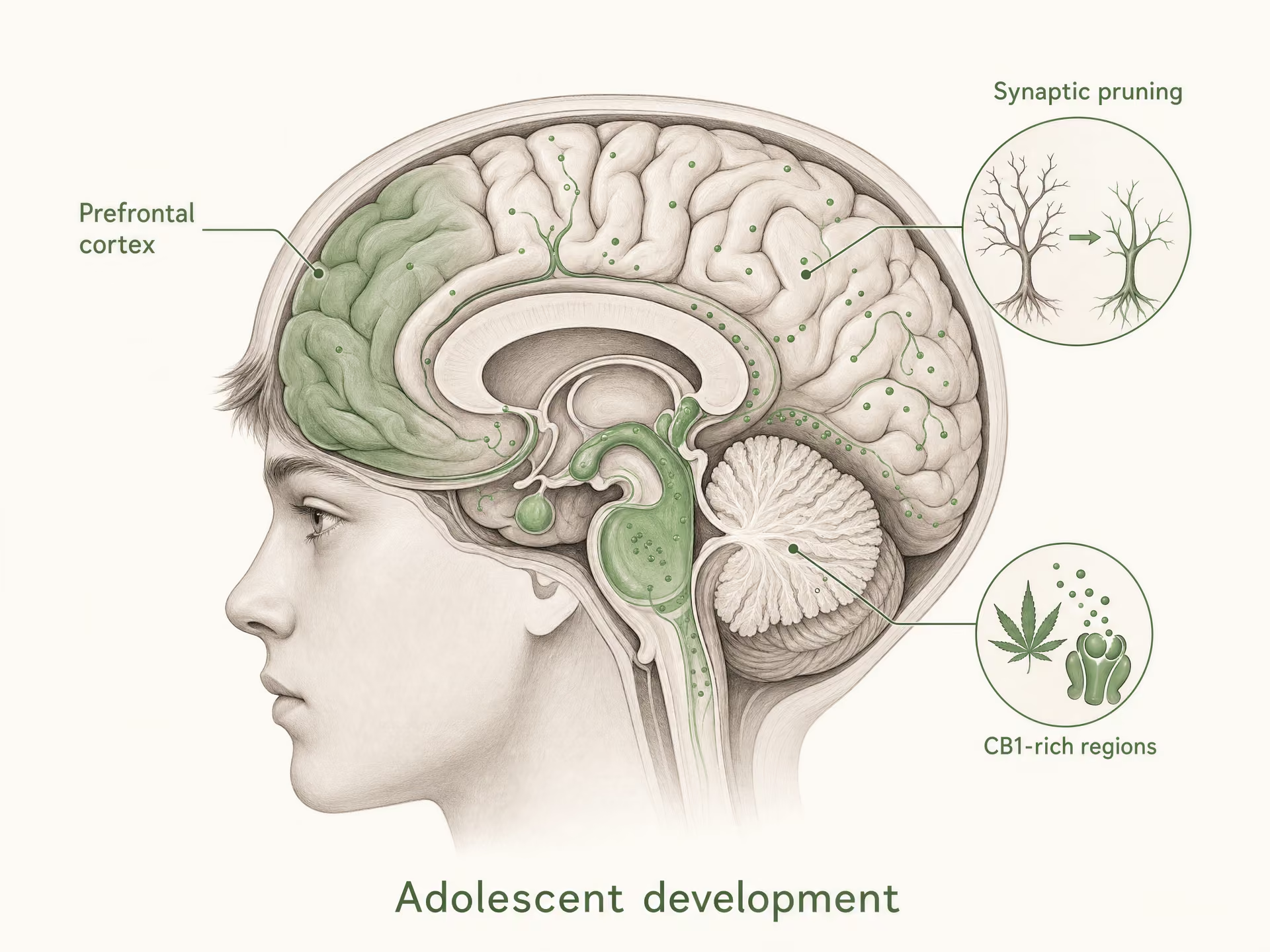
Adolescent neurodevelopment and endocannabinoid signaling
Adolescence is not simply childhood plus hormones. It is a long phase of neural remodeling. Circuits are being refined, strengthened, weakened, and in some cases cut back. Synaptic pruning helps remove less efficient connections. Myelination continues. Cortical networks, especially in frontal regions involved in planning, impulse control, salience attribution, and reality testing, are still maturing into the third decade of life.
The endocannabinoid system is part of that process. Endogenous cannabinoids such as anandamide and 2-AG help regulate synaptic transmission and plasticity through CB1 receptors, which are densely expressed in brain regions tied to memory, reward, emotion, and executive function. In a developing brain, that system is not a side player. It helps tune how networks stabilize.
THC enters that system from the outside. It is a partial agonist at CB1 receptors, and its effects are not identical to the brain’s own endocannabinoid signaling, either in timing or intensity. That mismatch is one reason adolescence is treated as a period of greater vulnerability. The concern is not that one exposure irreversibly “damages the brain.” That claim goes beyond the evidence. The concern is that repeated exogenous cannabinoid exposure during a period of active refinement may alter trajectories of maturation in a way that raises susceptibility to later psychiatric problems in some users.
There is biological plausibility for this. Experimental work shows THC can produce transient paranoia, perceptual distortions, and psychotic-like symptoms even in healthy adults, especially at higher doses. It also influences dopamine signaling in mesolimbic pathways implicated in psychosis. If a mature adult brain can show those acute effects, it is not hard to see why sustained exposure during adolescence might have longer-lasting consequences in a vulnerable subset of people.
The key word is subset. Most adolescents who use cannabis do not go on to develop a psychotic disorder. But that fact does not cancel the developmental concern. Public health often deals in shifts of probability, not certainty. A small absolute increase at the individual level becomes meaningful when exposure is widespread. SAMHSA estimated that 61.8 million Americans aged 12 or older used marijuana in the past year in 2023. UNODC estimated 228 million users worldwide in 2022. Even uncommon outcomes matter when the exposure is this common.
Arseneault 2002 and the age-15 signal
One of the studies that made age of first use central to this debate was Louise Arseneault and colleagues’ 2002 BMJ paper using the Dunedin birth cohort. It remains foundational because it did something many cross-sectional arguments cannot do: it established temporality. The researchers examined cannabis use in adolescence and later psychosis-related outcomes in adulthood, while adjusting for psychotic symptoms that were already present in childhood.
That point is easy to miss and very important. A standard counterargument is reverse causation: maybe people on the path toward psychosis start using cannabis to cope with early dysphoria, odd experiences, anxiety, or social withdrawal. That surely happens in some cases. Arseneault’s design did not erase that possibility entirely, but it made the simple version of the self-medication explanation much less persuasive.
The headline finding was striking. Cannabis use by age 15 was associated with an increased risk of schizophreniform disorder by age 26, with an adjusted odds ratio of about 4.5. Cannabis use by age 18 was also associated with elevated risk, but the estimate was smaller, around 1.65 depending on the model. That age gradient is the point. Earlier exposure looked worse than later adolescent exposure.
The study had limits. The confidence intervals were wide, and observational cohort work can never remove every source of confounding. Trauma, tobacco, other substances, urbanicity, family liability, and childhood adversity all complicate the picture. Still, the finding has held up conceptually in later research even where exact effect sizes differ: early initiation is not just a proxy for rebellion or a marker of bad data collection. It appears to identify a period of higher developmental sensitivity.
Later cohort and meta-analytic work fits that interpretation. Stanley Zammit, Gage and colleagues, Moore et al., and Marconi et al. all contributed to a literature showing that the association between cannabis and psychosis survives repeated attempts to explain it away entirely by confounding. Not perfectly. Not beyond all dispute. But enough that “it’s only correlation” now looks weaker than it did twenty years ago. Marconi et al.’s 2016 meta-analysis found a dose-response pattern, with the heaviest users showing about a 3.9-fold increase in psychosis risk versus non-users. Dose matters. Frequency matters. Starting young appears to matter too.
Then there are the more recent high-quality studies focused on frequency and potency. Marta Di Forti and colleagues’ 2019 EU-GEI case-control study found daily cannabis use associated with increased odds of psychotic disorder, and daily use of high-potency cannabis, defined as more than 10% THC, with even higher odds. The highest-risk profile was not casual adult use. It was frequent, potent exposure. Age of onset was not the sole driver in that paper, but it belongs in the same risk cluster.
Why early exposure may carry more enduring risk
Why might starting younger produce more lasting effects than starting later? Part of the answer is developmental timing. If THC-rich exposure repeatedly interacts with CB1-mediated signaling while cortical maturation and synaptic pruning are still underway, the resulting changes may be more persistent than the same exposure would be in a more stabilized adult brain. Animal studies support the broad plausibility of this, though translating animal findings into precise human psychiatric risk should always be done carefully.
Another part is behavioral patterning. Early starters are more likely to become frequent users, and longer cumulative exposure increases the chance of encountering high doses, high-potency products, sleep disruption, anxiety amplification, and episodes of intoxication-related paranoia. So “age of first use” may be acting partly as a developmental variable and partly as an exposure multiplier. These mechanisms are not mutually exclusive.
It is also possible that early initiation marks a group already carrying more vulnerability. Family history of psychotic disorder, childhood adversity, neurodevelopmental differences, and perhaps some forms of genetic liability may all be overrepresented among young heavy users. That is a real complication, and honest writing should not hide it. But again, acknowledging shared vulnerability does not make cannabis irrelevant. The best current reading is interactive, not binary: some adolescents are more vulnerable to begin with, and cannabis can add further pressure to that vulnerability, especially when use is frequent and THC-dominant.
This helps explain why clinicians worry about cannabis-induced psychosis in young users. Cannabis-induced psychotic disorder is a recognized diagnosis when psychotic symptoms arise in temporal relation to cannabis exposure and exceed expected intoxication effects. Some cases resolve. Some do not. Starzer et al. reported in Danish registry data that 32.2% of substance-induced psychosis cases later converted to schizophrenia or bipolar disorder overall, and cannabis-induced psychosis had the highest conversion rate, 47.4%. That does not mean cannabis “creates schizophrenia” out of nowhere in half of all such cases. It does mean an apparently substance-linked psychotic episode can be an early warning sign of deeper liability.
Seen this way, delaying first use is not old-fashioned rhetoric. It is one of the more evidence-based harm reduction messages available. The epidemiology does not support panic. It does support caution, especially for teenagers, for people with a personal or family history of psychosis, and for anyone using high-THC products often. If there is one broad risk factor that consistently makes the rest of the picture worse, it is starting too young.
Dose-response is real, and high-THC products carry more risk
The clearest pattern in the psychosis literature is not “any cannabis use equals schizophrenia.” It is narrower and more evidence-based than that. Risk rises as exposure rises. People who use more often, over longer periods, and with higher-THC products show the strongest associations with psychotic outcomes. That dose-response pattern does not settle every causal argument on its own, but it matters because it is one of the classic features expected if an exposure is doing more than merely tagging along with pre-existing vulnerability.
This is where a lot of public discussion fails. “Cannabis use” is often treated as a single yes/no variable, as if a teenager trying low-potency flower twice bears the same psychiatric exposure as an adult using THC-dominant concentrates every day. That is not how pharmacology works, and it is not how the stronger epidemiology reads either.
Frequency, cumulative exposure, and daily use
The frequency gradient is one of the most consistent findings in the field. Earlier reviews, including Moore et al., already suggested that psychosis risk climbed with heavier use. Marconi et al.’s 2016 meta-analysis sharpened the point: compared with non-users, the heaviest cannabis users had about a 3.9-fold increased risk of psychosis. That is not proof that every heavy user will develop a psychotic disorder. Most will not. But it does show that risk is not evenly distributed across users.
The EU-GEI case-control study led by Marta Di Forti and published in The Lancet Psychiatry in 2019 is especially important because it did not stop at “ever used” versus “never used.” It measured frequency and potency. Daily cannabis use was associated with increased odds of psychotic disorder, with an odds ratio of 3.2 (95% CI 2.2–4.1). That is already a large signal by psychiatric epidemiology standards. The picture became stronger at the high-potency end, which we will get to next.
Daily use matters for a few reasons. First, it increases total THC exposure over time. Second, it reduces recovery time between intoxication states, especially in people using products with long-lasting psychoactive effects or repeated dosing across the day. Third, it often tracks with earlier initiation and more entrenched patterns of use, both of which may reflect or amplify developmental vulnerability.
Cumulative exposure is harder to measure cleanly than daily frequency, but it likely matters too. A person who uses heavily over years is not just accumulating episodes of intoxication; they may also be repeatedly stressing neural systems involved in salience, reward, anxiety, and dopaminergic signaling. THC is a partial agonist at CB1 receptors and can increase psychotic-like experiences acutely in experimental settings, including paranoia and perceptual distortion. Epidemiology cannot show the mechanism directly, but the mechanism is plausible enough that a frequency gradient makes biological sense.
None of this eliminates confounding. Trauma, tobacco use, other drugs, social adversity, and prodromal symptoms can all cluster with heavy cannabis use. Reverse causation also remains real: some people in the early stages of illness may use cannabis to cope with anxiety, dysphoria, or odd subjective experiences. Still, the “it is only self-medication” claim fits the data poorly when the highest risk keeps showing up in the heaviest and most frequent users, including in studies that adjust for baseline psychotic symptoms and other variables.
The age question intensifies this pattern. Arseneault et al. in the 2002 BMJ Dunedin cohort found that cannabis use by age 15 was associated with later schizophreniform disorder at age 26, with an adjusted odds ratio around 4.5. Use by age 18 also carried elevated risk, though less strongly. That does not mean cannabis exposure acts the same way at 15 and 35. It probably does not. The same frequency of use appears more concerning when it begins during adolescence, when cortical maturation and synaptic pruning are still underway.
Population data point in the same direction. Hjorthøj et al. in The Lancet Psychiatry in 2021, using Danish registers, estimated that the proportion of schizophrenia cases associated with cannabis use disorder rose from about 2% in 1972–1976 to 8% in 2010–2016 overall, reaching as high as 30% among men aged 21–30. That figure is often overstated in public debate. It is attributable fraction modeling, not evidence that cannabis alone monocausally produced 30% of cases. Even so, it supports the argument that high-intensity cannabis exposure has become epidemiologically relevant at the population level.
Why potency changes the epidemiological picture
Potency is not a side issue. It changes the exposure itself.
Di Forti’s 2019 study defined high-potency cannabis as products containing more than 10% THC. Daily use of these high-potency products was associated with markedly higher odds of psychotic disorder: OR 4.8 (95% CI 2.5–6.3). That is one of the most cited findings in the modern literature because it moved beyond the old, vague category of “cannabis use” and showed that the chemical strength of the product shifts risk.
The study’s policy implication drew attention for a reason. The authors estimated that 30% of first-episode psychosis cases across all sites might be attributable to daily cannabis use, rising to 50% in Amsterdam and 30% in London, where high-potency products were common. Again, “attributable” here means statistically associated at the population level under model assumptions, not that those cases can be reduced to a single cause. Still, cities with greater availability of potent cannabis also showed higher incidence of first-episode psychosis. That is hard to dismiss as mere moral panic.
Potency also complicates how older cohort studies are interpreted. A participant labeled a “cannabis user” in a cohort from the 1980s or 1990s may have been exposed to a very different THC profile from a user in the 2020s. Average THC concentrations in many markets have risen substantially over time, while CBD content in some products appears to have fallen relative to THC. So when someone says, “People used cannabis for decades and this didn’t happen,” the comparison may be chemically sloppy. In many settings, the product itself is not the same product anymore.
That matters because THC and CBD do not have identical effects. Work by Celia Morgan, H. Valerie Curran, and colleagues suggested that CBD may blunt some of THC’s acute psychotomimetic effects, at least under some conditions. Naturalistic studies have found fewer psychotic-like symptoms in users with evidence of both THC and CBD exposure compared with THC exposure alone. But this should not be inflated into a safety guarantee. CBD moderation evidence is suggestive, not definitive, and many real-world THC-dominant products contain little CBD relative to the ratios used in experiments.
So potency is not just “more of the same.” A high-THC, low-CBD product may be pharmacologically tilted toward greater acute psychiatric stress. If that product is used daily, by someone young, and perhaps genetically or developmentally vulnerable, the epidemiological signal becomes much stronger.

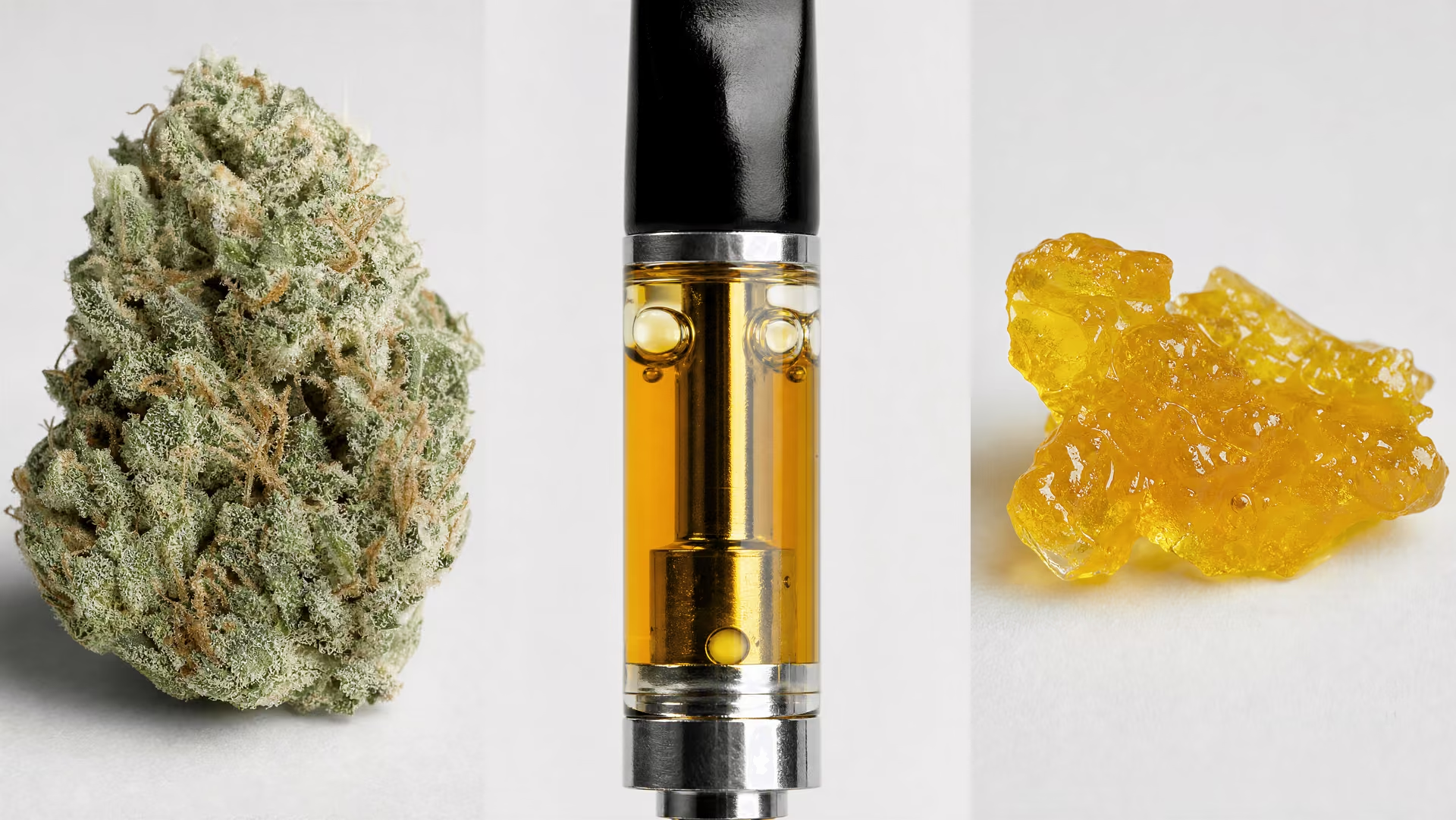
Flower, concentrates, and the problem of treating all cannabis as the same drug
“Cannabis” is not one drug in the way alcohol is not one drink. Flower can vary widely in THC and CBD content. Concentrates push the problem further. A lower-THC flower with measurable CBD is not equivalent to a vape cartridge or extract delivering extremely high THC concentrations with little buffering cannabinoid content. Lumping those exposures together weakens analysis and confuses risk communication.
Exposure details that matter more than a simple yes/no cannabis question
- Age at first use Starting in early adolescence carries a stronger epidemiological signal than adult initiation.
- Frequency Daily use carries a clearer risk signal than occasional use.
- Potency High-THC products are not interchangeable with lower-THC products.
- Product type Flower, vapes, and concentrates can produce different THC doses and peak effects.
- CBD content Meaningful CBD exposure may change acute effects, but does not make use risk-free.
This is one reason older yes/no survey categories are now increasingly limited. They miss route of administration, dose per session, cannabinoid ratio, and product class. Smoking flower, vaporizing high-THC oil, and using concentrates may all count as “cannabis use,” but they can produce very different peak THC levels, onset curves, and total doses. From a psychosis-risk standpoint, those differences are not trivia.
Concentrates deserve special caution. High-concentration THC products can deliver a large psychoactive load quickly, and repeated dosing can become easy to normalize because the quantity consumed may look small even when the THC dose is not. Epidemiology on concentrates is still catching up, but basic pharmacology gives no reason to assume they are interchangeable with lower-potency flower. If the broader literature already shows a potency-risk gradient, it would be surprising if very high-THC extracts sat outside that pattern.
This heterogeneity also explains why blanket statements about CBD can mislead. CBD is being discussed here because this section sits within a CBD article, but the evidence does not support the idea that the presence of some CBD magically cancels out heavy THC exposure. The better-supported point is narrower: products with meaningful CBD may have a different acute effect profile from THC-dominant products, and that difference may matter for psychosis-related outcomes. “May” is doing real work there.
For clinicians and public health messaging, this means the old question — “Do you use cannabis?” — is no longer enough. More informative questions are: How often? Since what age? What THC level? Flower or concentrate? Any CBD in the product? Symptoms such as paranoia, hearing voices, extreme suspiciousness, or disorganized thinking after use should be treated seriously, not brushed off as a bad high, because cannabis-induced psychotic episodes are clinically real. And they are not always self-limited. Starzer et al. reported in 2018 that 47.4% of cannabis-induced psychosis cases later converted to schizophrenia or bipolar disorder, the highest conversion rate among the substance-induced psychoses they studied.
The bottom line is straightforward. Risk is not evenly spread across all forms of cannabis exposure. It concentrates in frequent use, early use, and high-THC use. Once potency enters the analysis, the epidemiological picture gets sharper and less comfortable. Treating all cannabis as the same drug obscures that pattern. Treating none of it as risky obscures it even more.
How THC can produce psychotic-like effects biologically
One reason the cannabis-psychosis link remains scientifically credible is that it is not resting on epidemiology alone. There is a plausible biological pathway, and there are controlled human experiments showing that THC can produce short-lived psychotic-like symptoms under laboratory conditions. That does not mean THC “causes schizophrenia” in every user. It does mean the old fallback line—this is only correlation—fits the evidence less well than it once did.
Psychosis, clinically, refers to symptoms such as hallucinations, delusions, severe suspiciousness, and disorganized thought. Schizophrenia is one possible disorder in which psychosis occurs; it is not a synonym. That distinction matters here. A substance can induce transient psychotomimetic effects without single-handedly creating a chronic schizophrenia-spectrum illness in everyone exposed. But if a drug can reliably produce the same class of symptoms, even briefly, that strengthens the case that it can also worsen, precipitate, or help unmask illness in people with enough vulnerability.

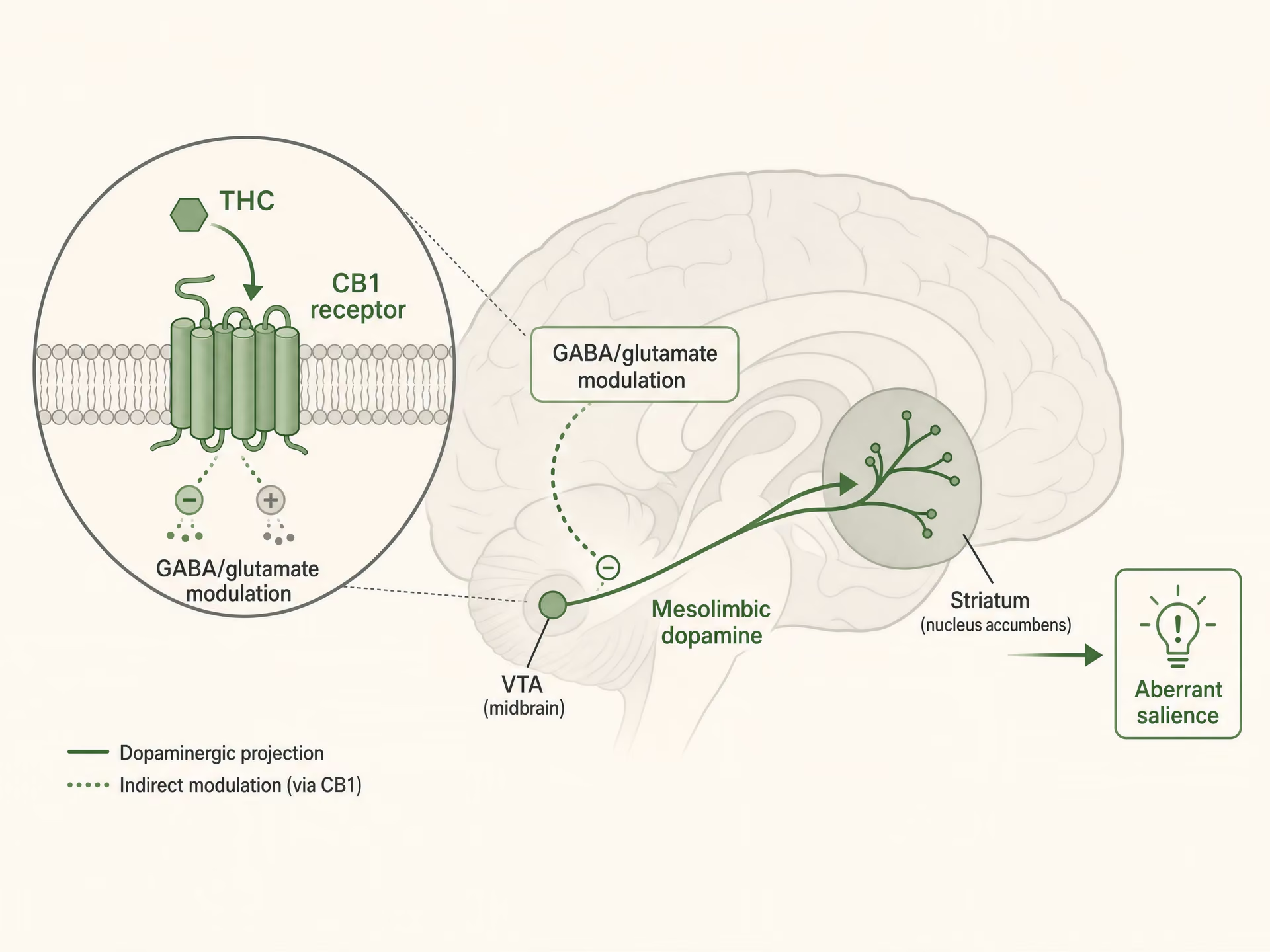
CB1 receptor signaling and mesolimbic dopamine
Delta-9-tetrahydrocannabinol, or THC, is the main intoxicating cannabinoid in cannabis. Pharmacologically, it acts as a partial agonist at the CB1 receptor, which is heavily expressed throughout the brain, especially in cortex, hippocampus, basal ganglia, amygdala, and other regions involved in salience, memory, emotion, and perception. CB1 receptors are not simply “pleasure receptors.” They are part of a widespread modulatory system that tunes neurotransmitter release.
Biological pathway sketched in the article
- CB1 activation THC acts as a partial agonist at CB1 receptors across brain regions involved in perception, emotion, and memory.
- Neurotransmitter shift CB1 signaling can alter release of GABA and glutamate.
- Dopamine effects These shifts can indirectly increase mesolimbic dopamine signaling.
- Aberrant salience Neutral events may begin to feel loaded with unusual meaning.
- Psychotic-like symptoms Paranoia, suspiciousness, and distorted interpretation become more likely in vulnerable users.
That tuning effect is where the psychosis biology starts to make sense.
CB1 receptors sit largely on presynaptic terminals. When activated by endocannabinoids—or by THC—they reduce release of several neurotransmitters, including GABA and glutamate. This matters because dopamine neurons in the ventral tegmental area are under inhibitory and excitatory control from other neurons. If THC shifts that balance, it can indirectly increase dopamine signaling in mesolimbic circuits, particularly projections to the nucleus accumbens and related regions.
Mesolimbic dopamine system A dopamine signaling pathway linking midbrain regions to structures such as the nucleus accumbens, often discussed in models of salience, reward, and psychosis.
The mesolimbic dopamine system has long been central to psychosis models. The simplified version is familiar: excessive striatal dopaminergic signaling is linked to aberrant salience, the process by which neutral events start to feel loaded with special meaning. That is one route to paranoia and delusional interpretation. A glance from a stranger stops being a glance. It becomes a message. A coincidence becomes a sign.
THC does not act like amphetamine. It is not a direct dopamine releaser. The pathway is more indirect and distributed. But indirect does not mean trivial. Human imaging and pharmacology work suggests THC can alter dopamine function, salience processing, sensory gating, and the integration of internal and external signals. Those are exactly the domains that go wrong in psychosis.
The hippocampus may be especially relevant. It is rich in CB1 receptors and deeply involved in memory formation and contextual processing. Disturbed hippocampal function has also been implicated in psychosis. Acute THC exposure can disrupt short-term memory, temporal sequencing, and the ability to discriminate relevant from irrelevant stimuli. That is not yet psychosis by itself, but it moves cognition in the same direction: less stable reality-testing, noisier signal processing, more room for misattribution.
The prefrontal cortex is part of the story too. THC can impair executive control, attention, and working memory. When top-down control weakens while salience and emotional tagging shift, unusual perceptions or suspicious interpretations become more likely. In vulnerable individuals, this combination can be enough.
This helps explain why product chemistry matters. A THC-dominant preparation with little CBD is not pharmacologically equivalent to lower-THC cannabis or a preparation containing substantial cannabidiol. CBD has very low direct affinity for CB1 and appears to act through different mechanisms, including effects involving FAAH, 5-HT1A, and perhaps other signaling systems. Celia Morgan and H. Valerie Curran have argued for years that CBD may buffer some of THC’s acute psychotomimetic and memory-disrupting effects. The evidence is suggestive, not a shield. Still, it supports a simple point often lost in public debate: “cannabis” is not one uniform drug.
Experimental THC administration in healthy volunteers
The biological case becomes much harder to dismiss when THC is given experimentally to people without psychotic disorders and some of them develop temporary symptoms that look recognizably psychotic.
This has been shown in controlled studies for years. Administered THC can increase paranoia, perceptual distortion, conceptual disorganization, anxiety, and unusual thought content in healthy volunteers. Researchers commonly measure these effects using scales such as the Positive and Negative Syndrome Scale or other psychosis symptom instruments. The symptoms are transient. They usually resolve as the drug wears off. But they are not imaginary, and they are not merely “people feeling a bit weird.”
D’Souza and colleagues are often cited here. In carefully controlled studies, intravenous THC produced dose-related increases in psychotic-like symptoms, along with memory impairment and subjective distress, in healthy participants. Not everyone reacted the same way. Some had mild effects. Some had marked suspiciousness or perceptual alteration. That variability is important because it mirrors the real-world pattern: exposure is common, but severe psychiatric reactions cluster in a subset.
Laboratory studies also support the idea that prior vulnerability matters. Family history, baseline schizotypal traits, trauma exposure, and genetic variation may all shape acute response. Candidate-gene work on COMT Val158Met and AKT1 tried to explain some of that heterogeneity. Avshalom Caspi’s 2005 COMT paper became famous because it suggested adolescent cannabis use was linked to later psychosis more strongly in Val/Val carriers. Replication was mixed. AKT1 findings have held up somewhat better in studies from Marta Di Forti and colleagues, especially for acute psychotomimetic response, but this literature should be handled carefully. Candidate-gene psychiatry has produced many false positives. The safe claim is not that one gene predicts cannabis psychosis with clinical precision. It is that differential biological susceptibility is plausible and likely real.
What experimental THC studies do especially well is tighten the causal chain. Epidemiology tells us daily use and high potency are associated with psychotic disorder. Di Forti et al. in The Lancet Psychiatry in 2019 found daily cannabis use was associated with increased odds of psychotic disorder, with an odds ratio of 3.2, and daily high-potency use with an odds ratio of 4.8. Experimental work shows that THC itself can acutely produce the kind of symptoms in question. Put those together and the picture becomes harder to wave away as pure confounding.
Not impossible to contest. Harder.
This does not erase reverse causation. Some people with emerging psychosis probably do use cannabis to cope with anxiety, dysphoria, or early anomalous experiences. But the existence of self-medication does not answer the mechanistic evidence. If a compound can induce paranoia and distorted perception in healthy volunteers, it is entirely plausible that repeated exposure could worsen an already unstable system.
From transient psychotomimetic effects to persistent illness
The next question is the hardest one: how do brief THC-induced psychotic-like states relate to long-term disorders such as cannabis-induced psychotic disorder, schizophrenia-spectrum illness, or bipolar disorder with psychotic features?
No one has shown that acute THC intoxication simply turns into schizophrenia by a straight line in most users. That is not what the evidence says. Most people who use cannabis do not develop chronic psychosis. Individual absolute risk remains low. But transient effects still matter, because repeated perturbation of systems involved in salience, memory, stress reactivity, and dopamine signaling may help push vulnerable people across a threshold.
Think of it less as a single-cause model and more as a stress-vulnerability model. Adolescent brain development, family history, childhood adversity, urbanicity, other drug exposure, and genetic liability all shape baseline risk. Then exposure characteristics matter: age at first use, frequency, potency, and probably THC:CBD ratio. Louise Arseneault’s 2002 Dunedin cohort paper mattered because it addressed temporality. Cannabis use by age 15 was associated with later schizophreniform outcomes even after adjustment for earlier psychotic symptoms. That does not prove monocausal causation. It does show that exposure can precede illness in a way consistent with a contributing role.
Repeated high-THC exposure during adolescence is a particular concern because the endocannabinoid system helps guide neurodevelopmental processes including synaptic pruning and circuit maturation. Disturbing that system during a sensitive period is biologically more concerning than adult-onset occasional use. Epidemiology points the same way. So does pharmacology.
The cannabis-induced psychosis diagnosis also sits at this boundary between acute effect and persistent disorder. In DSM-5 and ICD frameworks, cannabis-induced psychotic disorder involves psychotic symptoms emerging in temporal relation to cannabis exposure and exceeding what would be expected from ordinary intoxication. Some cases remit fully. Some do not. Danish register data from Starzer et al. in 2018 found that 32.2% of substance-induced psychosis cases later converted to schizophrenia or bipolar disorder overall, and cannabis-induced psychosis had the highest conversion rate, 47.4%. That figure should not be misread as proof that cannabis creates schizophrenia de novo in nearly half of cases. It does mean cannabis-triggered psychosis is often not a harmless blip.
This is where causal skepticism starts to look too simple. A substance that can acutely induce paranoia, hallucination-like experiences, and disorganized thinking; that has a plausible CB1-dopamine-salience mechanism; that shows dose and potency effects in case-control and meta-analytic data; and that is linked to later persistent illness in a significant minority of clinically affected cases cannot be reduced to stigma or bad measurement.
The balanced reading is sharper than either slogan. THC is not a universal schizophrenia generator. It is also not biologically innocent. For some people—especially early starters, daily users, and users of high-THC products—it appears able to do more than mimic psychosis for an evening. It can become part of the pathway into something that lasts.
Genetic vulnerability: plausible, important, and often oversold
Genetic vulnerability is one of the most misused parts of the cannabis-psychosis debate. It gets invoked to support two bad arguments at once. One says psychosis risk is “all genetic,” so cannabis is mostly irrelevant. The other says a single DNA variant can tell you whether cannabis will “cause schizophrenia.” Neither survives contact with the evidence.
The better reading is less tidy. Genetic liability probably changes how strongly cannabis exposure affects psychosis risk, and cannabis exposure may help bring forward illness in some people who were already vulnerable. That fits what we see in epidemiology: risk is not evenly distributed. It clusters in people who start young, use frequently, use high-THC products, and have developmental or familial susceptibility. But the molecular genetics behind that susceptibility are not simple enough to turn into a consumer spit test.
Part of the confusion comes from the history of psychiatric genetics. In the 2000s, many studies focused on “candidate genes”: biologically plausible single variants thought to influence dopamine, stress response, or cannabinoid signaling. That approach produced striking headlines. It did not produce a long list of stable, clinic-ready findings. Small samples, multiple testing, publication bias, and weak replication hurt the field badly. So when discussing cannabis gene-environment interaction, skepticism is not cynicism. It is basic scientific hygiene.
AKT1 polymorphism and psychosis risk
AKT1 has often looked more promising than many other candidate genes in this literature, though “more promising” should not be confused with settled. AKT1 encodes a kinase involved in intracellular signaling downstream of dopamine D2 receptors and other pathways relevant to psychosis biology. That gives it a plausible mechanistic link. The question is whether specific AKT1 variants actually modify psychosis risk related to cannabis exposure in humans.
Some of the most cited work came from Marta Di Forti, Robin Murray, and colleagues. In case-control research, including influential studies from the late 2000s and early 2010s, variation at AKT1 rs2494732 was reported to interact with cannabis use such that carriers of the C/C genotype showed higher odds of psychotic disorder among cannabis users, especially frequent users. Other work suggested AKT1 variation might also shape acute psychotomimetic response to THC. That matters because it links long-term epidemiology with short-term human laboratory effects: the same broad vulnerability story appears in both settings.
This is biologically plausible. THC can alter dopaminergic signaling in pathways implicated in psychosis, and AKT1 sits in signaling cascades tied to dopamine receptor activity. If some genotypes produce stronger downstream effects from THC exposure, a gene-environment interaction would make sense. Plausible, though, is not the same as proven.
The limitations are familiar. Many AKT1 studies had modest sample sizes. Definitions of exposure varied. “Cannabis use” is a poor category when one study means ever-use, another means weekly use, and another captures daily high-potency use. Psychosis outcomes also differed, from psychotic-like experiences to diagnosed first-episode psychosis. Population ancestry differences complicate replication too, because allele frequencies and linkage patterns can shift across samples.
Even so, AKT1 remains one of the better examples of why the interaction question should not be dismissed outright. The evidence is not strong enough to justify individual prediction, but it is stronger than a blanket claim that genetics play no role in cannabis-related psychosis. The current position should be restrained: AKT1 is a plausible moderator, supported by some replicated signals, with effect sizes and generalizability still uncertain.
That restraint matters clinically. If someone asks whether an AKT1 result from a commercial genetics panel can tell them they are “safe” or “unsafe” to use cannabis, the answer is no. Not because genes are irrelevant, but because a single SNP is a tiny fragment of total liability.
COMT Val158Met after Caspi: famous finding, mixed replication
No gene in this area became more famous than COMT after Avshalom Caspi and colleagues published their 2005 paper. The study, using data from the Dunedin cohort, reported that adolescent cannabis use predicted adult psychosis outcomes more strongly in people with the COMT Val/Val genotype than in Met carriers. It was exactly the kind of result the media loves: one common gene variant, one common exposure, one serious psychiatric outcome. For a while, it looked like a breakthrough.
COMT was an appealing candidate. The Val158Met polymorphism affects catechol-O-methyltransferase activity, which influences dopamine metabolism, especially in prefrontal cortex. Since dopamine dysregulation is central to psychosis models, the hypothesis had real biological logic. Caspi’s result also fit a broader narrative many researchers wanted to test: cannabis does not act uniformly; it interacts with pre-existing vulnerability.
Then came the harder part. Replication.
Some later studies found support for a COMT-cannabis interaction. Others did not. Meta-analytic and review-level assessments have generally landed in an uncomfortable middle ground: the original finding may have captured part of a true story, but the specific Val/Val interaction has not replicated with the consistency needed for clinical confidence. Differences in study design explain some of the inconsistency. So does chance. Candidate-gene psychiatry generated many positive findings that looked stronger before the field learned how badly underpowered many studies were.
This is why COMT now serves two roles in the literature. First, it remains a biologically interesting gene that may well contribute in some way to psychosis vulnerability. Second, it is a cautionary tale about the candidate-gene era. A famous initial paper does not equal durable evidence.
It is still reasonable to say that Caspi et al. changed the discussion. The paper pushed psychiatry away from crude yes-or-no arguments about whether cannabis causes psychosis and toward conditional risk: for whom, at what age, in what dose pattern, under what biological vulnerability? That was a useful shift even if the exact COMT story turned out to be less stable than first advertised.
What should not survive into 2026 is the habit of presenting COMT Val158Met as a validated cannabis psychosis test. It is not. If a clinician or website implies that one COMT result can meaningfully classify a person’s risk, that goes beyond the evidence. At most, COMT is part of a broader research signal suggesting that dopamine-related genetic architecture may modify response to cannabis in some people.
Polygenic liability, family history, and what clinicians can actually use
Psychiatric genetics has moved away from single “schizophrenia genes” for good reason. Disorders like schizophrenia are highly polygenic. Risk is spread across many variants, each with very small effects, plus rare variants of larger effect in a minority of cases, all interacting with development and environment. That model fits the cannabis literature better than old candidate-gene storytelling.
Shared liability is one reason the correlation-versus-causation fight has been so intense. Some people who are genetically more vulnerable to psychosis may also be more likely to use cannabis, start early, or develop problematic patterns of use. Mendelian randomization work, including studies by Gage and colleagues, has been used to probe this. The results do suggest some shared liability and possible bidirectional complexity. But they have not erased the case for cannabis contributing causally. If anything, the current picture is layered: shared vulnerability exists, self-medication exists, and cannabis exposure still appears to add risk, especially at high potency and high frequency.
Polygenic risk scores may eventually help refine that picture, but they are not ready for routine clinical decision-making in this context. Their predictive power at the individual level remains limited. They perform unevenly across ancestries. They do not neatly capture developmental insults, trauma, urbanicity, sleep disruption, or the simple but highly predictive fact that a person had an uncle with schizophrenia and had a paranoid reaction the last three times they used high-THC cannabis.
That last point matters. Family history remains more clinically useful than direct-to-consumer genotype talk. If someone has a first-degree relative with schizophrenia, schizoaffective disorder, or bipolar disorder with psychotic features, that is actionable information right now. Not because it gives a precise probability, but because it reliably marks elevated baseline vulnerability. In that setting, the evidence supports more direct counseling: avoid early initiation, avoid daily use, avoid high-THC products, and treat any paranoia, perceptual disturbance, or disorganized thinking after cannabis as a warning sign rather than a quirky side effect.
Clinicians can also use personal history. Prior cannabis-induced paranoia, transient hallucinations, or emergency visits after use are stronger practical signals than most gene panels. So are age of first use and current pattern of use. Di Forti et al. 2019 showed that daily cannabis use was associated with markedly increased odds of psychotic disorder, especially daily use of high-potency products above 10% THC. Genetics may shape who is most susceptible within that high-exposure group, but exposure still matters.
So the balanced position is straightforward. Gene-environment interaction is likely real. Single candidate genes such as AKT1 and COMT helped generate that hypothesis, but neither supports deterministic claims. Polygenic liability is a better scientific model, yet still not very usable in everyday practice. For clinicians and patients, family history, adolescent onset, frequency, potency, and past psychotic-like reactions remain the most informative tools on the table.
Could CBD moderate some of THC's psychosis-related effects?
The short answer is: possibly, but only within limits, and not in a way that wipes out the broader psychosis signal seen with frequent high-THC use.
That distinction matters. Public discussion often treats “cannabis” as one thing, yet the psychosis literature keeps pointing back to chemistry, dose, and pattern of use. THC and CBD are not interchangeable compounds. THC is the cannabinoid most clearly tied to acute psychotomimetic effects in laboratory studies: paranoia, perceptual distortion, suspiciousness, and transient thought disorganization can all increase after THC administration, especially at higher doses. CBD looks different. It has low direct affinity for CB1 receptors and may, under some conditions, soften some of THC’s acute effects.
That is the moderation hypothesis. Not “CBD makes psychosis risk disappear.” Not “CBD turns high-potency THC into a non-issue.” A narrower claim: when CBD is present in meaningful amounts, it may reduce some of THC’s acute psychosis-like and memory-impairing effects in at least some users and settings.
Morgan and Curran's human work
Some of the most cited human evidence comes from Celia J. A. Morgan and H. Valerie Curran. Their work helped move the conversation away from the lazy assumption that all cannabis exposures are pharmacologically equivalent.[6] Impact of cannabidiol on the acute memory and psychotomimetic effects of smoked cannabis: naturalistic study. Celia J. A. Morgan, H. Valerie Curran. The British Journal of Psychiatry, 2008.
In a 2008 review and related human studies, Morgan and Curran pulled together experimental and naturalistic findings suggesting that CBD may counteract some of THC’s less desirable cognitive and psychosis-like effects. One important thread came from observational work comparing users of cannabis with different cannabinoid profiles. Users exposed to cannabis containing both THC and CBD tended to show fewer psychotic-like symptoms than users exposed to THC without detectable CBD. They also showed less memory impairment in some analyses.
One widely discussed approach in this line of research involved hair analysis. Hair samples can provide a rough record of repeated exposure over time rather than just a snapshot from one intoxication episode. In those studies, people with evidence of THC exposure but no CBD in hair showed more psychotic-like experiences and poorer recognition memory than those with both THC and CBD detected. That does not prove CBD prevented anything; hair data are observational and vulnerable to confounding. People who consume different cannabis chemotypes may also differ in frequency of use, dose, age of onset, or baseline vulnerability. Still, the pattern was consistent with the buffering hypothesis.
Experimental work has also pointed in the same direction, though the evidence base is not huge. In controlled studies where THC is administered to healthy volunteers, acute psychotomimetic effects can be measured directly. Some studies have reported that CBD, given before or alongside THC, reduces paranoia, anxiety, or psychosis-like symptoms relative to THC alone. Not all studies find a large protective effect, and results vary with dose, timing, route of administration, and the ratio of CBD to THC. That variability is part of the story. If CBD does buffer THC, the effect is likely conditional, not universal.
So the fair reading of Morgan and Curran’s contribution is neither hype nor dismissal. Their work provided plausible human evidence that cannabinoid composition matters, and that THC-rich/CBD-poor cannabis may be more problematic than cannabis containing substantial CBD. It did not show that CBD-rich cannabis is risk-free, or that adding a token amount of CBD neutralizes heavy THC exposure.
Possible pharmacological reasons CBD might buffer THC
There are several biologically plausible reasons CBD could moderate some of THC’s effects.
THC is a partial agonist at the CB1 receptor, which is densely expressed in brain regions involved in perception, salience, memory, and reward. Through CB1-mediated signaling, THC can alter glutamate, GABA, and dopamine function. That matters because dopamine dysregulation in mesolimbic pathways has long been implicated in psychosis. Experimental THC administration can produce temporary psychosis-like symptoms even in healthy volunteers. This is one reason the epidemiology is not hanging in midair; there is mechanistic support behind it.
CBD behaves differently. It does not simply “block THC,” but it appears to modulate several systems that could, in theory, change the subjective and neuropsychiatric impact of THC. Proposed mechanisms include negative allosteric modulation at CB1, effects on endocannabinoid tone through FAAH-related pathways, actions at 5-HT1A receptors, and influence on intracellular signaling and inflammatory pathways. Some imaging and clinical studies have also suggested that CBD and THC can produce opposite effects in certain brain regions during tasks involving salience processing, emotional response, or memory.
None of this means the mechanism is settled. It is not. CBD pharmacology is messy, and the exact pathway by which it might reduce paranoia or psychosis-like effects remains under debate. But the key point is that the buffering idea is not chemically absurd. There is a plausible biological basis for expecting CBD-rich exposure to differ from high-THC, low-CBD exposure.
That fits the larger epidemiological picture. The strongest psychosis associations appear with frequent use and high-potency products, especially those with high THC content. Di Forti and colleagues, in the 2019 Lancet Psychiatry EU-GEI study, found that daily cannabis use was associated with increased odds of psychotic disorder, and daily use of high-potency cannabis, defined as over 10% THC, carried even higher odds. A THC-dominant product with little CBD is not the same exposure as a lower-THC product with meaningful CBD content. Chemistry matters.
Still, “might buffer” is doing a lot of work here. Most of the evidence concerns acute effects, short-term psychotic-like experiences, or observational markers in users with different exposure profiles. That is not the same as proving long-term protection against cannabis-induced psychotic disorder or schizophrenia-spectrum outcomes. The evidence for long-term prevention is far thinner.
Why this evidence should not be turned into a marketing claim
This is where many articles go off the rails. A real scientific possibility gets flattened into a sales-ready slogan: “CBD balances THC” or “CBD prevents paranoia.” The current evidence does not justify that leap.
First, supportive findings are limited. The Morgan and Curran work is important, and later studies have added suggestive support, but the total human literature remains modest. Results depend on dose, ratio, route, and timing. A study using carefully administered CBD and THC in a controlled setting does not map neatly onto real-world use, where doses are often larger, patterns more erratic, and products chemically inconsistent.
Second, labeling is not always reliable. In some markets, products advertised as containing CBD may contain less than stated, while THC levels may be higher than expected. Even where labels are accurate, the absolute amount of CBD may be too small relative to THC to reproduce the conditions under which any buffering effect was observed. A trace amount of CBD is not the same as a meaningful CBD:THC ratio.
Third, CBD is not a guarantee against psychosis risk. A person who starts young, uses daily, consumes high-THC products, or has a personal or family vulnerability to psychosis may still be at elevated risk even if some CBD is present. The broad epidemiology does not vanish because one cannabinoid may partly moderate another. Di Forti 2019, Hjorthøj 2021, Arseneault 2002, and the Marconi meta-analysis all point toward a real population-level risk pattern centered on frequent, early, and potent exposure. CBD has not been shown to erase that pattern.
Fourth, psychosis is not just “feeling too high.” Clinical psychosis involves hallucinations, delusions, severe suspiciousness, and loss of contact with reality. Cannabis-induced psychotic disorder is a real diagnostic category, and some cases later convert to schizophrenia-spectrum or bipolar disorders. Starzer et al. 2018 found high conversion rates after cannabis-induced psychosis. Against that background, any claim that CBD “protects” users needs a much higher level of evidence than we currently have.
The defensible statement is narrower and less catchy: some studies suggest CBD may reduce some of THC’s acute psychosis-like and memory-related effects, but the evidence is still limited, real-world products may not contain the labeled amount, and CBD should not be treated as insurance against psychosis. For harm reduction, lower THC exposure, later age of first use, and avoiding daily use matter more than faith in a label.
Absolute risk, relative risk, and how to communicate danger honestly
This is where most public discussion goes off the rails. One side hears that cannabis use is linked to psychosis and jumps straight to “it causes schizophrenia.” The other hears that psychotic disorders are uncommon and replies that the whole issue is inflated panic. Both reactions flatten the evidence.
The better way to speak about risk is less dramatic and more exact. Psychosis is a clinical syndrome that can include hallucinations, delusions, and disorganized thinking. It is not identical to schizophrenia, and cannabis-associated psychosis is not one single outcome. Some people have short-lived cannabis-induced psychotic episodes. Some later receive schizophrenia-spectrum or bipolar diagnoses. Starzer et al. 2018, using Danish register data, found that 47.4% of people diagnosed with cannabis-induced psychosis later converted to schizophrenia or bipolar disorder. That is serious, but it still does not mean every cannabis user is on a path to schizophrenia.
To communicate danger honestly, three ideas have to stay in view at the same time: relative risk, absolute risk, and population impact. Drop any one of those, and the story gets distorted.
Why a doubled risk can still mean low absolute probability
Relative risk answers a comparison question: how much more common is an outcome in one group than another? If a study says the odds of psychotic disorder are roughly tripled in daily cannabis users, as Di Forti et al. reported in 2019 for daily use overall (OR 3.2) and daily high-potency use specifically (OR 4.8), that is a large relative association. It should not be waved away.
But an odds ratio is not the same thing as saying most users will develop psychosis. Not even close.
Psychotic disorders are uncommon in the general population. So even a risk that doubles or triples can still leave the absolute probability for any one person fairly low, especially if that person does not have the risk pattern most strongly linked to harm: early initiation, frequent use, high-THC products, and personal or family vulnerability. This is the point alarmist messaging often refuses to make. A scary relative increase can coexist with a low baseline incidence.
A simple way to think about it: if a rare outcome becomes twice as likely, it may still be rare. The increase still matters. It just does not justify saying that cannabis “usually” causes psychosis or schizophrenia. It does not.
This is also why odds ratios need plain-language translation. In case-control studies like EU-GEI, researchers often report odds ratios because of the study design. Readers then treat those numbers like direct probabilities, which they are not. An OR of 4.8 for daily high-potency cannabis use in Di Forti et al. 2019 means the odds of being in the first-episode psychosis group were much higher among those users than among nonusers. It does not mean 4.8 out of 10 such users will develop psychosis. That is not what the statistic says.
Arseneault et al. 2002 is useful here because it shows why timing matters without requiring a simplistic claim. In the Dunedin cohort, cannabis use by age 15 was associated with later schizophreniform outcomes at age 26, with an adjusted odds ratio around 4.5. That is a strong signal. Yet even there, the study is not saying that adolescent cannabis users as a whole were destined for schizophrenia-spectrum illness. It is saying early exposure shifted risk upward in a meaningful way.
Minimizers often exploit the low absolute probability point as if it ends the discussion. It does not. If an outcome is severe, even a small absolute increase deserves attention. Psychosis is not a trivial side effect. It can disrupt education, work, relationships, and physical safety. Some episodes remit; some do not. Some are the beginning of a long psychiatric course.
So the honest sentence is two-part: for most individual users, psychosis remains unlikely; for some users, especially those in higher-risk groups, the increase is real and clinically important.
Why low individual probability can still matter for public health
Public health does not ask only, “What happens to one average person?” It also asks, “What happens when an uncommon harm is multiplied across a very large exposed population?”
That is where attributable fractions enter the picture. The term sounds technical, but the idea is simple: if a risk factor is common and linked to an outcome, even a modest increase in risk can account for a noticeable share of cases at the population level. This is not the same as saying every one of those cases was monocausally produced by that exposure. It means the exposure appears to contribute to the burden of disease.
Di Forti et al. 2019 estimated that 30% of first-episode psychosis cases across all study sites might be attributable to daily cannabis use, rising to 50% in Amsterdam and 30% in London. That estimate depends on modeling assumptions, so it should be described carefully. Still, it is one of the clearest signs that public-health effects can be substantial even when individual absolute risk remains low.
Hjorthøj et al. 2021 made the same point from another angle. Using Danish national registers, the authors estimated that the proportion of schizophrenia cases associated with cannabis use disorder rose from about 2% in 1972–1976 to 8% in 2010–2016 overall. Among men aged 21–30, the estimate reached as high as 30%. That figure has been repeated carelessly by both advocates and critics. It does not mean cannabis use disorder is the sole cause of 30% of schizophrenia in young men. It does mean cannabis-related harm may account for a sizeable slice of cases in a high-risk demographic.
Why does that matter? Because cannabis exposure is common. SAMHSA estimated that 61.8 million Americans aged 12 or older used marijuana in the past year in 2023. UNODC estimated 228 million users worldwide in 2022. Once exposure reaches that scale, “small” absolute increases stop being small in aggregate. A one-person framing misses the arithmetic of populations.
This is also why potency matters so much. Public health risk is not just about whether people use cannabis, but which cannabis they use and how often. Di Forti’s 2019 study became influential because it did not treat “cannabis use” as a yes/no box. It separated occasional from daily use and lower-potency from high-potency products over 10% THC. Daily high-potency exposure carried the highest odds. That is a far more useful message than generic warnings about “drugs.”
The same goes for age of first use. If adolescent exposure shifts later psychosis risk more than adult exposure does, then delaying initiation is not moralizing. It is targeted prevention.
How journalists and policymakers usually get this wrong
Journalists often default to headlines that reward certainty. “Cannabis causes schizophrenia” is cleaner than “frequent high-THC use appears to raise psychosis risk, especially in vulnerable people, while absolute risk for any one user remains low.” But the shorter line is wrong.
Policymakers often make a parallel mistake in the other direction. To avoid sounding punitive or old-fashioned, they speak as if all cannabis risk messaging is reefer-madness residue. That is also wrong. The correlation-versus-causation objection still matters, because long-term randomized exposure studies are impossible and residual confounding remains real. Trauma, urbanicity, tobacco, other drugs, shared genetic liability, and reverse causation all complicate the picture. Yet the “it’s only correlation” line has become weaker over time, not stronger. The evidence now includes temporality, dose-response, potency effects, mechanistic plausibility, and consistency across cohort, case-control, register, and meta-analytic work.
Another common mistake is blurring psychosis with schizophrenia. If a person experiences THC-triggered paranoia or a cannabis-induced psychotic episode, that does not automatically mean they have schizophrenia. But it also should not be dismissed as harmless intoxication if symptoms exceed expected acute effects. DSM-5 and ICD-relevant categories exist for a reason. Clinical distinctions matter.
A third mistake is flattening all users into one risk group. They are not. Someone who tries low-THC cannabis once as an adult is not in the same category as someone who starts at 14, uses daily, and prefers THC-dominant concentrates. The epidemiology does not support one undifferentiated warning label. It supports stratified warnings.
What science-first public messaging should say
- Most users will not develop psychosis Absolute risk remains low for many individuals.
- Risk is not evenly distributed Early onset, daily use, and high-THC exposure matter.
- Psychosis is not the same as schizophrenia Clinical categories affect prognosis and communication.
- Cannabis-induced psychosis is real It can remit, but it can also precede longer illness.
- CBD is not a free pass Possible moderation of some acute effects does not erase broader risk patterns.
Good communication sounds less dramatic and more useful. It says that cannabis does not sentence most users to schizophrenia. It says that heavy, early, high-THC use is associated with a meaningful rise in psychosis risk. It says cannabis-induced psychosis can be transient, but in some cases it is a marker of serious underlying vulnerability. It says CBD may moderate some THC effects in some settings, based on work by Morgan and Curran and others, but that is not a free pass and not proof that CBD-rich products erase risk.
The public can handle that level of honesty. What erodes trust is selective framing. Alarmists mention only relative risk. Minimizers mention only low absolute risk. Science-first communication has to say both.
The cannabis-psychosis debate inside psychiatry
Psychiatry’s internal argument about cannabis and psychosis is often misrepresented as a fight between alarmists and libertarians. That is not really the live question anymore. The serious debate is narrower and harder: how large is cannabis’s causal contribution, in which people, and under what pattern of exposure?
Few mainstream psychiatrists now argue that cannabis never matters. Acute cannabis intoxication can produce paranoia, perceptual distortion, and psychotic-like symptoms. Heavy use after a psychotic disorder begins is linked with worse outcomes, more relapse, and poorer treatment adherence. Robin Murray, one of the most visible voices in this field, has spent years arguing that modern high-potency cannabis is not the same exposure studied in older cohorts and that psychiatry has had to catch up to that fact. Marta Di Forti’s work gave that position sharper epidemiological support by showing that frequency and potency are not side details; they are the signal.
At the same time, skeptics such as Stanley Zammit and others have pushed on a different problem: observational research can overstate causality when trauma, urbanicity, tobacco, other drug use, childhood adversity, and shared genetic liability cluster with cannabis exposure. They are not saying the association is fake. They are asking how much of it remains after every confounder that can be measured is accounted for, and how much cannot be measured cleanly at all.
That is the real psychiatric dispute. Not whether cannabis can matter, but how much.
What most clinicians agree on
The first area of broad agreement is definitional. Psychosis is a syndrome: hallucinations, delusions, disorganized thought, impaired reality testing. It is not synonymous with schizophrenia. That distinction sounds basic, yet public discussion blurs it constantly. A person can have a cannabis-induced psychotic episode without meeting criteria for schizophrenia, and some of those episodes remit. Others do not. Some later convert into schizophrenia-spectrum or bipolar disorders, which is one reason clinicians take cannabis-associated psychosis seriously.
Starzer et al. in 2018, using Danish registry data, found that 32.2% of people with substance-induced psychosis later converted to schizophrenia or bipolar disorder overall, and the highest conversion rate was seen after cannabis-induced psychosis at 47.4%. That figure should not be read as proof that cannabis “caused schizophrenia” in nearly half of cases. It does mean cannabis-induced psychosis often is not a trivial or isolated intoxication event.
The second area of agreement is that exposure pattern matters. Psychiatry has moved away from treating cannabis as a yes/no variable. Di Forti et al. in The Lancet Psychiatry in 2019, across 11 sites in Europe and Brazil, found that daily cannabis use was associated with increased odds of psychotic disorder at 3.2, while daily use of high-potency cannabis, defined as more than 10% THC, was associated with odds of 4.8. That study changed the conversation because it asked the right questions. Not simply “Have you ever used cannabis?” but how often, and how strong was it?
That dose-response pattern is one reason many clinicians think the causal case is stronger than it was two decades ago. Marconi et al.’s 2016 meta-analysis also found a gradient, with the heaviest users showing about a 3.9-fold increased risk of psychosis compared with non-users. Psychiatry tends to trust findings more when risk rises with exposure. It does not settle causation by itself. It helps.
The third point of agreement concerns age of first use. Arseneault et al. in the 2002 BMJ Dunedin cohort paper reported that cannabis use by age 15 was associated with later schizophreniform disorder by age 26 even after adjustment for psychotic symptoms measured at age 11 and other confounders. Early exposure does not doom most adolescents to psychosis. It does suggest that adolescent brain development is a period of greater vulnerability, especially when use is frequent.
There is also broad clinical agreement that cannabis can worsen the course of illness after psychosis begins. Schoeler and colleagues, among others, have shown that continued cannabis use after first-episode psychosis predicts poorer prognosis than stopping use. This matters because the public argument is often framed around incidence alone, while many psychiatrists are just as concerned with relapse, hospitalization, and functional decline.
Where the argument still lives
The dispute persists because causation in psychiatric epidemiology is rarely clean. No ethical randomized trial will assign adolescents to daily high-THC cannabis for years and then measure psychosis outcomes. So the field relies on cohorts, case-control studies, national registers, and meta-analyses. Good methods, still imperfect.
One skeptical line is reverse causation, usually framed as the self-medication hypothesis. People in a prodromal phase of psychosis may use cannabis to manage anxiety, dysphoria, sleep problems, social withdrawal, or strange subjective experiences that predate diagnosis. That surely happens. Some patients describe exactly that sequence. If so, cannabis may sometimes be a marker of emerging illness rather than a driver of it.
But the self-medication account does not fit all the data. Longitudinal studies that adjust for baseline psychotic symptoms still often find elevated later risk. Arseneault’s work remains influential for that reason. So do newer syntheses that show temporality and dose-response across different designs. The best reading now is mixed: some people are drawn to cannabis because they are already becoming unwell, and in some of those same people cannabis can still intensify or help precipitate the disorder.
Another area of dispute is shared vulnerability. Mendelian randomization studies, including work associated with Gage and colleagues, have raised the possibility that genetic liability to schizophrenia may partly increase the likelihood of cannabis use or cannabis use disorder. That would mean some of the association runs from predisposition to use, not only from use to psychosis. Critics of strong causal claims lean heavily on this point.
They are right to a degree. Shared liability is real. Candidate-gene research on COMT Val158Met and AKT1 has offered biologically plausible moderation stories, but replication has been uneven, especially for COMT. Psychiatry learned the hard way that early candidate-gene findings can look cleaner than they really are. No one should be offering a single-gene “cannabis psychosis risk test” as settled science.
Still, confounding does not erase the full signal. If the association were only shared vulnerability, one would not expect such a consistent pattern by frequency and potency, or such strong links with daily use of high-THC products. Nor would one expect THC administration in laboratory settings to produce transient paranoia and psychotic-like symptoms in healthy volunteers as reliably as it does. Mechanistic plausibility matters here. THC is a partial agonist at CB1 receptors and can increase dopaminergic activity in mesolimbic pathways long implicated in psychosis.
This is where Robin Murray and Di Forti have taken a firmer stance than many skeptics. They do not argue that cannabis single-handedly explains schizophrenia. They argue that, in vulnerable people and at modern exposure levels, it is one meaningful component cause. That is a defensible position.
How commercialization and rising THC have shifted the field
The psychiatry of cannabis in the 1990s was discussing a different drug market. Today the question is being asked in a world of higher THC flower, concentrates, vapes, and products with very little CBD relative to THC. That shift matters because older reassurance about “cannabis” was often based on lower-potency exposure.
Di Forti’s 2019 paper landed so hard partly because it matched what clinicians were already seeing: more patients presenting with heavy use of THC-dominant products, often daily, often starting young. The paper estimated that 30% of first-episode psychosis cases across all study sites might be attributable to daily cannabis use, rising to 50% in Amsterdam and 30% in London. That is attributable fraction modeling, not monocausal proof. Even so, it suggests that product environment can shape incidence at the city level.
Hjorthøj et al. in 2021 strengthened that population-level concern. Using Danish register data, they estimated that the proportion of schizophrenia cases associated with cannabis use disorder rose from about 2% in 1972–1976 to 8% in 2010–2016 overall, reaching as high as 30% among men aged 21 to 30. Again, “associated with” matters. Yet the trend line is hard to ignore.
Commercialization has also sharpened the CBD question. Celia Morgan and H. Valerie Curran published work suggesting CBD may blunt some of THC’s acute psychotomimetic effects. That finding is plausible and interesting, but psychiatry has not accepted it as a public-health shield. Many real-world THC-dominant products contain too little CBD to reproduce those experimental conditions. A label mentioning CBD does not neutralize a high-THC exposure pattern.
This is why the field has moved away from blanket statements. “Cannabis causes schizophrenia” is too crude. “It’s only correlation” is now too weak. The current psychiatric center of gravity is more specific and more useful: psychosis risk is not evenly distributed, high-THC daily use is the clearest danger pattern, adolescent exposure looks worse than adult exposure, and underlying vulnerability changes the stakes. Public communication should sound like that. Anything simpler loses the science.
Policy implications: what a science-first response would look like
If policy follows the evidence, it should stop treating all cannabis exposure as interchangeable. The modern literature does not justify blanket claims that cannabis inevitably produces schizophrenia. It also does not justify shrugging at psychosis risk as if it were a moral panic artifact. The signal is strongest in a specific pattern: younger age at first use, frequent use, and high-THC products, especially in people with developmental or familial vulnerability. Regulation that ignores those variables is not neutral. It is weak.
That matters because exposure is common. SAMHSA estimated that 61.8 million Americans aged 12 or older used marijuana in the past year in 2023. UNODC put global cannabis use at 228 million people in 2022. Even when individual absolute risk remains low for many users, a modest shift in risk can still produce a meaningful public-health burden when the exposed population is this large. That is the frame policy should use: not panic, not denial, but risk concentration and population impact.
Youth prevention and delaying initiation
The clearest prevention target is age of first use. Arseneault et al. in the 2002 BMJ Dunedin cohort paper found that cannabis use by age 15 was associated with later schizophreniform outcomes at age 26 even after adjustment for psychotic symptoms in childhood and other confounders. That study did not settle causation on its own, but it remains influential because it established temporality in a way cross-sectional debate cannot.
So a science-first response starts with delaying initiation, not with vague anti-drug slogans. Age limits matter. Enforcement matters. Retail proximity to schools, youth-oriented packaging, flavored inhalable products that normalize experimentation, and marketing aesthetics that blur the line between adult and adolescent appeal all deserve scrutiny where legal markets exist. The goal is simple: make early uptake less likely.
Public messaging to adolescents should also be honest about what the risk is and is not. “Cannabis causes schizophrenia” is too blunt and often not true at the individual level. Teenagers notice exaggeration, and once they do, they may discount everything else. A more accurate message is stronger, not weaker: starting young appears to raise later psychosis risk; daily use raises it further; high-THC products raise it further still; and family history of psychosis or prior unusual experiences may place someone in a meaningfully higher-risk group.
Schools and pediatric settings should normalize brief screening that asks more than “do you use drugs?” Age at first use, frequency, route of administration, and whether the products used are high in THC are more informative. If a 16-year-old is vaping concentrates several times per week, that is not the same risk profile as an adult who has used a lower-THC product occasionally. Policy often erases that distinction. Good prevention would not.
There is also a case for family-centered education. Parents often receive either abstinence-only messaging or permissive messaging detached from psychiatric risk. Neither helps much. Families should know the early warning signs that require assessment: paranoia that persists beyond intoxication, hearing voices, severe suspiciousness, disorganized speech, marked decline in functioning, or confusion about what is real. Those are clinical red flags, not just “bad highs.”
Potency labeling, caps, and product regulation
Potency-blind regulation is weak regulation because the evidence is not potency-blind. Di Forti et al. in The Lancet Psychiatry in 2019 found that daily cannabis use was associated with increased odds of psychotic disorder (OR 3.2, 95% CI 2.2–4.1), while daily use of high-potency cannabis, defined as more than 10% THC, was associated with higher odds still (OR 4.8, 95% CI 2.5–6.3). That paper changed the policy conversation because it did not reduce cannabis to a yes/no exposure. It measured the thing that matters: how often, and how strong.
Product rules should reflect that. Mandatory front-of-package labeling should state THC concentration clearly, in large type, with standardized units per serving and per package. Labels should also state CBD content, because THC-dominant and CBD-containing products are pharmacologically different even if CBD is not a guaranteed safeguard. Morgan and Curran’s work suggests CBD may blunt some acute psychotomimetic effects of THC, but the evidence does not support treating CBD as a free pass. Labels should avoid implying otherwise.
Warning language should be specific enough to be credible: “Higher-THC products and daily use are linked to greater risk of psychotic symptoms and psychotic disorder, especially in adolescents and people with a personal or family history of psychosis.” That is better than generic warnings about “mental health effects,” which are easy to ignore because they say almost nothing.
Caps deserve serious consideration, especially for inhalable products and concentrates. If the best available epidemiology points to high-potency THC as a major driver of risk, then allowing extreme THC concentrations while claiming to regulate for safety makes little sense. Policymakers may disagree on the exact threshold, but the principle is straightforward: when risk rises with potency, potency should be regulated as an active hazard, not treated like a mere product feature.
Regulation should also support surveillance. Di Forti and colleagues estimated that 30% of first-episode psychosis cases across all study sites might be attributable to daily cannabis use, with higher fractions in some cities. Hjorthøj et al. in 2021, using Danish registers, found that the proportion of schizophrenia cases associated with cannabis use disorder rose over time, reaching 8% overall in 2010–2016 and as high as 30% among men aged 21–30. Those findings do not mean every such case was monocausally caused by cannabis. They do mean health systems should track first-episode psychosis alongside product potency trends, modes of use, and local exposure patterns.
Clinical screening and public education without propaganda
The clinic is where abstract risk becomes actionable. Routine screening in primary care, emergency medicine, adolescent medicine, psychiatry, and early psychosis services should ask about cannabis in a way that matches the evidence: age of first use, frequency, potency, concentrates, and any temporal link between use and paranoia, hallucinations, or disorganization. Asking only “Do you use cannabis?” misses the high-risk pattern.
Clinicians should also distinguish intoxication, cannabis-induced psychotic disorder, and schizophrenia-spectrum illness. Public debate blurs these categories constantly. Medicine should not. Some cannabis-induced psychosis cases remit; some do not. Starzer et al. reported high later conversion rates from cannabis-induced psychosis to schizophrenia or bipolar disorder, which is exactly why careful follow-up matters. A first episode after cannabis exposure should not be dismissed as automatically benign.
Public education should mirror that precision. Prohibition-first messaging often fails because it overstates certainty, ignores heterogeneity, and collapses all users into one caricature. Once that message collides with lived experience, trust breaks. Better communication says two things at once: most people who use cannabis will not develop psychosis, and the risk is meaningfully higher for some groups and some patterns of use. Both statements are true.
That is the tone policy should adopt. Not propaganda. Not false reassurance. Clear labeling, delayed initiation, potency-aware regulation, targeted clinical screening, and real-time surveillance of first-episode psychosis would do more than old slogans ever did.
Practical harm reduction for people who choose to use cannabis
The evidence points away from two easy slogans. Cannabis does not make every user psychotic, and psychosis risk is not a myth invented by stigma. The risk is real, unevenly distributed, and strongly shaped by age, frequency, potency, and personal vulnerability. That means harm reduction should be concrete rather than moralistic.
A useful starting point is the distinction between relative and absolute risk. Psychotic disorders remain uncommon at the individual level, so most people who use cannabis will not develop schizophrenia. But when exposure is widespread, even a modest absolute increase matters at population scale. SAMHSA estimated that 61.8 million people aged 12 or older used marijuana in the US in 2023, and UNODC estimated 228 million users globally in 2022. In that setting, small shifts in risk can translate into many affected people.
The strongest modern evidence does not treat cannabis as a simple yes/no exposure. Marta Di Forti and colleagues, in The Lancet Psychiatry in 2019, found that daily cannabis use was associated with higher odds of psychotic disorder, and daily use of high-potency cannabis, defined as more than 10% THC, carried still higher odds. Marconi et al. in 2016 found a dose-response pattern in meta-analysis, with the heaviest users showing about a 3.9-fold increase in psychosis risk versus non-users. Louise Arseneault’s Dunedin cohort paper in BMJ in 2002 remains central because it tied use by age 15 to later schizophreniform outcomes, even after adjustment for childhood psychotic symptoms and other confounders.
That does not prove a single path from cannabis to schizophrenia in every case. It does tell us where caution is most justified.
Groups the article flags for special caution
- Adolescents Early initiation is one of the clearest risk markers in the literature.
- People with past psychosis or mania Continued exposure can worsen course and relapse risk.
- People with a family history of psychotic disorder Family history marks elevated baseline vulnerability.
- People with prior strong THC reactions Paranoia, hearing voices, or marked disorganization after use are warning signs.
- People with heavy polysubstance use or severe sleep loss These factors can compound psychiatric risk and make episodes harder to interpret.
Who should be especially cautious or abstain
Adolescents belong at the top of the caution list. The case against early initiation is stronger than the case against all adult use in all contexts. Starting young appears to matter because adolescent neurodevelopment is still underway, and cohort data suggest that use in the mid-teens is linked to higher later psychosis risk than initiation in adulthood. If someone can delay first use, that is one of the clearest risk-reduction steps available.
Anyone with a personal history of psychosis, mania, schizophrenia-spectrum illness, or a previous cannabis-induced psychotic episode should be advised not to use cannabis. That is not fear-based messaging; it reflects clinical reality. Continued cannabis use after psychosis onset is associated with poorer outcomes, and cannabis-induced psychosis is not always a brief, self-contained event. Starzer et al., using Danish registry data published in American Journal of Psychiatry in 2018, found substantial later conversion from substance-induced psychosis to schizophrenia or bipolar disorder, with cannabis-induced psychosis showing the highest conversion rate.
Family history matters too. A first-degree relative with schizophrenia, schizoaffective disorder, bipolar disorder with psychotic features, or recurrent psychotic episodes raises concern. This does not mean risk is predetermined or that one gene test can sort people neatly into safe and unsafe categories. The candidate-gene literature around COMT and AKT1 is mixed. Still, family history is clinically useful because it captures shared vulnerability better than consumer genetics currently can.
People who have already had strong reactions to THC should also treat that as meaningful data. Intense paranoia, hearing whispers or voices, feeling that others can read your thoughts, becoming convinced that ordinary events carry secret messages, or marked disorganization while using are not signs to “build tolerance.” They are warning signs.
Those with severe anxiety, trauma histories, sleep deprivation, stimulant use, or heavy polysubstance use should be cautious as well. These factors do not erase the cannabis effect, but they can compound it and make interpretation harder.
Pregnancy is another setting where abstinence is the safer course, though that extends beyond psychosis risk alone.
Risk-reduction steps for people who still choose to use
- 1 Avoid daily use; frequency is one of the clearest predictors of harm.
- 2 Avoid high-THC products and THC-dominant concentrates.
- 3 Do not assume CBD cancels psychosis risk.
- 4 Use caution with dose and route, especially with edibles and concentrates.
- 5 Avoid mixing cannabis with stimulants, psychedelics, heavy alcohol use, or severe sleep deprivation.
- 6 Watch for pattern drift toward stronger products, earlier-in-the-day use, or using to manage odd experiences.
- 7 If psychotic symptoms appear, stop using and seek assessment.
How to reduce risk if using anyway
The first rule is simple: avoid daily use. Frequency is one of the most consistent predictors of harm in the literature. Di Forti’s 2019 study found markedly higher odds of psychotic disorder among daily users, and the pattern across studies is not subtle. Weekly is not the same as daily. Occasional is not the same as heavy.
The second rule: avoid high-THC products, especially THC-dominant concentrates. Public discussion often acts as if all cannabis is pharmacologically interchangeable. It is not. A flower product with modest THC and measurable CBD is not equivalent to a concentrate delivering very large THC doses with little or no CBD. High potency appears to matter independently, not just because heavy users tend to seek stronger products. Di Forti’s work is important precisely because it measured potency rather than collapsing all exposure into one category.
Third, do not assume CBD cancels the risk. There is some evidence, including work by Celia Morgan and H. Valerie Curran, that CBD may buffer part of THC’s acute psychotomimetic effect. That is interesting and plausible. It is not a free pass. Commercial products labeled with CBD often contain too little CBD relative to THC to match the conditions studied experimentally. If someone chooses to use cannabis, lower-THC products with meaningful CBD content are a more cautious option than THC-dominant products, but they should not be presented as risk-proof.
Route and dose matter. Inhaled high-potency products can produce a rapid rise in THC exposure, and concentrates can make overshooting much easier. “Start low and wait” is basic but still relevant, especially with edibles, where delayed onset leads some people to redose before the first dose has peaked. Large acute THC exposures can trigger panic, paranoia, and transient psychotic-like symptoms even in people without a diagnosed psychotic disorder.
Avoid combining cannabis with stimulants, psychedelics, or heavy alcohol use if psychosis risk is a concern. Mixed intoxication can amplify paranoia, sleep loss, autonomic arousal, and confusion. Sleep deprivation by itself can worsen perceptual disturbances and suspiciousness. Cannabis on top of that is a bad setup.
Keep an eye on pattern drift. One practical warning sign is escalation: using more often than planned, moving toward stronger products, needing THC earlier in the day, or using to manage mounting anxiety, isolation, or odd experiences. That may signal developing cannabis use disorder, which matters because Hjorthøj et al. in The Lancet Psychiatry in 2021 found that the proportion of schizophrenia cases associated with cannabis use disorder in Denmark rose over time, especially among young men.
Finally, if psychotic symptoms appear, stop using. Not cut back. Stop. If symptoms clear after cessation, that still deserves medical attention, because cannabis-induced psychotic disorder can precede more persistent illness in some people.
This is general educational information, not personal medical advice. Anyone with past psychiatric illness, a strong family history, or concerning symptoms should discuss risk with a licensed clinician who can assess the whole picture.
When symptoms require urgent clinical assessment
Some symptoms should not be watched casually at home.
Red flags that need urgent assessment
- Hallucinations Hearing voices or seeing things that others do not.
- Fixed false beliefs Delusions that do not yield to contrary evidence.
- Severe paranoia Intense suspiciousness that goes beyond feeling uneasy or anxious.
- Marked disorganization Speech, thought, or behavior becoming incoherent or chaotic.
- Persistence beyond intoxication Symptoms that continue after the expected drug effect should not be watched casually at home.
Urgent assessment is warranted if a person hears voices or sees things that others do not, develops fixed false beliefs, becomes severely paranoid, cannot follow a coherent line of thought, or shows marked behavioral disorganization. Examples include being convinced that strangers are monitoring them, believing ordinary media contain personal coded messages, or becoming unable to distinguish internal thoughts from external reality.
Red flags get stronger when symptoms persist beyond expected intoxication, recur repeatedly with cannabis use, or continue after the person seems otherwise sober. A first episode of psychosis is a medical event, not a debate topic.
Seek emergency help immediately if psychotic symptoms are accompanied by suicidal thoughts, violent behavior, inability to care for basic needs, severe agitation, catatonia, chest pain, seizures, or reduced consciousness. If someone is too frightened, confused, or suspicious to seek help voluntarily, family or friends may need to act.
One final point matters. “Psychosis” is a syndrome, not a synonym for schizophrenia. Some cannabis-related episodes remit fully. Some do not. Because there is no safe way to know in the moment which path a given person will follow, early clinical assessment is the safer move. Waiting for certainty is the wrong standard.
What the evidence supports, what it does not, and why precision matters
The evidence is strong enough to reject two lazy positions at once. Cannabis is not a uniform psychosis trigger that sends all users toward schizophrenia. It is also not credible, at this point, to wave the association away as nothing but stigma, bad controls, or moral panic. Precision matters because the real pattern is conditional: age of first use, frequency, THC potency, and underlying vulnerability change the picture dramatically.
That is also why definitions matter. Psychosis is a syndrome: hallucinations, delusions, disorganized thought, impaired reality testing. Schizophrenia is one diagnosis within a wider family of psychotic disorders. Cannabis-induced psychotic disorder is another, recognized in DSM-5 and ICD frameworks, and it refers to psychotic symptoms that emerge in temporal relation to cannabis exposure and exceed ordinary intoxication effects. Some cases resolve. Some do not. Some later convert to schizophrenia-spectrum or bipolar disorders. Public debate regularly flattens all of this into “weed causes schizophrenia” or “weed only makes you anxious.” Both claims are sloppy.
| Claim type | Supported by the article? | Why |
|---|---|---|
| There is a real cannabis-psychosis association at population level | Yes | Replicated across cohorts, case-control studies, registers, and meta-analyses |
| Risk is concentrated in early, frequent, high-THC use | Yes | Dose, potency, and age-of-onset gradients recur across studies |
| Cannabis inevitably leads to schizophrenia in most users | No | Absolute risk remains low for most individuals |
| The whole association is just moral panic or self-medication | No | Temporality, dose-response, and mechanistic plausibility argue against total dismissal |
| CBD fully protects against psychosis risk | No | Evidence is limited and product chemistry in the real world often does not match study conditions |
Claims the evidence can support confidently
A real association exists between cannabis exposure and psychosis risk at the population level. That much is no longer a fringe view. The harder question is not whether an association exists, but how causal it is, for whom, and under what exposure conditions.
Di Forti et al. in The Lancet Psychiatry (2019) remains one of the strongest modern studies because it did not treat cannabis as a simple yes/no exposure. Across 11 sites in Europe and Brazil, daily cannabis use was associated with increased odds of psychotic disorder (OR 3.2, 95% CI 2.2–4.1). Daily use of high-potency cannabis, defined as more than 10% THC, was associated with even higher odds (OR 4.8, 95% CI 2.5–6.3). That is not a trivial signal. It points to dose-response and potency effects, which matter far more than generic statements about “marijuana use.”
The age-of-first-use signal is also real. Arseneault et al. in the Dunedin cohort (BMJ, 2002) found that cannabis use by age 15 was associated with later schizophreniform disorder at age 26 even after adjustment for psychotic symptoms present at age 11 and other confounders. The adjusted odds ratio was about 4.5, though with wide confidence intervals. This study did not settle causation by itself, but it directly addressed temporality, which is one of the central problems in this literature.
Frequency matters. Marconi et al.’s 2016 meta-analysis found a dose-response relationship, with the heaviest users showing about a 3.9-fold increased risk of psychosis compared with non-users. That pattern has shown up repeatedly across cohort, case-control, and register studies. Not every study gives the same estimate. They do not need to. Convergence across methods is the point.
The public-health signal is especially hard to dismiss in Hjorthøj et al. (The Lancet Psychiatry, 2021). Using Danish register data, the authors estimated that the proportion of schizophrenia cases associated with cannabis use disorder rose from about 2% in 1972–1976 to 8% in 2010–2016. Among men aged 21–30, the estimate reached as high as 30%. That does not mean cannabis monocausally produced 30% of schizophrenia cases in that group. It does mean cannabis use disorder is tracking with a meaningful and growing share of schizophrenia burden in a high-quality national dataset.
Experimental and mechanistic work also fits the epidemiology better than skeptics sometimes admit. THC is a partial agonist at CB1 receptors and can increase dopaminergic activity in pathways implicated in psychosis. In laboratory settings, THC can induce transient paranoia, perceptual distortion, and psychotic-like experiences in healthy volunteers, especially at higher doses. That does not prove chronic exposure causes schizophrenia. It does support biological plausibility.
CBD is where precision becomes even more important. There is some evidence, including work by Morgan and Curran, that CBD may buffer certain acute psychotomimetic effects of THC. Naturalistic studies have found fewer psychotic-like symptoms in users whose hair samples showed both THC and CBD compared with THC alone. But “may buffer some effects” is not the same as “prevents psychosis.” The evidence here is suggestive, limited, and nowhere near strong enough to treat CBD as a safety guarantee.
Claims that overreach the data
The biggest overreach is the blanket claim that cannabis causes schizophrenia full stop. Observational epidemiology cannot prove that in the way a randomized trial might, and such a trial would be unethical and impossible. Residual confounding remains a live issue: childhood trauma, tobacco, other drug use, urbanicity, family history, social adversity, and shared genetic liability all complicate causal inference.
The reverse overreach is just as weak: that the entire association is explained by self-medication or shared vulnerability. Some people likely do use cannabis during the prodrome of psychosis to manage anxiety, dysphoria, insomnia, or strange perceptual experiences. That is plausible and probably true in part. But studies that adjust for baseline symptoms still tend to find elevated later risk, especially with early and heavy use. The best reading is both/and, not either/or.
Genetics is another place where headlines outran the evidence. COMT Val158Met and AKT1 polymorphisms have both been proposed as moderators of cannabis-related psychosis risk. Caspi et al. 2005 made COMT famous; later replication was mixed. AKT1 findings have been somewhat steadier, especially in work linked to Di Forti and colleagues, but candidate-gene psychiatry has a bad replication history overall. The honest position is modest: genetic moderation is plausible and likely real, yet no single polymorphism functions as a reliable clinical screening tool in 2026.
It is also an overreach to treat cannabis-induced psychosis as always transient and harmless. Starzer et al. (American Journal of Psychiatry, 2018) reported that 32.2% of substance-induced psychosis cases converted to schizophrenia or bipolar disorder overall, and cannabis-induced psychosis had the highest conversion rate at 47.4%. That does not mean cannabis-induced psychosis is secretly schizophrenia every time. It does mean clinicians should not dismiss it as “just a bad high.”
And one more point often mishandled: relative risk is not absolute risk. Psychotic disorders remain uncommon, so even a doubled or tripled relative risk does not mean most users will develop psychosis. Most will not. Yet cannabis is common enough that small absolute risk increases can still matter at scale. SAMHSA estimated 61.8 million Americans aged 12 or older used marijuana in the past year in 2023. UNODC estimated 228 million global users in 2022. Rare outcomes stop being socially negligible when exposure is widespread.
The strongest final insight
The clearest evidence-based position is this: cannabis is not one thing, psychosis is not one thing, and risk is not evenly distributed. The strongest and most consistent signal is concentrated in people who start young, use often, use high-THC products, and carry developmental or familial vulnerability. That is where the literature is least ambiguous.
So the right message is neither alarmist nor dismissive. It is specific. Early adolescent exposure is more concerning than adult exposure. Daily use is more concerning than occasional use. High-THC, low-CBD products are more concerning than lower-THC products. A personal or family history of psychotic disorder changes the baseline risk meaningfully. Once psychotic symptoms appear, continued use is associated with worse outcomes.
That is the precision the evidence earns. Not “cannabis causes schizophrenia.” Not “it’s only correlation.” A real, non-trivial psychosis risk signal exists, and it is concentrated, patterned, and biologically plausible. Public-health messaging should sound like that.
References
- [1] One-third of adults with substance-induced psychosis convert to schizophrenia or bipolar disorder: a Danish nationwide register-based study. American Journal of Psychiatry, 2018. https://doi.org/10.1176/appi.ajp.2017.17020223
- [2] Cannabis use in adolescence and risk for adult psychosis: longitudinal prospective study. BMJ, 2002. https://doi.org/10.1136/bmj.325.7374.1212
- [3] The contribution of cannabis use to variation in the incidence of psychotic disorder across Europe (EU-GEI): a multicentre case-control study. The Lancet Psychiatry, 2019. https://doi.org/10.1016/S2215-0366(19)30048-3
- [4] Meta-analysis of the association between the level of cannabis use and risk of psychosis. Schizophrenia Bulletin, 2016. https://doi.org/10.1093/schbul/sbw003
- [5] Association between cannabis use disorder and schizophrenia stronger in young males than in females. The Lancet Psychiatry, 2021. https://doi.org/10.1016/S2215-0366(21)00103-8
- [6] Impact of cannabidiol on the acute memory and psychotomimetic effects of smoked cannabis: naturalistic study. The British Journal of Psychiatry, 2008. https://doi.org/10.1192/bjp.bp.107.046649