











PTSD and cannabis: why this topic is harder than the public debate suggests
The public argument about cannabis and PTSD often jumps straight to two bad positions: either cannabis is an obvious answer that medicine is slow to accept, or it is a distraction with no legitimate role at all. Neither view fits the evidence. Patient demand is strong. Clinical proof is not. Both facts matter.
A clear starting point helps: cannabis is not a first-line treatment for PTSD. The 2023 VA/DoD Clinical Practice Guideline recommends against cannabis or cannabis derivatives for PTSD treatment because evidence remains insufficient and harms are real. At the same time, dismissing all cannabinoid use as irrational also misses what patients are actually trying to manage: insomnia, trauma-related nightmares, hyperarousal, anxiety spikes, and intrusive symptoms that persist even after standard care.
That tension is the reason this topic is hard. It is not hard because the science is hidden. It is hard because symptom relief, biologic plausibility, self-medication, expectancy, and weak trial data can all exist at once.
PTSD is common, chronic, and often only partly responsive to first-line treatment
PTSD is not a niche condition. The U.S. National Center for PTSD states that about 6 in 100 U.S. adults will have PTSD at some point in life, and around 5 in 100 have it in a given year. The World Health Organization estimated in 2024 that 3.9% of the global population has experienced PTSD during their lifetime. Women are more than twice as likely as men to develop it, according to the VA.
For many patients, PTSD is not only distressing but stubborn. First-line care usually means trauma-focused psychotherapy, certain SSRIs or SNRIs, and targeted treatment of sleep problems, depression, anxiety, and substance use when they coexist. Those treatments help many people. They do not help everyone, and even when they help, they may leave important symptoms behind. Sleep is the obvious example. A patient may improve in daytime functioning yet still wake from recurrent trauma dreams, remain on edge at night, or avoid sleep because sleep itself has become threatening.
That treatment burden shapes behavior. People with PTSD are often not chasing a broad psychoactive effect; many are trying to blunt very specific features of the disorder. Hypervigilance at bedtime. Sudden surges of panic. Repetitive nightmares. The feeling that the body never really stands down. Those are powerful drivers of self-medication, especially when standard treatment is only partly effective or difficult to tolerate.
The biology adds a reason to take these reports seriously, though not uncritically. CB1 receptors are concentrated in the amygdala, hippocampus, and prefrontal cortex, areas involved in fear learning, extinction, stress response, and memory processing. Researchers have long argued that altered endocannabinoid signaling may be relevant to PTSD. That is plausible. It is not the same as saying smoked cannabis, THC gummies, CBD oils, or CBN products reliably treat the disorder. Translation from mechanism to medicine is where this field gets messy.
Why patient demand for cannabis rose faster than the evidence base
Demand did not wait for large randomized trials. That is especially visible among veterans, where PTSD, sleep disruption, pain, depression, and anxiety often overlap. But high use rates are not proof of efficacy. They are proof of need, frustration, and access.
A 2021 survey of U.S. veterans published in the American Journal of Drug and Alcohol Abuse found 40.9% past-year cannabis use in the sample. In the 2024 Iraq and Afghanistan Veterans of America survey, 57% of respondents reported cannabis use in the previous year. Among those users, 93% said they used it to relieve physical or mental health conditions; 81% cited sleep and 80% cited stress, anxiety, or PTSD-related concerns. These are important figures. They show demand signals, not treatment validation.
That distinction matters because observational experience can be badly misleading in PTSD. People may feel better immediately after using THC because they are sedated, distracted, or less reactive for a few hours. That does not tell us whether core PTSD symptoms improve over time, whether sleep architecture improves or worsens, or whether tolerance, withdrawal, and cognitive side effects later erase the short-term benefit.[1] The Short-Term Impact of 3 Smoked Cannabis Preparations Versus Placebo on PTSD Symptoms: A Randomized Cross-Over Clinical Trial. Samuel T. Wilkinson, Sue Sisley, Nora D. Volkow. PLOS ONE, 2021.[2] Benefits and Harms of Plant-Based Cannabis for Posttraumatic Stress Disorder: A Systematic Review. Mary E. O'Neil, Devan Kansagara, Christina Kondo. Psychiatric Services, 2021.
The trial literature remains much thinner than public conversation implies. The best-known modern randomized placebo-controlled trial of smoked cannabis in PTSD, led by Sue Sisley and published by Wilkinson et al. in PLOS ONE in 2021, found that in Stage 1 no active cannabis preparation significantly outperformed placebo on PTSD symptom reduction. All groups improved, which raises the usual problems in cannabis research: expectancy effects, small samples, difficult blinding, and product heterogeneity. O'Neil et al., in a 2021 systematic review in Psychiatric Services, concluded that evidence was insufficient to support cannabis for improving overall PTSD symptoms and highlighted potential harms in some cohorts, including substance use disorder risk.[3] The Efficacy of Nabilone, a Synthetic Cannabinoid, in the Treatment of PTSD-Associated Nightmares: A Preliminary Randomized, Double-Blind, Placebo-Controlled Cross-Over Design Study. R. Jetly, M. Heber, N. Fraser, P. Boisvert. Psychoneuroendocrinology, 2015.
And yet the symptom-level story is not empty. Jetly et al. reported in 2014 that nabilone, a synthetic cannabinoid acting at CB1 receptors, reduced nightmare scores more than placebo in a small double-blind crossover trial in military personnel with PTSD. Earlier work by Fraser also suggested nightmare reduction. That does not validate all cannabis products. It does suggest that selected cannabinoid approaches may help a narrow symptom cluster in carefully chosen patients.
The core argument of this article: symptom relief is not the same as disease modification
Current research does not support cannabis as an effective PTSD treatment. Strong evidence
This article takes a firm position. Cannabis is not an evidence-based first-line treatment for PTSD, and current data do not support broad claims that it meaningfully treats the disorder as a whole. The VA’s National Center for PTSD is right to say the research does not currently support cannabis as an effective PTSD treatment.
But “not first-line” is not the same as “never useful.” The stronger argument is narrower. Some cannabinoids may help some patients with some symptoms, especially refractory nightmares and sleep disturbance, under clinician guidance and within a legal medical framework. That is a smaller claim than public marketing usually makes. It is also a more defensible one.[4] Cannabidiol in the Treatment of Post-Traumatic Stress Disorder: A Case Series. L. Elms, J. Shannon, S. Hughes, S. Lewis. The Journal of Alternative and Complementary Medicine, 2019.
CBD shows the same gap between interest and proof. Elms et al. reported in 2019 that 91% of patients in a small retrospective case series had lower PTSD symptom severity within eight weeks when CBD was added to routine psychiatric care. Useful signal, weak design. No control group. No firm conclusion. The same caution applies even more strongly to CBN, whose reputation in sleep products far exceeds the clinical evidence behind it.
The practical point is simple. A treatment can reduce a symptom without modifying the disease process that keeps PTSD going. Sedation is not trauma resolution. Fewer nightmares do not necessarily mean improved fear extinction, better functioning, or reduced long-term disability. Sometimes symptom relief is still worthwhile. It just should not be oversold as proof that the underlying disorder is being treated.
Endocannabinoid system (ECS) A signaling system made up of cannabinoid receptors, endogenous ligands such as anandamide and 2-AG, and enzymes that make and break them down. It helps regulate fear learning, stress response, sleep, and memory.
How the endocannabinoid system intersects with trauma biology
PTSD is not just “too much stress.” It is a disorder of threat processing, trauma memory, impaired recovery after danger, and persistent autonomic activation. That matters for cannabis research because the endocannabinoid system, or ECS, sits directly inside the circuits that handle fear learning, extinction, emotional memory, sleep, and stress hormone output. The appeal of cannabinoids in PTSD does not come from folklore alone. There is a biologic rationale.
Still, rationale is not treatment proof. The same mechanism that makes cannabinoids interesting also explains why effects can split sharply by compound, dose, timing, and patient. The 2023 VA/DoD Clinical Practice Guideline recommends against cannabis or cannabis derivatives for PTSD because the clinical evidence is still insufficient and harms are real. Mechanism helps explain research interest; it does not settle the bedside question.
CB1 receptor The main cannabinoid receptor in the brain. It is heavily expressed in circuits involved in fear, memory, and emotional regulation, and is the primary receptor through which THC produces many central effects.

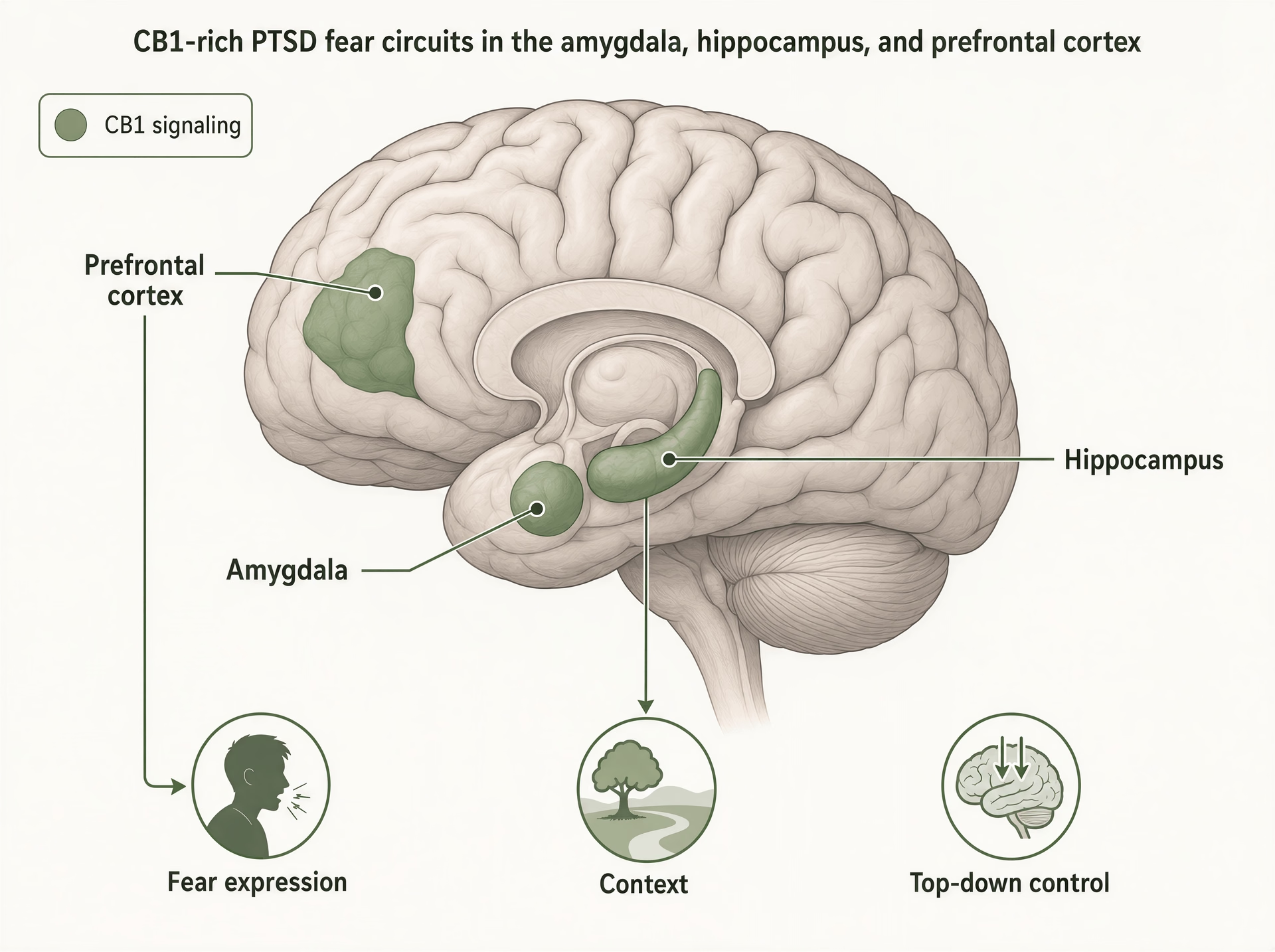
CB1 signaling in the amygdala, hippocampus, and prefrontal cortex
CB1 receptors are heavily expressed in the brain regions most tied to PTSD: the amygdala, hippocampus, and medial prefrontal cortex. Those areas form a functional fear network.
Retrograde endocannabinoid signaling, step by step
- 1 Postsynaptic neurons synthesize endocannabinoids on demand.
- 2 These signals travel backward across the synapse.
- 3 They bind presynaptic cannabinoid receptors such as CB1.
- 4 Presynaptic neurotransmitter release is reduced.
- 5 The circuit response is damped, which can limit excessive fear signaling.
The amygdala helps detect threat and stamp emotional salience onto experience. In PTSD, amygdala reactivity is often exaggerated, especially to trauma reminders. CB1 signaling in the amygdala generally acts as a brake on excessive excitatory transmission. Endocannabinoids are produced “on demand” by postsynaptic neurons and travel backward across the synapse to reduce neurotransmitter release from the presynaptic terminal. That retrograde signaling can dampen glutamate or GABA release depending on the circuit involved. In plain terms, the ECS is one of the brain’s local feedback systems for preventing fear responses from running unchecked.
The hippocampus adds context. It helps answer whether a cue means danger here and now, or whether it merely resembles something dangerous from the past. PTSD is marked by overgeneralization: safe settings can feel threatening because trauma-linked cues are stripped from their original context. CB1 activity in the hippocampus influences memory consolidation, contextual fear, and discrimination between old danger and present safety. When that regulation is off, trauma reminders can become sticky and overbroad.
The prefrontal cortex, especially ventromedial and infralimbic regions in animal models, is central to top-down control over fear. It helps suppress conditioned fear when a threat has passed. PTSD often involves weak prefrontal inhibition over a hyperreactive amygdala. CB1 receptors in prefrontal circuits are part of that control architecture. If endocannabinoid tone is low, the balance may tilt toward persistent alarm, intrusive recollection, and hyperarousal.
This is the PTSD-specific reason CB1 attracts attention. It is not simply that cannabis affects mood. It acts on a receptor system concentrated in the very circuits that govern fear expression and fear shutdown.
THC partially activates CB1 directly. That can, under some conditions, reduce anxiety or blunt fear expression. It can also overshoot. THC has a biphasic profile: lower doses may calm some people, while higher doses can increase anxiety, panic, dissociation, and paranoia. That is one reason the mechanistic story does not translate cleanly into an endorsement of THC-dominant products for PTSD.
CBD is different. It does not function as a straightforward CB1 agonist in the way THC does. Its actions appear indirect and spread across several targets, including serotonin signaling and possible effects on endocannabinoid tone. That makes CBD biologically plausible for anxiety-related symptoms, but not interchangeable with THC and not a direct test of “CB1 activation helps PTSD.”
Fear extinction, memory reconsolidation, and stress responsivity
PTSD can be understood partly as a disorder of failed extinction. The person learns a terrifying association during trauma, but the nervous system does not update effectively when the danger is gone. Trauma-focused psychotherapies rely on exactly that updating process. Patients repeatedly confront trauma memories and safe cues so the brain learns, slowly and imperfectly, that reminders are not the trauma itself.
Endocannabinoid signaling is deeply involved in extinction learning. In animal studies, blocking CB1 impairs extinction of conditioned fear, while enhancing endocannabinoid signaling can facilitate it. This finding has been replicated often enough to become one of the core biologic arguments for ECS involvement in PTSD. The ECS seems to help the brain loosen old fear associations and encode safety learning.
That does not mean cannabinoids erase trauma. Extinction is not deletion. The original fear memory remains, but a new inhibitory memory is built on top of it. CB1 signaling appears to support that process.
Memory reconsolidation is related but distinct. When a memory is reactivated, it briefly becomes labile before being stored again. During that window, emotional intensity and associated cues may be updated. Cannabinoid signaling has been implicated in reconsolidation and emotional memory modulation in preclinical work, which is one reason some researchers have wondered whether cannabinoids could augment trauma therapy or alter the emotional charge of traumatic recall. But this remains far more persuasive in theory and animal models than in human PTSD care.
Stress responsivity is the third major link. PTSD is marked by altered hypothalamic-pituitary-adrenal signaling, sympathetic overactivation, sleep disruption, and exaggerated startle. Endocannabinoids help buffer stress responses at several levels, including regulation of the amygdala and control of stress hormone feedback. When the ECS is functioning well, it appears to help terminate the stress response after a threat. When that buffering system is weak, arousal may persist.
This is one reason nightmares and sleep disturbance keep surfacing in cannabinoid research. Jetly et al. in 2014 reported that nabilone, a synthetic cannabinoid with CB1 agonist activity, reduced nightmare scores more than placebo in a small double-blind crossover trial among military personnel with PTSD. Fraser’s earlier open-label work pointed in the same direction. These studies are small and should not be generalized to all cannabis products, but they fit the broader biologic model: CB1-linked signaling may affect trauma-related arousal during sleep and REM-associated symptom expression.
The larger clinical picture remains much less impressive. Wilkinson et al. 2021, the modern randomized placebo-controlled trial of smoked cannabis in PTSD led by investigators including Sue Sisley, found no statistically significant advantage for active cannabis over placebo in Stage 1. All groups improved. Expectancy effects and limited power complicate interpretation, but the trial did not deliver the clear signal many advocates expected.
FAAH Fatty acid amide hydrolase, the enzyme that mainly breaks down anandamide. Higher FAAH activity lowers anandamide signaling; inhibition of FAAH raises it.
Anandamide, 2-AG, FAAH, and the case for endocannabinoid dysregulation in PTSD
| Term | What it is | Why it matters here |
|---|---|---|
| Anandamide | An endogenous cannabinoid ligand | Often discussed as part of the low-endocannabinoid-tone hypothesis in PTSD |
| 2-AG | Another endogenous cannabinoid ligand | Also shapes stress and fear-circuit signaling |
| FAAH | Enzyme that breaks down anandamide | A target of interest because inhibiting FAAH can raise anandamide levels |
| Monoacylglycerol lipase | Enzyme that largely breaks down 2-AG | Relevant to how 2-AG tone is regulated |
The ECS is not only about plant cannabinoids. Its native signaling molecules matter more for trauma biology: anandamide and 2-arachidonoylglycerol, usually shortened to 2-AG.
Anandamide and 2-AG are endogenous ligands that activate cannabinoid receptors, especially CB1 in the brain. They are produced on demand rather than stored in vesicles like classic neurotransmitters. Anandamide is broken down mainly by FAAH, fatty acid amide hydrolase. 2-AG is broken down largely by monoacylglycerol lipase. If FAAH activity is high, anandamide signaling falls. If FAAH is inhibited, anandamide levels rise.
That has made FAAH a recurring target in PTSD research. The basic idea is simple: if PTSD involves low endocannabinoid tone, then raising endogenous signaling might restore a physiologic brake on fear and stress without the broader psychoactive effects of THC. It is an attractive translational hypothesis.
Human evidence points in that direction, though it is not definitive. Studies from the 2010s reported reduced peripheral anandamide levels in people with PTSD and increased CB1 receptor availability on PET imaging, findings often interpreted as compensation for chronically low endocannabinoid signaling. The pattern is consistent with an underactive ECS rather than an overactive one. Animal models of chronic stress show similar themes: stress can alter anandamide and 2-AG signaling in fear circuits, and those changes track anxiety-like behavior, impaired extinction, and persistent arousal.
None of this proves a single PTSD biology. PTSD is heterogeneous. Combat trauma, sexual assault, childhood trauma, dissociative symptoms, heavy substance use, and chronic pain do not produce one uniform endocannabinoid signature. Even if “low endocannabinoid tone” describes a subgroup, it may not describe all patients.
That is the translational hinge. A plausible mechanism supports careful trials of defined interventions such as CBD, nabilone, or future FAAH-modulating approaches. It does not justify assuming that any cannabis product, in any dose, will restore normal trauma processing. O’Neil et al. in their 2021 systematic review found the clinical evidence insufficient for improving overall PTSD symptoms and flagged harms in some cohorts, including substance use problems and behavioral worsening.
Endocannabinoid dysregulation is a clinically actionable driver of PTSD. Preliminary evidence
So the ECS-trauma connection is real and scientifically important. It tells us why PTSD patients may experience temporary relief, why nightmares and hyperarousal remain active research targets, and why veteran demand persists. It does not overturn current guideline caution. The biology opens the door. The clinical data still have to walk through it.
| Compound | Main idea in article | PTSD evidence signal | Main cautions |
|---|---|---|---|
| THC | Direct partial CB1 agonism; may reduce arousal or help sleep onset | Mixed to weak for overall PTSD; symptom-level rationale only | Can worsen anxiety, panic, dissociation, cognition, and dependence risk |
| CBD | Indirect ECS and serotonin-related hypotheses | Sparse PTSD-specific evidence; small uncontrolled signal | Dose gap, drug interactions, sedation, weak controlled evidence |
| CBN | Marketed for sleep | Very thin evidence and essentially no established PTSD role | Reputation exceeds data; often confounded by mixed-product formulas |
What THC, CBD, and CBN might do in PTSD—and where the claims outrun the data
PTSD is common, disabling, and often stubbornly resistant to treatment, which helps explain why cannabinoids keep drawing attention. The National Center for PTSD estimates that about 6 in 100 U.S. adults will develop PTSD at some point, while the World Health Organization puts lifetime global exposure around 3.9%. Demand is real. Evidence is another matter.
That distinction gets lost constantly. High veteran use rates do not prove efficacy. A 2021 survey of U.S. veterans found 40.9% past-year cannabis use in the sample, and the 2024 IAVA member survey reported 57% used cannabis in the previous year; among users, 81% cited sleep and 80% cited stress, anxiety, or PTSD-related concerns. Those numbers show unmet need and strong patient belief. They do not show that cannabis improves core PTSD symptoms better than placebo, psychotherapy, or approved medications.
That is why the 2023 VA/DoD Clinical Practice Guideline recommends against cannabis or cannabis derivatives for PTSD treatment. The reason is not moral panic. It is that the clinical record is still thin, mixed, and product-specific. Wilkinson et al. in PLOS ONE (2021), the best-known modern randomized placebo-controlled trial of smoked cannabis for PTSD, did not find a statistically significant advantage for active cannabis over placebo in Stage 1, even though symptoms improved across groups. Sue Sisley, one of the trial investigators, has argued—fairly—that underpowering and expectancy effects complicated interpretation. Still, the result was negative on its main comparison. That matters.
THC: CB1 agonism, acute anxiolysis at some doses, anxiety worsening at others
THC is the cannabinoid with the clearest direct pharmacology in PTSD discussions. It acts primarily as a partial agonist at CB1 receptors, which are heavily expressed in the amygdala, hippocampus, and prefrontal cortex. Those regions help regulate fear learning, fear extinction, emotional salience, and memory. On paper, that makes THC look plausible for hyperarousal, intrusive reactivity, and sleep disruption.
Plausible is not the same as reliable.
THC has a biphasic profile. At some doses, in some people, in some settings, it can briefly reduce tension, dampen autonomic arousal, and make sleep onset easier. Patients often describe exactly that: less “buzzing,” fewer racing thoughts, easier disengagement at night. For a subset with trauma-related insomnia, that short-term effect is the entire attraction.
But THC can also do the opposite. Raise the dose, increase potency, add a stressful setting, or give it to someone prone to panic or dissociation, and anxiolysis can flip into anxiety, paranoia, derealization, tachycardia, and a feeling of losing control. PTSD patients are not exempt from that risk; many are more vulnerable to it. The same compound that blunts hyperarousal in one person can intensify it in another.
Sleep is a similar story. THC may help some people fall asleep in the short run, yet repeated use can impair sleep architecture, and withdrawal commonly disrupts sleep and intensifies vivid dreaming. That creates a trap: a patient may feel cannabis “works” only because stopping it makes nights worse. Relief is then partly dependence management, not symptom resolution.
Nightmares deserve separate attention because this is one of the few areas with a signal worth taking seriously. The more promising data do not come from smoked cannabis or from CBN. They come from nabilone, a synthetic CB1 agonist. Fraser’s earlier open-label work suggested reduction in treatment-resistant PTSD nightmares, and Jetly et al. (2014) reported in a small double-blind crossover trial among military personnel that nabilone outperformed placebo on nightmare outcomes. Those are interesting findings. They support the idea that CB1-mediated modulation of REM-related phenomena may matter clinically. They do not justify broad claims that “THC treats PTSD,” and they do not erase THC’s downsides: cognitive slowing, impaired attention, worsened dissociation in some patients, and cannabis use disorder risk with frequent use.
CBD: indirect ECS effects, serotonin signaling hypotheses, and the PTSD evidence gap
CBD has a much cleaner reputation than THC, but the science behind that reputation is thinner than many people assume. It does not act like THC at CB1. Instead, it appears to influence the endocannabinoid system indirectly, with proposed effects on anandamide tone, FAAH-related pathways, TRPV1, and serotonin signaling, especially 5-HT1A-related hypotheses. That mechanistic spread is one reason CBD is often discussed in anxiety research.
The trouble is translation. PTSD-specific controlled evidence remains sparse.
The most cited positive human paper is Elms et al. (2019), a retrospective case series in the Journal of Alternative and Complementary Medicine. In that small uncontrolled study, 91% of patients had lower PTSD symptom severity scores within 8 weeks when CBD was added to routine psychiatric care. The result is encouraging, but it is not strong proof. There was no placebo group, no blinding, no way to separate CBD effects from concurrent treatment, regression to the mean, or expectancy.
Outside PTSD, acute anxiety studies have sometimes found that oral CBD reduces experimentally induced anxiety. That literature is often invoked as if it settles the PTSD question. It does not. First, experimentally induced public-speaking anxiety is not the same thing as chronic trauma pathology. Second, the doses used in research are often far above what people get from low-dose consumer products. Published studies have commonly used oral doses in the hundreds of milligrams. That dosing gap is not a technical footnote; it is central. A person taking a small retail CBD dose may be nowhere near the exposure studied in the literature.
CBD also should not be treated as risk-free. It can cause sedation, diarrhea, appetite change, and drug interactions, especially through hepatic enzyme effects. PTSD patients often take antidepressants, antipsychotics, sedatives, or anticonvulsants. That makes clinician review important, even for a compound widely perceived as benign.
So where does that leave CBD? Not as an established PTSD treatment. At most, it remains a biologically plausible, still under-tested option that may help some patients with anxiety or sleep-related symptoms, but one whose evidence base is much weaker than its public image suggests.
CBN: sedation reputation, weak evidence, and why it should not be treated as established therapy
CBN has acquired a sleep-focused reputation that outruns the data by a wide margin. It is often described as the “sleepy cannabinoid,” but that label rests more on folklore, product positioning, and older assumptions about aged cannabis than on persuasive clinical trials.
The core problem is simple: there is very little high-quality evidence that isolated CBN meaningfully improves sleep, and essentially none establishing it as a PTSD therapy. Not for nightmares. Not for hyperarousal. Not for global symptom reduction.
Part of the confusion comes from product formulations. CBN frequently appears alongside THC, CBD, melatonin, terpenes, or sedating antihistamine-like ingredients in mixed products. If a person reports better sleep after using one of these combinations, CBN may get the credit without having earned it. That is not proof of a CBN-specific effect. It is confounding.
CBN is also sometimes incorrectly folded into the more interesting nightmare data from nabilone. They are not interchangeable. Nabilone is a synthetic CB1 agonist with direct relevance to cannabinoid receptor signaling. CBN does not have the same evidentiary support, and it should not borrow legitimacy from studies it was never part of.
For PTSD patients, that distinction matters. If someone has severe trauma nightmares that did not respond to standard care, the discussion with a clinician should be about actual evidence—prazosin where appropriate, trauma-focused therapy, sleep interventions, and, in legally accessible settings, whether a cannabinoid approach with some rationale exists. Treating CBN as established therapy skips that step and leans on marketing more than medicine.
The bottom line is straightforward. Cannabis is not a first-line PTSD treatment, and current evidence does not support sweeping claims that THC, CBD, or CBN reliably treat the disorder as a whole. THC has the most immediate symptom-level rationale and the biggest downside profile. CBD is promising enough to study but still underproven, with published doses often much higher than commonly used products. CBN, despite its sleep reputation, has an especially thin evidence base and should be approached with skepticism. For refractory sleep disturbance and nightmares, selected cannabinoid strategies may deserve cautious, clinician-guided consideration. That is a much narrower claim than “cannabis works for PTSD,” and right now it is the more defensible one.
Clinical evidence: randomized trials, observational studies, and why they point in different directions
PTSD is common, often persistent, and frequently hard to treat. The U.S. National Center for PTSD estimates that about 6 in 100 U.S. adults will develop PTSD at some point, while the World Health Organization puts lifetime global exposure at 3.9%. That burden helps explain the intensity of interest in cannabis. It does not prove efficacy.
This distinction matters because the public story is often driven by use rates and patient testimony. Those are real and important. In a 2021 survey of U.S. veterans, 40.9% reported past-year cannabis use. In the 2024 IAVA member survey, 57% reported cannabis use in the previous year; among users, 81% said they used it for sleep and 80% for stress, anxiety, or PTSD-related concerns. Those figures show demand. They do not answer the clinical question: does cannabis outperform placebo or standard care for PTSD itself?
Right now, the answer is still no for broad PTSD treatment claims. The strongest evidence does not support a general recommendation for cannabis or cannabinoids as a first-line PTSD treatment. The more defensible position is narrower: some cannabinoid approaches may help selected symptoms in selected patients, especially sleep disturbance and nightmares, but the evidence base is small, product-specific, and uneven.
The randomized placebo-controlled cannabis trial in PTSD
The most important modern trial here is Wilkinson et al. 2021, published in PLOS ONE. Sue Sisley was the lead investigator associated with the MAPS/Scottsdale PTSD cannabis study, and this trial remains the most policy-relevant randomized test of smoked cannabis for PTSD. That is exactly why its findings need careful reading.
Stage 1 of the trial randomly assigned participants with PTSD to one of four groups: high-THC cannabis, high-CBD cannabis, balanced THC+CBD cannabis, or placebo cannabis. The placebo-controlled design was the key strength. It asked the question that observational reports cannot answer: when you compare active cannabis with placebo under blinded conditions, do PTSD symptoms improve more with the active drug?
In Stage 1, the answer was no. All treatment groups improved over time, but no active cannabis preparation significantly outperformed placebo on the main PTSD outcome. That is the central finding. It does not mean cannabis can never help any person with PTSD. It means the trial failed to show a clear efficacy signal beyond placebo for overall PTSD symptom reduction.
Why the smoked-cannabis PTSD trial was hard to interpret
- Expectancy effects Participants often had strong beliefs about what cannabis would do, which can shift symptom reporting.
- Blinding problems Psychoactive effects can reveal active THC, weakening placebo masking.
- Small sample An underpowered study may miss real effects and can also produce unstable results.
Why might that have happened? Several reasons, and none rescue the evidence enough to support broad claims.
First, expectancy effects were likely large. In cannabis studies, participants often have strong beliefs about what the drug will do, and those beliefs alone can move symptom reporting. PTSD outcomes are especially vulnerable to expectancy because many are subjective: sleep quality, anxiety, distress, irritability, perceived hyperarousal. If participants think cannabis will help, placebo can produce meaningful symptom improvement. Wilkinson et al. showed exactly that problem: placebo recipients improved substantially too.
Second, blinding in cannabis trials is notoriously difficult. Participants may infer whether they received active THC based on psychoactive effects, or infer placebo from the absence of them. Once blinding erodes, expectancy grows stronger. That does not make the trial useless. It means cannabis has a high bar to clear, and in this case it did not clear it.
Third, the study was small and underpowered. Underpowered trials can miss real effects. That is true. But underpowered trials also tend to produce unstable findings, and “the study was too small” is not positive evidence. It is a reason to stay uncertain, not a reason to assume benefit.
The most defensible reading is this: smoked cannabis has not yet shown reliable superiority to placebo for overall PTSD symptom reduction in a rigorous trial. That should cool claims that cannabis is an established PTSD treatment. At the same time, the trial does not shut the door on more targeted questions, such as whether certain cannabinoids, doses, or routes of administration help specific symptoms like sleep initiation or trauma-related nightmares.
A cannabinoid approach may still help a narrow symptom domain such as nightmares even if it does not treat PTSD globally. Limited evidence
That symptom-level distinction is not semantic. It is clinically important. A treatment can fail as a global PTSD therapy and still offer limited value for one difficult symptom domain. Sedating antihistamines, for example, may help sleep without treating PTSD itself. The same logic applies here. The Wilkinson trial weighs against broad efficacy claims, not against every possible symptom-targeted use.
CBD case series and open-label data
CBD has attracted a different type of attention: less focused on intoxication, more focused on anxiety, sleep, and fear processing. Mechanistically, the interest is plausible. CBD interacts with multiple systems relevant to PTSD, including serotonergic signaling, endocannabinoid tone, and perhaps fear extinction pathways. But plausible biology is not clinical proof.
The most cited PTSD-specific CBD study is Elms et al. 2019 in the Journal of Alternative and Complementary Medicine. This was a retrospective case series of adjunctive CBD in a small psychiatric sample. CBD was added to routine psychiatric care rather than tested as a standalone intervention. By 8 weeks, 91% of patients had a decrease in PTSD symptom severity scores. On its face, that sounds dramatic.
The limits are just as dramatic. Elms et al. was not randomized. It had no placebo control. It was small. Patients were receiving other treatments at the same time. The design makes it impossible to separate the effect of CBD from the effect of ongoing psychiatric care, regression to the mean, natural symptom fluctuation, or expectancy. PTSD symptoms often wax and wane. People entering adjunctive treatment studies often improve over time regardless of the add-on intervention. Without a control group, you cannot tell how much of the change belongs to CBD.
That does not make the study worthless. It is useful as signal generation. It tells researchers that CBD is feasible to study in this population and that some patients report improvement, especially in anxiety and sleep. But it cannot establish efficacy.
Open-label CBD data outside strict PTSD trials point in a similar direction: some patients report less anxiety, better sleep, or reduced distress. Yet the dosing issue is often ignored in public discussion. Controlled anxiety studies of oral CBD have commonly used acute doses far higher than what many over-the-counter products contain. This gap matters. Evidence from a trial using hundreds of milligrams of purified CBD cannot simply be mapped onto low-dose consumer formulations of uncertain composition.
The same caution applies to extrapolating from CBD to all cannabis. CBD is not THC. It has a different pharmacology, different adverse-effect profile, and different subjective effects. If a small adjunctive CBD series suggests possible benefit, that does not validate THC-dominant smoked cannabis for broad PTSD treatment.
There is a parallel line of evidence on nightmares and sleep that often gets folded into “cannabis for PTSD” even though it is really about a specific synthetic cannabinoid. Jetly et al. 2014 conducted a small double-blind crossover trial of nabilone, a synthetic CB1 receptor agonist, in military personnel with PTSD-related nightmares. Nabilone reduced nightmare scores more than placebo. Earlier open-label work by Fraser also suggested benefit. Those findings matter because they support the narrower idea that cannabinoid signaling may affect REM-related symptoms and nightmare intensity. But nabilone is not interchangeable with smoked cannabis, CBD oil, or CBN. Product class matters.
So the CBD and cannabinoid picture is not empty. It is just much narrower than marketing suggests. There is enough here to justify more research and, in refractory cases, careful clinician-guided consideration of symptom-targeted use where legally available. There is not enough to claim that cannabis or CBD generally treats PTSD.
Systematic reviews and guideline conclusions
Systematic reviews are where the field’s optimism usually gets trimmed back to what the data can actually support. The key review here is O’Neil et al. 2021 in Psychiatric Services. Looking across the literature, O’Neil and colleagues concluded that evidence was insufficient to support cannabis for improving overall PTSD symptoms. That is the right bottom line.
The reason is not that every study is negative. It is that the literature is heterogeneous and methodologically weak. Some observational studies report symptom improvement, especially in sleep, anxiety, or self-reported coping. Others link cannabis use in PTSD populations to harms such as cannabis use disorder, withdrawal-related sleep disruption, poorer functioning, or worse behavioral outcomes in some subgroups. Observational data point in different directions because they are capturing different populations and different time horizons.
People often begin using cannabis because they are suffering. That creates confounding by indication: those with worse symptoms may be more likely to try cannabis in the first place. At the same time, those who feel immediate relief are more likely to continue and report benefit. Both can distort the picture. Short-term sedation may look like sleep improvement even if sleep architecture worsens over time. Acute anxiety reduction at one THC dose may turn into rebound anxiety, tolerance, or panic at another. Observational studies are useful for showing patterns of real-world use. They are poor at settling efficacy.
That is why guideline panels still land where they do. The 2023 VA/DoD Clinical Practice Guideline recommends against cannabis or cannabis derivatives for PTSD treatment. This is not a moral statement or a legal statement. It is an evidence statement. The guideline authors weighed the lack of convincing randomized evidence for overall PTSD improvement against known risks, including problematic use, cognitive adverse effects, and the possibility that cannabis interferes with evidence-based trauma-focused care in some patients.
The National Center for PTSD at the VA has been similarly direct: current research does not support cannabis as an effective PTSD treatment. That position is consistent with the trial data and the review literature. It also addresses a common misconception among veterans and policy advocates. High rates of use do not equal proven efficacy. Self-medication is understandable. It is not the same thing as demonstrated therapeutic effect in a controlled study.
This is where symptom-targeted benefit has to be separated from global PTSD claims. The evidence for broad reduction of PTSD symptom clusters remains weak. The evidence for selected refractory symptoms, especially nightmares and perhaps some forms of sleep disturbance, is more promising but still limited and product-specific. Nabilone has a small positive trial for nightmares. CBD has low-grade adjunctive signal in uncontrolled data. Smoked cannabis has not shown superiority to placebo for overall PTSD symptoms in the key randomized trial.
That split is the evidence core. If the question is “Should cannabis be recommended generally for PTSD?” the answer is no. If the question is “Might a specific cannabinoid approach help a patient with severe treatment-resistant nightmares or sleep disruption after standard options have failed?” the answer is maybe, but only with caution, clear goals, and close follow-up.
That is not fence-sitting. It is the position the literature supports.
Nightmares, insomnia, and REM sleep: the symptom cluster driving most real-world use
PTSD treatment debates often get framed around whether cannabis “works” for the disorder as a whole. That is the wrong level of resolution for many real patients. The strongest rationale for cannabinoid use in PTSD is not broad relief of every symptom cluster. It is the narrower, more concrete problem of sleep: trauma nightmares, repeated awakenings, difficulty falling asleep, and the next-day exhaustion that amplifies irritability, hypervigilance, pain, and depression.
That distinction matters. The 2023 VA/DoD Clinical Practice Guideline recommends against cannabis or cannabis derivatives for PTSD treatment overall, and the National Center for PTSD has been clear that current evidence does not support cannabis as an effective PTSD treatment. Yet demand remains high, especially among veterans. In the 2024 IAVA member survey, 81% of cannabis users reported using it for sleep improvement. That does not prove efficacy, but it does identify the symptom cluster driving much of real-world use.
Why sleep disturbance is central to PTSD disability
Sleep problems in PTSD are not secondary annoyances. They are often the engine that keeps the disorder running.
Nightmares replay the trauma or produce threat-laden dreams with similar emotional force. Insomnia leaves patients dreading bedtime, then undercutting daytime coping with chronic sleep loss. Fragmented sleep worsens concentration, emotional regulation, pain tolerance, and startle responses. A patient who sleeps badly is more likely to feel unsafe, more likely to avoid treatment tasks, and less able to benefit from trauma-focused therapy. In practice, many people do not ask for cannabis because they expect it to erase traumatic memory. They ask because they want one full night without panic, violent dreaming, or repeated awakenings.
This is one area where the biology is at least plausible. The endocannabinoid system is active in brain regions heavily involved in fear processing and memory, including the amygdala, hippocampus, and prefrontal cortex. CB1 signaling appears relevant to fear extinction, stress responsivity, and memory consolidation. Sleep adds another layer: cannabinoids can alter sleep onset, dream recall, and REM expression, which helps explain why some patients report fewer nightmares even when their daytime PTSD symptoms remain only partly changed.
But plausible biology is not enough. The clinical literature on whole-plant cannabis remains weak and product-specific. Wilkinson et al. in 2021, the modern randomized placebo-controlled trial of smoked cannabis in PTSD published in PLOS ONE, found that all groups improved over time, but no active cannabis preparation significantly outperformed placebo in Stage 1. Sue Sisley, one of the investigators associated with that line of work, has argued that barriers to studying cannabis have limited evidence development. That is fair. It is also fair to say the existing trial record still falls short of showing reliable benefit for PTSD overall.
Sleep, though, is where the story gets more interesting.

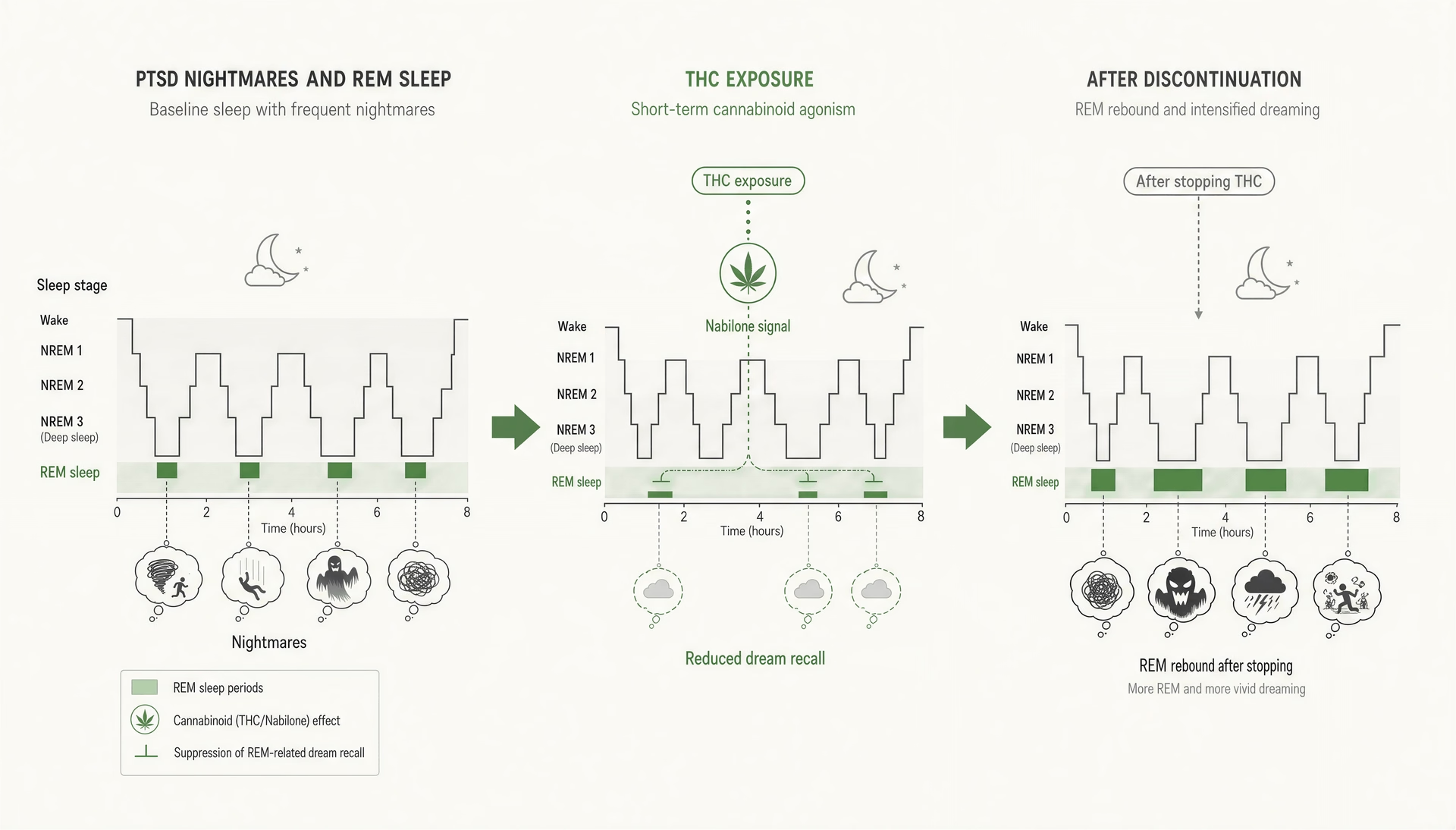
Nabilone and the nightmare studies
The most cited evidence for cannabinoid treatment of PTSD-related nightmares does not come from dispensary cannabis, CBD, or CBN. It comes from nabilone, a synthetic cannabinoid that acts primarily as a CB1 receptor agonist.
Fraser’s earlier open-label work helped put nabilone on the map for treatment-resistant nightmares. In those reports, patients with severe PTSD nightmares who had not responded adequately to standard approaches often described marked reductions in nightmare frequency or intensity after nabilone was added. Open-label data are inherently fragile. Expectancy effects are strong in sleep medicine, and PTSD symptoms naturally fluctuate. Still, the signal was notable because the target symptom was specific and the patients were often difficult to treat.
The better-known trial is Jetly et al. 2014, a double-blind, placebo-controlled crossover study in military personnel with PTSD and persistent nightmares. The sample was small, which limits confidence, but the study found that nabilone produced greater improvement in nightmare scores than placebo. That result matters because it gives some controlled support to what clinicians had been hearing anecdotally for years: selected cannabinoid agonists may reduce trauma nightmares in some patients who have not done well with other options.
The right interpretation is narrow. These studies support further research into cannabinoid-based treatment of refractory nightmares. They do not show that cannabis treats PTSD globally. They do not establish that smoked or edible THC products will reproduce nabilone’s effects. They do not validate every cannabinoid marketed for sleep.
CBN is the clearest example of a gap between reputation and evidence. It is often portrayed as a sleep-focused cannabinoid, but PTSD-specific evidence is thin to the point of near absence. The modern literature does not support confident claims that CBN improves trauma nightmares or meaningfully restores sleep in PTSD. Its sleep image owes more to branding and old assumptions than to solid clinical trials.
CBD is only slightly better supported for this purpose. Elms et al. published a 2019 retrospective case series in the Journal of Alternative and Complementary Medicine in which CBD added to routine psychiatric care was associated with lower PTSD symptom severity in many patients over eight weeks. That paper is often cited, and it is worth reading carefully. It was uncontrolled, small, and not focused specifically on nightmare outcomes. It suggests possibility, not proof. CBD may help some patients whose sleep is being worsened by baseline anxiety, but the evidence is far weaker than public discussion often implies.
Cannabis, REM suppression, rebound, and the trade-offs patients should understand
REM rebound A return of stronger REM pressure and more vivid dreaming after REM-suppressing drug effects wear off or use stops. In PTSD, this can mean a surge in nightmares during abstinence or withdrawal.
One reason cannabinoids can seem helpful for nightmares is that THC tends to suppress REM sleep, the stage most associated with vivid dreaming. Less REM can mean fewer remembered dreams, less dream intensity, or less emotional replay of traumatic content. For a patient waking in terror three or four nights a week, that can feel life-changing.
Short term, this makes clinical sense. A sedating THC-containing product may reduce sleep latency, damp dream recall, and blunt nighttime hyperarousal. Some patients sleep longer. Some stop dreading bedtime. Some become more functional simply because they are no longer being jolted awake by recurrent trauma dreams.
The trade-off is that better subjective sleep is not the same thing as healthier sleep architecture.
Regular THC exposure can alter normal sleep staging. In some users, what begins as easier sleep onset turns into tolerance, heavier reliance, and poorer sleep quality when not using the drug. When use stops, REM rebound can occur: dreams return intensely, REM pressure rises, nightmares surge, and insomnia may briefly worsen. That rebound effect matters in PTSD because it can create a cycle. The patient uses THC to suppress disturbing dreams, then experiences even more vivid dreaming during abstinence or withdrawal, which reinforces continued use.
This helps explain an apparent contradiction in the literature and in clinical practice. A person can honestly report that cannabis helps them sleep tonight while still moving toward worse long-term sleep stability. Both can be true.
The risk is not uniform. Dose, route, frequency, cannabinoid ratio, and individual vulnerability all matter. Low-dose or intermittent use may look very different from nightly high-THC use. Some patients primarily benefit from sedation. Others develop tolerance quickly. Some feel less anxious at bedtime; others become more anxious, dysphoric, or dissociated, especially at higher THC exposure. PTSD patients with co-occurring substance use problems deserve extra caution here.
The practical bottom line is straightforward. Cannabis is not a first-line PTSD treatment, and the evidence for global symptom reduction remains weak. But for refractory nightmares and severe sleep disturbance, cannabinoid approaches, especially data-informed ones such as nabilone in settings where it is available, may deserve cautious clinician-guided consideration after standard treatments have failed. Patients should understand the bargain clearly: possible short-term relief from nightmares and sleep-onset problems, set against tolerance, REM rebound, withdrawal-related sleep disruption, and the possibility that subjective sleep gains do not always mean better long-term sleep health.
Veterans and self-medication: what usage data shows, and what it does not
PTSD is common, impairing, and often hard to treat well. The U.S. Department of Veterans Affairs National Center for PTSD estimates that about 6 in 100 people in the United States will have PTSD at some point, with roughly 5 in 100 affected in a given year. The World Health Organization puts lifetime prevalence globally at 3.9%. Among veterans and service members, where trauma exposure is concentrated and sleep disturbance, chronic pain, depression, and substance use often overlap, cannabis use has become a major reality on the ground. That matters. It still does not settle the efficacy question.
Veteran prevalence data and medicinal motives
Usage surveys show demand at a scale that policy makers and clinicians cannot dismiss. In a 2021 survey of U.S. veterans published in the American Journal of Drug and Alcohol Abuse, 40.9% reported cannabis use in the past year. That is not a fringe pattern. It suggests cannabis is already embedded in how many veterans manage symptoms, whether clinicians endorse it or not.
The 2024 Iraq and Afghanistan Veterans of America survey pointed in the same direction, with even higher reported use: 57% said they had used cannabis in the previous year. Among those users, 93% said they were using it to relieve physical or mental health conditions. Sleep stood out. So did stress-related symptoms. In that survey, 81% reported use to improve sleep and 80% for stress, anxiety, or PTSD-related concerns.
Those motives line up with what PTSD patients often describe in clinics. They are not usually chasing “overall symptom reduction” as measured in a trial scale. They are trying to sleep for more than a few hours. They are trying to reduce trauma dreams, nighttime panic, irritability, hyperarousal, and the sense that their body never powers down. Chronic pain is often part of the same picture, especially in veterans with orthopedic injuries, headaches, or musculoskeletal problems. So is a wish to cut back on alcohol, benzodiazepines, or sedating medications that leave them foggy the next day.
This is one reason the symptom-level story matters more than broad claims. There is some limited support for cannabinoid effects on nightmares in selected patients. Jetly et al. reported in 2014 that nabilone, a synthetic cannabinoid acting at CB1 receptors, reduced nightmare scores more than placebo in a small double-blind crossover trial in military personnel with PTSD. Earlier open-label work by Fraser also suggested benefit. But nabilone is not smoked cannabis, not CBD, and not CBN. Veterans who say cannabis helps them sleep may be reporting something real about sedation or nightmare suppression, yet those reports cannot be treated as product-wide proof.
Barriers in conventional care that push patients toward cannabis
High self-medication rates also reflect dissatisfaction with standard care. Some veterans do very well with trauma-focused psychotherapies such as prolonged exposure or cognitive processing therapy. Many do not complete them. The reasons are familiar: treatment is emotionally demanding, wait times can be long, access may be uneven, and stigma remains powerful, particularly in military culture where admitting distress can still feel risky.
Medication treatment has its own limits. SSRIs and SNRIs help some patients, but effect sizes are modest and many discontinue because of sexual side effects, emotional blunting, insomnia, nausea, or lack of clear benefit. Prazosin, once widely used for nightmares, has had mixed trial results. Sedatives can backfire. Alcohol works fast, until it doesn’t.
| What drives use | Why patients choose it | Why that is not proof |
|---|---|---|
| Insomnia and nightmares | Fast, self-directed symptom relief | Sedation can feel helpful without improving PTSD itself |
| Pain plus PTSD | One product may seem to help several symptoms at once | Pain relief can be mistaken for direct PTSD treatment |
| Frustration with standard care | Access barriers, side effects, or nonresponse push trial use | High demand shows unmet need, not controlled efficacy |
| Substitution motive | Some want to cut back on alcohol or sedatives | A motive for use is not evidence that cannabis is the best option |
Cannabis enters this gap as a self-directed tool: immediate, familiar, and tailored by trial and error. A veteran with insomnia, pain, and anxiety may see it less as a PTSD treatment than as a way to get through the night without drinking or taking another hypnotic. That substitution motive shows up repeatedly in survey work and clinical interviews. It deserves serious attention, especially given the risks attached to alcohol and long-term sedative use.
Still, a reason for use is not the same as evidence for benefit. Even the often-cited CBD case series by Elms et al. in 2019, where 91% of patients showed lower PTSD symptom severity within eight weeks after CBD was added to routine psychiatric care, was small, retrospective, and uncontrolled. It tells us CBD is interesting enough to study further. It does not tell us that over-the-counter CBD doses reliably treat PTSD.
Why high use rates cannot be read as proof of efficacy
This is the line that often gets blurred. Veterans use cannabis at high rates. Many report benefit. Neither fact proves that cannabis works as a treatment for PTSD in the way guidelines require.
The best direct test of smoked cannabis for PTSD remains the randomized placebo-controlled trial led by Wilkinson et al., published in PLOS ONE in 2021, with Sue Sisley as a lead investigator on the MAPS-backed study. In Stage 1, no active cannabis preparation significantly outperformed placebo on PTSD symptom reduction, even though all groups improved over time. The trial had real constraints: small sample, difficult logistics, strong expectancy effects. But it did not produce clear evidence that THC-dominant or balanced smoked cannabis meaningfully beat placebo.
Systematic reviews have reached a similar bottom line. O’Neil et al. in Psychiatric Services in 2021 found the evidence insufficient to support cannabis for improving overall PTSD symptoms and flagged harms seen in some observational cohorts, including cannabis use disorder and worsening substance-related problems. The 2023 VA/DoD Clinical Practice Guideline went further and recommended against cannabis or cannabis derivatives for PTSD treatment because evidence is insufficient and harms are known.
That position is justified. Cannabis is not a first-line PTSD treatment. High use rates among veterans show unmet need, treatment gaps, and strong belief in symptom relief. They do not establish controlled efficacy. At most, they tell us where to look more carefully: refractory insomnia, trauma-related nightmares, pain-heavy PTSD presentations, and patients trying to reduce alcohol or sedative exposure. Those are reasonable research targets. They are not a license to claim that cannabis broadly treats PTSD.
Potential benefits by symptom domain
PTSD affects about 6 in 100 people in the U.S. at some point in life, according to the National Center for PTSD, and the WHO estimates lifetime exposure globally at 3.9%. It is often chronic, impairing, and difficult to treat. That helps explain why cannabis remains a persistent topic even though the overall evidence base is weak. The practical question is not whether cannabis is “good” or “bad” for PTSD. It is whether a given cannabinoid, in a given form, helps a specific symptom enough to justify its risks.
That symptom-first frame matters. People may report benefit because THC sedates them, distracts from distress, or blunts emotional intensity. Those effects can feel meaningful. They are not the same thing as improving fear extinction, trauma processing, daytime functioning, or long-term recovery. The 2023 VA/DoD Clinical Practice Guideline recommends against cannabis or cannabis derivatives for PTSD treatment because evidence is insufficient and harms are real. That position is still justified. Even so, the symptom-level picture is uneven rather than uniformly negative.
Nightmares and sleep initiation
This is where the most credible signal exists, though it is still limited and product-specific.
Sleep disruption is one of the main reasons people with PTSD turn to cannabis. In the 2024 IAVA survey, 81% of cannabis-using respondents said they used it for sleep improvement. That is a demand signal, not proof. Veteran use is common—40.9% past-year cannabis use in one 2021 veteran sample and 57% past-year use in the IAVA survey—but self-medication does not establish efficacy.
For nightmares, the best-known positive data do not come from smoked cannabis or over-the-counter CBD. They come from nabilone, a synthetic cannabinoid that acts at CB1 receptors. In a small 2014 double-blind crossover trial, Jetly et al. studied military personnel with PTSD and found that nabilone reduced nightmare scores more than placebo. Earlier open-label work by Fraser also suggested benefit in treatment-resistant nightmares. These findings are clinically interesting because nightmare reduction is a narrow, meaningful target, and because REM sleep modulation and noradrenergic dampening make biological sense in PTSD.
Still, caution is necessary. Nabilone is not the same as inhaled cannabis flower, THC gummies, high-CBD oils, or products marketed as CBN sleep aids. The evidence does not support treating all of those as interchangeable. It especially does not support broad claims about CBN, whose reputation as a sleep cannabinoid rests far more on reputation and marketing than on solid PTSD trials.
As for whole-plant cannabis, the evidence is much less convincing. The randomized placebo-controlled trial most often cited here is Wilkinson et al. (2021) in PLOS ONE, part of the MAPS-linked effort associated with investigators including Sue Sisley. In Stage 1, active smoked cannabis preparations did not significantly outperform placebo for overall PTSD symptom reduction, even though all groups improved. The trial was underpowered and expectancy effects were probably substantial, but it still failed to show a clear signal. That matters because it is the closest thing the field has to a modern controlled smoked-cannabis PTSD trial.
A practical read of the sleep data is this: some patients probably do fall asleep faster with THC-containing products, and selected patients with refractory trauma nightmares may benefit from clinician-guided cannabinoid approaches such as nabilone where legal and appropriate. But sedation is not the same as restorative sleep. THC can shorten sleep latency while also disrupting sleep architecture, and frequent use may create rebound insomnia during withdrawal. Short-term relief is plausible. Durable sleep improvement is less certain.
Hyperarousal, irritability, and autonomic overactivation
Patients often describe cannabis as “turning the volume down.” That maps onto PTSD symptoms such as exaggerated startle, irritability, tension, racing physiology, and the sense of being unable to come down from threat mode.
Mechanistically, that claim is plausible. CB1 receptors are dense in the amygdala, hippocampus, and prefrontal cortex, regions involved in fear learning, stress responses, and emotional regulation. Endocannabinoid signaling has been linked in animal and human work to fear extinction and stress buffering. If that system is dysregulated in PTSD, cannabinoids could in theory dampen hyperreactivity.
The problem is translation from mechanism to reliable treatment effect. THC has a biphasic profile. At one dose, in one setting, it may reduce arousal. At a higher dose—or in a more vulnerable person—it may do the opposite, provoking anxiety, panic, dissociation, or paranoia. That instability is one reason guideline panels remain unconvinced.
Clinical evidence specific to hyperarousal is thin. Much of what exists is observational, retrospective, or based on patient report. People often say cannabis helps them feel less on edge, less angry, or less physiologically activated. Some of that may be a genuine reduction in autonomic overactivation. Some may simply be sedation. Those are not identical outcomes. A treatment that makes someone sleepy or emotionally flattened may reduce the feeling of hyperarousal without improving regulation in a broader sense.
This distinction matters in therapy. Trauma-focused treatments ask patients to engage, remember, tolerate, and process. Heavy THC use may blunt those states, but it may also make some patients less able or less willing to do that work. Observational research has linked frequent use in PTSD populations to cannabis use disorder and, in some patients, poorer engagement with evidence-based treatment. That does not mean no one benefits. It means apparent calming can come with tradeoffs.
Anxiety, intrusive thoughts, and comorbid pain
This is the broadest and most overstated benefit domain.
CBD is often marketed as if it has established anti-anxiety effects in PTSD. That overstates the evidence. The commonly cited PTSD-specific study is Elms et al. (2019), a retrospective case series in the Journal of Alternative and Complementary Medicine. In that report, CBD added to routine psychiatric care was associated with lower PTSD symptom severity in 91% of patients by 8 weeks. The result is encouraging, but the study was small, uncontrolled, and vulnerable to expectancy effects, concurrent treatment effects, and regression to the mean. It is hypothesis-generating, not decisive.
Outside PTSD, acute oral CBD has shown anxiety-reducing effects in some laboratory studies, but often at doses much higher than those commonly used in consumer products. That gap is a major practical issue. A person may hear that “CBD helps anxiety” without realizing the trial dose may have been hundreds of milligrams under controlled conditions. Extrapolating that to low-dose retail products is not evidence-based.
For intrusive thoughts, the literature is even weaker. Some patients report that THC makes memories feel less sharp or less emotionally loaded. That may feel like relief. It may also reflect temporary cognitive dampening rather than a true reduction in core PTSD pathology. If intrusive thoughts return as the drug wears off, or if avoidance increases over time, the apparent benefit may be narrow and short-lived.
Pain complicates all of this. Many people with PTSD also live with chronic pain, and pain itself worsens sleep, irritability, and anxiety. In that setting, cannabis can seem to help “PTSD” when it may actually be reducing pain, muscle tension, or pain-related insomnia. That distinction is not trivial. Symptom relief still matters, but it should be named accurately.
The bottom line is straightforward. Cannabis is not a first-line PTSD treatment, and current evidence does not support it as a reliable therapy for overall symptom reduction. Yet there may be a limited role for selected cannabinoid approaches in carefully chosen patients with refractory symptoms, especially nightmares and sleep initiation problems, when standard treatments have failed and medical supervision is available. That is a narrower claim than public marketing makes, and a more defensible one than either blanket endorsement or blanket dismissal.
Risks, contraindications, and the parts of the conversation patients are often not told
PTSD is common, severe, and often hard to treat. The National Center for PTSD estimates that about 6 in 100 U.S. adults will develop it at some point, while the WHO puts lifetime global prevalence at 3.9%. That burden helps explain why many patients, including veterans, try cannabis even when the evidence base is thin. It does not erase the downsides. The 2023 VA/DoD Clinical Practice Guideline recommends against cannabis or cannabis derivatives for PTSD treatment because efficacy is still unproven and harms are real.
That balancing point matters. Public discussion often jumps from “some people say it helps” to “therefore it is a treatment.” That is not how evidence works. Veteran demand is substantial—40.9% past-year use in one 2021 U.S. veteran sample, and 57% past-year use in the 2024 IAVA member survey—but demand signals are not proof that a drug improves the disorder. In fact, some of the more sobering data come from follow-up and observational work showing that frequent cannabis use in PTSD can track with worse functioning, more substance-related problems, and poorer treatment outcomes in some groups. That does not mean every patient will do badly. It means the risk conversation has to be as serious as the symptom-relief conversation.
Cannabis use disorder, tolerance, and withdrawal in PTSD populations
People with PTSD are already at elevated risk for substance use problems, and cannabis is not an exception. In this population, “medical” motive does not reliably protect against cannabis use disorder. Sleep is a common entry point: a person uses THC because it seems to shorten sleep onset or dull nightmares, then needs more over time, then discovers that stopping brings rebound insomnia, irritability, vivid dreams, and restlessness. What began as symptom management can turn into dependence maintenance.
Tolerance is central here. THC’s sleep and sedating effects often weaken with repeated use. Some patients escalate dose, switch to more THC-dominant products, or add daytime use for anxiety and hyperarousal. That pattern can backfire. Heavier use is associated with more withdrawal on discontinuation, and withdrawal itself often includes exactly the symptoms PTSD patients fear most: poor sleep, strange dreams, anxiety, and irritability. Patients may interpret that rebound as evidence they “need” cannabis for their trauma symptoms, when part of what they are feeling is withdrawal.
This is one reason observational findings are concerning. The 2021 systematic review by O’Neil et al. in Psychiatric Services concluded that evidence was insufficient to support cannabis for overall PTSD improvement and flagged harms including cannabis use disorder risk and worsening substance-related outcomes in some cohorts. The problem is not hypothetical. PTSD and compulsive coping can reinforce each other.
Frequency matters more than slogans. A patient taking a stable, clinician-monitored cannabinoid preparation for a narrow target such as refractory nightmares is in a different risk category from someone using high-THC inhaled cannabis multiple times per day to flatten distress. Those are not equivalent exposures, and they should not be discussed as if they are.
Adolescents deserve special caution. The developing brain appears more vulnerable to adverse cognitive and psychiatric effects from heavy THC exposure, and trauma-exposed adolescents already carry elevated risk. Pregnancy is another setting where cannabis should not be treated casually; fetal exposure concerns and uncertain neurodevelopmental effects make routine use hard to justify. Patients with a history of substance use disorder, especially involving alcohol or sedatives, also need a low threshold for saying no.
Anxiety worsening, psychosis vulnerability, cognition, and driving impairment
The most misunderstood pharmacology point is THC’s biphasic effect. At lower doses, some people feel calmer. At higher doses, the same compound can increase anxiety, panic, paranoia, derealization, and dissociation. PTSD patients are not exempt from that pattern. They may be more vulnerable to it because hypervigilance, body scanning, and threat sensitivity are already primed.
This is where product type matters. High-THC preparations are the most likely to produce acute overactivation, especially in inexperienced users, people who titrate poorly, and those using concentrates or potent inhaled products. Dissociative experiences can be especially destabilizing in PTSD because they may resemble or trigger trauma-related depersonalization. A person seeking relief can end up feeling less anchored, not more.
CBD is different, but not magically protective. Acute oral CBD has shown anxiolytic effects in some experimental studies outside PTSD, often at doses far above what many patients actually take. The 2019 Elms et al. case series suggested improvement when CBD was added to psychiatric care, but it was small and uncontrolled. It does not prove that low-dose over-the-counter style CBD use will reduce PTSD anxiety, and it certainly does not prove that mixing CBD with substantial THC cancels THC’s risks.
Psychosis vulnerability deserves direct language. People with a personal or family history of psychotic disorders should be especially cautious with THC, and many clinicians would avoid it altogether. The association between high-potency cannabis and psychosis is strong enough that this should not be treated as a footnote. PTSD can include paranoia-like symptoms under stress; adding a drug that can intensify suspiciousness or perceptual disturbance is not a trivial gamble.
Cognition is another underdiscussed issue. PTSD already affects concentration, working memory, and executive function in many patients. THC can worsen attention, short-term memory, processing speed, and reaction time, particularly during intoxication but sometimes beyond it in heavy users. For someone trying to work, parent, study, or engage in therapy, that matters. Sedation is not the same as restoration. Sleeping longer after THC does not always mean better sleep architecture or better daytime function.
Then there is driving. Cannabis impairs reaction time, divided attention, lane control, and judgment, and THC-rich products are the main concern. PTSD patients who use cannabis for nighttime symptoms may assume they are safe by morning; that depends on dose, route, frequency, and residual effects. Heavy evening use can still spill into next-day impairment. Add alcohol or sedatives, and the safety margin shrinks fast.
Patients with unstable cardiovascular disease also warrant caution. THC can increase heart rate and affect blood pressure, which may be poorly tolerated in people with arrhythmia, recent cardiac events, or severe coronary disease. This is not the main PTSD conversation in marketing-heavy spaces, but it belongs in real clinical counseling.
Interaction with trauma-focused psychotherapy, SSRIs, sedatives, and alcohol
One of the hardest questions is whether cannabis interferes with trauma-focused psychotherapy. The honest answer is that the evidence is incomplete, but the concern is legitimate. PTSD therapies such as prolonged exposure and cognitive processing therapy ask patients to approach traumatic memories rather than avoid them. If cannabis is used before sessions, during homework, or immediately after trauma activation to shut down distress, it may function as an avoidance aid. That could blunt emotional processing and reduce learning that the memory can be tolerated without escape behaviors.
This concern is mechanistically plausible. Fear extinction and memory reconsolidation are delicate processes. In theory, cannabinoid signaling might help some aspects of extinction; in practice, intoxication, dissociation, and state-dependent coping may make engagement worse for some patients. Clinicians who do exposure-based work often see both patterns: a few patients become less aroused and more able to engage, while others become foggier, less emotionally present, and more likely to skip hard parts of treatment. That is one reason cannabis should not be framed as a first-line adjunct to psychotherapy.
Medication interactions are often presented too casually. Cannabis is not interaction-free. SSRIs such as sertraline and paroxetine remain standard pharmacologic options for PTSD, and adding THC or CBD can change tolerability even when formal contraindications are not absolute. Sedation, dizziness, gastrointestinal effects, and subjective cognitive dulling may become more prominent. CBD also has known effects on hepatic enzymes, which can alter levels of some medications, though the significance depends on dose and the specific drug.
Sedatives are a clearer problem. Combining cannabis with benzodiazepines, sedating antihistamines, trazodone, quetiapine, z-drugs, opioids, or gabapentinoids can produce additive sedation, impaired coordination, falls, and worse next-day performance. Patients seeking sleep often end up stacking agents. That can look workable at first and become dangerous quickly.
Alcohol is the combination that deserves the strongest warning. Heavy alcohol use is common in PTSD, and adding cannabis can worsen disinhibition, memory impairment, vomiting risk, and driving danger. It can also make it harder to tell which drug is helping, which is harming, and which is driving mood instability or poor sleep. If a patient is drinking heavily, cannabis is rarely the clean answer. It is usually another layer of complication.
So where does that leave the clinician-guided middle ground? With honesty. Cannabis is not a first-line PTSD treatment. The best evidence for broad symptom reduction remains weak, as shown by Wilkinson et al. in 2021, where active cannabis did not significantly outperform placebo in the randomized PTSD trial stage most people cite. Some cannabinoid approaches, especially CB1-agonist strategies such as nabilone in the small Jetly et al. nightmare trial, may help selected refractory symptoms. But that possibility sits beside real risks: dependence, dose escalation, anxiety worsening, psychosis in vulnerable people, cognitive impairment, driving impairment, and interference with therapy. Patients should hear all of that before they ever hear a promise.
How cannabinoid treatment compares with established PTSD care
PTSD is common, disabling, and often stubborn. The National Center for PTSD estimates that about 6 in 100 U.S. adults will develop it at some point, while the WHO puts lifetime prevalence worldwide at 3.9%. That burden helps explain why many patients, especially veterans, look beyond standard care. It does not change a basic clinical fact: cannabinoids are not first-line PTSD treatment.
First-line psychotherapy and medication options
The treatments with the strongest guideline support are trauma-focused psychotherapies. These include prolonged exposure, cognitive processing therapy, and EMDR, along with related trauma-focused cognitive behavioral approaches. They aim at the core disorder rather than just blunting symptoms for a few hours. When they work, they can reduce re-experiencing, avoidance, guilt, hyperarousal, and functional impairment in a way cannabis has not consistently shown in trials.
Medication comes after or alongside psychotherapy, not above it. Among drugs, SSRIs and SNRIs remain the usual starting point, especially sertraline, paroxetine, and venlafaxine in major guidelines. They are imperfect. Response is variable, side effects are real, and many patients remain symptomatic. Still, they have a much larger evidence base than THC, CBD, or CBN for overall PTSD symptom reduction.
Sleep is where the treatment landscape gets messy. Nightmares and insomnia are often the symptoms patients most want fixed now, not months from now. Prazosin has long been used for trauma nightmares, but the evidence is mixed, with earlier encouraging studies and later larger trials producing less clear benefit. That controversy matters because it leaves a gap in care, and gaps attract cannabinoid use. Yet sleep treatment in PTSD is not just about sedating the patient. Cognitive behavioral therapy for insomnia, nightmare-focused therapies such as imagery rehearsal therapy, sleep hygiene work, and treatment of comorbid sleep apnea can all matter.
Established care also pays closer attention to coexisting problems. Depression, panic symptoms, chronic pain, alcohol misuse, cannabis use disorder, traumatic brain injury, and social instability often travel with PTSD. Good treatment plans address that whole picture. A dispensary label cannot do that. Neither can a simplistic “natural alternative” frame.
Where cannabinoids might fit as adjuncts rather than replacements
This is the narrower, more defensible role. Cannabinoids may have a place as adjuncts for selected patients with refractory symptoms, especially sleep disturbance or trauma-related nightmares, after evidence-based care has been tried and under clinical supervision where legal access exists.
That position is much more limited than public marketing suggests. The 2023 VA/DoD Clinical Practice Guideline recommends against cannabis or cannabis derivatives for PTSD because evidence is insufficient and harms are known. The National Center for PTSD says current research does not support cannabis as an effective PTSD treatment. Those statements are justified.
At the same time, the symptom-level data are not identical across all cannabinoids and all outcomes. Jetly et al. in 2014 reported in a small double-blind crossover trial that nabilone, a synthetic CB1 agonist, reduced nightmare scores more than placebo in military personnel with PTSD. Earlier open-label work by Fraser pointed in the same direction. That does not prove that smoked cannabis, CBD gummies, or CBN oils will do the same. It does suggest that cannabinoid signaling may help a subset of patients with treatment-resistant nightmares.
CBD has even thinner PTSD-specific evidence. Elms et al. published a 2019 retrospective case series in which CBD added to routine psychiatric care was associated with lower symptom severity in 91% of patients by 8 weeks. But it was uncontrolled, small, and vulnerable to placebo effects, expectation, and concurrent treatment changes. It is hypothesis-generating, not practice-settling.
The most relevant randomized cannabis trial, Wilkinson et al. in PLOS ONE in 2021, did not show that active smoked cannabis beat placebo for PTSD symptom reduction in Stage 1. Sue Sisley, one of the investigators linked to that research program, has argued for more study, and she is right about that. More study is needed. What the trial did not provide was proof of efficacy.
So where might adjunctive use be considered? A patient with persistent nightmares despite trauma therapy, prazosin trials, and behavioral sleep treatment is one example. Another is a patient whose symptom cluster is dominated by evening hyperarousal and sleep-onset difficulty, who is not psychosis-prone, not pregnant, not an adolescent, and not developing a cannabis use disorder. Even then, the goal should be narrow and measurable: fewer nightmares, better sleep continuity, less next-day distress. Not “treating PTSD” in the broad sense.
What evidence-based care still does better than cannabis
Evidence-based PTSD care does better at targeting the disorder itself. Trauma-focused therapy works on fear learning, avoidance, and meaning-making. Cannabis may transiently dampen arousal, but that is not the same as processing trauma. In some patients, frequent THC use may even interfere with therapy engagement by increasing avoidance, numbing, or cognitive dulling.
Standard care also handles risk more directly. THC can be anxiolytic at one dose and anxiogenic at another. In vulnerable people it can worsen panic, dissociation, paranoia, and sleep architecture despite short-term sedation. Observational studies in PTSD populations have linked heavier cannabis use with cannabis use disorder, withdrawal-related sleep problems, and poorer functioning in some cohorts. O’Neil et al. concluded in their 2021 systematic review in Psychiatric Services that evidence was insufficient for overall PTSD improvement and that harms needed serious attention.
Integrated substance-use treatment is another area where standard care is plainly stronger. PTSD and substance problems often feed each other. Good clinicians screen for alcohol use, opioid exposure, stimulant misuse, and compulsive cannabis use, then treat them together rather than pretending one drug can solve the whole syndrome.
Veteran demand is real. A 2021 veteran survey found 40.9% past-year cannabis use, and the 2024 IAVA survey reported 57% past-year use, often for sleep and PTSD-related distress. Those numbers show unmet need. They do not show that cannabis outperforms psychotherapy, antidepressants, sleep-focused behavioral care, or integrated dual-diagnosis treatment. Right now, it does not.
Legal and regulatory landscape: eligibility is not the same as endorsement
PTSD affects a large population, which helps explain why cannabis policy and patient demand keep colliding. The U.S. National Center for PTSD estimates that about 6 in 100 U.S. adults will have PTSD at some point in life, and the WHO places lifetime exposure globally at 3.9%. That burden matters politically. It does not settle the medical question. A jurisdiction can allow access for PTSD while major clinical guidelines still advise against using cannabis as a standard treatment.
United States: federal Schedule I status and state medical PTSD programs
| Jurisdiction | Access pathway described in article | Clinical endorsement status in article |
|---|---|---|
| United States | Many states allow PTSD as a medical cannabis qualifying condition while federal law keeps cannabis in Schedule I | National PTSD guidance recommends against cannabis for PTSD treatment |
| Canada | National medical access framework and adult non-medical legalization | Access does not equal first-line PTSD endorsement |
| Germany | Physician-supervised medical access under a changed legal environment | Permissibility does not show reliable benefit for core PTSD symptoms |
| United Kingdom | Specialist prescribing pathway for cannabis-based medicinal products | Routine PTSD prescribing remains limited |
The U.S. has the clearest example of legal permission drifting away from evidence-based endorsement. Federally, cannabis remains a Schedule I controlled substance, a category that still signals no accepted medical use under federal law and creates research barriers, prescribing limits, banking problems, and employment or firearm complications for some patients. At the same time, many states list PTSD as a qualifying condition for medical cannabis access.
Those state programs matter because they are how many patients, including veterans, gain legal entry into cannabis care. But qualifying-condition status is not the same as guideline support. The 2023 VA/DoD Clinical Practice Guideline recommended against cannabis or cannabis derivatives for PTSD treatment because evidence remains insufficient and harms are established. The National Center for PTSD has taken the same basic position: current research does not support cannabis as an effective PTSD treatment.
That gap between access and endorsement is often blurred in public debate. Veteran demand is real. A 2021 survey published in the American Journal of Drug and Alcohol Abuse found 40.9% past-year cannabis use among veterans in the sample. In the 2024 Iraq and Afghanistan Veterans of America survey, 57% reported cannabis use in the previous year; among users, 81% reported use for sleep and 80% for stress, anxiety, or PTSD-related concerns. Those numbers show sustained self-medication. They do not prove efficacy. Sue Sisley’s involvement in the MAPS/Scottsdale PTSD cannabis trial helped move the research field forward, yet the resulting randomized trial by Wilkinson et al. in 2021 still failed to show a statistically significant Stage 1 advantage for active smoked cannabis over placebo.
So the U.S. position is contradictory but not mysterious: states may permit access, clinicians may certify eligibility under local law, and patients may report benefit, while federal scheduling and national PTSD guidelines remain unconvinced.
Canada, Germany, and the UK: access pathways and medical framing
Canada takes a different route. Medical access exists under a national framework, and adult non-medical legalization removed some criminal penalties tied to possession and use. Even so, PTSD is not “approved” in the sense many patients assume. Access usually depends on clinician authorization and symptom management rather than a formal statement that cannabis is a first-line PTSD therapy. The medical framing is broader than the evidence.
Germany also allows medical cannabis access, and recent reforms, including MedCanG, changed the surrounding legal environment. Still, these reforms do not convert cannabis into a guideline-endorsed PTSD treatment. German patients may gain access through physician-supervised pathways, but that pathway reflects permissibility, not proof that cannabis reliably improves core PTSD symptoms. The distinction matters because PTSD care in Europe, as in North America, still centers on trauma-focused psychotherapy and established medications where appropriate.
The UK is even narrower. Cannabis-based medicinal products can in theory be prescribed by specialist physicians, but PTSD-specific evidence remains sparse, and routine NHS prescribing for PTSD is limited. Access is possible. It is not mainstream. That is a recurring pattern across countries: legal doors may open faster than the evidence base.
Documentation, product quality, and the problem of unregulated claims
Once access exists, a second problem appears: what exactly is the patient getting? In PTSD, that question is not academic. A vulnerable psychiatric population is being asked to navigate products that vary in THC:CBD ratio, dose consistency, terpene labeling, route of administration, and contamination testing.
Some products are sold or discussed as if “indica,” “myrcene-rich,” “CBN sleep formula,” or “balanced ratio” were clinically validated PTSD categories. They are not. Evidence for selected symptoms is product-specific and thin. Jetly et al. found a signal for nabilone and treatment-resistant nightmares in a small 2014 crossover trial, but that does not validate all THC products, all cannabinoids, or terpene-based marketing language. Elms et al. reported symptom improvement in a 2019 CBD case series, yet the study was uncontrolled and far from enough to support broad claims about over-the-counter CBD strength or dosing.
Documentation matters too. Patients should know the exact cannabinoid content in milligrams, the source of the certificate of analysis, whether the batch was tested for pesticides, heavy metals, residual solvents, and microbial contamination, and whether labeling matches the actual contents. In loosely regulated markets, labels may be inaccurate. THC may be higher than expected. CBD may be much lower. For a patient with panic, dissociation risk, psychosis vulnerability, or substance use history, those discrepancies are not minor.
- First-line PTSD treatment
- No
- Best-supported symptom target
- Nightmares and sleep disturbance, but only limited and product-specific
- Strongest negative finding
- Active smoked cannabis did not beat placebo in the key randomized Stage 1 trial
- Highest-risk profile
- Frequent or high-THC use, especially with panic, psychosis risk, or substance use history
The practical bottom line is simple. Legal eligibility means a person may be allowed to try cannabis within a given system. It does not mean regulators, guideline panels, or the evidence base have endorsed cannabis as a first-line PTSD treatment. Where standard treatments have failed, clinician-guided cannabinoid use for refractory sleep disturbance or nightmares may be reasonable in some legal settings. Broad claims are not.
Patient guidance: what a cautious, evidence-aware approach looks like
PTSD is common, impairing, and often hard to treat. The National Center for PTSD says about 6 in 100 people in the U.S. will have PTSD at some point, and WHO estimates lifetime exposure globally at 3.9%. That helps explain why many patients keep looking for relief when standard care has not fully worked. It also helps explain why cannabis remains so attractive despite weak proof for broad PTSD benefit.
The first practical point is simple: interest is not evidence. High use among veterans and other trauma-exposed groups shows demand, not settled efficacy. A 2021 veteran survey found 40.9% past-year cannabis use in that sample, and the 2024 IAVA survey found 57% used cannabis in the previous year, often for sleep, anxiety, stress, and PTSD-related reasons. Those numbers matter. They do not overturn the current evidence base.
Right now, cannabis is not a first-line treatment for PTSD. The 2023 VA/DoD Clinical Practice Guideline recommends against cannabis or cannabis derivatives for PTSD because evidence is insufficient and harms are real. That position lines up with the National Center for PTSD and with reviews such as O'Neil et al. in Psychiatric Services (2021), which found the evidence too limited to support cannabis for overall PTSD symptom improvement. At the same time, it would be too blunt to say there is nothing here at all. Sleep disturbance and trauma-related nightmares may respond in some carefully selected patients, especially in clinician-guided settings and often with products or compounds that are not the same as whatever is being sold or informally used.
Questions patients should ask before trying cannabis for PTSD
Start with the symptom, not the product. What exactly are you hoping to change? Nightmares three nights a week? Sleep onset that takes two hours? Panic surges in crowds? Irritability? Daytime hypervigilance? A vague goal like “help my PTSD” is too broad to judge.
Then ask a harder question: what has already been tried, at adequate dose and duration, with adequate support? If trauma-focused psychotherapy, sleep-focused behavioral treatment, or first-line medications have not been attempted, cannabis should not jump to the front of the line. If they have been tried and failed, document what failed and why. Side effects matter. Nonresponse matters. Stopping too early is different from true treatment resistance.
Patients should also ask whether their pattern of symptoms makes THC more risky than useful. THC has a biphasic profile: a lower dose may reduce tension in one person, while a higher dose can trigger panic, racing thoughts, derealization, or paranoia. People with a history of psychosis, bipolar disorder with mania risk, severe dissociation, substance use disorder, or past cannabis-related panic deserve extra caution. Adolescents and young adults need even more restraint because brain development and psychosis vulnerability change the risk picture.
Another key question is whether the goal is global PTSD treatment or a narrow symptom target. That distinction matters. Wilkinson et al. (2021), the randomized placebo-controlled trial of smoked cannabis in PTSD that Sue Sisley helped lead, did not show that active cannabis outperformed placebo in Stage 1. All groups improved, expectancy effects were likely, and the trial was underpowered. That is not proof that cannabis “works.” It is also not proof that no cannabinoid approach can help any symptom. Jetly et al. (2014) found that nabilone, a synthetic cannabinoid, reduced nightmare scores more than placebo in a very small double-blind crossover trial. Useful signal. Very limited scope.
CBD needs the same skepticism. The Elms et al. case series from 2019 found lower PTSD symptom severity in many patients after CBD was added to routine care, but it was uncontrolled and small. Patients should ask: what form of CBD, what dose, what was used alongside it, and is the dose remotely comparable to what has been studied? Often, the answer is no.

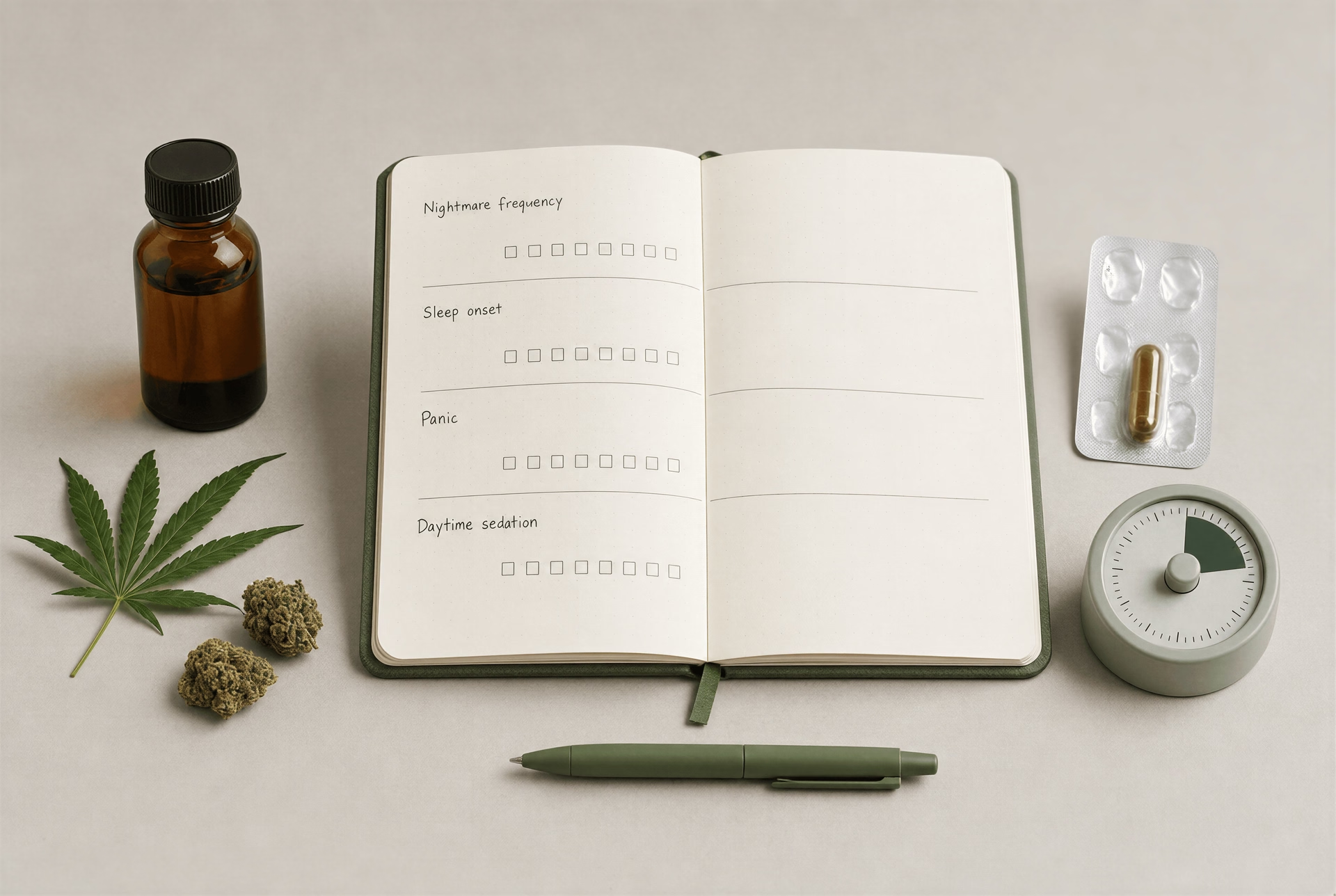
Route of administration, dose conservatism, and symptom tracking
If cannabis is being considered despite these limits, route and dosing matter a lot. Inhaled products act quickly, which can make them tempting for panic or sleep onset, but they also create faster reinforcement, easier overuse, and sharper dose-to-dose swings. Oral products take longer, last longer, and are easier to misjudge because people often redose too soon. Either route can go wrong if impatience drives escalation.
A cautious approach means one change at a time. Avoid jumping between products, routes, and cannabinoid ratios in the same week. Avoid high-THC starting points. If a clinician is involved, ask for clear guidance on initial dose, timing, and what counts as a failed trial. If no clinician is available, that is not ideal; it means the margin for error is smaller, not larger.
THC:CBD ratio deserves close attention. For PTSD patients worried about panic, dissociation, or cognitive fog, a THC-dominant product is usually the wrong place to start. CBD may soften some THC effects in some contexts, but it is not a guaranteed buffer, and “contains CBD” tells you very little without an actual amount. CBN deserves even more skepticism. Its reputation as a sleep aid has run ahead of the evidence.
Keep the initial dose low. Stay there long enough to observe effects before changing anything. Rapid escalation is one of the easiest ways to turn a trial into a problem. If the first few nights improve sleep but daytime concentration worsens, that matters. If nightmares drop from five nights a week to two but morning anxiety spikes, that matters too. PTSD treatment is not just about sedation.
Symptoms and adverse effects to track during a cautious trial
- nightmare frequency and intensity
- sleep onset time and nighttime awakenings
- panic episodes
- daytime anxiety and hyperarousal
- dissociation or paranoia
- attention, memory, and reaction time
- next-day sedation
- cravings, tolerance, and withdrawal signs such as irritability or rebound insomnia
Tracking should be specific and boring. That is good. Use a notebook or app and record: - nightmare frequency and intensity - sleep onset time and nighttime awakenings - panic episodes - daytime anxiety and hyperarousal - dissociation or paranoia - attention, memory, and reaction time - next-day sedation - cravings, tolerance, and withdrawal signs such as irritability or rebound insomnia
This kind of tracking helps separate real benefit from expectancy, short-term sedation, or habit formation. It also gives a clinician something concrete to review.
When to stop, when to seek help, and when cannabis is the wrong tool
Stop the trial if symptoms clearly worsen. That includes more panic, increased paranoia, stronger dissociation, more irritability, loss of motivation, worsening depression, or impaired functioning at work, school, or home. Stop if the dose keeps creeping up without stable benefit. Stop if sleep only improves when intoxication gets heavier. That pattern often ends badly.
Seek medical help quickly if cannabis use is followed by chest pain, severe panic that does not settle, suicidal thinking, psychotic symptoms, dangerous behavior, or inability to sleep for days. If severe PTSD is present with suicidality, self-harm, violent impulses, or profound functional collapse, cannabis should not be the sole treatment. It is the wrong tool for that job.
Cannabis is also a poor fit when someone is avoiding effective care and using it as a shield against trauma work. Some patients do report that symptom relief helps them engage in therapy. Others drift away from therapy because short-term relief becomes the whole strategy. Be honest about which pattern is happening.
Finally, legality matters, but legal access is not the same as medical endorsement. In the U.S., federal law still classifies cannabis as Schedule I even though many states list PTSD as a qualifying condition. Germany and the UK also have access pathways that do not settle the evidence question. Patients should know the law where they live, especially around possession, driving, employment, and travel.
This is general educational information, not personal medical advice. If PTSD symptoms are severe, worsening, or tied to safety concerns, a licensed clinician should be involved. The most evidence-aware position is not “never” and not “of course.” It is narrower: cannabis is not established as a reliable treatment for overall PTSD, but a cautious, clinician-guided trial may be reasonable for selected refractory symptoms such as nightmares or sleep disturbance after standard options have been seriously tried.
What research needs to answer next
PTSD is common, disabling, and often hard to treat. The National Center for PTSD estimates that about 6 in 100 U.S. adults will develop it at some point, and women are more than twice as likely as men to do so. WHO puts lifetime exposure worldwide at 3.9%. That burden helps explain sustained interest in cannabis. It does not lower the standard of proof.
The next phase of research should stop asking the broadest possible question—“does cannabis help PTSD?”—as if smoked flower, oral CBD, nabilone, and mixed THC/CBD products were interchangeable. They are not. The first generation of studies treated them too loosely, and the result has been noise, expectancy effects, and claims that outran the data. The 2023 VA/DoD guideline was right to recommend against cannabis or cannabis derivatives for PTSD treatment on current evidence. At the same time, symptom-specific signals, especially around sleep and nightmares, are strong enough to justify sharper trials.
Which patients benefit, if any, and for which symptoms
This is the central unanswered question. Not whether “PTSD patients” as one broad group improve, but whether defined subgroups improve on defined symptom clusters.
The evidence for global PTSD reduction remains weak. Wilkinson et al. (2021), the randomized placebo-controlled smoked cannabis trial in PLOS ONE, found that no active preparation significantly beat placebo in Stage 1, even though all groups improved. That does not close the book, but it should end any claim that current cannabis products have already proved themselves as general PTSD treatments.
Symptom-level research looks more promising. Jetly et al. (2014) found that nabilone improved trauma-related nightmares in a small double-blind crossover trial in military personnel. Earlier work by Fraser pointed in the same direction. That suggests a more useful research strategy: recruit patients with severe, refractory nightmares or sleep-maintenance insomnia rather than mixing them with participants whose main problem is avoidance, guilt, or emotional numbing.
Veteran populations deserve dedicated trials, but veteran demand is not efficacy data. A 2021 veteran survey found 40.9% past-year cannabis use; the 2024 IAVA survey found 57% used cannabis in the prior year, with sleep and stress relief as leading reasons. Those numbers show demand, not confirmed benefit.
Sex differences also need direct study. Women develop PTSD at higher rates than men, yet many cannabis studies remain too small to assess whether symptom response, adverse effects, or dependence risk differ by sex. Hormonal influences, trauma type, and co-occurring anxiety may all matter. So might biology. Biomarker-guided treatment is still early, but FAAH variation, anandamide signaling, sleep architecture, and fear-extinction markers could help identify who is more likely to benefit—or deteriorate.
Product standardization, dose-response, and long-term outcomes
The field still lacks basic pharmacology answers that should have come first.
Researchers need to isolate the role of THC/CBD ratio. THC may reduce arousal or aid sleep at one dose and worsen anxiety, panic, dissociation, or paranoia at another. CBD may reduce anxiety in some experimental settings, but often at oral doses far above what many patients actually use. Elms et al. (2019) reported improvement in a small uncontrolled CBD case series, yet that study cannot establish efficacy, optimal dose, or durability.
Route matters too. Oral cannabinoids have slower onset and longer duration; inhaled products act quickly but produce sharper peaks, more variable dosing, and stronger expectancy effects. Trials should compare oral versus inhaled administration directly rather than burying them under the single label “medical cannabis.”
Long-term outcomes are just as important as short-term symptom relief. Does nightly THC improve sleep for two weeks but fragment sleep architecture after months? Does initial benefit turn into tolerance, dose escalation, withdrawal-related insomnia, or cannabis use disorder? These are not side issues. In PTSD populations, dependence risk, cognitive effects, and poorer engagement with trauma-focused psychotherapy may decide whether a treatment is clinically acceptable.
Why future PTSD cannabis trials must be better than the first generation
Many early studies were underpowered, loosely controlled, and vulnerable to expectancy. Sue Sisley and colleagues helped push the field toward randomized PTSD trials, which mattered. But the broader lesson from that era is methodological, not promotional: if participants can easily guess whether they received THC, placebo control becomes shaky fast.
Future trials need narrower entry criteria, pre-registered symptom targets, active-placebo strategies where feasible, and longer follow-up. They should measure not only CAPS-5 total scores but also nightmares, sleep continuity, hyperarousal, daytime anxiety, dissociation, functioning, and psychotherapy participation. They should separate THC-dominant, CBD-dominant, balanced THC/CBD, and synthetic cannabinoid approaches instead of lumping them together.
They also need to exclude sweeping claims that the data cannot carry. O’Neil et al. (2021) concluded that evidence was insufficient to support cannabis for improving overall PTSD symptoms and flagged harms in some cohorts. That remains the right baseline.
Key research questions the article says still need answers
- Which cannabinoid
- THC, CBD, balanced products, and synthetic agonists should not be lumped together.
- What dose
- Dose-response matters because effects can flip from calming to destabilizing.
- Which route
- Oral and inhaled products differ in onset, duration, peaks, and overuse risk.
- Which symptom
- Nightmares, sleep onset, hyperarousal, and global PTSD scores should be tested separately.
- Which patient
- Subgroups may differ by sex, trauma type, dependence risk, and biomarker profile.
- What long-term cost
- Trials need to track tolerance, withdrawal, cognition, and therapy engagement, not only short-term relief.
The strongest research agenda is not “more cannabis studies” in the abstract. It is better questions: Which cannabinoid, at what dose, by what route, for which symptom, in which patient, for how long, and at what cost to dependence risk and psychotherapy outcomes? Until trials answer that level of detail, the field will keep producing headlines larger than its evidence. Narrower questions are what progress looks like here.
References
- [1] The Short-Term Impact of 3 Smoked Cannabis Preparations Versus Placebo on PTSD Symptoms: A Randomized Cross-Over Clinical Trial. PLOS ONE, 2021. https://journals.plos.org/plosone/article?id=10.1371/journal.pone.0246990
- [2] Benefits and Harms of Plant-Based Cannabis for Posttraumatic Stress Disorder: A Systematic Review. Psychiatric Services, 2021. https://psychiatryonline.org/doi/10.1176/appi.ps.202000189
- [3] The Efficacy of Nabilone, a Synthetic Cannabinoid, in the Treatment of PTSD-Associated Nightmares: A Preliminary Randomized, Double-Blind, Placebo-Controlled Cross-Over Design Study. Psychoneuroendocrinology, 2015. https://pubmed.ncbi.nlm.nih.gov/25467221/
- [4] Cannabidiol in the Treatment of Post-Traumatic Stress Disorder: A Case Series. The Journal of Alternative and Complementary Medicine, 2019. https://pubmed.ncbi.nlm.nih.gov/30624194/