












Why cannabis and sex is harder to study than headlines suggest
The standard story says cannabis makes sex better. That is too simple to be reliable.
Separate outcomes often blurred under “better sex”
- Desire
- Wanting sex or feeling interested in sexual activity.
- Arousal
- The subjective and physiological build-up of sexual excitement.
- Erection / lubrication
- Genital function, which may not track with desire or pleasure.
- Orgasm
- Climax quality or timing, which can improve, delay, or become harder to reach.
- Pain
- Discomfort during sex, including dyspareunia or pelvic floor tension.
- Intimacy
- Felt closeness, trust, and emotional connection with a partner.
- Relationship satisfaction
- How the encounter is judged afterward, including communication and mutual responsiveness.
What the evidence actually supports is narrower: cannabis can change how sex feels, and for some people that change is positive, especially at lower THC doses or when anxiety is a major barrier. That is not the same as proving an aphrodisiac effect, and it is not the same as showing better sexual function. Popular coverage often merges desire, arousal, erection, lubrication, orgasm, pain, intimacy, and relationship satisfaction into one fuzzy outcome called “better sex.” Those are separate endpoints. They do not always move together.
A person may report stronger touch, less self-consciousness, and more emotional openness, while also having delayed orgasm, worse erections, more vaginal dryness, poorer coordination, or weaker memory of the encounter. Another may have less pelvic pain and more desire but no change in orgasm. A couple may feel more connected while communicating less clearly. The headline version misses that these are different domains with different biology and different risks.
Cannabis simply improves sex. Limited evidence
The popular claim that cannabis simply 'improves sex'
That claim leans heavily on enthusiastic self-report and ignores dose, sex differences, route of administration, and context. THC acts at CB1 receptors in the hypothalamus, amygdala, nucleus accumbens, hippocampus, prefrontal cortex, spinal cord, and peripheral reproductive tissues. Those circuits regulate reward, anxiety, attention, pain, hormonal signaling, and motor control. So the same drug can plausibly increase subjective arousal in one setting and disrupt performance in another.
The observational literature reflects that split. Andrew J. Sun and Michael L. Eisenberg’s 2017 analysis of the U.S. National Survey of Family Growth found that current marijuana users reported more frequent sex than never-users: 7.1 versus 6.0 times in the prior four weeks. That finding says nothing about causation or quality. People who use cannabis may differ from non-users in age, relationship patterns, health status, sensation seeking, or willingness to disclose sexual activity.
Female-focused survey studies are often cited as proof. Becky K. Lynn and colleagues reported in Sexual Medicine in 2019 that more frequent marijuana use was associated with higher Female Sexual Function Index scores, and another 2019 cross-sectional study found 2.13 times higher odds of satisfactory orgasm among women who used marijuana before sex. Those are interesting signals, not final answers. Men show a less flattering pattern in some datasets: a 2019 meta-analysis in The American Journal of Men’s Health found a higher prevalence of erectile dysfunction among cannabis users, though the studies were heterogeneous and causality remained uncertain.
| Domain | Examples in the article | Possible direction with cannabis |
|---|---|---|
| Subjective pleasure | Relaxation, emotional closeness, stronger touch, less self-consciousness | May improve for some users, especially at lower THC doses |
| Physiological sexual function | Erection quality, lubrication, genital vasocongestion, orgasm timing, pelvic floor response | Mixed or worsened at higher doses; not reliably improved |
| Relational quality | Communication, cue-reading, next-day appraisal, consent clarity | Can improve or degrade depending on dose, context, and mismatch between partners |

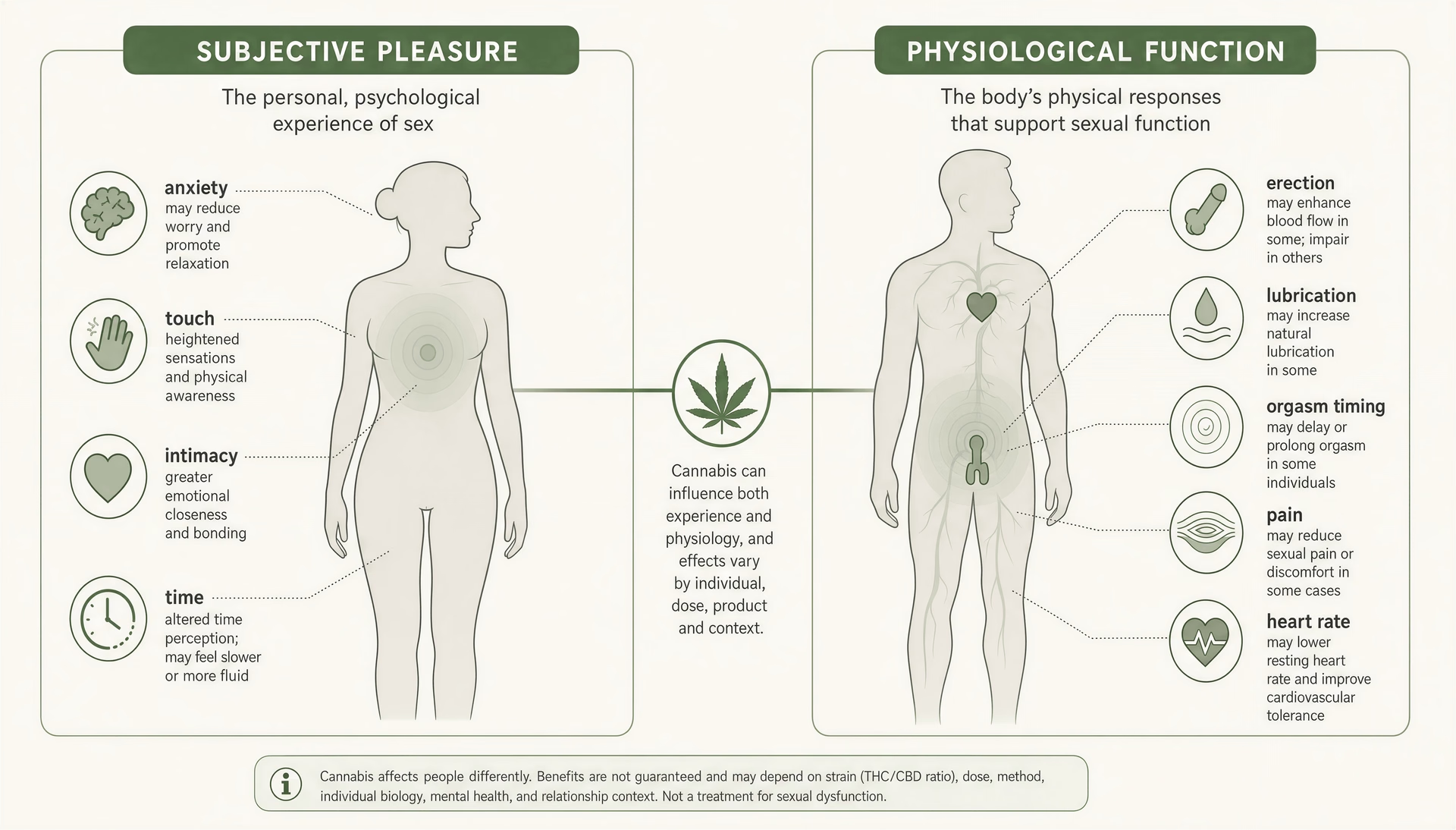
Subjective pleasure versus physiological sexual function
This distinction is the center of the whole topic. Subjective pleasure includes feeling relaxed, absorbed, emotionally close, or more sensitive to touch. Physiological sexual function includes erection quality, vaginal lubrication, genital vasocongestion, orgasm timing, pelvic floor response, and cardiovascular tolerance.
THC may help subjective experience through low-dose anxiolysis, altered time perception, and increased salience of sensory input. It may also reduce pain for some people, including those with dyspareunia or pelvic floor tension. But higher doses are more likely to impair attentional control, increase heart rate, produce paranoia, and disrupt coordination. CBD is different pharmacologically; its role appears more related to anxiety modulation than direct libido enhancement.
That is why “I felt more turned on” cannot be treated as the same finding as “sexual function improved.” They are related. They are not interchangeable.
Why surveys dominate this literature
Because the clean study design is hard to do. Randomized controlled trials on cannabis and partnered sex face obvious barriers: legal restrictions, product variability, blinding problems, expectancy effects, privacy concerns, ethical review hurdles, and the difficulty of standardizing sexual context. Researchers cannot easily control attraction, relationship quality, menstrual cycle phase, pelvic pain, baseline anxiety, erectile physiology, prior cannabis exposure, or whether alcohol was also used.
So the field relies on cross-sectional surveys, retrospective recall, and convenience samples. Those methods are useful for generating hypotheses, but they are vulnerable to selection bias and memory distortion. People who already like cannabis may expect sex to feel better on it, then remember the positive encounters more vividly than the awkward ones. Surveys also tend to oversample current users rather than people who stopped because they disliked the effects.
The result is a literature with real signals but weak causal certainty. That is enough to reject the cliché. Cannabis does not simply improve sex. It changes multiple parts of sexual experience at once, sometimes in opposite directions.
The cannabinoid mechanisms most relevant to sexual experience
Sexual experience is not one thing. It includes wanting sex, feeling safe enough for arousal, noticing touch as pleasurable, sustaining physiological function, reaching orgasm, and interpreting the encounter afterward as connecting or disappointing. Cannabinoids can shift several of those layers at once, which is why people often report stronger sensation while studies on performance and function stay mixed. The cleanest mechanistic story centers on THC, CB1 receptors, and dose. Low doses can reduce threat salience and heighten sensory focus in some users; higher doses more often disrupt attention, coordination, cardiovascular comfort, and sexual reliability. CBD sits in a different category. It may matter, but not in the same direct way.

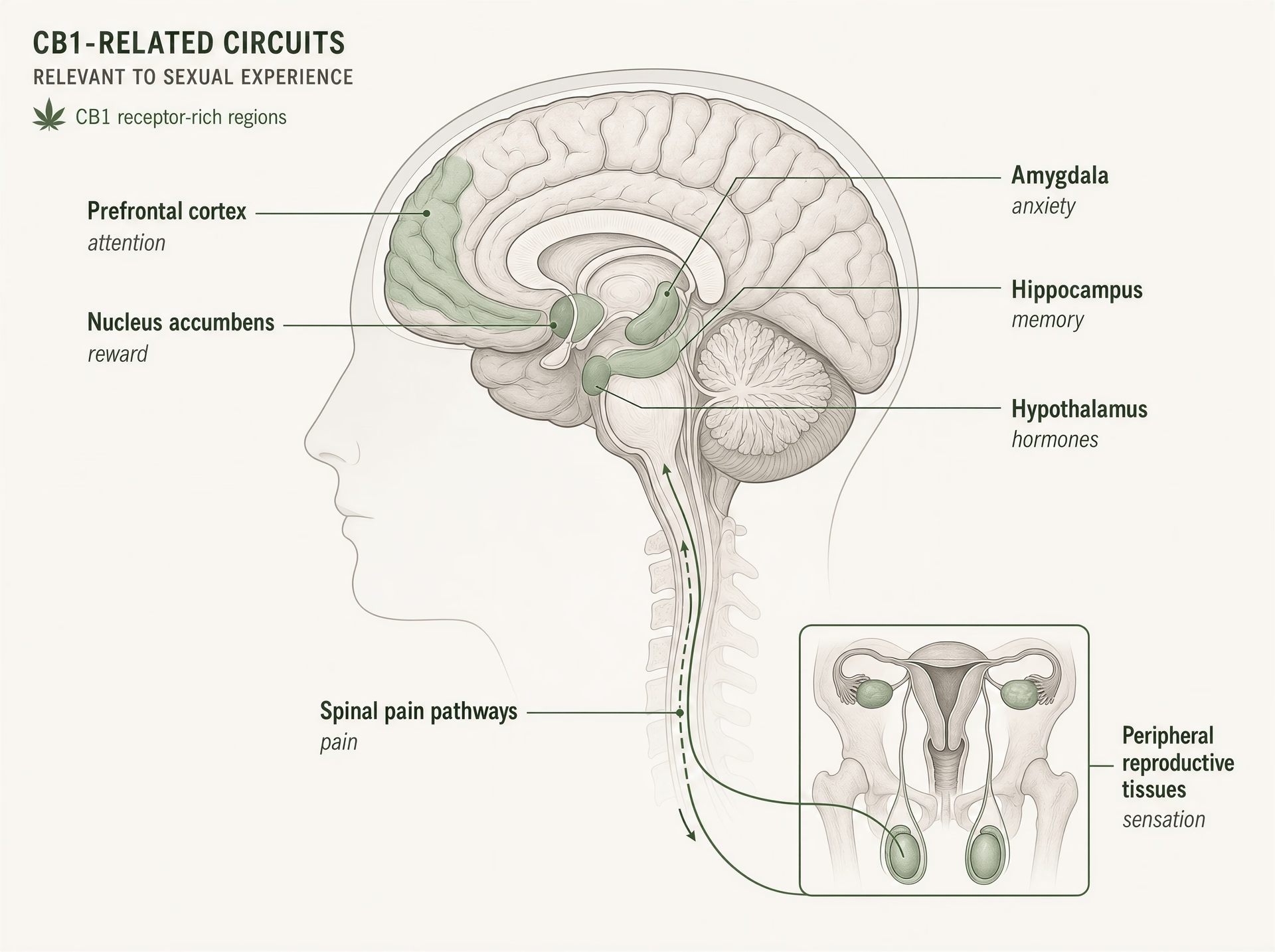
CB1 signaling in reward, anxiety, and sensory salience
CB1 receptor A cannabinoid receptor found widely in the brain and some peripheral tissues. In this article, CB1 signaling is central to THC's effects on anxiety, reward, sensory salience, memory, and sexual experience.
THC is a partial agonist at CB1 receptors, which are dense in brain circuits that matter for sex: the amygdala, nucleus accumbens, prefrontal cortex, hippocampus, hypothalamus, and spinal pathways involved in pain and bodily sensation. That receptor map helps explain why cannabis can feel erotically amplifying without being a dependable sexual-performance drug.
Start with anxiety. The amygdala helps assign threat and emotional significance. In some people, low-dose THC dampens anxious vigilance enough to reduce self-monitoring and performance worry. That can matter during sex, where distraction is often the enemy of arousal. If a person stops scanning for embarrassment, pain, or failure, touch may feel more inviting. But the same circuitry flips at higher doses. THC can increase paranoia, bodily unease, and misinterpretation of cues. The “relaxing” effect is real for some users and highly dose-limited.
Mechanism described in the article, step by step
- CB1 activation THC activates CB1 receptors in brain regions relevant to sex, including the amygdala, nucleus accumbens, hypothalamus, hippocampus, and prefrontal cortex.
- Neurotransmitter modulation CB1 signaling changes GABA and glutamate release.
- Dopamine salience shift Those changes shape dopamine activity in mesolimbic circuits, affecting wanting, salience, and motivation.
- Subjective sexual effects Attention may narrow toward touch, scent, music, and emotional tone, while time perception may feel stretched.
- Tradeoff at higher dose The same system can impair working memory, verbal responsiveness, cue-reading, coordination, and comfort.
Reward is the other major pathway. CB1 signaling modulates GABA and glutamate release, which then shapes dopamine activity in mesolimbic circuits including the nucleus accumbens. Dopamine is not a simple pleasure chemical; it is more about motivation, salience, and wanting. That matters because sex often improves not when sensation becomes objectively stronger, but when the brain tags sensation as worth pursuing and paying attention to. THC can narrow attention toward touch, music, scent, and emotional tone. It can also alter time perception, making moments seem elongated. Subjectively, that may feel like “more intensity,” even if genital blood flow or orgasm physiology is not improved.
The prefrontal cortex and hippocampus complicate the picture. The prefrontal cortex helps with planning, judgment, and self-regulation; the hippocampus helps encode memory and context. THC can loosen inhibitory self-consciousness, which some people experience as freedom and spontaneity. It can also impair working memory, verbal responsiveness, and cue-reading. During partnered sex, that tradeoff matters. A person may feel more immersed in sensation yet less precise in communication. That is one reason subjective arousal and relational quality do not always move together.
The female survey associations are plausibly explained by anxiety reduction, sensory amplification, and attentional narrowing. Preliminary evidence
This is also why observational studies should be read carefully. The 2019 Sexual Medicine studies by Becky K. Lynn and colleagues found associations between more frequent cannabis use and higher Female Sexual Function Index scores, and between pre-sex use and 2.13 times higher odds of satisfactory orgasm. Those findings are plausible through anxiety reduction, sensory amplification, and attentional narrowing. They do not prove a direct pharmacologic enhancement of sexual physiology.
Hypothalamic and hormonal pathways
The hypothalamus links brain state to hormones, autonomic tone, and reproductive signaling, and CB1 receptors are present there. That gives THC a route into endocrine systems relevant to libido, orgasm, lactation-related signaling, and fertility. The mechanistic plausibility is strong. Human sexual-outcome evidence is thinner.
THC appears able to influence gonadotropin-releasing hormone signaling, which can affect downstream luteinizing hormone, follicle-stimulating hormone, testosterone, and estradiol dynamics. Acute and chronic exposure may not act the same way, and effects differ by sex, dose, baseline hormone status, and timing within the menstrual cycle. This is one reason broad claims about cannabis as an aphrodisiac are weak. A compound that may reduce anxiety in the short term can also, through repeated exposure or higher doses, interfere with hormone systems tied to reproductive function.
Prolactin and oxytocin are also relevant. THC has been linked in experimental and animal literature to shifts in prolactin and oxytocin signaling. Oxytocin matters for bonding, trust, and orgasm-related social effects, while prolactin is tied to sexual satiety and reproductive endocrine regulation. The problem is not whether these pathways exist; they do. The problem is that translating them into predictable bedroom outcomes in humans has been difficult. A couple may feel emotionally open after cannabis because anxiety fell and attention to touch increased, not because oxytocin rose in a clean, measurable, behaviorally dominant way.
Fertility research adds caution. The American Society for Reproductive Medicine’s 2020 committee opinion concluded that marijuana use is associated with adverse reproductive effects, including possible impacts on sperm parameters and ovulatory function. That does not answer whether one evening of THC will help or hinder orgasm. It does tell us the endocannabinoid system intersects with reproductive biology in ways that are not uniformly beneficial.
Peripheral effects in reproductive tissues and pain pathways
Sex is not only in the brain. Endocannabinoid signaling also affects peripheral nerves, smooth muscle, vascular tone, and pain processing. CB1 receptors appear in spinal pathways and reproductive tissues, which helps explain why cannabis can reduce pain for some people and impair function for others.
The pain angle is important. For people with dyspareunia, pelvic floor tension, endometriosis-related pain, or anxiety-amplified discomfort, THC’s central analgesic effects and descending modulation of pain signals may improve the experience enough to make arousal possible. Some users describe less guarding, less anticipatory pain, and easier orgasm because the body is not bracing. That is plausible.
But there is no free gain here. Sexual function depends on coordination, autonomic balance, and blood flow. Higher-dose THC can produce tachycardia, dizziness, dry mouth, and a general sense of physiologic awkwardness that is not exactly erotic. In men, concern about erectile reliability is justified. A 2019 meta-analysis in The American Journal of Men’s Health reported erectile dysfunction prevalence of 69.1% in cannabis users versus 34.7% in controls, though the studies were heterogeneous and causality was uncertain. That finding should not be overstated, but it should not be ignored either. In women, some report less pain and better orgasm; others report dryness, delayed orgasm, or blunted responsiveness. The same drug can relieve one bottleneck while creating another.
Route of administration matters because timing matters. Inhaled THC arrives quickly, making it easier to match effect to intention. Oral products are slower and less predictable, so they are more likely to overshoot into distraction or sedation right when responsiveness is needed.
| Feature | THC | CBD |
|---|---|---|
| CB1/CB2 profile | Direct driver of intoxication; partial agonist at CB1 | Low affinity for CB1 and CB2; acts more indirectly |
| Typical relevance in this article | Changes perception, reward salience, time distortion, attentional narrowing | More likely to matter through anxiety reduction, pain modulation, or inflammation |
| Sex-related expectation | May alter the center of the experience, for better or worse | Not a substitute for THC's sensory and temporal effects |
| Main risk at higher exposure | Anxiety, distraction, tachycardia, poorer sexual reliability | Less direct evidence for libido enhancement; effects likely narrower |
Why THC and CBD should not be treated as interchangeable
THC and CBD are often lumped together under “cannabis effects,” but that obscures the main pharmacology. THC directly drives intoxication and most of the acute changes in perception, reward salience, time distortion, and attentional narrowing that people associate with sex on cannabis. CBD does not reproduce that profile. It has low affinity for CB1 and CB2 and appears to act indirectly through multiple systems, including serotonin signaling, transient receptor potential channels, adenosine effects, and modulation of inflammatory pathways.
That means CBD’s sexual relevance is probably narrower and less dramatic. If CBD helps, it is more likely through anxiety reduction, pain modulation, or decreased inflammation than through any direct enhancement of libido or orgasm intensity. For someone whose sexual difficulties are driven by fear, hyperarousal, or chronic pain, that may still matter a lot. For someone expecting the sensory and temporal changes associated with THC, CBD is not a substitute.
This distinction also clarifies the evidence base. The strongest support for cannabis-related sexual changes involves subjective perception under THC-rich exposure, not consistent improvement in physiological performance. CBD may be useful around the edges. THC changes the center of the experience, sometimes for better, sometimes not.
What the human research actually shows about libido, arousal, and orgasm
The human evidence does not support the blanket line that cannabis is an aphrodisiac. It supports something narrower and more interesting: cannabis can shift sexual experience, often through anxiety reduction, altered sensory salience, and pain modulation, but those shifts do not reliably translate into better physiological sexual function. The distinction matters. A person can feel more desire, more absorbed in touch, or more satisfied with orgasm while also having less reliable erection quality, more vaginal dryness, slower reaction time, and worse timing.
Most of the studies people cite are observational. They ask users what tends to happen, then look for patterns. That can still be useful, especially when the same pattern appears across datasets. But it is not the same as demonstrating that cannabis itself caused the outcome.
Female sexual function studies
The most frequently cited work on women comes from Becky K. Lynn and colleagues. In a 2019 study in Sexual Medicine, Lynn's team surveyed women about marijuana use and sexual function using the Female Sexual Function Index, or FSFI. Women who reported more frequent marijuana use had higher FSFI scores overall, with apparent gains in desire, arousal, orgasm, and satisfaction. They also reported less pain in some cases. That finding fits a plausible mechanism: THC can lower anxiety at lower doses, and cannabinoids may reduce pelvic pain or muscle guarding in some users. For women whose sexual difficulties are tied to anxiety, hypervigilance, or pain, that combination can matter.
Another 2019 Sexual Medicine paper, also associated with Lynn's group, focused more specifically on orgasm. Women who reported using marijuana before sex had 2.13 times the odds of reporting a satisfactory orgasm compared with those who did not use marijuana before sex. That is a striking number, and it helps explain why popular coverage ran with the idea that cannabis improves sex for women.
Still, these are not randomized trials. They rely on self-report and retrospective recall. Women who choose to use cannabis before sex may already be more comfortable with sex, more open to experimentation, less inhibited, or more likely to expect a benefit. Any of those factors could raise satisfaction scores independent of the drug.
The female data are also better at capturing subjective quality than hard physiology. FSFI domains are valuable, but they still reflect lived experience rather than direct measures of genital blood flow, lubrication, or orgasm latency. That matters because cannabis can improve one part of the experience while impairing another. Some women report reduced pain and easier orgasm. Others report dryness, distraction, or delayed climax, especially at higher THC doses. Those opposite outcomes are not contradictions. They are dose effects and person effects.
Mechanistically, the pattern makes sense. CB1 receptors are present in the amygdala, hypothalamus, prefrontal cortex, nucleus accumbens, spinal pathways, and peripheral reproductive tissues. THC can change dopamine signaling, stress reactivity, time perception, and attentional filtering. At a modest dose, that may reduce self-consciousness and amplify touch. At a high dose, the same system can tip into dissociation, tachycardia, paranoia, or simple cognitive drift. Sexual arousal is not just about feeling relaxed. It also requires attention, coordination, and body awareness.
Male sexual function and performance findings[1] Relationship Between Cannabis Use and Erectile Dysfunction: A Systematic Review and Meta-Analysis. Rongmu Zhang, Xiao-yu Tang, Tian-bao Li, et al.. American Journal of Men's Health, 2019.
The male literature is less flattering. The best-known synthesis is a 2019 meta-analysis in The American Journal of Men's Health that pooled five case-control studies on erectile dysfunction and cannabis use. The headline result was hard to ignore: erectile dysfunction was reported in 69.1% of cannabis users compared with 34.7% of controls. The authors found significantly increased odds of ED among users.
This does not prove that cannabis causes ED in every case, and the meta-analysis had major limitations. Heterogeneity was high. The included studies were few, methods differed, confounding was substantial, and definitions of use were not consistent. Tobacco use, cardiovascular health, alcohol intake, depression, and other factors can all distort the picture. Even so, the direction of the evidence is notable. Human data do not show consistent enhancement of male sexual performance. If anything, they lean the other way.
That split between subjective arousal and performance reliability is one of the most important takeaways in the whole topic. Men may report increased desire, more intense sensations, or stronger emotional connection while also finding erections less dependable. THC can interfere with vascular and autonomic processes involved in erection. It can also raise heart rate, narrow attentional control, and worsen timing. Some men describe lower anxiety and easier engagement. Others describe losing the thread halfway through sex.
Dose likely explains part of this. Lower-dose THC may help anxious men who are overly focused on performance. Higher-dose THC is much more likely to impair erection quality, delay orgasm, or disrupt coordination. Route of administration matters too. Inhaled THC acts quickly and may be easier to time. Oral products have delayed onset and longer duration, which raises the risk of overshooting into a level of intoxication that is bad for sex.
This is also where fertility and hormone pathways enter the discussion. The American Society for Reproductive Medicine's 2020 committee opinion warned that marijuana is associated with adverse reproductive effects, including possible effects on sperm parameters and ovulatory function. Fertility is not the same thing as sexual performance, but the overlap in endocrine and reproductive signaling makes the caution relevant. The same cannabinoid pathways that may dampen anxiety can also affect gonadotropin-releasing hormone, prolactin, and other systems tied to sexual function.
Sex frequency data versus sexual quality data[2] Association Between Marijuana Use and Sexual Frequency in the United States: A Population-Based Study. Andrew J. Sun, Michael L. Eisenberg. The Journal of Sexual Medicine, 2017.
One of the most cited studies in media coverage is the 2017 Stanford analysis by Andrew J. Sun and Michael L. Eisenberg, published in the Journal of Sexual Medicine. Using U.S. National Survey of Family Growth data, they found that current marijuana users reported having sex more often than never-users. The average was 7.1 sexual encounters in the prior four weeks for current users versus 6.0 for never-users.
That is real epidemiologic data, and the association appeared in both men and women. But it does not say what many headlines implied. More sex is not automatically better sex. Frequency says nothing about orgasm quality, pain, erectile reliability, lubrication, partner satisfaction, or emotional intimacy. It also cannot tell us whether cannabis increased sexual activity or whether people with higher baseline sexual activity are more likely to use cannabis.
This distinction gets blurred constantly. The Stanford paper addressed frequency. The Lynn studies addressed self-reported quality domains. Those are different outcomes, and they should not be merged into one claim.
A person could have sex more often because they are more socially active, more impulsive, younger, less inhibited, or in a relationship context where cannabis and sex are both more common. None of that proves a direct aphrodisiac effect. Epidemiology can show correlation. It cannot settle motive, mechanism, or quality.
Expectancy effects and self-selection bias
This field is loaded with expectancy effects. If someone believes cannabis will make touch richer, reduce anxiety, and help orgasm, that belief alone can shape the experience. Sex is highly responsive to mindset. Placebo effects are not a minor technical issue here; they may be central.
Self-selection is just as important. The people most likely to use cannabis before sex may be the very people predisposed to enjoy it in that context. They may have had an early positive experience and repeated it. Those who became anxious, dry, distracted, or unable to perform may have stopped using it before sex and disappeared from the "user before sex" category. That creates a built-in bias toward favorable reports.
This is why survey enthusiasm has to be read carefully. Human research does support saying that cannabis improves sexual experience for some people under some conditions, especially when anxiety or pain is part of the problem and the dose stays low. It does not support saying that cannabis reliably improves libido, arousal, or orgasm across the board. The strongest evidence is for changed perception and altered satisfaction. The evidence for improved physiological performance is weak, and in men it may point toward harm rather than benefit.
So the popular slogan gets the story backward. The main effect is not a universal boost in sexual function. It is a context-dependent shift in how sex feels, filtered through dose, expectation, baseline anxiety, pain, and sex-specific physiology.
Dose is the hinge: when cannabis may help and when it starts to interfere
Biphasic pattern A dose-response pattern in which lower doses and higher doses push effects in different directions. In this article, lower THC exposure may reduce anxiety and increase sensory focus, while higher exposure more often disrupts function and judgment.
Dose is the hinge that popular cannabis-and-sex coverage usually ignores. That omission matters because the evidence does not support a simple “more cannabis, better sex” story. It points instead to a biphasic pattern: at lower THC exposure, some people feel less anxious, less self-monitoring, and more absorbed in touch; at higher exposure, the same drug is more likely to disrupt attention, timing, lubrication, erection reliability, orgasm control, and emotional reciprocity. Subjective arousal may rise while actual sexual performance worsens. Those are not the same thing.
This distinction helps make sense of why survey studies can sound so positive. Becky K. Lynn and colleagues reported in Sexual Medicine in 2019 that women with more frequent marijuana use had higher Female Sexual Function Index scores, including desire, orgasm, and satisfaction. Another 2019 Sexual Medicine study found that women who used marijuana before sex had 2.13 times higher odds of reporting a satisfactory orgasm. At the same time, a 2019 meta-analysis in The American Journal of Men’s Health found a higher prevalence of erectile dysfunction among cannabis users than non-users, though the studies were heterogeneous and could not prove causation. The cleanest way to reconcile findings like these is not to pretend they say the same thing. They do not. Many studies capture how sex feels. Far fewer show that cannabis reliably improves physiology.
Low-dose anxiolysis and sensory amplification
At lower doses, THC can help some people by reducing inhibition rather than by directly boosting libido. CB1 receptors are widely expressed in the amygdala, prefrontal cortex, nucleus accumbens, hippocampus, hypothalamus, spinal cord, and peripheral reproductive tissues. Through those circuits, THC alters GABA and glutamate signaling, changes dopamine salience, and can soften threat perception. For a person whose main barrier to sex is anxiety, body image vigilance, pain anticipation, or obsessive self-monitoring, that shift can matter.
This is where the “weed made sex better” reports often come from. Not necessarily from stronger genital response, but from less interference. Less rumination. Less spectatoring. More immersion in sensation.
Time perception may also change. Touch can seem slower, warmer, more textured. That can be helpful for couples focused on sensuality rather than performance metrics. Some people with pelvic pain, vaginismus, or hypertonic pelvic floor symptoms also report that cannabis reduces guarding and discomfort enough to make penetration or orgasm easier. CBD may matter here for anxiety modulation, though evidence for direct libido enhancement is weak. THC is still the main psychoactive driver of altered sensation.
Even then, route matters. Inhaled THC has a rapid onset and a narrower timing window, which means a user may be better able to match the effect to sexual activity. Oral THC is slower, less predictable, and easier to overdo. Many of the “this started well and then went sideways” experiences are edible stories.
None of this means cannabis is an aphrodisiac in any stable biological sense. The 2017 Stanford analysis by Andrew J. Sun and Michael L. Eisenberg, using U.S. National Survey of Family Growth data, found that current users reported more frequent sex than never-users, 7.1 versus 6.0 times in the prior four weeks for women, with a similar pattern in men. That is interesting. It is not proof that cannabis increased desire, improved function, or strengthened relationships.
High-dose impairment, distraction, and anxiety
Once the dose rises, the upside often flips. This is the other half of the biphasic pattern, and it is the half that gets minimized.
Higher THC doses are more likely to produce tachycardia, dry mouth, narrowed attentional control, paranoia, and derealization. None of that is good for sex. Lubrication may suffer. Erections may become less reliable. Orgasm may be delayed past the point of pleasure, or become hard to reach because attention fragments and bodily coordination drops. Some users feel intensely aroused in their head while their body stops cooperating. That gap can be frustrating and confusing.
Emotional attunement can degrade too. Being intoxicated is not the same as being present. One partner may feel deeply affectionate while becoming less responsive to cues, less able to track pacing, or less accurate in reading what the other person wants. Memory gaps and mismatched intoxication can create conflict afterward even when the encounter felt consensual in the moment. Subjective desire does not guarantee legal or ethical capacity for consent.
Alcohol makes this worse. Mixing the two raises the odds of overshooting into dizziness, nausea, and poor judgment. That is one reason educational guidance usually stresses starting low, avoiding alcohol, and waiting long enough for onset, especially with edibles.
Tolerance, chronic use, and changing effects over time
Tolerance changes the picture again. Occasional users often feel stronger sensory and anxiety effects from small amounts; chronic users may need more THC to notice the same shift, which pushes them closer to the impairment side of the curve. What worked the first few times may stop working, not because sex changed, but because the nervous system adapted.
Chronic exposure may also reshape outcomes in less favorable ways. Downregulation of CB1 signaling, altered reward processing, and interactions with hypothalamic-pituitary-gonadal pathways may affect motivation, orgasm patterning, and reproductive health. The American Society for Reproductive Medicine stated in 2020 that marijuana use is associated with adverse reproductive effects, including possible impacts on sperm parameters and ovulatory function. That does not mean every regular user will develop sexual dysfunction. It does mean long-term use should not be framed as consequence-free.
This helps explain why chronic users sometimes report very different outcomes than occasional users. For some, tolerance blunts anxiety enough that sex remains easier. For others, heavy routine use dulls spontaneity, reduces sensitivity unless intoxicated, or turns cannabis into a workaround for relationship problems that are not actually pharmacological. If intimacy only feels possible when one or both partners are high, that is a signal worth taking seriously.
The evidence supports a clear position: dose-response is central. Low doses may help some people feel safer, less inhibited, and more sensorially engaged. High doses more often interfere. Over time, tolerance can shift the line between those states, usually in the wrong direction.
Gender differences, hormones, and why the same product can feel different
Cannabis does not act on a blank slate. The same THC dose can feel calming, distracting, analgesic, erotic, numbing, or sexually disruptive depending on hormones, anatomy, baseline anxiety, pain status, cardiovascular response, and timing. That is why simple claims like “weed improves sex” fall apart under scrutiny. The strongest evidence points to altered subjective experience, not reliable improvement in genital function.
Sex-specific pharmacology and hormone interactions
Sex differences in cannabis response are real, but they should not be flattened into stereotypes. Not every woman responds one way, and not every man another. Still, the biology gives good reasons to expect different patterns.
CB1 receptors are expressed in the hypothalamus, amygdala, nucleus accumbens, prefrontal cortex, hippocampus, spinal cord, and reproductive tissues. Those regions help regulate reward, threat detection, attention, pain, and reproductive hormone signaling. THC, the main intoxicating cannabinoid, changes dopamine, GABA, and glutamate signaling and can also affect prolactin, oxytocin, and gonadotropin-releasing hormone pathways. That matters for desire, bonding, orgasm, and performance anxiety.
Female sexual response studies have often shown stronger positive signals than male studies, but that does not mean cannabis is inherently “better for women.” It means many female sexual complaints involve pathways cannabis may influence more directly: anxiety, pain, muscle guarding, hypervigilance, and pelvic floor tension. In a 2019 Sexual Medicine study by Becky K. Lynn and colleagues, women reporting more frequent marijuana use had higher Female Sexual Function Index scores, including desire, arousal, orgasm, and satisfaction. Another 2019 Sexual Medicine study found that women who used marijuana before sex had 2.13 times higher odds of reporting a satisfactory orgasm.
Those are interesting findings. They are not proof of causation. Both studies were cross-sectional and self-reported, which leaves plenty of room for expectancy effects, selection bias, and the fact that people who already enjoy sex on cannabis may keep using it that way.
Dose remains the hinge. Low-dose THC may reduce anxiety enough to increase subjective arousal and present-moment focus. Higher doses are much more likely to impair attention, coordination, lubrication, orgasm timing, and judgment. CBD is different. It does not reliably boost libido, but its anxiolytic profile may matter for some people whose sexual difficulties are driven more by tension than by low desire.
Route matters too. Inhaled THC hits quickly and is easier to time, but the window is shorter. Oral products take longer and are easier to overdo, which is a bad match for sex if the goal is reduced inhibition without cognitive fog.
Menstrual cycle, pelvic pain, and dyspareunia
Hormones change cannabis effects across the cycle. Estradiol can alter cannabinoid sensitivity, and some people report that the same amount of THC feels stronger at certain phases. Research here is thinner than it should be, but the clinical point is straightforward: cycle phase may change both intoxication and sexual response.
This matters most when sex is limited by pain. Dyspareunia, endometriosis-related pain, vaginismus, vulvodynia, and pelvic floor dysfunction are all conditions where anticipatory anxiety and muscle tension can amplify discomfort. If cannabis reduces pain perception or softens guarding, sex may feel easier and more pleasurable. That likely helps explain why women in survey studies often report stronger benefits than men. The benefit signal may be less about “aphrodisiac” action and more about lowering the barriers to arousal.
There are tradeoffs. THC can also cause dryness, altered body awareness, or delayed orgasm. Pain relief is not the same thing as improved tissue response. Someone may feel more willing while still having insufficient lubrication or irritation risk. That is one reason subjective arousal and physiological arousal should be kept separate.
Erectile physiology, ejaculation, and fertility concerns
Male sexual response is often more vulnerable to cannabis-related performance disruption than popular culture admits. Erection quality depends on vascular function, autonomic balance, attention, and anxiety control all working together. A little anxiolysis may help some men. Too much THC can push in the opposite direction: tachycardia, distraction, depersonalization, and reduced erectile reliability.
The clinical literature is mixed, but the warning signal is real. A 2019 meta-analysis in The American Journal of Men’s Health reported erectile dysfunction prevalence of 69.1% in cannabis users versus 34.7% in controls, though the included studies were heterogeneous and cannot establish cause. That figure should not be read as “cannabis causes ED in most men,” but it does undercut the idea that cannabis reliably improves male sexual performance.
Ejaculation timing is even less predictable. Some men report delayed ejaculation and longer duration; others report blunted sensation, loss of momentum, or difficulty climaxing. Again, dose explains a lot.
Fertility deserves a place in this discussion because the same endocannabinoid pathways tied to sexual experience also intersect with reproduction. The American Society for Reproductive Medicine stated in its 2020 committee opinion that marijuana use is associated with adverse reproductive effects, including possible impacts on sperm parameters and ovulatory function. Evidence on testosterone is inconsistent, but sperm concentration, motility, morphology, and timing of use around conception all matter. Even if the immediate topic is pleasure, reproductive findings still count. For some people, a substance that makes sex feel better while potentially worsening sperm quality or ovulatory function is not a trivial tradeoff.
Cannabis, intimacy, and relationships: the part sex studies often miss
Sex research on cannabis often fixates on orgasm, erection, lubrication, or frequency. That is too narrow. A couple’s sexual experience also runs through attention, trust, timing, empathy, touch, and the ability to say yes, no, slower, stop, or not tonight. On that terrain, cannabis can help some people feel less defended and more embodied. It can also create confusion fast.
The evidence is strongest for altered subjective experience, not a reliable upgrade in sexual performance. That distinction matters. Andrew J. Sun and Michael L. Eisenberg’s 2017 analysis of the U.S. National Survey of Family Growth found that current marijuana users reported more frequent sex than never-users, but that observational link did not show that cannabis improved relationship quality, communication, or mutual satisfaction. Frequency is not intimacy.
Emotional closeness, touch, and communication
Some couples report that cannabis slows mental chatter, heightens tactile attention, and makes affectionate touch feel richer. That claim is plausible biologically. CB1 receptors are distributed across the amygdala, prefrontal cortex, nucleus accumbens, hypothalamus, hippocampus, and spinal pathways involved in reward, stress regulation, salience, and sensory processing. Low doses of THC may reduce anxiety and shift attention away from self-monitoring and toward sensation. For people whose sex lives are blunted by pain, pelvic floor tension, or anticipatory anxiety, that can feel like greater closeness.
But “feels closer” is not the same as “communicates better.” Cannabis may increase perceived empathy while reducing precision. A partner may feel warmer, more emotionally open, more absorbed in touch. They may also become less verbally responsive, more distractible, or worse at tracking a complex conversation. CBD is a different case: its value, if any, is more likely to come from anxiety modulation than direct libido effects.
This is where sex studies often miss the point. Becky K. Lynn and colleagues reported in 2019 that women with more frequent marijuana use had higher Female Sexual Function Index scores, with some reporting gains in desire, orgasm, satisfaction, and pain reduction. Useful data, but still incomplete. A higher score does not tell you whether both partners felt heard, whether one person carried the emotional labor, or whether cannabis made intimacy easier only because it muted conflict temporarily.
Mismatched intoxication and relational friction
Cannabis can create asymmetry inside a couple. One partner feels soft, connected, and sensual; the other feels sober and suddenly responsible for pace, interpretation, and safety. That mismatch can breed resentment. The intoxicated partner may think they are being affectionate and fully present while actually missing cues, speaking less clearly, or moving too slowly or too intensely. The sober partner may feel pushed into the role of monitor rather than participant.
Dose and route matter here. Inhaled THC arrives quickly and gives a narrower window; oral products come on later and are more likely to overshoot. A couple may intend mild relaxation and end up with one person far more impaired than planned. Higher THC exposure is also where the sexual upside tends to fade. Jordan Tishler and other clinicians have repeatedly argued that cannabis effects are dose-dependent: a little may reduce anxiety, too much degrades attentional control, coordination, and responsiveness. That is consistent with the broader literature. In men, a 2019 meta-analysis in The American Journal of Men’s Health found higher erectile dysfunction prevalence among cannabis users, though the studies were heterogeneous and causation remained unsettled.


Consent, memory, and decision-making
This is the line that should not be blurred: feeling aroused, affectionate, or unusually trusting does not erase the need for clear, informed, ongoing consent. It does not lower the ethical standard. It does not change the legal standard.
THC affects the hippocampus and prefrontal cortex, the same systems involved in memory formation, judgment, impulse control, and sequencing events in time. At higher doses, people may misread cues, agree too quickly, forget what was said, or later retain only fragments. Memory fragmentation matters even when no one intended harm. If one partner remembers active enthusiasm and the other remembers fog, the relationship fallout can be serious.
Alcohol makes this worse. So do potent oral doses taken impatiently before onset. If cannabis is part of a couple’s sexual life, the sensible rule is plain: keep doses low, avoid mixing substances, check in repeatedly, and treat any uncertainty as a reason to pause. The cultural script that cannabis is an aphrodisiac is overstated. For intimacy, the real effect is less glamorous and more variable: under some conditions it can reduce anxiety and increase felt closeness, but it can just as easily impair the very communication and consent that intimacy depends on.
Risks, contraindications, and when cannabis is more likely to worsen sex
Cannabis does not fail sexually in one single way. It can make sex worse by pushing heart rate too high, making someone lightheaded when they stand up, drying mucosal tissues, scattering attention, delaying orgasm past the point of pleasure, or turning mild nerves into full panic. That matters because the strongest evidence for cannabis and sex is not that it reliably improves sexual performance. It is that THC can change perception, anxiety, and salience. Sometimes that helps. Sometimes it derails the whole encounter.
The risk rises with dose, with oral THC products that peak late, and with people who already know they are sensitive to panic, dissociation, or cardiovascular symptoms.
Cardiovascular strain, dizziness, and panic during sex
Sex is physical exertion. THC can add another physiological load on top of it. Acute cannabis exposure commonly raises heart rate, and in some people it also causes vasodilation and orthostatic symptoms: standing up quickly can produce a head rush, blurred vision, or near-fainting. During sex, that can feel dramatic. A person may interpret rapid heartbeat, chest awareness, or breathlessness as danger rather than arousal, which is one reason cannabis can flip from relaxing to frightening.
This is especially relevant for people prone to panic attacks. Low doses may reduce anxiety through CB1-mediated effects in circuits involving the amygdala and prefrontal cortex. Higher doses often do the opposite. They impair attentional control, distort time, and increase bodily self-monitoring. If someone already tends to dissociate under stress, THC can worsen detachment rather than increase presence. The result is not better intimacy. It is feeling far away, overstimulated, or suddenly unsafe.
Route matters. Inhaled THC arrives quickly, so the user usually knows within minutes whether the dose was tolerable. Edibles are harder to time around sex and easier to overshoot. A person may feel little at 30 minutes, take more, and then peak an hour later in the middle of sex with tachycardia, nausea, or paranoia.
Dryness, delayed response, and sexual dysfunction
Pleasure and function are not the same thing. Someone can feel mentally aroused while the body is less cooperative. That split helps explain why positive surveys and negative function data can coexist.
Women in the 2019 Sexual Medicine studies by Becky K. Lynn and colleagues often reported higher desire, orgasm satisfaction, and less pain. Yet those were self-reported, observational findings, not proof that cannabis improves genital arousal physiology. In practice, some people report more vaginal dryness, slower lubrication, dulled pelvic feedback, or delayed orgasm. Others feel intensely interested but too distracted to stay engaged.
In men, the downside signal is stronger. A 2019 meta-analysis in The American Journal of Men’s Health reported erectile dysfunction prevalence of 69.1% in cannabis users versus 34.7% in controls, though the included studies were heterogeneous and cannot prove THC caused the problem. Even so, the broad claim that cannabis is an aphrodisiac for male performance is too loose. Erectile reliability depends on vascular function, autonomic balance, attention, and anxiety regulation. High-dose intoxication can interfere with all four.
Heavy use may also blunt motivation, reduce responsiveness to partner cues, and stretch orgasm timing from pleasurable delay into frustrating nonresponse.
Interactions with alcohol, medications, and underlying conditions
Alcohol is the most common way cannabis sex goes sideways. Both substances impair judgment. Together they worsen dizziness, nausea, reaction time, memory gaps, and consent problems. Alcohol can increase the absorption of THC, making a familiar dose feel unexpectedly strong.
Medication context matters too. SSRIs already cause reduced libido, delayed orgasm, and genital numbing in some patients. Cannabis may not fix that and can compound delayed response or emotional flattening. Antihypertensives can add to postural dizziness and faintness. PDE5 inhibitors such as sildenafil do not have a simple forbidden interaction with cannabis, but combining them with THC in someone who is already vasodilated, anxious, or drinking can produce unpleasant cardiovascular sensations and unreliable performance.
People with arrhythmias, unstable cardiovascular disease, severe anxiety, trauma-related dissociation, bipolar disorder, or a history of psychotic symptoms should be especially cautious. The same goes for anyone with chronic pelvic pain or vulvodynia who finds cannabis reduces pain but also reduces lubrication or responsiveness. Symptom relief is not the same as improved sexual function.
The practical takeaway is plain: cannabis is more likely to worsen sex when the dose is high, the product is oral and mistimed, alcohol is involved, medications already affect blood pressure or orgasm, or the person has a baseline tendency toward panic, faintness, erectile difficulty, or dissociation.
Route of administration, timing, and practical guidance grounded in the evidence
The practical question is not just whether cannabis changes sex. It is whether a given product, dose, and timing window increase pleasure without tipping into distraction, anxiety, cardiovascular strain, dryness, erectile unreliability, or muddled consent. That is where route of administration matters.
| Route | Onset described in the article | Control over timing | Main downside for sex |
|---|---|---|---|
| Inhaled cannabis | Within minutes | Easier to titrate in real time | Can still overshoot, but the effect window is more predictable |
| Edibles | 30 minutes to 2 hours, sometimes longer | Harder to match to sexual timing | Mistimed intoxication and overconsumption are more likely |
| Alcohol + cannabis | Not a route, but a common combination | Poor control | More dizziness, nausea, memory gaps, and consent problems |

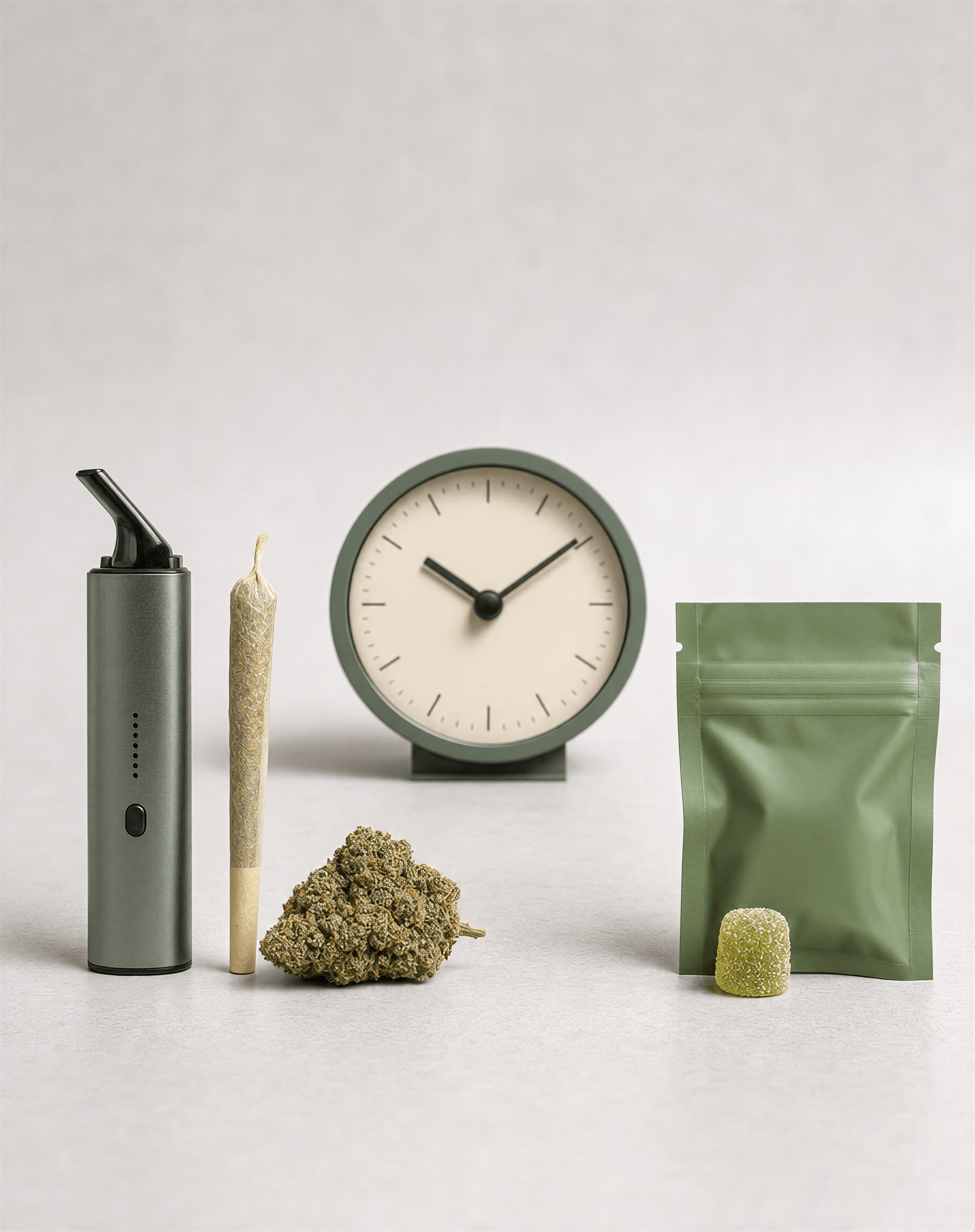
Inhaled cannabis versus edibles for sexual timing
Inhaled cannabis acts fast because THC reaches the bloodstream and brain within minutes. For sex, that speed matters. If someone is trying to reduce anxiety, soften pelvic pain, or heighten sensory focus without overshooting, inhalation is easier to titrate in real time: one small inhalation, then wait several minutes and reassess. That does not make it harmless, but it does make the effect window more predictable.
Edibles are much less forgiving. Onset commonly takes 30 minutes to 2 hours, sometimes longer depending on stomach contents, metabolism, and the product itself. Peak effects can arrive after the moment someone thought they had “not taken enough,” which is exactly how overconsumption happens. For sexual situations, that creates two problems at once: mistimed intoxication and excessive intoxication. Instead of mild relaxation during intimacy, the person may become too sedated, too tachycardic, too dissociated, or too impaired in attention and coordination once the experience is already underway.
That fits the broader pharmacology. Low-dose THC can reduce anxiety in some people through CB1 signaling in stress and reward circuits, including the amygdala and prefrontal regions. Higher doses are more likely to do the opposite. The same dose-response curve that may make someone feel more present at one level can make them self-conscious, distracted, or physically awkward at another. Edibles make that curve harder to navigate.
There is also a duration issue. Inhaled effects usually rise and fall over a shorter span. Oral THC lasts longer, which may sound helpful until the effect is stronger or stranger than intended. If sex is the context, a shorter and more controllable window is generally safer than a delayed one with a long tail.
Why product composition matters more than strain labels
“Indica” and “sativa” are poor guides for sexual effects. They are marketing shorthand, not reliable pharmacology. What matters more is the actual chemical profile: THC percentage, CBD content, and, to a lesser extent, terpene composition.
THC is the main driver of intoxication, time distortion, altered sensory salience, and the dose-dependent tradeoff between relaxation and impairment. High-THC products are more likely to produce the problems that show up in the literature: anxiety, dry mouth and possibly vaginal dryness, elevated heart rate, erectile inconsistency, delayed orgasm, and poor attentional control. The 2019 meta-analysis in The American Journal of Men’s Health reported higher erectile dysfunction prevalence among cannabis users than non-users, though the studies were heterogeneous and cannot prove THC caused it.
CBD is different. It is not a direct libido enhancer, and claims that it “boosts sex drive” outrun the evidence. Its more plausible role is anxiety modulation, which may help some people feel less tense. A product with a meaningful CBD:THC ratio may therefore feel very different from a high-THC product, even when both are sold under similar strain names.
Terpenes may shape subjective effects, but the evidence is thinner than popular writing suggests. If a label does not provide cannabinoid content and ideally batch testing, the strain name tells you little.
Lower-risk principles drawn from the article
- Start low Use a very small amount, especially if inexperienced or returning after a break.
- Pause before redosing With inhaled products, wait several minutes; with edibles, allow the full onset window before taking more.
- Avoid alcohol Combining alcohol with cannabis raises the chance of overshooting, poor judgment, nausea, and memory gaps.
- Match intoxication levels Mismatched states between partners increase the chance of miscommunication and resentment.
- Pause if anyone feels too impaired Subjective arousal is not the same as capacity for informed, ongoing consent.
- Be extra cautious with medical risks Cardiovascular disease, panic, dryness, erectile difficulty, fertility concerns, and pregnancy-related concerns all raise the stakes.
Lower-risk practical principles
If someone chooses to use cannabis in a sexual context, lower-risk principles are straightforward. Start low, especially if inexperienced or returning after a long break. With inhaled products, that means a very small amount and a pause before taking more. With edibles, it means extra caution and enough waiting time to judge onset before considering any additional dose.
Do not mix cannabis with alcohol. Alcohol reliably worsens judgment, nausea risk, dehydration, and motor impairment, and the combination can make consent assessment much less clear. Subjective arousal is not the same as capacity to give informed, ongoing consent.
Match intoxication levels if sex involves a partner. Mismatched states are a common setup for miscommunication, memory gaps, and hurt feelings. If either person feels too impaired, postpone.[3] Tobacco or Marijuana Use and Infertility: A Committee Opinion. Practice Committee of the American Society for Reproductive Medicine. Fertility and Sterility, 2023.
People with cardiovascular disease, a history of panic, severe dry mouth or genital dryness, erectile difficulties, fertility concerns, or pregnancy-related concerns should be especially cautious. The American Society for Reproductive Medicine warned in 2020 that marijuana use is associated with adverse reproductive effects, including possible impacts on sperm and ovulatory function.
And know the law where you live before any cannabis-related activity. Legal status varies widely, as do rules around possession, use, and driving. That matters because impairment can persist after the desired sexual effects have faded.
What remains unknown and what future research needs to measure
The evidence on cannabis and sex is suggestive, sometimes striking, and still methodologically weak. That is the plainest way to put it. Studies such as Sun and Eisenberg’s 2017 analysis of U.S. survey data, Becky K. Lynn’s 2019 Female Sexual Function Index study, and the 2019 Sexual Medicine report finding 2.13-fold higher odds of satisfactory orgasm in women who used marijuana before sex all attract attention for good reason. But they do not settle the question. Most are observational, retrospective, self-reported, and highly exposed to expectancy effects.
The missing randomized trials
What is missing are randomized, placebo-controlled trials that test actual sexual outcomes under known dosing conditions. Right now, researchers often infer from user recall rather than measuring what happened after a specific amount of THC or CBD, taken by a specific route, at a specific time before sex. That matters because inhaled THC peaks quickly and may fit a narrow window of reduced anxiety and heightened sensory attention, while oral THC has slower onset, longer duration, and a higher chance of overshooting into distraction, tachycardia, or dysphoria. Those are not interchangeable exposures.
Trials also need to separate THC-dominant products from CBD-dominant ones. THC has a plausible path to subjective enhancement through CB1 signaling in the amygdala, nucleus accumbens, hypothalamus, and prefrontal cortex. CBD may matter more for anxiety and pain than libido itself. Lumping them together muddies the signal.
Measurement problems in sexual-outcome research
Sex research often collapses three different outcomes into one vague idea of “better sex”: subjective pleasure, physiological sexual function, and relational intimacy. They are not the same. Feeling more aroused is not identical to having better lubrication, more reliable erections, easier orgasm, or stronger consent judgment. Nor does having sex more often prove improved sexual function. The 2017 Stanford finding that users reported sex 7.1 times in four weeks versus 6.0 in never-users was an association, not a performance metric.
Future studies need validated outcome sets that measure desire, genital response, orgasm latency, erectile reliability, lubrication, pain, pelvic floor tension, cardiovascular effects, and next-day appraisal. They also need partner-level outcomes: communication, mutual satisfaction, responsiveness, memory gaps, mismatch in intoxication, and conflict around consent. Hormone status has to be built in, not treated as background noise. Menstrual-cycle phase, menopausal status, testosterone status, pelvic pain conditions, baseline anxiety, and fertility goals all plausibly change the effect.
A more useful clinical research agenda
A useful agenda would compare low and high THC doses, inhaled versus oral routes, THC alone versus THC/CBD combinations, and cannabis versus alcohol co-use. It would stratify by sex, menstrual cycle, pain disorders, and erectile dysfunction risk. It would measure hormones and endocannabinoid markers alongside sexual outcomes. It would follow couples, not just individuals.
The question is not whether cannabis “improves sex.” It is which compound, at what dose, by which route, in which body, in what relationship context, improves subjective experience without degrading sexual function, judgment, or mutual safety.
References
- [1] Relationship Between Cannabis Use and Erectile Dysfunction: A Systematic Review and Meta-Analysis. American Journal of Men's Health, 2019. https://doi.org/10.1177/1557988319892464
- [2] Association Between Marijuana Use and Sexual Frequency in the United States: A Population-Based Study. The Journal of Sexual Medicine, 2017. https://doi.org/10.1016/j.jsxm.2017.09.005
- [3] Tobacco or Marijuana Use and Infertility: A Committee Opinion. Fertility and Sterility, 2023. https://www.asrm.org/practice-guidance/practice-committee-documents/tobacco-or-marijuana-use/