













Cannabis and sleep: the short version is wrong
The simple line that cannabis “helps you sleep” does not survive contact with the actual evidence. A more accurate version is this: THC can shorten the time it takes some people to fall asleep, especially in the short term, but the same drug can also suppress REM sleep, shift sleep-stage distribution, impair next-day alertness in some users, and lose effect with repeated nightly use. When use stops, sleep often gets worse before it gets better. CBD is a different story again; it is not a standard sedative, and its sleep effects seem to come mostly through reduced anxiety or lowered arousal in selected patients rather than direct hypnosis. CBN, despite how often it is packaged as “sleepy cannabis,” has the weakest evidence of the three.
That distinction matters because the scale of use is huge. UNODC estimated in its 2024 World Drug Report that 244 million people used cannabis in 2022, or 4.6% of the global population aged 15–64, with use up 34% over the past decade. In the United States, SAMHSA’s 2023 NSDUH estimated 61.8 million past-year users and 21.8 million people meeting criteria for marijuana use disorder. In the EU, the 2024 European Drug Report put last-year use at 22.8 million adults, with 15.1 million users among people aged 15–34. Sleep self-medication is happening inside a very large population. Even modest effects, or modest harms, become a public-health issue at that scale.
Why 'cannabis helps sleep' is an incomplete claim
| Question | Short answer from the article |
|---|---|
| Does cannabis reduce sleep latency? | Sometimes, especially short term with THC |
| Does it improve sleep quality? | Not reliably |
| Does it improve insomnia over weeks to months? | Not in any simple, universal way |
| Does it improve the biology of sleep? | Often no |
The phrase collapses several different questions into one. Does cannabis reduce sleep latency? Sometimes. Does it improve sleep quality? Not reliably. Does it improve insomnia over weeks to months? Not in any simple, universal way. Does it improve the biology of sleep? Often no.[4] Cannabis, Cannabinoids, and Sleep: a Review of the Literature. K. A. Babson, J. Sottile, R. Vandrey. Current Psychiatry Reports, 2017.
Babson, Sottile, and Vandrey’s 2017 review in Current Psychiatry Reports remains a good reference point because it captures the pattern seen across older polysomnography studies and clinical observations: acute THC exposure may reduce sleep onset latency and may increase slow-wave sleep in some settings, but it also suppresses REM sleep. Chronic use looks different. Users can develop sleep deficits, and withdrawal commonly produces insomnia and vivid dreams.
Sleep architecture The structure of sleep across the night, including the proportion and sequence of N1, N2, N3, and REM sleep.
This is where subjective and objective outcomes split apart. A patient may say, honestly, “I slept better.” Polysomnography may show less REM, altered sleep continuity, or a stage distribution that is not obviously restorative. Those are not the same claim. Feeling sedated at bedtime is not the same as improving sleep architecture.

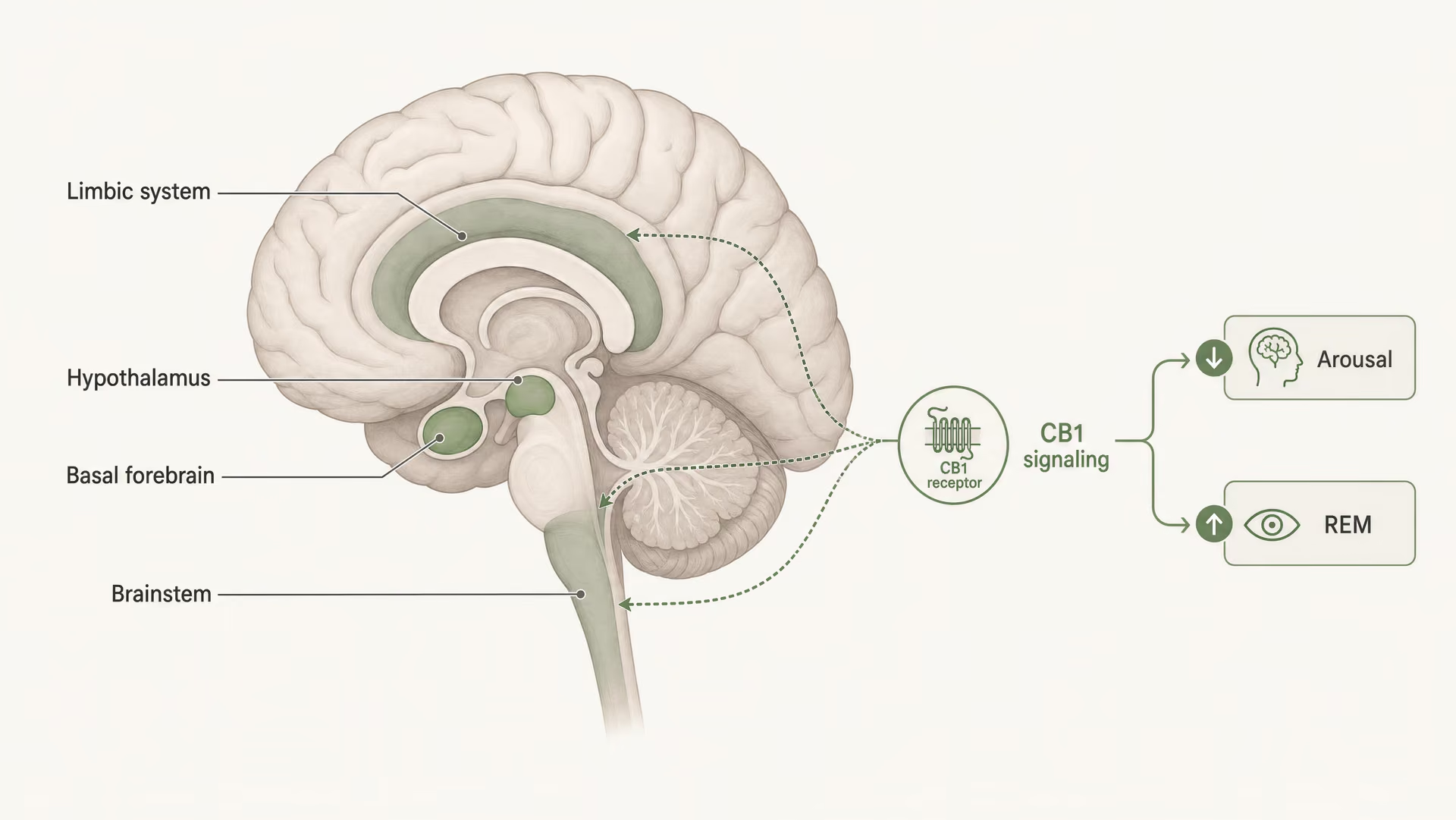
The endocannabinoid system is plausibly involved in sleep regulation. CB1 receptor signaling interacts with arousal and sleep-generating circuits in the hypothalamus, basal forebrain, brainstem, and limbic system; endocannabinoids such as anandamide and 2-AG appear to participate in sleep–wake regulation. THC, as a partial CB1 agonist, reduces neurotransmitter release through Gi/o-coupled signaling. That can dampen arousal. It can also alter REM-generating circuits. And with repeated exposure, CB1 receptors downregulate and desensitize. That helps explain why a person can initially feel that cannabis “works for sleep,” then find that it works less well, then discover that sleep is worse without it.
Why CBD is not THC-lite
- Low CB1/CB2 orthosteric affinity
- CBD does not strongly bind the main cannabinoid receptor sites in the same way THC does.
- Indirect signaling
- The article links CBD to 5-HT1A, TRPV1, adenosine-related effects, and endocannabinoid modulation.
- Clinical implication
- Any sleep benefit is more likely to come from lowering anxiety or arousal than from direct hypnosis.
CBD should not be stuffed into the same box as THC. It has low affinity for CB1 and CB2 orthosteric sites and seems to act indirectly through mechanisms that include 5-HT1A signaling, TRPV1, adenosine-related effects, and modulation of endocannabinoid tone. In plain terms: CBD does not behave like a classic sleeping pill. In some people and doses, it may even be alerting. Its better-supported sleep use case is secondary improvement when anxiety, hyperarousal, or stress is the real problem. Shannon et al. in 2019 reported improved sleep scores in 66.7% of patients in the first month of a retrospective anxiety/sleep clinic series, but that was not a randomized insomnia trial and should not be mistaken for proof of a direct hypnotic effect.
CBN alone is an established treatment for insomnia. Preliminary evidence
[6] Randomized crossover study of CBN in insomnia. Oleg Suraev, colleagues. Neuropsychopharmacology, 2024.CBN is the clearest case of claims getting ahead of data. The popular idea that it is “the sleepy cannabinoid” leans heavily on weak historical literature, often involving tiny samples and co-administration with THC. More recent human work, including the 2024 randomized crossover study by Suraev and colleagues in Neuropsychopharmacology, is useful precisely because it tests the claim directly. It does not justify broad confidence that CBN alone is an established treatment for insomnia.
The central trade-off: faster sleep onset versus altered sleep architecture
This is the main sleep-cannabis trade. Some people fall asleep faster after THC. That is real. But shorter sleep latency is only one piece of sleep.
THC suppresses REM sleep and changes sleep-stage distribution. Strong evidence
REM suppression is not a side note. It is one of the more consistent findings with THC. In some contexts, that can feel helpful. A person with trauma-related nightmares may welcome fewer remembered dreams. There is some evidence for nightmare reduction with synthetic cannabinoids such as nabilone in PTSD-related populations. But reducing nightmare recall through REM suppression is still a trade-off, not a free upgrade to sleep. Long-term sleep quality may remain impaired, and the evidence for whole-plant cannabis in PTSD sleep symptoms is mixed.
The same logic applies to insomnia trials. The medicinal cannabis oil trial led by Oleg Suraev and colleagues, published in the 2020/2021 cycle, found short-term improvement in chronic insomnia symptoms, and about 60% of participants were no longer classified as clinical insomniacs after two weeks of active treatment. That is promising, but it was short-duration, relied heavily on self-report, and does not erase the larger concerns about tolerance, stage alteration, and residual effects. A two-week signal is not the same as a stable long-term solution.
| Route | Onset | Peak / time profile | Common sleep-use implication | Main drawback |
|---|---|---|---|---|
| Inhaled THC | Within minutes | Peaks roughly 15–30 minutes | May help sleep initiation | Can wear off during the night |
| Oral cannabinoids | 30–120 minutes | Last longer | May help later-night coverage | Higher risk of next-day grogginess and overshooting |
Biphasic dose response An effect pattern where a lower dose and a higher dose can push in different directions, such as calming at one level and anxiety or fragmented sleep at another.
Dose and route matter more than many summaries admit. Inhaled THC acts within minutes and peaks roughly 15–30 minutes after use, which may help sleep initiation but may wear off during the night. Oral cannabinoids often start 30–120 minutes later and last longer because of first-pass metabolism to 11-hydroxy-THC, which raises the chance of next-day grogginess and dose overshooting. The dose-response curve is also biphasic. Lower THC doses may calm some users; higher doses can trigger anxiety, tachycardia, dysphoria, and fragmented sleep. CBD also shows dose-dependent variability, with some doses feeling calming and others less so.
People often ask whether terpene-heavy products change this equation. Linalool and myrcene are commonly linked to “sedating” effects, and there is some preclinical plausibility. Human evidence is still thin. Product-level sleep claims that lean heavily on terpene names are running ahead of proof.
Who this evidence applies to: occasional users, nightly users, patients, and people in withdrawal
| User group | Pattern described in the article |
|---|---|
| Occasional users | Most likely to notice short-term sleep-latency reduction because tolerance is lower |
| Nightly users | More likely to develop tolerance and report poorer sleep quality |
| Patients with defined conditions | Need disorder-specific caution and evidence review |
| People in withdrawal | Often develop insomnia and vivid dreams after stopping |
Not everyone in the literature is the same kind of user, and that is where many sleep articles go wrong.
Occasional users may experience the most obvious short-term reduction in sleep latency from THC, because tolerance has not fully developed. Nightly users are different. Chronic CB1 stimulation appears to produce tolerance to many of cannabis’s sleep-related effects, which is one reason heavy users often report poorer sleep quality despite using cannabis at bedtime. Population-level survey data, including NHANES-linked analyses and other cohorts, generally suggest that frequent or daily use tracks with more sleep problems, not fewer. Causality runs both ways: poor sleepers self-medicate, and chronic use may also worsen baseline sleep and create dependency-linked sleep disruption.
Patients with defined conditions need condition-specific caution. For insomnia, short-term trials show some promise, but the evidence is still thinner than the public conversation suggests. For obstructive sleep apnea, routine cannabis use is not recommended; the American Academy of Sleep Medicine said in 2018 that medical cannabis and synthetic extracts should not be used for OSA because evidence is insufficient and safety concerns remain. For restless legs syndrome, evidence is mostly case reports and small series. For PTSD nightmares, REM suppression may help some patients, but that does not settle the long-term sleep-quality question.
Then there is withdrawal, which is central to the real-world sleep story. Budney, Allsop, and others have shown that sleep difficulty is one of the most common cannabis withdrawal symptoms. DSM-5 recognizes it. Symptoms often begin within 24 to 72 hours after stopping, peak in the first week, and can last two weeks or longer in heavy users. Vivid dreams are common. So is REM rebound. That rebound tells you something important: if a drug has been suppressing REM, stopping it can produce an overshoot.
So the short version is wrong not because cannabis never helps sleep, but because it often helps one part of sleep while worsening another. That is a very different claim.
How sleep architecture works before cannabis enters the picture
Before asking whether cannabis helps sleep, you need a baseline model of what healthy sleep is actually doing. Sleep is not a single uniform state. It is a repeating structure made of stages, shifts in brain activity, changes in muscle tone, altered autonomic function, and cycles that serve different biological jobs across the night. If a drug shortens the time it takes to fall asleep but suppresses a stage tied to memory and emotional regulation, that is not a simple win. It is a trade-off.
That framework matters because many cannabis studies report “better sleep” based on subjective ratings while objective measures show altered architecture. The person may feel sedated. Sedation is not identical to physiologic sleep quality.
N1, N2, N3, and REM: what each stage does
Sleep stages at a glance
- N1
- Light transition into sleep.
- N2
- The largest share of sleep time; includes sleep spindles and K-complexes.
- N3
- Slow-wave deep sleep linked to restoration and some memory consolidation.
- REM
- Dream-rich stage with wake-like EEG and muscle paralysis.
Modern sleep scoring divides sleep into non-REM sleep and REM sleep. Non-REM is then split into N1, N2, and N3. Across a typical night, these stages cycle roughly every 90 minutes, but not in fixed blocks. Early in the night, deep non-REM sleep is more prominent. Later in the night, REM periods lengthen.
N1 is the lightest stage. It is the transition from wakefulness into sleep, when awareness of the environment starts to fade but is not fully gone. Muscles relax, eye movements slow, and the EEG shifts away from relaxed wake rhythms. People awakened from N1 often say they were “just drifting off.” N1 does not make up much of total sleep in healthy adults, but it matters because a person stuck in repeated returns to N1 is not sleeping efficiently. They are hovering at the threshold.
Why N2 still matters
- Usually occupies the largest share of total sleep time.
- Includes sleep spindles and K-complexes.
- Contributes to sensory gating and memory processing.
- Changes in N2 can alter how restorative sleep feels.
N2 is the workhorse stage. It usually occupies the largest share of total sleep time. In N2, consciousness is further reduced, heart rate slows, body temperature drops, and the EEG shows sleep spindles and K-complexes. Those two features are not just scoring markers. Sleep spindles in particular are linked to learning, sensory gating, and memory processing. N2 is less dramatic than deep sleep or dreaming sleep, so it is often ignored in popular writing, but changing N2 can still shift how restorative a night feels.
N3 is slow-wave sleep, often called deep sleep. This is the stage with high-amplitude, low-frequency delta activity on EEG. It is the hardest stage to wake from. N3 is associated with physical restoration, energy conservation, immune signaling, growth hormone secretion, and some forms of memory consolidation, especially declarative memory. It also appears to support the “refreshing” quality people notice after solid sleep. When sleep is fragmented, N3 often suffers.
REM sleep Rapid eye movement sleep, a stage marked by vivid dreaming, wake-like brain activity, and near-complete skeletal muscle paralysis.
REM sleep is physiologically distinct. The EEG becomes more wake-like, eye movements become rapid, and most skeletal muscles are actively paralyzed except for the diaphragm and eye muscles. This is the stage most strongly associated with vivid dreaming, though dreaming can occur elsewhere. REM has been linked to emotional memory processing, procedural learning, creativity, and integration of affectively loaded experiences. The brain is active; the body is offline.
No stage is optional in the broad sense. Healthy sleep architecture is not about maximizing one stage at the expense of the rest. It is about cycling through them in a pattern the brain can use.
That is why changes in stage distribution deserve skepticism, not applause, unless they map to meaningful outcomes. Increasing slow-wave sleep sounds good. Reducing REM can sound harmless, especially if a person dislikes vivid dreams. But sleep medicine does not treat architecture shifts as inherently therapeutic. They may reflect benefit, compensation, or disruption.
Why REM suppression matters more than most sleep articles admit
REM is where cannabis discussions often get flattened into a slogan. Acute THC exposure has been reported in polysomnography studies and reviews to reduce sleep onset latency in some users and suppress REM sleep. Babson, Sottile, and Vandrey summarized this pattern in their 2017 review in Current Psychiatry Reports: people may fall asleep faster in the short term, but REM is often reduced, and chronic use is linked to sleep problems rather than stable improvement.
REM suppression is not a trivial side effect. It changes what sleep is for.
Why REM suppression matters
- Dream expression Less REM often means fewer remembered dreams or less dream recall.
- Memory and emotion REM contributes to emotional memory processing and overnight adaptation.
- Rebound after stopping Chronic suppression can set up vivid dreams and REM rebound during withdrawal.
First, REM is tied to dreaming and dream recall. If THC reduces REM expression, some users experience fewer dreams or less dream recall. That can feel helpful, especially in people with trauma-related nightmares. But less remembered dreaming is not the same thing as healthier sleep. It may simply mean a stage is being pharmacologically dampened.
Second, REM contributes to memory processing, especially emotional memory. Sleep is not just a passive shutdown state; it reorganizes information. REM appears to help the brain process emotionally salient material in a way that reduces next-day reactivity while preserving the memory trace. If a compound repeatedly suppresses REM, there may be downstream effects on learning, emotional adaptation, and mood regulation. Human outcomes are not always straightforward, but the mechanism is plausible and the architecture shift is real.
Third, REM suppression often sets up rebound. When a person stops chronic THC use, vivid dreams and disturbing sleep commonly emerge. That pattern is one of the clearest clues that prior sleep was not simply “better” but pharmacologically altered. Budney and colleagues, along with Allsop and colleagues, found that sleep difficulty is one of the most common cannabis withdrawal symptoms, often beginning within 24 to 72 hours, peaking in the first week, and sometimes lasting two weeks or more. DSM-5 includes sleep difficulty as a cannabis withdrawal symptom. REM rebound helps explain the vivid-dream phenomenon: the stage that was being suppressed returns with force.
This matters at population scale. UNODC estimated in 2024 that 244 million people used cannabis in 2022, a 34% increase over the prior decade. SAMHSA reported 61.8 million past-year U.S. users in 2023 and 21.8 million people meeting criteria for marijuana use disorder. In the EU, the 2024 European Drug Report estimated 22.8 million last-year users aged 15 to 64. If sleep architecture is being altered in even a modest fraction of this population, this is not a niche issue.
Sleep continuity, sleep efficiency, latency, and awakenings
Core sleep metrics
- Sleep latency
- Time from trying to sleep to actual sleep onset.
- Sleep continuity
- How stable sleep remains once it starts.
- Sleep efficiency
- The proportion of time in bed actually spent asleep.
- WASO
- Wake after sleep onset; time spent awake after first falling asleep.
- Arousal index
- Polysomnography measure of repeated sleep fragmentation.
Cannabis studies often use sleep terms that sound interchangeable but are not.
Sleep latency is the time from “lights out” or attempted sleep to actual sleep onset. If a product makes someone drowsy faster, latency may fall. This is the metric most likely to improve acutely with sedating compounds, including THC in some users. But a shorter latency alone does not prove good sleep. A person can fall asleep quickly and still have fragmented, low-quality sleep.
Sleep continuity refers to how stable sleep remains once it starts. Good continuity means staying asleep with minimal fragmentation. Poor continuity means repeated transitions to lighter stages or wakefulness. Someone who sleeps in broken segments may report an unrefreshing night even if total time in bed was long.
Sleep efficiency is the proportion of time in bed actually spent asleep. If you are in bed for eight hours and asleep for six, your sleep efficiency is 75%. In sleep medicine, low sleep efficiency points to difficulty falling asleep, difficulty staying asleep, or both. It is a more informative measure than total time in bed because it captures wasted, wakeful time.
WASO Wake after sleep onset, a measure of how much time a person spends awake after first falling asleep.
Wake after sleep onset, often abbreviated WASO, measures how much time is spent awake after initially falling asleep. This is one of the clearest markers of sleep maintenance problems. A drug may lower latency but worsen later-night awakenings. If so, the headline “helps sleep” hides the real pattern.
Arousal index and awakenings are related metrics from polysomnography that capture sleep fragmentation. Micro-arousals may not be remembered in the morning, but they still degrade sleep architecture by interrupting progression through deeper stages.
This is why stage data and continuity data need to be read together. A person can report subjectively improved sleep because they fell asleep fast, while polysomnography shows reduced REM, altered stage proportions, and no real gain in consolidated restorative sleep. When later sections discuss THC, CBD, CBN, insomnia trials, nightmare reduction, or withdrawal, these are the terms that tell you whether sleep was genuinely improved, merely sedated, or reshaped at a cost.
The endocannabinoid system's role in sleep regulation
Endocannabinoid system (ECS) A signaling network of endogenous cannabinoids, enzymes, and receptors that helps regulate arousal, stress responses, and sleep-state transitions.
The endocannabinoid system, or ECS, is often described too simply in sleep discussions. It is not a dedicated sleep switch. It is a modulatory network that helps the brain regulate arousal, stress responsivity, circadian timing, and transitions between wakefulness, non-REM sleep, and REM sleep. That framing matters, because it explains why cannabinoids can sometimes make sleep feel easier in the short term while still disrupting sleep architecture over time.
How CB1 signaling changes neurotransmission
- Activation CB1 receptors are activated on presynaptic neurons.
- Gi/o signaling Adenylate cyclase is inhibited and ion channel activity shifts.
- Output Release of transmitters such as glutamate and GABA is reduced.
- Sleep relevance The balance of excitation and inhibition changes in state-dependent sleep circuits.
At the center of this system are endogenous cannabinoids, mainly anandamide and 2-arachidonoylglycerol (2-AG), their enzymes, and cannabinoid receptors, especially CB1. CB1 receptors are widely expressed in the central nervous system and sit presynaptically on neurons, where they act as brakes on neurotransmitter release. When activated, CB1 receptors signal through Gi/o proteins, inhibit adenylate cyclase, alter calcium and potassium channel activity, and reduce release of transmitters such as glutamate and GABA. In sleep-relevant circuits, that does not produce one uniform effect. It changes the balance of excitation and inhibition in a state-dependent way.
Partial agonist A compound that activates a receptor but does not produce the full possible receptor response.
This is why the popular claim that cannabis “improves sleep” is not a biologically serious summary. Acute THC, a partial CB1 agonist, may shorten sleep latency in some people. It also suppresses REM sleep and can shift stage distribution, as reviewed by Babson, Sottile, and Vandrey in 2017. Repeated exposure produces tolerance, likely in part through CB1 downregulation and desensitization. Withdrawal commonly brings insomnia and vivid dreaming. Those outcomes make sense only if the ECS is understood as a regulator of sleep architecture and state transitions, not a sedative button.
The public-health stakes are large. UNODC estimated that 244 million people used cannabis in 2022, a 34% increase over the prior decade. SAMHSA reported 61.8 million past-year users in the United States in 2023, with 21.8 million meeting criteria for marijuana use disorder. EUDA reported 22.8 million last-year users in the EU in 2024. When a drug this widely used interacts with basic sleep biology, mechanistic details stop being academic.
Anandamide, 2-AG, and sleep-wake signaling
Anandamide and 2-AG are not stored in vesicles like classical neurotransmitters. They are synthesized on demand from membrane lipids and often act as retrograde messengers: a postsynaptic neuron becomes active, generates endocannabinoids, and sends a signal backward to presynaptic terminals to dampen further transmitter release. That arrangement makes the ECS well suited for stabilizing neural states and smoothing transitions between them.
Both ligands have been implicated in sleep-wake regulation, though not in identical ways. Anandamide has been associated in animal work with sleep promotion under some conditions, and levels fluctuate with time of day and behavioral state. 2-AG is abundant in the brain and appears strongly tied to moment-to-moment synaptic modulation, including circuits involved in arousal and emotional salience. Neither molecule maps cleanly onto “sleep chemical” or “wake chemical.” Their effects depend on where they are released, when they are released, and what other transmitter systems are active.
That context dependence is the whole point. The ECS intersects with adenosine, monoamines, acetylcholine, orexin, and stress pathways. It can dampen hyperarousal. It can also alter REM regulation. In someone with stress-driven sleep-onset insomnia, reducing presleep arousal may feel helpful. In someone using THC every night, the same system may be pushed toward adaptation, with less benefit and more architecture disturbance.
CBD adds another layer because it does not behave like THC. It has low affinity for CB1 and CB2 orthosteric sites and appears to work through indirect mechanisms, including 5-HT1A signaling, TRPV1, adenosine-related effects, and changes in endocannabinoid tone. That is one reason CBD is not a straightforward hypnotic. In some settings it looks calming; in others it can be alerting. Shannon et al. reported in 2019 that 66.7% of patients in a retrospective anxiety/sleep clinic series had improved sleep scores in the first month, but that was not a randomized insomnia trial and does not prove a direct sleep-promoting effect. The more defensible interpretation is that CBD may improve subjective sleep in some people by lowering anxiety or autonomic arousal.
Where CB1 receptors matter for sleep: hypothalamus, basal forebrain, brainstem, limbic circuits
CB1 receptors matter for sleep because they are placed in the circuits that organize vigilance states.
In the hypothalamus, cannabinoid signaling intersects with circadian and arousal systems, including regions involved in feeding, stress, and wake drive. This is one route by which cannabinoids can affect not only sleep propensity but also timing and internal state. The hypothalamus is not just a sleep center; it is where energy balance, stress signaling, and circadian cues talk to each other. ECS activity here fits the idea of state regulation rather than sedation.
In the basal forebrain, CB1 signaling can influence cholinergic and GABAergic activity that shapes cortical activation and transitions into sleep. This region is deeply involved in wakefulness and attention. Modulating transmitter release here can reduce cortical arousal, but the same network also contributes to REM and NREM organization. That helps explain why THC can make sleep onset easier while still changing later-night sleep structure.
In the brainstem, cannabinoid effects touch nuclei involved in REM generation, autonomic control, and ascending arousal pathways. This is one reason REM suppression is such a recurring finding with THC. It is also why claims about sleep benefits have to be qualified. Reducing REM can lessen nightmare recall in some PTSD patients, and synthetic cannabinoids such as nabilone have shown some signal for nightmare reduction. But that does not mean the intervention improves sleep globally. A reduction in one symptom can come with a trade-off in architecture.
Limbic circuits matter too. The amygdala, hippocampus, and connected networks are central to emotional memory, threat processing, and stress-linked hyperarousal. CB1 signaling in these regions can alter how strongly stress and fear states intrude into the night. That is one reason cannabinoids may help some people whose insomnia is driven by anxiety or traumatic re-experiencing. It is also one reason withdrawal is so disruptive. When chronic THC exposure recedes, rebound in these circuits may contribute to insomnia, vivid dreams, and irritability. Budney and colleagues, along with Allsop and colleagues, have shown that sleep difficulty is a common withdrawal symptom, usually emerging within 24 to 72 hours, peaking in the first week, and sometimes lasting two weeks or longer.
What human evidence can and cannot confirm from animal work
Animal studies have taught researchers a great deal about ECS sleep biology. They show that CB1 signaling shifts across the sleep-wake cycle, that endocannabinoids participate in sleep induction and maintenance, and that specific brain regions respond differently depending on behavioral state. They also support a plausible mechanism for tolerance: repeated CB1 stimulation reduces receptor responsiveness.
Human evidence is thinner and less precise. Most clinical cannabis-and-sleep studies rely on self-report rather than polysomnography. That matters because subjective sleep improvement and objective sleep architecture are not the same thing. A person may report “sleeping better” because they fell asleep faster, even if REM was suppressed, awakenings increased later in the night, or next-day alertness worsened.
Human trials also face major confounders: prior cannabis exposure, dose, route, THC:CBD ratio, expectation effects, and coexisting anxiety, depression, pain, or substance use. Inhaled THC reaches effect within minutes and peaks quickly, which may help sleep initiation but can wear off during the night. Oral cannabinoids start later, last longer, and can produce next-day residual effects because of first-pass metabolism and formation of 11-hydroxy-THC. Dose-response relationships are biphasic. Low doses may reduce anxiety in some users; higher doses can trigger anxiety, tachycardia, and fragmented sleep.
So what can human evidence support? It supports acute effects, not a blanket benefit. THC can shorten sleep latency in some people and tends to suppress REM. Chronic use is associated with tolerance, poorer sleep in heavy users, and withdrawal-related insomnia. CBD may improve sleep indirectly in some patients, mainly by reducing arousal, but it is not proven as a direct hypnotic. CBN remains weakly supported; even the 2024 crossover work by Suraev and colleagues does not justify broad claims.
The translational bottom line is plain: the ECS clearly participates in sleep regulation, but that does not mean external cannabinoids reliably restore healthy sleep. They can shift the system. Sometimes that helps a defined symptom. Sometimes it trades one problem for another.
THC and sleep architecture
| Effect window | Pattern described |
|---|---|
| Acute use | Some users fall asleep faster and report fewer dreams |
| Architecture effect | REM is often suppressed and stage distribution shifts |
| Chronic use | Tolerance develops and poorer baseline sleep becomes more common |
| After stopping | Vivid dreams and insomnia often rebound |
THC does not simply “help with sleep.” It changes sleep architecture, and those changes come with trade-offs.
That distinction matters because cannabis use is common enough to make even modest sleep effects a public-health issue. The UNODC estimated that 244 million people used cannabis in 2022, or 4.6% of the global population aged 15–64, with use rising 34% over the prior decade. In the US, SAMHSA reported 61.8 million past-year users in 2023 and 21.8 million people meeting criteria for marijuana use disorder. In the EU, the 2024 European Drug Report estimated 22.8 million last-year users among adults 15–64. Sleep is one of the most common reasons people give for using cannabis, but the physiology is not the same as normal sleep promotion.
The short version is this: acute THC can make some people fall asleep faster, and it can reduce dreaming by suppressing REM sleep. Those effects may feel helpful, especially in the setting of hyperarousal, anxiety, or nightmares. But REM suppression is not a free benefit. It is an alteration of normal sleep staging, and repeated exposure tends to produce tolerance, poorer baseline sleep in heavy users, and a rebound of vivid dreams and insomnia after stopping.

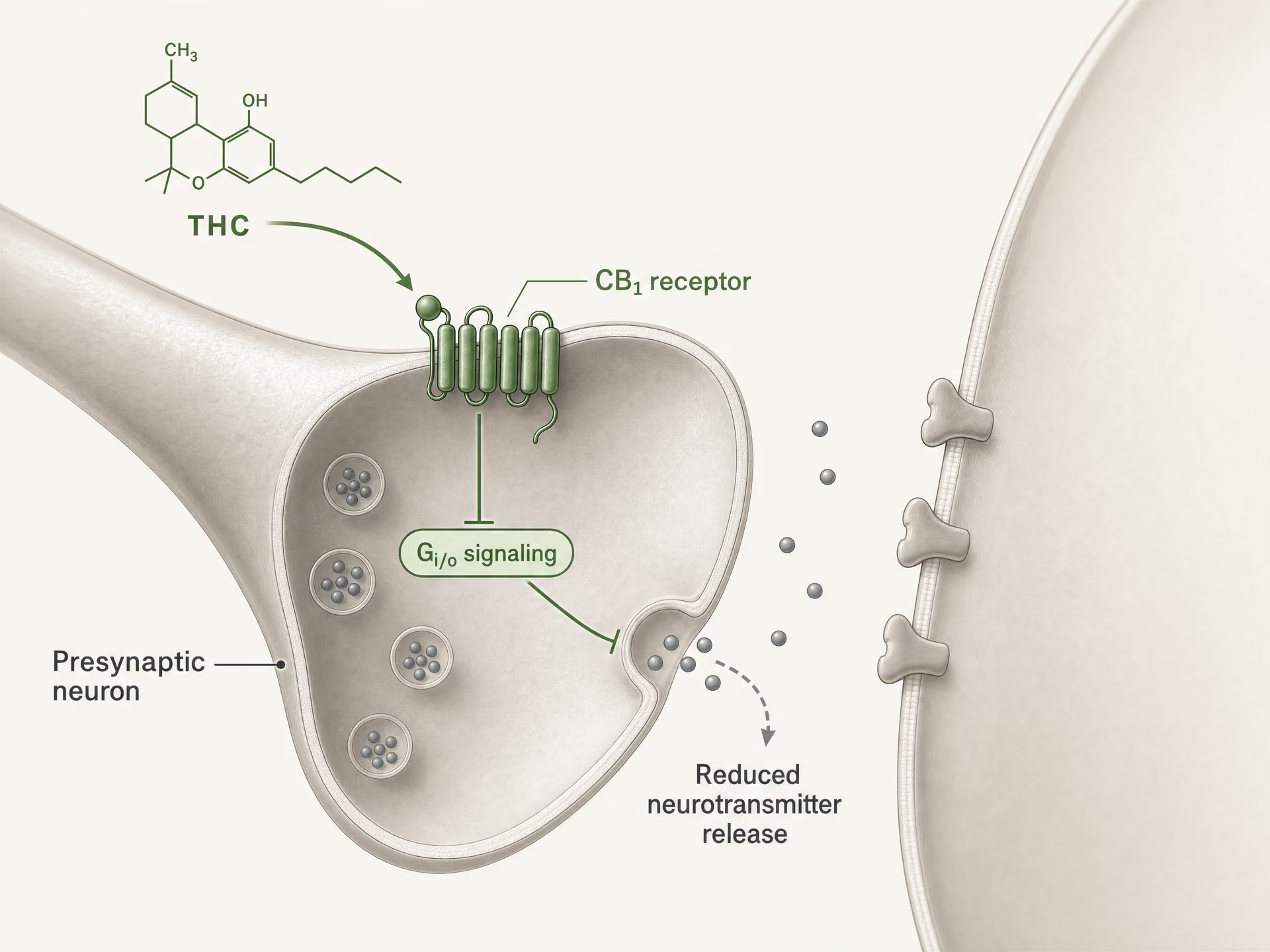
How THC acts at CB1 receptors during the sleep-wake cycle
THC is a partial agonist at the CB1 receptor, the main cannabinoid receptor in the brain relevant to sleep and arousal. CB1 receptors are densely expressed in cortical, limbic, hypothalamic, basal forebrain, and brainstem circuits that help regulate when we wake, when we enter non-REM sleep, and how REM sleep is generated and maintained.
At the cellular level, CB1 is a Gi/o-coupled receptor. When THC binds to it, downstream signaling inhibits adenylate cyclase, lowers cAMP, reduces presynaptic calcium influx, and increases potassium conductance. The net effect is usually reduced neurotransmitter release. That matters because sleep-wake regulation depends on tightly timed signaling among GABAergic, glutamatergic, cholinergic, monoaminergic, and orexin-related networks. THC does not shut the system off like a classic sedative-hypnotic. It biases signaling within it.
Endocannabinoids already participate in this system. Anandamide and 2-AG fluctuate across the sleep-wake cycle and appear to influence sleep induction, arousal, and REM/NREM balance in animal and mechanistic studies. Human evidence is less direct, but the broader model is consistent: CB1 signaling is part of normal sleep regulation, so pushing that receptor with exogenous THC predictably affects architecture rather than just “causing sleep.”
Several regions are especially relevant. In the basal forebrain, CB1 activity can dampen arousal-related neurotransmission. In hypothalamic and limbic circuits, it can reduce stress responsivity and alter the emotional tone that feeds into sleep initiation. In pontine and forebrain networks tied to REM generation, CB1 modulation appears capable of changing REM expression. This is one reason THC can reduce dream recall or nightmare frequency in some users. The result can feel sedating, but the mechanism is broader than sedation.
Partial agonism also explains why THC effects are variable. It does not drive CB1 signaling in a uniform way across all tissues or doses, and endogenous cannabinoid tone differs from person to person. Low doses may reduce arousal in some people. Higher doses can do the opposite, producing anxiety, tachycardia, perceptual changes, and fragmented sleep. The dose-response curve is often biphasic.
Downregulation A reduction in the number of responsive receptors available after repeated stimulation.
Repeated exposure adds another layer. Chronic THC use leads to CB1 receptor desensitization and downregulation. That is one of the clearest mechanistic explanations for tolerance to sleep effects. A person may initially fall asleep faster with THC, then need more for the same effect, then find that sleep worsens without it. Babson, Sottile, and Vandrey summarized this pattern in their 2017 review in Current Psychiatry Reports: acute use may shorten sleep onset and alter stage distribution, but chronic use is associated with sleep deficits, and withdrawal commonly brings insomnia and vivid dreaming.
Acute effects: sleep latency, slow-wave sleep, and REM suppression
The acute sleep effects of THC are real, but they are narrower than popular descriptions suggest.
In human studies, the most consistent short-term finding is reduced sleep latency in at least some users. In plain terms, some people fall asleep faster after THC exposure. That result is more likely in people with pre-sleep arousal, anxious rumination, pain, or prior positive experience with THC. Route matters. Inhaled THC starts within minutes and peaks around 15 to 30 minutes, so it is more likely to affect sleep initiation. Oral THC usually begins after 30 to 120 minutes and lasts longer because of first-pass metabolism to 11-hydroxy-THC, which can shift effects later into the night and into the next morning.
Effects on non-REM sleep are less consistent. Some studies have found increases in slow-wave sleep, also called N3, after acute THC exposure. Others have shown mixed or minimal changes. This is one reason sleep claims should not be stated too broadly. THC does not reliably deepen sleep in a clean, uniform way across populations, doses, and formulations. A person may report that they “slept hard,” while polysomnography shows a more complicated picture with altered stage distribution rather than globally improved sleep.
REM findings are more consistent. Acute THC tends to reduce REM duration and REM density. Dream recall often drops with it. This is the architectural change with the strongest explanatory power for why many people describe THC as a sleep aid even when overall sleep physiology is being shifted away from baseline. If a person has frequent nightmares, intense dreaming, or emotionally loaded REM periods, suppressing REM can feel like relief almost immediately.
That does not mean objective sleep quality is uniformly better. Many cannabis sleep studies rely heavily on subjective reports, and subjective improvement can diverge from polysomnography. Feeling that one slept better is not meaningless, but it is not identical to preserving healthy sleep architecture.[7] Treating insomnia symptoms with medicinal cannabis: a randomized, crossover trial of the efficacy of a cannabinoid medicine compared with placebo. Oleg Suraev, colleagues. Journal of Sleep Research, 2021.
The strongest insomnia trial in this area is not a simple THC-alone story. In the randomized, double-blind, placebo-controlled crossover trial by Suraev and colleagues published in 2021 from a 2020 study cycle, a medicinal cannabis oil improved insomnia symptoms over two weeks, and 60% of participants were no longer classified as clinical insomniacs during active treatment. But that study was short, used a cannabinoid extract rather than isolated THC, and relied on self-reported outcomes more than deep architecture mapping. It supports symptom benefit in selected patients. It does not prove that THC normalizes sleep physiology.
The same caution applies to route and dose. A fast-onset inhaled product may help sleep onset but wear off in the second half of the night. An oral dose may last longer but produce residual morning impairment, especially because oral THC exposure is less predictable and can be stronger than expected. Higher doses also raise the risk of paradoxical anxiety and nocturnal awakenings. The common assumption that “more THC equals more sleep” is not supported.
Why REM suppression can feel helpful and still be a physiological trade-off
REM suppression is the heart of the cannabis-sleep paradox.
For some people, fewer dreams are a feature, not a bug. Someone with PTSD-related nightmares may experience less nightmare recall. Someone with highly vivid dreaming may wake less distressed. A person who spends the night cycling through emotionally intense dreams may genuinely feel better after a night with less REM expression. This is one reason cannabinoids, including synthetic agents such as nabilone, have attracted attention in nightmare-related conditions.
But reducing REM is not the same thing as restoring healthy sleep. REM serves functions tied to emotional processing, memory consolidation, and overnight integration of salient experiences. The exact role of REM is still debated, yet the idea that it is disposable is hard to defend. Suppressing it may relieve a symptom while creating a different physiological compromise.
That trade-off becomes clearer with repeated use. If THC is taken nightly, the brain adapts. CB1 signaling is blunted through receptor downregulation and desensitization, and the initial benefit often fades. At that point some users increase dose, which may worsen next-day impairment, anxiety, or sleep fragmentation. Heavy users commonly report poor sleep quality despite using cannabis specifically for sleep. Population studies, including analyses from NHANES and other cohorts, suggest the relationship is not linear: occasional users may differ from non-users in one direction, but frequent or daily users are more likely to report sleeping too little or too much and to report worse sleep quality overall.
Stopping THC after regular use exposes the cost of chronic REM suppression very clearly. Withdrawal commonly includes sleep difficulty beginning within 24 to 72 hours, peaking in the first week, and lasting up to two weeks or longer in some heavy users. Budney and colleagues documented sleep disturbance as a core cannabis withdrawal symptom, and DSM-5 includes sleep difficulty in the syndrome. Allsop and colleagues also found sleep problems to be common during withdrawal, with vivid dreams standing out. This pattern is often described as REM rebound: once the suppressive effect is removed, REM returns forcefully, and dreams become unusually intense, bizarre, or disturbing.
So the subjective story makes sense. THC can reduce nightmares tonight. It can also set up worse dreams after discontinuation, especially if used heavily and regularly. That does not make the short-term benefit unreal. It means the benefit sits inside a larger adaptation cycle.
This is where the editorial position should be firm: the evidence does not support the blanket claim that cannabis improves sleep. Acute THC can help some people fall asleep and can reduce REM-related symptoms, but it does so by changing stage architecture. That may be acceptable in selected clinical situations. It is not the same as producing normal, restorative sleep.
The contrast with CBD helps clarify the point. CBD has low affinity for CB1 and does not behave like a classic hypnotic. When it helps sleep, the pathway is often indirect, through reduced anxiety or reduced physiological arousal. Shannon et al. reported improved sleep scores in 66.7% of patients during the first month in a 2019 retrospective clinic series, but that was not a randomized sleep trial. CBD’s story is different from THC’s. And CBN, despite heavy “sleepy cannabinoid” branding, still has weak human evidence; recent work by Suraev and colleagues in 2024 did not justify broad sleep claims.
For THC, the bottom line is sharper. It can shorten sleep latency in some users. It can suppress REM. Those are measurable effects. Whether that counts as “better sleep” depends on timeframe, dose, pattern of use, and what cost a person is willing to accept in sleep architecture, tolerance, withdrawal, and daytime function.
CBD is not just 'the non-intoxicating sleep cannabinoid'
| Feature | THC | CBD | CBN |
|---|---|---|---|
| Main sleep reputation | Sedating / sleep-onset aid | Calming or anxiolytic in some users | Marketed as sleepy |
| Direct CB1-style action | Yes, partial agonist | Low orthosteric affinity | Not established as a dependable hypnotic |
| REM effect in article | Suppresses REM | No comparably consistent human REM signal described | Not established |
| Evidence strength | Short-term effects supported | Mixed and indirect | Weak |
CBD is often slotted into a lazy contrast: THC is the intoxicating cannabinoid that makes people sleepy, while CBD is the gentler, safer sleep version. That framing is wrong. It misses the pharmacology, overstates the sleep evidence, and blurs an important clinical distinction between helping someone feel less anxious at night and acting as a true hypnotic that changes sleep onset or sleep stages directly.
That distinction matters because sleep complaints are common reasons people turn to cannabis products at scale. Cannabis use is not niche behavior: UNODC estimated 244 million users globally in 2022, a 34% rise over the prior decade. SAMHSA reported 61.8 million past-year marijuana users in the US in 2023, with 21.8 million meeting criteria for marijuana use disorder. If CBD is being treated as a nightly sleep tool by millions of people, the standard should be higher than “some people say it helps.”
Why CBD's mechanism differs from THC
THC and CBD do not do the same thing with different intensity. They are pharmacologically different compounds.
THC is a partial agonist at the CB1 receptor, the cannabinoid receptor most tied to psychoactive effects and highly relevant to sleep-wake regulation. CB1 signaling influences neurotransmitter release across brain regions involved in arousal, affect, memory, and REM/NREM balance. That is one reason THC can shorten sleep latency for some users while also suppressing REM sleep and, with repeated use, driving tolerance and poorer baseline sleep. Babson, Sottile, and Vandrey reviewed this pattern in 2017: acute THC can help some people fall asleep faster, but chronic exposure is a different story.
Orthosteric site The primary binding site on a receptor where the main activating ligand binds.
CBD does not behave like a milder THC. Its affinity for the orthosteric binding sites of CB1 and CB2 is low. It does not simply “tap CB1 more gently.” Instead, CBD appears to work through a scattered set of indirect mechanisms, including modulation of 5-HT1A signaling, TRPV1 activity, adenosine-related pathways, and endocannabinoid tone. Some preclinical and mechanistic work suggests CBD may inhibit adenosine uptake, potentially increasing extracellular adenosine signaling, which is relevant because adenosine is one of the brain’s major sleep-pressure signals. But that still does not make CBD a standard sedative-hypnotic in the way zolpidem, eszopiclone, or even THC-like CB1 activation can appear to be.
This is where public discussion often goes off the rails. CBD may affect the conditions surrounding sleep without reliably acting on sleep architecture itself. A person who cannot sleep because they are physiologically keyed up, anxious, or ruminating may report better sleep after CBD. That benefit can be real. It is still not the same claim as “CBD directly induces sleep.”
The difference is visible in the evidence base. THC has clearer links to measurable changes in sleep staging, especially REM suppression. CBD does not have comparably consistent human data showing a direct, reproducible sedative effect on polysomnography. Subjective calm is not the same thing as a hypnotic signal.
Anxiolysis versus direct sedation
This is the most important distinction in the CBD-and-sleep discussion.
A direct sedative reduces wakefulness or increases sleep propensity through effects that look like sleep induction. An anxiolytic reduces the mental and physiologic arousal that may be preventing sleep. Those are not interchangeable. They overlap in lived experience, especially in people with sleep-onset insomnia driven by anxiety, but they are different therapeutic pathways.
CBD may improve subjective sleep mainly by lowering anxiety or hyperarousal rather than by acting as a direct hypnotic. Limited evidence
CBD’s stronger case is anxiolysis, not direct sedation. Human experimental studies outside the sleep literature have repeatedly pointed toward anxiety-modulating effects in at least some settings, often with 5-HT1A-related explanations proposed. If evening anxiety, anticipatory stress, or hyperarousal is the bottleneck, then lowering that arousal can improve the subjective experience of getting to sleep. That is plausible and clinically relevant.
What it does not prove is that CBD is a dependable treatment for insomnia as a primary sleep disorder.
The frequently cited Shannon et al. 2019 paper is a good example of how this distinction gets blurred. In that retrospective case series from a psychiatric clinic, 66.7% of patients had improved sleep scores in the first month after CBD treatment. That sounds impressive until you look at what the study was and was not. It was not a randomized controlled insomnia trial. It was not designed to isolate CBD’s direct effect on sleep architecture. It mixed anxiety and sleep complaints in a clinical practice setting. Sleep outcomes fluctuated over time, and the anxiety signal was more consistent than the sleep signal.
So Shannon 2019 supports a limited claim: in a real-world psychiatric clinic population, some patients reported early subjective sleep improvement while taking CBD, likely in a context where anxiety reduction mattered. It does not justify the broader claim that CBD is a proven sleep medication.
That gap between subjective sleep benefit and rigorous sleep-trial evidence shows up across cannabinoid research. Many studies rely on self-report. Fewer use polysomnography. Fewer still test CBD alone, at defined doses, in clearly diagnosed insomnia populations, long enough to assess tolerance, next-day effects, and sleep-stage outcomes.
This is why “CBD helps sleep” is too blunt. For an anxious patient lying awake with racing thoughts, it may help. For someone with fragmented sleep, early morning awakenings, or misaligned circadian rhythm, the evidence is far thinner. For someone with sleep apnea, CBD is not a substitute for diagnosis or standard treatment. For someone with PTSD-related nightmares, the better-studied cannabinoid story has historically centered more on THC-like REM suppression or synthetic cannabinoids such as nabilone, not CBD as a stand-alone hypnotic.
Why CBD can be calming, neutral, or even wake-promoting depending on dose and context
| Context | Possible CBD experience described |
|---|---|
| High pre-sleep anxiety | Calming and indirectly sleep-helpful |
| No major anxiety driver | Neutral or little change |
| Some doses or settings | Alerting or wake-promoting |
CBD does not have a simple linear “more equals sleepier” profile. In some people and settings, it feels calming. In others, it feels neutral. In some contexts it may even be alerting.
Part of this is biphasic behavior. Cannabinoids often show dose- and context-dependent effects rather than tidy straight-line responses. Part of it is indication. A person with high pre-sleep anxiety may feel substantially calmer and then sleep better. A person without anxiety may notice little. Another may feel more mentally clear rather than sedated, especially at lower or moderate doses.
Wake-promoting effects have been reported in some human and preclinical work, which fits the idea that CBD is not a classic hypnotic. Some daytime studies have found CBD does not produce the sort of sedation people assume should occur if it were simply “the sleep cannabinoid without the high.” That is one reason the phrase is so misleading. Non-intoxicating does not mean sleep-inducing.
Dose also matters, but not in a way that allows easy rules. Lower doses may do very little for sleep. Moderate doses may reduce autonomic or cognitive arousal in some users. Higher doses may increase the chance of fatigue in some people, but that is not the same as restoring normal sleep architecture. It is also not guaranteed; some people report restlessness, GI side effects, or no meaningful effect at all.
Product context matters too. A CBD-dominant formula containing some THC may behave differently from purified CBD. The route matters. Oral dosing has delayed onset and can miss the window for sleep initiation if taken too late, while also creating next-day carryover in some users. Timing matters. So does baseline state: anxiety disorder, chronic pain, medication interactions, caffeine use, circadian schedule, and cannabis tolerance all change the result.
This is why clinicians should resist the one-line script that CBD is the “safe sleep cannabinoid.” The evidence supports a narrower and more defensible position: CBD may improve subjective sleep in some people when it reduces the anxiety or hyperarousal keeping them awake, but current evidence does not support treating it as a reliably sedating, directly sleep-inducing cannabinoid. That is a smaller claim. It is also the more accurate one.
CBN sleep claims: a case study in cannabis marketing outrunning evidence
CBN has been cast as “the sleepy cannabinoid” so often that the label now reads like settled science. It is not. The current evidence for CBN as a reliable sleep aid is weak, and the gap between what human studies show and what people are told is wide.
That matters because cannabis use is not a fringe behavior. UNODC estimated 244 million users worldwide in 2022, up 34% over the prior decade. In the US, SAMHSA reported 61.8 million past-year marijuana users in 2023 and 21.8 million people meeting criteria for marijuana use disorder. In the EU, the 2024 European Drug Report estimated 22.8 million last-year users aged 15–64. When a cannabinoid gets marketed for sleep on thin evidence, the scale of potential misunderstanding is large.
The broader sleep literature already gives reason for caution. THC can shorten sleep latency in some people, but that is not the same thing as restoring healthy sleep. Reviews such as Babson, Sottile, and Vandrey (2017) show that acute THC tends to suppress REM and can shift sleep-stage distribution, while chronic use is linked to tolerance, poorer sleep quality, and withdrawal-related insomnia. CBD is different again: it does not act like a classic hypnotic and may improve sleep indirectly, often by reducing anxiety or pre-sleep arousal rather than by directly sedating the user. CBN sits in the weakest position of the three. It has the reputation of a sleep cannabinoid without the level of data needed to earn it.
Where the “CBN makes you sleepy” idea came from
| CBN claim source | Why the article treats it cautiously |
|---|---|
| Small 1970s-era studies | Tiny samples and poor ability to isolate CBN |
| THC co-administration | Sleepiness cannot be confidently assigned to CBN alone |
| Aged-cannabis folklore | Many variables change at once, not just CBN content |
| Modern marketing | Repetition outpaced controlled human evidence |
The modern CBN story traces back less to solid clinical sleep medicine than to a thin historical signal that got repeated until it hardened into folklore. The usual origin point is a small study from the 1970s in which CBN was not cleanly tested as a standalone bedtime agent. THC co-administration was part of the picture, sample sizes were tiny, and the design does not support the simple claim that CBN itself causes reliable sedation.
That confounding point is the key one. THC is a partial agonist at CB1 receptors and has known effects on arousal, sleep initiation, and REM suppression. If CBN is given alongside THC and participants feel sleepy, you cannot just assign that effect to CBN. Yet that is exactly how much of the public narrative developed: a mixed or ambiguous finding became a slogan.
There is also a chemistry story behind the myth. CBN is often described as an oxidation-related degradation product of THC, which helped create the impression that older cannabis felt sleepier because it contained more CBN. That is plausible as a marketing narrative. It is not the same as proof. Aged cannabis changes in many ways at once: THC content falls, terpene composition shifts, and subjective effects become harder to predict. You cannot reverse-engineer a single compound claim from that.
This pattern shows up across cannabis sleep claims. A plausible mechanism, a stray older paper, and a lot of repetition can overwhelm the absence of controlled human evidence. CBN is simply the cleanest example.
What the human evidence actually shows
Very little, and not enough to support broad claims.
Compared with THC, CBN has a sparse human literature. Compared with CBD, it is even thinner. There are not large bodies of polysomnography data showing reliable changes in sleep onset latency, wake after sleep onset, slow-wave sleep, REM, or next-day function after isolated CBN dosing. That absence matters. Sleep medicine is full of agents that improve subjective sleep while worsening architecture, and vice versa. Without controlled studies, especially overnight lab data, confidence should stay low.
The most important recent human work comes from Oleg Suraev and colleagues, who directly tested CBN in people with insomnia. That alone makes the study important, because it moves the discussion away from folklore and toward actual patient data. But important is not the same as decisive. The trial does not justify the claim that CBN is a dependable sleep aid in the way retail narratives suggest.
Current human evidence supports studying CBN further, but not treating it as a validated insomnia therapy. Limited evidence
The right interpretation is narrower: early human testing suggests CBN is worth studying further, not that it has been validated. That distinction keeps getting lost.
Part of the problem is that cannabis sleep claims often blur subjective benefit and objective sleep change. A person may report feeling calmer, more satisfied with sleep, or less distressed about bedtime. Those are meaningful outcomes. They are not interchangeable with “this compound improves sleep architecture” or “this cannabinoid is a hypnotic.” The CBD literature already shows why this distinction matters. Shannon et al. (2019) found improved sleep scores in 66.7% of patients in the first month in a retrospective clinic sample, but that was not a randomized sleep trial, and CBD’s mechanism appears to involve anxiolysis more than direct sedation. CBN claims routinely skip that kind of caution.
If anything, the larger cannabis-sleep literature should make us harder, not easier, to convince. Frequent cannabis users often report poorer sleep quality at a population level, and heavy use is tied to dependence and withdrawal-related sleep disruption. Budney, Allsop, and others have shown that sleep difficulty is one of the most common cannabis withdrawal symptoms, often starting within 24 to 72 hours, peaking in the first week, and accompanied by vivid dreaming as REM rebounds. That does not prove CBN fails. It does show why “cannabinoid equals better sleep” is a bad default assumption.
How recent insomnia trials should be interpreted
Start with what the stronger insomnia trials actually studied. The best-known randomized insomnia study in this area is not a CBN validation trial but the Suraev-led medicinal cannabis oil trial published in the 2020/2021 period. In that short crossover trial, a cannabinoid extract improved insomnia symptoms and self-reported sleep quality, and about 60% of participants were no longer classified as clinical insomniacs after two weeks of active treatment. That finding is interesting. It is also easy to misuse.
Why? Because the formulation was not isolated CBN, the treatment period was short, and the outcomes leaned heavily on self-report. It tells us that a specific cannabinoid mixture may help some people with chronic insomnia over a brief period. It does not establish that CBN alone is the active driver, that long-term nightly use remains effective, or that sleep architecture improves rather than merely changes.
The newer Suraev-led work testing 20 mg CBN alone and with CBD in people with insomnia is much closer to the question people actually ask. But even here, caution is mandatory. Early-stage crossover data can signal tolerability, feasibility, and possible symptom effects, yet still fall far short of proving a dependable therapeutic role. Sample sizes are limited. Single-night or short-duration interventions do not answer the tolerance question. Subjective sleep benefit may not map neatly onto objective sleep-stage effects. And if CBN is combined with CBD, attribution becomes harder again.
So the fair reading is this: recent insomnia trials have moved the field forward by finally testing CBN in humans with the relevant condition. They have not confirmed the marketing line that CBN is a stand-alone, evidence-backed sleep cannabinoid. At present, that claim runs ahead of the data.
That makes CBN a useful case study. It shows how cannabis sleep narratives are built: an old ambiguous signal, mechanistic speculation, selective retelling, then certainty. The evidence does not support that certainty. If CBN eventually earns a place in insomnia care, it will need to do so through larger randomized trials, clearer objective sleep measures, dose-ranging work, and head-to-head comparison with better-studied approaches. Until then, “CBN makes you sleepy” should be treated as a commercial meme, not an established medical fact.
Tolerance development to cannabis sleep effects
Tolerance is where the simple “THC helps me sleep” story starts to break apart. Acute THC can shorten sleep latency for some people, especially early in use or during periods of heightened arousal. That part is real. But repeated exposure changes the system it acts on. Over days to weeks of nightly use, the same dose often feels less sedating, users increase the dose or switch products, and sleep quality may still drift in the wrong direction.
That matters at population scale. UNODC estimated that 244 million people used cannabis in 2022, a 34% increase over the prior decade. In the US, SAMHSA reported 61.8 million past-year users in 2023, with 21.8 million meeting criteria for marijuana use disorder. In the EU, EUDA estimated 22.8 million adults used cannabis in the last year. Even if only a fraction are using it for sleep, tolerance is not a niche issue.
Babson, Sottile, and Vandrey’s 2017 review in Current Psychiatry Reports is still one of the clearest summaries: acute cannabis exposure may reduce sleep onset latency and suppress REM, but chronic use is associated with sleep deficits, and stopping can trigger insomnia and vivid dreaming. The pattern is not “works forever.” It is “works at first, then the biology pushes back.”
CB1 receptor downregulation and desensitization
Neuroadaptation A brain adjustment to repeated drug exposure that changes receptor signaling and the user’s response over time.
The core mechanism is neuroadaptation at the CB1 receptor. THC is a partial agonist at CB1, a Gi/o-coupled receptor distributed heavily in cortex, hippocampus, basal ganglia, hypothalamus, amygdala, and other circuits tied to arousal, emotional salience, and sleep regulation. When THC activates CB1, it reduces presynaptic neurotransmitter release by inhibiting adenylate cyclase and modulating calcium and potassium channels. In plain language, it can dampen signaling in wake-promoting and REM-related networks.
That is the short-term effect. Repeated stimulation changes receptor behavior.
With sustained THC exposure, CB1 receptors become less responsive. Two linked processes matter here: desensitization and downregulation. Desensitization means the receptor is still present but signals less effectively. Downregulation means fewer receptors are available at the cell surface. Human imaging studies and preclinical work both support this pattern in regular users, though the exact regional time course varies. Heavy exposure does not leave the endocannabinoid system unchanged; it forces adaptation.
Sleep effects follow from that adaptation. If a person initially experienced reduced sleep latency because THC dampened arousal, the same dose may no longer produce the same degree of signaling after repeated nightly use. The sedating “hit” softens. Baseline sleep may also worsen between doses because the brain has adjusted to recurring external cannabinoid input.
This is one reason dependence and sleep problems cluster together. It is not only that people with insomnia self-medicate. Chronic THC exposure can itself make sleep more fragile by shifting receptor sensitivity and sleep-stage regulation. Then, when use stops, the adapted system is briefly underactive relative to its new set point. That is when withdrawal insomnia, vivid dreams, and REM rebound appear.
CBD is different here. It does not behave like THC at CB1 in the same direct way and has low affinity for CB1 and CB2 orthosteric sites. Its effects seem to run more through 5-HT1A signaling, TRPV1, adenosine-related pathways, and indirect endocannabinoid modulation. That is one reason tolerance to “CBD for sleep” is harder to describe as a simple receptor desensitization story. It also helps explain why CBD is inconsistent as a sleep aid in trials: any benefit may come more from reducing anxiety or pre-sleep arousal than from direct hypnotic action.
Why nightly use stops working the way people expect
How tolerance often shows up in real life
- The original bedtime dose feels weaker.
- Users increase dose or switch products.
- Waking during the night becomes more common.
- Sleep without cannabis starts to feel worse than before.
People usually notice tolerance in a practical way, not a molecular one. At first, a product helps them fall asleep faster. A month later, they need more. Then they start waking at 3 a.m., or they sleep longer but feel less restored. Some shift from inhaled THC to edibles, add CBD, chase “indica” labeling, or start looking at CBN. Often the underlying problem is not the product choice. It is the nightly pattern.
One reason is biphasic dosing. Low doses of THC may reduce anxiety in some people. Higher doses can do the opposite: tachycardia, racing thoughts, panic, dry mouth, dizziness, and fragmented sleep. Switching to stronger products can therefore backfire. Oral THC adds another problem. Because of slower onset and conversion to 11-hydroxy-THC, effects may arrive later, last longer, and produce next-day impairment or middle-of-the-night disequilibrium if the dose is too high. A person may think they are “building sleep tolerance,” but what they are really seeing is a mismatch between route, dose, and the adapted state of the receptor system.
The other reason is that subjective sleep improvement and objective sleep architecture are not the same thing. Someone may feel drowsy after THC and interpret that as better sleep, even while REM is being suppressed and stage distribution is shifting. Over time, that can produce the odd pattern many regular users describe: “I can’t sleep without it, but I’m not sleeping well with it either.”
Population data fit that observation better than the popular narrative does. Survey research, including analyses from large US cohorts such as NHANES, tends to show a mixed picture for occasional use but poorer sleep duration and quality among frequent or daily users. Cause and effect are tangled. Poor sleepers may be more likely to use cannabis. Still, the idea that nightly use reliably protects sleep is not supported.
Withdrawal studies sharpen the point. Budney and colleagues, and later Allsop and colleagues, found that sleep difficulty is one of the most common cannabis withdrawal symptoms. It often begins within 24 to 72 hours after stopping, peaks in the first week, and can last two weeks or longer in heavy users. Vivid dreams are common. DSM-5 includes sleep difficulty as a cannabis withdrawal symptom for a reason.
So when a nightly user says, “I need it to sleep,” that can reflect dependence as much as treatment benefit.
Tolerance to sedation versus tolerance to REM suppression
| Tolerance type | What changes | What risk follows |
|---|---|---|
| Tolerance to sedation | The person feels less sleepy from the same dose | Dose escalation |
| Tolerance to REM suppression | Architecture effects may persist despite weaker sedation | Continuing sleep-stage cost without the same perceived benefit |
These are not the same thing, and separating them is essential.
Tolerance to sedation means the person no longer feels as sleepy from a given dose. The intoxicating heaviness fades. Sleep latency benefit may shrink. This is the effect users usually notice first, and it is the effect that drives dose escalation.
Tolerance to REM suppression may be incomplete, slower, or more variable. A person can become less subjectively sedated while cannabis continues to alter sleep architecture. That is the trap. They feel less help but may still be paying the cost.
THC’s REM-suppressing effect is one plausible reason some patients with PTSD-related nightmares report fewer remembered nightmares while using cannabis or synthetic cannabinoids such as nabilone. But less nightmare recall does not automatically mean healthier sleep. REM serves cognitive and emotional functions. Chronic suppression is not a free benefit. It is a trade-off, and when the drug is removed, REM often rebounds. Dreams become vivid, intense, sometimes distressing. That rebound is one of the most recognizable signatures of cannabis withdrawal.
This distinction also helps explain why escalating dose often disappoints. If sedation tolerance develops faster than architecture tolerance, taking more THC may restore a subjective “knockout” feeling without restoring normal sleep. It may even worsen fragmentation, anxiety, or next-day sedation. People then report a paradox: stronger products, poorer sleep.
Claims that CBD or CBN can neatly solve this are not backed by strong evidence. CBD may help some patients sleep indirectly by lowering anxiety; Shannon et al. 2019 found improved sleep scores in 66.7% during the first month in a psychiatric clinic sample, but that was retrospective and not a randomized insomnia trial. CBN has even weaker support. The 2024 crossover work by Suraev and colleagues tested CBN directly in insomnia and did not justify the broad claim that CBN is a dependable hypnotic. Marketing has moved faster than human sleep science.
The practical takeaway is blunt: tolerance does not just mean “you need more.” It means the initial sedating benefit fades while sleep-stage disruption can persist, dependence risk rises, and stopping often produces rebound insomnia and vivid dreaming. For people using cannabis night after night as a sleep tool, that is the central trade-off.
Why heavy cannabis users often report poor sleep quality
Heavy users often describe a paradox. Cannabis helps them fall asleep, yet their sleep feels unrefreshing, fragile, or impossible without it. That pattern is not anecdotal noise. It fits what sleep research, withdrawal studies, and population surveys have been showing for years: acute effects and chronic effects are not the same thing.
The simple version—“cannabis improves sleep”—does not hold up well once frequency of use enters the picture. A person taking THC occasionally for situational insomnia is not comparable to someone using high-THC products every night for months or years. Exposure category matters. So does dependence.
That distinction matters at public-health scale. UNODC’s 2024 World Drug Report estimated 244 million cannabis users worldwide in 2022, or 4.6% of the global population aged 15–64, with a 34% increase over the prior decade. In the United States, SAMHSA’s 2023 NSDUH estimated 61.8 million past-year marijuana users and 21.8 million people meeting criteria for marijuana use disorder. In the EU, the 2024 European Drug Report estimated 22.8 million last-year users aged 15–64, and 15.1 million users among adults aged 15–34. Even small average effects on sleep become meaningful when the exposed population is this large.
Mechanistically, the pattern also makes sense. THC is a partial agonist at CB1 receptors, which are heavily involved in sleep-wake regulation, arousal, and REM-related circuitry. Acute CB1 activation can reduce arousal and shorten sleep onset in some people. It can also suppress REM sleep and shift stage distribution. With repeated exposure, though, CB1 receptors downregulate and desensitize. That is a plausible biological explanation for tolerance: the same dose stops working as well, baseline sleep worsens when the drug is absent, and nightly use starts to function less like treatment and more like dependency management.
Babson, Sottile, and Vandrey’s 2017 review in Current Psychiatry Reports remains one of the clearest summaries of this split. Acute THC may reduce sleep latency and alter sleep staging in a way users interpret as sedating. Chronic use, by contrast, is linked to sleep deficits, and withdrawal commonly brings insomnia and vivid dreaming. Those are not side notes. They are central to why heavy users so often report poor sleep quality.
Population surveys and the U-shaped pattern of sleep duration
Large surveys do not show a clean “more cannabis, better sleep” relationship. If anything, they suggest the opposite at higher frequencies of use.
Across NHANES-linked analyses and other cross-sectional cohorts, cannabis users as a whole often differ from non-users in sleep duration and sleep complaints, but the signal gets stronger and less favorable among frequent users. One recurring finding is a U-shaped pattern: heavier cannabis use is associated with increased odds of both short sleep and long sleep, rather than with a stable middle range of healthy sleep duration. In practice that means more users reporting under 6 hours, but also more reporting unusually long sleep, which is often a marker of poor sleep quality, illness burden, irregular schedules, or sedating co-exposures rather than restorative rest.
That U-shape matters because it undercuts the idea that cannabis simply “helps people sleep more.” More time in bed is not the same as better sleep architecture. A person can sleep longer and still wake unrefreshed if sleep is fragmented, REM is suppressed, circadian timing is unstable, or withdrawal drives early-morning awakening between doses.
Survey data also tend to show that occasional use and daily use behave differently. In some datasets, light or intermittent users do not look dramatically worse than non-users on headline sleep measures. Daily or near-daily users are another group. They are more likely to endorse trouble falling asleep, trouble staying asleep, non-restorative sleep, daytime sleepiness, or abnormal sleep duration. The broad epidemiologic takeaway is not subtle: frequent use correlates with more sleep disturbance, not less.
Interpretation still requires caution. These are observational data. Many heavy users also have anxiety, depression, chronic pain, trauma exposure, irregular work schedules, or polysubstance use, all of which can damage sleep independently. Alcohol co-use is especially important because it worsens sleep architecture and can increase respiratory risk. But confounding does not erase the pattern. It means the relationship is complex, not that it is benign.
It also helps explain why whole-population averages can look muddled. If one subgroup gets short-term relief from sleep-onset anxiety while another develops tolerance, withdrawal-related awakenings, and poor baseline sleep, the result is not a single clean signal. It is a mixed picture that worsens with heavier, more habitual exposure.
Self-medication, dependence, and the bidirectional problem
Many people start using cannabis at night for a real reason. They have insomnia, pain, PTSD-related hyperarousal, racing thoughts, or nightmares. That is the first half of the story, and it matters. Poor sleepers do self-medicate.
But the second half matters just as much: repeated cannabis use can then deepen the sleep problem it was meant to solve.
Bidirectional relationship A two-way association in which poor sleep can drive cannabis use, and cannabis use can also worsen sleep over time.
This is a bidirectional relationship. Insomnia predicts cannabis use in some people, and cannabis use predicts later sleep disturbance in others. Once nightly use becomes routine, the user may no longer be treating the original sleep problem alone. They may also be preventing withdrawal symptoms from appearing at bedtime.
DSM-5 includes sleep difficulty as a recognized cannabis withdrawal symptom. Budney and colleagues, along with Allsop and colleagues, have shown that sleep disturbance is among the most common features of cannabis withdrawal. It often begins within 24 to 72 hours of stopping, peaks in the first week, and may persist for two weeks or longer in heavier users. Vivid dreams are especially common. That is consistent with REM rebound after chronic REM suppression.
This is where dependence changes the clinical picture. A heavy user may say, accurately, “cannabis is the only thing that lets me sleep.” But that statement may reflect dependence as much as therapeutic benefit. If chronic THC exposure has suppressed REM, altered stage distribution, and led to tolerance, then abstinence can produce insomnia, dream intensity, and sleep fragmentation that feel worse than the person’s original baseline. The cannabis then appears uniquely effective because it relieves a withdrawal-amplified problem.
That feedback loop is one reason nightly reliance is risky for sleep. The person uses cannabis because they sleep badly; over time they sleep badly without cannabis; then they read that as proof they need cannabis indefinitely. Sometimes they are treating insomnia. Sometimes they are treating cannabis withdrawal. Often it is both.
The same logic helps explain why some subgroups report benefit while long-term outcomes remain unimpressive. PTSD is a good example. REM suppression can reduce nightmare recall, and synthetic cannabinoids such as nabilone have shown some benefit for nightmares in limited studies. But reducing nightmares is not identical to restoring healthy sleep. Trade-offs remain. Long-term sleep quality may still be poor, and whole-plant cannabis evidence in PTSD remains mixed.
CBD does not fit this loop in the same way. It has low affinity for CB1 and CB2 orthosteric sites and seems to act indirectly through systems such as 5-HT1A, TRPV1, adenosine signaling, and endocannabinoid tone. That is why CBD is not well described as a standard hypnotic. Shannon et al. in 2019 reported improved sleep scores in 66.7% of patients during the first month in a retrospective anxiety clinic series, but that was not a randomized insomnia trial and likely reflects, at least in part, reduced anxiety rather than direct sedation. Heavy-user sleep complaints are far more tied to chronic THC exposure than to CBD itself.
Subjective sleep benefit versus objectively fragmented sleep
A final reason heavy users report poor sleep quality is that “felt sedated” and “slept well” are not the same outcome.
THC can make sleep onset feel easier. That subjective benefit is real for many users, especially early in use or at lower doses. But polysomnography and mechanistic reviews point to trade-offs: REM suppression, altered stage balance, possible next-day effects, and tolerance with repeated exposure. A person may interpret rapid sleep initiation as success while missing the fact that sleep architecture is being pushed away from normal.
That gap between subjective and objective measures runs through the literature. Many cannabis sleep studies rely on self-report. Those reports often improve. Objective measures are less uniformly favorable. Users may fall asleep faster but have sleep that is lighter, less stable, or less restorative over time. Heavy use can also lead to overnight disruption when blood levels fall, especially with inhaled forms that wear off more quickly than oral formulations.
Dose complicates this further. The dose-response curve is not linear. Low THC doses may reduce anxiety in some users; higher doses can provoke anxiety, tachycardia, or dysphoria and can fragment sleep instead of consolidating it. Route matters too. Inhaled THC acts within minutes and may help with sleep initiation, but shorter duration can leave users waking in the night. Oral products last longer and may help some users stay asleep, but they also increase the risk of residual morning sedation because of slower onset and the formation of 11-hydroxy-THC.
Heavy users also often chase fading effects. As tolerance develops, they may escalate dose or switch to more potent formulations. That can deepen the mismatch between perceived help and actual sleep quality. Sedation increases, but restoration does not necessarily follow.
This is one reason claims around CBN and terpene-led “sleep formulas” should be treated skeptically. CBN’s reputation has outrun the evidence. The 2024 randomized crossover work by Suraev and colleagues is important precisely because it tested the sleepy-cannabinoid claim directly in humans with insomnia; it did not justify sweeping claims. The same restraint applies to terpene marketing. Linalool and myrcene have plausible mechanisms and some preclinical support, but direct human evidence for consistent hypnotic effects is thin.
So why do heavy users so often report poor sleep quality? Because cannabis can help with one part of sleep while disrupting others. It may shorten sleep latency yet suppress REM. It may feel calming at first but lose efficacy with repeated use. It may relieve insomnia symptoms in the short term while making sleep harder to maintain without ongoing dosing. And once dependence enters the picture, the line between treatment and withdrawal relief blurs fast.
What happens when someone stops: rebound insomnia, vivid dreams, and REM rebound
Stopping cannabis after regular use often produces the opposite of the short-term sleep effects people were chasing. The person who used THC to fall asleep faster may find that they now cannot fall asleep at all. The person who barely remembered dreams may suddenly have vivid, bizarre, emotionally loaded dreams every night. That pattern is not random. It is one of the clearest signs that cannabis changes sleep architecture rather than simply “improving sleep.”
This matters at population scale. UNODC estimated in 2024 that 244 million people used cannabis in 2022, a 34% increase over the prior decade. In the United States, SAMHSA reported 61.8 million past-year users in 2023, with 21.8 million meeting criteria for marijuana use disorder. Once use becomes frequent, sleep is often part of the dependence cycle: people use cannabis because sleep feels worse without it, then stopping exposes the sleep disruption that chronic use helped create or mask.
THC is the central actor here. As a partial agonist at the CB1 receptor, it dampens neurotransmitter release across circuits involved in arousal, emotional processing, and REM generation. Acutely, that can reduce sleep latency in some users. Repeated exposure is different. CB1 receptors adapt. Sleep architecture shifts. REM is suppressed. Tolerance develops. Then, when THC is removed, the brain does not immediately return to baseline. The rebound period is where insomnia, vivid dreaming, irritability, and restless sleep show up most strongly.
DSM-5 includes sleep difficulty as a recognized cannabis withdrawal symptom. That is not a minor footnote. It reflects a consistent clinical finding across laboratory studies, inpatient withdrawal work, and treatment populations.

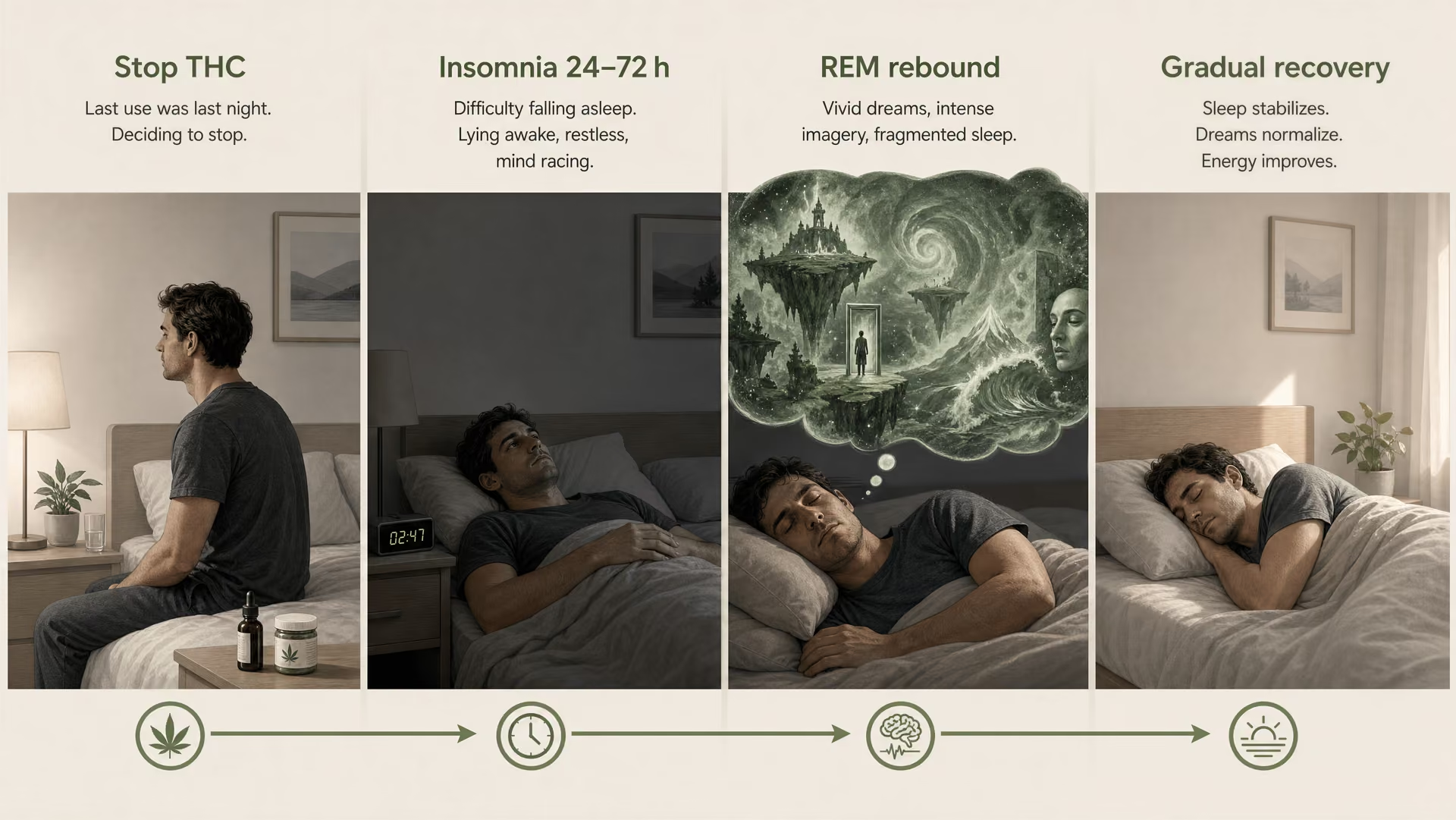
Withdrawal sleep disturbance timeline: first night to two weeks and beyond
Typical withdrawal sleep course
- Days 0–1 Some users notice poor sleep immediately, while others change later.
- Days 1–3 Sleep problems usually begin within 24 to 72 hours.
- Days 2–6 Insomnia and dream disturbance often feel worst during this window.
- Weeks 1–2+ Improvement starts for some users, but heavy users can take longer.
The first 24 hours after stopping are variable. Some people sleep poorly on night one; others do not notice a sharp change until day two or three. That delay makes sense biologically. THC and its metabolites do not vanish overnight, especially in heavy daily users with sustained tissue accumulation.
Across studies summarized by Budney and colleagues, and in withdrawal work by Samuel Allsop and others, sleep problems usually begin within 24 to 72 hours of cessation. The pattern is familiar: longer sleep-onset latency, more awakenings, lighter sleep, strange dreams, sweating, and a feeling of having slept without being restored by sleep.
The first week is usually the worst. Days 2 through 6 are often the peak window for insomnia and dream disturbance. In inpatient withdrawal research, sleep difficulty is among the most commonly reported symptoms; Allsop et al. found it in a large share of participants, around half in some reports. Ryan Vandrey’s work on cannabis withdrawal has also shown that sleep disturbance is not incidental. It is one of the symptoms most likely to drive relapse, because the user experiences the return of sleeplessness as immediate and punishing.
By the end of week one, some people start to improve. Sleep onset may shorten a bit. The number of awakenings falls. Dream intensity can remain high even as total sleep time slowly recovers. For many regular users, though, the second week is still rough. Clinical summaries commonly place the main withdrawal window at 1 to 2 weeks, with sleep symptoms often outlasting mood or appetite changes.
Heavy users can take longer. In someone using high-THC products every day, especially multiple times daily, sleep can remain abnormal beyond two weeks. That does not always mean classic withdrawal is still fully active; it may reflect a mix of persistent neuroadaptation, baseline insomnia that had been masked, anxiety rebound, or conditioned dependence on intoxication at bedtime. People often say, “I can’t sleep without cannabis.” Sometimes they are describing withdrawal. Sometimes they are describing pre-existing insomnia. Often it is both.
| Pattern | Withdrawal implication described |
|---|---|
| Nightly inhaled THC | Strong learned link between rapid intoxication and sleep onset |
| Nightly oral THC | Longer overnight exposure and possible sharper nighttime wakefulness after stopping |
| High-dose daily use | More severe withdrawal sleep symptoms |
| Intermittent use | Usually less disruption after stopping |
The route and pattern of use shape this course. Nightly inhaled THC can create a strong behavioral link between immediate intoxication and sleep onset. Oral products, because of slower onset and longer duration, may create a different problem: prolonged overnight exposure, morning grogginess while using, then a sharper sense of nighttime wakefulness after stopping. High doses tend to make withdrawal worse than low doses. Intermittent use generally causes less disruption than daily use.
CBD is a different case. It does not strongly activate CB1 the way THC does, and it does not produce the same well-described REM suppression pattern. Stopping CBD alone is not usually associated with the classic cannabis-withdrawal sleep syndrome. That distinction matters, especially because “CBD sleep” and “cannabis sleep” are often treated as interchangeable when they are not.
REM rebound and why dreams become intense after quitting
REM rebound is one of the most characteristic features of cannabis cessation. During regular THC exposure, REM sleep is often reduced. Babson, Sottile, and Vandrey wrote in their 2017 review in Current Psychiatry Reports that acute cannabis use can shorten sleep latency in some users but also suppress REM sleep and alter stage distribution. If REM has been chronically pushed down, stopping THC can produce a compensatory swing in the other direction.
REM rebound A compensatory increase in REM pressure and dream intensity after a period when REM sleep has been suppressed.
That swing is REM rebound: increased REM pressure, earlier REM onset in some cases, and more intense or memorable dreaming. The mechanism is not mystical. REM sleep is generated by tightly regulated brainstem and forebrain networks, modulated by cholinergic, monoaminergic, and endocannabinoid signaling. THC’s CB1-mediated effects alter neurotransmission in those circuits. With repeated use, the system adapts to the drug’s presence. Remove the drug, and the counterweight is temporarily gone. The result can be an overshoot.
Patients describe this in ordinary language: “my dreams came back,” “I’m having nightmares every night,” “the dreams feel too real,” “I wake up exhausted because I was dreaming nonstop.” Those reports track well with sleep physiology. More REM, or more pressure to enter REM, means more dream recall and often more emotional intensity. Dreams may also feel stranger because REM rebound tends to be fragmented and vivid rather than smoothly restorative.
For some people this is merely odd. For others it is severe. People with PTSD are a special case. REM suppression can reduce nightmare recall while THC is being used, which is one reason some patients feel cannabis helps. But that benefit has a trade-off. Once use stops, nightmares can rebound hard. Evidence for whole-plant cannabis in PTSD sleep problems is mixed and limited; synthetic cannabinoids such as nabilone have shown some signal for nightmare reduction in small studies, but that does not erase the long-term architecture issue. Fewer remembered nightmares during THC use does not necessarily mean healthier sleep.
REM rebound is also why cessation can feel psychologically destabilizing. Disturbing dreams increase anticipatory anxiety about sleep. Then anxiety itself makes sleep onset harder. That loop is one reason relapse often happens at night.
Which users are most likely to experience severe sleep disruption
Not every cannabis user gets severe rebound insomnia. The risk rises with dose, frequency, potency, and vulnerability.
Heavy daily users are at the top of the list. Someone using THC once or twice a week may notice little or no withdrawal insomnia. Someone using high-THC flower, concentrates, or repeated evening doses every day is much more likely to develop dependence-related sleep disruption. Chronic CB1 stimulation produces receptor downregulation and desensitization; that helps explain both tolerance during use and a rougher adjustment after stopping.
High-THC products raise the risk further. The modern market has shifted toward much stronger THC exposure than the material studied in older sleep papers. Greater potency does not equal better sleep. It often means stronger REM suppression, more tolerance, and a bigger rebound.
People with pre-existing insomnia or anxiety are also vulnerable. Many started using cannabis because sleep was already difficult. When they stop, withdrawal insomnia stacks on top of the original problem. The same is true for people with depression, trauma-related hyperarousal, or panic symptoms. If cannabis had been functioning as a nightly anxiolytic ritual, even imperfectly, its removal can expose both physiologic withdrawal and the untreated condition underneath.
Users who rely on cannabis as the only sleep tool tend to fare worse than those who have other supports in place. Poor sleep hygiene, irregular bedtimes, alcohol co-use, and caffeine overuse all amplify the rebound. Alcohol deserves special mention: it can make someone feel sedated, but it fragments sleep and worsens architecture, so substituting alcohol during cannabis withdrawal often makes the overall picture worse, not better.
There is also a bidirectional public-health pattern here. Survey data, including analyses from large cohorts such as NHANES, suggest frequent cannabis users are more likely than non-users or occasional users to report sleeping too little, sleeping too much, or having poorer sleep quality. Cause and effect run both ways, but the simple story that cannabis fixes sleep does not survive contact with chronic-use data.
The practical bottom line is plain. If a person stops regular THC use and develops insomnia, frequent awakenings, vivid dreams, or nightmares over the next several days, that fits a known withdrawal pattern. It usually begins within 24 to 72 hours, peaks in the first week, and often eases over 1 to 2 weeks, though heavy users can take longer. The vivid dreams are not a mystery. They are the visible face of REM rebound.
Clinical trials that matter
The clinical literature on cannabis and sleep is better than it was a decade ago, but it is still easy to overread. The strongest modern studies do not show a simple, global sleep benefit. They show something narrower: some cannabinoid formulations can improve self-reported insomnia symptoms over short periods in selected patients, while objective questions about sleep architecture, REM suppression, next-day effects, tolerance, and durability often remain unsettled.
That distinction matters because the user base is enormous. UNODC estimated that 244 million people used cannabis in 2022, or 4.6% of the global population aged 15–64, with a 34% increase over the previous decade. In the US, SAMHSA reported 61.8 million past-year users in 2023 and 21.8 million people meeting criteria for marijuana use disorder. In the EU, the 2024 European Drug Report estimated 22.8 million last-year users aged 15–64. At that scale, even small short-term sleep effects can become a public-health issue, especially when withdrawal insomnia, dependence, and heavy-use sleep problems are part of the same story.
Randomized trials in chronic insomnia
The insomnia trial that deserves to be named first is the randomized, double-blind, placebo-controlled crossover study by Oleg Suraev and colleagues, published in the 2020/2021 cycle and indexed in the Journal of Sleep Research. This study tested ZTL-101, a sublingual medicinal cannabis oil containing THC, CBD, and cannabinol/related cannabinoids and terpenes, in adults with chronic insomnia over two-week treatment periods.
Why it matters: it is one of the few peer-reviewed randomized insomnia trials using a defined cannabinoid product rather than a broad “medical cannabis” category. That alone puts it above much of the field.
The headline result was encouraging but limited. Active treatment improved insomnia symptoms and sleep quality versus placebo, and roughly 60% of participants were no longer classified as clinical insomniacs after two weeks of active treatment. Participants also reported gains in sleep onset and total sleep time. Those are clinically relevant changes. If a patient wants to know whether any modern randomized evidence suggests that a cannabinoid formulation can reduce insomnia symptom burden in the short run, this is the study to cite.
But it does not settle the larger argument. The treatment period was short. The sample was modest. The product was a mixed cannabinoid preparation rather than pure THC or pure CBD, so mechanism is not cleanly isolated. And because the trial leaned heavily on patient-reported outcomes, it cannot answer whether patients were truly sleeping in a more physiologic way or simply perceiving sleep as improved while architecture shifted in less favorable directions. That question is not academic. Babson, Sottile, and Vandrey’s 2017 review in Current Psychiatry Reports summarized a literature in which acute THC can shorten sleep latency in some users and suppress REM sleep, while chronic use is linked to sleep deficits and withdrawal-related insomnia.
So the Suraev trial is important. It is not a blank check for the claim that cannabis improves sleep.
Another trial that matters for separating marketing from evidence is the 2024 randomized crossover work by Suraev and colleagues in Neuropsychopharmacology examining 20 mg CBN alone and in combination with CBD in people with insomnia. This study is central because CBN is often presented as if its sedating effect were established fact. It is not. Human evidence has been thin for years, often resting on tiny older experiments or data confounded by co-administration with THC.
The significance of the 2024 CBN study is less that it proved CBN works and more that it directly tested the claim under controlled conditions. The correct takeaway at this stage is restraint. CBN may yet show a role in insomnia, but current human data do not justify broad confidence, much less sweeping product claims. This is one of the clearest examples in sleep medicine where public narrative got ahead of trial evidence.
By contrast, CBD-only sleep evidence remains weaker than many readers expect. Shannon et al. 2019 is often cited because 66.7% of patients in a psychiatric clinic sample had improved sleep scores in the first month. But that paper, in The Permanente Journal, was retrospective and uncontrolled. It was not a randomized insomnia trial. It is useful as a signal that anxiety reduction may improve subjective sleep for some patients, not as proof that CBD is a direct hypnotic. Mechanistically that fits what is known: CBD has low affinity for CB1 and CB2 orthosteric sites and appears to act indirectly through pathways including 5-HT1A, TRPV1, adenosine signaling, and endocannabinoid modulation. In plain terms, CBD may help some people sleep because it reduces arousal, not because it behaves like a standard sedative.
This is why pure-insomnia RCTs matter more than broad symptom surveys. They force the field to distinguish sedation from anxiolysis, and symptom relief from architecture change.
Cannex and Tilray studies: what is established, what still needs verification
This is where evidence grading has to be strict.
The “Cannex” label is not, at present, a clearly established canonical trial name in the indexed insomnia literature in the way ZTL-101 is. Without precise study identification, journal citation, and endpoint reporting, it should not be treated as a landmark insomnia RCT. If a Cannex-related dataset exists as a sponsor study, registry entry, conference abstract, or product-specific report, that is not the same thing as a peer-reviewed randomized trial with interpretable insomnia endpoints. So the evidence grade here is simple: not yet confirmable as a major peer-reviewed insomnia trial on the current record provided.
Tilray is easier to discuss because the company has sponsored cannabinoid research, but the same caution applies. “Tilray studies” is too broad. It can refer to product research, symptom-cluster studies, registries, or observational medical cannabis programs rather than dedicated insomnia RCTs with polysomnography. Unless a specific peer-reviewed Tilray insomnia trial is named with formulation, dose, sample, control condition, and endpoints, the proper characterization is company-sponsored clinical research of variable quality, not a settled evidentiary base for insomnia treatment.
That may sound severe. It should. Sponsor involvement does not invalidate a study, but vague sponsor-linked references should not be allowed to carry the same weight as a named randomized crossover trial in a sleep journal.
| Status | Claim |
|---|---|
| Established | Selected formulations can improve short-term self-reported insomnia symptoms |
| Established | THC can acutely reduce sleep latency in some users and suppress REM |
| Established | Withdrawal commonly causes sleep disturbance and vivid dreams |
| Still needing verification | Objective architecture benefit beyond short treatment windows |
| Still needing verification | Durability after nightly use and tolerance |
| Still needing verification | Whether mixed formulations outperform THC-dominant products on polysomnography |
What is established, then?
Established: - A small number of peer-reviewed randomized studies, especially Suraev’s medicinal cannabis oil crossover trial, support short-term improvement in self-reported insomnia symptoms with selected formulations. - The literature reviewed by Babson et al. supports the proposition that THC can acutely reduce sleep latency in some users and suppress REM sleep. - Chronic use and withdrawal complicate any sleep benefit. Budney and Allsop both reported that sleep disturbance is a common cannabis withdrawal symptom, often starting within 24 to 72 hours, peaking in the first week, and sometimes lasting two weeks or longer. Vivid dreams and REM rebound are common.
Still needing verification: - Whether sponsor-linked formulations marketed around sleep improve objective sleep architecture over more than a brief treatment window. - Whether any claimed benefit persists after tolerance develops through nightly use. - Whether mixed THC/CBD/CBN products differ meaningfully from THC-dominant products on polysomnography rather than just self-report scales. - Whether next-day cognitive impairment, residual sedation, and dependence risk offset short-term insomnia gains in real-world use.[8] Medical Cannabis and the Treatment of Obstructive Sleep Apnea: An American Academy of Sleep Medicine Position Statement. R. Kolla, colleagues. Journal of Clinical Sleep Medicine, 2018.
The same caution applies across other sleep disorders. Dronabinol showed some signal in obstructive sleep apnea studies such as the PACE trial, but the American Academy of Sleep Medicine stated in 2018 that medical cannabis and synthetic extracts should not be used routinely for OSA because evidence is insufficient and delivery reliability and adverse effects remain concerns. Restless legs syndrome evidence is mostly anecdotal and case-based. PTSD nightmares are a more plausible area of effect, especially with cannabinoids such as nabilone, but even there the likely mechanism includes REM suppression, which may reduce nightmare recall while leaving broader sleep quality unresolved.
Subjective scales versus polysomnography endpoints
This is the central methodological problem in the sleep-cannabis literature.
Many trials report improvements in the Insomnia Severity Index, sleep diaries, global sleep quality scores, or patient impression scales. Those outcomes matter. Insomnia is, by definition, partly a disorder of experience: difficulty falling asleep, staying asleep, or obtaining restorative sleep, plus daytime consequences. If a patient’s ISI score drops meaningfully, that is not trivial.
But subjective improvement is not the same thing as normalized sleep biology.
Polysomnography (PSG) An overnight sleep study that records brain activity, breathing, movement, and sleep stages.
Polysomnography, or PSG, measures the structure of sleep: time in N1, N2, N3, and REM, sleep latency, wake after sleep onset, arousal indices, respiratory events, limb movements, and more. Cannabis can improve the feeling of falling asleep while still altering architecture in ways that are not obviously favorable. THC is the clearest example. Through partial agonism at CB1 receptors, it can reduce arousal and shorten sleep latency in some people. It can also suppress REM sleep and shift stage distribution. Repeated CB1 activation may contribute to receptor downregulation and tolerance, which helps explain why heavy users often report poor sleep despite using cannabis at night.
That is why a trial showing a lower ISI score after two weeks does not answer several hard questions: Did total REM time fall? Did slow-wave sleep increase, decrease, or remain unchanged? Was sleep continuity objectively better, or did participants simply feel more sedated at bedtime? Were there residual next-day effects? What happened after a month, not just two weeks? What happened when treatment stopped?
These gaps matter even more because withdrawal studies show the reverse pattern. When heavy users stop, sleep difficulty often appears quickly, vivid dreaming returns, and REM rebounds. DSM-5 recognizes sleep difficulty as a cannabis withdrawal symptom. This means some apparent “benefit” in ongoing users may partly reflect relief of withdrawal-related sleep disruption between doses rather than true treatment of the underlying insomnia disorder.
There is also a measurement trap around CBD. If CBD lowers anxiety in the evening, a participant may rate sleep as improved even if PSG does not show a classic hypnotic effect. That does not make the result meaningless. It just means the mechanism is different. The field needs more trials designed to capture both dimensions at once: symptom relief and architecture.
The studies that matter most over the next few years will therefore have a few shared features: randomized design, clearly defined cannabinoid composition, enough duration to detect tolerance, and both subjective and objective endpoints. Until then, the fairest summary is this: cannabinoid formulations can help some patients with insomnia symptoms in the short term, but the evidence does not support the sweeping claim that cannabis simply improves sleep. It changes sleep. Sometimes that feels better. Sometimes it is better. Sometimes it is only different, and the bill arrives later in the form of tolerance, dependence, REM rebound, and poorer baseline sleep.
Cannabis and specific sleep disorders
| Condition | Article's bottom-line position |
|---|---|
| Chronic insomnia | Short-term symptom benefit is possible, but tolerance and rebound limit nightly long-term use |
| PTSD nightmares | Some benefit is plausible, likely tied to REM suppression, but trade-offs remain |
| Obstructive sleep apnea | Routine cannabis use is not recommended |
| Restless legs syndrome | Evidence is mostly anecdotal or case-based |
“Sleep” is not one condition. That sounds obvious, but cannabis discussions often ignore it. Trouble falling asleep, trauma-related nightmares, obstructive sleep apnea, and restless legs syndrome are different disorders with different mechanisms, different risks, and very different standards of evidence. That matters when cannabis is used by so many people: UNODC estimated 244 million users globally in 2022, up 34% over the prior decade, while SAMHSA reported 61.8 million past-year users in the US in 2023 and 21.8 million with marijuana use disorder. Any claim that cannabis “helps sleep” has to survive that scale and the clinical details.
Mechanistically, the attraction is understandable. THC is a partial agonist at CB1 receptors, and CB1 signaling affects arousal, sleep onset, REM regulation, and neurotransmitter release in hypothalamic, basal forebrain, brainstem, and limbic circuits. Acute THC can make some people feel sleepy and can shorten sleep latency. But that is not the same as restoring normal sleep. Babson, Sottile, and Vandrey’s 2017 review made the core problem plain: cannabis can alter sleep architecture, especially by suppressing REM, and repeated exposure is tied to tolerance, withdrawal insomnia, and poorer sleep in chronic users. CBD sits in a different category. It does not behave like a standard hypnotic, has low affinity for CB1 and CB2 orthosteric sites, and may help sleep more by reducing anxiety or pre-sleep hyperarousal than by directly sedating the brain. CBN has been marketed aggressively for sleep, but the human evidence remains thin.
Against that backdrop, disorder-specific judgment is the only sensible approach.
Insomnia disorder
Insomnia is where the evidence is most likely to be oversold. There is some signal for short-term symptom improvement, especially with THC-containing products, but the leap from “helps me fall asleep” to “treats insomnia disorder” is too large.
The strongest modern trial often cited is Suraev et al. (publication cycle 2020–2021), a randomized, double-blind, placebo-controlled crossover study of ZTL-101, a medicinal cannabis oil, in adults with chronic insomnia. Over two weeks of active treatment, participants reported meaningful improvement in insomnia symptoms and sleep quality, and about 60% were no longer classified as clinical insomniacs after active treatment. That is a real result. It should not be dismissed.
Still, it has clear limits. The trial was short. Outcomes were largely subjective. It does not answer what happens after months of nightly use, whether benefits persist, or how much of the effect reflects sedation versus a true normalization of sleep architecture. Those are not technicalities; they are the whole issue in chronic insomnia care.
THC can shorten sleep onset in some people, particularly at lower doses or in people whose insomnia is driven by anxiety or hyperarousal. Route matters too. Inhaled THC acts within minutes and peaks around 15 to 30 minutes, so some users find it better for sleep initiation. Oral cannabinoids take longer, often 30 to 120 minutes, and last longer because of first-pass metabolism and 11-hydroxy-THC formation, which can help with sleep maintenance but also raises the risk of next-day impairment. Dose matters just as much. The response is biphasic. Low doses may calm. Higher doses can do the opposite: anxiety, tachycardia, dysphoria, and fragmented sleep.
Tolerance is the central problem. CB1 receptors downregulate and desensitize with repeated THC exposure. The same bedtime dose that initially shortens sleep latency often loses effect. Users then increase dose or frequency, and sleep becomes dependent on continued use. That pattern helps explain why frequent or daily users often report worse sleep quality than non-users in population studies, even though many began using cannabis because they slept badly in the first place. The relationship is bidirectional, but dependency pushes it in the wrong direction.
Withdrawal studies make this especially clear. Budney and colleagues, and later Allsop and colleagues, found that sleep difficulty is one of the most common cannabis withdrawal symptoms. It usually starts within 24 to 72 hours of stopping, peaks in the first week, and can last two weeks or more in heavy users. Vivid dreams are common. So is REM rebound. DSM-5 includes sleep difficulty as a cannabis withdrawal symptom for good reason. A substance that predictably produces rebound insomnia when stopped is not a simple insomnia remedy.
CBD deserves a narrower interpretation. It may help some people with insomnia when anxiety is the driver, but that is not the same as a direct sleep-promoting effect. Shannon et al. (2019) reported improved sleep scores in 66.7% of patients in the first month in a psychiatric clinic sample, but this was a retrospective series, not a randomized insomnia trial. It is hypothesis-generating, not definitive.
Bottom line: short-term symptom relief is plausible, especially with THC-containing formulations, but nightly cannabis use is a poor long-range answer for chronic insomnia disorder because tolerance and rebound commonly follow.
PTSD nightmares
PTSD-related nightmares are one of the few areas where REM suppression may be part of the reason some patients report benefit. Nightmares often arise from dysregulated dreaming and trauma processing during REM sleep. THC suppresses REM. That can reduce nightmare frequency or at least nightmare recall. But it is a trade-off, not a clean therapeutic win.
The strongest cannabinoid-specific data here are not for dispensary-style whole-plant products. They are for nabilone, a synthetic cannabinoid. Small trials and case series have suggested that nabilone can reduce trauma-related nightmares and improve sleep in some patients with PTSD. These findings are clinically interesting, and many clinicians who work with refractory nightmares take them seriously. Even so, the evidence base is still limited by sample size, duration, and heterogeneity.
Whole-plant cannabis evidence is weaker and more mixed. Some patients report fewer nightmares and easier sleep onset. Others develop tolerance, need escalating doses, or end up with worse overall sleep quality despite fewer remembered dreams. That makes sense physiologically. If the mechanism is REM suppression, the immediate effect may feel helpful, but chronic REM suppression is not the same as healthy recovery sleep. Once use stops, REM rebound can produce exactly the symptom the person was trying to avoid: vivid, intense dreaming.
This is where the architecture issue matters most. Reducing nightmare recall is not automatically equivalent to treating PTSD sleep disturbance. PTSD involves hyperarousal, fragmented sleep, autonomic activation, comorbid depression or substance use, and often obstructive sleep apnea as well. Cannabis may blunt one piece of the syndrome while aggravating others.
CBD is sometimes discussed as an alternative here because of anxiolytic effects, but direct evidence for CBD as a treatment for PTSD nightmares is limited. It may reduce anxiety in some patients and thereby lower pre-sleep arousal, yet that remains different from the REM-modulating effect that appears to drive the nightmare story with THC or nabilone.
A defensible position is this: cannabinoids, particularly nabilone, may help selected patients with PTSD nightmares, but the evidence is still limited, and any benefit likely comes with REM-related trade-offs and tolerance risk. That argues for specialist oversight, not casual generalization.
Obstructive sleep apnea
This is the area where the answer should be most direct: cannabis is not recommended for obstructive sleep apnea.
The American Academy of Sleep Medicine said so explicitly in its 2018 position statement, advising that medical cannabis and synthetic marijuana extracts should not be used for OSA treatment because evidence is insufficient and concerns remain about delivery reliability, adverse effects, and daytime sleepiness. That position still stands as the clearest professional guidance.
Why the caution despite occasional headlines? Mostly because one line of research, centered on dronabinol, showed a possible signal without establishing a standard treatment. In the PACE trial, dronabinol produced a modest reduction in apnea-hypopnea index versus placebo in some patients. Interesting, yes. Practice-changing, no. The effect size was not strong enough, the evidence base was too thin, and dronabinol did not replace established therapies such as CPAP, mandibular advancement devices, weight reduction, positional therapy, or upper airway evaluation.
There is also a practical risk that gets lost in public discussions. OSA is a breathing disorder. Sedating substances can worsen airway collapsibility, blunt arousal responses, and increase accident risk the next day. Inhaled products also deliver variable doses, while oral products can cause prolonged impairment. Add alcohol and the picture gets worse, both for sleep architecture and respiratory safety.
Patients with insomnia symptoms often have unrecognized OSA. If they self-treat with cannabis because it “knocks them out,” they may feel subjectively sedated while the underlying apnea remains untreated. That is not success. It is masked disease.
So the evidence-based position is simple: cannabis-based treatment should not be used as routine therapy for obstructive sleep apnea, and anyone considering it for “sleep” should be screened for apnea first.
Restless legs syndrome and other movement-related sleep complaints
Restless legs syndrome sits in a very different evidence category from insomnia. Here the literature is mostly case reports and small case series. Some patients with RLS or sleep-disrupting leg discomfort report relief with cannabis, often improved ability to fall asleep because the urge to move becomes less intrusive. Those reports are worth hearing, especially in treatment-resistant cases. But they are not high-quality proof.
There are no strong randomized controlled trials showing that THC, CBD, or other cannabinoids reliably treat RLS. That absence matters. RLS symptoms fluctuate, are highly subjective, and can improve or worsen for many reasons: iron status, medication changes, renal disease, neuropathy, caffeine, pregnancy, and circadian timing. Without controlled trials, placebo effects and regression to the mean are hard to separate from true drug benefit.
The same caution applies to broader “movement-related sleep complaints,” a loose category that often includes nocturnal muscle tension, cramping, periodic limb movement complaints, or pain-related tossing and turning. Cannabis may help some of these people indirectly by reducing pain, anxiety, or sleep-onset distress. That is not the same as showing disease-specific efficacy.
CBD has no strong RLS evidence. THC-rich products may blunt perception of discomfort, but they also carry the same tolerance and withdrawal liabilities seen elsewhere. If used nightly, the person may eventually face two problems instead of one: leg symptoms plus cannabis-dependent sleep.
A careful clinical approach is better. Check ferritin and iron deficiency. Review antidepressants, antihistamines, and dopamine-blocking drugs. Distinguish true RLS from neuropathy, akathisia, cramps, and positional discomfort. If cannabinoids are considered at all, they should be framed as experimental symptom management in selected patients, not an established treatment.
That distinction matters because many sleep complaints get bundled together under the phrase “cannabis helps sleep.” It may help a person feel less distressed at bedtime. It may, for a short period, reduce nightmare recall or shorten sleep latency. But for OSA the recommendation is no, for RLS the evidence barely rises above anecdote, for PTSD nightmares the mechanism likely involves REM suppression with trade-offs, and for insomnia the short-term gains run straight into tolerance and withdrawal. That is the real clinical picture.
Cannabinoid and terpene combinations marketed for sleep
Sleep marketing around cannabis often treats labels as if they were mechanisms. “Nighttime,” “indica,” “high myrcene,” “THC + CBN,” “balanced CBD.” The problem is that sleep effects depend far more on dose, route, timing, prior exposure, and the exact cannabinoid profile than on category words borrowed from retail culture. That matters because this is not a niche issue. UNODC estimated that 244 million people used cannabis in 2022, up 34% over the prior decade, while SAMHSA reported 61.8 million past-year users in the US in 2023 and 21.8 million with marijuana use disorder. If millions are using cannabis for sleep, sloppy ideas about formulations become a public-health problem.
The clinically useful question is not “Is this strain sleepy?” It is: what does this formulation contain, how fast does it act, how long does it last, and what does it do to sleep architecture after repeated use?
| Formulation pattern | Likely experience described in the article |
|---|---|
| High THC / low CBD | More obvious psychoactive and sedating effects, but also higher risk of anxiety and fragmented sleep at larger doses |
| Balanced THC:CBD | May blunt some unwanted THC effects in some users |
| CBD-only | May lower anxiety or arousal in some users, but is not a reliable hypnotic |
| THC + CBN marketing blend | Claims outrun the current evidence |
THC:CBD ratios and why the ratio changes the experience
THC remains the main cannabinoid driving acute sedation-like effects in many users. Babson, Sottile, and Vandrey’s 2017 review summarized the basic pattern seen across the literature: acute THC can shorten sleep onset latency for some people, but it also suppresses REM sleep and changes stage distribution. That trade-off is central. Falling asleep faster is not the same thing as improving sleep.
CBD changes the picture, though not in the simplistic way often claimed. It is not a classic hypnotic. CBD has low affinity at CB1 and CB2 orthosteric sites and appears to work through indirect pathways including 5-HT1A signaling, TRPV1, adenosine-related effects, and modulation of endocannabinoid tone. In practice, that means CBD may reduce pre-sleep arousal or anxiety in some people rather than directly “knocking them out.” In other settings, it may be neutral or even alerting.
That is why THC:CBD ratio matters. A high-THC, low-CBD product is more likely to produce obvious psychoactive effects, and at low doses that may feel relaxing or sleep-promoting. Push the THC dose higher, however, and the same product may increase anxiety, tachycardia, perceptual disturbance, and sleep fragmentation. The dose-response curve is not linear. It is often biphasic.
A more balanced THC:CBD ratio may blunt some of THC’s unwanted psychoactive effects in some users, especially anxiety and dysphoria, which can help with sleep initiation. “May” is the right verb here. This is not guaranteed, and the interaction is not simple receptor arithmetic. CBD does not merely cancel THC. The ratio changes the subjective experience, but the actual result depends on the person, dose, and route. An oral 1:1 product taken too late in the evening can still produce next-day grogginess. An inhaled high-THC product may help someone fall asleep quickly yet wear off in a few hours, setting up middle-of-the-night waking.
There is some real trial evidence for defined formulations. In Suraev et al.’s randomized crossover trial of medicinal cannabis oil for chronic insomnia, published in the 2020/2021 cycle, 60% of participants were no longer classified as clinical insomniacs after two weeks of active treatment. That is meaningful, but it does not prove a general sleep benefit for cannabis as a class. The trial was short, relied heavily on self-reported outcomes, and does not erase the larger literature showing REM suppression, tolerance, and withdrawal-related sleep disturbance.
CBD-only formulations should be framed even more carefully. Shannon et al. 2019 reported improved sleep scores in 66.7% of patients within the first month in a retrospective anxiety/sleep clinic sample, but that was not a randomized insomnia trial and likely reflects indirect benefits through reduced anxiety in at least some patients. It is suggestive, not decisive.
CBN deserves special skepticism. It is widely marketed as “the sleepy cannabinoid,” but the evidence is thin. Historical claims often trace back to small, old studies involving THC co-administration. More recent human work, including the 2024 randomized crossover trial by Suraev et al. testing CBN alone and with CBD in insomnia, does not support sweeping claims. At this point, CBN is better understood as a case study in branding outrunning data.
For people evaluating a sleep formulation, ratio is only one layer. Route and timing change everything. Inhaled THC acts within minutes and may help with sleep initiation, but its shorter duration may not help sleep maintenance. Oral products usually start 30 to 120 minutes later, last longer, and generate 11-hydroxy-THC through first-pass metabolism, which can increase intensity and raise the risk of next-day impairment. A “sleep blend” is not one thing if one version is inhaled and another is oral.
Myrcene, linalool, beta-caryophyllene, and the limits of terpene evidence
| Terpene | Common sleep marketing claim | Article's evidence view |
|---|---|---|
| Myrcene | Sedating or couch-lock | Plausible but direct human sleep evidence is thin |
| Linalool | Calming or sleep-promoting | Some support outside cannabis, but cannabis-specific sleep data are sparse |
| Beta-caryophyllene | Supports sleep through CB2-related effects | Biologically interesting, but not proven as a predictable hypnotic in humans |
Terpenes are often used to make sleep products sound pharmacologically precise. The evidence is not yet that precise.
Myrcene is probably the terpene most associated with cannabis sedation claims. Linalool, also found in lavender, is commonly linked to calming effects. Beta-caryophyllene gets attention because it can act at CB2 receptors, which makes it more than just an aromatic compound. These mechanisms are plausible. Plausible is not the same as proven in human sleep studies.
Linalool has the strongest cultural and preclinical sleep reputation of the group, partly because of literature outside cannabis, including aromatherapy and animal studies suggesting anxiolytic or sedative-like effects. But direct human evidence showing that linalool-rich cannabis products improve polysomnography-defined sleep is still sparse. Myrcene has even less direct human sleep evidence despite constant repetition of the “couch-lock terpene” claim. Beta-caryophyllene is biologically interesting, especially in inflammation and stress models, yet there is little reason to assume that adding it to a cannabis product creates a predictable hypnotic effect.
This is the broader problem with terpene narratives. Most claims are extrapolations from preclinical work, non-cannabis studies, aroma studies, or chemistry tables rather than controlled trials of finished cannabis formulations in people with insomnia. The finished product contains multiple cannabinoids, multiple terpenes, and often large amounts of THC, which is likely doing most of the noticeable acute sleep-related work. Once THC is present at psychoactive doses, it becomes hard to know whether a user is responding to the terpene profile, to THC itself, to expectancy, or to all three.
There may eventually be useful formulation science here. A product combining modest THC with CBD and linalool-rich volatile content could, in theory, reduce pre-sleep anxiety while avoiding some high-THC drawbacks. But that remains a hypothesis more than an established clinical principle. Mechanistic caution is the honest position.
What “indica for sleep” gets wrong
| Popular shortcut | Why the article rejects it |
|---|---|
| Indica = sedating | Labels do not reliably predict cannabinoid dose, terpene profile, or sleep effect |
| Sativa = stimulating | Commercial products are heavily hybridized and can differ widely despite the label |
| Cultivar label as guidance | Actual THC/CBD content, route, timing, and user tolerance matter more |
“Indica for sleep” survives because it is simple, memorable, and sometimes subjectively true for a given product. It is not a reliable pharmacology rule.
The indica/sativa distinction started as a botanical and morphological classification, not a validated shorthand for sedating versus stimulating psychoactive effects. Modern commercial cannabis has been heavily hybridized, and the label on the package tells you little about actual cannabinoid concentrations, terpene composition, dose delivered, or expected sleep effects. Two products both sold as indica may differ radically in THC content, CBD content, dominant terpenes, and onset profile.
That is why cultivar folklore performs poorly as clinical guidance. A so-called indica with very high THC may worsen anxiety and fragment sleep in one person while knocking another out quickly. A product labeled sativa but containing lower THC and some CBD may produce less racing cognition than the “indica” next to it. The pharmacology does not care about the folk taxonomy.
The better approach is formulation-first. Ask what the THC dose is, whether CBD is present, whether the route is inhaled or oral, whether the person is cannabis-naive or tolerant, and whether the sleep problem is sleep initiation, sleep maintenance, trauma-related nightmares, or something else. Even then, caution is needed. Frequent use can lead to tolerance through CB1 receptor downregulation and desensitization, and withdrawal commonly brings insomnia and vivid dreams. Budney and Allsop both found sleep disturbance among the most common withdrawal symptoms, often starting within 24 to 72 hours, peaking in the first week, and sometimes lasting two weeks or longer.
So the blunt claim that “indica helps sleep” misses the real story. Some formulations can help some patients under some conditions. Others mainly suppress REM, build tolerance, and set up rebound insomnia later. Sleep use should be based on actual constituents, not mythology attached to a cultivar label.
Dose, route, and timing: where real-world outcomes are decided
| Variable | Why it matters for sleep |
|---|---|
| Dose | Lower and higher doses can have very different effects |
| Route | Inhaled products act quickly; oral products act later and last longer |
| Timing | A dose can miss the sleep-onset window or still be active the next morning |
How cannabinoids affect sleep often has less to do with the label on the bottle than with three practical variables: how much is taken, how it is taken, and when. That is where pharmacology turns into a bedtime outcome. The same THC-dominant product can feel like a sleep-onset aid when inhaled at a low dose 20 minutes before bed, then become a cause of midnight waking, anxiety, or next-morning grogginess when swallowed in a larger dose too late in the evening.
This matters at population scale. UNODC estimated that 244 million people used cannabis in 2022, up 34% over the prior decade. SAMHSA reported 61.8 million past-year marijuana users in the United States in 2023, and 21.8 million people meeting criteria for marijuana use disorder. In the EU, the 2024 European Drug Report estimated 22.8 million last-year users aged 15–64. Sleep-related self-medication is not a fringe behavior inside those numbers. Small differences in route, dose, and timing can therefore produce a lot of poor nights, and a lot of avoidable impairment.
The basic pharmacology is straightforward. THC is a partial agonist at CB1 receptors, and acute CB1 activation can reduce arousal and shorten sleep latency in some people. But that same signaling also changes sleep architecture, especially REM expression, and with repeated exposure CB1 receptors downregulate and desensitize. That is one reason acute benefit can fade. CBD is different. It does not act like a classic sedative-hypnotic and has low affinity for CB1 and CB2 orthosteric sites; when it affects sleep, it may do so indirectly through anxiety reduction, altered arousal, or other targets such as 5-HT1A and adenosine-related signaling. Route and timing determine whether those effects line up with the person’s actual sleep problem.
Inhaled cannabis for sleep initiation
Inhaled cannabis is the fastest route. Effects usually begin within minutes, with peak subjective intoxication and psychoactive impact often arriving around 15 to 30 minutes after inhalation. For people whose main complaint is sleep initiation rather than staying asleep, that timing explains the appeal. If THC is going to reduce sleep latency, inhalation is the route most likely to match that need.
That is the upside. The downside is equally predictable: inhaled cannabinoids wear off faster than oral forms. A person may fall asleep more easily, then wake at 2 or 3 a.m. as the acute effect fades. In other words, inhalation fits sleep onset problems better than sleep maintenance problems. It is a poor pharmacokinetic match for someone who wakes repeatedly through the night.
This distinction gets lost in casual advice. Babson, Sottile, and Vandrey’s 2017 review in Current Psychiatry Reports made the larger point well: acute THC exposure may decrease sleep onset latency, but that does not mean it simply “improves sleep.” REM suppression, stage shifts, and chronic-use deficits complicate the picture. A person can fall asleep faster and still end up with altered sleep architecture and poorer long-run sleep quality.
Inhalation also makes dose titration deceptively easy at first and surprisingly sloppy in practice. Because onset is rapid, people often take repeated inhalations until they feel sleepy. The problem is that “sleepy” and “adequately dosed” are not the same thing. Overshooting can produce transient tachycardia, dry mouth, dizziness, panic, and a paradoxical increase in arousal. Higher THC doses are more likely to trigger that reaction, especially in occasional users, people prone to anxiety, and those using stimulating settings, bright screens, or alcohol at the same time.
That is one reason route alone never predicts outcome. A low inhaled THC dose near bedtime may help one person fall asleep. A larger dose may fragment sleep instead. Some users then respond by taking more during the night, which can reinforce dependence patterns without fixing the underlying sleep disorder. If the real problem is untreated anxiety, obstructive sleep apnea, restless legs syndrome, circadian delay, or medication-related insomnia, rapid-onset THC can mask symptoms while leaving the disorder in place.
Edibles and oils for sleep maintenance
Oral cannabinoids create a different sleep profile because absorption is slower and less predictable. Edibles and oils usually begin working somewhere between 30 and 120 minutes after dosing, and the range is wide for a reason: gastric emptying, fed versus fasted state, formulation, liver metabolism, and individual variability all matter. After oral THC, first-pass metabolism generates 11-hydroxy-THC, an active metabolite that can be potent and long-lasting. That is why oral dosing often feels stronger, heavier, and harder to judge than inhalation.
For sleep, the practical implication is clear. Oral forms may fit sleep maintenance better than inhaled forms because they last longer. Someone who wakes after three or four hours may perceive more benefit from an oil or edible taken well before bedtime than from an inhaled dose taken at lights-out. This longer duration is part of why oral products have appeared in insomnia trials. In the randomized crossover trial of ZTL-101 for chronic insomnia reported by Suraev and colleagues in the 2020/2021 publication cycle, active treatment improved insomnia symptoms and self-reported sleep outcomes over two weeks; 60% of participants were no longer classified as clinical insomniacs after active treatment. Still, that was a short trial relying mainly on subjective outcomes, not proof that cannabinoid oils restore normal sleep architecture.
Oral dosing is also where the most common real-world mistakes happen. People take a dose, feel little after 30 or 45 minutes, assume it “isn’t working,” then take more. By the time absorption catches up, they are far beyond the intended dose. The result is not better sleep. It is often anxiety, dysphoria, confusion, orthostatic symptoms, vomiting, or a very long night.
Late-night oral dosing is especially risky for next-day function. A product taken at 10:30 or 11:00 p.m. may still be active after waking, particularly at higher THC doses or in slower metabolizers. That can impair morning alertness, reaction time, and driving ability. People often interpret this as “I slept deeply,” when part of the experience is simply residual intoxication. Feeling sedated on waking is not the same thing as having achieved restorative sleep.
Oils that include CBD change the subjective profile, but not always in the way marketing implies. CBD is not a reliable hypnotic. In Shannon et al. 2019, a retrospective anxiety/sleep clinic series, 66.7% of patients had improved sleep scores in the first month, but this was not a randomized sleep trial and effects fluctuated over time. In some contexts CBD can even be alerting, particularly at certain doses or earlier in the day. For a patient whose insomnia is driven by pre-sleep anxiety, CBD-rich oral formulations may help by lowering arousal. That is different from directly inducing sleep.
Biphasic dose responses, residual next-day effects, and dosing mistakes
Cannabinoids do not follow a simple more-is-better rule. The dose-response curve is often biphasic. Low THC doses can feel calming for some people. Higher doses are much more likely to increase anxiety, paranoia, tachycardia, and perceptual discomfort. At bedtime, that can mean longer sleep latency rather than shorter, followed by more awakenings and poorer sleep continuity. People who say cannabis “stopped working for sleep” are often describing one of two things: tolerance, or repeated overshooting.
Tolerance matters because CB1 signaling adapts. With frequent use, the same bedtime dose produces less sedation and less perceived benefit, while baseline sleep may worsen in the absence of the drug. Babson et al. highlighted this pattern, and withdrawal studies by Budney, Allsop, and colleagues help explain it from the other side. Sleep difficulty is one of the most common cannabis withdrawal symptoms, often emerging within 24 to 72 hours, peaking in the first week, and sometimes lasting two weeks or longer in heavy users. Vivid dreams are common because REM rebounds after suppression. That is not a sign that cannabis was restoring normal sleep all along. Often it was suppressing symptoms while dependence developed.
Route and timing can intensify this cycle. A person using inhaled THC every night for sleep onset may begin adding an edible for sleep maintenance. If the oral dose is taken too late, next-morning sedation appears. If the THC dose is pushed upward to recapture the original effect, anxiety and fragmentation become more likely. If use stops abruptly, insomnia rebounds. This is how a short-term aid turns into a sleep liability.
A few practical errors show up again and again. Taking oral THC too close to bedtime and expecting immediate sleep is one. Redosing before the first dose has peaked is another. Mixing cannabis with alcohol is a third; alcohol can speed THC absorption, worsen airway instability, and further damage sleep architecture. Using cannabis to treat suspected sleep apnea is another mistake altogether. The American Academy of Sleep Medicine stated in 2018 that medical cannabis and synthetic extracts should not be used for obstructive sleep apnea because evidence is insufficient and delivery is inconsistent. Sedation without treatment of airway collapse is not sleep medicine.
The safer clinical framing is blunt. Match route to the symptom. Inhaled products are faster and shorter; oral products are slower, longer, and less predictable. Use the lowest dose that produces the intended effect, not the strongest subjective effect. Avoid nightly escalation. Avoid late oral THC if next-morning alertness matters. And if a person needs cannabis every night just to sleep, the right question is no longer “which product?” but “what happened to the underlying sleep system?”
Adverse effects, interactions, and who should be cautious
Cannabis used for sleep is often treated as low-risk because it is familiar, widely used, and in many places legally accessible. That framing is too casual. Sleep benefits, when they occur, come with trade-offs: acute THC can shorten sleep onset for some people, but it also suppresses REM sleep, shifts sleep-stage distribution, and can leave residual effects the next day. Repeated use adds another problem—tolerance. The result is that a person may need more to get the same short-term effect while their baseline sleep worsens when they are not using.
That matters at population scale. UNODC estimated that 244 million people used cannabis in 2022, a 34% increase over the prior decade. In the United States, SAMHSA reported 61.8 million past-year users in 2023 and 21.8 million people meeting criteria for marijuana use disorder. Sleep self-medication sits inside that large exposure base. Even if only a minority develop adverse sleep-related effects, the absolute number is substantial.
The main clinical point is simple: cannabis for sleep is not benign just because it is plant-derived or common.
Parasomnias, anxiety, tachycardia, and next-day impairment
The adverse-effect profile depends heavily on the cannabinoid, the dose, the route, and the person taking it. THC is the main driver of intoxication, psychomotor slowing, anxiety at higher doses, and cardiovascular effects such as tachycardia. CBD behaves differently. It is not a classic hypnotic and does not reliably sedate; in some people and at some doses it may even feel alerting. CBN is often marketed as a sleep cannabinoid, but the human data remain thin, including the 2024 randomized crossover trial by Suraev et al., which did not settle the question in favor of broad sleep claims.
For sleep users, the most common acute problem is oversimplifying “sleepy” as “safe.” A product that helps someone fall asleep faster can still worsen sleep quality, impair reaction time the next morning, or increase confusion and falls if it lasts into the early hours. Oral products deserve special caution here. Because oral THC may begin 30 to 120 minutes after dosing and can last much longer than inhaled forms, people often re-dose too early, then end up more impaired than intended. First-pass metabolism to 11-hydroxy-THC can make the effects stronger and more prolonged.
Next-day impairment is not just feeling groggy. It can include slowed driving performance, poor balance, reduced attention, and degraded decision-making. Older adults are especially vulnerable, but younger adults are not exempt. If a product is taken in the middle of the night for sleep maintenance, residual impairment after waking becomes even more likely.
THC can also provoke anxiety rather than calm it. This is one of the clearest examples of a biphasic dose response: low doses may reduce anxiety in some users, while higher doses can increase it. A person who takes more THC because “the first amount stopped working” may end up with the exact opposite of the intended sleep effect—racing thoughts, tachycardia, and fragmented sleep. This pattern is common enough that it should be considered a predictable risk, not a rare oddity.
Parasomnias deserve mention even though the literature is less developed than for alcohol or classic hypnotics. Any sedating or intoxicating substance that changes arousal thresholds and sleep architecture can complicate abnormal nocturnal behaviors. Reports of vivid dreams, dream enactment-like behaviors, confusion on awakening, and unusual nighttime experiences can occur during use, dose escalation, or withdrawal. Withdrawal is especially relevant. Budney et al. and Allsop et al. found that sleep difficulty is one of the most frequent cannabis withdrawal symptoms, often beginning within 24 to 72 hours, peaking during the first week, and sometimes lasting two weeks or longer in heavy users. Vivid dreaming and REM rebound are well recognized. A person may start nightly cannabis because of poor sleep, then find that stopping causes insomnia and disturbing dreams, which reinforces continued use.
Respiratory concerns also need a clear statement. Cannabis is not a routine treatment for obstructive sleep apnea. The American Academy of Sleep Medicine advised against using medical cannabis or synthetic extracts for OSA in its 2018 position statement because the evidence is insufficient and adverse effects are a concern. Sedation can be a problem in vulnerable patients with sleep-disordered breathing, especially when cannabis is combined with alcohol, opioids, or other central nervous system depressants.
Interactions with alcohol, sedatives, antidepressants, and sleep medications
The interaction risk with cannabis is often underestimated because people think in terms of “natural” versus “pharmaceutical.” Pharmacology does not care about that distinction.
Alcohol is the most important combination to avoid when cannabis is being used for sleep. The pair can increase dizziness, psychomotor impairment, and cognitive slowing more than either alone. They also compound sleep disruption. Alcohol may hasten sleep onset but fragments sleep later in the night; THC can suppress REM and alter stage structure. The combination can therefore produce the feeling of heavy sedation without healthy sleep architecture. In people with sleep apnea or other breathing vulnerability, adding multiple sedating substances raises concern about airway instability and impaired arousal responses during sleep.
| Co-exposure | Risk described in the article |
|---|---|
| Alcohol | More impairment and poorer sleep architecture |
| Benzodiazepines or Z-drugs | Over-sedation, unusual nocturnal behavior, and next-day impairment |
| Opioids or gabapentinoids | Higher sedation burden and narrower safety margin |
| Sedating antihistamines or antipsychotics | Added confusion, falls, and residual sedation risk |
Sedative drugs present similar additive risks. Benzodiazepines, “Z-drugs” such as zolpidem, sedating antihistamines, gabapentinoids, opioids, and some antipsychotics can all increase excessive sedation, confusion, falls, and next-day impairment when combined with THC-containing products. This does not always produce dangerous respiratory depression in the same way as opioid combinations, but the margin of safety narrows fast in frail patients, those with pulmonary disease, and anyone taking multiple depressants.
Antidepressants require a more tailored discussion. Many people with insomnia also have depression or anxiety, so overlap is common. Cannabis may worsen anxiety in some users, destabilize mood, or interfere with symptom tracking: if sleep improves briefly but mood worsens, the net effect can be harmful. Pharmacokinetic interactions are also plausible, particularly with CBD, which can affect CYP enzymes involved in metabolizing a range of medications. The exact clinical significance depends on the drug and the dose, but the principle is straightforward: CBD is pharmacologically active and not interaction-free. SSRIs, SNRIs, tricyclics, mirtazapine, and trazodone may all warrant review when a cannabinoid product is added.
Sleep medications are a separate caution because they are often taken on an “as needed” basis, which invites layering. A person may take zolpidem, find it insufficient, and then add cannabis. Or the reverse. That is a setup for over-sedation, unusual nocturnal behavior, amnesia, and residual morning impairment. If someone is already on prescription sleep medication, adding cannabis should not be treated as casual experimentation.
Special populations: adolescents, older adults, pregnancy, and people with psychiatric vulnerability
Groups needing extra caution
- Adolescents and young users
- Older adults
- Pregnant patients
- People with anxiety, bipolar disorder, psychosis risk, or substance use disorder
Adolescents should be approached with the greatest caution. The sleep complaint may be real, but the developing brain changes the risk-benefit equation. Frequent cannabis exposure in youth is associated with higher rates of dependence, and sleep can become part of that cycle. What starts as self-treatment can turn into withdrawal-driven insomnia when use is interrupted. Given that EUDA estimated 15.1 million young adults aged 15 to 34 in the EU used cannabis in the last year, this is not a niche issue.
Older adults face a different cluster of risks: slower metabolism, polypharmacy, baseline balance problems, orthostatic symptoms, and higher fall risk. Even mild residual sedation can matter. An edible taken too late in the evening may still be active at dawn, increasing the risk of confusion on standing, nighttime bathroom falls, or impaired driving the next morning. Cognitive impairment can also be harder to distinguish from medication effects or early neurodegenerative disease in this age group.
Pregnancy is a caution category, not a gray zone. Cannabis should not be framed as a harmless sleep aid during pregnancy. Sleep disturbance is common in pregnancy, but prenatal cannabinoid exposure raises fetal safety concerns, and professional guidance generally advises avoidance. That applies to smoked, vaped, and oral products alike. “It helps me sleep” is not enough to overcome the uncertainty and potential developmental risk.
People with psychiatric vulnerability may be the group in whom the risk is most often minimized. THC can worsen panic, precipitate paranoia, and in susceptible individuals contribute to psychotic symptoms. Bipolar disorder deserves particular care because sleep loss and intoxication can both destabilize mood. Someone with PTSD may report fewer nightmares with THC or nabilone-like effects, likely in part because REM is suppressed, but that should not be mistaken for uniformly improved sleep health. Nightmare reduction can come at the cost of altered sleep architecture, tolerance, and difficult withdrawal dreams later.
The same caution applies to people with depression, anxiety disorders, prior psychosis, substance use disorder, or a family history of schizophrenia or bipolar disorder. In these groups, cannabis is not a neutral sleep tool. It is an active psychoactive exposure with the potential to help briefly, harm meaningfully, or do both at once.
Harm reduction for people using cannabis to sleep
Cannabis is widely used as a sleep aid, but popularity is not proof of good long-term sleep outcomes. UNODC estimated in 2024 that 244 million people used cannabis in 2022, a 34% increase over the prior decade. In the United States, SAMHSA reported 61.8 million past-year users in 2023 and 21.8 million people meeting criteria for marijuana use disorder. That scale matters. Even a modest tendency for cannabis to disturb sleep architecture, produce tolerance, or trigger withdrawal insomnia becomes a public-health issue when millions are using it at bedtime.
Safer-use principles from the article
- Prefer conservative and intermittent use over automatic nightly use.
- Keep THC doses low rather than chasing a stronger sedating effect.
- Match route to the actual sleep complaint.
- Avoid alcohol co-use.
- Reassess if sleep quality drifts downward over time.
The main harm-reduction principle is simple: treat cannabis as a trade-off, not as a neutral sleep vitamin. Acute THC can shorten sleep latency for some people, but Babson, Sottile, and Vandrey’s 2017 review also laid out the other side of the ledger: REM suppression, altered stage distribution, tolerance with repeated exposure, and sleep disruption during withdrawal. CBD is different. It is not a standard hypnotic, and any sleep benefit may come from reducing anxiety or pre-sleep arousal rather than directly deepening sleep. CBN claims remain far ahead of the evidence; the 2024 trial by Suraev and colleagues did not settle the question in favor of broad “sleepy cannabinoid” claims.
For people who still choose to use cannabis at night, the safer course is conservative, intermittent, and reassessed often.
How to reduce tolerance and dependence risk
Nightly escalation is where many sleep users get into trouble. THC acts as a partial agonist at CB1 receptors, and repeated stimulation leads to receptor desensitization and downregulation. In practical terms, the same dose stops working, people take more, baseline sleep worsens, and stopping becomes hard because withdrawal itself disrupts sleep. That cycle is common enough that it should be discussed up front, not after dependence has formed.
Intermittent use is safer than automatic nightly use. If cannabis is used every evening, tolerance to the sedating or sleep-onset effects can appear within days to weeks, while the architectural effects on sleep may persist. A reasonable harm-reduction approach is to reserve THC-containing products for clearly defined short periods or especially difficult nights rather than making them the foundation of chronic insomnia care.
Keep doses low and resist “chasing” the effect. The dose-response curve is not linear. Low doses of THC may reduce pre-sleep anxiety in some users; higher doses can do the opposite, provoking anxiety, tachycardia, dysphoria, or fragmented sleep. More is not better. It is often worse.
Route matters. Inhaled THC starts within minutes and peaks roughly 15 to 30 minutes later, which may fit sleep-onset problems but also wears off sooner, so it may not help with sleep maintenance. Oral products usually start 30 to 120 minutes after dosing, last longer, and generate 11-hydroxy-THC through first-pass metabolism, which can feel stronger and can leave people groggy the next morning. That makes oral use more relevant to staying asleep, but it also raises the risk of accidental overconsumption and residual impairment. If the main complaint is “I lie awake for an hour,” route selection should reflect that. If the complaint is repeated awakening at 3 a.m., a very short-acting route may simply fail.
Avoid alcohol co-use. This is one of the clearest harm-reduction points. Alcohol already degrades sleep architecture and can worsen snoring, airway collapse, and overnight oxygen problems. Combined with THC, it increases psychomotor impairment and can make next-day functioning worse. For people with unrecognized sleep apnea, that combination is especially unwise.
Be skeptical of terpene marketing. Linalool and myrcene are often framed as inherently sedating, but direct human evidence for product-level sleep effects is thin. They may contribute to subjective experience, but they should not be treated as a substitute for data.
Reassess if sleep worsens over time. Needing more THC to get the same result, waking more often, having dull unrefreshing sleep, or finding that sleep becomes worse when you skip a night are all warning signs that the pattern is shifting from symptom relief toward dependence.
When to screen for sleep apnea, depression, anxiety, and cannabis use disorder
A sleep complaint is not automatically “insomnia that needs a sedating substance.” Screening matters because cannabis can mask symptoms without fixing the underlying condition.
When to screen for sleep apnea
- Loud snoring
- Gasping or choking during sleep
- Morning dry mouth or headaches
- Marked daytime sleepiness
- Obesity, atrial fibrillation, or resistant hypertension
Sleep apnea should be considered in anyone who snores loudly, gasps or chokes during sleep, wakes with dry mouth or morning headaches, has resistant hypertension, obesity, atrial fibrillation, or marked daytime sleepiness. The American Academy of Sleep Medicine stated in 2018 that medical cannabis and synthetic extracts should not be used for obstructive sleep apnea because the evidence is insufficient and delivery is unreliable. Dronabinol showed some signal in research such as the PACE trial, but not enough to support routine use. If apnea is possible, the answer is evaluation and treatment, not bedtime THC.
Screen for depression and anxiety when insomnia comes with low mood, loss of interest, panic, rumination, trauma symptoms, or early-morning awakening. This is especially relevant for CBD. Some people experience better subjective sleep when anxiety falls; that does not mean CBD is acting as a hypnotic. Shannon et al. reported in 2019 that 66.7% of patients in a psychiatric clinic retrospective had improved sleep scores in the first month of CBD use, but this was not a randomized insomnia trial and the improvement fluctuated over time. If anxiety or depression is driving the insomnia, direct treatment of that disorder usually matters more than adding cannabinoids.
Screen for PTSD nightmares separately from generic insomnia. REM suppression from THC may reduce nightmare recall for some people, and nabilone has some evidence in this area, but that benefit comes with a cost: altered sleep architecture and the possibility of rebound vivid dreams when use stops. This is a trade-off, not a free win.
Cannabis use disorder should be on the table when someone uses most nights, increases dose steadily, cannot sleep without it, keeps using despite poor daytime function, or experiences withdrawal. DSM-5 includes sleep difficulty as a cannabis withdrawal symptom. Budney, Allsop, and colleagues found that sleep disturbance often begins within 24 to 72 hours of stopping, peaks in the first week, and can last two weeks or longer, especially in heavy users. Vivid dreams are common because REM rebounds when THC is removed. If that pattern is present, the cannabis may now be perpetuating the problem it was meant to solve.
Why CBT-I often addresses the underlying problem better than nightly cannabis
Why CBT-I targets the underlying problem better
- It addresses conditioned arousal in bed.
- It works on irregular timing and excess time in bed.
- It changes catastrophic beliefs about sleep.
- It does not rely on REM suppression or create a withdrawal syndrome when stopped.
For chronic insomnia, cognitive behavioral therapy for insomnia, or CBT-I, has a stronger evidence base than cannabis and does not rely on REM suppression to create the impression of sleep benefit. That distinction matters. A person can fall asleep faster yet still end up with poorer-quality sleep, tolerance, and dependence.
CBT-I targets the drivers that keep insomnia going: conditioned arousal in bed, irregular sleep timing, excessive time in bed, catastrophic thinking about sleep, and behaviors that fragment sleep. Those mechanisms are common whether the person uses cannabis or not. Cannabis can sometimes dampen the distress around bedtime. It usually does not retrain the sleep system.
This is where the short-duration insomnia trials need perspective. Suraev and colleagues reported in 2020/2021 that a medicinal cannabis oil improved self-reported insomnia symptoms over two weeks, and 60% of participants were no longer classified as clinical insomniacs after active treatment. That is interesting. It is also short-term, based mainly on subjective outcomes, and not a basis for assuming durable nightly benefit over months. Many cannabis sleep studies have this exact limitation: patients may report feeling that sleep improved even while objective architecture shifts in less favorable ways.
CBT-I also avoids a predictable withdrawal problem. Stop nightly cannabis after dependence develops and sleep often gets worse before it gets better. Stop CBT-I and there is no REM rebound, no vivid-dream surge, no substance withdrawal syndrome.
For many patients, the sensible role for cannabis is secondary and time-limited, if it has a role at all: for example, occasional symptom relief while the real treatment focuses on insomnia mechanisms, mood or anxiety disorders, trauma, circadian problems, restless legs symptoms, or sleep apnea. If cannabis is being used every night and sleep quality is still poor, that is not evidence that the person needs a stronger product. It is evidence to step back, reassess the diagnosis, and consider evidence-based insomnia care.
What the evidence supports—and what it does not
The public conversation still treats “cannabis for sleep” as if it were one intervention with one outcome. It is not. THC, CBD, and CBN act differently; inhaled and oral dosing behave differently; short-term symptom relief and long-term sleep quality are not the same endpoint. That distinction matters because cannabis use is not marginal. UNODC estimated 244 million users worldwide in 2022, up 34% over the prior decade. In the United States, SAMHSA reported 61.8 million past-year marijuana users in 2023, and 21.8 million met criteria for marijuana use disorder. In the EU, EUDA estimated 22.8 million last-year users among adults aged 15–64 in 2024. At that scale, even modest effects on sleep architecture, tolerance, and withdrawal become clinically important.
Where the evidence is reasonably strong
Acute THC can shorten sleep latency in some users, especially in the short term. Strong evidence
The strongest and most consistent finding is that acute THC can help some people fall asleep faster, at least for a period of time. Reviews of the sleep literature, including Babson, Sottile, and Vandrey in Current Psychiatry Reports (2017), found that THC can reduce sleep onset latency in some users and often suppress REM sleep. That REM effect is not a side note. It is one of the main reasons THC may reduce dream recall and, in selected cases, nightmare frequency.
That trade-off is especially relevant in PTSD. There is some support for cannabinoids, particularly synthetic agents such as nabilone, in reducing nightmares. The mechanism is plausibly tied in part to REM suppression. If a patient’s main problem is recurrent trauma nightmares rather than general insomnia, that can be clinically meaningful. But the evidence is much better for “nightmare reduction in some patients” than for “overall sleep improvement.” Those are different claims.
There is also a real mechanistic basis for THC’s effects. THC is a partial agonist at CB1 receptors, which are widely distributed in brain regions involved in arousal, affect, and sleep-state regulation. CB1 signaling reduces neurotransmitter release through Gi/o-coupled pathways, influencing hypothalamic, basal forebrain, limbic, and brainstem circuits. Animal and mechanistic human literature suggest the endocannabinoid system helps regulate sleep induction and REM/NREM balance. So the idea that cannabinoids can alter sleep is biologically sound. The leap from that to “good for sleep long term” is where the evidence thins.
For chronic insomnia, there is at least one noteworthy randomized trial. In the crossover study by Suraev and colleagues, published in the 2020/2021 cycle, a medicinal cannabis oil improved insomnia symptoms and self-reported sleep measures over two weeks; about 60% of participants were no longer classified as clinical insomniacs after active treatment. That is promising. It is also short-term, based largely on subjective outcomes, and does not erase concerns about adaptation with ongoing use.
The evidence is also fairly strong that repeated THC exposure often produces tolerance and withdrawal-related sleep disturbance. This is where many popular sleep claims collapse. Chronic CB1 stimulation leads to receptor desensitization and downregulation, which fits what patients report: the same dose stops working, sleep worsens without it, and stopping can trigger a rough rebound. Budney and colleagues, along with Allsop and colleagues, showed that sleep difficulty is among the most common cannabis withdrawal symptoms. It often begins within 24 to 72 hours of cessation, peaks in the first week, and can last two weeks or longer in heavier users. Vivid dreams are common. DSM-5 includes sleep difficulty as a recognized cannabis withdrawal symptom. That is not a fringe observation; it is part of the diagnostic framework.
Where the evidence is mixed or weak
CBD is the clearest example of a compound whose reputation has run ahead of its sleep data, though in a different way than CBN. CBD does not behave like a standard sedative-hypnotic. It has low affinity for CB1 and CB2 orthosteric sites and appears to work through indirect pathways including 5-HT1A signaling, TRPV1, adenosine modulation, and effects on endocannabinoid tone. In practical terms, that means CBD may improve sleep by lowering anxiety, reducing autonomic arousal, or easing pain in some patients. That is not the same thing as directly inducing sleep.
CBD may help some people sleep better when anxiety or hyperarousal is driving the complaint. Limited evidence
Human data reflect that ambiguity. Shannon et al. (2019) reported that 66.7% of patients in a psychiatric clinic sample had improved sleep scores in the first month of CBD treatment. But that was a retrospective case series, not a randomized insomnia trial, and the sleep gains were not uniformly sustained. Other work suggests low-to-moderate CBD doses can be alerting in some contexts. So the defensible statement is narrow: CBD may help some people sleep better when anxiety or hyperarousal is driving the complaint. The evidence does not support treating CBD as a reliable primary hypnotic.
CBN is an evidence-backed stand-alone sleep aid. Preliminary evidence
CBN is on even shakier ground. The marketing line that CBN is “the sleepy cannabinoid” is not backed by strong human evidence. Much of the older lore traces to tiny studies from the 1970s, often with THC co-administered, making attribution difficult. More recent human work has not settled the issue. The 2024 randomized crossover trial by Suraev et al. directly examined 20 mg CBN alone and with CBD in people with insomnia. That is exactly the kind of study the field needed, and it still does not justify broad claims that CBN is an established sleep aid. At present, CBN remains under-evidenced.
Evidence is also weak or cautionary in several sleep disorders that often appear in promotional claims. For obstructive sleep apnea, the American Academy of Sleep Medicine stated in 2018 that medical cannabis and synthetic extracts should not be used routinely for treatment because evidence is insufficient and concerns remain about delivery consistency and adverse effects. Dronabinol showed a signal in the PACE trial, but not enough to support standard use. For restless legs syndrome, published support is mostly case reports and small series. That is hypothesis-generating, not practice-changing.
Population data add another complication. Frequent cannabis users often report worse sleep quality than non-users or occasional users. Cross-sectional analyses, including NHANES-linked work, suggest a non-linear relationship: some occasional users report better sleep than expected, but daily or near-daily users are more likely to report sleeping too little, too much, or poorly. Part of that pattern is probably self-medication by people who already sleep badly. Part of it is probably drug effect, tolerance, and dependence. Both can be true.
Route and dose matter here too. Inhaled THC acts within minutes and may help with sleep initiation, but it wears off sooner. Oral cannabinoids start later, often 30 to 120 minutes after dosing, and last longer because of first-pass metabolism to 11-hydroxy-THC, raising the odds of residual next-day effects. Dose-response is biphasic. A lower THC dose may calm one patient and provoke no obvious hangover; a higher dose may trigger anxiety, tachycardia, or fragmented sleep. CBD has its own biphasic pattern. Even terpene claims deserve restraint: linalool and myrcene have plausible mechanisms and some preclinical support, but direct human evidence for terpene-specific hypnotic effects is thin.
The most defensible clinical takeaway
The cleanest reading of the literature is not that cannabis improves sleep. It is that THC can help some people fall asleep and can suppress nightmares, but repeated use often brings tolerance, dependence-linked sleep problems, and rebound insomnia when it stops. That is the central trade-off, and it should be stated plainly.
CBD belongs in a different box. Its role is more indirect than popular sleep marketing implies. It may help when anxiety, stress reactivity, or pain is the real obstacle to sleep, but it is not well supported as a stand-alone sedative. CBN remains an evidence-poor compound with a reputation larger than its data.
So the right question is never “Does cannabis help sleep?” The right question is: which symptom, in which diagnosis, with which cannabinoid, at what dose pattern, by which route, for how long, and at what cost to sleep architecture and next-day function? A patient with PTSD nightmares is not the same as a patient with sleep-onset insomnia, obstructive sleep apnea, restless legs symptoms, or nightly dependence-maintained use. Someone using inhaled THC twice a month is not the same as someone taking oral THC every night. Subjective relief at bedtime is not the same as healthy long-term sleep.
That is the position the evidence supports. Not a blanket endorsement. Not a blanket dismissal. A narrower, more conditional answer: symptom-specific benefit is possible, especially with THC in the short run, but long-run nightly use often turns the sleep story against the user.
References
- [1] World Drug Report 2024. UNODC Report, 2024. https://www.unodc.org/unodc/en/data-and-analysis/world-drug-report-2024.html
- [2] 2023 National Survey on Drug Use and Health (NSDUH) Releases. SAMHSA Report, 2024. https://www.samhsa.gov/data/data-we-collect/nsduh-national-survey-drug-use-and-health
- [3] European Drug Report 2024: Trends and Developments. EUDA Report, 2024. https://www.euda.europa.eu/publications/european-drug-report/2024_en
- [4] Cannabis, Cannabinoids, and Sleep: a Review of the Literature. Current Psychiatry Reports, 2017. https://doi.org/10.1007/s11920-017-0775-9
- [5] Cannabidiol in Anxiety and Sleep: A Large Case Series. The Permanente Journal, 2019. https://doi.org/10.7812/TPP/18-041
- [6] Randomized crossover study of CBN in insomnia. Neuropsychopharmacology, 2024. https://www.nature.com/npp/
- [7] Treating insomnia symptoms with medicinal cannabis: a randomized, crossover trial of the efficacy of a cannabinoid medicine compared with placebo. Journal of Sleep Research, 2021. https://doi.org/10.1111/jsr.13330
- [8] Medical Cannabis and the Treatment of Obstructive Sleep Apnea: An American Academy of Sleep Medicine Position Statement. Journal of Clinical Sleep Medicine, 2018. https://doi.org/10.5664/jcsm.7174