













Why cannabis and sport is the wrong debate
The first correction is simple: cannabis is not well supported as a performance enhancer. It does not belong in the same evidence bucket as caffeine, creatine, or nitrate for improving output. A 2020 Sports Medicine systematic review found insufficient evidence that cannabis improves exercise performance and pointed instead to likely downsides at relevant doses, including poorer strength, coordination, and psychomotor function. That should settle one part of the argument. The harder part is why athletes keep using it anyway.
Cannabis provides a direct ergogenic benefit for athletes. Limited evidence
They often are not trying to run faster, lift more, or produce higher power. They are trying to sleep, reduce pain, quiet pre-competition anxiety, or make heavy training more tolerable. That means the right framework is not a single yes-or-no question about whether cannabis “helps athletes.” It is several separate questions: performance, recovery, pain, sleep, risk, and regulation. Once those are separated, the literature looks less confusing. Direct ergogenic benefit is weak to absent. Symptom management is more plausible, though still limited by small trials, inconsistent products, and real adverse effects.
| Question | What the article says | Best-supported reading |
|---|---|---|
| Performance | No good evidence for higher VO2max, time-trial performance, sprint capacity, maximal strength, or power | Not supported as an ergogenic aid |
| Recovery / symptoms | Small to very small improvements in pain, sleep, and physical functioning in chronic pain evidence | Possible selective symptom relief with trade-offs |
| THC | Can alter reaction time, motor coordination, time estimation, and judgment | Higher impairment risk, especially near training or competition |
| CBD | Often discussed for anxiety, sleep, pain, and inflammation-related effects | Less intoxicating, but not proven performance-enhancing |

Why performance and recovery need to be separated
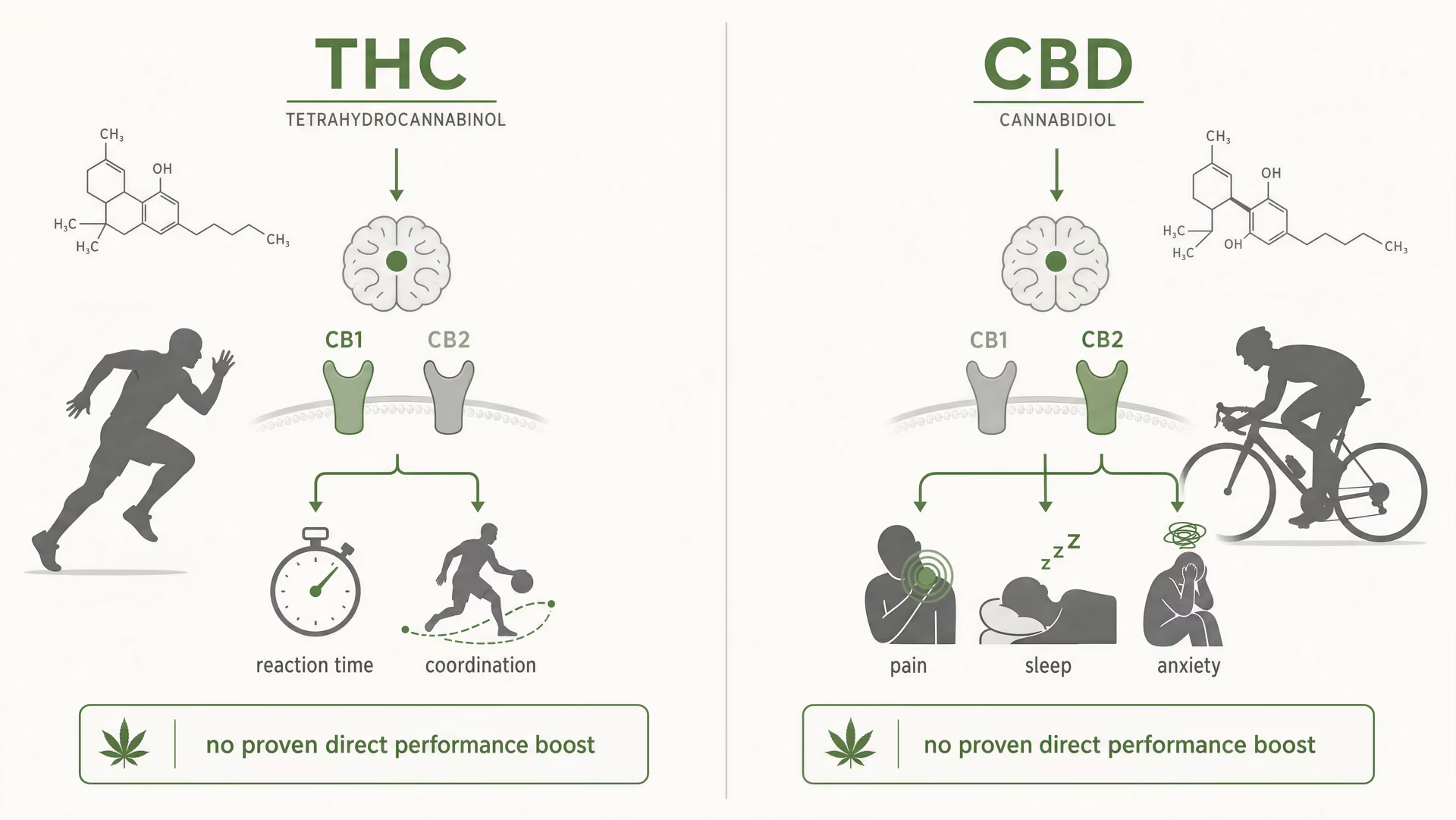
This distinction matters because the compounds matter. THC and CBD do not act the same way, and sport does not demand the same thing from every athlete. THC is a partial agonist at CB1 and CB2 receptors and has centrally mediated effects that can alter reaction time, motor coordination, time estimation, and judgment. In endurance settings, some users report that discomfort feels easier to tolerate. That is not the same as improved physiology. There is no good evidence that cannabis raises VO2max, improves time-trial performance, increases sprint capacity, or boosts maximal strength or power.
Recovery claims are more plausible, but still modest. The 2021 BMJ rapid recommendation on non-inhaled medical cannabis or cannabinoids for chronic pain found small to very small improvements in pain, sleep, and physical functioning, alongside frequent transient adverse events such as dizziness and somnolence. For athletes, that trade-off is the whole issue. Less pain tonight may mean worse alertness tomorrow. Less anxiety before bed may help sleep onset, but regular high-THC use can change sleep architecture and produce rebound sleep disruption on withdrawal.
The 2024 IOC-supported review in the British Journal of Sports Medicine made this point clearly: athlete testimony has moved faster than controlled trial evidence. There may be selected use cases around chronic pain, soreness, anxiety, and sleep disturbance. There is still no convincing case for calling cannabis ergogenic.
What athletes mean when they say cannabis helps
What athletes usually mean when they say cannabis helps
- Pain feels lower.
- Sleep comes easier.
- Stress or anxiety feels quieter.
- Training feels more enjoyable or tolerable.
Usually they mean one of four things: pain is lower, sleep comes easier, stress feels quieter, or training feels more enjoyable. Jason P. Bruntz and colleagues, writing on cannabinoids and exercise physiology, have repeatedly separated these subjective effects from hard performance outcomes. Angela Bryan’s work on cannabis and exercise behavior has also shown that motivation, enjoyment, and ritual can shape use around activity without proving that output improves.
This is why survey data need careful handling. A 2023 survey of ultramarathon runners found cannabis users commonly reported using it for pain, relaxation, and sleep, not race-day enhancement. Useful information, but still self-report. It tells us what athletes seek, not what the drug reliably delivers.
CBD reliably reduces exercise-induced inflammation in a way that improves sport performance or adaptation. Preliminary evidence
CBD sits in a different category from THC. It has low affinity for CB1 and CB2 and is more often discussed in sport for anxiety, sleep, pain, and inflammation. Even there, the science is unsettled. Anti-inflammatory claims are often exaggerated, and exercise-recovery trials have not shown consistent effects on markers such as creatine kinase or inflammatory cytokines.
Where anti-doping rules answer a different question than clinical science
WADA and USADA are not asking the same question as clinicians. Anti-doping policy does not simply ask, “Does this work?” WADA evaluates substances against criteria that include potential performance enhancement, athlete health risk, and the “spirit of sport.” That is why regulation cannot be read as a clean summary of efficacy.[1] Labeling Accuracy of Cannabidiol Extracts Sold Online. Marcel O. Bonn-Miller, Kevin M. Loflin, Brian F. Thomas, Marilyn L. Marcu, Ryan A. Hyke, Jahan Marcu. JAMA, 2017.
The current rules show the split. WADA removed CBD from the Prohibited List in 2018, yet all other natural and synthetic cannabinoids remain prohibited in competition. The urinary decision limit for carboxy-THC is 150 ng/mL in the 2025 rules; many older articles still cite the obsolete 15 ng/mL threshold from before 2013. USADA also warns that permitted CBD is not the same as safe-from-sanction CBD, because mislabeled products are common. In the 2017 JAMA analysis by Bonn-Miller and colleagues, 21.0% of online CBD products contained THC.
Then there is the policy divergence. The NCAA removed cannabinoids from its banned drug classes in 2024, moving away from punitive testing and toward a public-health model. That does not mean cannabinoids improve performance. It means institutions can disagree about how to manage risk, impairment, and athlete welfare. Daniel McCartney and other anti-doping scholars have argued that this gap between policy aims and pharmacology is exactly where public debate tends to go wrong.
The pharmacology athletes actually need to understand
If athletes understand one thing about cannabis pharmacology, it should be this: THC and CBD are not interchangeable, and neither has good evidence as a direct performance aid. The cleaner case is elsewhere—pain, anxiety, sleep, and recovery support in selected situations, with real trade-offs. That distinction shows up in receptor biology, side effects, dose-response, and anti-doping risk.
The sports literature has moved in that direction. A 2020 Sports Medicine systematic review found insufficient evidence that cannabis improves exercise performance and pointed instead to likely impairment in strength, coordination, and psychomotor function at sport-relevant doses. The 2024 IOC-linked consensus review in the British Journal of Sports Medicine made a similar point: athlete anecdotes have outrun controlled data.
THC: CB1 signaling, psychoactive effects, and motor impairment
Delta-9-tetrahydrocannabinol, or THC, is the cannabinoid athletes need to treat most cautiously. Pharmacologically, it acts as a partial agonist at CB1 and CB2 receptors. CB1 matters most for sport because it is heavily expressed in the central nervous system, including regions involved in movement, timing, reward, memory, and executive control.
That is why acute THC exposure can change how effort feels without improving output. A runner may feel more absorbed, less bothered by discomfort, or more relaxed. None of that means faster splits, better pacing, or cleaner decision-making. In fact, CB1-mediated effects are exactly why THC can impair reaction time, alter time perception, reduce motor coordination, and increase risk-taking or misjudgment. For endurance events, that can mean poor pacing. For strength, power, and skill sports, the downside is often larger because timing and precision matter more.
Jason P. Bruntz and colleagues, writing on cannabinoids and exercise physiology, have repeatedly emphasized this gap between subjective experience and objective performance. Feeling different is not the same as performing better.
Psychoactive impairment is therefore mostly a THC problem, not a generic “cannabis” effect. It also explains why anti-doping bodies still care about it. WADA’s rules are not a simple readout of medical usefulness; WADA evaluates substances through criteria that include potential performance enhancement, athlete health risk, and spirit of sport. Those are policy questions, not the same as asking whether a cannabinoid helps sore muscles or sleep.
CBD: low CB1 affinity, broader signaling, and why it behaves differently
Cannabidiol, or CBD, behaves differently because it does not meaningfully activate CB1 the way THC does. It has low affinity for CB1 and CB2 and acts through a broader set of targets, often described as polypharmacology. The mechanisms most often discussed include effects related to 5-HT1A signaling, TRPV1 channels, and FAAH-related endocannabinoid modulation.
That matters in practice. CBD is not typically intoxicating, does not produce the same psychoactive “high,” and is far less likely to disrupt coordination or reaction speed in the way THC can. It is the cannabinoid more often examined for pain, anxiety, sleep, and possible inflammation-related effects in athletes.
Still, athletes should not overread that distinction. “Not intoxicating” does not mean “performance enhancing,” and it does not mean free of side effects. Depending on dose and formulation, CBD can still cause somnolence, dizziness, gastrointestinal upset, and fatigue. Those matter if taken before training, before technical sessions, or late enough at night to leave residual next-morning sluggishness.
The strongest evidence around cannabinoid use is not in race-day output. It is symptom management. The 2021 BMJ rapid recommendation and linked reviews on non-inhaled medical cannabis or cannabinoids for chronic pain found small to very small improvements in pain, sleep, and physical functioning, alongside frequent transient adverse events such as dizziness and drowsiness. That is a real trade-off for athletes: less discomfort, perhaps, but sometimes at the cost of alertness or motor sharpness.
| Route / product type | Typical onset from article | Practical issue for athletes |
|---|---|---|
| Inhaled cannabinoids | Within minutes | Fast subjective effects; using THC near training or competition is the clearest setup for acute impairment |
| Oral cannabinoids | 30 minutes to 2 hours, sometimes longer | Slower and less predictable onset; redosing can overshoot and prolong effects |
| Night-time oral CBD | Not framed for acute output | Often used with sleep or anxiety in mind, but next-morning sluggishness can still matter |
Dose, route of administration, and timing around training or competition
First-pass liver metabolism The reduction and transformation of a drug after it is absorbed from the gut and passes through the liver before reaching systemic circulation. This helps explain why oral cannabinoids are slower and less predictable than inhaled forms.
Route changes everything. Inhaled cannabinoids have a rapid onset—usually within minutes—because absorption through the lungs is fast. Peak effects arrive quickly, and the acute subjective window is shorter. Oral cannabinoids are slower and less predictable. Onset often takes 30 minutes to 2 hours, sometimes longer, because absorption is influenced by food, formulation, and first-pass liver metabolism. The effects also tend to last longer.
For athletes, that timing difference matters more than most marketing language ever will. Inhaled THC close to training or competition is the clearest setup for acute impairment. Oral THC can be worse in another way: delayed onset leads some users to take more, then end up with stronger and longer-lasting effects than intended. That is a bad fit for any environment requiring precision, tactical judgment, or safe equipment handling.
CBD follows the same broad route principles, but with a different practical profile. An oral CBD product taken at night may be used with sleep or pre-competition anxiety in mind, not acute performance. Even then, results are inconsistent. CBD’s sleep effects often appear indirect, linked more to reduced anxiety or discomfort than to a sedative action by itself.
Timing also intersects with regulation. WADA removed CBD from the Prohibited List in 2018, but all other natural and synthetic cannabinoids remain prohibited in competition. The current urinary decision limit for carboxy-THC is 150 ng/mL, and that higher threshold replaced the old 15 ng/mL limit back in 2013—an important historical detail because many older articles still cite the obsolete number. USADA repeatedly warns athletes that legal access and anti-doping safety are not the same thing.

Why product composition matters more than strain names
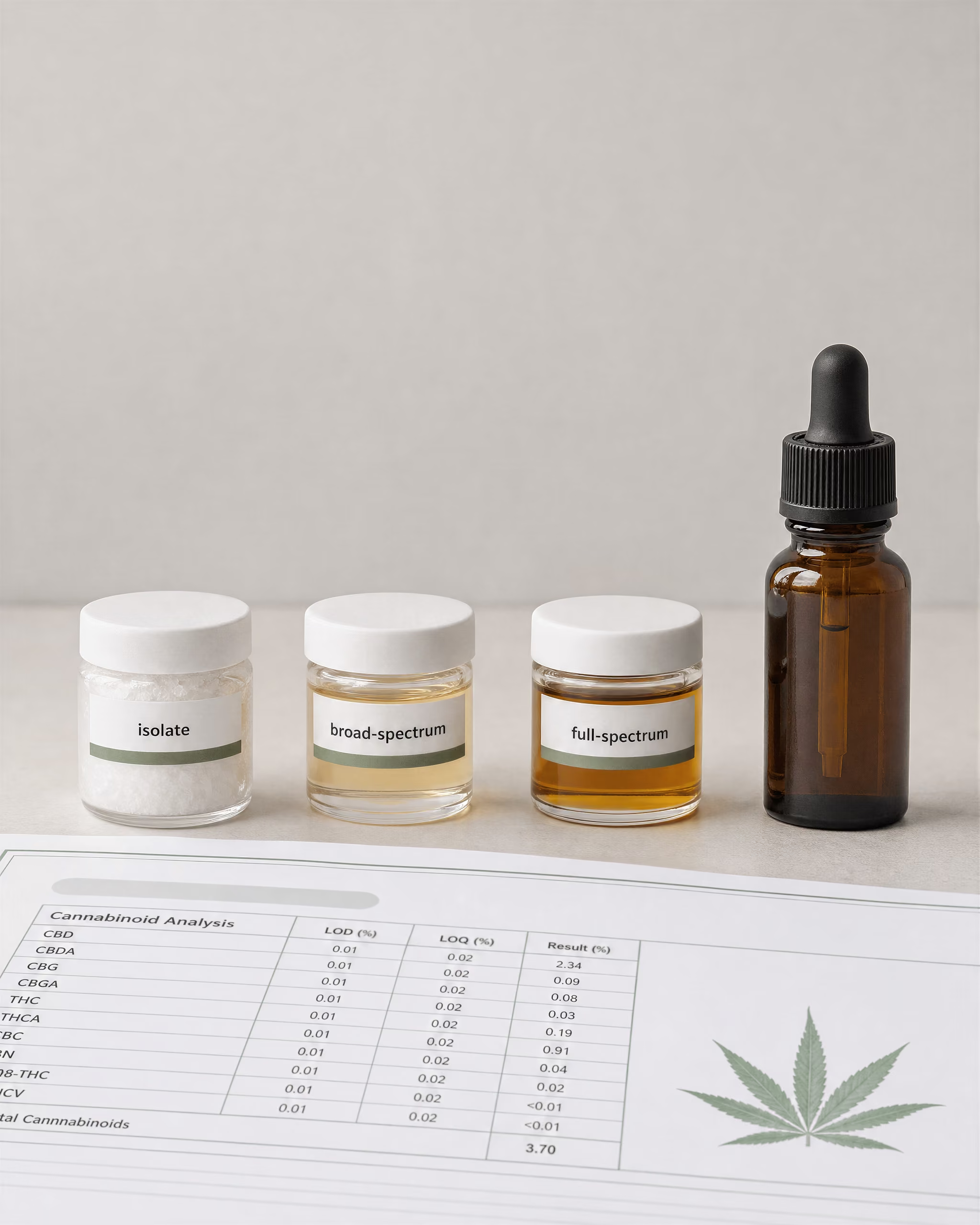
“Indica,” “sativa,” and hybrid labels are poor tools for athletes. They are blunt commercial categories, not reliable pharmacological guides. What matters is verified composition: how much THC, how much CBD, and whether other cannabinoids are present.
This is not just about effects. It is also about testing risk. Full-spectrum products may contain trace THC and other cannabinoids even when the label highlights CBD. That matters under WADA rules because CBD alone is permitted, while other cannabinoids are not in competition. A product can be sold as CBD-focused and still create a problem.
The anti-doping concern is not theoretical. In the 2017 JAMA study by Bonn-Miller and colleagues, 69% of 84 online CBD products were mislabeled; 21% contained detectable THC. For an athlete, that finding matters more than a strain name ever could. Daniel McCartney and other anti-doping scholars have stressed that contamination and mislabeling sit at the center of cannabinoid policy risk.
So the practical rule is simple. Ignore strain mythology. Look for third-party cannabinoid analysis, especially quantified THC content, and remember that “full-spectrum” usually means more than CBD alone. For sport, chemistry beats branding every time.
Does cannabis improve athletic performance?
The short answer is no. Cannabis is not supported as a consistent ergogenic aid, and it should not be discussed in the same category as caffeine, creatine, or nitrate supplementation. That is the core correction most popular coverage misses. The current evidence base does not show reliable gains in VO2max, time-trial performance, sprint output, maximal strength, or power production from cannabis use. If anything, the better-supported concern is impairment: slower reaction time, worse coordination, altered pacing, and poorer psychomotor function, especially with THC.
That distinction matters because athletes often describe benefits that are real to them but not the same as improved performance. Feeling better during exercise is not the same as producing more work. Enjoying a long run more is not the same as running it faster. Tolerating discomfort is not the same as increasing aerobic capacity.
A 2020 systematic review in Sports Medicine reached essentially that conclusion: there was insufficient evidence that cannabis improves exercise performance, while THC-relevant doses were more likely to impair strength, coordination, and psychomotor performance. Jason P. Bruntz and colleagues, writing on cannabinoids and exercise physiology, have also emphasized that athlete folklore has moved far ahead of controlled data. The 2024 IOC-supported consensus-style review in the British Journal of Sports Medicine said much the same in broader terms: athlete claims around cannabis, especially for recovery, exceed what trials currently show.
Aerobic endurance and perceived effort
Endurance sport is where the pro-cannabis argument usually sounds most plausible. Some recreational runners, cyclists, hikers, and ultradistance athletes say cannabis makes long sessions more enjoyable, reduces boredom, softens discomfort, and creates a dissociative “flow” that helps them keep moving. Angela Bryan and collaborators have published work on cannabis use around exercise suggesting motivation and enjoyment are part of the story for some users.
But enjoyment is not performance. The measurable endpoints that matter in exercise physiology—VO2max, lactate-related thresholds, time-trial outcomes, pacing quality, and total work completed—have not shown consistent improvement with cannabis. Acute THC exposure is a weak candidate for endurance enhancement on mechanism alone. THC acts as a partial agonist at CB1 and CB2 receptors, with central effects that can distort time perception, alter judgment, and slow reactions. In a long steady session, that may change how hard exercise feels. It does not appear to improve oxygen delivery, mitochondrial efficiency, or substrate use in a way that translates into faster race times.
There is also a practical problem with pacing. Endurance success depends on accurately reading effort, terrain, competition, and fatigue. A substance that blunts discomfort while also changing attention and time estimation can make athletes feel smooth while actually pacing poorly. That trade-off may be less obvious in recreational training than in racing, where small errors compound.
So the most defensible interpretation is narrow: cannabis may alter perceived effort or make endurance exercise feel more pleasant for some people, but evidence does not support it as a reliable way to improve endurance performance itself.
| Sport demand | THC-related concern highlighted in the article | Likely fit |
|---|---|---|
| Endurance pacing | Altered time perception, judgment, and pacing quality | Poor fit for racing despite possible changes in perceived effort |
| Strength and power | Reduced coordination and psychomotor function | Poor fit where force and timing matter |
| Skill / reaction sports | Slower reaction time, impaired divided attention, worse fine motor control | Worst fit because milliseconds and precision matter |
Strength, power, reaction time, and coordination
The case gets weaker in strength, power, and skill-dominant sports. Here, even small impairments matter.
Maximal strength and power depend on rapid motor unit recruitment, precise force production, and high-quality neuromuscular coordination. Sprinting, Olympic lifting, team sport change-of-direction work, and combat sport exchanges add another layer: reaction speed and decision-making under pressure. Those are exactly the domains in which THC is most likely to hurt rather than help.
The 2020 Sports Medicine review flagged likely impairment in strength and psychomotor function. That fits what is already known from broader cannabis literature. THC can slow reaction time, reduce balance, impair divided attention, and disrupt fine motor control. In practical terms, that is bad news for bar speed, explosive output, ball skills, tactical reads, and movement precision. It is hard to make a serious evidence-based case that cannabis helps sports where milliseconds, timing, or technique decide outcomes.
Skill-heavy events are likely the worst fit. A distance runner might tolerate some altered perception without immediate catastrophe. A goalkeeper, gymnast, baseball hitter, downhill rider, or point guard has much less room for degraded coordination or judgment. Even in the weight room, feeling less bothered by effort does not mean the nervous system can produce more force.
CBD is different pharmacologically, with low affinity for CB1 and CB2 and broader effects involving targets such as 5-HT1A and TRPV1. But “different” does not equal performance-enhancing. CBD has been studied more often for anxiety, pain, inflammation claims, and sleep than for direct ergogenic effects, and there is no convincing evidence that it raises maximal strength, power, or sprint performance either.
Pain tolerance versus actual output
This is where confusion enters. Cannabis may affect pain. That does not mean it improves performance.
The most supportable use-case in athletes is symptom management, not output enhancement. The 2021 BMJ rapid recommendation and linked reviews on non-inhaled medical cannabis or cannabinoids for chronic pain found small to very small improvements in pain relief, physical functioning, and sleep, with frequent transient adverse effects including dizziness and somnolence. For an athlete with chronic pain or sleep disruption, that may matter. It still does not establish that cannabis makes them faster, stronger, or more powerful in competition.
Pain tolerance can rise while performance stays flat. Sometimes it can even fall. If discomfort is masked but coordination, alertness, and pacing worsen, the net effect may be negative. There is also a risk in training judgment: pain is not always an enemy. Sometimes it is feedback. Blunting that signal can make athletes more willing to continue through fatigue or tissue stress without improving the physiological capacity behind the effort.
Inflammation claims often get stretched beyond the data too. Preclinical studies suggest cannabinoids can modulate inflammatory signaling, but that has not cleanly translated into proven human exercise-recovery benefits. Trials of CBD after exercise are small and inconsistent, with mixed findings on creatine kinase, cytokines, and soreness. The science here is unsettled, not supportive of bold claims.
What survey reports can and cannot tell us
Survey research is useful, but it answers a different question. It tells us who uses cannabis, when, and why. It does not prove that cannabis works for the outcome athletes claim.
That matters because cannabis use is common in the general population. WHO has long estimated roughly 147 million annual users worldwide, and SAMHSA reported 61.8 million past-year marijuana users aged 12 or older in the United States in 2023. CDC/NCHS data published in 2024 found 17.7% of U.S. adults used cannabis in the prior year. In other words, many athletes will use cannabis for the same reasons non-athletes do: pain, stress, sleep, mood, or habit.
Athlete surveys reflect that pattern. A 2023 study of ultramarathon runners found users commonly cited pain, relaxation, and sleep, not race-day enhancement. That is plausible and informative. It still does not show better finishing times or physiological advantage. Self-report is vulnerable to expectancy effects, selection bias, and simple misattribution. Athletes who enjoy training more may train more often; they may then credit cannabis for outcomes driven by adherence, fitness history, or personality.
[2] The World Anti-Doping Code International Standard: Prohibited List 2025. World Anti-Doping Agency. World Anti-Doping Agency, 2025.
This is also where anti-doping and evidence often get blurred. WADA’s rules do not exist only to identify substances that “work.” WADA considers potential performance enhancement, athlete health risk, and the broader “spirit of sport.” As of the 2025 Prohibited List, all natural and synthetic cannabinoids remain prohibited in competition except cannabidiol, which was removed from the list in 2018. The urinary decision limit for carboxy-THC is 150 ng/mL, not the older 15 ng/mL threshold still cited in outdated articles. USADA has repeatedly warned that CBD products can be contaminated with THC. That warning is not theoretical: the 2017 JAMA study by Bonn-Miller and colleagues found 69% of online CBD products were mislabeled, and 21% contained THC.
Policy is also changing unevenly. The NCAA removed cannabinoids from its banned drug classes in 2024, while WADA and USADA still treat in-competition THC exposure as a doping risk. That split reflects different policy goals, not proof that cannabis enhances performance.
The bottom line is firm. Cannabis is not supported as a reliable athletic performance enhancer. The stronger case, when there is one, is for pain, anxiety, sleep, and subjective recovery in selected contexts, with real downsides in impairment, dosing inconsistency, contamination risk, and possible dependence with chronic use. For performance itself, the evidence is mixed at best and often negative.
Pain management, soreness, and the recovery question
Some cannabinoid use may modestly help selected athletes manage pain, sleep problems, anxiety, or subjective recovery. Limited evidence
The strongest case for cannabis in sport is not faster race times, bigger lifts, or higher power output. It is narrower than that. For some athletes, certain cannabinoid products may reduce pain, ease anxiety, or help sleep enough to make training more tolerable. That is a recovery and symptom-management argument, not an ergogenic one.
This distinction matters because pain relief can look like better recovery without actually improving tissue repair, inflammation resolution, or adaptation. It can also create the opposite problem: an athlete feels good enough to keep training on an injury that should have prompted rest, imaging, or a change in load.
Chronic pain evidence versus post-exercise soreness
The medical evidence is better for chronic pain than for ordinary training soreness. That gap is often blurred in sport media.
The clearest reference point is the 2021 BMJ Rapid Recommendation and linked systematic reviews led by Busse and colleagues. For adults with chronic pain, non-inhaled medical cannabis or cannabinoids produced small to very small improvements in pain relief and physical function, and may slightly improve sleep quality. The trade-offs were not trivial: dizziness, somnolence, cognitive disturbance, nausea, and impaired attention were common enough to matter. For an athlete, those adverse effects are not just annoyances. They can affect balance, reaction time, training quality, and next-day readiness.
That evidence applies most directly to athletes with persistent pain conditions: long-standing back pain, neuropathic pain, osteoarthritis, or pain that remains after surgery or repeated overload. It does not automatically transfer to delayed-onset muscle soreness after a hard block of squats or a downhill run. DOMS is a short-lived, exercise-related state with a different time course and mechanism than chronic pain. The fact that cannabinoids can slightly reduce chronic pain does not prove they meaningfully improve post-exercise recovery.
Athlete-specific literature keeps running into this problem. The 2022 Sports Medicine - Open review on cannabis in sport discussed pain, sleep, and concussion symptoms, but repeatedly came back to the same limitation: very few controlled trials in athletes. The 2024 IOC-supported review in the British Journal of Sports Medicine was similarly cautious. Athlete anecdotes are common. Controlled evidence is not.
Surveys tell us what athletes are trying, not what works. A 2023 survey of ultramarathon runners found cannabis use was commonly tied to pain, relaxation, and sleep rather than race-day performance enhancement. That is useful behavioral information. It is not proof of efficacy. Angela Bryan’s research group has also shown that some people associate cannabis with greater enjoyment of exercise, especially in recreational settings. Enjoyment can change adherence. It does not establish better recovery physiology.
Anti-inflammatory claims: plausible biology, weak sport-specific proof
Anti-inflammatory rhetoric around CBD is ahead of the data. By a lot.
There is a plausible mechanism. Cannabinoids interact with systems involved in nociception, stress signaling, and immune activity. THC acts primarily as a partial agonist at CB1 and CB2 receptors. CBD has low affinity for those receptors but affects other targets, including 5-HT1A and TRPV1, and may influence endocannabinoid tone indirectly. In cell and animal models, these pathways can alter cytokine signaling and inflammatory responses. Jason P. Bruntz and colleagues, writing on cannabinoids and exercise physiology, have laid out why the biology attracts interest.
But plausible biology is not the same as proved benefit in athletes.
Human exercise-recovery trials with CBD are generally small, product-specific, and inconsistent. Some studies report no meaningful effect on creatine kinase, inflammatory cytokines, or subjective soreness after eccentric exercise. Others suggest a modest benefit in perceived recovery or soreness ratings. The pattern is not strong enough to say CBD reliably reduces exercise-induced inflammation in a way that improves performance or adaptation.
That is why anti-inflammatory marketing language should be treated skeptically in sport. Inflammation after training is not always a problem to suppress. It is often part of the signaling process that drives adaptation. The same caution applies to any recovery tool framed as “reducing inflammation” without showing whether the intervention improves the outcome athletes actually care about: better function, better training quality, or faster return to play. At present, cannabinoids have not cleared that bar consistently.
Cannabis compared with NSAIDs, opioids, and standard recovery strategies
| Option | What the article says it may help | Main downside emphasized |
|---|---|---|
| NSAIDs | Short-term pain relief in many musculoskeletal settings | Gastrointestinal, renal, and cardiovascular risks; possible interference with adaptation or healing in some contexts |
| Cannabis / cannabinoids | Symptom management for pain, sleep, or anxiety in selected cases | Sedation, dizziness, cognitive effects, and THC-related psychomotor impairment |
| Standard recovery strategies | Load management, sleep, nutrition, hydration, rehab, diagnosis-guided care | Less glamorous, but described as more reliable |
Compared with NSAIDs, cannabis sits in a strange middle ground. NSAIDs have clearer short-term evidence for pain relief in many musculoskeletal settings, but they carry well-known gastrointestinal, renal, and cardiovascular risks, and routine use around training may interfere with adaptation or healing in some contexts. Cannabis may look attractive as a substitute when athletes want to avoid taking ibuprofen every day. Yet the evidence base is much thinner for sport recovery, and the side-effect profile shifts from GI and renal issues toward sedation, dizziness, cognitive effects, and, with THC, psychomotor impairment.
Compared with opioids, cannabinoids may be worth considering as a harm-reduction option in selected cases of chronic pain, especially where the goal is to reduce opioid exposure. That argument has more support in pain medicine than in sport science. Even there, it should not be overstated. Cannabis is not risk-free, and regular use can slide into dependence. CDC summaries of broader cannabis literature note that about 3 in 10 users may develop some degree of cannabis use disorder. For athletes using cannabis nightly for pain or sleep, that risk is relevant.
Standard recovery strategies still have a much stronger foundation: load management, sleep extension, adequate carbohydrate and protein intake, hydration, rehabilitation, physical therapy, and diagnosis-guided treatment. Those are less glamorous than cannabinoid claims, but they work more reliably. Sleep deserves special mention. Some athletes use THC because it shortens sleep latency. The catch is tolerance, altered sleep architecture, and rebound sleep disruption when use stops. CBD may help sleep more indirectly, especially if anxiety is the real barrier, but that effect is inconsistent and highly context-dependent.
There is also the anti-doping issue. WADA removed CBD from the Prohibited List in 2018, but all other natural and synthetic cannabinoids remain prohibited in competition. The urinary decision limit for carboxy-THC is 150 ng/mL under the 2025 list, a threshold raised from the old 15 ng/mL in 2013 to reduce sanctions from out-of-competition use carrying over. USADA repeatedly warns athletes that CBD products can contain enough THC to trigger a positive test. That warning is justified. In the 2017 JAMA study by Bonn-Miller and colleagues, 69% of online CBD products were mislabeled overall, and 21% contained THC.
When symptom relief may help training consistency
Symptom relief can matter even when a drug does not enhance performance directly. If an athlete with chronic pain sleeps better, hurts less, and can complete more of a rehabilitation plan, that may improve training consistency over weeks or months. This is the most defensible athletic use-case for cannabinoids.
The key word is consistency, not enhancement.
An endurance athlete with persistent back pain may tolerate base training better. A contact-sport athlete recovering from repeated aches may feel less miserable at night. A competitor with pre-race anxiety may sleep before an event instead of lying awake. Those are practical outcomes. They may support adherence. They may also be enough to justify a carefully supervised trial in some cases.
But symptom relief can also hide useful information. Pain is imperfect, yet it often signals overload, unstable mechanics, or tissue injury. If cannabis simply makes the warning quieter, an athlete may train through a stress reaction, a rotator cuff tear, or a worsening tendinopathy. That risk is not theoretical. It is part of the basic trade-off.
So the honest answer is selective, not sweeping. Cannabis should not be presented as a performance enhancer. The better evidence, including the BMJ chronic pain guidance and the IOC/BJSM sport appraisals, supports a much narrower claim: some cannabinoid products may modestly help certain athletes manage pain, sleep problems, anxiety, or subjective recovery. The proof for reducing post-exercise soreness or inflammation in a way that improves sport outcomes remains weak. For athletes, that difference is the whole story.
Sleep, anxiety, and recovery quality
Sleep is one of the few areas where athlete cannabis use has a plausible logic, but that should not be confused with proof of superior recovery. The case is narrower than popular claims suggest. Cannabis is not a reliable ergogenic aid; a 2020 Sports Medicine systematic review found insufficient evidence that it improves exercise performance and pointed instead to likely impairment in psychomotor function, coordination, and strength at relevant doses. Where the literature is more sympathetic is symptom management: difficulty falling asleep, pre-competition anxiety, chronic pain that disrupts rest, and the strain that comes with heavy training blocks. Even there, the evidence is mixed, product composition varies, and what helps one athlete can hurt next-day sharpness in another.
The 2024 IOC-supported review in the British Journal of Sports Medicine made this point clearly: athlete narratives about cannabis for recovery are ahead of controlled trial data. Jason P. Bruntz and colleagues have made similar arguments in the exercise physiology literature. The defensible position is not “cannabis improves recovery” in a broad sense. It is that some cannabinoids may reduce symptoms that interfere with recovery quality, especially sleep and anxiety, under specific conditions.
THC and sleep latency versus sleep architecture
THC is the cannabinoid most likely to help some users fall asleep faster. That matters to athletes after late competitions, long travel days, pain flares, or adrenaline-heavy evenings when the body is tired but the mind is still racing. Reduced sleep latency is a real reason people use THC. The problem is what happens after sleep onset, and what happens with regular use.
Sleep is not just duration. Architecture matters: slow-wave sleep, REM sleep, continuity, and the timing of awakenings all shape whether sleep is actually restorative. THC appears to alter that architecture, with REM suppression being the most commonly cited effect. A single night of falling asleep faster is not the same thing as preserving normal sleep cycles over weeks of use. For athletes whose learning, emotional regulation, and reaction speed matter, that distinction is not trivial.
This is why the “THC helps sleep” claim is both true and incomplete. It may help with initiation, especially in occasional users or in periods of acute stress. It is less convincing as a nightly recovery tool. Regular high-THC use can produce tolerance, meaning the same dose becomes less effective over time. Then the athlete is no longer treating occasional insomnia; they are managing dependence on the same substance that is disrupting baseline sleep when absent.
CBD, anxiety, and indirect sleep effects
CBD sits in a different category. It has low affinity for CB1 and CB2 receptors and is often discussed through its actions at targets such as 5-HT1A and TRPV1, among others. That pharmacology fits the broader pattern in the literature: CBD does not look like a straightforward sedative. Its sleep effects appear more indirect and more context-dependent.
In practice, that means CBD may help sleep when anxiety is the thing preventing sleep. If an athlete is wound up before a major event, replaying tactical scenarios at 1 a.m., then reducing anxiety may improve sleep quality without the same intoxication profile associated with THC. That is a different use-case from taking a strongly psychoactive product every night and calling it recovery support.
The evidence still has limits. The 2021 BMJ rapid recommendation on non-inhaled medical cannabis or cannabinoids for chronic pain found slight improvements in pain and sleep quality, but the effects were small and adverse events such as dizziness and somnolence were common. Those findings matter for athletes because “slept better” and “performed better the next day” are not interchangeable outcomes. With CBD, the argument is strongest when anxiety or pain is disturbing sleep, not when sleep is otherwise normal.
Travel, pre-competition nerves, and overtraining contexts
Athletes often describe three settings where cannabinoids seem attractive: travel, pre-competition nerves, and overreaching or overtraining phases. All three can wreck sleep. East-west travel shifts circadian timing. Competition raises cognitive arousal. Heavy training can leave athletes physically exhausted but strangely restless, sometimes with elevated sympathetic tone, irritability, and fragmented sleep.
These are exactly the contexts where symptom relief can matter even if performance enhancement does not exist. Angela Bryan and collaborators have shown that people often connect cannabis with exercise enjoyment, motivation, and stress reduction, especially in recreational settings. Survey data in endurance athletes tell a similar story: use is commonly reported for pain, relaxation, and sleep, not because runners think cannabis improves race-day output. A 2023 ultramarathon survey fits that pattern. Useful behavioral data, yes. Proof of efficacy, no.
For some athletes, a carefully timed, low-THC or CBD-dominant approach may reduce pre-competition anxiety or make travel-related sleep disruption more manageable. But anti-doping and product-quality issues immediately enter the picture. WADA removed CBD from the Prohibited List in 2018, yet all other natural and synthetic cannabinoids remain prohibited in competition. USADA repeatedly warns that CBD products can contain enough THC to trigger a positive test, and the risk is not hypothetical: Bonn-Miller and colleagues reported in JAMA in 2017 that 69% of 84 online CBD products were mislabeled and 21% contained THC. WADA’s current urinary decision limit for carboxy-THC is 150 ng/mL, not the obsolete 15 ng/mL threshold still cited in older material, but contamination remains a real exposure pathway.
Tolerance, rebound insomnia, and next-day performance
The biggest mistake is treating nightly THC use as harmless sleep hygiene. Tolerance develops. Withdrawal can bring rebound insomnia, vivid dreams, irritability, and poorer sleep continuity. That cycle can trap an athlete into regular use not because the product still works well, but because sleep gets worse without it.
There is also the next-morning problem. Even when THC helps with sleep onset, residual sedation, altered reaction time, slower decision-making, and impaired motor coordination can carry into training or competition. For strength and skill sports, that downside may outweigh any nocturnal benefit. For endurance athletes, the damage may be subtler: poorer pacing judgment, dulled awareness, or just feeling flat.
So sleep remains one of the more credible reasons athletes turn to cannabis. But credible does not mean uncomplicated. THC may shorten sleep latency while compromising sleep architecture and creating tolerance problems. CBD may help more selectively, mostly when anxiety or pain is the reason sleep is poor. That is a symptom-management story, not a performance-enhancement one.
CBD versus THC in sport
The practical split between CBD and THC matters more in sport than the generic label “cannabis.” They are not interchangeable compounds, and athletes get into trouble when regulation, product labels, and pharmacology are treated as if they were the same thing. The current evidence does not support cannabis as a reliable ergogenic aid. A 2020 Sports Medicine review found insufficient evidence that cannabis improves exercise performance and pointed instead to likely impairment in strength, coordination, and psychomotor function at relevant doses. That makes the athlete-facing question less about performance enhancement and more about symptom management, timing, and anti-doping risk.
Why CBD became the athlete-facing cannabinoid
CBD became the acceptable face of cannabis in sport for two reasons: it causes far less acute intoxication than THC, and WADA removed cannabidiol from the Prohibited List in 2018. Those facts are often compressed into a misleading slogan that “CBD is allowed.” More precisely, CBD is permitted, while other cannabinoids are not.
Mechanistically, the gap is real. THC is a partial agonist at CB1 and CB2 receptors, with central nervous system effects that can change reaction time, coordination, time perception, and risk assessment. CBD has low affinity for CB1 and CB2 and acts across other systems, including 5-HT1A and TRPV1, with proposed effects on anxiety, pain signaling, and sleep. That pharmacology fits why athletes report using CBD for soreness, pre-competition anxiety, and sleep disruption rather than for race-day output.
The evidence is modest, not glowing. The 2021 BMJ rapid recommendation on non-inhaled medical cannabis or cannabinoids for chronic pain found small to very small improvements in pain, sleep, and physical functioning, paired with frequent transient adverse effects such as dizziness and somnolence. A 2024 IOC-linked consensus-style review in the British Journal of Sports Medicine made the same point in athlete language: claims are racing ahead of controlled trials. CBD may help some athletes manage symptoms. It has not been shown to raise VO2max, power, maximal strength, or time-trial performance.
Where THC creates the larger regulatory and performance problem
THC is where the harder problems start. It remains prohibited in competition under WADA’s 2025 rules, and the urinary decision limit for carboxy-THC is 150 ng/mL. That threshold was raised from 15 ng/mL in 2013, so many older articles still cite the wrong number. USADA has repeatedly warned athletes that permitted CBD use can still end in an adverse analytical finding if the product contains THC.
The performance case for THC is weak. The impairment case is stronger. Acute THC exposure is more likely to disrupt pacing, decision-making, balance, and fine motor control than to improve them, especially in sports where fast reactions and precise movement matter. Jason P. Bruntz and colleagues, writing on cannabinoids and exercise physiology, have emphasized this mismatch between athlete anecdote and physiological proof. Angela Bryan’s work on cannabis and exercise behavior is useful here too: some people report more enjoyment or motivation around exercise, particularly in recreational settings, but enjoyment is not the same as improved output.
Policy and evidence also answer different questions. WADA does not ban substances only because they “work.” Its criteria include potential performance enhancement, health risk, and the spirit of sport. That helps explain why the NCAA removed cannabinoids from banned drug classes in 2024 while WADA did not. Different systems. Different aims.
CBD product label glossary for athletes
- CBD isolate
- Should contain only cannabidiol and is the lowest-THC-exposure option described in the article.
- Broad-spectrum
- Marketed as containing multiple cannabinoids without THC, but still requires scrutiny and verification.
- Full-spectrum
- Usually includes a wider cannabinoid profile and may contain THC, creating the greatest anti-doping concern.
Full-spectrum, broad-spectrum, isolate: why the label matters
For athletes, these labels are not marketing trivia. They are risk categories. CBD isolate should contain only cannabidiol. Broad-spectrum products are marketed as containing multiple cannabinoids without THC. Full-spectrum products generally include a wider cannabinoid profile and may contain THC, sometimes within legal consumer limits but still high enough to matter for testing.
Contamination and mislabeling are the central anti-doping problem. In the 2017 JAMA study by Bonn-Miller and colleagues, 69% of 84 online CBD products were mislabeled; 21% contained THC. That is why “WADA-permitted CBD” does not equal “safe supplement.” Daniel McCartney and other anti-doping scholars have stressed this point for years: the real-world hazard is often the bottle, not the cannabinoid named on the front.
So the practical hierarchy is simple. If an athlete and clinician decide CBD is worth trying for pain, anxiety, or sleep, isolate carries the lowest THC exposure risk, broad-spectrum still needs scrutiny, and full-spectrum creates the greatest anti-doping concern. Even then, permitted does not mean performance-enhancing, and symptom relief has to be weighed against sedation, next-day grogginess, and the possibility of a failed test.
WADA, USADA, NCAA, and the rules athletes cannot afford to misunderstand
Athletes get tripped up on cannabis rules for a simple reason: pharmacology, public health, and anti-doping policy are not asking the same question. WADA is not deciding whether cannabis is a proven ergogenic aid. It is applying its three-part framework—potential performance enhancement, health risk, and violation of the “spirit of sport.” That matters because the research base, including the 2020 Sports Medicine review and the 2024 IOC-linked review in the British Journal of Sports Medicine, does not support cannabis as a reliable performance enhancer. The stronger case is symptom management in selected settings: pain, anxiety, and sleep. But a weak case for ergogenic benefit does not mean a weak anti-doping risk.
How the WADA rule works in practice
- Scope All natural and synthetic cannabinoids are prohibited in competition except cannabidiol.
- Competition window The in-competition period begins at 11:59 p.m. on the day before the competition in which the athlete is scheduled to participate and runs through sample collection.
- Decision limit The urinary decision limit for carboxy-THC is 150 ng/mL.
- History That threshold replaced the old 15 ng/mL limit in 2013.
- Practical takeaway Using THC near competition still carries risk because dose, frequency, timing, body composition, and metabolism all affect detection.

WADA's in-competition ban and the 150 ng/mL decision limit
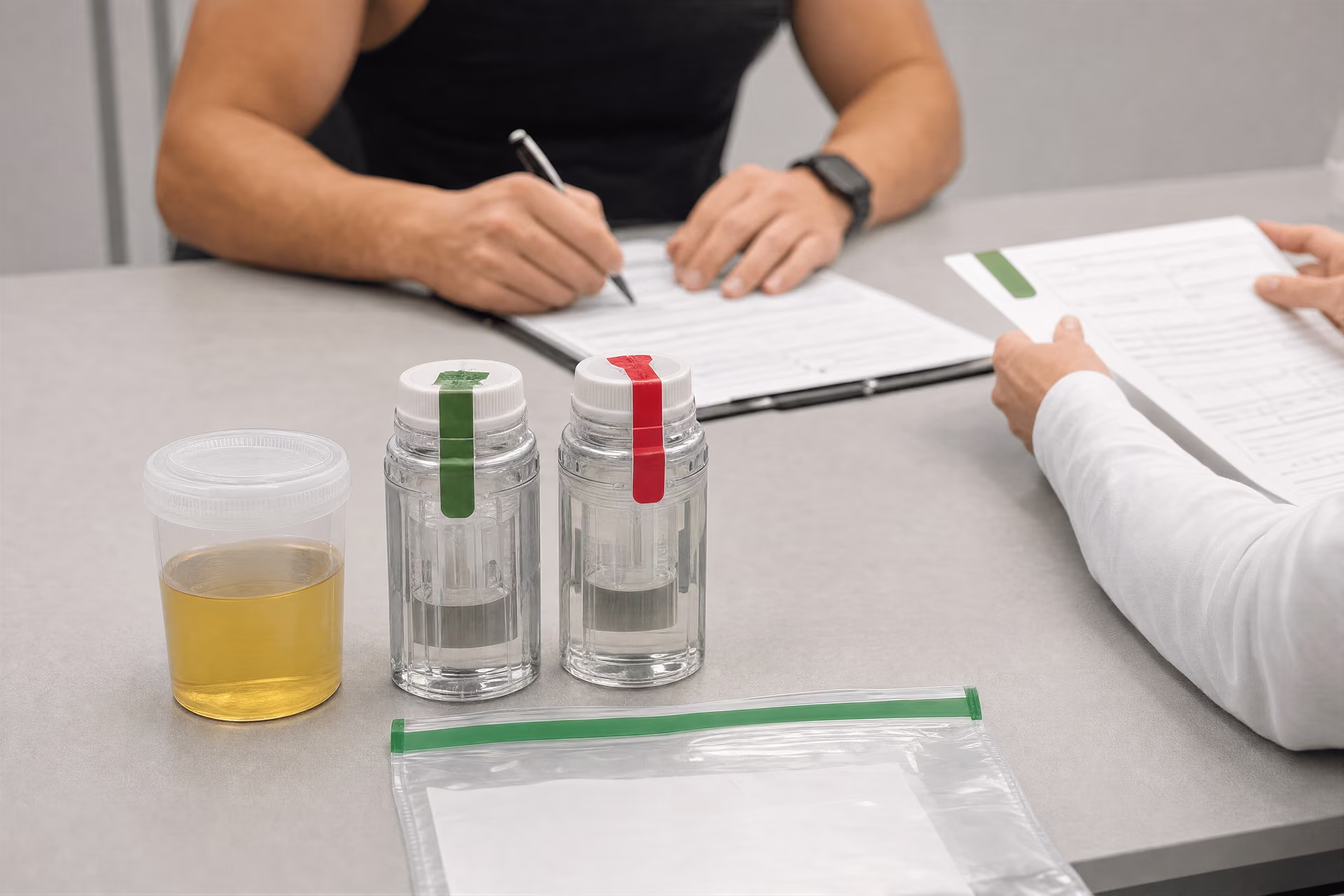
Under the 2025 WADA Prohibited List, “all natural and synthetic cannabinoids are prohibited” in competition, with one major exception: cannabidiol, or CBD. The prohibited class includes cannabis, hashish, marijuana, and cannabinoid products containing THC or other banned cannabinoids. “In competition” has a technical definition under the World Anti-Doping Code: beginning at 11:59 p.m. on the day before a competition in which the athlete is scheduled to participate, through the end of that competition and sample collection process.
Carboxy-THC THC-COOH, the primary urinary THC metabolite used in anti-doping testing. WADA’s decision limit is expressed for this metabolite, not for acute intoxication.
The number athletes need to know is 150 ng/mL. That is the urinary decision limit for carboxy-THC, the primary metabolite used in anti-doping testing. WADA raised this threshold in 2013 from 15 ng/mL to 150 ng/mL to reduce sanctions from residual out-of-competition use carrying over into competition. Many old articles still cite 15 ng/mL. They are outdated.
That higher threshold did not make THC “safe” for competing athletes. It reduced false assumptions around passive exposure and distant prior use. Detection still depends on dose, frequency, body composition, timing, and individual metabolism. Regular users can remain above the decision limit longer than occasional users. So the practical rule is blunt: THC use near competition carries risk, even if the athlete is not intoxicated on the day.
This is where popular commentary often overreaches. Anti-doping liability is strict. Whether cannabis actually improved performance is beside the point once a prohibited substance or metabolite is present in competition.
CBD is permitted—but commercial products may still trigger a case
WADA removed CBD from the Prohibited List in 2018. That change is real, and athletes should know it. But many stop reading there and miss the second half of the rule: all other natural and synthetic cannabinoids remain prohibited in competition. A retail “CBD” product is not the same thing as purified CBD verified to contain no banned cannabinoids.
That distinction is not academic. In a 2017 JAMA study led by Marcel Bonn-Miller, researchers analyzed 84 CBD products sold online. Nearly 69% were mislabeled for CBD content, and 21% contained THC. For an athlete in a tested pool, that is the compliance problem in one statistic. A permitted ingredient on paper can become an adverse analytical finding in practice.
USADA and anti-doping scholars such as Daniel McCartney have been direct on this point for years: permitted CBD does not create a safe harbor for hemp extracts, “full-spectrum” oils, or broad retail cannabinoid products with uncertain certificates of analysis. Even very small amounts of THC taken repeatedly may accumulate enough to matter in urine testing. Product labels are not a defense.
This is also where the evidence base and the rulebook diverge. CBD is the cannabinoid more often discussed for pain, anxiety, and sleep because it has low affinity for CB1 and CB2 receptors and lacks the same intoxicating profile as THC. But “more plausible for recovery” is not the same as “anti-doping safe” unless the product is genuinely THC-free.
USADA guidance and supplement contamination
USADA’s education materials are clearer than much media coverage: CBD is not prohibited, but THC, cannabis, and other cannabinoids remain prohibited in competition. USADA also repeatedly warns athletes that supplements are a major source of contamination and that athletes are strictly liable for what enters their bodies.
That warning fits the broader supplement landscape, not only cannabinoid products. But cannabis-related products are a special headache because the market is chemically messy. Labels may list CBD while omitting detectable THC, minor cannabinoids, or batch variability. Some products are intentionally formulated with multiple cannabinoids; others are contaminated during extraction or manufacturing.
For athletes, this means risk management has to be more conservative than wellness marketing. If an athlete is using CBD for sleep or pain—a use case that has at least some support from the 2021 BMJ rapid recommendation on chronic pain and from athlete-focused reviews by authors such as Jason P. Bruntz—timing, documentation, and product verification matter. So does the honest appraisal that symptom relief may come with trade-offs such as sedation, dizziness, or impaired next-day alertness. Those are performance issues even before a doping control officer gets involved.
Why NCAA policy changed and why that does not change WADA rules
The NCAA moved in a different direction in 2024, removing cannabinoids from its banned drug classes. That was a major policy shift, and it reflected a different model: less punitive testing, more emphasis on health and harm reduction. It does not mean the NCAA concluded cannabis enhances performance. If anything, current evidence points the other way for direct ergogenic effect.
It also does not change WADA rules by one inch. An NCAA athlete can compete under a looser college policy and still face WADA-governed restrictions in Olympic, international, or other code-signatory settings. That split is now one of the most important compliance issues in athlete education.
So the rulebook bottom line is simple. Under WADA and USADA systems, CBD is permitted, THC and other cannabinoids are prohibited in competition, the carboxy-THC decision limit is 150 ng/mL, and contaminated CBD products are a real route to sanction. Under the NCAA, the policy is now different. Same plant category. Different legal and anti-doping consequences.
Risks and athlete-specific considerations
The main risk of cannabis in sport is not that it secretly boosts performance. It is that athletes may use it for pain, anxiety, or sleep and then carry avoidable downsides into training, competition, or recovery. That distinction matters. A substance can help symptoms while still making execution worse.
A 2020 Sports Medicine systematic review found insufficient evidence that cannabis improves exercise performance and pointed instead to likely impairment in strength, coordination, and psychomotor function at doses relevant to real-world use. The 2024 IOC-supported review in the British Journal of Sports Medicine made a similar point: athlete stories about recovery and symptom relief are ahead of controlled trial evidence. Jason P. Bruntz and colleagues, writing on cannabinoids and exercise physiology, have also emphasized that proposed mechanisms and user experience should not be mistaken for ergogenic proof.

Injury risk, reaction time, and sport type
THC is the major concern here. As a partial agonist at CB1 and CB2 receptors, it can alter reaction time, motor coordination, balance, time perception, and risk appraisal. In sport, those are not side details. They are often the difference between safe execution and injury.
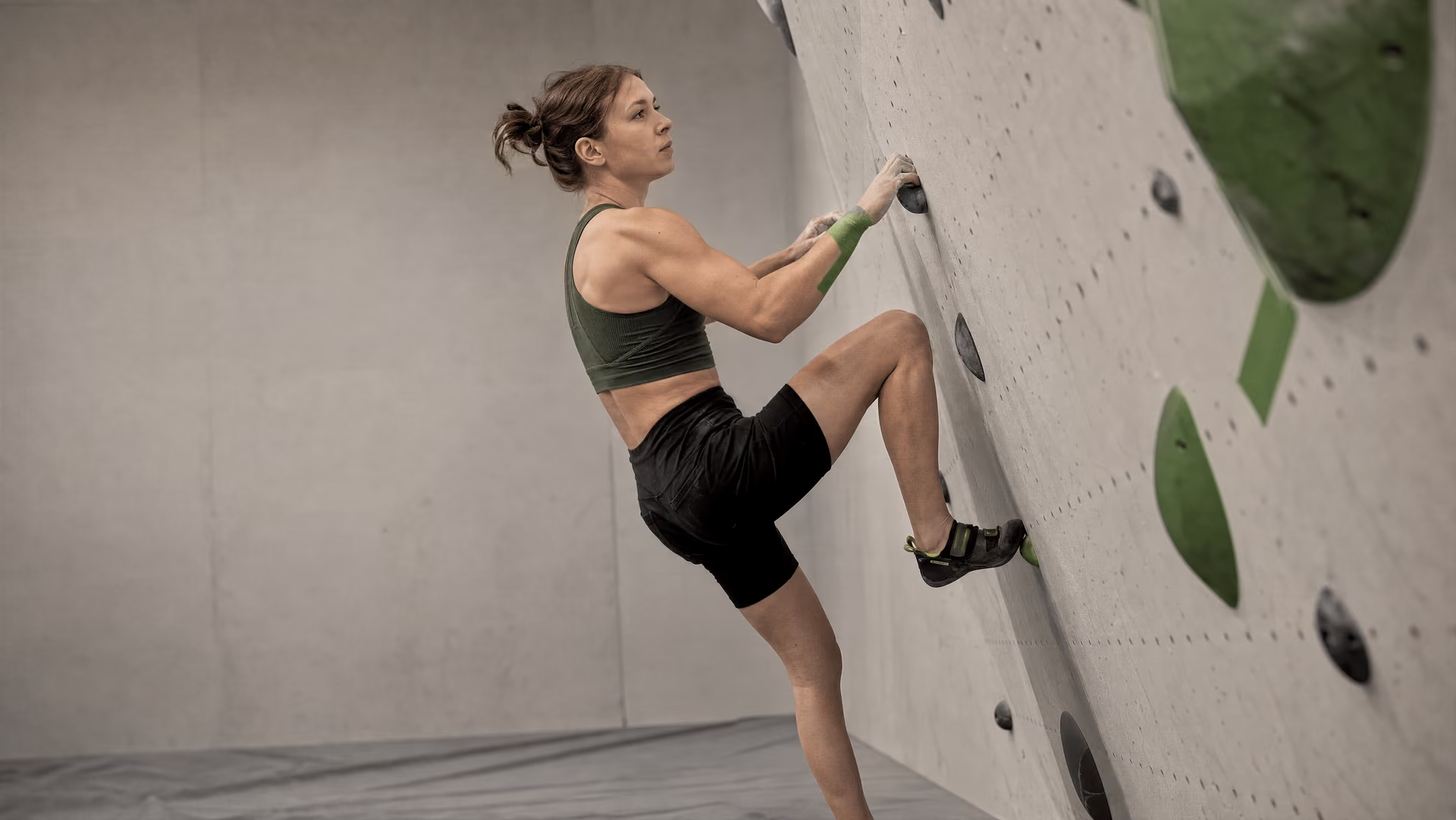
The risk profile changes by discipline. In collision sports, even small decrements in reaction speed or judgment can raise the chance of dangerous contact. In technical sports such as gymnastics, skiing, climbing, motorsport, skateboarding, or any activity demanding precise timing, the margin for error is thin. A cannabis-related delay that feels subtle can still matter. Strength and power sports are not immune either: poor coordination under load is a bad combination when barbells, platforms, or maximal efforts are involved.
Endurance sport is more complicated. Some runners, cyclists, and ultramarathon participants report that cannabis makes long sessions feel more enjoyable or makes discomfort easier to ignore. Angela Bryan’s work on exercise motivation and enjoyment helps explain why these reports keep appearing. Enjoyment, though, is not the same as better output. If anything, acute THC exposure is more likely to impair pacing, decision-making, and situational awareness than to improve VO2max, time-trial performance, sprint capacity, or maximal strength. Recreational settings may tolerate that trade-off more than elite competition, but the trade-off is still there.
Timing matters as much as product choice. Using a sedating high-THC product the night before an early technical session can mean residual grogginess, slower reaction, and less precise movement the next morning. That is especially relevant when cannabis is used for sleep or soreness.
Dependence, tolerance, and cannabis use disorder
Athletes often frame cannabis as occasional recovery support. Sometimes it is. Sometimes it turns into a nightly routine for pain, stress, or sleep. That is where tolerance and dependence become practical problems.
Tolerance means the same dose stops working as well, which can push users toward more frequent use or higher-THC products. Sleep is a common example: initial sedation can give way to escalating use, while stopping can trigger rebound insomnia, irritability, and restlessness. An athlete may then feel they “need” cannabis to recover, even if sleep quality is no longer improving.
This is not a fringe concern. The CDC notes that nearly 30% of people who use cannabis may have some degree of cannabis use disorder. That population-level number should not be pasted onto every athlete, but it is relevant when cannabis becomes a chronic response to pain, anxiety, or performance stress. Athletes have their own vulnerability factors: overtraining, injury, career uncertainty, and pressure to keep functioning.
Dependence risk also differs by motive. A person using CBD intermittently for anxiety before travel is not in the same category as someone using high-THC products every evening for months. The latter pattern is far more likely to produce tolerance, withdrawal symptoms, and impaired daytime functioning.
Cardiovascular, respiratory, and mental health considerations
Smoked cannabis brings respiratory concerns that athletes should take seriously. Airway irritation, cough, sputum production, and exposure to combustion byproducts are not trivial in any population, and they make even less sense in sports where pulmonary function matters. That does not prove every inhaled product causes major athletic harm, but smoked use is hard to defend as a recovery strategy for endurance athletes.
Cardiovascular effects are also relevant. THC can acutely increase heart rate and alter blood pressure responses. For healthy users at rest, that may be tolerated. During exertion, heat stress, dehydration, or stimulant co-use, it becomes less predictable. The concern is not that every athlete faces major cardiac danger; it is that athletes with underlying cardiovascular disease, arrhythmia susceptibility, or unexplained exercise symptoms should be cautious rather than assuming cannabis is benign.
Mental health risk is unevenly distributed but real. In susceptible individuals, especially those with a personal or family history of psychosis, panic disorder, or unstable mood disorders, THC can worsen anxiety, paranoia, and psychiatric symptoms. That matters in sport because athletes sometimes use cannabis to calm pre-competition nerves. CBD may be different here; it has low affinity for CB1 and CB2 and is often studied for anxiolytic effects through pathways including 5-HT1A and TRPV1. Even so, evidence quality in athletes remains limited, and product composition is inconsistent.
Youth athletes, concussion contexts, and medication interactions
Youth athletes deserve extra caution. Adolescent brains are still developing, and regular high-THC exposure raises more concern than it does in mature adults. The public-health backdrop is large: SAMHSA estimated 61.8 million Americans aged 12 or older used marijuana in the past year in 2023, and CDC/NCHS reported 17.7% of U.S. adults used cannabis in the past year based on 2021–2023 data. Prevalence does not make risk disappear.
Concussion is another area where anecdotes run ahead of evidence. Athletes report cannabis use for headache, sleep disruption, irritability, and other post-concussive symptoms, and a 2022 Sports Medicine - Open narrative review noted that these patterns exist. But sport-specific trials are sparse. Sedation, slower processing speed, and altered balance are awkward fits for a condition already defined by cognitive and vestibular impairment.
Medication interactions add another layer. CBD can affect hepatic enzymes, including CYP pathways, which may change concentrations of other drugs. That matters for athletes using anticoagulants, antiseizure medicines, some antidepressants, or sedatives. Combined use with alcohol, antihistamines, sleep medications, or opioids can amplify impairment.
Then there is anti-doping exposure. WADA removed CBD from the Prohibited List in 2018, but all other natural and synthetic cannabinoids remain prohibited in competition, and the 2025 urinary decision limit for carboxy-THC is 150 ng/mL. That threshold was raised from 15 ng/mL in 2013, a historical change Daniel McCartney and other anti-doping scholars often discuss because older articles still cite the obsolete number. USADA repeatedly warns that permitted CBD is not the same as a safe product. Bonn-Miller’s 2017 JAMA study found 69% of online CBD products were mislabeled and 21% contained THC. So an athlete can have no intention of using THC and still face an adverse analytical finding. NCAA policy shifted in 2024 by removing cannabinoids from banned drug classes, but that is a policy choice, not proof of efficacy or safety.
The honest bottom line is simple: for athletes, cannabis makes the most sense as a possible symptom-management tool in selected cases, not as a performance enhancer. And even in that narrower role, sport type, dose, timing, age, psychiatric history, respiratory route, and anti-doping status all change the risk.
What the evidence supports right now
The strongest claims
The clearest answer is also the least exciting one: cannabis is not supported as a direct performance aid. It does not have the evidence base that backs caffeine, creatine, or nitrate for output, speed, strength, or endurance. A 2020 Sports Medicine systematic review found insufficient evidence that cannabis improves exercise performance and pointed instead to likely impairment in strength, coordination, and psychomotor function at doses athletes might actually use. That fits the pharmacology. THC acts as a partial agonist at CB1 and CB2 receptors, with central effects that can slow reaction time, alter pacing, distort time estimation, and worsen motor control.
Where the evidence is more plausible is symptom management. The 2021 BMJ rapid recommendation led by Busse and colleagues, focused on non-inhaled medical cannabis or cannabinoids for chronic pain, found small to very small gains in pain relief, sleep quality, and physical functioning, alongside frequent transient adverse effects such as dizziness and somnolence. For athletes, that is not trivial. A small reduction in pain or better sleep can matter during heavy training blocks, return-to-play periods, or chronic overuse problems, even if no performance variable improves directly.
CBD is the more defensible candidate here than THC. WADA removed CBD from the Prohibited List in 2018, while keeping all other natural and synthetic cannabinoids prohibited in competition. That split reflects the practical distinction: CBD is more often studied for anxiety, pain, and sleep; THC is more likely to create psychoactive impairment. The 2024 IOC-linked consensus review in the British Journal of Sports Medicine made the same basic point: athlete enthusiasm around recovery use runs ahead of controlled evidence, but pain, anxiety, sleep disturbance, and soreness are the most plausible current use-cases.
The claims that remain speculative
Anti-inflammatory claims are still ahead of the data. Preclinical work suggests cannabinoids can affect cytokine signaling and immune-cell activity, but exercise-recovery trials in humans have not shown a reliable translation into better recovery. Studies of CBD after eccentric exercise are small, use inconsistent products and doses, and often show little or no meaningful effect on creatine kinase, inflammatory markers, or soreness.
The same caution applies to endurance and strength. Jason P. Bruntz and colleagues have written on cannabinoids and exercise physiology, but there is still no convincing evidence that cannabis improves VO2max, time-trial performance, sprinting, maximal force, or power output. Angela Bryan’s work is useful for understanding exercise motivation and enjoyment, yet increased enjoyment is not the same as better performance. Athletes may feel more relaxed, less bothered by discomfort, or more willing to train longer. That is a different claim.
Sleep sits in the middle: plausible, but messy. THC may shorten sleep latency in some users, yet repeated use can alter sleep architecture and suppress REM; withdrawal can rebound into poor sleep. CBD’s effects look more context-dependent, sometimes operating through reduced anxiety rather than sedation.
A practical evidence-based bottom line for athletes
The cleanest judgment is this: direct ergogenic benefit is not supported. If an athlete uses cannabinoids, the strongest rationale is symptom relief, not performance enhancement. Pain, anxiety, sleep disturbance, and perhaps subjective recovery are the areas where use is most defensible, and even there the effects are usually modest, product quality is inconsistent, and timing matters because yesterday’s sleep aid can become today’s slower reaction time.
Anti-doping makes the picture harder, not simpler. WADA’s 2025 Prohibited List still bans all cannabinoids in competition except CBD, and the urinary decision limit for carboxy-THC is 150 ng/mL, not the obsolete 15 ng/mL still cited in older sources. USADA has repeatedly warned that “CBD” products can contain enough THC to trigger an adverse finding. That warning is not hypothetical: the 2017 JAMA study by Bonn-Miller and colleagues found that of 84 online CBD products, 69% were mislabeled and 21% contained THC. Daniel McCartney and other anti-doping scholars have stressed that policy and pharmacology answer different questions. WADA does not ban substances only because they work; it also weighs health risk and the “spirit of sport.” The NCAA’s 2024 removal of cannabinoids from banned drug classes shows that sport bodies are no longer aligned on how to manage cannabis.
So the sharpest evidence-based position is not pro or anti. It is selective and skeptical: cannabis should not be framed as a performance enhancer, but some cannabinoid use, especially CBD-centered use, may help some athletes manage symptoms that affect training and recovery. That benefit is real enough to take seriously, and limited enough not to romanticize.
References
- [1] Labeling Accuracy of Cannabidiol Extracts Sold Online. JAMA, 2017. https://jamanetwork.com/journals/jama/fullarticle/2661569
- [2] The World Anti-Doping Code International Standard: Prohibited List 2025. World Anti-Doping Agency, 2025. https://www.wada-ama.org/en/resources/world-anti-doping-code-and-international-standards/prohibited-list