













Camphene in cannabis: why this terpene is more interesting than its market profile suggests
Camphene deserves a correction, not hype. It is a real, chemically distinct bicyclic monoterpene, formula C10H16, cataloged by NIST and PubChem and found in cannabis as well as fir needle, cypress, turpentine, ginger, citronella, camphor oil, and valerian. Yet in cannabis it is usually a minor terpene, not a dominant driver like myrcene, limonene, beta-caryophyllene, pinene, or linalool. That matters. Consumer-facing terpene writing often treats every named compound as if it has a clear behavioral script in people. For camphene, the evidence does not support that.
The problem with treating every terpene as a star compound
Entourage effect A hypothesis that multiple cannabis compounds may interact so that the overall effect of a mixture differs from the effect of isolated components alone.[1] World Drug Report 2024. United Nations Office on Drugs and Crime. United Nations publication, 2024.
Cannabis is globally common—UNODC estimated 228 million users in 2022—so simplified effect claims spread fast. The mistake is familiar: isolate one terpene from a label, assign it a mood or therapeutic identity, and ignore dose, matrix, and evidence quality. Russo’s entourage model opened a useful hypothesis space, but he also stressed that many terpene-specific claims outrun the data. Camphene is a good example. It has interesting preclinical signals, including anti-inflammatory and antinociceptive effects in essential-oil pharmacology papers such as de Sousa’s work, and hypolipidemic findings in hyperlipidemic rats reported by Barros et al. Those are not the same as human cannabis outcomes. They are starting points.
Where camphene sits in the cannabis terpene spectrum
Across analytical studies, more than 200 terpenes have been reported in cannabis, though only a smaller group routinely appears at commercially relevant levels. ElSohly, Gul, and other cannabis chemists have shown wide terpene diversity across chemovars, while Hazekamp and Fischedick argued that analytical composition is more meaningful than folk strain labels. Jikomes and Zoorob reinforced that point in 2018 by analyzing 81,000 flower samples and showing weak chemistry behind indica/sativa shorthand. Camphene fits this bigger picture: analytically meaningful, usually secondary, occasionally helpful for fingerprinting. Aromatically, it contributes a sharp fir-needle, camphor-like freshness. Practically, it is also volatile, so cure, storage, oxygen, and heat can reduce measured abundance after harvest. A terpene panel is a snapshot, not an eternal truth.
The core argument of this article
What this article separates
- Aroma chemistry
- What camphene smells like and how it contributes to a blend.
- Natural-source distribution
- Where camphene is found beyond cannabis, including conifers, ginger, citronella, and related materials.
- Non-cannabis preclinical pharmacology
- Cell, rodent, and essential-oil findings that suggest biological activity without proving human cannabis effects.
- Entourage-effect speculation
- The idea that camphene may modulate cannabinoids or mixtures, which remains a hypothesis without camphene-specific human proof.
Camphene-rich cannabis reliably produces distinctive psychoactive or therapeutic effects in humans. Preliminary evidence
This article takes a narrow position. Camphene is worth studying because its chemistry and natural occurrence are well established, its aroma role in blends is plausible, and its preclinical biology is interesting. But the research does not justify strong claims that camphene-rich cannabis reliably produces distinctive psychoactive or therapeutic effects in humans. What follows separates four things that terpene marketing often blurs together: aroma chemistry, natural-source distribution, non-cannabis preclinical pharmacology, and entourage-effect speculation. For camphene, that separation is not pedantic. It is the difference between evidence and storytelling.
What camphene is, chemically
Molecular identity: a bicyclic monoterpene
Camphene is a bicyclic monoterpene hydrocarbon with the molecular formula C10H16. “Monoterpene” means it is built from two isoprene units, the classic five-carbon building blocks used throughout plant terpene biosynthesis. “Bicyclic” means its carbon skeleton contains two fused rings, which gives camphene a more compact, rigid structure than open-chain terpenes such as myrcene.
That structural detail matters. Camphene is not an alcohol like borneol, not a ketone like camphor, and not simply “another pine terpene” interchangeable with pinene. It sits in the same broad monoterpene family as alpha-pinene and beta-pinene, but it is a distinct molecule with its own shape, reactivity, and odor profile. Databases such as PubChem and NIST list it as a terpene hydrocarbon found in conifers, turpentine, fir needle, cypress, ginger, citronella, valerian, camphor oil, and cannabis.
In cannabis, camphene is usually a minor constituent, not a headline terpene. That point is often lost in popular terpene writing. ElSohly, Gul, Hazekamp, and Fischedick have all contributed to the larger picture here: cannabis chemistry is diverse, chemovar labels are often sloppy, and minor terpenes may be analytically useful even when they are not present at dominant levels. So camphene matters chemically, but claims that it alone drives a cultivar’s effects are weak.
Physical properties that matter in cannabis
Camphene is volatile, like other monoterpenes, which means it evaporates relatively easily compared with heavier sesquiterpenes. In practical cannabis terms, that affects drying, curing, storage, and inhalation. A fresh flower and that same flower after weeks of warm storage may not present the same monoterpene profile, even if the cannabinoid content changes far less.
Heat and oxygen are the issue. During post-harvest handling, low-boiling aroma compounds can dissipate or oxidize, shifting both smell and analytical lab results. That makes terpene percentages time-sensitive snapshots rather than fixed truths. For a minor terpene like camphene, small handling differences may decide whether it is clearly measurable or barely detected.
This also affects inhalation. Volatile monoterpenes tend to enter the vapor phase early, shaping aroma perception quickly. That does not prove a strong human pharmacological effect. It does explain why camphene can influence the sensory character of a cannabis sample even when present in modest amounts.
| Compound | Chemical type | How the article describes the smell/behavior |
|---|---|---|
| Camphene | Bicyclic monoterpene hydrocarbon | Sharper, drier; fir needle, camphoraceous, slightly pungent |
| Alpha-pinene | Monoterpene | Brighter and more recognizably pine-resinous |
| Borneol | Oxygenated terpene alcohol | More cooling and more woody-medicinal |
| Camphor | Oxidized ketone | More forcefully medicinal and more penetrating |
How camphene differs from pinene, borneol, and camphor in smell and behavior
Camphene is often confused with pinene because both can read as forest-like. The difference is sensory and chemical. Alpha-pinene smells brighter and more recognizably pine-resinous; camphene is sharper, drier, and often described as fir needle, camphoraceous, or slightly pungent.
Compared with borneol, camphene is less cooling and less woody-medicinal because borneol is an oxygenated terpene alcohol. Compared with camphor, camphene is lighter and less forcefully medicinal because camphor is an oxidized ketone with a more penetrating odor and different behavior in formulations.
So the clean distinction is this: camphene belongs to the same terpene neighborhood as these compounds, but it is not a substitute for them. In cannabis, its strongest evidence base is still chemistry and aroma, not a mapped psychoactive role.
Aroma profile and sensory role in cannabis
Fir needle, camphor, damp wood, and sharp herbal notes
Camphene has a specific smell, and “piney” is too blunt to capture it. Chemically, it is a bicyclic monoterpene, C10H16, listed by NIST and PubChem as a constituent found in conifers, turpentine, cypress, fir needle, ginger, citronella, camphor oil, and valerian. In cannabis, its sensory signature usually lands closer to fir needle and cool camphor than to the sweeter resinous profile people often associate with pinene. There is often a dry, damp-wood edge as well, plus a sharp green-herbal lift that can read as brisk or slightly medicinal depending on the surrounding terpene mix.
That distinction matters. Camphene is generally a minor terpene in cannabis flower, often secondary to myrcene, limonene, beta-caryophyllene, pinene, or linalool, so it rarely defines the whole aroma by itself. Still, when present, it can tighten the bouquet: less “forest after rain” than pinene, less floral than linalool, less citrus than limonene. More clipped. More cooling. Sometimes almost austere.
Why minor terpenes can still shape perception
Aroma is not a voting contest won by the highest concentration. It is a threshold problem, a mixture problem, and a context problem. Some low-abundance molecules contribute strongly because human perception is nonlinear; in blends, tiny amounts can sharpen, brighten, or redirect what the nose notices first. Camphene fits that logic well. Even when analytically minor, it may help produce a fresher, more needle-like, camphoraceous impression in a terpene ensemble.
This is one reason chemotype data matter more than folk labels. Hazekamp and Fischedick have shown repeatedly that analytical composition tells a more defensible story than strain-name mythology, and Jikomes and Zoorob’s 2018 PLOS ONE analysis of 81,000 cannabis samples found that simple indica/sativa categories mapped poorly onto chemistry. Camphene often lives in that buried layer of composition: not dominant enough to headline, but not irrelevant either.
The sensory lesson is straightforward. What someone smells is matrix-dependent, not a one-molecule story. Camphene beside alpha-pinene, eucalyptol, terpinolene, or caryophyllene will not smell the same as camphene beside myrcene and linalool.
How storage and oxidation change what the consumer actually smells
Terpene reports are snapshots. Camphene is a volatile monoterpene, so post-harvest handling can change real-world aroma before the product is ever opened. Heat, oxygen, light, grinding, cure conditions, and storage time all shift monoterpene abundance and oxidation products. A certificate may show camphene at one moment; the nose encounters a later chemistry.
That practical point is often skipped in terpene discussions. It should not be. ElSohly, Gul, and related cannabis chemistry work make clear that cannabis contains broad terpene diversity, but those profiles are dynamic after harvest. So the defensible claim is modest: camphene contributes a recognizable fir-camphor-herbal accent and can shape perceived freshness in blends, yet it does not by itself explain how a given cannabis sample will smell, feel, or perform.
Natural sources beyond cannabis
Conifers, turpentine, and aromatic woods
Camphene is not a “cannabis terpene” in any exclusive sense. Chemically, it is a bicyclic monoterpene hydrocarbon, C10H16, cataloged by NIST and PubChem, and it shows up across resinous plant lineages that evolved strong volatile defenses long before anyone analyzed cannabis chemovars. Conifers are the classic source: fir needle oils, cypress, spruce-leaning aromatic materials, and turpentine fractions from pine resins commonly contain camphene alongside alpha-pinene, beta-pinene, limonene, and bornyl derivatives. That shared ecology helps explain camphene’s odor profile. It reads as sharp, dry, fir-like, slightly camphoraceous, sometimes with a solvent-clean edge familiar from wood resins and conifer needles.
Aromatic woods and their distilled oils matter here because they shaped the descriptive language later imported into cannabis. When a lab report flags camphene in flower, the smell reference point is often forest resin, not something uniquely cannabis-derived.
Edible and medicinal plants that contain camphene
Outside conifers, camphene appears in several edible or medicinal plants more relevant to pharmacology papers than to cannabis discussions. Ginger is one recurring example; so are citronella, camphor oil, and valerian. Essential-oil literature also reports camphene in mixed profiles from herbs and medicinal plants where it is rarely the only active constituent. That detail matters. A paper may describe anti-inflammatory, antimicrobial, or antinociceptive effects in an oil containing camphene, but the tested material often also includes cineole, limonene, pinene, borneol, or sesquiterpenes.
This is why broad effect claims drift so easily. Barros et al. reported hypolipidemic effects of camphene in hyperlipidemic rats, and de Sousa’s monoterpene pharmacology work discusses anti-inflammatory and pain-related activity, yet these are not cannabis-flower trials. They are preclinical studies on isolated compounds or non-cannabis essential-oil systems.
Why non-cannabis sources matter for interpreting the evidence
For camphene, source context is the difference between honest evidence grading and terpene folklore. In cannabis, camphene is usually minor, often secondary to myrcene, limonene, beta-caryophyllene, pinene, or linalool. ElSohly and Gul, Hazekamp and Fischedick, and Russo all point toward the same practical lesson from different angles: chemistry matters, labels mislead, and specific terpene claims often outrun the data.
So the evidence stack should be read plainly. Aroma identity: well supported. Distribution across fir, cypress, ginger, citronella, camphor oil, valerian, and turpentine: well supported. Biological activity: interesting, mostly preclinical. Cannabis-specific human effects: sparse. Any claim that camphene alone reliably drives a distinct psychoactive or therapeutic profile in people is weak. The stronger position is narrower and more defensible: camphene is useful for chemotype fingerprinting, contributes to blend character, and remains biologically interesting without being clinically established.
How camphene is measured in cannabis laboratories

GC-MS and terpene panel reporting
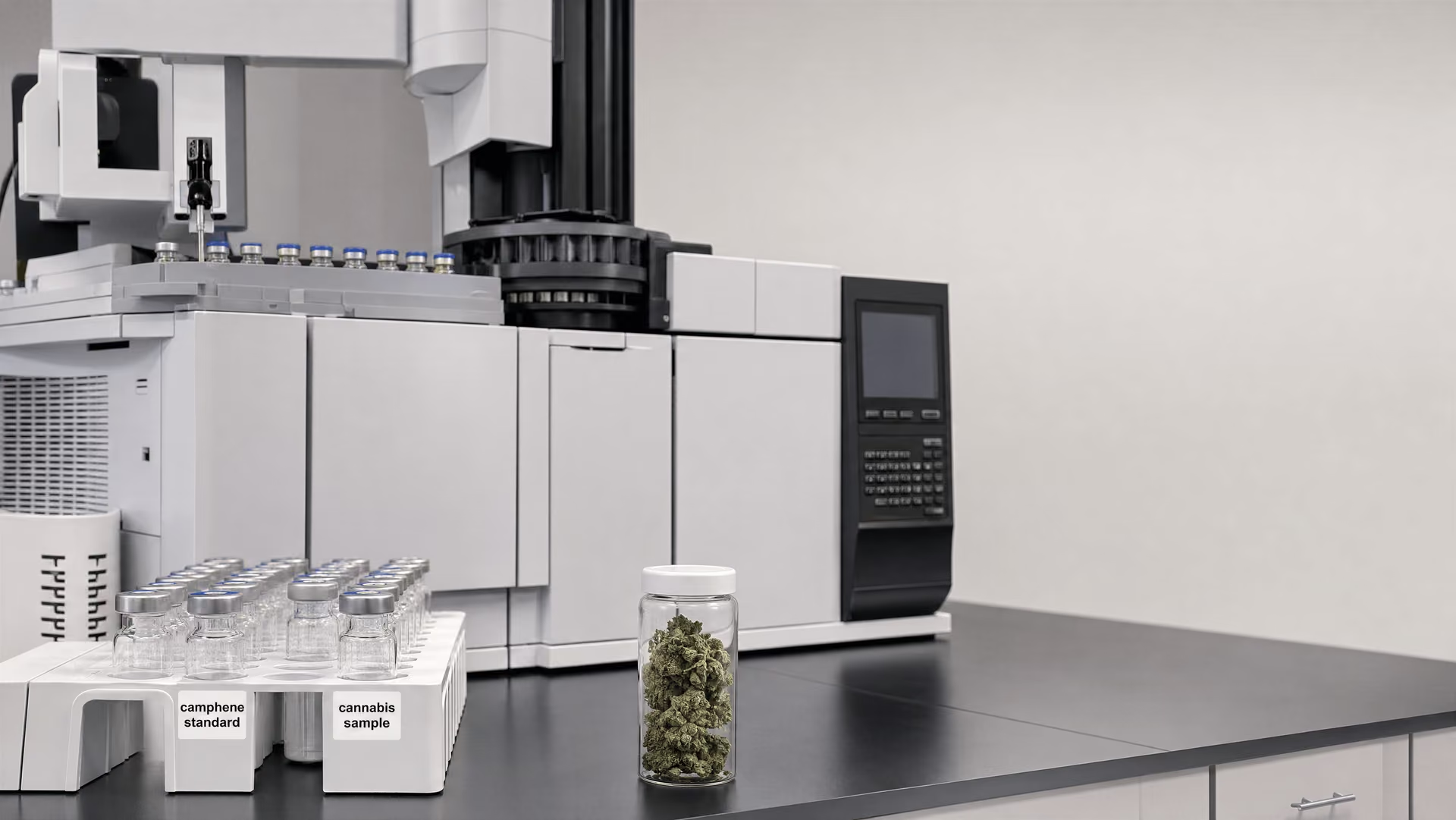
Most cannabis labs measure camphene with gas chromatography, usually GC-MS or GC-FID. That makes chemical sense: camphene is a small, volatile bicyclic monoterpene, so it separates well in a gas-phase method and can be identified by retention time plus its mass spectrum against reference libraries such as NIST. In routine workflows, the lab prepares an extract from flower or concentrate, injects it into the GC system, and reports camphene either as a percent by weight or in mg/g.
GC-MS is especially useful when camphene sits near trace level because the mass spectrometer helps distinguish it from other monoterpenes with similar behavior. GC-FID, by contrast, is often used for quantification once the peak identity is already established through standards and validated retention windows. Many retail certificates of analysis do not show the raw chromatogram, only the final terpene panel, so the consumer sees a number without the analytical context behind it.
That context matters. Hazekamp and Fischedick have argued for years that terpene composition is more informative than folk labels, but only if the panel actually captures the chemistry present. Camphene is part of that fingerprinting value even when it is not a dominant terpene.
Why camphene is often absent or very low in retail certificates of analysis
Camphene is usually a minor terpene in cannabis. It tends to sit below myrcene, limonene, beta-caryophyllene, pinene, and linalool, sometimes far below them. So when a certificate shows “ND” or leaves camphene off entirely, that does not mean the plant never made any. It may simply mean the amount fell below the lab’s limit of quantification, or below a reporting cutoff chosen to keep panels short and readable.
Some labs also build standard terpene menus around the compounds most often found at commercially relevant levels. Camphene can be omitted because it is less common as a headline constituent, not because it lacks analytical legitimacy. That is a panel design choice. It is not proof of absence.
This is one reason sweeping claims about a “camphene-rich effect” are weak. If a compound is frequently present only in trace amounts, its role is more defensibly discussed as part of a chemotype signature or aroma blend than as a standalone driver of human effects.
Why camphene may be missing or lower on a lab report
- Evaporation after harvest can reduce volatile monoterpenes.
- Oxidation during storage can change the terpene profile.
- Grinding increases surface area and can alter volatile recovery.
- Warm autosampler or handling conditions can shift measured recovery.
- Packaging headspace can slowly bleed off lighter aromatics.
- Some terpene panels do not target camphene, so it will not be reported even if present.
Analytical caveats: sample age, handling, and panel design
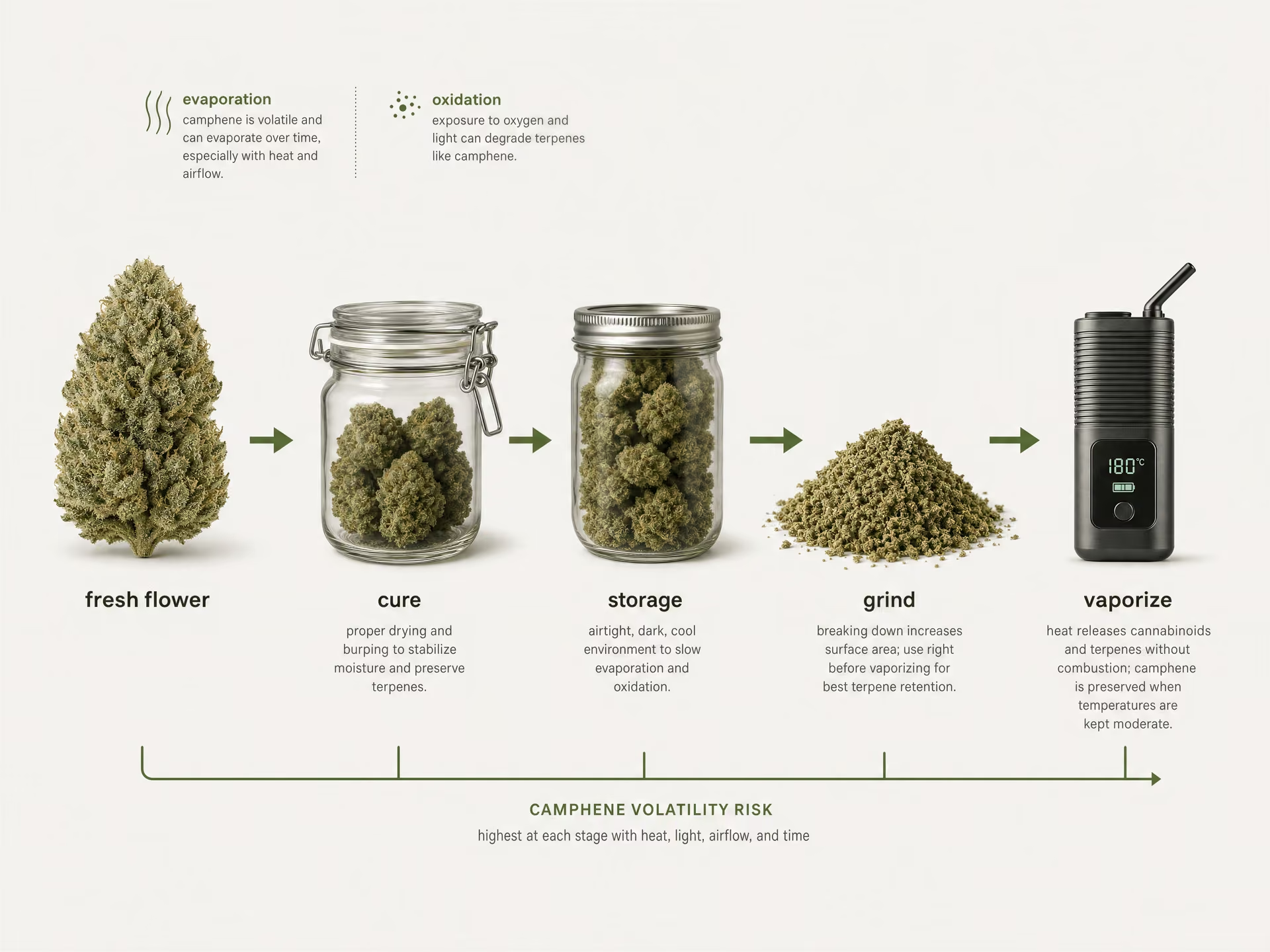
Monoterpenes are fragile. Camphene can decline after harvest through evaporation, oxidation, poor storage, repeated container opening, heat exposure, and long cure or shelf time. A terpene result is a snapshot of the tested sample on that date, not an immutable property of the cultivar.
Handling before analysis matters too. Grinding increases surface area. Warm autosampler conditions can shift volatile recovery. Packaging headspace can slowly bleed off lighter aromatics. Even two labs testing the same flower weeks apart may not report identical camphene values.
Panel design adds another layer. Some methods are optimized for a dozen common terpenes; others track 20 or more. If camphene is not on the validated target list, it will not appear, even if present. Non-detection, then, can reflect chemistry, method limits, or reporting scope. Those are very different things.
Biological activity: what the preclinical literature actually shows
Camphene has enough preclinical signal to be scientifically interesting, but not enough to support confident therapeutic claims in people using cannabis. That distinction matters. In cannabis flower, camphene is usually a minor monoterpene rather than a dominant constituent, often sitting behind myrcene, limonene, beta-caryophyllene, pinene, and linalool. So even before looking at pharmacology, strong claims that camphene alone drives a cultivar’s effects are weak on first principles. The literature is better read as a patchwork of cell assays, rodent studies, and essential-oil experiments using non-cannabis sources such as conifers, ginger, and camphor-rich botanical mixtures.
Antioxidant and anti-inflammatory signals
Anti-inflammatory and antioxidant claims around camphene mostly come from broader monoterpene literature, not cannabis-specific intervention studies. Reviews by de Sousa and related pharmacology groups have summarized evidence that monoterpenes, including camphene, can reduce inflammatory markers or oxidative stress signals in experimental systems. Those systems vary a lot: isolated cells, acute inflammation models in rodents, and essential oils containing many compounds at once.
That last point is the problem. When camphene appears inside a complex essential oil, attribution becomes uncertain. Was camphene active, or was the effect driven by alpha-pinene, borneol, limonene, or the mixture itself? Sometimes the paper does not let you separate those possibilities cleanly.
Even where isolated camphene shows activity, dose and route matter. A reduction in nitric oxide production, cytokine signaling, or oxidative damage in a lab model is not the same as a proven anti-inflammatory effect in humans inhaling or ingesting cannabis. Ethan Russo has argued that terpenoids may modulate cannabinoid effects, but he has also been clear about evidence gaps around specific minor terpenes. Camphene fits that gap-heavy category.
Antimicrobial findings and their limits
Camphene has shown antimicrobial activity in vitro, again mainly outside cannabis research. The compound appears in essential oils from conifers, cypress, citronella, and other aromatic plants that have been tested against bacteria and fungi. In some of these assays, camphene-containing preparations inhibit microbial growth. Isolated camphene has also been studied directly, though usually with modest datasets and variable potency.
This is not meaningless, but it is easy to overread. Petri-dish activity does not tell you that camphene-rich cannabis will treat infections. Concentration at the site of infection, formulation, metabolism, and toxicity all matter. Many terpenes can disrupt microbial membranes at concentrations that are hard to achieve in living tissue. A positive agar diffusion or minimum inhibitory concentration result is a starting point, not a medical conclusion.
There is also a source problem. Much of the antimicrobial literature uses non-cannabis preparations, and some papers test mixed essential oils where camphene is only one ingredient among many.
Lipid and metabolic effects from animal models
The most specific and often-cited camphene finding comes from lipid research. Barros and colleagues reported hypolipidemic effects of camphene in hyperlipidemic rats, with reductions in cholesterol and triglyceride-related measures. That makes camphene more than just an aroma molecule; it has at least one notable animal-model signal tied to metabolism.
Still, this is animal work. It does not establish that camphene meaningfully improves human lipid profiles, and it certainly does not show that ordinary cannabis exposure delivers camphene in doses comparable to those used experimentally. Because camphene is volatile, post-harvest handling, storage, oxygen exposure, and heat can shift how much is even present by the time a sample is consumed. Lab terpene values are snapshots, not fixed biological guarantees.
Antinociceptive and neurobiological hypotheses
Antinociceptive claims are also preclinical. In rodent pain models and monoterpene-focused reviews, camphene has been grouped with compounds that may reduce pain-like behavior or alter inflammatory pain pathways. That makes mechanistic sense as a hypothesis, especially when discussed alongside cannabinoid-terpene interaction models. But hypothesis is the right word.[2] The Health Effects of Cannabis and Cannabinoids: The Current State of Evidence and Recommendations for Research. National Academies of Sciences, Engineering, and Medicine. National Academies Press, 2017.
By contrast, cannabinoids have at least some human therapeutic grounding: the 2017 National Academies review found substantial evidence for cannabis or cannabinoids in chronic pain, chemotherapy-induced nausea and vomiting, and multiple sclerosis spasticity symptoms. Camphene does not have a comparable evidence base. There are no cannabis-specific human trials showing that camphene independently produces reliable analgesic, neuroprotective, or psychoactive effects.
So the honest reading is narrow but useful: camphene has biologically interesting preclinical signals, especially in inflammation, antimicrobial screening, lipid metabolism, and pain models. What it does not have is cannabis-specific human therapeutic evidence.
Potential therapeutic properties: promise, hype, and the evidence gap
What can reasonably be said about therapeutic potential
Camphene has real pharmacology. That is not the same thing as proven medical value in cannabis.
The defensible claims are modest. Camphene, a bicyclic monoterpene found in cannabis as well as fir needle, cypress, ginger, and turpentine, has shown antioxidant, anti-inflammatory, antimicrobial, and lipid-lowering effects in preclinical literature. Barros et al. reported hypolipidemic effects in hyperlipidemic rats, and essential-oil studies summarized by de Sousa and others have described antinociceptive and anti-inflammatory actions for monoterpenes that include camphene. Those findings make camphene scientifically interesting.
They do not validate it as a treatment.
In cannabis, camphene is usually a minor terpene rather than a dominant one. ElSohly, Gul, and other cannabis chemists have documented wide terpene diversity across chemovars, but camphene typically sits behind myrcene, limonene, beta-caryophyllene, pinene, and linalool in abundance. That alone weakens the common claim that camphene-rich flower should predict a distinct therapeutic outcome. A low-abundance, volatile compound can contribute to aroma and perhaps to formulation behavior without being the main driver of human effects.
Hazekamp and Fischedick have long argued that analytical composition matters more than folk labels, and camphene fits that framework well: useful as part of a chemotype fingerprint, not established as a stand-alone medicinal marker.
Why preclinical plausibility is not clinical proof
This is where terpene commentary often goes off the rails. Cell assays, rodent models, and non-cannabis essential-oil studies are hypothesis-generating tools. They are not substitutes for controlled human trials.
Camphene has almost no cannabis-specific clinical evidence. No major randomized human trial shows that camphene-rich cannabis reliably improves pain, inflammation, lipids, mood, sleep, or any other condition. No standardized therapeutic dose has been established. No route-specific safety profile has been mapped in the way modern medicines require. Because camphene is a volatile monoterpene, even its measured abundance can shift with drying, storage, oxygen exposure, and heat. A terpene panel is a time-stamped snapshot, not a permanent biological truth.
Russo’s entourage model is often cited here, sometimes too casually. The broad idea that terpenes may modulate cannabinoid effects is plausible. For camphene in humans, it remains unproven. Plausible is not validated.
How camphene compares with evidence-backed cannabinoids
The contrast with cannabinoids is stark. The 2017 National Academies review found substantial evidence that cannabis or cannabinoids can help chronic pain, chemotherapy-induced nausea and vomiting, and multiple-sclerosis spasticity symptoms. Epidiolex, purified CBD, has FDA-reviewed labeling with maintenance dosing of 10 to 20 mg/kg/day for specific epilepsies. That is what an evidence base looks like: defined indication, tested dose, regulated product, human data.
Camphene has none of that.
So the clear position is this: camphene deserves research attention, especially in formulation science and terpene-cannabinoid interaction studies, but current evidence does not justify strong therapeutic claims. For now, it is a biologically interesting minor terpene with suggestive preclinical signals and a large clinical evidence gap.
Camphene and the entourage effect
What the entourage effect originally meant
“Entourage effect” has a specific history, and popular cannabis writing often strips that history away. The term came from Raphael Mechoulam and Shimon Ben-Shabat’s 1998 work on endogenous fatty-acid glycerol esters that appeared to enhance the activity of the endocannabinoid 2-AG. That was not a general claim that every cannabis compound improves every other one. It described a defined biochemical observation.
Later, Ethan B. Russo argued that whole-plant cannabis effects may reflect interactions among cannabinoids and terpenoids. That broader use is reasonable as a hypothesis, but it is still a hypothesis unless tested compound by compound. For camphene, that distinction matters. Camphene is a bicyclic monoterpene with a sharp fir-needle and camphor-like odor, identified in cannabis as well as conifers, ginger, citronella, and camphor oil. In cannabis flower, though, it is usually a minor terpene. So the claim that it strongly dictates a cultivar’s effects is weak before any human data even enter the picture.
A better framing is narrower and more scientific: camphene may contribute to a chemotype fingerprint, to aroma perception, and possibly to biological modulation inside a mixture. “May” is doing real work there.
Cannabinoid-terpene interaction: plausible mechanisms versus demonstrated outcomes
Mechanistically, there are several ways a terpene such as camphene could matter in a cannabis preparation. It could alter smell and flavor perception, which in turn changes subjective experience. It could have independent anti-inflammatory or antioxidant activity, suggested by preclinical literature on monoterpenes and by non-cannabis papers such as de Sousa’s work on essential-oil constituents. It could also, in theory, affect absorption or distribution because volatile lipophilic compounds can change formulation behavior.
But plausible is not the same as demonstrated. There is no strong human evidence showing that camphene changes THC intoxication, CBD response, or clinical outcomes in a reproducible way. That gap is easy to miss because “entourage effect” is now used loosely, often as shorthand for any preferred whole-plant experience. Hazekamp and Fischedick have long argued that analytical chemistry tells us more than folk strain labels, and Jikomes and Zoorob’s 2018 analysis of 81,000 U.S. samples showed how poorly “indica/sativa” categories map onto chemistry. Camphene belongs in that chemistry-first discussion, not in a mythology of preassigned effects.
Camphene with THC, CBD, pinene, limonene, and beta-caryophyllene
With THC, the most defensible idea is modest modulation, not transformation. Camphene’s aroma may sharpen a blend’s perceived freshness, especially alongside pinene. That sensory effect can influence how a product is described or experienced, but sensory shaping is not proof of receptor-level interaction.
With CBD, the evidence is even thinner. CBD has an established clinical literature and defined dosing in approved medicine; Epidiolex, for example, is labeled at 10 mg/kg/day up to 20 mg/kg/day. Nothing comparable exists for camphene. Claims that camphene meaningfully boosts CBD’s efficacy in humans are speculative.
With pinene and limonene, camphene likely functions more as part of an odor ensemble than as a lead actor. Their overlapping volatile profiles may produce a brighter conifer-citrus impression. With beta-caryophyllene, which has direct CB2 activity, one could imagine a blend where camphene contributes ancillary anti-inflammatory tone while caryophyllene carries more of the receptor-driven action. That is a reasonable formulation hypothesis. It is not proof.
Why human evidence remains the missing piece
The evidence ladder here is uneven. Chemistry is solid. Natural occurrence is solid. Preclinical pharmacology exists, including Barros et al. on hypolipidemic effects in hyperlipidemic rats. Human cannabis trials specific to camphene do not.
That absence matters because cannabis is widely used: UNODC estimated 228 million users worldwide in 2022, and SAMHSA reported 61.8 million past-year users in the United States in 2023. Yet even at that scale, camphene-specific outcomes are not mapped. Post-harvest volatility adds another problem: camphene levels can shift with storage, oxygen exposure, curing, and heat, so a lab terpene panel is a time-stamped snapshot, not a permanent biological identity.
The careful conclusion is plain. Camphene may influence aroma, formulation behavior, and perhaps some biological signaling within a blend. The research does not justify saying it reliably changes human psychoactive or therapeutic effects when paired with cannabinoids. Hypothesis, yes. Proof, not yet.
What cannabis consumers and clinicians should not infer from camphene
A terpene name is not a clinical outcome
Seeing camphene on a lab panel should not be mistaken for a treatment prediction. Camphene is a real and chemically identifiable bicyclic monoterpene, and its fir-needle, camphor-like note is well supported by analytical chemistry sources such as NIST and PubChem. The leap from “present in the sample” to “will cause a specific effect in the patient” is where claims outrun evidence.
That gap matters. Camphene in cannabis is usually a minor terpene, often trailing myrcene, limonene, beta-caryophyllene, pinene, and linalool. On first principles alone, a low-abundance volatile compound is unlikely to override the better-established determinants of experience and response: THC dose, CBD dose, THC:CBD ratio, route of administration, inhaled versus oral pharmacokinetics, tolerance, and setting. Barros et al. reported lipid-lowering effects of camphene in hyperlipidemic rats, and de Sousa’s monoterpene literature describes anti-inflammatory and antinociceptive activity. Those findings are interesting. They are not cannabis-specific human outcomes.
By contrast, the 2017 National Academies review found substantial evidence for some cannabinoid-based indications, not for camphene itself.
Why strain labels tell less than full chemotype data
A strain name is not a chemical certificate. Hazekamp and Fischedick have argued for years that chemovar analysis says more than folk labels, and Jikomes and Zoorob’s 2018 PLOS ONE study of 81,000 flower samples showed how poorly commercial categories mapped onto chemistry. If broad labels fail, tiny terpene assumptions fail even faster.
Camphene also illustrates a practical problem: monoterpenes are volatile. Storage, curing, oxygen exposure, and heat can shift measured abundance after testing. A terpene result is a time-stamped snapshot, not a fixed biological identity.
The risk of single-compound storytelling in cannabis
Russo’s entourage model is plausible, but for camphene it remains just that: plausible. It is reasonable to say camphene may shape aroma and possibly modulate effects in a blend. It is not reasonable to say camphene-rich cannabis will reliably feel a certain way, treat a certain symptom, or neutralize the effects of high THC. Single-compound stories flatten a polychemical plant into marketing shorthand. Clinically, that is a poor substitute for dose, formulation, and observed response.
Research gaps that actually matter
Camphene does not need more hype. It needs better study design. Because it is usually a minor cannabis terpene, broad claims that it drives a cultivar’s psychoactive profile are weak from the start. The missing science is more basic and more useful: human data, cannabis-specific formulation work, and real-world sensory and stability testing.
Needed human studies
The biggest gap is controlled human research using terpene-characterized flower or extracts, not isolated claims borrowed from essential-oil papers. Russo has argued that cannabinoid-terpenoid interactions are plausible, but he has also been clear that many specific terpene claims outrun the evidence. Camphene is a textbook case.
What is needed are crossover studies that compare matched THC/CBD doses with and without camphene-enriched terpene fractions, then measure subjective effects, cognition, pain, anxiety, heart rate, and adverse events. Whole-flower arms matter too. Hazekamp and Fischedick, and later Jikomes and Zoorob in their 2018 analysis of 81,000 cannabis samples, showed that chemistry tracks reality better than folk strain labels. Human trials should follow chemistry, not branding language.
That matters because cannabis use is not niche: UNODC estimated 228 million users globally in 2022, and SAMHSA reported 61.8 million past-year U.S. users in 2023. Yet for camphene, there is still no comparable evidence base to what exists for cannabinoids; compare that with the FDA-labeled 10–20 mg/kg/day dosing framework for cannabidiol in Epidiolex.
Needed cannabis-specific formulation studies
Camphene interaction work should focus on mixtures people actually consume. Mechanistic studies need to test whether camphene changes THC or CBD pharmacokinetics, receptor signaling, tolerability, or perceived onset when present in realistic terpene ratios. The preclinical literature, including Barros et al. on lipid effects in rats and de Sousa’s monoterpene pharmacology papers, is interesting but not enough to support cannabis-specific therapeutic claims.

Needed sensory and stability studies
Camphene is volatile, so post-harvest handling can change its measured abundance before use. Stability studies should track camphene loss during curing, grinding, storage, and vaporization under controlled oxygen, light, humidity, and temperature conditions. Sensory work is missing too: threshold studies in actual cannabis matrices are needed to determine when camphene’s fir-needle/camphor note is perceptible, when it reads as “fresh,” and when it is masked by myrcene, limonene, pinene, or linalool. Until then, terpene dashboards are snapshots, not destiny.
Bottom line: where camphene deserves attention
A useful terpene, not a miracle molecule
Camphene deserves attention, but on narrower grounds than terpene mythology usually allows. Chemically, it is well established: a bicyclic monoterpene, C10H16, cataloged by NIST and PubChem and found not just in cannabis but in fir needle, cypress, turpentine, ginger, citronella, camphor oil, and valerian. In cannabis, though, it is usually a minor player. That matters.
When camphene shows up in a terpene panel, the strongest claim is aromatic and analytical, not dramatic. It can add a sharp fir-needle, camphor-like edge and subtly change how “fresh” or “cool” a blend smells. The pharmacology is more tentative. Barros et al. reported lipid-lowering effects in hyperlipidemic rats, and de Sousa’s monoterpene literature describes anti-inflammatory and antinociceptive signals, but these are preclinical findings, not proof that camphene-rich cannabis reliably causes therapeutic effects in people.
That distinction is easy to lose. The 2017 National Academies review found substantial evidence for some cannabinoid-based clinical uses, while camphene has nothing close to that level of human evidence. Compare that with FDA-approved cannabidiol dosing in Epidiolex, where 10–20 mg/kg/day is precisely defined. Camphene claims rarely come with that kind of tested framework. Russo has argued that terpenes may shape ensemble effects, and that is plausible. For camphene in humans, it remains unproven.
Why chemotype literacy matters more than terpene mythology
Cannabis has more than 200 reported terpenes, but only a smaller group commonly appears at meaningful levels. Camphene is often secondary to myrcene, limonene, beta-caryophyllene, pinene, and linalool, so claims that it alone determines a cultivar’s psychoactive profile are weak on first principles.
Hazekamp, Fischedick, ElSohly, and Gul all point toward the same lesson: chemistry beats folk naming. Jikomes and Zoorob’s 2018 analysis of 81,000 flower samples showed how poorly “indica” and “sativa” track actual composition. Minor terpenes like camphene fit better into chemotype interpretation than into effect folklore. Add one practical wrinkle: as a volatile monoterpene, camphene can shift with storage, cure, oxygen, and heat. A terpene certificate is a snapshot, not destiny. That is exactly why camphene matters.
References
- [1] World Drug Report 2024. United Nations publication, 2024. https://www.unodc.org/unodc/en/data-and-analysis/wdr2024.html
- [2] The Health Effects of Cannabis and Cannabinoids: The Current State of Evidence and Recommendations for Research. National Academies Press, 2017. https://nap.nationalacademies.org/catalog/24625/the-health-effects-of-cannabis-and-cannabinoids-the-current-state