














What eucalyptol is — and what cannabis articles usually get wrong
Most cannabis writing treats eucalyptol as a shortcut: minty smell, “clear-headed” effect, maybe an “entourage” boost. That is backwards. The solid literature on 1,8-cineole does not come from cannabis at all. It comes from eucalyptus pharmacognosy, respiratory medicine, toxicology, and cell studies on inflammation. In flower, eucalyptol is usually a minor terpene. Outside cannabis, it is a well-characterized molecule with real clinical and mechanistic data.
Chemically, eucalyptol and 1,8-cineole are the same compound: a monoterpene oxide with the formula C10H18O and molecular weight 154.25 g/mol, as listed by PubChem. The “oxide” part matters because it distinguishes cineole from the hydrocarbon terpenes that dominate many cannabis profiles. In practical terms, cannabis samples more often show myrcene, limonene, beta-caryophyllene, pinene, or terpinolene at higher levels than cineole. That makes 1,8-cineole relevant, but rarely profile-defining.
Why 1,8-cineole matters even though it is usually a minor cannabis terpene
Minor does not mean trivial. It means dose and context have to be discussed honestly.
1,8-Cineole is best known as a principal constituent of eucalyptus oil, not cannabis. The European Medicines Agency’s herbal assessment, citing European Pharmacopoeia standards, notes eucalyptus oil should contain 70.0% to 85.0% 1,8-cineole. Cannabis is nowhere near that. Many commercial flower certificates of analysis show eucalyptol at trace levels or not at all, and cross-market prevalence claims are shaky because labs use different terpene panels and reporting thresholds.
Still, cineole matters because its pharmacology is stronger than its typical cannabis abundance suggests. Uwe R. Juergens and colleagues showed anti-inflammatory effects in human monocytes, including inhibition of TNF-alpha and IL-1beta production. Helmut Worth’s group linked cineole to clinically relevant respiratory outcomes in adjunct settings: a 12-week placebo-controlled asthma trial in 2003 used 600 mg/day; a 2009 COPD study followed 242 patients given 200 mg three times daily for six months; Kehrl et al. reported symptom improvement in acute rhinosinusitis in a 2004 double-blind trial with 152 patients. Those are not cannabis studies, but they are the reason cineole deserves serious treatment.
The naming problem: eucalyptol versus 1,8-cineole
“Eucalyptol” is the common name. “1,8-cineole” is the chemical name used more often in technical papers. Articles that treat them like separate substances are simply wrong.
The common name also creates confusion because it ties the compound too tightly to eucalyptus aroma. In cannabis, the smell can register as camphoraceous, cooling, herbal, mint-like, or resinous rather than obviously “eucalyptus.” And odor is not a lab report. A minty flower is not automatically high in eucalyptol; similar impressions can come from terpinolene, pinene, mixed terpene perception, or even expectation.
The common overclaim: aroma marker does not equal proven cannabis effect
This is where cannabis coverage usually overreaches. A strain smelling cool or medicinal does not prove that 1,8-cineole is present at a meaningful level, and even a measurable level does not prove a distinctive cannabis effect in humans.
1,8-cineole has been proven to modify THC or CBD effects in human cannabis use Preliminary evidence
There is no high-quality clinical trial showing that 1,8-cineole changes THC or CBD effects in people consuming cannabis. Claims that it “opens the lungs” are especially sloppy when attached to smoked cannabis, which can itself irritate airways. Claims about focus, memory, or entourage amplification are also ahead of the evidence. The narrower statement is the accurate one: 1,8-cineole has pharmacology of its own, including anti-inflammatory and airway-related actions, and it could plausibly modify cannabis experience through smell, sensory signaling, or additive effects. Plausible is not proven. That distinction should be standard, not optional.
Chemical identity, biosynthesis, and sensory profile
Molecular structure and physicochemical traits
Monoterpene oxide A 10-carbon terpene that contains an oxygen atom in its structure. In this article, the oxygen bridge helps distinguish 1,8-cineole from hydrocarbon monoterpenes such as myrcene or limonene.
1,8-Cineole, commonly called eucalyptol, is a monoterpene oxide with the molecular formula C10H18O and a molecular weight of 154.25 g/mol (PubChem). Structurally, it is a bicyclic ether: a ten-carbon monoterpene skeleton folded into a ring system with an oxygen bridge. That oxygen atom matters. It separates cineole from hydrocarbon monoterpenes such as myrcene or limonene and helps explain why its odor reads as cleaner, sharper, and more medicinal than many fruit-forward terpenes.
Physically, 1,8-cineole is a colorless liquid with high volatility relative to heavier sesquiterpenes, though it is not among the very lightest aroma compounds found in cannabis. It is also lipophilic, which helps it partition into plant resins and biological membranes. Those traits fit its broader pharmacology outside cannabis, including its ability to cross tissue barriers and contribute to inhaled aroma.
Boiling point is often cited in terpene charts, but this is one area where internet simplifications go off the rails. Cineole’s boiling point is generally reported around 176°C, yet that number does not tell you exactly when or how much cineole appears in vapor from cannabis flower or extract. Real delivery depends on matrix effects, device design, airflow, heating rate, and thermal degradation, not just a single neat-compound number measured in isolation.
In cannabis, eucalyptol is usually a minor terpene, not a dominant one. It is far more central to eucalyptus oil pharmacognosy than to cannabis chemotype identity; by European Pharmacopoeia standards cited in EMA materials, eucalyptus oil contains 70.0% to 85.0% 1,8-cineole, a concentration range that makes clear how different the cannabis context is.

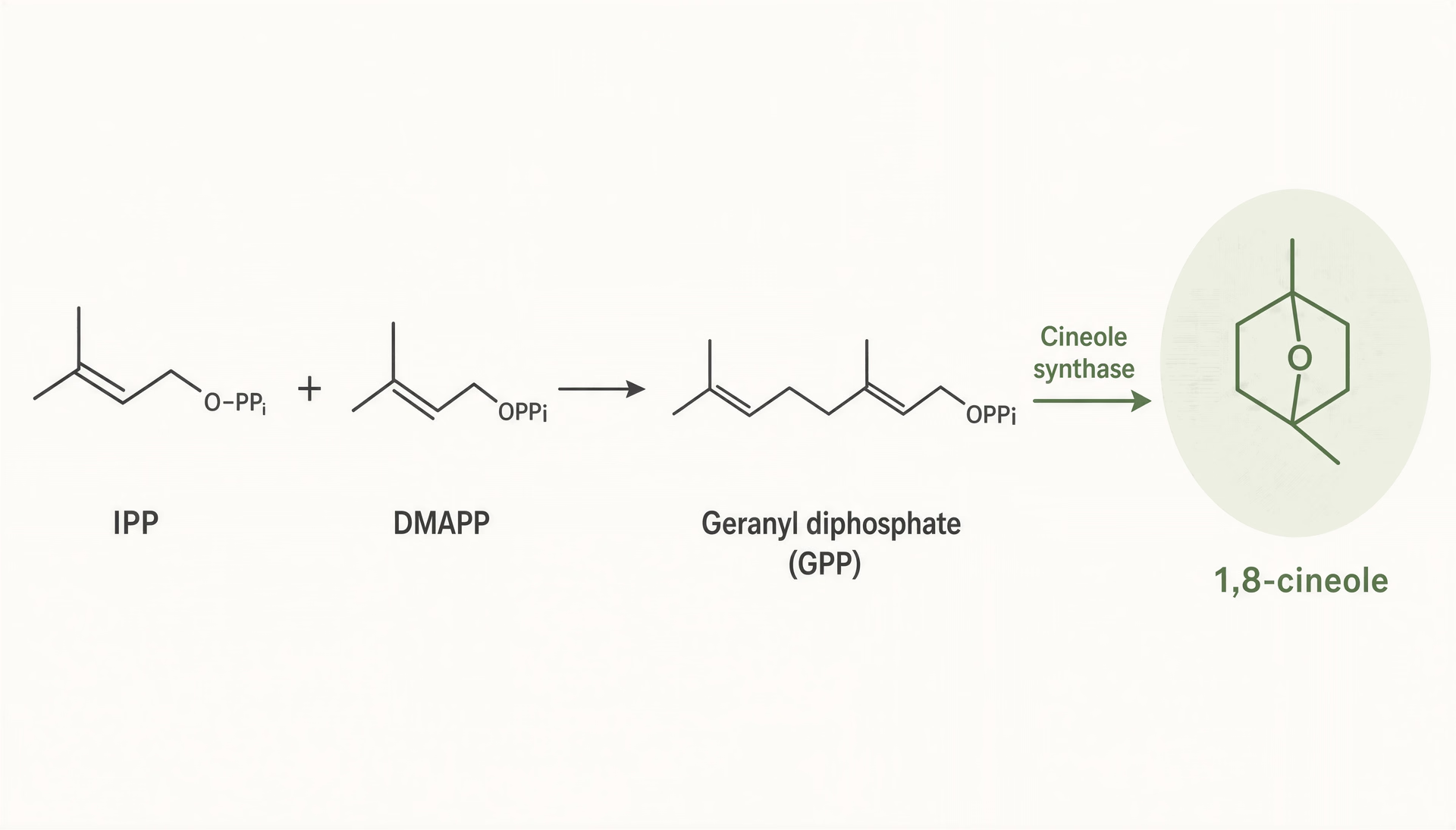
How plants biosynthesize 1,8-cineole
1,8-Cineole biosynthesis, step by step
- 1 IPP and DMAPP provide the five-carbon building blocks.
- 2 The plant combines them to form geranyl diphosphate (GPP), the standard monoterpene precursor.
- 3 A cineole synthase or related monoterpene synthase catalyzes cyclization and oxygen-containing rearrangement steps.
- 4 Those reactions yield 1,8-cineole.
Plants make 1,8-cineole through the terpene biosynthetic pathway that begins with the five-carbon building blocks IPP and DMAPP. These are combined to form geranyl diphosphate (GPP), the standard precursor for monoterpenes. From there, a cineole synthase or related monoterpene synthase catalyzes cyclization and oxygen-containing rearrangement steps that produce 1,8-cineole.
The exact enzyme repertoire varies by species. In eucalyptus, cineole production is a defining metabolic feature. In cannabis, the pathway appears to be present but usually less strongly expressed than pathways leading to myrcene, limonene, terpinolene, pinene, or sesquiterpenes like beta-caryophyllene. That is why many certificates of analysis show cineole at low fractional percentages or not at all, depending on laboratory detection thresholds.
So when a cultivar is described as “eucalyptus-forward,” caution is warranted. Sometimes that reflects real cineole content. Sometimes it reflects mixed perception built from several terpenes.
Why it smells cooling, camphoraceous, and medicinal
Cineole is typically described as cooling, camphoraceous, mint-like, herbal, and eucalyptus-like. Those descriptors come from the way its bicyclic ether structure interacts with olfactory receptors, producing an aroma many people associate with chest rubs, cough drops, and aromatic leaves rather than sweet fruit or fuel.
But smell is composite, not one-molecule-to-one-note. A cannabis sample can smell “minty” or “medicinal” with only a small amount of 1,8-cineole if it is accompanied by pinene, terpinolene, borneol-like notes, or other sharp volatiles. The reverse is also true: measurable cineole may be masked by louder terpenes. So an eucalyptus-like aroma in cannabis is suggestive, not quantitative. Without a COA, it is still just a smell impression.
How often eucalyptol appears in cannabis chemovars
Eucalyptol, or 1,8-cineole, does show up in cannabis. It just does not show up as often, or as strongly, as strain lore suggests. In most commercial flower, it sits in the background behind myrcene, limonene, beta-caryophyllene, pinene, terpinolene, or linalool. That matters because many consumer-facing descriptions treat “eucalyptus” as if it signals a defining chemovar trait. Usually it does not.
Minor terpene status in commercial cannabis
In cannabis, eucalyptol is generally a minor terpene rather than a profile leader. Lab reports from dispensary flower and breeding stock commonly show it either absent, present only in trace amounts, or reported at low fractional percentages compared with the dominant terpenes in the same sample. That pattern fits the broader chemistry. Eucalyptol is famous in pharmacognosy because eucalyptus oil is rich in it—European Pharmacopoeia specifications cited by the EMA place eucalyptus oil at 70.0% to 85.0% 1,8-cineole—but cannabis is not eucalyptus. The same molecule can be prominent in one plant family and marginal in another.
The practical implication is simple: if a cannabis sample contains eucalyptol, that does not mean the sample is “eucalyptol-rich” in the way an essential oil chemist would use that phrase. In flower COAs, levels are often modest enough that they may shape aroma at the edges without dominating the entire bouquet. Some labs do not even include it in every terpene panel, and others set reporting thresholds that push very small amounts into “ND” or “trace.” So prevalence estimates across markets are messy from the start.
Eucalyptol appears in commercial cannabis, but usually at low and inconsistently reported levels Limited evidence
That gap in the data is real. There is no widely standardized, cross-market cannabis survey showing how often 1,8-cineole appears above a consistent threshold. The safer statement is narrower: eucalyptol appears intermittently in commercial chemovars, usually at low levels, and much less consistently than the headline terpenes.
Cultivars often described as eucalyptol-forward
Certain named cultivars come up again and again in eucalyptol discussions. Haze-family lines are frequent examples, especially Super Silver Haze and other Haze-leaning descendants. Headband appears often in terpene roundups. CBD-forward cultivars such as ACDC also get tagged with eucalyptol in some databases and menu descriptions. Those associations are not invented out of thin air; they likely reflect repeated observations of camphoraceous, cooling, herbal notes in some batches.
Still, the evidence is uneven. One batch of Super Silver Haze may show detectable eucalyptol, while another grown under different conditions may express far more terpinolene, pinene, or limonene and little measurable cineole. The same problem applies to Headband and ACDC. A named cultivar can have a reputation for eucalyptus-like aroma while the actual terpene numbers swing from batch to batch. That is normal in cannabis production. It is not proof that the strain name itself predicts cineole content.
This is also where smell can mislead. Minty, cooling, or medicinal impressions do not uniquely identify eucalyptol. Terpinolene can read fresh and sharp. Pinene can feel brisk and forest-like. Mixed terpene perception can produce a eucalyptus association even when eucalyptol is low. Aroma is a clue, not a measurement.
Why strain lists are weaker evidence than lab reports
Strain lists are weak evidence because cannabis chemistry is plastic. Genotype matters, but so do environment, light intensity, nutrient regime, harvest timing, drying speed, curing conditions, and storage. Oxidation and volatilization continue after harvest. A cultivar described online as eucalyptol-forward may have earned that reputation from one breeder cut, one regional market, or one set of test results years ago. Then the claim gets copied.
That recycling problem is everywhere in cannabis databases. One site publishes a terpene profile without a visible certificate of analysis, a second site paraphrases it, a third turns it into a canonical strain fact, and soon the claim looks established. It is not. Without batch-specific COAs, named strains are proxies at best.
If the question is whether eucalyptol occurs in cannabis, yes. If the question is whether a strain name guarantees meaningful cineole content, no. The stronger evidence comes from recent lab reports tied to actual batches, not inherited strain mythology.
Pharmacology outside cannabis: where the evidence is actually strongest
If eucalyptol matters in this article, it is not because cannabis folklore assigns it a “fresh” note. It matters because 1,8-cineole has a real pharmacology literature built mostly outside cannabis, especially in respiratory medicine. That is where the evidence is strongest and where claims can be made without hand-waving. The compound itself is simple enough on paper—C10H18O, molecular weight 154.25 g/mol—but its biological effects are not trivial. In eucalyptus oil, 1,8-cineole is often the dominant constituent; under European Pharmacopoeia specifications cited by EMA/HMPC, eucalyptus oil contains 70.0% to 85.0% cineole. Cannabis is different. Here, cineole is usually a minor terpene, often present only in small fractional amounts, which makes direct transfer of eucalyptus-dose findings to cannabis products a mistake.
Anti-inflammatory signaling and cytokine modulation
The mechanistic case for cineole is much stronger than the usual “relaxing terpene” language suggests. Uwe R. Juergens and colleagues did some of the key work. In human monocytes and related inflammatory models, cineole inhibited production of pro-inflammatory cytokines including TNF-alpha and IL-1beta. That matters because those are not vague wellness markers; they are central mediators in airway inflammation, fever signaling, leukocyte recruitment, and tissue irritation. Juergens’ work also pointed toward effects on arachidonic-acid-related inflammatory pathways and oxidative signaling, offering a plausible basis for why cineole might reduce inflammatory tone in respiratory disease.
That does not mean cineole is a broad immune suppressant. The data are better read as selective dampening of inflammatory signaling under stimulated conditions. In airway disease, that is a reasonable target. Less cytokine release can mean less edema, less mucus hypersecretion, and lower symptom burden. It is a pharmacological action, not a mood board.
Human evidence, while not massive, supports that frame. In a randomized placebo-controlled asthma trial published by Worth et al. in Respiratory Medicine in 2003, 32 patients with steroid-dependent asthma received 600 mg/day cineole as add-on therapy for 12 weeks. The headline finding was not that cineole “cured asthma.” It did not. The more defensible point is narrower and more impressive: patients in the cineole arm were able to reduce oral steroid dosage significantly compared with placebo while maintaining clinical stability. That suggests an anti-inflammatory adjunct effect worth taking seriously.
Still, limits matter. The sample was small. The trial was adjunctive, not head-to-head against standard anti-inflammatory drugs. And this was purified cineole dosing, not terpene exposure from cannabis flower. Those distinctions should stay intact.
Airway effects: mucolytic, bronchodilatory, and sinus-related data
Respiratory use is where cineole has the clearest clinical footprint. It has long been studied as a mucolytic and secretolytic agent, meaning it may help thin mucus and improve clearance rather than acting as a simple decongestant. Some literature also supports a bronchodilatory contribution, though the term should be used carefully. Cineole is not a rescue inhaler, and nobody with acute bronchospasm should read these data as a substitute for standard asthma treatment.
The asthma trial by Worth et al. already hints at airway benefit through reduced steroid need. In COPD, the evidence is somewhat stronger because the dataset is larger. In a placebo-controlled study published in Respiratory Research in 2009, Worth and colleagues randomized 242 patients with stable COPD to 200 mg cineole three times daily for six months as adjunct therapy. The cineole group had fewer exacerbations and improvements in respiratory symptoms. That is clinically relevant because exacerbations drive morbidity, steroid bursts, antibiotic exposure, and hospitalization risk in COPD.
Again, boundaries matter. These were adjunctive oral cineole capsules, not inhaled cannabis and not essential oil drops. Patients remained on standard therapy. The study supports cineole as a helper, not a replacement.
Sinus data are also worth including because they are often distorted into general claims about “opening the head.” In a multicenter double-blind trial published by Kehrl et al. in The Laryngoscope in 2004, 152 patients with acute nonpurulent rhinosinusitis were randomized to cineole 200 mg three times daily or placebo. The cineole group improved more on symptom scores, including headache on bending, nasal obstruction, and subjective pressure symptoms. That is useful evidence for short-term symptom relief in a defined condition.
But there is an obvious problem if people try to port this into cannabis talk: smoke irritates airways. Even if cineole itself has mucolytic or anti-inflammatory effects, inhaling combusted plant material can counteract them. So the lazy claim that “eucalyptol-rich cannabis opens the lungs” is not supported. Cineole has respiratory pharmacology. Cannabis smoke has respiratory liabilities. Both statements can be true at once.
Antimicrobial and antioxidant findings
Cineole also shows antimicrobial and antioxidant activity in preclinical work. In vitro, it can inhibit growth of some bacteria and fungi, alter microbial membranes, and reduce oxidative stress markers in cell and animal models. Those findings are real, but they are often overstated. Petri-dish inhibition does not automatically translate into clinically useful anti-infective action in humans. Concentrations that work in vitro may be difficult to reach safely in tissue. Whole essential oils may perform differently from isolated cineole. And respiratory infections involve host immunity, mucus environment, biofilms, and pharmacokinetics, not just direct microbe contact.
So the fair claim is restrained: cineole has antimicrobial potential and antioxidant activity in experimental systems, which may contribute to its respiratory usefulness, but it should not be presented as an antibiotic substitute or a proven antiviral treatment in routine clinical care.
Safety context helps keep this honest. Low-level food use has regulatory support through FEMA GRAS status and JECFA evaluation, with JECFA setting an acceptable daily intake of 0–2 mg/kg body weight. Toxicology sources report an oral LD50 in rats around 2,480 mg/kg, suggesting relatively low acute toxicity in animals. Yet concentrated eucalyptus oil ingestion can be dangerous, especially in children, and poison-center literature repeatedly documents clinically significant exposures. That is relevant because cannabis writing often borrows essential-oil safety warnings without stating the dose gap. Tiny terpene amounts in cannabis are not the same as swallowing concentrated eucalyptus oil. Nor do they recreate the 600 mg/day or 200 mg three-times-daily regimens used in respiratory trials.
That is the key takeaway for this article: cineole has meaningful anti-inflammatory and airway data outside cannabis, enough to justify serious attention. What it does not have is proof that the modest amounts usually found in cannabis produce the same clinical effects or measurably alter THC or CBD in humans.
Possible CNS and cognitive effects — interesting, but easy to oversell
Writers often connect 1,8-cineole with alertness, memory, and “clear-headed” effects because the molecule has properties that make CNS activity plausible. Plausible is the key word. In cannabis, that line of reasoning gets stretched far past the evidence.
Blood-brain barrier penetration and lipophilicity
1,8-Cineole is a small, lipophilic monoterpene oxide (C10H18O; molecular weight 154.25 g/mol), so it is chemically capable of crossing lipid membranes and has been discussed in the context of blood-brain barrier penetration. That matters because a terpene cannot affect cognition directly if it never reaches the CNS in meaningful amounts.
Still, cannabis articles usually skip the harder question: dose. Eucalyptus oil can be rich in cineole; the European Pharmacopoeia standard cited by EMA places it at 70.0% to 85.0% of eucalyptus oil. Cannabis is different. In flower, eucalyptol is often absent or present only at low fractional percentages, usually below the dominant terpene tier. A compound with CNS relevance on paper may be present at too little of it to drive a noticeable cognitive effect in a given chemovar.
Acetylcholinesterase-related hypotheses
The other reason cineole gets linked to focus is acetylcholinesterase. Some preclinical and in vitro literature suggests 1,8-cineole may inhibit this enzyme to a degree, which raises a familiar neuropharmacology idea: less acetylcholine breakdown could, in theory, support attention or memory processes. That is a reasonable hypothesis. It is not a demonstrated outcome in cannabis users.
There is also a category mistake here. Enzyme activity in a cell assay does not equal improved studying, faster reaction time, or protection from THC-related short-term memory disruption. Those are much higher bars. No controlled human cannabis trial has shown that eucalyptol-rich flower improves cognition, sharpens recall, or offsets intoxication-related memory impairment.
Why “focus terpene” is not an evidence-based cannabis label
“Focus terpene” sounds tidy, but it packages speculation as outcome. Aroma can shape expectation; a cooling, camphoraceous scent may feel mentally “fresh.” That subjective impression is real. The leap from that impression to reproducible cognitive enhancement is not.
Even outside cannabis, cineole’s strongest human evidence is respiratory, not cognitive: Worth et al. 2003 in asthma, Kehrl et al. 2004 in rhinosinusitis, Worth et al. 2009 in COPD. Those studies support airway and inflammatory relevance. They do not validate strain-level attention claims. If a label says eucalyptol means focus, treat it as storytelling, not established pharmacology.
Interaction with cannabinoids: plausible mechanisms, thin direct evidence
The cleanest way to talk about 1,8-cineole and cannabinoids is to separate three different claims that are often blurred together: cineole has pharmacology of its own; cineole may overlap with some pathways relevant to cannabinoid effects; cineole has been proven to modify THC or CBD effects in human cannabis use. The first claim is well supported outside cannabis. The second is plausible. The third has not been shown.
Cineole is 1,8-cineole, a monoterpene oxide with formula C10H18O and molecular weight 154.25 g/mol. In eucalyptus oil it is often the dominant constituent; the European Pharmacopoeia standard cited by EMA places eucalyptus oil at 70.0% to 85.0% 1,8-cineole. Cannabis is a different situation. Here, cineole is usually a minor terpene, often low enough that cross-market prevalence is hard to compare because lab panels and reporting thresholds differ. That matters. A terpene present at modest levels may still contribute to aroma and experience, but the case for major pharmacological impact inside cannabis has to clear a higher bar than strain lore usually admits.
Pharmacodynamic additivity versus true synergy
Entourage effect A proposed interaction in which cannabis compounds change each other's effects. In strict use, it should not mean any mixture at all; it should refer to a combined effect that is greater than, or meaningfully different from, what the components would be expected to do separately.
“Entourage effect” has become a catch-all phrase for any mixed-compound cannabis effect. That is too loose to be useful. If THC, CBD, and cineole each have their own actions, a combined effect could simply be additive: more than one active compound contributing separate influences at the same time. True synergy is narrower. It means the combined effect is greater, or qualitatively different, than expected from each component alone under controlled conditions.
For cineole, additive effects are easy to imagine. THC can alter pain perception, mood, salience, and nausea. CBD has anti-inflammatory and anxiolytic-relevant literature, though outcome strength depends heavily on dose and context. Cineole has a separate body of evidence in airway and inflammatory settings. Juergens and colleagues reported anti-inflammatory actions in human monocytes, including suppression of cytokines such as TNF-alpha and IL-1beta. Worth et al. then studied cineole clinically in airway disease: 600 mg/day in a 12-week placebo-controlled asthma trial in 2003, and 200 mg three times daily in COPD adjunct treatment in 2009. Those are not cannabis studies, but they show cineole is not just a smell molecule.
What is missing is evidence that cineole changes cannabinoid pharmacology at cannabinoid receptors in a way that rises above co-occurring independent effects. Sparse preclinical terpene papers are often overread here. For 1,8-cineole, receptor-level enhancement of CB1- or CB2-mediated effects in humans has not been established. If someone feels a minty, camphoraceous cultivar is “clearer” or “more open,” that may reflect aroma perception, expectancy, independent sensory pharmacology, or the full chemovar profile. It is not proof that cineole is amplifying THC through a demonstrated receptor interaction.
TRP channels, inflammation, and sensory modulation
The more credible interaction story sits one step away from cannabinoid receptors. Both cannabinoids and terpenes can influence sensory and inflammatory biology through transient receptor potential, or TRP, channels and related signaling networks. CBD is especially well known for activity across TRPV1, TRPA1, and other non-cannabinoid targets. Cineole has been investigated for sensory and airway effects that fit this broader landscape, including cooling, decongestant-like perception, and inflammatory modulation.
That does not mean cineole and CBD are doing the same thing. It means they may touch adjacent systems that shape how a product feels. A user may perceive easier airflow, a cooling sensation, less irritation, or a different flavor profile, and those changes can alter the overall cannabis experience without any direct CB1 “boost.” Sensory modulation counts. Olfaction counts too. Aroma can bias expectation, attention, and even intensity ratings. A eucalyptus-like note may steer interpretation of the experience before any systemic pharmacology becomes relevant.
Inflammation is the other plausible bridge. Cannabinoids are frequently discussed in relation to cytokine signaling, immune tone, and tissue irritation. Cineole’s anti-inflammatory literature, especially the Juergens monocyte work, gives a real mechanistic foothold here. But the leap from “both affect inflammatory mediators” to “they work together in cannabis users” is still a leap.
What has not been shown in human cannabis trials
No high-quality human cannabis trial has shown that 1,8-cineole changes THC intoxication, CBD efficacy, memory, anxiety, focus, or bronchodilation in a predictable way. None has isolated cineole-rich versus cineole-poor cannabis while holding cannabinoids and other terpenes constant. None has demonstrated a clinical entourage effect specific to cineole.
That absence matters because common claims are stronger than the data. “Eucalyptol opens the lungs” is not a safe cannabis generalization; inhaled cannabis smoke can irritate airways regardless of terpene profile. “Eucalyptol boosts focus” is also weak. Cineole has been explored for CNS penetration and acetylcholinesterase-related effects, but that is far from proving improved cognition in cannabis users. Even vaporization arguments are often overstated. Delivery depends on matrix, device design, airflow, and thermal degradation, not a boiling-point chart alone.
So the evidence-based position is plain: cineole has genuine pharmacology, mostly documented outside cannabis, and it could contribute to cannabis effects through additivity, sensory cues, and shared inflammatory or TRP-linked pathways. What it has not earned is routine use as proof of cannabinoid synergy in people.
Route of administration changes the relevance of eucalyptol
| Route or product context | What the article says about cineole relevance | Main limitation |
|---|---|---|
| Smoked cannabis | Exposure may already be modest because eucalyptol is usually a minor terpene | Combustion destroys some volatiles and adds irritants, making cineole delivery hard to estimate |
| Vaporized cannabis | May preserve more cineole than smoking | Transfer still depends on device design, airflow, matrix effects, and thermal degradation |
| Standardized oral cineole capsules | This is where the strongest human respiratory evidence comes from | Not equivalent to cannabis flower or mixed terpene exposure |
| Eucalyptus-derived medicinal preparations | Known cineole content; EMA materials cite 70.0% to 85.0% 1,8-cineole in eucalyptus oil | Cannot be directly mapped onto typical cannabis terpene levels |
| Edibles / processed cannabis products | May contain little measurable cineole after processing | Dose standardization is weak compared with medicinal cineole formulations |
Route matters here more than aroma notes do. Most of the clinically meaningful cineole literature was not generated by smoking cannabis flower. It comes from standardized oral capsules, medicinal inhalation products, and eucalyptus-derived preparations where 1,8-cineole dose is known. That difference changes how much confidence we can place in respiratory claims.

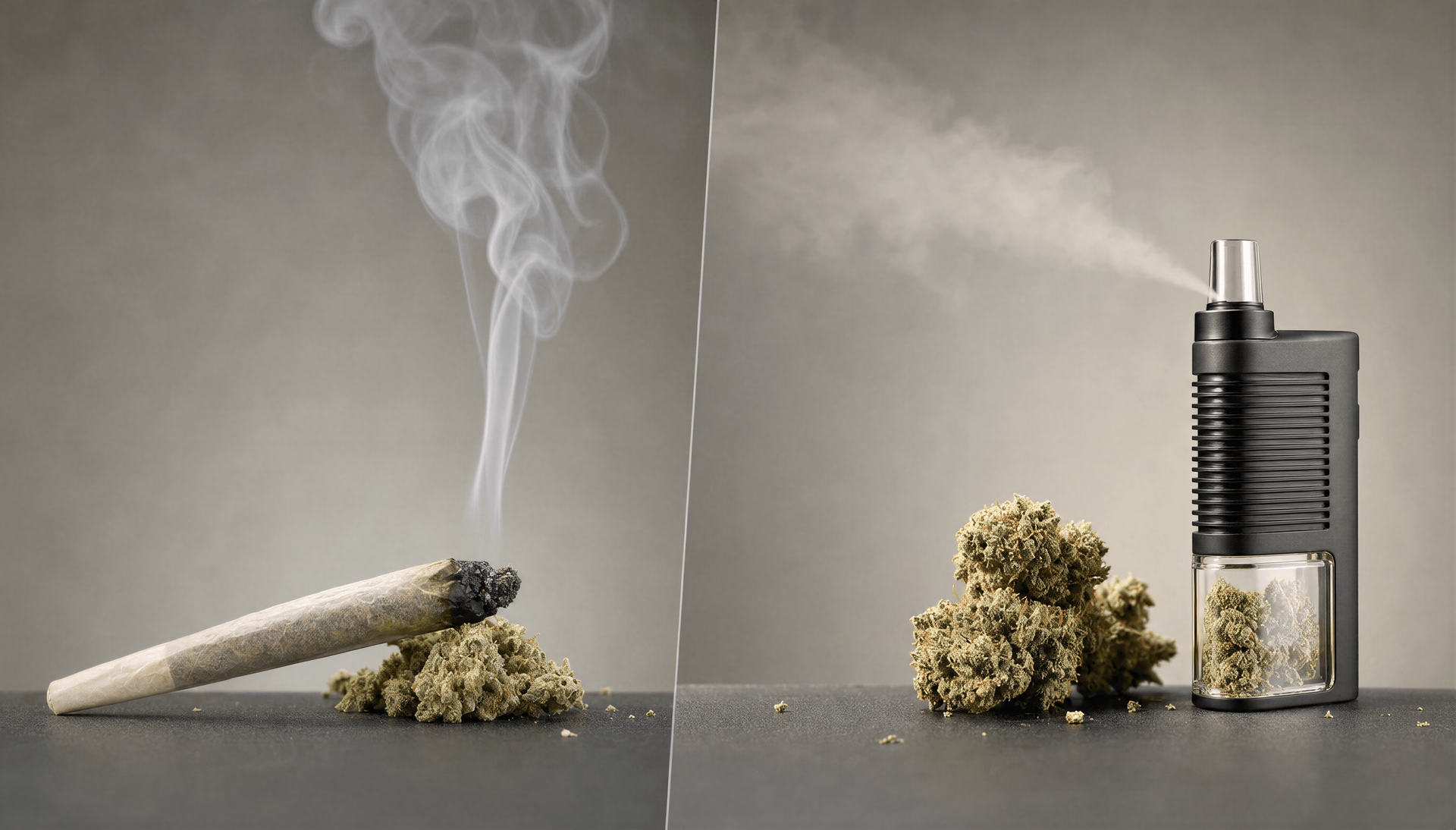
Smoked cannabis versus vaporized cannabis
In cannabis, eucalyptol is usually a minor terpene, often present at low fractional percentages or not reported at all depending on the lab panel. So even before route is considered, exposure may be modest. Smoking then adds another complication: combustion destroys some volatile compounds, creates new byproducts, and makes actual cineole delivery hard to estimate.
Vaporization is a cleaner comparison point than smoking, but it still does not recreate the medicinal cineole studies. Real terpene transfer depends on device design, airflow, flower moisture, extract formulation, and thermal degradation, not just boiling-point charts. Because 1,8-cineole has a relatively higher boiling point than some common monoterpenes, users often assume hotter settings guarantee delivery. That is too simple. Matrix effects and aerosol physics matter.
So vaporized cannabis may preserve more cineole than smoked cannabis, but “may” is the key word. It does not turn a low-cineole chemovar into a studied respiratory treatment.
Why respiratory benefits from cineole cannot be assumed from inhaling smoke
The strongest human evidence for cineole involves airway disease adjunct use under controlled dosing. Worth et al. 2003 studied 600 mg/day in asthma over 12 weeks. Kehrl et al. 2004 used 200 mg three times daily in acute rhinosinusitis. Worth et al. 2009 used the same 200 mg three-times-daily regimen in COPD. Those are standardized medicinal exposures, not smoke inhalation.
That distinction is not academic. Cannabis smoke contains particulates, hot gases, and irritants that can provoke cough, bronchial irritation, and airway inflammation. Any theoretical bronchodilatory or mucolytic effect from trace inhaled cineole can be offset, or simply overwhelmed, by the harms of combustion. Claims that “eucalyptol-rich flower opens the lungs” ignore that basic inhalation toxicology.
Oral exposure, edibles, and non-cannabis formulations
If someone wants to understand cineole’s real evidence base, oral formulations are where to look. EMA/HMPC documents eucalyptus preparations in cough and cold use, and European Pharmacopoeia standards define eucalyptus oil as containing 70.0% to 85.0% 1,8-cineole. Cannabis products are nowhere near that level.
Edibles add another route difference. Oral cannabis may contain little measurable cineole after processing, and even when present, dose standardization is weak compared with medicinal cineole capsules. Safety interpretation changes too: low-level food use is accepted by JECFA, but concentrated essential-oil ingestion can be toxic, especially in children. Route shapes both effect and risk.
Safety, contraindications, and toxicology


Typical low-level exposure versus concentrated essential oil risk
Safety claims about eucalyptol often collapse two very different exposures into one category. That is a mistake. Trace or low fractional amounts of 1,8-cineole in cannabis flower are not the same thing as swallowing or applying concentrated eucalyptus oil, which is typically standardized to a very high cineole content. Under the European Pharmacopoeia specification cited by EMA/HMPC, eucalyptus oil contains 70.0% to 85.0% 1,8-cineole. Cannabis rarely approaches anything like that concentration.
This distinction matters because regulatory safety assessments such as FEMA GRAS flavor-use status and the JECFA acceptable daily intake are about low-level food exposure, not casual use of essential oil as if it were harmless. JECFA set an ADI of 0–2 mg/kg body weight for cineole in food contexts. That supports the idea that small amounts are generally tolerated. It does not mean “as much as you want” is safe.
Poison-center and case literature repeatedly show that concentrated eucalyptus oil ingestion can produce rapid toxicity, especially in children. Symptoms reported after essential-oil poisoning include vomiting, drowsiness, ataxia, respiratory depression, and seizures. The rat oral LD50 often cited for 1,8-cineole, around 2,480 mg/kg, should not reassure anyone into treating essential oil casually; animal LD50 figures are blunt toxicology markers, not human-use guidance. Child-resistant storage matters. A bottle of essential oil is a poisoning hazard in a way terpene traces in flower are not.
Irritation is another real issue. Cineole-containing products can irritate the eyes, skin, and mucous membranes, and inhalation may feel sharp or cooling rather than neutral. That sensory effect is not proof of benefit.
Drug interaction considerations and vulnerable populations
Eucalyptol has pharmacology, so interaction questions are fair. What is missing is strong cannabis-specific interaction data. There is no high-quality human trial showing that the amount of 1,8-cineole typically present in cannabis meaningfully changes THC or CBD disposition or subjective effects. Even so, caution is sensible in people who are medically fragile, use many drugs, or react strongly to inhaled irritants.
Pregnancy is a clear area for restraint. Human safety data for concentrated cineole exposure in pregnancy are limited, and “natural” does not solve that gap. The same conservative logic applies during breastfeeding.
Asthma needs a split view. Cineole has been studied as an oral adjunct in airway disease, including the Worth et al. asthma trial in 2003, but inhaling combusted cannabis or terpene-rich aerosol is not equivalent to taking a standardized capsule. Some people with asthma are sensitive to fragrances, vapors, or smoke and may bronchospasm rather than improve. Cooling aroma should not be mistaken for bronchodilation.
Children are the most vulnerable population in the poisoning literature. Keep essential oils away from them. People with seizure disorders should also be cautious, not because trace cannabis eucalyptol is proven seizure-provoking, but because seizure reports do appear in eucalyptus-oil poisoning cases.
What cannabis consumers should and should not infer from eucalyptus oil safety data
They should infer that 1,8-cineole is a real bioactive monoterpene with a known toxicology profile, not a mystical “entourage” placeholder. They should not infer that a minty-smelling cultivar is dangerous, therapeutic, or pharmacologically rich in cineole without a certificate of analysis. Odor is suggestive. It is not measurement.
They should also not import capsule or essential-oil research directly into cannabis use. The asthma, rhinosinusitis, and COPD studies used defined oral doses such as 600 mg/day or 200 mg three times daily. Cannabis exposure is chemically messier, usually much lower in cineole, and mixed with cannabinoids, other terpenes, and often airway irritants from smoke or hot aerosol.
The honest position is modest: low-level eucalyptol exposure from cannabis is probably far less hazardous than ingesting eucalyptus oil, but chronic inhalation of terpene-rich aerosols has not been mapped with enough precision to make sweeping safety claims. That uncertainty should stay visible.
How to read a lab report for eucalyptol without fooling yourself

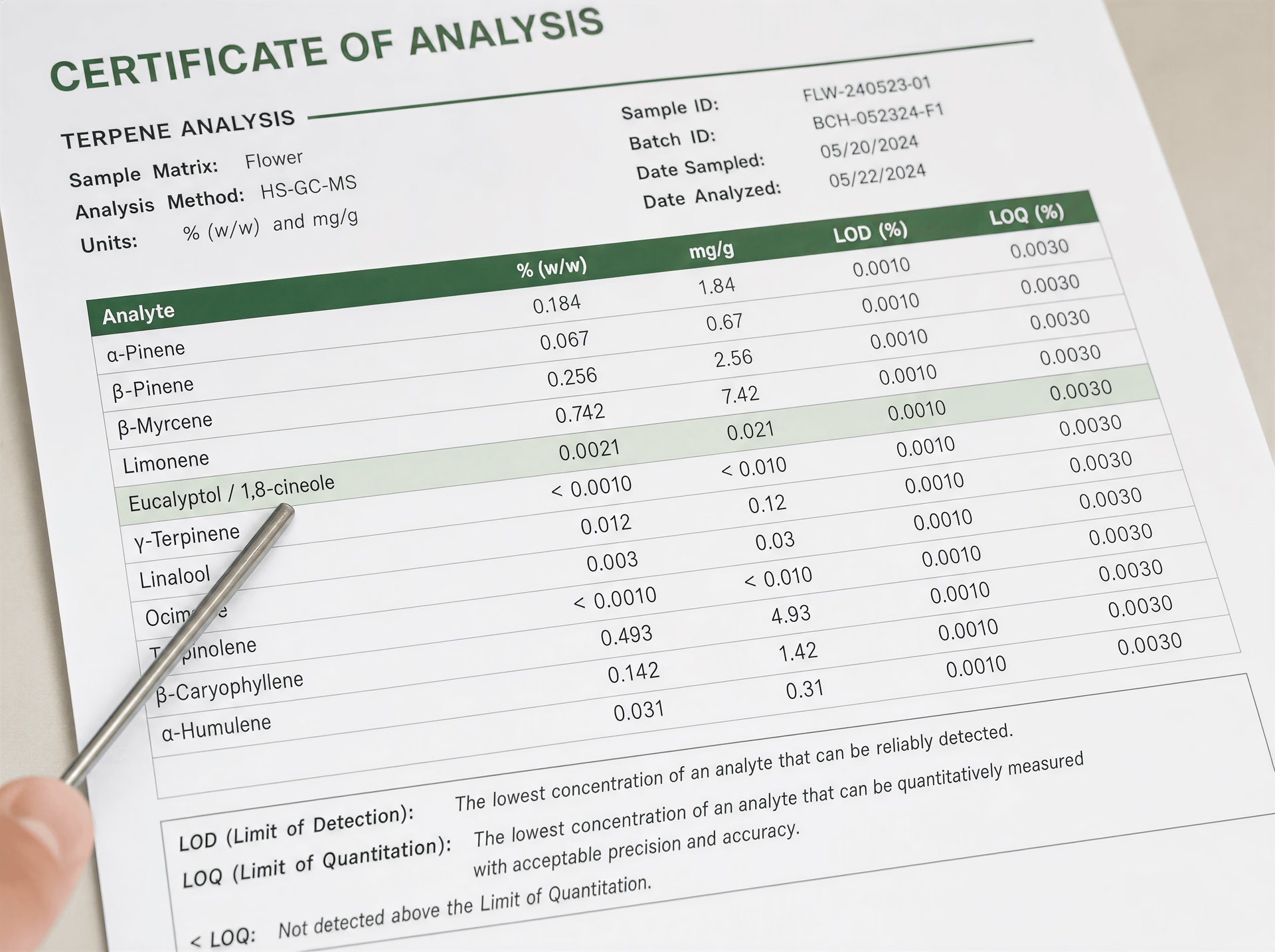
Percentages, mg/g, and detection thresholds
How to read a COA entry for eucalyptol
- Unit conversion 0.01% equals 0.1 mg/g.
- Unit conversion 0.05% equals 0.5 mg/g.
- Unit conversion 0.10% equals 1 mg/g.
- Detection limits Check the lab's limit of detection and limit of quantitation before overinterpreting tiny values.
- Cross-lab caution Different terpene panels and reporting thresholds make direct comparisons messy.
Start with the number, not the aroma note. On a cannabis certificate of analysis, eucalyptol may appear as a percent by weight or as mg/g. Those are easy to convert: 0.01% equals 0.1 mg/g, 0.05% equals 0.5 mg/g, and 0.10% equals 1 mg/g. That matters because 1,8-cineole is often a minor terpene in cannabis, sometimes present only in trace amounts while myrcene, limonene, or beta-caryophyllene dominate the profile.
Now check whether the lab report lists a limit of detection and a limit of quantitation. If a result sits just above the LOQ, treat it as a rough estimate, not a precision instrument for predicting effects. A panel that reports eucalyptol at 0.02% may be telling you “present at a low level,” not “present at a meaningful dose.” Labs also differ in terpene panel design; one lab may measure cineole routinely, another may not include it or may report it as ND. Cross-lab comparisons can get sloppy fast.
Batch variability and terpene degradation over time
A single COA is one batch, one date, one sample. It is not a permanent fact about a cultivar. Growing conditions, harvest timing, drying, cure, and storage all shift terpene readings. So does time. Monoterpenes are volatile, and oxidation changes profiles after packaging. Eucalyptol is not the most fragile terpene in the room, but it still lives in a changing matrix exposed to heat, oxygen, and repeated opening.
That means an older jar may smell sharper, flatter, or simply different from the fresh batch whose test result is printed on the label.
Why smell, label copy, and expected effect often diverge
Minty, cooling, or eucalyptus-like aroma does not prove a clinically meaningful cineole dose. Smell is powerful but non-quantitative. Terpinolene, pinene, mixed minor terpenes, and learned associations can all read as “minty.” Label copy often turns that into a pharmacology claim. It should not.
The stronger human evidence for cineole comes from non-cannabis respiratory studies using oral doses such as 600 mg/day in asthma trials by Worth et al. (2003) and 200 mg three times daily in COPD and rhinosinusitis studies. Cannabis flower terpene levels are usually far below that exposure range. So read eucalyptol on a lab report as a compositional clue, not proof of lung-opening, focus-boosting, or cannabinoid-potentiating effects.
What the evidence supports right now
Claims that are reasonably supported
Cineole has credible anti-inflammatory activity outside cannabis, including cytokine suppression in human monocyte models Strong evidence
| Study context | Patients | Dose regimen | Duration | Outcome summarized in the article |
|---|---|---|---|---|
| Asthma, Worth et al. (2003) | 32 | 600 mg/day | 12 weeks | Reduced oral steroid dosage versus placebo while maintaining clinical stability |
| Acute nonpurulent rhinosinusitis, Kehrl et al. (2004) | 152 | 200 mg three times daily | Not stated beyond trial period in the article | Improved symptom scores including headache on bending, nasal obstruction, and pressure symptoms |
| Stable COPD, Worth et al. (2009) | 242 | 200 mg three times daily | 6 months | Fewer exacerbations and improved respiratory symptoms |
1,8-Cineole is not cannabis folklore. It is a defined molecule, C10H18O, with a substantial pharmacology literature outside cannabis, especially in airway and inflammatory research. The strongest human evidence sits in adjunct treatment of respiratory conditions, not in strain reviews. Worth et al. (2003) reported that 600 mg/day cineole reduced oral steroid needs in a 12-week placebo-controlled asthma trial involving 32 patients. Kehrl et al. (2004) found symptom improvement in acute rhinosinusitis with 200 mg three times daily in 152 patients. Worth et al. (2009) then reported fewer exacerbations in stable COPD with the same dosing in 242 patients over six months. Mechanistically, Juergens and colleagues showed cineole can suppress inflammatory cytokines including TNF-alpha and IL-1beta in human monocytes. That gives the anti-inflammatory claim real footing.
Claims that remain speculative
This is where cannabis writing often outruns the data. Eucalyptol in cannabis is usually a minor terpene, often present only at low fractional percentages when it appears on flower certificates at all. That makes broad claims about “eucalyptol-rich strains” shaky unless a current COA confirms it. Claims that it reliably sharpens focus, produces alertness, or “opens the lungs” during smoked cannabis use are not established. Smoke itself irritates airways. Any bronchodilatory effect shown for purified cineole in clinical settings should not be casually transferred to combusted flower. The same caution applies to entourage claims: there is no high-quality human trial showing that 1,8-cineole changes THC or CBD effects in cannabis users.
Research gaps worth watching
The useful questions are narrower than the marketing language. How often does eucalyptol appear in cannabis at pharmacologically meaningful levels? Do vaporized formulations deliver enough unchanged cineole to matter? Can purified terpene-plus-cannabinoid combinations alter inflammation, symptom relief, or subjective effects in controlled human studies? Those studies barely exist. The evidence-based position is firm: eucalyptol is a real bioactive terpene with credible respiratory and anti-inflammatory data, but strong cannabis-specific claims about strain effects or proven cannabinoid interaction are ahead of the science.