













What fenchol is, and why cannabis articles usually overstate it
Fenchol matters, but not in the way many cannabis blogs claim. In cannabis, it is usually a background terpene with real sensory relevance and interesting chemistry, not a proven driver of dramatic human effects. That distinction gets lost when articles jump from lab findings on isolated compounds to confident statements about what a flower sample will do in a person.
The chemical identity of fenchol
Chemically, fenchol is a bicyclic monoterpenoid alcohol, also called fenchyl alcohol in some references. NIST lists its molecular formula as C10H18O, and PubChem gives a molecular weight of 154.25 g/mol. It is lipophilic, with an XLogP around 2.6, and reported boiling points cluster around 201 to 203 °C depending on the source record and isomer details. Those numbers do not tell you how a cannabis product will feel, but they do anchor what the compound is.
Its aroma descriptors are much better established than its cannabis-specific pharmacology. Across fragrance and flavor literature, fenchol is described as piney, woody, camphoraceous, herbal, and sometimes lime-leaning. It occurs naturally outside cannabis as well, including in basil and several aromatic medicinal plants. U.S. regulation under 21 CFR 172.515 and FEMA GRAS listings place fenchol in a flavor-use context. That supports its identity as a known flavoring substance. It does not establish inhalation safety in vaporized cannabis, and it definitely does not prove therapeutic benefit.
Why it is usually a minor terpene in cannabis
The simplest correction is this: fenchol is not usually a headline terpene in cannabis flower. Most profiling datasets show that a small set of terpenes dominates most samples, while compounds like fenchol sit in the trace-to-minor range. In a 2022 PLOS One analysis of commercial cannabis, just six terpenes accounted for 78.7% of total measured terpene content. Beta-myrcene alone was the most abundant terpene in 42.5% of samples, while terpinolene led in only 7.7%. Fenchol does not show up in that dominant tier.
That matters because consumer-facing terpene lists often flatten major and minor compounds into the same visual hierarchy. A terpene can be detectable, analytically real, and still contribute far less to aroma or exposure than myrcene, limonene, beta-caryophyllene, or linalool.
The gap between terpene chemistry and consumer-facing claims
This is where overstatement usually happens. A 2022 Salk Institute-led study published in Frontiers in Aging Neuroscience reported that fenchol reduced beta-amyloid-induced neuronal senescence in cell and mouse models through FFAR2 signaling. That is interesting preclinical work, and it deserves to be described accurately. It is not evidence that fenchol-rich cannabis has proven neuroprotective or anti-inflammatory effects in humans.
The same problem shows up with “entourage effect” claims. For fenchol specifically, evidence is sparse. Aroma claims are reasonably grounded. Mechanistic hypotheses are plausible. Strong human outcome claims are not. For now, the most defensible position is modest: fenchol is a real cannabis terpene with a distinct scent profile and promising lab literature, but cannabis articles often inflate that into certainty the science does not yet support.
Fenchol aroma profile and what actually creates its scent signature
Fenchol has a recognizable odor profile, but not a single fixed one. In flavor and fragrance references it is usually described as piney, camphoraceous, woody, herbal, or faintly citrusy, with some records leaning toward lime peel rather than lemon. That spread is normal. Odor language changes with concentration, purity, stereochemistry, and the plant matrix carrying the molecule. A neat standard in a reference vial does not smell identical to the same terpene dispersed through cannabis resin, basil leaf oil, or a cured flower rich in myrcene and limonene.
Chemically, fenchol is a bicyclic monoterpenoid alcohol with formula C10H18O and molecular weight 154.25 g/mol, according to NIST and PubChem. In cannabis, though, chemistry alone does not tell you what your nose will register. Large profiling work published in PLOS One in 2022 found that just six terpenes accounted for 78.7% of total terpene content across commercial flower samples. Fenchol is usually not one of those headline compounds. It tends to appear at low levels, which means its role is often secondary but still perceptible.
Pine, camphor, lime, and woody notes
| Aroma descriptor | How the article frames it | Contrast in the article |
|---|---|---|
| Piney | Cool pine needle / forest note | Less juicy than limonene |
| Woody | Dry wood backbone | Keeps the profile from smelling sharp |
| Camphoraceous | Brisk, almost medicinal edge | More noticeable as concentration rises |
| Herbal / green-citrus | Lifted herbal or lime-zest accent | Can read as freshness at trace levels |
The best plain-language description of fenchol is this: cool pine needle, dry wood, a touch of camphor, and a lifted green-citrus accent that some people read as lime zest. It is less juicy than limonene, less floral than linalool, and less sweet-earthy than myrcene. The camphor side can feel brisk and almost medicinal, while the woody side keeps it from smelling sharp or one-dimensional.
That mix matters in cannabis. A trace terpene does not need to dominate analytically to shape perception. Fenchol can sharpen a pine-forward profile, dry out a fruit-heavy bouquet, or add a cooling herbal edge that changes how limonene, pinene, terpinolene, or eucalyptol are experienced. This is one reason lab numbers and sensory impressions can diverge. A sample may show only a small amount of fenchol yet still smell more “forest-camphor” than expected because the surrounding terpene blend makes that note stand out.
Database descriptions also vary because odor is tested in different ways. Flavor safety listings from FDA regulation 21 CFR 172.515 and the FEMA GRAS database support fenchol’s use as a flavoring substance, but they do not define one universal aroma and they say nothing about inhaled cannabis experience.

How stereochemistry changes odor perception
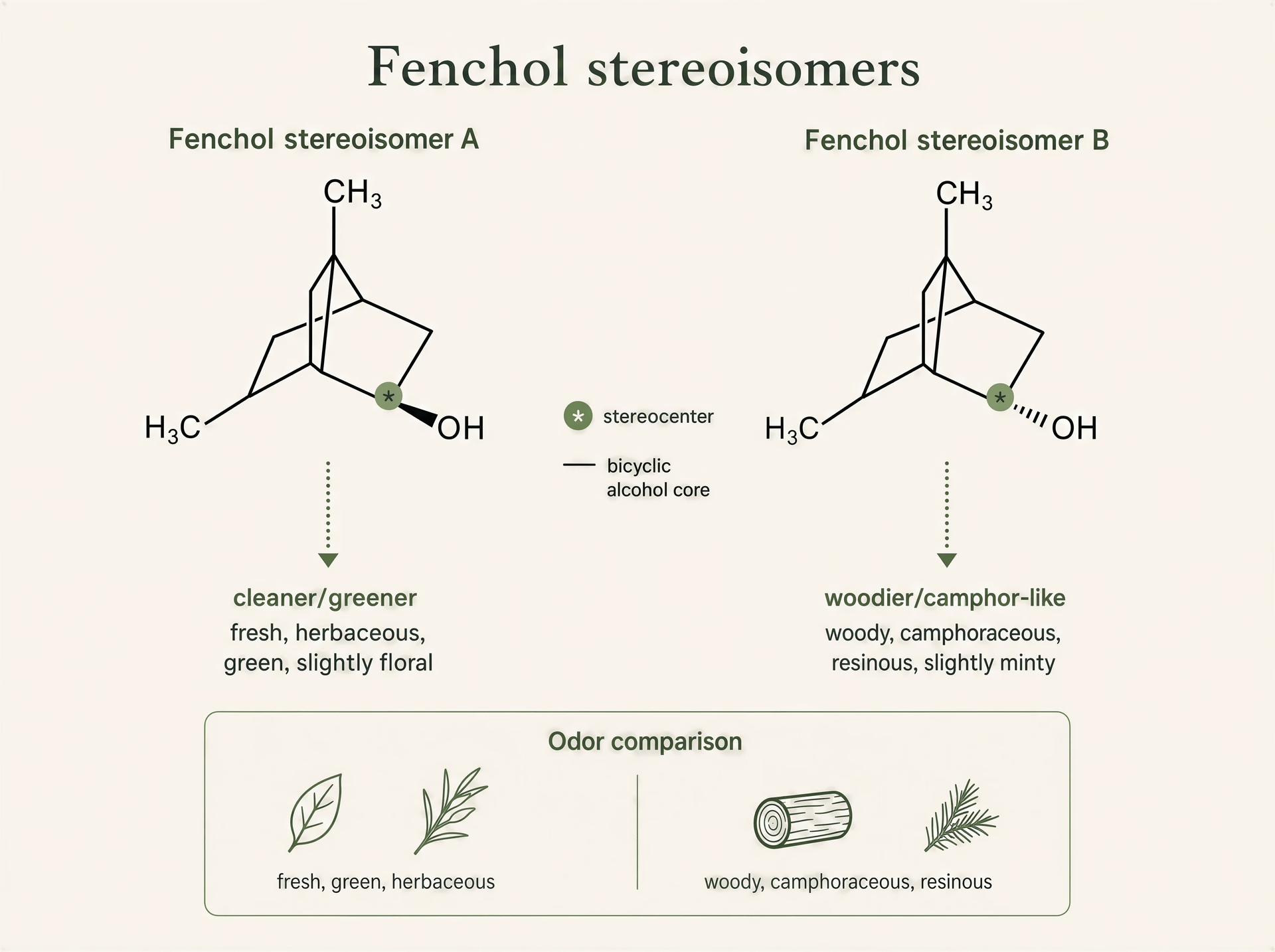
Fenchol is not just one simple odor object. Like many terpenes, it exists in stereoisomeric forms, and those forms can smell different. Small three-dimensional changes in a bicyclic alcohol can alter how olfactory receptors respond, shifting the balance between pine, camphor, herbal, and citrus impressions.
This is where popular terpene charts often flatten the science. They present a single aroma label as if every source of fenchol smells the same. It does not. One isomer may read cleaner and greener; another may seem heavier, woodier, or more camphor-like. Even when two samples contain “fenchol,” they may not present the same sensory profile if the isomer ratio differs or if one sample contains oxidation products and the other does not.
Concentration matters too. At trace levels, fenchol may register as freshness or lift. At higher levels, the camphoraceous facet becomes easier to notice and may overpower subtler green-citrus notes.
Why storage, curing, and heat alter terpene expression
Fresh flower, cured flower, and heated vapor are different sensory events. Fenchol’s reported boiling point is roughly 201 to 203 °C in PubChem records, but that does not mean it waits politely until that exact temperature to influence aroma. Terpenes volatilize across ranges, interact with each other, and can be lost gradually during drying, curing, grinding, and repeated opening of a jar.
Storage shifts the balance again. Oxygen, light, and time can reduce brighter top notes and leave a profile that smells flatter, dustier, or more woody. Heat complicates things further by changing the release rate of monoterpenes and by promoting degradation or transformation of fragile aroma compounds. So a certificate of analysis captures one lab snapshot, while the actual smell in hand reflects age, packaging, handling, moisture, and temperature. That gap is especially important for minor terpenes like fenchol, which may sit near the threshold where a small chemical change produces a noticeable sensory difference.
Natural sources of fenchol beyond cannabis
Fenchol is not a cannabis-only terpene, and treating it that way distorts the evidence. Chemically, it is a bicyclic monoterpenoid alcohol with the formula C10H18O and a molecular weight of 154.25 g/mol, as listed by NIST and PubChem. Its sensory identity was built in flavor, fragrance, and essential-oil chemistry long before cannabis media started naming it. That matters, because many claims now attached to fenchol in cannabis were first observed in other plants, other extracts, or in isolated-compound studies.

Basil and other culinary herbs
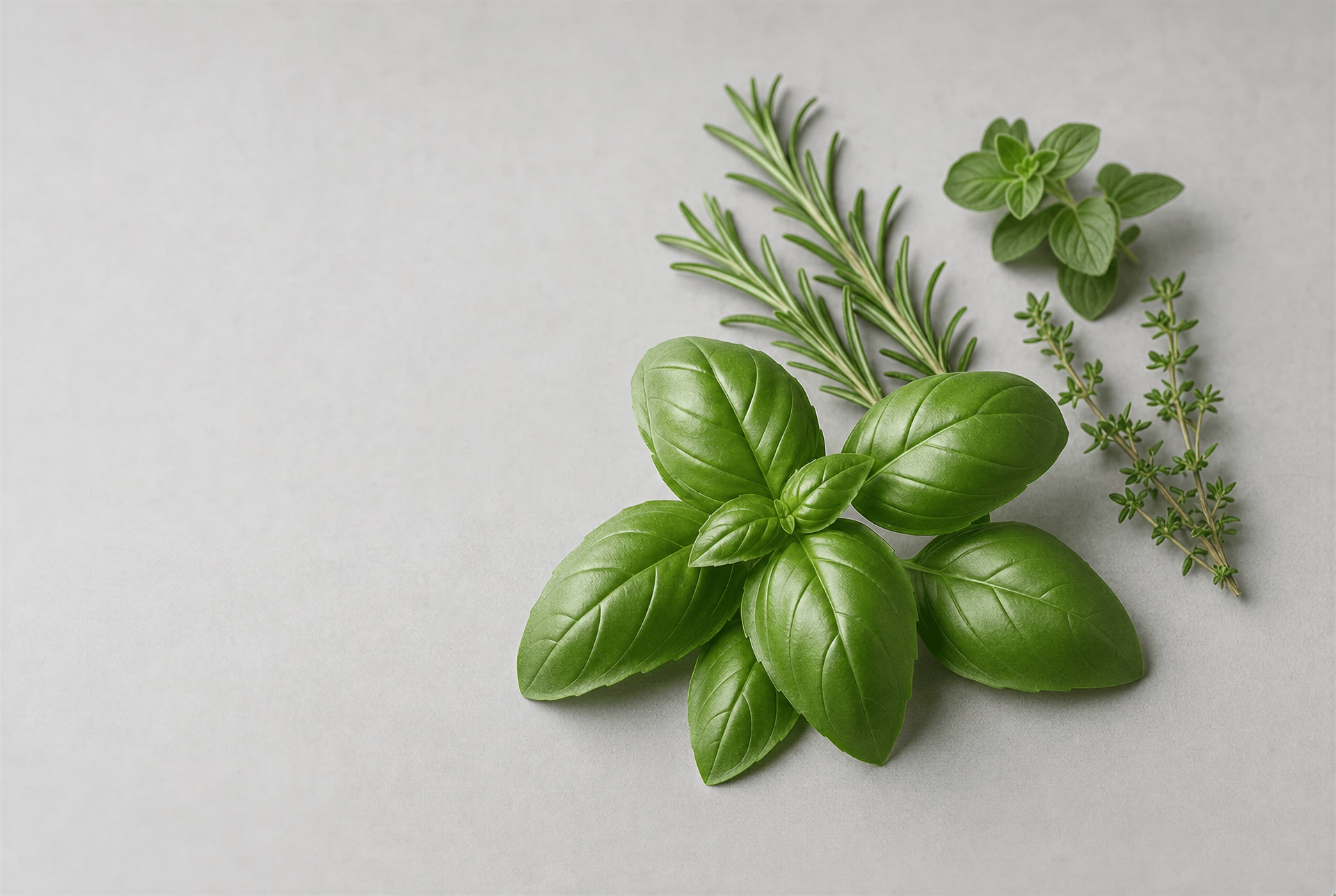
Basil is one of the clearest non-cannabis reference points for fenchol. Essential-oil analyses of basil chemotypes have repeatedly reported fenchol among the volatile constituents, even if it is not always the dominant molecule. The same is true across aromatic herb literature more broadly: fenchol appears in systems associated with basil, wormwood, fennel-adjacent aromatic plants, and other strongly scented culinary or medicinal species.
That spread helps explain why fenchol is often described with overlapping terms such as piney, woody, camphoraceous, herbal, and occasionally lime-like. Those descriptors do not come from cannabis alone. They come from decades of sensory work on mixed plant volatile profiles, where fenchol contributes one part of a larger aroma matrix. In practical terms, if someone says fenchol smells “green” or “camphor-like,” they are usually borrowing from flavor and essential-oil language, not from cannabis trials.
Medicinal and aromatic plants in essential-oil literature
Essential-oil chemistry is where most of the natural-source map for fenchol has been built. Researchers studying medicinal and aromatic plants routinely catalogue minor and major terpenoids, and fenchol shows up as a recurring, though not universal, constituent. This literature is also where many non-cannabis bioactivity ideas originate. Anti-inflammatory, antimicrobial, and neurobiological discussions around fenchol often stem from isolated compound screens, essential-oil studies, or preclinical models rather than human cannabis research.
A good example is the 2022 Salk Institute-led paper in Frontiers in Aging Neuroscience, associated with Pamela Maher’s group, which reported that fenchol reduced beta-amyloid-related neuronal senescence through FFAR2 signaling in cell and mouse models. Interesting? Yes. Human proof? No. The same caution applies to regulatory references: fenchol appears in 21 CFR 172.515 and in the FEMA GRAS database for flavor use, but flavor-use recognition does not establish inhalation safety or cannabis-specific therapeutic benefit.
Why cross-plant occurrence matters for cannabis interpretation
This cross-plant record is not a weakness in the fenchol story. It is the proper context. In cannabis, fenchol is usually a minor terpene, not a headline constituent. Large profiling data support that restraint: a 2022 PLOS One analysis found that six terpenes accounted for 78.7% of total terpene content across commercial samples, leaving compounds like fenchol mostly in the background.
So when cannabis articles assign fenchol a fixed human effect profile, they are often overstating what the data can bear. What is fair to say is simpler: fenchol occurs in cannabis, basil, and several aromatic medicinal plants; its aroma profile is reasonably supported across plant literature; and many of its proposed benefits still come from non-cannabis experimental work, not strain-specific human evidence.
How often fenchol appears in cannabis chemovars
Fenchol shows up in cannabis, but usually not in the way marketing language suggests. In most terpene reports, it is a minor constituent riding in the background behind a small group of repeat winners: myrcene, limonene, beta-caryophyllene, pinene, linalool, and sometimes terpinolene. That matters because a terpene can be real, measurable, and still not be a defining feature of a chemovar.
Large-scale cannabis terpene profiling and the dominance problem
The clearest correction comes from large dataset work rather than from strain menus or anecdotal lab sheets. In a 2022 PLOS One analysis of commercial cannabis samples, just six terpenes accounted for 78.7% of total terpene content across the dataset. Beta-myrcene alone was the most abundant terpene in 42.5% of samples, while terpinolene, already far less common as a lead terpene, topped only 7.7%. Once the profile drops outside that upper tier, the numbers thin out fast.
That is the dominance problem. Cannabis terpene distributions are highly uneven, so attention naturally clusters around a few compounds that repeatedly appear at headline levels. Fenchol usually does not. It is better understood as an occasional accent note than as a standard chemovar anchor.
This does not make fenchol irrelevant. Minor terpenes can still shape aroma, especially when their odor threshold is low or when they add sharp herbal, camphoraceous, piney, or lime-leaning edges to a broader bouquet. But “present” is not the same thing as “dominant,” and “detectable” is not the same thing as “chemovar-defining.” Those distinctions are often erased in terpene-heavy branding.
Why minor terpenes are hard to compare across labs
Even when fenchol is listed on a certificate of analysis, comparisons can get messy. Labs do not all use the same instrument settings, calibration libraries, integration rules, or reporting cutoffs. One lab may report trace peaks that another excludes. One may separate closely related compounds cleanly; another may fold them into broader categories or miss them below threshold.
That problem is bigger for minor terpenes than for major ones. If myrcene shows up at a high fraction of the terpene profile, most labs will see it. If fenchol appears near the floor of quantitation, small methodological differences can decide whether it is reported at all. Batch variation adds another layer. Terpene expression shifts with harvest timing, drying, curing, storage, and even the part of the plant sampled.
So a fenchol reading on one batch should not be treated as a permanent property of a named strain. It is a measurement from a specific sample, tested by a specific lab, under a specific method. That is less catchy than “this strain is fenchol-rich,” but it is more honest.
What a “fenchol-forward” cannabis sample would actually mean
If someone describes a cannabis sample as fenchol-forward, the sensible reading is sensory and relative, not absolute. It likely means fenchol is more noticeable than usual within that sample’s terpene mix, or more prominent relative to many other batches on the market. It does not automatically mean fenchol is present at a high percentage in botanical terms.
In practice, a “fenchol-forward” sample could still contain fenchol at low absolute levels while remaining dominated by myrcene, limonene, or caryophyllene. That is exactly why exaggerated labels are a problem. They imply a terpene hierarchy that lab data often does not support.
The stronger claim is modest: some cannabis samples do contain measurable fenchol, and in a subset of them it may contribute meaningfully to aroma. The weaker, overextended claim is that fenchol commonly appears as a major terpene or that a fenchol-rich label predicts distinctive human effects. Current cannabis analytics support the first statement. They do not support the second.
Potential effects and benefits: what the evidence supports, and what it does not
| Evidence bucket | What it supports | What it does not support |
|---|---|---|
| Basic chemistry | Identity, formula, molecular weight, lipophilicity, boiling-point range | Any therapeutic effect in people |
| Cell studies | Mechanistic signals and target hypotheses | Clinical efficacy |
| Animal work | Preclinical biological activity in controlled models | Reliable human outcomes from cannabis use |
| Flavor-use safety listings | Use as a flavoring substance in food/flavor contexts | Inhalation safety in vaporized cannabis |
| Human clinical data | Direct evidence of effects in people | Not available for cannabis-specific fenchol effects in this article |
Fenchol has enough real science behind it to be interesting, but not enough to support the way it is often described in cannabis writeups. The evidence splits into very different buckets: basic chemistry, cell studies, animal work, flavor-use safety listings, and human clinical data. Those categories are not interchangeable.
At the chemistry level, fenchol is a bicyclic monoterpenoid alcohol with formula C10H18O and molecular weight 154.25 g/mol, according to NIST and PubChem. PubChem also lists an XLogP3 around 2.6 and boiling-point reports around 201-203 °C, which helps explain why it can appear in aromatic plant oils and vapor-phase discussions. None of that says it treats anything. It just tells you what kind of molecule it is.
In cannabis, another reality check matters. Fenchol is usually a minor terpene, not a dominant one. Large cannabis profiling datasets show how concentrated terpene distributions really are: a 2022 PLOS One analysis found that six terpenes accounted for 78.7% of total terpene content across samples, with beta-myrcene alone most abundant in 42.5% of samples. By contrast, fenchol rarely appears as a headline terpene in commercial flower analytics. That makes strain-level claims about “fenchol effects” especially shaky, because the compound is often present at background levels.
Preclinical anti-inflammatory and antimicrobial signals
The strongest support for fenchol outside Alzheimer’s-related work comes from preclinical literature on plant extracts and terpene mixtures, where fenchol appears as one component among many. There are anti-inflammatory and antimicrobial signals here, but they need careful framing.
First, anti-inflammatory activity. Monoterpenoid alcohols often show biologically active behavior in cell systems, and fenchol has been reported in essential oils from basil, wormwood, and other aromatic plants that show anti-inflammatory or immunomodulatory effects in vitro or in animal models. The problem is attribution. When an essential oil reduces inflammatory markers, that does not prove fenchol was the active driver. These oils can contain dozens of compounds, and the experimental setup often uses concentrations that do not map neatly onto human cannabis use.
Second, antimicrobial activity. Fenchol has appeared in the antimicrobial literature mostly through essential-oil research, where researchers test botanical mixtures against bacteria or fungi in petri dishes. Positive results are common across terpene-rich oils. Still, petri-dish inhibition is a very low rung on the evidence ladder. It does not establish that inhaled or ingested fenchol from cannabis prevents infection, treats disease, or produces any clinically meaningful antimicrobial effect in humans.
This is also where safety language gets blurred online. Fenchol is listed by the FDA under 21 CFR 172.515 as a permitted flavoring substance, and FEMA recognizes it as GRAS for intended flavor use. That is useful context for food and flavor applications. It is not proof of medical efficacy, and it is not the same thing as inhalation safety in vaporized cannabis. Route of exposure matters. Dose matters. Heating chemistry matters.
So what can be said with confidence? Fenchol has plausible bioactivity. Anti-inflammatory and antimicrobial signals exist at the preclinical level. What cannot be said is that cannabis containing fenchol reliably produces anti-inflammatory or antimicrobial benefits in people. No human cannabis trial has established that.
The Alzheimer's-related FFAR2 finding from 2022
The most important recent paper is the 2022 Salk Institute-led study published in Frontiers in Aging Neuroscience. This is the study that pushed fenchol into mainstream terpene discussions, and it deserves a precise reading.
FFAR2 Free fatty acid receptor 2, a cell-signaling receptor discussed here because a 2022 preclinical study linked fenchol to FFAR2 activation and reduced neuronal-senescence markers in cell and mouse models.
The research team, associated in reporting with Pamela Maher’s group at Salk, investigated links between gut microbiome signaling, the receptor FFAR2, and brain aging processes relevant to Alzheimer’s disease. They identified fenchol as a compound that could activate FFAR2 signaling and reduce beta-amyloid-related neuronal senescence in preclinical models. That is a serious mechanistic finding, not fluff.
Why did it attract attention? Because neuronal senescence and beta-amyloid toxicity are central themes in Alzheimer’s research, and the study reported that fenchol reduced harmful cellular changes in both cell-based experiments and mouse models. In plain terms, fenchol looked protective in a controlled preclinical setting.
That is promising. It is also where many cannabis articles go off the rails.
Fenchol-rich cannabis has proven neuroprotective or Alzheimer’s-preventive effects in humans. Preliminary evidence
The paper did not show that smoking, vaping, or ingesting fenchol-rich cannabis prevents Alzheimer’s disease. It did not test cannabis flower. It did not establish a therapeutic dose from real-world cannabis exposure. It did not show clinical benefit in humans with cognitive impairment. And it did not validate broad “neuroprotective strain” claims.
The FFAR2 result matters because it gives fenchol a specific biological target and a stronger mechanistic story than many minor terpenes have. But mechanism is not medicine. Preclinical Alzheimer’s research is full of compounds that looked impressive in cells and rodents and then failed in human trials. Fenchol may eventually prove useful in a pharmaceutical or nutraceutical context after formulation, dosing, toxicology, and controlled human testing. As of now, that step has not happened.
No human clinical evidence for cannabis-specific fenchol effects
This is the line that should stay sharp: there is no human clinical evidence showing cannabis-specific fenchol effects.
No randomized trial has shown that fenchol-rich cannabis reduces inflammation, improves memory, lowers infection risk, or changes subjective cannabis effects in a reproducible way. No observational study has isolated fenchol as the reason one cannabis chemovar feels different from another. No clinical dosing framework exists for fenchol in cannabis medicine.
That absence matters because fenchol is often discussed as if it were an established part of the “entourage effect.” For fenchol specifically, the entourage claim remains mostly hypothetical. Terpenes can affect aroma, expectation, sensory perception, and possibly formulation behavior. Some may have direct pharmacology. But for fenchol in cannabis, the evidence is sparse and indirect.
The most defensible position is modest. Fenchol may contribute small sensory notes and may have interesting preclinical bioactivity. The anti-inflammatory, antimicrobial, and FFAR2-linked neurobiology signals justify more research. They do not justify medical promises, and they do not support strain-by-strain therapeutic claims in humans. That distinction is not academic. It is the difference between evidence and projection.
How fenchol may interact with cannabinoids and other terpenes
Fenchol sits in an awkward place in cannabis discussion. Chemically, it is a real terpene alcohol with a defined profile — C10H18O, molecular weight 154.25 g/mol, XLogP around 2.6, and reported boiling point near 201–203 °C in major chemical databases such as NIST and PubChem. In practice, though, it is usually a minor terpene in cannabis, not a dominant one. That matters because any claim about its interaction with THC, CBD, or other compounds has to start with exposure: if fenchol is present only at trace levels in many samples, its pharmacological impact may be limited even before deeper mechanistic questions begin.
The entourage-effect hypothesis and its limits
The “entourage effect” is a useful hypothesis, not a settled rule. In its broadest form, it proposes that cannabinoids, terpenes, and other plant compounds can shape each other’s effects when present together. That framework is plausible. It is also often stretched far past the evidence.
For fenchol, the evidence is especially thin. There are no strong human clinical data showing that fenchol-rich cannabis changes the effects of THC, CBD, CBG, or minor cannabinoids in a predictable way. No trial has established, for example, that a fenchol-containing chemovar is more anti-inflammatory, more clear-headed, or more neuroprotective because of fenchol itself. Popular writeups often borrow from terpene theory in general and present it as if it had been tested for this specific molecule. It has not.
Three ways interaction claims get mixed together
- Pharmacodynamic effects
- Whether fenchol directly alters receptor signaling or downstream pathways that overlap with cannabinoids.
- Pharmacokinetic or formulation effects
- Whether it changes absorption, distribution, stability, or vapor behavior of co-occurring compounds.
- Sensory-perceptual effects
- Whether smell and taste alter how a user experiences the product, shaping perceived onset, intensity, or mood.
A more careful way to frame interaction claims is to separate three layers. First, pharmacodynamic effects: does fenchol directly alter receptor signaling or downstream pathways that overlap with cannabinoids? Second, pharmacokinetic or formulation effects: does it change absorption, distribution, stability, or vapor behavior of co-occurring compounds? Third, sensory-perceptual effects: does its smell and taste alter how a user experiences the product, indirectly shaping perceived onset, intensity, or mood? Those are very different mechanisms, and fenchol has not been nailed down in any of them within cannabis-specific human research.
The strongest biomedical signal tied to fenchol comes from outside cannabis. A 2022 Salk Institute-led paper in Frontiers in Aging Neuroscience reported that fenchol reduced beta-amyloid-induced neuronal senescence markers in cell and mouse models through FFAR2 signaling. That is interesting preclinical work. It is not evidence of entourage effects in cannabis, and it is not proof that fenchol-rich cannabis has clinically meaningful neuroprotective effects in people.
Possible interactions with THC and CBD
With THC, the most defensible position is uncertainty. There is no clear evidence that fenchol directly modulates CB1 signaling, changes THC binding, or reliably amplifies or softens intoxication. Could a terpene alcohol influence membrane behavior, local tissue penetration, or formulation properties in extracts? Possibly. Fenchol’s moderate lipophilicity makes that chemically imaginable. But “chemically imaginable” is not the same as demonstrated.
With CBD, the story is similar. CBD already has a broad pharmacological footprint involving serotonin signaling, TRP channels, adenosine-related pathways, and enzyme interactions, depending on dose and model. Fenchol has not been shown to consistently modify those CBD effects in vivo in humans. Claims that the two are inherently anti-inflammatory together are mostly extrapolations from separate literatures: CBD’s better studied pharmacology on one side, and fenchol’s fragrance, flavor, and preclinical signaling data on the other.
The same caution applies to CBG and minor cannabinoids. At the moment, there is little direct evidence for fenchol-specific interaction with CBG, CBC, THCV, or other less abundant cannabinoids. That absence of data should be stated plainly. It does not mean no interaction exists. It means the common certainty around these pairings is not earned.
Context from cannabis profiling helps keep expectations realistic. A 2022 PLOS One analysis found that six terpenes accounted for 78.7% of total terpene content across commercial samples, with β-myrcene most abundant in 42.5% of samples. Fenchol does not usually appear among those headline drivers. So even if interaction effects exist, they may often be overshadowed by much more abundant terpenes and by cannabinoid dose itself.
Sensory modulation versus direct receptor pharmacology
For fenchol in cannabis, sensory modulation is currently more credible than direct receptor pharmacology. Limited evidence
For fenchol, sensory modulation is probably the most credible interaction pathway right now. Its aroma is commonly described as piney, woody, camphoraceous, lime-like, or herbal, depending on matrix and stereochemistry. Those odor cues can shape user expectations before any meaningful systemic pharmacology occurs. Smell influences perception. That is well established across fragrance and flavor science, and cannabis is not exempt.
This is different from saying fenchol has major direct receptor activity in the endocannabinoid system. At present, there is little evidence for that claim. Fenchol may matter more as part of the product’s sensory architecture than as a potent cannabinoid co-driver. A sharper, greener, camphor-like terpene profile can make a sample feel more “uplifting” or “clean” to users, even when the dominant pharmacology is still being driven by THC, CBD, and higher-abundance terpenes.
That distinction also helps avoid a common mistake: confusing flavor-use safety with cannabis efficacy. Fenchol is listed by the FDA under 21 CFR 172.515 and recognized by FEMA for intended flavor use, but those designations speak to flavoring contexts, not inhalation safety and not cannabis-specific therapeutic interaction. For now, fenchol’s role in cannabis looks more chemotaxonomic and sensory than pharmacologically established.
Vaporization, stability, and route-of-exposure questions
Boiling point and why it is only a rough guide
Fenchol is a monoterpenoid alcohol with formula C10H18O and molecular weight 154.25 g/mol, according to NIST and PubChem. PubChem aggregates boiling-point reports around 201-203 °C, which places it above the temperatures often quoted for lighter cannabis aroma compounds. That number matters, but not in the simplistic way terpene infographics suggest.
A boiling point is measured for a pure compound under defined conditions. Vaporizing cannabis is not that. Real flower is a wet, resinous, multicomponent matrix in which terpenes, cannabinoids, water, waxes, and degradation products all change evaporation behavior. Fenchol also exists as stereoisomers, and databases may pool closely related records. So a chart that says “fenchol boils at about 202 °C” does not tell you that a device set to 202 °C will neatly deliver a predictable dose of fenchol and leave everything else untouched.
It also ignores abundance. In cannabis analytics, fenchol is usually a minor terpene, not a headliner. The 2022 PLOS One commercial-flower dataset found that six terpenes made up 78.7% of total terpene content, with β-myrcene most abundant in 42.5% of samples. Fenchol was not one of the dominant few. In practice, this means temperature changes may have less impact on total fenchol exposure than simple differences in chemovar composition.

Flavor safety is not inhalation safety
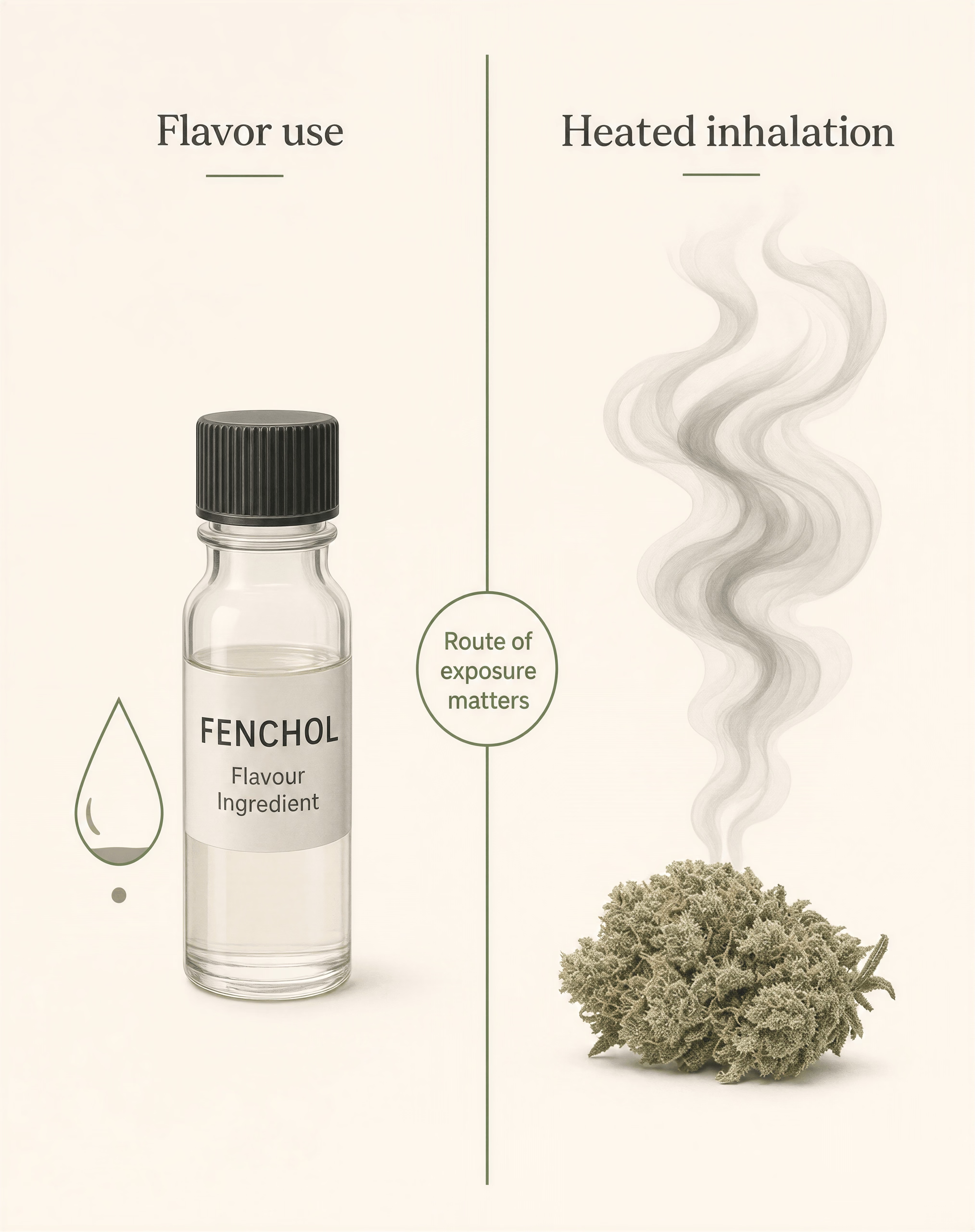
This is where many terpene explainers go wrong. Fenchol is listed by the FDA under 21 CFR 172.515 as a permitted flavoring substance, and FEMA recognizes it as GRAS for intended flavor use. Those are food and flavor designations. They do not establish safety when the compound is heated and inhaled in cannabis aerosol.
Route of exposure changes toxicology. A substance tolerated in tiny oral flavor amounts is not automatically well characterized for repeated pulmonary exposure, especially after heating in a device that may generate new byproducts. For fenchol specifically, the public record is much stronger on fragrance and flavor use than on inhalation pharmacology.
What consumers and clinicians should avoid assuming
They should not assume that a boiling-point chart is a dosing guide, that “natural” equals inhalation-safe, or that preclinical promise translates into strain-level human benefit. The 2022 Salk-led Frontiers in Aging Neuroscience paper on FFAR2 signaling and beta-amyloid-related neuronal senescence is interesting mechanistic work. It is not evidence that vaporized fenchol in cannabis has proven neuroprotective effects in people.
The careful position is straightforward: fenchol has identifiable physical properties, recognizable flavor use, and intriguing lab data. Human inhalation evidence remains thin.
What remains unknown about fenchol in cannabis
Missing human studies
The biggest gap is simple: there are no solid human trials showing that fenchol in cannabis produces a distinct, reproducible effect. Not for pain. Not for inflammation. Not for cognition. The 2022 Salk Institute-led paper in Frontiers in Aging Neuroscience is the most cited reason people talk about fenchol as more than an aroma compound, because it reported reduced beta-amyloid-related neuronal senescence through FFAR2 signaling in cell and mouse models. That is real preclinical interest. It is not clinical proof.
This distinction matters because popular cannabis writing often jumps from “fenchol has activity in vitro” to “fenchol-rich flower may help with X.” That leap is unsupported. Route of exposure also gets blurred. FDA and FEMA flavor listings place fenchol in a food-flavor safety context, not an inhalation or cannabis-medicine context. Those are different questions with different risk profiles.
Missing standardized cannabis chemovar datasets for minor terpenes
There is also a data problem. Fenchol is usually a minor terpene in cannabis, and minor terpenes are not tracked consistently across labs, methods, or reporting thresholds. Large profiling work shows how uneven the landscape is: in a 2022 PLOS One dataset, six terpenes accounted for 78.7% of total terpene content, while β-myrcene was most abundant in 42.5% of samples. That tells you where most of the measurable terpene mass sits. Not in fenchol.
So even basic prevalence questions remain unsettled. How common is fenchol across modern chemovars? At what concentrations? In which lineages? Is it stable through storage, heating, and extraction? Without standardized datasets, claims about “fenchol-rich cannabis” rest on thin ground.
The most important research questions next
Research priorities the article identifies next
- Map prevalence Track fenchol across well-characterized chemovars using harmonized analytical methods.
- Study inhalation toxicology Test cannabis-relevant heating and aerosol conditions rather than relying on boiling point alone.
- Test human effects directly Look for reproducible fenchol-specific effects in people instead of extrapolating from cells or rodents.
- Check cannabinoid-terpene interactions Determine whether any fenchol interactions with cannabinoids are reproducible rather than anecdotal.
The next phase should be narrower and more rigorous than the current hype. First, map fenchol prevalence across well-characterized chemovars using harmonized analytical methods. Second, study inhalation toxicology at cannabis-relevant temperatures; PubChem lists a boiling point around 201–203 °C, but boiling point alone does not predict aerosol chemistry or degradation products. Third, test fenchol-specific human effects directly. Fourth, examine whether any cannabinoid-terpene interactions involving fenchol are reproducible rather than anecdotal.
For now, fenchol is scientifically interesting, aromatically relevant, and clinically underdetermined.