













Limonene-rich cannabis will reliably make every user calmer, happier, or more social. Limited evidence
Limonene is chemically well defined and pharmacologically overmarketed. That is the right place to start. If a cannabis product smells like orange peel, lemon zest, or sweet citrus, limonene is a plausible reason. If someone says that limonene-rich cannabis will reliably make every user calmer, happier, or more social, the evidence does not support that level of confidence.
What limonene is — and what popular cannabis articles get wrong
A lot of cannabis writing collapses chemistry, aroma, and subjective effect into one neat story. Real biology is less tidy. The aroma side of limonene is strong and well established. The human effect side is still patchy, especially when the exposure is not isolated limonene but whole cannabis flower containing THC, CBD, other terpenes, and oxidation products that may have changed during storage.
Limonene as a monoterpene hydrocarbon
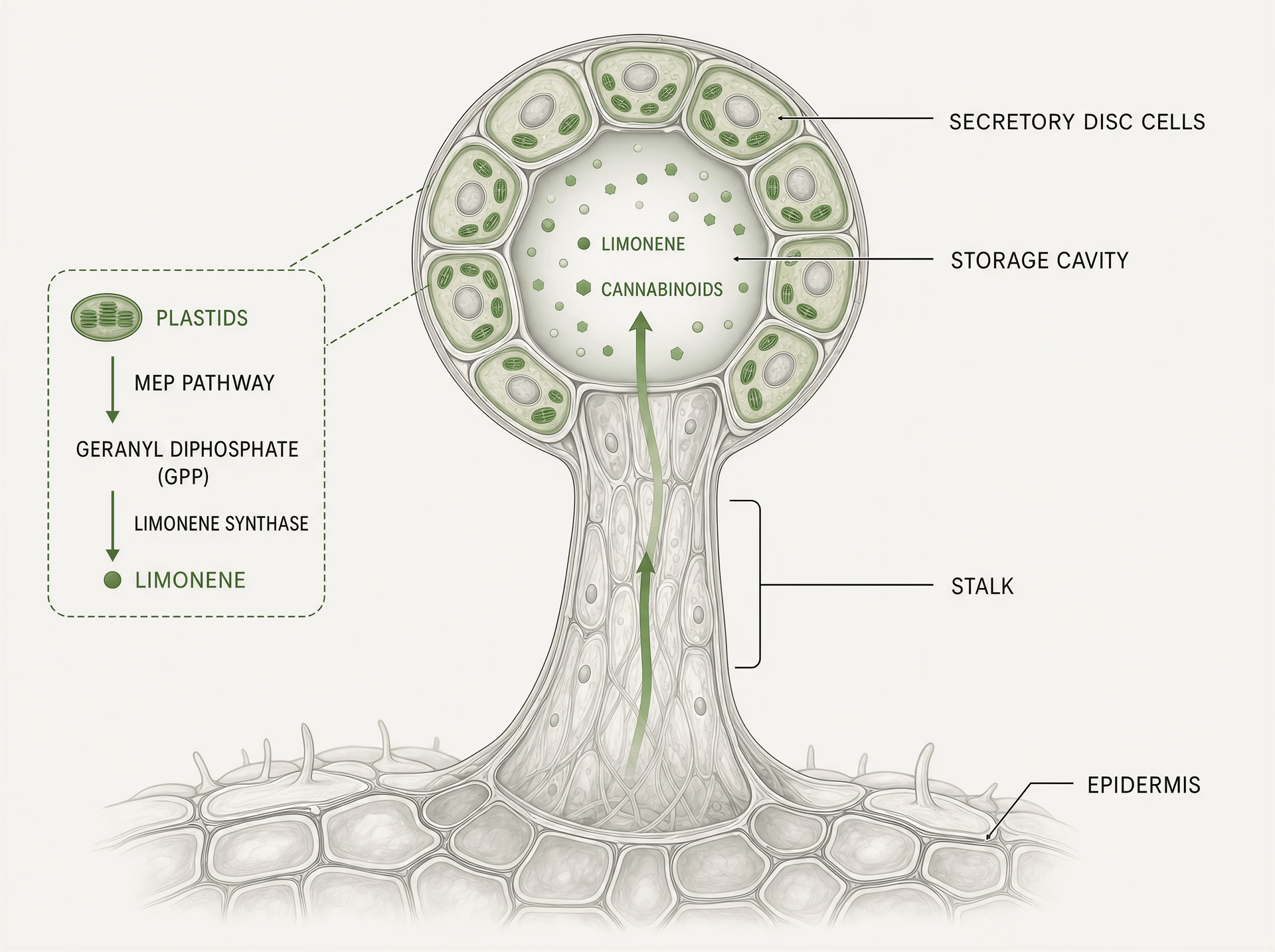
Limonene is a monocyclic monoterpene hydrocarbon with the molecular formula C10H16. “Monoterpene” means it is built from two isoprene units. In plants, that carbon skeleton is assembled through the plastidial methylerythritol phosphate, or MEP, pathway, which produces the precursor geranyl diphosphate (GPP). Limonene synthase then cyclizes GPP into limonene. This is standard terpene biochemistry, not speculation.
That matters in cannabis because monoterpenes are produced in glandular trichomes, the same specialized structures associated with cannabinoid accumulation. So limonene is not a vague “plant essence.” It is a specific volatile molecule made by specific enzymes in specific tissue.
Key chemistry terms in this section
- Monoterpene
- A terpene built from two isoprene units.
- MEP pathway
- The plastidial methylerythritol phosphate pathway that supplies monoterpene precursors.
- GPP
- Geranyl diphosphate, the ten-carbon branch point precursor for monoterpenes.
- Enantiomers
- Mirror-image forms of the same molecule that can differ in odor and biological interactions.
| Feature | d-Limonene | l-Limonene |
|---|---|---|
| Odor description | Orange, lemon, bright citrus | Piney or turpentine-like |
| Formula | C10H16 | C10H16 |
| Atom connectivity | Same as l-isomer | Same as d-isomer |
| Difference | Three-dimensional orientation | Three-dimensional orientation |
The stereochemistry also matters. Limonene exists as two enantiomers: d-limonene and l-limonene. They have the same molecular formula but different three-dimensional orientation, and that changes odor character. The d-isomer is the one classically associated with orange, lemon, and other bright citrus notes. The l-isomer smells more piney or turpentine-like. Cannabis typically contains the d-isomer when laboratories report limonene in common citrus-forward profiles, though many routine terpene panels do not foreground stereoisomeric resolution in the way a flavor chemist might want.
This is one of the places where the chemistry is actually cleaner than the marketing. Limonene is easy to define, easy to detect, and easy to connect to smell. It is commonly measured in cannabis by GC-FID or GC-MS, and volatile profiling often uses headspace solid-phase microextraction. HPLC is not the usual tool for terpene work because terpenes are volatile and gas chromatography handles them better.
It is also worth keeping perspective on abundance. Cannabis may contain more than 200 identified terpenes, as summarized in a 2020 Frontiers in Pharmacology review, but total terpene content is still low by mass compared with cannabinoids. Limonene can shape aroma strongly at low concentrations because smell perception is not the same thing as bulk composition.
Why citrus aroma is the easy part and pharmacology is the hard part
Citrus attribution is the easy part because limonene is one of the dominant constituents of many citrus peel oils. Sweet orange essential oil often contains around 90% or more limonene, according to a 2021 NCBI Bookshelf review on d-limonene. That is why citrus is the benchmark matrix for limonene chemistry. Cannabis is not.
The harder question is what limonene does in humans. Here the popular cannabis shorthand breaks down fast. There is some human literature suggesting anxiolytic or mood-related effects from limonene-containing citrus aromas, but that is not the same as proving that limonene-rich cannabis produces a predictable emotional outcome in users.[1] Citrus fragrance in the treatment of patients with depressive disorders. Tadahiko Komori, Norihiko Fujiwara, Toshihiko Okuyama, et al.. Psychiatry and Clinical Neurosciences, 1995.
The often-cited Komori et al. study in 1995, published in Psychiatry and Clinical Neurosciences, reported that citrus fragrance exposure in depressed patients was associated with reduced antidepressant dosage requirements, from 14 cases to 4 in their sample. Interesting? Yes. Definitive proof of “limonene equals happiness”? No. It was a small, dated aromatherapy study using fragrance exposure, not a trial of inhaled cannabis with quantified terpene delivery.
The broader anxiety literature has the same problem. A 2024 systematic review and meta-analysis in PLOS One found a significant overall anxiolytic effect for aromatherapy in adults, but the studies were heterogeneous in oil composition, route of administration, comparator quality, and bias risk. Limonene-containing citrus oils are part of that literature. They are not cannabis-specific validation.
The regulatory status is often misunderstood too. The FDA lists d-limonene as Generally Recognized as Safe for use as a flavoring substance under 21 CFR 182.60, with FEMA No. 2633 and CAS 5989-27-5 in regulatory contexts. That means food-use safety as a flavoring ingredient. It does not mean inhalation at cannabis-use temperatures has been proven safe, and it certainly does not prove therapeutic benefit.
| Parent compound | Oxidation products named in the article | Why it matters |
|---|---|---|
| Limonene | Carvone | Can shift aroma away from fresh citrus |
| Limonene | Carveol | Signals chemical change during storage or handling |
| Limonene | Limonene oxides | Relevant to irritation or allergenicity concerns in other contexts |
Then there is stability. Monoterpenes are the most volatile part of the profile, and limonene is prone to oxidation with exposure to air, light, and heat. PubChem lists carvone, carveol, and limonene oxides among its oxidation products. So the limonene level printed on a lab report is not a permanent feature of the flower. It can drift during curing, transport, storage, and repeated opening of packaging. Some oxidized terpene products may also have different sensory and biological properties, including irritation or allergenicity concerns in other contexts.
The limits of strain-effect storytelling
This is where many cannabis articles get furthest from the evidence. They treat limonene as if it acts alone and as if “strain effects” are stable biological categories. Neither claim holds up well.
Evidence for terpene-based entourage effects in humans remains limited and much of the case is preclinical or inferential. Limited evidence
Limonene-dominant cannabis chemotypes often also contain beta-caryophyllene, myrcene, or other terpenes. They also contain varying amounts of THC, CBD, minor cannabinoids, flavonoids, and degradation products. Assigning one experiential outcome to limonene alone is not good pharmacology. Russo and other terpene researchers have repeatedly argued that claims about terpene-driven entourage effects in humans are ahead of direct clinical testing. The 2020 Frontiers in Pharmacology review made that point plainly: evidence for terpene-based entourage effects in humans remains limited and much of the case is preclinical or inferential.
That does not mean limonene is irrelevant. It means confidence should match data. The chemistry, biosynthesis, analytical detection, and oxidation pathways are on firm ground. The idea that limonene contributes to citrus aroma is solid. The idea that limonene-rich cannabis is reliably anxiolytic or mood-elevating across users is not clinically established.
In short, limonene is one of the better-characterized cannabis terpenes if the question is “what molecule is this?” It is one of the most overstated if the question is “what will it do to a person?”
Chemical identity, stereochemistry, and sensory profile
Limonene is easy to recognize by smell and much harder to discuss precisely unless the chemistry is kept front and center. It is C10H16, a cyclic monoterpene built from two isoprene units, and in cannabis it belongs to the light, highly volatile terpene fraction that tends to hit the nose first. That matters because many broad claims about “citrus-smelling flower” collapse several different questions into one: what limonene is, which enantiomer is present, how much survives post-harvest handling, and what else is in the volatile mix alongside it.
In cannabis, limonene is produced from geranyl diphosphate (GPP) through the plastidial MEP pathway, then cyclized by limonene synthase in glandular trichomes. That biochemical story is well established. The harder part is sensory interpretation. A cultivar can test with measurable limonene and still not smell strongly like orange if the rest of the volatile profile pushes in another direction. Conversely, a sample with modest limonene can read as “bright citrus” because sulfur compounds, esters, aldehydes, or other terpenes sharpen that impression.
Molecular formula, structure, and chiral forms
Chemically, limonene is 1-methyl-4-(1-methylethenyl)cyclohexene. It is a monocyclic monoterpene hydrocarbon, meaning it contains a single ring and no oxygen atoms in its parent form. Its molecular weight is about 136.24 g/mol, and standard listings identify d-limonene under CAS 5989-27-5; regulatory and flavor references often also cite FEMA No. 2633. The FDA affirms d-limonene as GRAS for use as a flavoring substance under 21 CFR 182.60, but that food-use designation should not be misread as proof of inhalation safety. Those are different exposure routes with different toxicology questions.
Chirality A property of a molecule that exists in non-superimposable mirror-image forms, such as d-limonene and l-limonene.
The key structural point is chirality. Limonene exists as two mirror-image forms, or enantiomers: d-limonene and l-limonene. In stereochemical notation these are often discussed as (R)-limonene and (S)-limonene, though naming conventions can vary with optical rotation and source conventions. The important fact is simple: same molecular formula, same atom connectivity, different three-dimensional arrangement. Human olfaction cares about that difference a great deal.
Cannabis usually gets discussed as if “limonene” were one sensory object. It is not. Analytical reports often list total limonene without resolving chirality, and most routine cannabis terpene panels by GC-FID or GC-MS do exactly that unless a chiral method is used. For many practical lab purposes, total limonene is enough. For aroma science, it leaves out meaningful information.
| Terpene class | Example named in the article | Relative volatility in the article | Sensory implication |
|---|---|---|---|
| Monoterpene | Limonene | Higher | More likely to dominate first aromatic impression |
| Sesquiterpene | Beta-caryophyllene | Lower | More likely to emerge later and linger longer |
| Sesquiterpene | Humulene | Lower | Less headspace-dominant at room temperature than limonene |
Limonene’s physical behavior also explains its sensory prominence. As a monoterpene, it is more volatile than the heavier sesquiterpenes such as beta-caryophyllene or humulene. Its boiling point is much lower than those larger compounds, so it enters the headspace above flower more readily at room temperature and during handling. That is why monoterpenes often dominate the first aromatic impression even when they make up a small fraction of the plant by total mass. They are the compounds that escape fastest.
This is also why limonene content is not purely a genetics story. Genetics and biosynthesis set the starting profile. Post-harvest reality edits it. Drying, curing, transport temperature, oxygen exposure, and packaging all shift the amount of limonene that remains available to smell or inhale.
Why d-limonene smells like orange while l-limonene smells more pine-like or turpentine-like
The classic sensory contrast is that d-limonene is associated with sweet orange and citrus peel, while l-limonene is more often described as piney, harsher, or turpentine-like. This is one of the cleanest examples in fragrance chemistry of enantiomers producing clearly different odor character despite being chemically “the same” on a formula sheet.
Why does that happen? Because smell is receptor binding, not just composition. Olfactory receptors are themselves chiral biological structures. A receptor can interact differently with two mirror-image molecules, much the way a left hand does not fit a right-handed glove. So the two enantiomers generate different receptor activation patterns, and the brain reads those patterns as different odors.
That distinction is obvious in citrus matrices. Sweet orange essential oil commonly contains about 90% or more limonene, according to reviews summarized in the 2021 NCBI Bookshelf monograph on d-limonene. Citrus peel is therefore the benchmark natural matrix for understanding limonene’s odor identity. Cannabis is not. In cannabis, limonene is usually one contributor among many, not the overwhelming bulk constituent the way it is in orange peel oil.
This point matters because “citrus” in cannabis is rarely limonene alone. Terpinolene, beta-myrcene, linalool, alpha-pinene, small aldehydes, esters, and even trace sulfur volatiles can all alter the perceived effect of limonene on aroma. A limonene-rich sample paired with myrcene and beta-caryophyllene may read as citrus-spice. Pair limonene with pinene and the result may skew toward lemon-pine cleaner territory. Add floral oxygenated terpenes and it can seem softer and sweeter.
Oxidation changes the picture again. Limonene exposed to air, light, and heat can form carveol, carvone, and limonene oxides, as listed in PubChem and the oxidation literature. Those products shift aroma away from fresh peel brightness toward flatter, sharper, or more resinous notes. So a flower that started limonene-forward can smell materially different months later even if the label never changes.
Odor thresholds and why trace amounts can dominate aroma perception
Aroma is not a simple reflection of concentration. It is a reflection of concentration relative to odor threshold, volatility, and interactions with other compounds. Limonene often matters because it combines all three advantages: it is volatile, recognizably characterful, and detectable at low enough levels to shape perception before heavier compounds fully emerge.
That is why trace amounts can dominate the opening impression of cannabis. When a container is opened, the headspace is enriched for the compounds that evaporate most readily. Monoterpenes do this better than sesquiterpenes. Even if a sesquiterpene is present at similar or greater concentration in the plant matrix, the monoterpene can still lead the nose because it partitions into air more efficiently.
Perfumers call this a top-note effect. Cannabis chemistry supports it. The volatile fraction gives the first read; the less volatile fraction fills in later. This is one reason two samples with similar total terpene percentages can smell very different in practice. Distribution across compounds matters more than the headline number.
Odor thresholds also help explain why tiny co-components can distort the “limonene = citrus” assumption. Some compounds have extremely low thresholds and can either brighten, sweeten, or muddy limonene’s citrus signal. A small amount of another volatile may do more sensory work than a larger amount of limonene. The nose is nonlinear.
So limonene deserves precision. It is a well-defined C10H16 chiral monoterpene, prominent in aroma because of volatility and receptor-level odor character, not because it single-handedly determines what cannabis smells like. The chemistry here is solid. The simplification is not.
How cannabis makes limonene
Limonene in cannabis is not made from cannabinoids, and it is not a vague byproduct of “strain personality.” It is a defined monoterpene biosynthesis problem. Chemically, limonene is a monocyclic monoterpene with the formula C10H16. In cannabis, as in many aromatic plants, its carbon skeleton is assembled through the plastidial methylerythritol phosphate pathway, usually shortened to the MEP pathway, then converted through geranyl diphosphate into limonene by a dedicated terpene synthase enzyme.
That biochemical route matters because it explains why limonene output can change so sharply with genetics, trichome development, heat, drought stress, harvest timing, and post-harvest handling. A cultivar can have the genetic capacity to make limonene and still test lower than expected if the flower was harvested early, dried warm, or stored poorly. For limonene, production biology and stability biology are inseparable.
The plastidial MEP pathway and monoterpene biosynthesis
In cannabis, monoterpenes such as limonene are formed primarily in plastids through the MEP pathway rather than the cytosolic mevalonate pathway that is more associated with sesquiterpene production. The inputs are basic central metabolites: pyruvate and glyceraldehyde-3-phosphate. These are not terpene-specific feedstocks; they come from general plant carbon metabolism. What makes a citrus-smelling flower possible is how those common metabolites are routed.
The first committed MEP step is the condensation of pyruvate with glyceraldehyde-3-phosphate to form 1-deoxy-D-xylulose 5-phosphate, or DXP, catalyzed by DXS, 1-deoxy-D-xylulose-5-phosphate synthase. DXP is then rearranged and reduced by DXR, DXP reductoisomerase, to form MEP itself, 2-C-methyl-D-erythritol 4-phosphate. From there the pathway proceeds through a series of phosphorylations and cyclization-type steps involving enzymes usually abbreviated MCT, CMK, MDS, HDS, and HDR. The end products are the universal five-carbon isoprenoid building blocks IPP, isopentenyl diphosphate, and DMAPP, dimethylallyl diphosphate.
Those two molecules, IPP and DMAPP, are the alphabet of terpene chemistry. Plants use them to build larger isoprenoids by joining five-carbon units in sequence. For monoterpenes, the key point is location. The plastid is the active compartment. That is why monoterpene formation tracks with plastid-rich secretory structures and why glandular trichomes matter so much.
Cannabis flowers produce many volatile compounds, with more than 200 terpenes identified across the species according to terpene reviews such as the Frontiers in Pharmacology paper by Finlay, Sircombe, and colleagues in 2020. Yet only a subset become abundant enough to define the flower’s headspace aroma. Limonene is one of those. It is common, chemically well understood, and still often overinterpreted in effect claims. The biosynthesis is the easy part. The pharmacology is the part people oversell.
The MEP pathway also helps explain environmental sensitivity. Because it draws on photosynthesis-linked carbon metabolism and plastid function, monoterpene output often shifts with light intensity, diurnal cycles, nutrient status, and stress signaling. A plant under moderate stress may upregulate some secondary metabolism. Push too far, though, and growth suffers, trichome health suffers, and terpene accumulation can fall. There is no single “stress equals more limonene” rule. Context matters.
Geranyl diphosphate as the branch point substrate
IPP and DMAPP do not become limonene directly. First they are condensed by geranyl diphosphate synthase to produce geranyl diphosphate, GPP, the ten-carbon precursor for monoterpenes. GPP is the branch point substrate. Once the plant has GPP available in the right cellular context, different monoterpene synthases can steer it into different products: limonene, myrcene, pinene, linalool, terpinolene, and others.
That branch point is where genotype starts to show itself. Two cannabis plants can have similar total terpene content but different monoterpene distributions because they express different terpene synthase repertoires or express the same enzymes at different levels. One may channel more GPP toward limonene synthase activity, another toward myrcene synthase or terpinolene-associated pathways. This is why chemotype is not just “how much terpene,” but “which enzymes win the competition for precursor.”
There is another layer here that often gets muddled in casual cannabis writing: GPP also intersects with cannabinoid biosynthesis, but cannabinoids are not monoterpenes. Cannabinoid acid formation starts when GPP combines with olivetolic acid to form cannabigerolic acid, CBGA, via aromatic prenylation. From CBGA, the plant can then produce THCA, CBDA, and related cannabinoid acids through separate oxidocyclase enzymes. So GPP sits at a metabolic crossroads. It can feed volatile monoterpenes such as limonene, or it can feed cannabinoid acid assembly after coupling with the polyketide-derived olivetolic acid scaffold.
That shared precursor logic helps explain why monoterpene and cannabinoid production coexist in the same trichome-rich floral tissues, yet remain biochemically distinct. They share space. They do not collapse into one pathway.
Flux through GPP is therefore a balancing act involving precursor supply, enzyme abundance, compartmentalization, and developmental timing. If a flower is at a stage where monoterpene synthases are highly active, limonene may rise. If precursor flow is diverted more heavily into cannabinoid acid synthesis, or if the relevant terpene synthase genes are weakly expressed, limonene may remain modest even in aromatic flower. The genetics set the potential. Metabolic flux sets the outcome.

Limonene synthase expression in glandular trichomes
The final committed step is catalyzed by limonene synthase, a monoterpene cyclase that converts GPP into limonene. Mechanistically, the enzyme ionizes GPP, generates a reactive carbocation, and guides the substrate through cyclization and deprotonation to form the limonene ring system. This is classic terpene synthase chemistry: one precursor, many possible rearrangements, highly enzyme-directed outcomes.
In cannabis, that chemistry is concentrated in glandular trichomes, especially the capitate-stalked trichomes that dominate mature female inflorescences. These structures are not decorative resin droplets. They are active secretory factories with specialized cells, plastids, biosynthetic enzymes, storage cavities, and transport machinery. Monoterpenes and cannabinoids accumulate in the same general anatomical system, which is why trichome density often correlates with aromatic intensity. But the compounds differ in pathway, volatility, and post-harvest fate.
Developmental stage matters. Young flowers may not yet have maximal terpene synthase expression. As trichomes mature, secretory metabolism changes. Then, after peak maturity, oxidation and volatilization start taking their toll. Limonene is especially vulnerable because monoterpenes are the lightest and most volatile major terpenes in cannabis. A flower can biosynthesize limonene efficiently and still lose a meaningful fraction during drying, curing, trimming, transport, or storage. That is one reason test results can differ across harvest batches from the same genotype.
Environment also acts through trichome biology. Light quality can alter terpene synthase transcription. Heat can increase volatilization faster than biosynthesis can compensate. Water stress may shift carbon allocation and defense metabolism. Mechanical damage and pathogen pressure can induce secondary metabolite responses, though the direction and scale are cultivar-dependent. Trichomes are where these pressures become measurable chemistry.
This is also where the popular story about “limonene-rich strains are reliably anxiolytic” starts to break down. Biosynthesis can tell you why a flower smells citrusy. It cannot, by itself, tell you what a human clinical outcome will be. Reviews such as the 2020 Frontiers in Pharmacology assessment make that plain: claims about terpene-driven entourage effects in humans remain ahead of direct evidence. Limonene is real chemistry, not imaginary. But a limonene-forward lab result is still not a clinical endpoint.
Biosynthesis sequence
- 1 Pyruvate plus glyceraldehyde-3-phosphate feed the plastidial MEP pathway.
- 2 MEP-pathway enzymes generate the five-carbon building blocks IPP and DMAPP.
- 3 IPP and DMAPP condense to form GPP.
- 4 Limonene synthase cyclizes GPP into limonene in glandular trichomes.
- 5 Post-harvest handling then determines how much limonene survives to testing and use.
So when cannabis makes limonene, the sequence is clear: pyruvate plus glyceraldehyde-3-phosphate feed the plastidial MEP pathway; MEP pathway enzymes produce IPP and DMAPP; those condense to GPP; limonene synthase cyclizes GPP into limonene inside glandular trichomes. What determines how much survives to be measured is a separate question, shaped by genotype, trichome maturation, stress physiology, and simple volatility. That last point gets missed too often. For limonene in cannabis, the plant’s biosynthetic talent is only half the story.
Occurrence in cannabis chemotypes and so-called limonene-dominant strains
“Limonene-dominant” sounds more precise than it usually is. In cannabis, limonene is common, sometimes prominent, and often aromatically obvious even at modest concentrations because the human nose is sensitive to citrus volatiles. But the phrase can hide three different things: a real analytical result from a lab report, a cultivar reputation carried by name alone, or a sensory impression shaped by a terpene blend rather than limonene by itself.
That distinction matters. Cannabis flower is not citrus peel. Sweet orange oil may contain limonene at 90% or more of the essential oil fraction according to a 2021 NCBI Bookshelf review on d-limonene, while cannabis almost never presents limonene as anything close to a single-compound terpene matrix. In flower and most extracts, limonene is one player in a mixed volatile profile, and a fragile one at that. It is a monocyclic monoterpene made from geranyl diphosphate in the plastidial MEP pathway, synthesized in glandular trichomes alongside other monoterpenes, then partly lost or chemically altered during drying, curing, storage, extraction, and packaging.
How often limonene appears among top cannabis terpenes
Across modern commercial cannabis, limonene is very often found in the upper tier of routinely abundant terpenes, even if exact rank varies by dataset, region, and testing method. Reviews such as the 2020 Frontiers in Pharmacology paper on cannabis terpenes note that more than 200 terpenes have been identified in cannabis, but only a smaller group repeatedly shows up in substantial amounts in market flower. Limonene belongs to that smaller group with myrcene, beta-caryophyllene, alpha- and beta-pinene, humulene, and linalool.
In practical terms, limonene is not rare. It is one of the terpenes laboratories frequently report at meaningful levels in dried flower, vape oils, live resin, and other inhaled cannabis preparations. Yet it is also one of the easiest to misread. Monoterpenes are the more volatile fraction of the cannabis terpene profile, so limonene content can drop between harvest and consumption even when genetics strongly support its production. A flower lot tested immediately after curing may not smell or analyze the same way after months of transport and warm storage. Oxidation compounds such as carveol, carvone, and limonene oxides can form with exposure to air, heat, and light, as summarized in PubChem and the broader food chemistry literature. So a cultivar with the biological capacity to produce a limonene-rich profile may arrive to the user with a dulled citrus signal and a chemically shifted terpene profile.
This is one reason occurrence data in flower and extracts need context. Fresh-frozen extraction can preserve limonene better than conventional dried-flower processing because less of the volatile fraction has time to evaporate before extraction. By contrast, prolonged curing and poor packaging can selectively flatten monoterpenes. A product described as “limonene-forward” may reflect post-harvest handling as much as genetics. That is not a minor technicality. It changes what people actually inhale.
Why limonene rarely appears alone
Limonene rarely exists in isolation in cannabis because terpene biosynthesis does not produce neat one-molecule signatures. Trichomes generate multiple terpenes through related enzymatic pathways, and cultivar-specific expression patterns tend to create recurring clusters rather than pure compounds. In cannabis, limonene commonly co-occurs with beta-caryophyllene and myrcene, and often with linalool or pinene. That pattern shows up repeatedly in lab reports from commercial flower and extract products.
This co-occurrence is the main reason simplified effect claims are weak. If a sample tests “high in limonene,” it often also contains beta-caryophyllene, a sesquiterpene discussed by Jürg Gertsch and others for CB2-related pharmacology, or myrcene, which is often associated in popular writing with sedation despite limited direct human evidence. Linalool contributes floral notes and has its own preclinical and aromatherapy literature. Pinene shifts the aroma toward bright resinous citrus. The subjective result is a blend, not limonene acting on its own.
That does not mean limonene is irrelevant. It means attribution needs discipline. The 2020 Frontiers in Pharmacology review was explicit that human evidence for terpene-driven entourage effects remains limited and that many terpene claims are inferential rather than clinical. Ethan Russo’s writing on cannabis pharmacology helped popularize the entourage framework, but even sympathetic readings of that idea do not justify turning every citrus-smelling cultivar into a proven anxiolytic. Human data tied specifically to inhaled cannabis limonene profiles are thin. The better-known human mood literature comes from limonene-containing citrus fragrance or essential oil exposure, not named cannabis cultivars. Komori et al. (1995) reported reduced antidepressant treatment requirements in depressed patients exposed to citrus fragrance, a striking result but from a small and dated study. A 2024 systematic review and meta-analysis in PLOS One found anxiolytic effects from aromatherapy in adults overall, but with major heterogeneity in oils, routes, and study quality. That is suggestive. It is not strain-level proof.
A second reason limonene rarely stands alone is analytical. Labs usually quantify a panel of terpenes by GC-FID or GC-MS, often with HS-SPME for volatile profiling. Relative ranking can shift depending on sample prep, decarboxylation, storage before analysis, and whether the matrix is flower, concentrate, or distillate with reintroduced terpenes. A report showing limonene as the top terpene may still show only a narrow margin over beta-caryophyllene or myrcene. “Dominant” can simply mean “ranked first,” not “chemically isolated” or “pharmacologically defining.”
Examples of limonene-forward cultivars and the sourcing problem
| Cultivar name mentioned | How the article frames it | Main caveat |
|---|---|---|
| Wedding Cake | Reasonable shorthand for a limonene-forward profile | Another producer's batch may lean more toward caryophyllene or myrcene |
| Do-Si-Dos | Often discussed as limonene with caryophyllene and linalool | Not uniform across markets |
| Super Lemon Haze | Widely described as citrus-heavy | Different cuts and post-harvest choices can shift chemistry |
| Lemon Skunk | Widely described as citrus-heavy | Name alone is not a verified chemical descriptor |
| Gelonade | May present sharp citrus-petrol in one batch | Can appear sweeter or flatter in another batch |
Cultivar names often associated with limonene-rich or limonene-forward profiles include Wedding Cake, Do-Si-Dos, Super Lemon Haze, Lemon Skunk, and Gelonade. Those examples are reasonable shorthand, but they are not guarantees. A Wedding Cake sample from one producer can test limonene-dominant with strong beta-caryophyllene support, while another may lean more heavily into caryophyllene or myrcene. Super Lemon Haze and Lemon Skunk are widely described as citrus-heavy, yet even those names can cover different cuts, seed populations, breeding histories, cultivation conditions, and post-harvest choices. Gelonade may present a sharp citrus-petrol profile in one batch and a sweeter, flatter expression in another. Do-Si-Dos often carries limonene in tandem with caryophyllene and linalool, but not uniformly across markets.
This is the sourcing problem in plain language: strain names are not stable chemical descriptors. They are cultivar labels, and cultivar labels drift. Some drift is innocent horticultural variation. Some comes from cloning lineages with the same or similar names but different ancestry. Some comes from weak standardization across state markets, where two products sold under the same name may never have shared verified genetics at all. Add environmental effects and monoterpene instability, and the idea of a universally limonene-defined strain breaks down quickly.
Chemotype A classification based on a measured cannabinoid and terpene profile rather than on a cultivar or marketing name alone.
Chemotype is the better term when chemistry is the real topic. A chemotype refers to the measured cannabinoid and terpene profile of a sample or recurring plant population. Cultivar branding refers to the marketed or inherited name. The two overlap, but they are not the same. If the question is “does this cannabis sample contain enough limonene to plausibly shape aroma and maybe part of the experience,” the answer should come from a current certificate of analysis using terpene testing by GC-MS or GC-FID, not from the package name alone. If the question is “is this named cultivar always uplifting because it is limonene-dominant,” the honest answer is no. Sometimes it may test that way. Often it will not. And even when it does, limonene will usually be working in a crowded chemical setting with THC, CBD, beta-caryophyllene, myrcene, linalool, pinene, and oxidation products all in the mix.
So-called limonene-dominant cannabis is real as a recurring chemotype pattern. It is not fiction. But it is also not a stable category that can be inferred confidently from branding, anecdote, or smell alone. In cannabis, limonene occurrence is partly genetics, partly agronomy, and very much a post-harvest stability story.
Aroma, flavor, and sensory interpretation
Limonene is easy to recognize in the abstract and harder to pin down in an actual cannabis sample. Chemically, it is a monocyclic monoterpene, C10H16, formed from geranyl diphosphate in the plastidial MEP pathway and made in glandular trichomes alongside cannabinoids. Sensory reality is messier. The same molecule that reads as fresh orange peel in one flower lot can come across as lemon cleaner, candy, or even thin solvent in another, depending on concentration, age, and what else is in the volatile mix.
Citrus descriptors: orange, lemon zest, rind, candy, solvent
When people say a cultivar “smells like limonene,” they usually mean a family of citrus impressions rather than one fixed note. Fresh limonene often presents as sweet orange peel, lemon zest, tangerine, or bright rind oil. That makes sense. Citrus peel oil is the reference matrix for limonene chemistry, and sweet orange essential oil commonly contains around 90% or more limonene by composition in some reports (2021 review, NCBI Bookshelf). Cannabis never presents limonene in that kind of isolation, so the note is always colored by neighboring volatiles.
Why citrus descriptors vary
- Orange Can emerge when limonene is supported by fruity esters or softer aldehydes.
- Lemon zest Often appears when greener, waxier, or peel-like aldehydes sharpen the profile.
- Candy Usually reflects sweet context from esters and low plant-green roughness, not limonene alone.
- Solvent Can appear when bright citrus is stripped of sweetness and surrounded by harsher volatiles or oxidation products.
“Orange” versus “lemon” is not a trivial distinction. A sweeter profile can emerge when limonene is supported by fruity esters or soft aldehydes. A sharper, more grated-zest effect often appears when the profile carries more green, waxy, or peel-like aldehydes. Sulfur compounds can sharpen citrus dramatically at trace levels. In very small amounts they can make the aroma feel more vivid and realistic, closer to broken peel and fresh juice. Push the balance the wrong way and the profile stops smelling juicy and starts smelling acrid, skunky, or chemically harsh.
The candy descriptor usually signals context rather than limonene alone. If the sample has sweet esters, low bitterness, and little plant-green roughness, limonene can read like citrus candy or gummy rings. Solvent, by contrast, tends to appear when the citrus note is stripped of sweetness and surrounded by sharp volatiles, oxidation products, or residual-looking harshness. Not because limonene is literally “a solvent smell” in every case, but because the brain interprets bright, volatile, unsweetened citrus through the same sensory category used for cleaners, thinners, and peel-based degreasers.

How curing and storage change the limonene impression
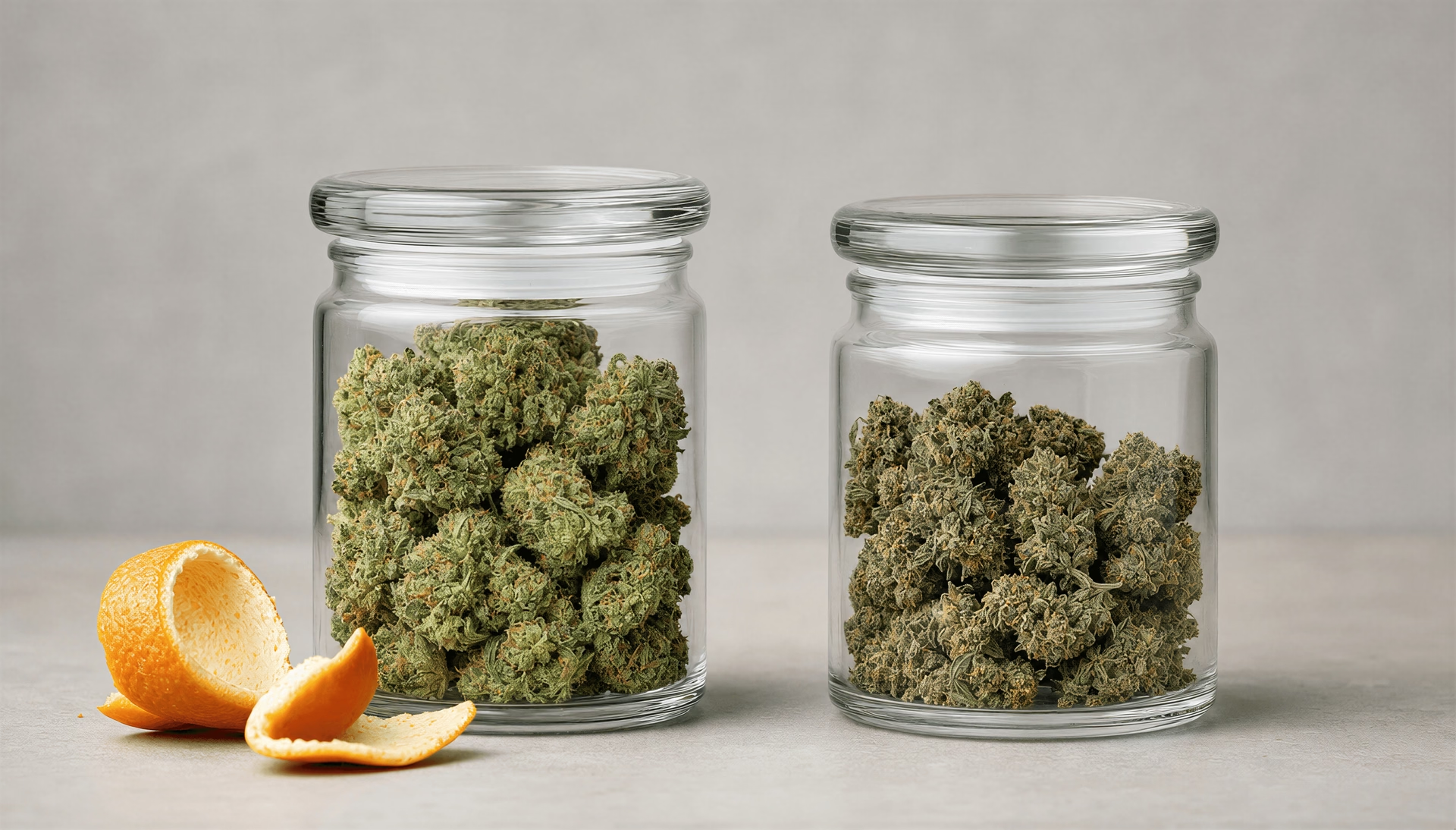
Fresh flower and old flower can have the same genetics and still smell like different products. Monoterpenes are the most volatile part of the cannabis aroma fraction, and limonene is especially vulnerable to evaporation and oxidation during drying, curing, transport, and storage. Heat, oxygen, and light all matter. So does package headspace.
As limonene degrades, the aroma usually loses lift first. The top note gets flatter. Then the citrus can shift from juicy and sparkling toward dull peel, stale rind, furniture-polish sharpness, or solvent-like edges. That drift is chemically plausible because limonene oxidizes into compounds such as carveol, carvone, and limonene oxides, which are well documented in stability references including PubChem (2024). Those products do not reproduce the original “freshly opened orange” effect. They push the profile somewhere else.
This is why a lab report can mislead consumers if it is treated as timeless truth. A terpene assay performed by GC-MS or GC-FID captures what was in the submitted sample at testing, not what remains after months of storage on a shelf or in a jar. Headspace methods such as HS-SPME often show this drift clearly because they track the volatile fraction actually available to the nose. The sensory difference is not subtle. Fresh limonene smells bright. Oxidized limonene often smells tired.
Why terpene percentages do not map neatly onto flavor experience
A high limonene percentage does not guarantee a strong citrus experience, and a modest limonene percentage does not rule one out. This is the central sensory mistake in terpene shorthand.
First, flavor is a matrix phenomenon. Limonene interacts with myrcene, beta-caryophyllene, esters, aldehydes, sulfur compounds, and nonvolatile plant material. Cannabis chemotypes rarely express limonene in isolation; limonene-dominant profiles often co-occur with beta-caryophyllene and myrcene, which changes texture, warmth, and perceived sweetness. Second, orthonasal smell and retronasal flavor are not identical. What rises from the jar is one experience. What reaches the nose from the back of the throat during inhalation or exhalation is another. Heat transforms release patterns. Resin coats surfaces. Perception shifts second by second.
Third, thresholds differ. Some compounds matter at trace levels because they are potent odorants. A tiny amount of a sulfur compound or aldehyde can redirect the whole impression more than a larger swing in limonene percentage. Fourth, percentage by mass is not the same thing as aroma impact. Cannabis contains more than 200 identified terpenes according to a 2020 Frontiers in Pharmacology review, plus many other volatile compounds that standard panels may not fully capture. Sensory dominance comes from volatility, partitioning, and odor threshold, not just abundance.
So terpene numbers are useful. They are not enough. For limonene, the lived sensory experience depends on chemistry in motion: freshness, oxidation state, matrix, and how the nose encounters the vapor. That is why two samples with similar limonene readings can smell strikingly different, and why “0.8% limonene” is a clue, not a finished description.
Mood-elevating and anxiolytic research — what the human evidence actually shows
Limonene has one of the strongest reputations in cannabis culture for “uplifting” or “anti-anxiety” effects. The chemistry is real. The human proof is thinner than the reputation. That gap matters.
| Evidence tier | What the article says limonene evidence supports | What it does not establish |
|---|---|---|
| Preclinical animal work | Biological plausibility for mood and anxiety relevance | Reliable human outcomes from cannabis use |
| Human aromatherapy studies | Some signal for anxiolytic or mood-related effects from citrus aromas | Cannabis-specific efficacy |
| Cannabis-specific clinical evidence | Very limited direct support | Proof that limonene-rich cannabis treats anxiety or elevates mood predictably |
The current evidence supports a measured position: limonene has plausible mood-modulating and anxiolytic potential, backed by animal work, mechanistic hypotheses, and some human aromatherapy studies involving citrus oils rich in limonene. But there is no direct clinical evidence showing that limonene-rich cannabis flower, smoked or vaporized in real-world patterns, reliably treats anxiety or elevates mood in humans. That claim goes beyond the data.
Animal and mechanistic evidence for anxiolytic effects
Most of the biological plausibility starts outside cannabis-specific research. Limonene has shown anxiolytic- and antidepressant-like effects in several rodent models, though the mechanisms are still being sorted out and the models themselves have limits.[2] Anxiolytic- and antidepressant-like effects of inhaled limonene in mice. N.G.P. Lima, A.L.S. De Sousa, M.M. Pimenta, et al.. Pharmacology Biochemistry and Behavior, 2013.
A commonly cited paper is Lima et al. (2013), published in Pharmacology Biochemistry and Behavior, which examined limonene in mice using elevated plus maze, open field, and forced swim paradigms. The authors reported anxiolytic-like and antidepressant-like effects, with evidence suggesting involvement of serotonergic pathways, particularly 5-HT1A receptors. When receptor antagonists were introduced, parts of the behavioral effect were blunted, which supports a receptor-linked mechanism rather than a simple sedation artifact. That is useful. It is still preclinical.
A single, settled anxiolytic mechanism for limonene has been demonstrated across preclinical models. Preliminary evidence
Other animal studies have pointed toward stress-axis effects. In restraint-stress and related models, citrus odor exposure or limonene administration has been associated with reduced behavioral signs of stress and changes in neurochemical markers. Some papers have proposed modulation of dopamine turnover, GABAergic tone, and hypothalamic-pituitary-adrenal axis activity. The direction of the literature is suggestive rather than settled. There is no single mechanism that has been cleanly demonstrated across models.
One reason limonene is easy to overclaim is that it sits inside a class of compounds with broad CNS activity signals. Monoterpenes can affect locomotion, arousal, nociception, and stress responses in animals. But broad does not mean specific. An “anxiolytic-like” effect in a rodent maze can reflect reduced anxiety, yes, but it can also reflect altered exploratory behavior, motor effects, odor-driven conditioning, or dose-dependent shifts that do not translate well to humans.
The serotonergic angle is probably the most defensible mechanistic thread. Some preclinical findings support interaction with 5-HT signaling, which would fit the mood literature better than a vague “citrus equals happy” story. There are also reports of dopaminergic effects, which are attractive because they could help explain alerting or reward-linked subjective states. Yet this remains inferential. Direct human receptor-occupancy or pharmacodynamic data for inhaled limonene in cannabis contexts do not exist.
The GABA story is even less secure. It appears in reviews because many anxiolytic natural products are screened against GABA-related pathways, and some terpene papers discuss possible GABAergic contribution. For limonene specifically, the evidence is not strong enough to present GABA modulation as established fact. It is a hypothesis, not a conclusion.
Stress-axis effects deserve a similar level of caution. Reduced stress markers in animals after citrus odor exposure may reflect central effects, peripheral olfactory effects, contextual conditioning, or some combination. The route matters. Inhalation of an odorant in a controlled rodent chamber is not the same thing as inhaling cannabis aerosol that contains THC, CBD, combustion or vapor byproducts, and a shifting terpene profile affected by storage and heating.
So where does this leave the preclinical case? Strong enough to say limonene is biologically active and plausibly relevant to anxiety and mood. Not strong enough to promise a predictable human outcome from a limonene-forward cannabis product.
Human aromatherapy and inhalation studies involving citrus oils or limonene-rich exposures
The human literature is real, but it is mostly aromatherapy literature, not cannabis literature.[3] Citrus fragrance in the treatment of patients with depressive disorders. Tadahiko Komori, Norihiko Fujiwara, Toshihiko Okuyama, et al.. Psychiatry and Clinical Neurosciences, 1995.
The classic named study is Komori et al. (1995) in Psychiatry and Clinical Neurosciences. This trial exposed depressed patients to citrus fragrance as an adjunct to treatment. The paper is often cited because the authors reported that antidepressant medication use was reduced from 14 cases to 4 after citrus fragrance exposure in their sample. That is an eye-catching result. It is also a small, older, methodologically dated study that used citrus fragrance rather than isolated limonene, and it was conducted in depressed patients, not a general anxiety population. It supports interest. It does not settle efficacy.
That distinction matters because citrus oils are complex mixtures. Sweet orange essential oil often contains limonene at very high levels, commonly around or above 90% depending on source and analysis, which is why citrus oils are the reference matrix for limonene chemistry. But even “limonene-rich” essential oil is not pure limonene, and aromatherapy exposure is not a single-compound experiment. Minor terpenes, aldehydes, and expectancy effects can all matter.
Beyond Komori, a broader set of randomized and quasi-randomized aromatherapy studies has looked at anxiety in settings such as dental procedures, preoperative waiting, labor, oncology care, and general stress. Citrus oils, especially orange and bergamot, appear repeatedly. Some of these trials report lower state anxiety scores, reduced autonomic arousal, or improved subjective calm after inhalation. Others are null or mixed.
A 2024 systematic review and meta-analysis in PLOS One found an overall significant reduction in anxiety in adults receiving aromatherapy interventions, but the paper also emphasized substantial heterogeneity. Oils differed. Routes differed. Populations differed. Blinding was often weak or impossible. Study quality was uneven. This is exactly the type of literature that can be directionally informative while still being a poor basis for product-specific claims.
That heterogeneity is not a minor footnote. It is the core interpretive problem. Inhaled aroma can change mood through several pathways at once: pharmacology of volatile compounds, olfactory-limbic processing, memory associations, expectancy, setting, and caregiver interaction. If a dental waiting room study finds that orange aroma lowers anxiety scores, that tells us something clinically interesting about scented environments. It does not isolate limonene as the active principle, and it says even less about inhaled cannabis.
There are also studies of isolated d-limonene in human health contexts, but they are not primarily anxiety trials. Oral limonene has been investigated in gastroesophageal reflux and in oncology supportive or chemopreventive settings. Those lines of research show that limonene is pharmacologically active and clinically interesting. They do not establish anxiolysis from cannabis inhalation.
One more point often mishandled in popular writing: FDA GRAS status is not evidence for anti-anxiety efficacy and not evidence for inhalation safety. d-Limonene is affirmed as Generally Recognized as Safe as a flavoring substance under 21 CFR 182.60, with FEMA No. 2633 and CAS 5989-27-5 used in regulatory listings. That applies to food-use conditions. It should not be stretched into claims about vaping, smoking, or therapeutic mood effects.
What this does and does not prove for cannabis
Here is the evidence-based position: limonene may contribute to mood and anxiety effects in cannabis, but the human evidence for that claim is indirect.
The indirectness comes from several layers. First, the human studies are usually about citrus essential oils or fragranced environments, not cannabis flower. Second, limonene in cannabis is rarely acting alone. Limonene-dominant chemovars often also carry substantial beta-caryophyllene and myrcene, and sometimes appreciable pinene or linalool. Any subjective effect could reflect combined pharmacology, not a single terpene. Third, THC itself can be anxiolytic at lower doses and anxiogenic at higher doses, while CBD may dampen anxiety in some contexts. Once cannabinoids enter the picture, attribution becomes messy.
This is where the entourage-effect conversation often outruns the science. Russo and others have argued that terpene-cannabinoid interactions are biologically plausible, and they probably are. But the 2020 Frontiers in Pharmacology review on cannabis terpenes made the key point plainly: evidence for terpene-driven entourage effects in humans remains limited, and many claims are preclinical or inferential rather than clinical. That is the right framing for limonene.
There is another cannabis-specific complication. Even if limonene has anxiolytic potential, the delivered dose from flower is unstable. Monoterpenes are the most volatile fraction of the plant. Curing, transport, storage temperature, packaging permeability, and time all change limonene content before use. Heat then changes it again at the point of inhalation. Limonene oxidizes with air, light, and heat to compounds such as carveol, carvone, and limonene oxides. So the label, the jar aroma, and the inhaled exposure may not match closely. A mood claim pinned to “this strain has limonene” ignores how variable the actual exposure can be.
That instability weakens strain folklore. It is one thing to say limonene has a citrus odor and plausible anxiolytic biology. It is another to say a named cannabis cultivar with a limonene reading on a certificate will reliably calm a human user. No clinical trial has established that.
The most defensible conclusion is narrower and stronger: limonene is one of the better-supported cannabis terpenes for plausible mood modulation, but the support comes mainly from preclinical studies and non-cannabis human aromatherapy literature. That justifies scientific interest, not certainty.
So if the question is whether limonene can affect mood in humans, the answer is probably yes, under some conditions, via aroma exposure and perhaps pharmacologic action. If the question is whether limonene-rich cannabis is a proven anxiolytic treatment, the answer is no. Not yet.
Antimicrobial and antifungal properties
Limonene does show antimicrobial activity in the lab. That part is real. The problem is what often happens next: petri-dish findings get stretched into broad health claims that the human evidence does not support. With limonene, the chemistry is believable, the microbiology is interesting, and the clinical leap is usually unjustified.
As a cannabis terpene, limonene is a volatile monoterpene made from geranyl diphosphate in the plastidial MEP pathway and stored in glandular trichomes alongside other terpenes and cannabinoids. Yet cannabis is not the main reference matrix for limonene biology. Citrus oils are. Sweet orange essential oil often contains limonene at 90% or more of total oil composition, which is why much of the antimicrobial literature comes from citrus and essential-oil research rather than cannabis-specific work.
In vitro antibacterial effects and membrane disruption
The in vitro antibacterial case for limonene is built mostly on membrane damage. Reviews such as the 2013 Molecules article on d-limonene summarize activity against a range of gram-positive and gram-negative bacteria, including Staphylococcus aureus, Escherichia coli, Listeria monocytogenes, Salmonella species, and others. Potency varies a lot by organism, solvent system, pH, and whether limonene is tested alone or as part of an essential oil.
The likely mechanism is not mysterious. Limonene is highly lipophilic, so it partitions into microbial cell membranes, disturbs lipid packing, increases permeability, and can lead to leakage of ions and intracellular contents. In some studies, treated bacteria show altered membrane integrity, reduced respiration, and visible cell surface damage on microscopy. This same general logic applies to many terpene-rich essential oils: they do not act like narrowly targeted antibiotics. They stress membranes and, at sufficient concentrations, destabilize basic cellular function.
That mechanism helps explain two recurring patterns. First, gram-positive bacteria are often more susceptible than gram-negative bacteria because the outer membrane of gram-negatives can make penetration harder. Second, limonene often looks stronger when combined with other essential oil constituents than when isolated. Mixtures containing limonene with compounds such as citral, linalool, terpinenes, or carvacrol may produce stronger growth inhibition than any one component alone. Sometimes the effect is additive; sometimes it is genuinely more than additive. But this is mixture pharmacology, not proof that limonene by itself is a clinically useful antibacterial agent.
Cannabis adds another layer of complexity. Limonene-dominant cannabis chemotypes often also contain beta-caryophyllene and myrcene, and terpene levels in flower are low by mass compared with cannabinoids. The idea that a limonene-rich flower reliably delivers enough unchanged limonene to act as an antimicrobial in human tissue is not supported by direct evidence. It is made even less plausible by volatility and oxidation. Monoterpenes evaporate easily, and limonene oxidizes with air, light, and heat into products including carvone, carveol, and limonene oxides. So the amount measured in fresh flower is not always the amount actually inhaled after curing, storage, and use.
Antifungal activity against Candida and plant pathogens
The antifungal literature points in the same direction: promising in vitro activity, weak clinical translation. Limonene and limonene-rich essential oils have inhibited Candida albicans and other Candida species in culture, and some studies report effects on fungal membrane integrity, hyphal development, or biofilm-related behavior. Since fungal cell membranes rely on ergosterol rather than cholesterol, lipophilic terpenes can interfere with membrane function in ways that reduce growth or viability.
There is also a large agricultural literature on limonene-containing oils against plant pathogens. Researchers have reported inhibition of fungi such as Aspergillus, Penicillium, Fusarium, and post-harvest spoilage organisms in food and crop systems. In those settings, limonene may act as a fumigant, contact inhibitor, or part of a broader essential oil blend. That matters because agricultural use conditions are nothing like human cannabis consumption. Surface application to fruit, vapor exposure in storage environments, or concentrated oil emulsions cannot be mapped onto inhaled flower.
For Candida, the temptation is to overread the data because fungal infections are common and essential oils sound “natural.” The evidence still stops at the bench for limonene. There are no high-quality clinical trials showing that isolated limonene, or limonene-rich cannabis, treats candidiasis in humans. The same caution applies to oral, vaginal, skin, or systemic fungal infections. Lab inhibition does not establish therapeutic dosing, tissue penetration, selectivity, or safety at effective concentrations.
Some papers also describe stronger antifungal effects when limonene is part of a whole essential oil rather than tested alone. That is plausible. Essential oil constituents can alter solubility, membrane access, evaporation rate, and fungal stress responses. But again, this is not a shortcut to a medical claim for cannabis flower. Cannabis is chemically different from citrus peel oil, usually contains much less limonene, and delivers it through a very different route.
Why laboratory antimicrobial action does not equal clinical efficacy
This is the line that needs to stay sharp. Antimicrobial activity in vitro does not mean limonene is an antimicrobial treatment in people.
| Barrier to clinical translation | How the article explains it |
|---|---|
| Concentration | In vitro studies may use limonene levels that are hard to reproduce in human tissues. |
| Exposure pattern | Microbes on agar face direct continuous contact; cannabis users get short variable exposures. |
| Matrix | Pure limonene, citrus oil, formulated emulsions, and cannabis smoke or vapor are not interchangeable. |
| Safety context | Food GRAS status does not establish inhalation use as antimicrobial therapy. |
Several gaps stand in the way. Concentration is the first. Many in vitro studies use limonene levels that are difficult to reproduce in human tissues without direct topical formulation or concentrated delivery systems. Exposure is the second. A microbe in broth or on agar experiences limonene continuously and directly; a human consumer inhaling cannabis experiences a short, variable exposure, with uncertain deposition and rapid dispersion. Matrix is the third. Pure limonene, citrus oil, formulated nanoemulsions, and cannabis smoke or vapor are not interchangeable test articles.
Then there is safety. d-Limonene is affirmed by the FDA as Generally Recognized as Safe for use as a flavoring substance under 21 CFR 182.60, FEMA No. 2633. That GRAS status is about food use, not inhalation as an antimicrobial therapy. The distinction matters. People routinely confuse oral flavoring safety with respiratory safety, and they should not.
Clinical evidence is the real bottleneck. The 2020 Frontiers in Pharmacology review on cannabis terpenes made this point broadly: claims for terpene-mediated entourage effects in humans are ahead of direct testing. That caution fits antimicrobial claims even more strongly than mood claims. For limonene, there is enough bench science to justify continued formulation and pharmacology research. There is not enough human evidence to treat limonene-rich cannabis as an antibacterial or antifungal intervention.
So the sober reading is simple. Limonene can inhibit some bacteria and fungi in the lab, likely through membrane disruption and related stress mechanisms. It may work better in mixtures than in isolation. None of that makes limonene-dominant cannabis flower a treatment for infection. If a consumer has a suspected bacterial or fungal illness, limonene content on a terpene report should not be interpreted as medical guidance.
Entourage effect interactions with THC and CBD
The entourage hypothesis and where limonene fits
Entourage effect A proposed interaction in which cannabinoids, terpenes, or related compounds modify each other's effects, often discussed in cannabis but not fully established in humans.
“Entourage effect” is one of the most repeated phrases in cannabis language and one of the least carefully used. Historically, the term did not begin as a catch-all slogan for “whole plant is better.” Ben-Shabat and colleagues used “entourage effect” in 1998 to describe endogenous fatty acid glycerol esters that enhanced the activity of the endocannabinoid 2-AG without directly binding cannabinoid receptors themselves. That original concept was specific. It was not a blank check for every terpene claim that came later.
The cannabis version of the idea was expanded most prominently by Ethan B. Russo, especially in his 2011 British Journal of Pharmacology paper arguing that cannabinoids and terpenoids might work together in ways relevant to pain, inflammation, anxiety, psychosis, and antimicrobial effects. Russo’s paper was influential because it offered plausible pairings: myrcene with sedation, beta-caryophyllene with CB2, linalool with anxiolysis, limonene with mood elevation. But plausible is not proven. Later reviews, including the 2020 and 2021 literature in Frontiers in Pharmacology, made the point plainly: human evidence for terpene-driven entourage effects remains limited, and many claims are inferential rather than demonstrated in controlled clinical trials.
Limonene sits in the middle of this tension. Chemically, it is easy to identify. It is a monocyclic monoterpene made from geranyl diphosphate in the plastidial MEP pathway, and in cannabis it is produced in glandular trichomes alongside cannabinoids. Aromatically, it is obvious. Citrus peel oils often contain limonene at very high proportions, sometimes above 90% in sweet orange oil, which is why citrus is the reference material for limonene chemistry. In cannabis, by contrast, limonene is usually one terpene among several, often appearing with beta-caryophyllene and myrcene rather than dominating the profile alone. That matters because claims about “what limonene does” in a cannabis chemotype are often claims about a mixture.
| Proposed way limonene could fit the entourage idea | How the article frames it |
|---|---|
| Sensory modulation | A citrus aroma may shape expectation and mood through olfactory pathways before cannabinoid pharmacology is considered. |
| Direct pharmacology | Preclinical and aromatherapy-adjacent signals exist, but cannabis-specific proof is lacking. |
| Formulation effects | Volatility, smell, and possibly absorption may change, but this does not prove a predictable effect on the high. |
Where does limonene fit into the entourage hypothesis? Three places are usually proposed.
First, sensory modulation. A citrus-forward aroma may change user expectation before any pharmacology occurs. Expectancy effects are real in psychopharmacology. If a person has learned that a lemon-like smell signals “energizing” or “clean,” that can shape subjective experience. Aroma can also affect mood through olfactory pathways independent of cannabinoid receptor signaling.
Second, direct pharmacology. Limonene has preclinical literature suggesting anxiolytic-like, anti-inflammatory, and antimicrobial properties, plus some human aromatherapy-adjacent mood findings. Komori et al. (1995) reported that exposure to citrus fragrance in depressed patients was associated with reduced antidepressant dosage requirements, from 14 cases to 4 in their sample. That paper is interesting and still cited. It is also small, dated, and not a cannabis study. A 2024 systematic review and meta-analysis found that essential oils reduced anxiety in adults overall, but the studies were heterogeneous by oil type, route, and quality. This supports a “maybe, under some conditions” interpretation for limonene-containing citrus oils. It does not prove that limonene-rich cannabis reliably alters THC or CBD effects in a predictable direction.
Third, formulation effects. Terpenes can influence smell, volatility, and perhaps absorption characteristics in some delivery systems. But even here the leap to “this terpene steers the high” is too fast. Monoterpenes such as limonene are volatile and readily lost during drying, curing, transport, and storage. They also oxidize with air, light, and heat into compounds such as carveol, carvone, and limonene oxides. So the consumer may not even be exposed to the same limonene content listed when the flower was first tested. Genetics matter. Post-harvest stability matters just as much.
The right critical framing is simple: the entourage hypothesis is biologically plausible, especially as a broad systems idea, but limonene-specific entourage claims with THC or CBD remain largely unproven in humans.
Potential pharmacodynamic interactions with THC
The common claim is that limonene makes THC feel “more upbeat,” “less paranoid,” or “more functional.” Those are not absurd ideas. They are just ahead of the evidence.
THC’s main psychoactive effects are driven largely by CB1 receptor agonism, with downstream changes in glutamate, GABA, dopamine, and network-level signaling. Limonene is not established as a CB1 ligand of comparable relevance. It is not a known THC-like agonist. That means the standard retail-style story — limonene directly balancing THC at the same receptor target — is too neat and likely wrong.
More realistic mechanisms are indirect. Limonene may influence mood state through olfactory input, autonomic tone, or non-cannabinoid signaling systems. Some animal and cell data have pointed to serotonergic and adenosinergic involvement in limonene’s behavioral effects, though receptor-level certainty is weak and dose translation is messy. If limonene reduces baseline stress in some settings, a person taking THC might experience less anxiety simply because set and setting shifted, not because limonene “blocked” THC pharmacology. That distinction matters.
There is also the dose problem. Typical cannabis terpene concentrations are low by mass compared with cannabinoids. Even when limonene is prominent in a terpene profile, the absolute delivered dose during inhalation may be modest and highly variable. Heating conditions, device type, puff topography, and storage history all change exposure. If the monoterpene fraction has partially evaporated or oxidized, the intended limonene signal may be weaker than the lab certificate suggests. Claims of a reproducible THC-limonene interaction should therefore be treated skeptically unless the study measures actual inhaled limonene dose and controls for co-terpenes.
Human data directly testing THC with and without limonene are sparse. That is the core fact. Reviews in Frontiers in Pharmacology have said as much. There is no strong clinical literature showing that adding limonene to THC consistently reduces paranoia, improves mood, sharpens cognition, or changes impairment in a reproducible way across subjects. Some consumers report exactly those effects. Anecdote is not enough, especially when aroma, expectation, and other terpenes are all in play.
Beta-caryophyllene complicates interpretation because it is common in “limonene-rich” cannabis and has a cleaner receptor story through CB2 than limonene does. Myrcene complicates it too because it is often discussed as sedating. If a cultivar contains limonene, beta-caryophyllene, and myrcene together, assigning the outcome to limonene alone is not careful pharmacology.
The defensible position is not that limonene does nothing with THC. It is that any interaction remains hypothetical or context-dependent until tested under controlled conditions.
Potential pharmacological overlap with CBD and stress-related pathways
CBD is often paired conceptually with limonene because both are marketed as calming without intoxication. Again, the evidence is thinner than the confidence of the claim.
CBD has a complicated pharmacology involving multiple targets, among them 5-HT1A-related signaling, TRP channels, adenosine mechanisms, and indirect effects on endocannabinoid tone. Limonene has been discussed in relation to stress and mood through some of those same broad domains, especially serotonergic and autonomic pathways, but the overlap is mostly conceptual. There is little direct human evidence showing that limonene enhances CBD’s anxiolytic effects or changes CBD pharmacokinetics in a clinically meaningful way.
That does not mean overlap is impossible. It means the case is not yet built. If limonene-containing aromas reduce anticipatory stress in some people, combining that sensory input with CBD could alter subjective outcomes. But this would be a multimodal experience effect, not necessarily a receptor-level pharmacodynamic interaction. The distinction matters because it keeps the claim honest.
Stress-related pathways are where limonene has the most plausible relevance. Aromatherapy literature suggests that citrus oils can reduce anxiety in some clinical and experimental contexts, though effect sizes vary and study quality is inconsistent. Komori et al. (1995) is part of that story. The 2024 meta-analysis is part of that story too. Neither one demonstrates that limonene-rich cannabis, or limonene plus CBD, has a settled clinical anxiolytic profile. They show signal, not closure.
Russo and later reviewers were right to ask whether terpenes can shape cannabinoid effects. They were not claiming the matter was settled. That restraint often disappears in product-facing language. It should not. With limonene, the chemistry is solid, the smell is unmistakable, and the human mood literature is suggestive. Proof of a reproducible THC or CBD entourage interaction in humans is still missing.
Dose-dependent effects, route of exposure, and pharmacokinetic uncertainty
Limonene does not have one fixed effect profile. It behaves differently depending on how it enters the body, what matrix carries it, what other compounds are present, and whether the material is fresh or oxidized. That point sounds obvious, yet it is where much cannabis commentary goes off track. “Higher limonene” in a lab report does not translate cleanly into stronger anxiolysis, a better mood outcome, or even the same sensory exposure from one use setting to another.
A second complication is scale. In citrus peel oil, limonene can dominate the mixture; sweet orange essential oil is often reported at 90% or more limonene. Cannabis is different. Even in limonene-forward flower, limonene is still part of a mixed terpene fraction that is small by mass relative to cannabinoids, and that volatile fraction shifts during drying, curing, storage, grinding, and heating. So the nominal limonene content on a certificate of analysis is not necessarily the dose a person actually inhales.
Inhalation versus oral exposure
Route matters because absorption, metabolism, and tissue exposure are not interchangeable. Oral limonene in food or capsule form passes through the gastrointestinal tract, undergoes first-pass metabolism, and reaches the systemic circulation as limonene plus metabolites. Inhaled limonene from essential oil diffusion, a cannabis vapor stream, or smoke reaches the respiratory tract first, with a different rate of uptake and a different local toxicology question. Those are not minor technicalities. They are the difference between flavor safety and airway exposure.
The FDA affirms d-limonene as Generally Recognized as Safe for use as a flavoring substance under 21 CFR 182.60. That GRAS designation matters, but only for what it actually says: food-use safety at intended conditions. It does not certify safety when limonene is heated, aerosolized, inhaled repeatedly, or combined with combustion products. Cannabis discussions often blur those categories and should not.
| Exposure route | What the article says about it | Why it should not be treated as interchangeable |
|---|---|---|
| Oral limonene | Passes through the GI tract and first-pass metabolism | Not the same PK or tissue exposure as inhalation |
| Aromatherapy fragrance exposure | Involves citrus aroma in scented environments | Does not match smoked or vaporized cannabis aerosol |
| Cannabis smoke or vapor | Delivers limonene with cannabinoids and heat-related byproducts | Different local airway toxicology and different dose uncertainty |
Human mood research illustrates the route problem. The most frequently cited positive studies are not cannabis trials and usually do not involve isolated limonene delivered in a cannabis-relevant way. Komori et al. (1995) reported that citrus fragrance exposure in depressed patients was associated with reduced antidepressant use, from 14 cases to 4, after aromatherapy exposure. Interesting, yes. Definitive proof that inhaling limonene-rich cannabis reduces depression or anxiety, no. The exposure was citrus fragrance in a clinical aromatherapy context, not smoked or vaporized cannabis aerosol containing THC, CBD, myrcene, beta-caryophyllene, and thermal degradation products.
The broader aromatherapy literature points in the same direction: suggestive but mixed. A 2024 systematic review and meta-analysis in PLOS One found an overall anxiolytic signal for essential oils in adults, but with major heterogeneity across oils, methods, populations, and study quality. That is enough to justify cautious interest in limonene-containing citrus oils. It is not enough to assign a reliable human anxiolytic effect to limonene-rich cannabis chemotypes.
Why dose-response is hard to establish in cannabis terpene research
Dose-response sounds simple: more limonene, more effect. In practice, it is one of the hardest claims to defend.
First, cannabis chemotypes are mixtures. Limonene-dominant samples commonly contain beta-caryophyllene, myrcene, pinene, linalool, and varying cannabinoid ratios. If a person reports feeling less anxious after using a limonene-rich flower, what caused it? Limonene alone? A THC dose that happened to be modest? CBD content? Beta-caryophyllene acting at CB2? Expectations created by a citrus aroma? All are plausible. The 2020 Frontiers in Pharmacology review on cannabis terpenes made this point plainly: evidence for human terpene-driven entourage effects remains limited, and claims are running ahead of direct clinical testing.
Second, the exposure itself is unstable. Monoterpenes are the most volatile part of the cannabis profile. Drying, curing, storage temperature, oxygen exposure, packaging, and the simple act of opening a container all change limonene levels. Then heating changes them again. A flower tested at one limonene value may deliver much less limonene by the time it is consumed, especially if it has sat for weeks in warm conditions or been repeatedly exposed to air.
Third, most cannabis labels report concentration, not delivered dose. A percentage in dried flower is not the same thing as the number of milligrams that entered the lungs, survived heating, avoided sidestream loss, crossed the alveoli, and reached the circulation. The same problem applies to concentrates and vapor products, only with different aerosol physics.
Fourth, human pharmacokinetic data in cannabis-relevant settings are thin. There is literature on limonene chemistry, metabolism, food use, and some clinical work outside cannabis, including gastroesophageal reflux and oncology supportive-care interest. But there are very few high-quality studies tracking blood levels, metabolites, time to peak concentration, and elimination after inhalation of limonene within real cannabis aerosols. That is a major evidence gap. Without those PK data, dose-response claims remain partly speculative.
Even good lab analytics do not solve this alone. GC-FID and GC-MS are standard for cannabis terpene testing, and HS-SPME is widely used for volatile profiling. These methods are useful for characterizing the starting material. They do not, by themselves, tell you the biologically effective dose after combustion, vaporization, or exhalation losses.
Adverse effects, irritation, and oxidation concerns
The “more is better” idea becomes even weaker once irritation and oxidation are considered. Fresh limonene has one toxicological profile; oxidized limonene can have another. Exposure to air, light, and heat converts limonene into carveol, carvone, and limonene oxides, among other products. That chemistry is well established and it matters because oxidation can change aroma, lower apparent limonene content, and increase sensitization potential.
This issue is already well known in fragrance and occupational health settings. Oxidized terpenes can be more irritating and more likely to trigger adverse skin or airway responses than the parent terpene. Cannabis users rarely hear that distinction. They hear “citrus terpene” and assume freshness, safety, and uplift. But an older, badly stored, oxygen-exposed limonene-rich product may no longer present the same chemistry it had at harvest.
Heat adds another layer. Inhalation from cannabis smoke is not equivalent to passive exposure to a room fragrance. Smoke contains particulates, carbonyls, and pyrolysis products. Vapor aerosols avoid combustion but still involve heating volatile compounds and delivering them to delicate respiratory tissue. That means inhalation toxicology, not food toxicology, should be the frame of reference.
None of this proves limonene is uniquely hazardous. It does mean simple wellness-style narratives are misleading. Limonene is chemically well characterized and often pleasant-smelling. It also sits in a category of volatile organics where dose, route, oxidation state, and co-exposures can change the risk-benefit picture quickly.
The defensible position is modest. Low-to-moderate limonene exposure in food and fragrance contexts has a long history and some supportive human mood data. Cannabis-specific therapeutic claims are much less secure. Human PK data for inhaled limonene in cannabis settings are sparse. Oxidation and airway irritation are real concerns. So the evidence does not support the idea that chasing ever-higher limonene numbers is a rational shortcut to better outcomes.
Extraction, preservation, and stability
Limonene is easy to recognize by smell and easy to lose in processing. That is the central stability problem.
Chemically, limonene is a monocyclic monoterpene, C10H16, formed in the plant from geranyl diphosphate through limonene synthase in the plastidial MEP pathway. In cannabis, that places it in the volatile monoterpene fraction produced in glandular trichomes alongside cannabinoids. Monoterpenes are present at much lower mass percentages than cannabinoids, and they evaporate more readily. So when a producer says a cultivar is “limonene-forward,” genetics may be true at harvest, but the actual inhaled profile depends just as much on drying temperature, extraction method, purge conditions, storage, and packaging.
| Workflow | How the article characterizes limonene preservation | Main tradeoff |
|---|---|---|
| Steam distillation | Recovers a citrus fraction but can flatten delicate top notes | Heat, time, and water contact can shift ratios |
| Hydrocarbon extraction | Often better at preserving native volatiles when run cold and quickly | Warm recovery or aggressive purging can still strip limonene |
| Ethanol extraction | Efficient for cannabinoids and broad solubles | Solvent removal under heat and vacuum can reduce monoterpenes |
| Live-resin workflow | Usually preserves more limonene by skipping conventional drying and curing | Requires cold-chain handling and is not chemically untouched |

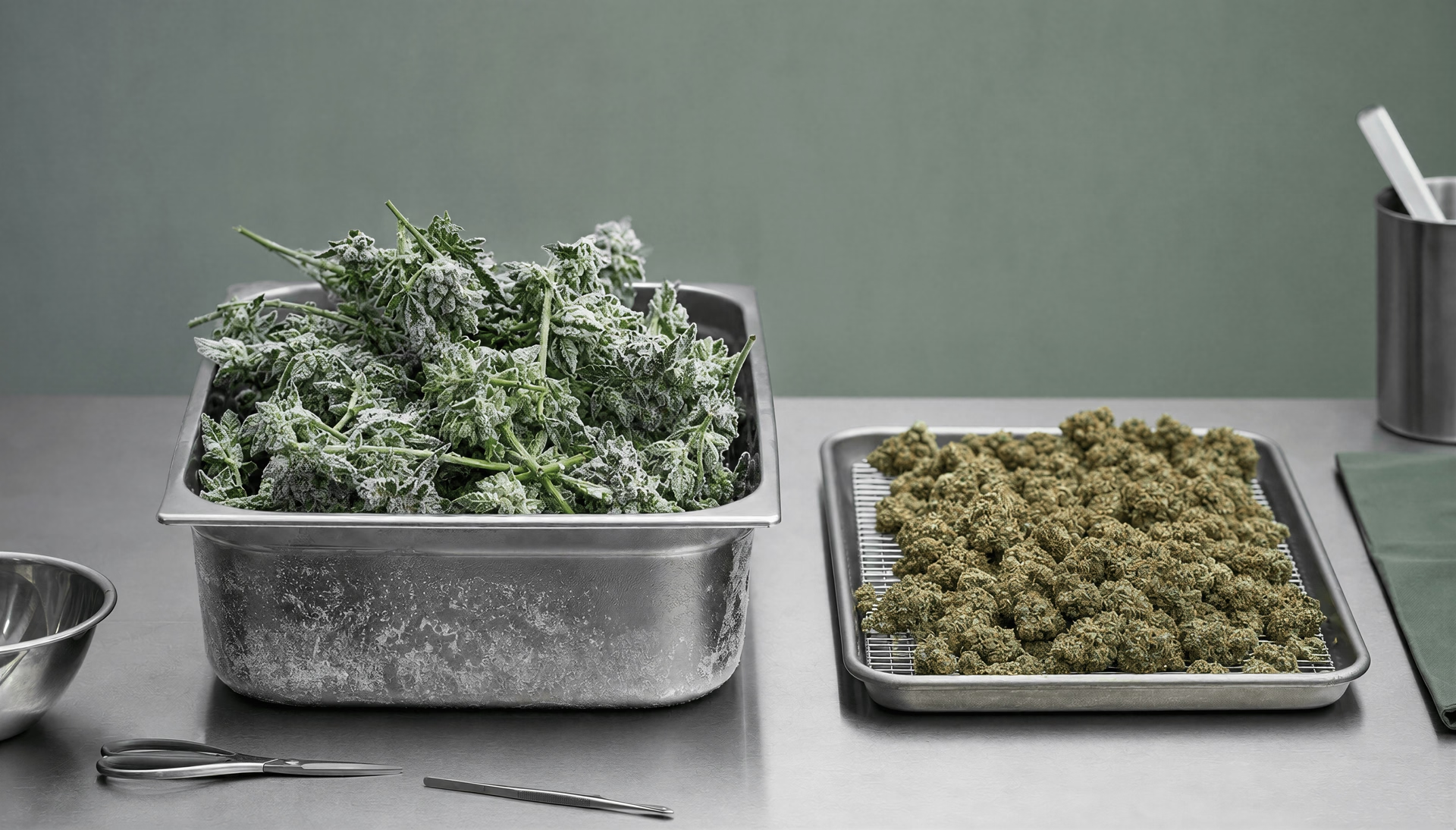
Steam distillation, hydrocarbon extraction, ethanol extraction, and live-resin workflows
Steam distillation is the classical route for terpene isolation from aromatic plants, especially citrus and herbs. It works by co-distilling volatile compounds with water vapor at temperatures lower than the normal boiling point of the terpene alone. For limonene, steam distillation can recover a recognizable citrus fraction, but cannabis is not citrus peel. Cannabis flowers contain far less limonene than sweet orange oil, where limonene often exceeds 90% of the oil composition according to a 2021 NCBI Bookshelf review on d-limonene. In cannabis, steam distillation is better understood as a terpene-stripping method than a faithful representation of the whole flower profile. Heat exposure, time in the still, and contact with water can shift ratios and flatten the most delicate top notes.
Hydrocarbon extraction, commonly with butane, propane, or blends, is often better at preserving native volatile profiles because it can be run at low temperatures and for short contact times. That matters for limonene. Cold solvent, rapid extraction, and gentle solvent recovery reduce thermal stress and lower the chance that monoterpenes evaporate off before they are captured. Still, hydrocarbon extracts are not automatically terpene-preserving. Warm recovery baths, prolonged vacuum purging, and aggressive post-processing can strip limonene fast.
Ethanol extraction is efficient for cannabinoids and broad-spectrum plant solubles, but it is often harsher on monoterpene retention unless the workflow is carefully chilled. Room-temperature or warm ethanol extraction can dissolve and then later lose volatiles during solvent removal. Rotary evaporation and falling-film recovery are useful tools, yet they introduce a simple tradeoff: the longer the extract sits under heat and vacuum, the less confidence there is that early measured limonene levels remain intact. Cryogenic ethanol reduces some of that damage by lowering extraction temperatures and limiting extraction of undesired waxes and chlorophyll, but the solvent-removal step still matters.
Live-resin workflows exist largely because processors learned this lesson the hard way. Fresh-frozen material skips conventional drying and curing, both of which are major loss points for monoterpenes. If the flowers are frozen quickly after harvest and kept cold through extraction, more of the original volatile fraction can survive into the final concentrate. “Live” does not mean chemically untouched; it means fewer opportunities for limonene to evaporate or oxidize before extraction. Cryogenic handling helps for the same reason. Lower temperature suppresses vapor loss, slows diffusion into headspace, and reduces oxidation kinetics. In practical terms, live resin and cold-chain extraction usually preserve more limonene than dried-flower extraction followed by warm processing. That is not marketing fluff. It is basic volatility control.
Volatility loss during drying, curing, and post-processing
Most terpene loss happens before the consumer ever opens the package.
Drying is the first major choke point. As harvested flowers lose water, they also lose the most volatile aroma compounds. Limonene is especially exposed because it sits in the monoterpene class, which is generally more volatile than sesquiterpenes such as beta-caryophyllene. Faster, hotter drying can protect against microbial growth, but it tends to cost aroma. Slower drying at lower temperature can retain more terpene character, though the balance is delicate because excessive time also increases oxygen exposure.
Curing is often treated as flavor development, and it can be, but it is also controlled attrition. Opening containers repeatedly, storing with excess headspace, and keeping material warm accelerate terpene redistribution and loss. Limonene can migrate from trichome-rich flower to the package headspace and then out of the system whenever the container is opened. A flower that tested high in limonene after cure may not present the same profile weeks later.
Post-processing introduces another set of losses. Milling increases surface area. Decarboxylation adds heat. Vacuum ovens can remove residual solvents but can also pull off monoterpenes if the process is too warm or too long. Even seemingly minor steps such as homogenization, cartridge filling, or repeated transfer between vessels can vent aroma compounds. That is why a certificate of analysis is only a time-stamped measurement, not a guarantee of what is present at consumption. Labs commonly measure limonene by GC-FID or GC-MS, with HS-SPME often used for volatile profiling; those are appropriate methods, but they capture the sample as submitted, not the dynamic changes that continue afterward.
Oxidation chemistry and packaging implications
Evaporation is only half the story. Limonene also changes chemically.
Exposure to oxygen, light, and heat drives oxidation to compounds including carveol, carvone, and limonene oxides, as summarized in PubChem and food chemistry literature. Those products do not just reduce “fresh citrus” aroma. They change the sensory profile outright, often toward flatter, harsher, or more oxidized notes. Some oxidized terpenes are also of interest because oxidation products of fragrance terpenes can have greater sensitization potential than the parent compound, a point well established in fragrance science even if cannabis-specific inhalation implications remain underdefined.
Packaging therefore matters more than many labels imply. Oxygen in headspace feeds oxidation. Light, especially UV and high-energy visible light, accelerates degradation. Heat speeds both oxidation and evaporation. Polymer packaging can create another problem: sorption and permeability. Some plastics allow oxygen ingress more readily than glass or metal-lined systems, and some can absorb or transmit volatile terpenes over time. A container can look sealed and still be a poor terpene barrier.
Packaging priorities for limonene retention
- Minimize headspace Less oxygen above the product slows oxidation.
- Limit oxygen exposure Repeated opening and leaky seals accelerate loss and chemical change.
- Use light-protective packaging Light can speed degradation.
- Keep temperatures low and stable Heat increases both evaporation and oxidation.
- Choose strong barriers Glass often outperforms many flexible polymers for aroma retention when the closure is good.
The practical hierarchy is straightforward. Minimize headspace. Limit oxygen exposure. Use light-protective packaging. Keep temperatures low and stable. Avoid repeated opening. Glass generally outperforms many flexible polymers for aroma retention, though closures still matter because a weak seal defeats a good jar. Concentrates and flower both face these issues, but concentrates with high exposed surface area or frequent warming can drift quickly.
None of this means limonene is unusually fragile compared with every other terpene. It means it is volatile enough, oxidizable enough, and often discussed loosely enough that storage reality gets ignored. The chemistry is solid. The label is temporary.
Clinical research overview beyond mood
Outside the mood and aromatherapy literature, human research on limonene exists, but it is thin, formulation-specific, and often far removed from the way people encounter limonene in cannabis flower. That distinction matters. d-Limonene is a defined monocyclic monoterpene, usually studied as an isolated oral agent, a citrus oil component, or a pharmaceutical-style preparation. Cannabis exposes people to a shifting terpene mixture in which limonene is usually one volatile component among many, often alongside myrcene and beta-caryophyllene, and often altered by curing, storage, and heat before use. The chemistry is clear. The clinical relevance is not.
Early work in gastroesophageal reflux and digestive use
One of the older non-psychiatric areas of limonene interest was gastroesophageal reflux, especially in oral softgel preparations derived from citrus oils. Small clinical reports and practitioner-oriented summaries have described symptom improvement in people with heartburn or reflux after oral d-limonene dosing, typically on an intermittent schedule rather than daily high-dose use. The proposed mechanism was not classic acid suppression. Instead, authors speculated about gastric coating effects, support for normal peristalsis, or modulation of upper GI function. Those ideas were always plausible at best, not firmly established.
This line of work never matured into a large, modern evidence base. The studies most often cited were small, lightly controlled, and not designed to answer the question cannabis commentary usually tries to force onto them: does limonene in a cannabis product treat digestive disease? They do not show that. They evaluated oral limonene-containing formulations intended to reach the GI tract directly. That is a very different exposure from inhaling vaporized or smoked flower, where limonene is partly lost to volatility, partly transformed by heat, and not delivered in the same way to the esophagus or stomach.
There is also a matrix problem. Citrus preparations can contain limonene at extremely high proportions; sweet orange oil often exceeds 90% limonene by composition in reviews of citrus essential oils. Cannabis is not that kind of matrix. Even so-called limonene-forward flower contains terpene levels that are low by mass compared with cannabinoids, and monoterpenes are the most labile fraction. Any attempt to borrow digestive claims from oral citrus limonene literature and paste them onto cannabis is not evidence-based.
The safety framing is often mishandled too. The FDA affirms d-limonene as Generally Recognized as Safe for use as a flavoring substance under 21 CFR 182.60. That supports food-use safety at relevant doses. It does not establish efficacy for reflux, and it does not settle inhalation safety. Those are separate questions.
Oncology interest and chemoprevention literature
Cancer prevention and oncology supportive care generated more scientific interest than reflux did, though the literature is still easy to overstate. Starting in the 1990s, limonene and its metabolite perillyl alcohol were investigated because preclinical studies suggested effects on tumor development, cell signaling, apoptosis, and prenylation-related pathways. Rodent models were encouraging enough to justify early human work, especially in breast cancer chemoprevention and advanced solid tumors.
The key phrase is early human work. Phase I and small pilot studies examined oral d-limonene at gram-level doses, not trace terpene exposure. Researchers looked at pharmacokinetics, tolerability, and tissue distribution, and some papers reported biologic signals that kept interest alive. For example, small trials in women with breast cancer assessed whether limonene accumulated in breast tissue and whether short pre-surgical dosing changed biomarkers. Those studies were scientifically interesting because they asked a concrete translational question: can an orally administered terpene reach a plausible target tissue? They did not prove clinical benefit.
That distinction separates serious oncology literature from internet folklore. Chemoprevention research often begins with compelling mechanisms and disappointing later-stage translation. Limonene is not unique in that respect. Reviews over the years have consistently described anticancer findings as promising but largely preclinical, with human evidence limited by sample size, short duration, and the absence of definitive efficacy trials. Supportive-care applications, such as nausea or symptom relief from citrus aromas, belong to another category again and should not be conflated with antitumor effects.
The older cancer literature also depended on specific formulations and substantial oral dosing. It was not studying cannabis chemovars with a citrus aroma. A person inhaling flower is not reproducing phase I limonene exposure. Not remotely.
Why none of this translates directly to cannabis health claims
This is where most popular writing goes wrong. It sees limonene studied somewhere in humans and assumes limonene-containing cannabis inherits the same evidence. That leap is unjustified.
First, dose. Clinical limonene studies outside mood have generally used isolated oral limonene or citrus-derived preparations in measured amounts. Cannabis flower contains much less limonene by mass, and the amount that reaches the user depends on harvest timing, drying, curing, storage temperature, packaging, and the consumption method. Limonene oxidizes with air, light, and heat, producing compounds such as carvone, carveol, and limonene oxides. So even the label claim may not reflect what is present by the time a product is used.
Second, route. Oral limonene for reflux or oncology research is not equivalent to inhaled cannabis aerosol. Pharmacokinetics change. Tissue exposure changes. Metabolism changes.
Third, mixture. Cannabis contains more than 200 identified terpenes, with only a smaller subset commonly abundant, and limonene rarely appears alone. The 2020 Frontiers in Pharmacology review on cannabis terpenes made the central point plainly: human evidence for terpene-driven entourage effects remains limited, and many claims are inferential rather than clinical. Russo and other terpene-focused authors have argued that terpene pharmacology is plausible and worth studying. Plausible is not proven.
So the fair reading is restrained. Limonene has real clinical interest beyond mood, especially in older reflux reports and cancer chemoprevention research. Some of that work is serious and biologically informed. None of it validates broad health claims for limonene-rich cannabis. If anything, it shows the opposite lesson: once route, dose, formulation, and post-harvest instability are taken seriously, cannabis limonene becomes harder to make claims about, not easier.
Terpene testing methods and how to read a limonene lab result
A limonene number on a certificate of analysis looks simple. It rarely is. Because limonene is a volatile monoterpene, small decisions in sampling, storage, extraction, instrument setup, and reporting format can move the result enough to change how a batch is described. Genetics matter, yes. So do curing, packaging, and transport temperature. If a label says “limonene dominant,” the lab method behind that claim matters.
How to read a limonene COA more carefully
- Check the method GC-FID, GC-MS, and headspace methods can produce different strengths and limitations.
- Check the units 1% w/w equals 10 mg/g, so small percentages can still be analytically meaningful.
- Check sample age and handling Volatile monoterpenes can drop before testing if storage or shipping was poor.
- Check the rest of the profile Limonene alone does not define the full chemotype or a guaranteed effect.
- Check batch variability Differences between lots may reflect biology, drying, storage, or testing details.
Limonene is chemically easy to identify compared with many plant volatiles: it is a common monocyclic monoterpene, formula C10H16, and its chromatography behavior is well characterized in flavor, fragrance, and cannabis testing literature. That does not mean every limonene result is equally reliable. A careful reader should treat a terpene panel as an analytical snapshot, not a timeless fingerprint.

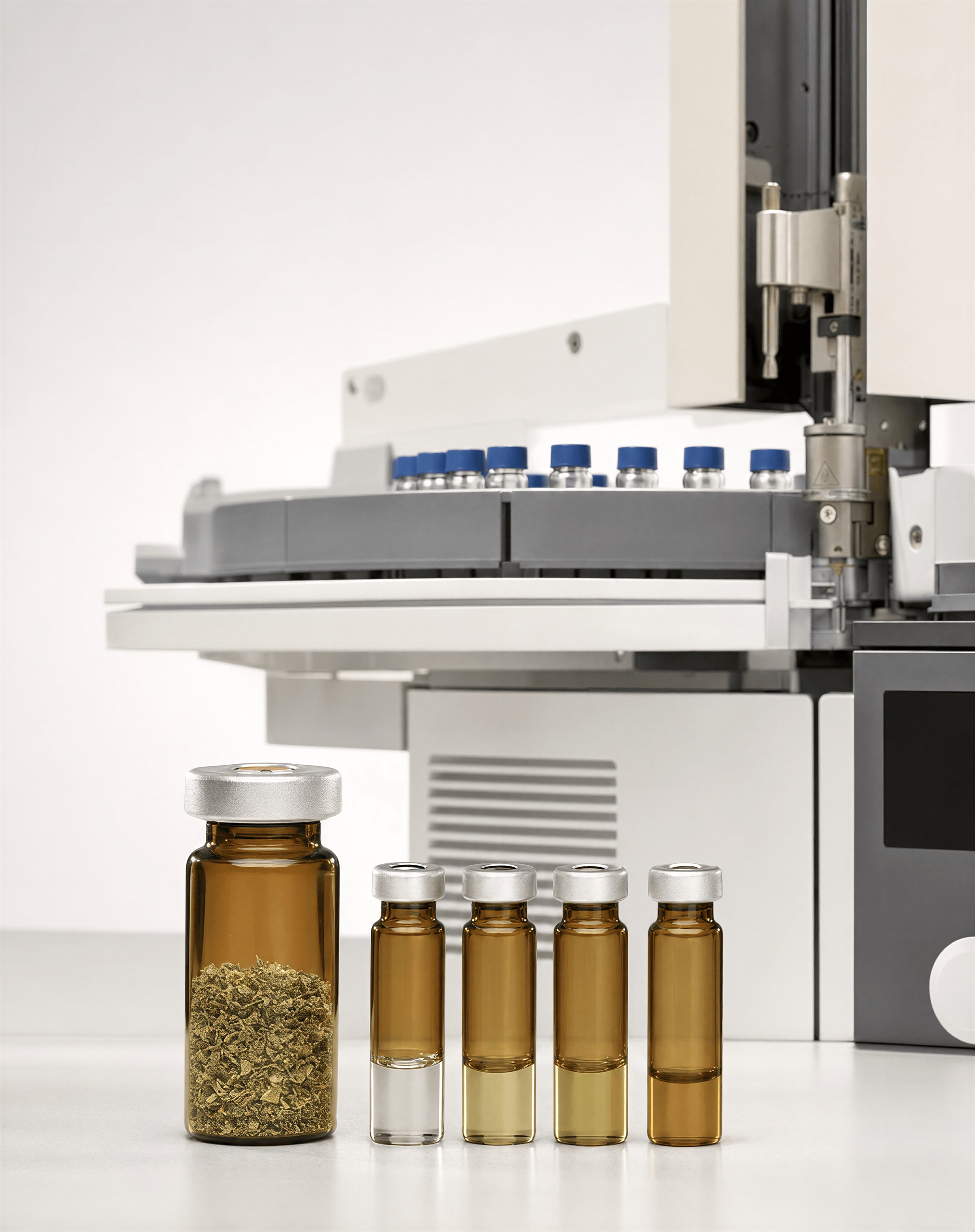
GC-MS, GC-FID, and headspace methods
Gas chromatography is the standard platform for limonene because limonene is volatile and thermally amenable to GC separation. High-performance liquid chromatography is not the default choice here; HPLC is excellent for cannabinoids but not the usual first-line method for terpene profiling. For cannabis flower, extracts, and concentrates, the common workhorses are GC-FID and GC-MS, often with headspace variants for volatile sampling.
GC-FID, or gas chromatography with flame ionization detection, is widely used for routine quantification. It separates the terpene mixture in a capillary column, then burns the eluting compounds in a hydrogen flame and measures the ions produced. For hydrocarbons like limonene, FID is sensitive, linear across a useful range, and relatively straightforward to run. Many production labs favor it because it is efficient and cost-effective when the target list is known.
GC-MS adds mass spectrometric confirmation. After chromatographic separation, the instrument records a mass spectrum for each peak, which can be matched against reference libraries and authentic standards. That extra layer matters when peaks are close together or when oxidation products and structurally similar terpenes are present. Limonene can usually be assigned cleanly, but a serious lab does not rely on retention time alone if the matrix is messy. Retention time plus mass-spectrum matching is stronger evidence than either by itself.
HS-SPME Headspace solid-phase microextraction, a sampling method that captures volatile compounds from the air above a sample before GC analysis.
Headspace methods, especially headspace solid-phase microextraction, are often used for volatile profiling because they sample the vapor above the material instead of forcing the whole matrix into solvent. HS-SPME is useful for flower and some concentrates because it can reduce matrix interference and better reflect aroma-active volatiles. But it is also method-sensitive. Fiber choice, equilibration time, temperature, and salt addition can all change the terpene profile recovered. Two labs can both say “headspace terpene test” and still generate meaningfully different relative abundances if their methods are not harmonized.
Calibration standards are the quiet backbone of a credible result. A lab should quantify limonene against certified reference material, ideally with a multi-point calibration curve that brackets expected concentrations. Single-point calibration is weaker. Internal standards can improve precision by correcting for injection variability and sample preparation losses. Without proper calibration, a limonene peak is just a peak.
Limits of detection and limits of quantitation matter too. If a COA reports limonene as “ND,” that usually means “not detected above this method’s detection threshold,” not “completely absent.” One lab’s limit of quantitation may be 0.01 mg/g and another’s may be 0.10 mg/g. Those are not interchangeable. A low-level limonene sample might appear absent on one report and measurable on another.
Sample handling, decarboxylation artifacts, and reporting units
Most terpene errors happen before the instrument ever sees the sample. Limonene is one of the more volatile fractions in cannabis, and monoterpenes are the first to drift with heat, airflow, repeated container opening, and long storage. If flower is ground aggressively, left uncapped, or shipped warm, limonene can drop before testing. A batch can test “less citrus” because of handling, not because the plant never made the terpene.
Representative sampling is harder than many people assume. Terpenes are not distributed perfectly evenly across a jar, bag, or lot. Top colas, smalls, and material near packaging seams may differ. A single grab sample can misstate the lot. Composite sampling improves this, but not every lab or producer uses it.
Decarboxylation is another trap. Terpene analysis should not be confused with cannabinoid potency workflows that may involve heat or injector conditions chosen for acidic-to-neutral conversion. Limonene itself does not “decarboxylate,” since it has no carboxyl group, but terpene profiles can still be distorted by heat exposure during prep. Elevated temperatures can drive evaporation, oxidation, or rearrangement. Limonene oxidation products include carveol, carvone, and limonene oxides, especially with air, light, and heat exposure, as reflected in chemical reference sources such as PubChem. If sample prep is harsh, the result can understate native limonene and overstate downstream products.
That is why storage conditions should be specified. Amber vials, minimal headspace, cold storage, rapid analysis, and limited freeze-thaw cycles all help preserve the original volatile profile. For concentrates, dilution solvent purity also matters. Dirty solvent blanks or terpene carryover from prior injections can contaminate low-level samples.
Then there is the reporting format. Labs commonly report terpenes as percent by weight (% w/w) or milligrams per gram (mg/g). These units are directly convertible: 1% w/w equals 10 mg/g. So a flower sample with 0.35% limonene contains about 3.5 mg limonene per gram of product. A concentrate with 2.0% limonene contains about 20 mg/g.
That conversion sounds trivial, but readers often misread it. Percent by weight can make terpene levels look small even when aroma impact is large. Cannabis usually contains much less terpene by mass than cannabinoid. That does not mean the terpene is analytically unimportant. It means smell and flavor-active compounds work at lower mass fractions.
Interpreting percentages, milligrams per gram, and batch variability
Start with the actual limonene value, then read the context around it. A COA that lists limonene at 0.20% w/w is not saying limonene is absent; it is saying the sample contains about 2 mg/g. Whether that is “high” depends on the product category. In flower, limonene often sits in the tenths-of-a-percent range. In terpene-preserved extracts or terpene-added formulations, it can be much higher.
Next, check whether the lab lists total terpene content. Limonene at 0.4% means something different in a flower with 1.0% total terpene than in one with 3.0% total terpene. Relative dominance matters. So does company. Limonene-heavy chemotypes often also contain beta-caryophyllene and myrcene, which means a single-terpene interpretation is shaky from the start.
Look for method transparency. Does the COA say GC-FID, GC-MS, or HS-SPME-GC-MS? Does it identify the analyte with a retention time and, for MS methods, a spectral match or confirmation standard? A serious report may not print the raw chromatogram on the front page, but the underlying file should exist. If limonene is reported at trace levels near the method’s quantitation limit, confirmation becomes more important.
Batch variability is normal. Plants are biological systems, and post-harvest drift is real. If one lot tests at 0.55% limonene and the next at 0.31%, that does not automatically mean bad testing. It may reflect harvest timing, drying speed, storage duration, or packaging permeability. But large swings should prompt questions. Was the same method used? The same moisture basis? The same sample type? Was one test run fresh and another after weeks in distribution?
The smartest way to read a limonene result is to combine the number with method quality and age of sample. A fresh, well-handled batch tested by validated GC with proper calibration tells you something real. A stale sample with vague method language tells you much less.
A limonene value on a terpene report proves a predictable human mood or anxiety effect. Limited evidence
One final caution: a limonene value is an aroma chemistry measurement, not proof of a human effect. Human mood and anxiety claims tied to “limonene-rich cannabis” still outrun direct clinical evidence, despite broader aromatherapy literature and small studies such as Komori et al. (1995). Read the terpene panel for what it is. Chemistry first. Story second.
Consumer use considerations and legal-scientific cautions
What a limonene-rich label can and cannot tell you
A “limonene-rich” cannabis label tells you something real, but not nearly as much as marketing often implies. It usually means the sample tested had limonene among its more abundant measured terpenes, often enough to support a citrus-forward aroma profile. That is a chemistry statement first. It is not a clinical prediction.
This distinction matters because limonene is chemically well characterized and pharmacologically overclaimed. Labs commonly measure it by GC-FID or GC-MS, with HS-SPME often used for volatile profiling; that part is standard analytical science. HPLC is not the usual platform for terpene work because limonene is volatile. So if a certificate of analysis reports limonene, the number is not meaningless. But it is still a snapshot of one tested batch under one storage history.
Storage history matters a lot. Monoterpenes are the most volatile fraction in cannabis, and limonene oxidizes with exposure to air, heat, and light. PubChem lists oxidation products such as carvone, carveol, and limonene oxides. That means a label may describe what the material contained when it was tested, while the jar in hand may smell flatter or different weeks later. In cannabis, limonene content is partly genetic and partly post-harvest fate.
A terpene panel also cannot isolate limonene from the rest of the chemotype. Limonene-dominant profiles often appear alongside beta-caryophyllene and myrcene rather than as a pure single-terpene expression. Since cannabinoids, minor terpenes, dose, route, and individual sensitivity all shape effect, assigning one predictable outcome to limonene is not justified. Ethan Russo and others have argued for possible terpene contribution to cannabis effects, yet the 2020 Frontiers in Pharmacology review was clear that evidence for terpene-driven entourage effects in humans remains limited. That is the right scientific baseline.
One more caution: FDA GRAS status is frequently misused in cannabis discussion. d-Limonene is affirmed as Generally Recognized as Safe for use as a flavoring substance under 21 CFR 182.60, with FEMA No. 2633 and CAS 5989-27-5. That applies to food-use exposure in specified contexts. It does not establish safety for inhalation from vapor, smoke, or thermally altered aerosol.
When aroma preference is more reliable than effect marketing
For many people, aroma is a better guide than effect slogans. Not because smell predicts a fixed psychoactive outcome, but because smell reflects the volatile chemistry actually present at the time of use. If a sample smells clearly citrusy, limonene may well be part of the profile. If the label says “high limonene” but the aroma is dull, woody, or oxidized, that should raise questions about age, packaging, or terpene loss.
Claims such as “limonene means uplifting” or “limonene means anti-anxiety” oversimplify the evidence. There is human research adjacent to this idea, but it is not strain-specific cannabis proof. Komori et al. (1995) reported that citrus fragrance exposure in depressed patients was associated with a reduction in antidepressant dosage requirements, from 14 cases to 4 in their sample after aromatherapy exposure. Interesting, yes. Definitive for limonene-rich cannabis, no. A 2024 systematic review and meta-analysis on essential oils and anxiety in adults found an overall anxiolytic effect, but with major heterogeneity across oils, routes of administration, and study quality. Citrus oils contribute to that literature, yet they are not equivalent to inhaled cannabis chemotypes.
Aroma preference can therefore be more honest than effect branding. Some users do report brighter, less sedating experiences from citrus-forward cannabis. That pattern is plausible. It is also non-deterministic. Sweet orange oil often contains 90% or more limonene, which is why citrus rather than cannabis is the reference matrix for limonene chemistry. Cannabis contains limonene in much smaller proportions by mass, mixed with many other constituents. Any resulting experience is shaped by the whole preparation, not one terpene in isolation.
The practical reading is simple: treat terpene labels as descriptive, not predictive. If aroma and the label agree, confidence in the profile goes up. If they conflict, skepticism is reasonable.
Medical and legal cautions
Nothing in the limonene literature justifies presenting limonene-rich cannabis as a treatment for anxiety, depression, infection, reflux, or cancer. There are relevant lines of research, but they sit at very different evidence levels. Antimicrobial and antifungal findings summarized in Molecules in 2013 are mostly in vitro and often involve concentrations or delivery systems unlike real-world cannabis exposure. Interest in limonene for gastroesophageal reflux and oncology supportive care exists, but much of the cancer-related literature remains preclinical or early phase. Strong therapeutic claims outrun the data.
Medical caution should be plain. People with anxiety disorders, bipolar disorder, psychotic disorders, cardiovascular disease, respiratory disease, pregnancy, breastfeeding status, or significant drug treatment should not treat terpene labels as a substitute for clinician guidance. Cannabis effects can vary sharply by THC dose, CBD content, route, and personal response. A citrus aroma does not make a THC-rich product automatically calming.
Legal caution matters too. Cannabis legality depends on jurisdiction, product category, THC thresholds, and intended use. Terpene content does not change controlled-substance status. Nor does hemp labeling automatically resolve state or national restrictions. Readers should rely on current local law and on licensed medical or legal professionals where relevant, not on packaging language or internet shorthand.
The disciplined interpretation is this: limonene-rich cannabis may correlate with a citrus-forward smell, and some people report a brighter or less sedating experience. Those reports are real as user observations. They are not deterministic, not diagnosis-specific, and not a replacement for evidence. Read terpene labels closely, account for oxidation and age, and stay skeptical of any claim that turns one volatile molecule into a guaranteed outcome.
References
- [1] Citrus fragrance in the treatment of patients with depressive disorders. Psychiatry and Clinical Neurosciences, 1995. https://pubmed.ncbi.nlm.nih.gov/8533790/
- [2] Anxiolytic- and antidepressant-like effects of inhaled limonene in mice. Pharmacology Biochemistry and Behavior, 2013. https://doi.org/10.1016/j.pbb.2013.04.004
- [3] Citrus fragrance in the treatment of patients with depressive disorders. Psychiatry and Clinical Neurosciences, 1995. https://pubmed.ncbi.nlm.nih.gov/8533790/