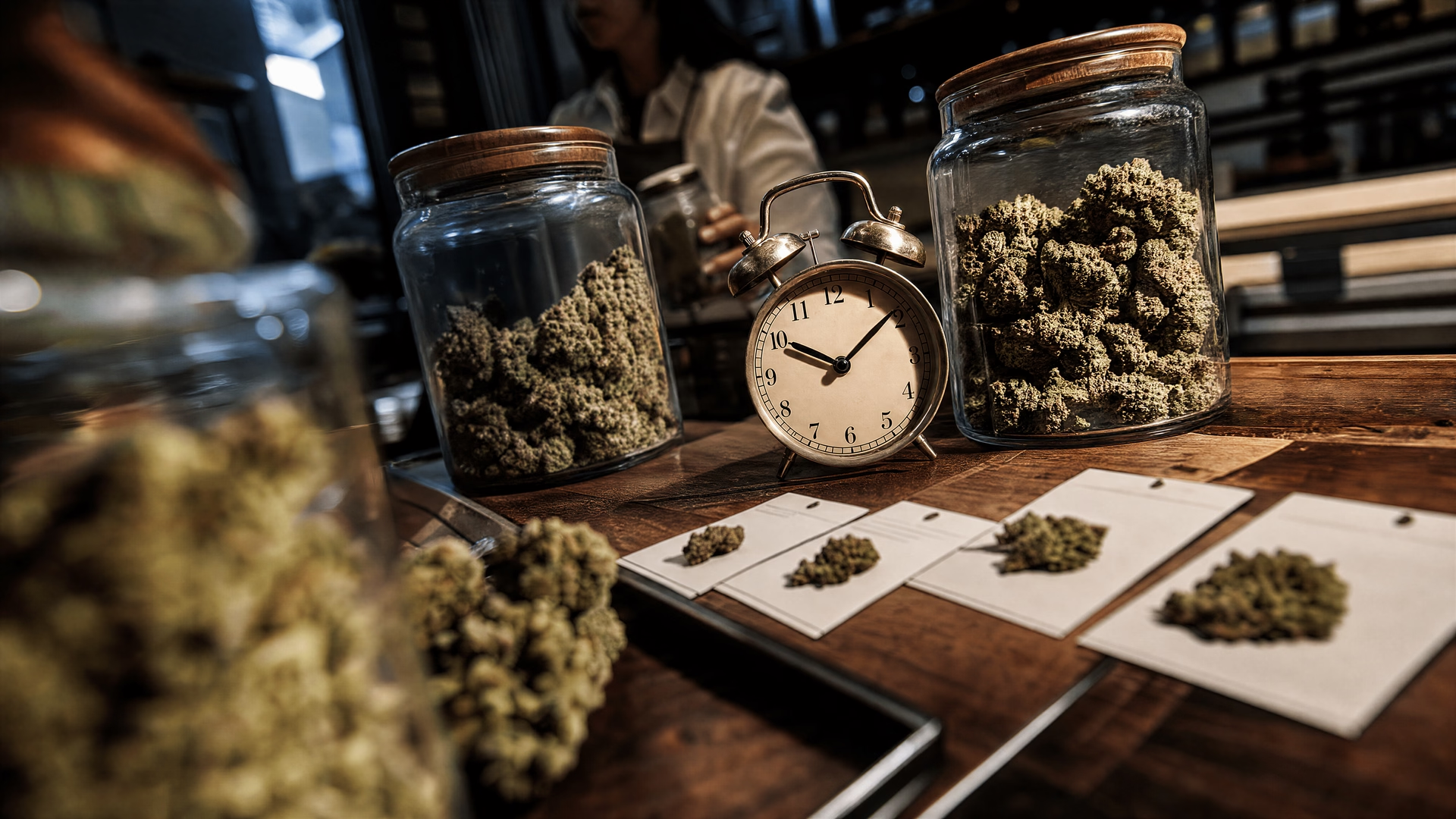














Why linalool’s reputation outran the evidence
How a biological signal became a market story
Linalool earned its calming reputation the way many cannabis ideas do: a real biological signal got translated into a much simpler market story.
What the preclinical literature supports
- Biological plausibility
- Linalool is plausible as an anxiolytic or sedating terpene.
- Main evidence type
- Most support comes from preclinical and animal work rather than cannabis-specific human trials.
- Key limitation
- Mechanistic plausibility does not establish clinically meaningful effects from typical flower exposure.
What the preclinical literature actually supports
The corrective is straightforward. Linalool is biologically plausible as an anxiolytic or sedating terpene, and the preclinical literature is large enough to take that plausibility seriously.
The strongest human evidence for linalool-linked calming effects comes from standardized lavender preparations rather than cannabis flower. Limited evidence
Why the strongest human evidence points away from cannabis flower
But the strongest human evidence does not come from cannabis flower. It comes from standardized lavender preparations, especially oral lavender oil products studied under controlled conditions. That distinction matters because smell, inhalation, ingestion, and topical exposure are not interchangeable routes, and they do not imply the same dose, pharmacokinetics, or clinical effect.
What linalool is chemically, and why cannabis usually contains less of it than people assume
Monoterpene alcohol A terpene built from two isoprene units that also contains an alcohol group (-OH). In the article’s context, that helps explain why linalool is volatile, aromatic, and pharmacologically different from cannabinoids.
Linalool’s molecular identity: a monoterpene alcohol with a hydroxyl group
Linalool is a terpene alcohol: specifically, an acyclic monoterpene alcohol with the formula C<sub>10</sub>H<sub>18</sub>O.
A widely distributed botanical compound: why lavender is not the only source
It is widely distributed across aromatic plants, which is one reason people often overgeneralize from lavender to cannabis. Lavender contains it. So do coriander, basil, some citrus species, rosewood, and many other botanicals.
Cannabis as a minor linalool source: present is not the same as potent
Cannabis contains it too, but usually in much smaller proportions than the popular terpene lore suggests. That distinction matters, because “present” is not the same as “present at a dose that does much.” 
Mechanism: what GABA modulation means here, and what it does not
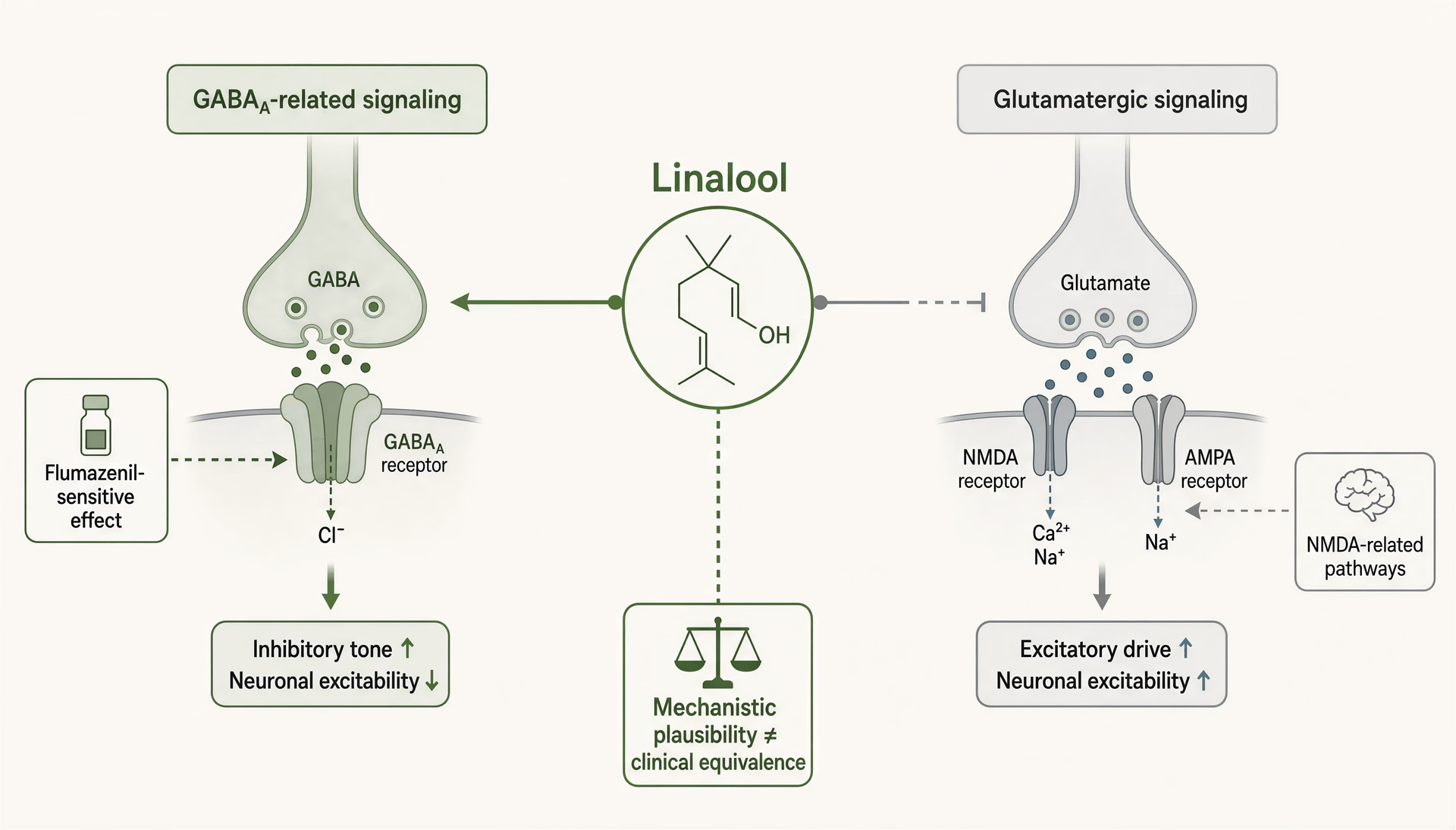
The mechanistic case for linalool is real, but the simplified internet version is not. Preclinical work supports the idea that linalool can produce anxiolytic-like, sedative, anticonvulsant, and analgesic effects under experimental conditions. The problem is the leap from that literature to the claim that linalool-rich cannabis acts like a clinically meaningful GABAergic sedative in humans. That leap outruns the data. What the literature actually shows is narrower: linalool appears to engage inhibitory signaling in some animal models, with GABA_A involvement being one plausible pathway among several, and with glutamatergic and membrane-level effects also repeatedly implicated.
GABA_A receptor A ligand-gated chloride channel involved in inhibitory signaling in the central nervous system. A finding that depends on GABA_A-related pathways does not by itself prove direct benzodiazepine-like binding by the test compound.
Preclinical evidence for GABA_A involvement[1] Inhaled linalool-induced anxiolytic effect in mice. Vivian T. Linck, Elisaldo A. da Silva, Maribel Figueiró, et al.. Phytomedicine, 2009.
The anchor citation here is Linck et al. (2009), who examined inhaled linalool in mice and reported anxiolytic-like effects in standard behavioral assays including the elevated plus maze and light/dark box. Those are not trivial findings. These models have predictive value for compounds that alter anxiety-like behavior, and inhalation matters because it is closer to how terpene claims are often framed. In that study, linalool exposure shifted behavior in the direction expected for an anxiolytic agent.
But “GABA_A involvement” is not the same thing as “direct benzodiazepine-like agonism,” and that distinction matters. GABA_A receptors are ligand-gated chloride channels with multiple modulatory sites, and many CNS-active compounds can influence the system indirectly. A behavioral effect that is sensitive to GABA_A antagonism or modulation does not by itself establish where the compound binds, whether it binds at all, or whether the effect depends on altered network activity upstream of the receptor.
That is where a lot of popular writing goes wrong. It takes an animal behavioral result, attaches the GABA label, and implies a settled receptor pharmacology that the literature does not actually provide. The better reading is more restrained. Linalool has been associated with GABA_A-mediated anxiolytic-like effects in preclinical systems. Associated with, not proven as a strong direct modulator in humans. Even in animal work, outcomes vary with dose, exposure route, species, and assay.
The broader preclinical literature, including work discussed by Elisabetsky and later reviews in Molecules, Phytomedicine, and related journals, points in the same general direction: CNS depressant-like actions are plausible. Sedation and anticonvulsant effects have been described. Yet the mechanistic map remains incomplete. Many experiments use purified linalool, essential oils rich in linalool, injected preparations, or exposure paradigms that do not map neatly onto the amount of linalool someone would absorb from cannabis flower. Mechanistic plausibility is not the same as demonstrated clinical relevance.
A flumazenil-sensitive linalool effect suggests involvement of benzodiazepine-sensitive GABA_A-linked mechanisms, but does not prove strong direct binding at the classical benzodiazepine site in humans. Preliminary evidence
Flumazenil blockade and why that finding matters
The flumazenil result is the strongest reason people keep invoking GABA_A in discussions of linalool. Flumazenil is a benzodiazepine-site antagonist, or more precisely a competitive ligand at the benzodiazepine recognition site on the GABA_A receptor complex. When a linalool-induced behavioral effect is attenuated by flumazenil, that tells you something important: the observed phenotype may depend, directly or indirectly, on signaling that converges on benzodiazepine-sensitive GABA_A mechanisms.
That matters because it moves the claim beyond vague “relaxing terpene” language. A flumazenil-sensitive effect suggests pharmacological structure. It implies that linalool is not just causing nonspecific motor suppression or olfactory distraction in the model. There may be a real interaction with inhibitory neurotransmission.
Still, this finding has to be read carefully. Flumazenil blockade does not prove that linalool is binding strongly at the classical benzodiazepine site. It also does not quantify potency, efficacy, or human relevance. Behavioral pharmacology is inferential. If compound A’s effect is blocked by compound B, the most you can say is that the blocked effect depends on pathways accessible to B’s mechanism. There are several ways to reach that endpoint. Network-level modulation, indirect enhancement of endogenous GABAergic tone, altered excitatory drive, or state-dependent sensory effects could all contribute.
A second issue is dose translation. In rodent studies, inhaled or administered linalool may achieve brain exposures that are materially higher than what is likely from smoking or vaporizing cannabis flower where linalool is often a minor terpene. So the flumazenil story is mechanistically interesting, but it should not be inflated into proof that a linalool-containing chemovar will behave like a low-dose benzodiazepine in humans. That is not established.
Glutamate, NMDA, ion channels, and broader CNS effects
If you stop at GABA, you miss half the picture. Linalool has also been linked to reduced excitatory neurotransmission, especially within glutamatergic systems. Older preclinical work reported inhibition of glutamate binding and anticonvulsant actions consistent with dampened excitatory signaling. Some authors have discussed NMDA-related effects, though this literature is less tidy than the popular summaries make it sound. The mechanistic point is not that linalool is a clean NMDA antagonist. It is that the compound seems capable of shifting the excitation-inhibition balance through more than one route.
That is pharmacologically plausible. Sedation, anxiolysis, anticonvulsant activity, and analgesia often emerge not from one single receptor target but from modest effects spread across inhibitory and excitatory systems. Weak GABAergic facilitation plus reduced glutamatergic drive plus altered membrane excitability can produce a meaningful phenotype in an animal without any one effect being dramatic in isolation.
Ion channel hypotheses fit here too. Monoterpenes are small, lipophilic molecules that can alter membrane properties and channel function in ways that are difficult to reduce to one canonical receptor story. Effects on voltage-gated sodium channels, calcium influx, TRP channels, and membrane fluidity have all been discussed in terpene pharmacology more broadly. For linalool specifically, the literature supports broader CNS depressant activity more than it supports a single-site explanation. That makes the biology more interesting. It also makes simplistic branding worse.
And route matters. Oral lavender oil preparations that showed anxiolytic benefit in humans, such as the Silexan trials by Kasper and by Woelk and Schläfke, involve 80 mg/day standardized oral dosing over weeks. That produces systemic exposure after gastrointestinal absorption and first-pass metabolism. Inhaled cannabis linalool is a different pharmacokinetic event entirely, with different peak concentrations, different losses, and likely lower delivered doses.
Why calling linalool “nature’s benzodiazepine” is bad pharmacology
It is catchy. It is also wrong.
Benzodiazepines are a defined drug class with known binding properties, well-characterized structure-activity relationships, measurable receptor pharmacology, and established human dose-response data. Linalool is a terpene alcohol with a much looser and more distributed preclinical profile. Saying both touch GABA_A-related pathways does not make them pharmacological equivalents, just as touching serotonin does not make two compounds interchangeable antidepressants.
The phrase also erases the route problem. The best human anxiolytic evidence attached to lavender comes from standardized oral lavender essential oil preparations, not from cannabis inhalation and not from casual aromatherapy alone. Even that literature does not prove that isolated linalool is the sole active factor, because lavender oil contains multiple constituents and human responses are shaped by expectation, odor perception, and context. A 2023 meta-analysis in Frontiers in Nutrition found benefit signals for lavender preparations across 12 randomized trials with 1,221 participants, but heterogeneity was substantial. That is not the profile of a clean, receptor-defined benzodiazepine analogue.
Most importantly, the label invites bad inference from minor amounts. Cannabis flower often contains total terpene content in the low single-digit percentages by dry weight, and linalool is usually a minority constituent rather than a dominant one. If a flower contains 0.1% to 0.3% linalool, the absolute amount delivered and systemically absorbed after storage losses, heating losses, sidestream loss, and incomplete transfer may be small. Small does not mean biologically inert. It does mean that claims of strong standalone benzodiazepine-like action are not credible without direct human pharmacokinetic and pharmacodynamic evidence.
So the careful position is this: linalool is a biologically active terpene with preclinical evidence consistent with partial engagement of GABA_A-linked anxiolytic pathways, plus effects on glutamatergic signaling and neuronal excitability. That makes it a plausible contributor to calming or sedating effects in some contexts. It does not justify calling it “nature’s benzodiazepine,” and it does not prove that cannabis-derived linalool reaches human brain concentrations sufficient to reproduce the pharmacology people often imply.
Human evidence for anxiolytic and sedative effects
Why the human evidence is frequently misrepresented
The human literature on linalool and “calming” effects is real, but it is often misrepresented by collapsing very different things into one claim: oral lavender oil capsules, inhaled lavender aroma, isolated linalool pharmacology, and terpene exposure from cannabis flower are not interchangeable.
Lavender-derived interventions in humans: the positive signal
If the question is whether humans have shown anxiety reduction from lavender-derived interventions, the answer is yes.
What lavender trial data does not prove about linalool-rich cannabis
If the question is whether this proves that linalool-rich cannabis flower delivers clinically meaningful anxiolysis or sedation, the answer is no. The strongest data come from standardized oral lavender oil products, not from inhaled cannabis terpene exposure and not from aromatherapy studies with weak blinding. ## Animal studies: why they are useful, and why they are easy to overread
The rodent literature on linalool is real, sizeable, and biologically interesting. It is also routinely overstated. In mice and rats, linalool has shown anxiolytic-like, sedative, anticonvulsant, and analgesic effects across multiple paradigms, and those findings matter because they establish that the molecule is not pharmacologically inert. But animal models do not answer the cannabis-specific question most people actually care about: whether the amount of linalool delivered from smoking or vaporizing flower reaches concentrations that predict a meaningful effect in humans.
Elevated plus maze, light-dark box, and locomotor tests
The classic anxiolysis papers use standard behavioral assays: the elevated plus maze, light-dark box, open field, and related locomotor tests. Vivian T. Linck and colleagues, in a 2009 mouse study, reported that inhaled linalool increased open-arm exploration in the elevated plus maze and time spent in the lit compartment of the light-dark box. Those are conventional readouts for reduced anxiety-like behavior. The effect was blocked by flumazenil, which points toward involvement of the benzodiazepine-sensitive site on the GABA_A receptor complex, or at least a pathway functionally linked to it. That is a useful mechanistic clue. It is not proof that linalool is a benzodiazepine analogue.
Other preclinical groups, including work cited by Elisabetsky and later reviews in Molecules, Frontiers, and Phytomedicine, found sedative actions as well: reduced spontaneous locomotion, increased sleep time in pentobarbital models, and dampened exploratory behavior. There are also anticonvulsant findings, with linalool reducing seizure susceptibility in chemically induced seizure models. Analgesic effects appear in formalin, hot plate, writhing, and inflammatory pain assays, suggesting central and peripheral actions that may involve glutamatergic signaling, ion channels, and inflammatory mediators alongside GABA-linked mechanisms.
Still, these paradigms are suggestive, not dispositive. A mouse spending more time in the open arms of a maze may be less anxious. It may also be mildly sedated, less risk-averse for unrelated reasons, or behaviorally altered in a way the assay cannot cleanly parse. Locomotor suppression is especially hard to interpret. Reduced movement can reflect sedation. It can also masquerade as “calming.” Those are not the same thing.
Dose translation problems
This is where many terpene claims start to wobble. Preclinical studies often use exposure levels, routes, or durations that dwarf what cannabis flower is likely to deliver. Rodent papers may administer purified linalool by inhalation in a chamber, by intraperitoneal injection, or at oral doses normalized to body weight that look modest on paper but imply a large human equivalent exposure once translated.
That matters because cannabis flower usually contains linalool as a minor terpene, not a dominant one. Typical total terpene content in commercial flower often falls in roughly the 1–4% dry-weight range, and linalool is often a small fraction of that total. If a flower sample contains 0.1–0.3% linalool by weight, the raw amount present in a typical inhalation session is only in the low milligram or sub-milligram range before accounting for losses. Then come the real-world penalties: storage degradation, incomplete aerosolization, sidestream smoke, pyrolysis, device efficiency, and user technique. The delivered systemic dose may end up far below the exposure used in positive animal experiments.
This does not negate the rodent work. It narrows what can reasonably be inferred from it.
Odor exposure versus systemic exposure in rodents
A second translational problem is that “inhaled linalool” in an animal chamber is not the same thing as inhaled linalool from cannabis smoke or vapor, and neither is equivalent to simply smelling lavender. Rodent inhalation studies often expose animals to a controlled ambient concentration for a defined period. That setup can produce both olfactory effects and systemic absorption through the lungs. Distinguishing those pathways is difficult.
That distinction matters because odor itself changes behavior. A pleasant or familiar smell can alter arousal, autonomic tone, and exploratory patterns independent of substantial bloodstream concentrations. In aromatherapy-style experiments, the sensory cue is part of the intervention. The same confound applies to rodents, though in a different form. If an animal calms down in the presence of an odor, one cannot assume the effect came from a pharmacologically meaningful plasma concentration of linalool rather than from olfactory pathway signaling.
Cannabis use complicates things even more. Linalool’s boiling point is about 198–200 °C, but volatilization in plant material occurs below that, and combustion or high-temperature vaporization can alter what survives to inhalation. Rodent chamber exposure to pure linalool is a cleaner experimental system than smoking flower. It is also a poor imitation of real-world cannabis exposure.
What preclinical work genuinely supports
The fair reading is stronger than “it’s all hype” and weaker than “linalool is a proven calming terpene.” Preclinical work genuinely supports four claims. First, linalool is pharmacologically active in the central nervous system. Second, it produces anxiolytic-like and sedative effects in rodents under certain conditions. Third, anticonvulsant and analgesic signals are repeated enough across models to take seriously. Fourth, GABA_A-linked and glutamatergic mechanisms are plausible, with flumazenil-sensitive findings giving one reason to think GABAergic modulation is involved.
What it does not support is a direct jump from rodent chamber studies to confident claims about cannabis flower in humans. The animal literature justifies mechanistic plausibility. It does not establish clinical efficacy, cannabis-relevant dosing, or route equivalence. That gap is where most popular summaries go wrong.
| Route | What the exposure consists of | Onset pattern described | Main interpretation problem |
|---|---|---|---|
| Smelling lavender | Olfactory exposure with possible minimal systemic absorption | Immediate sensory effect | Odor, memory, and expectation can drive the response |
| Inhaling cannabis smoke or vapor | Mixed aerosol with THC, CBD, terpenes, and combustion or vaporization variables | Rapid pulmonary exposure within minutes | Delivered linalool dose is uncertain and may be small |
| Swallowing standardized lavender oil | Defined oral preparation such as Silexan | Slower onset after GI absorption and first-pass metabolism | Evidence cannot be mapped directly onto cannabis inhalation |
| Topical application | Dermal exposure plus scent and touch context | Slow and variable | Weak support for central anxiolysis because skin is a barrier |

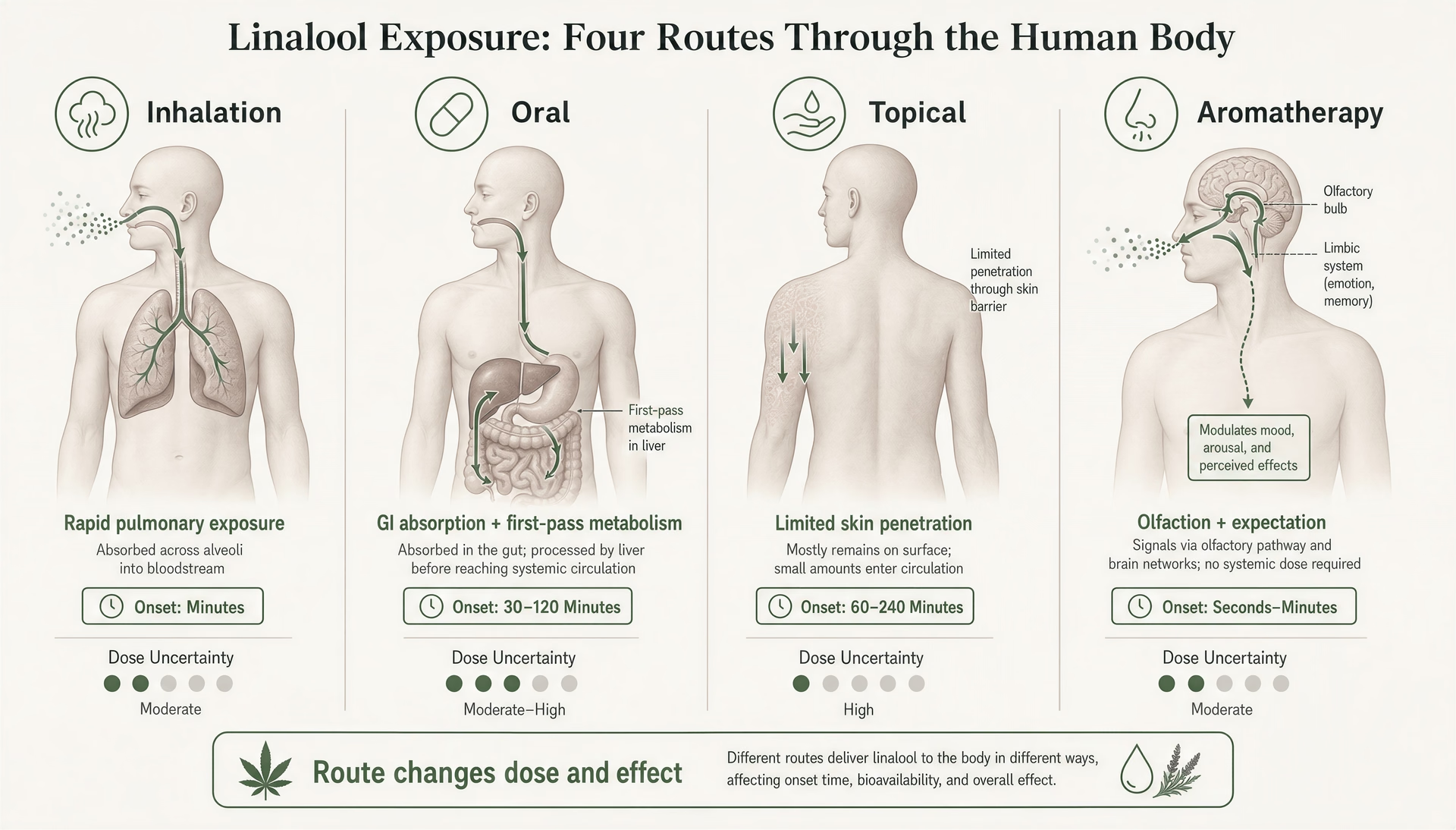
Absorption route changes the whole pharmacology
Linalool is one of those compounds for which route of exposure is not a side issue; it is the issue. People often collapse four very different scenarios into one claim that “linalool is calming”: smelling lavender, inhaling terpene-containing smoke or vapor into the lungs, swallowing a standardized lavender oil capsule, and rubbing a scented preparation onto skin. Those are not interchangeable exposures. They differ in absorption kinetics, bioavailability, metabolism, peak concentration, and even in what counts as the active signal. Sometimes the signal is systemic drug exposure. Sometimes it is mainly odor perception and expectation. If you do not separate those routes, you end up importing evidence from oral lavender psychiatry trials into claims about cannabis flower that the data do not support.
Inhalation from flower or vapor: rapid exposure, uncertain delivered dose
Pulmonary delivery is fast. Volatile molecules that survive combustion or vaporization can cross the alveolar surface quickly and reach arterial circulation within minutes. That makes inhalation the route most likely to produce an immediate pharmacological effect from linalool in cannabis. It is also the route with the messiest dose accounting.
Linalool’s boiling point is around 198–200 °C, but that number can mislead if treated as a simple threshold. In mixed plant matrices, compounds volatilize over a range of temperatures, and device design changes transfer efficiency. A dry-herb vaporizer set near linalool’s nominal boiling point will not deliver a neat, isolated linalool bolus. Flower moisture, grind, airflow, chamber temperature, and the presence of other terpenes and cannabinoids all alter what reaches the user. Combustion complicates this even more. Some linalool is inhaled. Some is pyrolyzed. Some goes into sidestream smoke. Some never leaves the plant.
That matters because cannabis flower usually contains linalool as a minor terpene, not a dominant one. Across chemovar surveys, totals for all terpenes in commercial flower often land in the low single-digit percent range by dry weight, while linalool commonly sits well below 0.5% and often around 0.1–0.3% or lower. Do the arithmetic. A gram of flower at 0.2% linalool contains 2 mg linalool before heating. But “contains” is not “delivers.” Once you account for storage losses, thermal degradation, sidestream loss, device inefficiency, incomplete extraction, and exhalation, actual systemic uptake may be much lower. Milligram-range loading in plant material can translate to sub-milligram systemic exposure.
That does not make linalool irrelevant. It means strong claims should be calibrated. The rodent inhalation work by Vivian T. Linck and colleagues in 2009 is often cited because inhaled linalool produced anxiolytic-like behavior in mice in the elevated plus maze and light/dark box, and flumazenil blunted the effect, which suggests involvement of GABA_A-related signaling. But the jump from controlled mouse exposure to a person inhaling a mixed cannabis aerosol is large. Cannabis inhalation introduces THC, CBD, myrcene, limonene, beta-caryophyllene, combustion byproducts, and the sensory context of smoking or vaping. Any subjective “calm” could be a composite effect rather than linalool acting as a standalone anxiolytic.
First-pass metabolism Drug metabolism that occurs after absorption from the gastrointestinal tract and before the compound reaches systemic circulation, mainly through the liver. It changes both timing and the mix of parent compound and metabolites compared with inhalation.
Oral ingestion: GI absorption, first-pass metabolism, slower onset
Oral administration is where the strongest human anxiety evidence sits, and that point is often mishandled. The commonly cited randomized trials are not studies of smoked cannabis flower or vaporized isolated linalool. They are studies of standardized oral lavender oil preparations, especially Silexan.[2] Silexan, an orally administered Lavandula oil preparation, is effective in the treatment of 'subsyndromal' anxiety disorder: a randomized, double-blind, placebo controlled trial. Siegfried Kasper, Angela Gastpar, W. E. Müller, H.-J. Volz. International Clinical Psychopharmacology, 2010.[3] A multi-center, double-blind, randomised study of the Lavender oil preparation Silexan in comparison to Lorazepam for generalized anxiety disorder. H. Woelk, S. Schläfke. Phytomedicine, 2010.
Kasper and colleagues reported that Silexan 80 mg once daily was superior to placebo over 10 weeks in adults with subthreshold anxiety disorder. Woelk and Schläfke, also in 2010, compared Silexan 80 mg/day with lorazepam 0.5 mg/day in generalized anxiety disorder under trial conditions and found non-inferiority on the Hamilton Anxiety Rating Scale. Those are serious data. They show that a standardized oral lavender essential oil product can have clinically measurable anxiolytic effects. They do not show that inhaling linalool from cannabis flower recreates the same exposure.
Why not? Because oral delivery produces a different pharmacokinetic profile. The compound must survive the gastrointestinal tract, be absorbed, pass through portal circulation, and undergo first-pass metabolism in the liver. Onset is slower, peak levels are delayed, and metabolites may contribute to effect. Standardized capsule dosing also reduces one of the biggest problems in inhalation research: dose uncertainty. An 80 mg capsule is not 80 mg of pure linalool, but it is a defined lavender oil preparation with batch control and repeatable administration. Cannabis inhalation rarely offers that level of precision.
This route difference also restrains mechanistic claims. It is reasonable to say linalool and related lavender constituents have been associated with anxiolytic effects in humans when given orally in standardized preparations. It is not reasonable to say this proves that the linalool fraction in typical flower reaches equivalent receptor-level engagement. The preclinical GABA story remains plausible, not settled. Flumazenil-sensitive effects in mice are suggestive. They are not proof that cannabis-relevant inhaled doses in humans produce meaningful GABA_A modulation.
Topical application: local exposure with weak evidence for central anxiolysis
Topical use is where marketing language tends to outrun pharmacology. Linalool can penetrate skin to some extent, and topical essential oil preparations may have sensory, local soothing, or massage-mediated effects. But central anxiolysis from dermal linalool exposure is weakly supported.
Skin is a barrier by design. A molecule reaching the stratum corneum is not the same as achieving plasma levels sufficient for CNS action. Vehicle, skin integrity, concentration, occlusion, exposure time, and treated surface area all matter. Even if some systemic absorption occurs, it is usually modest and hard to quantify outside formal pharmacokinetic studies. For that reason, topical lavender or linalool products cannot be treated as evidence that linalool reliably produces sedative or anxiolytic central effects.
This is not a trivial distinction. Many “calming” topical studies combine scent, touch, heat, and ritual. Massage alone can lower subjective stress and autonomic arousal. A pleasantly scented cream can make people feel more relaxed without requiring meaningful CNS penetration of linalool. If the claim is local comfort, fine. If the claim is centrally mediated anti-anxiety pharmacology, the evidence is much thinner.
Aromatherapy: olfaction, expectation, context, and autonomic effects
Aromatherapy is the route most likely to confuse mechanism. Smelling lavender can change how people feel. That finding is real enough. The problem is causal attribution. Is the effect due to linalool entering the bloodstream in pharmacologically active amounts, or is it due to olfaction itself, learned associations with lavender, expectancy, and the calming context in which aromatherapy is usually delivered? Often, the honest answer is: both may play a role, and studies rarely separate them cleanly.
The 2023 meta-analysis by Firozbakht and colleagues in Frontiers in Nutrition pooled 12 randomized clinical trials with 1,221 participants and found that lavender preparations improved anxiety and depressive symptoms. But heterogeneity was high across formulations and routes. Some studies used oral preparations. Others used inhalation or aromatherapy protocols. Those should not be interpreted as one unified intervention.
Aromatherapy trials are especially vulnerable to blinding problems. Lavender has a recognizable odor. Comparing it with no odor, weak controls, or a clearly different smell makes expectancy hard to control. Outcomes are often subjective: state anxiety, relaxation, sleep quality, perioperative calmness, nursing-staff ratings. Useful outcomes, yes. Clean pharmacology, no. Lavender essential oil also contains more than linalool, including linalyl acetate and other volatiles, so even a positive lavender aromatherapy study does not isolate linalool as the causal agent.
That is why “lavender smell calms people” cannot simply be mapped onto “linalool in cannabis flower has clinically meaningful anxiolytic action.” Smell-mediated autonomic changes, conditioned emotional responses, and environmental context may explain part of the benefit in aromatherapy settings. Inhaling cannabis aerosol is different again: now odor, pulmonary absorption, THC effects, expectancy, and prior experience all interact at once. Route changes the whole question. It changes what was absorbed, how much was absorbed, how fast it reached the brain, and whether the observed effect was pharmacological, sensory, contextual, or all three.
Are the amounts in cannabis flower pharmacologically meaningful?
This is where the popular terpene story usually breaks. Linalool is bioactive, and animal work supports anxiolytic-like and sedative effects under some conditions. But whether the amounts present in cannabis flower are pharmacologically meaningful is a separate question from whether the compound has biological activity at all. The subsections below work through the arithmetic: how much linalool a typical session delivers, how combustion and vaporization shrink that number, and how it compares to the doses used in lavender clinical trials.
In this section: Dose math from terpene percentages · Combustion and vaporizer losses · Comparison with lavender trial doses · Where linalool may still matter
This is where the popular terpene story usually breaks. Linalool is bioactive. Animal work supports anxiolytic-like and sedative effects under some conditions. But whether the amount present in cannabis flower reaches human doses that are pharmacologically meaningful is a separate question, and the answer is often: probably less than implied by marketing shorthand, especially if one is trying to map flower use onto the oral lavender literature.
Back-of-the-envelope dose math from terpene percentages
Start with dry flower composition. Commercial flower often carries total terpene content in the rough range of 1% to 4% by weight, sometimes higher, sometimes lower. Linalool is usually not the dominant terpene. In many chemovar surveys and testing datasets, it appears as a minor constituent, often around 0.05% to 0.3% by weight, with occasional higher examples. That matters because small percentages shrink quickly when converted into actual milligrams.
Examples from the article’s dose math
- 1 gram of flower at 0.1% linalool contains 1 mg linalool.
- 1 gram at 0.2% contains 2 mg.
- 1 gram at 0.3% contains 3 mg.
- 0.5 gram at 0.2% contains 1 mg.
- 0.25 gram at 0.2% contains 0.5 mg.
The arithmetic is simple:
- 1 gram of flower at 0.1% linalool contains 1 mg linalool**
- 1 gram at 0.2% contains 2 mg**
- 1 gram at 0.3% contains 3 mg**
- 0.5 gram at 0.2% contains 1 mg**
- 0.25 gram at 0.2% contains 0.5 mg**
Those are theoretical maximums in the plant material before any heating, degradation, sidestream loss, exhalation, or metabolism.
Now place those numbers in a realistic consumption frame. Many people do not inhale a full gram of flower in one sitting. A more typical single-use amount might be 0.1 to 0.3 g. If that flower is labeled at 0.15% linalool, then:
- 0.1 g delivers 0.15 mg present in the flower**
- 0.2 g delivers 0.3 mg**
- 0.3 g delivers 0.45 mg**
Even before accounting for losses, that is a very small absolute amount.
A skeptic should pause here. The phrase “linalool-rich flower” can sound pharmacologically substantial, but unless the percentage is unusually high and the quantity consumed is large, the total available linalool often sits in the sub-milligram to low-milligram range. That does not make it irrelevant. It does mean that claims of strong standalone anxiolysis need to clear a basic dose hurdle first.
There is another complication. Label percentages are snapshots, not immutable truths. Terpene content changes with storage, oxygen exposure, temperature, grinding, and age of the flower. Volatiles do not sit still. A jar that tested at 0.25% linalool months ago may not contain that same amount when consumed.
Combustion losses, sidestream loss, and vaporizer transfer efficiency
The amount present in flower is not the amount delivered to the bloodstream. This is where route matters.
Linalool’s boiling point is around 198 to 200°C, but volatilization in a plant matrix begins below the nominal boiling point. In practice, inhalation devices vary widely in how much linalool survives and transfers into inhaled aerosol or smoke. Combustion is especially wasteful. Flame temperatures massively exceed linalool’s thermal comfort zone, and smoke includes products formed under pyrolytic conditions rather than a simple “distill and inhale” process.
Why delivered dose is lower than labeled dose
- Combustion and thermal degradation Some linalool is destroyed or transformed during smoking, especially under high-temperature conditions.
- Sidestream loss Volatile material escapes into the air between puffs instead of entering the body.
- Device transfer and pulmonary uptake Even during vaporization, some terpene stays in spent material or the device, and some is exhaled before deep-lung absorption.
Three loss categories matter:
First, combustion and thermal degradation. Some linalool will be destroyed or transformed during smoking. The exact fraction depends on burn temperature, puff pattern, paper, airflow, and how much material actually combusts versus smolders.
Second, sidestream loss. With smoking, a lot of volatile material escapes into the air between puffs. That is obvious with odor, and odor is chemistry leaving the product rather than entering the body.
Third, device transfer and pulmonary uptake. Even with vaporization, transfer is incomplete. Some terpene remains in the spent material, some condenses in the device or mouthpiece, some is exhaled, and some never reaches deep lung regions efficiently.
Published cannabis aerosol studies consistently show that machine delivery of cannabinoids and terpenes can vary a great deal by device and protocol. Precise linalool transfer fractions are not standardized across the literature in the way one would want for dose modeling. But a fair conclusion is that only a fraction of the linalool present in the flower becomes systemically available. If a session starts with 1 mg theoretically available in packed flower, the absorbed dose may land well below that.
That pushes many real-world exposures into a range that looks pharmacologically modest. Suppose someone vaporizes 0.25 g of flower at 0.2% linalool. The bowl contains 0.5 mg of linalool. If transfer to inhaled aerosol is partial and pulmonary absorption is incomplete, systemic exposure could plausibly end up in the tenths-of-a-milligram range. That is not zero. It is also not obviously comparable to oral anxiolytic trial contexts.
Comparison with doses implicit in lavender clinical studies
This is the comparison that is often blurred in public discussion. The strongest human anxiety data associated with lavender come from oral lavender oil preparations, especially Silexan 80 mg/day, studied in randomized trials over 10 weeks by Kasper and colleagues and by Woelk and Schläfke in generalized anxiety disorder contexts. A 2023 meta-analysis by Firozbakht et al. in Frontiers in Nutrition pooled 12 randomized clinical trials with 1,221 participants and found overall improvement signals for anxiety and depressive symptoms across lavender interventions, though heterogeneity was high.
Two cautions are essential.
The first is obvious but often ignored: 80 mg of oral lavender oil is not 80 mg of pure linalool. Lavender oil contains multiple constituents, especially linalool and linalyl acetate, and standardized products are formulated for reproducible oral dosing. One cannot simply subtract out a neat “linalool equivalent” and treat cannabis smoke as the same intervention.
The second is more important: even if one estimated the linalool content of an oral lavender capsule, the route is different. Oral dosing gives systemic exposure through gastrointestinal absorption and first-pass metabolism over hours, not a brief inhaled pulse amid THC, CBD, combustion byproducts, and a strong sensory ritual.
Still, rough scale comparison is useful. Lavender oil often contains a substantial fraction of linalool, but not 100%. If one imagines, conservatively, that an 80 mg capsule contains tens of milligrams of linalool-related constituents, that still places it an order of magnitude above what many inhaled flower sessions are likely delivering systemically. A session that starts with 0.3 to 1 mg linalool in the plant material, then loses part of that during heating and inhalation, is simply not operating in the same dosing neighborhood.
That does not prove inhaled linalool cannot matter. It does mean the burden of proof lies with anyone claiming cannabis flower reproduces the anxiolytic evidence base of oral lavender preparations. At present, it does not.
Aromatherapy studies do not rescue the stronger claim. They are confounded by expectancy, odor pleasantness, context, and the fact that lavender essential oil is a mixture. “Lavender smell reduced anxiety before a dental procedure” is not the same proposition as “linalool from cannabis flower reached clinically meaningful concentrations in the CNS.”
Where linalool may still matter: mixture effects and low-dose modulation
After all that skepticism, there is still a reasonable middle position. Linalool may matter without carrying the whole effect by itself.
First, it clearly matters sensory-wise. Aroma shapes expectation, comfort, memory, and affect. Those are not fake effects. They are real human responses. But they are not proof of a direct pharmacological anxiolytic mechanism attributable to bloodstream linalool.
Second, low-dose pharmacology is possible. Preclinical work, including Linck et al. 2009, suggests linalool can produce anxiolytic-like effects in mice, with flumazenil sensitivity pointing toward GABA_A-linked mechanisms under those conditions. Other literature implicates glutamatergic signaling as well. The mistake is not in saying linalool is active. The mistake is assuming that because it is active in rodents, the amount inhaled from ordinary flower is enough to produce a clinically meaningful standalone effect in humans.
Third, cannabis is a mixture exposure, not a single-compound experiment. A trace-to-low-milligram amount of linalool may still modulate subjective experience alongside THC, CBD, β-caryophyllene, myrcene, limonene, and the sensory character of the preparation. That is plausible. It may slightly tilt a chemovar toward softer, more sedating, or less edgy subjective effects in some users. But “plausible contributor” is not “proven therapeutic driver.”
That distinction matters. The evidence supports a restrained claim: linalool in cannabis flower may contribute to aroma and may modestly shape effects, especially in combination with other constituents. The evidence does not support the stronger claim that flower-level linalool, at common percentages and common inhaled amounts, reliably delivers the sort of anxiolysis associated with standardized oral lavender products studied over weeks.
For cannabis, then, linalool is probably not a myth. It is also probably not the simple answer people want.
Lavender aromatherapy can reduce subjective anxiety in some settings, but it does not cleanly establish linalool-specific systemic pharmacology or direct relevance to cannabis flower. Limited evidence
The lavender aromatherapy evidence problem
Lavender aromatherapy is the main reason many people think linalool is already “proven” as a human anxiolytic. That leap is too fast. The literature does contain signals of reduced anxiety, improved perceived relaxation, and modest sleep benefits after lavender exposure, but those findings do not cleanly identify linalool as the active cause, and they do not translate directly to cannabis flower. The strongest human anxiety data in this area come from oral lavender oil preparations such as Silexan 80 mg/day studied over 10 weeks in trials by Kasper et al. (2010) and Woelk & Schläfke (2010). Those are pharmacology studies with a standardized product and systemic absorption after ingestion. Aromatherapy is something else: a sensory intervention embedded in expectation, ritual, odor preference, and mixed volatile chemistry. Treating “lavender smell calms people” as equivalent to “linalool from cannabis produces clinically meaningful anxiolysis” is not a minor simplification. It changes the claim.
Correlation versus causation in smell-based studies
A typical aromatherapy study exposes participants to lavender odor before a stressful event, during a hospital stay, in a dental setting, or at bedtime, then measures subjective anxiety or relaxation. If the lavender group reports feeling calmer, that is an association. It is not yet proof that inhaled linalool reached the brain in sufficient concentration to produce a direct pharmacological anxiolytic effect.
Why not? Because odor itself is a potent psychological stimulus. Smell is tied to memory, learned associations, affective appraisal, and autonomic tone. A scent judged pleasant, familiar, clean, or comforting can reduce distress through pathways that do not require meaningful systemic delivery of any specific terpene. This matters especially in perioperative, ICU, dental, and nursing studies, where baseline anxiety is high and small contextual shifts can move subjective scales.
The 2023 meta-analysis by Firozbakht et al. in Frontiers in Nutrition pooled 12 randomized clinical trials with 1,221 participants and concluded that lavender preparations improved anxiety and depressive symptoms. Useful, yes. Definitive for linalool-specific causation, no. The included interventions varied by formulation, route, setting, duration, and outcome measures. Some used oral products, some inhalation, some mixed protocols. Once heterogeneous interventions are pooled under the label “lavender,” the analysis says more about lavender-associated interventions than about isolated linalool pharmacology.
That distinction is not pedantic. It is the whole issue. If the effect arises from scent appraisal, expectancy, and context as much as from molecule-specific CNS exposure, then importing those results into cannabis terpene claims becomes shaky.
Blinding failure and expectancy effects
Aromatherapy trials have a structural problem: blinding often fails. Lavender smells like lavender. Participants usually know when they are receiving the intervention, and staff often know too. When endpoints are subjective, that is a serious source of bias.
This is not unique to lavender; it is endemic to sensory interventions. A person who believes lavender is calming may feel calmer when told or implied that they are receiving a calming scent. The expectancy effect can be amplified in care settings where the intervention is delivered by attentive staff, in a quieter room, as part of a soothing pre-procedure ritual. If the control is no odor, plain air, or a weakly matched comparator, the trial is not just testing chemistry. It is testing chemistry plus meaning.
That makes the positive findings harder to interpret than they first appear. Reduced state anxiety scores after lavender exposure may be real at the level of lived experience, but “real” does not automatically mean “caused by linalool acting systemically as a sedative or anxiolytic drug.” The literature often slides across that gap.
This is where preclinical linalool data can mislead readers if they are stitched onto aromatherapy results too casually. Linck et al. (2009) reported anxiolytic-like effects of inhaled linalool in mice, with flumazenil sensitivity suggesting involvement of GABA_A-related mechanisms. That is interesting mechanistic support. It does not rescue weak blinding in human smell studies. Animal work can show biological plausibility; it cannot tell you whether a human aromatherapy trial measured pharmacology, expectancy, or both.
Whole lavender oil is not isolated linalool
Even if one accepts that lavender interventions can reduce anxiety in some settings, lavender oil is not linalool alone. It is a complex mixture, commonly including linalyl acetate alongside linalool and many minor volatiles. The relative composition depends on species, extraction, storage, and product standardization.
This matters because any attempt to assign the human effect specifically to linalool is usually underdetermined. Oral Silexan trials are the strongest clinical evidence in the lavender field, but Silexan is a standardized lavender essential oil preparation, not purified linalool. The trial by Kasper et al. showing superiority over placebo in subthreshold anxiety disorder, and the Woelk & Schläfke comparison with lorazepam 0.5 mg/day, support the proposition that a defined oral lavender oil product may reduce anxiety symptoms under trial conditions. They do not prove that linalool alone is the active component, and they definitely do not prove that inhaled cannabis linalool at trace-to-low levels reproduces the effect.
The preclinical literature gives linalool a plausible mechanistic role. Reviews in Phytomedicine, Frontiers, and Molecules summarize anxiolytic-like, sedative, anticonvulsant, and analgesic findings across rodent models, with proposed actions involving GABAergic and glutamatergic/NMDA-related signaling. Fine. But once the intervention is whole lavender oil in humans, molecule-specific certainty drops. Mixed volatile chemistry is not a side detail; it is a competing explanation.
Why pleasant odor, ritual, and environment confound interpretation
Aromatherapy is usually not delivered in a vacuum. It arrives wrapped in a setting that is already trying to calm the participant: dimmer lights, a clinician’s attention, quieter surroundings, pre-sleep routines, massage, breathing, a pillow spray, a waiting room diffuser. Those contextual elements can change anxiety on their own.
Pleasant odor is another confounder. If lavender is experienced as agreeable, it may improve mood simply because agreeable sensory input tends to do that. If another participant dislikes lavender, the same intervention may do little or even irritate. This is one reason “lavender aroma works” is a weak mechanistic statement. It compresses individual odor preference, learned associations, and care context into a pharmacology claim.
For cannabis, the implication is direct. A person who finds a linalool-containing flower aroma “relaxing” may indeed feel more relaxed. That still does not show that the amount of linalool absorbed from smoking or vaporization was pharmacologically comparable to the exposure produced by standardized oral lavender oil. It may be a sensory effect. It may be a THC effect shaped by expectation. It may be both.
So the right conclusion is narrower than popular terpene marketing suggests. Lavender aromatherapy literature supports the claim that lavender-associated sensory interventions can reduce subjective anxiety in some contexts. It does not establish that linalool, by itself, at cannabis-relevant inhaled exposures, reliably produces clinically meaningful anxiolysis in humans. That stronger claim remains ahead of the evidence.
What linalool can reasonably mean in cannabis science
A plausible contributor, not a magic marker
Linalool belongs in cannabis discussions. It does not belong on a pedestal. The defensible position is that linalool is a biologically active terpene with preclinical anxiolytic, sedative, anticonvulsant, and analgesic signals, yet the popular claim that a “linalool-rich” flower will reliably calm a human user is ahead of the evidence.
The gap is not small. Human anxiety data are strongest for standardized oral lavender oil products, especially Silexan, not for inhaled cannabis flower. Kasper and colleagues reported that Silexan 80 mg/day outperformed placebo over 10 weeks in subthreshold anxiety disorder in International Clinical Psychopharmacology (2010). Woelk and Schläfke, also in 2010, compared Silexan 80 mg/day with lorazepam 0.5 mg/day in generalized anxiety disorder under trial conditions. Those studies matter, but they do not show that the much smaller, route-dependent linalool exposures from smoking or vaporizing cannabis reproduce the same effect size or clinical reliability.
By contrast, the linalool-specific literature is far richer in rodents. Linck et al. (2009) found that inhaled linalool produced anxiolytic-like effects in mice, and the flumazenil sensitivity in that model suggests involvement of GABA_A-related signaling. Elisabetsky and others reported sedative and anticonvulsant actions in animal systems. That makes linalool mechanistically interesting. It does not make it a validated human anxiolytic in cannabis.
Dose realism is where many terpene stories break. Commercial cannabis flower often contains total terpene content in roughly the low single-digit percent range by dry weight, while linalool is usually a minor terpene, often well below 0.5% by weight and frequently lower still. A flower at 0.2% linalool contains about 2 mg linalool per gram before storage losses, heating losses, sidestream smoke, incomplete transfer, and human puffing variability. The delivered systemic amount can end up modest. That is very far from the evidence base behind 80 mg/day oral lavender oil, which itself is not equivalent to 80 mg pure linalool. So yes, track linalool. No, do not treat it as a stand-alone pharmacological marker.
Interaction with THC, CBD, and other terpenes
Entourage position In this article, the restrained entourage position means linalool may modestly shape the overall subjective effect of cannabis alongside cannabinoids and other terpenes, without proving that linalool alone is the main therapeutic driver.
The restrained “entourage” position is the right one. Linalool may modify the subjective and physiological effects of THC, CBD, and other terpenes, but direct clinical proof remains sparse.
There are at least three plausible interaction layers. First, linalool has been associated in preclinical work with GABA_A-mediated anxiolytic-like effects and with effects on glutamatergic signaling, including NMDA-related pathways. That creates a credible route by which it might soften THC-linked arousal or anxiety in some users. Second, CBD itself has human anxiolytic evidence under certain conditions, though formulation and dose matter there too. A chemovar containing both CBD and linalool might therefore produce a different experience than THC-dominant flower low in both. Third, terpenes rarely act alone in inhaled cannabis. Myrcene, limonene, β-caryophyllene, α-pinene, and others arrive together, and sensory perception of aroma adds another variable before pharmacology even begins.
But the phrase “interaction” should not be inflated into a settled therapeutic doctrine. We do not yet have human studies that systematically hold cannabinoid content constant while varying linalool exposure and measuring blood levels plus validated anxiety outcomes. Without that, most claims about linalool-THC-CBD interplay remain mechanistically plausible extrapolations.
| Claim | Article's judgment | Why |
|---|---|---|
| Linalool is pharmacologically active in preclinical CNS models | Supportable | Repeated rodent and mechanistic signals are described across anxiolytic-like, sedative, anticonvulsant, and analgesic paradigms |
| Lavender-derived human interventions can show anxiety benefit | Supportable | The strongest human data come from standardized oral lavender oil products and meta-analytic signals across lavender interventions |
| Linalool-rich cannabis flower has been shown in humans to treat anxiety reproducibly | Not supportable | The article states there are no direct human cannabis trials establishing clinically meaningful anxiolysis from flower-level linalool exposure |
| Lavender aromatherapy proves systemic linalool pharmacology | Not supportable | Blinding problems, odor expectancy, and mixed lavender chemistry confound causal attribution |
What claims are supportable today
A few claims are supportable. Many common ones are not.
Supportable: linalool is pharmacologically active in preclinical CNS models. It is associated with anxiolytic-like and sedative effects in animals. Human studies of lavender preparations suggest that linalool-containing products can be part of an anxiolytic signal, especially when taken orally in standardized formulations. A 2023 meta-analysis by Firozbakht et al. in Frontiers in Nutrition pooled 12 randomized clinical trials with 1,221 participants and found improvement in anxiety and depressive symptoms across lavender interventions, while also showing substantial heterogeneity in route, formulation, and study design.
Not supportable: saying that linalool-rich cannabis flower has been shown in humans to treat anxiety in a clinically meaningful, reproducible way. It has not. Also not supportable: treating lavender aromatherapy as direct proof of systemic linalool pharmacology. Smell is a confounder, not a footnote. Pleasant odor, expectancy, ritual, context, and difficulty with blinding all influence outcomes. Lavender essential oil is also not linalool alone; linalyl acetate and other volatiles complicate causal attribution.
Route matters here more than terpene marketing admits. Oral lavender oil produced the strongest anxiety RCTs. Inhaled cannabis delivers volatile terpenes rapidly, but linalool transfer depends on heating conditions; its boiling point is about 198 °C, and real devices do not deliver pure compounds under ideal laboratory conditions. Topical exposure may matter for local effects, yet it is weak support for central anxiolysis.
Design features the article says a serious inhaled-cannabis linalool trial needs
- Standardized formulations Match THC, CBD, and major non-linalool terpenes while varying linalool across low, moderate, and high conditions.
- Analytical verification Confirm product composition before use and after storage, and measure actual aerosol delivery rather than relying on labels.
- Pharmacokinetics Measure plasma linalool, THC, 11-OH-THC, THC-COOH, CBD, and possibly a broader terpene panel at defined intervals.
- Expectancy control Mask odor where feasible and record what participants think they received, plus aroma intensity and pleasantness.
- Outcome quality Use validated anxiety scales and physiological measures, and track adverse events carefully.
What a better human trial would look like
The next serious study is not hard to imagine. It is hard to execute well.
Start with standardized inhaled cannabis formulations matched as tightly as possible for THC, CBD, and major non-linalool terpenes, then stratify only by linalool content across at least three conditions: low, moderate, and high. Verify content analytically before use and after storage. Measure actual aerosol delivery, not just package labels.
Then add pharmacokinetics. Draw plasma linalool, THC, 11-OH-THC, THC-COOH, CBD, and perhaps a broader terpene panel at defined intervals. Without blood levels, a null or positive result stays ambiguous. Did linalool fail, or did participants simply not absorb meaningful amounts?
Expectancy control is essential. Aroma itself changes mood. Use matched odor masking where feasible, assess participants’ beliefs about which product they received, and record aroma intensity and pleasantness. If the “high-linalool” arm smells more relaxing and subjects know it, interpretation gets muddy fast.
Choose outcomes that can survive scrutiny: STAI-State, visual analogue anxiety scales, heart rate variability, skin conductance, and a carefully selected lab stressor or anxiety-provoking task. Include adverse-event tracking, because in some people THC increases anxiety regardless of terpene profile.
That is the evidence standard this topic needs. Until those data exist, linalool deserves a place in cannabis chemovar characterization and hypothesis-building, not the status of a proven calming signature.
References
- [1] Inhaled linalool-induced anxiolytic effect in mice. Phytomedicine, 2009. https://pubmed.ncbi.nlm.nih.gov/19556179/
- [2] Silexan, an orally administered Lavandula oil preparation, is effective in the treatment of 'subsyndromal' anxiety disorder: a randomized, double-blind, placebo controlled trial. International Clinical Psychopharmacology, 2010. https://pubmed.ncbi.nlm.nih.gov/19962288/
- [3] A multi-center, double-blind, randomised study of the Lavender oil preparation Silexan in comparison to Lorazepam for generalized anxiety disorder. Phytomedicine, 2010. https://pubmed.ncbi.nlm.nih.gov/19962288/