














What pulegone is — and why most cannabis coverage gets its importance wrong
A ketone monoterpene, not a headline cannabis terpene
Pulegone is not just “a minty terpene.” Chemically, it is a monocyclic monoterpenoid ketone with the formula C10H16O and a molecular weight of 152.23 g/mol, as listed by PubChem. That ketone group matters because it places pulegone in a different toxicological and metabolic conversation than the hydrocarbons that dominate many simplified terpene charts.
In plant biochemistry, pulegone belongs to the mint monoterpene pathway, where it can be interconverted with menthone and isomenthone depending on enzyme activity, especially pulegone reductase. That makes it interesting from a biosynthesis standpoint. In cannabis, though, interest should be kept in proportion. Available terpene profiling studies generally place pulegone in the minor or trace category, not alongside myrcene, limonene, beta-caryophyllene, or terpinolene as a recurring dominant signal.
That distinction gets blurred in consumer-facing cannabis writing. A detectable compound is treated as a major driver of cultivar character. For pulegone, that is usually an exaggeration. It may contribute faint mint-camphor-herbal notes and may help distinguish some chemovars analytically, but the evidence does not support treating it as a headline cannabis terpene with a defined, reproducible effect signature in humans.
Why pennyroyal matters more than cannabis for pulegone toxicology
If you want to understand pulegone safety, cannabis is not the primary reference plant. Pennyroyal is. The European Medicines Agency’s 2021 monograph reports that pennyroyal oil contains 85–92% pulegone. That is an entirely different exposure scenario from cannabis, where pulegone is usually present at much lower concentrations.
NOAEL No Observed Adverse Effect Level: the highest tested dose at which a study did not detect harmful effects under the study conditions.
The same EMA monograph gives unusually practical intake benchmarks: 0.1 mg/kg body weight per day for pulegone plus menthofuran for exposures up to 14 days, and 0.0375 mg/kg/day for longer use. EFSA’s 2020 opinion identified a pulegone NOAEL of 13.39 mg/kg bw/day from a 28-day rat study and a menthofuran NOAEL of 9.375 mg/kg bw/day. Those are oral toxicology anchors, not inhalation equivalencies, but they matter because they show dose is the issue.
The strongest hazard signal comes from the U.S. National Toxicology Program. In 2011, NTP reported clear evidence of carcinogenic activity in 2-year gavage studies in rats and mice. The FDA now lists synthetic pulegone as prohibited for addition to human food under 21 CFR 189.130. None of this means trace natural pulegone in cannabis creates the same risk profile as concentrated pennyroyal oil or experimental oral dosing. It does mean “natural equals harmless” is indefensible.
The central claim of this article: chemistry and safety first, effect lore second
Cannabis cultivars with measurable pulegone produce distinctive subjective effects attributable to pulegone itself. Limited evidence
This article takes a clear position: pulegone is more important as a chemistry and safety topic than as an “effect terpene.” That is where the evidence points. There are no controlled human trials showing that cannabis cultivars with measurable pulegone produce distinctive subjective effects attributable to pulegone itself.
The broader entourage hypothesis, associated with Raphael Mechoulam and Shimon Ben-Shabat, is often invoked loosely here. But for pulegone, the leap from presence to meaningful psychoactive influence is not supported. What is supported is narrower and more interesting: pulegone is a low-abundance cannabis constituent with value in chemotaxonomy, aroma interpretation, and risk framing. Keep effect lore second. Put dose, metabolism, and source first.
Chemical identity and aroma profile
Molecular formula, structure, stereochemistry, and volatility
Pulegone is a monocyclic monoterpenoid ketone with the molecular formula C10H16O and a molecular weight of 152.23 g/mol, as listed by PubChem. Chemically, the defining feature is the ketone group, which sets it apart from hydrocarbon terpenes such as limonene or pinene and places it closer to other oxygenated mint constituents like menthone, isomenthone, and menthol in terms of biosynthetic family. That relationship matters. Pulegone is not an isolated oddity; it sits inside the mint monoterpene network, where plants can shift flux between pulegone, menthone, isomenthone, and downstream metabolites depending on enzyme expression.
It also exists as enantiomeric forms, meaning the same formula and connectivity can occur in mirror-image configurations. In aroma chemistry, stereochemistry often changes odor character and intensity, sometimes sharply, though cannabis testing rarely resolves pulegone enantiomers in routine reports. So most cultivar data treat “pulegone” as a single line item even when the sensory reality may be more complicated.
As a relatively small oxygenated terpene, pulegone is volatile enough to contribute to aroma, but in cannabis it is usually present at trace-to-minor levels rather than dominating the terpene fraction. That is a major contrast with pennyroyal oil. The European Medicines Agency’s 2021 monograph reports pulegone at roughly 85–92% of pennyroyal essential oil, whereas cannabis profiles generally show it as a background constituent. This difference explains why pulegone’s toxicology literature comes largely from pennyroyal oil and oral dosing studies, not from cannabis flower chemistry.
How pulegone smells: mint, camphor, herb, and sharp sweetness
The easiest practical description is mint first, then camphor, then a green-herbal edge with a slightly sharp sweetness. Not candy-mint, usually. More cooling, aromatic, and a bit piercing. In isolation, pulegone can read as pennyroyal-like or peppermint-adjacent, with a more ketonic, medicinal snap than softer mint alcohols such as menthol.
In cannabis, that profile is often subtle. Pulegone rarely announces itself as the lead note the way myrcene, limonene, or terpinolene can. Instead it may brighten a bouquet that already leans minty, coniferous, or medicinal. If a sample also contains menthone, the impression can shift toward peppermint or crushed mint leaves. If limonene is high, the mint note may feel sweeter and more lifted. With pinene, it can seem cooler and more resinous. With eucalyptol-like notes, it may read as sharper and more camphoraceous.
Why aroma perception changes with concentration and matrix
Aroma is not additive in a simple way. Concentration changes character. At very low levels, pulegone may register only as freshness or a faint minty accent; at higher levels, the camphor-herbal and sharper ketonic aspects become easier to notice. The surrounding matrix matters just as much. Warm vapor, cured flower, and extracted oil do not present the same odor balance, because volatility, oxidation, and release from plant material all shift what reaches the nose.
That is why claims that pulegone “defines” a cannabis cultivar are often overstated. In most cannabis chemovars, its role is better framed as a minor modifier and occasional chemotaxonomic marker than as a dominant flavor driver. Natural occurrence does not make it trivial, and it does not support broad effect claims. For pulegone, chemistry and dose matter more than marketing folklore.
Biosynthesis in plants
The monoterpene pathway from geranyl pyrophosphate
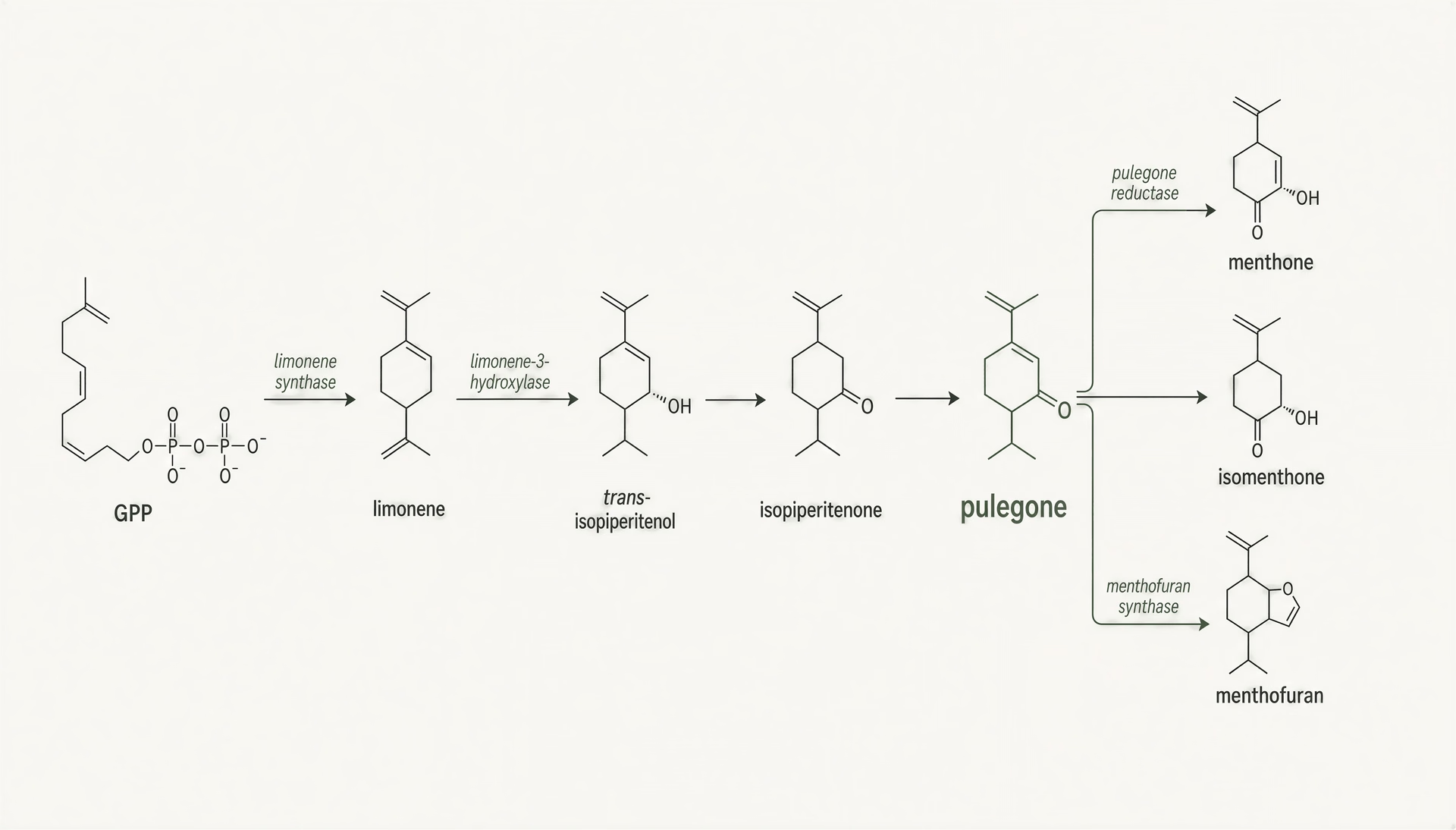
Pulegone belongs to the monoterpene branch of plant isoprenoid metabolism, so its biosynthetic story starts in the plastid rather than with any cannabis-specific “effect” narrative. In most aromatic plants, the immediate precursor pool for monoterpenes is built by the MEP pathway, also called the non-mevalonate pathway, which converts pyruvate and glyceraldehyde-3-phosphate into the C5 units IPP and DMAPP. Those two units are then condensed by geranyl pyrophosphate synthase to form geranyl pyrophosphate, or GPP, the standard C10 precursor for many volatile monoterpenes.
From GPP, the chemistry diverges according to which terpene synthases and tailoring enzymes a plant expresses in glandular tissues. Some pathways produce acyclic alcohols such as linalool; others produce bicyclic hydrocarbons such as pinene. Pulegone takes a different route. It is a monocyclic monoterpenoid ketone, formula C10H16O and molecular weight 152.23 g/mol according to PubChem, and it arises after cyclization and several oxidation-reduction steps rather than directly from GPP in one jump.
That general framework matters for cannabis. When pulegone is detected in a cultivar, it does not appear out of nowhere and it does not imply a unique pharmacological program. It signals that the plant’s monoterpene machinery, at least in small amounts, is channeling GPP through a mint-like sequence of cyclization and oxidation reactions. The logic is ordinary plant biochemistry. The rarity is quantitative, not mechanistic.

Mint-pathway enzymes: limonene, pulegone, menthone, and menthofuran
The best-mapped pulegone pathway comes from Mentha species, especially peppermint and pennyroyal, not from cannabis. Classic work on mint monoterpene metabolism showed that GPP is first cyclized by limonene synthase to produce limonene, usually the (-)-enantiomer in peppermint-type pathways. Limonene is then hydroxylated by a cytochrome P450 limonene-3-hydroxylase to trans-isopiperitenol, which is oxidized to isopiperitenone. Subsequent reduction and isomerization steps generate pulegone as a central branch-point intermediate.
Once formed, pulegone does not have to accumulate. Enzyme expression determines where flux goes next. Pulegone reductase converts pulegone to menthone and isomenthone, which can then feed into menthol-related chemistry through menthone reductases. A competing route sends pulegone toward menthofuran via menthofuran synthase, another P450-dependent step. This branch architecture explains why different mint species smell different even when they share early intermediates. Pennyroyal is an extreme example: the European Medicines Agency reported in 2021 that pennyroyal oil typically contains 85–92% pulegone, far above the trace amounts usually reported in cannabis.
This pathway also helps explain toxicology discussions. Pulegone and menthofuran are biosynthetically linked, and toxicological assessments often consider them together because metabolism can shift exposure from one to the other. That is why the EMA’s 2021 herbal monographs gave combined intake guidance for pulegone plus menthofuran: 0.1 mg/kg body weight per day for up to 14 days, and 0.0375 mg/kg for longer exposure.
What can and cannot be said about pulegone biosynthesis in cannabis
Cannabis almost certainly reaches pulegone through analogous monoterpene logic: plastidial MEP chemistry supplies GPP, terpene synthases generate a cyclic monoterpene scaffold, and oxidoreductases convert that scaffold into oxygenated products. What cannot be said with confidence is that the full mint enzyme set has been identified and functionally validated in cannabis trichomes step by step. The mint literature is much stronger.
That distinction matters because popular terpene writing often overstates certainty. There is good reason to infer a limonene-linked route or a closely related route in cannabis, since pulegone is structurally consistent with known plant monoterpene transformations and appears only as a minor constituent in most chemovars. There is not, at present, equivalent evidence that cannabis uses the exact same named enzymes, at the same positions, with the same flux control seen in Mentha.
So the defensible view is narrow and evidence-based: in cannabis, pulegone is best treated as a low-abundance output of monoterpene metabolism and a possible chemotaxonomic marker, not as a dominant pathway endpoint. The biosynthetic model is plausible. The cannabis-specific map is still incomplete.
Where pulegone shows up outside cannabis
Pennyroyal as the classic pulegone-rich plant
If pulegone has a toxicology home base, it is pennyroyal, not cannabis. The two classic sources are European pennyroyal (Mentha pulegium) and American pennyroyal (Hedeoma pulegioides), both long discussed in poison-center and herbal safety literature because their oils can be dominated by pulegone. The European Medicines Agency’s 2021 monograph on Mentha pulegium oil gives a striking figure: pennyroyal essential oil typically contains 85–92% pulegone. That is a different chemical universe from cannabis, where pulegone is usually trace-level or, at most, a minor terpene.
That concentration gap explains why pennyroyal anchors the safety conversation. EMA also notes that pennyroyal leaf contains about 1.0–2.0% essential oil and gives practical intake limits for pulegone plus menthofuran: 0.1 mg/kg body weight per day for up to 14 days, and 0.0375 mg/kg for longer use. Those are among the clearest human-facing benchmarks available for pulegone-containing botanicals. They matter because pulegone is not “safe because natural.” Dose and metabolism decide the hazard.
Peppermint and other mint species
Peppermint sits much closer to everyday exposure, but it still should not be flattened into a harmless background source. In mint biochemistry, pulegone belongs to the monoterpene pathway that also produces menthone and isomenthone, with the balance depending on enzyme expression, including pulegone reductase. So a mint oil’s pulegone level is not fixed by species name alone; it shifts with chemotype, plant part, maturity, and processing.
Peppermint oil is usually discussed for menthol and menthone, not pulegone, yet pulegone remains toxicologically relevant because it can appear as a minor constituent and because menthofuran is part of the same metabolic story. EFSA’s 2020 opinion set a NOAEL of 13.39 mg/kg bw/day for pulegone and 9.375 mg/kg bw/day for menthofuran from rat studies. The FDA also bars synthetic pulegone as a food additive under 21 CFR 189.130. Those actions came from risk assessment, not aroma trivia.
| Source | Typical pulegone level described in the article | Exposure picture | Why it matters |
|---|---|---|---|
| Pennyroyal oil | 85–92% | Pulegone-dominant essential oil | Anchors most toxicology discussions |
| Cannabis chemovars | Trace to minor | Low-abundance background constituent | Usually more relevant to chemotaxonomy than dominant aroma or effect claims |
| High-dose oral studies | Not a plant profile; experimental dosing | Chronic gavage exposure in rodents | Cannot be mapped directly onto routine low-level inhalation |
Why cross-plant comparisons can mislead cannabis readers
This is where popular terpene writing often goes off track. Seeing pulegone in mint, pennyroyal, and cannabis does not make those exposures interchangeable. The NTP’s 2011 two-year gavage studies found clear evidence of carcinogenic activity in rats and mice at high oral doses, but that cannot be mapped mechanically onto low-level inhalation from cannabis flower.
Cannabis pulegone is better treated as a chemotaxonomic clue than as a driver of effects. It may add faint mint-camphor-herbal notes. It may help separate chemovars analytically. What it has not done is earn strong human evidence for a distinct cannabis experience attributable to pulegone itself. The chemistry is real. The hype is not.
Pulegone in cannabis chemovars
In cannabis, pulegone is usually a trace-to-minor terpene, not a headline constituent. That distinction matters. Pennyroyal oil can contain 85–92% pulegone according to the European Medicines Agency, while cannabis chemovars that test positive for it generally show it far below the dominant tier occupied by myrcene, limonene, β-caryophyllene, or terpinolene. So the scientific value of pulegone in cannabis is usually not that it defines smell all by itself, and not that it has proven cultivar-specific psychoactive effects. Its value is analytical. It can sharpen a terpene fingerprint, hint at biosynthetic branching, and raise a safety question that popular terpene lists often skip.

How cannabis labs detect pulegone
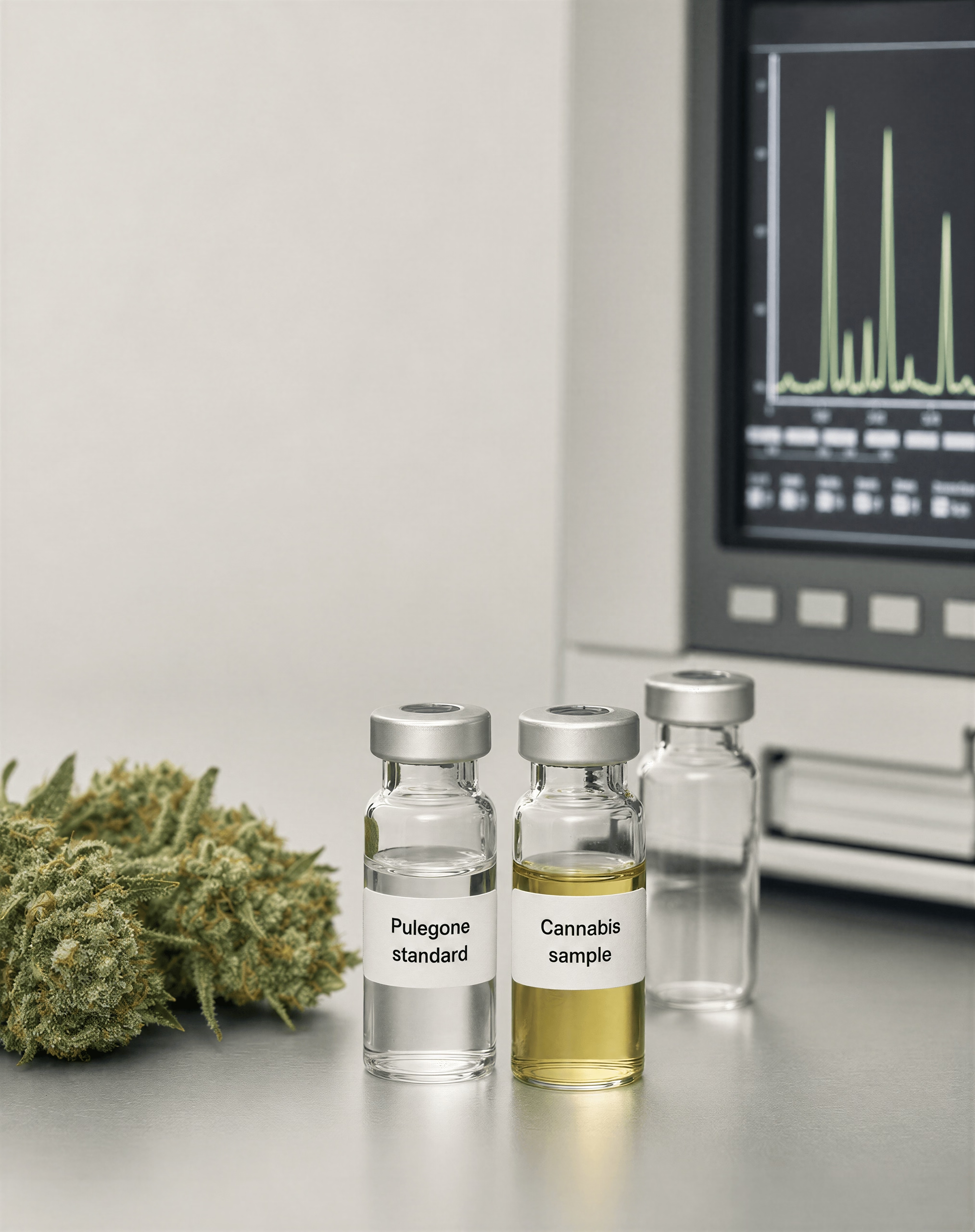
Most cannabis laboratories detect pulegone with gas chromatography, typically GC-MS for compound identification and GC-FID for routine quantification. That makes sense chemically: pulegone is a volatile monoterpenoid ketone, formula C10H16O and molecular weight 152.23 g/mol per PubChem, so it is amenable to vapor-phase separation. In practice, labs compare retention time and mass spectral pattern against reference standards, then quantify against calibration curves. Good labs also distinguish true peaks from co-eluting compounds, because minor oxygenated monoterpenes can be tricky in complex cannabis matrices.
Sample handling can swing the result. A lot. Grinding, headspace loss, warm autosamplers, solvent choice, delayed analysis, and repeated vial opening can all reduce measured volatile content or shift relative abundances. Drying and curing matter too, because monoterpenes are the most easily lost fraction of the terpene profile. Storage under heat, light, or oxygen can alter oxygenated terpenes further. When pulegone sits near the reporting threshold, those handling variables may determine whether a lab calls it “detected” or “not detected.”
That is one reason to be cautious with single-certificate claims. A tiny pulegone peak is more vulnerable to method noise than a large myrcene or limonene peak.
Minor terpene prevalence and why cultivar databases disagree
Database disagreement is not evidence that one side is careless; often it reflects chemistry near the limit of quantification. If one lab reports pulegone only above 0.01% and another reports down to 0.001%, the same flower lot may appear pulegone-free in one system and pulegone-positive in another. Add cross-lab calibration differences, different extraction protocols, and inconsistent naming of cultivars, and prevalence estimates drift fast.
Biology adds another layer. Harvest timing changes monoterpene composition. So does curing. So does storage. Even within a named cultivar, growth environment, plant maturity, and post-harvest handling can move a minor terpene in or out of the measurable range. That is why sweeping statements such as “this strain is high in pulegone” are usually too strong unless backed by repeated batch-level testing with stated LOQ and method details.
The better reading is probabilistic: some chemovars show measurable pulegone more often than others, but in cannabis it remains a low-abundance constituent.
Chemotaxonomy: when a trace terpene still matters analytically
Trace does not mean irrelevant. In chemotaxonomy, minor compounds can improve discrimination because they add pattern information. A terpene profile built only from the top five compounds often blurs differences between related chemovars; adding low-level markers such as pulegone, menthone, isomenthone, or specific sesquiterpenes can separate them more cleanly in multivariate analysis.
Pulegone is especially interesting because it sits in the mint monoterpene pathway, where enzyme expression can shift flux toward menthone and isomenthone. Cannabis has not been mapped as thoroughly as Mentha for this branch chemistry, so claims should stay modest. Still, detecting pulegone may point to a particular biosynthetic tendency rather than a major sensory driver.[1] Toxicology and carcinogenesis studies of pulegone in F344/N rats and B6C3F1 mice (gavage studies). National Toxicology Program. NTP Technical Report Series, 2011.
That framing is stronger than the usual effect talk. There are no controlled human trials showing that cannabis with measurable pulegone produces a distinct subjective experience because of pulegone itself. The toxicology literature, by contrast, is real and should not be waved away as irrelevant because the compound is natural. The FDA lists synthetic pulegone as a prohibited synthetic flavoring substance in food under 21 CFR 189.130, and the NTP reported clear evidence of carcinogenic activity in 2-year gavage studies in rats and mice in 2011. Those are high-dose oral findings, not a direct model for inhaled trace cannabis exposure, but they are enough to make dose and metabolism part of any serious discussion.
So in cannabis chemovars, pulegone matters more as a chemotaxonomic and safety-signaling molecule than as a dominant aroma or effect terpene.
Pharmacology — what is plausible, what is documented, and what remains speculative
General monoterpene pharmacology and the limits of terpene effect claims
Pulegone is a real pharmacologically active molecule, not a marketing adjective. Chemically, PubChem lists it as a monoterpene ketone, C10H16O, molecular weight 152.23 g/mol. That matters because ketone-bearing monoterpenes often do interact with biological systems in vitro and in animal models. It does not mean that trace amounts in cannabis predict a felt human effect.
This distinction is where much terpene commentary fails. Monoterpenes can show receptor interactions, enzyme effects, antimicrobial activity, irritancy, and central nervous system actions under experimental conditions. But translating that into “this terpene causes focus” or “that terpene makes the high clear-headed” is usually a leap, not an inference. Dose matters. Route matters. Metabolism matters. Matrix matters too: inhaled cannabis aerosol is not the same exposure scenario as oral essential oil, isolated terpene administration, or a cell assay.
The broader “entourage effect” idea associated with Raphael Mechoulam and Shimon Ben-Shabat is often invoked here, but it should not be used as a blank check for effect claims. The hypothesis is biologically interesting. It is not specific proof that pulegone, at the low levels usually measured in cannabis, meaningfully shifts subjective experience in a reproducible way.
A defensible position is narrower: minor terpenes can contribute to aroma and may have biological activity, yet current human evidence does not support strong experiential claims for any single minor terpene in routine cannabis use. Pulegone fits that pattern exactly.
What is known about pulegone from non-cannabis literature[2] European Union herbal monograph on Mentha pulegium L., aetheroleum. European Medicines Agency. European Medicines Agency, 2021.
Most of what is firmly documented about pulegone comes from mint and pennyroyal literature, toxicology, and regulatory review. The European Medicines Agency’s 2021 monograph on pennyroyal oil reports pulegone content around 85–92% of the essential oil. That number is useful mainly because it shows how unlike cannabis this source is. In cannabis, pulegone is generally trace-level or minor. Pennyroyal is a pulegone-dominant exposure; cannabis is not.
Safety signals are real. The U.S. National Toxicology Program reported in 2011 “clear evidence of carcinogenic activity” in 2-year gavage studies in F344/N rats and B6C3F1 mice, including urinary bladder tumors in female rats and liver tumors in mice. The FDA now lists synthetic pulegone as a prohibited synthetic flavoring substance in food under 21 CFR 189.130. None of this proves that ordinary cannabis exposure creates the same risk. These are high-dose oral data, and route-to-route extrapolation is imperfect. Still, the toxicology cannot be waved away just because pulegone is plant-derived.[3] Scientific Opinion on the genotoxicity and carcinogenicity risk to humans related to the presence of pulegone and menthofuran in food. EFSA Panel on Food Additives and Flavourings. EFSA Journal, 2020.
Risk assessors have also put numbers on exposure. EFSA in 2020 identified a NOAEL of 13.39 mg/kg bw/day for pulegone from a 28-day rat study. EMA gave much lower human-facing intake guidance for pulegone plus menthofuran: 0.1 mg/kg body weight per day for up to 14 days, and 0.0375 mg/kg for longer use. Those benchmarks come from non-cannabis contexts, but they are among the few concrete reference points available.
Why there is no solid evidence for a distinct pulegone-driven cannabis effect
At present, there are no controlled human trials showing that cannabis cultivars with measurable pulegone produce a distinct, repeatable effect because of pulegone itself. That absence matters. It means claims about stimulation, sharpened focus, sedation, or a “clear-headed” intoxication being driven by pulegone are unsupported.
The chemistry argues against overstatement as well. In cannabis, pulegone is usually a minor constituent rather than a dominant terpene. Recent chemovar analyses suggest minor terpenes can help discriminate cultivars analytically, which makes pulegone relevant to chemotaxonomy. But being useful as a chemical marker is not the same as being a primary pharmacological driver.
The strongest evidence base around pulegone is therefore not consumer effect profiling. It is biosynthetic context and dose-dependent safety. Natural occurrence does not make it automatically harmless, and low abundance does not make it a meaningful explanation for cultivar-level subjective effects. Until cannabis-specific inhalation toxicology and human pharmacology exist, firm pulegone effect claims should be treated as speculation.
Metabolism, toxicology, and safety considerations
Pulegone is one of the clearest examples of why “natural” does not equal harmless. In cannabis, it is usually a trace or minor terpene, often too low to drive product effects on its own. Yet toxicologists pay attention to it because its safety profile is shaped by metabolic activation, especially in the liver, and because the strongest hazard data come from concentrated mint oils and high-dose oral studies rather than from routine cannabis inhalation.
Why toxicologists focus on metabolism
- Parent compound Pulegone enters the body as a monoterpene ketone rather than acting only as an aroma note.
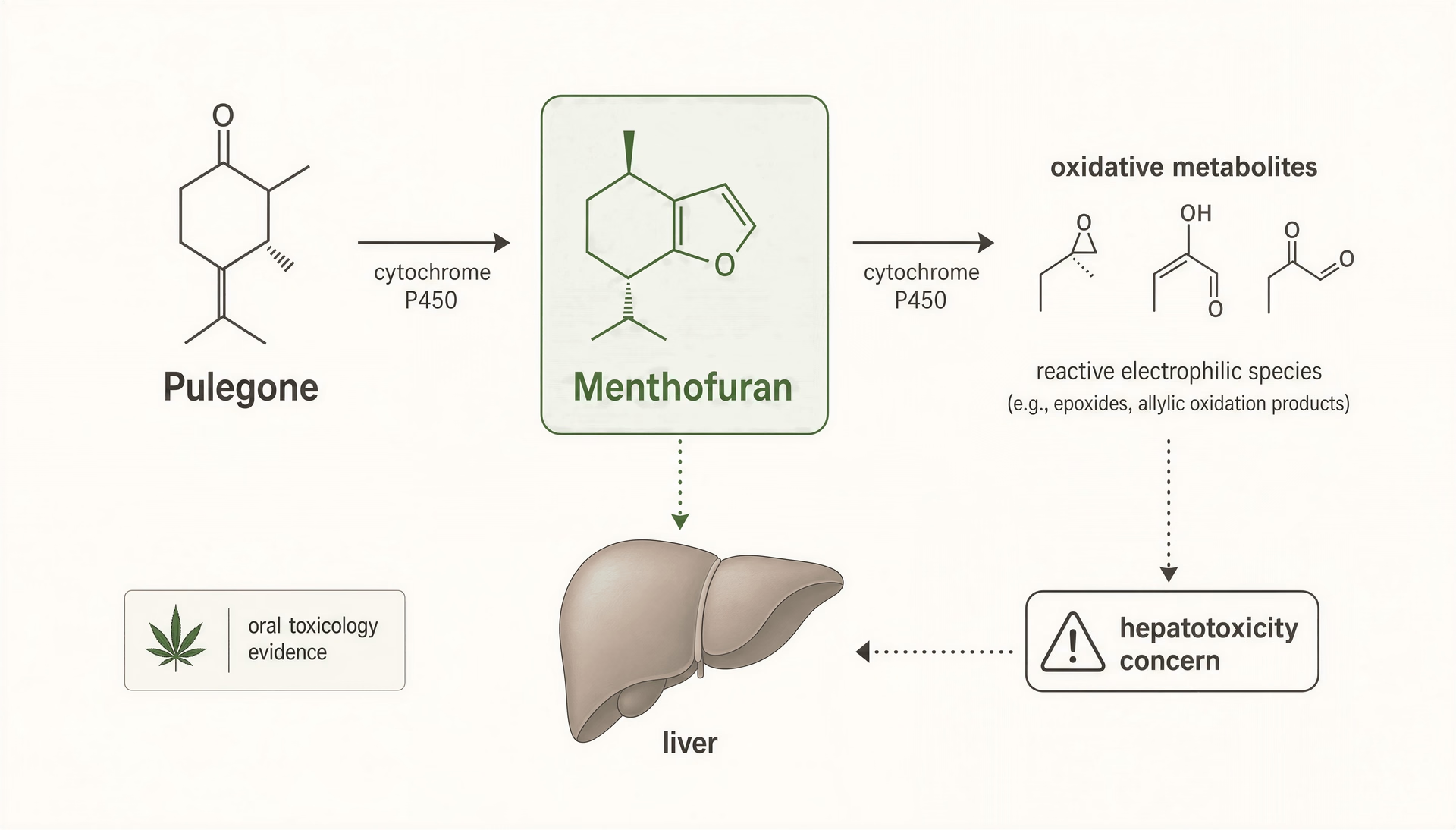
- Conversion A central concern is oxidative conversion to menthofuran.
- Bioactivation Menthofuran can be further oxidized into reactive metabolites that stress hepatic detoxification systems.
- Risk framing Because parent compound and metabolite are linked, EMA groups pulegone and menthofuran together in exposure guidance.

How pulegone is metabolized, including menthofuran-related concerns
Chemically, pulegone is a monoterpene ketone, C10H16O, with a molecular weight of 152.23 g/mol according to PubChem. Its metabolism matters more than its aroma. In both experimental animals and the mint-oil toxicology literature, pulegone is not treated as a passive flavor compound; it is treated as a precursor to more reactive intermediates.
A central concern is conversion to menthofuran. That metabolite has long been implicated in pennyroyal-associated liver injury, and the older pennyroyal poisoning literature repeatedly points to pulegone-rich oil as the starting material. Menthofuran itself can undergo further oxidative bioactivation, generating reactive metabolites that bind cellular macromolecules and stress hepatic detoxification systems. The mechanistic picture is not fully closed, but the direction of evidence is consistent: hepatotoxicity risk rises when pulegone exposure is high enough for these metabolic pathways to matter.
That is why EMA groups pulegone and menthofuran together in exposure guidance rather than treating them as unrelated compounds. The concern is not just the parent terpene. It is the parent-plus-metabolite system. In mint species, pulegone can also be enzymatically reduced toward menthone and isomenthone in biosynthetic pathways, but toxicology focuses on mammalian oxidative metabolism, where cytochrome P450 activity can push the compound toward more hazardous products.
This has two practical implications. First, essential oils dominated by pulegone are toxicologically different from cannabis flower. EMA’s 2021 monograph states pennyroyal oil typically contains 85–92% pulegone, an enormous concentration compared with the trace or low-minor amounts usually reported in cannabis chemovars. Second, any discussion of pulegone safety that ignores menthofuran is incomplete.
High-dose oral toxicology versus trace inhalation exposure
The strongest hazard studies are oral and high dose. That distinction matters. The U.S. National Toxicology Program’s 2011 Technical Report 563 found clear evidence of carcinogenic activity of pulegone in male and female F344/N rats and male and female B6C3F1 mice after 2-year gavage exposure. Reported findings included urinary bladder tumors in female rats and liver tumors in mice. Those are serious signals. They also come from chronic forced oral dosing in rodent models, not from smoking or vaporizing cannabis flower with trace pulegone content.
EFSA’s 2020 assessment helps place shorter-term toxicity in a dose-response framework. It identified a NOAEL of 13.39 mg/kg body weight/day for pulegone from a 28-day rat study and 9.375 mg/kg bw/day for menthofuran from a 90-day rat study. EFSA then concluded that for some population groups, margins of safety for dietary exposure to pulegone-related substances were not adequate. That is a regulator saying the compound deserves active risk management, not dismissal as a harmless botanical note.
Still, route and dose should not be blurred. Oral exposure to pennyroyal oil or pulegone-containing flavorings can deliver orders-of-magnitude higher systemic doses than inhalation from cannabis flower. With inhalation, absorption kinetics, combustion byproducts, and thermal degradation all complicate simple comparisons. There is very little cannabis-specific inhalation toxicology for pulegone at real-world concentrations. So the honest position is limited but firm: high-dose oral toxicology should not be waved away, and it also should not be lazily transferred onto ordinary low-level cannabis exposure as if they were equivalent.
| Body | Year | What the article says | Figure or action | Context |
|---|---|---|---|---|
| FDA | Current regulation cited | Synthetic pulegone is prohibited for addition to human food under 21 CFR 189.130 | Prohibited synthetic flavoring substance | Food regulation, not a cannabis inhalation threshold |
| EFSA | 2020 | Identified NOAELs for pulegone and menthofuran from rat studies | 13.39 mg/kg bw/day; 9.375 mg/kg bw/day | Animal toxicology reference points |
| EMA | 2021 | Set intake guidance for pulegone plus menthofuran | 0.1 mg/kg/day up to 14 days; 0.0375 mg/kg/day longer use | Human-facing guidance for pennyroyal-related exposure |
FDA, EFSA, and EMA positions — what regulators actually said
The FDA took the strongest U.S. stance in food regulation. Under 21 CFR 189.130, synthetic pulegone is listed among flavoring substances prohibited for addition to human food. That action followed carcinogenicity evidence judged sufficient for regulatory removal from the synthetic flavoring category. It does not mean every trace natural occurrence of pulegone in peppermint, herbs, or cannabis creates the same level of risk. It does mean the compound crossed a line where regulators no longer accepted intentional synthetic addition to food.
Europe has framed the issue through exposure limits. EMA’s herbal monographs on pennyroyal are especially informative because they translate toxicology into practical intake thresholds. In 2021, EMA stated a maximum daily intake of pulegone plus menthofuran of 0.1 mg/kg body weight for up to 14 days, and 0.0375 mg/kg for longer exposure. Those figures are among the clearest human-facing benchmarks available.
EFSA’s 2020 opinion is less a ban than a risk-assessment warning. It set reference points from animal studies and concluded that current exposure to pulegone-related substances could be problematic in parts of the population. Taken together, FDA, EFSA, and EMA are not saying pulegone is uniquely dangerous at any detectable level. They are saying dose, route, and metabolic activation matter, and that concentrated oral exposure deserves the most caution.
For cannabis, that lands in a narrower place than popular terpene marketing suggests. Pulegone is scientifically interesting. It is not well supported as a distinctive “effect terpene,” and its main relevance is as a low-abundance chemical marker with a toxicology profile defined largely outside typical flower inhalation.
Practical relevance for cannabis readers
What a lab report showing pulegone should mean
If a cannabis certificate of analysis lists pulegone, the first sensible response is not alarm and not excitement. It means the lab detected a minor monoterpenoid ketone, formula C10H16O, that is common in mint-family chemistry and appears in some cannabis chemovars at low levels. In practice, that usually points to a faint minty, herbal, or camphor-like thread in the aroma profile. It does not, by itself, announce a distinctive psychoactive signature.
Context matters more than the name. Pennyroyal oil is a pulegone-heavy material; the European Medicines Agency’s 2021 monograph places pulegone at 85–92% of that essential oil. Cannabis is not pennyroyal oil. In cannabis, pulegone is generally trace or minor, so the toxicology literature from concentrated pennyroyal preparations and the National Toxicology Program’s 2011 high-dose oral gavage studies should not be flattened into “any detectable pulegone is dangerous.” That said, safety is not optional here. The FDA’s 21 CFR 189.130 prohibition on synthetic pulegone as a food flavoring reflects real toxicology concern, not internet rumor.
When low abundance still matters
Low abundance does not mean irrelevant. It means interpret carefully. Minor terpenes can help distinguish chemovars analytically even when they contribute little to total terpene percentage. Pulegone may therefore matter more as a chemotaxonomic clue than as a driver of experience. It can signal a mint-pathway relationship in plant metabolism, especially alongside compounds such as menthone or isomenthone, without proving those compounds dominate the sensory profile.
This is the right scale for reading it. A small pulegone peak can still be useful for fingerprinting a cultivar, comparing batches, or explaining a subtle mint-herbal edge. It is much less persuasive as evidence that the cultivar will feel uniquely stimulating, sedating, or “entouraging” in a reproducible way. No controlled human trials show that measurable pulegone in cannabis creates a distinct subjective effect attributable to pulegone itself.
How to read terpene profiles without slipping into marketing mythology
Read pulegone as one part of a matrix. Start with quantity, then relative position, then neighboring terpenes and cannabinoids. If it appears at trace levels beside much larger amounts of myrcene, limonene, terpinolene, beta-caryophyllene, or pinene, those higher-abundance compounds are more likely to shape aroma and any plausible pharmacology.
Natural does not mean harmless. Trace does not mean headline effect. EMA exposure guidance for pulegone plus menthofuran—0.1 mg/kg body weight daily for up to 14 days, 0.0375 mg/kg for longer periods—shows why dose and duration belong in the conversation. The grounded reading is simple: pulegone is scientifically interesting, sometimes aroma-relevant, occasionally useful as a marker, and not a stand-alone predictor of what cannabis will do.
What the science still does not know
Missing inhalation studies
The biggest hole is route-specific toxicology. Most pulegone safety signals come from oral exposure: the National Toxicology Program’s 2011 two-year gavage studies in rats and mice, EFSA’s 2020 risk assessment, and EMA’s 2021 exposure limits for pennyroyal products. Those are important anchors, but they do not answer the cannabis question cleanly. Inhalation is not ingestion, and trace pulegone in cannabis is not pennyroyal oil, where EMA reports pulegone can make up 85–92% of the essential oil.
That distinction matters. Cannabis users are exposed to complex aerosol mixtures created by heating plant material or extracts, not isolated pulegone in food or capsules. We still lack studies measuring what fraction of pulegone survives combustion or vaporization, what byproducts form, how much reaches the lung, and whether repeated low-level inhalation changes liver or respiratory risk. FDA’s listing of synthetic pulegone under 21 CFR 189.130 makes safety impossible to dismiss, but it does not provide a cannabis inhalation dose-response curve. Right now, nobody can honestly give one.
Sparse standardized cannabis prevalence data
Pulegone is usually described as “present in cannabis,” which is true and still unsatisfying. The harder question is how often, at what concentrations, and in which chemovars under standardized methods. Published terpene panels do show that minor compounds can help separate chemotypes analytically, yet cross-market data remain patchy. Labs use different cutoffs, sample handling practices, calibration standards, and reporting conventions. Trace in one dataset can become “not detected” in another.
This is why popular terpene lists often exaggerate pulegone’s practical abundance. In cannabis, it is generally minor, sometimes only a faint marker.
The gap between chemotype analytics and human outcomes
Chemistry can classify plants. It does not automatically predict human experience. There are no controlled human trials showing that cannabis chemovars with measurable pulegone produce reproducible effects attributable to pulegone itself. That leaves a wide gap between lab analytics and lived outcomes.
For now, the evidence supports a restrained view: pulegone is scientifically interesting, relevant to biosynthetic mapping and safety discussions, and potentially useful in chemotaxonomy. What it means for real-world human cannabis exposure remains unsettled.
References
- [1] Toxicology and carcinogenesis studies of pulegone in F344/N rats and B6C3F1 mice (gavage studies). NTP Technical Report Series, 2011. https://ntp.niehs.nih.gov/publications/reports/tr/500s/tr563
- [2] European Union herbal monograph on Mentha pulegium L., aetheroleum. European Medicines Agency, 2021. https://www.ema.europa.eu/en/documents/herbal-monograph/final-european-union-herbal-monograph-mentha-pulegium-l-aetheroleum_en.pdf
- [3] Scientific Opinion on the genotoxicity and carcinogenicity risk to humans related to the presence of pulegone and menthofuran in food. EFSA Journal, 2020. https://doi.org/10.2903/j.efsa.2020.6229