













Sabinene in cannabis: why this minor terpene deserves a more careful reading
Sabinene is a good example of a terpene that is chemically real, analytically detectable, and still easy to overstate. In cannabis, it usually appears as a minor monoterpene, not a profile-defining giant. That does not make it irrelevant. It makes it easy to misread. Sabinene is a bicyclic monoterpene hydrocarbon, C10H16, with a molecular weight of 136.24 g/mol (PubChem, 2025), and it is well established in other aromatic plants such as carrot seed, nutmeg, black pepper, juniper, and conifers. In some of those species it can be abundant; in cannabis, usually not.
Why most terpene guides oversimplify sabinene
Popular terpene charts tend to flatten chemistry into slogans: one molecule, one aroma, one effect. Sabinene does not fit that template well. Its odor is often described as peppery, spicy, woody, citrus-tinged, sometimes carrot-like. Yet in cannabis it rarely dominates the bouquet on its own. It is more often part of the top-note architecture, sharpening spicy-herbal impressions created with other monoterpenes and sesquiterpenes.
That mismatch drives sloppy interpretation. Because sabinene is a major constituent in other plants, some guides imply the same prominence in cannabis. The underlying evidence says otherwise.
Where sabinene sits in the hierarchy of cannabis volatiles
Cannabis volatile profiles are usually led by more abundant compounds such as myrcene, limonene, beta-caryophyllene, alpha-pinene, or terpinolene. Sabinene sits lower in that hierarchy. Booth et al. in Scientific Reports (2018) identified 55 terpenes across 17 cannabis chemovars, showing how minor compounds still help distinguish profiles even when they are not dominant. Jikomes and Zoorob’s 2022 PLOS One analysis of 89,923 U.S. samples reached a related point from another angle: measurable terpene clustering explains chemotaxonomy better than old indica/sativa labels.
So sabinene matters, but mostly as fine-grain compositional information. Biosynthetically, that makes sense. Like other monoterpenes, it arises from the plastidial MEP pathway through GPP and terpene synthase activity, even though sabinene-specific cannabis enzymes are less characterized than those tied to pinene or limonene.
The central claim: aroma contribution is better supported than effect claims
Sabinene in cannabis is better supported as an aroma contributor than as a distinct effect-driving terpene. Limited evidence
The strongest claim for sabinene in cannabis is sensory, not experiential. There are no controlled human trials showing sabinene-rich cannabis produces a distinct psychoactive profile. Preclinical papers on sabinene-containing essential oils do report anti-inflammatory, antimicrobial, antioxidant, and sometimes antinociceptive signals, but attribution is the problem: many studies test whole oils, not isolated sabinene. That is a major limitation, not a footnote.
The careful reading is this: sabinene can help explain aroma and chemovar differentiation, but effect claims in cannabis run ahead of the evidence.
What sabinene is chemically
Sabinene is a specific terpene, not a vague “spicy note.” Chemically, it is a bicyclic monoterpene hydrocarbon with the molecular formula C10H16 and a molecular weight of 136.24 g/mol (PubChem, 2025). “Monoterpene” means it is built from two isoprene units, giving the familiar 10-carbon terpene backbone. “Hydrocarbon” means it contains only carbon and hydrogen, with no oxygen-containing functional groups such as alcohols, ketones, or esters. That detail matters because hydrocarbons usually evaporate readily, dissolve poorly in water, and mix more easily with fats, waxes, and biological membranes. Sabinene fits that pattern: it is volatile and lipophilic, which helps explain why it shows up in the aroma of fresh plant material and essential oils.
In cannabis, sabinene is real but usually minor. It rarely leads the terpene profile the way myrcene, limonene, β-caryophyllene, or α-pinene often do. Still, minor does not mean irrelevant. Booth et al. in Scientific Reports (2018) identified 55 terpenes across 17 cannabis chemovars, a reminder that chemovar identity is shaped by more than just the top one or two compounds. Sabinene is part of that finer-grained chemistry.
Bicyclic monoterpene structure and formula
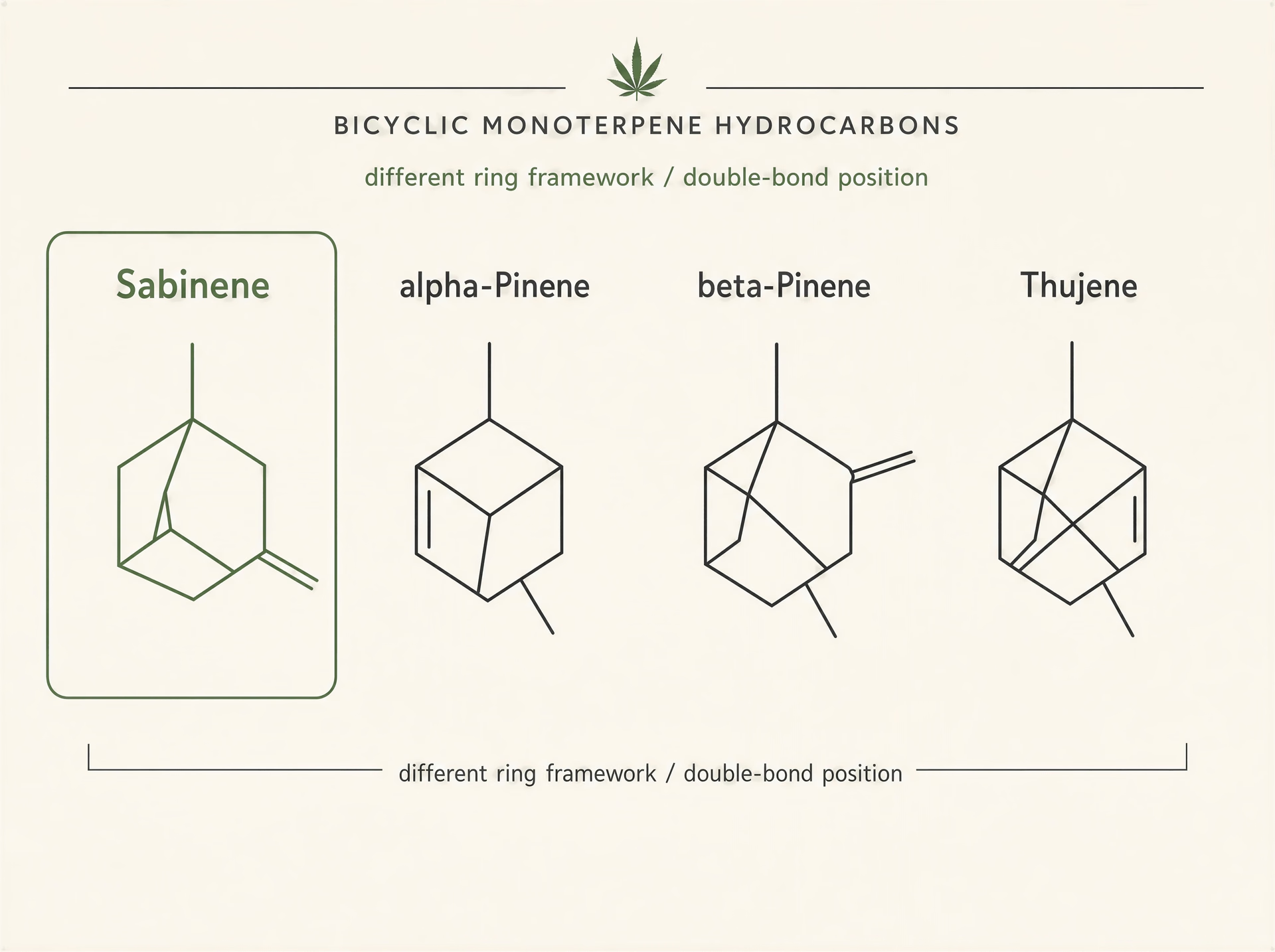
The “bicyclic” part means sabinene has two connected rings in its carbon framework. That ring system gives it a compact, strained shape compared with more open-chain monoterpenes such as myrcene. PubChem lists sabinene as having 0 hydrogen-bond donors, 0 hydrogen-bond acceptors, and 1 defined double bond. Those numbers are exactly what you would expect from a small unsaturated hydrocarbon.
Its structure is not just a naming exercise. Ring shape affects volatility, odor character, and the way the molecule interacts with olfactory receptors. Small changes in carbon skeleton can shift a terpene from resinous to citrusy, from pine-like to peppery. Sabinene’s bicyclic scaffold places it in the same broad structural neighborhood as pinene and thujene, which is one reason these compounds are often confused in terpene charts. They are related. They are not interchangeable.
Sabinene biosynthesis, step by step
- MEP pathway Plastidial metabolism produces the isoprenoid building blocks IPP and DMAPP.
- Precursor assembly IPP and DMAPP combine to form geranyl pyrophosphate (GPP).
- Cyclization Terpene synthase activity converts the linear GPP precursor into the bicyclic sabinene skeleton.
MEP pathway The methylerythritol phosphate pathway is a plastid-localized plant pathway that makes the five-carbon isoprenoid units used to build many monoterpenes.
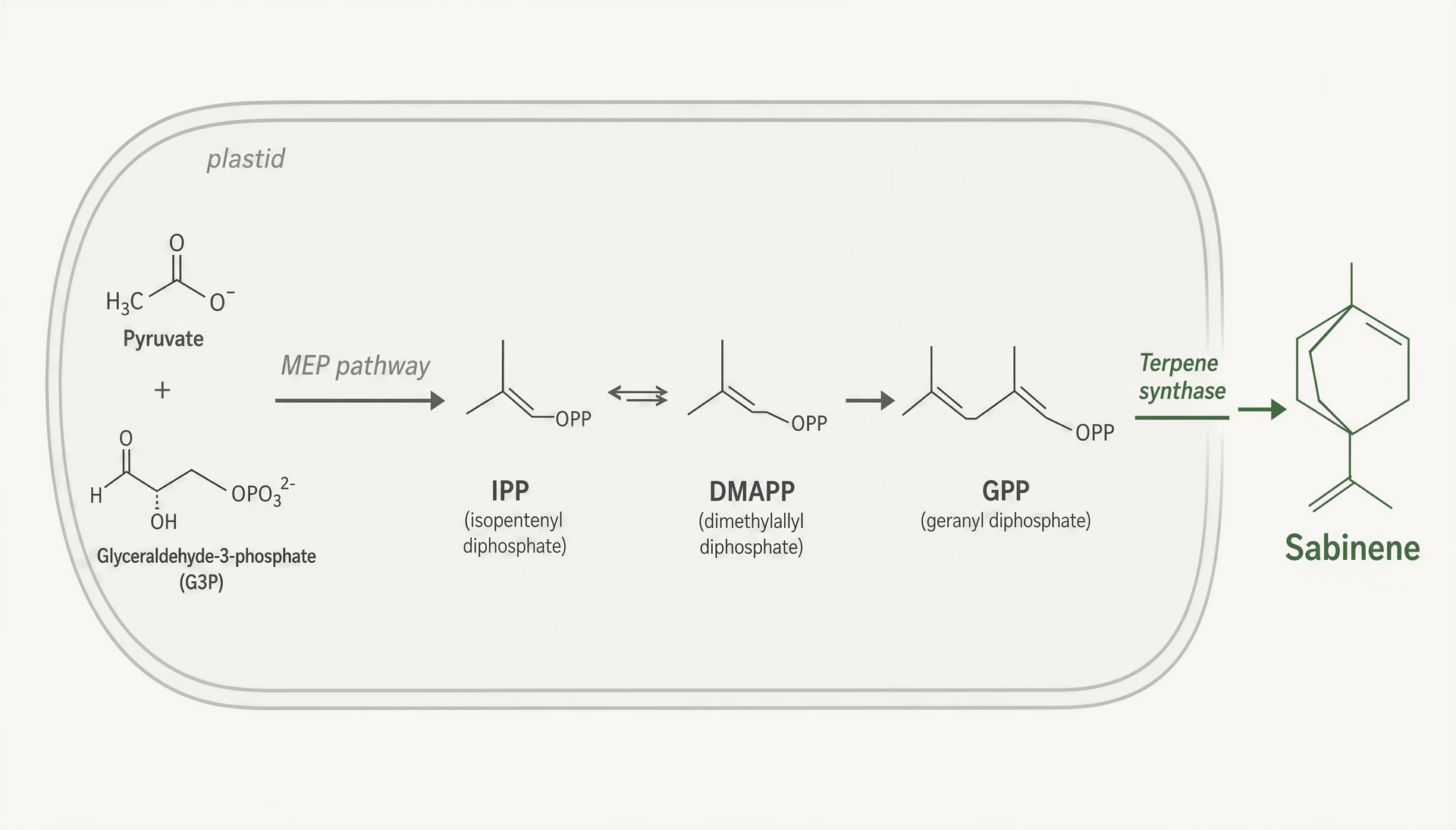
Plants make sabinene through the standard monoterpene route: plastidial MEP-pathway precursors form IPP and DMAPP, which combine into geranyl pyrophosphate (GPP), then terpene synthase enzymes cyclize that precursor into sabinene. In cannabis, the broad pathway is well established even if sabinene-specific synthases are less discussed than enzymes linked to limonene or pinene.
Physical and sensory properties
Because sabinene is a small hydrocarbon, it contributes to the top-note portion of aroma: the first impression, fast and bright. Descriptors in the essential-oil literature include peppery, spicy, woody, fresh, citrus-tinged, and carrot-like. That last note is not random. Carrot seed oil can be strikingly rich in sabinene; a 2021 review of Daucus carota chemistry reported ranges from 19.6% to 51.6% in some samples depending on origin and plant part.
Other plants show the same pattern. Sabinene has been reported around 34.7% in one Juniperus excelsa oil analysis (2011), 16.6% in a nutmeg oil study (2013), and 12.8% in one black pepper oil sample (2010). Those spice and conifer associations help explain why sabinene in cannabis tends to register as a sharpening accent rather than a dominant smell on its own.
| Compound | Structural note in article | Typical aroma emphasis in article | Role in cannabis profile |
|---|---|---|---|
| Sabinene | Bicyclic monoterpene hydrocarbon | Spicier, drier, more peppery; sometimes carrot-seed edged | Usually a minor aromatic marker |
| α-Pinene | Small bicyclic monoterpene hydrocarbon | Pine, resin, forest needle | Often more abundant than sabinene |
| Thujene | Different isomeric framework | Herbaceous and sharp | Potentially overlapping but not interchangeable |
| Myrcene | Open-chain monoterpene reference point | Not framed here as pine-like; used as contrast to sabinene's ring strain | Often a more abundant profile leader |

How sabinene differs from pinene, thujene, and other monoterpenes
Sabinene is often mistaken for α-pinene, β-pinene, or thujene because all are small bicyclic monoterpene hydrocarbons with overlapping botanical sources. The difference is structural, and structure drives odor. Pinene usually reads more directly as pine, resin, or forest needle. Sabinene tends to come off spicier, drier, and more peppery, sometimes with a fresh carrot-seed edge. Thujene can also lean herbaceous and sharp, but it is a different isomeric framework.
That distinction matters in cannabis. A profile with trace sabinene is not simply “pinene by another name.” It is one component in a mixed volatile pattern. Jikomes and Zoorob’s 2022 PLOS One analysis of 89,923 cannabis samples showed that measurable terpene profiles classify cannabis more reliably than old indica/sativa labels. Sabinene is part of that chemical specificity. Claims that it predicts a unique psychoactive effect, though, go past the evidence. Chemically speaking, sabinene is better understood as a low-abundance aromatic hydrocarbon marker than as a standalone promise of any particular experience.
Natural sources beyond cannabis
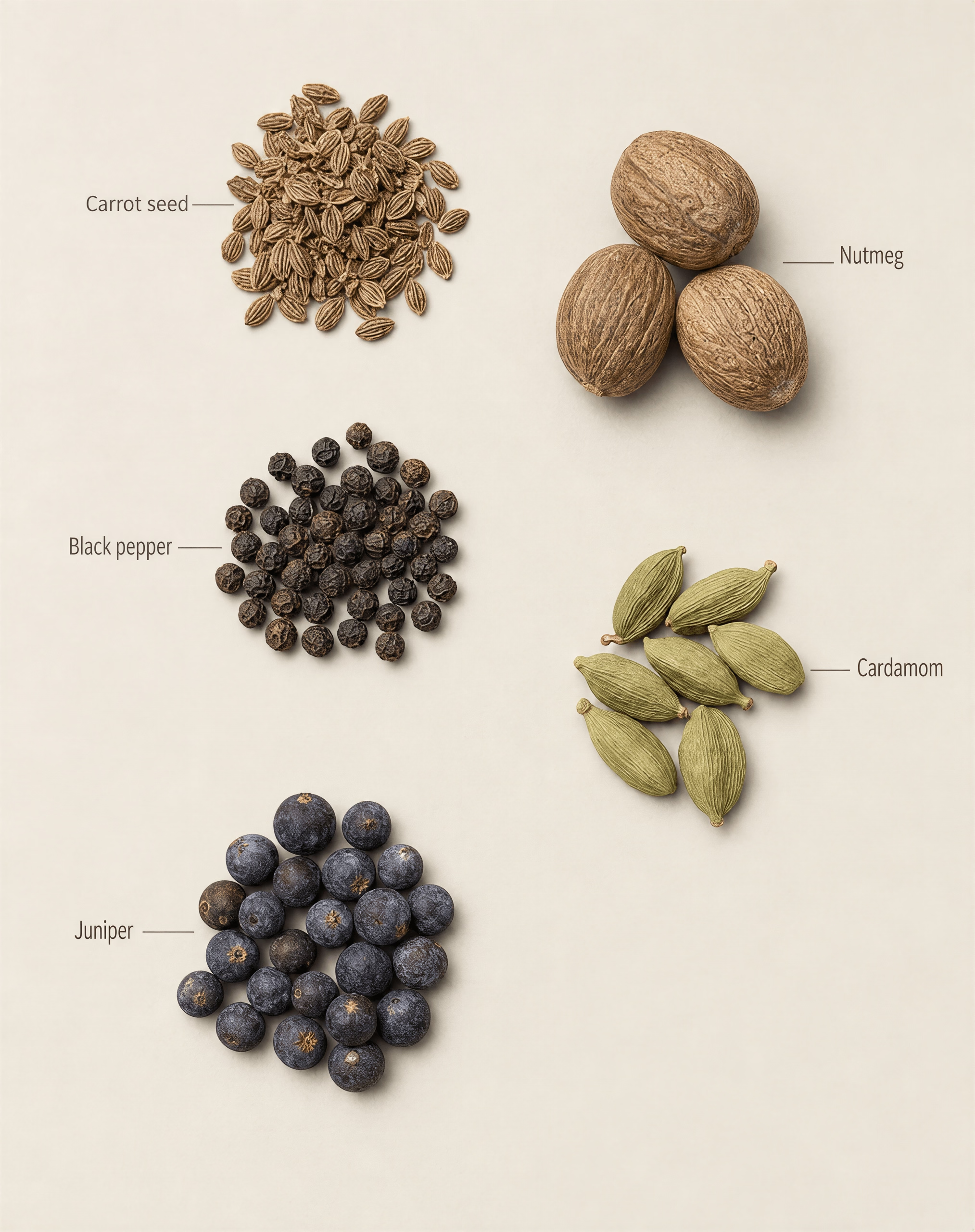
Sabinene is not remotely cannabis-specific. It is a common plant volatile, especially in spice crops, woody aromatics, and several conifers, and in many of those plants it appears at levels far higher than it usually does in Cannabis sativa. That matters because sabinene’s place in cannabis is easier to understand when it is framed as a widespread monoterpene hydrocarbon, C10H16, rather than as some rare “signature” cannabis ingredient. In practical terms, cannabis often contains sabinene as a minor compositional detail. Carrot seed, nutmeg, juniper, and black pepper can contain it as a major one.

Spice plants: black pepper, nutmeg, cardamom, carrot seed
Spice chemistry is where sabinene becomes hard to ignore. Carrot seed oil is one of the clearest examples. A 2021 review of Daucus carota essential-oil chemistry summarized sabinene at 19.6% to 51.6% in some samples, with the spread linked to origin and plant material. At the upper end, that is not a trace constituent; it is one of the dominant monoterpenes shaping the oil’s odor.
Nutmeg also frequently carries substantial sabinene. In compositional studies of Myristica fragrans essential oil, sabinene is often reported in the low-to-mid teens, and one 2013 analysis placed it at 16.6% of identified volatiles. That fits the familiar warm, spicy, woody profile of nutmeg, where sabinene sits alongside compounds such as alpha-pinene, beta-pinene, and terpinen-4-ol rather than acting alone.
Black pepper shows the same pattern, though often with more variability by origin and processing. Sabinene is commonly found from low single digits into the low teens; one 2010 essential-oil analysis reported 12.8%. That number is high enough to influence aroma directly, contributing peppery, fresh, and resinous facets that people often attribute vaguely to “spice notes” without naming the actual molecules involved.
Cardamom deserves mention even when sabinene is not always the headline constituent. Depending on species, cultivar, and extraction, cardamom oils are often dominated by 1,8-cineole and alpha-terpinyl acetate, yet sabinene can still appear as a meaningful supporting monoterpene. That is a recurring theme with sabinene across botanicals: sometimes it leads, sometimes it sharpens the edges of a broader terpene blend.
Conifers and juniper species
Woody plants are another major reservoir. Juniper species, in particular, can be strikingly sabinene-rich. A 2011 analysis of Juniperus excelsa reported sabinene at 34.7% in one essential-oil profile. That is not an oddity in the sense of being chemically implausible; junipers are famous for chemotypic diversity, and sabinene is a recurring major constituent in berries, leaves, or both depending on species.
Conifers show similar behavior. Norway spruce and other resinous species can produce sabinene as part of their defensive volatile mix, often alongside alpha-pinene, beta-pinene, limonene, and myrcene. In ecological terms, these monoterpenes are not decorative. They help mediate interactions with herbivores, pathogens, and environmental stress. Cannabis shares the same broad monoterpene biosynthetic logic, but usually not the same quantitative emphasis on sabinene.
Why reported sabinene levels vary
- Species and chemotype Different terpene synthase expression patterns can shift sabinene output sharply.
- Plant part Seeds, berries, leaves, roots, and flowering tops do not share identical volatile profiles.
- Growing conditions Altitude, temperature, soil, water stress, harvest timing, and handling all change terpene composition.
- Analytical method Steam distillation, headspace sampling, solvent extraction, and GC-MS reporting choices recover and report different fractions.
Why sabinene abundance varies so much by species, geography, and extraction method
Big percentage swings are normal, not suspicious. First, species and chemotype matter. A plant’s terpene profile reflects which terpene synthase enzymes it expresses and how strongly it expresses them. Closely related species can still produce very different sabinene levels.
Second, plant part matters. Seeds, berries, leaves, roots, and flowering tops do not carry identical volatile profiles. Carrot seed oil and carrot root volatiles are not interchangeable datasets, and juniper berry oil can look very different from leaf oil.
Third, geography and growing conditions change terpene output. Altitude, temperature, soil, water stress, harvest timing, and post-harvest handling all affect monoterpene composition. A black pepper sample from one region can therefore differ sharply from another.
Method matters too. Steam distillation, hydrodistillation, headspace sampling, and solvent extraction do not recover identical fractions, and GC-MS reporting can vary with peak integration, column choice, and whether results are normalized to relative percentage of total identified volatiles. So when one paper reports sabinene at 5% and another at 15%, that difference may reflect biology, technique, or both.
This is exactly why sabinene should not be treated as a fixed “effect terpene” in cannabis. Outside cannabis, it is common and sometimes abundant. Inside cannabis, it is usually minor, useful mainly as part of a measured aroma profile rather than as a predictor of a distinct human experience.
How plants make sabinene

The MEP pathway and monoterpene precursor supply
Plants do not build sabinene directly from scratch. They assemble it through the plastid-localized methylerythritol phosphate pathway, usually shortened to the MEP pathway. This is the main route that feeds monoterpene biosynthesis in many aromatic tissues, including the glandular trichomes that produce much of cannabis resin chemistry.
The pathway starts from simple carbon metabolism. Pyruvate and glyceraldehyde-3-phosphate are converted through a series of enzyme-driven steps into the five-carbon isoprenoid building blocks isopentenyl diphosphate, or IPP, and dimethylallyl diphosphate, or DMAPP. Those two molecules are the universal currency of terpene formation. Without them, no limonene, no pinene, no myrcene, and no sabinene.
This plastid location matters. Monoterpenes are generally associated with plastids, whereas many sesquiterpenes draw from the cytosolic mevalonate pathway. That cellular partitioning is not absolute, but it is a useful rule. In cannabis, the broad framework is well supported even when a given minor terpene has not been traced enzyme by enzyme. Sabinene belongs on the monoterpene side of that map.
Because sabinene is a hydrocarbon monoterpene with the formula C10H16 and a molecular weight of 136.24 g/mol, its carbon skeleton fits exactly with the head-to-tail coupling of two five-carbon isoprene units. PubChem’s entry also reflects its chemical simplicity: no hydrogen-bond donors, no hydrogen-bond acceptors, just a compact volatile hydrocarbon. That simplicity is biosynthetically deceptive. Getting from linear precursors to a bicyclic structure takes careful enzyme control.
Geranyl diphosphate as the branch point
The immediate branch-point precursor for sabinene is geranyl diphosphate, or GPP. Plants make GPP by condensing one molecule of IPP with one molecule of DMAPP via a prenyltransferase. Once GPP is available, the pathway can split in many directions depending on which terpene synthase is present and active in that tissue.
This is the key logic for understanding sabinene in cannabis. GPP is not “for” sabinene. It is a shared monoterpene precursor. The same pool can be drawn into limonene, alpha-pinene, beta-pinene, myrcene, terpinolene, linalool, or other monoterpenes. So when sabinene shows up only at low abundance in a flower sample, that does not mean the pathway failed. It usually means flux through GPP was routed elsewhere, or that the relevant synthase was expressed weakly, late, or only in certain trichomes.
That competitive branching helps explain why sabinene is often prominent in other plants yet minor in cannabis. Carrot seed oils can contain sabinene at 19.6% to 51.6% in some reviewed samples, Juniperus excelsa has been reported around 34.7%, nutmeg around 16.6%, and black pepper around 12.8%. Cannabis usually does not allocate monoterpene output that way.
Terpene synthases and the likely biosynthetic logic in cannabis
The last committed step is terpene synthase catalysis. A monoterpene synthase ionizes GPP, generates a reactive carbocation, and then guides cyclization, rearrangement, and deprotonation into a specific skeleton. For sabinene, that means converting a linear C10 precursor into a bicyclic hydrocarbon. Tiny differences in active-site geometry can redirect the same GPP substrate toward very different products. Enzymes decide.
In non-cannabis species, sabinene synthase activity is well established. In cannabis, the overall model is clear but the sabinene-specific enzyme picture is less complete. Researchers have characterized multiple cannabis terpene synthases tied to common monoterpenes, yet sabinene has received far less direct attention than limonene-, pinene-, or myrcene-associated products. That is a real evidence gap, not a minor footnote.
Still, the biosynthetic inference is strong. If cannabis produces sabinene at all, and analytical datasets say it does, then some cannabis terpene synthase or multiproduct synthase must be cyclizing GPP along a sabinene-forming route in plastids. Booth et al. reported 55 terpenes across 17 cannabis chemovars in 2018, which fits a system where minor terpenes arise from a diverse TPS family rather than a handful of single-product enzymes. Sabinene is part of that chemical granularity. It is not usually a dominant output, but it is a legitimate one.
Sabinene's place in the cannabis terpene profile
Sabinene sits at an odd but important scale in cannabis chemistry. It is real, measurable, and sometimes aromatic enough to shape how a flower smells at the margins, yet it is rarely abundant enough to anchor a chemovar on its own. That mismatch explains why it is often either ignored or overstated. In cannabis, sabinene is usually better understood as a minor monoterpene signal inside a larger volatile pattern than as a headline compound with a predictable user-facing effect.
Chemically, sabinene is a bicyclic monoterpene hydrocarbon with formula C10H16 and molecular weight 136.24 g/mol, as listed by PubChem. Outside cannabis it can dominate essential oils: reviews of Daucus carota have reported sabinene from 19.6% to 51.6% in some carrot-derived oils, while individual studies have found it around 34.7% in Juniperus excelsa, 16.6% in nutmeg, and 12.8% in some black pepper samples. Cannabis is different. Here, sabinene usually shows up as a trace-to-minor constituent against heavier hitters such as myrcene, limonene, beta-caryophyllene, and alpha-pinene.
Why sabinene is usually a minor terpene in lab reports
Most cannabis lab reports are dominated by a familiar upper tier of terpenes, and sabinene usually falls below that tier. There are biosynthetic and analytical reasons for this.
On the biosynthetic side, sabinene belongs to the monoterpene branch formed from geranyl pyrophosphate through the plastidial MEP pathway. Cannabis clearly makes monoterpenes through this route, but sabinene-specific enzyme characterization in Cannabis sativa is not nearly as developed in the literature as work on pathways linked to limonene, pinene, or myrcene. That does not mean cannabis cannot make sabinene. It means sabinene appears to be one of many lower-output endpoints in the plant’s terpene network rather than a common primary destination.
On the analytical side, a minor terpene can be present but still look insignificant because it occupies a tiny fraction of the total volatile profile. In flower, total terpene content often sits in a modest percent range by dry weight, so a constituent that is itself only a small share of that total can easily land in the trace band on a certificate of analysis. The result is familiar: sabinene is listed, but rarely highlighted.
That pattern matters because low abundance is not the same thing as irrelevance. A terpene can be minor numerically and still alter aroma. Sabinene’s odor descriptors—peppery, woody, spicy, citrus-tinged, sometimes carrot-like—fit exactly the kind of top-note sharpening that can affect perception without dominating concentration.
Co-occurrence with myrcene, limonene, pinene, and caryophyllene
In cannabis, sabinene usually appears as part of a cluster rather than in isolation. It commonly co-exists with major terpenes that already define much of the profile: myrcene for herbal-earthy body, limonene for citrus lift, pinene for fresh resinous brightness, and beta-caryophyllene for peppery warmth.
That co-occurrence is why simplistic “one terpene, one effect” thinking breaks down fast. If sabinene is present alongside alpha-pinene and beta-caryophyllene, a nose may register a sharper spice-conifer edge than either terpene would suggest alone. If it sits under limonene, the profile may read as drier or more zesty rather than purely sweet-citrus. With myrcene, sabinene can keep an aroma from becoming flat or overly musky. These are sensory interactions, not proof of pharmacological interaction at meaningful inhaled doses.
Russo’s broader writing on terpene interactions helped popularize the idea that whole-plant chemistry matters, but sabinene is a good case where the rhetoric often outran the data. There are no controlled human trials showing that sabinene-rich cannabis produces a distinct psychoactive signature. The evidence supports a narrower claim: sabinene can contribute to the character of a terpene matrix, especially in spicy, herbal, woody, or pepper-leaning profiles.
What minor terpenes can still tell us about chemovars
Minor terpenes matter most when cannabis is treated as a classification problem rather than a folklore problem. Jikomes and Zoorob’s 2022 PLOS One study of 89,923 U.S. cannabis samples showed that chemotaxonomic groupings tracked measured terpene profiles better than industry indica/sativa labels. Sabinene was not the primary axis in that work, but compounds like it add resolution. They help distinguish profiles that would otherwise look similar if only the top two or three terpenes were considered.
Booth et al. in Scientific Reports in 2018 identified 55 terpenes across 17 cannabis chemovars. That finding is a useful corrective. Cannabis diversity is not exhausted by the major compounds. Minor constituents can improve clustering, support cultivar differentiation, and explain why two samples with similar dominant terpene rankings still smell different in practice.
So sabinene’s place is modest but real. It is unlikely to dominate cannabis pharmacology, and claims that it predicts a specific experience are ahead of the evidence. As a compositional marker and a fine-grained aroma contributor, though, sabinene earns its place in serious terpene analysis.
Aroma and sensory contribution
Peppery, spicy, woody, citrus-tinged notes
Sabinene smells sharper than its low abundance in cannabis might suggest. On its own, it is usually described as peppery, spicy, woody, and lightly citrus-tinged, with some sources also noting a fresh carrot-seed or dry herbal edge. Those descriptors make sense when you look at where sabinene shows up in nature: carrot seed oils can contain strikingly high sabinene fractions, reported at 19.6% to 51.6% in some Daucus carota samples, while certain juniper, nutmeg, and black pepper oils also carry meaningful amounts. A 2011 Juniperus excelsa analysis reported 34.7%; one nutmeg study in 2013 found 16.6%; a black pepper profile in 2010 reported 12.8%. The smell family is consistent across those plants even when the exact impression shifts with the rest of the volatile mix.
In cannabis, sabinene is rarely a headliner. Myrcene, limonene, beta-caryophyllene, and alpha-pinene usually sit higher in the profile, so sabinene more often acts like an accent note than the main chord. That matters. A flower described as peppery may owe that impression partly to beta-caryophyllene, partly to pinene-like freshness, partly to sulfur compounds in some cultivars, and partly to a trace terpene such as sabinene tightening the whole top note. It can make an aroma feel drier, brisker, and more spice-rack-like without announcing itself as a single identifiable smell.
Why no single terpene maps cleanly to one smell
The popular habit of assigning one smell to one terpene is chemically tidy and sensorially wrong. Human odor perception is mixture-based. Small changes in concentration can flip a molecule from bright to harsh, and co-occurring volatiles can mask, amplify, or redirect what the nose notices first. Sabinene is a good example because its own odor profile is broad rather than singular: pepper, wood, citrus peel, green spice, even carrot. None of those labels is false; none is complete.
Cannabis data support this more mixture-focused view. Booth et al. in Scientific Reports (2018) identified 55 terpenes across 17 cannabis chemovars, showing how minor compounds help distinguish profiles even when they are not dominant. Jikomes and Zoorob’s 2022 PLOS One study of 89,923 U.S. cannabis samples made a related point from another angle: measurable terpene clusters explain chemotaxonomic groupings better than old indica/sativa labels. Sabinene fits that logic well. It is more informative as part of a pattern than as a standalone predictor of smell, mood, or effect.
Storage, oxidation, and why aroma on a certificate is not aroma in the jar
A lab certificate is a snapshot. Aroma in a jar is a moving target.
Sabinene is a volatile monoterpene hydrocarbon, C10H16, with a molecular weight of 136.24 g/mol according to PubChem. Molecules in this class evaporate readily, and once harvested cannabis is exposed to air, heat, light, and repeated opening of the container, the terpene profile begins to drift. Some compounds dissipate faster than others. Oxidation products accumulate. The result is simple: the printed terpene percentages from testing day do not perfectly predict what the nose encounters weeks later.
That gap is especially important for minor terpenes. If sabinene starts low, modest volatilization or oxidative change can push it below sensory relevance, or alter how it interacts with the rest of the bouquet. A fresh sample may show crisp peppery lift; an older one may smell flatter, dustier, or more resinous even if the cannabinoid numbers barely change. So when sabinene seems “missing,” the issue may be storage history, not just genetics.
What the pharmacology actually supports
Sabinene’s pharmacology is easy to oversell if you blur three very different things: isolated sabinene, sabinene-rich essential oils from other plants, and actual human exposure from cannabis, where sabinene is usually a minor constituent. Those categories are not interchangeable. For this terpene, that distinction is the difference between a modest evidence base and a pile of loose inferences.
Chemically, sabinene is a bicyclic monoterpene hydrocarbon, C10H16, with a molecular weight of 136.24 g/mol (PubChem, 2025). It has no hydrogen-bond donors or acceptors, which tells you something basic but important: this is a small, nonpolar volatile. In cannabis, that means it is part of the aroma profile first. Any claim that it reliably produces a distinct psychological or therapeutic effect in users has to clear a much higher bar than “it exists in the flower.”
Sabinene is associated with antioxidant, anti-inflammatory, and antimicrobial signals mainly through preclinical essential-oil literature rather than direct human cannabis evidence. Preliminary evidence
Preclinical signals: antioxidant, anti-inflammatory, antimicrobial
There are real preclinical signals around sabinene-associated bioactivity. The problem is not that the literature is empty. The problem is that much of it is indirect.
Antioxidant activity is one recurring theme. Sabinene often appears in essential oils that show radical-scavenging effects in standard in vitro assays such as DPPH or ABTS. Carrot seed oil is a good example. Reviews of Daucus carota chemistry have reported sabinene ranging from 19.6% to 51.6% in some samples, depending on geography and plant part, and those oils are regularly described as antioxidant-active. Similar patterns show up in juniper, nutmeg, black pepper, and tea tree literature, where sabinene may be one of several abundant monoterpenes.
Anti-inflammatory claims are also plausible at the preclinical level, but they need careful phrasing. Some papers on terpene mixtures or essential oils report reduced inflammatory mediators, lower edema, or altered cytokine signaling in cell or animal models. Sabinene is then listed among the active constituents. That is not the same as showing sabinene alone drives the effect. At most, it says sabinene is present in mixtures with anti-inflammatory readouts.
Antimicrobial activity is probably the most commonly repeated claim. Again, there is a kernel of evidence here. Sabinene-rich oils from spice plants and conifers have shown antibacterial or antifungal activity in vitro against selected organisms. But whole oils can disrupt microbial membranes through the combined action of many terpenes and oxygenated compounds. A positive plate assay against bacteria does not isolate sabinene’s contribution, and it certainly does not establish a clinically meaningful effect from inhaling sabinene-containing cannabis.
So the restrained reading is this: sabinene is associated with antioxidant, anti-inflammatory, and antimicrobial signals in preclinical literature, especially in essential-oil research. That makes it biologically interesting. It does not make it a proven active agent in cannabis use.
The attribution problem in essential-oil studies
This is where most terpene writing goes off the rails.
Sabinene is abundant in several non-cannabis oils. One Juniperus excelsa analysis reported about 34.7% sabinene. A nutmeg oil study reported 16.6%. A black pepper analysis reported 12.8%. In those matrices, sabinene is present at levels high enough to matter chemically. In cannabis, by contrast, it is usually far below myrcene, limonene, beta-caryophyllene, or alpha-pinene. Booth et al. in 2018 identified 55 terpenes across 17 cannabis chemovars, which helps show why minor terpenes can assist chemovar differentiation without being dominant effect drivers.
That difference in abundance matters. A sabinene-rich carrot seed or juniper oil is not a good stand-in for inhaled cannabis vapor or smoke containing sabinene at trace-to-low levels within the total terpene fraction. Nor can you take a biological effect from a whole oil and assign it to one hydrocarbon constituent unless the study actually tested the isolated compound or used a reconstruction experiment.
Many essential-oil papers do not do that. They profile an oil by GC-MS, identify major peaks, then discuss biological activity as if each named component had individually been validated. That is a common methodological shortcut, not proof. Even when sabinene is tested alone in non-cannabis systems, dose, route, and matrix still differ from cannabis exposure. Those gaps matter more than most popular terpene guides admit.
What has not been shown in controlled human cannabis research
No controlled human cannabis trial has established that sabinene-rich cannabis produces a unique, predictable mood state, sedative profile, analgesic effect, or therapeutic outcome. That sentence should be plain because the evidence is plain.
Human data on sabinene itself are sparse. Human data on sabinene specifically within cannabis are thinner still. There are no strong clinical trials showing that sabinene content predicts calmness, stimulation, pain relief, or antidepressant-like effects in cannabis users. Claims along those lines are mostly inferential, often borrowed from essential-oil studies, animal work, or broad “entourage effect” narratives.
That does not mean sabinene is irrelevant. It means its relevance is narrower and more defensible. Sabinene contributes to aroma. It may sharpen peppery, woody, fresh, or citrus-tinged top notes within a terpene blend. It may also function as part of the chemical granularity that separates one chemovar from another. Jikomes and Zoorob’s 2022 PLOS One analysis of 89,923 commercial U.S. cannabis samples showed that measurable terpene patterns outperform old indica/sativa labels as classifiers. Sabinene belongs in that finer-grained chemistry, even when it is not a dominant axis.
But the leap from “present in the profile” to “causes a specific user experience” is not supported. For sabinene, the current evidence backs sensory and compositional relevance, plus preclinical biological interest. It does not back confident human effect claims.
Sabinene, the entourage hypothesis, and the limits of interpretation
What Ethan Russo and later terpene literature actually argue[1] Taming THC: potential cannabis synergy and phytocannabinoid-terpenoid entourage effects. Ethan B. Russo. British Journal of Pharmacology, 2011.
The entourage hypothesis is often repeated in a flattened form: cannabinoids do one thing, terpenes “modulate” them, so each terpene must map onto a distinct effect. That is not what the better literature says. Ethan B. Russo’s 2011 paper in British Journal of Pharmacology, “Taming THC: potential cannabis synergy and phytocannabinoid-terpenoid entourage effects,” argued that cannabis effects may reflect interactions among multiple plant constituents, including cannabinoids and terpenoids. The paper did not establish that every named terpene has a defined behavioral signature in humans. It proposed plausibility, drew on preclinical pharmacology, and suggested testable mechanisms.
That distinction matters for sabinene. Sabinene is a bicyclic monoterpene hydrocarbon, C10H16, with a molecular weight of 136.24 g/mol according to PubChem. It appears in many aromatic plants at substantial levels; carrot seed oils have been reported around 19.6% to 51.6% in some Daucus carota samples, Juniperus excelsa around 34.7% in one analysis, nutmeg around 16.6%, and black pepper around 12.8%. Cannabis is different. Sabinene is usually a minor constituent, well below the dominant tier occupied by myrcene, limonene, beta-caryophyllene, or alpha-pinene.
Later cannabis chemotype work sharpened this point. Booth et al. 2018, in Scientific Reports, identified 55 terpenes across 17 cannabis chemovars, showing that low-abundance compounds can help distinguish profiles. Jikomes and Zoorob 2022, analyzing 89,923 U.S. samples in PLOS One, found that measurable terpene groupings tracked product chemistry better than indica/sativa labels. Neither paper showed that sabinene-rich cannabis produces a predictable effect signature. They showed that composition is real, measurable, and more informative than folklore labels.
Why minor terpenes may matter without being magic bullets
Minor does not mean irrelevant. It means context dependent.
Sabinene can matter first as a sensory molecule. Its aroma is usually described as peppery, spicy, woody, citrus-tinged, sometimes carrot-like. In cannabis, that probably means contribution to the top note rather than domination of the bouquet. A cultivar with trace sabinene, pinene, terpinolene, and beta-caryophyllene may smell sharper or more herbaceous than one with the same major terpene headline but a different minor-terpene background. Aroma is a blend, not a solo performance.
There is also a pharmacology question, but this is where claims get slippery. Preclinical papers describe antioxidant, anti-inflammatory, antimicrobial, and possible antinociceptive activity in sabinene-containing essential oils. The problem is attribution. Many such studies test whole oils from carrot, juniper, black pepper, or nutmeg rather than isolated sabinene. If an oil rich in sabinene shows an effect, that does not prove sabinene alone caused it, and it says even less about inhaled cannabis, where sabinene usually occurs at much lower abundance.
So yes, minor terpenes may shape pharmacological context. They may alter sensory perception, interact with other volatiles, or mark underlying biosynthetic patterns in the plant. But “may matter” is not the same as “drives the experience.”
| Version of claim | What the article supports | Evidence level |
|---|---|---|
| Weaker claim | Whole-plant effects can differ because mixtures differ, and THC percentage alone does not capture that. | Limited |
| Stronger claim | Sabinene-rich cannabis should reliably feel a certain way or sabinene has an established psychoactive role at typical flower concentrations. | Not supported / preliminary at best |
The stronger and weaker versions of the entourage claim
The weaker version of the entourage claim is defensible: whole-plant cannabis effects can differ because mixtures differ, and those differences are not captured by THC percentage alone. Sabinene fits comfortably here. It is part of the monoterpene branch produced from GPP through terpene synthase activity, and it can add chemical granularity to a chemovar even when present only at low levels.
The stronger version is where evidence runs thin: sabinene-rich cannabis should reliably feel a certain way, or sabinene itself has an established psychoactive role at concentrations typical of flower. That claim is not supported. There are no controlled human trials showing that sabinene-rich cannabis produces a unique, reproducible psychoactive profile. There is not even a sabinene-specific human evidence base strong enough to justify consumer-style promises.
The careful reading is plain. Sabinene is real, chemically specific, and worth tracking. It likely contributes to aroma and perhaps to subtle pharmacological context. But current evidence does not justify treating sabinene as an effect shortcut.
Safety, uncertainty, and evidence quality
What is known from flavor and fragrance toxicology
Sabinene is not an exotic mystery molecule. It is a naturally occurring bicyclic monoterpene hydrocarbon, C10H16, with a molecular weight of 136.24 g/mol (PubChem, 2025), and it appears across foods, spices, and aromatic plants that humans have encountered for a long time. Carrot seed oil can contain sabinene at 19.6% to 51.6% in some reported samples, while individual studies have also reported substantial levels in juniper, nutmeg, and black pepper oils. That broad occurrence matters because it means sabinene is already part of established flavor and fragrance exposure contexts.
Still, “natural” is not a safety verdict. Flavor and fragrance toxicology usually concerns oral exposure at tiny amounts, dermal contact, or controlled airborne exposure in occupational and consumer settings. Those data can suggest that sabinene is not uniquely alarming among small volatile terpenes, but they do not prove safety under all conditions of use. The chemistry matters here: sabinene is a hydrocarbon terpene, not a vitamin, not an inert filler, and not automatically harmless because it comes from plants.
Another limit is attribution. Many toxicology or pharmacology papers evaluate whole essential oils, not isolated sabinene. If a nutmeg or juniper oil shows a biological effect, sabinene may be one contributor, or not the driver at all.
What remains unknown for cannabis inhalation exposure
This is where extrapolation gets weak fast. Cannabis inhalation is a different exposure scenario from eating a spice, smelling an essential oil, or applying a fragranced product. Heating plant material creates a changing aerosol that contains cannabinoids, other terpenes, degradation products, and combustion byproducts if smoking is involved. Sabinene enters that mixture as a minor component in most cannabis samples, often well below the dominant tier occupied by myrcene, limonene, beta-caryophyllene, or alpha-pinene.
There are no controlled human trials showing that sabinene-rich cannabis produces a distinct, predictable psychoactive or therapeutic outcome. None. Preclinical papers sometimes discuss antioxidant, anti-inflammatory, or antimicrobial activity in sabinene-containing oils, but that is a long way from proving a human effect at the inhaled doses found in cannabis flower. Booth et al. (2018) identified 55 terpenes across 17 cannabis chemovars, which supports the idea that minor terpenes help define profile complexity. It does not validate effect claims.
How readers should interpret terpene claims responsibly
The fairest reading of the evidence is narrow. Sabinene is real, measurable, biosynthetically plausible in cannabis, and relevant to aroma. It may sharpen spicy, woody, peppery top notes without dominating them. It can also help distinguish chemovars as part of a larger terpene matrix, which fits the broader pattern seen by Jikomes and Zoorob (2022), where measurable chemistry outperformed indica/sativa labels.
What readers should not do is jump from “present in cannabis” to “clinically established benefit” or “predictable experience.” For sabinene, the evidence is strongest for composition and scent, weaker for isolated pharmacology, and weakest for human inhalation outcomes in cannabis use. That hierarchy matters.
Why sabinene still matters
A minor terpene with major interpretive value
Sabinene matters partly because it is easy to dismiss. In cannabis, it usually sits well below myrcene, limonene, beta-caryophyllene, or alpha-pinene, so one-line terpene charts often flatten it into a vague “spicy” note and move on. That misses the point. A low-abundance molecule can still carry information about biosynthesis, aroma structure, and chemovar differentiation.
Chemically, sabinene is a bicyclic monoterpene hydrocarbon, C10H16, with a molecular weight of 136.24 g/mol (PubChem, 2025). Outside cannabis, it is not minor at all: carrot oil reviews have reported sabinene from 19.6% to 51.6% in some Daucus carota samples, with substantial levels also reported in juniper, nutmeg, and black pepper. That wider botanical context matters because it explains the peppery, woody, fresh, sometimes carrot-like edge sabinene can add when it appears in cannabis. Not center stage. More like contour and lift.
What sabinene can and cannot tell you about a cannabis sample
It can tell you that the sample deserves to be read as a chemical pattern, not a slogan. Booth et al. in Scientific Reports (2018) identified 55 terpenes across 17 cannabis chemovars, a reminder that minor volatiles help separate profiles even when they are not dominant. Jikomes and Zoorob’s 2022 PLOS One analysis of 89,923 U.S. samples made the larger point: measurable terpene clustering outperforms old indica/sativa labels.
What sabinene cannot do is predict a specific human experience on its own. The pharmacology is still thin. Preclinical papers often discuss antioxidant or anti-inflammatory activity in sabinene-containing essential oils, but that is not the same as isolated sabinene at inhaled concentrations typical of cannabis flower. There are no controlled human trials showing sabinene-rich cannabis produces a distinct psychoactive profile. That claim should be rejected.
The strongest takeaway
Sabinene matters because it exposes the right way to read cannabis chemistry: not as a menu of one-molecule promises, but as an arrangement of interacting volatiles whose meaning comes from the whole profile.
References
- [1] Taming THC: potential cannabis synergy and phytocannabinoid-terpenoid entourage effects. British Journal of Pharmacology, 2011. https://doi.org/10.1111/j.1476-5381.2011.01238.x