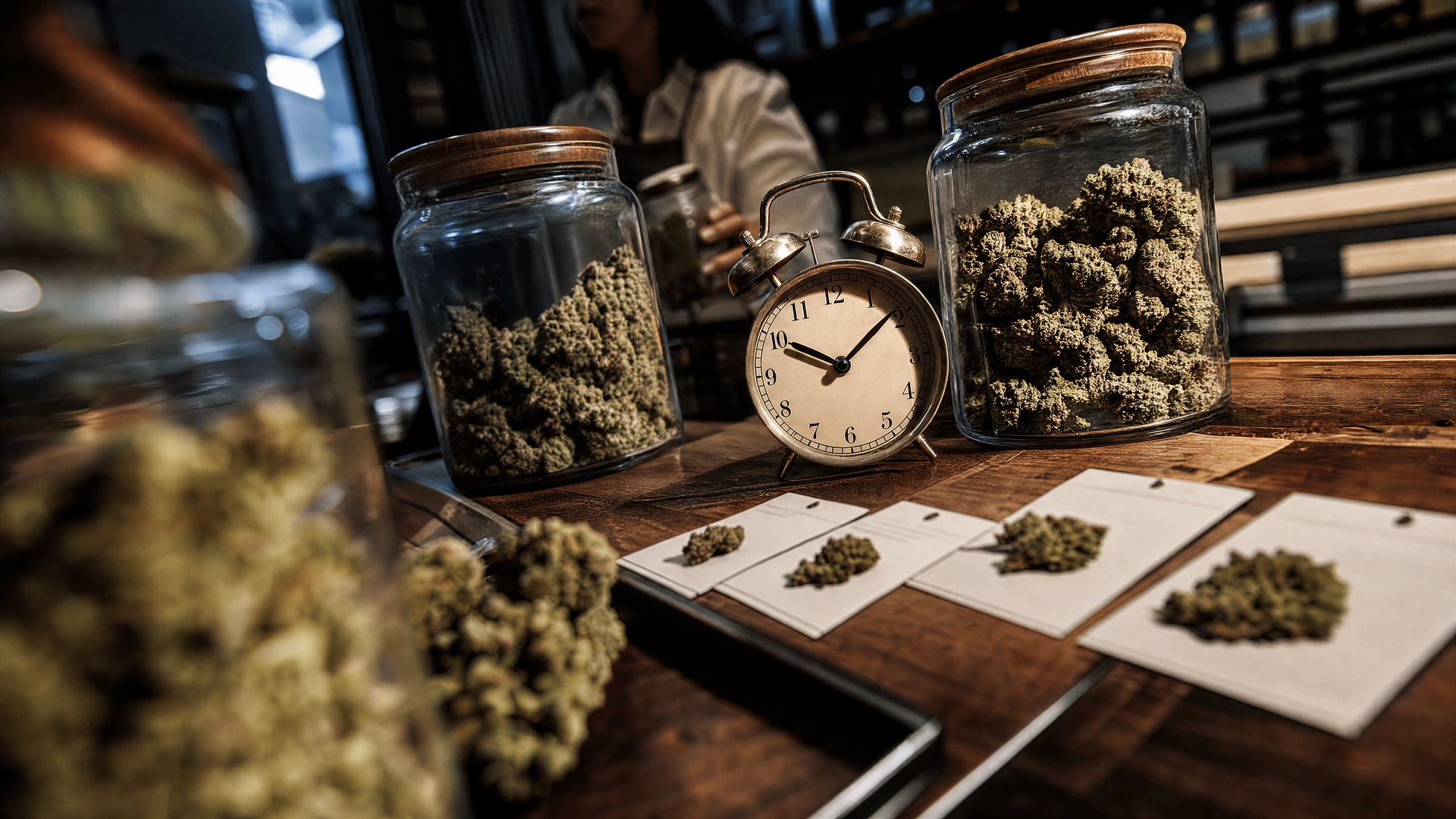














What cannabis tinctures actually are
A cannabis tincture is not simply “cannabis in a dropper bottle.” That is packaging, not pharmacology. Strictly speaking, a tincture is a liquid extract made with alcohol, usually ethanol. Many products now called tinctures are something else: cannabinoids dissolved in MCT oil, hemp seed oil, olive oil, or glycerin. They may still be useful preparations, but they do not behave the same way in the body, and treating them as interchangeable leads to bad dosing assumptions.
That distinction matters because absorption depends on two things more than marketing language: the solvent and the route of administration. Hold an ethanolic cannabis extract under the tongue and some of the dose may cross oral mucosa. Swallow an oil-based dropper product and it behaves much more like an edible. Same bottle style. Different kinetics.
Why “tincture” used to mean alcohol extract
Historically, tincture had a precise meaning in pharmacy. It referred to an alcoholic or hydroalcoholic extract of plant or animal material. Cannabis was once part of that tradition, not an outlier to it. In the United States, cannabis appeared in the U.S. Pharmacopoeia from 1850 until 1942, and the National Library of Medicine notes that it was removed from the National Formulary in 1941 and from the Pharmacopoeia in 1942 as legal restrictions tightened and concerns about variable potency grew.
That older medical use is often traced to William Brooke O’Shaughnessy, who in the 1840s reported on cannabis preparations he had studied in India and introduced to Western medicine. Those preparations were not vape pens, gummies, or “fast-acting drops.” They were extracts prepared in a pharmaceutical framework, commonly with alcohol, because ethanol pulled a broad range of constituents from the plant and helped preserve the preparation against microbial spoilage.
Ethanol still has real advantages. It is an efficient extractor of cannabinoids and many terpenes. It is also microbiologically stable. That is one reason alcohol-based tinctures became standard long before refrigeration and modern packaging. If someone in the nineteenth century said “cannabis tincture,” they did not mean MCT oil in a pipette bottle. They meant an ethanolic extract.
That older definition is not pedantry. It explains why “true tincture” and “oral cannabis drops” should not be collapsed into one category.
| Formulation | Typical carrier | Likely behavior | Key point |
|---|---|---|---|
| True tincture | Ethanol | May allow some oral-mucosal absorption, though part is still swallowed | Historically the strict meaning of tincture |
| Oil-based drops | MCT oil, hemp seed oil, olive oil | Usually behaves more like an oral extract when swallowed | Dropper bottle does not imply fast onset |
| Alcohol-free sweetened drops | Glycerin | Oral use; different extraction efficiency from ethanol | Pleasant taste does not make it equivalent to ethanol |
Why many modern “tinctures” are really oil-based oral extracts
Modern labeling has drifted. Today, tincture often means any liquid cannabinoid product sold with a dropper cap. By formulation, though, many are oils rather than tinctures. MCT oil is common because it is relatively stable, neutral in taste, and easy to dose by volume. Glycerin also appears in alcohol-free products, usually because it tastes sweet and feels familiar to people avoiding ethanol.
Chemically and pharmacokinetically, these carriers are not interchangeable. High-proof ethanol can support at least some transmucosal absorption when the liquid is held in the mouth. Even then, much of the dose is swallowed in real use. Oil-based products are even less likely to act like genuinely sublingual medicines unless they are specifically engineered for oral mucosal uptake. Most are better understood as orally ingested extracts that happen to be dispensed by dropper.[1] Cannabinoids. Franjo Grotenhermen. Chemistry & Biodiversity, 2007.
First-pass metabolism The processing of a swallowed drug by the liver before much of it reaches systemic circulation, which can reduce parent-drug levels and create active metabolites such as 11-hydroxy-THC.
That is the first big correction most articles miss: a dropper bottle does not tell you how fast the dose will hit. Route matters more than appearance. If most of the liquid is swallowed, onset is governed by gastric emptying, intestinal absorption, and first-pass metabolism in the liver. THC taken orally has low and variable bioavailability, commonly cited around 6 to 10 percent in the 2007 Chemistry & Biodiversity review by Grotenhermen. Inhaled THC is typically higher, around 10 to 35 percent in the same review. Oromucosal products can begin earlier than standard edibles, but they are not instant and not reliably “15-minute” products just because a label says sublingual.
A useful real-world comparator is nabiximols, the oromucosal spray marketed as Sativex in some countries. Each 100 microliter spray delivers about 2.7 mg THC and 2.5 mg CBD. Its clinical use is based on gradual titration over days, not one aggressive dose taken on faith that oral mucosa will absorb everything. That alone should cool a lot of the hype around retail “tinctures.”
The chemical forms inside the bottle: THC, THCA, CBD, CBDA and minor cannabinoids
The label may list THC and CBD, but the chemistry inside the bottle starts earlier than that. Raw cannabis primarily contains acidic cannabinoids, especially THCA and CBDA. These are not the same molecules as THC and CBD. Through decarboxylation, usually driven by heat and time, THCA loses a carboxyl group and becomes THC; CBDA becomes CBD.
So a tincture made from unheated flower can contain substantial THCA and CBDA. A tincture made from decarboxylated flower will contain much more THC and CBD. This is not a cosmetic difference. If psychoactive THC is expected, decarboxylation is not optional. Home recipes often blur this point and leave people wondering why an apparently potent preparation feels weak or feels different from a dispensary oil.[2] Labeling Accuracy of Cannabidiol Extracts Sold Online. Marcel O. Bonn-Miller, Samir Loflin Mace, Sabrina E. Ruffing, et al.. JAMA, 2017.
Minor cannabinoids may be present too: CBG, CBN, CBC, and others, depending on plant material and processing. Their amounts are often small, and labels are not always reliable. That is not a hypothetical problem. In a 2017 JAMA study led by Marcel Bonn-Miller, 69 percent of 84 online CBD products were mislabeled; 42.9 percent contained less CBD than labeled and 26.2 percent contained more. A cannabinoid dropper product should therefore be treated as a formulation with measurable chemistry, not as a vague herbal liquid.
So what is a cannabis tincture, actually? In the strict historical and pharmaceutical sense, it is an alcohol extract. In current retail language, it may be an oil or glycerin oral extract wearing the old name. The bottle does not settle the question. The solvent, the cannabinoid forms, and whether the dose is truly absorbed through the mouth or mostly swallowed do.
The medical history before prohibition
Long before cannabis was packaged as a lifestyle product, it sat on pharmacy shelves as a recognized medicine. Not an outsider remedy. Not a fringe import. In the late 19th and early 20th centuries, cannabis tinctures and extracts belonged to ordinary medical practice in Britain, the United States, and parts of Europe, prescribed by physicians and compounded by pharmacists alongside opium tinctures, chloroform liniments, and other standard preparations of the era.
The clearest American marker is the U.S. Pharmacopoeia. Cannabis entered the USP in 1850 and remained there until 1942. That date range matters because it shows cannabis was not merely tolerated; it was formally standardized as a drug for almost a century. The National Formulary carried cannabis preparations as well, until 1941. Its removal was not the discovery that the plant had no medical use. It came amid tightening legal restrictions, rising alarm about nonmedical use, and persistent problems with potency variation in plant-derived preparations.
19th-century reports by O'Shaughnessy helped establish a medical model for cannabis extracts, but those reports were not modern randomized controlled trials. Limited evidence
O'Shaughnessy and the 19th-century medical adoption of cannabis extracts
The physician most often linked to Western medical adoption of cannabis is William Brooke O'Shaughnessy. Working in India in the 1830s and 1840s, he studied local uses of cannabis and then tested preparations in animals and patients. His 1843 report described trials of cannabis resin preparations for conditions including pain, muscle spasm, convulsions, and rheumatic complaints. Some of his claims were overstated by modern standards; 19th-century clinical reporting was nothing like a randomized controlled trial. Still, his publications gave British and American physicians a model for how cannabis might be prepared, dosed, and prescribed.
That model centered on extracts and tinctures, not smoking. O'Shaughnessy was writing for physicians and pharmacists, and their world ran on measurable preparations. Resin dissolved in alcohol could be dispensed in drops or minims, mixed into other medicines, and entered into the language of the dispensary. Smoked cannabis, by contrast, was harder to standardize, harder to dose, and less compatible with the habits of Victorian medicine.
The form mattered because the chemistry mattered, even if doctors of the time did not yet know about THC, CBD, THCA, or CBDA. Cannabis resin was recognized as the active fraction. Alcohol was an effective way to capture and preserve that resin. This is one reason the old tincture has a stronger claim to the word “tincture” than many modern oil-based products sold in dropper bottles. Historically, a tincture meant an alcoholic solution or extract. That older definition shaped cannabis pharmacy from the beginning.
Cannabis in the U.S. Pharmacopoeia and National Formulary
Once cannabis entered the USP in 1850, it became part of mainstream materia medica. Physicians used it for pain, insomnia, neuralgia, migraine, menstrual complaints, and spastic or convulsive disorders, though the evidence base behind those uses was uneven. Standard references from the late 19th century list cannabis extract, tincture of cannabis, and related preparations in the same professional tone used for many other accepted drugs.
This matters because modern debates often flatten history into two false choices: either cannabis was a miracle medicine suppressed for political reasons, or it had no recognized place in medicine until recent decades. Neither is accurate. Cannabis occupied a real, if imperfect, place in pre-prohibition therapeutics. It was prescribed, taught, compounded, and debated. Doctors argued over dose consistency, indications, and side effects because they were actually using it.
The limits of that older system were also real. Plant medicines varied by crop, storage, age, and preparation method. Potency drifted. A cannabis extract made from one batch of flowering tops might not match the next. This is one of the reasons 20th-century physicians increasingly favored newer synthetic and single-molecule drugs whose effects were easier to reproduce. Aspirin, barbiturates, chloral derivatives, and later injectable sedatives and analgesics fit the emerging pharmaceutical model better than a variable botanical extract.
Law accelerated the decline. By the 1930s, state and federal restrictions had made cannabis harder to prescribe and handle. The Marihuana Tax Act of 1937 did not simply regulate paperwork; it chilled medical use by making access legally burdensome and professionally risky. The National Library of Medicine notes that cannabis was removed from the National Formulary in 1941 and from the USP in 1942 amid legal restriction and concern about variability. That sequence is the hinge point. Cannabis did not vanish from the pharmacopoeia because physicians suddenly proved it useless. It was squeezed out by a mix of law, stigma, and the changing standards of pharmaceutical manufacturing.
Why tinctures fit pre-prohibition pharmacy better than smoked cannabis
Tinctures made sense in the pharmacy of 1880 in a way smoking did not. Pharmacists already worked with alcoholic extracts. Ethanol preserved botanicals, slowed microbial spoilage, and allowed concentrated medicines to be dispensed in small volumes. A doctor could write for a fluid extract or tincture with an intended dose range; a pharmacist could compound it from a recognized formula; a patient could take it by the drop. That was familiar territory.
Smoking had the opposite profile. Dose varied with inhalation style, combustion losses, and the plant itself. It was immediate, yes, but medicine in that era generally preferred preparations that looked medicinal: bottled, labeled, measurable, and transferable between prescriber and pharmacist. A tincture fit the infrastructure of pre-prohibition care.
The irony is that many modern articles repeat the old form while misunderstanding the old pharmacology. They imply that every “tincture” is fast because it goes under the tongue. History says otherwise. Many cannabis tinctures were simply oral medicines taken by mouth in measured drops, often swallowed. That route would have produced delayed and variable effects, much as oral cannabinoids do now. The modern pharmacokinetic data help explain what older physicians were experiencing without having the language for it. In a 2007 review in Chemistry & Biodiversity, Grotenhermen reported oral THC bioavailability around 6 to 10 percent, far lower and more variable than inhaled THC, often cited around 10 to 35 percent. If a patient swallowed most of a tincture dose, onset would not have been rapid or highly predictable.
That does not make tinctures unimportant. It makes them historically legible. They were mainstream because they matched the pharmacy system of their time, not because they were pharmacokinetically superior to every other route. Their rise tells us how medicine used cannabis before prohibition. Their disappearance tells us just as much about drug law and industrial pharmacy as it does about the plant itself.
How cannabis tinctures are made
“Tincture” used to mean something fairly specific: a cannabis extract prepared in alcohol. That was the historical medical standard in the era when cannabis sat in the U.S. Pharmacopoeia from 1850 to 1942. Modern labeling is looser. Many products sold as tinctures are really oil-based oral drops, and that difference starts at the manufacturing stage. Solvent choice decides what gets pulled from the plant, how stable the preparation is, how it tastes, and how it behaves in the body.
Extraction is not kitchen magic. It is solubility chemistry.
Cannabis flower contains cannabinoids in their acidic forms, mainly THCA and CBDA, along with terpenes, waxes, pigments, flavonoids, lipids, and plant sugars. If heat is applied before extraction, THCA and CBDA lose a carboxyl group and convert into THC and CBD. If heat is not applied, the extract may remain rich in acidic cannabinoids instead. That is not a small detail. A tincture made from raw flower is chemically different from one made from decarboxylated flower, even if both came from the same plant.
Alcohol extraction: why ethanol works and what it pulls from plant material
Ethanol remains the benchmark because it is a strong, food- and pharmaceutical-accepted solvent with a broad extraction range. It can dissolve cannabinoids well, especially at high proof, while also pulling many terpenes and a share of other secondary compounds. Historically, that mattered. Alcohol-based cannabis tinctures were shelf-stable, portable, and reproducible enough to become standard medicinal preparations long before prohibition.
Why does ethanol work so well? Polarity.
Cannabinoids such as THC and CBD are largely lipophilic, so they dissolve readily in nonpolar or moderately polar environments. Ethanol is interesting because it has both a polar hydroxyl group and a nonpolar ethyl chain. That makes it amphiphilic enough to interact with cannabinoids while still dissolving some water-soluble plant constituents. In practice, high-proof ethanol can extract a wide spectrum of compounds quickly.
That broad pull is both a strength and a problem. Ethanol does not stop at cannabinoids. It can also extract chlorophyll, tannins, plant waxes, and bitter pigments, especially when the plant is soaked for long periods, ground too finely, or exposed to warmer temperatures. The darker and more bitter the tincture, the more likely it contains a heavier load of those compounds. Folklore often frames this as “stronger.” Usually it just means dirtier.
Cold extraction helps limit chlorophyll pickup. So does shorter contact time. Coarse milling rather than powdering the flower also reduces the surface area that releases unwanted compounds. Producers chasing cleaner extracts often chill both the cannabis and the ethanol before extraction, then filter aggressively.
At larger scale, ethanol extraction is often followed by winterization. This is not a mystical refinement step; it is a cleanup step. The crude extract is dissolved in ethanol and held at low temperatures so waxes, lipids, and some heavier residues precipitate out and can be filtered away. Winterization produces a clearer, more stable extract with less haze and less sediment. If a product maker wants a true alcohol tincture, that refined extract can remain in ethanol at a set concentration. If not, the ethanol may later be evaporated and the concentrated extract moved into oil.
That last point matters because many “tinctures” begin as ethanol extracts even when the final bottle contains no alcohol. Ethanol is still widely used upstream because it is efficient and scalable.
Glycerin extraction: lower efficiency, sweeter formulation, different use case
Vegetable glycerin is often presented as a simple alcohol-free substitute. Chemically, it is not equivalent.
Glycerin is a polar, viscous liquid that tastes sweet and is pleasant in the mouth, which explains its appeal in oral formulations. It can extract some cannabis constituents, but it is generally less efficient than high-proof ethanol at pulling cannabinoids from plant material. That lower efficiency means weaker extraction unless the process runs longer, uses more plant material, or starts from a concentrated cannabis extract rather than raw flower.
This is where many home recipes go wrong. A long soak in glycerin does not magically make glycerin equal to ethanol. Cannabinoid solubility is still the limiting factor. Heating can improve movement and extraction somewhat, but excessive heat drives off volatiles and can degrade flavor. Because glycerin is thick, filtration is also slower and less complete.
Its strengths are different. Glycerin makes a sweeter, softer oral preparation. It avoids alcohol content, which matters for some users. It can also improve mouthfeel. But from a strict extraction-science standpoint, it is usually a compromise solvent, not a superior one.
Some glycerin products on the market are better understood as formulated mixtures rather than direct glycerin macerations. In other words, cannabinoids may first be extracted or distilled by another method, then blended into glycerin to create an alcohol-free drop product. That is a sensible manufacturing choice. It just is not the same thing as saying glycerin is an equally strong primary extractor.
MCT oil infusion and extract dilution
MCT oil products dominate the consumer market for a practical reason: they are easy to formulate, familiar to take by dropper, and mask harshness better than alcohol. But MCT oil is usually not a historical tincture solvent. It is a carrier.
MCT stands for medium-chain triglycerides, commonly derived from coconut or palm sources. Cannabinoids dissolve well in fats, so MCT can hold THC, CBD, and other neutral cannabinoids after decarboxylation. The oil can be made in two main ways. One is direct infusion, where decarboxylated cannabis is heated with oil long enough for cannabinoids to migrate into the fat. The other, more common in controlled production, is dilution of a concentrated cannabis extract or distillate into measured MCT oil.
Those are not the same process. Direct infusion is simple but relatively imprecise and often leaves behind a lot of cannabinoids in the spent plant material. Dilution from a tested extract is much more controllable. If a producer starts with a decarboxylated extract of known potency, the final milligrams per milliliter can be set with much better accuracy.
MCT oil has formulation advantages. It is more oxidation-resistant than many long-chain vegetable oils, pours well, and stays fluid at room temperature. Still, oil-based drops behave mostly like orally ingested products unless specially formulated for mucosal uptake. They do not become fast-acting just because they sit in a dropper bottle. That confusion starts with manufacturing language and carries over into consumer expectations.
Extraction variables and what they change
- Temperature
- Speeds extraction but can also volatilize terpenes and push further decarboxylation or degradation.
- Time
- Desired compounds come out early; longer soaks can pull more chlorophyll and bitter plant compounds.
- Particle size
- Finer grinding increases surface area but also raises chlorophyll pickup, particulates, and filtration difficulty.
- Solvent ratio
- Too little solvent leaves cannabinoids behind; too much can create a dilute extract that needs later concentration.
- Decarboxylation
- Determines whether the final tincture is richer in acidic cannabinoids or in THC and CBD.
Why temperature, time, particle size and solvent ratio change the final product
Every extraction variable pushes the chemistry in a direction.
Temperature is the obvious one. Heat increases molecular motion and usually speeds extraction, but it also changes the composition of the extract. Too much heat can volatilize terpenes, deepen plant taste, and push further decarboxylation or degradation. That can be useful if the goal is an activated THC/CBD product, but it is not neutral. A raw acidic extract and a fully decarboxylated extract are different products with different cannabinoid profiles.
Time matters because extraction is not all-or-nothing. Desired compounds come out early; unwanted compounds often keep coming out if the soak continues. This is especially true with ethanol. A quick cold wash may recover substantial cannabinoids with less chlorophyll. A long room-temperature soak can produce a greener, harsher extract without proportional benefit.
Particle size changes surface area. Finely ground cannabis extracts faster, but the gain comes with a cost: more chlorophyll, more small particulates, harder filtration, and often more waxes and bitter plant matter in the final liquid. Coarser material is slower but cleaner.
Solvent ratio decides concentration and efficiency. Too little solvent can leave cannabinoids stranded in the plant matrix. Too much solvent can improve recovery but create a dilute extract that requires later concentration or larger dose volumes. Commercial extraction balances recovery against cleanup, stability, and target potency per milliliter.
Decarboxylation sits over all of this. If psychoactive THC is the goal, decarboxylation is not optional. THCA will not act like THC just because it was soaked in alcohol or oil. Heat and time have to convert it. The same principle applies to CBDA and CBD, though the reasons for preserving or converting acidic cannabinoids may differ by intended use.
So why does alcohol remain the historical reference point while oils dominate current shelves? Because they solve different problems. Ethanol is a highly effective extractor and a stable traditional base. Oils are easier for many people to tolerate and easier to formulate into familiar drop products. Calling them interchangeable misses the actual science. The solvent is not just a carrier. It helps define the product.

Decarboxylation explained without the myths
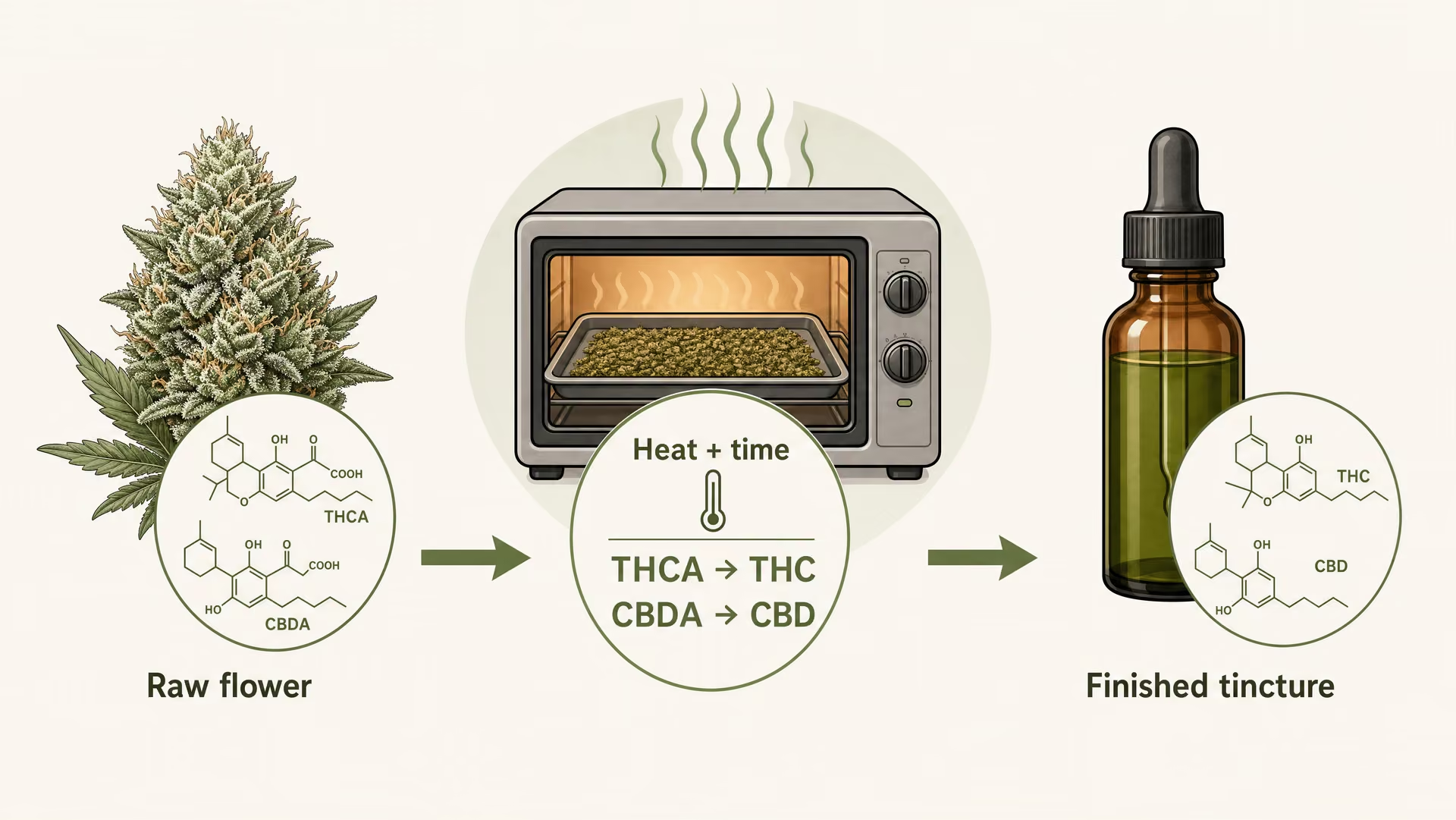
Decarboxylation A heat- and time-driven reaction that removes a carboxyl group from cannabinoid acids such as THCA and CBDA, converting them into THC and CBD.
Decarboxylation sounds technical because it is technical. It is also simple once you strip away the internet folklore. Cannabis does not begin with THC and CBD sitting in the flower in their familiar neutral forms. Fresh and properly dried plant material contains mostly cannabinoid acids: THCA, CBDA, and smaller amounts of others such as CBGA. Heat and time remove a carboxyl group from these molecules, releasing carbon dioxide and converting them into THC, CBD, and related neutral cannabinoids.
That one step changes the chemistry of a tincture before the solvent even touches the plant. Many home recipes fail right here. They treat decarboxylation as optional, assume all tinctures “work sublingually,” then wonder why the result feels weak, delayed, or chemically different from expected.
What decarboxylation does, step by step
- Start with cannabinoid acids Raw cannabis contains mainly THCA and CBDA rather than much THC or CBD.
- Apply heat and time The acidic cannabinoids lose carbon dioxide as the carboxyl group is removed.
- Create neutral cannabinoids THCA becomes THC and CBDA becomes CBD.
- Change expected effects A bottle rich in THC/CBD will not behave the same way as one rich in THCA/CBDA.
THCA to THC and CBDA to CBD
The key reaction is straightforward: THCA becomes THC, and CBDA becomes CBD, through loss of CO2. The “A” stands for acid. Remove that acidic carboxyl group and you get the form most people mean when they say THC or CBD.
For THC, this matters a lot. THCA is not simply “THC that hasn’t kicked in yet.” It is a different molecule with different pharmacology. THCA does not produce the classic intoxicating effect associated with THC in anything like the same way, largely because it has poor activity at CB1 receptors compared with THC. If someone expects a psychoactive tincture, decarboxylation is usually required first.
CBD is a little less misunderstood but still often misdescribed. CBDA and CBD are not interchangeable either. CBDA may have its own biological effects, but a raw extract high in CBDA is not the same product as a decarboxylated CBD tincture. This is not semantics. It affects label interpretation, dosing, and expected effects.
Heat can be applied before extraction, during extraction, or after extraction, but the practical result should be clear on paper: is the bottle rich in THCA/CBDA, or in THC/CBD? A raw-acid tincture can be intentional. It is not a mistake if that is the goal. The mistake is pretending raw and decarboxylated products are functionally identical.
What happens if cannabis is not decarboxylated first
If cannabis is extracted without prior decarboxylation, the tincture will contain a higher proportion of acidic cannabinoids. That changes both effect profile and use case.
With unheated flower, an alcohol extract may still pick up THCA and CBDA efficiently, because ethanol is a strong solvent for cannabinoids. But extraction alone does not magically convert them. Swallowing that tincture may expose it to some heat over time in storage, and tiny amounts of conversion can happen gradually, yet that is not a reliable substitute for controlled decarboxylation. You do not get a predictable THC product by hoping the bottle ages into one.
This is where user expectations often go off track. Someone reads “10 mg per mL total THC potential,” then uses an un-decarboxylated tincture and expects the same experience as 10 mg per mL active THC. Not the same thing. Some labels report cannabinoids as currently present; others use “total THC” or “total CBD,” which mathematically estimate what would be available after full decarboxylation. Those numbers are useful for lab accounting, but they do not mean the tincture is already chemically converted.
For tinctures, route matters too. Even a properly decarboxylated THC tincture is not automatically fast. Ethanolic products held under the tongue may permit some transmucosal absorption, but much of the dose is swallowed in real life. Oil-based drops often behave even more like ordinary oral ingestion. Oral THC has low and variable bioavailability, around 6 to 10 percent in the 2007 Chemistry & Biodiversity review by Grotenhermen, because first-pass metabolism reduces and reshapes the dose. If decarboxylation is skipped, you are starting with the wrong cannabinoid form before dealing with route-related losses.
How over-heating degrades cannabinoids and terpenes
More heat is not better. Decarboxylation is a control problem, not a brute-force problem.
At moderate temperatures over a defined time, cannabinoid acids convert efficiently. Push the temperature too high or run it too long and neutral cannabinoids begin to degrade. THC can oxidize to CBN over time and with heat exposure. Terpenes, which are generally more volatile than cannabinoids, are even easier to drive off. Myrcene, limonene, and pinene do not all vanish at one exact number, but many aromatic compounds are reduced by careless heating, especially in thin layers exposed to moving hot air.
That is why home extraction errors often begin with an oven that runs hot, a tray left in too long, or a loosely covered pan that lets volatiles escape. The result may still be active, just less predictable and often flatter in aroma. For tinctures, that lost aroma is evidence of chemistry, not just smell.
The practical target is consistency. Use measured temperatures, enough time for conversion, and no more. A properly decarboxylated batch gives you a tincture whose cannabinoid profile matches its intended purpose. A raw-acid tincture should stay raw on purpose. A THC tincture should actually contain THC, not mostly THCA plus wishful thinking.

Sublingual, buccal, or swallowed: route matters more than branding
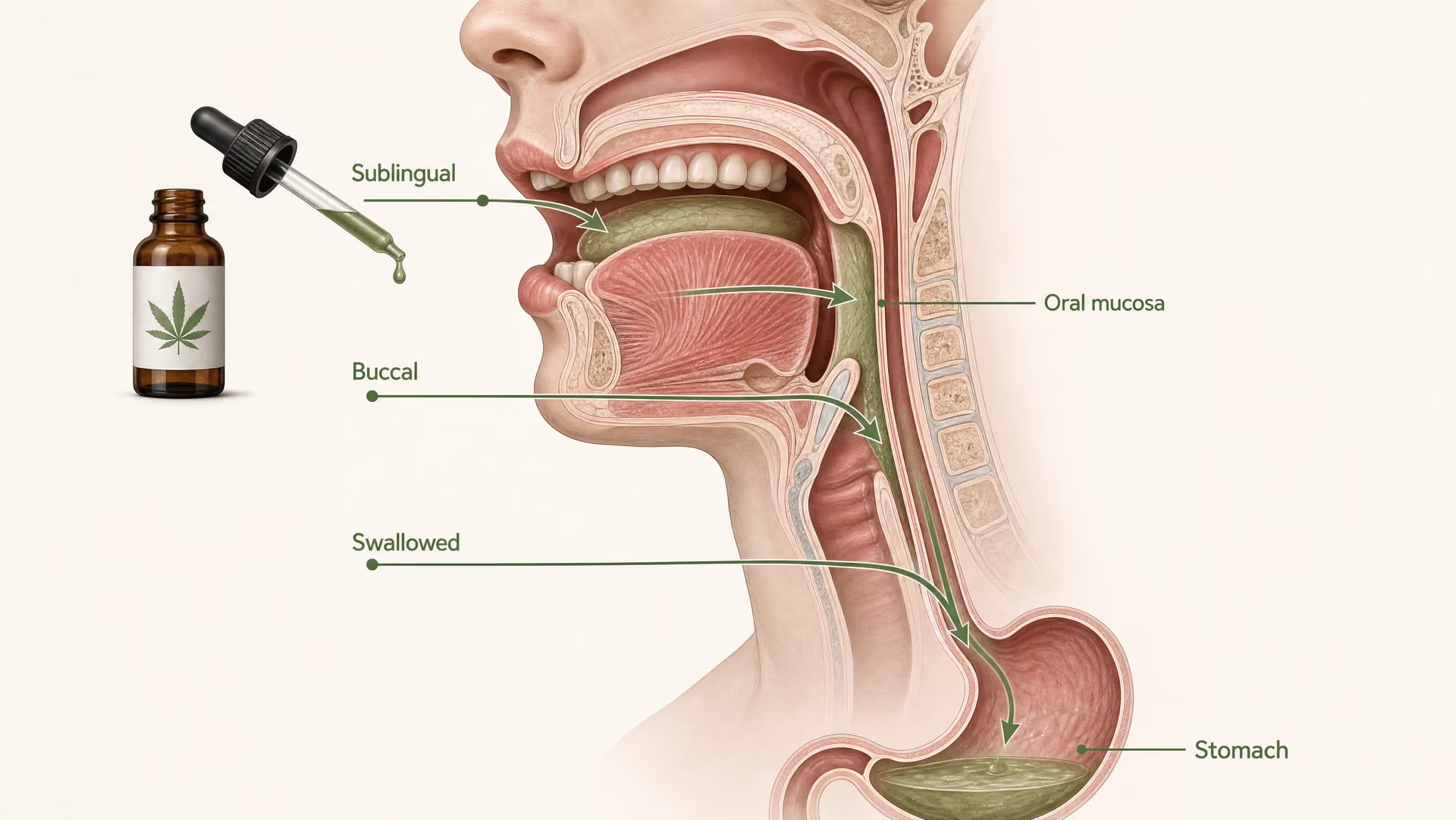
The dropper bottle has misled a lot of people. A cannabis extract in a small bottle is often described as “sublingual” by default, as if the format itself guarantees rapid absorption through the tissues under the tongue. It does not. What matters is where the cannabinoids actually go after you dispense them: across the oral mucosa, down the throat into the stomach, or some mix of both.
That distinction changes onset, intensity, and the chemistry of what reaches the bloodstream. It also explains why many modern “tinctures” behave less like old-school alcohol tinctures and more like oral edible doses.
What can really absorb through oral mucosa
Sublingual absorption means drug molecules pass through the membrane under the tongue directly into systemic circulation. Buccal absorption means the same basic idea, but through the cheek lining. These tissues are more permeable than ordinary skin and they can bypass a large part of first-pass liver metabolism. That is why certain medicines are designed for them: nitroglycerin is the classic example.
Cannabinoids are a trickier fit.
THC and CBD are both highly lipophilic. They do not dissolve in water well, which already makes oral-mucosal delivery harder than the simple “hold it under your tongue” advice suggests. A formulation has to spread across the mucosa, stay there long enough, and release cannabinoid molecules in a form that can cross tissue before saliva carries the dose away. Ethanol can help with that. Some cosolvents, surfactants, and spray formulations can help too. Plain oil is not automatically good at this just because cannabinoids dissolve in it.
This is why true ethanolic tinctures and purpose-built oromucosal sprays deserve to be separated from generic oil drops. Ethan Russo and other cannabis pharmacology researchers have long emphasized that route of administration shapes effect as much as cannabinoid ratio does. Nabiximols is a useful real-world example. It is an oromucosal spray, not just a cannabis extract in a bottle, and each 100 microliter spray delivers 2.7 mg THC and 2.5 mg CBD. Even there, product guidance does not promise instant effects. It recommends gradual titration over days because absorption is variable and dose response is individual.
The oral mucosa can absorb some cannabinoids. That part is true. The exaggerated version is the problem. Not every drop placed under the tongue becomes a fast transmucosal dose, and not every formulation is equally suited to that route.
Contact time matters. Saliva matters. Volume matters. So does concentration. If a person dispenses a full dropper of viscous oil, swishes unintentionally, then swallows after ten seconds, most of that dose is no longer acting as a sublingual preparation in any meaningful pharmacokinetic sense.
Why oil drops held under the tongue often still behave like oral doses
This is the part marketing usually skips. Many products sold as tinctures are actually oil-based extracts in MCT or similar carriers. They may still be useful products, but “oil under the tongue” is not the same thing as efficient mucosal delivery.
There are two practical reasons. First, oils tend to coat and pool rather than rapidly partition into the watery layer covering oral tissues. Second, cannabinoids in oil still need time and favorable conditions to leave that carrier and cross the mucosa. In real use, people rarely hold the liquid motionless for long enough to make mucosal uptake the dominant pathway. They talk, swallow reflexively, or take a sip of water. A substantial fraction of the dose ends up in the gastrointestinal tract.
That is why many oil drops have onsets closer to oral products than to inhaled cannabis. People expect a “15-minute tincture effect” and then redose too early because nothing much happens at first. Thirty to 90 minutes later, the swallowed portion starts coming on. This is not unusual; it is the predictable outcome of route mismatch.
Even with ethanol-containing tinctures, only part of the dose may absorb through oral tissues. The rest is swallowed. So the effect profile can be mixed: some earlier onset from the absorbed fraction, then a later rise from the gastrointestinal fraction. That hybrid pattern is real, but it is not the same as saying all tinctures are rapid-fire sublingual products.
A related problem is imprecise dosing assumptions. Droppers look medical, but they are not magic measurement devices. Viscosity, dropper design, and fill volume all affect what actually leaves the bottle. If the label is inaccurate, the problem gets worse. In a 2017 JAMA study led by Bonn-Miller, 69% of 84 CBD products purchased online were mislabeled; 42.9% contained less CBD than labeled and 26.2% contained more. Route-specific expectations become even less reliable when the dose itself is uncertain.
Swallowed tinctures and first-pass metabolism
Once the swallowed fraction reaches the stomach and small intestine, the pharmacology changes. Absorption becomes subject to gastric emptying, intestinal transit, fed versus fasted state, bile secretion, and then hepatic first-pass metabolism. This is why oral THC is slower and less predictable than inhaled THC.
The numbers are not close. A 2007 review in Chemistry & Biodiversity by Grotenhermen reported oral THC bioavailability around 6 to 10%, compared with inhaled THC commonly cited around 10 to 35%. Oral dosing is not just lower in bioavailability; it is more variable. Two people taking the same milligram amount may have very different effects, and the same person may respond differently depending on whether they took it after dinner or on an empty stomach.
CBD also undergoes substantial first-pass metabolism, though the experiential consequences differ from THC because CBD is not intoxicating in the same way. Still, for both compounds, swallowed delivery usually means delayed onset. Thirty to 90 minutes is a common rule of thumb, and sometimes it takes longer. High-fat meals can increase cannabinoid absorption in some settings, which can amplify effects and extend duration.
This is where decarboxylation matters too. If the plant material was not heated adequately before extraction, much of the cannabinoid content may remain in acidic forms such as THCA and CBDA rather than THC and CBD. Those are chemically different compounds with different pharmacology. If a person expects psychoactive THC from an undecarboxylated preparation, route is not the only issue. The chemistry may be wrong from the start.
Historically, tinctures were pharmaceutical preparations because they were standardized as well as technology allowed at the time. Cannabis appeared in the U.S. Pharmacopoeia from 1850 to 1942, and those preparations were understood as medicines, not vague lifestyle products. The old medical literature had plenty of inconsistency, but it did not confuse route of administration as casually as modern consumer copy often does.
11-hydroxy-THC and why ingested THC feels different
The biggest reason swallowed THC feels different is metabolism. After oral absorption, THC passes through the liver before much of it reaches systemic circulation. There, a portion is converted into 11-hydroxy-THC, an active metabolite with strong central effects. That transformation is a major reason edible or swallowed-THC experiences can feel heavier, longer, and sometimes more disorienting than inhaled THC at what appears to be a similar labeled dose.
This is not just “same THC, slower.” It is different exposure to different active compounds over a different timeline.
Inhalation sends THC to the bloodstream rapidly and produces a steep rise and fall. Oromucosal dosing can land somewhere in the middle depending on how much is truly absorbed through the mouth. Swallowed THC rises more slowly, often peaks later, and generates more 11-hydroxy-THC through first-pass metabolism. That combination is why people often describe oral THC as more body-heavy, more immersive, or harder to titrate.
It also carries a higher delayed-overconsumption risk. If someone treats an oil “tincture” like a fast sublingual product but it behaves mostly as an oral dose, they may take more before the first dose peaks. Then the swallowed THC and its metabolite catch up. The result can be unpleasantly strong intoxication, anxiety, tachycardia, dizziness, or prolonged sedation.
For CBD-dominant products, the route issue still matters, but the stakes are somewhat different. The main concern is not 11-hydroxy intoxication; it is delayed onset, inconsistent absorption, and interaction potential. CBD is metabolized by hepatic enzymes including CYP3A4 and CYP2C19, so swallowed doses can matter for drug interactions even when they do not feel dramatic.
The bottom line is plain. “Tincture” tells you almost nothing about speed on its own. An alcohol-based preparation held correctly in the mouth may produce some earlier systemic absorption. An MCT-based dropper often acts largely like an oral extract. A swallowed THC dose is slower, less bioavailable, and metabolically different because first-pass conversion creates 11-hydroxy-THC. If you want to predict onset and effect, route beats branding every time.
Onset, duration, and bioavailability compared with smoking, vaping, and edibles
Route matters as much as the bottle. Sometimes more. A dropper does not make a cannabis extract “fast acting,” and calling something a tincture does not tell you how much of the dose is absorbed through the mouth versus swallowed into the gut. That distinction drives onset, peak effect, and variability.
Published pharmacokinetic ranges give a useful framework. In the 2007 Chemistry & Biodiversity review by Grotenhermen, oral THC bioavailability was estimated at about 6–10%, while inhaled THC was placed around 10–35%. Those numbers are broad because cannabinoid absorption is messy: user technique, fed state, dose size, formulation, and tolerance all shift the result. Ethan Russo and other cannabinoid pharmacology researchers have made the same point for years. There is no single onset time for “tinctures” because there is no single route hiding inside that word.
| Route | Typical onset | Common peak window | Typical duration | Main driver |
|---|---|---|---|---|
| Smoking or vaping | 1–5 minutes | 15–30 minutes | 2–4 hours | Alveolar absorption in the lungs |
| Oral edibles | 30–90 minutes, sometimes 2 hours | 2–4 hours | 6–8 hours or longer | GI absorption plus first-pass metabolism |
| Oromucosal dosing | 15–45 minutes for some users; often closer to 45–120 minutes in mixed real-world use | Variable | Between inhalation and edibles depending on swallowed fraction | Partial oral-mucosal absorption plus swallowed portion |
Typical onset and duration windows by route
Inhalation is still the quickest route in routine use. Smoking and vaping usually produce noticeable effects within minutes, often 1–5 minutes, with peak subjective effects commonly arriving around 15–30 minutes and total duration often landing in the 2–4 hour range, sometimes longer at higher doses. That speed comes from alveolar absorption in the lungs and rapid delivery to the bloodstream. It is also why inhalation is relatively easy to titrate: people can take one puff, wait a few minutes, then decide whether to continue.
Oral edibles are slower and less predictable. A common real-world onset window is 30–90 minutes, but 2 hours is not unusual, especially after a large meal. Peak effects can arrive around 2–4 hours, and duration often runs 6–8 hours or longer. For some users, residual effects stretch well past that. This is the route with the highest risk of delayed overconsumption because people mistake “not feeling it yet” for “not enough.”
Oromucosal dosing sits in between, but not as neatly as marketing claims. A true alcohol tincture held under the tongue or against the cheek for 30–90 seconds can permit some absorption across oral mucosa before the rest is swallowed. A specifically designed oromucosal spray such as nabiximols gives the clearest comparator. Each 100 microliter spray of nabiximols delivers 2.7 mg THC and 2.5 mg CBD, and its medical use is built around gradual titration over days, not instant, highly predictable effects. That alone should cool the common “15-minute tincture” promise.
In practice, many products sold as tinctures behave mostly like oral extracts. Oil-based drops, especially MCT preparations, tend to spread and get swallowed rather than remain in prolonged contact with oral mucosa. They can still work. They just often work on an edible timeline more than an inhalation timeline. Some people feel effects in 15–45 minutes from careful sublingual use, especially with ethanol-heavy formulations, but many do not. A 45–120 minute window is often more honest for the mixed oral-plus-swallowed reality of dropper dosing.
Duration follows the same logic. More mucosal absorption can shorten onset and reduce the long tail a bit. More swallowing pushes the experience toward the longer edible pattern.
Why oral THC bioavailability is low and variable
The short answer is first-pass metabolism. THC absorbed from the intestine travels through the portal circulation to the liver before reaching systemic circulation. There, a meaningful fraction is metabolized, including conversion to 11-hydroxy-THC, an active metabolite that crosses the blood-brain barrier well and contributes to the sometimes heavier, longer edible effect.
That is why oral THC can feel stronger than expected despite low measured bioavailability. Low parent-THC bioavailability does not mean weak subjective effect. It means less unchanged THC reaches circulation, and what does happen next depends on metabolism.
Variability starts before the liver. Gastric emptying changes absorption timing. A high-fat meal can increase cannabinoid absorption because cannabinoids are lipophilic, yet the same meal can delay onset by slowing stomach emptying. Formulation matters too. THC dissolved in ethanol, emulsified in a nanoformulation, suspended in oil, or packed into a capsule will not behave identically. Glycerin preparations add another wrinkle: they are generally less efficient cannabinoid extractors than high-proof ethanol, so the concentration and dose consistency may differ before absorption even begins.
Then there is the chemistry of the starting material. If a preparation was not decarboxylated, much of the cannabinoid content may remain in acidic forms such as THCA and CBDA rather than THC and CBD. That matters a lot for THC-containing products expected to be intoxicating. Decarboxylation is not optional if the goal is meaningful psychoactive THC from an oral or tincture preparation. Heat and time convert THCA to THC. Home recipes often blur this, and the result is a bottle that does not match the label or the user’s expectations.
Tolerance adds another layer. Frequent users may report slower or blunted subjective effects at the same plasma concentration. Technique matters too. Holding drops briefly under the tongue, then immediately swallowing, is not the same as distributing them across the sublingual and buccal surfaces and waiting. Even saliva production can change how much stays in contact with mucosa.
Where tinctures fit between inhalation and edibles in real-world use
The most accurate answer is awkward but useful: tinctures are not one thing. Their place on the spectrum depends on solvent, formulation, cannabinoid chemistry, and user behavior.
A traditional ethanolic tincture held in the mouth has a plausible case for partial transmucosal absorption. That can move onset earlier than a brownie or capsule. It may also reduce some first-pass loss if part of the dose enters systemic circulation directly through oral tissues. Yet even here, a good share of the dose is usually swallowed. So the effect curve is often hybrid: an earlier front edge, then a slower oral rise.
Modern oil drops often sit closer to edibles than to inhalation. Calling them “sublingual” does not make oral mucosa absorb oil efficiently. Unless a product is clearly engineered for oromucosal delivery, the safer assumption is that much of it will behave like an oral extract with delayed onset and high variability.
That middle position can still be useful. People who want to avoid smoke or vapor but do not want the full delay of a conventional edible may prefer carefully dosed oromucosal use. The tradeoff is uncertainty. Inhalation remains faster and easier to titrate in the moment. Edibles remain longer lasting. Tinctures and oral drops occupy the wide, often fuzzy middle.
Dose calculation needs caution here. Droppers are not inherently precise measuring tools, especially if the label gives milligrams per bottle but not per milliliter. Product quality is another reason not to overstate precision. In a 2017 JAMA study, Bonn-Miller and colleagues found that 69% of 84 online CBD products were mislabeled; 42.9% contained less CBD than labeled and 26.2% contained more. That study was on CBD products, not every cannabis tincture on the market, but the lesson carries over. Small-volume dosing only works if the stated concentration is accurate.
So the practical comparison is simple. Smoking and vaping are fastest. Edibles are slowest and longest. Oromucosal tinctures can sit between them, but only when the formulation and technique actually support absorption through the mouth. Otherwise, the dropper is mostly a delivery device for an edible-sized wait.
How to dose cannabis tinctures and read the label correctly
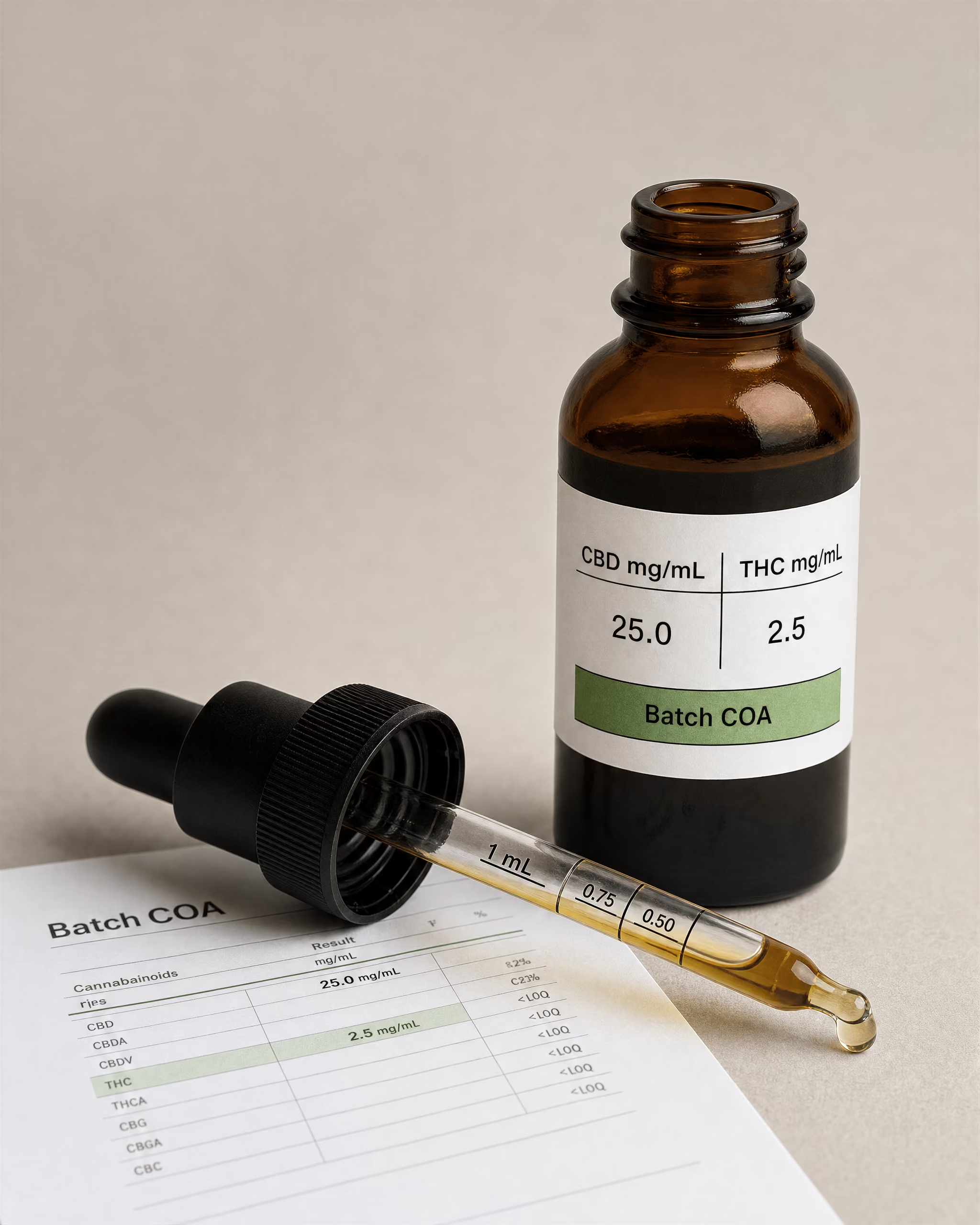
A tincture label can look simple and still tell you almost nothing useful. “1000 mg” splashed across the front is not a dose. It is usually the total cannabinoids in the bottle, and without bottle size, cannabinoid breakdown, and some way to verify the numbers, that headline figure is close to meaningless.
Dose reading starts with one rule: always convert the label into milligrams of each cannabinoid per amount you actually take. That means per milliliter, and sometimes per drop. It also means asking whether the product is an alcohol tincture meant for some sublingual use, or an oil-based oral extract that will behave more like something swallowed. Route changes effect timing more than marketing copy does.
A practical caution before the math: educational dosing guidance is not medical advice. Cannabis can interact with other drugs, especially through CYP enzymes, and people with liver disease, psychiatric vulnerability, pregnancy, or a history of adverse reactions need individualized guidance.
- Bottle size
- 30 mL
- CBD total
- 600 mg
- THC total
- 150 mg
- CBD concentration
- 20 mg/mL
- THC concentration
- 5 mg/mL
- Approximate drop count used in example
- 20 drops/mL

Milligrams per bottle, milligrams per milliliter, and milligrams per drop
Start with the easiest conversion.
| Measured amount | CBD delivered | THC delivered |
|---|---|---|
| 1 mL | 20 mg | 5 mg |
| 0.5 mL | 10 mg | 2.5 mg |
| 0.25 mL | 5 mg | 1.25 mg |
| 1 drop (approx., using 20 drops/mL) | 1 mg | 0.25 mg |
If a bottle says:
- 30 mL bottle**
- 600 mg CBD total**
- 150 mg THC total**
then the concentration is:
- CBD: 600 ÷ 30 = 20 mg/mL**
- THC: 150 ÷ 30 = 5 mg/mL**
That is the number that matters. Once you know mg/mL, you can estimate what one full dropper contains. Many droppers are designed to draw up about 1 mL when filled to the 1 mL mark, but not all droppers are calibrated, and not every “full dropper” is actually 1 mL. Some are 0.5 mL. Some have no markings at all. Some people squeeze half a bulb and think they took a full serving. This is why “one dropperful” is sloppy dosing language.
So if that same bottle is 20 mg/mL CBD and 5 mg/mL THC:
- 1 mL gives 20 mg CBD + 5 mg THC**
- 0.5 mL gives 10 mg CBD + 2.5 mg THC**
- 0.25 mL gives 5 mg CBD + 1.25 mg THC**
Per-drop math is less precise, but still useful for low-dose titration. A common rough estimate is 20 drops per mL for many liquids. Yet viscosity changes drop size. Oil, glycerin, and alcohol do not form identical drops, and different droppers dispense differently. So “mg per drop” is always an approximation unless the maker has validated it.
Using the same example:
- 20 mg/mL CBD ÷ 20 drops/mL = about 1 mg CBD per drop
- 5 mg/mL THC ÷ 20 drops/mL = about 0.25 mg THC per drop
That lets someone take, say, 4 drops for about 4 mg CBD and 1 mg THC. But remember: this estimate assumes 20 drops equals 1 mL in that specific bottle. If the liquid is thick MCT oil, your real drop count may differ.
A cleaner method is to use the marked dropper and think in fractions of a milliliter. If the dropper is unmarked, measure once with an oral syringe, note where 0.25 mL or 0.5 mL sits visually, and use that as your reference.
One more label trap: sometimes the front panel lists hemp extract 1500 mg rather than CBD 1500 mg. Those are not the same thing. “Hemp extract” could include carrier oil, terpenes, minor cannabinoids, plant waxes, and other non-CBD material. Dose calculations need the actual milligrams of THC, CBD, and any other named cannabinoid.
THC:CBD ratios and what they actually imply
Ratios are helpful, but they get oversold.
A 1:1 THC:CBD tincture does not mean the effects cancel each other out or that intoxication disappears. It means the preparation contains equal amounts, by milligrams, of THC and CBD. If a 1 mL dose contains 5 mg THC and 5 mg CBD, that is a 1:1 ratio. Some people find CBD moderates certain THC effects such as anxiety or tachycardia. Some do not. The relationship depends on dose, person, timing, and route.
Other common ratios:
- 20:1 CBD:THC** often means CBD-dominant, with small THC exposure
- 4:1 CBD:THC** still contains enough THC to matter
- 1:20 THC:CBD and 20:1 CBD:THC** are just two ways of writing the same thing, so read carefully
- High-THC ratios** such as 5:1 THC:CBD are not “balanced” just because CBD is present
Ratios can hide absolute dose. A 20:1 CBD:THC product could be 200 mg CBD and 10 mg THC per mL, or 20 mg CBD and 1 mg THC per mL. Same ratio. Very different dose. For inexperienced users, total milligrams matter more than ratio alone.
A useful real-world comparator is nabiximols, the oromucosal extract used in medicine, where each 100 microliter spray delivers 2.7 mg THC and 2.5 mg CBD. That nearly 1:1 format is not dosed casually; product guidance uses gradual titration over days. That tells you something important: even labeled, standardized cannabinoid products are usually introduced slowly, not in large first doses.
Also check whether the label reports THC or THCA, CBD or CBDA. If a tincture was made from unheated plant material, acidic cannabinoids may dominate. THCA is not the same as active THC for psychoactive dosing. If decarboxylation did not happen before extraction, expected effects may differ a lot from what a consumer assumes.
Starting-dose logic for inexperienced users
For someone with little or no THC experience, the sensible approach is simple: start low, increase slowly, and wait long enough.
A reasonable first THC trial from a tincture is often around 1 to 2.5 mg THC, especially if the product is likely to be swallowed rather than truly absorbed across the oral mucosa. If the formulation is CBD-dominant and THC is under 1 mg per dose, people may start a bit higher on the CBD side, but that does not change the rule for THC itself.
Examples:
- If your tincture contains 5 mg THC per mL, then 0.2 mL = 1 mg THC
- If it contains 10 mg THC per mL, then 0.1 mL = 1 mg THC
- If it contains 0.25 mg THC per drop, then 4 drops = 1 mg THC
Then wait. Really wait. Oral THC has low and variable bioavailability, around 6 to 10% in the 2007 Chemistry & Biodiversity review by Grotenhermen, and onset is commonly 30 to 90 minutes or longer when swallowed. Oromucosal absorption can begin earlier, but it is still not inhalation, and the “effects in 15 minutes” promise attached to many tinctures is too confident.
If nothing happens after a first low dose, increasing the next session is safer than stacking repeated doses too quickly the same evening. Delayed overconsumption is one of the most common avoidable mistakes.[3] The Health Effects of Cannabis and Cannabinoids: The Current State of Evidence and Recommendations for Research. National Academies of Sciences, Engineering, and Medicine. National Academies Press, 2017.
CBD dosing is less intoxicating, but “more” is not automatically “better.” If a tincture is being used for a specific symptom, dosing should be tied to that target and reviewed against other medicines. Evidence for cannabis or cannabinoids is condition-specific; the 2017 National Academies report found substantial evidence in chronic pain in adults, chemotherapy-induced nausea and vomiting, and patient-reported multiple sclerosis spasticity symptoms. That does not validate every tincture dose for every complaint.
Common label problems: vague serving sizes, hemp language, and unverifiable claims
Tincture label checklist
- Bottle volume in mL
- Milligrams of each major cannabinoid per bottle
- Milligrams of each major cannabinoid per mL or per clearly defined serving
- Ingredient list and carrier
- Batch or lot number
- Third-party certificate of analysis
The most common label failure is the fake precision of a “serving” that is not tied to a measurable volume. If the label says one serving = one dropperful but never states how many milliliters that means, you cannot dose accurately. A competent label should tell you:
- bottle volume in mL
- mg of each major cannabinoid per bottle
- mg of each major cannabinoid per mL or per clearly defined serving
- ingredient list and carrier
- batch or lot number
- third-party certificate of analysis
Third-party certificates of analysis matter because labeling errors are not rare. In a 2017 JAMA study of 84 online CBD products, 69% were mislabeled. 42.9% contained less CBD than labeled, and 26.2% contained more. Some also contained detectable THC. That is not a minor paperwork problem. It changes the actual dose.
Full-spectrum tinctures do not automatically produce better effects than broad-spectrum or isolate products for every person or use case. Preliminary evidence
“Hemp” language can obscure this further. A label may emphasize “hemp-derived,” “full-spectrum,” or “whole-plant” while avoiding a straightforward cannabinoid table. Those terms do not tell you potency. “Full-spectrum” also does not guarantee better effects. It only suggests the presence of multiple cannabis constituents.
Unverifiable claims are another red flag. If a label or accompanying material suggests disease treatment without naming tested cannabinoid content, solvent, and batch results, skepticism is warranted. The FDA has repeatedly warned about mislabeled cannabinoid products, and outside the small number of approved cannabinoid drugs, evidence standards vary widely.
Read the certificate of analysis, not just the bottle. Check that the batch number on the report matches the bottle. Confirm whether potency is listed as mg/g, percent by weight, or mg/mL, because those units are easy to confuse. Look for contaminant screening too: residual solvents, pesticides, heavy metals, and microbial counts.
Finally, store tinctures like medicines, not pantry flavorings. Cannabinoid exposure in children is a real public-health issue, and droppers make accidental ingestion easier, not harder. Child-resistant closure. Clear label. Out of reach. Always.
Product selection: what separates a serious tincture from a weak one
A serious tincture tells you what it is, how it was made, what is in it, and what is not. A weak one hides behind soft language like “advanced formula” or “whole plant” while leaving out the facts that actually predict performance: carrier, extract type, cannabinoid profile, and verified testing.
That matters because modern “tincture” has become a catch-all term. Historically, a tincture meant an alcohol-based preparation. Today many bottles sold under that name are really oil drops. That is not a trivial wording issue. Formulation affects extraction, shelf stability, taste, and how much of the dose is likely to act sublingually versus being swallowed and absorbed later through the gut. If the label does not disclose the carrier system plainly, skepticism is warranted.
| Carrier system | Strengths noted in article | Limits noted in article | Expected use pattern |
|---|---|---|---|
| Ethanol | Efficient extractor; microbiologically stable; closest to historical tincture | Can still be partly swallowed; variability remains | Some oral-mucosal absorption may occur |
| MCT oil | Milder taste; good cannabinoid carrier after extraction | Usually acts more like an oral extract; slower onset if swallowed | Mostly oral unless specially engineered |
| Glycerin | Alcohol-free; sweet taste; softer mouthfeel | Generally weaker extractor than high-proof ethanol | Oral use with different extraction efficiency |
| Mixed systems | Can balance extraction and palatability | Must be disclosed clearly on the label | Behavior depends on exact formulation |
Carrier choice: ethanol, glycerin, MCT and mixed systems
Ethanol is the old pharmacopoeia solvent for a reason. Cannabis sat in the U.S. Pharmacopoeia from 1850 to 1942, and alcohol tinctures were a standard medicinal form long before modern branding existed. Ethanol is an efficient extractor of cannabinoids and many terpenes, and it is microbiologically stable. If you want something that more closely matches the historical meaning of tincture, ethanol is the reference point.
It also changes how the product behaves. An ethanolic preparation held under the tongue may allow some transmucosal uptake, though real-world use still involves swallowing a fair portion. That is better than pretending every dropper bottle is “fast acting.” It is not. Route beats marketing. Even with ethanol, expect variability.
MCT oil sits at the opposite end of the spectrum. It is popular because it tastes milder than alcohol and dissolves cannabinoids well after extraction, but MCT-based drops usually behave more like orally ingested extracts than true sublingual tinctures unless specifically engineered for mucosal delivery. In plain terms: if it is an oil drop, a large share of the dose is probably headed to the stomach. Oral THC has low and variable bioavailability, about 6–10% in the 2007 Chemistry & Biodiversity review by Grotenhermen, largely because of first-pass metabolism. That should temper any promise of rapid, reliable onset.
Glycerin has its own tradeoffs. It is alcohol-free and sweet, which some people prefer, but it is generally a weaker cannabinoid extractor than high-proof ethanol. That does not make it useless. It does mean the label should not imply that glycerin and ethanol are interchangeable. They are not. Extraction efficiency, taste, shelf behavior, and likely dosing consistency all differ.
Mixed systems can be sensible if they are disclosed clearly. Ethanol plus glycerin, or ethanol plus oil, may be used to balance extraction efficiency with palatability. But the burden is on the label to explain the system. “Proprietary blend” is not enough. If you cannot tell whether the bottle contains alcohol, oil, or both, you cannot make a reasonable guess about onset, storage, or even how to use it.
Full-spectrum, broad-spectrum and isolate
These terms are useful only when backed by a cannabinoid panel.
Full-spectrum generally means multiple cannabinoids and terpenes are present, often with small amounts of THC. Broad-spectrum usually means multiple cannabinoids remain but THC has been removed to very low levels or non-detectable levels. Isolate means one cannabinoid, often CBD alone.
The problem is that these labels are often treated like effect claims. They should not be. “Full-spectrum” does not guarantee superior effects for every person or every use case. It only tells you, at most, that the extract is chemically broader. Whether that matters depends on the dose, the actual compounds present, the route of administration, and the person using it. A “full-spectrum” bottle with tiny cannabinoid amounts can still be weak. An isolate with accurate dosing can be more predictable.
Look for specifics. Does the panel list CBD, THC, CBDA, THCA, CBG, CBC, or CBN? If THCA and CBDA dominate, that suggests limited decarboxylation. If a product implies psychoactive THC effects but the lab report shows mostly THCA, something does not add up. Decarboxylation is not optional if activated THC is the goal. Labels should reflect that chemistry rather than blur it.
Certificates of analysis, contaminants, and labeling accuracy
This is where weak products usually fail.
The strongest warning sign comes from the 2017 JAMA study by Bonn-Miller and colleagues. Researchers bought 84 CBD products online and found that 69% were mislabeled. Of those, 42.9% contained less CBD than labeled and 26.2% contained more. Some also contained detectable THC. That is not a minor quality-control issue. It directly affects dose calculation, side effects, impairment risk, and drug testing exposure.
A serious tincture should have a recent certificate of analysis from an independent laboratory tied to the exact batch number on the bottle. Not a generic “sample report.” The batch-specific report should show:
- cannabinoid potency in mg/mL or percent
- the full cannabinoid panel, not just headline CBD
- contaminant testing for pesticides, heavy metals, residual solvents, and microbes
- a date, batch or lot identifier, and laboratory name
Residual solvent testing matters especially for extracted products. If ethanol or another solvent was used upstream, that should be disclosed. Heavy metal and pesticide testing matter because cannabis can concentrate contaminants from cultivation. Microbial testing matters more in less alcohol-stable systems.
Labeling should also let you calculate dose without guesswork. “1000 mg per bottle” is incomplete unless the bottle volume is clear. A 1000 mg bottle at 30 mL contains about 33.3 mg/mL; at 60 mL it contains half that. Droppers are not inherently precise either. A “full dropper” may be 0.5 mL, 1 mL, or something else unless the device is marked.
Be wary of broad medical or wellness claims. The 2017 National Academies report found substantial evidence for cannabis or cannabinoids in three specific areas: chronic pain in adults, chemotherapy-induced nausea and vomiting, and patient-reported multiple sclerosis spasticity symptoms. That does not validate every tincture claim attached to sleep, focus, stress, immunity, or “balance.” A serious product respects the limits of the evidence and lets the data speak through labeling and testing. A weak one substitutes atmosphere for proof.
DIY cannabis tinctures at home
Home cannabis tinctures are possible to make, but the word “tincture” gets stretched too far in casual recipes. A true tincture is traditionally an alcoholic extract. That matters because ethanol, oil, and glycerin do not pull compounds from plant material in the same way, do not store the same way, and do not behave the same way in the body. If you make one at home, the two biggest limits are safety and dose certainty. Without lab testing, potency is always an estimate, not a fact.
The old medical history is real here. Cannabis appeared in the U.S. Pharmacopoeia from 1850 to 1942, and nineteenth-century physicians influenced by William Brooke O’Shaughnessy often worked with alcoholic cannabis preparations. Modern home methods borrow from that tradition, but they do so without the standardization that formal pharmacy aimed for and often failed to achieve.
Basic ethanol tincture workflow
If the goal is a traditional cannabis tincture, high-proof ethanol is the standard solvent. Ethanol extracts cannabinoids and many aromatic compounds well, and it is microbiologically stable, which is one reason historical pharmacists favored it.
Start with dried cannabis flower and decide whether you want acidic cannabinoids or decarboxylated cannabinoids. Raw flower contains mostly THCA and CBDA, not much THC or CBD. Heating converts THCA to THC and CBDA to CBD. If psychoactive THC is expected, decarboxylation is not optional. Home recipes often skip this and then act surprised when the chemistry does not match the label they imagined.
Basic ethanol tincture workflow
- Weigh the plant material Use a scale accurate to at least 0.1 gram.
- Decarboxylate if desired Apply controlled low heat if the goal is THC or CBD rather than mainly THCA or CBDA.
- Chill cannabis and ethanol Cold quick-wash methods can reduce chlorophyll pickup.
- Combine in sealed glass Use enough ethanol to cover the material fully.
- Agitate and steep Shorter washes are cleaner; longer soaks may pull more unwanted compounds.
- Filter Use fine mesh and then paper filtration for a cleaner liquid.
- Bottle and label Use amber glass and note solvent, date, and whether decarboxylation was done.
A practical workflow looks like this:
1. Weigh the plant material on a scale accurate to at least 0.1 gram. 2. Decarboxylate if desired by heating ground or broken-up flower at a controlled low oven temperature until the material is dry and lightly toasted, not scorched. Common home ranges are roughly 105–120°C for 30–45 minutes, though exact time depends on moisture, grind size, and oven accuracy. 3. Chill the cannabis and ethanol separately if using a quick-wash method. Lower temperatures can reduce chlorophyll pickup and harsh flavor. 4. Combine in a sealed glass jar with enough ethanol to cover the material fully. 5. Agitate and steep. Some people do a very short wash of a few minutes; others steep for hours or days. Longer extraction may pull more unwanted plant compounds along with cannabinoids. 6. Filter through a fine mesh, then paper coffee filter if you want a cleaner liquid. 7. Bottle in amber glass with a measured dropper if available, and label clearly.
The temptation is to assume dropper equals precision. It does not. One dropper may hold 0.75 mL, 1 mL, or something else entirely unless measured. Potency is also uncertain because home flower potency varies, extraction is incomplete, and decarboxylation is never perfectly uniform in a kitchen oven. Even careful arithmetic only gives a rough estimate.
Route changes the effect profile. Ethanol tinctures can allow some absorption across oral mucosa if held under the tongue, but much of the dose is still swallowed in ordinary use. That means onset may be earlier than a brownie, yet not nearly as immediate or reliable as inhalation. Oral THC has low and variable bioavailability, around 6–10% in the 2007 Chemistry & Biodiversity review by Grotenhermen, while inhaled THC is commonly cited around 10–35%. Marketing often promises a fast sublingual shortcut. Reality is messier.
Oil-based home infusion workflow
Many home “tinctures” are really infused oils. They are easier to tolerate than strong alcohol and simpler for people who do not want an ethanol preparation, but they are not the same thing pharmacologically. Most oil drops behave mainly as oral products unless specifically engineered for mucosal uptake, which home infusions are not.
For an oil infusion, use decarboxylated cannabis if the aim is active THC or CBD rather than THCA or CBDA. Then combine the plant material with a carrier oil such as MCT oil in a jar or double-boiler setup and heat gently for one to several hours. Avoid frying temperatures. Cannabinoids dissolve into the oil over time, after which the mixture is strained and bottled.
This method is straightforward, but it has tradeoffs. Oil is less efficient than high-proof ethanol at pulling a broad range of compounds from plant material. It is also less shelf-stable. MCT oil holds up better than many long-chain vegetable oils, but it can still oxidize, pick up off flavors, and degrade faster than ethanol-based preparations. Refrigeration may slow flavor change, though some oils get cloudy when cold.
Dose estimation has the same home-lab problem. If 3.5 grams of flower at a claimed 20% THC are used, the starting material theoretically contains about 700 mg THCA-equivalent cannabinoid before losses and conversion adjustments. But decarboxylation loss, incomplete extraction, filtration loss, and label inaccuracy all chip away at that number. A homemade bottle cannot honestly be assigned a precise mg/mL figure unless it is analytically tested.
Glycerin preparations and their limits
Vegetable glycerin is popular in DIY recipes because it is sweet, alcohol-free, and easy to swallow. It is also usually oversold. Glycerin is generally a weaker cannabinoid extractor than high-proof ethanol. You can make a glycerin preparation at home, often by combining decarboxylated cannabis with glycerin and applying gentle heat over several hours, but the end result is usually less efficient and less concentrated than an alcohol extract made from the same material.
That does not make glycerin useless. It may be preferable for people avoiding alcohol, and the sweet taste can improve palatability. But if someone expects glycerin and ethanol to be interchangeable, they are not. Extraction efficiency differs. Texture differs. Stability differs. So does likely route behavior after dosing.
A second limit is microbiological and storage practicality. Glycerin is not the same preservation system as high-proof alcohol. Clean technique matters more, water contamination should be avoided, and shelf life is harder to generalize. If odor, color, or taste changes sharply, the preparation should not be used.
Fire safety, labeling, child-resistant storage, and legal constraints
This is the part many DIY guides treat as an afterthought. It should be the first thing read.
High-proof ethanol is flammable. Do not heat it over an open flame. Do not boil it on a gas stove. Do not evaporate large volumes indoors without strong ventilation and a clear understanding of ignition risk. A spark from a switch, hot plate, pilot light, or static discharge is enough to turn a careless kitchen project into a fire.
Label every bottle with at least: cannabis source, solvent, date made, whether it was decarboxylated, and your estimated potency range if you calculated one. “Mystery dropper in the fridge” is how accidental exposures happen.
Use child-resistant containers and keep them locked away. Pediatric exposures to cannabinoid products are a real poison-center and FDA concern, not a hypothetical one. Sweet glycerin products and flavored oils are especially easy to mistake for something harmless.
Legal status is not simple. A state or country may permit possession of cannabis yet still restrict home extraction, concentration, or the use of flammable solvents. That distinction matters. Check the law where you live before making any preparation.
Finally, watch for drug interactions and delayed effects. THC and CBD can interact with medications through CYP enzymes, and swallowed doses may take 30 to 90 minutes or longer to peak. Redosing too soon is one of the most common home-use mistakes. Start low. Wait. Then decide.
Storage, stability, and shelf life
A tincture can stay microbiologically safe yet still become chemically worse. That distinction matters. Microbiological stability asks whether microbes can grow in the bottle. Chemical stability asks whether cannabinoids, terpenes, and carrier oils are still intact. Alcohol does well on the first question and often on the second. Oils are more variable. Glycerin sits somewhere in between.
Storage is not glamorous, but it changes what is in the bottle over time. THC slowly oxidizes, and one product of that process is CBN. CBD is generally more chemically stable than THC, though it still degrades under poor conditions. Terpenes, if present, are even more fragile and may evaporate or oxidize long before the cannabinoids are badly damaged.
What light, oxygen and heat do to cannabinoids
Light, oxygen, and heat drive most tincture aging. Ultraviolet light speeds oxidation and can break down cannabinoids and terpenes. Heat accelerates almost every degradation pathway. Oxygen in the headspace of a partly used bottle keeps feeding those reactions each time the cap is opened.
That is why amber glass is standard. It reduces light exposure. It does not stop oxidation, but it slows one major trigger. A tightly sealed cap matters just as much because oxygen exposure is cumulative. If the bottle lives on a sunny bathroom shelf, degradation moves faster than if it stays in a dark cabinet.
Heat also changes texture and flavor. Oil preparations may smell stale or rancid as the carrier oxidizes. That is not the same thing as cannabinoid loss, but it often happens alongside it. Refrigeration can help oils and glycerin products by slowing oxidation, though some oil tinctures may become cloudy when cold. That cloudiness is usually reversible at room temperature and is not, by itself, a sign of spoilage.
| Preparation type | Microbial stability | Oxidation / rancidity risk | Practical shelf-life note |
|---|---|---|---|
| High-proof alcohol tincture | Usually strong | Cannabinoids can still oxidize, but the solvent itself is stable | Often outlasts oil infusions |
| MCT oil infusion | Moderate | Lower than many long-chain oils but still present | Can develop off flavors and oxidation over time |
| Other vegetable oil infusions | Lower than alcohol | Higher rancidity risk than MCT | More sensitive to heat, light, and air |
| Glycerin preparation | Between alcohol and oil depending on water contamination | Different stability profile from ethanol | Shelf life is harder to generalize |
Why alcohol tinctures usually outlast oil infusions
High-proof ethanol is a hostile environment for microbial growth, which is one reason alcohol tinctures were historically favored in pharmacy. A true alcohol tincture usually has a longer practical shelf life than an oil infusion because the solvent itself is microbiologically stable and less prone to rancidity. The cannabinoids can still oxidize, but the liquid base is not easily spoiled.
Oil infusions are different. MCT oil is more oxidation-resistant than many long-chain vegetable oils, so it usually outlasts hempseed, olive, or other less stable carriers. Still, oil is oil. It can pick up off flavors over time, especially if exposed to heat, light, and repeated air exchange. Glycerin preparations are alcohol-free and sweet, but glycerin is a weaker cannabinoid solvent than ethanol and is not automatically as shelf-stable as a high-proof alcohol extract.
Direct contamination matters too. If the dropper touches the mouth and then goes back into the bottle, you have introduced microbes and enzymes from saliva. In an alcohol tincture that may matter less, though it is still sloppy practice. In oil and glycerin products it matters more. Keep the dropper off the tongue, recap promptly, and store upright.
Signs a tincture should be avoided
- Rancid or sour odor
- Visible mold
- Haze that does not resolve
- Stringy particles
- Separation that will not remix
- Leaking caps
- A degraded dropper bulb shedding material
Signs of degradation and when not to use a product
Do not rely on color alone. Some darkening happens naturally with age. More concerning signs are rancid or sour odor, visible mold, haze that does not resolve, stringy particles, separation that will not remix, leaking caps, or a dropper bulb that has degraded and sheds material.
If a product tastes sharply different, causes unusual irritation, or has no clear date or storage history, caution is reasonable. Old alcohol tinctures may remain microbiologically safe longer than oils, but potency can still drift. Given the 2017 JAMA finding that 69% of tested online CBD products were mislabeled, a bottle with uncertain age and uncertain original potency is a poor basis for accurate dosing. If contamination or spoilage is suspected, do not use it. Keep all tinctures in amber glass when possible, sealed tightly, away from light, heat, and children.
Medical applications and where the evidence is strongest
The cleanest way to talk about medical use is to separate conditions with solid evidence from the long list of claims attached to cannabinoid products. The 2017 National Academies report remains a useful framework because it did exactly that. Its strongest conclusions were not vague. It found substantial evidence that cannabis or cannabinoids are effective for chronic pain in adults, as antiemetics for chemotherapy-induced nausea and vomiting, and for improving patient-reported spasticity symptoms in multiple sclerosis.
That is a meaningful finding. It is also narrower than a lot of tincture marketing implies.
A second distinction matters just as much: evidence for cannabinoids as a class does not automatically prove that any given tincture, dropper bottle, or homemade extract will produce the same results. Formulation, cannabinoid content, decarboxylation, route of administration, and dose reliability all change the clinical picture.
Chronic pain, chemotherapy-related nausea, and multiple sclerosis spasticity
For chronic pain, the evidence is real but not magical. The National Academies judged it substantial for adults, yet the effect size in trials is often modest, and pain is not one disease. Neuropathic pain has shown more consistent signal than many other pain categories. That is why sweeping claims about “pain relief” should be treated with suspicion. Some patients improve. Some do not. Sedation and dizziness can limit dose escalation before pain relief becomes meaningful.
Chemotherapy-induced nausea and vomiting is another area with stronger support. Here the evidence base has long included synthetic THC products such as dronabinol and nabilone, not just plant preparations. The antiemetic effect is therefore not speculation, but the route still matters. A person with active vomiting may not reliably absorb an oral or swallowed tincture. That practical point gets lost when tinctures are discussed as if all liquid products work quickly. They do not. If much of the dose is swallowed, onset may be delayed 30 to 90 minutes or longer because gastrointestinal absorption and first-pass metabolism dominate. A 2007 review in Chemistry & Biodiversity estimated oral THC bioavailability at roughly 6 to 10 percent, compared with inhaled THC often cited in the 10 to 35 percent range.
Multiple sclerosis spasticity is one of the clearest examples where an oromucosal cannabinoid product has been studied in a way that is actually relevant to tincture discussions. Nabiximols, sold in some countries as Sativex, is not a generic “CBD oil.” It is a standardized oromucosal extract delivering about 2.7 mg THC and 2.5 mg CBD per 100 microliter spray. Trials and product guidance around nabiximols support gradual titration over days, not impulsive high-dose use. The benefit signal is stronger for patient-reported spasticity symptoms than for every objective measure of muscle tone, which is an important distinction. Patients may feel less stiff even when a formal scale changes only modestly.
This is where route and formulation stop being technical trivia and become the whole story. Ethanolic tinctures held under the tongue may allow some transmucosal uptake. Oil-based products often marketed as tinctures usually behave more like oral extracts unless they were specifically designed for mucosal absorption. So when a study shows benefit from an oromucosal cannabis medicine, that does not validate every MCT-based dropper product by association.
There is also a chemistry issue hiding inside many casual recommendations. If a tincture was made from raw, unheated cannabis, the bottle may contain mostly THCA or CBDA rather than THC or CBD. Decarboxylation is not optional when psychoactive THC exposure is expected. Heat and time convert THCA to THC and CBDA to CBD. Historically, medicinal cannabis tinctures varied a great deal, which was one reason standardization became a problem even before cannabis left the U.S. Pharmacopoeia in 1942.
Why evidence for tinctures specifically is thinner than evidence for cannabinoids generally
This is the part many articles blur. The evidence base is much better for specific cannabinoids and defined products than for “tinctures” as a category.
There are several reasons. First, modern studies often test purified compounds, synthetic analogues, or standardized prescription products. Dronabinol, nabilone, and nabiximols have known contents and reproducible dosing. By contrast, over-the-counter cannabinoid liquids vary widely in concentration, cannabinoid ratios, terpene content, and even whether the labeled amount is accurate. In a 2017 JAMA study of 84 CBD products purchased online, 69 percent were mislabeled. About 42.9 percent contained less CBD than labeled, while 26.2 percent contained more. If the label is wrong, the evidence chain breaks immediately.
Second, “tincture” is not one route of administration. An alcohol tincture used sublingually is pharmacokinetically different from an MCT oil swallowed with breakfast. A glycerin extract differs again. ElSohly and other formulation researchers have long emphasized that cannabinoid delivery depends on solvent, concentration, and absorption pathway. Calling all of these products tinctures creates a false sense of interchangeability.
Third, real-world use is messy. People are told to hold a liquid under the tongue for 30 or 60 seconds, but much of the dose is commonly swallowed. That shifts the product toward oral pharmacokinetics, with slower onset and higher variability. Claims that any dropper bottle is “fast-acting” are usually overstated.
So the fair reading of the evidence is this: cannabinoids have some established therapeutic roles, but the data are strongest when the product and dose are standardized. A tincture may approximate that. It may also fail to.
Drug interactions, adverse effects, and populations needing extra caution
Tinctures are often framed as gentler than inhaled cannabis. Sometimes they are. Sometimes they are simply slower, which creates a different risk profile rather than a safer one.
Delayed onset is one problem. If a swallowed dose takes an hour to peak, people may redose too soon and overshoot. That matters most with THC-containing products, where adverse effects can include anxiety, panic, tachycardia, dizziness, impaired coordination, and short-term cognitive impairment. In susceptible people, especially those with a personal or family history of psychotic disorders, THC can worsen psychiatric symptoms. That risk deserves plain language, not euphemism.
Sedation and dizziness are common across many cannabinoid products and become more concerning in older adults, people at risk of falls, and anyone taking other central nervous system depressants. Alcohol-containing tinctures add another layer. Even small amounts of ethanol may matter for people with alcohol use disorder, liver disease, certain religious restrictions, oral mucosal irritation, or medications that interact with alcohol. For children, alcohol-based preparations are an obvious poor fit.
Drug interactions are a major clinical issue, particularly with CBD. CBD can inhibit cytochrome P450 enzymes, including CYP3A4 and CYP2C19, and may raise levels of other drugs metabolized through those pathways. That can matter with clobazam, certain antidepressants, some antiepileptics, warfarin, tacrolimus, and other narrow-therapeutic-index medicines. THC also has interaction potential, though CBD gets more attention because of the documented effects seen in epilepsy practice and because high-dose oral CBD can significantly alter liver enzyme tests.
Extra caution is warranted in pregnancy and breastfeeding, in adolescents, in people with serious cardiovascular disease, and in those with prior substance use disorder or unstable psychiatric illness. Pediatric accidental exposure is another public health concern, especially when cannabinoid liquids are flavored, sweetened, or stored casually. Child-resistant storage is not optional.
One last point deserves emphasis. The FDA has approved only one cannabis-derived drug product and three synthetic cannabis-related drug products. That does not mean all other cannabinoid preparations are ineffective. It does mean the burden of proof and manufacturing control is very different. For medical use, the strongest evidence belongs to defined cannabinoids in defined conditions. Everything outside that circle should be treated with more caution than the label suggests.
Pros and cons versus edibles, smoking, and vaping
Cannabis tinctures sit in an awkward middle ground. Historically, that makes sense: tinctures were a standard medical preparation long before prohibition, with cannabis listed in the U.S. Pharmacopoeia from 1850 to 1942. Pharmacologically, though, modern “tinctures” are not one thing. An ethanol tincture held under the tongue may allow some transmucosal absorption. An MCT- or glycerin-based dropper product often behaves much more like an oral extract that is swallowed. That difference matters more than the bottle shape.
Compared with smoking, vaping, and edibles, tinctures offer real advantages. They also get oversold.
Where tinctures are genuinely useful
The strongest case for tinctures is dose flexibility without smoke exposure. A dropper or metered spray lets someone start low, adjust in small steps, and avoid the combustion byproducts that come with smoking. That can be useful for people trying to find the minimum effective dose, especially when symptoms fluctuate across the day.
They also fit situations where inhalation is undesirable. Someone with airway irritation, cough, or a reason to avoid smoke and aerosol may prefer a liquid preparation even if the onset is slower. That does not make tinctures uniformly fast. It means they can be easier to titrate than a cookie and easier on the lungs than a joint.
Still, route beats marketing. Many products sold as tinctures are oil drops, not true alcohol tinctures, and oil held under the tongue does not automatically produce rapid mucosal uptake. In real use, much of the dose is swallowed. Once that happens, onset shifts toward the oral pattern: often 30 to 90 minutes or longer, with low and variable absorption. A 2007 review in Chemistry & Biodiversity placed oral THC bioavailability around 6 to 10%, largely because of first-pass metabolism. So tinctures are not inherently more bioavailable than edibles, and not inherently fast.
There is one more practical advantage: spacing and partial dosing. A person can take 2 mg now and another 2 mg later. That is harder with many edible products unless they are precisely portioned. This is why oromucosal medicines such as nabiximols use gradual titration. Each 100 microliter spray of nabiximols delivers 2.7 mg THC and 2.5 mg CBD, and prescribing guidance builds upward over days, not in one large jump.
Where inhalation still offers advantages
If the goal is fast feedback, inhalation still wins. Smoking and vaping usually produce effects within minutes, which lets users judge the dose before taking more. That matters. Delayed onset is one reason oral products are easier to overconsume.
The pharmacokinetic difference is not subtle. The same 2007 review commonly cited inhaled THC bioavailability in the 10 to 35% range, despite large variation from puff volume, hold time, device type, and user experience. More important than the exact percentage is the speed: inhaled cannabinoids reach the bloodstream quickly, so the person can respond in real time.
For episodic symptoms, that can be an advantage. Someone dealing with sudden nausea or a rapid spike in pain may value minute-scale onset over the slower and less predictable response from swallowed cannabinoids. Ethan Russo and other pharmacology writers have long stressed that administration route changes both onset and subjective control.
The cost of that speed is respiratory exposure. Smoking adds combustion products. Vaping avoids combustion but does not mean “risk-free”; aerosolized oils, solvents, flavoring chemicals, and device quality all matter. Tinctures avoid those inhalation risks. On this point they have a clear edge.
But “safer” should not be stretched too far. Tinctures can carry alcohol, can interact with CYP-metabolized medications, and can still lead to intoxication or impairment if they contain enough THC. They also pose accidental ingestion risks, especially in homes with children.
Where edibles may be simpler or more consistent
Edibles are often easier to use because they ask less of technique. You swallow a known portion and wait. There is no need to hold liquid under the tongue for 60 seconds, no question about whether the carrier can cross oral mucosa effectively, and no confusion about whether the dropper markings match the labeled concentration.
For some people, that simplicity matters more than flexibility. A capsule or well-made edible with a fixed amount per piece may be more consistent than a bottle that says “1 mL = 25 mg” but delivers variable drop volumes in practice. Droppers are not precision instruments unless the formulation and user technique are tightly controlled.
Edibles also avoid smoke exposure, like tinctures, but they come with the classic downside: delayed onset and delayed peak. That lag is why overconsumption is common. A person takes more at 30 minutes, feels little, and then gets the combined effect later. Tinctures can reduce that problem if part of the dose is absorbed oromucosally, but they do not eliminate it, especially when most of the liquid is swallowed.
Quality control is another shared weakness. A 2017 JAMA study found 69% of 84 CBD products purchased online were mislabeled; 42.9% contained less CBD than labeled and 26.2% contained more. That problem affects tinctures and edibles alike. So does chemistry. If a product is made from unheated flower, much of the cannabinoid content may remain in acidic forms such as THCA or CBDA rather than THC or CBD. Decarboxylation is not optional if the goal is substantial THC formation.
So the comparison is not “tinctures good, edibles bad, smoking badder.” It is more conditional. Tinctures are useful when flexible dosing and avoiding inhalation matter. Inhalation remains the fastest and easiest to self-correct. Edibles can be the simplest routine option, but they are the easiest to underestimate.
What most people misunderstand about tinctures
“Tincture” sounds simple. Historically, it wasn’t. Cannabis tinctures entered mainstream Western medicine in the 19th century after William Brooke O'Shaughnessy’s reports from India, and cannabis remained in the U.S. Pharmacopoeia from 1850 to 1942. Those old preparations were not just “drops under the tongue.” They were solvent-based medicines with real formulation differences, variable potency, and a long record of clinicians trying to manage that variability. Modern shorthand has flattened all of that into one vague idea: fast drops, easy dosing, natural safety. That picture is wrong.
The sublingual myth
The biggest misunderstanding is that all tinctures work quickly because they are “sublingual.” Some do, partly. Many do not.
A true alcohol tincture can allow some cannabinoids to cross the oral mucosa when held under the tongue or around the cheeks. But in ordinary use, a meaningful share of the dose is swallowed. Once swallowed, it behaves like an oral product, which means delayed onset, first-pass liver metabolism, and more variability. That is especially relevant for THC, whose oral bioavailability has been reported around 6–10% in the 2007 Chemistry & Biodiversity review by Grotenhermen, far lower and less predictable than inhaled THC, commonly cited around 10–35%.
Oil-based products sold as “tinctures” muddy this even more. MCT or hemp-seed oil drops are often better understood as oral extracts unless they are specifically engineered for mucosal uptake. Holding oil under the tongue does not magically make it a fast-delivery system. Marketing often promises 15-minute effects. Pharmacology does not.
The cleanest real-world comparator is nabiximols, an oromucosal spray containing 2.7 mg THC and 2.5 mg CBD per 100 microliter spray. It is used with gradual titration over days, not as an instant-on shortcut. Ethan Russo and other cannabinoid pharmacology researchers have long stressed that route of administration changes effects as much as the cannabinoid profile itself. That is the point many consumer guides miss.
The precision myth
A dropper looks precise. It is not automatically precise.
Precision depends on at least four things: the actual cannabinoid concentration, whether the bottle’s labeled volume is accurate, whether the dropper delivers consistent volume, and whether the cannabinoids are evenly distributed throughout the liquid. A one-milliliter dropper from one bottle is not a universal unit of effect. “Full dropper” means almost nothing without mg per mL.
Labeling quality is the weak link. In a 2017 JAMA study of 84 online CBD products, 69% were mislabeled; 42.9% contained less CBD than stated and 26.2% contained more. That problem matters directly for tinctures because dose calculations are arithmetic, not intuition. If the label is off, the dosing plan is off.
Then there is chemistry. If the plant material was not decarboxylated, the bottle may contain mostly CBDA or THCA rather than CBD or THC. Heat and time convert those acidic cannabinoids into their better-known neutral forms. Home recipes often blur this point, and some commercial labels do too. That is not a small technicality. It changes expected effects.
The natural-equals-safe myth
“Natural” tells you almost nothing about safety.
Cannabis and cannabinoids do have evidence-backed medical uses. The 2017 National Academies report found substantial evidence for chronic pain in adults, chemotherapy-induced nausea and vomiting, and patient-reported multiple sclerosis spasticity symptoms. But that evidence applies to specific conditions and cannabinoid interventions broadly, not to every bottle labeled tincture.
Risks are route- and product-specific. Swallowed doses can come on late, which raises the chance of taking more too soon. Alcohol tinctures add ethanol exposure. Cannabinoids can interact with medications through CYP enzymes. Poor labeling can lead to underdosing, overdosing, or unexpected THC exposure. Pediatric exposure is another real concern, especially when sweet glycerin products or flavored oils are stored carelessly.
The hard truth is this: tinctures are neither magic middle-ground products nor interchangeable drops. They are delivery systems, and delivery systems live or die on chemistry, formulation, route, and label accuracy. If those four pieces are not clear, the word “tincture” explains very little.
References
- [1] Cannabinoids. Chemistry & Biodiversity, 2007. https://doi.org/10.1002/cbdv.200790152
- [2] Labeling Accuracy of Cannabidiol Extracts Sold Online. JAMA, 2017. https://doi.org/10.1001/jama.2017.11909
- [3] The Health Effects of Cannabis and Cannabinoids: The Current State of Evidence and Recommendations for Research. National Academies Press, 2017. https://doi.org/10.17226/24625