











European Union market watch: Germany imported 50.539 tonnes of medical cannabis in Q1 2026, despite a quarterly dip.

In the European Union, member state Germany has again shown the scale of its role in the bloc’s legal medical cannabis economy. Newly published figures from Germany’s Federal Institute for Drugs and Medical Devices (BfArM) show that the country imported at least 50.539 tonnes of medical cannabis products in the first quarter of 2026 alone, or roughly 50,539 kilograms. Across the latest four quarters, Germany’s imports now exceed 218 tonnes over 12 months. That does not just describe German demand. It points to how the European medical cannabis market is increasingly organised around one very large pharmacy-based destination, even as domestic cultivation and other legal access routes begin to change what import figures mean.
The number that resets the European benchmark
The core figure comes from newly published BfArM figures highlighted by Newsweed. In the first quarter of 2026, Germany imported at least 50.539 tonnes of medical cannabis products. For an international reader, that is the key measure of scale: one European Union member state brought in more than 50 tonnes of regulated medical supply in three months through a pharmacy channel that has existed since 2017.
The latest benchmarks are stark:
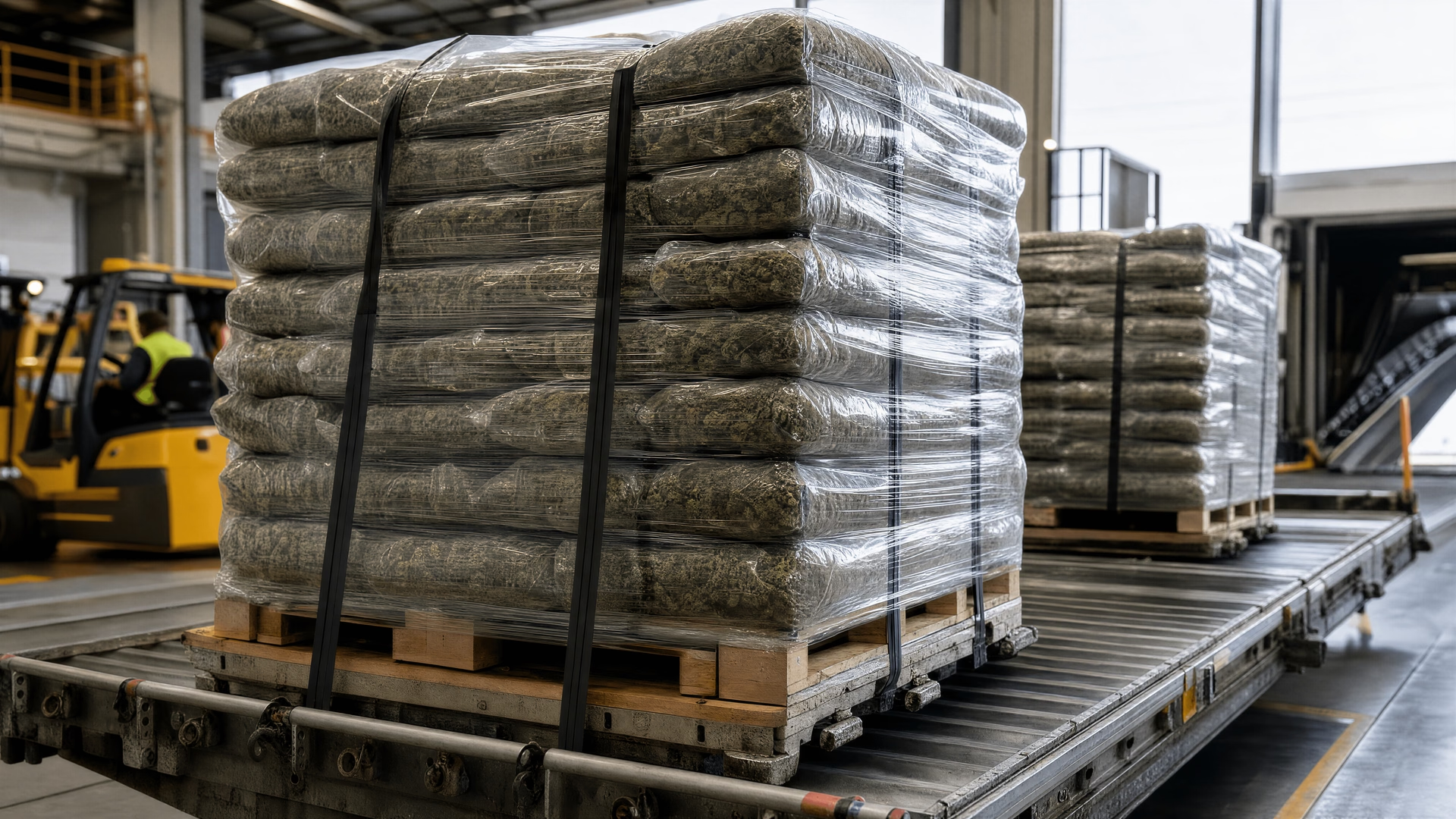
At the logistics level, that dominance looks like this:
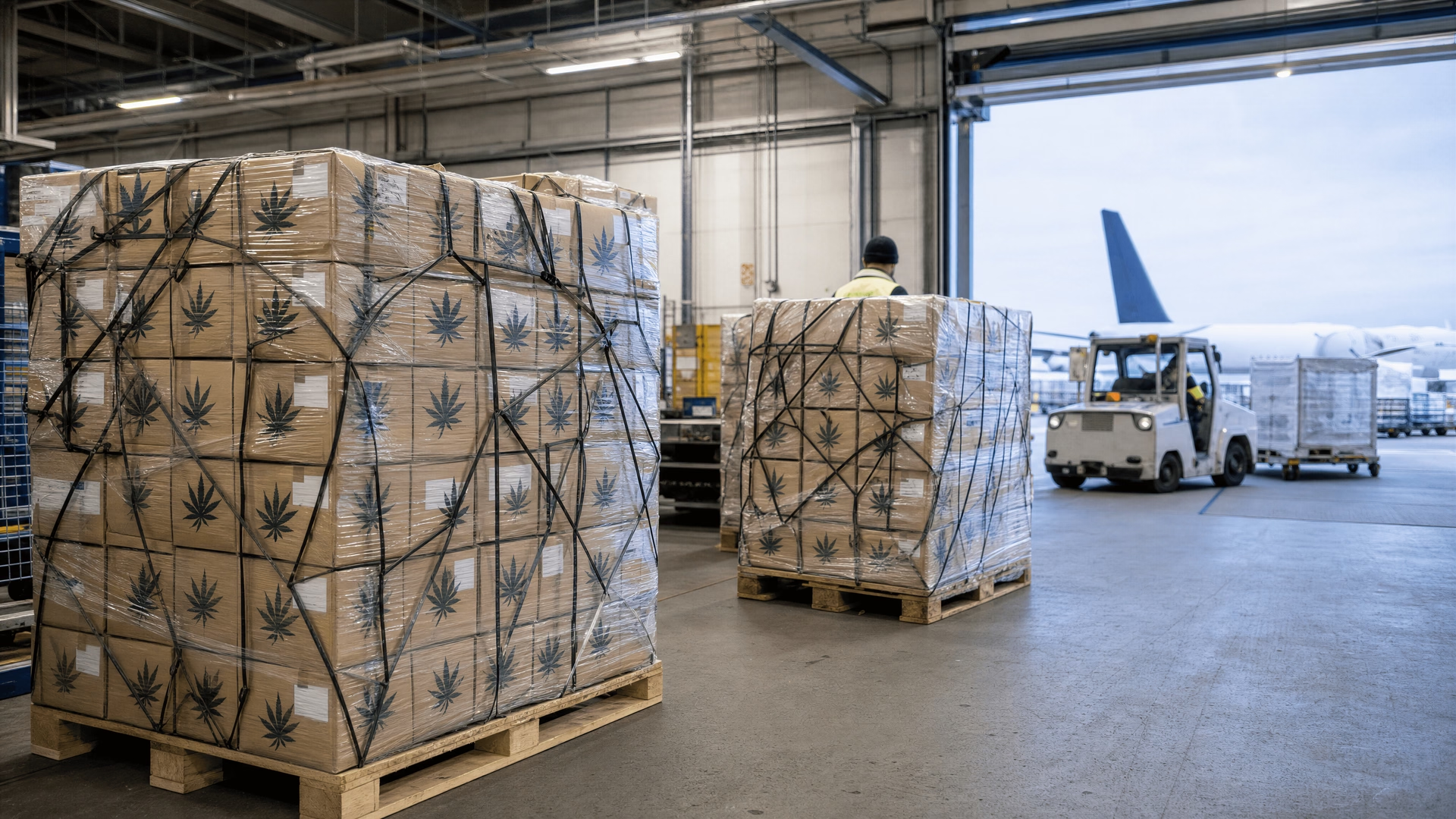
Those numbers matter beyond Germany’s borders. The same primary report says the country imported more than 218 tonnes over the latest 12 months, confirming its position as Europe’s largest legal medical cannabis market and the world’s leading destination for imported medical cannabis products. For exporters, compliance advisers and EU distributors, Germany is the market that turns regulatory approval into real volume.
A quarterly dip inside a much bigger annual surge
The market is still enormous, but the newest quarter was not a fresh high. According to trade reporting on the BfArM release, the Q1 total was down from a revised 60.8 tonnes in Q4 2025, marking the first quarter-on-quarter decline since early 2024. That is a notable break in momentum, but it is not the same thing as a reversal of the longer trend.
The latest two reported quarters look like this:
Germany's medical cannabis imports, latest two reported quarters (tonnes)
Even with that pullback, the first quarter of 2026 remains exceptionally high by European standards. A market can cool from one record-like reading to another without losing its regional dominance.
Set against the main reference points mentioned in the reporting, the scale is clearer:
| Market benchmark | Period | Imported volume | What it shows | Source |
|---|---|---|---|---|
| Germany | Q1 2026 | 50.539 tonnes | More than 50 tonnes imported in a single quarter | Newsweed on Germany’s first-quarter import total |
| Germany | Q4 2025 | 60.8 tonnes | The immediate prior quarter was higher, underlining a dip rather than a collapse | MMJDaily on the quarterly decline |
| United Kingdom | 2025 | About 30 tonnes | A brief non-EU contrast: another large European market still sits well below Germany’s annualised pace | Newsweed on Germany’s first-quarter import total |
The United Kingdom comparison is brief but useful precisely because it sits outside the European Union. The primary source says the UK, often treated as Europe’s second-largest medical cannabis market, imported about 30 tonnes in 2025. That leaves Germany’s lower Q1 2026 result looking less like weakness and more like consolidation at a far larger scale.
Domestic supply and new legal routes are changing the mix
The most plausible explanation offered in the primary reporting is not a collapse in demand but a shift in how demand is being met. Imports remain the cornerstone of Germany’s medical system, yet domestic cultivation has been expanding since the 2024 CanG removed production quotas that had previously limited commercial growing. As local output rises, part of the demand once met entirely by foreign suppliers can be absorbed inside the country.
The policy sequence behind that change is straightforward:
The main channels now sitting alongside imported pharmacy supply are these:
- Pharmacy dispensing has been available since 2017, turning what began as a limited patient-access programme into a mature market.
- After CanG was adopted in 2024, Germany removed earlier production quotas for commercial cultivation, allowing domestic capacity to grow.
- Since April 2024, adults in Germany may grow up to three plants at home.
- Since July 2024, non-profit cultivation associations may grow and distribute cannabis to registered members under strict rules.
- The primary source says Germany has already licensed more than 430 cultivation associations.
The club layer is also becoming easier to track in practice, as shown when four German states published cannabis social club lists. What the supplied facts do not show is how much medical demand, if any, has already migrated from pharmacies to home growing or club access.
That leaves Europe with a more layered supply picture than a single import number suggests:
That ambiguity is important for European Union observers. A market can diversify internally while remaining the bloc’s main import hub externally. On the facts available here, Germany may be doing both at once.
Why Germany matters to the European Union far beyond its own patients
The EU angle is what makes the German import total more than a national statistic. According to the primary reporting, Canada remains the leading supplier into Germany because Canadian producers spent years building export capacity and securing the certifications required for European pharmaceutical markets. In practice, that makes Germany the bloc’s main proving ground for companies seeking scale in legal medical cannabis.
Germany remains Europe’s leading legal medical cannabis market and the world’s top destination for imported medical cannabis products.
Newsweed, citing BfArM data
This sits inside a wider European environment in which cannabis policy is still moving in several directions at once. As we reported in Cannabis – the current situation in Europe (European Drug Report 2026), the European Union Drugs Agency says cannabis remains the region’s most used illicit substance and that products, markets and enforcement challenges are becoming more complex. Germany’s legal medical import machine is therefore developing alongside a much broader and uneven continental debate.
At ground level, that trade looks less like ideology and more like regulated pharmaceutical distribution:
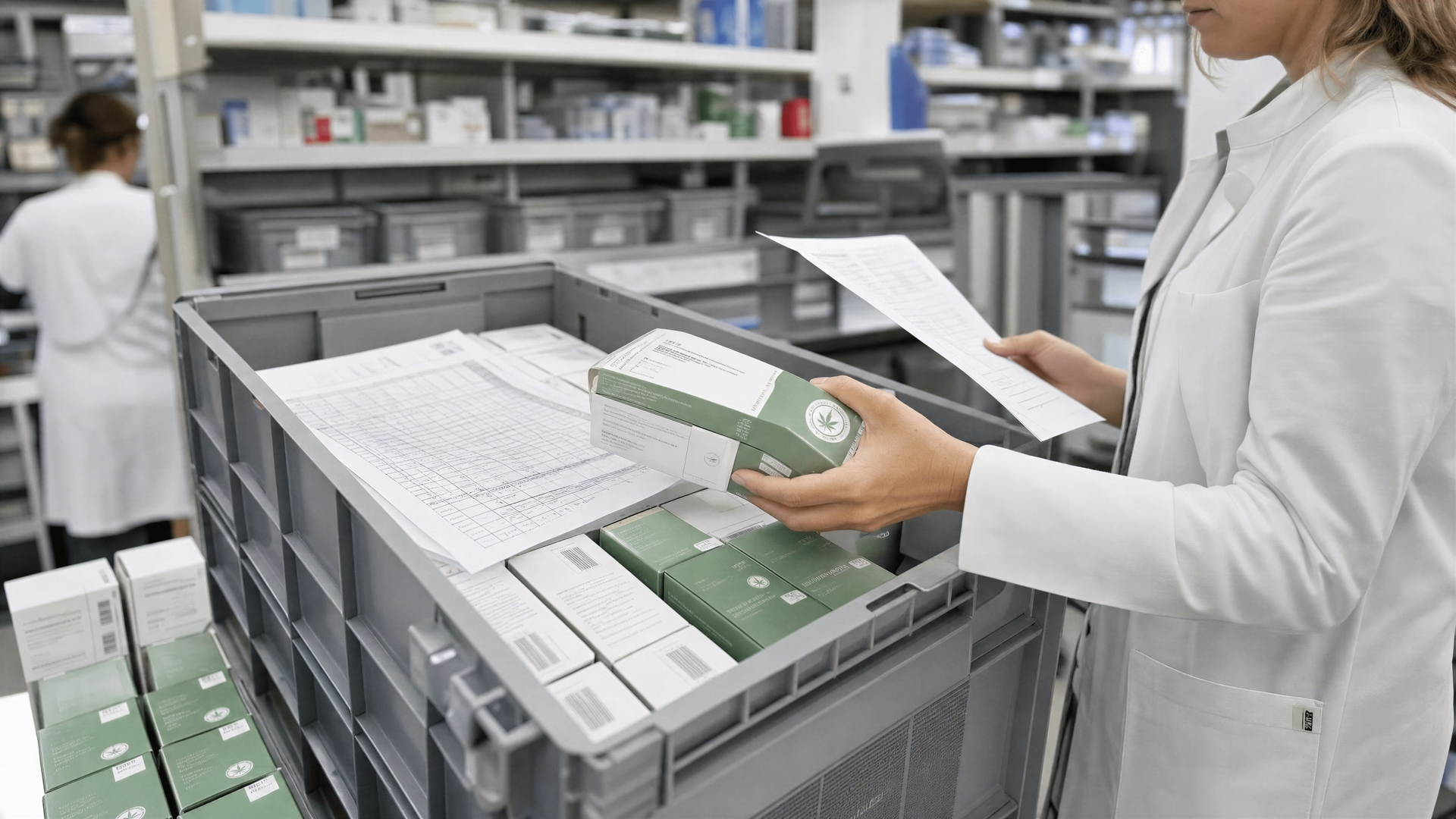
That is why Germany’s import figures are watched well beyond Berlin. When one EU member state can import more than 50 tonnes in a quarter, supplier planning, certification investment and market strategy across Europe tend to follow its lead.
The next question is not whether the market is big, but how stable access will be
Import data alone cannot answer whether patient access is getting easier, harder or simply more diversified. They show scale. They do not show how many people are using medical cannabis, how many are shifting to domestic routes, or how future reimbursement rules might reshape demand.
That last point deserves attention. Germany is simultaneously debating future reimbursement rules for some medical cannabis prescriptions, a separate policy fight we covered in the Bundestag debate over a possible reimbursement cutoff for cannabis flowers. If insurance coverage narrows while domestic production and club access expand, headline import volumes may become a less complete guide to how the market is functioning.
For readers tracking the European Union market, the practical questions are these:
What the new import figure does and does not tell us
How much medical cannabis did Germany import in Q1 2026?
Germany imported at least 50.539 tonnes of medical cannabis products in the first quarter of 2026, according to BfArM figures cited in the primary reporting.
Was that higher or lower than the prior quarter?
Lower. Supporting trade coverage said the prior quarter was 60.8 tonnes, making Q1 2026 the first quarter-on-quarter decline since early 2024.
Does the decline mean the market is shrinking?
Not on the facts supplied here. The same reporting says Germany imported more than 218 tonnes over the latest 12 months and points to rising domestic cultivation as one reason imports may have eased.
What other legal access routes now exist in Germany?
Besides pharmacy supply, adults may grow up to three plants at home since April 2024, and non-profit cultivation associations have been allowed since July 2024 under strict rules.
What remains unmistakable is that Germany is still the European Union’s reference point. A quarter that counts as a slowdown there would still amount to a defining benchmark almost anywhere else in Europe.
From a European Union perspective, the most important lesson in Germany’s first-quarter import figure is not simply that the market is enormous. It is that Europe’s regulated medical cannabis trade is becoming more structured, more international and more sensitive to policy design. A single quarter of more than 50 tonnes, even after a retreat from late 2025, still leaves Germany at the centre of the bloc’s pharmacy-based cannabis economy. The next phase will depend less on whether demand exists than on how imports, domestic cultivation and reimbursement rules are balanced.
Sources
- Vier Bundesländer veröffentlichen CSC-Listen | DHV-News # 512 (hanfverband.de)
- DHV-Stellungnahme zum Regierungsentwurf „GKV-Beitragssatzstabilisierungsgesetz“ (hanfverband.de)
- DEA Selects Only Cannabis Opponents For Crucial June 29 Rescheduling Hearing (businessofcannabis.com)
- Listed – Part II: The Three Amigos (businessofcannabis.com)
- Germany imported more than 50 tons of medical cannabis in the first quarter of 2026 (newsweed.fr)
- Germany Imported Over 50 Tonnes Of Medical Cannabis In Q1 2026 (internationalcbc.com)
- Germany's medical cannabis imports post first quarterly decline since early 2024 (mmjdaily.com)
- Cannabis-Importe sinken erstmals seit zwei Jahren: 50,5 Tonnen im Q1 2026 (hanf-magazin.com)
- Deutschland importierte im ersten Quartal 2026 mehr als 50 Tonnen medizinisches Cannabis (bubatznews.com)
- Medicinale cannabis import in Duitsland daalde in eerste kwartaal 2026 (cannabisindustrie.nl)