












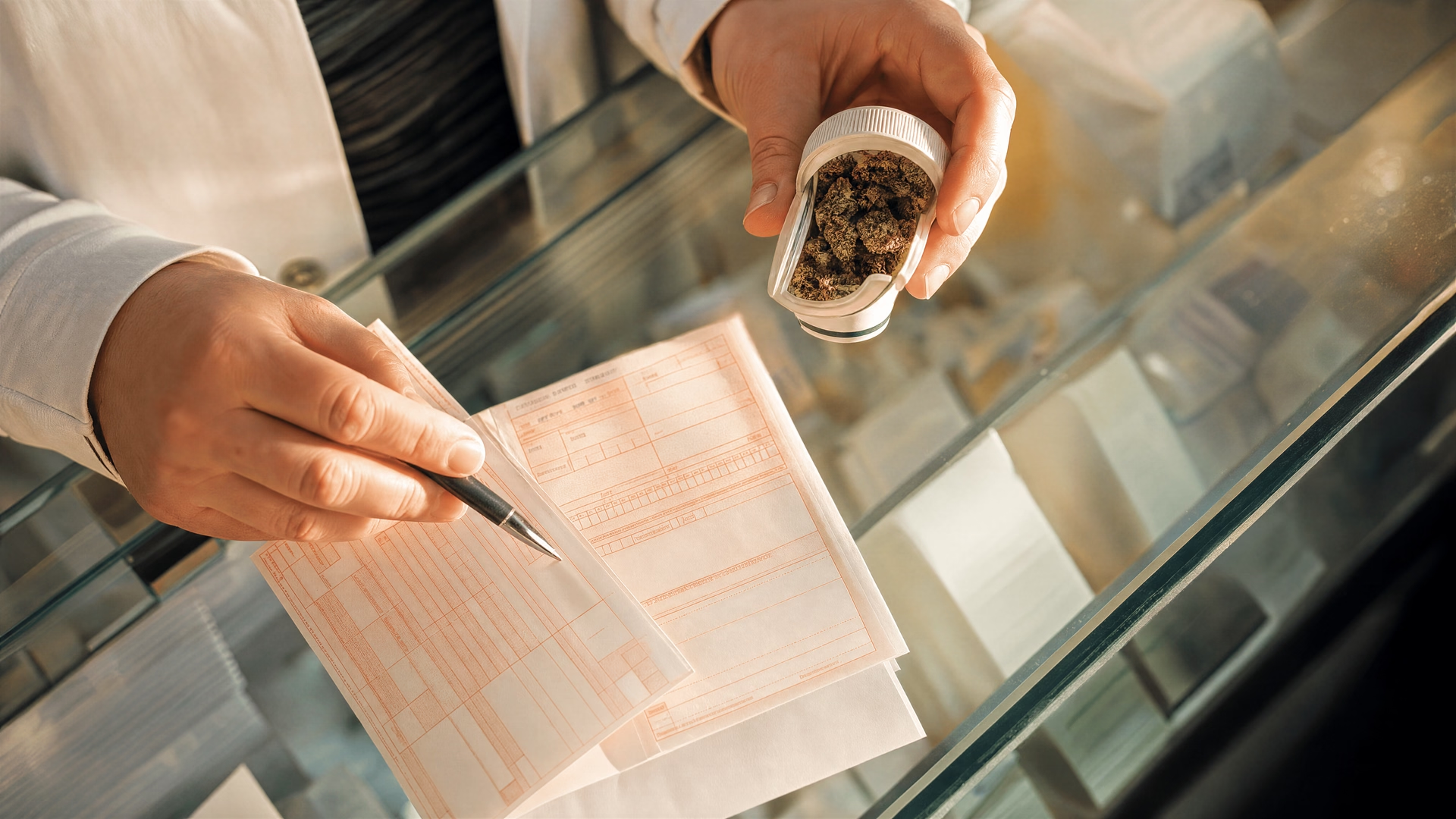
Germany lets manufacturers set a launch price for six months, then AMNOG, the G-BA and GKV talks shape the reimbursement amount for finished medicinal cannabis.

In Germany, the price of a cannabis-based finished medicinal product is not fixed by a single authority or a single moment. As Krautinvest explains in its breakdown of how the price of a cannabis finished medicinal product is formed, the launch price is only the first step in a system that then moves through benefit assessment, reimbursement talks and, if needed, arbitration. The Vertanical product Exilby is a timely example: the company has market authorisation, but the long-term price is still tied to Germany’s reimbursement machinery.
Germany’s launch price is only a starting point
Germany is one of the few countries where a manufacturer can set the introductory price of a new medicine itself. But that freedom is temporary. In the first six months, the product can enter the market at a price chosen by the company, while the broader pricing and reimbursement process runs in parallel.
Before that launch price is visible in the market, the product has to be registered with Germany’s Informationsstelle für Arzneispezialitäten, or IFA, which assigns the PZN and feeds the price into market directories such as the Lauer-Taxe. In other words, the opening price is not a final settlement; it is the number that gets the medicine into circulation while the value assessment continues.
The process breaks down into four practical stages:
| Stage | Who acts | What shapes the price | Source |
|---|---|---|---|
| Launch period | Manufacturer | A temporary introductory price can be set freely for six months after registration | Krautinvest explainer on cannabis-finished-medicine pricing |
| Parallel assessment | Germany’s Joint Federal Committee (G-BA) | Added benefit is examined against a comparison therapy | Krautinvest explainer on cannabis-finished-medicine pricing |
| Negotiation phase | Manufacturer and the GKV-Spitzenverband, or the arbitration panel if they do not agree | The reimbursement amount is negotiated or set | Krautinvest explainer on cannabis-finished-medicine pricing |
| After month seven | Price base plus statutory add-ons | Wholesale and pharmacy mark-ups, plus VAT, produce the final pharmacy price | Krautinvest explainer on cannabis-finished-medicine pricing |
- the product must be registered with the IFA before the price is widely visible in the market
- the launch price flows into pharmacy reference systems such as the Lauer-Taxe
- the benefit review does not wait for the launch window to end; it runs alongside it
Authorisation opens the door, but does not decide the price
A market authorisation is only the entry ticket. As Franziska Katterbach explains in the source, the economic outcome is decided later, through the benefit review and the price talks with the statutory health insurers' umbrella body. That is why a medicine can be authorised in Germany without yet having a settled reimbursement price.
The Vertanical case makes that point especially clear. The company wants a price for Exilby that justifies the investment already made, but it also does not want to interfere with the product’s planned entry into the United States. The source says Vertanical still sees a German market launch in August or September of this year as realistic, even though the eventual reimbursement path is not settled.
AMNOG ties reimbursement to added patient benefit
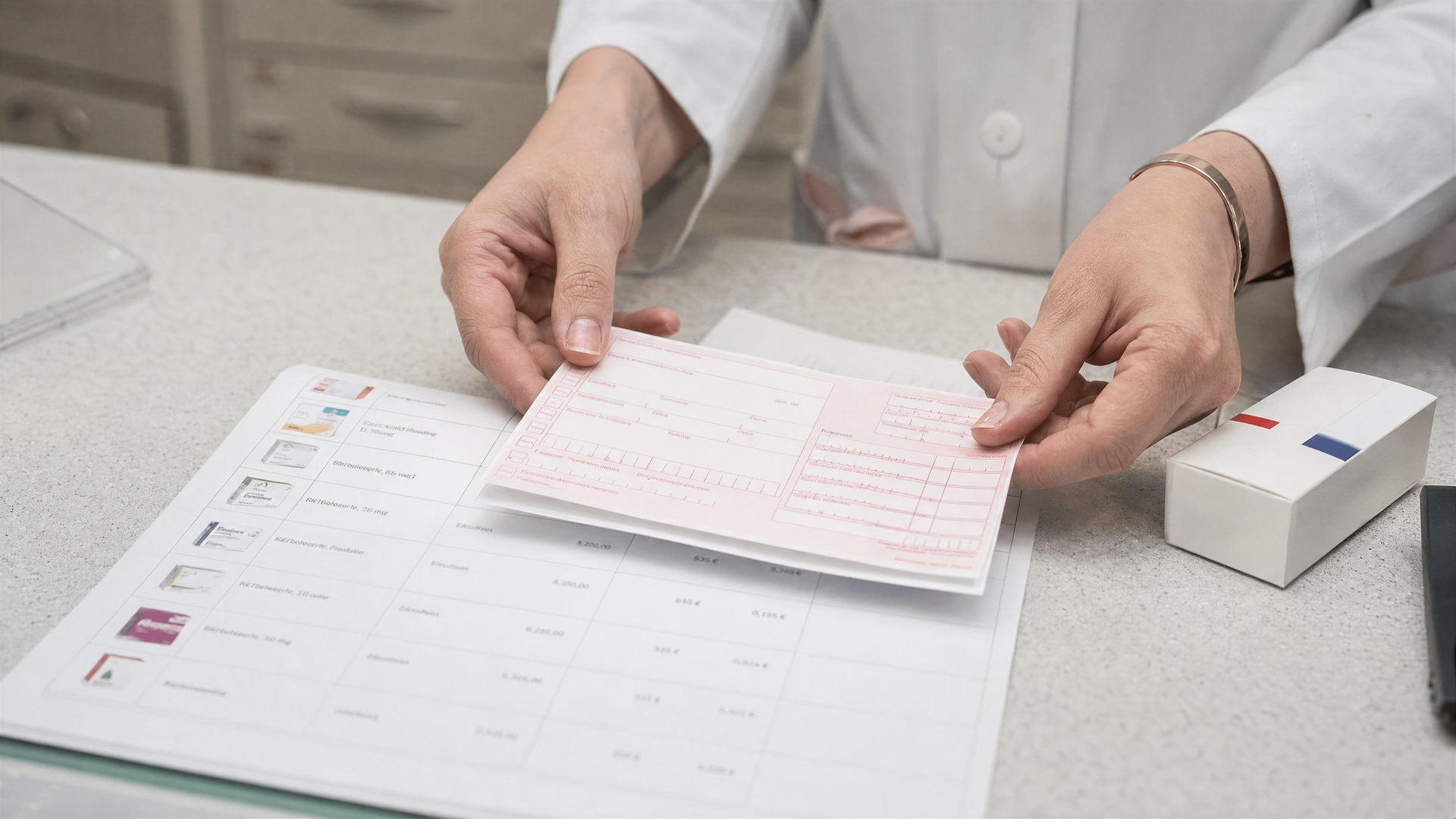
Germany’s AMNOG system is built around a simple but demanding idea: the price should reflect patient benefit, not novelty for its own sake. The source says what matters is not how new a medicine is, but how clearly it stands out from the comparison therapy. That makes the choice of comparator one of the most important pricing decisions in the whole process.
What matters is not how new a medicine is, but how clearly it differs from the comparator therapy.
Franziska Katterbach, translated from Krautinvest
For Exilby, the source says the German Phase 3 data showed therapeutic superiority to opioids, with fewer side effects. That sounds commercially helpful, but the comparison also matters: opioids are described as relatively inexpensive in reimbursement terms. In that setting, the usual pricing guardrails may become less constraining if the additional benefit is accepted.
- the comparator therapy chosen for the assessment
- the additional benefit the G-BA recognises
- the quality and relevance of the clinical data
- the level reached in the later reimbursement negotiations
That is the core of the German system: the launch price may start the commercial story, but the long-term price depends on whether the medicine can prove a meaningful step up from the existing standard of care.
The reimbursement amount becomes the pharmacy price
The seventh month is the pivot point. From then on, the negotiated reimbursement amount replaces the free manufacturer price retroactively. But that figure is still not the final shelf price. Under Germany’s drug price ordinance, wholesale and pharmacy mark-ups are added, and then VAT is applied, to produce the pharmacy selling price.
That distinction matters because people often talk about one price when the system actually contains several layers. The reimbursement amount is the base. The pharmacy price is the end result.
The layers added on top are straightforward:
- the negotiated reimbursement amount
- wholesale mark-ups
- pharmacy mark-ups
- VAT

The source also notes that the reimbursement amount is not just for statutory health insurance. It applies bundesweit to private insurers and self-payers as well, and for hospitals it serves as the maximum purchase price. That gives the negotiated number a reach well beyond the GKV system.
Exilby shows why the stakes are high
Exilby is a useful test case because it sits at the point where clinical evidence, capital recovery and launch strategy all meet. Vertanical received market authorisation in Germany in June. But the source makes clear that if no price agreement is reached, reimbursement for GKV patients with back pain could still be delayed for two to three years, depending on how long the ongoing US Phase 3 study runs and what it shows.
- the company launches with a freely chosen introductory price for six months
- the G-BA and the comparator therapy determine whether added benefit is recognised
- the manufacturer and the GKV-Spitzenverband negotiate the reimbursement amount, or a Schiedsstelle sets it if there is no deal
- if the product falls into a fixed-price group, the Festbetrag applies directly
That is why Germany’s pricing model matters beyond one medicine. It shapes whether a manufacturer can recover investment, how quickly patients can access a product through statutory insurance, and how a company balances the German launch against plans in other markets.
It also matters in a market that remains import-heavy. As we reported earlier in our coverage of Germany’s first-quarter medical cannabis imports, Germany imported more than 50 tonnes of medical cannabis in Q1 2026, which makes reimbursement terms and launch pricing especially consequential for suppliers.
What readers ask most often
Germany’s finished-medicine pricing process, in plain language
How long can the manufacturer set the price freely?
For six months after market entry, provided the medicine has been registered with the IFA and given a PZN.
Who decides the long-term price?
Germany’s Joint Federal Committee first assesses added benefit, then the manufacturer and the GKV-Spitzenverband negotiate the reimbursement amount. If they do not agree, a Schiedsstelle sets it.
What happens if the medicine is assigned to a fixed-price group?
Then the Festbetrag applies directly and the separate price negotiation does not continue in the same way.
Is the reimbursement amount the same as the final pharmacy price?
No. From the seventh month onward, wholesale and pharmacy mark-ups plus VAT are added to the reimbursement amount to create the pharmacy selling price.
Does the negotiated amount matter outside statutory insurance?
Yes. The source says it also applies to private insurers and self-payers, and it acts as the maximum purchase price for hospitals.
Germany does not determine the price of a cannabis finished medicinal product in one step. It lets the manufacturer open with a launch price, then uses the AMNOG process, the G-BA’s benefit assessment and reimbursement negotiations to decide what the product is really worth in the health system. Exilby shows why that sequence matters: the first number gets the medicine into the market, but the second one decides its long-term commercial life.
Sources
- Wie entsteht der Preis für ein Cannabis-Fertigarzneimittel? (krautinvest.de)
- European Cannabis Merger Mania: The Global Conversation Has Begun (krautinvest.de)
- Können Hunde passiv high werden? Risiken von Cannabisrauch für Hunde (hanf-magazin.com)
- Hanfsamen in der Schwangerschaft: das sollten werdende Mütter wissen (hanf-magazin.com)
- Five Takeaways from the Global Medical Cannabis Market Review 2026 (prohibitionpartners.com)
- Cannabis Telemedicine: What Poland’s Market Crash and Recovery Tells Us About Regulatory Risk (prohibitionpartners.com)
- Report: Cannabis Industry Jobs Fell 2.7% Year-Over-Year (ganjapreneur.com)
- Half of Gen Z Diagnosed with Depression Report Using Cannabis (ganjapreneur.com)
- Glass House Brands to Uplist to NYSE June 30 (mgmagazine.com)
- NCIA Applauds Reintroduction of SAFE Banking (mgmagazine.com)