












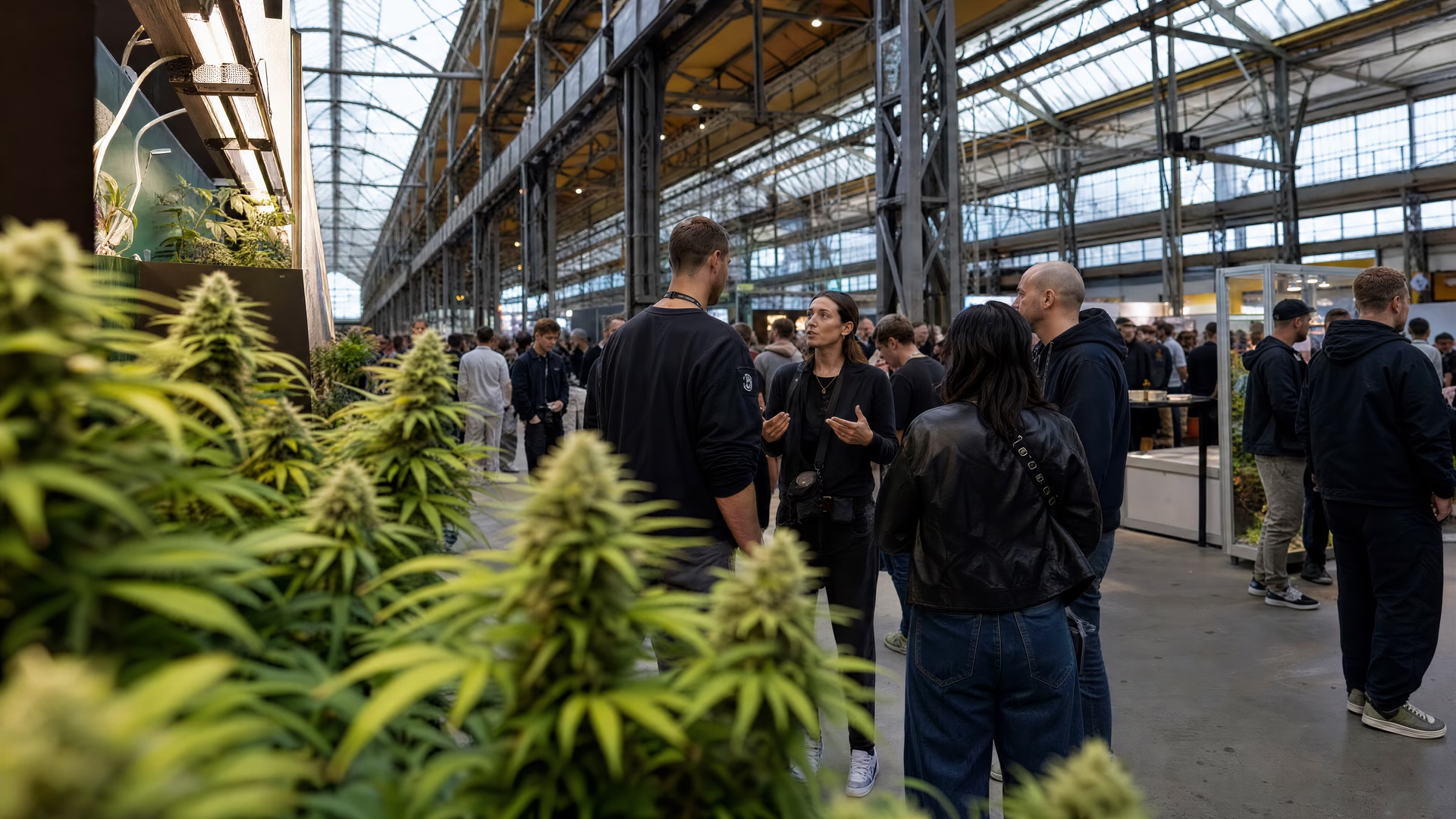
From Mary Jane Berlin to Spannabis Bilbao and Cultiva Vienna, Europe’s cannabis fair calendar is being reshaped by policy, trade and regulation.

Europe’s cannabis event circuit is moving on several fronts at once. In Berlin, Mary Jane is again drawing attention as a major fair and conference; in Spain, Spannabis has left Barcelona for Bilbao; and in Vienna, Cultiva is preparing its 2026 edition at Marx Halle. The calendar tells a broader story about a sector that is increasingly defined not just by exhibition floors, but by legal disputes, market access, medical regulation and the institutional meetings that orbit them.
Mary Jane Berlin keeps the trade-fair model under the spotlight
Mary Jane Berlin remains one of the clearest examples of how a cannabis event can stretch beyond a trade show. Coverage of the 2026 edition describes it as Europe’s largest cannabis fair and notes that it began on June 11 at the Berlin exhibition grounds, with anniversary framing around the event’s 10-year milestone. One report also says the fair combines exhibition, conference and festival elements, while another says more than 75,000 attendees were expected.
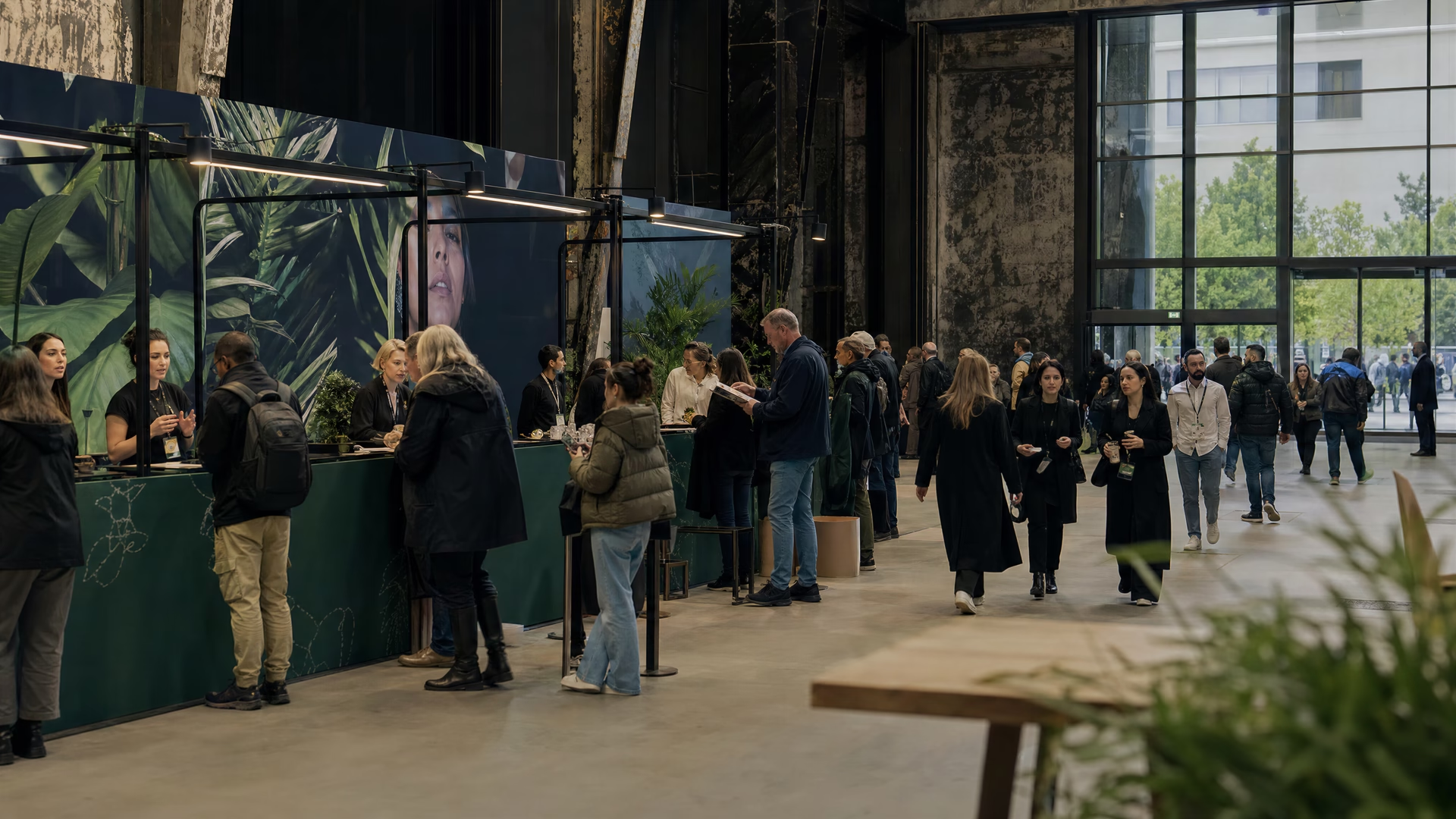
That hybrid model is part of what gives the Berlin event its reach. A Berlin Zeitung report says the fair has grown from a smaller gathering into Europe’s largest cannabis trade fair, while other event listings describe the 2026 edition as a broad programme with trade-show, conference and festival components. The point is not simply scale. It is that cannabis fairs have become places where business, regulation and culture are bundled together, whether organisers intend them as B2B showcases or wider public events.
- Trade fair floor for exhibitors and suppliers
- Conference programming tied to policy and market questions
- Festival-style public atmosphere reported around the Berlin edition
- Anniversary marketing that frames the event as a decade-long institution
A number of reports also highlight the fair’s public-facing tone rather than a narrow commercial pitch. ntv described music and food around the opening, which underlines how this event differs from a closed industry convention. For the wider market, that matters because visibility at a fair can now be as much about legitimacy and positioning as it is about lead generation.
Spannabis leaves Barcelona and resets the map in Bilbao
If Mary Jane shows the scale of the fair model, Spannabis shows its geography can still change. Reporting ahead of the 2026 edition said the event would leave Barcelona after more than two decades and move to Bilbao’s BEC, with the fair held from 17 to 19 April 2026. EFE later reported the Bilbao edition opened on 17 April and brought together about 3,000 professionals.

The relocation has been framed by several outlets as the end of the Barcelona era. Budream said the 2026 edition represented the fair’s move away from Barcelona, while Cannabisindustrie.nl reported that the venue in Barcelona was no longer suitable. That is more than a logistical note. When a leading fair shifts city, it changes who can attend, which local institutions sit around it, and how the event is embedded in the regional economy.
| Event | Location | What the supplied reporting says | Source |
|---|---|---|---|
| Mary Jane Berlin | Berlin | Anniversary edition at the Berlin exhibition grounds; more than 75,000 attendees expected | Berlin Magazine |
| Spannabis | Bilbao | Moved from Barcelona to Bilbao; opened on 17 April 2026; about 3,000 professionals reported | EFE report on Spannabis Bilbao |
| Cultiva Hanfexpo | Vienna | Scheduled for 2–4 October 2026 at Marx Halle | Cultiva Hanfexpo 2026 listing |
The Bilbao move also fits a wider picture of European cannabis fairs becoming more strategic. Cannabis Magazine said the Bilbao edition drew more than 20,000 visitors and highlighted the sector’s scale and momentum. That kind of turnout tells organisers that these events are still useful convening points even as the legal environment remains fragmented across Europe.
Vienna’s Cultiva keeps the exhibition calendar crowded
Vienna’s Cultiva Hanfexpo is the other major fixed point in this calendar. The organiser says CULTIVA 2026 will run from October 2 to 4 at Marx Halle and combine a congress, music festival, street food programme and national and international exhibitors. Listings from event sites and fair directories consistently place the edition at Marx Halle and describe it as Austria’s largest hemp fair or one of Europe’s biggest cannabis trade fairs.
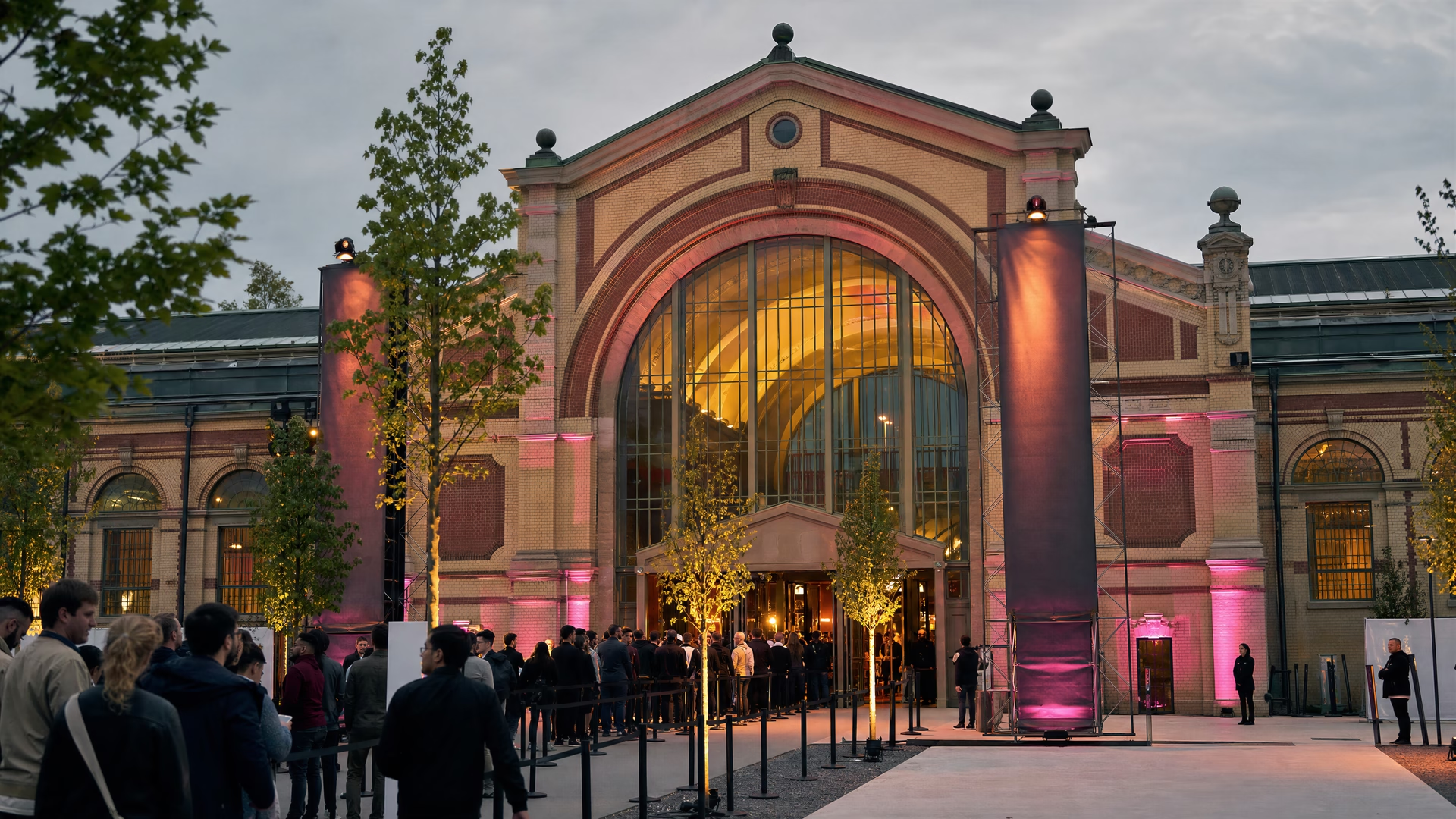
That blend of business and public programming mirrors what is happening in Berlin, though on a different scale. The Cultiva site and a sponsor package describe the event as an international hemp exhibition with a long-running history, while third-party listings present it as a recurring fixture for exhibitors and visitors alike. The practical effect is the same: fairs increasingly serve as both trade marketplace and policy-adjacent gathering place.
- International exhibitors use the fair to present themselves to the European market.
- The congress component gives the event a policy and business discussion layer.
- Festival programming broadens the audience beyond narrow trade visitors.
- The October date keeps Vienna in the autumn trade-fair cycle after the spring rush in Spain.
That seasonal spread matters because the European cannabis event circuit is now dense enough to create its own rhythm. Berlin in June, Bilbao in April and Vienna in October are not isolated occasions. They are markers of a calendar that has become embedded in the sector’s commercial and regulatory life.
Why fair floors are becoming policy rooms too
The fair circuit is easier to understand when set against the regulatory and market developments running alongside it. In Germany, the DHV said it filed a lawsuit with CSC Inntal over building-law barriers to cultivation associations in Bavaria, seeking a broader legal clarification of how such associations should be classified under planning law. That kind of dispute helps explain why events like Mary Jane and Cultiva matter: they create the spaces where operators, lawyers and advocates compare how rules are unfolding in different jurisdictions.

The same dynamic shows up in market reporting. A Forbes piece said Germany’s cannabis import volumes have grown nearly 45-fold since 2018, while prices have fallen about 25% in two and a half years. Another Forbes report profiled Bloomwell as a major telehealth company in Germany’s medical cannabis market, underlining how access channels and service models are changing alongside the event circuit. These are not trade-fair figures as such, but they explain why fair organisers can still draw strong attendance: the market itself is moving quickly enough to keep people talking.
Elsewhere in Europe, the regulatory and market backdrop is equally fluid. Business of Cannabis reported that Taima Growth became one of only four companies authorised by Spain’s medicines regulator to cultivate medical cannabis, positioning it to supply export markets in the UK and Germany. Prohibition Partners, meanwhile, has argued that cannabis telemedicine became a dominant access channel in large markets but also a regulatory weak point, with Poland’s experience showing how quickly dispensing volumes can be affected by intervention. Put together, these developments show why the trade-fair circuit has become part business forum, part policy barometer.
The numbers behind the market mood
The strongest numerical signals in the supplied reporting are not all about fairs, but they help explain the mood around them. The European market is still expanding in some places, tightening in others and re-organising around medical access, exports and regulation. These pressures are the reason event programmes now carry more policy weight than they did a few years ago.
The European Drogenbericht 2026, as summarised by Hanf Magazin, said cannabis remains the continent’s most widely used illegal substance and that around 25 million adults said they had used it in the previous year. That scale helps explain the commercial pull behind expos and conferences. A large and shifting consumer and patient base creates demand for information, contacts and regulatory clarity, even when the industry cannot always communicate in straightforward product terms.
For event visitors, the takeaway is simple: the biggest fairs are no longer just places to see who is present. They are where the sector reads itself. Who is entering a market, who is being licensed, which rules are being challenged, and which business models are surviving the latest policy change — those are the conversations the fair floors are built to host.
The fair calendar now works as a live reading of the industry: who is licensed, who is blocked, and where the rules are still moving.
A crowded European calendar with real stakes
Seen together, the 2026 schedule paints a clear picture. Mary Jane Berlin is leaning into scale and anniversary status; Spannabis has redrawn its map by moving to Bilbao; Cultiva is preparing another large Vienna edition; and policy disputes in Germany, market changes in Spain and broader European medical-cannabis shifts continue to feed the conversation around all of them. The fairs are not just reflections of the sector. They are one of the places where it explains itself to the rest of the market.
That makes the 2026 calendar more than a list of dates. It is a snapshot of an industry that is still negotiating its public image, its legal boundaries and its commercial future in real time.
Europe’s cannabis expos and conferences are no longer just side events on the industry calendar. They now sit close to the core of how the sector tracks regulation, market access and commercial change. From Berlin to Bilbao and Vienna, the 2026 season shows an event circuit that is still expanding in importance even as the rules around it remain unsettled.