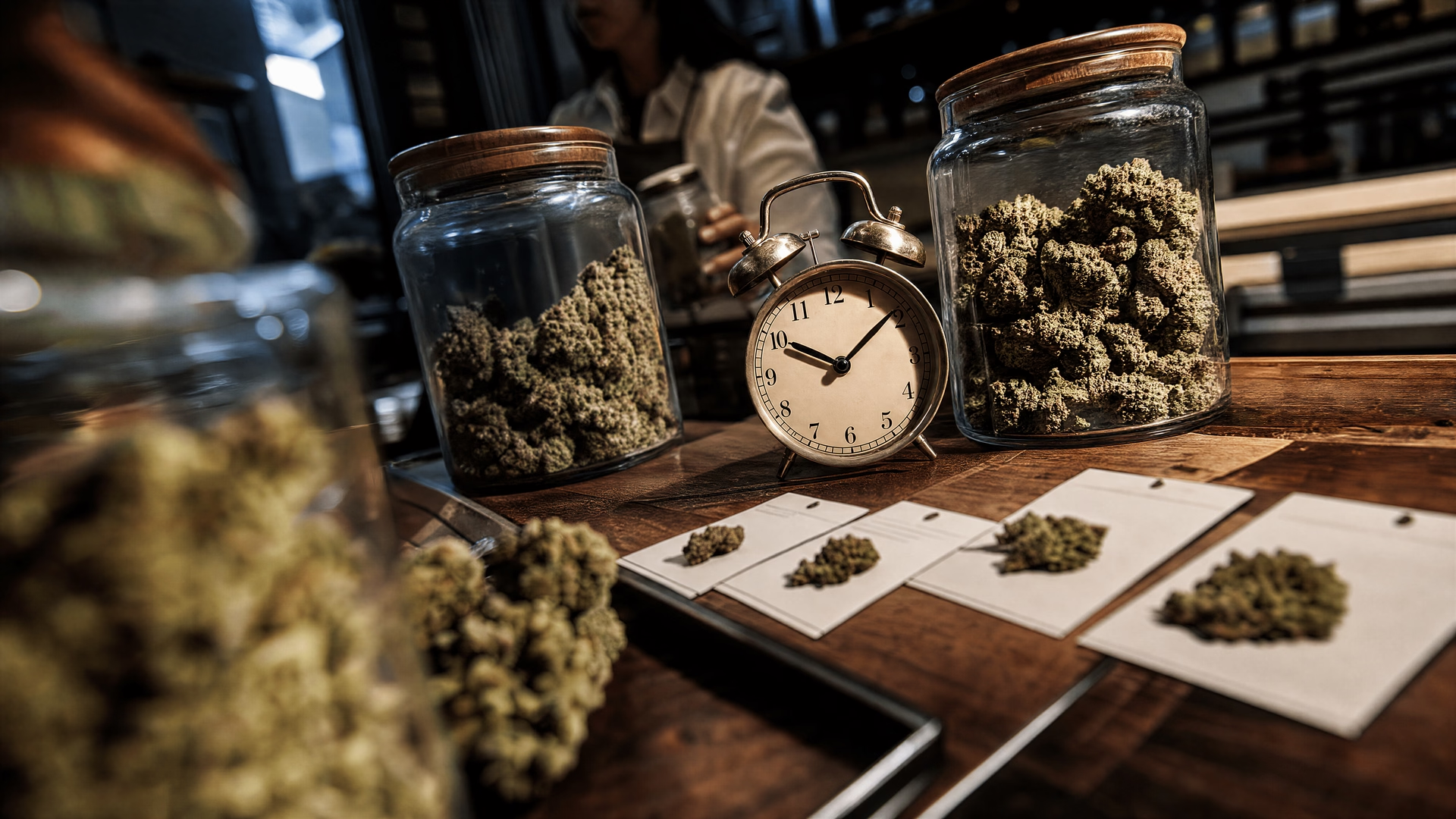













The DHV says a draft GKV savings law would end reimbursement for cannabis flowers and could increase medical costs instead.

The German Hanfverband is pushing back against the government’s draft GKV-Beitragssatzstabilisierungsgesetz, arguing that a proposed end to reimbursement for cannabis flowers would not strengthen medical care but weaken it. In its statement, the association says the measure could create more costs rather than savings for the statutory health system, and that it risks cutting off a form of treatment it considers medically necessary.
What the DHV is objecting to
At the centre of the DHV’s statement is a narrow but consequential change in the draft law: cannabis flowers would no longer be reimbursed by statutory health insurers. The association says that this is being presented as a savings measure, but that the effect would be the opposite, because patients and doctors would be pushed toward less suitable and potentially more expensive treatment paths.the DHV statement on the draft bill
The group’s argument is straightforward. It says cannabis flowers remain necessary for medical supply in some cases, and that removing reimbursement would not eliminate demand. Instead, it would merely shift the burden elsewhere in the system — either onto patients, who may not be able to pay out of pocket, or onto other forms of care that may not work as well for the people involved.

Why the association says savings may not materialise
The DHV frames its objection as a practical question about costs, not just principle. In its view, if patients lose access to reimbursed flowers, the result may be more expensive treatment elsewhere in the care chain rather than a clean reduction in spending. That is the core of its warning that the draft could generate Mehrkosten instead of savings.
- The draft would remove reimbursement for cannabis flowers under statutory health insurance.
- The DHV says flowers are still needed in medical treatment.
- The association expects higher downstream costs rather than savings.
- The policy debate therefore turns on both medical necessity and budget logic.

How the draft fits into a broader insurance debate
The government bill is presented as an effort to stabilise contributions in the statutory health insurance system. But in the DHV’s reading, the savings logic should not be applied mechanically to cannabis medicine. That is why the association’s statement is aimed not only at the proposed cut, but at the assumption that reimbursement withdrawal automatically equals fiscal discipline.
| Issue | Government draft | DHV’s position | Source |
|---|---|---|---|
| Reimbursement for cannabis flowers | Would be removed | Should remain available where medically necessary | DHV statement on the draft bill |
| Budget effect | Intended to save money | Could create higher costs instead | DHV statement on the draft bill |
| Medical supply | Not central to the savings logic | Central to patient care | DHV statement on the draft bill |
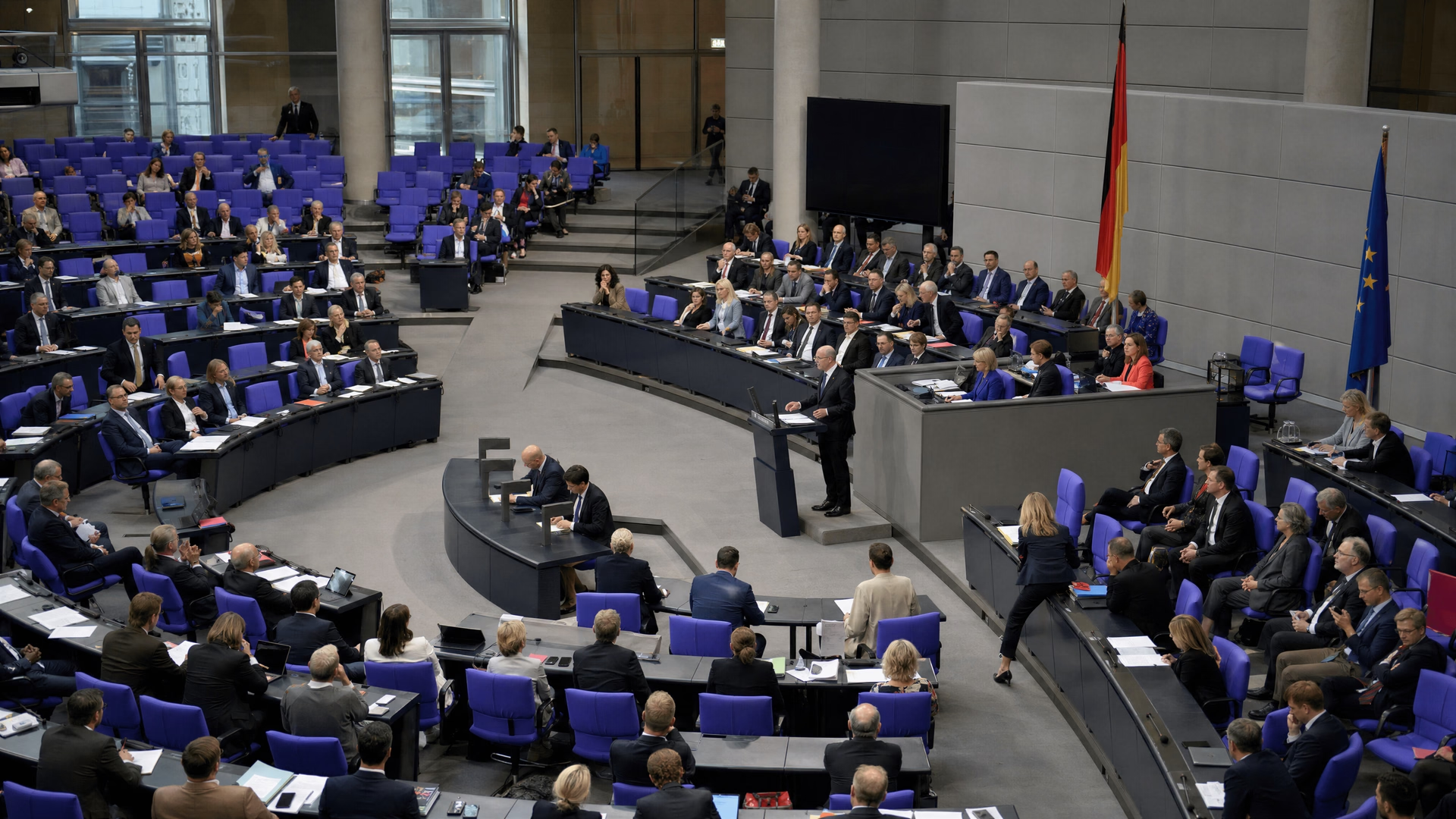
This is also why the debate has broader significance for German cannabis policy. Only days earlier, Cannabivo’s coverage of how Bundestag debate began to question insurance reimbursement for flowers showed that the issue had already reached the parliamentary level. The DHV statement now adds an organised-sector rebuttal to that political movement.
A policy fight that extends beyond one bill
Although the DHV statement is focused on a specific draft, it lands in a wider environment where German cannabis policy remains contested. Broader reporting in the press has shown that legalization and access questions continue to divide policymakers, with reviews and counter-reviews still shaping the debate around how legal supply is working in practice.German cannabis policy remains divisive The reimbursement question belongs to that same dispute: how much access should be preserved, and who should bear the cost when the state narrows it?
That larger context matters because the draft bill does not concern recreational policy, but medical access. The DHV is effectively saying that if Germany wants a stable and rational health system, it should not solve one accounting problem by creating another one for patients and practitioners.
What readers should watch next
The immediate question is whether the draft survives in its current form or whether lawmakers amend the reimbursement provision before it advances. For the DHV, the target is clear: keep cannabis flowers within the scope of statutory coverage where they are medically needed, and reject the assumption that cutting reimbursement will necessarily stabilise contributions.
- Watch whether lawmakers keep the reimbursement cut in the draft.
- Track whether the health-policy argument shifts from savings to patient access.
- Look for further statements from medical and patient groups on the practical impact.
- Monitor whether the insurance debate becomes part of the broader cannabis-policy review.
For now, the DHV has made its position plain: the government’s draft GKV-Beitragssatzstabilisierungsgesetz should not be used to strip reimbursement from cannabis flowers if the result is likely to be higher costs and weaker medical supply. The fight is less about symbolism than about how Germany defines necessary treatment within statutory insurance — and who pays when that definition changes.
Sources
- DHV-Stellungnahme zum Regierungsentwurf „GKV-Beitragssatzstabilisierungsgesetz“ (hanfverband.de)
- Live von der Mary Jane Berlin | DHV-News # 511 (hanfverband.de)
- Vireo Growth Agrees to Acquire C21 Investments in All-Stock Nevada Consolidation (businessofcannabis.com)
- France Sets July Deadline for Medical Cannabis Regulations as Withheld Study Shows Opioid Reductions (businessofcannabis.com)
- Germany: CDU/CSU calls for cannabis rethink 2 years in (amp.dw.com)
- Cannabis in Germany: From the black market to legal - and back? (amp.dw.com)
- Home | Euractiv DE (euractiv.com)
- High times or low blows? Experts fail to clear air over German drug legalisation (theguardian.com)