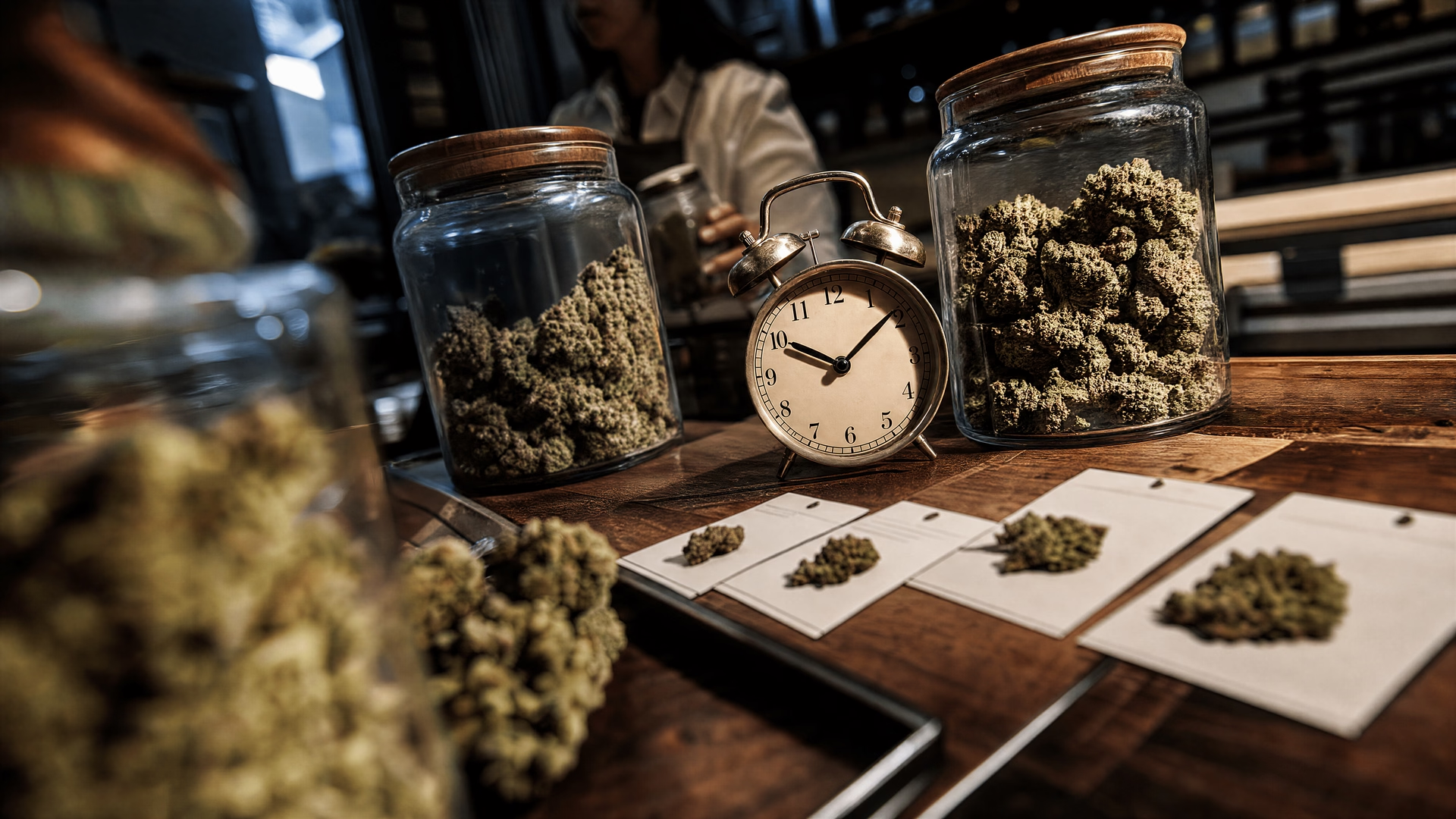












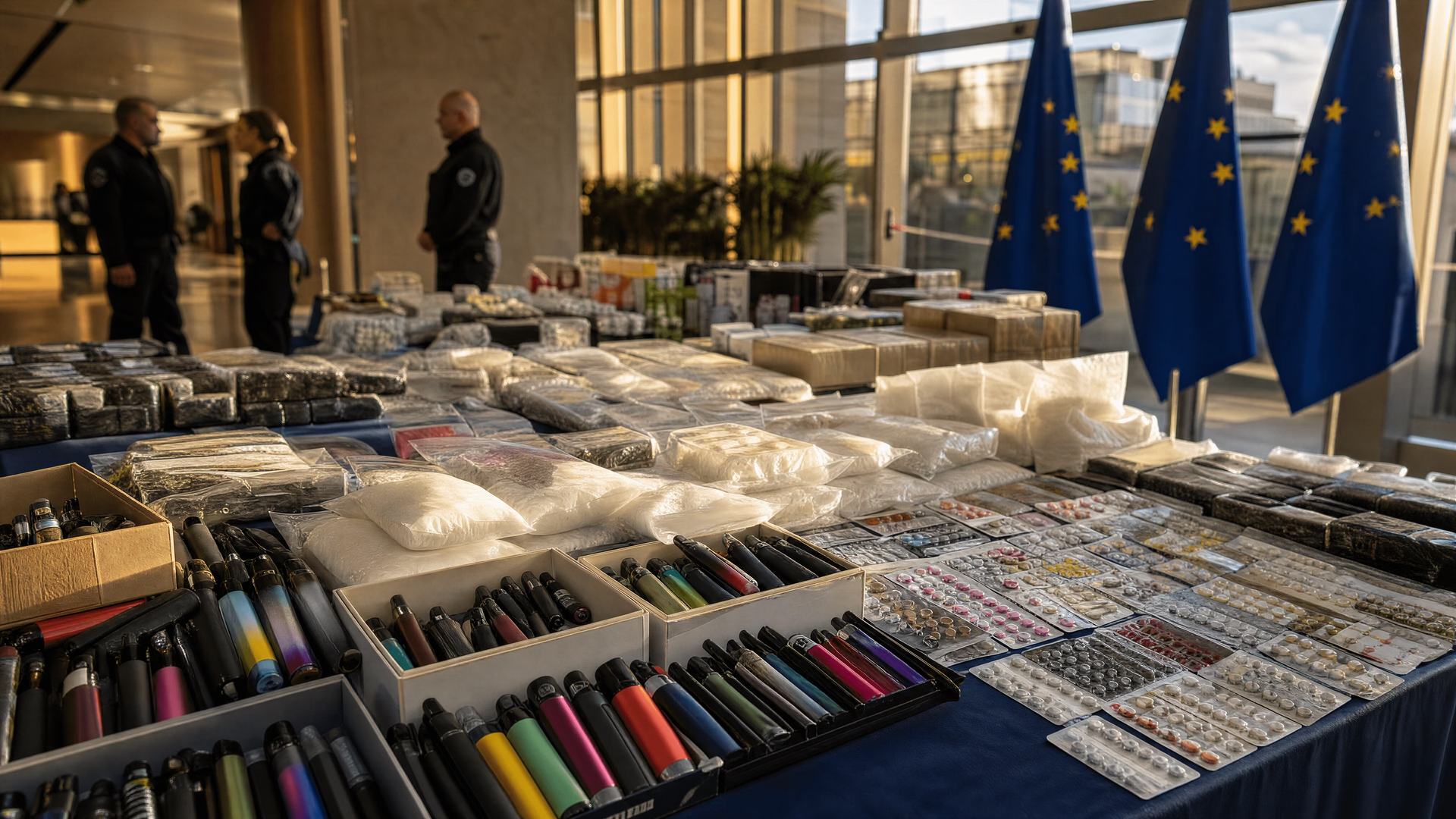
The European Union’s Drug Report 2026 shows cocaine moving through ports and labs as vapes, fake medicines and new synthetics complicate control.

The European Union is facing a drug market that no longer fits the old map of fixed routes, familiar substances and neat categories. The European Drug Report 2026, presented in Brussels by the European Union Drugs Agency, describes cocaine moving through commercial infrastructure and EU processing sites while new vape products, falsified medicines and high-potency synthetics make the market more mobile, more diverse and harder to read.
The European Union’s drug market is getting harder to read
The core picture, set out in Adnkronos’s report on the EUDA 2026 drug report, is not simply one of high availability. It is one of mobility and opacity. The report covers 29 countries — the European Union’s 27 member states plus Norway and Turkey — and describes the situation up to the end of 2025, with many annual indicators referring to 2024. Products sold do not always match their contents, channels multiply, and part of the supply chain now unfolds inside the European Union rather than only at its borders.
Availability remains high, but the more important finding is that the market has become more mobile and less legible.
European Drug Report 2026, via Adnkronos
That reading is consistent with the European Commission’s summary of the report launch, which says cocaine, synthetic drugs and new psychoactive substances remain widely available across the bloc. What changes here is the shape of the risk: more substances, more formats, more partial processing inside the Union, and less certainty that a product’s label or appearance tells authorities what it really is.
Set against the wider burden described in other coverage of the same report, four numbers help frame the issue:
Those wider numbers, highlighted in Euronews’s overview of the EU drug crisis, help explain why the report matters beyond headline seizures. The issue is not one spectacular shipment or one fashionable substance. It is an evolving market that is adapting faster than the systems built to track it.
Cocaine’s route now runs through legal infrastructure
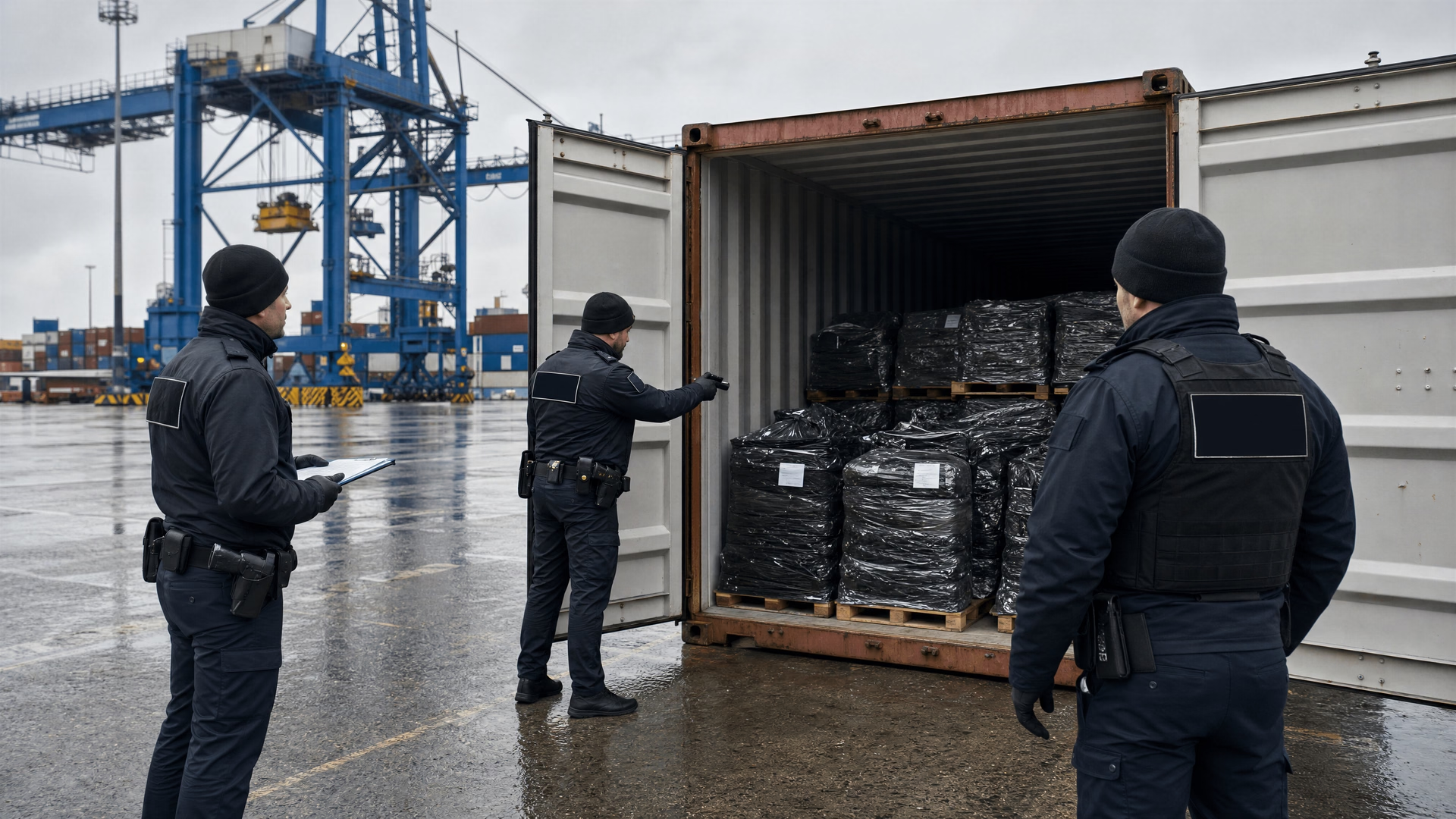
Cocaine is the clearest example of how the old map has shifted. The source text says trafficking across the European Union now leans heavily on legal-economy infrastructure: commercial containers, small ports, parcels, transfers at sea, speedboats, semi-submersibles, drones, and both physical and chemical concealment. The same supply chain also produces pressure points that are not purely logistical, including corruption, intimidation and violence against people involved in the movement of legitimate goods.
The geography the report describes is easiest to picture in the Union’s logistics hubs:
More seizures, less cocaine by weight
In 2024, EU countries reported a higher number of cocaine seizures than a year earlier, but a lower total quantity seized. The report says that should not be read automatically as a market contraction. It may instead point to smaller consignments and more fragmented shipments, spread across a wider range of routes. That reading is reinforced by the report’s note that South American production remains very high and by Euronews reporting on wastewater data showing rising cocaine use in many European cities.
One of the clearest numerical signs of this internalisation is the rise in sites linked to the cocaine pipeline inside the European Union:
Cocaine-related supply-chain sites reported by EU member states (sites)
In 2024, 42 sites tied to the cocaine supply chain were reported by six member states, up from 34 in 2023. Most were found in the Netherlands, with Spain, Portugal, Belgium, Italy and Germany also on the list. The report is careful about what that means. It does not suggest coca is being cultivated inside the European Union. It points instead to extraction from disguised cargo, transformation of intermediates, cutting and packaging — proof that part of the chain is being completed inside the bloc rather than only imported into it.
Vapes, fake medicines and the problem of uncertain contents
The headline terms vapes and fake medicines matter because they point to a market where form can mislead as much as route. The Adnkronos summary says the EUDA report flags new vape products and falsified medicines alongside synthetic cathinones, synthetic or semi-synthetic cannabinoids, ketamine diverted from the legal market and high-potency synthetic opioids. A Brussels recap of the agency warning captured the same theme: the market is becoming stronger, more diverse and harder to control.
That new product mix has its own visual logic:
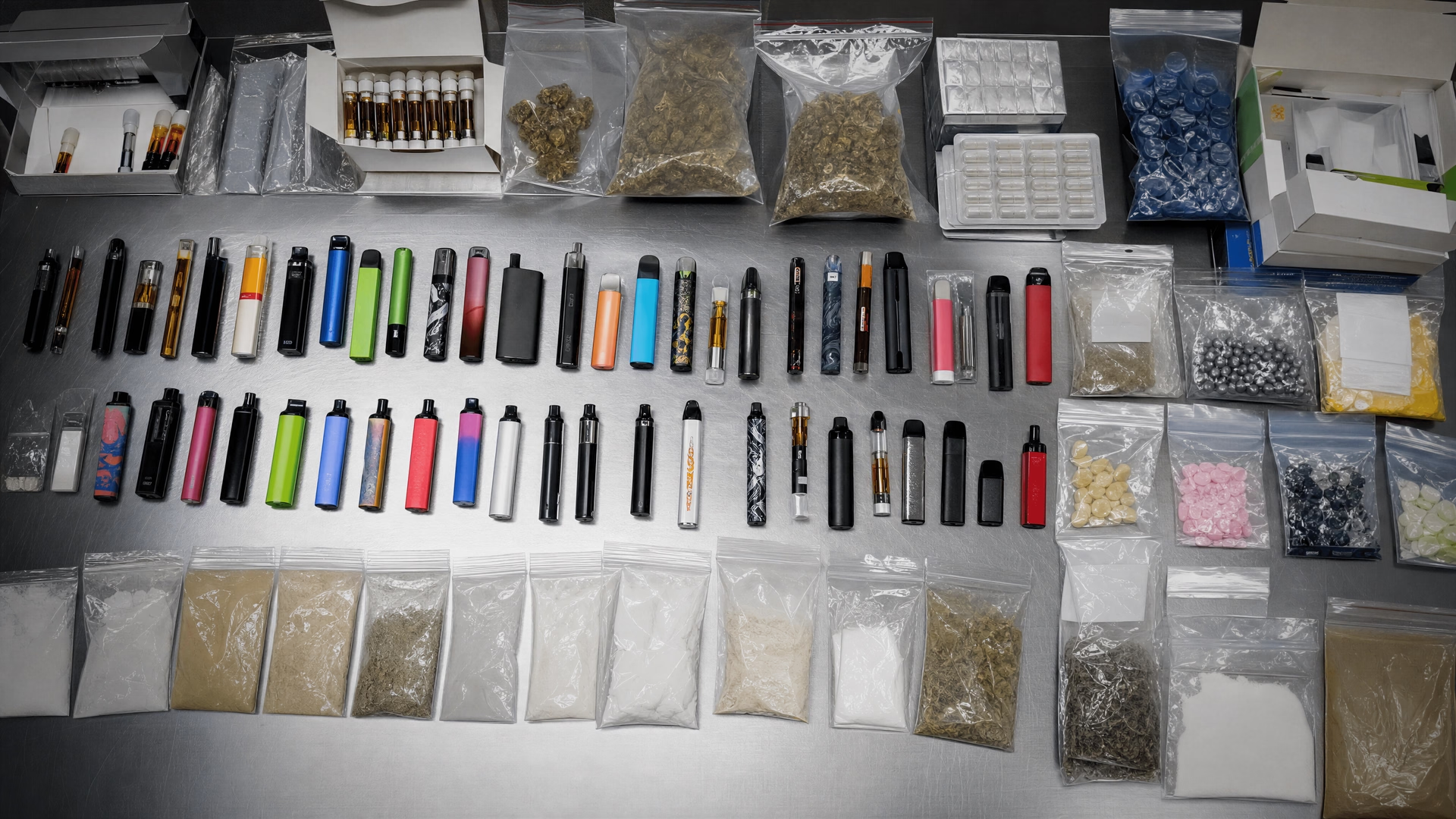
The report’s warning about product uncertainty can be broken down into a few concrete shifts:
- Sales channels and delivery formats are multiplying, from parcels and concealed cargo to new vape products.
- Products sold do not always match what they contain, making appearance a weak guide for users and authorities alike.
- Not all risky substances start in the classic illicit market; the report also flags ketamine diverted from the legal market.
- When one precursor is controlled, producers can move to ‘designer precursors’ built to sit just outside existing rules.
For a readership used to tracking cannabis policy, one part of the message stands out. The report explicitly places synthetic and semi-synthetic cannabinoids within this wider shift toward products that blur legal, medical and illicit boundaries. In this story, though, cannabis is only one strand of a broader warning: misdescription and substitution are becoming central features of the European Union’s drug market, not marginal anomalies.
The chemistry is moving too
That is why the report pays attention not just to substances, but to the chemicals around them. It describes ‘designer precursors’ as compounds created to evade controls: when one precursor is banned, illegal producers look for a similar molecule that is not yet regulated. For the European Union, that turns chemical oversight into a moving target and makes laboratory capacity part of frontline drug policy rather than a technical afterthought.
Why the European Union response now reaches beyond customs
One reason this report matters beyond policing is that the European Union response can no longer stop at ports and customs sheds. The source text says authorities now need to watch emergency departments and wastewater, alongside drug-checking services, laboratories and early-warning systems. The European Commission’s summary of the 2026 report makes the same institutional point: illicit drugs including cocaine, synthetic drugs and new psychoactive substances remain widely available across the bloc.
The monitoring map is wider than the border map:
The shift in emphasis can be summarised like this:
| Where the signal appears | What the report describes | Why it changes the response | Source |
|---|---|---|---|
| Commercial containers and ports | Trafficking uses container traffic, small ports and sea transfers. | Border control must adapt to rerouting and concealment methods rather than fixed corridors. | Adnkronos on Europe’s changing drug routes |
| EU processing sites | Cocaine can arrive as an intermediate or be chemically hidden in legal materials before extraction, cutting or packaging. | Authorities need forensic chemistry, precursor controls and the ability to detect clandestine sites. | Adnkronos on Europe’s changing drug routes |
| Wastewater, emergency rooms and drug checking | The report says monitoring must extend beyond customs to health and alert systems. | Seizure totals alone no longer give a full picture of market change. | European Commission summary of the 2026 drug report |
| Treatment and harm-reduction services | Crack cocaine is adding pressure to services while wastewater points to rising cocaine use in many cities. | Public-health data become part of the European Union’s market intelligence. | Euronews on the EU drug crisis |
This wider lens matters because a market that completes part of its processing inside the European Union can look quieter at one checkpoint while becoming more dangerous elsewhere. Another Euronews report on the agency’s warning said cocaine accounts for roughly a third of people entering drug treatment in Europe, underlining why health services now sit inside the same picture as customs data.
What readers should take from the new map
Readers should be careful not to treat this as a one-line story about either collapse or surge. The central finding is subtler: the European Union drug market is getting harder to interpret because routes, formats and processing stages are dispersing. More seizures with less weight do not automatically mean decline. New vape products and falsified medicines do not just add variety; they weaken the old assumption that a product’s presentation reveals its contents.
Quick questions readers are likely to ask
EU Drug Report 2026: key questions
What is the European Drug Report 2026?
It is the European Union Drugs Agency’s annual assessment, presented in Brussels, drawing on data from 29 countries: the European Union’s 27 member states plus Norway and Turkey. The report describes the situation up to the end of 2025, with many annual indicators referring to 2024.
Does a lower total amount of cocaine seized mean the EU market is shrinking?
Not necessarily. The report says a higher number of seizures alongside a lower total quantity can reflect smaller loads, more fragmented shipments and more varied routes, rather than a straightforward fall in supply.
Is cocaine being produced from coca leaf inside the European Union?
No. The sites reported in six EU member states concern extraction from disguised cargo, transformation of intermediates, cutting or packaging. The report does not say coca is being cultivated inside the Union.
Why do vapes and fake medicines matter in a drug-market report?
Because the report says new vape products and falsified medicines are part of a market where products do not always match their contents and where risky substances can circulate in forms that resemble legal goods.
Why does wastewater keep appearing in EU drug reporting?
Because wastewater can show changes in consumption that seizure totals alone may miss. In this report, it helps explain why rising cocaine use in many cities can coexist with a lower total quantity seized.
That is what makes this a significant European Union policy document. It is not only charting which drugs are present. It is showing how ordinary logistics, forensic chemistry, emergency medicine and counterfeit risk now overlap. Cocaine, vapes and fake medicines sit in the same story because the old dividing lines between route, product and response are no longer holding.
For the European Union, the significance of the 2026 drug report is less a league table of substances than a warning about system design. When cocaine can arrive hidden in legitimate cargo, be finished inside the bloc, and circulate alongside vapes or fake medicines, the old border-only map no longer works.
Sources
- Cocaina, vapes e farmaci falsi: la nuova mappa delle droghe Ue (eurofocus.adnkronos.com)
- EU Commission and EU Drugs Agency present the 2026 European Drug Report (home-affairs.ec.europa.eu)
- €31bn drug trade, 7,600 deaths: How the EU plans to tackle the drug crisis (euronews.com)
- New health risks emerge as Europe’s drug market grows more complex, EU agency warns (euronews.com)
- European Union Drugs Agency warns Europe’s drug market is becoming stronger, more diverse and harder to control (2eu.brussels)