











Patients entering cannabinoid medicine face mixed advice, variable effects and incomplete evidence. This is why so many still feel lost.

Patients who turn to cannabinoid medicine often arrive there after years of chronic symptoms, frustration, and trial-and-error care. But as The Cannigma’s recent reporting on patient confusion makes clear, the next step can be disorienting too. Between skeptical clinicians, enthusiastic advocates, online anecdotes, and a research base that keeps expanding without speaking in one voice, many patients are left trying to answer a basic question: what, exactly, applies to them?
Caught between skepticism and overconfidence
The central tension described in the primary source is not hard to recognise. Patients exploring cannabinoid-based care are often doing so while symptoms still affect their work, sleep, mobility, or daily routine. At the same time, the information environment around them is fractured. Some clinicians remain wary of cannabis-based treatment. Other voices embrace it with far more certainty than the evidence can justify.
That leaves many people in an uncomfortable middle ground. Conventional medicine may still be organised around diagnosis and symptom management, while parts of the wellness world can sound as if the answer is already known. The patient, meanwhile, is usually not looking for ideology. They are trying to make a careful decision while living with uncertainty.
What makes the experience so disorienting
The problem tends to break down in a few recurring ways:
- A patient may hear skepticism from one clinician and strong encouragement from another.
- Online forums combine personal stories, product recommendations, and warnings, but rarely separate anecdote from evidence.
- People often have to interpret claims while still coping with pain, sleep disruption, stress, or other chronic symptoms.
- The same symptom can be discussed through very different lenses: diagnosis, symptom control, wellness, lifestyle, or self-experimentation.
Human beings are not identical systems.
Dr. Uwe Blesching in The Cannigma
That line from the Cannigma piece gets to the heart of the issue. Patients are not confused simply because the field is young, or because clinicians disagree. They are confused because the subject itself resists simple standardisation. A treatment approach that may feel promising to one person can be ineffective, unpleasant, or unsettling for another.
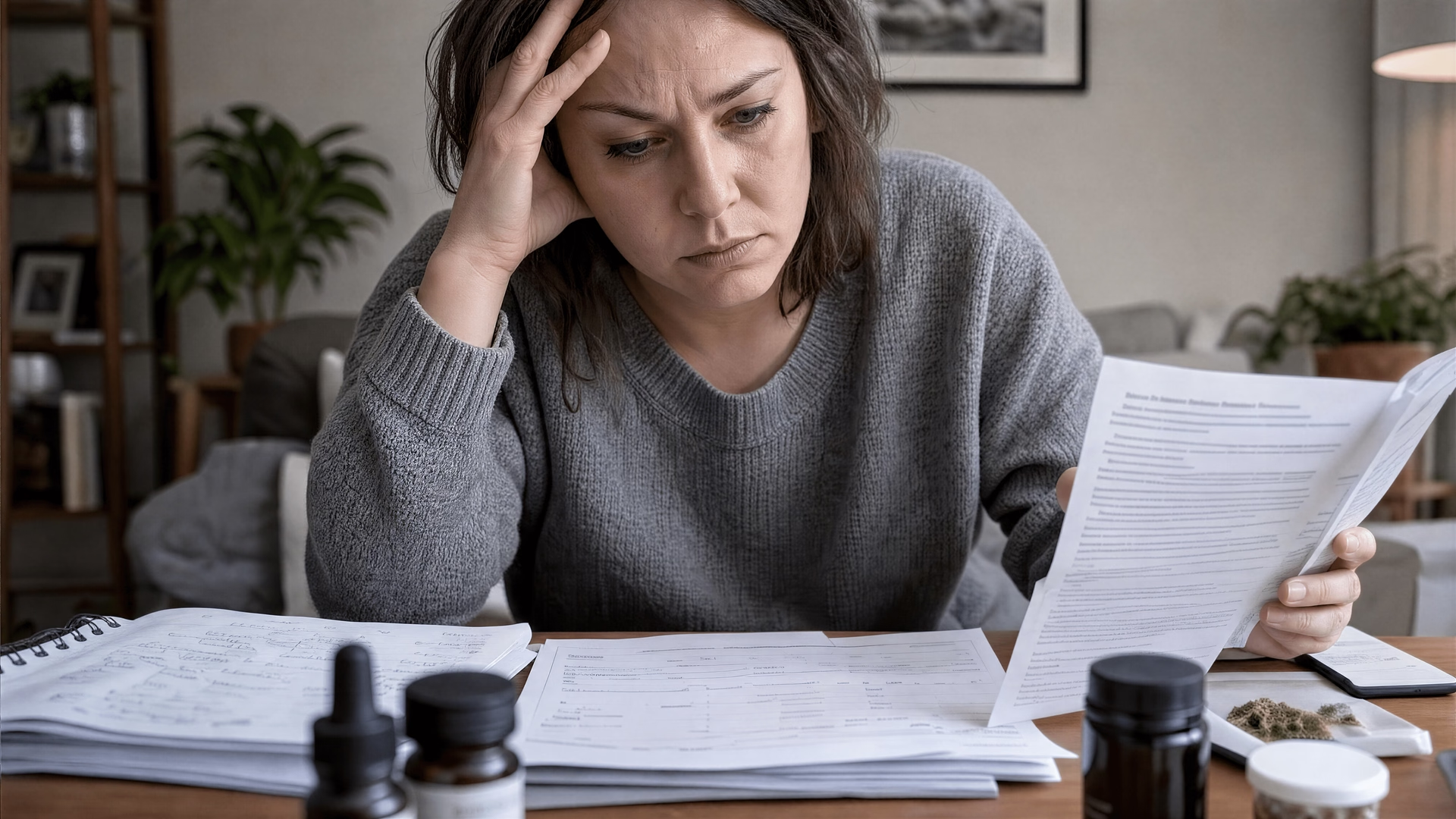
The lived reality is often less dramatic than the online conversation around it. It looks more like a patient sitting with clinic notes, a symptom diary, and several competing explanations of what might help:

Why the same product can help one person and unsettle another
The primary source sets out the questions patients ask most often. Why does cannabis help one person sleep deeply while another feels anxious or overstimulated? Why does one person report major pain relief while another notices very little? Why do some people do better with THC, while others respond more favourably to CBD-rich preparations, terpenes, or other non-intoxicating approaches? For patients trying to decode labels or online discussions about compounds such as CBC (Cannabichromene): Pharmacology and Evidence or terpene profiles like Eucalyptol in Cannabis: Effects, Evidence, Safety, the volume of information can quickly become part of the problem.
The explanation offered in the Cannigma piece is straightforward, even if it makes the field harder to navigate: each person brings a unique physiology into the experience. That includes stress load, inflammatory state, emotional landscape, genetics, medication profile, sleep pattern, diet, trauma history, microbiome, and nervous system baseline. Once that is true, the search for a universal formula becomes much harder.
The endocannabinoid system is a framework, not a shortcut
That description of the endocannabinoid system matters because it shifts the conversation away from the idea of a simple on-off switch. In the Cannigma account, the ECS is presented as one of the body’s central balancing systems, helping it adapt to internal and external change. That is a more complex picture than the one many patients meet in marketing language or forum advice.
Seen that way, cannabinoid medicine is less about finding a magical ingredient and more about understanding a moving interaction between a product, a symptom pattern, and a particular person. The same formulation can therefore produce sharply different outcomes without either experience being invalid. For patients, that complexity is scientifically important, but emotionally frustrating.
The evidence is expanding, but not in one neat direction
One reason patients can feel stranded is that new evidence rarely arrives as a single, clean verdict. Instead, it accumulates across different symptoms, products, populations, and research designs. Some recent reporting points toward a broader understanding of cannabinoid medicine than the old THC-centred conversation suggested.
A few examples show why the evidence base can feel both promising and difficult to interpret:
| Area | What patients often hear | What recent reporting suggests | Source |
|---|---|---|---|
| Sleep | THC is the main cannabinoid that matters for sleep. | A recent report on a systematic review and meta-analysis said the strongest sleep evidence was tied to CBD, CBN, and combinations of the two rather than primarily THC. | Our New Study Shows That The Science Of Cannabis And Sleep Extends Beyond THC (Op-Ed) |
| Chronic pain | If cannabinoids help pain, THC is the obvious active option. | For some chronic pain patients, formulations containing non-intoxicating cannabinoids such as CBD, CBG, and CBC were reported to be associated with better outcomes than THC-only products. | Some Cannabinoids May Ease Common Chronic Pain Conditions, Study Finds |
| Drug development | Cannabinoid medicine is still mostly anecdotal and unstructured. | Formal product development continues as well. In the United Kingdom, Ananda Pharma reported a safety step for its MRX1 CBD oral solution as clinical pain trials approach. | Ananda Pharma Confirms Safety of CBD Drug, as Clinical Pain Trials Approach |
Even safety discussions remain unsettled. A Project CBD article critiquing a US FDA low-dose liver study argued that CBD risk claims can be framed too broadly, reminding patients that safety debates are often about dose, context, study design, and interpretation rather than a simple safe-or-unsafe binary.
Different questions are often collapsed into one conversation
That is part of the confusion. Research on adolescent development, chronic pain, sleep, psychiatric vulnerability, product safety, and formal drug trials does not answer the same question. Yet patients often encounter all of it in one feed of headlines. When those very different evidence streams are flattened into generic claims about what cannabis does, context disappears first.
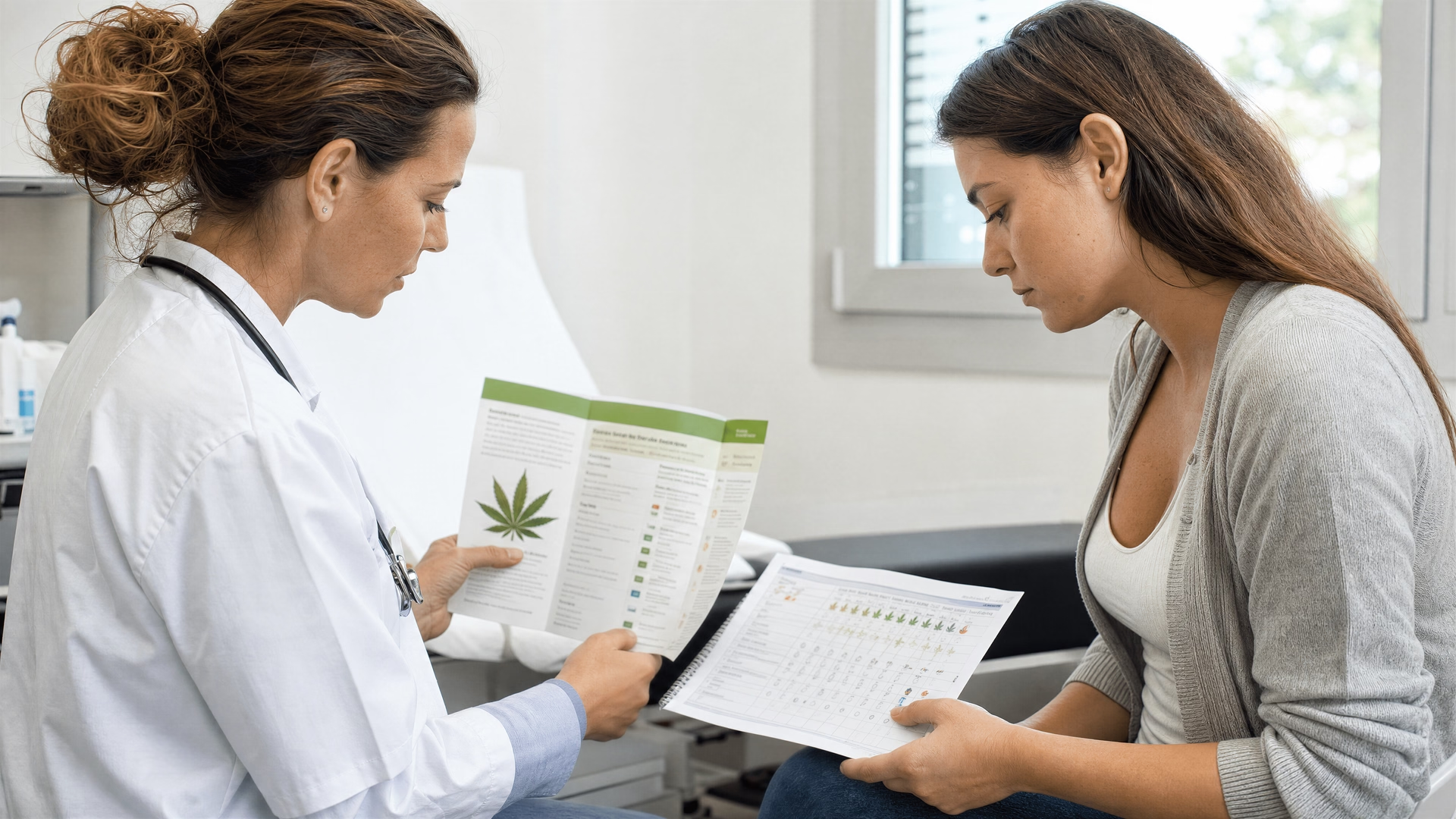
What this means in practice is that a patient may be reading about adult symptom relief, youth neurodevelopment, and a pharmaceutical CBD trial in the same evening, without much help distinguishing which findings belong to which population or clinical setting:
More access does not automatically mean more clarity
Another source of confusion is that the medical cannabis market can look more mature from the outside than it feels to patients on the inside. In the United Kingdom, a Curaleaf Laboratories partnership with Portuguese cultivator Herdade das Barrocas points to a growing medical supply chain. Across Europe, supply is expanding too; as Cannabivo recently reported on Germany importing more than 50 tonnes of medical cannabis in the first quarter of 2026, availability can rise quickly even while patient guidance remains uneven.
That kind of growth matters for access, but it does not solve the patient’s core problem. More products, more imports, and more partnerships do not by themselves explain who may benefit from which cannabinoid profile, how to weigh prior medications or trauma history, or when caution should dominate optimism. Recent reporting has given patients several real signal points to interpret:
Set in sequence, those signals show why the public conversation can feel crowded rather than clarifying:
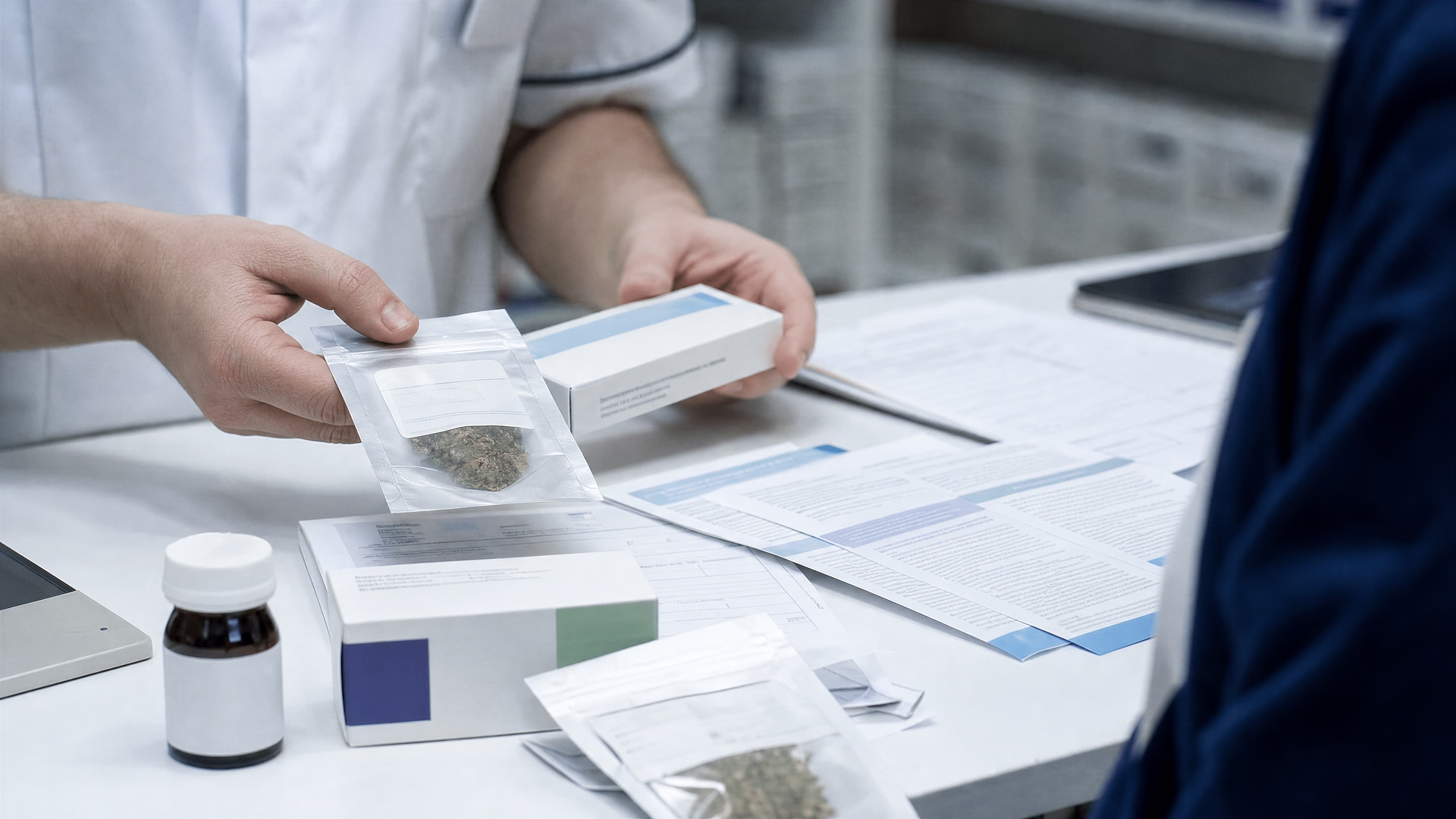
Patients trying to act responsibly may therefore feel as if they are being asked to build their own clinical framework from fragments of market news, safety debate, and emerging science:
What better answers would actually look like
The most useful lesson from the Cannigma article is not that cannabinoid medicine is unknowable. It is that the field demands discernment. Patients do not need blanket reassurance or blanket dismissal. They need clearer distinctions between what is observed, what is supported, what is still uncertain, and what may depend heavily on the individual.
A more patient-centred approach would involve a few basics
At minimum, better guidance would look like this:
- Separate anecdote from clinical evidence instead of blending them into one recommendation.
- Start with the individual’s physiology, medication profile, sleep pattern, stress load, and symptom history.
- Say clearly whether the discussion concerns THC, CBD-rich preparations, terpenes, or other non-intoxicating cannabinoids.
- Explain when findings apply to specific groups, such as adolescents or people with added psychiatric vulnerability, rather than to all patients.
- Be honest about uncertainty when evidence is early, mixed, or still being debated.
None of that makes decision-making easy. It does make it more truthful. The patient who is already living with chronic symptoms is not helped by exaggerated certainty, whether it comes from a hardline clinical refusal or from a wellness promise that outruns the data.
Questions patients keep asking
A few questions come up again and again, and the available facts answer them only partly:
Patient FAQ
Why can the same cannabis product help one patient and make another feel anxious or overstimulated?
Because, as the primary source explains, people bring different physiology, stress load, inflammatory state, genetics, medication profiles, sleep patterns, trauma histories, microbiomes, and nervous system baselines into the experience. The same formulation can therefore affect different people in very different ways.
Is cannabinoid medicine really only about THC?
No. The Cannigma article itself notes that some people do better with CBD-rich preparations, terpenes, or other non-intoxicating approaches. Supporting reporting in 2026 also pointed to sleep evidence tied to CBD and CBN, and to pain outcomes associated with CBD, CBG, and CBC formulations for some patients.
Does a larger medical market mean the science is settled?
No. Expanding supply chains, product partnerships, and formal drug development may improve availability, but they do not automatically tell patients which cannabinoid profile fits which symptom pattern, or how strong the evidence is for a particular use.
Should patients trust every alarming contamination warning they see online?
Not automatically. One 2026 analysis of 118 seized illicit cannabis samples found no evidence of fentanyl contamination in marijuana flower. That does not answer every safety question, but it does show why dramatic claims still need evidence.
What emerges is a field that is maturing, but unevenly. The science is moving, the market is moving, and patient interest is moving. Guidance, however, is still catching up.
The hardest part of cannabinoid medicine may not be finding information. It is finding information that is specific enough, honest enough, and contextualised enough to guide a real patient with real symptoms. Until that gap narrows, many people will continue to live in the space described by The Cannigma: not rejecting cannabinoid medicine, not fully trusting the surrounding noise, and still searching for better answers.
Sources
- Our New Study Shows That The Science Of Cannabis And Sleep Extends Beyond THC (Op-Ed) (marijuanamoment.net)
- Some Cannabinoids May Ease Common Chronic Pain Conditions, Study Finds (forbes.com)
- Ananda Pharma Confirms Safety of CBD Drug, as Clinical Pain Trials Approach (cannabishealthnews.co.uk)
- Does “low dose” CBD pose a risk to liver health? (projectcbd.org)