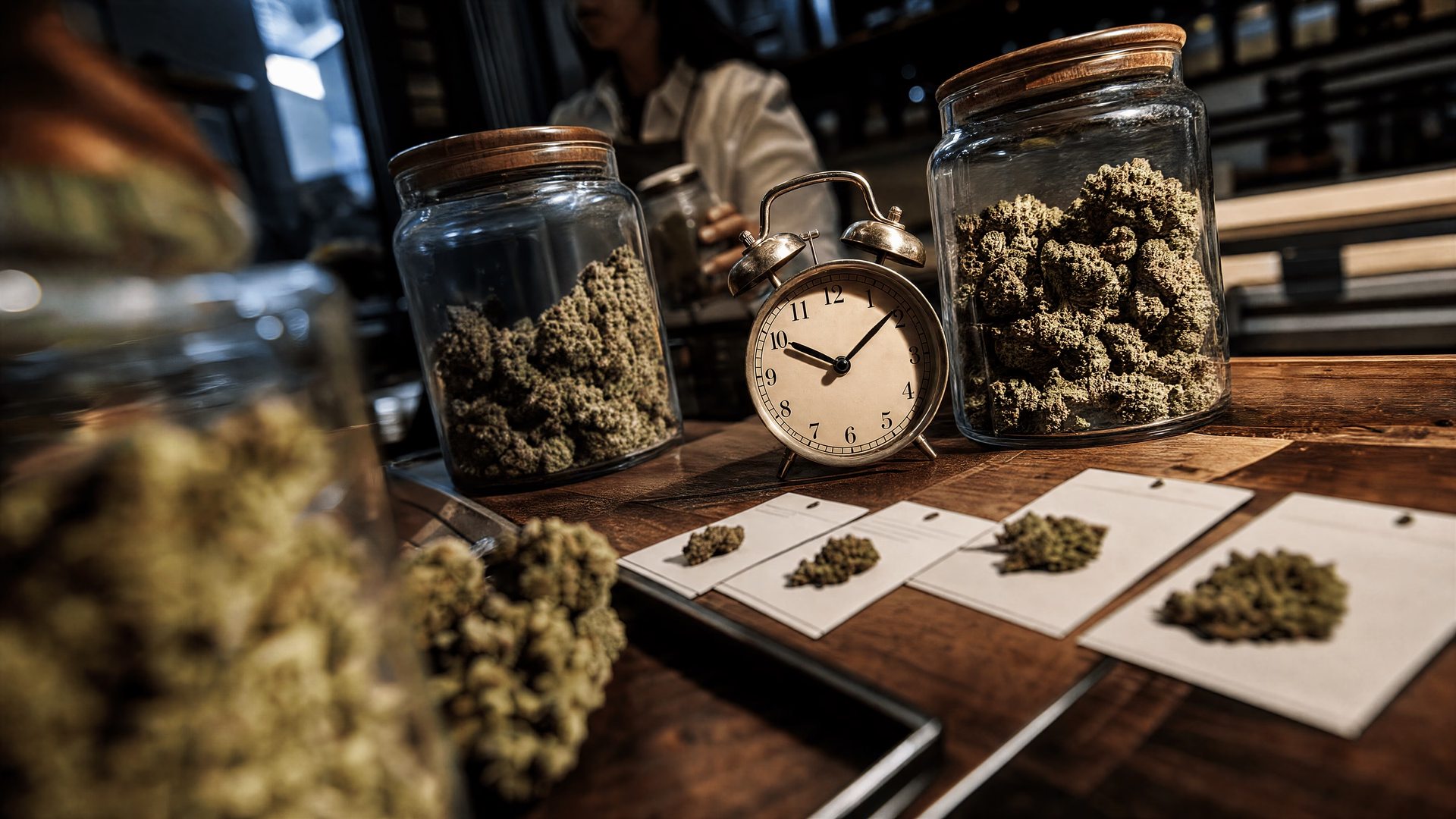














Why cannabis edibles catch people off guard
Edibles are not just slower cannabis. They are cannabis delivered through a different physiological route, with different timing, different metabolite formation, and a different failure mode. That last part matters most. When people have a bad edible experience, the mistake usually happens before the strongest effects arrive.
Popular advice often compresses the whole issue into one vague sentence: “edibles are stronger, so be patient.” That is not wrong, but it is sloppy. Oral THC is actually less bioavailable overall than inhaled THC. Franjo Grotenhermen’s 2003 pharmacokinetic review put oral THC bioavailability around 4–12%, versus roughly 10–35% for inhalation, depending on puffing behavior and product factors. Yet edibles can feel stronger, stranger, and much longer-lasting because oral dosing sends THC through the liver before it reaches systemic circulation in full, generating substantial 11-hydroxy-THC, an active metabolite long recognized as a major driver of the edible experience. Grotenhermen and Marilyn Huestis both treated this first-pass pathway as central, not incidental.
That distinction is why people get caught off guard. They are not simply waiting longer for the same thing. They are often walking into a different concentration-time curve, a different metabolite profile, and a bigger gap between “I took it” and “I feel it.”
The central mistake: treating edibles like smoked cannabis
People use smoking and vaping as their reference model because those routes teach fast feedback. You inhale, you feel something within minutes, and you can titrate upward puff by puff. The body gives an answer quickly enough that behavior adjusts in real time.
Edibles do not work that way. Huestis’s 2007 review remains a standard source here: oral THC usually begins producing psychotropic effects after about 30–90 minutes, often peaks at 2–3 hours, and can last 4–12 hours. Inhaled THC starts within minutes, peaks around 15–30 minutes, and typically fades far sooner. Those are not small differences. They change how people make decisions.
The central mistake is simple: someone takes an edible, waits 20 or 30 minutes, feels little or nothing, and assumes the dose was weak. Then they take more. Sometimes much more. By the time the first dose is peaking, the second is still being absorbed, and both are feeding into a system that is also generating 11-hydroxy-THC through hepatic metabolism. The result is dose stacking.
This is why the common phrase “edibles are stronger” needs correction. They are not inherently stronger in a clean milligram-for-milligram sense. They are harder to predict. The route of administration creates a wider space for human error, and the chemistry amplifies the consequences of that error.
Product inconsistency can make that even worse. Vandrey and colleagues reported in JAMA in 2015 that among 75 edible cannabis products tested, only 17% were accurately labeled for cannabinoid content; 23% were under-labeled and 60% were over-labeled. So even before a person makes the classic re-dosing mistake, the starting assumption about dose may already be wrong.
Why delayed onset changes behavior before it changes blood levels
The dangerous part of an edible is often psychological timing, not just pharmacology in the abstract. The user acts during the silence.
With inhalation, the interval between administration and feedback is short enough to support self-correction. With oral products, the interval is long enough to invite interpretation: maybe it was a weak batch, maybe food “canceled it out,” maybe this person has a high tolerance, maybe one more serving will get things moving. None of those conclusions is reliable at 30 minutes.
That delay changes behavior before it changes conscious experience. A person may keep eating, drinking alcohol, or adding another dose while blood levels are still rising and while metabolism is still shifting THC into 11-hydroxy-THC. By the time the subjective effects become obvious, the opportunity to fine-tune the dose is gone.
Food adds another layer of confusion. Cannabinoids are highly lipophilic, so meals, especially fatty meals, can increase total exposure. For CBD, the effect is dramatic in controlled data: Taylor et al. reported in Epilepsia in 2018 that a high-fat, high-calorie meal increased exposure about fourfold versus fasting. THC food-effect data are messier across product types, but the same basic principle holds. A fed state may increase absorption, while gastric emptying can delay when the person first notices anything. So someone may feel less at 45 minutes and more at 2 hours, not because the edible failed, but because the kinetics shifted.
That apparent contradiction confuses users constantly. Slower onset does not mean lower eventual intensity.
The article's position: edible risk is mostly a pharmacokinetic problem
Edible overconsumption is mostly a pharmacokinetic problem driven by delayed absorption, first-pass metabolism, active metabolite formation, and late peak effects. Strong evidence
The evidence points in one direction. Edible overconsumption is mostly a kinetics problem. Not entirely, because packaging, labeling, product design, and user expectations all matter. But the core mechanism is pharmacokinetic: delayed absorption, first-pass metabolism, active metabolite formation, and a long lag between dosing and peak effect.
That is also why dose caps exist in regulated markets. Canada limits edible cannabis to 10 mg THC per immediate container under the Cannabis Regulations. That is not an arbitrary paternalistic number. It reflects a repeated public health pattern: people misjudge orally administered THC. Many U.S. states use per-serving or per-package caps for the same reason.
The same pattern helps explain increases in pediatric edible exposures after commercialization in Canada, especially when products resemble ordinary foods. If adults struggle to interpret delayed onset and dose equivalence, accidental ingestion by children is an even more predictable hazard.
So the working position for this article is firm. The main problem with edibles is not that people are reckless or that oral cannabis is mysteriously “extra potent.” The problem is that human intuition is poorly matched to oral cannabinoid pharmacokinetics. People expect rapid feedback. Edibles withhold it. Then the liver changes the drug profile while the clock keeps running. That mismatch is why “start low and go slow” exists, but the phrase only makes sense once the underlying mechanism is clear.

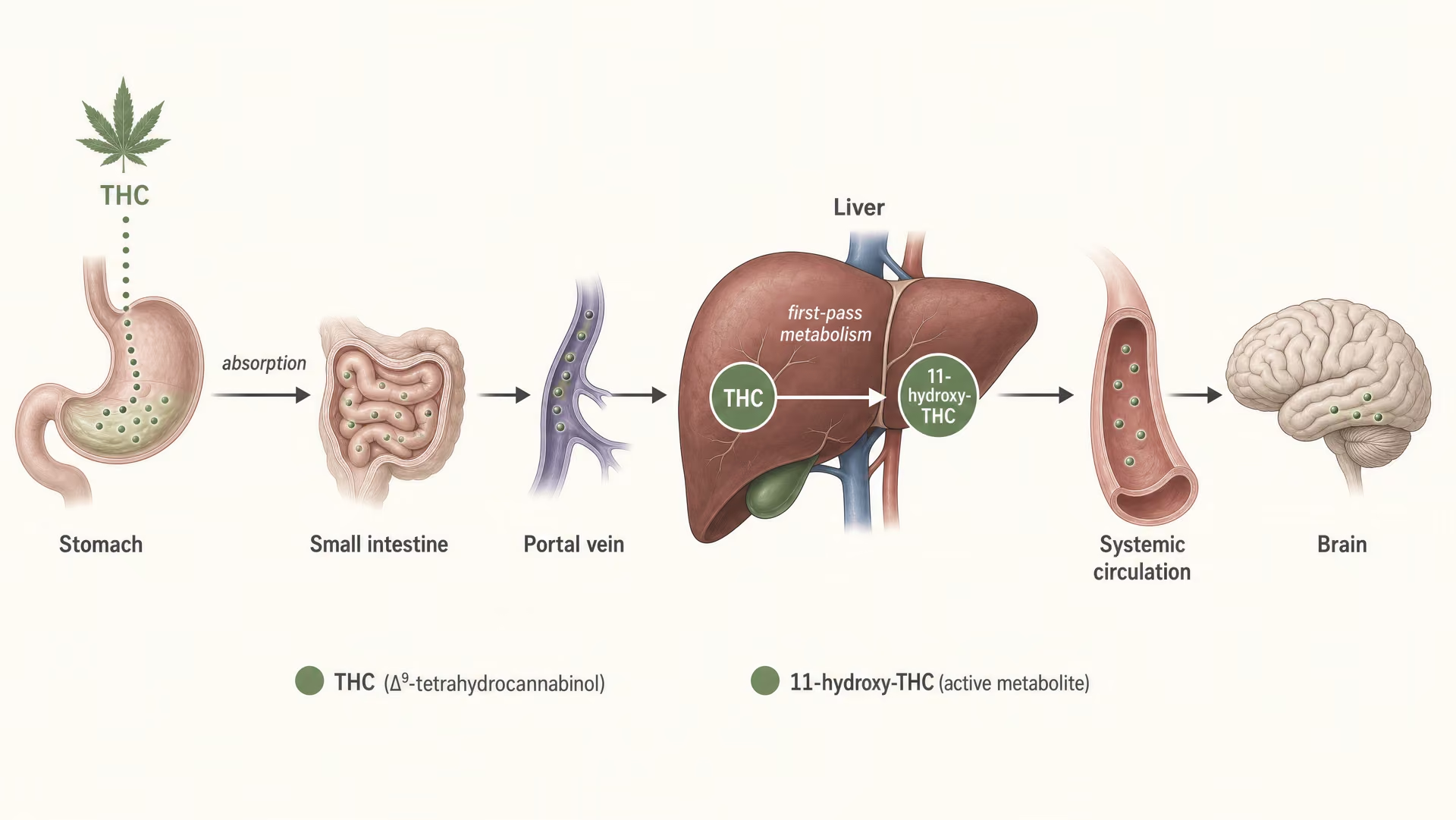
What happens after you swallow THC
Swallowed THC follows a very different pharmacokinetic path from inhaled THC. That difference is not a minor technical detail. It explains the delayed onset, the longer duration, the tendency toward overconsumption, and why many people describe oral THC as feeling heavier, less controllable, or more immersive than smoking or vaping. Edible cannabis is not smoked cannabis in food form. The route changes the drug.
ADME A standard pharmacology framework that tracks what the body does to a drug: absorption into the body, distribution through tissues, metabolism into other compounds, and excretion out of the body.
Pharmacologists often frame this as ADME: absorption, distribution, metabolism, and excretion. With oral THC, absorption starts in the gastrointestinal tract, distribution is delayed by digestion and portal circulation, metabolism in the liver happens early and extensively, and excretion unfolds over many hours after both THC and its metabolites have circulated. By contrast, inhaled THC reaches the bloodstream through the lungs within minutes and reaches the brain before large-scale hepatic transformation occurs. That one routing difference matters a lot.
Absorption in the gut
After an edible is swallowed, THC has to survive the stomach, move into the small intestine, dissolve sufficiently to cross the intestinal lining, and then enter blood vessels that drain into the portal vein. From there, it heads straight to the liver before much of it reaches the rest of the body.
That is slow compared with inhalation. Huestis’s 2007 review of human cannabinoid pharmacokinetics reported oral THC onset typically around 30 to 90 minutes, with peak effects at 2 to 3 hours and duration often 4 to 12 hours. Inhaled THC, by contrast, starts within minutes, peaks roughly 15 to 30 minutes after use, and usually fades sooner. This is why “wait before taking more” is pharmacology, not folklore.
Absorption is also inefficient. THC is highly lipophilic, which means it dissolves in fats far better than in water. The human gut is an aqueous environment, so oral THC does not move neatly into circulation. Grotenhermen’s 2003 review placed oral THC bioavailability at roughly 4 to 12%, far below the 10 to 35% often cited for inhalation. In plain terms, a substantial fraction of the swallowed dose never reaches systemic circulation as unchanged THC.
Food changes this. Fat can improve solubilization and promote lymphatic and intestinal uptake, which is one reason THC is commonly infused into oils or butter rather than dispersed in plain water. But “fat helps” needs a more precise explanation. It can increase total cannabinoid exposure while also delaying how fast the stomach empties. So a fed state may produce a larger eventual effect, yet the subjective onset can feel later. People often misread that lag as a weak dose. Then they take more. That is how stacked dosing happens.
Human food-effect data for THC vary by formulation, but the broader principle is well established across cannabinoids. In a controlled CBD study, Taylor et al. reported in Epilepsia in 2018 that a high-fat, high-calorie meal increased CBD exposure about fourfold compared with fasting. THC products differ, and CBD data should not be lazily pasted onto THC, but the shared problem of poor water solubility and strong first-pass handling is real. The fed versus fasted state is one reason oral cannabinoids can feel inconsistent even when the nominal milligram amount stays the same.
Fast-acting formulations can shorten onset relative to conventional edibles, but the effect is product-specific rather than universal. Limited evidence
The edible itself also matters. Oil-based capsules, baked goods, gummies, chocolates, and emulsified beverages do not empty from the stomach or disperse in the intestine in the same way. A brownie rich in fat may release cannabinoids differently from a gelatin gummy. A nanoemulsified drink may reach measurable levels faster than a conventional oil infusion. Some newer formulations likely do shorten time to peak, but that is a product-specific claim, not a universal property of anything labeled “fast-acting.”
Hepatic first-pass metabolism and 11-hydroxy-THC
The liver is where oral THC becomes a different experience.
Once absorbed from the gut, THC enters the portal circulation and passes through the liver before reaching the systemic bloodstream in large amounts. During that first pass, hepatic enzymes convert a portion of THC into metabolites, most importantly 11-hydroxy-THC (11-OH-THC), which is psychoactive. Grotenhermen (2003) and Huestis (2007) both treat this first-pass conversion as central to oral cannabinoid pharmacology.
This is the step many consumer guides skip, and it is the step that best explains why oral THC often feels different from inhaled THC even when the dose on paper seems modest. 11-OH-THC is not an inert breakdown product. It is active, reaches the brain efficiently, and contributes materially to the intoxicating effect. Oral dosing produces relatively more of it than inhalation because swallowed THC encounters hepatic metabolism early, before widespread systemic distribution.
After 11-OH-THC forms, it is further oxidized to 11-nor-9-carboxy-THC (THC-COOH), which is not intoxicating but persists longer and is important in drug testing. That is the “M” in ADME. The “D” is distribution of both parent THC and active metabolite into highly perfused tissues, including the brain. The “E” is eventual elimination through feces and urine after further metabolism and recirculation. None of this is instant. Oral THC unfolds in stages.
This is also why oral THC is often described as stronger even though its bioavailability is lower. That common claim needs correction. Oral THC is not simply stronger milligram for milligram in a linear sense. On average, less unchanged THC reaches circulation after swallowing than after inhalation. But the route generates more 11-OH-THC up front, and that metabolite changes the character and duration of the effect. So the better statement is: oral THC is less bioavailable as unchanged THC, yet it can feel more intense, longer-lasting, and less predictable because of first-pass metabolism and delayed absorption.
Unpredictability here is built into the route. It is not just user anxiety, inexperience, or bad patience. Gastric emptying differs between people and between meals. Intestinal absorption varies. Liver enzyme activity varies. Product formulation varies. Label accuracy has not always been reliable either. In a 2015 JAMA study, Vandrey and colleagues found that among 75 edible cannabis products sampled from U.S. medical markets, only 17% were accurately labeled for cannabinoid content; 23% were under-labeled and 60% were over-labeled. So even before a person’s gut and liver add biological variability, the product itself may not contain what the package claims.
Why oral THC feels different from inhaled THC
Inhaled THC takes the fast lane. It passes from the lungs into the bloodstream and reaches the brain within minutes. Subjective effects rise quickly, so users can titrate in something close to real time. If the effect feels too strong, they usually know early. If it feels too mild, they can decide whether to stop or continue. The feedback loop is tight.
Oral THC breaks that feedback loop. Effects come late, peak late, and can keep intensifying after the person assumes they have stabilized. Huestis’s timeline is the practical one to remember: roughly 30 to 90 minutes to begin, 2 to 3 hours to peak, and 4 to 12 hours of overall duration. Some people, especially after a large meal or with slow gastric emptying, may feel the build even later than that. The peak can arrive long after the decision to re-dose.
That is why edible overconsumption is mainly a kinetics problem. People interpret delayed absorption as underdosing, swallow another portion, and then encounter overlapping waves of absorption plus ongoing formation of 11-OH-THC. Public policy has responded to exactly this issue. Canada’s federal Cannabis Regulations cap edibles at 10 mg THC per immediate container. That is not an arbitrary number. It reflects the fact that delayed-onset oral products are easy to misjudge.
The subjective profile differs too. People often report that inhaled THC feels sharper in onset and easier to pace, while oral THC feels more diffuse, sustained, and body-heavy. Those descriptions are subjective, but they map onto real pharmacology: slower absorption, a different metabolite profile, and longer systemic exposure. The route is doing the work.
What happens after swallowing THC
- Absorption THC moves through the stomach and small intestine and enters portal blood.
- First-pass routing Portal circulation carries absorbed THC to the liver before wide systemic distribution.
- Metabolism A portion of THC is converted to 11-hydroxy-THC and later to THC-COOH.
- Distribution Parent THC and active metabolite circulate to tissues including the brain.
- Elimination Metabolites are cleared gradually through feces and urine over many hours.
So what happens after you swallow THC? First, inefficient and variable absorption through the gut. Next, mandatory passage through the liver. Then substantial first-pass conversion to 11-OH-THC, an active metabolite that matters clinically and experientially. Finally, delayed peaks and prolonged effects that make self-titration harder than with inhalation. That is why edible cannabis behaves differently. Not because people imagine it does, but because the body processes it differently from the start.
References
Grotenhermen F. Pharmacokinetics and pharmacodynamics of cannabinoids. Clin Pharmacokinet. 2003;42(4):327-360. https://pubmed.ncbi.nlm.nih.gov/12648025/
Huestis MA. Human cannabinoid pharmacokinetics. Chem Biodivers. 2007;4(8):1770-1804. https://pubmed.ncbi.nlm.nih.gov/17691902/
Vandrey R, Raber JC, Raber ME, Douglass B, Miller C, Bonn-Miller MO. Cannabinoid dose and label accuracy in edible medical cannabis products. JAMA. 2015;313(24):2491-2493. https://jamanetwork.com/journals/jama/fullarticle/2338239
Taylor L, Gidal B, Blakey G, Tayo B, Morrison G. A phase I, randomized, pharmacokinetic trial of the effect of different meal compositions, whole milk, and alcohol on cannabidiol exposure and safety in healthy subjects. Epilepsia. 2018;59(9):1586-1592. https://pubmed.ncbi.nlm.nih.gov/30179480/
Onset, peak, and duration: the timeline that drives edible overuse
Edible overuse is mostly a timing problem. People expect cannabis to behave like inhaled cannabis, do not feel much after 20 or 40 minutes, take more, and only later discover that the first dose was still being absorbed. By then, a second or third dose may already be in the gut as well. The result is not a mysterious “bad reaction.” It is predictable pharmacokinetics.
The first distinction that matters is simple: onset is when you first notice an effect, peak is when the effect is strongest, and duration is how long meaningful effects last. Those are not the same thing, and with edibles they can be widely separated.
| Route | First noticeable effects | Peak | Duration | Behavioral implication |
|---|---|---|---|---|
| Inhaled THC | Minutes | 15–30 min | ~2–4 h | Fast feedback allows near-real-time titration |
| Oral THC edible | 30–90 min, sometimes 2 h or longer | ~2–3 h | ~4–12 h | Delayed feedback raises re-dosing risk |
A rough side-by-side comparison looks like this:
- Inhaled THC:** first noticeable effects in minutes, peak often around 15–30 minutes, duration roughly 2–4 hours
- Oral THC edible:** first noticeable effects often 30–90 minutes, sometimes 2 hours or longer, peak around 2–3 hours, duration often 4–12 hours
Those ranges come from the human pharmacokinetic literature summarized by Marilyn Huestis in 2007, and they explain why “wait and see” is far more important with edibles than with smoking or vaping. Franjo Grotenhermen’s 2003 review adds another useful point: oral THC has low and variable bioavailability, often around 4–12%, while inhaled THC is generally cited around 10–35%. Lower bioavailability does not mean weaker subjective effects. It means oral dosing is less efficient and more variable, while first-pass metabolism generates a different metabolite profile, especially 11-hydroxy-THC, that can feel heavier and last longer.
Why smoking and vaping are felt within minutes
When THC is inhaled, it bypasses the slow steps of digestion. Smoke or aerosol reaches the lungs, THC diffuses across the alveoli into the bloodstream, and from there it reaches the brain rapidly. That is why inhaled cannabis gives a near-immediate feedback signal. A person usually knows within a few minutes whether they have taken too little, enough, or too much.
That quick feedback loop changes behavior. If the effect comes on in five minutes, there is less incentive to keep escalating blindly. The brain gets updated almost in real time.
Even inhalation is variable. Puff depth, breath hold, product potency, combustion losses, and device design all matter. Grotenhermen noted inhaled bioavailability ranging from 10% to 35%, which is a wide spread. Still, the route is behaviorally intuitive in a way oral dosing is not. The user titrates against a rapidly arriving effect.
The peak also arrives early. Huestis reported peak effects for inhaled THC at roughly 15 to 30 minutes, with a duration commonly around 2 to 4 hours. That shorter timeline matters. If someone takes a little too much by inhalation, the experience is usually clearer sooner and over sooner.
Edibles are the opposite. They hide the peak behind a long delay.
Why edibles may take 30 minutes to 2 hours or longer
First-pass effect The reduction and transformation a swallowed drug undergoes in the gut and liver before it reaches the wider bloodstream.
An edible has to survive digestion before THC can be absorbed. Then absorbed THC travels through the portal circulation to the liver, where a substantial fraction is metabolized before it ever reaches systemic circulation. This is the hepatic first-pass effect. One of the key products is 11-hydroxy-THC (11-OH-THC), an active metabolite long recognized as important in oral cannabis effects. Grotenhermen and Huestis both treat this as central, not incidental.
That is why edible cannabis is not just smoked cannabis packaged in a cookie or gummy. The route changes the drug.
Huestis reported oral onset typically at 30 to 90 minutes, peak effects at 2 to 3 hours, and duration of 4 to 12 hours. In practice, some people feel something at 30 minutes, others at 90, and others not until 2 hours or more. Gastric emptying, meal composition, product formulation, dose, and individual metabolism all shift the clock.
Food creates an apparent contradiction that confuses people. A full stomach can delay the first noticeable effect because stomach contents slow gastric emptying. The edible sits in the digestive system longer before absorption ramps up. Yet that same fed state, especially with a fatty meal, can increase total exposure because cannabinoids are highly lipophilic and absorption may improve in the presence of dietary fat. This is well established for oral cannabinoids. For CBD, Taylor and colleagues in Epilepsia (2018) found that a high-fat, high-calorie meal increased exposure about fourfold versus fasting. THC food-effect data vary more by formulation, but the principle holds: slower onset does not mean less drug absorbed overall.
Why meals can confuse edible timing
- Delayed signal A full stomach can postpone the first noticeable effect by slowing gastric emptying.
- Higher exposure Dietary fat can raise total cannabinoid absorption.
- False interpretation Feeling little early on may be mistaken for a weak dose.
- Stacking risk Taking more during that lag can create a stronger delayed peak.
That combination is a trap. Someone eats an edible after dinner, feels little after an hour, assumes the product is weak, and takes more. In reality, the meal may be postponing the early subjective signal while setting up a larger total absorbed dose later.
Formulation also matters. Oil-based capsules, baked goods, gummies, chocolates, and emulsified products do not all behave the same way. So-called fast-acting products may shorten onset in some cases, especially when emulsion technology improves dispersion, but that effect is product-specific. It does not erase the basic rule that oral cannabinoids remain slower and less predictable than inhalation.
Stacking doses: the mechanism behind the classic overdose story
The classic edible overdose story usually goes like this: one serving is eaten, not much happens, another serving is taken, perhaps a third follows, and then all of them “hit at once.” That phrasing is imprecise but directionally accurate. The doses do not literally activate simultaneously. They overlap. Absorption from the first dose is still underway when the second enters the system, and hepatic conversion is producing more 11-OH-THC as each wave passes through the liver.
This is dose stacking.
Once the first dose has been swallowed, there is no practical way to titrate in real time. The person is making decisions in the dark, without the fast feedback inhalation provides. If the product is mislabeled, the problem gets worse. Vandrey and colleagues’ 2015 JAMA study found that among 75 edible cannabis products tested, only 17% were accurately labeled; 23% were underlabeled and 60% were overlabeled. So even before the timing problem starts, the actual dose may already differ from the stated dose.
That is one reason legal dose caps exist. Canada limits cannabis edibles to no more than 10 mg THC per immediate container under the Cannabis Regulations. This is not arbitrary paternalism. It is a policy response to delayed onset, variable absorption, and the very human tendency to re-dose too early.
The practical mistake is usually not that someone ignored all warnings and took an extreme dose at the start. More often, they misread the timeline. They confuse “not peaked yet” with “not working.” Those are not the same.
A safer mental model is this: with inhalation, the first few minutes tell you a lot. With edibles, the first hour may tell you very little. Peak effect can still be far ahead. That is why the standard advice to wait at least 2 hours before taking more is not simplistic folklore; it is a rough behavioral fix for a slow, uneven absorption process. Even 2 hours is only a minimum. Some people, especially after a substantial meal, may peak later than that.
So the real lesson is not patience as a vague virtue. It is pharmacology. Delayed onset plus long time-to-peak plus active metabolite formation plus variable labeling creates a route where consumer intuition fails easily. Edible overconsumption is what happens when that timeline is misunderstood.

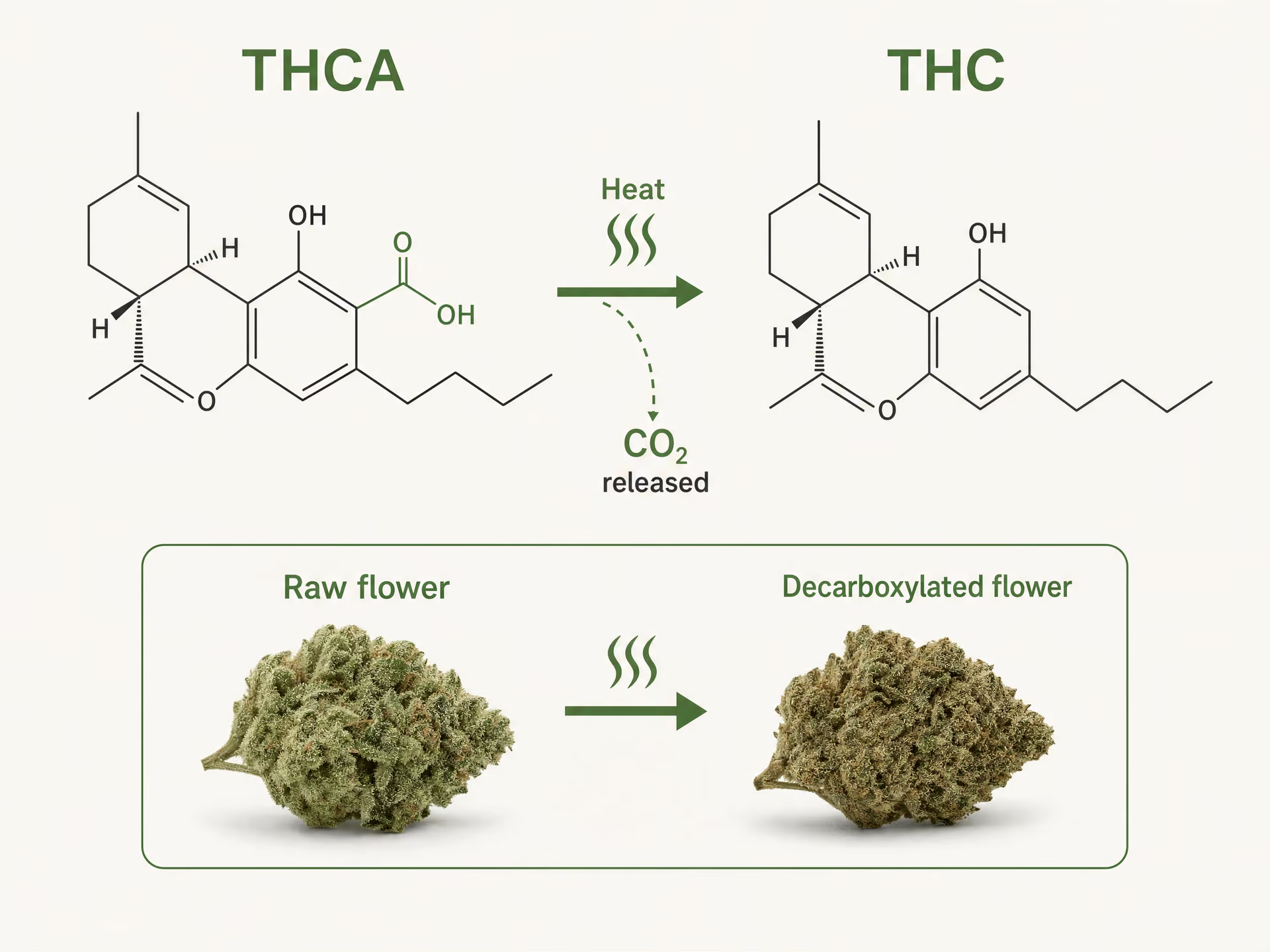
Decarboxylation: why raw cannabis does not reliably intoxicate
A persistent myth in edible culture is that cannabis flower can simply be ground up, stirred into brownie batter, and expected to behave like smoked cannabis. Chemically, that is wrong. Raw flower is dominated not by THC, but by its acidic precursor, tetrahydrocannabinolic acid, or THCA. If that conversion step is skipped or done badly, the edible starts out weak before digestion, absorption, and first-pass metabolism even enter the picture.
This is why edible preparation is not just cooking with cannabis. It is a controlled chemical conversion followed by extraction into a fat or oil phase. Many failed homemade edibles fail at the first part.
THCA versus THC
Fresh and properly cured cannabis flower contains cannabinoids mostly in their acid forms. In the case of intoxicating cannabis, that means THCA is usually present in much larger amounts than delta-9-tetrahydrocannabinol, or THC. THCA and THC are closely related molecules, but the difference matters. THCA does not produce reliable intoxicating effects in the way THC does, largely because its extra carboxyl group changes how it behaves biologically.[2] Isolation of Δ9-THCA-A from hemp and analytical aspects concerning the decarboxylation of THCA. F. E. Dussy, C. Hamberg, M. Luginbühl, T. Schwerzmann, T. A. Briellmann. Forensic Science International, 2005.
That distinction has been established analytically for years. Dussy et al. (2005), working on cannabinoid content and thermal conversion in cannabis samples, showed that heating drives the transformation of acidic cannabinoids into their neutral forms. Wang et al. (2016) also examined decarboxylation kinetics and confirmed that temperature and time strongly shape how much THCA is converted to THC and how much THC is later degraded.
So when someone eats raw ground flower, they are not ingesting a ready-made oral THC product. They are ingesting plant material containing a lot of THCA, plus some already formed THC, depending on age, storage, and prior heat exposure. That is why raw cannabis in food does not reliably intoxicate. There may be some effect if the flower is old, poorly stored, partially heated, or if baking accidentally causes some decarboxylation, but that is not the same as properly preparing THC for oral use. It is inconsistent by design.
The practical point is blunt: if the goal is substantial psychoactive THC, decarboxylation is not optional.
What heat actually changes at the molecular level
Decarboxylation is the removal of a carboxyl group from THCA. In simple terms, heat knocks off a CO2-containing fragment from the molecule, converting THCA into THC. That single change alters the compound’s pharmacology. THC binds cannabinoid receptors far more effectively in a way that produces the classic psychoactive effects associated with cannabis. THCA does not substitute for that just because the names look similar.
Decarboxylation tradeoff
- Too little heat Substantial THCA remains unconverted.
- Enough heat THCA is converted toward psychoactive THC.
- Too much heat THC can degrade and volatile terpenes can be lost.
Heat is doing chemistry here, not merely “activating” the plant in a vague culinary sense. The process follows kinetics, which means temperature and time interact. Too little heat, or too short a heating period, leaves substantial THCA unconverted. Too much heat, or too long a heating period, can push THC further down the degradation pathway, including oxidation to cannabinol (CBN) and loss of volatile terpenes. There is no free lunch.
This tradeoff is why decarboxylation advice varies across recipes. Lower temperatures usually preserve more volatile aroma compounds but take longer. Higher temperatures speed conversion but increase the risk of overshooting and driving off terpenes or degrading cannabinoids. Moisture matters too. Wet plant material heats differently from dry material, and water can slow temperature rise within the plant matrix. Grind size matters as well, because more surface area can improve heat penetration but may also increase volatilization losses.
Wang et al. (2016) analyzed these variables in cannabinoid decarboxylation and showed that conversion efficiency is not a single magic number. It is a balance between enough thermal input to convert THCA and not so much that the resulting THC is lost or degraded. That helps explain why home methods are often erratic even when people follow the same nominal oven temperature. Real ovens cycle above and below the set point. Plant moisture varies. Pan depth varies. Foil covering changes heat and vapor retention. Small details matter.
There is another common confusion here. Baking raw flower into brownies is not the same as doing a controlled decarb first. Batter is a wet, dense environment. The interior may not spend enough time at the right temperature to convert THCA efficiently before the food is done. What gets cooked on the outside of the brownie and what happens in the center are not the same. A recipe can therefore smell strongly of cannabis and still produce disappointing psychoactive effects.
Why homemade edible recipes fail before the infusion step
Most people blame weak homemade edibles on poor-quality flower or sloppy dosing. Those are real problems, but they are not the whole story. The earlier failure is often incomplete decarboxylation.
If flower potency is unknown, you already have a shaky starting point. But even with known potency, the amount of THC that ends up available for infusion depends on how much THCA was converted first. A recipe that assumes all listed THCA becomes THC will overestimate the final dose. Chemistry does not work that neatly. Some THCA remains unconverted. Some THC is lost. Some stays trapped in plant material. Then the infusion itself introduces another layer of inefficiency.
That is why simply mixing raw cannabis into butter, oil, or batter is chemically different from heating it correctly first. Infusion extracts cannabinoids into a lipid carrier because THC is lipophilic, but extraction does not solve the THCA problem. Fat can carry THC well. It does not magically convert THCA into THC on its own. If the decarb step is weak, the infusion is starting with the wrong cannabinoid profile.
Homemade recipes also tend to hide the temperature problem. “Simmer for an hour” sounds precise but often is not. Actual temperatures in butter, oil, or water-bath setups can drift widely. Oven thermostats are notoriously inaccurate. Plant material may be unevenly spread. One section of a tray may decarb well while another lags behind. By the time that infused fat is mixed into a final food, dose variability is already baked in.
Terpene loss is part of the tradeoff too. Some home methods chase maximum THC conversion with aggressive heat, but the result can be a flatter chemical profile and harsher flavor. Other methods protect aroma but leave THCA on the table. Neither problem is obvious to the cook without lab testing. That is one reason homemade edibles are notoriously unreliable: uncertainty begins before infusion, not after.
The takeaway is straightforward. Raw flower in food is not a shortcut to oral THC. Without effective decarboxylation, the edible may contain a lot of cannabis material while delivering far less psychoactive THC than expected. That mismatch between what people put in and what their bodies can actually absorb is the first dosing error in the edible chain.
References
Dussy FE, Hamberg C, Luginbühl M, Schwerzmann T, Briellmann TA. Isolation of Δ9-THCA-A from hemp and analytical aspects concerning the decarboxylation of THCA. Forensic Sci Int. 2005.
Wang M, Wang YH, Avula B, et al. Decarboxylation study of acidic cannabinoids: a novel approach using ultra-high-performance supercritical fluid chromatography/photodiode array-mass spectrometry. Cannabis Cannabinoid Res. 2016.
Fat solubility, oils, and the chemistry of absorption
Edibles work differently from inhaled cannabis for several reasons, and one of the least understood is simple chemistry: THC and CBD do not mix well with water. They mix far better with fat. That single fact helps explain why infused butter exists, why oils dominate edible formulations, and why a gummy or brownie can behave very differently from a joint even at the same labeled dose.
Poor water solubility is part of why oral cannabinoid absorption is inefficient and variable. Grotenhermen’s 2003 pharmacokinetic review put oral THC bioavailability at roughly 4–12%, far below the range usually cited for inhalation. Low water solubility is not the only reason for that weak oral efficiency—first-pass metabolism in the liver is a major factor too—but it is one of the reasons edible dosing is such a blunt instrument compared with what people expect.
THC and CBD are lipophilic molecules
“Lipophilic” just means fat-loving. THC and CBD dissolve readily in oils and other lipids, but poorly in water-based environments. The human digestive tract is mostly an aqueous system, so a cannabinoid swallowed on its own has a basic problem from the start: it is not naturally comfortable in the medium it has to travel through.
That matters at two stages. First, it affects extraction from plant material. Cannabinoids are stored in the resin of the plant, and they move into fat far more readily than into plain water. Second, it affects absorption after eating. A cannabinoid that is dissolved in oil is generally better positioned to pass through digestion and reach the intestinal wall than one dispersed unevenly through a dry or water-heavy food matrix.
This is one reason “raw cannabis in brownie batter” is such unreliable folklore. Even before decarboxylation enters the picture, cannabinoids are not being presented to the body in an especially absorbable form. And if the material has not been heated enough to convert THCA into THC, psychoactive effect will be weaker or absent because raw flower contains mostly the acid precursor, not much active THC. Dussy et al. (2005) and Wang et al. (2016) both describe the thermal chemistry behind this conversion. Heat does two jobs in edible preparation: it activates THC from THCA, and it helps transfer cannabinoids into a lipid carrier.
CBD follows the same broad rule. It is also highly lipophilic and also has poor oral bioavailability. Millar et al. (2018) reviewed CBD pharmacokinetics and found substantial variability in oral exposure across studies and individuals. That variability is not a niche technical issue. It is the reason a CBD edible can feel weak, delayed, or inconsistent even when the label looks straightforward.
Why butter, coconut oil, and MCT oil are used
| Carrier | Why it is used | Limitation noted in article |
|---|---|---|
| Butter | Common in baking and contains enough fat to hold cannabinoids | Contains water and milk solids that can complicate shelf life and consistency |
| Coconut oil | Highly fatty and relatively stable | Does not remove first-pass metabolism or interindividual variability |
| MCT oil | Liquid and easy to mix into tinctures, capsules, and edible formulations | Does not turn oral cannabinoids into a precision-delivery system |
Butter, coconut oil, and MCT oil are popular for a reason grounded in chemistry, not just tradition. They act as lipid carriers. When cannabinoids are heated with these fats, they dissolve into them much more readily than they would into water or a lean food base. That helps create an infused ingredient that can then be mixed into the final recipe.
Butter became standard largely because it is common in baking and contains enough fat to hold cannabinoids. It works, but it is not magically superior. It also contains water and milk solids, which can complicate shelf life and consistency. Coconut oil is often preferred because it is highly fatty, relatively stable, and solid or semi-solid at room temperature depending on temperature and refinement. MCT oil, which contains medium-chain triglycerides, stays liquid and is easy to mix into tinctures, capsules, and some edible formulations.
People sometimes overstate the differences among these fats. The basic advantage is the same: they provide a nonpolar medium that cannabinoids can dissolve into. Coconut oil and MCT oil are often convenient and chemically suitable, but they do not turn oral cannabinoids into a precision-delivery system. Fat helps extraction and can improve absorption. It does not erase first-pass metabolism, interindividual variability, or formulation problems.[3] A phase I, randomized, pharmacokinetic trial of the effect of different meal compositions, whole milk, and alcohol on cannabidiol exposure and safety in healthy subjects. L. Taylor, B. Gidal, G. Blakey, B. Tayo, G. Morrison. Epilepsia, 2018.
Food effect studies make this point clearly. In a 2018 study of purified oral CBD, Taylor et al. found that a high-fat, high-calorie meal increased exposure about fourfold compared with fasting. That is a large shift. It shows that what is in the gut can materially change cannabinoid absorption. But the practical effect is messier than “eat fat and it hits harder.” A high-fat meal may increase total absorption while also slowing gastric emptying, which can delay the first noticeable effects. So a person may feel less at 45 minutes, assume the edible is weak, take more, and then run into a larger delayed wave of absorption later. This is exactly the kind of kinetics problem that leads to overconsumption.
There is no single “best” carrier fat because the final effect depends on the whole formulation, the meal context, and the person consuming it. Still, lipid carriers are not optional window dressing. They are a sensible response to the fact that cannabinoids are oil-soluble compounds moving through a mostly water-based digestive system.
Lecithin, emulsification, and what they can and cannot fix
Emulsifier A substance that helps oil and water mix more evenly, improving dispersion and helping doses stay more uniform across a recipe.
Lecithin gets treated online as if it were a potency hack. It is not. It is an emulsifier.
An emulsifier helps oil and water mix more evenly by reducing the tendency of fat droplets to separate out. In edible making, that matters because many foods contain both fat and water. If the infused oil pools unevenly in the batter, dough, syrup, or filling, the dose will not be distributed evenly either. One brownie ends up weak. Another carries a much larger share of the cannabinoids. That is a real problem in homemade edibles, and poor homogenization is one of the main reasons they are so unpredictable.
Lecithin can help with this. It may improve texture, reduce separation, and support more uniform mixing of cannabinoids throughout a recipe. Uniform mixing matters. Dose consistency starts long before the edible reaches the stomach.
But lecithin does not fix everything. It does not compensate for uncertain flower potency. It does not correct incomplete decarboxylation. It does not guarantee that each serving contains the same milligrams unless the whole batch is mixed extremely well and portioned carefully. And it does not bypass human pharmacology. Even a perfectly homogenized edible still faces delayed gastric emptying, intestinal absorption limits, and hepatic first-pass metabolism.
That distinction matters because the internet often treats “fat plus lecithin” as if it can solve edible unpredictability. It cannot. It can improve extraction and mixing. Those are meaningful gains. They are not a cure for variability.
This is also why industrial formulations put so much effort into emulsions and particle size. Better dispersion can improve consistency and, in some products, speed absorption. Still, the evidence is formulation-specific. Smaller droplets and better emulsification can make cannabinoids more evenly distributed and sometimes more bioavailable, but they do not make oral dosing universally fast or reliable.
The chemistry here is simple enough to state plainly: cannabinoids prefer oil, not water. That is why edible formulations rely on fats. It is also why mixing quality matters so much. A cannabinoid dissolved evenly in a lipid carrier has a better chance of being extracted, distributed, and absorbed than one scattered unevenly through a recipe. Yet “better chance” is the right phrase. Not certainty. Edibles remain variable because the biology after swallowing is variable too.

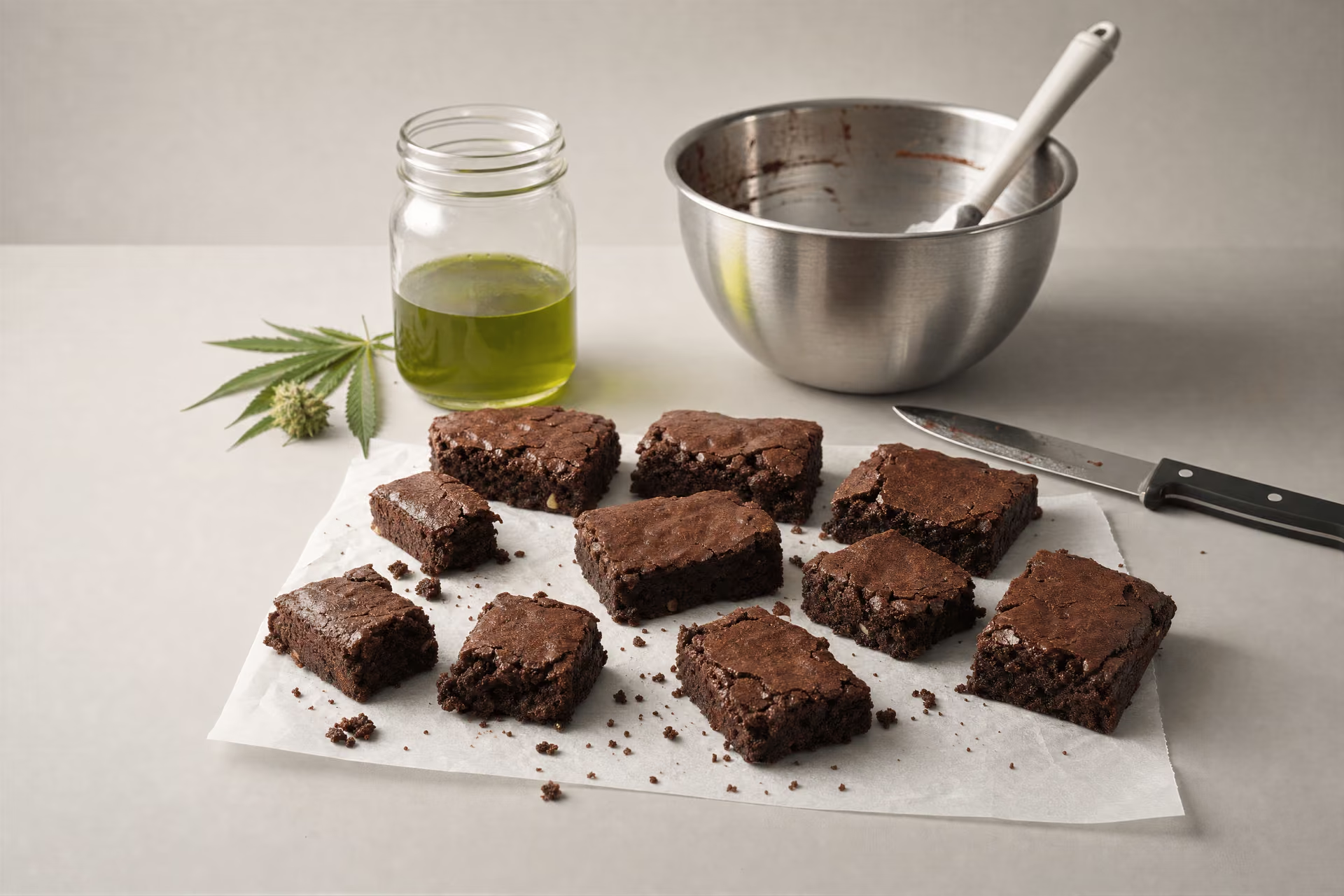
Why homemade edibles are notoriously unreliable
Homemade edibles have a reputation for being rustic, stronger, and cheaper. The first claim is true. The other two often collapse under inspection.
A homemade brownie is not just a regulated edible without the label. It is an unstandardized drug-delivery system assembled in a kitchen, usually without validated potency testing, controlled heating, or any way to confirm that the cannabinoids ended up evenly spread through the batch. That matters because oral cannabis is already pharmacokinetically tricky. Huestis’ 2007 review described oral THC effects as typically beginning after 30–90 minutes, peaking at 2–3 hours, and lasting 4–12 hours, with substantial variability between people and occasions. Grotenhermen in 2003 put oral THC bioavailability at roughly 4–12%, far lower and more variable than inhalation. So even before kitchen errors enter the picture, edibles are hard to read correctly in real time.
Why homemade edibles are unreliable
- Unknown input Starting THC or CBD content is often guessed from strain names or rough labels.
- Inconsistent conversion and extraction Decarboxylation and fat infusion vary with time, temperature, moisture, and method.
- Poor homogenization Cannabinoid-rich oil may not be distributed evenly across the final batch.
Homemade versions fail at three separate stages. First, the starting cannabinoid input is often unknown. Second, the conversion from acidic cannabinoids to active forms, plus the transfer into fat, is inconsistent. Third, the infused oil or butter is often poorly distributed in the final food. People tend to focus on only the first problem. The second and third are just as important.
Regulated products are not flawless either. Vandrey and colleagues’ 2015 JAMA study found that among 75 edible products sampled in U.S. medical markets, only 17% were accurately labeled, while 23% were underlabeled and 60% were overlabeled for cannabinoid content. That is a striking indictment of the early commercial market. Still, a badly regulated commercial edible is not evidence that homemade is equivalent. It usually means both can be unreliable, with homemade introducing even more uncertainty.
Unknown starting potency
Most home cooks do not actually know how much THC or CBD they are starting with. They may know the strain name. That is not the same thing.
Cannabis flower potency varies widely between cultivars, between harvests, and even within the same jar. One bud can be resin-rich while another is less so. Labels, when they exist, may report total THC or delta-9-THC under a particular testing method, but home calculations often ignore moisture content, degradation, and the distinction between THCA and THC. Raw flower contains mostly THCA, not active THC, so “20% THC flower” is often shorthand that hides a conversion assumption.
The arithmetic people use at home is usually too clean for the material they are working with. Ten grams of flower labeled at 20% total THC does not neatly become 2,000 mg of available THC in the pan. Some cannabinoid is lost during heating. Some remains trapped in plant material. Some degrades. Some never makes it into the portion that gets eaten. If the original label was old or inflated, every downstream dose estimate is wrong before the oven is even preheated.
CBD preparations have a related problem. Home cooks may assume that hemp flower, trim, or extract has a predictable CBD concentration and negligible THC. That assumption can fail in both directions: the CBD content may be lower than expected, and the THC content may be higher than expected. For people seeking non-intoxicating effects, that is not a minor bookkeeping issue.
This is where regulated manufacturing, at least in principle, has an advantage. Starting material can be tested before formulation, and finished products can be tested afterward. The fact that commercial labeling has often been inaccurate does not erase the value of testing; it shows why testing standards and enforcement matter.
Inconsistent decarboxylation and extraction efficiency
Even if the starting flower were known precisely, homemade edible preparation still faces a chemistry problem. Raw cannabis does not reliably intoxicate because most of its THC exists as THCA. Heat removes the carboxyl group and converts THCA to THC. Dussy et al. (2005) and Wang et al. (2016) both examined decarboxylation behavior analytically and showed what kitchen folklore usually misses: conversion is time- and temperature-dependent, and not perfectly forgiving.
Underheat the material, and a significant fraction of THCA remains unconverted. Overheat it, and THC can degrade. The margin between incomplete activation and avoidable loss is wider than internet recipes imply, but it is still real. Home ovens also cycle around their set temperature, often inaccurately. A tray placed near a hot spot may decarboxylate differently from one in the center. Grinding, moisture, batch size, and whether the material is loosely spread or packed all affect heat transfer.
Then comes extraction. Cannabinoids are lipophilic, so home recipes usually simmer the decarboxylated material into butter, coconut oil, or another fat. That helps, but “fat helps” is not the same as “everything transfers efficiently.” Extraction depends on temperature, time, fat composition, plant particle size, agitation, and filtration. A rushed infusion can leave substantial cannabinoid behind in the strained plant matter. A long, hot extraction may increase oxidation or produce a harsher-tasting oil without guaranteeing better recovery.
This is one reason homemade edible estimates are often fantasy dressed up as math. People calculate from theoretical input, not measured output. They assume 100% decarboxylation and near-complete extraction, then divide by the number of cookies. Real recovery is lower and irregular.
For THC edibles, that means the eventual effect may be weaker or stronger than expected, and because oral THC undergoes first-pass metabolism to 11-hydroxy-THC, the mistake can feel larger than the arithmetic error suggests. For CBD edibles, poor oral bioavailability adds another layer of unpredictability. Millar et al. (2018) reviewed oral CBD as low and highly variable in bioavailability, while Taylor et al. (2018) found that a high-fat meal increased CBD exposure by about fourfold versus fasting. If a homemade CBD edible is weakly extracted and then taken under different meal conditions each time, consistency is unlikely.
Poor homogenization across the final batch
The last failure point is distribution. Even a well-made infused oil is not automatically uniform in the finished food.
If the infused fat is not fully emulsified into the batter or mixture, cannabinoids can cluster. That means one brownie corner may contain far more THC or CBD than another. Thick batters, uneven stirring, partial separation during baking, and settling in liquid or gelatin mixtures all make this worse. Lecithin can improve dispersion, but most home kitchens are not validating homogeneity with any analytical test. They are eyeballing it.
This is why “the batch contains 200 mg total, so each of 20 brownies has 10 mg” is often fiction. It assumes perfect mixing and perfectly equal portions. In reality, you can miss on both counts. The knife cuts may be uneven, and the cannabinoid-rich fat may not be distributed evenly to begin with.
Commercial manufacturers at least have tools to address this: controlled mixing, standardized emulsions, batch sampling, and finished-product testing. Some modern formulations use emulsification technologies specifically to improve dispersion. Even there, reliability should not be assumed blindly. Vandrey’s 2015 findings are a useful warning against naïve trust in labels. But homemade products remove nearly all of the safeguards that could catch a dosing problem before someone eats it.
That is the core point. Homemade is not just cheaper commercial edible production. It is a stack of uncertainties: uncertain input, uncertain conversion, uncertain distribution. Once eaten, those uncertainties collide with delayed onset, variable absorption, and first-pass metabolism. The result is not charming unpredictability. It is dose opacity. And with edibles, dose opacity is where many bad experiences begin.
References
Grotenhermen F. Pharmacokinetics and pharmacodynamics of cannabinoids. Clin Pharmacokinet. 2003;42(4):327-360. Huestis MA. Human cannabinoid pharmacokinetics. Chem Biodivers. 2007;4(8):1770-1804. Vandrey R, Raber JC, Raber ME, Douglass B, Miller C, Bonn-Miller MO. Cannabinoid dose and label accuracy in edible medical cannabis products. JAMA. 2015;313(24):2491-2493. Dussy FE, Hamberg C, Luginbühl M, Schwerzmann T, Briellmann TA. Isolation of delta9-THCA-A from hemp and analytical aspects concerning the determination of delta9-THC in cannabis products. Forensic Sci Int. 2005;149(1):3-10. Wang M, Wang YH, Avula B, et al. Decarboxylation study of acidic cannabinoids: a novel approach using ultra-high-performance supercritical fluid chromatography/photodiode array-mass spectrometry. Cannabis Cannabinoid Res. 2016;1(1):262-271. Millar SA, Stone NL, Yates AS, O’Sullivan SE. A systematic review on the pharmacokinetics of cannabidiol in humans. Front Pharmacol. 2018;9:1365. Taylor L, Gidal B, Blakey G, Tayo B, Morrison G. A phase I, randomized, double-blind, placebo-controlled, single ascending dose, multiple dose, and food effect trial of the safety, tolerability and pharmacokinetics of highly purified cannabidiol in healthy subjects. Epilepsia. 2018;59(8):1540-1548.
Commercial edibles, labeling accuracy, and the rise of fast-acting formulations
Commercial edibles are often treated as if regulation solved the unpredictability problem. It helped, but it did not erase it. The pharmacology is still awkward: oral cannabinoids are absorbed slowly and variably, they face substantial first-pass metabolism, and subjective effects lag behind blood-level changes enough to invite premature re-dosing. Add formulation differences and label inaccuracy, and the neat idea of a “10 mg edible” starts to look less tidy than consumers assume.
- Study sample
- 75 edible products
- Accurate within 10%
- 17%
- Under-labeled
- 23%
- Over-labeled
- 60%
- Cities sampled
- Los Angeles, San Francisco, Seattle
The benchmark paper here is Ryan Vandrey and colleagues’ 2015 JAMA study of edible cannabis products from Los Angeles, San Francisco, and Seattle. Among 75 products tested, only 17% were accurately labeled for cannabinoid content; 23% were under-labeled, and 60% were over-labeled relative to stated THC or CBD content. That finding mattered because it put numbers on a problem users had already been reporting for years: even before someone misjudges onset and takes more, the labeled dose may not match the dose actually consumed. If a package says 10 mg and contains materially more, the usual “start low” advice is already standing on shaky ground.
What the labeling studies found
Vandrey et al. remains the anchor because it examined real products in routine circulation rather than idealized lab samples. Accuracy was defined narrowly, within 10% of label claim. Most products missed that mark. Over-labeling is the risk that gets public attention because it means the edible contains less THC than claimed, potentially prompting someone to take more. Under-labeling is at least as important for safety, because it means the product contains more than expected. Either direction erodes dose predictability.
This is not just a THC story. The same paper found notable inconsistency in CBD content as well, which matters for products marketed as balanced or CBD-dominant. Oral CBD already has low and variable bioavailability, and Millar et al. (2018) reviewed that variability as a central limitation of oral CBD use. If the starting content is inaccurate, the pharmacokinetic noise only gets worse.
Later regulatory systems have tried to narrow this gap. Canada, for example, permits legal cannabis edibles but caps THC at 10 mg per immediate container under the Cannabis Regulations. That number is often framed as paternalistic. It is better understood as a policy response to oral kinetics. Huestis’ 2007 review remains the classic summary: oral THC effects typically begin after 30 to 90 minutes, peak around 2 to 3 hours, and may last 4 to 12 hours. Those delays are long enough for a person to mistake “not feeling much yet” for “I need another dose.” Dose caps exist because this error is common, predictable, and built into the route of administration.
Labeling is only one layer of the issue. The product matrix matters too. A gummy, chocolate, baked good, capsule, and oil can all carry the same nominal dose while producing meaningfully different onset profiles. Food effects complicate this further. Cannabinoids are lipophilic, and fed-state conditions can increase total exposure, yet a larger meal may also slow gastric emptying and delay the first noticeable effect. That apparent contradiction is real. A person may feel effects later but eventually absorb more.
For CBD, the food effect is especially well documented. Taylor et al. (2018) found that a high-fat, high-calorie meal increased CBD exposure about fourfold compared with fasting. THC data are less standardized across edible types, but the same broad principles apply: oral cannabinoids dissolve poorly in water, interact strongly with dietary fat, and show large between-person variation. A label cannot capture all of that.
Nanoemulsion technology and faster onset claims
Nanoemulsion A formulation that breaks an oil phase into very small droplets stabilized by emulsifiers or surfactants to improve dispersion in gastrointestinal fluids and sometimes speed absorption-related steps.
This is the backdrop for the rise of “fast-acting” edibles. Industry did not shift toward nanoemulsions and water-dispersible cannabinoid systems because the old formulations were merely inelegant. It shifted because traditional oil-based edibles behave like traditional oral lipophilic drugs: slow, variable, and heavily influenced by stomach contents.
The basic mechanism is plausible. Cannabinoids such as THC and CBD are highly lipophilic and dissolve poorly in aqueous environments like the gastrointestinal tract. In a conventional edible, the cannabinoid is often dissolved in oil or fat, then incorporated into a food. In a nanoemulsion or other finely dispersed system, that oil phase is broken into much smaller droplets, stabilized by surfactants or emulsifiers. Smaller droplets create more surface area. More surface area can improve dispersion in GI fluids and may speed the processes that precede absorption. Some systems are designed to remain dispersed in beverages; others aim for more rapid handling in the stomach and small intestine.
That does not mean cannabinoids suddenly bypass oral pharmacology. They still face absorption limits, and a substantial portion of THC still reaches the liver and is converted to 11-hydroxy-THC, the active metabolite associated with many of the distinctive effects of edibles. Grotenhermen (2003) estimated oral THC bioavailability at roughly 4–12%, far below typical inhalation estimates of 10–35%. Nanoformulation may improve consistency or onset in some cases, but it does not turn an oral product into an inhaled one.
Marketing language often blurs several different ideas: faster first detectable blood levels, earlier subjective onset, earlier peak concentration, higher total exposure, and reduced variability. Those are not the same endpoint. A formulation could produce an earlier measurable rise in plasma cannabinoids without producing a dramatic change in perceived onset. Another could shorten time to peak while leaving total exposure largely unchanged. The claim “hits in 10 minutes” should therefore be treated as a product-specific assertion, not a property of nanoemulsions as a category.
What is actually supported by human data
The cautious position is the right one. Some fast-acting formulations do appear to shorten onset relative to conventional oil-based oral products. Human studies on newer emulsified cannabinoid systems have reported earlier Tmax values and, in some cases, earlier subjective effects. That pattern is scientifically credible and consistent with the formulation logic. But the literature is still fragmented, methods vary, and many marketed products have no published human pharmacokinetic data at all.
That matters because formulation heterogeneity is enormous. “Nanoemulsion” can refer to very different droplet sizes, surfactant systems, carrier oils, manufacturing methods, and final food matrices. A beverage emulsion is not interchangeable with a gummy made using a water-dispersible cannabinoid ingredient. Even within a single category, stability during storage can change the effective particle distribution over time. The category label tells you less than the marketing suggests.
There is also a tendency to oversell speed while ignoring tradeoffs. If a formulation truly produces earlier absorption, that may reduce the temptation to re-dose before effects begin. That is a real public health advantage. But earlier does not always mean mild, and it certainly does not guarantee predictability across fed and fasted states. A person who has eaten a heavy meal may still notice delayed subjective onset even if eventual exposure is higher. Another may experience a relatively quick initial effect followed by a longer, stronger second phase as GI absorption continues and 11-hydroxy-THC accumulates. Oral THC remains oral THC.
So the evidence supports a middle ground. Fast-acting cannabinoid formulations are not empty hype; there is enough formulation science and early human data to say some products can work faster than conventional edibles. At the same time, the broad commercial narrative has run ahead of the published literature. Product-specific testing matters more than category-level branding, and label claims should not be treated as settled pharmacokinetic fact unless backed by human data.
For consumers and regulators alike, the implication is simple. Better formulation can reduce one source of edible risk, but it does not erase the others. Accurate labeling still matters. Dose caps still make sense. And any edible that promises speed should still be judged by the same standard that governs the rest of oral cannabinoid science: route, formulation, meal context, and metabolism all shape the experience, often more than the package suggests.
References
Vandrey R, Raber JC, Raber ME, Douglass B, Miller C, Bonn-Miller MO. Cannabinoid dose and label accuracy in edible medical cannabis products. JAMA. 2015;313(24):2491-2493. Grotenhermen F. Pharmacokinetics and pharmacodynamics of cannabinoids. Clin Pharmacokinet. 2003;42(4):327-360. Huestis MA. Human cannabinoid pharmacokinetics. Chem Biodivers. 2007;4(8):1770-1804. Millar SA, Stone NL, Yates AS, O'Sullivan SE. A systematic review on the pharmacokinetics of cannabidiol in humans. Front Pharmacol. 2018;9:1365. Taylor L, Gidal B, Blakey G, Tayo B, Morrison G. A phase I, randomized, open-label, parallel-group, single-dose trial of the pharmacokinetics and safety of cannabidiol in subjects with mild to severe hepatic impairment. Food-effect data reported for oral CBD exposure. Epilepsia. 2018;59(9):1586-1592.
CBD edibles are a different problem
CBD should not be lumped together with THC as if all edible cannabinoids behave the same way. They do not. THC edibles are notorious because delayed onset plus conversion to 11-hydroxy-THC can produce a very recognizable pattern of overconsumption: people feel little at first, take more, then get hit late and hard. CBD edibles usually do not create that same acute intoxication story. The problem with CBD is different and, in many ways, less obvious: poor oral absorption, wide variability between people and products, and a large gap between the doses used in clinical research and the doses found in many ordinary edible products.
Low and variable oral bioavailability
Oral CBD has low bioavailability. That is not a small technical footnote; it is the central reason CBD edibles so often underperform expectations. CBD is highly lipophilic and poorly water-soluble, which makes absorption from the gut inefficient. After absorption, a substantial fraction undergoes first-pass metabolism in the liver before reaching systemic circulation. Millar et al. reviewed human CBD pharmacokinetics in 2018 and described oral bioavailability as low and highly variable across studies and individuals. That variability reflects several factors at once: formulation, fed versus fasted state, gastric emptying, intestinal metabolism, and liver enzyme activity.
This means that a label telling you how many milligrams are in a gummy does not tell you how many milligrams will actually reach circulation. Two people can take the same nominal oral CBD dose and end up with meaningfully different blood levels. Even the same person may absorb it differently on different days. That is a real pharmacokinetic problem, not just anecdotal inconsistency.
It also means that CBD edibles should not be judged by the standards people use for inhaled products or even tinctures held under the tongue. A swallowed CBD edible behaves like an oral drug. Slowly. Imperfectly. Unpredictably. If a person expects a reliable, direct relationship between the label dose and effect, oral CBD often breaks that assumption.
Why most retail CBD edible doses are far below clinical study doses
This is where consumer expectations often drift furthest from the evidence. Clinical trials that established efficacy for prescription CBD in seizure disorders did not use 10 mg gummies. They used much higher doses, commonly in the hundreds of milligrams per day. Epidiolex, the purified CBD product studied for Dravet syndrome and Lennox-Gastaut syndrome, is typically dosed on a mg/kg basis, not as a small fixed edible serving. For many patients, that places daily intake far above what is present in most standard CBD snacks, drinks, or candies.
So when a retail edible contains 5, 10, or 25 mg of CBD, that does not make it meaningless, but it does make direct comparison with clinical trial outcomes inappropriate. A product delivering a few tens of milligrams orally under ordinary eating conditions is not reproducing the exposure achieved in epilepsy studies using repeated, medically supervised dosing. Those are different situations entirely.
| CBD context | Typical scale described in article | Implication |
|---|---|---|
| Retail edible | 5, 10, or 25 mg CBD | Often far below doses used in prescription-CBD trials |
| Clinical seizure studies | Hundreds of milligrams per day | Cannot be directly compared with ordinary snack or candy doses |
This disconnect is one reason public discussion of CBD becomes muddled. People hear that “CBD has been studied clinically,” then assume any orally consumed CBD product is operating somewhere near those research conditions. Usually it is not. The issue is not only that the labeled dose is smaller. It is that the swallowed dose is smaller and then filtered through poor and variable absorption. The effective systemic exposure may end up lower still.
Label accuracy has also been a persistent issue in cannabinoid products. Vandrey et al. reported in JAMA in 2015 that among 75 edible cannabis products tested, only 17% were accurately labeled for cannabinoid content, while 23% were underlabeled and 60% were overlabeled. That study was not limited to CBD-only products, but the warning carries over: with edibles, the dose on the package and the dose actually delivered are not always the same thing.
Food effects, first-pass metabolism, and interaction concerns
Food can change CBD exposure dramatically. Taylor et al. reported in Epilepsia in 2018 that a high-fat, high-calorie meal increased CBD exposure by about fourfold compared with fasting conditions. That is one of the clearest demonstrations that oral CBD does not have a fixed effect profile. Taking the same CBD edible on an empty stomach versus after a fatty meal can lead to very different blood concentrations.
The mechanism is straightforward. CBD dissolves better in the presence of dietary fat, and fed-state physiology can improve absorption of lipophilic compounds. But there is a wrinkle that often confuses people: a meal may increase total exposure while also delaying how quickly subjective effects are noticed, because gastric emptying slows after eating. So “more absorbed” does not always mean “felt sooner.” Both can be true at once.
First-pass metabolism matters for CBD too, though in a different way than with THC. CBD does not become 11-hydroxy-THC and produce the same intoxication pathway. But it is still extensively metabolized in the liver, and that raises a practical concern that deserves more attention than it usually gets: drug interactions. CBD can affect cytochrome P450 enzymes, including CYP2C19 and CYP3A4, and can alter levels of other medications. That concern is well established in the prescription-CBD literature. It matters most for people taking antiseizure drugs, anticoagulants, sedatives, immunosuppressants, and other medicines with narrow therapeutic windows or shared metabolic pathways.
This is why CBD edibles should not be treated as harmless simply because they are non-intoxicating. For many users, low-dose CBD in food may do little because oral bioavailability is poor. For others, especially when taken with fatty meals or alongside interacting medications, exposure may rise sharply. The result is not the classic THC edible overdose story. It is something quieter: uncertain dosing, uneven absorption, and avoidable interaction risk.
References
Millar SA, Stone NL, Yates AS, O’Sullivan SE. 2018. A systematic review on the pharmacokinetics of cannabidiol in humans. Front Pharmacol. 9:1365. https://pubmed.ncbi.nlm.nih.gov/30662423/
Taylor L, Gidal B, Blakey G, Tayo B, Morrison G. 2018. A phase I, randomized, double-blind, placebo-controlled, single ascending dose, multiple dose, and food effect trial of the safety, tolerability and pharmacokinetics of highly purified cannabidiol in healthy subjects. Epilepsia. 59(8):1540–1548. https://pubmed.ncbi.nlm.nih.gov/30179480/
Vandrey R, Raber JC, Raber ME, Douglass B, Miller C, Bonn-Miller MO. 2015. Cannabinoid dose and label accuracy in edible medical cannabis products. JAMA. 313(24):2491–2493. https://jamanetwork.com/journals/jama/fullarticle/2338239
Who is more vulnerable to edible adverse effects
Edible adverse effects do not fall evenly across users. That is partly a dosing issue, but not only a dosing issue. Oral cannabinoids are handled differently from inhaled cannabinoids: absorption is slower, oral bioavailability is low and erratic, and hepatic first-pass metabolism generates 11-hydroxy-THC, an active metabolite strongly implicated in the more prolonged and sometimes more disorienting effects of edibles (Grotenhermen, 2003; Huestis, 2007). The practical result is simple: some groups have less room for error, and the same labeled dose can produce more functional impairment than expected.
New users and people with low tolerance
People without prior cannabis exposure are the easiest group to underestimate. They do not yet have a calibrated sense of onset, peak, or duration, and edibles punish that lack of calibration more than inhaled products do. Huestis reported that oral THC effects usually begin after 30 to 90 minutes, peak around 2 to 3 hours, and may last 4 to 12 hours, far longer than smoked or vaporized THC (Huestis, 2007). That delay is long enough for many users to misread “not feeling much yet” as “I did not take enough.”
That is why edible overconsumption is, in large part, a kinetics problem. A new user takes a dose, waits 45 minutes, feels little, takes more, and then encounters stacked absorption plus first-pass conversion to 11-hydroxy-THC. The second dose often lands while the first is still rising. Anxiety, tachycardia, dizziness, vomiting, panic, and marked cognitive impairment are common consequences. These events are often framed as user impatience. That is too shallow. The pharmacology creates the trap.
Low tolerance also means there is less buffering against product variability. Oral THC bioavailability is only about 4% to 12%, compared with roughly 10% to 35% for inhalation, and even that oral range varies with formulation, stomach contents, and individual metabolism (Grotenhermen, 2003). Then add labeling problems. In Vandrey et al.’s 2015 JAMA analysis of 75 edible cannabis products, only 17% were accurately labeled, while 60% contained more cannabinoid than stated. A novice taking what appears to be a “small” dose may not actually be taking a small dose at all.
Functional impairment matters more than abstract milligrams. A person with low tolerance may develop substantial psychomotor slowing, poor judgment, and balance problems at doses that a regular user regards as modest. That is one reason public-health advice to start low and wait at least 2 hours before taking more is sound. It matches the known time course better than the casual assumption that effects should be obvious within minutes.
Older adults
Older adults deserve separate treatment, not a footnote. Their vulnerability is not just about being “more sensitive.” It reflects age-related changes in physiology, medication burden, and baseline risk of injury.
First, oral handling can be slower and less predictable. Gastric emptying tends to slow with age, and body composition changes can alter distribution and clearance of lipophilic drugs. Cannabinoids are highly lipophilic. Even without a single dramatic mechanism, the aggregate effect is that older adults may experience later onset, longer persistence, and greater variability from the same nominal dose.
Second, polypharmacy is common. This is where edible risk becomes clinically important. Older adults are more likely to take antihypertensives, sedatives, antidepressants, anticoagulants, antiepileptics, and other drugs with central nervous system or cardiovascular effects. Cannabinoids, especially orally administered products that undergo substantial first-pass metabolism, create more opportunity for pharmacokinetic and pharmacodynamic interactions. CBD is particularly relevant here because it can inhibit drug-metabolizing enzymes, and oral CBD exposure rises sharply with food; Taylor et al. (2018) found a high-fat meal increased CBD exposure about fourfold versus fasting. That does not make every CBD edible dangerous, but it does make medication review more than a formality.
Third, the injury risk is higher. Sedation, slowed reaction time, orthostatic symptoms, and confusion are more consequential in someone already vulnerable to falls. A younger adult may feel unsteady and sit down. An older adult may fracture a wrist or hip. This is not hypothetical hand-wringing; it is basic geriatric risk arithmetic. Even low-dose oral THC can produce more functional impairment than expected when baseline balance, vision, blood-pressure regulation, or cognition are already fragile.
Cardiovascular effects deserve attention too. THC can increase heart rate and may provoke symptomatic hypotension or presyncope in susceptible users. In an older population with more arrhythmia, coronary disease, or autonomic dysfunction, the margin for tolerating those effects is narrower. That does not mean all older adults should avoid edibles. It means the threshold for adverse effects is often lower, and the consequences can be more serious.[4] Demographic trends among older cannabis users in the United States, 2015-2018. Benjamin H. Han, Joseph J. Palamar. JAMA Internal Medicine, 2020.
This matters because use is rising. A JAMA Internal Medicine analysis found past-month cannabis use among U.S. adults aged 65 and older increased from 2.4% in 2015 to 4.2% in 2018, with later reports suggesting continued growth (Han et al., 2020). Many in this age group choose edibles because they want to avoid smoking. Reasonable motive. But smoke-free does not mean low-risk.

Children and accidental exposure
Children are vulnerable for a completely different reason: they are usually not intentional users. Pediatric edible exposure is a packaging, storage, and product-format problem as much as a pharmacology problem.
Edibles often resemble ordinary foods. Gummies, chocolates, baked goods, and sweet drinks are familiar to children, and young children explore by eating. That makes edible cannabis a distinct public-health issue, not merely a subset of general cannabis exposure. The route matters here too. Once ingested, the child cannot “untake” the dose, and delayed onset may postpone recognition until significant intoxication is already developing.
Clinical effects in children can include excessive somnolence, ataxia, vomiting, tachycardia, hypotonia, and, in more severe cases, respiratory depression or the need for hospital observation. Small body size amplifies the problem. A dose trivial to an adult may be large for a toddler.
Commercial edible availability in Canada was associated with marked increases in pediatric cannabis exposure events. Strong evidence
[5] Pediatric hospitalizations and emergency department visits associated with cannabis edibles in Canada. Daniel T. Myran, et al.. JAMA Network Open, 2023.Canadian data after legalization show the signal clearly. Pediatric edible exposures increased sharply after commercialization of legal edibles, with Ontario and multicenter Canadian analyses reporting roughly threefold to fourfold relative increases depending on the study design and comparison period. That pattern has been consistent enough that it should be treated as settled public-health evidence, not a speculative concern. Attractive food formats raise exposure risk. Full stop.
Higher-risk groups for edible adverse effects
- New users Less familiarity with onset, peak, duration, and dose stacking risk.
- Older adults More polypharmacy, fall risk, slower handling, and narrower margin for cardiovascular or sedative effects.
- Children Often exposed accidentally through food-like products and can develop heavy sedation at relatively small doses.
The lesson is clinical, not moral. Groups at highest risk are those with the least tolerance for delayed onset, variable dosing, drug interactions, and functional impairment: new users, older adults, and children exposed by accident. Edibles are not simply smoked cannabis in another format. The body treats them differently, and vulnerable populations feel that difference first.
References: Grotenhermen F. Clin Pharmacokinet. 2003;42(4):327-360. Huestis MA. Chem Biodivers. 2007;4(8):1770-1804. Vandrey R, et al. JAMA. 2015;313(24):2491-2493. Taylor L, et al. Epilepsia. 2018;59(8):1586-1592. Han BH, et al. JAMA Intern Med. 2020;180(4):609-611.
Harm reduction that follows the pharmacology
Edible cannabis is where pharmacokinetics turns into public health. The usual warning — be patient — is correct, but incomplete. Oral THC behaves differently because absorption is slower, first-pass metabolism is substantial, and the liver converts part of the dose to 11-hydroxy-THC, an active metabolite strongly linked to the longer, often heavier subjective effect profile described with edibles. Grotenhermen’s 2003 review put oral THC bioavailability at roughly 4–12%, lower than inhaled THC, yet that lower bioavailability does not make edibles simple or mild. Huestis’ 2007 review remains the key reference for the timing: oral effects often begin at 30–90 minutes, peak at 2–3 hours, and can last 4–12 hours. That delay is why overconsumption is so common. This is educational information, not medical advice; local laws vary, product labels may be inaccurate, and individual responses differ.
Start low and go slow is not a slogan; it is a kinetic safeguard
For edibles, “start low and go slow” is not folk wisdom. It is the response that fits the time course.
A person used to inhaled cannabis expects feedback within minutes. Oral THC does not provide that kind of rapid signal. The absence of an early effect is easy to misread as a weak dose, especially if the product is homemade or inconsistently labeled. Vandrey and colleagues found in JAMA in 2015 that only 17% of tested edible products were accurately labeled, while 60% were over-labeled and 23% under-labeled. So the user may be guessing twice: first about the actual dose, then about whether the dose has started working.
Where public health guidance is published, the practical beginner range is usually low single-digit THC. In many North American adult-use frameworks, 5 mg THC is treated as a standard serving and 10 mg as a common upper limit per serving or package, depending on the jurisdiction. Health Canada goes further and caps edibles at 10 mg THC per immediate container. For inexperienced adults, 1–2.5 mg THC is often presented in educational materials as a cautious starting range; 2.5–5 mg is commonly described as a low dose; 5–10 mg is more likely to produce pronounced intoxication in people without tolerance. For older adults, or for anyone combining THC with alcohol, sedatives, or other psychoactive drugs, the sensible starting point is lower still.
Food complicates the picture. Cannabinoids are lipophilic, and fed-state exposure can rise, yet a meal can also delay gastric emptying enough that the person feels little at first and assumes nothing is happening. Those two facts are not contradictory. Subjective onset may feel slower while total absorbed dose later proves larger.
Wait at least 2 hours before re-dosing
Two hours is a minimum practical rule, not a guarantee that peak effect has passed. Public health agencies use it because it reduces the most common error: stacking doses during the absorption window.
Huestis’ timeline matters here. If onset commonly begins at 30–90 minutes and peak effects often arrive at 2–3 hours, taking more at 30, 45, or 60 minutes is often pharmacologically premature. The second dose may enter the system just as the first dose is finally reaching meaningful plasma concentrations and generating 11-hydroxy-THC through hepatic metabolism. Then both doses rise together. What looked like “nothing happening” becomes an unexpectedly intense experience an hour later.
For some people, especially after a large meal, onset may be slower than two hours. That does not make early re-dosing safer. It makes it riskier.
Homemade edibles deserve extra caution because the uncertainty starts before ingestion: flower potency may be estimated badly, decarboxylation may be incomplete or excessive, and the infused fat may not be evenly distributed through the final food. A brownie corner and a brownie center may not contain similar THC amounts. Regulated products are not perfectly reliable either, but homemade products are less predictable by a wide margin.
When someone has taken too much
Too much THC from an edible often looks like panic before it looks like poisoning. Common features include marked anxiety, fear, racing thoughts, dizziness, nausea, vomiting, rapid heart rate, sweating, impaired coordination, and the distressing conviction that the feeling will not stop. Some people become confused, paranoid, or unusually withdrawn. Drowsiness can be prominent, especially in children and older adults.
What to do when someone has taken too much
- Stop further THC use Do not add more cannabis while symptoms are still evolving.
- Reduce stimulation Move to a quiet place and offer reassurance.
- Hydrate carefully Offer small sips of water if the person is awake and not vomiting.
- Stay with them If possible, have a sober adult remain present.
- Seek urgent care when red flags appear Chest pain, trouble breathing, seizures, severe agitation, repeated vomiting, inability to stay awake, loss of consciousness, or accidental ingestion by a child warrant prompt evaluation.
Most cases improve with time and a calm environment. The priorities are simple: stop using more THC, move the person to a quiet place, offer reassurance, encourage small sips of water if they are awake and not vomiting, and reduce stimulation. Remind them that edible effects can last many hours and that the intensity usually falls with time. If available, a sober adult should stay with them.
Medical evaluation is warranted sooner, not later, when there is chest pain, trouble breathing, seizure activity, severe agitation, repeated vomiting causing dehydration, inability to stay awake, loss of consciousness, dangerous behavior, or concern for accidental ingestion by a child. Evaluation is also prudent if the person has significant heart disease, has combined cannabis with alcohol or other drugs, or the product may have contained something other than labeled cannabinoids.
Children are a separate category. Because pediatric edible exposures rose after commercialization in Canada and other legal markets, any significant accidental ingestion by a child should be treated seriously and assessed urgently. Adults too can deteriorate, but children have less physiologic reserve and often present with heavy sedation rather than just anxiety.
The plainest harm-reduction message remains the right one, but now the reason is visible: with edibles, the body is slow to reveal the dose. Waiting is not caution theater. It is how you avoid turning delayed absorption and first-pass metabolism into an avoidable overdose experience.
References
Grotenhermen F. Pharmacokinetics and pharmacodynamics of cannabinoids. Clin Pharmacokinet. 2003;42(4):327-360. https://pubmed.ncbi.nlm.nih.gov/12648025/
Huestis MA. Human cannabinoid pharmacokinetics. Chem Biodivers. 2007;4(8):1770-1804. https://pubmed.ncbi.nlm.nih.gov/17691902/
Vandrey R, Raber JC, Raber ME, Douglass B, Miller C, Bonn-Miller MO. Cannabinoid dose and label accuracy in edible medical cannabis products. JAMA. 2015;313(24):2491-2493. https://jamanetwork.com/journals/jama/fullarticle/2338239
Cannabis Regulations, SOR/2018-144. Government of Canada. https://laws-lois.justice.gc.ca/eng/regulations/SOR-2018-144/
Taylor L, Gidal B, Blakey G, Tayo B, Morrison G. A phase I, randomized, open-label, crossover trial to assess the effect of food on the pharmacokinetics of cannabidiol in healthy subjects. Epilepsia. 2018;59(8):1586-1592. https://pubmed.ncbi.nlm.nih.gov/30179480/
The legal landscape for cannabis edibles
Edible law is messy because the product category itself is messy. A THC gummy is not regulated like dried flower in many places, and it is certainly not regulated like hemp-derived CBD candy. Lawmakers have had to respond not just to cannabis politics, but to edible-specific risks: delayed onset, longer duration, easy overconsumption, child appeal, and dose standardization. Those concerns explain why jurisdictions that permit inhaled cannabis do not always permit edibles on the same terms, and why package caps are often tighter than consumers expect.
The policy logic is not random. Oral THC has low and variable bioavailability, roughly 4–12% according to Grotenhermen’s 2003 pharmacokinetic review, but its delayed onset and first-pass conversion to 11-hydroxy-THC make consumer self-titration far less intuitive than smoking or vaping. Huestis in 2007 described oral effects as typically beginning after 30–90 minutes, peaking at 2–3 hours, and lasting 4–12 hours. That is the legal backdrop for serving caps, warning labels, and child-resistant packaging. Legislators are trying to regulate a dosage form that people repeatedly misread.
United States and the state-by-state model
The United States does not have a single edible rulebook. At the federal level, cannabis with more than 0.3% delta-9 THC remains illegal under the Controlled Substances Act, where marijuana is still Schedule I. Yet many states now allow medical cannabis edibles, adult-use edibles, or both. The result is a layered system: federal prohibition on paper, state legality in practice, and constant edge-case conflict over interstate commerce, banking, enforcement priorities, and hemp-derived cannabinoids.
| Jurisdiction or model | Rule described in article | Purpose |
|---|---|---|
| Many U.S. adult-use states | 5 or 10 mg THC per serving; 100 mg THC per package is common | Standardize dosing and limit overconsumption |
| Canada | 10 mg THC per immediate container | Reduce delayed-onset overuse risk at the package level |
| Medical-only U.S. states | Edibles may be allowed but access is tied to patient rules | Narrow access compared with broad adult-use retail |
In adult-use states, edibles are usually legal within licensed state systems and subject to detailed dosage rules. A common pattern is 5 or 10 mg THC per serving and 100 mg THC per package, though the exact numbers vary by state. Colorado, California, Massachusetts, Illinois, Nevada, Michigan, and many other adult-use states permit regulated edibles, but packaging, serving definitions, warning symbols, and product forms differ. Some states restrict products that too closely resemble ordinary candy. Some ban certain shapes or colors. Most require child-resistant packaging and prominent THC labeling.
Medical-only states often allow edibles too, but access is narrower and linked to patient registration, physician certification, or a defined list of qualifying conditions. In those states, legal edible access is not the same thing as a broad adult-use market. That distinction matters. A jurisdiction can have legal cannabis oil capsules for patients and still prohibit ordinary retail THC brownies or gummies for non-medical use.
State regulation exists partly because product reliability was historically poor. Vandrey and colleagues’ 2015 JAMA study remains one of the clearest examples: among 75 edible cannabis products sampled from San Francisco, Los Angeles, and Seattle, only 17% were accurately labeled for cannabinoid content, while 23% were under-labeled and 60% were over-labeled. That study focused on the pre-standardization era of US legal markets, but it helps explain why modern state rules are heavy on batch testing, labeling, and serving limits. Those rules are not bureaucratic excess. They are a response to documented dose inconsistency.
The US picture is complicated further by hemp law. The 2018 Farm Bill legalized hemp, defined by delta-9 THC concentration, not overall intoxicating potential. That opened the door to intoxicating hemp-derived products in some states, especially those using converted cannabinoids such as delta-8 THC or hemp-derived delta-9 formulations designed to fit federal hemp definitions. Some states allow these products; others have restricted or banned them. So a consumer may find legal CBD edibles in one state, legal adult-use marijuana edibles in another, and quasi-legal intoxicating hemp gummies in a third. These are not equivalent categories, legally or pharmacologically.
Canada’s federal framework and THC caps
Canada is the clearest example of a national adult-use edible framework. Cannabis was legalized federally through the Cannabis Act, and edible-specific rules sit within the Cannabis Regulations. Commercial edibles became legal after the initial legalization rollout, with sales beginning in late 2019 under a stricter product regime than many consumers anticipated.[6] Cannabis Regulations, SOR/2018-144. Government of Canada. Justice Laws Website, 2018.
The centerpiece is the federal THC cap: no more than 10 mg THC per immediate container for cannabis edibles. That is a package cap, not a per-serving cap. Health Canada did not land on that number by accident. The restriction reflects the known kinetics of oral THC and the risk of delayed overconsumption. With inhaled cannabis, effects arrive within minutes. With edibles, people often re-dose before peak effect. Packaging limits are a harm-reduction tool.
Canada also imposes strong controls on formulation, labeling, and presentation. Edibles cannot be appealing to young persons, cannot be associated with glamour or lifestyle claims, and must comply with plain packaging rules, standardized cannabis symbols, ingredient controls, and child-resistant requirements. Caffeine additions are restricted. So are many forms of co-formulation that could make products more confusing or more attractive to children.
This tighter federal approach has not eliminated risk. Pediatric edible exposures rose after commercialization. One Ontario study published in JAMA Network Open by Myran and colleagues in 2023 found a marked increase in cannabis-related emergency department visits among young children after legal edible products entered the market in provinces that allowed them, compared with Quebec, which prohibited commercial cannabis edibles during the study period. That pattern supports the basic public health concern: familiar food formats raise accidental ingestion risk even in a regulated system.
Canada therefore offers two lessons at once. First, a legal national framework can standardize testing and labeling far better than patchwork or illicit markets. Second, legalization does not erase edible-specific harms. It shifts them into a regulated space where governments can impose package caps, warning labels, and product-design limits.
EU, UK, Germany, and the Netherlands: why Europe is fragmented
Europe does not have a unified recreational edibles market. It has a patchwork of national laws, EU food rules, narcotics laws, medical programs, tolerance policies, and hemp exceptions. That fragmentation is the defining fact.
At EU level, there is no bloc-wide legal adult-use THC edible framework. In most member states, consumer THC edibles remain prohibited outside narrow medical channels or decriminalized personal-use contexts that do not create lawful retail sales. CBD is treated differently, but not simply. Many ingestible CBD products fall under the EU Novel Food regime, meaning producers must show safety before authorization. That is a food-law pathway, not a cannabis-legalization pathway.
The United Kingdom, no longer in the EU but often discussed alongside Europe, is blunt on THC. Consumer THC edibles are illegal. Cannabis-based products for medicinal use exist on a tightly controlled prescription basis, but that does not create a lawful non-medical edible market. CBD foods are handled through the Food Standards Agency’s novel foods process, with only products linked to validated applications permitted to remain on the market pending authorization review. Even for CBD, legality depends on food law, THC thresholds, and product composition. For intoxicating THC edibles sold to the general public, the answer is still no.
Germany is frequently misunderstood. The 2024 Cannabis Act, usually called CanG, legalized limited personal possession, home cultivation, and non-commercial cultivation associations under the KCanG framework. It did not establish a broad commercial adult-use edibles market. There is no general licensed-retail system for recreational THC gummies or brownies comparable to Canada or major US adult-use states. Medical cannabis remains separately regulated, but CanG should not be read as a green light for ordinary recreational edible commerce.
The Netherlands is also often overstated. Its coffeeshop system operates under the gedoogbeleid, a policy of tolerance rather than full legalization. Retail sale of small quantities of cannabis in coffeeshops may be tolerated under defined conditions, but the supply chain has long sat in a legal grey zone, and the system is not a harmonized national edible framework. Some cannabis-containing food products have existed in practice, especially space-cake style items, yet that does not mean the Netherlands offers a fully regulated, nationwide adult-use edibles model with the kind of formal manufacturing and labeling architecture seen in Canada.
That is why Europe feels inconsistent. A country may tolerate possession, permit medical cannabis, allow CBD oils under food rules, and still prohibit consumer THC edibles. Another may decriminalize use without authorizing retail supply. Another may allow pilot projects but not broad commercialization. For edible law, Europe is not one market. It is a map of exceptions.
References
Grotenhermen F. Pharmacokinetics and pharmacodynamics of cannabinoids. Clin Pharmacokinet. 2003;42(4):327-360. Huestis MA. Human cannabinoid pharmacokinetics. Chem Biodivers. 2007;4(8):1770-1804. Vandrey R, Raber JC, Raber ME, Douglass B, Miller C, Bonn-Miller MO. Cannabinoid dose and label accuracy in edible medical cannabis products. JAMA. 2015;313(24):2491-2493. Government of Canada. Cannabis Regulations, SOR/2018-144. Myran DT, et al. Pediatric hospitalizations and emergency department visits associated with cannabis edibles in Canada. JAMA Netw Open. 2023.
What the evidence really supports
Claims that are well supported
Some points are no longer speculative. Oral cannabis behaves differently because the body handles it differently, not because users are impatient or inexperienced. That distinction matters.
| Claim | Support level in article | Main sources named |
|---|---|---|
| Oral THC has slower onset, later peak, and longer duration than inhaled THC | Well supported | Grotenhermen 2003; Huestis 2007 |
| Overconsumption is often a timing error caused by early re-dosing | Well supported | Huestis 2007; article synthesis |
| Fast-acting formulations can work faster than conventional edibles | Plausible but product-specific | Early human data and formulation logic |
| Fixed oral-to-inhaled THC equivalence exists | Not supported cleanly | Too much interindividual and formulation variability |
The strongest evidence is pharmacokinetic. After ingestion, THC is absorbed through the gut and then passes through the liver before reaching systemic circulation. During that first-pass metabolism, a meaningful fraction is converted to 11-hydroxy-THC, an active metabolite with strong central effects. Grotenhermen’s 2003 pharmacokinetic review and Huestis’s 2007 review are still the standard references here: oral THC has lower and more erratic bioavailability, roughly 4–12%, but it also produces delayed onset, later peak effects, and longer duration than inhaled THC, which generally shows 10–35% bioavailability and reaches the brain within minutes. Huestis reported oral onset around 30–90 minutes, peak effects at 2–3 hours, and duration around 4–12 hours. That delay is not folklore. It is built into the route of administration.
The second well-supported claim is that overconsumption is often a timing error. People re-dose before the first dose has peaked, then encounter stacked absorption plus active metabolite formation. That is the real engine behind many “edible overdose” stories. The common advice to wait is right, but often too vague; at least two hours before taking more is a practical minimum, not a conservative myth.
Product inconsistency is also well documented. Vandrey and colleagues reported in JAMA in 2015 that only 17% of 75 edible products were accurately labeled for cannabinoid content; 23% were under-labeled and 60% over-labeled. Even before homemade variability enters the picture, dose certainty is shaky. That helps explain why regulators set low caps. Canada’s federal limit of 10 mg THC per package is best understood as a response to delayed-onset overconsumption risk, not bureaucratic fussiness.
Claims that are plausible but overstated
“Edibles are stronger” needs trimming. They are not simply stronger milligram for milligram in a clean linear sense. Oral THC is less bioavailable overall than inhaled THC, so less of the parent compound may reach circulation. What users mean, and what evidence partly supports, is that edibles can feel more intense, more disorienting, and much longer-lasting because of delayed absorption, first-pass conversion to 11-hydroxy-THC, and the tendency to re-dose too early. That is a different claim.
Fast-acting nanoemulsion products fall into the same category. The mechanism is credible: smaller droplets can improve dispersion and sometimes shorten time to peak. Some formulation studies do show faster absorption than conventional oil-based edibles. Still, the category is being marketed ahead of the evidence. “Nanoemulsion” is not a guarantee of predictable onset across products, and many retail formulations do not have published human data.
Food effects are often simplified too much as well. Cannabinoids are lipophilic, and fed-state exposure generally rises, especially with fatty meals. For CBD, Taylor et al. showed in Epilepsia in 2018 that a high-fat meal increased exposure about fourfold versus fasting. That does not mean everyone will feel effects sooner. A fatty meal can increase total absorption while slowing gastric emptying enough to delay subjective onset. Both can be true at once.
Questions the literature still cannot answer cleanly
Three unresolved questions keep showing up in public guidance because people want simple conversions and the science does not supply them.
First, there is no universally reliable oral-to-inhaled THC equivalence. Too many variables interfere: product matrix, stomach contents, metabolism, tolerance, and how much 11-hydroxy-THC is produced in that individual on that day. Any fixed conversion chart is more confident than the evidence warrants.
Second, interindividual variability remains stubbornly large. Age, sex, body composition, gastric emptying, liver enzyme activity, other drugs, and prior cannabis exposure all shift the experience. Older adults deserve special caution here because slower gastric transit, polypharmacy, and greater sensitivity to sedation or orthostasis can amplify oral effects at modest doses.
Third, homemade edibles remain fundamentally unpredictable for reasons that are chemical, not just culinary. Raw flower contains mostly THCA, not THC, so without decarboxylation intoxication is unreliable. Dussy et al. (2005) and Wang et al. (2016) mapped that thermal conversion analytically. Then comes uncertain plant potency, then uneven infusion into fat, then poor mixing in the final batter or oil. The dose problem often starts long before ingestion.
The strongest insight is this: edible unpredictability is not one problem. It is the combined result of metabolism, formulation, food effects, labeling limits, and human behavior colliding on a delayed timeline.
References
- [1] Cannabinoid dose and label accuracy in edible medical cannabis products. JAMA, 2015. https://jamanetwork.com/journals/jama/fullarticle/2338239
- [2] Isolation of Δ9-THCA-A from hemp and analytical aspects concerning the decarboxylation of THCA. Forensic Science International, 2005. https://pubmed.ncbi.nlm.nih.gov/15961277/
- [3] A phase I, randomized, pharmacokinetic trial of the effect of different meal compositions, whole milk, and alcohol on cannabidiol exposure and safety in healthy subjects. Epilepsia, 2018. https://pubmed.ncbi.nlm.nih.gov/30179480/
- [4] Demographic trends among older cannabis users in the United States, 2015-2018. JAMA Internal Medicine, 2020. https://jamanetwork.com/journals/jamainternalmedicine/fullarticle/2760914
- [5] Pediatric hospitalizations and emergency department visits associated with cannabis edibles in Canada. JAMA Network Open, 2023. https://jamanetwork.com/journals/jamanetworkopen/fullarticle/2803174
- [6] Cannabis Regulations, SOR/2018-144. Justice Laws Website, 2018. https://laws-lois.justice.gc.ca/eng/regulations/SOR-2018-144/