













Why the entourage effect became cannabis science's most overused phrase
The entourage effect is neither fake nor proven in the broad way people often mean it. That middle position matters, because the phrase now gets used to cover everything from serious endocannabinoid pharmacology to vague claims that any “full-spectrum” product must outperform a purified compound. Those are not the same proposition.[1] World Drug Report 2024. United Nations Office on Drugs and Crime. United Nations report, 2024.[2] European Drug Report 2024: Trends and Developments. European Union Drugs Agency. EUDA report, 2024.
That inflation matters because cannabis use is widespread. UNODC estimated 228 million users worldwide in 2022, and the EMCDDA estimated about 24 million European adults used cannabis in the last year. With numbers that large, loose language stops being a harmless shortcut. It starts shaping medical expectations, product labeling, and public understanding.
2-AG 2-arachidonoylglycerol, an endogenous cannabinoid ligand produced in the body that activates cannabinoid receptors.
The phrase also carries scientific prestige it did not earn in its modern retail form. “Entourage effect” came from Ben-Shabat, Fride, Sheskin, Tamiri, Rhee, Vogel, Bisogno, De Petrocellis, Di Marzo and Mechoulam in 1998, in a European Journal of Pharmacology paper about endogenous lipids and 2-arachidonoyl glycerol, or 2-AG. That work followed the identification of 2-AG as an endogenous cannabinoid ligand by Sugiura and colleagues in 1995. In the 1998 paper, structurally related fatty acid glycerol esters were inactive on their own in the assay but enhanced 2-AG activity. That was the original entourage effect: companion molecules changing the action of an endogenous ligand.
Not artisanal flower. Not terpene menus. Not a blanket claim that whole-plant cannabis always beats isolated cannabinoids.
The claim readers think they know
Most readers now encounter the entourage effect in a much broader form: cannabis compounds supposedly work better together than alone, especially THC, CBD, minor cannabinoids, and terpenes. Sometimes that is stated cautiously. Often it is not. The popular version implies a general rule that more chemically complex products produce better outcomes because the compounds somehow reinforce each other.
Three claims often bundled under “entourage effect”
- Original endogenous-lipid claim
- Inactive endogenous lipids enhanced 2-AG activity in the 1998 assay.
- Extract-level claim
- A defined botanical preparation may differ from a single-molecule drug.
- Retail terpene claim
- Terpenes and minor compounds in consumer products reliably steer effects in humans.
There are really three different claims hiding under that one label.
First, there is the original endogenous-lipid claim from Ben-Shabat and Mechoulam 1998. That is a real pharmacological observation, but it belongs to endocannabinoid biology, not directly to commercial cannabis extracts.
A defined botanical cannabis preparation may differ meaningfully from a single-molecule drug. Limited evidence
Second, there is the extract-level claim that a defined botanical preparation may differ meaningfully from a single-molecule drug. This is plausible, sometimes supported, and worth taking seriously. Nabiximols, developed by GW Pharmaceuticals, is the obvious example. It contains roughly equal amounts of THC and CBD and has been tested in randomized trials, especially for multiple-sclerosis spasticity. In the enriched-design trial by Novotna et al. in 2011, 272 of 572 patients in the initial phase met the response threshold and entered randomization; the nabiximols group then showed a statistically significant advantage over placebo on the spasticity numerical rating scale, though the absolute difference was modest. That is actual evidence for a specific formulation in a specific condition. It is not a universal law of botanical superiority.
Terpenes and minor compounds in ordinary consumer products reliably boost or steer cannabinoid effects in humans in predictable ways. Strong evidence
Third, there is the strongest and weakest version of the claim: that terpenes and minor compounds in ordinary consumer products reliably boost or steer cannabinoid effects in humans in predictable ways. This is where the phrase has drifted furthest from the data.
What popular articles usually get wrong
The most common mistake is historical. Many articles imply that the 1998 entourage paper established the superiority of whole-plant cannabis over isolates. It did not. It did not test hemp extracts, compare full-spectrum oils with purified CBD, or show that common terpenes amplify THC in humans. Citing that paper as if it settled modern product debates is a category error.
A second mistake is treating review articles as proof. Ethan Russo’s 2006 review in the British Journal of Pharmacology and his 2011 review were highly influential because they assembled a plausible case that combinations of cannabinoids and terpenoids might widen therapeutic effects or reduce adverse effects. They were important hypothesis-building papers. They were not clinical verdicts on every mixed-compound extract.
Purified CBD can produce meaningful clinical benefit without a whole-plant matrix. Strong evidence
A third mistake is pretending isolates do not work. They clearly can. Dronabinol is synthetic delta-9-THC. Nabilone is a synthetic cannabinoid analog. Epidiolex is purified plant-derived cannabidiol. Epidiolex alone is enough to break the simplistic “isolates are ineffective” story. In Devinsky et al. 2017, published in the New England Journal of Medicine, monthly convulsive-seizure frequency in Dravet syndrome fell by 38.9% with cannabidiol versus 13.3% with placebo. Forty-three percent of patients on cannabidiol had at least a 50% reduction in convulsive seizures, compared with 27% on placebo. That is not an entourage effect. It is a single molecule working.[5] The “Entourage Effect”: Is There Really Advantage to Cannabis-Based Whole-Plant Extracts?. Fabio A. Pamplona, Luis R. da Silva, Ana C. Coan. Frontiers in Neurology, 2018.
A fourth mistake is overreading observational evidence. Pamplona, da Silva and Coan 2018 is often cited because CBD-rich cannabis extracts appeared associated with improvement at lower CBD doses and with fewer reported adverse effects than purified CBD in refractory epilepsy reports. That is suggestive. It may point to useful extract-level interactions. But it pooled heterogeneous, mostly observational data rather than head-to-head randomized comparisons. Useful signal, weak causal proof.[6] Short- and Long-Term Effects of Cannabis on Headache and Migraine. Carrie Cuttler, et al.. The Journal of Pain, 2019.
The same caution applies to consumer symptom-tracking studies such as Cuttler et al. 2018. Those datasets can generate hypotheses, but they struggle to separate chemistry from dose, route, expectation, selection bias, and inconsistent labeling. They cannot prove that a terpene profile caused a given benefit.[7] Beta-caryophyllene is a dietary cannabinoid. Jürg Gertsch, Maria Leonti, Silvia Raduner, et al.. Proceedings of the National Academy of Sciences of the United States of America, 2008.[8] Cannabinoid–terpenoid interactions: A review of the evidence. M Santiago, S Sachdev, J C Arnold, I S McGregor, M Connor. British Journal of Pharmacology, 2023.
Then there is the terpene problem. Beta-caryophyllene is the strongest example because Gertsch et al. 2008 showed it acts as a selective CB2 agonist. That is genuine receptor pharmacology. Still, a compound binding CB2 directly is not the same thing as proving a broad entourage effect in finished cannabis products. Linalool has preclinical anxiolytic and sedative literature, much of it outside cannabis. Myrcene has long been tied to sedation and “couch-lock,” but controlled human evidence linking cannabis myrcene content to sedation is sparse. Santiago et al. 2023 reviewed cannabinoid-terpenoid interactions and concluded the evidence remains limited and often methodologically weak. Finlay’s work around 2020 and 2021 likewise found weak or inconsistent direct CB1/CB2 modulation by common cannabis terpenes at physiologically relevant concentrations. That undercuts a lot of confident terpene storytelling.
The narrower thesis this article will defend
The position here is stricter than the slogan and more generous than the dismissal.[9] Cannabinoids for Medical Use: A Systematic Review and Meta-analysis. Penny F. Whiting, Rosalie F. Wolff, Sophie Deshpande, et al.. JAMA, 2015.
Some interaction effects are plausible. Some are supported. The strongest support is not for “everything works better together,” but for narrower cases where defined combinations produce different outcomes than single agents alone. THC and CBD are the clearest example. Nabiximols provides evidence that a standardized botanical mix can have clinical value in selected contexts, particularly spasticity, even if results in cancer pain and other indications have often been mixed or disappointing. Whiting et al. 2015, in a JAMA meta-analysis, found moderate-quality evidence supporting cannabinoids for chronic pain and spasticity, while also noting frequent adverse effects such as dizziness and dry mouth. That is a measured picture, not a triumphalist one.
What should be asked before claiming extract superiority
- Indication Does the claimed advantage apply to a specific condition rather than cannabis use in general?
- Dose Are the compared cannabinoid amounts and ratios actually matched?
- Route Was the product inhaled, oral, or oromucosal?
- Formulation Is the extract chemically defined and batch-consistent?
- Trade-offs Did added compounds improve benefit, raise adverse effects, or do both?
The article will also defend the view that extract-level differences may exist without granting that every full-spectrum product is superior. “Full-spectrum,” “broad-spectrum,” and “isolate” are commercial descriptors, not stable pharmacological classes. Whether a multi-compound extract helps more depends on the indication, dose, route, formulation, and whether extra compounds add benefit, adverse effects, or drug interactions.
Loewe additivity A drug-combination model based on dose equivalence: if two agents can produce the same endpoint, additive combinations fall on a predictable line.
Bliss independence A model that estimates expected combined effect when two agents act independently, using probabilistic overlap rather than simple arithmetic addition.
Chou-Talalay combination index A numeric method for grading drug interactions: values below 1 suggest synergy, 1 suggests additivity, and above 1 suggests antagonism.
Just as important, this article will reject the strongest retail version of the entourage effect. The claim that terpenes and minor cannabinoids reliably create distinct, predictable, clinically meaningful effects across ordinary human use remains ahead of the evidence. The methodology problem is central here. True combination effects are not shown just because A plus B beats A alone. Pharmacology has formal ways to test interactions, including Loewe additivity, Bliss independence, and the Chou-Talalay combination index. Cannabis research often falls short of that standard because extracts vary, terpenes are volatile, labeling is inconsistent, and studies rarely test enough dose combinations to model additivity properly.
So the better frame is not “myth” and not “settled fact.” It is a set of separable hypotheses. Some have a decent basis. Some are still open. Some have been stretched far beyond what the papers actually showed. That is how a legitimate term from 1998 became cannabis science’s most overused phrase.
Where the term actually came from: Ben-Shabat, Mechoulam and the 1998 2-AG paper
The phrase entourage effect did not begin as a claim that a labeled “full-spectrum” cannabis extract beats a purified cannabinoid. It came from a very specific late-1990s endocannabinoid paper, in a very specific assay, with endogenous lipids rather than dispensary-era product categories.
That distinction matters. A lot of modern writing treats the term as if Mechoulam’s group had already shown that cannabinoids, terpenes, and flavonoids in whole-plant cannabis generally intensify one another in humans. They did not. What Ben-Shabat et al. described in 1998 was narrower and more technical: endogenous companion molecules, inactive on their own in the experimental system, enhanced the activity of the endocannabinoid 2-arachidonoylglycerol, or 2-AG.
So the original “entourage effect” was real. It just was not originally about retail cannabis formulations, and it was not proof that all cannabis compounds work better together.
Key 1990s milestones
- 1990 CB1 receptor was cloned, giving THC research a molecular target.
- 1992 Anandamide was identified as an endogenous cannabinoid ligand.
- 1995 2-AG was identified as another endogenous cannabinoid ligand.
- 1998 Ben-Shabat and colleagues described the original entourage effect around 2-AG.
The 1990s endocannabinoid discovery timeline[10] Structure of a cannabinoid receptor and functional expression of the cloned cDNA. L A Matsuda, S J Lolait, M J Brownstein, A C Young, T I Bonner. Nature, 1990.
To understand the 1998 paper, you have to put it back into the discovery rush of the 1990s. The key event that opened the field was not a cannabis extract study at all. It was receptor biology. CB1 was cloned in 1990, giving researchers a defined molecular target for THC and prompting the obvious next question: if the body has a cannabinoid receptor, does it make its own cannabinoid-like ligands?[11] Isolation and structure of a brain constituent that binds to the cannabinoid receptor. W A Devane, F A Dysarz III, M R Johnson, L S Melvin, A C Howlett. Science, 1992.
The first major answer arrived in 1992, when Devane, Hanus, Breuer, Pertwee, Stevenson, Griffin, Gibson, Mandelbaum, Etinger and Mechoulam identified an endogenous ligand for the cannabinoid receptor: arachidonoylethanolamide, soon nicknamed anandamide. That paper, published in Science, is one of the foundation stones of endocannabinoid research. Anandamide was not just another lipid. It showed that the body produces molecules capable of engaging the same receptor system that THC engages.[12] 2-Arachidonoylglycerol: a possible endogenous cannabinoid receptor ligand in brain. T Sugiura, S Kondo, A Sukagawa, et al.. Biochemical and Biophysical Research Communications, 1995.
Then came the second big step. In 1995, 2-arachidonoylglycerol, or 2-AG, was identified as another endogenous cannabinoid ligand by Sugiura and colleagues. Other groups around the same period also contributed to characterizing 2-AG, but Sugiura’s 1995 work is central in the standard timeline. This mattered because 2-AG was not merely a backup version of anandamide. It appeared in higher concentrations in some tissues and soon looked likely to be a major physiological endocannabinoid in its own right.
By the second half of the decade, researchers were trying to map an entire signaling system, not just isolated ligands. They were asking how these lipids were synthesized, how they were broken down, whether they acted at CB1 or CB2 differently, and whether nearby endogenous lipids might shape their effects. That was the scientific setting for Ben-Shabat et al. in 1998.
This history is often flattened in popular retellings. People jump straight from “Mechoulam coined entourage effect” to “therefore mixed cannabis products are superior.” But between those two claims lies a category shift. The 1990s work was primarily about endogenous cannabinoid biology: molecules made inside the body, acting in a receptor system only recently mapped. It was not yet a broad theory of botanical complexity.
2-AG before the entourage paper
Before the 1998 paper introduced the term, 2-AG had already become an object of intense interest. Sugiura et al. in 1995 identified it as an endogenous ligand for the cannabinoid receptor. That already distinguished it from a passive membrane lipid or a mere metabolic byproduct. It was biologically active, receptor-relevant, and plausibly important.
Researchers then started noticing that 2-AG did not exist in isolation. It appeared alongside structurally related monoacylglycerols and other lipid congeners. Those neighboring molecules did not obviously look like stars of the system. Some seemed pharmacologically quiet, at least compared with the receptor-active headline compounds. But biological systems are full of molecules that matter indirectly. A compound does not need to be a strong receptor agonist on its own to alter the local behavior of another ligand.
That was the conceptual opening.
The 1998 paper took seriously the idea that the biochemical “background” surrounding 2-AG might not be background at all. If 2-AG is formed and released in a milieu containing related lipids, maybe those lipids affect how much 2-AG is available, how long it persists, how strongly it acts, or how efficiently it reaches its target. In plain terms: maybe the company it keeps changes what it does.
That is much closer to the original sense of entourage than the way the term is now used. Think companion molecules, not a generalized all-compounds-work-together doctrine.
This point is easy to miss because the later cannabis literature, especially after Ethan Russo’s influential 2006 and 2011 reviews, expanded the conversation from endocannabinoids to phytocannabinoids and terpenoids. Those papers were historically important and pharmacologically suggestive. But they were building a broader hypothesis. Ben-Shabat et al. 1998 were doing something more contained. They were not testing whether botanical complexity in cannabis flowers improves therapeutic outcomes. They were testing whether inactive endogenous lipid analogs can amplify the effect of an active endogenous cannabinoid.
That is a narrower claim, and a cleaner one.

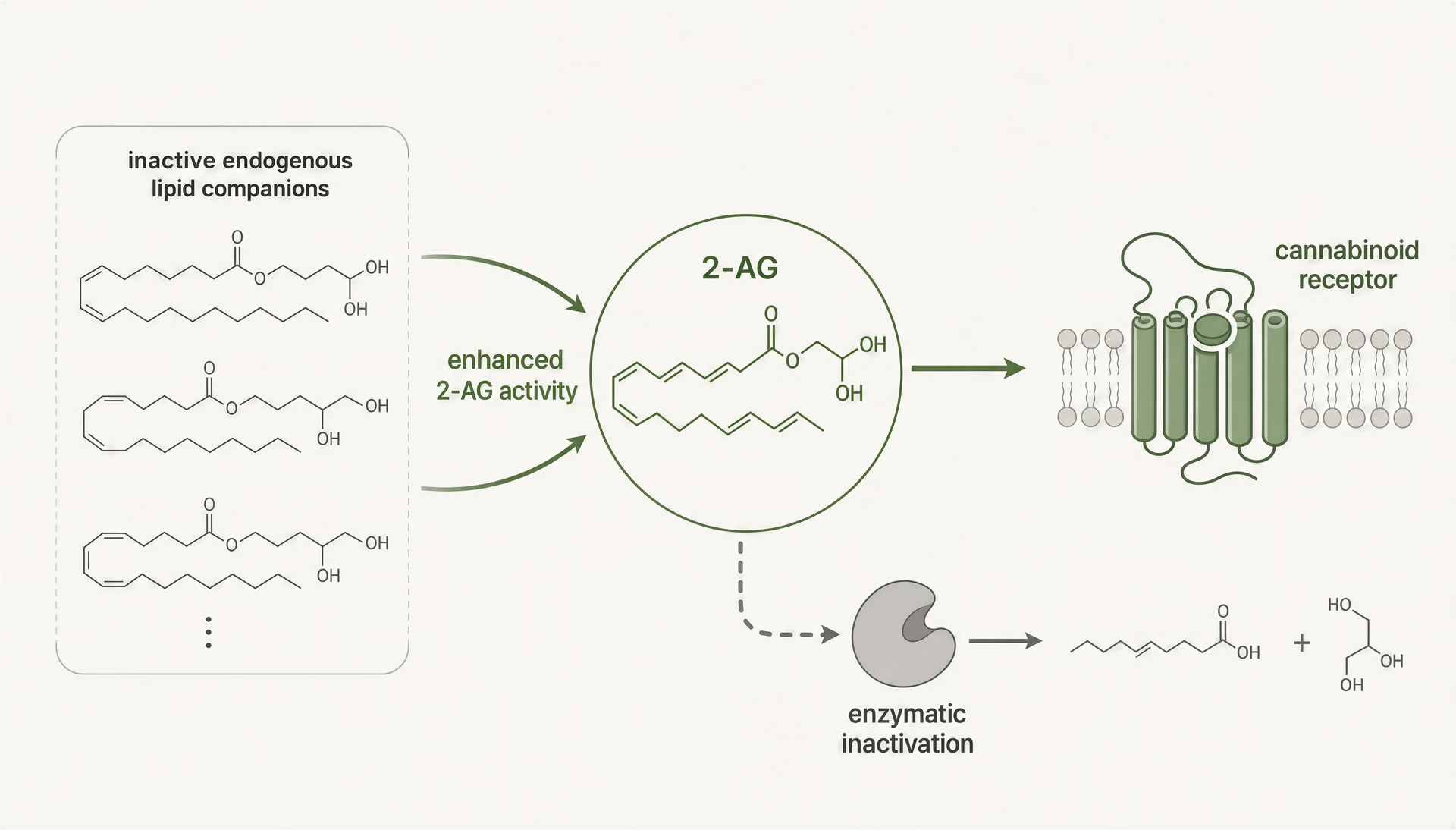
What Ben-Shabat et al. 1998 actually tested[13] An entourage effect: inactive endogenous fatty acid glycerol esters enhance 2-arachidonoyl-glycerol cannabinoid activity. S Ben-Shabat, E Fride, T Sheskin, et al.. European Journal of Pharmacology, 1998.
The paper most often cited as the origin of the entourage effect is Ben-Shabat et al., published in 1998 in the European Journal of Pharmacology. The author list included Ben-Shabat, Fride, Sheskin, Tamiri, Rhee, Vogel, Bisogno, De Petrocellis, Di Marzo and Mechoulam. It focused on 2-AG and a set of structurally related endogenous fatty acid glycerol esters.
The key experimental finding was not that these companion molecules were active cannabinoids in their own right in the assay. It was the opposite. Individually, they were inactive or far less active in the tested system. Yet when present with 2-AG, they enhanced 2-AG’s apparent activity.
What the 1998 paper did not test
- THC plus CBD
- Terpenes such as myrcene, linalool, or beta-caryophyllene
- Purified compounds versus full-spectrum or broad-spectrum extracts
- A universal rule that all companion molecules help all cannabinoids
That is the original entourage effect in one sentence: endogenous companion molecules that do not themselves produce the same measured effect can nonetheless enhance the action of an active endocannabinoid.
That definition is precise, and precision matters here. It does not mean “all related compounds are active.” It does not mean “whole extracts are always better than isolates.” It does not mean “terpenes make THC stronger in humans.” It means that in the model the authors used, certain endogenous lipid congeners amplified 2-AG’s effect while not showing equivalent activity on their own.
Mechanistically, the idea was that these related molecules might protect 2-AG from enzymatic inactivation or otherwise increase its effective presence at the site of action. The exact mechanistic details of endocannabinoid handling were still being mapped at the time, but the broad inference was that local molecular context can change signaling output. A ligand’s action is not determined only by its own concentration and receptor affinity. It may also depend on neighboring compounds that alter degradation, transport, or access.
That is a good pharmacological insight. It is also a long way from many later claims made under the same label.
The 1998 study did not test THC plus CBD. It did not test terpenes such as myrcene, linalool, or beta-caryophyllene. It did not compare purified compounds to “full-spectrum” or “broad-spectrum” extracts. Those commercial categories did not define the experiment. Nor did the study show that every inactive companion molecule will help every active cannabinoid. The finding was context-specific.
Retinue effect A label some writers use for the original endogenous-lipid phenomenon around 2-AG, to separate it from broader plant-mixture claims.
This is why some writers later used the term retinue effect to distinguish the original endogenous-lipid observation from the looser cannabis-plant usage. The distinction is not universally adopted, but it captures a real conceptual problem. Once the phrase migrated from endocannabinoid biochemistry into broader cannabis culture and marketing, it started doing much more work than the 1998 data could support.
The strongest fair reading is this: Ben-Shabat et al. gave the field a legitimate model for how companion molecules might modulate a principal cannabinoid signal. That model can inspire later hypotheses about phytocannabinoids, terpenes, and extracts. But inspiration is not confirmation.
You can see the gap by asking a simple question. If the 1998 paper had never been renamed and popularized as “the entourage effect,” would anyone reading it think it had settled the question of whether a modern CBD-rich extract outperforms purified CBD in epilepsy, or whether terpene-rich THC products are more sedating? No. Those are downstream questions requiring their own evidence.
That downstream evidence is mixed. Some later lines of research support specific interaction claims, especially around THC and CBD in defined formulations such as nabiximols. Other claims, especially terpene-heavy ones, are often overstated. Reviews by Santiago, Sachdev, Arnold, McGregor and Connor in 2023 and experimental work from Finlay and colleagues have been useful correctives here, because they point out how limited direct evidence remains for many cannabinoid-terpene interaction claims at physiologically realistic concentrations.
So the historical takeaway is straightforward. The term entourage effect began in serious pharmacology, not in slogan-making. It referred to endogenous molecules surrounding 2-AG, not to a blanket rule about cannabis products. Ben-Shabat, Mechoulam and colleagues did show that chemically related inactive companions could amplify the effect of an active endocannabinoid. That was and remains an important observation.
It was also only the beginning. The moment the phrase left the 1998 2-AG context and got applied to whole-plant cannabis, the claim became broader than the evidence that originally named it.
Entourage, retinue, ensemble: why the terminology matters
The language around cannabis mixtures did not start in dispensary menus or CBD marketing copy. It started in endocannabinoid pharmacology. That history matters because the word people choose often smuggles in a claim about what has already been proven.
In 1998, Ben-Shabat, Fride, Sheskin, Tamiri, Rhee, Vogel, Bisogno, De Petrocellis, Di Marzo and Mechoulam published the paper that gave cannabis culture one of its favorite phrases: “entourage effect.” Their study was not about full-spectrum extracts, artisanal chemovars, or terpene-rich oils. It examined 2-arachidonoyl glycerol, or 2-AG, an endogenous cannabinoid identified a few years earlier by Sugiura and colleagues in 1995. In the 1998 assay, related endogenous fatty-acid glycerol esters were not active on their own, yet they enhanced the biological activity of 2-AG. That is a very specific pharmacological observation. Companion molecules boosted the action of a bioactive ligand without themselves producing the same effect in the test system.
That original meaning is narrower than the way “entourage effect” is now used. Today, the phrase often serves as an umbrella term for everything from THC-CBD interaction to terpene claims to the idea that any whole-plant extract must outperform a single-molecule product. Those are not equivalent propositions. Some have decent support. Some remain plausible but unproven. Some are mostly slogans.
Retinue effect versus entourage effect
Because the original 1998 paper dealt with endogenous lipids rather than plant compounds, some writers prefer “retinue effect” when they want to preserve that distinction. The idea is simple: keep “entourage effect” tied to the Ben-Shabat-Mechoulam finding in endocannabinoid biology, and use another label for the broader phytochemical debate.
“Retinue effect” has never become the dominant term, but it is useful. It reminds readers that the first entourage paper did not test whether a CBD-rich extract works better than purified cannabidiol, did not show that myrcene changes THC intoxication in people, and did not validate broad claims about terpene-cannabinoid interactions in commercial products. It described a set of endogenous helper molecules that modified the activity of 2-AG.
That distinction can clean up a lot of confusion. If the discussion is about 2-AG and structurally related glycerol esters, “retinue” preserves the original context. If the discussion is about phytocannabinoids, terpenes, and flavonoids in cannabis, “entourage” has become the common label, even if it is historically looser. The problem is that once one term covers many different mechanisms, the evidence can look stronger than it is. A proven interaction in one domain gets rhetorically stretched into a presumed interaction in another.
This matters when people cite the 1998 paper as if it settled the full-spectrum versus isolate debate. It did not. The paper is real, important, and often misapplied.
Russo's ensemble-effect reframe
Ethan Russo helped popularize the modern cannabis version of the entourage idea in his 2006 and 2011 reviews, especially the notion that phytocannabinoids and terpenoids may interact in therapeutically meaningful ways. Those papers were influential because they assembled pharmacological plausibility and scattered evidence into a coherent model. But they were reviews and hypothesis-building exercises, not direct clinical proof that all mixed cannabis preparations outperform isolates.
Ensemble effect A broader framing for cannabis mixtures that allows additive, antagonistic, kinetic, and receptor-level interactions rather than assuming all combinations improve outcomes.
Russo later suggested a better term: the “ensemble effect.” That reframe is useful because it drops the hidden assumption that all interactions are of one type. In real pharmacology, compounds can interact in several ways. They may be additive, where the combined effect equals what you would predict from each alone. They may be more than additive. They may be antagonistic, where one blunts the other. They may also interact pharmacokinetically, altering absorption, metabolism, distribution, or duration rather than receptor activation itself.
That broader framing fits the evidence much better than a one-word promise that “everything works better together.” THC and CBD are the clearest example. There is credible evidence that the pair can differ meaningfully from either compound alone in some contexts, especially when delivered in standardized formulations. Nabiximols, marketed as Sativex, contains roughly equal amounts of THC and CBD and has been tested in randomized trials for multiple-sclerosis spasticity and pain. In the enriched-design trial by Novotna et al. in 2011, 272 of 572 patients in the initial phase met the response threshold to enter randomization, and nabiximols then showed a statistically significant advantage over placebo on the spasticity numerical rating scale. Useful, yes. Universal proof of whole-plant superiority, no.
The same caution applies on the isolate side. Purified cannabinoids can work extremely well. Epidiolex, a purified plant-derived CBD product, is the most obvious counterexample to the simplistic claim that isolates are inherently weak. In the 2017 Dravet syndrome trial by Devinsky et al. in the New England Journal of Medicine, monthly convulsive seizure frequency fell by 38.9% with cannabidiol versus 13.3% with placebo. That is not a theoretical effect. It is a clear therapeutic signal from a highly purified single molecule.
So “ensemble effect” earns its keep because it can accommodate mixed outcomes. Some combinations may help. Some may do nothing. Some may increase adverse effects.
Why language shapes evidence claims
Words do not just describe the science here. They often overstate it.
“Entourage effect” sounds as if a beneficial interaction has already been established and generalized. That can blur several separate questions: Are two compounds interacting at the same receptor? Is one changing the metabolism of the other? Is the combination simply additive? Is the effect seen only in mice, only at unrealistic concentrations, or only in retrospective self-report data? Those are very different standards of evidence.
Terpene claims are where this slippage is easiest to spot. Beta-caryophyllene has a strong mechanistic footing because Gertsch et al. showed in 2008 that it binds selectively to CB2 receptors. That is direct receptor pharmacology. It does not by itself prove a broad entourage model. Linalool has preclinical anxiolytic and sedative evidence, but direct evidence that cannabis-derived linalool at real-world doses produces reliable clinical effects in humans is thin. Myrcene’s reputation as the sedating terpene is even shakier. The “couch-lock” story is a consumer shorthand, not settled pharmacology.
Recent reviews have pushed back hard on overreach. Santiago, Sachdev, Arnold, McGregor and Connor wrote in 2023 that evidence for direct cannabinoid-terpenoid interaction remains limited and often methodologically weak. Finlay and colleagues likewise found weak or inconsistent support for direct CB1 or CB2 modulation by common terpenes at physiologically relevant concentrations. That does not rule out all interactions. It does rule out confidence.
Methodology is the missing piece in many entourage claims. Real pharmacological interaction is not shown by saying that A plus B worked better than A alone. It must be compared with expected additivity, using frameworks such as Loewe additivity, Bliss independence, or the Chou-Talalay combination index. Whole-plant cannabis studies rarely meet that bar. Extracts vary. Labels are inconsistent. Terpenes are volatile. Dose matrices are often too sparse to calculate proper interaction models.
That is why careful terminology helps. “Retinue” points back to the original endogenous-lipid finding. “Entourage” names the broader phytochemical hypothesis but should not be treated as settled fact. “Ensemble” is probably the most honest term, because it leaves room for additive, antagonistic, pharmacokinetic, and context-specific effects without pretending that every extra compound improves the outcome.
The evidence supports a narrower, harder claim than the popular slogan: some cannabis compounds do interact in meaningful ways, but the strongest version of the entourage story still runs ahead of the data.
What counts as synergy in pharmacology, and what does not
One of the biggest problems in entourage-effect discussions is that the word itself gets used far too loosely. In pharmacology, synergy is not a poetic way of saying “these compounds seem to work well together.” It has a narrower meaning. You have to compare the observed effect of a combination against a defined expectation for what should happen if the compounds were merely additive. Without that step, the claim is not established.
That distinction matters a lot for cannabis. If a THC+CBD product works better than THC alone, that may reflect synergy. It may also reflect additivity, a dose-sparing effect, altered absorption, mitigation of adverse effects, or simple underdosing of the comparator. If a full-spectrum extract beats a CBD isolate in an observational dataset, that is interesting. It still does not prove formal pharmacological synergy.
The original 1998 Ben-Shabat, Fride, Sheskin, Tamiri, Rhee, Vogel, Bisogno, De Petrocellis, Di Marzo and Mechoulam paper used “entourage effect” in a specific endocannabinoid setting: endogenous fatty-acid glycerol esters that were inactive by themselves enhanced the effect of 2-AG. That is a real pharmacological observation. It is not the same as saying every chemically complex cannabis extract will outperform every isolate in people.
Additivity, synergy and antagonism
| Interaction type | Meaning | What it implies |
|---|---|---|
| Additivity | Combined effect matches the expected benchmark | The mixture is not doing more than predicted |
| Synergy | Combined effect exceeds the additive benchmark | The pair does more than expected from each alone |
| Antagonism | Combined effect falls below the additive benchmark | One component dampens the other or adds interference |
Start with three basic possibilities.
Additivity means the combined effect of two drugs is about what you would expect from their individual effects. Nothing magical happened. The pair did not interfere with each other, but they also did not exceed the relevant additive benchmark.
Synergy means the combination performs better than the additive expectation. In plain language, the pair does more than the math predicts.
Antagonism means the combination underperforms relative to that expectation. One compound dampens the other, or their mechanisms collide in a way that reduces net effect.
The trap is obvious once you see it. Many papers compare A alone, B alone, and A+B. If A+B is better than A, the authors or later commentators may call that synergy. But that comparison is incomplete. Of course a mixture can beat one ingredient alone. If each compound has some independent activity, a stronger combined effect may be exactly what ordinary additivity predicts.
A simple example makes this clearer. Imagine drug A reduces pain score by 20% at a given dose, and drug B reduces it by 15% at its dose. If A+B reduces pain by 30%, that may or may not be special depending on the additive model. It is not enough to say 30 is larger than 20 or 15. The real question is whether 30 exceeds the expected combined effect after accounting for each component’s dose-response curve.
This is why “the mixture outperformed the highest single agent” is not the same thing as a proven synergy claim. It may be clinically useful. It is still weaker than a formal synergy demonstration.
Cannabis research often stops at that weaker stage. A study may show that a botanical extract differs from purified CBD, or that THC behaves differently in the presence of CBD, but if it does not map dose-response relationships for both agents alone and in combination, the mechanistic label remains tentative. You can say the interaction is suggestive. You usually cannot say it is established.
That is also why isolate efficacy matters in this debate. Purified cannabidiol is not inert; Devinsky et al. 2017 showed a 38.9% reduction in convulsive seizure frequency versus 13.3% with placebo in Dravet syndrome. Dronabinol and nabilone also have clinical effects. Those facts do not refute combination effects. They do refute the sloppy idea that isolated cannabinoids are inherently nonfunctional and require a whole-plant matrix to work.
Loewe additivity and Bliss independence
Once you want to test synergy properly, you need an additivity model. Two of the most common are Loewe additivity and Bliss independence. They ask similar questions in different ways.
Loewe additivity is built on dose equivalence. It works best when two drugs have similar or partly overlapping effects. The core idea is simple: if drug A and drug B can each produce the same endpoint, then part of an effective dose of A should be replaceable by an equivalent part of B. Under pure additivity, the doses in combination should fall on a predictable line.
Isobologram A plot showing dose combinations of two drugs that achieve the same effect level, used to judge additivity, synergy, or antagonism.
This is where isobolograms come in. An isobologram plots the dose of drug A on one axis and drug B on the other for a fixed effect level, often 50% of maximal effect. First you find the dose of A alone that gives that effect, and the dose of B alone that gives that same effect. Then you draw the line connecting those points. That is the line of additivity.
Reading an isobologram
- Points on the line suggest additivity.
- Points below the line suggest synergy because less of each drug was needed.
- Points above the line suggest antagonism.
- Combination points on the line suggest additivity.
- Points below the line suggest synergy, because less of each drug was needed than expected.
- Points above the line suggest antagonism.
For cannabis claims, this matters because a valid isobologram needs actual dose-response work. You cannot build one from one extract dose versus one isolate dose. You need enough combinations at defined ratios to estimate the curve.
Bliss independence takes a different view. It assumes the two drugs act independently, so the expected joint effect is calculated from the probabilities of each acting on its own. If drug A produces effect Ea and drug B produces effect Eb, the expected combined effect under Bliss is:
Eab = Ea + Eb - EaEb
If A alone gives a 30% effect and B alone gives a 20% effect, Bliss predicts 44%, not 50%, because the drugs’ effects overlap probabilistically rather than stack in a simple arithmetic way.
Bliss is often more natural when compounds act through distinct mechanisms. Loewe is often preferred when they are viewed as dose substitutes for a similar endpoint. In real datasets, the same drug pair can look more or less interactive depending on which reference model you choose. That is not cheating; it reflects different biological assumptions.
For cannabis, the model choice is not trivial. THC and CBD do not behave like identical drugs. They have overlapping downstream consequences in some contexts, but very different direct pharmacology. Terpene-cannabinoid claims are even messier. A terpene might alter receptor signaling, membrane effects, blood-brain penetration, metabolism, subjective tolerability, or nothing measurable at realistic concentrations. Picking a model without stating why is bad method.
The Chou-Talalay combination index in plain language
The Chou-Talalay method is one of the most cited formal approaches to drug-combination analysis. It grew out of the mass-action law and gives a numerical shorthand for whether a combination is additive, synergistic, or antagonistic at a specified effect level.
How to read the combination index
- CI < 1 suggests synergy.
- CI = 1 suggests additivity.
- CI > 1 suggests antagonism.
The headline number is the combination index, or CI.
- CI < 1** suggests synergy
- CI = 1** suggests additivity
- CI > 1** suggests antagonism
In plain language, the method asks: to get a given effect, how much of each drug did you need in combination, and how does that compare with how much you would have needed if each were acting alone?
Suppose drug A alone needs 10 mg to produce 50% effect, and drug B alone needs 20 mg to produce the same 50% effect. If together you can get 50% effect with 3 mg of A plus 6 mg of B, the combination used less than the additive expectation. CI will fall below 1. If the combination instead needs 5 mg of A plus 10 mg of B, that lands closer to additivity. If it takes even more, you are drifting into antagonism.
What makes Chou-Talalay useful is that it can be applied across multiple effect levels, not just one point. A pair of compounds might appear additive at low effect, synergistic at moderate effect, and antagonistic near maximal effect. That pattern is common enough that single-dose cannabis studies tell us very little.
The method also pairs naturally with dose-ratio design. Researchers choose fixed ratios of A:B, such as 1:1, 1:5, or 5:1, then generate full dose-response curves for each ratio. That allows calculation of CI values across the response range. Without fixed-ratio or at least well-structured matrix designs, combination claims get shaky fast.
This is exactly where much cannabis literature falls short. Studies often test one concentration of a terpene with one concentration of THC in vitro. Or they compare one CBD-rich extract against purified CBD in a heterogeneous clinical sample. Or they rely on observational self-report data, where dose, route, labeling accuracy, expectancy, and product composition all float around uncontrolled. Those studies may generate hypotheses. They rarely support a strong Chou-Talalay style inference.
Even when a paper reports a “synergistic” interaction, check the details. Did the authors measure full dose-response curves for each compound alone? Did they test enough combination points? Did they specify whether they were using Loewe, Bliss, or Chou-Talalay assumptions? Did they use realistic concentrations? Finlay’s 2020–2021-era receptor-signaling work and Santiago et al. 2023 both matter here because they push back against terpene claims built on weak designs or implausible concentrations.
That does not mean cannabis combinations never interact in meaningful ways. THC and CBD likely do interact, and nabiximols shows that defined cannabinoid mixtures can have clinically relevant properties in some indications, such as multiple-sclerosis spasticity in selected patients, even if effects are modest and not universally superior. It does mean the burden of proof is higher than “the mixture seemed better.”
A combination outperforming one component alone is not proof of synergy. Strong evidence
If readers keep one rule from this section, it should be this: a combination outperforming one component alone is not proof of synergy. You need an explicit additive model, adequate dose-response data, and enough combination points to test whether the observed effect beats that model. Without that backbone, the entourage effect remains a hypothesis, not a measured pharmacological result.
The strongest human evidence: THC and CBD together
- Standardized product example
- Nabiximols (Sativex)
- Best-studied indication
- Multiple-sclerosis spasticity
- Responder enrichment
- 272 of 572 patients entered randomization
- Randomized-phase difference
- 0.19 points on 0–10 spasticity scale
- Main caveat
- Effect size modest and indication-specific
If the entourage-effect discussion is narrowed from broad whole-plant claims to one concrete pairing, THC plus CBD is where the human evidence is strongest. Not settled. Not uniform. Still the strongest.
That matters because the phrase “entourage effect” often gets stretched far beyond the data. The original 1998 Ben-Shabat and Mechoulam paper was about endogenous lipids modulating 2-AG activity, not a blanket claim that any cannabis extract with more compounds must outperform a single molecule. When researchers look for a real-world cannabis interaction in humans, the THC-CBD pair is the obvious place to start: both are abundant phytocannabinoids, both are pharmacologically active, and unlike many minor cannabinoids or terpenes, both have been tested repeatedly in standardized products and controlled trials.
Why THC plus CBD is the best-studied interaction
THC and CBD are the best-studied pair for a simple reason: they have been put into medicines, not just stories. Nabiximols, marketed as Sativex, is the clearest example. Developed by GW Pharmaceuticals, it is a standardized botanical extract containing roughly equal amounts of THC and CBD, delivered as an oromucosal spray. That formulation gave researchers something the broader “full-spectrum” debate usually lacks: fixed composition, defined dose, and randomized trial data.
The best evidence from nabiximols comes from multiple sclerosis spasticity, not from every symptom people associate with cannabis. In the enriched-design trial by Novotna et al. in 2011, patients with resistant MS spasticity first entered a single-blind trial phase. Of 572 patients, 272, or 47.6%, met the predefined response threshold and were then randomized. In the double-blind phase, nabiximols beat placebo on the spasticity numerical rating scale, though the absolute difference was modest: a mean change just 0.19 points greater than placebo at 12 weeks. That is not a miracle effect. It is also not nothing. It shows a clinically developed THC-CBD combination can outperform placebo in a selected population.
Pain data are less clean. Nabiximols has shown mixed results in cancer pain and chronic pain trials, with some positive secondary findings and some failed primary endpoints in intention-to-treat analyses. That inconsistency is important because it blocks the lazy claim that combining cannabinoids automatically improves every outcome. Whiting et al. in the 2015 JAMA meta-analysis judged the evidence for cannabinoids in chronic pain and spasticity as moderate quality overall, while also emphasizing frequent adverse effects such as dizziness and dry mouth. Even in the area where the case is strongest, benefit is conditional and tradeoffs are real.
The other reason THC plus CBD dominates this debate is comparative pharmacology. Isolated cannabinoids can clearly work on their own. Dronabinol and nabilone show that THC-like agents can be clinically active as single compounds. Purified CBD also works. Devinsky et al. in 2017, in a pivotal New England Journal of Medicine trial for Dravet syndrome, found that convulsive-seizure frequency fell by 38.9% with cannabidiol versus 13.3% with placebo. That result matters for the entourage debate because it disproves the slogan-level claim that isolated cannabinoids are inherently weak or ineffective.
So why does THC plus CBD still stand out? Because it is the combination for which there is actual human evidence of meaningful interaction, even if the interaction is not always in the same direction. CBD can change THC’s effects. Sometimes that appears favorable. Sometimes it is neutral. Sometimes the result depends so heavily on dose, route, timing, and endpoint that a single summary sentence becomes misleading.

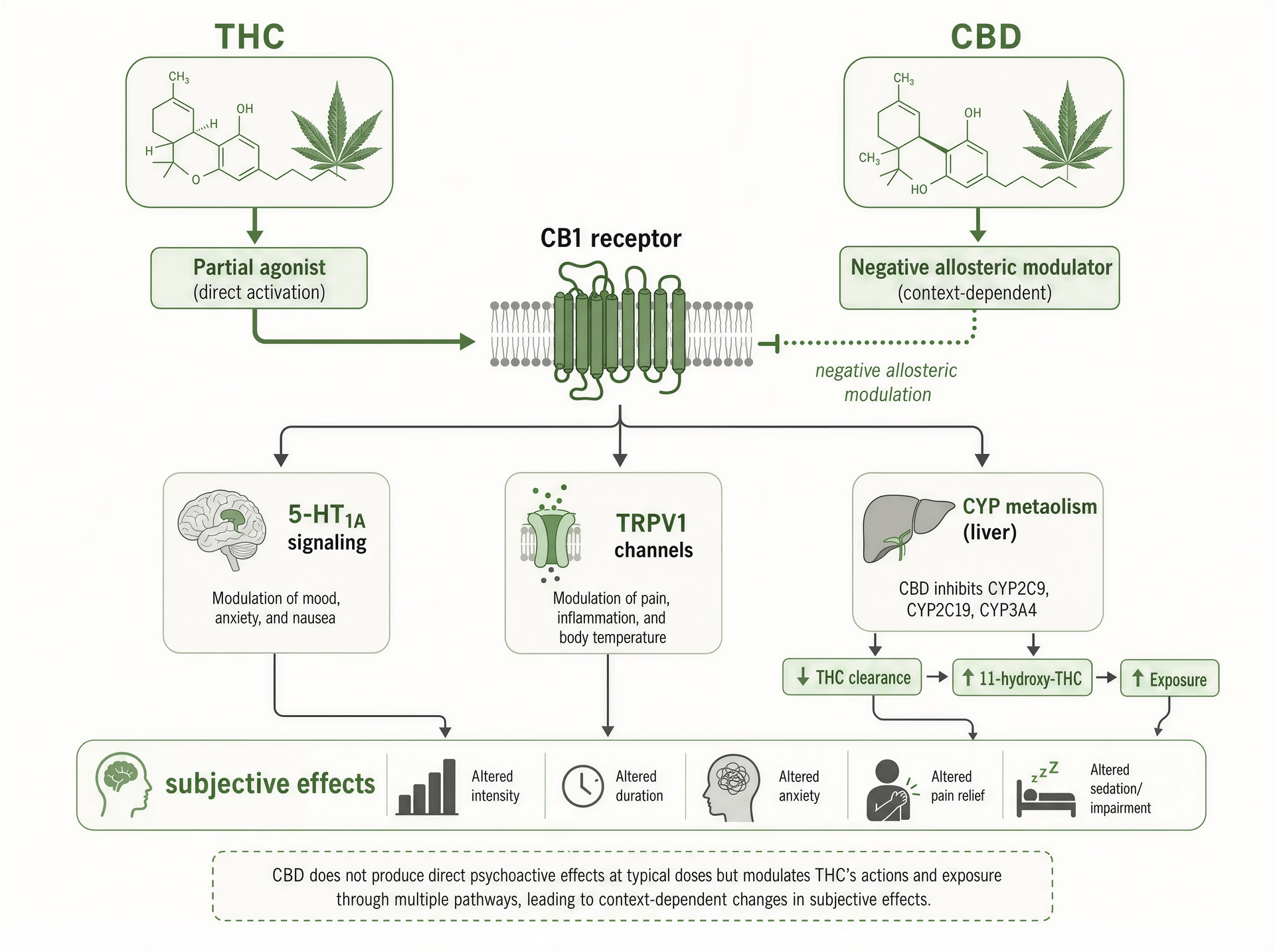
CBD as modulator rather than simple blocker
A popular simplification says CBD “blocks THC.” That is too crude to be trusted.
CBD often behaves less like an on-off antagonist and more like a modulator. In some settings it may soften specific THC effects, especially anxiety, tachycardia, or transient psychotomimetic responses. In other settings it may leave intoxication largely intact, shift its time course, or even increase THC exposure through metabolic interactions. The details matter.
Negative allosteric modulator A compound that changes receptor signaling by binding at a site distinct from the main binding site, reducing how strongly another ligand activates the receptor.
One mechanistic hypothesis is pharmacodynamic. THC is a partial agonist at CB1 receptors, and many of its intoxicating and cognitive effects track CB1 activation. CBD has low direct affinity at CB1 compared with THC, but several preclinical models suggest it can act as a negative allosteric modulator at CB1. That means CBD may change how strongly or efficiently THC activates the receptor without simply occupying the same orthosteric site. If that mechanism operates in humans at relevant concentrations, it could help explain why some studies find CBD dampens certain THC effects without abolishing them.
But CB1 is only part of the picture. CBD hits a wider set of targets than the simple “non-intoxicating cannabinoid” label implies. It has been linked to 5-HT1A signaling, which is often invoked in anxiolytic hypotheses, and to TRP channels including TRPV1. Those pathways could matter because some unwanted THC reactions are not reducible to CB1 activation alone. Anxiety, sensory amplification, autonomic arousal, and subjective dysphoria are complex states. A compound that shifts serotonin-related or vanilloid-related signaling might change the emotional texture of a THC experience without acting as a straightforward THC antidote.
There is also a pharmacokinetic route. CBD can affect drug-metabolizing enzymes, including CYP-mediated pathways involved in cannabinoid metabolism. That opens a less intuitive possibility: in some conditions, CBD might not reduce THC exposure at all. It could prolong it or alter the ratio of THC to active metabolites such as 11-hydroxy-THC. Since oral THC already undergoes substantial first-pass metabolism, route of administration becomes central here. An oral THC-CBD product is not the same pharmacological event as inhaled THC followed by inhaled CBD, and neither is identical to oromucosal nabiximols.
This is why the human literature looks messy. A study measuring acute anxiety after inhaled THC may not agree with a study measuring memory impairment after oral THC plus CBD, and both may differ from longer-term treatment studies in patients with chronic symptoms. Those are not necessarily contradictions. They may reflect different mechanisms dominating under different conditions.
Russo’s 2006 and 2011 reviews were influential partly because they organized these possibilities into a coherent phytocannabinoid-interaction framework. He argued that CBD might improve THC’s therapeutic index by extending useful effects while reducing some adverse ones. That framing was useful and historically important. It was not itself proof. The human evidence since then supports a narrower claim: CBD can modulate THC, but not in a single fixed way.
A better summary is this: CBD is not simply a brake. It is a context-dependent modifier.
What outcomes change when the ratio changes
The central mistake in many entourage discussions is treating “THC plus CBD” as if it were one intervention. It is not. A 1:1 oromucosal extract, a high-THC flower with trace CBD, and a high-CBD product with a small amount of THC are pharmacologically different exposures.
| Outcome domain | What ratio changes may alter |
|---|---|
| Therapeutic efficacy | Whether benefit is mainly THC-driven, CBD-driven, or dependent on a balanced formulation |
| Acute adverse effects | Anxiety, tachycardia, dysphoria, sleepiness, and other short-term reactions |
| Cognitive impairment | Memory and attention effects that may shift with dose and timing |
| Subjective intoxication | How strong, calm, heavy, or impairing the experience feels |
Ratio changes can alter at least four broad outcome domains: therapeutic efficacy, acute adverse effects, cognitive impairment, and subjective intoxication.
Start with efficacy. The 1:1 THC-CBD ratio used in nabiximols is not arbitrary. It emerged from the idea that CBD might temper some THC adverse effects while preserving benefits relevant to pain or spasticity. In MS spasticity, that ratio has enough evidence behind it to be taken seriously. But that does not mean 1:1 is universally optimal. Some conditions may respond mainly to THC-driven effects, while in others CBD-dominant preparations may be preferable because THC-related cognitive or psychiatric adverse events are unacceptable.
Pain is a good example of ratio sensitivity. Some analgesic effects may depend substantially on THC, which means adding CBD does not guarantee stronger pain relief. It might broaden tolerability for some patients or blunt benefit for others, depending on dose and endpoint. Trials have not shown a clean universal pattern. That is one reason broad claims about “balanced cannabinoids” often exceed the evidence.
Acute adverse effects are where ratio changes may matter most. Several experimental studies and reviews suggest CBD can attenuate some THC-induced anxiety or psychosis-like effects under certain conditions, particularly when CBD doses are sufficiently high relative to THC. But low CBD doses mixed into high-THC products should not be assumed protective. A label that says “contains CBD” tells you almost nothing without the ratio, absolute milligram dose, and route.
Cognitive effects are even more inconsistent. There is no reliable rule that CBD rescues THC-related memory impairment or attentional slowing across all studies. Some human work suggests protection on selected measures; other studies find little difference. Again, timing may be part of the explanation. Simultaneous administration is not the same as CBD pretreatment, and oral metabolism adds another layer.
Subjective intoxication is perhaps the hardest endpoint to generalize. CBD does not reliably erase the felt effects of THC. People may still feel intoxicated, sedated, dysphoric, calm, stimulated, or anxious depending on dose and context. A high-CBD:THC ratio may shift the profile, but it does not produce a simple subtraction equation where more CBD always means less impairment.
This is also where route of administration matters a great deal. Inhaled products produce rapid peaks and strong cue-driven subjective effects. Oral products are slower, more variable, and heavily shaped by first-pass metabolism. Oromucosal sprays like nabiximols sit somewhere in between. The same nominal ratio can behave differently across those routes because the blood levels and metabolite patterns differ.
The ratio issue also helps explain why observational claims can mislead. Pamplona, da Silva, and Coan in 2018 found that CBD-rich extracts in refractory epilepsy appeared associated with improvement at lower average CBD doses and with fewer reported adverse events than purified CBD. That is interesting. It may hint that companion compounds alter effect size or tolerability. But it was not a head-to-head randomized comparison with standardized ratios and matched formulations, so it cannot tell us exactly which component did what. The same caution applies to app-based or self-report datasets such as Cuttler et al. 2018: useful for spotting patterns, weak for proving causal interaction.
The cleanest bottom line is narrower and more defensible than the marketing version. THC plus CBD is the best-supported example of a meaningful cannabis-compound interaction in humans. Defined combinations such as nabiximols show that the pair can differ from THC alone in clinically relevant ways. Mechanistically, CBD may alter THC through CB1 allosteric effects in some models, 5-HT1A and TRPV-linked pathways, and metabolic effects on cannabinoid disposition. Yet even here there is no one-size-fits-all rule. Change the dose, the ratio, the route, the timing, or the endpoint, and the interaction can look different.
That is not a weakness in the evidence. It is what real pharmacology looks like.
Sativex and the GW Pharmaceuticals record: evidence, limits and overinterpretation
Nabiximols, marketed as Sativex, is the cleanest clinical test case for entourage-effect claims in medicine. Not because it proves the broad popular story, but because it strips away much of the vagueness. This is not an unlabeled “full-spectrum” oil with uncertain chemistry. It is a standardized botanical drug developed by GW Pharmaceuticals, studied in randomized controlled trials, and built around a defined cannabinoid profile rather than folklore.
That makes it unusually informative. It also makes it easy to overread.
A defined multi-compound cannabis extract can show therapeutic value in humans. Limited evidence
If the question is whether a multi-compound cannabis extract can show therapeutic value in humans, nabiximols supports a cautious yes. If the question is whether all multi-compound cannabis products are therefore superior to isolates, the same record says no.
How nabiximols is formulated and why it matters
| Feature | Why it matters |
|---|---|
| Defined THC:CBD composition | Allows reproducible testing rather than vague full-spectrum claims |
| Oromucosal delivery | Produces a distinct absorption pattern from inhaled or oral products |
| Botanical extract | Tests a specific cannabinoid combination rather than a single molecule |
| Controlled manufacturing | Reduces batch variability compared with many retail extracts |
Nabiximols is an oromucosal spray made from whole-plant cannabis extracts standardized to contain roughly equal amounts of delta-9-THC and CBD, along with smaller amounts of other cannabinoids and plant constituents. The exact composition is far more controlled than the retail categories “full-spectrum” or “broad-spectrum,” which are marketing descriptors rather than tightly regulated pharmacological classes.
That distinction matters. A defined extract lets researchers ask a real question: does a reproducible THC:CBD preparation perform in trials, and how does its effect profile compare with placebo or, in some studies, with THC-dominant preparations? This is much closer to evidence than anecdotal claims that “the plant works better together.”
The formulation also matters because THC and CBD do not do the same thing. THC is the main intoxicating cannabinoid and a partial agonist at CB1 and CB2 receptors. CBD has weak direct affinity for those receptors but can affect endocannabinoid tone, ion channels, serotonin signaling, and THC’s pharmacokinetics and subjective effects. Ethan Russo’s 2006 and 2011 reviews argued that combining cannabinoids could widen the therapeutic index, not by magic but by changing efficacy, tolerability, or both. Nabiximols is one of the few products where that hypothesis was tested in a serious development program.
Still, this is not a pure test of “entourage” in the strict 1998 Ben-Shabat and Mechoulam sense. That original paper concerned endogenous lipids that amplified 2-AG activity without directly producing the same effect alone. Nabiximols instead tests a botanical mixture anchored by two active cannabinoids, especially THC and CBD. It is better understood as evidence for a specific cannabinoid-combination effect than as proof of a generalized whole-plant doctrine.
Route of administration matters too. Oromucosal delivery produces slower absorption than inhalation and a different peak-trough profile than oral capsules. Any benefit seen with nabiximols could reflect not only composition but also pharmacokinetics. That is one reason the product is informative yet not universally generalizable to smoked flower, vaporized extracts, edible oils, or gummies.
The standardization is the real strength here. When people cite Sativex as support for the entourage effect, they are at least pointing to a preparation with known chemistry, known dose increments, and trial data. That is already a much higher bar than casual claims about artisanal extracts whose terpene content may be unstable, mislabeled, or clinically irrelevant at the doses used.
Multiple sclerosis spasticity trials
The strongest case for nabiximols is multiple sclerosis spasticity, though even here the evidence has caveats.
MS spasticity is difficult to treat and difficult to measure. Objective muscle-tone assessments and patient-reported symptom relief do not always move together. Nabiximols was developed in part because many people with MS reported cannabis helped stiffness, spasms, sleep disruption, and pain, yet those reports needed controlled testing.
Early studies suggested signal rather than certainty. Some trials found improvement on patient-rated spasticity scales while objective physician-rated measures were less impressive. That pattern persisted across the literature and helps explain why reviews often describe the evidence as moderate rather than definitive. In Whiting et al.’s 2015 JAMA meta-analysis, cannabinoids had moderate-quality evidence for chronic pain and spasticity, but adverse events such as dizziness, dry mouth, nausea, fatigue, and somnolence were common. The therapeutic picture was real, not clean.
The pivotal nabiximols spasticity trial often cited is Novotna et al. 2011. This study used an enriched design in treatment-resistant MS spasticity. Patients first entered a single-blind trial phase with nabiximols. Only those who achieved a predefined response threshold were then randomized to continue nabiximols or switch to placebo. Of 572 patients entering the initial phase, 272, or 47.6%, met the improvement criterion and were randomized.
That design is important enough to linger on. It increases the chance of detecting maintenance of benefit in people who already appear to respond. In other words, it answers a narrower and clinically practical question: among initial responders, does continued nabiximols help more than placebo? It does not answer the broader question of how well the drug works in an unselected MS spasticity population.
Within that enriched responder group, the trial found a statistically significant advantage for nabiximols on the 0–10 spasticity numerical rating scale. After 12 weeks, the mean change from baseline was only 0.19 points greater than placebo, but because the design selected prior responders, the result was interpreted as evidence that the benefit was real in a subset of patients.
Critics are right to point out that this can make the effect look more impressive than it would in a conventional parallel-group trial from day one. Supporters are also right to say that responder-enrichment mirrors real practice: start, assess, continue in responders, stop in nonresponders. Both points are true.
That is the fairest reading of the MS evidence. Nabiximols appears to help some patients with resistant spasticity, especially on patient-reported symptom scales, and the evidence is strong enough to support licensing in several jurisdictions for that indication. But it is not a cure-all, and the average effect size is modest. The product works better as a targeted option than as proof that complex cannabis extracts are broadly superior.
Another point often missed: positive MS data do not isolate the role of minor cannabinoids or terpenes. The trials show that a defined botanical extract with approximately 1:1 THC:CBD can help selected patients. They do not show that trace plant compounds are the decisive factor, or that a similar result could not be achieved by another well-designed THC+CBD formulation.
Cancer pain trials and the mixed record
If MS spasticity is the strongest clinical area for nabiximols, cancer pain is where overinterpretation runs into hard limits.
Cancer pain, especially opioid-refractory pain, was a major target for GW Pharmaceuticals. The logic was understandable: cannabinoids might add analgesia, improve sleep, reduce distress, and perhaps lower opioid burden. Early signals looked promising enough to justify larger trials. But the record that followed was mixed and, in several studies, disappointing.
Some earlier randomized studies suggested nabiximols or THC/CBD extracts might improve pain scores in advanced cancer patients whose pain remained inadequately controlled despite opioids. These findings kept the hypothesis alive. Yet later phase III programs often failed to hit primary endpoints in intention-to-treat analyses. That matters more than isolated positive subgroup findings.
This is where Sativex becomes especially useful as a corrective against hype. If a licensed, standardized cannabis extract developed by a pharmaceutical company cannot consistently show benefit in a difficult but clinically important indication, then broad claims that “whole-plant mixtures work better” become much harder to sustain.
The cancer pain literature has several recurring issues. One is heterogeneity: cancer pain is not one thing. Neuropathic pain, bone pain, visceral pain, inflammatory pain, and treatment-related pain may not respond the same way to cannabinoids. Another is tolerability. Patients with advanced cancer are often medically fragile and heavily medicated. Dizziness, sedation, cognitive adverse effects, nausea, and dry mouth can limit dose escalation before efficacy becomes obvious. A third issue is placebo response, which is often substantial in pain trials and makes modest drug-placebo separation difficult.
There is also the possibility that THC contributes both to whatever analgesic signal exists and to the adverse effects that prevent adequate dosing. Adding CBD may improve tolerability for some patients, but that does not guarantee a clinically meaningful net gain in every setting. This is one reason the phrase “THC plus CBD works better” needs qualification. Better for what, measured how, in which patients, at what dose? Nabiximols does not answer those questions uniformly.
Some advocates have tried to rescue the cancer pain story by focusing on subsets of responders or secondary outcomes. That can be useful for hypothesis generation, but it cannot erase negative primary endpoints. Drug development is full of compounds that looked interesting in subsets and then failed to produce reliable population-level benefit. Nabiximols is not unique in that respect.
The broader lesson is sharper than many cannabis discussions allow. A standardized botanical extract can be clinically useful and still fail to generalize across indications. Nabiximols supports a restrained claim: certain defined cannabinoid combinations may help in some conditions, with the strongest evidence in MS spasticity. It does not support the sweeping claim that multi-compound cannabis preparations are generally superior to single-molecule medicines.
That distinction matters because isolated cannabinoids clearly can work. Dronabinol and nabilone are older examples. Epidiolex, purified plant-derived CBD, makes the point even more forcefully. In Devinsky et al. 2017, children and young adults with Dravet syndrome receiving cannabidiol had a 38.9% reduction in convulsive seizure frequency compared with 13.3% with placebo. That is a real therapeutic effect from an isolate-based product. Whatever one thinks about extract-based medicines, isolate inefficacy is not defensible.
So where does nabiximols leave the entourage debate? In a narrower place than marketing usually puts it. It shows that a reproducible THC:CBD botanical medicine can have clinical value. It suggests that combining cannabinoids may alter efficacy and tolerability in useful ways. It does not prove that every “full-spectrum” product gains an advantage from minor cannabinoids, flavonoids, or terpenes. It does not validate terpene-heavy stories that have little controlled human evidence behind them. And it certainly does not show that all botanical mixtures outperform purified drugs.
As a case study, Sativex is strong evidence against caricatures on both sides. The plant-medicine maximalist view is too broad. The dismissive view that only isolated compounds matter is also too simple. The trial record points to something more restrained and more credible: defined combinations can matter, but they must earn that status indication by indication, formulation by formulation, trial by trial.
Why isolates still matter: dronabinol, nabilone and Epidiolex
One of the weakest claims in entourage-effect discourse is also one of the most common: that isolated cannabinoids are basically inferior by definition, and that cannabis compounds only become therapeutically meaningful when they appear together in a “full-spectrum” matrix. That idea does not survive contact with actual medicine.
The original 1998 Ben-Shabat and Mechoulam paper did not show that purified cannabinoids are clinically useless. It described an “entourage effect” in endocannabinoid biology, where related endogenous lipids enhanced 2-AG activity in a specific experimental setting. That is a real pharmacological finding. It is not proof that every single-molecule cannabinoid drug must underperform a botanical extract.
| Medicine | Type | Article’s role in the debate |
|---|---|---|
| Dronabinol | Synthetic delta-9-THC | Shows a single cannabinoid can be clinically active |
| Nabilone | Synthetic cannabinoid analog | Shows a cannabinoid-like single agent can reduce nausea |
| Epidiolex | Purified plant-derived CBD | Shows an isolate can change hard clinical endpoints in epilepsy |
Three approved cannabinoid medicines make that point plainly: dronabinol, nabilone, and Epidiolex. They are not vague wellness products and they are not chemically messy extracts. They are defined medicines built around one active cannabinoid or cannabinoid-like molecule. Their success does not settle every debate about combination effects. It does settle one debate. Isolates can work, and sometimes work very well.
Single-molecule cannabinoid medicines that work
Dronabinol is synthetic delta-9-tetrahydrocannabinol, the same primary intoxicating cannabinoid found in cannabis, delivered as a single active pharmaceutical ingredient. Nabilone is a synthetic cannabinoid analog with THC-like pharmacology. Both have long clinical histories, mainly in chemotherapy-induced nausea and vomiting, with dronabinol also used for anorexia associated with weight loss in AIDS.
That matters because these are direct counterexamples to the slogan that cannabinoids need their botanical companions to have therapeutic value. Dronabinol does not need terpenes to stimulate appetite. Nabilone does not need a full-spectrum extract to reduce nausea. These drugs may have limits, adverse effects, and narrower usefulness than advocates sometimes imply, but they are effective enough to have gained regulatory approval and persistent clinical use.
The evidence base for these older agents is not flawless by modern trial standards. Much of it comes from an era before contemporary trial design became standard. Even so, systematic reviews have consistently found that cannabinoids as a class show efficacy in chemotherapy-related nausea and vomiting, while also producing frequent adverse events such as dizziness, dry mouth, sedation, and cognitive effects. Whiting et al. in JAMA (2015) found moderate-quality evidence supporting cannabinoids for some indications, including spasticity and chronic pain, with much of the antiemetic evidence tied to dronabinol and nabilone-era studies. That is not a verdict that isolates are weak. It is a verdict that isolates can be clinically useful but must be judged like any other drug: by indication, dose, tolerability, and comparator.
The key distinction is between “works” and “works better than every alternative.” Dronabinol and nabilone clearly clear the first bar. They do not need to be superior to all non-cannabinoid antiemetics in every setting to prove the point at issue here. The point is narrower and stronger: a single cannabinoid molecule can produce meaningful therapeutic effects in humans.
That should not be controversial, yet it often is in popular cannabis writing. The rhetoric around full-spectrum preparations often implies that a purified cannabinoid is somehow pharmacologically crippled, as if removing the rest of the plant removes the medicine itself. The existence of dronabinol and nabilone shows that this is false. Purity is not the same thing as ineffectiveness.
There is also a practical lesson here. Single-molecule drugs have advantages. They are easier to dose precisely, easier to study, easier to standardize across batches, and easier to attribute effects to one mechanism rather than twenty. Those are not minor conveniences. They are the basis of modern drug development. If a patient improves on dronabinol, clinicians know what molecule they are dealing with. If a patient develops adverse effects, the causal picture is clearer. Whole-plant or broad extracts may offer benefits in some contexts, but they also complicate pharmacology, metabolism, and interaction analysis.
Epidiolex as the strongest rebuttal to anti-isolate dogma
If dronabinol and nabilone are good evidence that isolates can work, Epidiolex is the hardest case for anti-isolate dogma to explain away.
Epidiolex is purified plant-derived cannabidiol. Not a loosely characterized CBD-rich extract. Not a broad-spectrum oil. Not a full-spectrum preparation marketed on the basis of many minor constituents. Purified CBD. And it has some of the strongest randomized trial evidence in cannabinoid medicine.
The pivotal Dravet syndrome trial by Devinsky et al., published in the New England Journal of Medicine in 2017, is the landmark study. In that trial, the median frequency of convulsive seizures per month fell from 12.4 to 5.9 in the cannabidiol group, compared with a reduction from 14.9 to 14.1 in the placebo group. Expressed as percentage reduction, that was 38.9% with cannabidiol versus 13.3% with placebo. Just as important, 43% of patients in the cannabidiol group had at least a 50% reduction in convulsive seizure frequency, compared with 27% in the placebo group.
Those are not subtle signals. They are clinically significant outcomes in a severe pediatric epilepsy where treatment options are limited and seizure burden is devastating.
The case did not stop with one trial. Purified CBD went on to show efficacy in Lennox-Gastaut syndrome and later in tuberous sclerosis complex, leading to regulatory approvals across multiple severe epilepsies. Thiele and colleagues’ later studies reinforced that this was not a one-off result or a statistical fluke confined to a single syndrome.
Epidiolex therefore does more than show that CBD has some biological activity. It shows that purified CBD, with no requirement for THC, myrcene, linalool, beta-caryophyllene, or any mystery “full-spectrum” matrix, can alter a hard clinical endpoint in randomized controlled trials. That is exactly the sort of evidence that much entourage-effect rhetoric lacks.
This does not mean Epidiolex is simple to use. It has adverse effects, including somnolence, diarrhea, decreased appetite, and transaminase elevations, especially with valproate co-administration. It also has clinically relevant drug-drug interactions. But those facts strengthen the point rather than weaken it. A drug that causes measurable efficacy and measurable side effects is plainly pharmacologically active on its own.
Epidiolex also exposes a recurring inconsistency in anti-isolate arguments. Some writers cite observational studies such as Pamplona, da Silva, and Coan (2018), which suggested that CBD-rich extracts in refractory epilepsy might produce reported improvement at lower average CBD doses and with fewer adverse events than purified CBD. That paper is interesting and worth discussing. But it pooled heterogeneous, largely observational reports rather than conducting head-to-head randomized comparisons. It is hypothesis-generating, not decisive. Once randomized evidence for purified CBD exists at the level of Devinsky 2017 and subsequent trials, the burden shifts. Anyone claiming that isolates are inherently therapeutically inferior now has to explain why purified CBD repeatedly beat placebo in severe epilepsies.
They usually cannot. They instead retreat to a softer position: maybe extracts can sometimes improve tolerability, broaden effects, or shift dose-response curves in certain settings. That softer position is at least arguable. The hard anti-isolate line is not.
What isolate success does and does not disprove
It would be sloppy to swing from one extreme to the other. The success of dronabinol, nabilone, and Epidiolex does not prove that multi-compound cannabis interactions are imaginary. It proves something more limited, but still important.
First, isolate success disproves the simplistic claim that cannabis compounds must be taken together to matter therapeutically. That claim is false. We have approved single-molecule cannabinoid medicines with real clinical efficacy.
Second, isolate success does not disprove the possibility that combinations can outperform isolates for some outcomes. There are many areas of pharmacology where both statements are true: one molecule works, and a combination can sometimes work differently or better. Nabiximols, the roughly 1:1 THC:CBD extract developed by GW Pharmaceuticals, remains the most serious clinical example of this possibility. Its evidence base is mixed rather than triumphant, but in multiple-sclerosis spasticity it has shown benefit in selected patients, including in the enriched-design Novotna et al. trial from 2011. That is enough to keep combination hypotheses alive, especially for THC plus CBD.
Third, isolate success says very little by itself about terpenes. The leap from “CBD isolate works” to “terpenes do nothing” would be as unwarranted as the leap from “full-spectrum may help some people” to “isolates are useless.” The terpene literature is patchy. Beta-caryophyllene has a real mechanism as a CB2 agonist, shown by Gertsch et al. in 2008. Linalool has anxiolytic and sedative preclinical literature outside cannabis. Myrcene is surrounded by folklore that outruns evidence. None of that changes the clinical fact that isolated cannabinoids can work without them.
This is where methodology matters. To show true combination benefit, researchers need more than anecdotes or app-tracking datasets. They need controlled comparisons against expected additivity, with proper dose matrices, stable formulations, and defined chemistry. Cannabis research rarely meets that bar. Observational datasets such as those discussed by Cuttler and colleagues can generate hypotheses, but they cannot untangle expectancy effects, route differences, inaccurate labeling, self-selection, and confounding chemotypes well enough to demonstrate a real interaction effect.
So the right position is neither anti-entourage absolutism nor pro-entourage mysticism. It is more demanding than both.
Dronabinol, nabilone, and Epidiolex show that isolated cannabinoids are not pharmacological half-products waiting to be completed by the rest of the plant. They can stand on their own as medicines. At the same time, their success does not rule out combination effects in other settings, nor does it prove that isolates are always the better tool. It does force a reset in how the debate is framed.
The serious question is not “isolate or full-spectrum?” as if one category must win on principle. The serious question is indication by indication, molecule by molecule, trial by trial: which formulation has the better evidence, at what dose, with what adverse effects, and for whom? On that standard, isolates still matter a great deal.
Full-spectrum, broad-spectrum and isolate: the real debate behind the labels
“Full-spectrum beats isolate” is one of the most repeated claims in CBD culture. It is also too broad to be trusted as written. Some conditions may respond differently to multi-compound extracts than to purified CBD. Some may not. And some patients may do better with the simplicity of a single defined molecule.
The first thing to clear up is conceptual drift. The term entourage effect came from Ben-Shabat, Fride, Sheskin, Tamiri, Rhee, Vogel, Bisogno, De Petrocellis, Di Marzo and Mechoulam in 1998, in a paper about endogenous lipids and 2-arachidonoylglycerol, not a paper comparing retail hemp extracts. In that original European Journal of Pharmacology context, chemically related endogenous compounds that were inactive on their own enhanced the activity of 2-AG. That is a specific pharmacological observation. It is not blanket proof that every chemically complex cannabis extract will outperform an isolate in humans.
That distinction matters, because the labels on CBD products are much looser than the pharmacology.
What these product terms usually mean
| Label | Usual meaning | Main limitation |
|---|---|---|
| Full-spectrum | CBD with additional cannabinoids, terpenes, and often trace THC | Chemically broad but not standardized across brands |
| Broad-spectrum | Multi-compound extract with THC removed or reduced | Can vary widely in what was kept or lost |
| Isolate | Highly purified single compound, usually CBD | Simpler chemistry but no added plant constituents |
In ordinary industry use, full-spectrum means an extract that contains CBD plus a range of other cannabis constituents, usually minor cannabinoids, terpenes, and sometimes flavonoids, with legally permitted trace amounts of THC where local law allows it. “Trace” is not a pharmacological null. In some people, especially at higher doses or repeated dosing, even low THC exposure may matter for intoxication, anxiety, sleepiness, drug testing, or adverse effects.
Broad-spectrum usually means a multi-compound extract from which THC has been removed or reduced below a stated threshold. The intent is obvious: keep chemical complexity, lose the THC problem. In practice, broad-spectrum can cover a wide range of formulations. One product may preserve meaningful levels of minor cannabinoids and terpenes; another may mostly be CBD with a token mixture of extras.
Isolate means a highly purified single compound, usually CBD at 98 to 99 percent or higher. This is the cleanest category analytically. If a patient takes 50 mg of CBD isolate, the active ingredient is not ambiguous. That makes dosing, study design, adverse-event attribution, and interaction tracking much easier.
Those definitions are common, not universal. Manufacturers use the same label for materially different products. Jurisdictions do too. A “full-spectrum” hemp extract in one country may be illegal in another because of THC content. A “THC-free” broad-spectrum product may mean non-detectable by one assay but still contain tiny residual amounts detectable by a more sensitive one. These are label families, not fixed scientific classes.
Why they are commercial descriptors, not precise pharmacology
This is where the debate usually goes wrong. Full-spectrum, broad-spectrum, and isolate sound scientific, but they are mostly commercial shorthand. They describe marketing categories built on extraction choices and legal thresholds, not standardized pharmacodynamic entities.
Two products can both be sold as full-spectrum while differing sharply in CBD:THC ratio, terpene retention, minor cannabinoid content, oxidation state, carrier oil, and batch consistency. If one contains measurable CBG and beta-caryophyllene while another contains almost none, the shared label does not tell you much about how similar they really are.
That is why evidence should be read by defined formulation and indication, not by slogan. Nabiximols, developed by GW Pharmaceuticals, is often invoked as evidence for full-spectrum superiority. But nabiximols is not a generic stand-in for every whole-plant extract. It is a standardized botanical preparation with roughly equal THC and CBD, tested in controlled trials. In multiple-sclerosis spasticity, that evidence is meaningful though not miraculous. In the enriched-design Novotna et al. 2011 trial, 272 of 572 patients in the initial phase met the predefined response threshold and entered randomization; after 12 weeks, the spasticity numerical rating scale favored nabiximols over placebo by 0.19 points. That is a statistically significant result, but it is not a universal law of cannabis extracts.
The same correction applies in the other direction. Isolates are sometimes dismissed as weak by definition. That is plainly false. Purified cannabinoids can be effective medicines. Dronabinol and nabilone are longstanding examples for THC-like pharmacology. The clearest CBD example is Epidiolex, a purified plant-derived cannabidiol product. In Devinsky et al. 2017 in The New England Journal of Medicine, patients with Dravet syndrome receiving cannabidiol had a 38.9% reduction in convulsive-seizure frequency versus 13.3% with placebo. Forty-three percent achieved at least a 50% reduction, compared with 27% on placebo. Whatever one thinks about extract complexity, isolate-based CBD can produce real clinical benefit.
So the question is not “full-spectrum or isolate?” in the abstract. The better question is: for which condition, at what dose, in what formulation, and with which trade-offs?
Observational evidence sometimes points toward extract advantages, but it needs restraint. Pamplona, da Silva and Coan in 2018 reviewed reports in refractory epilepsy and found that CBD-rich extracts appeared to achieve similar improvement at lower average CBD doses than purified CBD, with fewer reported adverse effects. Interesting, yes. Decisive, no. These were heterogeneous and largely observational data, not head-to-head randomized trials. They support a hypothesis. They do not settle it.
The same caution applies to app-based or self-tracking cannabis studies such as Cuttler 2018. These datasets can generate leads, but they cannot cleanly separate expectancy, dose, product composition, route of administration, and selection bias. They are weak tools for proving that “spectrum” itself caused the difference.
When extra compounds might help and when they might hurt
There are plausible ways that added compounds could improve outcomes. CBD may alter some THC effects through pharmacokinetic or pharmacodynamic mechanisms. Minor cannabinoids may contribute their own receptor activity. Beta-caryophyllene has a real mechanistic foothold because Gertsch et al. 2008 identified it as a selective CB2 agonist. That does not prove a broad entourage claim, but it shows that at least one common terpene is pharmacologically active in a cannabinoid-relevant way. Ethan Russo’s 2006 and 2011 reviews argued that combinations of cannabinoids and terpenoids could widen therapeutic effects or improve tolerability. Historically important papers. Still reviews, not direct proof of superiority for retail “full-spectrum” oils.
The trouble starts when possibility gets promoted into certainty.
Extra compounds can also create problems. Batch variability is the first. A purified CBD isolate can usually be manufactured to a narrow specification. A chemically complex extract is harder to keep stable and consistent, especially when volatile terpenes are involved. Drug interactions are another issue. CBD alone already raises interaction concerns through hepatic enzyme effects; adding THC and multiple minor constituents can complicate the picture. Psychoactivity matters too. A product sold for calm or sleep may expose a sensitive patient to enough THC to cause anxiety, dizziness, impaired coordination, or a failed drug test. And then there is interpretive confusion: if a patient improves or worsens on a full-spectrum formula, which component was responsible?
Claims for terpene-heavy benefits deserve special skepticism. Linalool has preclinical anxiolytic and sedative literature, mostly outside cannabis-specific human trials. Myrcene’s reputation for causing “couch-lock” is much weaker than popular guides suggest. Reviews such as Santiago et al. 2023 have argued that evidence for direct cannabinoid-terpenoid interactions remains limited and methodologically thin, and Finlay’s work has generally found weak or inconsistent CB1/CB2 modulation by common terpenes at plausible concentrations. That does not mean terpenes do nothing. It means the human evidence is not yet strong enough to treat terpene-rich full-spectrum products as predictably superior.
The sensible frame is evidence by indication. For some seizure disorders, purified CBD has excellent data. For some spasticity outcomes, a defined THC:CBD botanical extract has useful data. For many other CBD use cases, the evidence is too patchy to justify ideology. Sometimes chemical complexity may help. Sometimes simplicity may be safer, clearer, and easier to dose.
The labels are real. The pharmacology behind them is often much less settled.
Pamplona 2018 and the case for extract-level advantages in epilepsy
Pamplona, da Silva, and Coan’s 2018 paper in Frontiers in Neurology is one of the most cited sources in arguments that CBD-rich extracts may sometimes outperform purified CBD in epilepsy treatment. It matters because it did not simply repeat the slogan that “whole-plant is better.” It tried to compare outcomes from published reports and ask a narrower question: when patients with treatment-resistant epilepsy use CBD-rich extracts, do they seem to improve at lower CBD doses, and do they report fewer adverse events, than patients treated with purified cannabidiol?
That is a serious question. It is also one the paper cannot fully answer.
What the paper found
CBD-rich extracts may achieve similar reported epilepsy improvement at lower average CBD doses and with fewer reported adverse events than purified CBD. Limited evidence
Pamplona and colleagues reviewed observational reports involving refractory epilepsy and grouped them into two broad categories: patients treated with purified CBD and patients treated with CBD-rich cannabis extracts. Their headline finding was striking. Across the pooled literature, the proportion of patients described as improved was broadly similar between the two groups, but the average reported CBD dose was much lower in the extract group than in the purified-CBD group. The paper also found fewer reported mild and severe adverse events among extract users.
This was exactly the kind of pattern that made extract-level interaction claims seem plausible. If two groups reach roughly comparable improvement rates, but one appears to do so with much less CBD, that invites the idea that other compounds in the extract may be modifying the effect of CBD. Not proving it. Inviting it.
The adverse-event pattern also drew attention. Purified CBD studies reported more side effects, including common problems such as somnolence, diarrhea, and appetite changes, while extract reports appeared somewhat cleaner. Again, the inference was obvious: perhaps the extract matrix improved tolerability, perhaps lower effective CBD dosing reduced side effects, or perhaps both.
That apparent signal became part of a larger argument about the entourage effect, though the paper itself was more restrained than many later citations of it. It did not show that artisanal “full-spectrum” products are generally superior. It did not identify which co-occurring compounds might matter. It did not demonstrate terpene action, and it certainly did not settle a mechanism. What it did offer was a pooled observational pattern consistent with the possibility that CBD-rich extracts could have extract-level advantages in epilepsy.
That possibility should be taken seriously, especially because epilepsy is one of the few areas where cannabinoid therapy has strong clinical relevance. The counterweight is equally important: purified CBD is not a weak comparator. By 2017, Devinsky and colleagues had already shown in a randomized trial in The New England Journal of Medicine that purified cannabidiol reduced convulsive seizures in Dravet syndrome by 38.9% versus 13.3% with placebo. Later Epidiolex trials in Lennox-Gastaut syndrome and tuberous sclerosis complex reinforced that point. So the real question is not whether isolate CBD can work. It clearly can. The question is whether some extracts can, under some conditions, deliver similar seizure benefit with lower CBD exposure or better tolerability.
Pamplona 2018 suggested yes. Suggestive is the right word.
Why lower apparent doses attracted attention
The lower-dose finding was the paper’s most provocative result because dose matters in epilepsy treatment. Higher CBD doses can bring more adverse effects, more liver-enzyme concerns, more sedation, and more clinically important drug-drug interactions, especially with antiseizure medications such as clobazam and valproate. If an extract could achieve comparable seizure control with less CBD, that would be medically relevant even before anyone settled the mechanism.
That is why the paper landed so forcefully in entourage-effect debates. It seemed to offer something stronger than abstract pharmacological plausibility. Russo’s 2006 and 2011 reviews had already argued that cannabis constituents might alter therapeutic index or broaden effects, but those reviews were hypothesis-building exercises, not direct clinical demonstrations. Pamplona appeared to provide human outcome data pointing in the same direction.
Why lower apparent CBD doses in extract reports may appear
- True pharmacodynamic interaction from added compounds
- Pharmacokinetic differences affecting absorption or metabolism
- Imprecise CBD dose estimation in observational extract reports
There are several possible explanations for why lower apparent doses might show up in extract reports. One is true pharmacodynamic interaction: minor cannabinoids or other constituents may alter seizure-related pathways enough that less CBD is needed. This is the explanation most often implied in entourage-effect discussions.
A second possibility is pharmacokinetics rather than direct receptor-level interaction. Components of an extract, including lipids and other plant constituents, might alter absorption, first-pass metabolism, distribution, or elimination. If that happened, the same nominal milligram dose of CBD would not represent the same biologic exposure across formulations.
A third possibility is that “CBD dose” in observational extract studies was estimated imprecisely. Many older reports relied on products whose composition was not standardized to the level expected in a modern drug trial. If labeling was inconsistent, or if extract concentration varied batch to batch, then the apparent low-dose advantage could be partly an artifact of uncertain dosing.
Still, the signal attracted attention for good reason. In medicine, finding that a multi-compound preparation might achieve a similar effect at lower active-drug doses is exactly the kind of pattern that deserves follow-up. It does not prove entourage claims, but it is one of the better reasons those claims remained alive in the epilepsy literature rather than being dismissed outright.
It also fit a broader but often misunderstood point. The strongest case for interaction effects in cannabis science has never been “everything in the plant helps everything else.” The more defensible claim is narrower: some combinations may alter efficacy, tolerability, or both in specific indications. Pamplona 2018 was frequently cited because it seemed to offer one such case.
Why the design cannot settle the question
The problem is methodological, and it is a big one.
Pamplona 2018 was not a randomized head-to-head trial of standardized extract versus standardized purified CBD. It was a pooled review of largely observational literature drawn from different settings, different patient populations, different product types, and different reporting standards. That means the comparison inherits every weakness of the underlying studies.
Start with heterogeneity. “CBD-rich extract” was not one intervention. It was a broad category containing products with different cannabinoid profiles, different trace THC levels, different minor constituents, and likely different manufacturing quality. Some may have contained meaningful amounts of other phytocannabinoids. Some may not. Treating these as one coherent therapeutic class is convenient for discussion, but pharmacologically it is messy.
Patient populations also differed. Refractory epilepsy is not one disease. Syndromes vary, baseline seizure burdens vary, concomitant medications vary, and caregiver expectations vary. A pooled observational comparison can easily mistake population differences for formulation effects.
Then there is the issue of outcome definition. In controlled epilepsy trials, endpoints are specified carefully: median change in seizure frequency, responder rates, adverse-event coding, discontinuations, and statistical analysis plans are all prespecified. In the literature Pamplona reviewed, some reports used looser language such as “improvement” or “response,” often based on caregiver or clinician report. That increases noise and opens the door to selective interpretation.
Publication bias is another concern. Positive reports of CBD-rich extracts may have been more likely to be written up and published than negative or equivocal ones, especially in the earlier phase of medical-cannabis interest. The same problem affects a lot of cannabis literature, including self-report datasets such as Cuttler et al. 2018, which are useful for generating hypotheses but weak for causal claims. If favorable extract experiences are overrepresented, pooled comparisons will exaggerate apparent benefit.
Confounding is everywhere here. Extract users may have had different access to care, different dosing practices, different concomitant antiseizure drugs, and different thresholds for reporting side effects. Lower reported adverse events in the extract group could reflect lower CBD exposure. It could also reflect underreporting, selection bias, or less systematic monitoring than in purified-CBD studies.
Most importantly, the paper did not test additivity or interaction in the formal pharmacological sense. It did not isolate which compounds mattered, did not compare matched doses under randomized conditions, and did not establish whether any advantage came from pharmacodynamic interaction, pharmacokinetic effects, formulation differences, or bias. “Extract advantage” is not the same thing as proven entourage effect.
So where does that leave the evidence? In a middle position that many articles skip. Pamplona 2018 is not junk, and it is not proof. It is a suggestive clinical observation that CBD-rich extracts may, in some epilepsy contexts, be associated with similar reported improvement at lower CBD doses and with fewer reported adverse events than purified CBD. That is enough to justify better studies. It is not enough to declare victory for full-spectrum products.
The paper remains valuable precisely because it asks the right question and stops short of settling it. The case for extract-level advantages in epilepsy is plausible. It is not established. Only standardized, randomized, head-to-head comparisons can tell whether the apparent signal reflects a real interaction effect or the usual distortions of heterogeneous observational evidence.

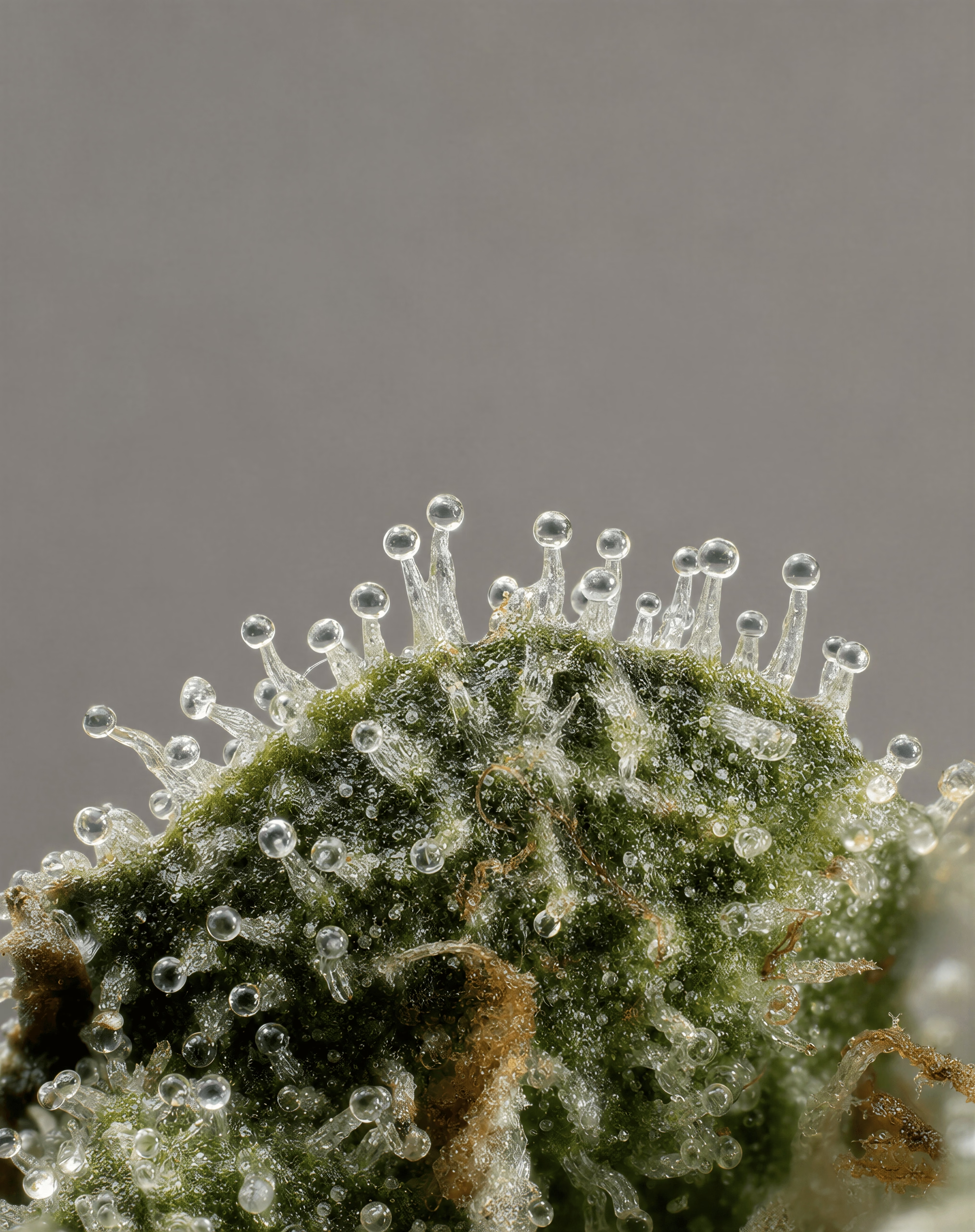
Terpenes: where pharmacological plausibility meets thin human evidence
- Public role
- Most visible face of entourage claims
- Mechanistic standout
- Beta-caryophyllene at CB2
- Common overclaim
- Predictable human effects from labeled terpene profiles
- Current verdict
- Plausible biology, thin direct human proof
If the entourage effect has a public mascot, it is probably the terpene chart. Limonene for mood, myrcene for sedation, pinene for alertness, linalool for calm. Those tidy associations are easy to remember, easy to market, and much harder to prove than most readers are led to believe.
That does not mean terpenes are inert. They are not. Many terpenes are biologically active molecules with documented effects in insects, plants, food science, fragrance chemistry, and in some cases mammalian pharmacology. The problem is the inferential jump. A terpene can be bioactive in an isolated assay, or at a high dose in an animal model, without meaningfully shaping the effects of a finished cannabis product in humans. That gap between plausibility and proof is where a great deal of entourage-effect rhetoric lives.
The distinction matters because the original “entourage effect” did not start as a claim about aromatic compounds in dispensary flower or hemp oils. Ben-Shabat, Mechoulam and colleagues coined the term in 1998 in a very specific endocannabinoid context: structurally related endogenous lipids enhanced the activity of 2-arachidonoylglycerol, or 2-AG, despite being inactive on their own in the assay. That is a tighter claim than the modern one. It did not show that common cannabis terpenes broadly potentiate THC in people. It did not compare full-spectrum products with isolates. Much of the later terpene-centered language is an expansion of the concept, not a direct extension of the original evidence.
Why terpenes became the public face of the entourage effect
Terpenes became central to entourage discussions for practical as much as scientific reasons. They are chemically distinctive, often smell strongly, and vary across cultivars in ways consumers can notice immediately. THC percentages blur products together; terpene profiles make them feel specific. That sensory visibility helped turn terpenes into explanatory shortcuts.
There was also a vacuum waiting to be filled. Once consumers learned that two cannabis samples with similar THC levels could feel different, terpenes offered an appealing answer. Sometimes that answer may be partly true. But “different effects despite similar THC” is not, by itself, evidence that terpenes are the cause. Minor cannabinoids, dose, route of administration, user tolerance, expectation, product freshness, oxidation products, and labeling error can all matter. Real-world cannabis products are mixtures, and mixtures are notoriously hard to parse.
Ethan Russo’s reviews in 2006 and 2011 were influential here. They assembled a broad pharmacological case that cannabinoids and terpenoids might interact to shape efficacy and adverse-effect profiles. Those papers were useful hypothesis-generating syntheses. They were not clinical proof that terpene-rich products outperform isolates, nor proof that specific terpene labels reliably predict the human experience of a given product. Over time, though, those distinctions often disappeared in public discourse.
The terpene focus also benefited from a simple storytelling advantage: aroma feels meaningful. If a sample smells citrusy, people are primed to connect limonene with uplift. If it smells floral, linalool gets linked to calm. This is psychologically sticky and commercially convenient. It is not the same thing as pharmacological demonstration.
Myrcene is the classic example of overreach. The claim that “high-myrcene cannabis causes couch-lock” is repeated constantly, yet controlled human evidence directly linking cannabis myrcene content to sedation outcomes is sparse. There are preclinical data suggesting antinociceptive or muscle-relaxant effects, but that falls well short of proving a reliable human sedation rule. CBN is often discussed similarly, though it is a cannabinoid rather than a terpene; here too, reputation has outpaced evidence. Linalool has somewhat better non-cannabis literature behind anxiolytic or sedative-like effects, including rodent and inhalation studies, but evidence that typical concentrations in cannabis products produce clinically meaningful anxiolysis in humans remains thin.
Beta-caryophyllene is the strongest single-terpene case, but even it is often misunderstood. Gertsch et al. in 2008 showed that beta-caryophyllene selectively binds CB2 receptors. That finding matters because it identifies a terpene with bona fide cannabinoid-relevant receptor pharmacology. Yet this is not entourage effect evidence in the strict sense. It is direct activity of one molecule at a receptor. It provides a plausible mechanism for interaction in inflammatory settings, but it does not validate the broad claim that terpene profiles generally explain whole-plant effects.
Direct receptor activity versus indirect modulation
A useful way to separate strong claims from weak ones is to ask what kind of interaction is actually being proposed. There are at least two very different possibilities.
| Interaction path | What it would mean | Main challenge |
|---|---|---|
| Direct receptor activity | A terpene binds CB1, CB2, or another target strongly enough to matter in vivo | Many reported effects are weak or depend on high concentrations |
| Indirect modulation | A terpene changes membranes, metabolism, absorption, aroma context, or non-cannabinoid signaling | Hard to separate from expectancy and route effects |
The first is direct receptor activity. In this model, a terpene binds to CB1, CB2, or another target strongly enough, at concentrations reached in vivo, to produce a measurable effect. Beta-caryophyllene and CB2 is the most cited example. But for many common cannabis terpenes, especially the ones invoked in consumer-facing effect charts, direct activation or modulation of CB1 and CB2 has looked weak, inconsistent, or dependent on concentrations that may not be physiologically realistic.
The second possibility is indirect modulation. A terpene may alter membrane dynamics, blood-brain barrier permeability, absorption, metabolism, neurotransmitter systems outside the canonical cannabinoid receptors, or subjective experience through aroma and expectation. These pathways are biologically plausible. They are also much harder to prove. An observed effect might reflect additive pharmacology, altered pharmacokinetics, sensory context, or placebo amplification rather than any special cannabinoid-terpene interaction.
This is why formal definitions matter. True interaction is not established by showing that THC plus a terpene feels different from THC alone in one uncontrolled setting. Pharmacologists usually want comparison against an expected additive model. Loewe additivity, Bliss independence, highest single agent models, and the Chou-Talalay combination index exist for this reason. Without that framework, claims of interaction can collapse into little more than “mixtures are complicated.”
Cannabis research often falls short here. Extracts vary from batch to batch. Terpenes are volatile and can degrade during storage and heating. Labels are not always accurate. Human studies frequently test only one dose or one product, making it impossible to construct an isobologram or calculate whether an observed effect exceeds additivity. This methodological weakness is a major reason terpene claims remain ahead of the evidence.
Recent receptor-focused work has pushed back on strong terpene narratives. Finlay and colleagues, in 2020 and related follow-up work around 2021, examined whether common cannabis terpenes directly modulate cannabinoid receptor signaling. The general picture was not one of potent, reliable CB1 or CB2 modulation at relevant concentrations. Some effects were weak, context-dependent, or absent. That does not prove terpenes do nothing. It does undercut the common assumption that terpenes routinely act as meaningful cannabinoid receptor boosters in real-world use.
The same caution applies when industry or popular articles cite isolated terpene studies from outside cannabis. A high-dose rodent inhalation study of linalool, or an anti-inflammatory cell assay with limonene, may be scientifically interesting. But unless the concentrations, route, formulation, and target engagement line up with human cannabis exposure, the translational value is limited. Too often that caveat gets dropped.
Another source of confusion is that some terpene effects may be real but not cannabis-specific. Linalool’s anxiolytic potential, for instance, is not evidence that linalool-rich cannabis will reliably reduce anxiety in users, much less that it will do so by “entouraging” CBD or THC. It may simply mean linalool has some pharmacology of its own under certain conditions. Likewise, a terpene with anti-inflammatory activity in vitro is not automatically an explanation for why one extract outperformed another clinically.
What recent reviews say about the evidence quality
Recent reviews are much less willing than popular summaries to treat terpene claims as established. Santiago, Sachdev, Arnold, McGregor and Connor in 2023 reviewed cannabinoid-terpenoid interaction evidence and came to a restrained conclusion: there is pharmacological plausibility, but direct evidence remains limited and methodologically uneven, with many in vitro studies using concentrations not clearly achievable in vivo. That is a fair summary of the field.
Common cannabis terpenes reliably enhance cannabinoid effects in humans in predictable, product-defining ways. Limited evidence
The most important point from these reviews is not that terpene interactions are impossible. It is that the strongest version of the claim has not been demonstrated. The literature does not currently support saying that common cannabis terpenes reliably enhance cannabinoid effects in humans in predictable, product-defining ways. Some studies suggest possible interactions. Very few settle the question.
This is where terpene claims differ sharply from better-supported parts of the broader entourage discussion. THC-CBD combinations, especially in standardized products such as nabiximols, at least have randomized clinical trial data behind them, even if the record is mixed by indication. Novotna et al. 2011, for example, found a statistically significant benefit of nabiximols over placebo in treatment-resistant multiple-sclerosis spasticity after an enriched run-in phase, though the magnitude was modest. Whiting et al. 2015 found moderate-quality evidence for cannabinoids in chronic pain and spasticity while also noting frequent adverse events. That is not proof that “full-spectrum is better,” but it is a more solid evidence base than most terpene claims possess.
By contrast, evidence often cited for extract superiority over isolates, such as Pamplona, da Silva and Coan 2018 in refractory epilepsy, is suggestive rather than decisive. Their review found that CBD-rich extracts appeared to achieve similar reported improvement at lower average CBD doses and with fewer adverse events than purified CBD. Interesting, yes. Head-to-head randomized proof, no. And none of that specifically demonstrates terpene causation. Minor cannabinoids, formulation differences, selection bias, and study heterogeneity all remain live explanations.
The effectiveness of purified cannabinoids is another check on overstatement. Dronabinol, nabilone, and especially purified cannabidiol show that single molecules can have real therapeutic effects. Devinsky et al. 2017 reported a 38.9% reduction in convulsive seizure frequency with cannabidiol versus 13.3% with placebo in Dravet syndrome. That result matters because it falsifies the crude claim that isolates are inherently inferior. If a terpene-rich extract later proves better in some context, that will need to be shown, not assumed.
Observational datasets do not solve this problem. Cuttler’s 2018 app-based symptom tracking work and similar real-world self-report studies can generate hypotheses about strains, profiles, and symptoms, but they cannot isolate terpene effects cleanly. Dose is uncertain. Product composition is uncertain. Expectancy is powerful. Route of administration varies. These studies are useful signals, not causal proof.
So where does that leave the terpene question? In a narrower place than public discussion usually admits. Terpenes are pharmacologically interesting. Some have direct activity at relevant targets; beta-caryophyllene is the clearest example. Others may have indirect effects through non-cannabinoid pathways. But the evidence that common cannabis terpene profiles drive reliable, clinically meaningful human effects through CB1/CB2 modulation is weak. The evidence that they explain the superiority of “full-spectrum” products in general is weaker still.
That is why some writers prefer “ensemble effect” over “entourage effect.” The broader term, proposed by Russo, is more honest about the possibilities: mixtures may show additive, antagonistic, kinetic, and receptor-level interactions all at once. But even that framing should not become a blank check. An ensemble can be real without every member playing a lead role.
For now, terpenes sit in the most overclaimed corner of the entourage debate. The plausible mechanisms are there. The human evidence is not yet strong enough to support the confidence with which many terpene narratives are sold to the public.
Myrcene, linalool and beta-caryophyllene: three terpenes, three very different evidence bases
Terpene talk gets sloppy fast. “Sedating terpene,” “anxiety terpene,” “body-effect terpene” — these labels travel easily on menus and social media, but they often flatten very different kinds of evidence into one sales-friendly story. If the larger entourage-effect debate is about whether multiple cannabis compounds interact meaningfully, terpene claims need to be broken down one molecule at a time.
| Terpene | Article’s evidence summary | Best-supported point |
|---|---|---|
| Myrcene | Folk pharmacology with weak human data | Preclinical analgesic and muscle-relaxant findings |
| Linalool | Real preclinical anxiolytic signal, limited cannabis-specific clinical proof | Non-cannabis anxiolytic and sedative literature |
| Beta-caryophyllene | Strongest mechanistic case | Selective CB2 agonism shown by Gertsch et al. 2008 |
That matters because these three examples do not stand on equal footing. Myrcene is surrounded by folk pharmacology and weak human data. Linalool has a genuine preclinical anxiolytic signal, but cannabis-specific clinical proof is still thin. Beta-caryophyllene is the outlier: it has a direct receptor mechanism, identified in a named paper, that is stronger than what exists for most terpenes discussed in cannabis.
The practical lesson is simple. “Terpenes matter” is too vague to be useful. Which terpene? At what dose? By what route? In what matrix? And with what human evidence?
Myrcene and the sedation myth
High-myrcene cannabis reliably produces sedation in humans. Preliminary evidence
Myrcene is probably the terpene most tightly linked to cannabis folklore. It is often described as the chemical explanation for “couch-lock,” heavy body effects, or sleepy “indica” experiences. The problem is that this claim has run far ahead of the evidence.
There is some real pharmacology behind myrcene. Preclinical work, much of it outside cannabis, has reported antinociceptive, anti-inflammatory, and muscle-relaxant effects for myrcene or myrcene-rich essential oils. Those findings make it plausible that myrcene could contribute to subjective body heaviness or comfort in some contexts. Plausible, though, is not the same as proven. Rodent muscle-relaxant or analgesic data do not establish that a myrcene-heavy cannabis chemovar will reliably sedate a human user under ordinary conditions.
That distinction gets lost constantly. A compound can show one kind of CNS or peripheral activity in animal models and still fail to produce a clear, reproducible clinical signal when present in low and variable concentrations in cannabis flower or extracts. This is a recurring problem in terpene research. The concentrations used in vitro or in preclinical dosing studies are often not obviously matched to what a person would absorb from inhaled cannabis. Santiago, Sachdev, Arnold, McGregor and Connor’s 2023 review made this point directly: evidence for direct cannabinoid-terpenoid interactions remains limited, and many experiments do not map cleanly onto real-world exposure.
With myrcene, the strongest overstatement is not “it may have sedative properties.” It is “high-myrcene cannabis automatically causes sedation.” That is not settled pharmacology. It is a consumer heuristic.
Why is the heuristic so sticky? Partly because it often seems to fit experience. People consume a THC-rich product that feels physically heavy, look at the terpene label, see myrcene near the top, and infer causation. But cannabis effects are not single-variable events. THC dose, CBD content, minor cannabinoids, route of administration, set and setting, prior tolerance, timing, and expectancy all shape the result. If a person expects “myrcene = sleepy,” that expectation itself can bias subjective reports. Observational datasets are especially vulnerable here. Studies based on app tracking or self-report, including the kind of work associated with Cuttler et al. 2018, can generate interesting hypotheses about patterns of symptom relief or product preference, but they do not isolate myrcene as the causal driver.
There is also a basic categorization problem. The old “indica versus sativa” shorthand has been repeatedly criticized as chemically crude. Yet myrcene often gets used as if it were a biochemical rescue of that taxonomy: high myrcene becomes the lab-tested explanation for “indica-like” sedation. The evidence does not justify that confidence. Chemovars are chemically diverse, and any attempt to reduce subjective effect to one terpene is usually too neat.
Another issue is dose. Even if myrcene has sedative or muscle-relaxant effects at some threshold, the relevant question is whether typical cannabis exposures reach that threshold in humans. That has not been convincingly established. Finlay and colleagues’ work from the 2020–2021 period, often cited in this debate, generally found weak or inconsistent direct modulation of cannabinoid receptor signaling by common cannabis terpenes at physiologically relevant concentrations. Myrcene is a good example of why that matters. If it is not strongly altering CB1 or CB2 signaling at realistic exposures, then “myrcene amplifies THC sedation” remains a hypothesis, not a demonstrated mechanism.
None of this means myrcene is inert. It means the current popular story is overstated. A more defensible position is narrower: myrcene has preclinical evidence suggesting analgesic and muscle-relaxant activity, and it may contribute to the overall subjective profile of some cannabis preparations, but the claim that myrcene-heavy cannabis reliably produces sedation in humans is not well supported by controlled clinical data.
That is a much less catchy line than “myrcene causes couch-lock.” It is also much closer to the evidence.
Linalool's anxiolytic signal and its limits
Linalool may contribute to anxiolytic or sedative effects, but strong cannabis-specific clinical evidence is still limited. Limited evidence
Linalool has a better case than myrcene if the question is whether a terpene can plausibly influence mood or arousal. It is a major constituent in lavender and other aromatic plants, and its anxiolytic and sedative profile has been explored for years in non-cannabis research. In rodent models, linalool has shown effects consistent with reduced anxiety-like behavior and sedation. Inhalation studies and aromatherapy-adjacent literature also point in the same general direction, though that field varies a lot in quality.
So there is a real signal here. Linalool is not just a story invented by cannabis branding. Compared with many terpene claims, the anxiolytic hypothesis has some preclinical depth.
But two limits matter.
First, much of the evidence is not cannabis-specific. The fact that linalool in lavender aroma studies or isolated preclinical preparations shows calming effects does not tell us, by itself, how much cannabis-derived linalool contributes to a person’s experience when inhaled alongside THC, CBD, dozens of other volatile compounds, and combustion or vaporization byproducts. The matrix changes the question. A terpene in essential-oil inhalation literature is not automatically the same thing, pharmacologically, as that terpene in a THC-dominant cannabis product.
Second, there is a shortage of strong clinical trials that directly test cannabis linalool content against anxiety outcomes in humans. That gap is the key one. If the claim is “linalool-rich cannabis is clinically more anxiolytic,” the evidence should come from controlled studies comparing matched cannabis formulations that differ meaningfully in linalool while holding other variables as constant as possible. Those studies are sparse.
This is where many entourage-effect discussions slip from plausible mechanism into assumption. Russo’s 2006 and 2011 reviews were influential in arguing that terpenoids might broaden therapeutic effects, improve tolerability, or modulate cannabinoid responses. Those papers were important as synthesis and hypothesis-building. They helped frame the modern question. They did not prove that linalool-rich cannabis reduces anxiety in clinical practice.
The human picture is also complicated by THC itself. Low doses of THC may be subjectively relaxing in some people and anxiogenic in others; higher doses are more likely to provoke anxiety or panic, especially in inexperienced users. If a cannabis product feels calming, is linalool contributing? Possibly. But it may also be that the THC dose was modest, the CBD content buffered some adverse subjective effects, the user was in a safe setting, and expectancy did the rest. Untangling that requires pharmacology, not vibes.
There is a route issue too. Some linalool literature involves inhalation of aroma under conditions quite different from inhaling or ingesting cannabis. Absorption kinetics, blood levels, and CNS exposure may differ substantially. A terpene that appears active in one route and concentration range may not produce the same effect in another. This is a standard translational problem, not a minor technicality.
Even so, linalool remains more credible than many terpene darlings because the underlying pharmacological literature is not empty. If someone wants a terpene with at least a respectable anxiolytic rationale, linalool is on shortlists for a reason. The caution is that this rationale has not yet matured into strong cannabis-specific clinical evidence. There is a signal, but not a verdict.
A fair summary would be: linalool has preclinical anxiolytic and sedative evidence, and it is biologically reasonable that it could influence the subjective profile of some cannabis preparations, but claims of reliable, clinically meaningful anxiolysis from cannabis linalool in humans remain ahead of the direct evidence.
That may sound restrained. It should. The literature does not support a stronger claim.
Beta-caryophyllene as a bona fide CB2 agonist
Beta-caryophyllene is different. Not “different” in the sense that all questions are settled, but different in a way that matters mechanistically. Unlike most terpene claims in cannabis, this one rests on direct receptor pharmacology.
Beta-caryophyllene is a selective CB2 agonist. Strong evidence
Dietary cannabinoid An informal label for beta-caryophyllene because it is a food-derived terpene with direct CB2 receptor agonist activity.
The landmark paper is Gertsch et al. 2008. In that study, beta-caryophyllene was identified as a selective agonist at the CB2 cannabinoid receptor. That finding is why beta-caryophyllene is often called a “dietary cannabinoid.” It is not just a terpene vaguely suspected of modulating mood or changing a high. It binds a known cannabinoid-system target with measurable activity.
That does not, by itself, prove an entourage effect. It proves direct pharmacological action by the terpene. The distinction matters. The original 1998 Ben-Shabat and Mechoulam “entourage effect” paper described inactive companion molecules enhancing the action of an endogenous ligand, 2-AG, in endocannabinoid biology. Beta-caryophyllene is not that model. It is not merely escorting another compound. It is itself an active ligand at CB2.
In some ways, that is stronger evidence than the broader entourage claim. You do not need to speculate that beta-caryophyllene somehow “guides” THC or “activates the endocannabinoid system” in a vague sense. You can say something much cleaner: a 2008 paper by Gertsch and colleagues found that beta-caryophyllene selectively activates CB2 receptors, which are implicated in immune and inflammatory processes more than in the classic psychoactive effects associated with CB1.
That mechanistic specificity gives beta-caryophyllene a more serious footing in discussions of pain and inflammation. If a cannabis preparation contains beta-caryophyllene, there is at least a plausible receptor-level reason it might contribute to anti-inflammatory or analgesic effects, especially in combination with cannabinoids acting through overlapping or adjacent pathways. Still, “plausible” is doing work here. Direct receptor binding is not the same thing as clinically proven benefit in a given cannabis formulation.
There are several reasons not to overread Gertsch 2008. One is dose again. The presence of beta-caryophyllene on a label does not tell you whether enough reaches relevant tissues to produce a meaningful pharmacodynamic effect. Another is formulation. Oral, inhaled, and sublingual products may differ sharply in terpene retention, absorption, and metabolism. A third is endpoint selection. Even if CB2 activation occurs, the downstream clinical effect may vary by condition and may be modest.
Still, compared with myrcene and linalool, beta-caryophyllene has the cleanest claim. It is not resting mainly on consumer lore, and it is not resting only on general aromatherapy-style literature. It has a named receptor target in the cannabinoid system. That makes it the strongest single-terpene example for people arguing that at least some cannabis terpenes can have relevant biological activity beyond flavor and aroma.
It is also a reminder that “terpene evidence” should not be treated as one bucket. Beta-caryophyllene’s case is stronger precisely because it escapes the weakest pattern in this field: broad claims built on indirect effects, high in vitro concentrations, and subjective anecdotes. If the wider terpene-entourage story is to survive serious scrutiny, it will need more examples that look like beta-caryophyllene and fewer that look like myrcene folklore.
So where does that leave the three-terpene comparison? Myrcene has suggestive preclinical analgesic and muscle-relaxant data but a weak basis for deterministic sedation claims in cannabis users. Linalool has a real anxiolytic preclinical signal, yet little strong evidence that cannabis linalool content predicts human clinical outcomes. Beta-caryophyllene has the strongest mechanistic footing because Gertsch et al. 2008 identified it as a selective CB2 agonist.
That unevenness is the point. When terpene advocates speak as if the evidence base is uniform, they blur major differences in quality. A careful reading says something narrower and more defensible: some terpenes are pharmacologically interesting, one of them has direct cannabinoid-receptor evidence, and none of this licenses sweeping claims that terpene profiles reliably determine the effects of commercial cannabis products in humans.
Minor cannabinoids beyond THC and CBD: CBG, CBN, THCV and CBC
Once discussions move beyond THC and CBD, the evidence base gets thinner and the claims often get louder. That mismatch matters. CBG, CBN, THCV, and CBC are real phytocannabinoids with pharmacological activity, but “interesting in a receptor map” is not the same thing as “shown to change clinical outcomes in people,” and it is definitely not the same thing as “proved to improve CBD by entourage.”
That distinction is easy to lose because cannabis chemistry is crowded. The plant contains dozens of cannabinoids, many terpenes, and other constituents such as flavonoids. The original 1998 Ben-Shabat and Mechoulam “entourage effect” paper was not about these minor phytocannabinoids in finished cannabis products. It described endogenous lipids that enhanced 2-AG signaling in an endocannabinoid assay without directly mimicking the primary ligand themselves. Applying that idea to CBG, CBN, THCV, and CBC is a reasonable hypothesis. It is not settled fact.
Why these compounds are scientifically interesting
The short answer is target promiscuity. Minor cannabinoids do not act on one receptor in one clean way. They appear to interact, often weakly or context-dependently, with cannabinoid receptors, transient receptor potential channels, serotonin signaling, adrenergic systems, nuclear receptors, inflammatory mediators, and enzymes involved in endocannabinoid tone. That makes them pharmacologically interesting and experimentally messy.
CBG, or cannabigerol, is often called a “parent” cannabinoid because acidic CBG is a biosynthetic precursor to other cannabinoids in the plant. Pharmacologically, it has been reported to interact with CB1 and CB2 only weakly, while showing activity at other targets including alpha-2 adrenergic receptors, 5-HT1A-related pathways, and TRP channels. Preclinical papers have linked CBG to anti-inflammatory, analgesic, neuroprotective, and appetite-related effects. Those leads are enough to justify research. They are not enough to justify broad therapeutic claims.
CBC, cannabichromene, is another example of a compound that looks more interesting once you stop expecting it to behave like THC. It has limited intoxicating activity and has been discussed more in relation to TRPA1, TRPV1, and inflammatory signaling than as a strong classical cannabinoid receptor agonist. That profile has kept CBC in the conversation around pain and inflammation, especially where non-CB1 pathways may matter.
THCV, tetrahydrocannabivarin, is probably the most mechanistically debated of the group. It has been described as dose-dependent, with CB1 antagonist or neutral-antagonist-like behavior at lower doses in some systems and possible agonist-like effects at higher doses, plus partial activity at CB2. That makes it especially attractive in metabolic research, because CB1 blockade has obvious relevance to appetite and glucose regulation. Yet attractive mechanisms have a long history of disappointing in clinic.
CBN, cannabinol, is the cautionary case. It is usually formed as THC oxidizes and ages, which has helped create the folk idea that old cannabis becomes “sleepier” because of rising CBN. The leap from that observation to “CBN is a proven sleep cannabinoid” is not supported by good human evidence. CBN does bind cannabinoid receptors weakly, and it may have sedative potential in some contexts, especially when combined with THC, but the modern marketing story has outrun the data badly.
This pattern repeats across the category. These compounds are scientifically interesting because they are pharmacologically active, not because they have already been clinically validated. Those are different thresholds.
Plausible interaction pathways
If minor cannabinoids do modify the effects of THC, CBD, or whole-plant extracts, several pathways could explain it. None should be assumed by default.
One route is direct receptor-level interaction. A minor cannabinoid could alter signaling at CB1 or CB2 by acting as a weak agonist, antagonist, inverse agonist, partial agonist, or allosteric modulator. THCV is the most discussed here because its CB1 behavior may change with dose and system. If a compound dampens or reshapes CB1 signaling, it could in theory affect intoxication, appetite, anxiety, pain perception, or adverse effects from THC.
A second route is non-cannabinoid receptor pharmacology. TRPV1, TRPA1, 5-HT1A, PPARs, glycine receptors, adrenergic receptors, and inflammatory pathways all show up repeatedly in cannabinoid papers. CBG and CBC are often discussed through this lens. If one compound shifts nociception through TRP channels while another acts through CB1 or CB2, the combined effect could be additive, antagonistic, or occasionally greater than additivity. But without formal combination studies, that is still an inference.
A third route is pharmacokinetics. One constituent might change absorption, distribution, metabolism, or elimination of another. This is a neglected part of “entourage” talk. People often imagine receptor crosstalk and forget enzyme competition, tissue distribution, blood-brain penetration, and formulation effects. A multi-compound extract might feel different from an isolate because the body handles it differently, not because each molecule is co-activating the same receptor network in a dramatic way.
A fourth route involves endogenous cannabinoid tone. Some phytocannabinoids may affect enzymes or transport processes linked to anandamide or 2-AG signaling, or indirectly shift endocannabinoid levels through inflammatory or neuronal mechanisms. That would fit the spirit of the original entourage concept better than loose claims that “more compounds means stronger effects.”
There is also a simpler explanation that often gets ignored: many combinations are merely additive, not synergistic. In pharmacology, true synergy is not “A plus B worked better than A alone.” It means the combination outperformed the expected additive effect based on dose-response relationships. That usually requires frameworks such as Loewe additivity, Bliss independence, or Chou-Talalay combination index analysis. Most minor-cannabinoid studies do not go that far. Whole-plant studies almost never do it well, because extracts vary, compounds degrade, and too few dose combinations are tested to build proper isobolograms.
That methodological gap is a major reason caution is warranted. Plausibility is not proof.
What evidence exists in humans versus cell and animal models
| Minor cannabinoid | Human evidence status | Article’s caution |
|---|---|---|
| CBG | Sparse controlled human data | Pharmacological lead, not established adjunct |
| CBC | Very limited human data | Interesting for pain and inflammation, not clinically settled |
| THCV | Some small human studies | Metabolic claims remain limited |
| CBN | Weak human sleep evidence | Branding has run ahead of data |
For all four compounds, the preclinical literature is much larger than the human literature.
CBG has encouraging animal and cell data in inflammatory bowel disease models, pain-related assays, and some neurodegenerative contexts. A frequently cited paper by Borrelli and colleagues in 2013 reported anti-inflammatory effects of CBG in a murine colitis model. There are also preclinical reports suggesting antibacterial activity and possible effects on appetite or bladder function. Yet controlled human data remain sparse. There are not large randomized trials showing that CBG alone, or CBG combined with CBD or THC, improves a defined condition in a reproducible way. At this stage, CBG is a pharmacological lead, not a clinically established adjunct.
CBC is in a similar position. Cell and animal studies suggest anti-inflammatory and analgesic potential, and its activity at TRP channels has made it a candidate for pain and neuroinflammation research. Some in vitro work suggests CBC could influence endocannabinoid signaling indirectly, which is the kind of result that often gets pulled into entourage narratives. But there is little high-quality human evidence. If someone claims CBC has proven mood, pain, or anti-inflammatory effects in people, they are skipping several steps.
THCV has somewhat more human work than CBC and CBG, though still nowhere near CBD. Interest in THCV rose partly because of appetite and metabolic claims. O’Sullivan and colleagues published a small randomized trial in 2016 examining THCV and CBD in type 2 diabetes. THCV showed some effects on fasting plasma glucose and pancreatic beta-cell function measures, but this was not a definitive clinical breakthrough, and it certainly did not prove that THCV-containing extracts broadly improve metabolism. Human neuroimaging work has also suggested THCV may alter brain responses to food-related stimuli. Interesting, yes. Clinically settled, no. Claims that THCV is reliably “diet weed” are a good example of branding outrunning evidence.
Then there is CBN. This is where skepticism should be strongest. Older studies often cited for sedative effects are small, dated, and hard to interpret because CBN was given with THC or in contexts where contamination and co-administration were confounders. The classic line from the 1970s literature is not that CBN was a strong sedative on its own, but that it may have modified THC effects. That is very different from saying CBN alone is an established sleep aid.
Recent interest has pushed new pilot studies and sleep-focused product development, but the human evidence is still weak. There is no large, clean body of randomized evidence showing that isolated CBN meaningfully improves insomnia outcomes across populations. Sleep is especially vulnerable to expectation effects, regression to the mean, and formulation confounds. Add melatonin, herbal ingredients, residual THC, or poor labeling, and it becomes almost impossible to know what CBN is doing. CBN is therefore a useful cautionary case for the entire entourage conversation: a molecule can be pharmacologically plausible, commercially fashionable, and clinically underproven all at once.
The gap between preclinical and human evidence matters even more when people claim interaction effects among minor cannabinoids. In vitro systems can show receptor binding or signaling changes at concentrations that are hard to achieve in vivo. Animal models can suggest analgesic, anti-inflammatory, or anxiolytic actions, but translating dose, route, and brain exposure from rodents to people is not straightforward. Combination effects are even harder. If a paper reports that CBG plus CBD altered a cell-signaling pathway, that does not establish that a retail “full-spectrum” extract will produce a meaningful clinical effect in humans.
This is why the hierarchy of evidence needs to stay visible. Cell studies can identify targets. Animal studies can test plausibility and mechanism. Human observational reports can generate hypotheses. None of those, by themselves, establish that minor cannabinoids materially improve clinical outcomes when added to CBD.
By contrast, isolated cannabinoids can work without any entourage at all. That point is easy to forget in discussions centered on whole-plant complexity. Purified CBD has strong randomized evidence in epilepsy; in Devinsky et al. 2017, cannabidiol reduced monthly convulsive seizures in Dravet syndrome by 38.9% versus 13.3% with placebo. Dronabinol and nabilone also show that single-molecule cannabinoid medicines can be effective in defined settings. So even if future studies show that CBG, CBC, THCV, or CBN modify THC or CBD responses under some conditions, that would not mean isolates are inherently inferior. It would mean the answer depends on the indication, the dose, the formulation, and the specific combination tested.
That is the right place to land for now. Minor cannabinoids are real pharmacological actors. CBG, CBC, THCV, and CBN each offer plausible mechanisms for interaction with major cannabinoids and with broader signaling systems. But claims about their combined effects are usually at an earlier stage than claims about THC plus CBD, where at least some standardized human trial data exist. For minor cannabinoids, the science is still mostly a map of possibilities. The clinic has not caught up.
Flavonoids and cannflavins: the neglected part of the whole-plant argument
| Flavonoid | What the article says | Main evidence gap |
|---|---|---|
| Cannflavin A | Distinct cannabis flavonoid with anti-inflammatory in vitro interest | Little pharmacokinetic or clinical outcome data |
| Cannflavin B | Similar cannabis flavonoid discussed in whole-plant arguments | Unclear real-world exposure and contribution |
The whole-plant case is usually argued with cannabinoids first and terpenes second. Flavonoids tend to appear as a vague extra: one more reason, people say, that complex extracts might behave differently from isolates. That is not wrong, but it is often hand-wavy. If flavonoids matter to cannabis pharmacology, they matter through specific molecules, specific concentrations, and specific mechanisms. The best-known examples are cannflavin A and cannflavin B.
Their place in the entourage debate is easy to overstate. It is also easy to ignore. Both mistakes flatten the actual evidence.
What cannflavins are
Cannflavins Prenylated flavones found in cannabis, especially cannflavin A and B, often discussed for possible anti-inflammatory activity.
Flavonoids are a large class of polyphenolic plant compounds found across fruits, vegetables, herbs, and medicinal plants. Cannabis contains common flavonoids seen elsewhere in the plant kingdom, but it also produces a small set of more distinctive prenylated flavones called cannflavins. The two cited most often are cannflavin A and cannflavin B; cannflavin C is discussed less frequently and is less characterized.
These molecules were described decades ago in cannabis phytochemistry work, long before the current retail language around “full-spectrum” extracts took hold. Structurally, they are not cannabinoids. They do not look like THC or CBD, and they are not known for direct CB1-driven psychoactive effects. That matters because the whole-plant argument is not only about compounds that hit cannabinoid receptors. It is also about compounds that may affect inflammation, oxidative stress, metabolism, absorption, or the way other constituents behave in tissues.
Cannflavins are therefore often placed in the broader “ensemble” picture that Ethan Russo later favored over a simplistic one-size-fits-all entourage claim. If a cannabis extract contains cannabinoids, terpenes, flavonoids, and other minor constituents, then any real extract effect could reflect additive effects, antagonism, pharmacokinetic interactions, or target overlap across several classes of compounds. Cannflavins fit that frame better than they fit the popular idea that every plant constituent somehow boosts THC.
They are also not likely to be abundant in most finished products. That is one reason they are neglected. Another is analytical difficulty: many commercial certificates of analysis focus heavily on THC, CBD, a few minor cannabinoids, and perhaps a terpene panel. Flavonoid profiling is much less common. So cannflavins are often invoked in theory but not measured in practice.
Anti-inflammatory mechanisms proposed in vitro
The most frequently cited reason for caring about cannflavins is anti-inflammatory activity in vitro. Early work on cannflavin A and B suggested that they could inhibit inflammatory eicosanoid signaling, especially pathways involving prostaglandins. This is the part of the literature that gave cannflavins their reputation. They were reported to inhibit prostaglandin E2 production and to affect arachidonic-acid-related inflammatory cascades in cell-based systems.
That sounds promising, and at a mechanistic level it is. Inflammation is one of the main therapeutic territories where people expect multi-compound cannabis preparations to differ from single-molecule formulations. If minor constituents reduce inflammatory mediators through non-cannabinoid pathways, then whole-plant extracts could in principle produce effects that THC or CBD alone would not fully explain.
More recent review literature has kept this possibility alive, often describing cannflavins as prenylated flavonoids with anti-inflammatory potential and possible neuroprotective relevance. The proposed mechanisms extend beyond a generic “antioxidant” label. They include modulation of prostaglandin synthesis, effects on enzymes involved in eicosanoid pathways, and possibly broader influence on inflammatory signaling networks. Those are real biochemical hypotheses, not pure marketing language.
Still, the evidence base here is preclinical and narrow. Most of the work is test-tube pharmacology, not animal efficacy studies with well-characterized exposure levels, and certainly not human outcome trials. In vitro inhibition of inflammatory mediators can be valuable as a starting point, but it does not tell you whether a person using a cannabis extract reaches concentrations high enough for those mechanisms to matter. This translational gap is where many entourage claims start to wobble.
The same caution applied to terpene claims applies here. A mechanism at high micromolar concentrations in a dish is not the same as a clinically meaningful contribution in vivo. Without pharmacokinetic data, tissue distribution data, and dose-response work, anti-inflammatory plausibility remains just that: plausibility.
Why their real-world contribution remains uncertain
This is the part most whole-plant discussions skip. Cannflavins may be pharmacologically interesting, yet their contribution to real-world cannabis effects remains largely unproven.
Why real-world cannflavin impact is still uncertain
- They are minor constituents and often not quantified in finished products.
- Content may vary with cultivar, plant part, extraction, and storage.
- Human pharmacokinetic data are sparse.
- Clinical outcome trials tying cannflavin levels to benefit are largely absent.
First, abundance is a problem. Cannflavin A and B appear to be minor constituents. A compound can be potent and still matter at low levels, but then potency has to be demonstrated under realistic exposure conditions. For cannflavins, that case has not been made. Many extracts likely contain them only in small amounts, and many products do not quantify them at all. If you do not know the dose, claims about effect are already on shaky ground.
Second, extraction and stability issues complicate things. Flavonoid content can vary by cultivar, plant part, processing method, and storage conditions. Whole-plant extracts are chemically messy by nature. Heat, light, oxidation, and solvent choice can all shift what survives into the finished preparation. Terpenes get most of the attention for volatility and instability, but minor polyphenols have their own handling problems. So even if cannflavins matter biologically, their presence may be inconsistent across preparations that are all marketed under the same broad label.
Third, pharmacokinetic data are sparse. This is a major weakness. We know far less about the absorption, metabolism, bioavailability, plasma levels, and tissue penetration of cannflavin A and B than we know about THC, CBD, or even some terpenes. Do oral preparations deliver meaningful systemic exposure? Are these compounds extensively metabolized before reaching target tissues? Do they accumulate anywhere relevant? At present, there are more questions than answers.
Fourth, there is almost no clinical outcome evidence tying cannflavins themselves to patient benefit. Not little. Almost none. No established randomized trial literature shows that a cannabis preparation richer in cannflavin A or B produces better inflammatory outcomes in humans than a matched preparation lacking them. That absence does not prove irrelevance, but it blocks strong claims. By contrast, isolated cannabinoids clearly can work: dronabinol, nabilone, and purified CBD all show that single compounds can produce therapeutic effects without needing flavonoid accompaniment. Devinsky et al. 2017 on purified cannabidiol in Dravet syndrome is the obvious reminder. Whatever role minor compounds may play, isolate efficacy is a settled fact.
This also helps explain why observational comparisons such as Pamplona, da Silva, and Coan 2018 are suggestive rather than decisive. If CBD-rich extracts appear to perform differently from purified CBD in pooled epilepsy reports, the difference could reflect minor cannabinoids, terpenes, flavonoids, dose differences, formulation effects, reporting bias, or all of the above. Cannflavins are part of that hypothesis space, not a proven explanation.
So where does that leave them? As a legitimate but underdeveloped branch of the whole-plant argument. Cannflavin A and B are not imaginary, and their anti-inflammatory in vitro activity is not trivial. But at present they are better described as a research frontier than as evidence that “full-spectrum” products reliably outperform isolates. If flavonoids are going to carry weight in the entourage debate, future studies need to measure them, standardize them, and connect them to real pharmacokinetics and real clinical outcomes. Until then, cannflavins remain one of the more interesting maybes in cannabis science.
What the critics get right: weak evidence, noisy products and observational bias
Many modern entourage claims are stronger than the evidence behind them. Limited evidence
Skeptics of the entourage effect are often reacting to a real problem. The phrase is used far more confidently than the evidence allows. It began in a specific 1998 endocannabinoid paper by Ben-Shabat, Mechoulam and colleagues, where inactive endogenous lipids enhanced the activity of 2-AG in an assay. That is a legitimate pharmacological observation. It is not the same as saying a loosely defined “full-spectrum” extract will outperform an isolate in humans across conditions, doses and routes.
That gap matters because the modern claim usually rests on evidence that is suggestive, messy, or both. Some studies are observational. Some products are chemically unstable. Some “full-spectrum” preparations barely resemble one another. Critics are right to insist that plausibility is not proof, and that a nice story about compounds working together can outrun what the data actually show.
Cuttler 2018 and the limits of app-based self-report data
One reason entourage claims spread so easily is that cannabis generates a lot of user data. Symptom-tracking apps, online surveys and real-world registries can collect thousands of entries quickly. Cuttler and colleagues’ 2018 app-based work is a good example of why this evidence is both useful and limited.
Studies like this can detect patterns. People report changes in anxiety, pain, depression or insomnia after using cannabis. They may also log product labels, routes of administration and perceived effects. That makes these datasets valuable for hypothesis generation. If certain labeled chemotypes seem to correlate with sedation, or with lower anxiety, that is worth investigating.
But they cannot prove an entourage effect. Not close.
| Problem in app-based self-report studies | Why it weakens causal claims |
|---|---|
| Self-selection | Users are not randomized and choose their own products |
| Dose uncertainty | Reported percentages do not equal absorbed milligram exposure |
| Expectancy bias | Beliefs about terpene effects can shape reports |
| Route variability | Inhaled, oral, and other routes produce different exposure patterns |
| Co-medications and tolerance | Background factors can shift outcomes without any terpene effect |
The basic problem is confounding. Self-report users are not randomized. They choose their product, dose and timing. They differ in prior tolerance, expectations, symptom severity, co-medications and experience with inhaled versus oral routes. One person may take two puffs from a vaporizer after work; another may take a tincture at bedtime after using cannabis daily for years. If both call the product “high in myrcene” or “CBD-rich,” that does not make them comparable exposures.
Dose is often especially weakly measured. Users rarely know the actual milligrams absorbed. Even when a product label gives THC or CBD percentages, that still does not tell you how much reached systemic circulation. Inhalation varies with puff duration, depth, device temperature and combustion losses. Oral products vary with food intake, formulation and metabolism. So if an app dataset suggests that a terpene profile is linked to a certain effect, you still cannot tell whether the pattern reflects terpenes, cannabinoid dose, route, user expectation, or all three at once.
Expectancy bias is another major issue. If people have been told that linalool is calming or myrcene is sedating, they may interpret ambiguous effects through that lens. The problem is not dishonesty. It is suggestion. Once a consumer culture develops around named terpenes, labels stop being neutral descriptions and start acting like prompts.
Selection bias piles on. People who use symptom-tracking apps are not a random sample of all users, or of patients in clinics. They are self-selected, often highly engaged, often motivated to monitor outcomes, and sometimes already convinced that cannabis chemistry matters in specific ways. That can enrich the dataset for strong prior beliefs.
None of this makes Cuttler 2018 worthless. It means the study belongs in the “interesting signal” category, not the “settled causal evidence” category. App-based observational work can point researchers toward combinations worth testing under controlled conditions. It cannot establish that symptom improvement came from cannabinoid-terpene interaction rather than dose, tolerance, setting or expectation.
That distinction gets blurred constantly. Critics are right to push back.
Chemical variability and labeling problems
Even if observational designs were stronger, real-world cannabis products introduce another problem: the thing being studied is often chemically noisy.
“Full-spectrum,” “broad-spectrum” and even named cultivar labels are not strict pharmacological categories. They are market-facing descriptors applied to products that can vary widely in cannabinoids, terpenes, flavonoids, degradation products and residual contaminants. Two extracts can share a label and still differ meaningfully in composition.
This matters because an entourage claim is, at minimum, a composition claim. If Product A works differently from Product B because of compound interactions, you need to know what is actually in both products. Too often that foundation is shaky.
Labeling errors are part of the problem. Independent surveys over the past decade have repeatedly found inaccurate cannabinoid labeling in retail products, especially in CBD markets. Some products contain more CBD than stated, some less, and some contain detectable THC despite labels implying otherwise. If the cannabinoid numbers are unreliable, any claim about minor-compound effects becomes even harder to evaluate.
Terpenes make the problem worse because they are volatile. They evaporate during storage, especially with heat, repeated opening, and poor packaging. A flower or extract tested at production may not have the same terpene profile weeks later. Oxidation also changes chemistry over time. THC can degrade toward CBN and other products; terpenes can oxidize into compounds with different sensory and possibly biological properties. Light, oxygen and temperature all matter.
So when a patient or study participant reports that a “linalool-rich” oil reduced anxiety, what exactly was in the bottle by the time it was used? The certificate of analysis may reflect one batch at one moment. It may not reflect the final exposure after transport, storage and repeated use.
This instability is not a minor technicality. It undercuts one of the strongest popular versions of the entourage argument, which assumes that named profiles map reliably onto reproducible pharmacology. That assumption often fails outside standardized pharmaceutical products.
The contrast with regulated formulations is instructive. Nabiximols, developed by GW Pharmaceuticals, was studied as a defined botanical extract with roughly balanced THC and CBD and controlled manufacturing. Even there, clinical results were mixed by indication. Novotna et al. 2011 found a statistically significant difference for resistant multiple-sclerosis spasticity after an enriched run-in design, but the absolute change on the spasticity numerical rating scale was modest. Cancer pain trials were less convincing, with some phase III studies missing primary endpoints. If a tightly manufactured extract does not produce a universal victory for “whole-plant beats isolate,” it is hard to defend that claim for unstable, inconsistently labeled retail products.
Methodology amplifies the issue. True interaction claims require comparison against expected additivity, using approaches such as Loewe additivity, Bliss independence or the Chou-Talalay combination index. Most real-world extract studies do not do this. They compare one messy product with another, or with historical controls, without enough dose combinations to show whether the combined effect is additive, antagonistic or greater than expected. In many cases, “entourage” just means “more than one compound was present.”
That is not enough.
Why anecdote scales badly into evidence
Why anecdotes do not scale into proof
- Different people have different diagnoses, tolerance, metabolism, and context of use.
- Multi-compound products make attribution hard.
- Expectation and placebo effects can be large.
- Population-wide use guarantees many conflicting stories.
Anecdotes are often where cannabis medicine begins. A patient tries an extract, sleeps better, feels less pain, has fewer seizures, or notices that one preparation feels calmer than another. Those experiences matter. They can guide research and reveal effects worth testing.
But anecdotes scale badly.
The first reason is heterogeneity. What works for one person may depend on diagnosis, genetics, tolerance, metabolism, previous cannabis exposure, route, co-prescribed drugs, and context of use. Multiply that across millions of users and patterns start looking cleaner than they are. UNODC estimated 228 million cannabis users worldwide in 2022, and the EMCDDA estimated about 24 million adult Europeans used cannabis in the last year. With populations that large, every possible effect narrative will find support somewhere.
The second reason is attribution error. If someone improves on a multi-compound extract, which ingredient gets credit? THC? CBD? A minor cannabinoid? A terpene? Better sleep leading indirectly to less pain? Regression to the mean? Placebo response? Reduced alcohol use after starting cannabis? Without controls, people tend to over-assign causality to the most salient story available.
That is why Pamplona, da Silva and Coan 2018 is interesting but not definitive. The review found that CBD-rich extracts in refractory epilepsy appeared to produce similar proportions of reported improvement at lower average CBD doses than purified CBD, with fewer adverse effects reported. That is compatible with a multi-compound benefit. It is also compatible with reporting bias, selection differences, inconsistent extract composition and non-randomized comparison. Useful signal, yes. Clinical proof, no.
The counterexample matters just as much. Isolates can plainly work. Dronabinol works. Nabilone works. Purified cannabidiol works. In Devinsky et al. 2017, cannabidiol reduced convulsive-seizure frequency in Dravet syndrome by 38.9% versus 13.3% with placebo. That finding alone blocks the lazy claim that isolated cannabinoids are inherently inferior because they lack the entourage effect.
The skeptical position, stated fairly, is not that interactions never exist. It is that many claims made in their name are undercontrolled, chemically unstable and psychologically confounded. Critics are right to demand tighter evidence: verified composition, stable formulations, controlled dosing, formal interaction models and blinded human trials. Until then, the reader should treat most broad entourage claims as hypotheses with uneven support, not pharmacological facts.
Methodological bottlenecks that make cannabis synergy unusually hard to prove
The biggest problem with entourage-effect research is not that interaction claims are impossible. It is that they are easy to state and hard to test correctly. In pharmacology, true interaction is not established by showing that a mixed extract “worked” or even that it outperformed one isolated compound in a single trial arm. The proper question is whether the observed combined effect exceeds, matches, or falls below the effect predicted from additivity. That demands designs most cannabis studies do not use.
This matters because the phrase itself has drifted far from its source. Ben-Shabat, Mechoulam and colleagues in 1998 used “entourage effect” in a tightly defined endocannabinoid context: inactive endogenous glycerol esters amplified 2-AG activity in an assay without acting like 2-AG on their own. That is a concrete pharmacological observation. It is not the same as saying that any chemically messy whole-plant product will outperform an isolate in humans.
| Methodological bottleneck | Why it matters |
|---|---|
| Standardized chemistry | Without fixed composition, the intervention changes from batch to batch |
| Dose matrix depth | Formal synergy testing needs multiple doses and ratios |
| Route-specific PK | Inhaled, oral, and oromucosal products are not interchangeable |
| Stability testing | Volatile terpenes and oxidation products can shift over time |
| Realistic concentrations | High in vitro concentrations may not translate to human exposure |
To prove interaction among phytocannabinoids, terpenes, and other constituents, researchers need standardized chemistry, route-specific pharmacokinetics, and enough dose combinations to model additivity formally. Loewe additivity, Bliss independence, highest-single-agent models, and the Chou-Talalay combination index all exist for this reason. Yet whole-plant cannabis research rarely generates the dense dose-response matrices needed for isobolograms or combination indices. Instead, it often compares one extract with one comparator and leaves the mechanistic claim hanging.
Standardizing whole-plant extracts
Whole-plant extracts are not single drugs. They are moving targets.
Even when two preparations both carry the label “full-spectrum,” they may differ in THC, CBD, minor cannabinoids, terpene retention, flavonoids, oxidation products, and carrier oils. “Broad-spectrum” and “isolate” are cleaner terms analytically, but even there formulation can alter absorption enough to distort comparisons. A CBD isolate in one oil base is not pharmacokinetically identical to the same milligram amount in another.
Terpenes create a special standardization headache because they are volatile, oxidizable, and formulation-sensitive. Fresh flower, a shelf-stable oral oil, an ethanol tincture, and an oromucosal spray may begin with similar plant genetics yet end up delivering very different terpene profiles by the time they reach the user. Monoterpenes such as myrcene and limonene are especially prone to evaporative loss during drying, extraction, heating, and storage. Oxidation adds another layer: the bottle may still test positive for a named terpene while containing decomposition products not present in the original flower.
That makes extrapolation sloppy fast. Claims built from fresh-flower aroma do not automatically apply to aged extracts. Nor does a gas chromatography printout of starting material guarantee what reaches the patient after months on a shelf. If a study does not report batch testing at release and stability testing over time, its terpene conclusions deserve caution.
The standardized-extract literature is more credible precisely because it narrows this variability. Nabiximols, developed by GW Pharmaceuticals, is a good example. It is not proof that all multi-compound cannabis medicines outperform isolates, but it at least gives investigators a reproducible botanical preparation with approximately equal THC and CBD. That allows cleaner clinical testing than the usual loosely characterized “whole-plant” product. Even then, results have been mixed by indication. Novotna et al. 2011, in treatment-resistant multiple-sclerosis spasticity, used an enriched design and found a statistically significant but modest advantage for nabiximols over placebo in the randomized phase. Cancer pain trials were less convincing, with several phase III programs missing primary endpoints in intention-to-treat populations. Standardization improves inference. It does not rescue a weak effect.
Observational evidence on CBD-rich extracts shows the same tension. Pamplona, da Silva and Coan 2018 reported that CBD-rich extracts appeared to achieve similar epilepsy improvement at lower average CBD doses than purified CBD, with fewer reported adverse events. Interesting, yes. Definitive, no. The studies pooled were heterogeneous, mostly non-randomized, and chemically inconsistent. If the extract composition is not tightly standardized, the mechanistic interpretation stays loose.
Dose matrices, bioavailability and route-of-administration effects
Route of administration is where many entourage claims quietly fall apart. Inhaled, oral, and oromucosal cannabis products are not interchangeable exposures. They differ in onset, peak concentration, first-pass metabolism, duration, metabolite formation, and likely target-tissue distribution.
Inhalation produces rapid systemic THC delivery, often within minutes, with steep concentration-time curves and high inter-puff variability. Oral dosing is slower, more erratic, and heavily shaped by food, bile secretion, and first-pass hepatic metabolism. Oromucosal products such as nabiximols sit somewhere in between but are not simply “oral with faster onset”; a portion is absorbed transmucosally, another is swallowed, and the split varies with technique and saliva flow.
That matters for interaction testing because a compound can appear to “modify” another simply by changing absorption kinetics rather than receptor-level pharmacodynamics. CBD, for example, may alter THC effects through multiple paths: receptor-level interactions, anxiety modulation, CYP-mediated metabolism, or changes in subjective tolerability. If the study does not disentangle those paths, the word synergy is too strong.
Proper testing needs factorial dose matrices: multiple doses of A, multiple doses of B, and ideally their combinations across a grid. Think 0, low, medium, high THC crossed with 0, low, medium, high CBD, not just THC alone versus THC+CBD once. Add a terpene arm and costs explode. Add route comparisons and they explode again. This is why the literature is thin. A serious interaction study with pharmacokinetic sampling, blinded products, and enough participants to map a response surface is expensive, logistically ugly, and analytically demanding.
The route issue also scrambles terpene claims. Inhaled flower exposes the user to volatile compounds in an aerosol cloud generated by combustion or vaporization. Oral oils expose the gut and liver first, with some terpenes lost to processing and storage long before dosing. The same nominal terpene percentage on a label does not mean the same internal dose. A fresh flower rich in linalool may produce a very different exposure profile from a shelf-stable CBD oil that once contained linalool but lost much of it over time. So a person cannot assume that a terpene profile discussed in vaporized-flower studies will carry over to oral tinctures or capsules.
Blood sampling helps, but only up to a point. Plasma concentrations are not the same thing as concentrations at CB1-rich brain regions, inflamed peripheral tissue, or gut receptors. Lipophilic cannabinoids partition into tissues. They also generate active metabolites. THC’s 11-hydroxy metabolite is especially relevant for oral dosing, where first-pass metabolism can magnify psychoactive effects despite lower parent-drug peaks than inhalation. A blood draw taken at the wrong time may miss the pharmacologically relevant story entirely.
Why preclinical concentrations often do not translate to humans
A striking amount of terpene-cannabinoid enthusiasm comes from in vitro work using concentrations that humans are unlikely to reach outside contrived conditions. This is not fraud. It is a common early-stage research pattern. But it limits what can be claimed.
Cell studies often expose receptors or cultured cells to micromolar concentrations of terpenes or minor cannabinoids. Human plasma levels after realistic inhaled or oral use may be far lower, and tissue levels are hard to estimate. A result observed at 30 or 100 micromolar may be mechanistically interesting while remaining clinically implausible. Santiago, Sachdev, Arnold, McGregor and Connor in 2023 made this criticism directly in their review of cannabinoid-terpenoid interaction claims: the evidence base is limited, and the concentrations used in vitro often do not map cleanly onto achievable in vivo exposure.
Finlay and colleagues’ work around 2020-2021 pushed in a similar direction. Common cannabis terpenes showed weak or inconsistent direct modulation of CB1 and CB2 signaling at physiologically plausible concentrations. That does not prove terpenes are irrelevant. It does mean that the popular image of terpenes as strong CB1 “boosters” lacks solid support.
Animal studies have their own translation traps. Rodents metabolize compounds differently, receive doses normalized in ways that may not mirror human use, and often get purified compounds by injection rather than by inhalation or oral delivery. Sedation in a mouse open-field assay is not the same as a clinically meaningful effect in a person using a vaporized flower product. This is one reason the myrcene sedation story remains shaky. Preclinical data suggest antinociceptive or muscle-relaxant actions, but controlled human evidence tying cannabis myrcene content to sedation outcomes is sparse. Linalool has better anxiolytic plausibility from broader literature, including inhalation studies outside cannabis, yet direct proof at typical cannabis-product exposures remains limited.
The same caution applies to minor cannabinoids and flavonoids. CBG, CBC, THCV, CBN, cannflavin A and cannflavin B are pharmacologically interesting. Some show receptor activity or anti-inflammatory effects in vitro. None thereby earn an automatic role in human entourage claims. Concentration, formulation, route, and actual target engagement still have to be demonstrated.
This is also why isolated cannabinoids remain important counterexamples. If purified CBD can reduce convulsive seizure frequency by 38.9% versus 13.3% with placebo in Dravet syndrome, as shown by Devinsky et al. 2017, then “isolates do not work” is plainly false. The better question is narrower: under what conditions does a defined combination outperform a single compound enough to justify the extra complexity, variability, and interaction risk? Cannabis research has answered that question only in fragments.
What future research would actually move the field forward
The field does not need another round of vague claims that “whole plant works better.” It needs studies built around chemistry, dose, and predefined interaction models.
That matters because the phrase “entourage effect” has drifted far from its source. Ben-Shabat, Mechoulam and colleagues used it in 1998 to describe inactive endogenous glycerol esters enhancing 2-AG signaling in an assay system. That was a specific observation in endocannabinoid biology, not a blanket verdict that complex cannabis products generally outperform purified compounds. Once that distinction is lost, almost any multi-compound product can be wrapped in the same language without having to prove anything.
A better research agenda starts from a plain fact: isolated cannabinoids can work. Dronabinol works. Nabilone works. Purified cannabidiol works. In Dravet syndrome, Devinsky et al. 2017 showed a 38.9% reduction in convulsive-seizure frequency with cannabidiol versus 13.3% with placebo. So the real question is not “extract or isolate?” in the abstract. It is: for which indication, at what dose, in what formulation, with which co-compounds, and by what mechanism?
Metabolomics, chemometrics and standardized chemovar mapping
Most cannabis studies still rely on labels that are too crude to support serious pharmacology. “High-CBD.” “Full-spectrum.” “Indica-like.” Those categories are not enough.
Research upgrades the article argues for
- Batch-specific metabolomic profiling rather than broad product labels
- Chemometric grouping of extracts by full composition
- Head-to-head randomized trials of isolates versus defined extracts
- Formal interaction models instead of loose synergy claims
- Mechanistic studies linking composition, exposure, biomarkers, and outcomes
Future work should map products by batch-resolved chemical composition, not by marketing shorthand or informal strain names. That means targeted and untargeted metabolomic profiling of cannabinoids, acidic precursors, terpenes, sesquiterpenes, flavonoids, minor phenolics, and oxidation products. Oxidation products are especially neglected. Aged extracts do not contain the same chemistry as fresh extracts, and volatile terpenes can disappear or transform during storage, heating, and formulation. If a trial does not capture that drift, it may be testing a moving target.
Chemometrics should then be used to group extracts into reproducible chemical clusters. Not just THC:CBD ratios, but full compositional fingerprints. Researchers already do this in plant science and natural products work. Cannabis needs the same standard. If two “full-spectrum CBD” products differ sharply in beta-caryophyllene, linalool, cannflavin content, oxidized cannabinoids, and residual THC, they should not be treated as interchangeable exposures.
This is where standardized chemovar mapping becomes more than a taxonomy exercise. It lets researchers ask whether certain chemical patterns repeatedly track with outcomes such as sedation, anxiolysis, spasticity relief, seizure reduction, or adverse events. Right now many supposed entourage claims are impossible to test because the input chemistry is poorly characterized and inconsistently reported.
The terpene literature shows why this matters. Beta-caryophyllene has a defined pharmacological basis, since Gertsch et al. 2008 identified it as a CB2 agonist. Linalool has preclinical anxiolytic and sedative evidence, mostly outside cannabis-specific clinical contexts. Myrcene is linked to sedation in popular lore, but the human evidence is thin. Without accurate compositional mapping across batches and formulations, these claims remain hard to separate from expectation effects, route-of-administration differences, and folklore.
A future-ready study should therefore publish certificates of analysis for every trial batch, stability data over time, and quantitative metabolomic panels that include major cannabinoids, minor cannabinoids such as CBG, CBC, CBN and THCV, key terpenes, flavonoids such as cannflavins where measurable, and degradation markers. Fewer slogans. More chemistry.
Head-to-head trials of isolates versus defined extracts
The next major step is obvious and still surprisingly rare: direct randomized comparisons between purified cannabinoids and chemically defined extracts.
Pamplona, da Silva and Coan 2018 raised an important possibility in epilepsy, reporting that CBD-rich extracts appeared to achieve similar improvement at lower average CBD doses, with fewer adverse events, than purified CBD. But that analysis pooled largely observational and heterogeneous studies. It is useful as a signal. It is not decisive.
| Trial arm | Purpose |
|---|---|
| Purified CBD alone | Measure isolate efficacy directly |
| Purified CBD plus defined minor cannabinoids | Test whether specific added cannabinoids change outcome |
| Purified CBD plus defined terpene mix | Test whether terpenes add anything measurable |
| Standardized CBD-rich extract with matching CBD dose | Compare a real extract against purified comparators |
| Placebo | Control for expectation and natural fluctuation |
The field needs factorial and head-to-head randomized controlled trials. For example:
- purified CBD alone
- purified CBD plus defined minor cannabinoids
- purified CBD plus defined terpene mix
- standardized CBD-rich extract with matching CBD dose
- placebo
That kind of design would allow researchers to test whether observed effects are additive, antagonistic, or greater than expected under formal interaction models. “Worked better than CBD alone” is not enough. If the field wants to use the language of synergy, it should earn it with methods such as Loewe additivity, Bliss independence, highest single agent analysis, or the Chou-Talalay combination index. Whole-plant cannabis studies rarely do.
The same applies to THC-focused medicine. Nabiximols offers one of the strongest clinical case studies because it is a standardized botanical preparation with roughly equal THC and CBD. Yet even here the record is mixed by indication. Novotna et al. 2011 found a statistically significant improvement in resistant MS spasticity in an enriched design after a run-in phase, but the magnitude was modest. Cancer-pain trials have often failed to meet primary endpoints in intention-to-treat populations. That should shape future study design: defined extracts may help in some settings, but the answer is not universally yes.
Head-to-head work also needs route control. Inhaled products, oral oils, capsules, sprays, and sublingual preparations do not produce the same pharmacokinetics. If an extract appears superior, researchers must show whether that difference comes from molecular interaction, altered absorption, slower elimination, first-pass metabolism, or expectancy linked to aroma and sensory cues.
A serious trial program would preregister interaction hypotheses, match doses carefully, and report batch chemistry alongside plasma exposure. Otherwise “entourage” remains a post hoc explanation rather than a tested one.
Mechanistic work that links composition to clinical endpoints
The weakest part of the literature is often the bridge between bench chemistry and patient outcomes. There is a pile of mechanistic plausibility on one side and a pile of symptom scores on the other, with little connecting them.
That bridge has to be built.
Mechanistic studies should combine receptor pharmacology, pharmacokinetics, metabolomics, and clinical phenotyping in the same protocol. If a CBD-rich extract appears less sedating than a THC-dominant comparator, was that due to CBD’s effects on THC response, a terpene contribution, altered metabolism, lower peak THC exposure, or simple dose mismatch? If a product with beta-caryophyllene appears helpful in inflammatory pain, does that track with CB2-linked biomarkers? If a linalool-rich preparation reduces anxiety ratings, do blood levels, olfactory exposure, and psychometric changes line up in a reproducible way?
This kind of work is especially important for compounds that are pharmacologically interesting but clinically underdeveloped. CBG, CBC, THCV, CBN and cannflavins all have plausible targets and preclinical literature. None yet has strong human evidence showing that it reliably changes outcomes when added to a cannabinoid regimen. The same caution applies to terpene-centered claims. Santiago et al. 2023 and Finlay’s receptor-signaling work have both pushed back on inflated assumptions, suggesting that direct cannabinoid-terpene interactions at physiologically relevant concentrations are often weak or inconsistent. That does not kill the hypothesis. It narrows it.
Future studies should therefore measure more than symptom improvement. They should collect pharmacokinetic curves, inflammatory markers where relevant, sleep architecture where sedation is claimed, seizure counts where anticonvulsant effects are claimed, and adverse-event profiles that can reveal whether an added compound improves efficacy, worsens tolerability, or merely shifts the subjective feel of the experience.
The field is now large enough to justify this level of rigor. UNODC estimated 228 million cannabis users worldwide in 2022, and the EMCDDA estimated about 24 million European adults used cannabis in the last year. With exposure this widespread, it is not enough to keep debating extract categories in the abstract.
What would actually move the field forward is straightforward: standardized extracts, batch-specific analytics, metabolomic profiling that includes cannabinoids, terpenes, flavonoids and oxidation products, formal interaction frameworks instead of loose claims, and factorial randomized trials that test composition against purified comparators. The future of this question will not be settled by repeating “entourage effect” more often. It will be settled by clinical trial design that treats chemistry as part of the intervention, not as decorative background.
References
- [1] World Drug Report 2024. United Nations report, 2024. https://www.unodc.org/unodc/en/data-and-analysis/wdr2024.html
- [2] European Drug Report 2024: Trends and Developments. EUDA report, 2024. https://www.euda.europa.eu/publications/european-drug-report/2024_en
- [3] A randomized, double-blind, placebo-controlled, parallel-group, enriched-design study of nabiximols as add-on therapy in subjects with refractory spasticity caused by multiple sclerosis. European Journal of Neurology, 2011. https://doi.org/10.1111/j.1468-1331.2010.03328.x
- [4] Trial of Cannabidiol for Drug-Resistant Seizures in the Dravet Syndrome. The New England Journal of Medicine, 2017. https://doi.org/10.1056/NEJMoa1611618
- [5] The “Entourage Effect”: Is There Really Advantage to Cannabis-Based Whole-Plant Extracts?. Frontiers in Neurology, 2018. https://doi.org/10.3389/fneur.2018.00759
- [6] Short- and Long-Term Effects of Cannabis on Headache and Migraine. The Journal of Pain, 2019. https://doi.org/10.1016/j.jpain.2019.11.001
- [7] Beta-caryophyllene is a dietary cannabinoid. Proceedings of the National Academy of Sciences of the United States of America, 2008. https://doi.org/10.1073/pnas.0803601105
- [8] Cannabinoid–terpenoid interactions: A review of the evidence. British Journal of Pharmacology, 2023. https://doi.org/10.1111/bph.15997
- [9] Cannabinoids for Medical Use: A Systematic Review and Meta-analysis. JAMA, 2015. https://doi.org/10.1001/jama.2015.6358
- [10] Structure of a cannabinoid receptor and functional expression of the cloned cDNA. Nature, 1990. https://doi.org/10.1038/346561a0
- [11] Isolation and structure of a brain constituent that binds to the cannabinoid receptor. Science, 1992. https://doi.org/10.1126/science.1470919
- [12] 2-Arachidonoylglycerol: a possible endogenous cannabinoid receptor ligand in brain. Biochemical and Biophysical Research Communications, 1995. https://doi.org/10.1006/bbrc.1995.2497
- [13] An entourage effect: inactive endogenous fatty acid glycerol esters enhance 2-arachidonoyl-glycerol cannabinoid activity. European Journal of Pharmacology, 1998. https://doi.org/10.1016/S0014-2999(98)00392-6