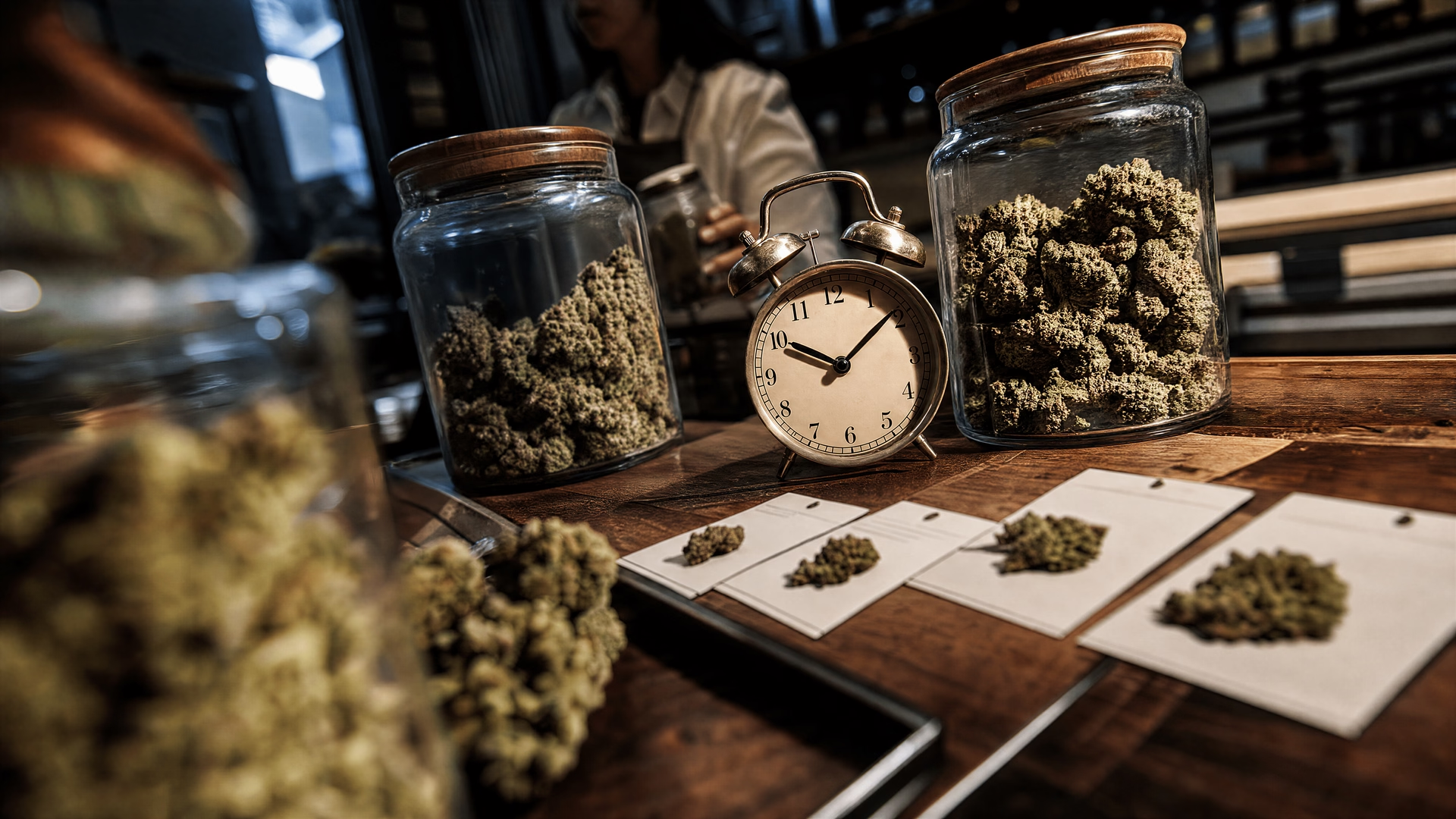












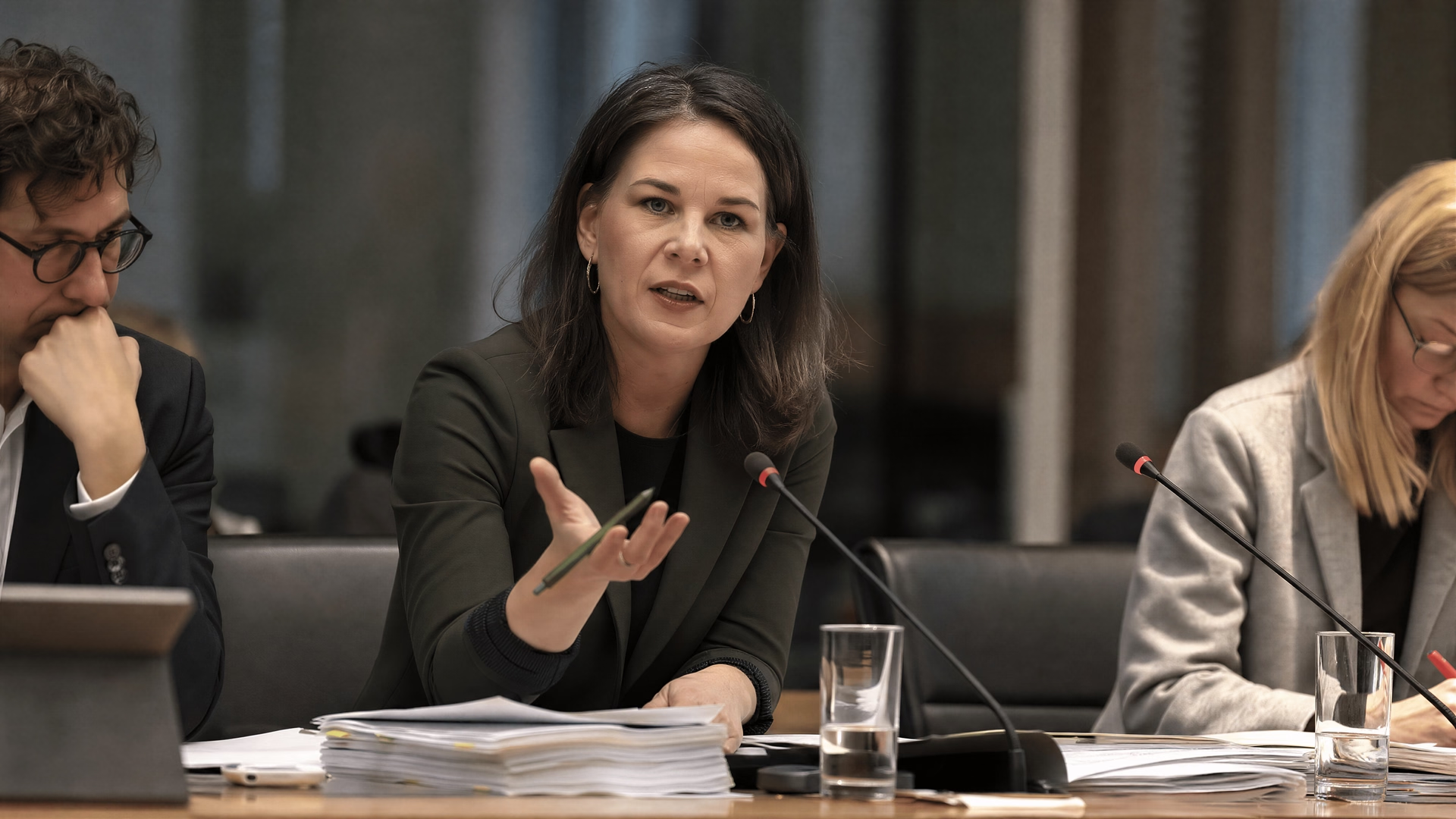
Grüne question how Germany will turn the Cannabis Act evaluation into practice as debate over clubs, youth protection and medical cannabis grows.

Germany’s Cannabis Act is once again under political pressure, this time not from the courts but from the question of what the government will actually do with its own evaluation. The Green parliamentary group is asking how the findings on consumption, youth protection, enforcement and the medical market will be implemented — and whether Berlin is prepared to act on the report without sliding back into reflexive prohibition.
A report that opened more questions than it closed
The latest evaluation of Germany’s Cannabis Act has not produced a simple verdict. According to reporting on the assessment, the scientific picture is mixed: consumption did not rise, but there are still deficiencies in youth protection, criminal enforcement and the medical cannabis market. That combination has given critics fresh material while leaving supporters with a more complicated task — defending a reform that is neither failing outright nor delivering all of its promised effects. The mixed evaluation is now the starting point for the political dispute.
The Green response, as reflected in the research facts, is not a call to scrap the law. It is a question of implementation: what follows from an evaluation that shows no increase in consumption, yet points to weak spots in enforcement and prevention? That is where the debate has moved — from the existence of the reform to the government’s willingness and ability to make it work.
What the evaluation says the government must confront
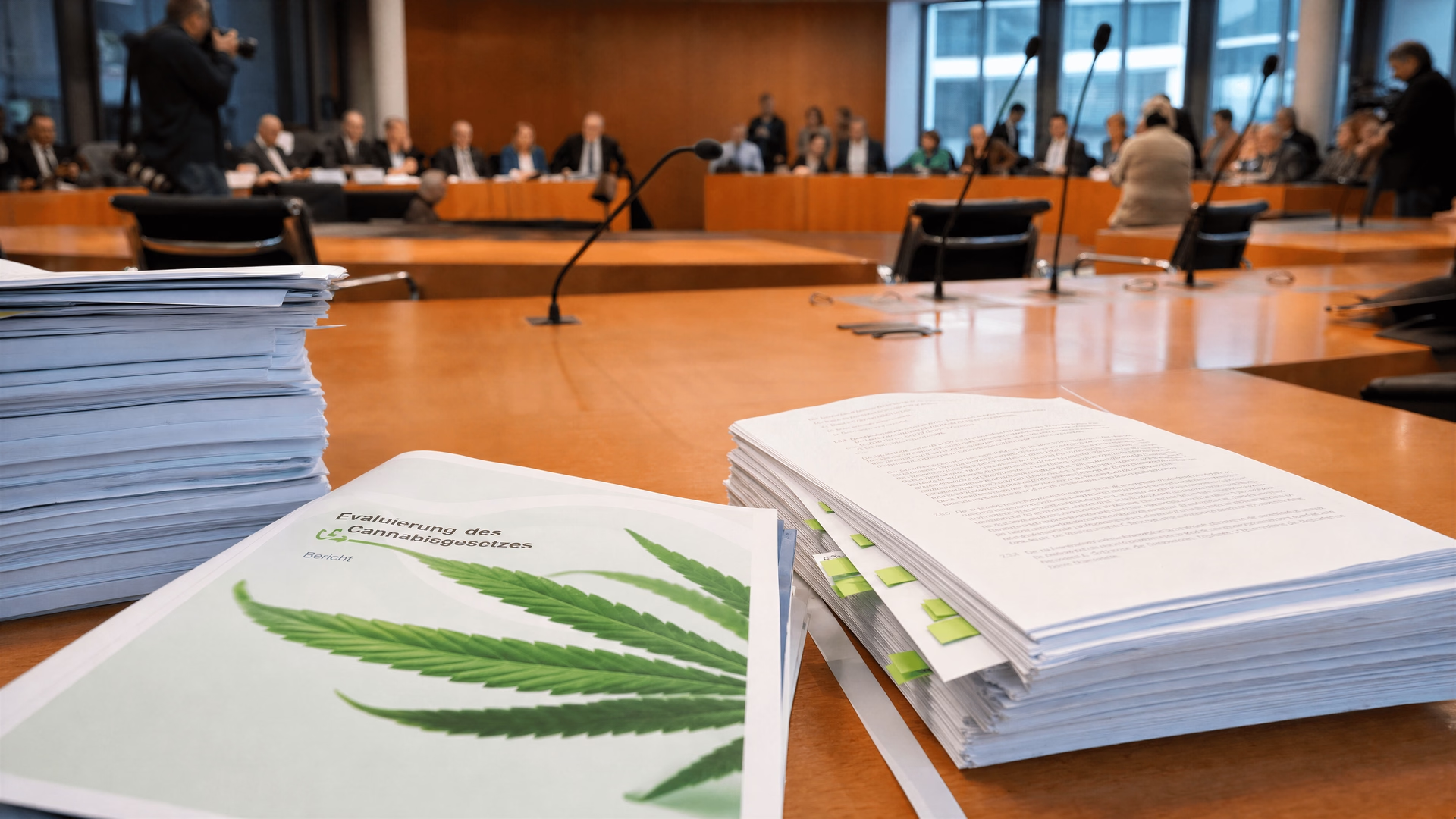
The evaluation has become a policy hinge because it does not support the sharpest alarmist claims, but it also does not give the government a clean bill of health. Reporting on the scientific assessment says the reform did not raise consumption, yet deficits remain in youth protection, prosecution and the medical cannabis market. A separate interim report had already suggested only limited effects so far and said the black market still persisted. Together, those findings explain why the Greens are pressing the government on implementation rather than headlines.
The political interpretation of those findings differs sharply across the spectrum. In one camp, the reform is seen as too cautious to have displaced the illegal market. In another, the key takeaway is that consumption did not surge, which undercuts the claim that legalization automatically unleashes a new wave of use. The Green question sits between those positions: if the law has not produced the feared consumption spike, why is the government not concentrating on fixing the practical gaps the evaluation identified?
The scientific picture is mixed: consumption did not rise, but deficits remain in youth protection, prosecution and the medical market.
as summarised in the reporting on the evaluation
Bavaria, the courts and the fight over cannabis clubs
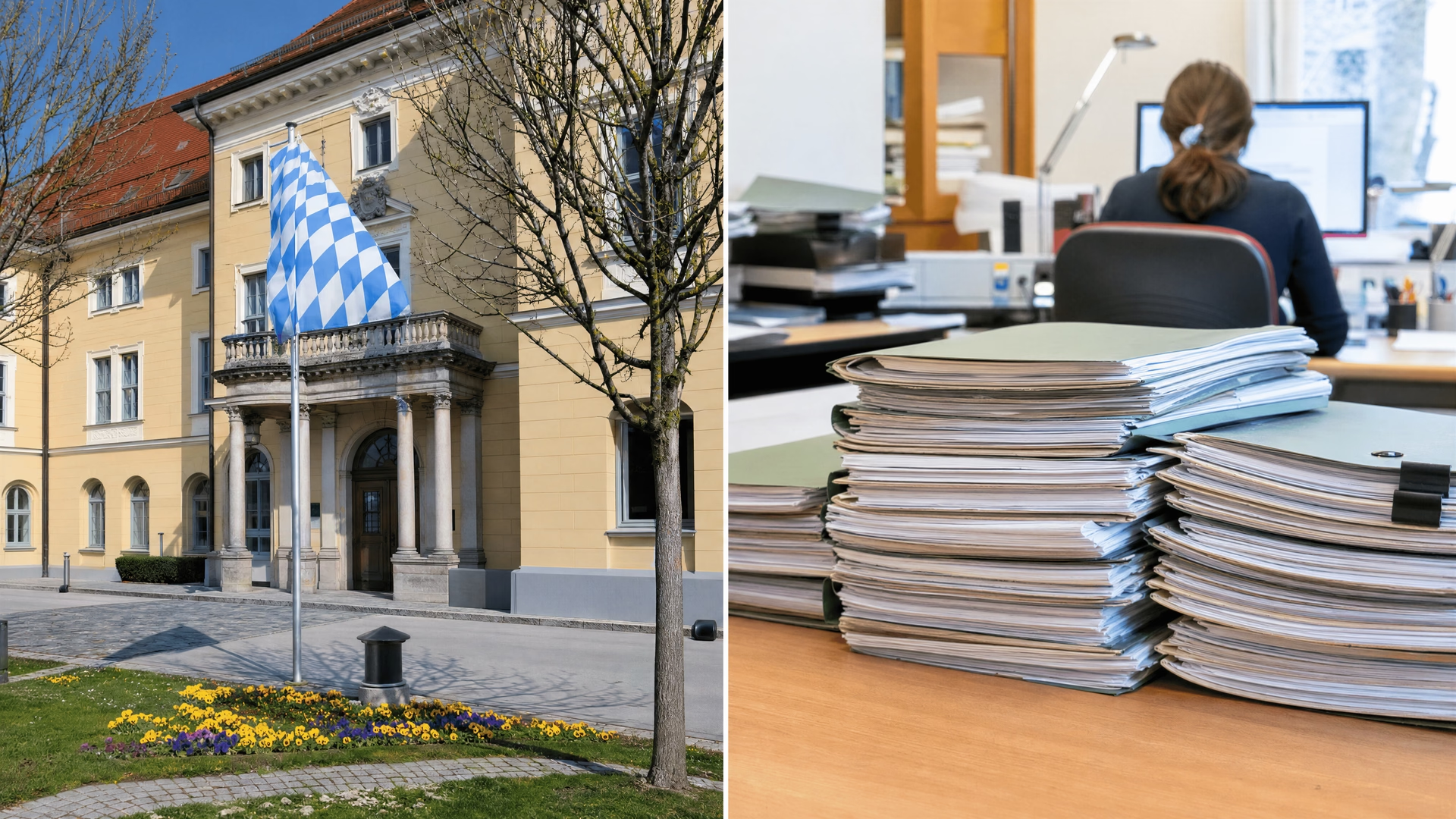
The federal debate is unfolding alongside a separate conflict in Bavaria that shows how uneven implementation can become on the ground. The German Hemp Association and CSC Inntal have filed a lawsuit against the state after a building-law permit for the club was refused. The case is meant to force a fundamental clarification of how cannabis cultivation associations are to be classified under building law in the state. The DHV and CSC Inntal complaint turns an abstract policy argument into a concrete legal dispute.
That local case matters because it shows how a reform can be politically recognized yet still obstructed administratively. The state government had already announced, even before the federal law came into force, that it would oppose the reform. The result is a second layer of uncertainty: the Cannabis Act may be on the books, but whether cultivation associations can operate without constant legal friction is another matter entirely.
A split political response inside Berlin
The evaluation has also reopened a broader argument inside federal politics. Reporting cited in the facts says the BKA chief criticized the implementation of the law and pointed to a still large black market in Germany. At the same time, Interior Minister Dobrindt criticized the report’s findings, while the scientists behind the evaluation were reportedly dissatisfied with the political response. That tension has helped turn the assessment into a test of how the government handles inconvenient evidence.
The Greens are not the only actors asking what happens next. The research facts also mention that several federal states see major need for change, and that conservative voices in the CDU/CSU have called for revisions after the review. In other words, the report has become less a settled assessment than a catalyst: the same findings are being used to argue for stricter enforcement, for better implementation, or for a corrective course that does not unwind the reform itself.
| Actor or source | What the response suggests | Source |
|---|---|---|
| Green parliamentary group | Wants clarity on how the evaluation will be implemented | Berliner Zeitung on the evaluation |
| BKA leadership | Sees continuing problems with enforcement and the black market | ZEIT on BKA criticism |
| Federal Interior Ministry | Criticised the evaluation’s results | tagesschau on the report reaction |
| Scientific evaluators | Were unhappy with the political reaction | tagesschau on the report reaction |
Medical cannabis and the pressure to regulate cleanly
One reason the evaluation has such political reach is that it lands in the middle of a wider cannabis policy dispute. The facts point to a Bundestag hearing on medicinal cannabis, to expert calls for revisions to the draft amending the Medical Cannabis Act, and to parliamentary discussion of the evaluation’s consequences. That is important because the reform is no longer being judged solely on possession and clubs; it is also being measured against a rapidly shifting medical market.
Outside Germany, the same pressure shows up in market data. Bloomberg reported that Germany’s medical-cannabis imports surged to an estimated 192 tons in 2025, while a later update noted the first quarterly decline in flower imports in early 2026. The broader point is not that the market is moving in one direction only, but that the state is still trying to catch up with a sector that has expanded quickly enough to become a policy problem in its own right. Bloomberg’s report on booming online cannabis sales captures that shift.
That is why the Greens’ implementation question is not a technical aside. If the government cannot keep youth protection, prosecution and the medical framework aligned, then the evaluation becomes evidence not only about the law’s effects but about the state’s capacity to govern a complex reform cleanly.
- Youth protection remains one of the evaluation’s identified weak points.
- Criminal enforcement is still being questioned by critics of the rollout.
- The medical cannabis market has become part of the same policy dispute.
- Berlin’s response will shape whether the law is seen as workable or merely tolerated.
What the implementation debate now tests
The current dispute is less about abstract ideology than about state capacity. The available facts show a reform that has survived initial scrutiny, a black market that has not disappeared, local resistance in Bavaria, and federal institutions that remain divided over what the results mean. That is exactly the kind of moment when parliamentary scrutiny matters: not to restart the entire law by instinct, but to ask which parts of the implementation are failing and which are simply being left underpowered.
There is also a procedural layer to the story. The Bundestag has already been moving on related cannabis questions — including a first reading on flower and health-insurance issues on 12 June, and hearings on medicinal cannabis. Against that backdrop, the Greens’ inquiry about implementation is a demand for coherence. If parliament is already debating the next steps, it needs a clearer answer on what the current law is actually achieving, and where the government intends to correct course.
For readers trying to follow the policy line, the key distinction is between reform on paper and reform in practice. The evaluation suggests the law did not trigger the feared consumption surge. But it also leaves enough unresolved — from youth protection to the black market to club licensing disputes — to keep the political argument alive. That is why the Greens’ question lands with force: it is aimed at the gap between legislative intent and administrative reality.
The Greens’ question about implementation goes to the heart of Germany’s cannabis debate: not whether the reform exists, but whether the state can make it function as intended. With the evaluation showing mixed results, a stubborn black market, and local and federal disputes still unresolved, the pressure on the government is now to explain what it will do next — and how it plans to turn a contested law into a workable one.
Sources
- Evaluation der Cannabis-Legalisierung: Kein Konsumanstieg, doch Regierung sieht Handlungsbedarf (berliner-zeitung.de)
- Hanfverband und CSC Inntal verklagen Bayern wegen Verhinderung von Anbauvereinigungen (hanfverband.de)
- Teillegalisierung von Cannabis: BKA-Chef kritisiert Umsetzung des Cannabisgesetzes (zeit.de)
- Zwischenbericht: Bislang kaum Effekte durch Cannabis-Teillegalisierung (tagesschau.de)
- Online Cannabis Sales Are Booming in Germany—and the Government Is Racing to Catch Up (bloomberg.com)