73 cannabis clubs in Santa Cruz de Tenerife
Cannabis Clubs near Santa Cruz de Tenerife
The Santa Cruz de Tenerife cannabis social club scene
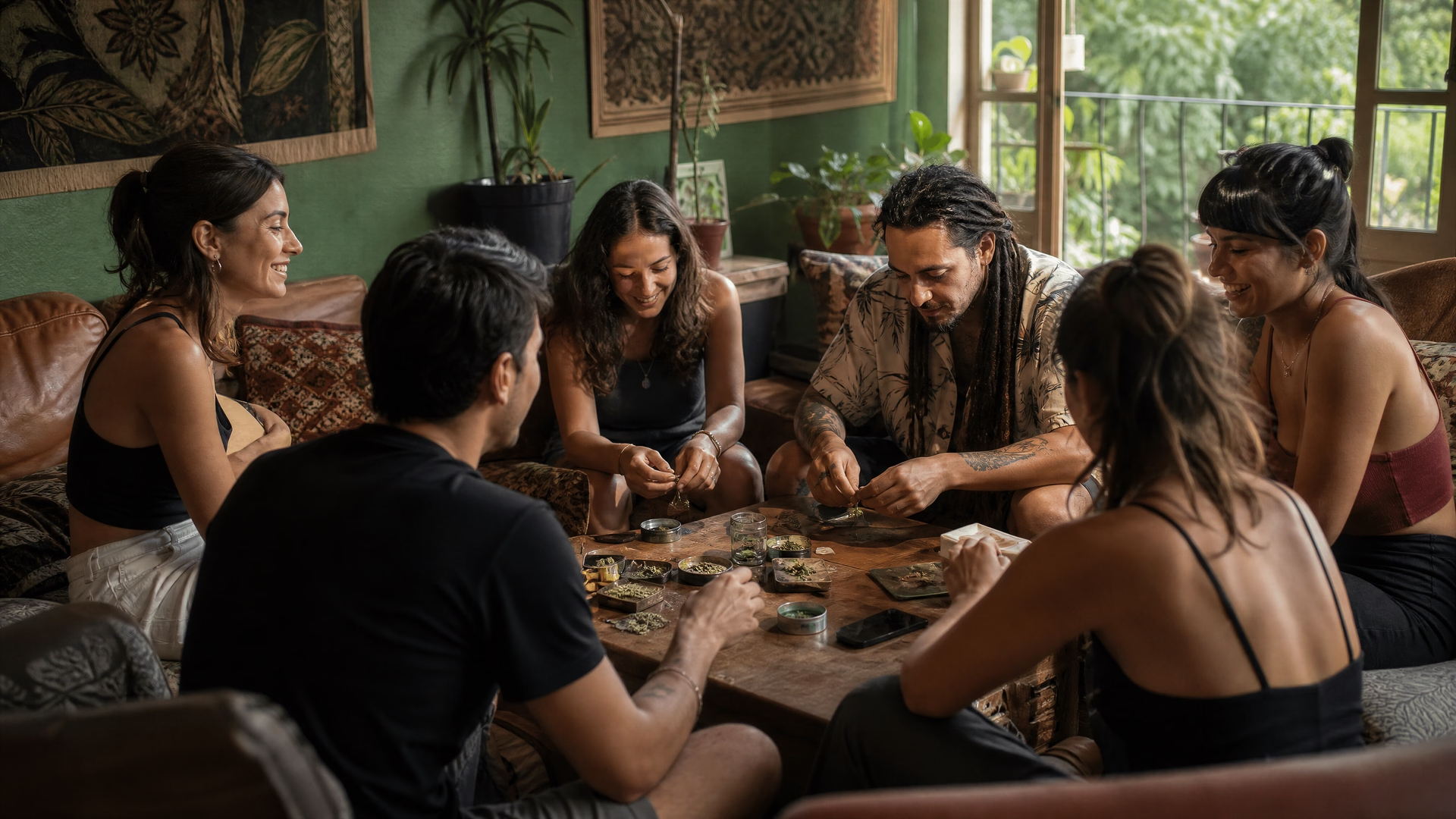
Santa Cruz de Tenerife is a city where the cannabis social club scene sits inside everyday urban life rather than apart from it. A cannabis social club Santa Cruz de Tenerife is a private, members-only association that gathers adults around shared routines, conversation, and house rules, and it is not a coffee shop or a dispensary.
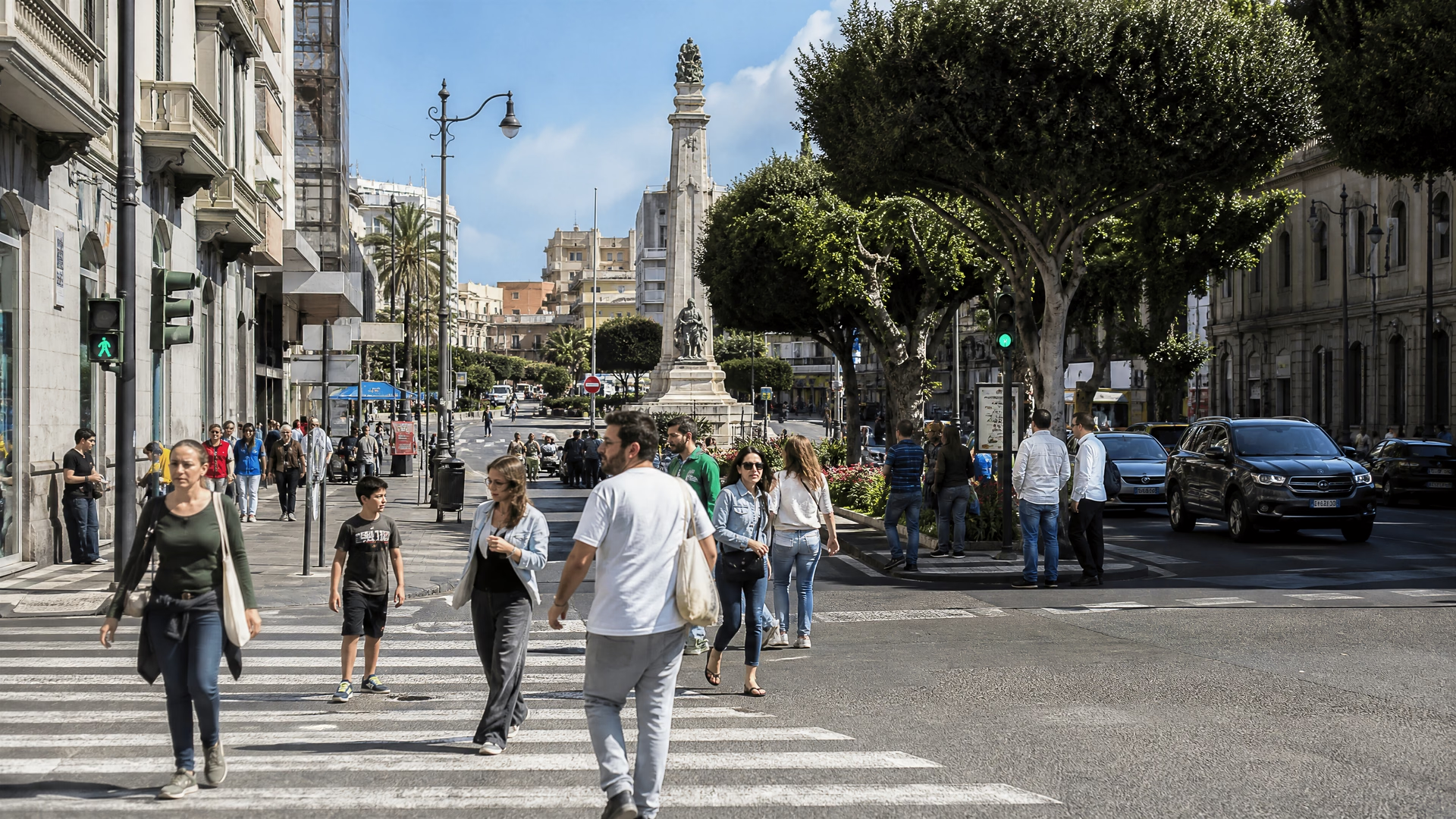
In the city’s center, the pace feels shaped by offices, port traffic, evening walks, and neighborhood bars as much as by private club culture. That mix gives the scene a distinctly local rhythm: low-key, social, and usually more about familiarity than spectacle. As a guide, History of Cannabis: From Ritual to Legalization helps frame how these associations fit a broader story of urban cannabis culture, while Cannabis and Creativity: What THC Really Changes offers a neutral background on why so many conversations in club rooms drift toward music, art, and ideas.
As of 2026, this directory lists 73 associations in Santa Cruz de Tenerife, with 20 verified entries shown here for readers who want a cleaner starting point. The city’s scene is not loud, but it is visible in the way people talk about membership, shared cultivation, and a more social form of cannabis life than a retail model would suggest.
In practice, the local conversation runs from strains and flower to hash, concentrates, and edibles, but the tone is usually conversational rather than commercial. That is part of the appeal of the club format in Santa Cruz de Tenerife: it feels embedded in the city, not staged for outsiders.
Within the broader Spanish context, people often search for an asociación cannábica Santa Cruz de Tenerife, a club cannábico, or simply a private members club. The words vary, but the underlying idea is the same: a social association built around privacy, consistency, and a community table.
How do cannabis clubs work in Santa Cruz de Tenerife?
How do cannabis clubs work in Santa Cruz de Tenerife? The short answer is that they operate as private associations with reception, check-in, and house rules that members learn once they arrive. The social side matters: people sign in, greet familiar staff, and settle into a room that feels closer to a community lounge than a public venue.
Joining generally involves how to join steps that feel simple but remain personal: an invitation or referral, a registration form, and a membership fee that helps cover shared costs. Members are adults, 18+, and the check-in process often includes ID at reception so the association can keep its own records tidy. Contributions are typically cash only, especially at sign-up, and the rhythm is usually practical rather than ceremonial.
The scene is built around private, members-only habits: shared cultivation, collective responsibility, and a general expectation of responsible consumption. People often talk about the room, the music, and the company before they talk about anything else. That social tone is part of why many readers compare the category with Amsterdam-style venues, only to find that Santa Cruz de Tenerife is something different in feel and structure.
For background reading, Cannabis Legalization Overview: Global Legal Status offers a wider framing of how these models differ across countries, and Cannabis Testing Guide: Labs, COAs, and Safety Data can help readers understand why members sometimes ask about testing and consistency without turning the page into a product guide.
Because every association sets its own policies, the most useful mindset is to treat each club as its own house, with its own tempo, conversation style, and sense of order. Some feel quiet and bookish; others feel more social and chatty. The point is not sameness but the private-association model itself.
Neighborhoods and district character
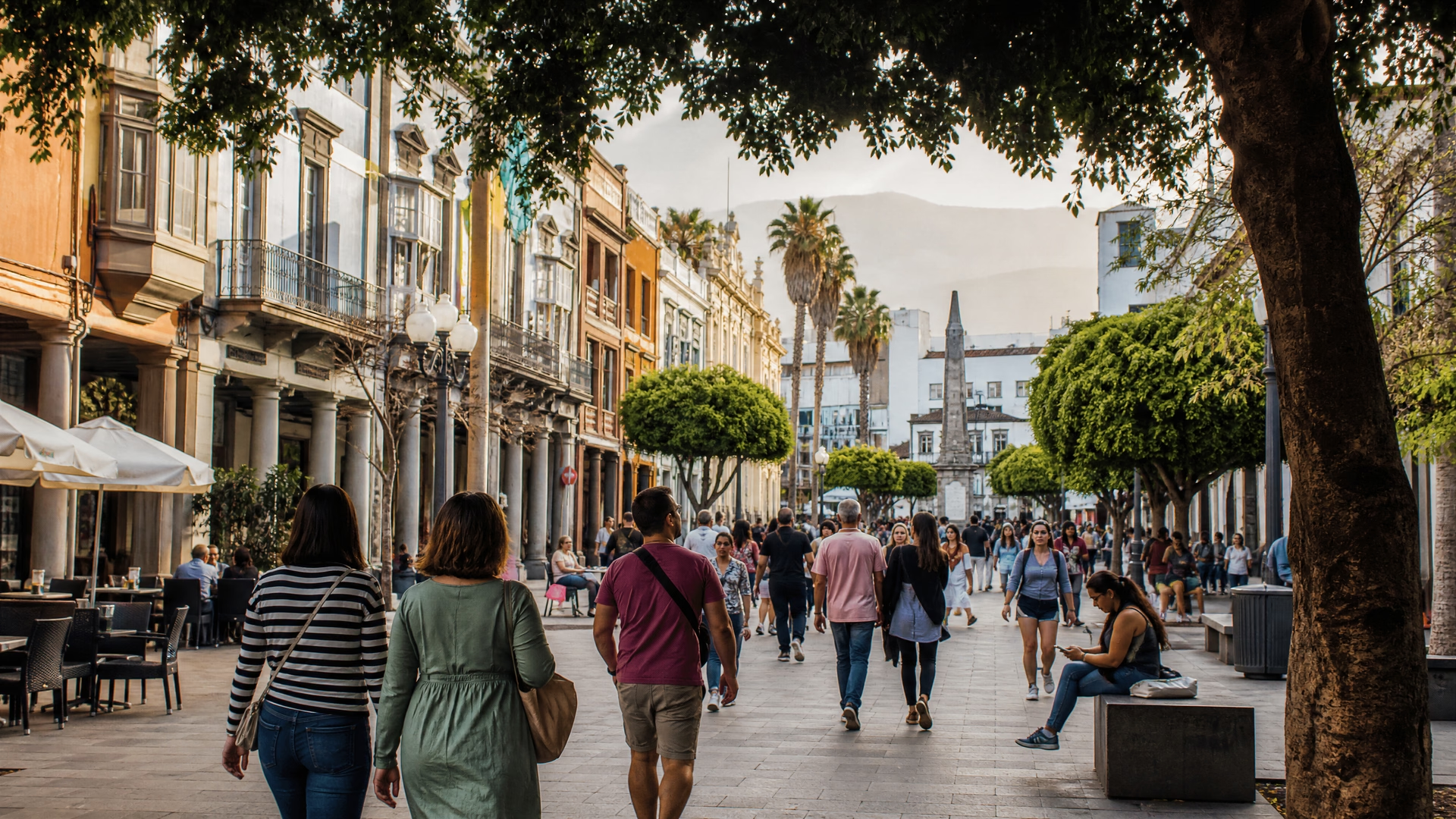
Santa Cruz de Tenerife spreads across five administrative districts: Anaga, Centro-Ifara, Salud-La Salle, Ofra-Costa Sur, and Suroeste. The oldest part of the city sits in Centro-Ifara, where the historic center and several well-known barrios give the downtown area a layered feel. That old-core character matters for the cannabis club map because it shapes how people move, meet, and spend an evening in the city.
Centro-Ifara tends to feel the most central and easiest to read for first-time visitors to the city’s urban fabric, while the surrounding districts add a more residential, everyday tempo. Barrio names such as El Toscal, La Salud, Los Gladiolos, Ofra, and Santa María del Mar help explain how the city is lived at street level: one pocket may feel compact and central, another more spread out and domestic. The directory reflects that texture, with clubs distributed across multiple parts of the city rather than concentrated in one obvious strip.
Because club culture here is tied to neighborhood routine, it often feels like part of the city’s ordinary after-work geography. People move from plaza to café to private association without much fanfare. That is one reason the directory is useful: it turns a vague search into a sense of place.
In a city like this, neighborhood identity does a lot of the storytelling. Downtown streets carry a different cadence from residential avenues, and the club scene reflects that. Readers looking for the city’s wider cultural background can also use History of Cannabis: From Ritual to Legalization as a neutral companion piece to the local geography.
Nightlife and social culture
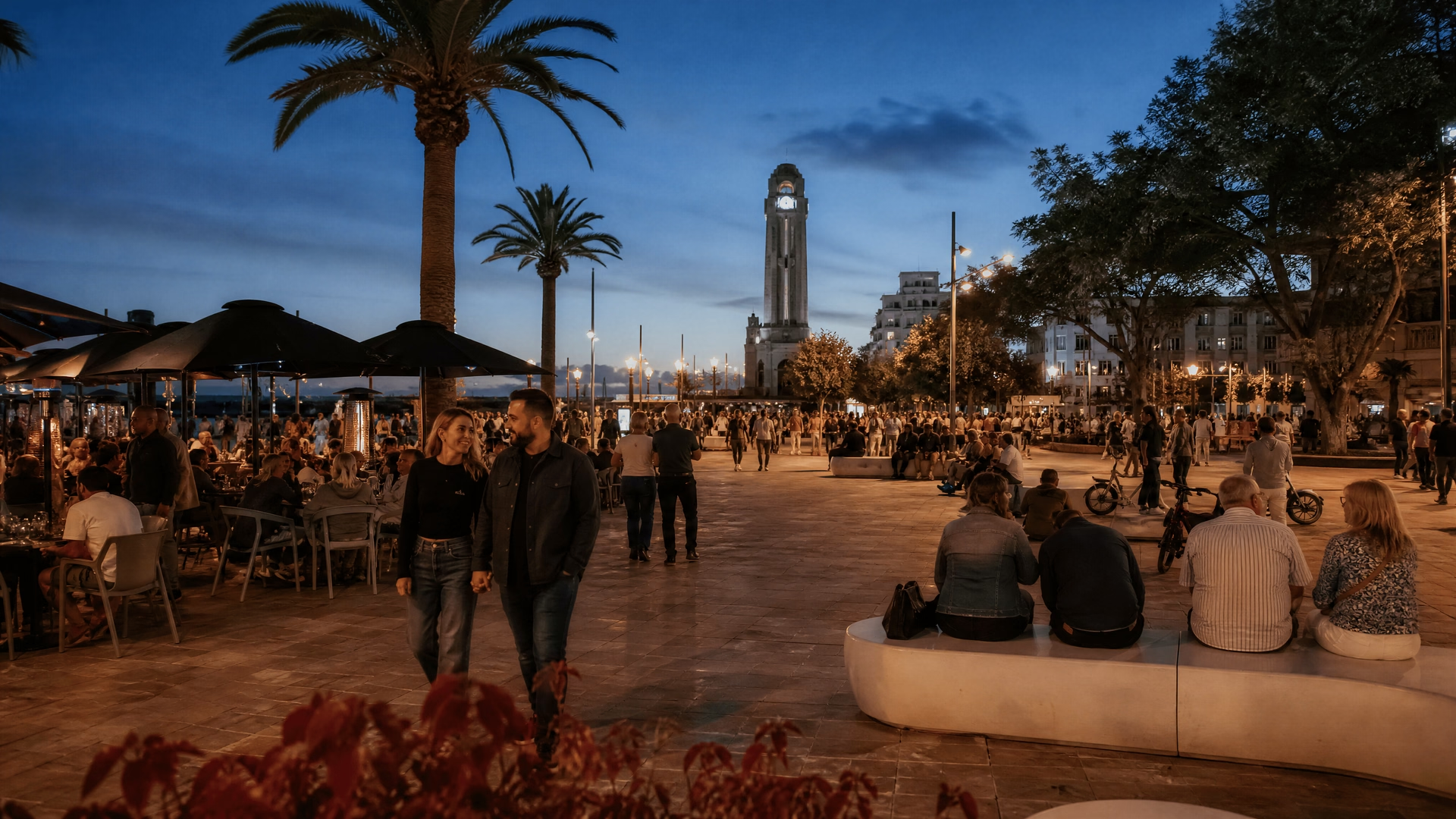
Santa Cruz de Tenerife has an evening life that feels social before it feels theatrical. Bars, live music, late walks, and casual meetups all feed into the same urban mood, and cannabis clubs sit inside that ecosystem as quieter rooms for conversation. They are not nightlife in the loud, headline sense; they are part of the city’s after-dark social fabric.
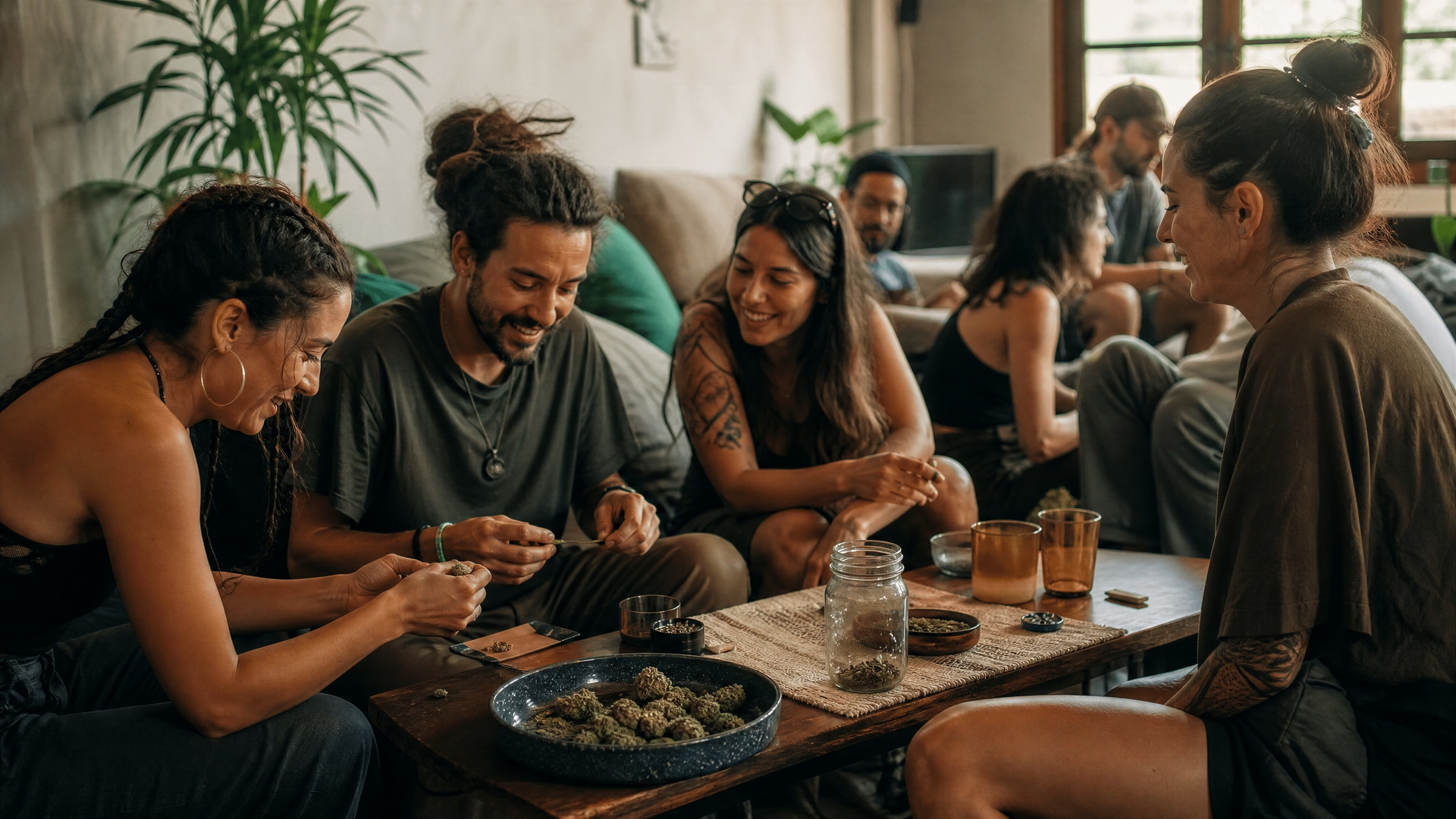
In practice, the mood in a club often mirrors the mood outside on the street: relaxed, conversational, and shaped by who has shown up that day. Members talk about music, art, football, cooking, and the city itself. The club becomes a room where the city pauses, and that pause is part of the appeal.
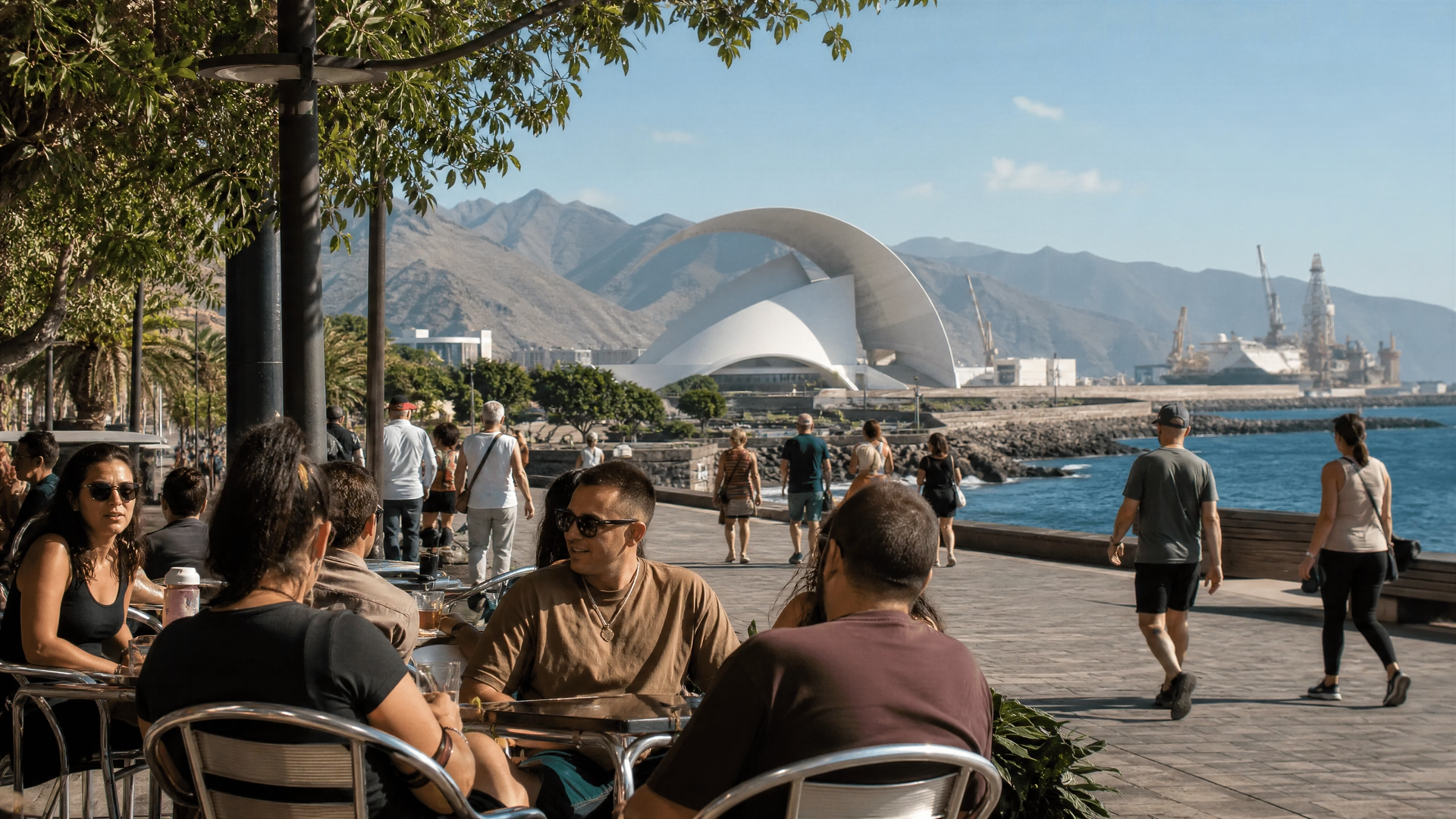
For some readers, the cultural reference points are broader than cannabis. Santa Cruz de Tenerife’s arts calendar, waterfront promenade, and seasonal festivals all contribute to the way people spend time together after sunset. The club scene draws from that same atmosphere, which is why it can feel so local even when the subject is cannabis.
When the conversation turns to flower, hash, or concentrates, it usually does so in the same casual way people might compare music or coffee. That lightness matters. It keeps the scene grounded in social life rather than turning it into a performance.
Readers who want a neutral companion on how cannabis fits into cultural life can look at Cannabis and Creativity: What THC Really Changes. It is one of the better background pieces for understanding why so many clubs feel part salon, part meeting room, part neighborhood living room.
Culture and lifestyle crossover
The city’s cannabis scene overlaps with food, music, and the creative habits of people who live here. A private club in Santa Cruz de Tenerife can feel like a place where a gallery opening, a playlist debate, and a dinner plan all blur into the same evening conversation. That crossover gives the scene texture without making it performative.
Members may move between local bars, family-run restaurants, waterfront walks, and private association spaces as part of a single night out. The club is just one part of the sequence, and often the quietest one. It is also where the social meaning of cannabis is most visible: not as a slogan, but as a shared habit inside a wider cultural routine.
There is also a practical side to the crossover. People exchange notes on strains, storage, smoking methods, and the differences between flower, hash, concentrates, and edibles, but they do so in a setting that feels informal. The language is often more about preference and atmosphere than about any technical drill-down.
For readers interested in how cannabis sits beside creativity and social life, Cannabis and Creativity: What THC Really Changes is a natural background read. It complements the city’s own reputation for layered urban culture without drifting into hype.
That layering is what makes the Santa Cruz de Tenerife scene feel distinctive. It is not a single district, not a single crowd, and not a single mood. It is a set of overlapping habits that happen to share a city.
How to join a cannabis social club in Santa Cruz de Tenerife
How to join a cannabis social club in Santa Cruz de Tenerife is usually a matter of being introduced, visiting reception, and completing the club’s own paperwork. The process is personal and unhurried: a sponsoring member or referral helps open the door, the membership form records the basics, and the house rules set the tone for how the room works.
A club may ask for ID, and the sign-up conversation is typically straightforward. These are adults-only spaces for people 18+ who want a private association rather than a public venue. The membership fee is generally described as a contribution to shared overhead rather than a retail transaction, and cash only is still common in many places.
Some people imagine a fast, walk-in model, but that is not how the scene works here. There is usually no public counter, no spontaneous browsing, and no sales-floor energy. Instead, the rhythm is closer to being welcomed into a regular room where names, faces, and habits are remembered.
The club world also has its own vocabulary. In Spain, people may speak of a club social de cannabis, an asociación cannábica, or a private members association. In other countries the terms change, but the underlying idea remains familiar: a group of members sharing a space, a routine, and a code of conduct.
For readers interested in general terminology, History of Cannabis: From Ritual to Legalization is useful background, while Cannabis and Creativity: What THC Really Changes offers an easy cultural companion to the social side of membership.
The practical part of joining is usually calm, and that calm is part of the appeal. A club that feels too rushed or too sales-driven would miss the point of the model entirely. Here, the private association is the story.
Practical context for getting around
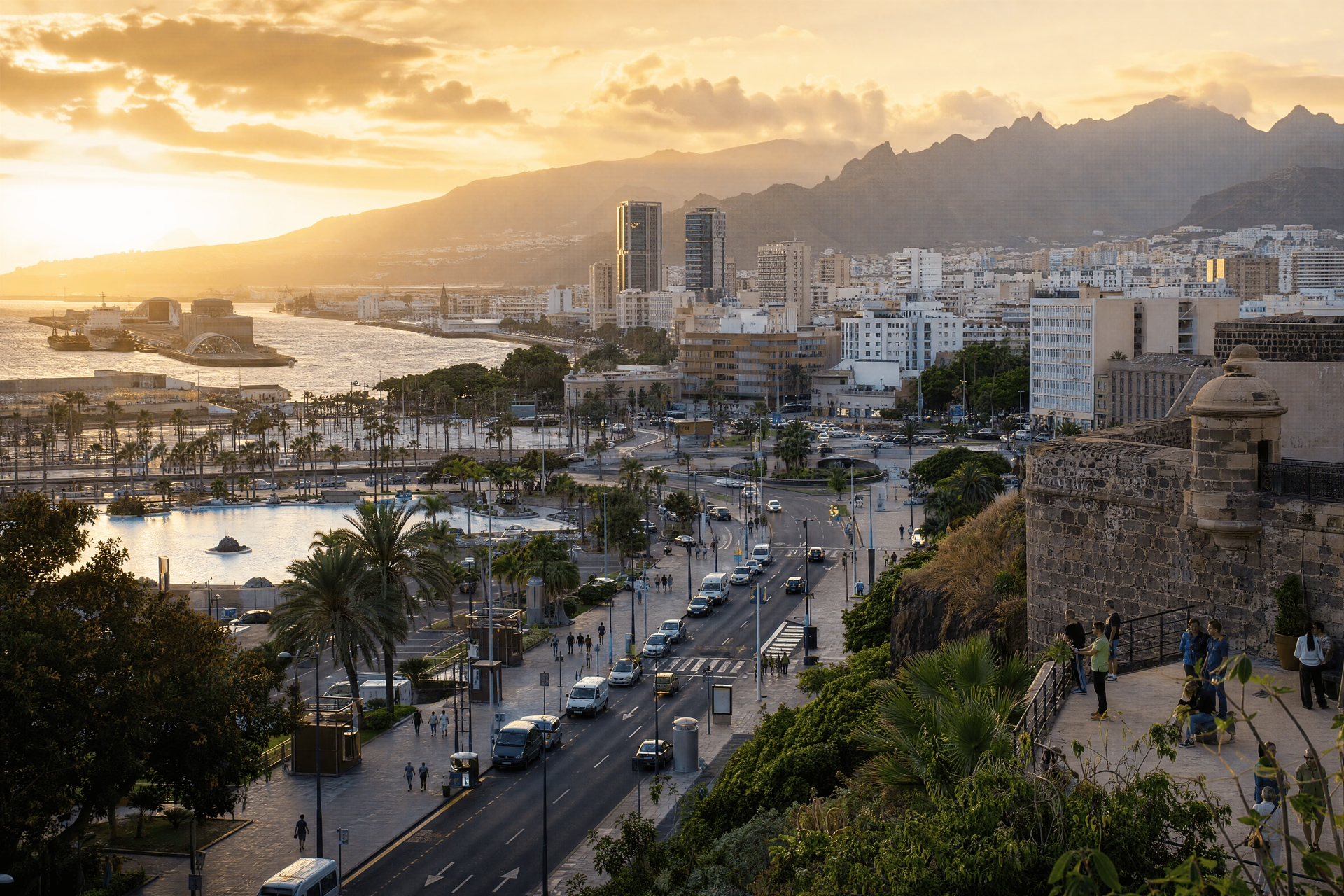
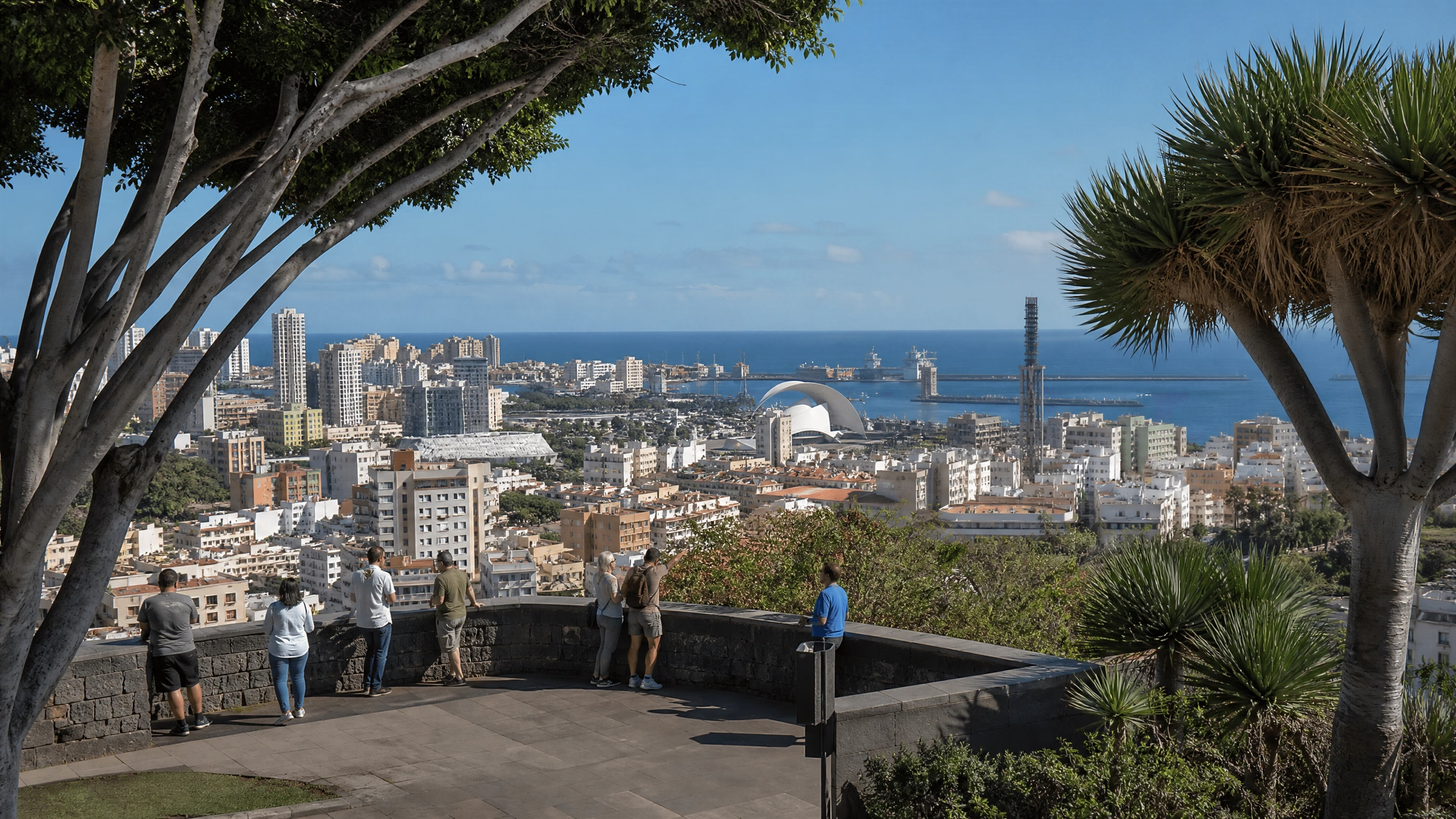
Santa Cruz de Tenerife is compact enough that getting around the city shapes how club life feels. Buses, taxis, walking routes, and the way districts connect all matter more than a visitor might expect. The city’s natural bay setting and port-oriented geography make movement feel organized around corridors, not random sprawl.
That practical geography also explains why club culture often feels neighborhood-based. People tend to know the streets they use, the cafés they stop at, and the route they take home. For a private association, those routine movements matter because they shape when people arrive, how they settle in, and how they leave.
Seasonality plays a part too. The city changes its pace across the year, with tourism flows, cruise traffic, and local life all rising and easing at different moments. The club scene follows that pulse without turning into a tourist product. Some months feel busier in the city; others feel more local and settled.
4/ 7
Santa Cruz de Tenerife against Canary Islands
The city read against its region across three measures — a side-by-side spread.
For a neutral background on urban rhythm and social life, the city’s tourism and port-facing character are useful clues. They help explain why the scene feels connected to daily movement rather than to one fixed destination. That is a large part of why a cannabis club here feels like a neighborhood institution, not a novelty.
Readers should also expect clubs to differ in tone. Some feel best for quick check-ins and quiet visits; others are more conversational and linger-friendly. The city itself supports that variety because its districts and neighborhoods already operate at different speeds.
The directory in 2026
This directory is updated for 2026 and is built to show Santa Cruz de Tenerife as a living membership scene rather than a static list. The counts evolve over time, verified entries are highlighted separately, and the wider set gives a fuller picture of how the city’s private-association landscape is distributed.
As a city guide, the point is not to rank clubs but to make the scene legible. Readers can scan the directory, compare areas, and understand where the city’s cannabis associations tend to cluster. That is especially useful in a place like Santa Cruz de Tenerife, where districts and barrios do a lot of the geographic storytelling.
The directory also helps distinguish public curiosity from lived membership culture. The club world here is shaped by private rooms, regulars, and neighborhood routines, not by storefront browsing. That makes the listing useful even for readers who are simply trying to understand the city’s social texture.
As the directory expands or changes, the freshest entries give a useful snapshot of the scene at this moment. Santa Cruz de Tenerife remains a city where the cannabis club world is part of a larger urban story, not a separate spectacle.
Wider geography and nearby places
Santa Cruz de Tenerife is best understood as part of a wider urban geography, with districts, barrios, and neighboring places all influencing how people move through the city. The location structure matters because a cannabis social club scene does not stop at a single street or plaza; it spreads according to lived routines and practical distance.
Sub-locations under Santa Cruz de Tenerife
The same logic applies to nearby places. People often compare search results across the surrounding area before deciding which neighborhood fits their routine. That wider frame is especially helpful for readers who want the city’s map rather than a narrow list.
For broader background on how these community spaces emerged, History of Cannabis: From Ritual to Legalization remains a strong neutral reference. It pairs naturally with the geography because both are about context rather than hype.
This is an informational directory of independent associations: it offers introductions only, and membership is always at each association's discretion and never guaranteed.
FAQ
Questions below reflect the most common search intent around the city’s private association scene, neighborhoods, and membership customs.