










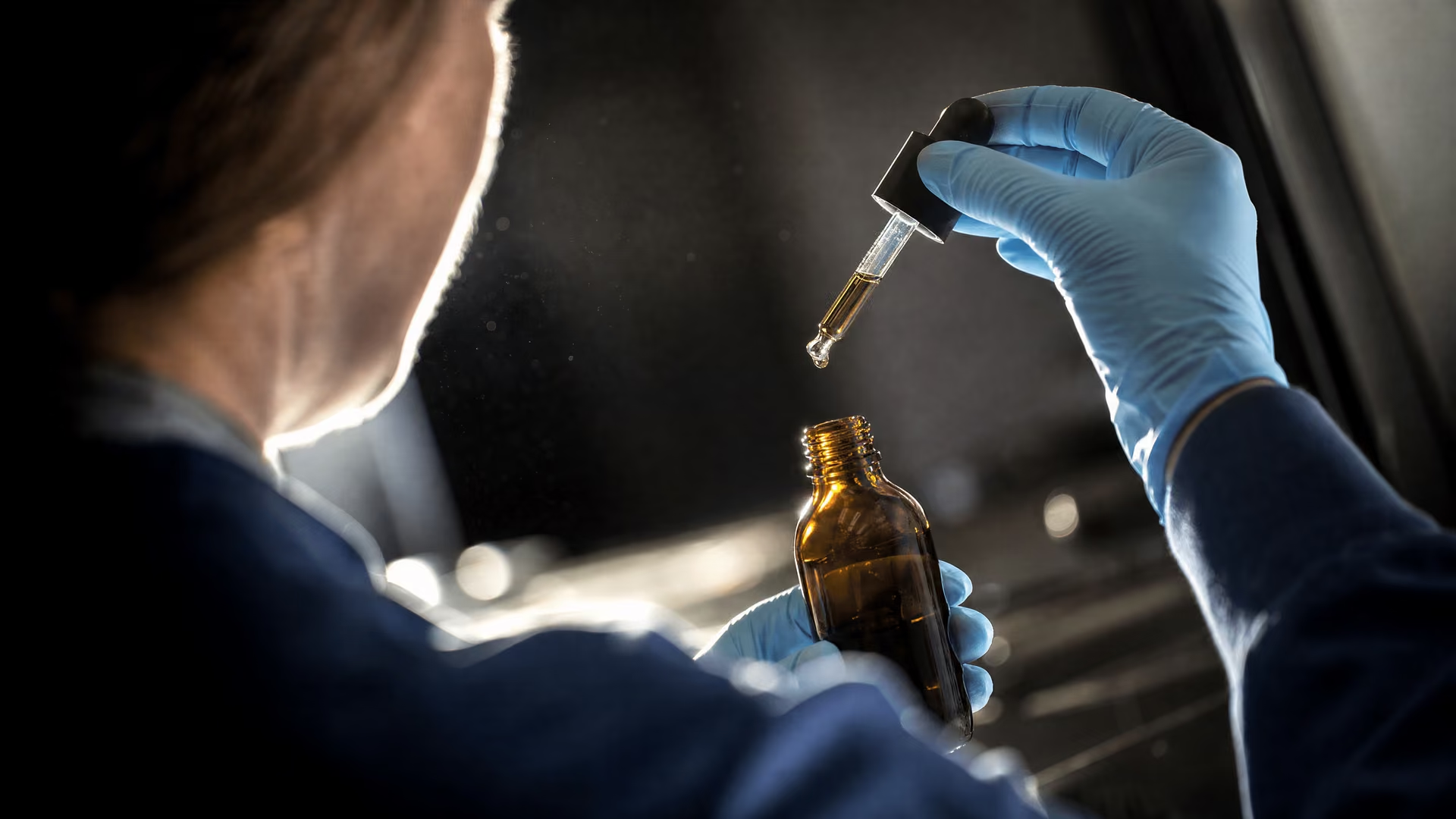
Ananda Pharma has dosed the first patient in the UK’s NIHR-backed ACTiON Phase 2 trial of CBD-based MRX1 for chemotherapy-induced neuropathy.

On 21 July 2026, Ananda Pharma reported that it had dosed the first patient in the United Kingdom’s NIHR-backed Phase 2 ACTiON trial, testing its CBD-based MRX1 oral solution against chemotherapy-induced peripheral neuropathy (CIPN), a condition reported to affect about 67% or more of patients receiving neurotoxic chemotherapy. The milestone, reported by CannabisHealth News, moves the programme into patient testing for a form of chemotherapy-related nerve damage that can persist after cancer treatment and has no effective therapies currently available, according to the report.
ACTiON moves from research planning to patient dosing
The first dose is an operational milestone rather than a treatment result. It confirms that the ACTiON study has moved into its clinical phase, with MRX1 being administered to a participant under the trial programme led by Professor Marie Fallon at the University of Edinburgh in Scotland. Ananda manufactured the investigational product in 2025 and delivered it to the University of Edinburgh’s central pharmacy on 6 June 2026. The first patient received dosing around a week later.
The milestone brings three concrete reference points into view:
The immediate significance is that a patent-pending CBD formulation has entered a controlled Phase 2 investigation in the United Kingdom, rather than remaining at the laboratory or early safety stage:

Why chemotherapy-induced neuropathy is a difficult oncology problem
CIPN is nerve damage caused by chemotherapy. The symptoms described in the source include numbness, tingling and pain in the hands and feet, and they can remain long after chemotherapy has ended. The condition is therefore not limited to a temporary side effect during a course of treatment. It can become a lasting complication for people who have already completed, or are still undergoing, cancer care.
Its clinical importance extends beyond discomfort. The report says that severe CIPN can lead oncologists to reduce or stop chemotherapy dosing in the middle of treatment. That creates a difficult balance between managing nerve damage and maintaining an effective cancer-treatment schedule, with potential consequences that may include a higher risk of death or a longer treatment period.
The burden can be summarised in four connected features:
- Numbness and tingling can affect the hands and feet during neurotoxic chemotherapy.
- Pain may continue after chemotherapy has finished.
- Symptoms can persist long after the original treatment course.
- Severe cases may force oncologists to reduce or stop chemotherapy dosing.
The source links the approximately 67% or higher incidence figure to a 2014 systematic review by Seretny and colleagues. That figure describes the scale of the clinical problem; it does not indicate that MRX1 has already been shown to address it.
An oncology consultation about the condition would focus on symptoms and treatment decisions rather than on a consumer cannabis product:

This is gold standard work and we are honoured to be part of it.
Melissa Sturgess, Chief Executive Officer, Ananda Pharma
What the ACTiON Phase 2 study is designed to test
ACTiON is evaluating MRX1, Ananda’s proprietary CBD-based oral solution, for chemotherapy-induced peripheral neuropathy. A clinical-trial report describing the ACTiON design says the study is double-blind, placebo-controlled and uses a crossover design, with a target of 92 participants. The owner report identifies it as a Phase 2 study evaluating the product’s safety and efficacy.
The formulation under study
MRX1 is an oral solution built around CBD and described by Ananda as having a patent-pending formulation. The study is not testing a general claim about cannabis. It is examining one defined investigational product in a specific patient population and a specific chemotherapy-related condition. That distinction matters because the first patient dose provides no evidence yet about whether MRX1 will reduce CIPN symptoms or allow chemotherapy to continue at planned doses.
ACTiON is running alongside Ananda’s other Phase 2 programme, ENDOCAN, which is evaluating MRX1 in endometriosis-associated pain. The two studies give the company concurrent clinical programmes in separate pain indications:
| Programme | Stage | Indication | Current status | Source |
|---|---|---|---|---|
| ACTiON | Phase 2 | Chemotherapy-induced peripheral neuropathy | First patient dosed; NIHR-backed EME study | Ananda Pharma Doses First Patient in NIHR-Backed CIPN Trial |
| ENDOCAN | Phase 2 | Endometriosis-associated pain | Running concurrently with ACTiON | Ananda Pharma Doses First Patient in NIHR-Backed CIPN Trial |
The trial’s operational chain runs through research and pharmacy infrastructure:

What NIHR backing signals in the United Kingdom
The ACTiON study received an Efficacy and Mechanism Evaluation, or EME, grant from the United Kingdom’s NIHR. The award is described as non-dilutive and as carrying independent scientific scrutiny before approval. In the UK context, that involvement gives the research question significance beyond its financial support: the source says it indicates that the question has passed independent peer review and is considered scientifically sound and medically warranted.
That distinction is particularly important in cannabinoid medicine, where early interest can run ahead of clinical evidence. The EME grant places ACTiON within a publicly scrutinised research framework, but the first-patient announcement remains a trial-start update. No Phase 2 efficacy findings are reported in the available material.
The UK research setting is visible in the people and institutions attached to the programme:

MRX1 reaches Phase 2 after an earlier safety study
Ananda’s route to the ACTiON milestone began with a Phase 1 pharmacokinetic study of MRX1, completed earlier in 2026. The company reported a clean safety profile across 20 participants, a result the source says supported progression into Phase 2. Cannabivo previously covered Ananda’s earlier MRX1 Phase 1 safety milestone.
The sequence from product manufacture to patient dosing is as follows:
The company’s broader strategy also shifted before the ACTiON start. Ananda accelerated a pivot last year by exiting an NIHR-funded epilepsy trial and withdrawing from public markets, with the aim of concentrating capital on MRX1’s pain pipeline. With ACTiON and ENDOCAN now running concurrently, the company has two Phase 2 programmes in distinct indications.
What the first dose does not yet show
The first patient dose establishes that ACTiON is under way; it does not show whether MRX1 works. The study still has to generate data from its planned participants and assess the investigational product in the double-blind, placebo-controlled crossover design described in the supporting trial report. The available facts contain no Phase 2 results, no reported symptom changes and no evidence that the treatment has altered chemotherapy decisions.
For readers following the programme, the central questions are therefore straightforward:
ACTiON trial questions answered
What condition is ACTiON studying?
The trial is studying chemotherapy-induced peripheral neuropathy, or CIPN, a chemotherapy-related nerve-damage condition associated with numbness, tingling and pain in the hands and feet.
What is MRX1?
MRX1 is Ananda Pharma’s proprietary CBD-based oral solution with a patent-pending formulation.
Who is leading the ACTiON study?
Professor Marie Fallon at the University of Edinburgh in Scotland is leading the study.
What does the NIHR grant mean?
The EME grant is a non-dilutive award that carries independent scientific scrutiny before approval. It signals that the research question passed peer review; it is not evidence that MRX1 has been proven effective.
Does the first patient dose prove that MRX1 treats CIPN?
No. It marks the start of patient dosing in the Phase 2 trial. The available information does not report efficacy results.
The main points from the milestone are:
Ananda Pharma’s first ACTiON dose places MRX1 in a formally scrutinised Phase 2 test for one of chemotherapy’s most difficult complications. The next meaningful step will not be the announcement of another dose, but the clinical evidence showing whether the CBD-based formulation can safely and effectively address CIPN.
Sources
- Bridging the Gap: Endometriosis and the Search for Better Symptom Management (cannabishealthnews.co.uk)
- NHS Trust Approves UK-First Inpatient Medical Cannabis Policy (cannabishealthnews.co.uk)
- Project CBD Newsletter: Cannabinoids and Aging Brains, CBD Research Roundup, and Plant Medicine for Sleep and Pain (projectcbd.org)
- Project CBD Newsletter: CBD for Neuroinflammation, Alzheimer’s, Neuropathic Pain, Oral Health, Acne, Medical Cannabis Sick Leave, and DEA Rescheduling Update (projectcbd.org)
- The ECS as a Framework for Understanding Health and Healing (cannigma.com)
- What Is Hop Latent Viroid — and Why “Clean Genetics” Became the Most Important Words in Cannabis Cultivation (cannigma.com)
- Ananda Pharma Doses First Patient in NIHR-Backed CIPN Trial (businessofcannabis.com)
- Ananda Pharma doses first patient in MRX1 clinical trial of patients with chemotherapy induced peripheral neuropathy (m2pharma.com)
- Ananda Pharma Initiates UK CBD Trial for Chemotherapy-Induced Neuropathy (cannabisdigest.net)
- Cannabis-derived treatment eases agitation in hospice-eligible dementia patients, trial finds (medicalxpress.com)